
Justine Musk's Blog, page 13
May 15, 2013
there are many ways to make a dent in the universe (+ other things we have to remember)
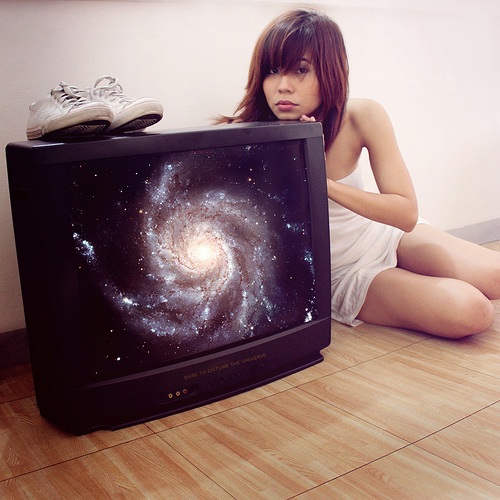
We have to remember that there are many ways to put a dent in the universe.
We have to remember that for all our attempts to plan, predict and control things, life has a way of slipping out beneath our hands. We live and work against a backdrop of mystery.
We have to remember that everything connects.
We have to remember that our actions have a way of rippling out along the invisible lines that connect us: our friends and our friends’ friends and our friends’ friends’ friends. We influence each other in ways we don’t realize.
You have more reach than you think.
We have to remember that the influence you radiate out into the world isn’t measured by how famous you are or the wealth you accumulate. People become icons because they embody some aspect of the zeitgeist; their very identity tells a story that the rest of us need to hear, that eases some anxiety inside us. Some people have a flair for this. It’s their gift.
That doesn’t mean your own story isn’t worth telling. You have different gifts.
Your story is the quest for your own deepest nature: the discovery and the expression of your gifts, and how they cross with the call of the times.
We have to remember that failure is a part of all great stories. In order to overcome something, you have to have something to overcome. The meaning is in the struggle: how it forces you to change and deepen and grow in the ashes. The old self must die, so the new self can rise and turn pain into power, wounds into light.
We have to remember that however we devalue ourselves, or blow ourselves up into grandiose images, destiny has a way of right-sizing you. Embracing this version of self – not too big and not too small – opens the way into a full life.
We have to remember how the small becomes large. Through studying the particular — learning it down to the finest detail — you access the universal. When you master the small, you make room for the world. click to tweet
We have to remember that the universe keeps secrets much bigger than you are. You find your work, and do your work, and let go of the fruits of your labor. The universe knows what to do with them.
You move on, turn the page, begin again.


May 11, 2013
provoke the world
“What makes the content you create awesome is that it’s a story told through your unique lens. It’s you, telling a story. It’s you not giving a fuck about anything but telling that story. ” – Paul Jarvis
I have a friend who likes to say he’s out to change the culture. (Oddly enough, I have a character in my novel-in-progress who likes to say the same thing.) I have friends and friends of friends who want to change the world. A few of them actually are.
This can put a lot of pressure on the rest of us.
We’re a generation that somewhere along the line developed insanely great expectations of what we’re supposed to accomplish with our lives, and what our work life is supposed to accomplish for us (higher meaning, deep soul satisfaction, startling revelations of identity, free coffee).
Dominate the world. Put a dent in the universe. Be a bestselling writer. Find true love. Get ripped abs. Save the children. Find good childcare. Lead the company to a huge IPO. Find my car keys. Follow your bliss. Save the whales. Leave your highly paying but highly stressful job to go open a cheese shop in Botswana just like you dreamed of when you were a child. Raise millions of dollars on Kickstarter for your documentary about opening a cheese shop in Botswana. End global warming. Make money blogging. Save me from putting my wallet on the roof of my car while I’m putting in gas and then driving off with the vague feeling that I forgot something but not remembering what it was until a truck drives alongside me with the guy in the passenger seat gesturing like a mime on crack about how he saw my wallet flying off the roof of my car. Find said wallet.
It’s good to think big, of course. Crazy big. We need a little crazy. But what if you flipped that around and, every so often, thought small? What if small could be the new big?
Instead of changing the world, what if you decided to provoke it a little? click to tweet
Provoke the world.
Maybe not even the whole world, just, you know, a part of it.
“Mom, Dad,” you can imagine a child saying (or maybe you can’t, but that’s kind of beside the point, so nevermind), “when I grow up, I’m going to provoke the world. Or at least poke at it a little.”
Hell, what if you decided to provoke yourself?
It’s that what-if in the back of your mind. What if you started that blog? What if you decided to do 100 words a day on that thing you’ve been wanting to write since the fateful winter of 1996? What if you drove through the streets of your town and randomly handed out pieces of cake? What if you went to Burning Man? What if you subtracted something from your life just to see what new solutions you’d be forced to create? What if you wrote a haiku everyday and used it as your Facebook status update or emailed it to friends?
What if you started saying no?
What if you started saying yes?
It’s about engaging the world in some new way, or some new-to-you way, not to get famous or make a million dollars or find someone willing to have the wild monkey sex, with or without the masks, or the wigs, but just to see what would happen. Just to shake things up. Just to get out of that rut. Just to reframe things, add a playful twist and some spirit of mischief and maybe an olive. Shaken, not stirred. Or straight up.
Just to have fun.
What if that small thing led to some other small thing led to some slightly bigger thing led to some bigger thing and so on and so forth? Maybe the culture would change. Maybe your life.
It’s a crazy world, and these are crazy times.
What if you tossed aside that five year plan and fully lived each moment in front of you, explored it, followed those whispers of intuition? What if you put your ear to the ground of the culture and spent some time listening, listening hard?
What if life was no longer a rat race or a treadmill locked in the ON position but an idea lab, a living art project, a social experiment, if even for an hour or half an hour or twenty minutes every day? What if you created a space for yourself where there are no mistakes, no failures, only lessons, and each lesson takes you closer to that place you don’t know you’re going but will recognize when you get there?
When you finally come home to yourself?
You came, you saw, you provoked.
Who knows? You might do it again.


May 5, 2013
what we talk about when we talk about purpose
You can’t have everything. Where would you put it? — Steven Wright
So you want a purpose. It’s a shame you can’t just buy one off the Internet. But if you don’t have a purpose, and you’re looking for a purpose, maybe that is your purpose right now. To engage in that process of discovery.
Call it a vision, a mission statement, a personal creed, a tattoo: different strokes for different folks.
Purpose is a way of nailing ourselves to the world. click to tweet
It’s that point where our inner life connects to a shared and much larger picture, through the expression of what Nilofer Merchant calls our onlyness.
(When I grow up, I want to be as smart as Nilofer Merchant.)
She writes:
“Onlyness is that thing that only one particular person can bring to a situation…Each of us is standing in a spot that no one else occupies. That unique point of view is born of our accumulated experience, perspective and vision…”
She adds:
“Embracing onlyness means that…we must embrace our history, not deny it. This includes both our ‘dark’ and our ‘light’ sides. Because when we deny our history, vision, perspective, we are also denying a unique point of view, that which only we can bring to the situation. Each onlyness is essential for solving new problems, as well as for finding new solutions to old problems.”
If purpose involves embracing your onlyness, it’s also about listening for the call of the times – and how it calls you in particular (and what it calls forth from you). Purpose depends not just on who you are, but on where and when you live, the problems rising to meet you.
I can’t help wondering if the reason so many of us struggle with purpose is because we’re trying to lock down something meant to be fluid and dynamic: it grows as we grow, shifts as the world shifts. You think you’ve got a hold of it with both hands only to find it’s slipped your grasp and transformed into something else.
Maybe it doesn’t come as a neat and tidy verbal statement.
Maybe trying to cast it into language is a mistake: narrows the meaning, cuts off the oxygen.
Maybe, for some of us, purpose is felt deep in the body, like an arrow that keeps pointing us in certain directions, even (or especially) when we keep trying to go another way.
Maybe it lives in our minds as a recurring image, a waking dream, a secret self.
Maybe purpose isn’t a quest, but a multilevel process of surrendering to what you already know, in that bone-deep sense that goes beyond words.
It’s about paying attention to the kinds of things you notice – and the things you don’t notice – and what that says about what you truly care about. It’s about noticing where your mind goes when it doesn’t have to be thinking about anything in particular. It’s about what you see in your daydreams. It’s about what in the world gets under your skin and tugs at your soul and makes you want to cry or scream or stand there amazed at the beauty of it all. It’s about what pulls you forward. It’s about what draws other people to you. It’s about what you embody and how you embody it.
Most of all, though, I think it’s about the thing in you that’s bigger than the fear we all feel when we want to try or do or be something great. The only thing that can drive out fear is love, whether it’s for self or someone else or some ideal, for animals or the planet or humanity in general. Purpose taps into that love, leads with that love, and people can’t help but respond because who in their right mind doesn’t want to be around love?
Show me who you love, or so the saying goes, and I’ll show you who you are.
All we have to do is remember.


May 2, 2013
beyond virgin/whore: the art of creative womanhood

The two women exchanged the kind of glance women use when no knife is handy. ~Ellery Queen
Out beyond ideas of wrongdoing and rightdoing there is a field. I’ll meet you there. — Rumi
I walked into a party at a film producer’s house. There were a lot of people in black (including me) and a lot of well-toned women in Herve Leger dresses showing miles and miles of leg, balanced, sometimes precariously, on very high heels.
“Look at the Hollywood skanks,” said one of my girlfriends.
This would be an example of slut-shaming.
Slut-shaming is, as this blogger describes:
“…. the idea of shaming and/or attacking a woman or a girl for being sexual, having one or more sexual partners, acknowledging sexual feelings, and/or acting on sexual feelings. Furthermore, it’s “about the implication that if a woman has sex that traditional society disapproves of, she should feel guilty and inferior” (Alon Levy, Slut Shaming). It is damaging not only to the girls and women targeted, but to women in general and society as a whole. It should be noted that slut-shaming can occur even if the term “slut” itself is not used.”
Said blogger goes on to say
“Put in the most simple terms, slut-shaming happens when a person “publicly or privately [insults] a woman because she expressed her sexuality in a way that does not conform with patriarchal expectations for women” (Kat, Slut-Shaming vs. Rape Jokes). It is enabled by the idea that a woman who carries the stigma of being a slut — ie. an “out-of-control, trampy female” — is “not worth knowing or caring about” (Tanenbaum, p. 240).”
It’s not exactly a secret that women can be vicious to each other. I can’t remember the last time I walked into a room with a man who immediately denounced, in one sweeping, offhand statement, members of his own gender whom he didn’t even know. But instead of slamming women for slamming each other, it’s worth shifting to something called “the pro-woman line”. This is a perspective that acknowledges how women do the best they can to survive and thrive within the context of a society that demands certain behaviors from them.
When my friend was calling those other women skanks, she was in effect declaring that she was not a skank. By calling you out as that, I am declaring myself to be not-that, so other people won’t accuse me of also being that.
The problem with this approach is that you’re still buying into a version of reality that devalues female sexuality as vile and shameful. Which, as a woman, is probably going to complicate your relationship to your own sexuality, or to your body in general.
Remove the issue of sexuality from your own female equation and what are you?
A girl.
Or a lady.
Author and psychoanalyst Harriet Lerner points out that even though
“it might seem like woman, lady and girl are interchangeable terms….only the term woman has sexual and aggressive implications and connotes reproductive functioning.”
To prove her point, she presents a fill-in-the-blanks kind of exercise:
“She feared that after her hysterectomy she might no longer feel like a real _____.
Jane is sweet, soft-spoken and modest. She is truly a ______.
When Sue began to menstruate, she knew she was on the road to becoming a ____.
Why are you always fighting and screaming? Can’t you behave like a _____?
She felt very passionate with him; he made her feel very much like a ______.”
She points out that men are not called or do not refer to each other as “gentlemen” with the same kind of frequency. This
“…reflects the very different cultural pressures and expectations for their sex. While women have been encouraged to inhibit their sexuality (as in the glorification of naivete or virginity) males are encouraged to make open displays of their sexual prowess (hence the difference between a loose or promiscuous woman and an experienced man.)”
You don’t risk being called a slut or a whore if you’re a girl or a lady. The word woman, though, carries that taint of sin and transgression, all those possible, undesirable female selves: messy and primal and slutty and aggressive and ambitious and loud and dirty and angry and selfish and obnoxious and the other things that a good girl, a lady, is not supposed to be, that get split off and assigned to those stereotypes, those shadow-stories about women that continue to haunt this culture: the slut, the golddigger, the bimbo, the femme fatale, the temptress, the homewrecker, the militant feminist, the rape victim who isn’t really a rape victim but just out for revenge, attention and/or money: all those identities that women feel, on some level, they have to defend themselves against, have to reassure the culture how they are not-that (which only reinforces the idea that other women are).
There’s something dangerous about being a woman: to others, to society in general, to yourself.
Womanhood also raises the possibility of rebellion, of rocking the boat, of breaking taboos, of being ambitious and competitive, of taking your creative and intellectual work as seriously as any man’s (and prioritizing it accordingly), of being sexy and sensual and sexual not to please men in general or your partner in particular but because you enjoy it. Womanhood goes beyond wife and mother to be artist, CEO, wanderer, adventurer, trickster, road warrior, rebel, revolutionary, sage, scientist, visionary, spy, elite athlete, general badass…whether she’s in black leather or a Herve Leger dress.
Even a lady isn’t a lady all the time.
Even a good girl isn’t good all the time (witness Good Girl Reese Witherspoon’s recent DUI and subsequent “do you know who I am?” mouthing off to the cops).
To transcend the whole good girl/bad girl, virgin/whore thing means to accept ourselves as good and bad, to recognize that the ‘good’ can have a shadow side (self-righteous, narrow-minded, self-erasing, weak, deceptive, judgmental) and the ‘bad’ can show some good (assertive, self-protective, creative, authentic, trailblazing, fun). That way we can rise into a new realm of possibility, a way of being that doesn’t depend on amputating the self and scapegoating others.
Call it not just womanhood, but creative womanhood: creating new myths and stories and heroines to inject into the soul of this culture, a new sense of what it means to be feminine without feeling that feminine means frivolous and weak.
The divine feminine, if you will. The badass feminine.
I have to end this, now. It’s getting late, and I have to get ready to go out.
It’s time to put on the high heels and the tight sexy dress….
…or not.


on slut-shaming + the art of creative womanhood
The two women exchanged the kind of glance women use when no knife is handy. ~Ellery Queen
I walked into a party at a film producer’s house. There were a lot of people in black (including me) and a lot of well-toned women in Herve Leger dresses showing miles and miles of leg, balanced, sometimes precariously, on very high heels.
“Look at the Hollywood skanks,” said one of my girlfriends.
This would be an example of slut-shaming.
Slut-shaming is, as this blogger describes:
“…. the idea of shaming and/or attacking a woman or a girl for being sexual, having one or more sexual partners, acknowledging sexual feelings, and/or acting on sexual feelings. Furthermore, it’s “about the implication that if a woman has sex that traditional society disapproves of, she should feel guilty and inferior” (Alon Levy, Slut Shaming). It is damaging not only to the girls and women targeted, but to women in general and society as a whole. It should be noted that slut-shaming can occur even if the term “slut” itself is not used.”
Said blogger goes on to say
“Put in the most simple terms, slut-shaming happens when a person “publicly or privately [insults] a woman because she expressed her sexuality in a way that does not conform with patriarchal expectations for women” (Kat, Slut-Shaming vs. Rape Jokes). It is enabled by the idea that a woman who carries the stigma of being a slut — ie. an “out-of-control, trampy female” — is “not worth knowing or caring about” (Tanenbaum, p. 240).”
It’s not exactly a secret that women can be vicious to each other. I can’t remember the last time I walked into a room with a man who immediately denounced, in one sweeping, offhand statement, members of his own gender whom he didn’t even know. But instead of slamming women for slamming each other, it’s worth shifting to something called “the pro-woman line”. This is a perspective that acknowledges how women make less-than-ideal choices within the context of a society that demands certain behaviors from them.
When my friend was calling those other women skanks, she was in effect declaring that she was not a skank. By calling you out as that, I am declaring myself to be not-that, so other people won’t accuse me of also being that.
The problem with this approach is that, either way, you’re still buying into a version of reality that devalues female sexuality as vile and shameful. Which, as a woman, is probably going to complicate your relationship to your own sexuality, or to your body in general.
Remove the issue of sexuality from your own female equation and what are you?
A girl.
Or a lady.
Author and psychoanalyst Harriet Lerner points out that even though
“it might seem like woman, lady and girl are interchangeable terms….only the term woman has sexual and aggressive implications and connotes reproductive functioning.”
To prove her point, she presents a fill-in-the-blanks kind of exercise
“She feared that after her hysterectomy she might no longer feel like a real _____.
Jane is sweet, soft-spoken and modest. She is truly a ______.
When Sue began to menstruate, she knew she was on the road to becoming a ____.
Why are you always fighting and screaming? Can’t you behave like a _____?
She felt very passionate with him; he made her feel very much like a ______.”
She points out that men are not called or do not refer to each other as “gentlemen” with the same kind of frequency. This
“…reflects the very different cultural pressures and expectations for their sex. While women have been encouraged to inhibit their sexuality (as in the glorification of naivete or virginity) males are encouraged to make open displays of their sexual prowess (hence the difference between a loose or promiscuous woman and an experienced man.)”
You don’t risk being called a slut or a whore if you’re a girl or a lady. The word woman, though, carries that taint of sin and transgression, all those possible, undesirable female selves: messy and primal and slutty and aggressive and ambitious and loud and dirty and angry and selfish and obnoxious and all the other things that a good girl, a lady, is not supposed to be, all the things that get split off and assigned to those stereotypes, those shadow-stories about women that continue to haunt this culture: the slut, the golddigger, the bimbo, the femme fatale, the temptress, the homewrecker, the militant feminist, the rape victim who isn’t really a rape victim but just out for attention and money: all those identities that women feel, on some level, they have to defend themselves against, have to reassure the culture how they are not-that (which only reinforces the idea that other women are).
There’s something dangerous about being a woman: to others, to society in general, to yourself.
Womanhood also raises the possibility of rebellion, of rocking the boat, of breaking taboos, of being ambitious and competitive, of taking your creative and intellectual work as seriously as any man’s (and prioritizing it accordingly), of being sexy and sensual and sexual not to please men in general or your partner in particular but because you enjoy it. Womanhood goes beyond wife and mother to be artist, CEO, wanderer, adventurer, trickster, road warrior, rebel, revolutionary, sage, scientist, visionary, spy, elite athlete, general badass…whether she’s in black leather or a Herve Leger dress.
Even a lady isn’t a lady all the time.
Even a good girl isn’t good all the time (witness Good Girl Reese Witherspoon’s recent arrest for DUI and subsequent “do you know who I am?” mouthing off to the cops).
To transcend the whole good girl/bad girl, virgin/whore thing means to accept ourselves as good and bad, to recognize that the ‘good’ can have a shadow side (self-righteous, narrow-minded, self-erasing, weak, deceptive, judgmental) and the ‘bad’ can show some good (assertive, self-protective, creative, authentic, trailblazing, fun). That way we can rise into a new realm of possibility, a way of being that doesn’t depend on amputating the self and scapegoating others.
Call it not just womanhood, but creative womanhood: creating new myths and stories and heroines to inject into the soul of this culture, a new sense of what it means to be feminine without feeling that feminine means frivolous and weak.
The divine feminine, if you will. The badass feminine.
I have to end this, now. It’s getting late, and I have to get ready to go out.
It’s time to put on the high heels and the tight sexy dress….
…or not.
April 19, 2013
6 things to know about writing epic sh*t
Your art is what you do when no one can tell you exactly how to do it. Your art is the act of taking personal responsibility, challenging the status quo, and changing people. — Seth Godin
1
If you spend time online blogging and/or creating, sooner or later you’ll run across the advice to write epic shit, which is part of creating cool shit, which is part of being awesome.
All of which helps you stand out against the noise.
I love that advice, even if it seems incomplete. Not only does it appeal to the go-big-or-stay-home part of my soul (plastered with motivational posters), I think it’s true. When you look at the A-listers who set themselves apart from the rest, you see it wasn’t just perseverance that got them there. They have the charisma and curve appeal that comes from being epic. They embody what they do, because what they do is who they are and nobody else could be a Danielle Laporte or Gary V or Seth Godin or Marie Forleo in the same way.
Which doesn’t stop people from trying.
Which isn’t necessarily a bad thing. You figure out who you are partly by imitating those who attract you and noticing the places where your style falls away from theirs – and then exploring ( and exploiting) those points of difference.
2
Success leaves a trail. It’s human nature to study those who have gone before, figure out how they did what they did, codify, package and serve up to the masses. But anything that depends upon a logical analysis of existing evidence is not only evident to you – but also to everybody else.
Which means that everybody starts doing the same things.
Which overlooks the fact that when the A-listers were doing them, nobody else was –
– which is part of what made them epic in the first place.
3
Epic doesn’t rely upon a prefabricated blueprint (although it soaks up as much learning as it can from whatever blueprints are out there). Epic understands that it has to go someplace new, feeling its way through uncharted territory by the light of its own intuition.
Epic is an artist, bringing all of its values to work, pushing the extremes of personality, slapping a soulprint on the world.
4
I’ve blogged before about my belief in a sweetspot where you and your audience overlap each other, become one: writing for you is writing for them and vice-versa.
There’s a point where you represent something bigger than yourself.
You embody the values and aspirations of your tribe, be it a subset of the culture or an entire generation. People look at you and see something that they are – and something that they want to be. They see a doorway to an aspect of their own self-actualization.
5
Many of us decide to blog – and then try and figure out what to blog about. Ideally you reverse the order: you have a message so epic that it compels you to bring it as only you can.
Epic is about bringing it.
Epic is about showing unique value.
Epic is about provoking and illuminating and being insanely useful and reaching people emotionally and shifting the paradigm a lot or a little.
Epic is scary. It moves you outside your comfort zone. Instead of following a leader, you are the leader, and the only thing to follow is the voice at your core, your actions and mistakes and triumphs and feedback.
6
What could you blog about that would change someone’s life? Their way of thinking or doing or being in the world?
Except I think there’s a better question to ask. In the end, we teach what we most need to learn (the best way to learn anything is to teach it to others). In the end, you are your audience.
What could you blog about – or write or paint or produce or create – that would change your life? That would build on what you embody, but challenge you to learn, stretch and grow?
We need those stories, your stories, because they inspire us to go out and make our own.
After a lifetime of fitting in, we give ourselves permission to stand out. click to tweet
And that is awesome.


April 17, 2013
how to be lost
Something entered your life and pulled it out of whack.
It might have been as subtle as longing or as shattering as death or divorce. It forced you into the unknown. You look up and realize you’re lost.
Disoriented, you have entered a new way of being, a new country of you. This is how a hero’s journey starts – stepping onto your ragged edge, and beyond.
The journey makes you. Being lost is a creative process, a re/vision of self. click to tweet
Creativity happens in stages. There’s a period of defining the problem. What questions are you asking? What if you took the question and asked it ten different ways? Change the question, change the frame, change the angle on your life. Maybe you need a new angle.
There’s a period of gathering your materials, looking for inspiration, venturing into new territory.
This requires a leavetaking.
Every journey starts with the realization that here is a place you can no longer stay.
Something is sacrificed. It gets left behind.
You might have to leave a relationship, or a job, or a city, or a career. Not to mention the beliefs and self-image that you have outgrown, the defense mechanisms that no longer serve you (and are probably holding you back).
Then there’s a period of incubation. You have taken those raw materials inside yourself to fashion into something new: an insight that will shift your life, illuminate direction.
This is a time of pulling inward, descending through the layers of self. You’re listening for the voice at core that speaks up through your bones. It will tell you what you need but first you have to block out the external noise, the other voices that would dictate what to do and who you are.
This can be the tricky part: standing firm, in your power, to hold the tension as the new shape takes form. Refusing to let the busyness, the distraction, consume you.
When we do things just to please someone else, when we go looking for approval and external forms of validation, we get divided inside ourselves. We get cut off from our own vitality: that which feeds and nourishes us, gives us the strength to experiment and make our so-called mistakes.
Being lost is uncomfortable, and our culture has a real discomfort with discomfort. The culture wants you to snap out of it, bounce back, go to your happy place. But transitional periods move to deep, internal rhythms. They can’t be rushed. They demand their time of chaos. Eventually you will find your way home again, bringing back the elements you gathered on your journey. The unknown enters the known to create your new reality.
But first, you have to be lost.
That’s how worlds are discovered. click to tweet


April 11, 2013
11 quick + dirty things about writing
And by the way, everything in life is writable about if you have the guts to do it, and the imagination to improvise. The worst enemy to creativity is self-doubt.
― Sylvia Plath
1.
If you have the calling to write, do yourself a favor and listen close. It won’t go away. It will chafe and grow inside you, a hard determined pearl.
If you wait too late to start, you will regret it.
So start now. Buy a notebook and pen and go somewhere on your lunch hour and write something, anything, even if you’re just writing about not having anything to write. Enjoy the play of language. Get to know your mind in the way that only your writing can show you.
2.
Give yourself permission to write badly, or you’ll never do it at all. First drafts are not about writing well. They’re about spinning out the raw material for you to work with in order to write well.
3.
If you don’t write yourself into existence, someone else will have to invent you.
4.
Silence won’t save you. You think you’re hiding from criticism and judgment, but you’ll get criticized anyway (just not for writing). Silence makes it possible for them to write over you.
And then to erase you.
5.
The way to deal with fear is to let yourself feel the fear: if you try to suppress it, it comes back stronger. Know that it’s in you but not of you, and you don’t have to let it stop you. Move with and through it like you’re driving through bad weather. When you start writing, the fear fades away.
6.
Everybody needs her period of apprenticeship, and it will be longer and tougher and harder than you expect or want it to be. Embrace the struggle. Appreciate what it does for you. The struggle transforms you into the writer that you need to be.
We are forged in creative fire.
7.
Your voice is like your avatar; it’s what readers wrap their sense of you around; it’s a set of ideas about who you are and what you represent; it’s what you say and how you say it.
This is the paradox: you must develop a strong and grounded sense of self, because you are whatever they say you are.
8.
Your ultimate goal shouldn’t be to write for yourself or for an audience, or to find some sort of compromise. Compromise sucks. There’s a kind of vanishing point, a sweetspot, where you and your audience become one and the same: writing for you is writing for them.
You want to find that spot.
You want to live there — and disappear there.
9.
You develop your voice through writing all the time and reading all the time. (Reading is the inhale, writing is the exhale.) Let yourself gravitate to the writers who attract you, pull you in, because their work is showing you something of yourself. Let yourself imitate them, until you notice those spaces where you can’t help but do something different.
In those spaces, you start to make your own voice.
10.
People don’t own ideas. They own the execution of those ideas. (Give the same idea to twenty different writers, and I’ll show you twenty different stories.) Execution is the hard part.
11.
Writing lives in the body as well as the mind. It’s a lie, and a truth, and a lie that shows the truth.
12.
Writing makes you whole. It shows people who you are. And then, as you grow toward mastery, it shows them who they are.


April 10, 2013
how to unlock personal truth through intuitive writing

The personal life deeply lived always expands into truths beyond itself. Anais Nin
Here’s an interesting exercise. You might surprise yourself.
Take a piece of paper and pen. (Yes, you have to get all oldschool on this. No laptops allowed.) Write down the question
If I were an animal, what animal would I be?
Clear your mind.
Write down your answer.
Now….switch your pen to your other hand, your nondominant writing hand, and keep it there.
Look over the question.
Take a deep, calming breath and settle into your mind again.

Put pen to paper. Don’t worry about the fact that your handwriting is about to resemble the scrawls of a psychotic first grader. Open yourself to the exercise. Suspend criticism. Just let yourself answer the question however you will; let the thoughts flow.
Chances are you wrote down two different answers.
When you write with your dominant writing hand (regardless of whether you are left- or right-handed), you access the logical, linear, verbal part of your mind. This is the everyday mind, and it dominates our culture.
This part of the brain seeks to protect us by conditioning us to protect what we have. It preserves the status quo. It keeps us stuck in patterns that no longer serve us – assuming they ever did – but haven’t killed us either, and the devil you know can seem a lot less frightening than the devil you don’t (even if the devil you know is eating you slowly). The dominant-hand brain does this by rationalizing, justifying, denying, minimizing and spinning reality so that we can believe what we need to be believe in order to get on with our day.
When answering with their dominant hand, most people write down horse, dog, cat or bird.
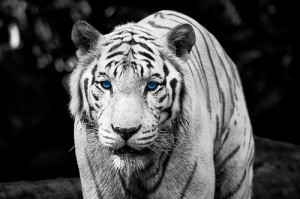
(I was no different. When I did this exercise, my dominant-hand answer was tiger.)
This tends to be an aspirational answer. In other words, this is how you would like to see yourself. This is the self-image to which you aspire.
When we switch over to the nondominant hand, the answers get a lot more interesting.
Switching hands activates what we think of as the right brain – the creative, holistic, subconscious, intuitive brain – that tends to be underdeveloped and underutilized. It lurks behind the so-called left brain, partly because our culture has traditionally prioritized left-brain thinking and also because all thoughts arising from the right brain have to be cleared through the left. This means that the left brain gets the final say (no matter how distorted or deluded).
The right brain is not concerned with protecting our ego and preserving the status quo. It’s more about reflecting the truth as we understand it. The subconscious is constantly absorbing and processing information, sending up hunches, flashes of insight, gut feelings. By switching the pen to your nondominant hand, it’s like you find a way to surface this hidden stream of nonverbal intelligence and translate it to words on the page.
The answer you wrote down with your nondominant hand is how you actually see yourself.

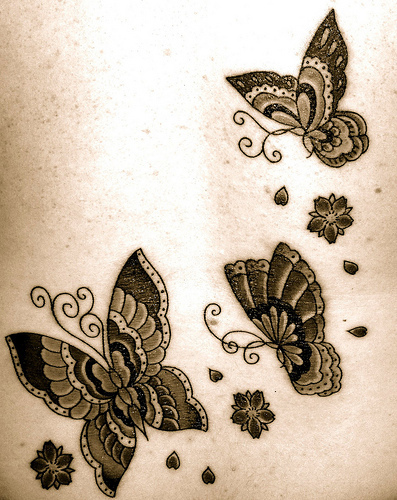
I surprised myself by writing down fox. Although my ‘tiger’ answer was predictable – I am fascinated by big cats, and would like to associate myself with their sleekness, strength, mystery and power – the ‘fox’ thing came out of nowhere. I could give a damn about foxes. In terms of the animal symbolism I have gravitated to over the years – lizards, owls, snakes, tigers, coyotes, dragons, butterflies, elephants – foxes have never been among them.
I went on to write
Crafty quick-witted adaptable burrowing elusive.
The funny thing was that this answer felt right, in a way that the tiger answer did not – felt more like wishful thinking. The burrowing resonated with me – I burrow into books, solitude, my own mind. A few days later, my new friend Erika Lyremark (also known as the Daily Whip) called me a “shapeshifter” – saying I move through different worlds, from Hollywood parties to tech gatherings to literary readings to blogging conferences. “Exploring,” I said, invoking the explorer archetype, but then I thought: adaptable.
I was fascinated by this exercise and immediately inflicted it on my nearest and dearest – or whomever was in range. My brother-in-law’s right-hand answer: tiger: largest cat beautiful dangerous solitary deadly. His left-hand answer: killer whale: cunning, smart, social, adaptable. My sister’s right-hand answer: eagle. Her left-hand answer: butterfly: transforms brings beauty to others weightless flickers unforgettable.
I texted her: Eagle vs. butterfly. What do u think?
She texted back: They both can fly….The eagle is a predator the butterfly is not unless you’re nectar.
I was struck by how, even though we’re all gentle people – “nice to the bone” as a close friend once called me, not necessarily as a compliment, since her mother wanted to know what was wrong with me (perhaps because I had offered to chop celery and carrots; I like chopping) – the three of us had all likened ourselves to big predators. My brother-in-law is six foot seven and a Hollywood stuntman, so physically this made sense for him – although I noted his shift from tiger to killer whale, an animal known as a gentle giant of the sea. Had our left-brain, linear, achievement-oriented culture conditioned us to think this way – aspiring to be dangerous instead of savoring an ability to bring beauty to the world?
We want to think of ourselves as powerful – but is being the biggest, strongest, most “dangerous”, the only way to be powerful?
Of course it isn’t. I recently described a dream to a friend, the most vivid dream I’ve had in years. I was on a ship in the middle of the ocean, no land in sight. A massive sea serpent uncoiled from the water, lifting high overhead, head slashing down to the deck to swallow men whole like chocolate bars. I realized its skin was protected by a seatbelt-like kind of armor (don’t ask) that had a frayed hole in it. I lifted the bow I was suddenly holding and sent an arrow into that single vulnerable spot. The beast collapsed into the water like a balloon animal deflating.
I woke up with such a sense of ick and distaste that I had to remind myself that I had killed the freaking thing. That was good, wasn’t it?
“So do you think this dream is about power?” my friend asked.
I hemmed and hawed. “I don’t know. Maybe. I guess so.”
“You’re the only person on this boat who figures out how to kill this monster and you don’t think this dream is about power?”
I had no answer to that.

“It’s not a brute-strength kind of power,” said my friend. “You don’t clobber the thing into oblivion. You use strategy, precision and focus.”
“So this dream,” I said slowly, “is about the power of my intellect?”
My friend went, “ding ding ding ding ding!” as if calling in the answer on a game show.
I thought: Crafty.
If my brother-in-law is a huge, gentle predator, and my butterfly sister isn’t a predator at all, I am a small, wily sort, a hunter who is also hunted (and sometimes ganged up on by idiots on horses). Giving up this aspirational fantasy of myself-as-tiger releases me into a better understanding of who I am, as opposed to who I think I should be. I adapt. I explore, shapeshift and burrow into an underground that is rich with networked tunnels and its own thriving society. I’m not particularly exotic. I don’t have the size or the strength – but I have the mind. I can live with that. By letting go of certain conventional notions of power (tiger!) I can claim, or reclaim, the power I have.
Because even a fox can bring down a monster.
What about you?
If you do this exercise, and it leads to any thoughts or insights, please share below.


April 4, 2013
the ones for me are the wild ones

the ones for me are the wild ones
who like to burn at both ends
they light the way
the creative is the shadow
country where you know
you must go.
you must step outside your civilizations.
you must give up being a lady
in order to pass through the gates
where the road winds down
to the underground.
if you are lost
a goddess will guide you.
if you eat or drink
the underground goes in you.
They will ask
What are you willing to die for?
What do you love hard?
(It shows us who you are.)
confession is the coin of passage
this is your chance
to create a new mythology
tell the stories
before they tell you
love or die
there’s no other way through. click to tweet


