
 Sign in with Facebook
James Gould Cozzens’s Followers (27)


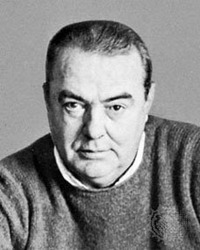
James Gould Cozzens
Born
in Chicago, IL, The United States
August 19, 1903
Died
August 09, 1978
Genre


|
Guard of Honor
—
published
1948
—
32 editions
|
|

|
By Love Possessed
—
published
1957
—
37 editions
|
|

|
Castaway
—
published
1934
—
18 editions
|
|

|
The Just And The Unjust: A Gripping Crime Mystery – Classic Police Drama in a Small-Town Murder Trial
—
published
1942
—
17 editions
|
|

|
Men and Brethren
—
published
1936
—
6 editions
|
|

|
S. S. San Pedro
—
published
1930
—
20 editions
|
|

|
The Last Adam
—
published
1933
—
11 editions
|
|

|
Ask Me Tomorrow, or, The Pleasant Comedy of Young Fortunatus
—
published
1940
—
3 editions
|
|

|
Children and Others
—
published
1964
—
2 editions
|
|

|
Just Representations: A James Gould Cozzens Reader
by
—
published
1978
—
4 editions
|
|
“The innocent supposition, entertained by most people, that even if they are not brilliant, they are not dumb, is correct only in a very relative sense.”
― The Just And The Unjust: A Gripping Crime Mystery – Classic Police Drama in a Small-Town Murder Trial
― The Just And The Unjust: A Gripping Crime Mystery – Classic Police Drama in a Small-Town Murder Trial
“About his madmen Mr. Lecky was no more certain. He knew less than the little to be learned of the causes or even of the results of madness. Yet for practical purposes one can imagine all that is necessary. As long as maniacs walk like men, you must come close to them to penetrate so excellent a disguise. Once close, you have joined the true werewolf.
Pick for your companion a manic-depressive, afflicted by any of the various degrees of mania - chronic, acute, delirious. Usually more man than wolf, he will be instructive. His disorder lies in the very process of his thinking, rather than in the content of his thought. He cannot wait a minute for the satisfaction of his fleeting desires or the fulfillment of his innumerable schemes. Nor can he, for two minutes, be certain of his intention or constant in any plan or agreement. Presently you may hear his failing made manifest in the crazy concatenation of his thinking aloud, which psychiatrists call "flight of ideas." Exhausted suddenly by this
riotous expense of speech and spirit, he may subside in an apathy dangerous and morose, which you will be well advised not to disturb.
Let the man you meet be, instead, a paretic. He has taken a secret departure from your world. He dwells amidst choicest, most dispendious superlatives. In his arm he has the strength to lift ten elephants. He is already two hundred years old. He is more than nine feet high; his chest is of iron, his right leg is silver, his incomparable head is one whole ruby. Husband of a thousand wives, he has begotten on them ten thousand children. Nothing is mean about him; his urine is white wine; his faeces are always soft gold. However, despite his splendor and his extraordinary attainments, he cannot successfully pronounce the words: electricity, Methodist Episcopal, organization, third cavalry brigade. Avoid them. Infuriated by your demonstration of any accomplishment not his, he may suddenly kill you.
Now choose for your friend a paranoiac, and beware of the wolf! His back is to the wall, his implacable enemies are crowding on him. He gets no rest. He finds no starting hole to hide him. Ten times oftener than the Apostle, he has been, through the violence of the unswerving malice which pursues him, in perils of waters, in perils of robbers, in perils of his own countrymen, in perils by the heathen, in perils in the city, in perils in the wilderness, in perils in the sea, in perils among false brethren, in weariness and painfulness, in watchings often, in hunger and thirst, in fastings often, in cold and nakedness. Now that, face to face with him, you simulate innocence and come within his reach, what pity can you expect? You showed him none; he will certainly not show you any.
Lighten our darkness, we beseech thee, 0 Lord; and by thy great mercy defend us from all the perils and dangers of this night; for the love of thy only Son, our Saviour, Jesus Christ. Amen.
Mr. Lecky's maniacs lay in wait to slash a man's head half off, to perform some erotic atrocity of disembowelment on a woman. Here, they fed thoughtlessly on human flesh; there, wishing to play with him, they plucked the mangled Tybalt from his shroud. The beastly cunning of their approach, the fantastic capriciousness of their intention could not be very well met or provided for. In his makeshift fort everywhere encircled by darkness, Mr. Lecky did not care to meditate further on the subject.”
― Castaway
Pick for your companion a manic-depressive, afflicted by any of the various degrees of mania - chronic, acute, delirious. Usually more man than wolf, he will be instructive. His disorder lies in the very process of his thinking, rather than in the content of his thought. He cannot wait a minute for the satisfaction of his fleeting desires or the fulfillment of his innumerable schemes. Nor can he, for two minutes, be certain of his intention or constant in any plan or agreement. Presently you may hear his failing made manifest in the crazy concatenation of his thinking aloud, which psychiatrists call "flight of ideas." Exhausted suddenly by this
riotous expense of speech and spirit, he may subside in an apathy dangerous and morose, which you will be well advised not to disturb.
Let the man you meet be, instead, a paretic. He has taken a secret departure from your world. He dwells amidst choicest, most dispendious superlatives. In his arm he has the strength to lift ten elephants. He is already two hundred years old. He is more than nine feet high; his chest is of iron, his right leg is silver, his incomparable head is one whole ruby. Husband of a thousand wives, he has begotten on them ten thousand children. Nothing is mean about him; his urine is white wine; his faeces are always soft gold. However, despite his splendor and his extraordinary attainments, he cannot successfully pronounce the words: electricity, Methodist Episcopal, organization, third cavalry brigade. Avoid them. Infuriated by your demonstration of any accomplishment not his, he may suddenly kill you.
Now choose for your friend a paranoiac, and beware of the wolf! His back is to the wall, his implacable enemies are crowding on him. He gets no rest. He finds no starting hole to hide him. Ten times oftener than the Apostle, he has been, through the violence of the unswerving malice which pursues him, in perils of waters, in perils of robbers, in perils of his own countrymen, in perils by the heathen, in perils in the city, in perils in the wilderness, in perils in the sea, in perils among false brethren, in weariness and painfulness, in watchings often, in hunger and thirst, in fastings often, in cold and nakedness. Now that, face to face with him, you simulate innocence and come within his reach, what pity can you expect? You showed him none; he will certainly not show you any.
Lighten our darkness, we beseech thee, 0 Lord; and by thy great mercy defend us from all the perils and dangers of this night; for the love of thy only Son, our Saviour, Jesus Christ. Amen.
Mr. Lecky's maniacs lay in wait to slash a man's head half off, to perform some erotic atrocity of disembowelment on a woman. Here, they fed thoughtlessly on human flesh; there, wishing to play with him, they plucked the mangled Tybalt from his shroud. The beastly cunning of their approach, the fantastic capriciousness of their intention could not be very well met or provided for. In his makeshift fort everywhere encircled by darkness, Mr. Lecky did not care to meditate further on the subject.”
― Castaway
“Moving on, while he wondered, the dark through which Mr. Lecky's light cut grew more beautiful with scents. Particles of solid matter so minute, gases so subtle, that they filtered through stopping and sealing, hung on the unstirred air. Drawn in with Mr. Lecky's breath came impalpable dews cooked out of disintegrating coal. Distilled, chemically split and reformed, they ended in flawless simulation of the aromas of gums, the scent of woods and the world's flowers. The chemists who made them could do more than that. Loose on the gloom were perfumes of flowers which might possibly have bloomed but never had, and the strong-smelling saps of trees either lost or not yet evolved.
Mixed in the mucus of the pituitary membrane, these volatile essences meant more than synthetic chemistry to Mr. Lecky. Their microscopic slime coated the bushed-out ends of the olfactory nerve; their presence was signaled to the anterior of the brain's temporal lobe. At once, thought waited on them, tossing down from the great storehouse of old images, neglected ideas - sandalwood and roses, musk and lavender. Mr. Lecky stood still, wrung by pangs as insistent and unanswerable as hunger. He was prodded by the unrest of things desired, not had; the surfeit of things had, not desired. More than anything he could see, or words, or sounds, these odors made him stupidly aware of the past. Unable to remember it, whence he was, or where he had previously been, all that was sweet, impermanent and gone came back not spoiled by too much truth or exact memory. Volatile as the perfumes, the past stirred him with longing for what was not - the only beloved beauty which you will have to see but which you may not keep.
Mr. Lecky's beam of light went through glass top and side of a counter, displayed bottles of colored liquid - straw, amber, topaz - threw shadows behind their diverse shapes. He had no use for perfume. All the distraction, all the sense of loss and implausible sweetness which he felt was in memory of women.
Behind the counter, Mr. Lecky, curious, took out bottles, sniffed them, examined their elaborately varied forms - transparent squares, triangles, cones, flattened ovals. Some were opaque, jet or blue, rough with embedded metals in intricate design. This great and needless decoration of the flasks which contained it was one strange way to express the inexpressible. Another way was tried in the names put on the bottles. Here words ran the suggestive or symbolic gamut of idealized passion, or festive night, of desired caresses, or of abstractions of the painful allure yet farther fetched.
Not even in the hopeful, miracle-raving fancy of those who used the perfumes could a bottle of liquid have any actual magic. Since the buyers at the counters must be human beings, nine of every ten were beyond this or other help. Women, young, but unlovely and unloved, women, whatever they had been, now at the end of it and ruined by years or thickened to caricature by fat, ought to be the ones called to mind by perfume. But they were not. Mr. Lecky held the bottle in his hand a long while, aware of the tenth woman.”
―
Mixed in the mucus of the pituitary membrane, these volatile essences meant more than synthetic chemistry to Mr. Lecky. Their microscopic slime coated the bushed-out ends of the olfactory nerve; their presence was signaled to the anterior of the brain's temporal lobe. At once, thought waited on them, tossing down from the great storehouse of old images, neglected ideas - sandalwood and roses, musk and lavender. Mr. Lecky stood still, wrung by pangs as insistent and unanswerable as hunger. He was prodded by the unrest of things desired, not had; the surfeit of things had, not desired. More than anything he could see, or words, or sounds, these odors made him stupidly aware of the past. Unable to remember it, whence he was, or where he had previously been, all that was sweet, impermanent and gone came back not spoiled by too much truth or exact memory. Volatile as the perfumes, the past stirred him with longing for what was not - the only beloved beauty which you will have to see but which you may not keep.
Mr. Lecky's beam of light went through glass top and side of a counter, displayed bottles of colored liquid - straw, amber, topaz - threw shadows behind their diverse shapes. He had no use for perfume. All the distraction, all the sense of loss and implausible sweetness which he felt was in memory of women.
Behind the counter, Mr. Lecky, curious, took out bottles, sniffed them, examined their elaborately varied forms - transparent squares, triangles, cones, flattened ovals. Some were opaque, jet or blue, rough with embedded metals in intricate design. This great and needless decoration of the flasks which contained it was one strange way to express the inexpressible. Another way was tried in the names put on the bottles. Here words ran the suggestive or symbolic gamut of idealized passion, or festive night, of desired caresses, or of abstractions of the painful allure yet farther fetched.
Not even in the hopeful, miracle-raving fancy of those who used the perfumes could a bottle of liquid have any actual magic. Since the buyers at the counters must be human beings, nine of every ten were beyond this or other help. Women, young, but unlovely and unloved, women, whatever they had been, now at the end of it and ruined by years or thickened to caricature by fat, ought to be the ones called to mind by perfume. But they were not. Mr. Lecky held the bottle in his hand a long while, aware of the tenth woman.”
―
Polls
1st Quarter 2018 Long Read Poll
David Copperfield by Charles Dickens, 1849, 974 pages
The Arabian Nights, 800, 1049 pages
Vanity Fair by William Makepeace Thackeray, 1847, 867 pages
All the King's Men by Robert Penn Warren, 1946, 661 pages
Lonesome Dove by Larry McMurtry, 1985, 945 pages
Sons and Lovers by D.H. Lawrence, 1913, 654 pages
An American Tragedy by Theodore Dreiser, 1925, 859 pages
The Decameron by Giovanni Boccaccio, 1353, 909 pages
Twenty Years After by Alexandre Dumas, 1845, 788 pages
The Life and Opinions of Tristram Shandy, Gentleman by Laurence Sterne, 1767, 784 pages
From Here to Eternity by James Jones, 1951, 816 pages
The Good Soldier Švejk by Jaroslav Hašek, 1921, 752 pages
Guard of Honor by James Gould Cozzens, 1948, 614 pages
Clarissa, or, the History of a Young Lady, 1748, 1534 pages
Topics Mentioning This Author
| topics | posts | views | last activity | |
|---|---|---|---|---|
The History Book ...:
 ARCHIVED: COMMUNITY ROOM (OFF TOPIC CAFE FOR CONVERSATION)
|
1134 | 670 | Jun 10, 2011 09:55AM | |
|
Reading with Style:
SU11 Reading w/Style Completed Tasks - Summer 2011
|
300 | 245 | Aug 31, 2011 09:09PM | |
| The Seasonal Read...: * Summer Challenge 2011 Completed Tasks (DO NOT DELETE ANY POSTS) | 2614 | 900 | Aug 31, 2011 09:18PM | |
| All Games, Nothin...: Title Game | 69 | 49 | Oct 13, 2012 04:40PM | |
|
Reading with Style:
Socializing & Announcements
|
1054 | 348 | May 28, 2013 11:56AM | |
| The Life of a Boo...: Bob's 2013 Group Challenge 12 Decades + 2 Again | 67 | 281 | Dec 30, 2013 05:45PM | |
| The Life of a Boo...: Bob's 2013 Reading Goals | 105 | 202 | Dec 31, 2013 03:15PM | |
| Gone with a Book: The Pulitzer Prize winner Fiction | 7 | 30 | Jan 18, 2016 01:44PM |
