
Cora Buhlert's Blog, page 100
February 27, 2016
Yet more reactions to the 2015 Nebula Awards Nominees
I already offered my own reactions to the 2015 Nebula nominees in this post and collected some responses from around the web here.
Now, for the third post about the 2015 Nebulas, here are some more reactions from around the web:
At the Fangirl Happy Hour podcast (which is on my personal Hugo list for best fancast BTW), Renay Williams and Ana Grilo talk about the 2015 shortlists for the Nebulas and the Kitschies.
In many ways, their comments match my own, down to the fact that I have never heard of Hugo Wilcken whose novel The Reflection is on the Kitschies shortlist either and that all but one of the Kitschies’ best debut novel nominees are unknown to me.
Over the past few years, I’ve come to the conclusion that the Kitschies fill a void in the SFF awards spectrum, because they tend to recognise works that are often overlooked due to not being core genre. In spite of her well-deserved acclaim in the greater literary world, Margaret Atwood is a name you’ll never see on the Hugo or Nebula shortlist, not least because of that giant squid comment, which she has since repudiated and which I suspect was based on a misunderstanding in the first place, since it is impossible to find the source of the comment. And a writer like Hugo Wilcken, published by a small literary press that is mostly known for its regular rants against Amazon, is not on the radar of most genre folks at all.
I also liked getting Ana and Renay’s impressions on the shortlist for the Andre Norton Award for best YA SFF, since I’m not that plugged into the YA sphere and therefore several of the nominees were unknown quatities to me, in spite of apparently having gotten a lot of buzz in the YA world. In many ways, this is a positive development, because it means that the Andre Norton Award has gotten better at recognising what YA readers are actually reading, whereas in the past the nominees often included (male) writers of adult SFF’s forays into YA (see Shipbreaker by Paolo Bacigalupi or Zoe’s Tale by John Scalzi), which got a lot of buzz in SFF circles, but not so much in YA circles.
Ian Mond also weighs in on the Nebula nominees, the Kitschies shortlist and notes a gap in the shortlist for the Aurealis Awards.
In particular, he notes that the Nebula nominations were rather predictable, largely because of the SFWA’s recommended reading list being made public. Coincidentally, Ana and Renay offered a good theory for the reasons behind this on their podcast, namely that given the ongoing uproar in fandom about secret and public slates and alleged or real awards manipulation, maximum transparency was probably the best answer.
Ian Mond is also pleased by the increased diversity of both the Kitschies and the Nebula nominees and notes a good gender mix as well as the presence of several writers of colour on both shortlists. It’s far from perfect, of course, and Ian Mond also notes that the same writers of colour keep showing up again and again, but it’s a start.
Ian Mond also notes that the Nebula nominees include several books that are part of a series, whereas the Kitchies tend to favour standalones. Given that the Kitschies also tend to favour works that are not core genre works, this isn’t all that surprising, since the prevalence of series is a genre thing (any genre, not just SFF), whereas literary fiction and literary genre works tend to favour standalones.
Unlike Ana and Renay (and me, for that matter), Ian Mond has also actually tried to read Charles E. Gannon’s Caine series and bounced off hard. In fact, Charles E. Gannon and Jack McDevitt are names that frequently pop up on the Nebula shortlist, but aren’t discussed a whole lot in the wider SFF sphere. Both strike me as authors that have a very devoted fanbase (which can be enough for an awards nomination), but not all that much impact outside their fanbase. There are a couple of other authors to whom I believe this applies as well. Small devoted fanbase, but little known or read in the wider SFF community.
In fact, I suspect this lies at the heart of most of the genre award controversies of recent years, namely that certain authors and/or their devoted fanbases simply fail to grasp that even though author X is massively popular in their circle, he or she isn’t all that well known nor highly regarded outside it.
To a certain degree I even sympathise. I have no idea why e.g. Ann Aguirre, Rob Thurman, Rachel Aaron/Rachel Bach or Simon R. Green – to name some core genre writers – aren’t more widely discussed in the SFF world and never show up on awards shortlists. Meanwhile, there are also authors whose names regularly show up on awards shortlists and whose every work gets a lot of buzz, even though I dislike their work so much that I’m not sure how it even got published in the first place, let alone landed on an awards shortlist. Coincidentally, I’m very pleased that this year’s Nebulas dodged at least three bullets of that sort and hope that the Hugos will dodge them as well.
However, where it gets ugly is when someone or a group of someones fails to grasp that the fact that their favourites are largely ignored is due to a discrepancy of taste and not to a conspiracy or affirmative action voting or any such nonsense.
Ian Mond also asks what the purpose of awards shortlists in general is (found via File 770), whether it’s a) to sell books, b) create buzz, c) honour the nominees, d) serve as a recommendation list, e) create a discussion about the state of the genre/literature or f) a combination of all of the above.
Personally, I choose option f), all of the above. a, b and c are obvious. d is rather obvious as well, since a lot of people – myself included – use awards shortlists as a recommendation list. Of course, this doesn’t mean that I will automatically read everything on a given shortlist (e.g. I won’t go out of my way to read Raising Caine, because it doesn’t sound like my thing at all), but I usually check out the nominees, particularly if they’re books I’ve never heard of. And if something sounds interesting, it makes me more likely to buy it.
As for option e, awards shortlists do create discussion, even in years that are not marred by one controversy or another. They also serve as snapshots about where the genre is going. Note how the Hugos went from only one woman (Naomi Novik) among the twenty nominees in the fiction categories in 2007 to nigh parity in 2013, though sadly the ratio has declined in subsequent years due to canine influence. Note how we are seeing more women and writers of colour on awards shortlists in recent years. Note how the Nebulas boasted only female winners for the first time in history in 2015. Note how some writers whose names frequently appeared on awards shortlists maybe ten years ago are no longer nominated, even though they are still alive and writing, because their brand of SFF is falling out of fashion. Note how the short fiction shortlists show the rise of the online zines and the decline of the traditional print magazines. Note how self-published works gradually make inroads onto the various genre awards shortlists.
So in short, awards shortlists offer a lot of material for debate, even if it is only, “How the hell did that crap get nominated?” and “Why was my favourite not nominated?”
Though Ian Mond is also correct in pointing out that the two weeks between the announcement of the Kitschies shortlist and the announcement of the winners are too short for any useful discussion, let alone to allow people to read the works (I presume the judges have already read them). But then, Ian Mond also points out that the Kitschies shortlist was usually announced earlier in the year, which suggests that there might be behind-the-scenes reasons at work here.
 Send to Kindle


February 25, 2016
More Reactions to the 2015 Nebula Award Nominees
I already shared my thoughts on the 2015 Nebula Award nominees in my last post. At the time, I also mentioned that I couldn’t find a whole lot of other analysis and reaction apart from discussion in the comments at a few genre sites.
There are a few more reactions now, though a lot of places are still conspicuously silent.
Chaos Horizon, who pretty accurately predicted this year’s Nebula nominees based on the SFWA suggested reading list, engages in some analysis of the Goodreads and Amazon ratings of the seven Nebula nominees for best novel.
At the Barnes & Noble Sci-Fi and Fantasy Blog, Joel Cunningham shares his thoughts about the 2015 Nebula nominees and is particularly impressed by the diversity of the nominees, both with regard to gender, race, ethnicity and sexual orientation, but also with regard to style, subgenre and subject matter.
Meanwhile, Nebula nominee Amal El-Mohtar shares her pesonal favourite reaction to the 2015 Nebula nominees, courtesy of former Locus reviewer Lois Tilton:
brb, printing out this reaction to the 2016 Nebula Nominees to have framed forever pic.twitter.com/o9bjpS8zag
— Amal El-Mohtar (@tithenai) February 23, 2016
Personally, I’m more inclined to agree with Joel Cunningham than with Lois Tilton, but then I’ve found that Ms. Tilton’s reviews rarely match my personal impression of the stories in question.
At Inverse, Lauren Sarner tackles one particular Nebula category, namely the Ray Bradbury Award for best dramatic presentation and points out that the Nebula nominees kick the Oscars’ arse in that respect.
The only problem with the post is that the Ray Bradbury Award and the Oscars aren’t really comparable at all, because the Oscars are for all motion pictures, regardless of genre, released within the eligiblity period, whereas the Ray Bradbury Award is for dramatic presentations, regardless of type, in the science fiction and fantasy genres, released within the eligibility period. Hence, Jessica Jones can be nominated for a Nebula Award, but is not eligible for the Oscars, since it is a streaming video series and not a motion picture, whereas this year’s Oscar darlings The Danish Girl and The Revenant are not eligible for the Nebulas (or the Hugos, for that matter), since neither is SFF, even though the title of The Revenant suggests a horror film.
So if we remove any nominees that aren’t eligible, there is actually quite a bit of overlap between this year’s Oscar nominees and Ray Bradbury Award nominees. The Martian, Mad Max: Fury Road and Inside Out are all nominated both for the Ray Bradbury Award and the Best Picture or respectively Best Animated Feature Oscar and are also nominated in several other categories, both technical as well as Best Screeplay, Best Actor and Best Director. Since Jessica Jones is not eligible, this means that of the Ray Bradbury Award nominees only The Force Awakens (Ryan Britt takes exception to this at Tor.com) and Ex Machina have been snubbed by the Academy, though The Force Awakens has been nominated in a couple of technical categories, while Ex Machina has been nominated for Best Original Screenplay and Best Special Effects. And even though the original Star Wars was nominated for Best Picture back in 1978 (and promptly lost out to Woody Allen’s Annie Hall in one of the great WTF? decisions of Oscar history), Star Wars isn’t really the sort of movie to win Oscar nominations, while Ex Machina was simply too obscure.
In conclusion, the Nebula and Oscar nominees don’t really differ all that much. However, Lauren Sarner makes an important point, namely that the Oscars tend to reward a particular type of movie – referred to as “Oscar bait” by many of us – that isn’t really all that popular among the general audience nor all that daring and innovative. If anything, the same sort of movies that used to win Oscars in the 1930s are still winning Oscars today (including the same appalling lack of diversity among the nominees), even though both film making and society itself have changed drastically in the intervening eighty years. And it’s very likely that today’s Oscar-bait “prestige” pictures will no more stand the test of time than those of the 1930s, whereas many of the snubs of today will become the timeless classics of tomorrow.
Finally, in his announcement of the Nebula nominees at Black Gate, John O’Neill makes a brief remark that 2015 was “a good year for Tor.com and Asimov’s“, which in the comments turns into discussion of the conspiracy theory, quite widespread among the Sad and Rabid Puppy crowd, that Tor allegedly manipulates the Hugo and Nebula Awards in favour of its own authors and books. The discussion is surprisingly civil, given how contentious these debates can become, and Nebula nominee Charles E. Gannon even pops in to say that the fact that the alien antagonists in his nominated novel Raising Caine are called the K’Tor is not intended as a jab against Tor. And of course, K’Tor is pretty typical for the names of alien species in the space opera and military SF genres.
Regarding the supposed Tor domination of the Hugo and Nebula Awards, it is notable that the name Tor shows up a lot on genre awards shortlists. However, Tor is a big imprint and publishes a lot of books. What is more, Tor.com is a popular genre site, which publishes approx. one piece of short fiction per week. And then there is their new novella line. So in short, the reason why the name Tor pops up a lot on awards shortlists is because they publish a lot of stuff in several categories.
What is more, for short fiction, the traditional print magazines such as Asimov’s, Analog and Fantasy & Science Fiction are difficult to access outside North America. For example, I have never seen Asimov’s, Analog or F&SF at a single newsstand in Germany. I have seen Asimov’s and Analog for sale in the UK – in London in the SFF basement of the late lamented Murder One – but that’s the only place in Europe where I have ever seen the so-called “big three” SFF magazines. As a result, I only ever see fiction from Asimov’s, Analog or F&SF when it is put online (which is how I read Eugene Fisher’s “The New Mother” and Sam J. Miller’s “Calved”) or shows up in a Year’s Best anthology. Meanwhile, I can read the various online magazines right here at my computer.
So if online magazines seem to dominate the genre awards shortlists of late, a large part of the reason is that they are more accessible to greater numbers of readers, particularly those outside the US. Now this is not that relevant to the Nebula, since I suspect that a sizeable number of Nebula voters subscribe to the print magazines (and note Asimov’s strong showing at the 2015 Nebulas). But it’s certainly relevant to the Hugos.
As for Tor.com, they don’t just publish a lot of good stories (though looking through my own list, I find that Lightspeed dominates, followed by Tor.com, Uncanny and Clarkesworld, whereas for novels, my list is dominated by Ace, followed by Orbit with Tor in third place), but they’re also pretty good at marketing them.
Years ago, I signed up for the Tor.com site. I haven’t posted there in ages and I’m not sure if I even still remember my log-in. However, I still get their newsletter every week with links to notable articles at Tor.com. This newsletter almost always also includes a link to a piece of short fiction. I usually click on that link and I often read the story. If I enjoy it, it goes on my personal “potential Hugo nominees” list. I doubt I’m the only SFF reader who does this and the result is that you see a lot of Tor.com stories on the various awards shortlists.
So you see, there is no conspiracy necessary, just a combination of wide market penetration, good works and clever promotion.
Meanwhile – just so they won’t be forgotten – a couple of other awards shortlists have been announced as well in the past few days. And so the nominees for the 2015 Kitschies, the 2015 Bram Stoker Awards and the 2015 Ditmar Awards have also been announced. Some very good and interesting choices are to be found on all three.
But then, 2015 was a strong year for SFF and at least so far, the various awards shortlists reflect that.
Send to Kindle
February 21, 2016
Two Literary Deaths and Some Thoughts on the 2015 Nebula Nominees
It’s been a sad day for the literary world, because on Friday we lost both Harper Lee and Umberto Eco.
Of the two, the death of Umberto Eco probably affects me more, because I vividly remember reading (and shuddering at) my mother’s copy of The Name of the Rose as a teenager. Of course, I didn’t get the many literary allusions until many years after. Except for William of Baskerville – I got that reference, only that I didn’t understand it was a literary allusion and instead assumed it meant Baskerville was a real place. I was also thrilled that Eco had mentioned Melk, where our partner school was located (the Abbey school in fact, the bus of our school musical group infamously got stuck while passing through the gates). References to Melk aside, I enjoyed the book as a straightforward historical thriller about murder and execution in the Middle Ages. Coincidentally, I’m pretty sure my Mom didn’t get the literary allusions either. But the genius of Umberto Eco was that his novels worked on multiple levels – you could read them as straightforward thriller or adventure novels or you could get so much more out of them.
By the way, the film version of The Name of the Rose also has the distinction of being the first “adult” movie I watched in the theatre. I enjoyed it, too, except for the sex scene between Christian Slater and Valentina Vargas (fairly tame by current standards and focussed on the bobbing backside of Ms. Vargas), which squicked out my thirteen-year-old self and caused me to vow that if sex looked like that, I’d never ever have any. I still think it’s a badly shot sex scene, by the way.
Unlike most of my American friends, Harper Lee means less to me than Umberto Eco did, because I came of age in the 1980s, at a time when To Kill a Mockingbird had fallen out of fashion in Germany and was little read in schools. I eventually encountered the novel, while at university, and though I enjoyed it, I was also keenly aware that I was past the age where you should discover the book.
Interestingly enough, in the twenty plus years since I graduated, To Kill a Mockingbird has experienced something of a renaissance and is once again read in grade 11 or 12, usually in the context of a unit on the American South and sometimes substituted by or complemented with John Grisham’s A Time to Kill (WTF?) and Kathryn Stockett’s The Help. The teens usually enjoy To Kill a Mockingbird a whole lot, but then they are at the right age for it. At least one loved it so much that he voluntarily read Go Set a Watchman once it came out (as well as The Help).
***
In happier news, the nominees for the 2015 Nebula Awards have been announced.
Once again, I could just recycle my Nebula reaction posts from last year and the year before, because my comments are quite similar. For the Nebula shortlist is once again pleasantly diverse, with women, writers and colour and international writers well represented (though as Joyce Chng pointed out on Twitter, we tend to see the same few writers of colour and international writers pop up again and again, even though they are hardly the only marginalised writers out there). And once more, I suspect that the Nebula shortlist will be a lot more representative of my personal tastes than the Hugo shortlist.
More detailed analysis under the cut:
Delving into the categories, I am pleased to see Ancillary Mercy by Ann Leckie and The Fifth Season by N.K. Jemisin nominated in the best novel category. I haven’t read Updraft by Fran Wilde and The Grace of Kings by Ken Liu, but I have heard good things about both and they’re definitely on my to-read list. I have also heard a lot of buzz about Uprooted by Naomi Novik and Barsk by Lawrence M. Schoen, but I have little desire to read either (though I will give them a shot, if either gets a Hugo nomination). I don’t much care about animal protagonists, which knocks out Barsk. As for Uprooted, in spite of all the buzz, the description just didn’t grab me enough to pick it up. Plus, Foz Meadows’ review suggests that it might push some of my personal buttons. As for Charles E. Gannon, this is his third Nebula Award nomination in a row, so he clearly has a fanbase among the electorate. However, I find that I have zero interest in his work. His novels strike me as “ye olde Nutty Nuggets” basically and that’s just not my thing.
Fran Wilde’s Updraft also shows up on the shortlist for the Norton Award, which is if not a first, at least very rare for the Nebulas. I’m also pleased to see Court of Fives by Kate Elliott and Shadowshaper by Daniel José Older nominated. Cuckoo Song by Frances Hardinge, Archivist Wasp by Nicole Kornher-Stace and Nimona by Noelle Stevenson got a lot of buzz, though I haven’t read either. However, I’m surprised that Nimona is eligible, considering it’s a graphic novel. The unknown quantities for me are Seriously Wicked by Tina Connolly (though it sounds great), Bone Gap by Laura Ruby (from the cover and blurb, I wouldn’t even have thought this was SFF) and Zeroboxer by Fonda Lee (sounds a bit like a YA version of Rollerball).
The nominees for the Ray Bradbury Award for best dramatic presentation are largely good choices as well. Star Wars: The Force Awakens and Mad Max: Fury Road were pretty much the obvious nominees this year and Ex Machina has gotten a lot of positive buzz as well, though I haven’t seen it (not sure if it even had a German theatrical release, in fact).
The Martian was another obvious nominee and I have resigned myself to the fact that I am apparently one of the very few people in the world who intensely dislikes both the novel and the film, because I consider them throwbacks to a type of science fiction I thought we’d moved beyond. But then, retrograde SF is exactly what the traditionalist crowd tends to like, so I’m not surprised The Martian popular.
The Pixar film, Inside Out, is probably another obvious nominee, because Americans – and the overwhelming number of Nebula nominators are Americans – just love Pixar films. But whatever magic Pixar movies possess, it doesn’t work on me nor on most Germans I know. My cousin falling asleep during one of the Toy Stories pretty much sums up how I feel about Pixar movies. And for the record, I love both classic Disney films and anime movies, but Pixar’s output is just “meh” to me. And in fact, I tend to place the annual Pixar or similar (since last year’s Lego Movie was not made by Pixar, apparently) movie under “No Award”, when it shows up on the Hugo ballot and I have voting rights.
Seeing an episode of Jessica Jones nominated in the dramatic presentation category was a pleasant surprise, because I’ve been very impressed with Jessica Jones, but felt that it was probably too female-centric for mass appeal. And indeed, I have seen a couple of comments – inevitably by men – that they didn’t like Jessica Jones and that Daredevil (which was the first thing produced under the Marvel banner that I didn’t like, even though I wanted to) was so much better. Though I’m a bit surprised that Jessica Jones is the only Marvel Studios production to make the Nebula shortlist this year, since I suspected Avengers: Age of Ultron and/or Ant-Man might make it as well. But then, Ant-Man was one of Marvel’s slighter entries (though fun) and a lot of people seem to dislike Age of Ultron, though I liked it quite a bit. I may talk some more about that eventually.
The short fiction categories look very good as well. In the novella category, I’m very pleased to see “The New Mother” by Eugene Fisher nominated, since that novella is definitely on my Hugo shortlist. I also enjoyed “The Pauper Prince and the Eucalyptus Jinn” by Usman T. Malik, “Binti” by Nnedi Okorafor and “Waters of Versailles” by Kelly Robson. I tried reading “The Bone Swans of Amandale” by C.S.E. Cooney, but bounced off it. For me “Wings of Sorrow and Bone” by Beth Cato is the only unknown quantity in this category.
In the novelette category, I enjoyed “And you shall know her by the trail of dead” by Brooke Bolander very much and it will go on my Hugo ballot. I also liked “Grandmother nai-Leylit’s Cloth of Winds” by Rose Lemberg. The other four stories are unknown to me, because they are from print magazines, which are pretty much impossible to get in Germany. Though I have heard praise for “Our Lady of the Open Road” by Sarah Pinsker.
The short story category looks very strong as well. “Cat Pictures Please” by Naomi Kritzer was a personal favourite last year and definitely on my Hugo list. For that record, I also loved Ms. Kritzer’s novelette “So Much Cooking”. I’m a big fan of Sam J. Miller’s work, though I haven’t read the Nebula nominated story of his yet. My favourite Sam J. Miller story last year as “Calved”, though I also liked “Ghosts of Home” very much. “Damage” by David Levine is another 2015 short story I liked a lot. IMO it was much better than “Turncoat”, last year’s Hugo nominee with a similar theme. “Madeleine” by Amal El-Mohtar and “Hungry Daughters of Starving Mothers” by Alyssa Wong are both very fine stories as well. The only short story on the Nebula shortlist that didn’t work for me is “Today I am Paul” by Martin L. Shoemaker. I like the idea behind the story, but the execution didn’t work for me and that fire was way too contrived. Besides – and that’s a personal thing – I just don’t like Alzheimer stories.
Coincidentally, the Nebula nominees once again prove that there are certain themes drifting both through the zeitgeist in general and the SFF part thereof in particular. Because if you look back at Hugo and Nebula nominated works, particularly in the short fiction categories, or check out the Year’s Best anthologies, you tend to find clusters of stories with particular themes showing up in certain years.
For example, approx. five years ago there was a flurry of really depressing stories about parents and dead children, all set in environments hostile to human life like an undersea base or an alien planet.
This year, I’m seeing a bunch of Alzheimer stories on the Nebula shortlist. Both “Today I am Paul” and “Madeleine” deal with the subject of Alzheimer’s disease, though only “Madeleine” manages to do something unexpected with it. One might also include “Hungry Daughters of Starving Mothers”, though the mother of the narrator is a reclusive hoarder (and not human anyway) rather than suffering from some form of dementia. Last year’s Hugo nominee “Totalled” by Kari English deal with cognitive decline as well, though it uses the old trope of the “brain in a jar” story to do so. Of course, Alzheimer’s disease and dementia are also big themes in the mundane media to the point that I coined a name for this subgenre, dementia dramas. I talk some more about dementia dramas and why I dislike them in these posts on the Oscars, where dementia dramas tend to do well.
Artificial Intelligence is another theme currently drifting through the zeitgeist, both genre and beyond, and so we’ve been seeing a flood of artificial intelligence stories of late. On this year’s Nebula ballot, there’s the delightful “Cat Pictures Please”, “Damages”, “Today I Am Paul” and of course Ancillary Mercy, the finale of the Imperial Radsch trilogy which probably started the trend. Ex-Machina in the dramatic presentation category would also fit right in here. Last year’s Hugo nominees “Turncoat” and “Big Boys Don’t Cry” also fit into this category, as does Avengers: Age of Ultron and the human/AI romance in Becky Chambers’ The Long Way to a Small, Angry Planet. It’s not a new theme, of course, AI stories have been part of science fiction for a long time now. But the current cluster of AI stories is certainly notable and it dovetails the fact that we’re also currently seeing a lot of articles about artificial intelligence in the media, from “AIs can’t even successfully solve an 8th grade science test” to “OMG, AIs are going to exterminate us all”.
Though the AI story is involving, for the AI protagonists of previous years were often military systems and autonomous weapons of some kind such as Breq from the Imperial Radsch trilogy, Maggie from “Big Boys Don’t Cry” or Benedict from “Turncoat” and the focus was on these weapons breaking away from their masters. This year still has military systems such as the narrator of “Damage” and of course Breq ditching their programming and finding their own moral compass. But there are also more benevolent AIs such as the meddling and cat-obsessed narrator of “Cat Pictures Please” and the care-bot from “Today I am Paul”.
Meanwhile, the fairytale retelling or faux fairytale (a.k.a. Kunstmärchen) trend of the past few years seems to be fading somewhat, which is fine by me, because I never much cared for it. Part of this is cultural protectiveness, because no one likes to have their culture appropriated, and part of it is that a lot of fairytale retellings are not nearly as clever and innovative as they think they are. Cause if thirty to forty year old Czech TV movies did it before (and often better), it’s neither new nor innovative.
Notable by its absence is climate change as a theme. Because nary a week goes by without another article about cli-fi a.k.a. fiction about climate change. Here are two fairly recent examples by Rafi Letzter and James Wallace Harris; there are many more. However – and that’s interesting – I don’t really see this alleged rise of cli-fi reflected in the SFF fiction I read and in the SFF fiction that is nominated for awards all that much. Paolo Bacigalupi tends to write about climate change and received a number of awards nominations and even wins for The Wind-up Girl and Shipbreaker, but that was a couple of years ago and his latest book hasn’t received the same attention. Of recent short fiction, “Calved” by Sam J. Miller is set in a world ravaged by climate change, while last year’s Hugo nominated novella “Flow” by Arlan Andrews Sr. is a sort of anti-climate-change story set in a post-apocalyptic world during a new ice age.
Another trend I’ve noticed in recent years are stories about parents, children and legacies. Of this year’s Nebula nominees, “The New Mother”, “Hungry Daughters of Starving Mothers” and “Madeleine” all fall into this category. Other 2015 stories with this theme are “Calved” by Sam J. Miller (I suspect his Nebula nominated story “When your child strays from God” would fit in there as well) and “Points of Origin” by Marissa Lingen. In the past few years, “Selkie Stories are for Losers”, “The Water The Falls On You From Nowhere” and “Totalled” would also fit into this category. In some ways, this even ties into the taste for really depressing stories about the grieving parents of dead children that were popular approx. five years ago.
In recent years, we’ve also had a cluster of stories about LGBT relationships (which inevitably infuriated the canine fraction of fandom), such as John Chu’s “The Water That Falls on You from Nowhere”, Sofia Samatar’s “Selkie Stories are for Losers” or Sam J. Miller’s “We are the Cloud”. This continues in this year’s Nebula Awards, since among the nominees, “The New Mother” by Eugene Fisher, “Hungry Daughters of Starving Mothers” by Alyssa Wong and “Grandmother nai-Leylit’s Cloth of Winds” by Rose Lemberg feature LGBT protagonists, ditto for Sam J. Miller’s not nominated story “Calved”.
This looks like a trend at first glance, but it’s actually a case of normalisation, for until fairly recently, the SFF genre was extremely heteronormative and such stories were plain not published. So now we’ve finally broken through this heteronormativity to some degree, we suddenly start seeing a lot more stories with LGBTQI protagonists, so it seems like a cluster, even though it’s actually due to the SFF genre finally reflecting the wider world. Ditto for the increase in stories with non-American and non-Western settings and protagonists. SFF was so US and western-centric for so long that what is actually a normalisation, namely an increase in non-American and non-Western settings and characters, seems like a trend.
I wanted to link to some other reactions to this year’s Nebula nominations, but so far I haven’t found a lot of them beyond the wholly understandable squeeing of the nominees.
Nicholas Whyte has ranked the best novel nominees by Goodreads/Library Thing stats and Rocket Stack Rank offers an annotated list of the 2015 Nebula nominees in the short fiction categories with links to reviews, etc… There is also a bit of discussion going on in the comments of James Nicoll’s livejournal and File 770.
Comments are off, because awards posts tend to bring out the ugly.
Send to Kindle
February 19, 2016
New Release: Valentine’s Day on Iago Prime
One of the 31 stories I wrote during the July short story challenge last year was a science fiction short called “Valentine’s Day on Iago Prime”. It was a story about a young couple celebrating their first Valentine’s Day on a newly settled planet and was inspired by a piece of SF art showing two spacesuited figures standing hand in hand on an alien beach.
Until now, “Valentine’s Day on Iago Prime” remained unpublished and uncollected, because it didn’t really fit in with any of the other stories I wrote during that challenge.
However, with Valentine’s Day approaching, I dug up the story again and expanded it somewhat (the original was very short) so it could stand alone as a science fiction holiday story. Because on of the strengths of indie publishing is that it allows us to put out stories to coincide with holidays, etc… without months of preparation.
I had planned to announce the story on Valentine’s Day, but unfortunately two major vendors decided to take their time in putting the story online – apparently, there was a public holiday in the US and another in Canada just that very weekend.
And so here it is, Valentine’s Day on Iago Prime – a bit late, but still a nice story about a couple trying to hold on to their personal traditions in a radically different environment. Oh yeah, and it has Welsh people. In space.
By the way, Valentine’s Day on Iago Prime is also today’s featured new release at the Speculative Fiction Showcase, the indie speculative fiction blog I run together with Jessica Rydill. We featzre new indie speculative fiction releases, author interviews, guest posts, link round-ups and much more several times per week, so check it out.
And now get ready to celebrate…
Valentine’s Day on Iago Prime Kai and Maisie are about the celebrate their first Valentine’s Day on the planet Iago Prime. However, the holiday traditions they established back on Earth such as celebrating Valentine’s Day with a picnic on the beach are impossible to maintain in the hostile environment of their new home. But in spite of the many limitations imposed by living on Iago Prime, Kai pulls out all the stops to give Maisie an unforgettable Valentine’s Day.
This is a science fictional Valentine’s Day story of 2200 words or approx. 10 print pages.
More information.
Length: 2200 words
List price: 0.99 USD, EUR or GBP
Buy it at Amazon US, Amazon UK, Amazon Germany, Amazon France, Amazon Netherlands, Amazon Spain, Amazon Italy, Amazon Canada, Amazon Australia, Amazon Brazil, Amazon Japan, Amazon India, Amazon Mexico, Kobo, Barnes & Noble, Apple iTunes, Scribd, Smashwords, Inktera, txtr, Thalia, Weltbild, Hugendubel, Buecher.de, Libiro, Nook UK, DriveThruFiction, OmniLit/AllRomance e-books, Casa del Libro, Flipkart, e-Sentral, 24symbols and XinXii.
Send to Kindle
February 12, 2016
New release: Our Lady of the Burning Heart
I have a new release to announce for today. Though it’s not quite that new anymore, I just forgot to announce it and only remembered, because I have another new release to announce in the next few days.
It’s a bumper edition of two crime shorts which deal with issues of faith, fate and coincidence. “Our Lady of the Burning Heart” is another of the stories to come out of the July short story challenge, while “Lucky Harry” is the English language version of “Harry im Glück”, my contribution to the German indie anthology Kurz Geschichten für Zwischendurch.
Our Lady of the Burning Heart
 Two stories of crime, chance and coincidence
Our Lady of the Burning Heart
Liam is a small time criminal in a world of trouble. Cause he owes twenty thousand dollars to local gangster Dan “the Man” O’Brien and if Liam doesn’t pay back him within twenty-four hours, he’s in for a whole world of pain.
Liam does not have twenty thousand dollars. All he has are four dollars and forty-seven cents and a plan. For there is a horse running tonight, a horse sure to win him the missing twenty thousand dollars and more. If Liam only had enough money to bet on it.
So when Liam passes the church of Our Lady of the Burning Heart and finds the door open late at night, he does what a good Catholic boy like him should never even consider. He ventures into the church, intending to rob the collection box.
But a statue of the Virgin Mary with an eerily glowing heart, a forgetful priest and a lost bus ticket conspire to rescue Liam from Dan “the Man” and return him to the path of righteousness…
Bonus story: Lucky Harry
In former East Germany, Dennis has robbed a bank and has found the perfect hiding place for the loot, an old soap factory deserted since the unification. But his plan is thwarted by homeless Harry, a bottle of Soviet era vodka and Lenin’s birthday…
More information.
List price: 0.99 USD, EUR or GBP
Length: 4900 words
Buy it at Amazon US, Amazon UK, Amazon Germany, Amazon France, Amazon Netherlands, Amazon Spain, Amazon Italy, Amazon Canada, Amazon Australia, Amazon Brazil, Amazon Japan, Amazon India, Amazon Mexico, Kobo, Barnes & Noble, Apple iTunes, Scribd, Smashwords, Inktera, txtr, Thalia, Weltbild, Hugendubel, Buecher.de, Libiro, Nook UK, DriveThruFiction, OmniLit/AllRomance e-books, Casa del Libro, Flipkart, e-Sentral, 24symbols and XinXii.
Send to Kindle
January 30, 2016
Indie Speculative Fiction of the Month for January 2016
 It’s that time of the month again, time for “Indie Speculative Fiction of the Month”.
So what is “Indie Speculative Fiction of the Month”? It’s a round-up of speculative fiction by indie authors newly published this month, though some December books I missed the last time around snuck in as well. The books are arranged in alphabetical order by author. So far, most links only go to Amazon.com, though I may add other retailers for future editions.
Once again, we have new releases covering the whole broad spectrum of speculative fiction. We have space opera, military science fiction, science fiction romance, paranormal romance, epic fantasy, urban fantasy, post-apocalyptic science fiction, dystopian fiction, young adult fiction, short fiction anthologies, shapeshifters, demons, time travel, questing knights, captive princes, wish granting djinni, drug-smuggling gnomes, hospital ships, were-squirrels, adventures on Mars, the battle of the sexes and much more.
Don’t forget that Indie Speculative Fiction of the Month is also crossposted to the Speculative Fiction Showcase, a group blog run by Jessica Rydill and myself, which features new release spotlights, guest posts, interviews and link round-ups regarding all things speculative fiction several times per week.
As always, I know the authors at least vaguely, but I haven’t read all of the books, so Caveat emptor.
And now on to the books without further ado:
 Zero Hour Part 3: Revelations by Eamon Ambrose:
The acclaimed post-apocalyptic saga continues as our two heroes continue their journey, but it soon becomes clear that the odds are against them. Will they reach the Facility and find the answers they need?
 Caught in the Rush by Eva Chase:
Fiona Wilde has always lived up to her last name, but a night in the emergency room was more than she bargained for. Now six months clean and sober, she’s thrown herself back into the only job she feels qualified for—guarding the emerging stars of L.A. from the demonic Glowers—while getting the rush she craves from casual encounters, always leaving before anyone can leave her. When her teen TV star client’s hot older brother Will arrives home for spring break, she sees the perfect opportunity for a fling with a built-in end date.
Then the Glowers launch an unexpected attack, leaving Fiona scrambling to keep her client safe even as Will steals past the walls around her heart. With the demons closing in and the starlet rebelling, the stability Fiona has clung to is slipping away. Her growing connection with Will might be the thing that saves her—or the thing that tears her apart.
The second book in The Glower Chronicles, a steamy New Adult paranormal series.
Each book in The Glower Chronicles contains a stand-alone romance, but it is recommended that you read them in order to best appreciate the ongoing subplots.
 Singularity by Taitrina Falcon:
The Temporal Response Unit (TRU) has one purpose: find time travelers and stop them in their tracks. It’s not because there is a timeline to protect, for the future is unwritten. The time travelers can’t change their past, but their actions impact our future in ways we can only guess.
TRU Agent Lucas Weiss is on his first case, charged with finding the time traveler and stopping him. Within an hour of the time traveler’s arrival, the town has its first murder of the year. On the eve of announcing a new cancer miracle drug, the victim is none other than prominent Leomins BioTech cancer researcher Dr. Lowe.
Finding the time traveler and learning his motives will require more ingenuity and know-how than Weiss may be prepared for, especially when the clues lead him to an even more elaborate scheme with far more operatives at play. As the TRU team searches, a showdown begins with potentially devastating consequences.
The Nexus has been formed.
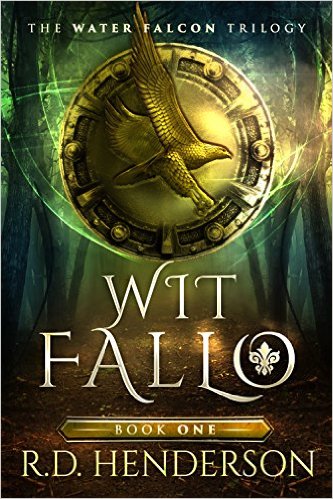
Wit Fallo, a white gnome, is a shiftless and lazy boat captain who loves money, but hates working.
The boat captain thinks he is presented with an opportunity of a life time to live the free and easy life when a drug kingpin hires him to be part of his narcotics trafficking operation. All Wit has to do is a four or five drug smuggling runs a week between three islands in the Brown Triangle on the Earth Realm, and in no time he would have more than enough money to do whatever he wanted without any worries or consequences.
Unfortunately, things do not work out as well as Wit hoped when three of the drug kingpin’s more senior people are killed in his office and he is the only survivor.
Instead of seeking revenge, the drug kingpin decides to retire and sells his narcotics trafficking network to Tom Bolden, a halfling, and crime lord based in the Fairy Realm.
Wit realizes with the retirement of the drug kingpin that the possibility of the free and easy life will not become a reality, and he will remain a boat captain in the Brown Triangle.
Tom Bolden, however, has other plans for the white gnome. Tom paid a lot of money to acquire the narcotics trafficking network, and someone has to pay him back. Wit is the person who has to pay Tom back because of what happened in his office.
Wit has no choice but to agree to become a messenger and enforcer for Tom as a way to pay him back.
The problem is Wit is ill-equipped and does not have the necessary skills and talent to be of any use for Tom.
The even bigger problem for Wit is despises living in the Fairy Realm because everything is based on magic. He hates magic. Pixies, brownies, fairies, and other types of fairy folk because they are made of magic and use magic. He hates pixies, brownies, fairies, and the rest of the fairy folk because of their connection to magic. Wit, unfortunately, has to work these fairy folk because they are trusted members of Tom Bolden’s organization.
The biggest problem for Wit, even with how he hates living in the Fairy Realm, is he still has to pay the money he owes Tom Bolden.
 Nuts About You by Kate Lowell:
Nathan’s been crushing on one of his regular Bulk Mart customers for a while now. In squirrel form, he sits on Vince’s bird feeders, munching on seeds and enjoying the eye candy. Until the day Vince notices him raiding the feeder…
 Three Wishes by Lisa Manifold:
Who wouldn’t want a do-over?
That is the question that twenty-six year old Tibby Holloway is asking herself. After a long night of eating too much ice cream and going over all her missed chances, she’s surprised by a visitor. A free-lancing djinn who makes her the offer of a lifetime. He’ll give her three chances, three wishes, to go back and change her life. She can change her career, find the man she loves.That could be a problem as there’s at least two in the “man she loves” category.
There’s also a catch. A Really Big Catch.
She can’t stay in any of these new lives her wishes create. Once she’s gone back three times, the djinn will decide where she ends up. He’s firm on this – she’ll have no say in the matter. After deciding which points in her life she wants to do over, she must then decide if it’s worth risking all she may achieve. Because to find out what might have been, she has to give up all control over what will be. Would it be better to not even know?
It will all come down to her
Three Wishes
 Valley of the Shadow by Christina Ochs:
A captive prince. A desperate princess. An alliance that will shake the foundations of an empire.
In the wake of battle, Kendryk finds himself the prisoner of Empress Teodora. As war ravages Terragand, Kendryk’s guilt is matched only by his fear that he will never see his family again. Gwynneth, in possession of a valuable captive but sworn to keep him close, faces Teodora’s wrath as she waits in anguish for relief.
But when Gwynneth’s rescue comes, the empire will never be the same again.
A tide of religious upheaval sweeps across the land, bearing men and women toward their fates. The delicate joy shared by Janna and Braeden will be shattered; the king of a neighboring kingdom will walk the edge of madness; and an oath of vengeance will bind three unlikely allies together in a desperate attempt to curb Teodora’s ambitions once and for all.
The Desolate Empire, Christina Ochs’ epic fantasy series, continues in Book 2:Valley of the Shadow.
 Of One Skein, Part 2 by P.J. Post:
This romance brought to you by the end of the world…
The Del Ray Motor Inn isn’t real.
Zombies, they aren’t real either.
But Jem and Pixie, they’re real, and so is their pain.
Last night he was torn between saving the lost children, and selfishness, ignoring everything and racing back to Emily, to Sam, but none of that matters now.
He’s infected and isn’t ever going to see his friends again, his reason, his love.
But now, in his last days, Fate has given him one final chance at redemption; to get Jem and Pixie somewhere safe before the fever comes, before the black-eyed sickness comes – before he comes for them.
Author’s Note: Feral is an ongoing serialized story.
 The End of the Trail by Louis Rakovich:
A barren land of salt and snow; a castle where underground paths twist and turn in endless circles and a reclusive king has not shown his face in years; a forest where few things are what they seem. An unnamed hero must navigate through these places as he takes on the task of tracking down a supposed witch, in a story that blends dream and reality, rumor and truth, danger and hope.
 Love Hurts: A Speculative Fiction Anthology edited by Tricia Reeks:
Twenty-six brilliant speculative fiction stories about love, and the pain that so often accompanies it. Enjoy a cornucopia of imaginative tales, wondrous settings, and unforgettable characters—such as the disillusioned time traveler who visits ancient Japan to experience a “Moment of Zen,” the young woman from planet Kiruna who can only communicate in song when the moonlet Saarakka is up, and the sorcerer who loses their happiness in a bet with a demon.
Rich and wonderfully diverse, this collection spans many speculative fiction genres: from SciFi to Dystopian, from Fantasy to Magical Realism, from Steampunk to Superhero, from Horror to Weird. Sometimes funny, occasionally happy, frequently gut-wrenching—these stories will take your heart on a wild emotional ride.
Stories by Jeff VanderMeer, Hugh Howey, Karin Tidbeck, Charlie Jane Anders, Holly Phillips, Aliette de Bodard, A. Merc Rustad, Steve Simpson, Mel Paisley, J. D. Brink, Matt Leivers, Michael Milne, Michal Wojcik, Carla Dash, Terry Durbin, Michelle Ann King, Kyle Richardson, Leah Brown, G. Scott Huggins, Dan Micklethwaite, Victoria Zelvin, Shannon Phillips, Keith Frady, Jody Sollazzo, David Stevens, and Morgen Knight.
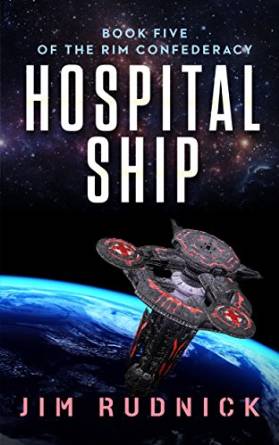
“After exploding with rage and injuring some Caliphate marines, Tanner is sent to the Barony Hospital ship on a ninety day observation to see if he’s really sane. At the same time, he is challenged by his doctors and psychiatrist to see if he can defeat his alcohol addiction and to combat his PTSD too.
Also on the ship is the Barony Secure labs where the research teams are trying to find the Ikarian virus vaccine to give longevity to the RIM—and the Baroness is interested in their success.
While the Caliphate continues to try to find a way to steal the vaccine, they end up using a vacjumper—someone who can go right out into outer space with no suit and attempt to break into the lab that way.
Called on to forget about his illness, Tanner must rise to heed the call to defeat the vacjumper and to do that he must jump out into space on his own. Death, virus vaccines and love all play a part for him and his quest…”
 The Last Giant by Frances Smith:
Corona is besieged. Princess Ameliora can see her enemies gather beyond the walls. It has been many years since Ameliora abandoned the Captain-Generalcy of the Corona Firstborn, years since she donned her armour or took up her sword. Now, with all the warriors dead and the city gripped by terror, the aged warrior must take up arms and armour one last time, and usher an age of heroes to its close.
A story of 10,000 words.
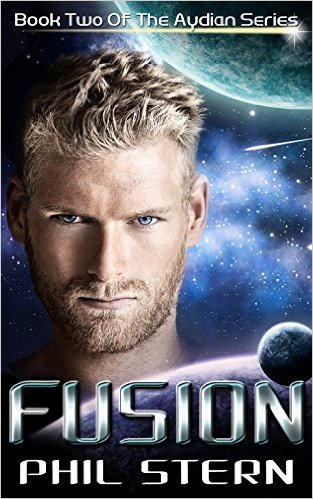
With Aydia lurching ever closer to a general war, old loyalties are being stretched to the breaking point, even while radical new allegiances are taking shape.
Now on the run together, Rayson and Saira desperately strive to form a coalition opposing the dark forces sweeping their planet. Forced to work directly with both the Kax and the Alliance governments, the two former lovers must also finally acknowledge the scandal of their high-profile past.
Meanwhile, the details of that history continue to assert themselves. Fifteen years before, the Save Saira movement nearly destroyed the young Srendian. How can Saira possibly hold everyone at bay, even as the most damning fallout from her innocent college liaison remains secret?
Fusion is the second book in The Aydian Series, with the story picking up right where it left off at the end of Aydia.
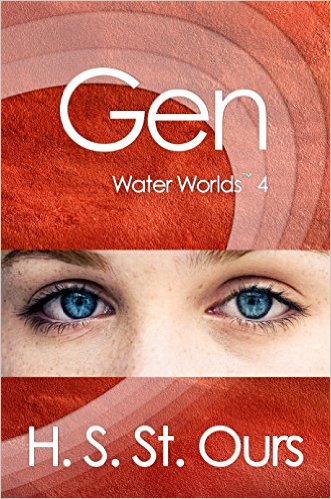
Gen was angry and she knew it. Angry about her overprotective parents, angry about the way she was teased about her height, and angry about the dirt and grime that infested every corner of Mars. But soon, she’d be on rotations. Too few went Outside on purpose anymore, just to shiver against the icy cold or feel the pressure in the slowly thickening air. But an ancient prophecy of destruction came to her in haunting visions, and now it’s up to Gen to warn them all – and maybe even save worlds.
 Falling As She Sings by C.J. Sursum:
In the not-so-distant future, the rise of terrorism leads to a new and chilling subjugation of women. But as civilization breaks down, one wealthy woman builds a massive, walled-in enclave, and outfits it with the technology to be completely self-sustaining.
Her sole stipulation: only women are allowed in. Within the enclave walls, these women—Vestals—lead lives of culture and ease, free of the burden of husbands and children. Outside the walls, men have devolved into feral, violent Brutes roaming the surrounding wilderness. The Vestals need them for one purpose only—to reproduce themselves.
But Menna, a beautiful Vestal scientist in charge of breeding, makes a disastrous mistake while extracting one captured Brute’s seed. Disturbing interactions with him shatter her preconceptions of Brutes, and her image of herself. Ultimately, she is forced to choose between her comfortable, sterile existence and a harsh, brutish unknown.
Powerful and profound, Falling as She Sings is at once science fiction adventure, spiritual thriller, and visionary love story. It’s a searching, funny commentary on the eternal, yet ever fresh and compelling forces driving relationships between the sexes.
 Burned by Magic by Jasmine Walt:
In the city of Solantha, mages rule absolute, with shifters considered second-class citizens and humans something in between. No one outside the mage families are allowed to have magic, and anyone born with it must agree to have it stripped from them to avoid execution.
Sunaya Baine, a shifter-mage hybrid, has managed to keep her unruly magic under wraps for the last twenty-four years. But while chasing down a shifter-hunting serial killer, she loses control of her magic in front of witnesses, drawing the attention of the dangerous and enigmatic Chief Mage.
Locked up in the Chief Mage’s castle and reduced to little more than a lab rat, Sunaya resists his attempts to analyze and control her at every turn. But she soon realizes that to regain her freedom and catch the killer, she must overcome her hatred of mages and win the most powerful mage in the city to her side.
 Reckoning in the Void by J.T. Williams:
The world falls towards darkness.
Magic is awakening in the north and the Grand Protectorate retreats after its bloody defeat at Srun. Sviska stands with the Island Nation against the evils of The Order and the Itsu Priest as the allies of magic make plans for their push against the capital city of their enemy. But all is not as it seems.
The Itsu Priest is tightening his grip on the legions of the north changing them from men to unholy beasts. The Saints of Wura must move quickly to save Garoa’s daughter from his evil clutches but some fear she could already be dead. Furthermore, hundreds have been kidnapped as sacrifices for a dark ritual and the time for the incantation draws near.
Sviska is moving closer to unlocking the powers of his Dwemhar ancestry but as the blood curse ensnares his mind, he can only pray he is powerful enough to resist the will of The Order.
He made a stand against a dark evil in the icy mountains of Elinathrond but now his life, and that of those he has grown to call friends, may be forfeit.
Send to Kindle
January 24, 2016
Photos: More Magical Hoarfrost
The snow and frost that held most of Germany in its grip last week is gone by now, but before it left, it still gave us a beautiful morning with bright blue skies and hoarfrost covered branches.
Hoarfrost usually doesn’t last long and indeed it was gone by noon. However, I was able to take some photos beforehand. No special locations, just my weekly grocery haul.

The view from my front door this morning.

Every tree along the street is covered in hoarfrost.
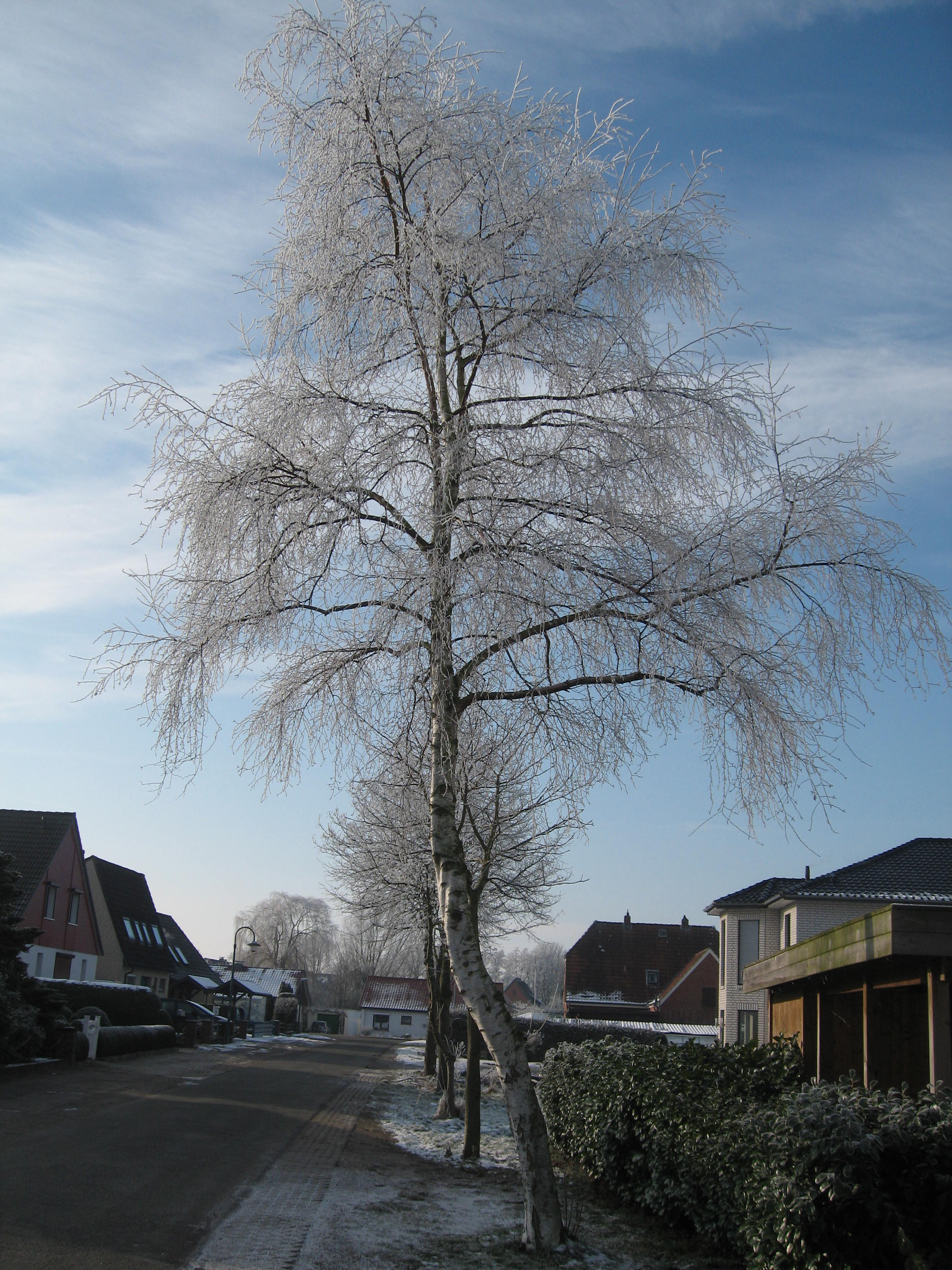
It’s the same in the other direction. Hoarfrost covered trees all along the street.

Hoarfrost covered trees.

Another hoarfrost covered tree.

Hoarfrost most typically forms on bare branches, but this oak tree next to my home, which doesn’t lose its leaves until spring, got frosted over as well.

The Groot colony that has taken root on Brinkum cemetery, got frosted as well.

A close-up look at some hoarfrost covered branches.

Hoarfrost covered trees, a parking lot and a long defunct Chinese restaurant in Brinkum-Nord.

Hoarfrost covered trees surround this 1950s house in the Bremen neighbourhood of Kattenturm.

Wolfskuhle (wolf pit) Park in Bremen-Kattenturm looks like something out of a fairy tale.

A look at some hoarfrost covered branches.
Send to Kindle
January 21, 2016
Photos: Magical Hoarfrost
Our current cold spell is still continuing with temperatures as low as minus nine degrees Celsius last night.
My students, who hail from Syria, Iran and Eritrea, are not used to such weather at all and a lot of them were notably unwell today. “Is winter in Germany always like this?”, one of them asked me. “Not always, but sometimes”, I said.
However, the winter also has its pretty sides. And today it showed one of them, for I woke up this morning to find all trees and bushes in the neighbourhood covered in hoarfrost. And since that sight is quite rare, I also took some photos:

A hoarfrost covered tree

Looking up at the hoarfrost covered branches of a birch tree.

The hoarfrost covered branches of a bush in the neighbours’ garden.
Send to Kindle
January 19, 2016
Photos: Snowy Winter Woods 2016
Last weekend, we had snow again, quickly followed by an extended period of frost. And since I had the time and inclination, I took the opportunity to go for a stroll through the snowy winter woods.
The woods in question are Westermark forest near Syke, which is a favourite hiking spot of mine and which has been featured in these pages before.
Of course, I took my camera as well and snapped some photos of frosted branches and snowy winter woods:

The main path through the Westermark woods in all its snow-covered glory. Note the big piles of timber along the side of the path.

One of the timber piles viewed through the snowy woods.

A close-up look at one of the timber piles. The timber was stacked some three metres high here.

A fork in the road.

A snow-covered woodland path.
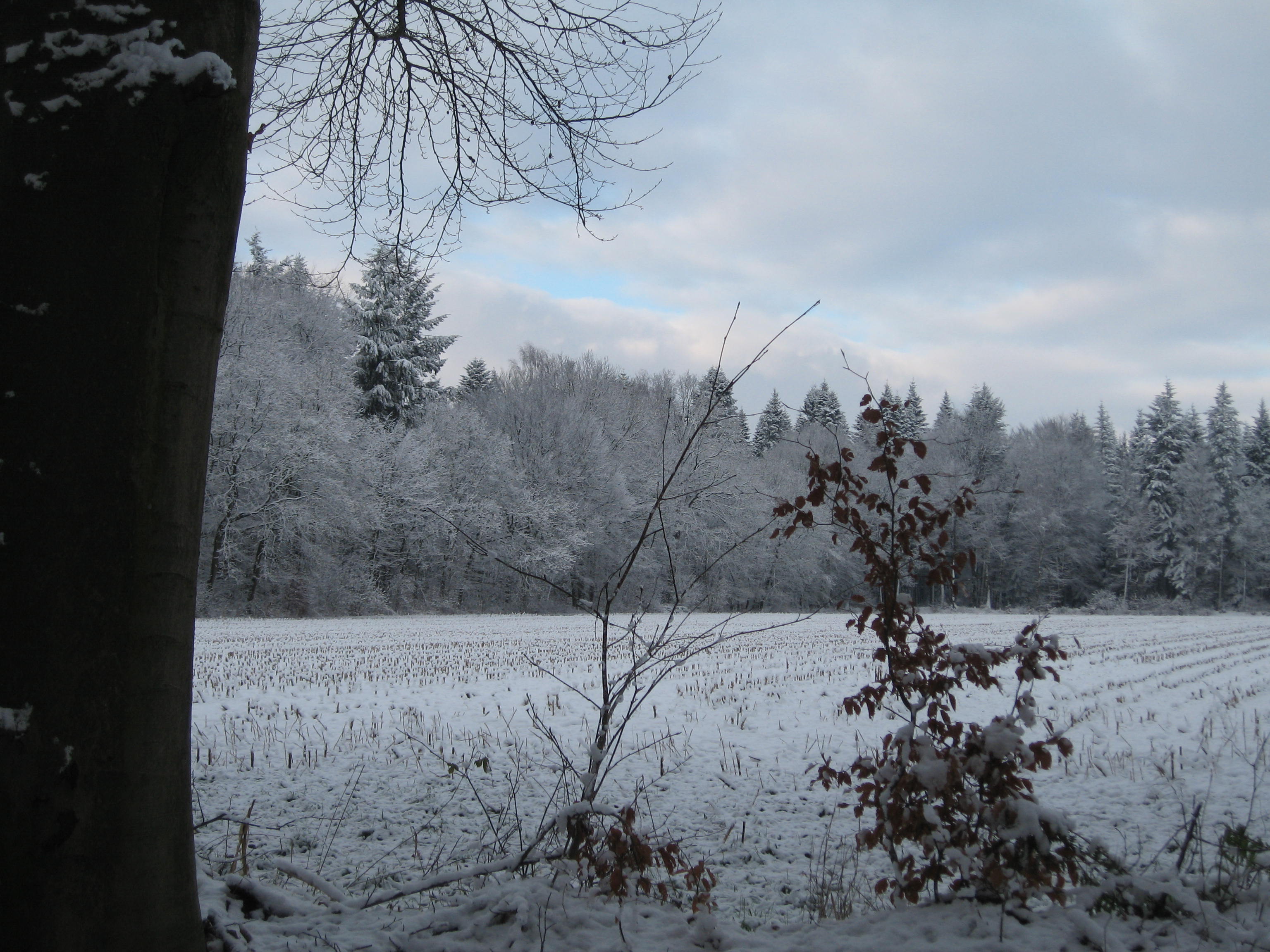
The field that lies at the centre of Westermark forest in its full snow-covered glory.

A snow-covered field at the edge of the woods.

The farmhouse at the edge of the woods.

Because sometimes, you just need to write your name into the virgin snow covering a wooden bench.

Snow-frosted branches seen close up.
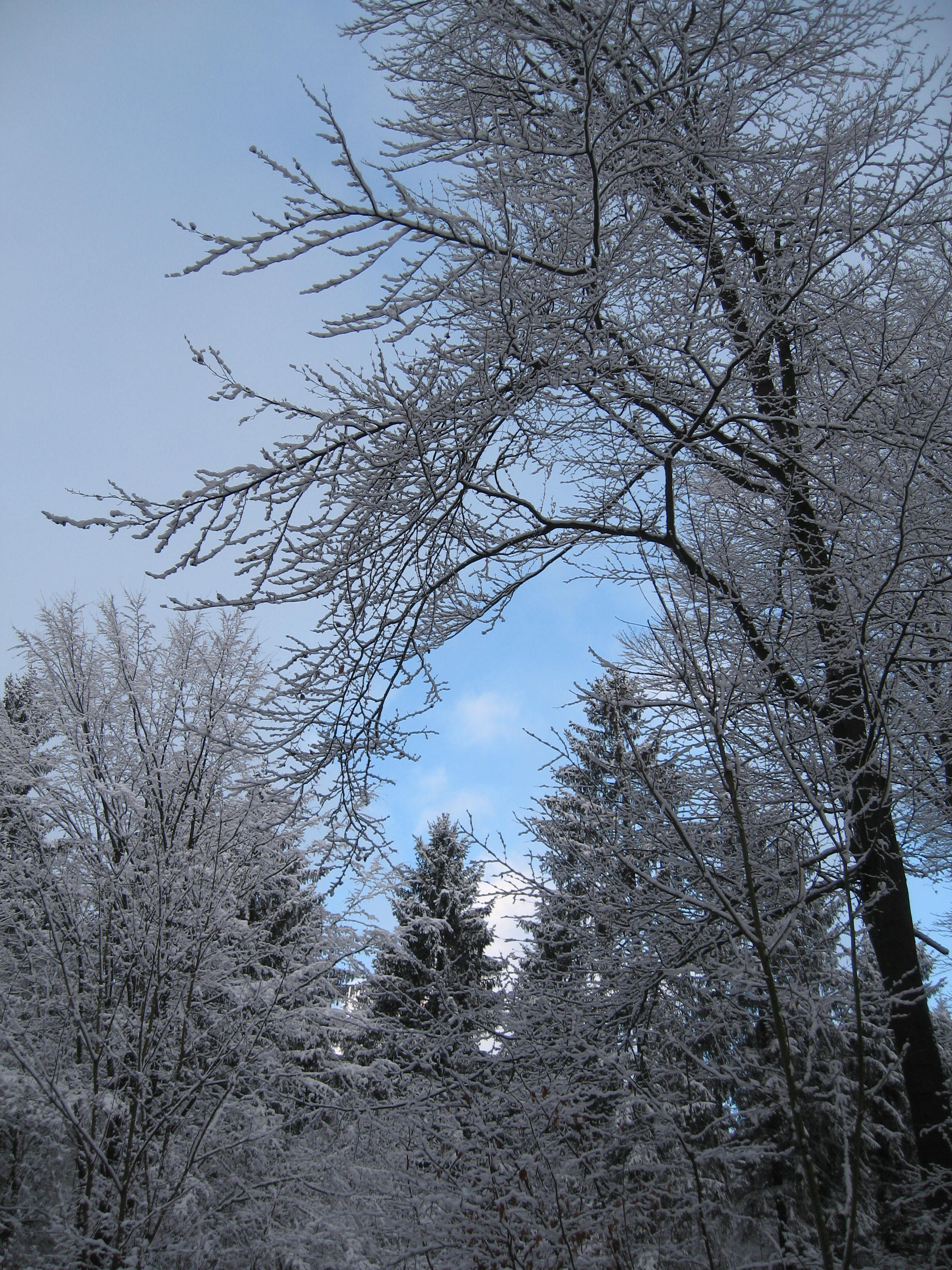
A bit of blue sky glimpsed through snow-frosted branches.

A snowy, wood-rimmed field between the villages of Nordwohlde and Fesenfeld.
Send to Kindle
January 11, 2016
SFF, Romance and Abuse Narratives
Yesterday, I came across this great post by Foz Meadows about the frequency of abusive romance narratives particularly in media aimed at teenagers. The post is a response to a post by someone named The J. Gatsby Kid, in which they point out that Rey/Kylo Ren shippers tend to be primarily teen girls, because Kylo Ren is exactly the sort of tortured, brooding and abusive figure that YA romances present as boyfriend material to teen girls.
Much as I would love for Finn and Poe Dameron to end up together (though that wouldn’t make them the first gay Star Wars characters seen on screen, since it’s pretty obvious that Obi Wan is gay), it also triggers a “Please, don’t have Rey end up with Kylo Ren” reaction, because Kylo is a relationship disaster waiting to happen, regardless of the potential incest that some fan theories suspect. No, better for Rey to follow in the footsteps of Jedi celibacy (and I was never a fan of Jedi celibacy, never mind that the films themselves point out that it doesn’t work) than to end up with Kylo of all people.
It’s not just Rey/Kylo shippers either (and there are shippers for pretty much any conceivable and inconceivable pairing out there). When Jessica Jones dropped in late November (and I should probably do a post about Jessica Jones some time), a fandom sprang up that focussed on Kilgrave, the mind-controlling villain brilliantly played by David Tennant. Now Kilgrave is probably one of the vilest characters to pop up in popular culture of late. Kilgrave makes Kylo Ren seem like a whiny little emo boy by comparison and yet there are fans who have a crush on him. And yes, I know that the fact that both David Tennant, who plays Kilgrave, and Adam Driver, who plays Kylo Ren, are handsome men (though neither does it for me personally) certainly has something to do with their transformation into romantic figures for a subset of the viewership of the respective works.
Nonetheless, Foz Meadows and the J. Gatsby Kid are right. The proliferation of narratives that romanticise abuse and abusers is troubling. If anything, the situation has gotten even worse in recent years. Because until fairly recently, growly alpha males and flat-out abusers as romantic heroes were on their way out, at least in the romance genre, as reader tastes finally shifted away from the rapetastic bodicerippers of the 1970s/1980s and the Harlequin Presents type tycoon/billionaire romances with their ultra-possessive heroes. But then the success of Fifty Shades of Grey and to a lesser degree Twilight brought the growly, ultra-possessive, borderline (and frequently crossing the border) abusive alphajerk back with a vengeance and the rise of the so-called “new adult romance”, which pretty much exclusively features these jerky heroes, has only exacerbated that trend. As a result, I’ve largely stopped reading romance except for a few trusted authors.
Now a lot of the time, whenever someone dares to criticise Fifty Shades of Grey and its copycats or rapestastic bodicerippers or growly, ultrapossessive alpha heroes or Rey/Kylo Ren shippers or Jessica/Kilgrave shippers, the response is, “How dare you criticise other women for their sexual fantasies?”, usually followed by an explanation how rape and domination fantasies are extremely common and what that signifies.
So no, I’m not criticising other women for their sexual fantasies. If you want to fantasise about Christian Grey or Edward Cullen (who doesn’t really belong into this company, for while Edward’s behaviour is problematic, it’s not outright abusive and/or rapey, as with the other characters) or Clayton Westmoreland or the hero of Stormfire or Kilgrave or Kylo Ren, then fantasise away. I won’t stop you nor can I.
Nonetheless, we still need to ask ourselves whether the reason that rape and domination and “Heal the abuser” fantasies are so very common may be that our pop culture is absolutely saturated with such stories. Because, as Foz Meadows points out in her post, we quickly internalise the common patterns in the stories that we consume to the point that she was initially confused when she came across King’s Dragon by Kate Elliott in which the handsome but abusive guy is the villain and not a romantic hero, because that was not how the story was supposed to go.
Worse, because narratives romanticising abusive relationship dynamics are so pervasive in our culture, they also tend to become invisible, even to those of us who are pretty attuned to problematic relationships in the fiction we consume.
A few years ago, there was a space opera series with a strong romance element that I liked a whole lot. I eagerly devoured the series until about halfway through the fourth book, when the heroine’s lover (and the couple had already been through hell and back in the previous volumes) suddenly decided they had to call it quits for the greater good and began behaving abominably towards a woman he claimed to love. I somehow finished the book, increasingly angry, and started the next one, only to see that it was more of the same – hero and everybody else mistreating the already psychically damaged heroine – and stopped reading. There was one more book in the series which I never read at all.
Now a few months ago, I suddenly got a hankering for space opera with romance and a strong female protagonist. And since there aren’t a whole lot of those around, I remembered the series I had abandoned and thought, “Why don’t I read the last two books of that?” After all, I had really enjoyed that series when it was still good. And who knows, maybe the problems I had were really just a temporary blip caused by the need to artificially keep the central couple apart, because happy couples are considered boring, even if they free slaves and fight flesh-eating aliens and all that. Never mind that there are plenty of series that prove that happy couples are not boring at all and can still have adventures. See Eve and Roarke from J.D. Robb’s In Death series, Hawk and Fisher from Simon R. Green’s eponymous series (plus John Taylor and Suzy Shooter are together and mostly happy for several of the latter books of Green’s Nightside series) or Silas and Lainie from Kyra Halland’s Daughter of the Wildings series.
To refresh my memory, I grabbed the previous books in the series and began to reread the relationship bits. And was horrified, because I realised that the great love of the heroine’s life had not suddenly become a jerk halfway through the series – no, he had pretty much always been one.
Now the hero’s jerkiness was obscured by the fact that the series is written in the first person from the heroine’s POV and she is not always a very reliable narrator. She is deeply traumatised, not to mention paranoid in the first book, so I was inclined to dismiss her fear of the hero as the result of her unfounded paranoia (so does the heroine, once she is no longer afraid of him). Except that the heroine’s paranoia was not unfounded, because the hero had explicitly threatened her in the dialogue.
And once the narrator has fallen in love with the hero, she idealises him to the point that she is blinded to his very obvious faults. And because the novel puts us firmly in her head, so are we. What is more, the romantic bits are really, really well written, so we root for these people to get together, though come to think of it, I never liked the hero all that much as a character. Okay, so he is no Kilgrave or even Kylo Ren and he does have his good bits, e.g. he is nurturing and protective towards those he cares about (and indeed an interlude caring for an alien infant in the first book goes a long way towards redeeming the character) and does some genuinely heroic things. Nonetheless, the relationship is deeply problematic. And in fact, I mainly liked the hero because the heroine loved him and because these two deeply damaged people seemed to be good for each other.
Of course, it’s quite possible that the heroine decided to ditch the hero in the end – as I said, I didn’t read the last two books. And there definitely were other romantic possibilities for her, which I for one would have preferred.
Nor do I intend to rag on this particular series (which you’ll note I didn’t name, even though you may be able to guess, if you’ve read it), since I have enjoyed other works by the author. No, my point was to illustrate that these problematic and downright abusive relationship dynamics are endemic in our culture, so endemic that they can become invisible, especially when there is enough to like about the work in question otherwise. And so it’s really no surprise that a lot of women and girls fantasize about taming the domineering, growly alpha hero and redeeming the tortured abuser, because our culture keeps feeding such stories to them.
Even if you try to avoid such stories – and I do, because I’ve never liked abusive jerk heroes – it can still be damned difficult, because this stuff is everywhere. Trigger warnings only offer a limited help, especially since a lot of the time, there was zero warning at all about problematic relationship dynamics, even if I read reviews beforehand. Quite the contrary, often heroes described as “swoonworthy” in reviews turned out to be abusive and controlling jerks, when actually reading the book. What is more, sometimes the abusive dynamics only become apparent upon rereading.
So is it any surprise that many women will write the sort of stories they have internalised, whether as fanfic or profic? Especially when there is economic pressure involved and writers are clearly told that beta heroes don’t sell, cause no one wants to read about them (never mind that plenty of people do like beta heroes). I don’t even exclude myself here, some of my early stories have problematic gender and relationship dynamics as well, particularly those written for a specific market which liked that sort of thing and bought pretty much everything I sent them. I usually kept the outrightly abusive behaviour confined to the villains. And there is a reason that Hostage to Passion ends the way it does, because at that point the hero does not deserve the heroine. I always intended to write a sequel and I still may on day, but at this point in my life that story is no longer as appealing as it was when I first wrote it more than ten years ago.
Nowadays, I make a point to write positive relationships, particularly in ongoing series, but also standalones like Christmas Gifts and Christmas Eve at the Purple Owl Café, which happens to be my bestselling title in two languages. Because there are plenty of ways to generate conflict without artificially keeping a couple apart or having one or both characters resort to controlling or outright violent behaviour. It’s even possible to write about darker themes without resorting to standard “love and heal the abuser” narratives.
For example, I am currently working on what will eventually become a space opera series with strong romantic elements (because there aren’t nearly enough of those, so I have to write my own) and a central couple. Now the hero and heroine start out on opposite sides of a conflict and the hero does some things that are unquestionably wrong. He lies to her, captures her and she even finds herself his prisoner for a while. However, what the hero does not do is abuse her in any way. And in fact the realisation that the people he works for are planning to abuse and very likely kill the heroine is a large part of what causes the hero to turn against them. Nor does the heroine forgive him that quickly, though once she does they face everything I can throw at them as a couple.
Of course, I still write problematic relationships on occasion, but only in contexts where it is clear that this relationship is far from ideal. For example, no one could mistake Alfred and Bertha von Bülow for a model of a happy couple (plus the Alfred and Bertha stories are pretty obviously parodies). Several of the stories in Bug-Eyed Monsters and the Women Who Love Them parody the problematic gender dynamics of golden age science fiction, including such ugly tropes as forced breeding, while Kiss of Ice has the supposedly evil queen turn the tables on the knight sent to slay her. And the relationships depicted in the The Milk Jug (the second crime shot in Spiked Tea) and the two crime shorts collected in Seeing Red as well as the marriage from Family Car are so clearly problematic that they all end in murder. And no, I have no idea why I have the tendency to write domestic conflicts that escalate into violence and murder.
The question remains, what do we do about the proliferation of abuse narratives disguised as romance? Shaming people for their fantasies and reading choices is obviously not okay, but nonetheless we should call out problematic content when we see it. Even or especially if we otherwise like the work or the author. After all, the romance genre had largely moved away from the excesses of the bodiceripper era largely because a lot of readers, critics and writers began to call out and discuss problematic things in the books they read. And it is possible to criticise a work and its problematic aspects without shaming those who happen to enjoy said work.
Send to Kindle
Cora Buhlert's Blog

- Cora Buhlert's profile
- 14 followers

