
Tsoknyi Rinpoche's Blog, page 11
August 11, 2016
Pilgrimage to Muktinath with Tsoknyi Rinpoche
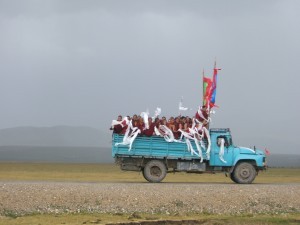
This year the annual 5-day Chakrasamvara puja at Tsoknyi Gargon Ling Muktinath will take place between October 3 and 8. Everyone interested is invited to attend and no permissions or registration are required.
Participants must make all of their own arrangements for travel and accommodation. This generally includes getting to Pokhara, by surface or air, traveling onward to Jomsom, again by surface or air, and finally reaching Muktinath itself, by jeep or on foot.
In addition, all non-Nepali citizens are required to purchase a TIMS (trekking permit)
{http://www.timsnepal.com/index.php?option=com_content&view=article&id=10&Itemid=37}
and an Annapurna Conservation Area Permit (ACAP)
{http://www.ntnc.org.np/trekking-annapurna-gaurishankar-and-manaslu-information-and-entry-permit-forms} .
The total cost for these two permits is 4200 Nrs, unless it has recently gone up.
{General helpful info about both permits: https://www.tripadvisor.com/ShowTopic-g424944-i12328-k4811806-Tourist_Visa_TIMS_card_ACAP_permit-Annapurna_Region_Gandaki_Zone_Western_Region.html}
(Note if the links don’t work, all info was found just by googling ‘TIMS permit Nepal’ & ‘ACAP Permit Nepal)
Rinpoche will reach Muktinath on Monday, Oct 3. Anyone wishing to accompany him to Muktinath must be in Jomosom by the evening of Oct. 2.
Additionally, Tsoknyi Gechak School’s annual Exhibition is tentatively scheduled for Thursday, September 29th.
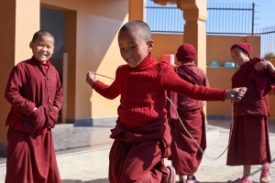
Please use this e-mail for more information about the Exhibition and Pilgrimage to Muktinath: tsoknyinunswf@gmail.com


August 10, 2016
White Lotus: The Transmission of the Tsoknyi Nangchen Lineage to Nepal
Thank you Michael Ash for this beautiful video (a Yogini Project Production) and please visit www.theyoginiproject.org
May 6, 2016
April 25, 2016
All About Lung: Tsoknyi Rinpoche
Based on an interview with Tsoknyi Rinpoche by Ayshen Delemen from Tibet & Buddhismus on March 28, 2012:
In the 21st– century, the subject of healing the subtle body is crucial. I sometimes say that for western Dharma practitioners, “body enlightenment” is more important than the enlightenment of the mind.
Q: In your new book Open Heart, Open Mind, you discuss the subtle body and its influence on our lives. How can we understand the subtle body?
Rinpoche: In the Tibetan Buddhist tradition, the subtle body (Tib. lu trawa) connects the body and mind and is the home of the emotions that influence both.
Q: So it is a point of great importance that is largely unknown in western psychology. Can you please explain the system of the subtle body in more precise detail?
Rinpoche: The subtle body is composed of three interrelated aspects. The first consists of what in Tibetan is called tsa, (nadi in Sanskrit), usually translated as “channels.” They are closely related, but not the same as a network of nerves that extend throughout the body. These channels are the pathways that allow sparks of life (thigle in Tibetan, bindus in Sanskrit) to circulate and can be compared to neurotransmitters–chemical messengers that influence our physical, mental and emotional states. The thigle circulate within the channels due to the subtle energy or inner wind, known in Tibetan as lung (prana in Sanskrit).
Q: A certain amount of lung is a normal part of the subtle body. But there are also disturbances in the wind energy. Is it possible that lung disturbances can get intensified through meditation practice and manifest negatively at the level of feelings?
Rinpoche: Clearly, yes. In anything we do, whether during meditation or in any situation, lung can be intensified. This can happen when we feel overloaded and “stressed out” or when our emotions get quite strong, even overwhelming. Any practice we do driven by the wish to perform well or succeed with a corresponding lack of relaxation and lightness increases this intensity and creates restlessness. I am speaking here about the attitude of a forced, driven, goal-oriented practice. To take one example, if you want to quickly recite 100,000 mantras within a few days this may cause what we call lung, a disturbance in the energy, because you have unnaturally put yourself under too much pressure.
Q: What exactly happens at that time?
Rinpoche: When the mind continuously demands greater speed due to over-excitement, a high degree of pressure, and a need to perform too quickly, the subtle body eventually becomes exhausted. Through excessive activity on the mental level, a message is sent to the subtle body to push, go faster, with the result that the restless lung is strengthened. The subtle body’s natural equilibrium gets out of balance, and at some point it becomes a lung disturbance.
Also, being over-serious, uptight, having strong grasping and mental restlessness are conditions that can lead to a feeling of agitation and restlessness in the subtle body. And these habitual patterns can become deeply imprinted within the channels due to this stirred up lung. That is why we should learn how to handle this energy sensibly.
Q: How should we deal with a lung imbalance?
Rinpoche: Overactive lung confuses and disturbs the subtle body nervous system and becomes increasingly rigid and solidified. And because of this the natural capacity to feel compassion becomes blocked, your innate ability to feel unconditional, unbiased love, warmth and openness. Without this capacity it will be impossible for you to feel loving kindness and compassion towards others, and to love them. We have to reconnect with our basic nature and relax in that. There is also a special yogic breathing exercise called “vase breathing” which can serve us well here. The breath is closely connected to the subtle wind energy. In my book, Open Heart Open Mind, I devote a whole chapter to this method.
Q: It is interesting that you mention yogic breathing. Is it worthwhile to practice yoga, chi gong and pranayama in order to be more grounded in meditation? In traditional Tibetan Buddhist teachings, it is my understanding that instructions on breathing exercises are normally not given.
Rinpoche: Yoga, chi-gong and similar energy-balancing can be extremely helpful in cases of disturbed lung. When there is an imbalance, the subtle drops (Tib. tigle) are not able to circulate freely in the central channel. This leads to blockages, not on the mental level or in the physical body, but the feeling energy is blocked. In these cases these kinds of exercises can be beneficial to restore a more natural balance. I think that many older Tibetan lamas are not aware of the fact that establishing this equilibrium in the subtle body is so crucial in the West. Traditionally in Tibetan Buddhism, the methods you mentioned in your question are hardly used in relation to the body. That is why they are simply not considered by many teachers and they do not know much about them. It is also connected with the fact that in Tibetan society, that the emotional body was generally very stable and that there was more of an emphasis on healing the physical body, such as with the neck or with joints and so on.
Furthermore, in Tibet there was generally a lack of mental training and education and until the Chinese invasion, a full education was possible for the most part only in the monasteries. There was no public school system and much of the population consisted of nomads, very simple people with a sweet, cheerful nature. That is why there was not a great need for emotional healing–this aspect was actually pretty good. In order to develop the mental faculties, mind training, such as on methods for the detailed visualization of a mandala were used. And it was the awakening quality of the intelligence that was important to cultivate through these practices.
In more recent times, many young lamas have recognized the lung imbalance in modern societies and its causes. Educational systems strongly emphasize cognitive development and the subtle body aspect, the emotions, are often blocked because of lung disturbances and other reasons. Various methods for energy healing can be useful, and I would strongly encourage people to practice these according to their individual needs.
Q: Sometimes I think the cultural differences between East and West are so great that we should be quite careful about simply taking on Tibetan customs.
Rinpoche: I agree with that up to a point. It is not necessary for a person in a modern society to try to be Tibetan and imitate Tibetan culture and customs in a rigid way. The basis of the Dharma is the transformation of the five poisons (ignorance, attachment, aversion, pride and jealousy) and the habitual tendencies that are more or less applicable to all cultures. Different cultures have unique habitual patterns, and we need to clearly discriminate what is transformative within our cultural context.
But certainly there are certain teachings that are shaped by Tibetan culture, and if one has no understanding of the cultural context, then these teachings and practices may not have the capacity to transform one’s mind.
In modern societies, developing cognitive understanding is strongly emphasized for young children at a very early age and this can create an unhealthy residue of tension in the subtle body. This imbalanced approach towards cognitive development is why it is so important to transform the subtle body. You handle thinking very well and can become familiar with the Dharma on a theoretical level but we need to bring this understanding into experience so that the blockages in the subtle body can be healed. In the 21st-century, the subject of healing the subtle body is crucial. I sometimes say that for western Dharma practitioners, “body enlightenment” is more important than the enlightenment of the mind.
Q: The hectic pace of modern life often causes correspondingly hectic lung activity in us. What can you recommend to counteract this?
Rinpoche: First, you should find out your own inner speed limits. An energetically excessive speed can manifest on three levels: in thinking, feeling and in the body. Practice being aware, without judging or analyzing your emotional condition and also the overall sensitivity of your subtle body. You can use “the gentle vase breath” to bring the lung back to its natural place, its home, residing slightly below the navel. In this way you can slow down the excessive speed in your subtle body and think clearly and perform physical activities and not burn out.
Q: With growing awareness in our meditation practice, our habitual disturbances also become more noticeable. How can one get control over a disturbance, without giving oneself over completely to its power?
Rinpoche: Be kind to it. Welcome it: “Okay, it is true that I experience some disturbance in this moment, but it is not real. It is only my long-established habitual pattern.” Often when something external attracts your attention, it immediately activates a dormant tendency. As a result of this, you believe that your experience is happening fully, 100% real, and everything is exactly as you perceive it: solid, truly “out there”. But really, the external event is simply a trigger.
The external object may contribute only 5% towards causing the disturbance. But when that habitual pattern is stimulated, even if only briefly, it provides the remaining 95% of the experience to come into being. At this point, you can communicate with your habitual pattern. Recite the following mantra: “It seems real, but it is not true. It is not me.” If you can manage that, your life will be a lot easier.
March 21, 2016
March 20, 2016
Inspiration from Tsoknyi Rinpoche
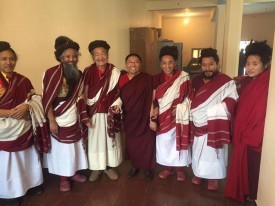
“I am very happy to share this picture of the Tashi Jong togdens who have come together to celebrate Guru Rinpoche once a year here in India. Many of these yogis have been in retreat for 20 years or more. It is inspiring to know that in this dark age of fighting, war and turbulence that the dharma can still shine so brightly. They are so fresh and alive.” ~ Tsoknyi Rinpoche (March 19, 2016)
March 1, 2016
Bardo Retreat YouTube Delayed Broadcast Now Open for Registration!
This year’s Teachings on the Bardo Experience retreat will be broadcast from Crestone again via YouTube. Please click here for information on the program, prerequisites, technical components and registration!
While visiting the web site, please visit the Programs section to see all the 2016 retreats Tsoknyi Rinpoche will be teaching this year, many of which are already open for registration.
February 8, 2016
2016 Losar Greetings and TGL Update from Tsoknyi Rinpoche!
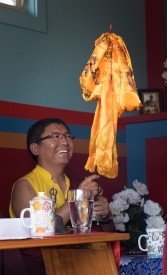
Losar Tashi Delek 2016 from Tsoknyi Rinpoche in this year of the Fire Monkey! Please click on the video links below to view Rinpoche’s Losar message and the Tsoknyi Nepal Nuns update.
Losar Greetings from Tsoknyi Rinpoche: https://www.youtube.com/watch?v=1F2cBszTDLI
TGL (Tsoknyi Gechak Ling) Update: https://www.youtube.com/watch?v=7YkZlCHvCzM
And please visit: https://www.youtube.com/watch?v=lxWvgiQ1tlQ&feature=youtu.be The Tsoknyi Gechak School young nuns and Rinpoche have a Losar Tashi Delek greeting for you, too!
February 2, 2016
2016 Retreat Registrations Open!
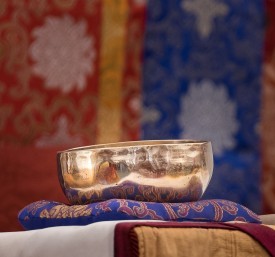
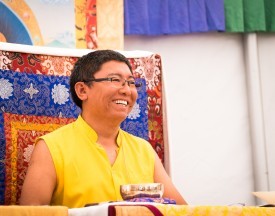
WE ARE EXCITED to announce that registration for both Crestone 2016 retreats, Grounded Body, Open Heart and Clear Mind: A Path to Dzogchen (August 12 – 18, 2016) and Teachings on the Bardo Experience: A Bardo Retreat (August 19 – 25, 2016) open today! These retreats are both in Crestone, Colorado. For information about attending a retreat in Crestone, please visit our web site at: www.tsoknyirinpoche.org and review “Crestone 2016 Retreat Information” under the Programs tab. To register for these programs, please use the following web site links:
http://www.tsoknyirinpoche.org/retreat/10012/grounded-body-open-heart-and-clear-mind-a-path-to-dzogchen/
http://www.tsoknyirinpoche.org/retreat/10013/teachings-on-the-bardo-experience-a-bardo-retreat/
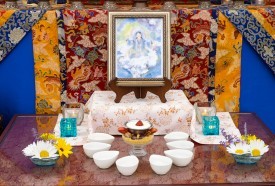
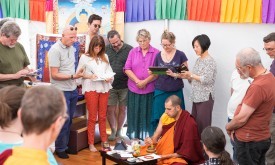
For those who register for the first Crestone retreat, Grounded Body, Open Heart and Clear Mind: A Path to Dzogchen, we invite you to attend a Crestone Pre-Retreat Practice (August 9 – 11, 2016). This pre-retreat will be held in the Yeshe Rangsal tent. There is no registration or payment required. For more information about this offering, please view this link:
http://www.tsoknyirinpoche.org/retreat/10238/crestone-pre-retreat-practice-89-1116/
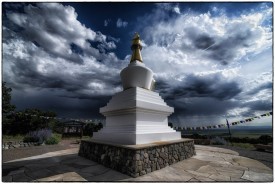
When retreat registration is open, the “Register Now” button will appear on that Programs page. Complete the registration form with your payment. Please note that there is a prerequisite for attending the Bardo Retreat. You must have attended one open six-day retreat with Tsoknyi Rinpoche, Mingyur Rinpoche or Tulku Urgyen and received pointing out instructions from one of them.
Scholarship Applications will be accepted for the Crestone retreats beginning February 15, 2016 through March 15, 2016. Unfortunately, late applications cannot be accepted. For more information, please visit http://www.tsoknyirinpoche.org/retreats/scholarship-information/ and complete an application. Hopefully these pages will answer most of the questions you may have, especially if you are new to Pundarika.
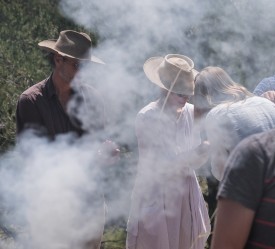
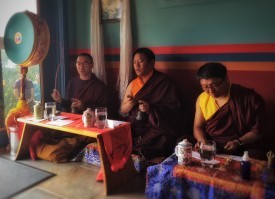
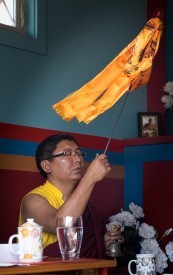
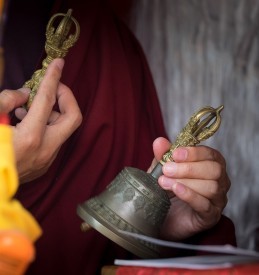
(Last summer’s Dorje Yudronma Shrine blessing at Crestone)
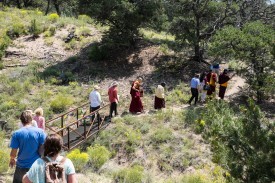
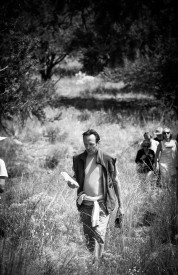
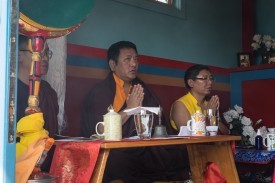
We will be offering a YouTube delayed broadcast of Teachings on the Bardo Experience: A Bardo Retreat. Registration will open approximately March 1st. Please go to the Programs tab on our web site to register for this broadcast retreat when registration opens. We will close this registration on July 25th. The same prerequisite applies as if you were attending in person.
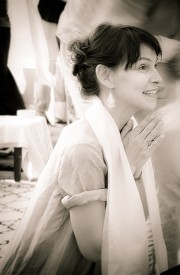

Registration for How to be Happy and Free When the World is on Fire (May 5 – 11, 2016) at the Presentation Center, Los Gatos, CA is already open. There are still spaces available. Registration for this retreat will close on April 25th. Please click here to register for this retreat: http://www.tsoknyirinpoche.org/retreat/10008/how-to-be-happy-and-free-when-the-world-is-on-fire/
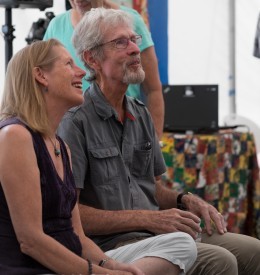
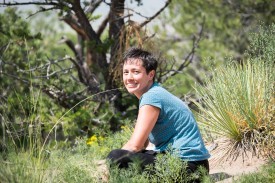
Tsoknyi Rinpoche will be offering an Advanced Dzogchen Retreat (August 31 – September 6, 2016) at Wonderwell Mountain Refuge, New Hampshire. This advanced retreat also requires the prerequisite of having attended one open six-day retreat with Tsoknyi Rinpoche, Mingyur Rinpoche or Tulku Urgyen and having received pointing out instructions from one of them. Following is the link on our web site for more information: http://www.tsoknyirinpoche.org/retreat/10014/advanced-dzogchen-retreat/ But please know that as of this writing, the name of the retreat and it’s desciption are still in the process of decision making and as soon as Wonderwell is ready to open registration, we will post that information on Rinpoche’s Facebook page and on the web site.
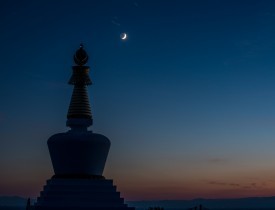
What wonderful opportunities we have this year for receiving Tsoknyi Rinpoche’s profound teachings. We hope you will join us!
Warmest wishes,
Susan Skellenger
Registrar/Pundarika Foundation
registrar@pundarika.org
(All photographs on this page were taken by Richard A. Heckler ©2015 from last summer’s Crestone Dzogchen Practice Intensive Retreat)
January 1, 2016
Happy New Year 2016!
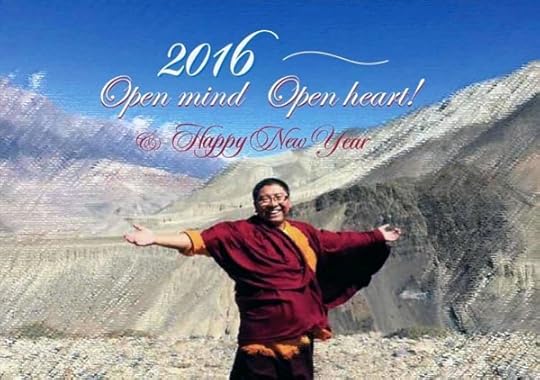 “My love and best wishes to all of you as we enter 2016. Let’s all practice deeply this year, and as we open our minds and hearts to the dharma more and more, may we touch everyone around us with the moisture of compassion.” ~ Tsoknyi Rinpoche
January 1, 2016


