Matthew Dicks's Blog, page 53
June 12, 2024
Question everything
This particular “Truth Potato” quote—”Question every rule, tradition, belief, and stereotype there is”—sounds intelligent, wise, and perhaps not profound, yet it seems to fall on deaf ears.
A Pew Research Center study found that more than 85% of American children share their parents’ religious and political beliefs. Parents also told Pew researchers that it’s important for their kids to hold the same political beliefs as them, but it’s even more important that the kids share their parents’ religious beliefs.
So question beliefs?
That’s not really happening, either. Your belief in the spiritual construct of the universe is likely not based on meaningful introspection, careful study, and deep thought.
Instead, it was determined by simple indoctrination:
Your parents thought it was important that you believe the same thing they believed, so they spent lots of time convincing you that they were right and everyone who believed other things was wrong when you were young and especially impressionable.
And it’s likely you agreed and never looked back.
As a result, your beliefs and traditions almost certainly match your parents’, and therefore, even their stereotypes likely match your own.
“Question every rule, tradition, belief, and stereotype” sounds like an admirable pursuit, but it’s also a lonely one.
Sadly, very few people do so.


June 11, 2024
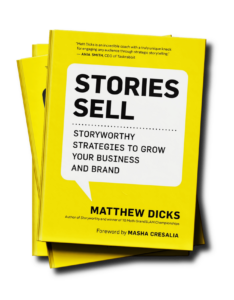
“Stories Sell: Storyworthy Strategies to Grow Your Business and Brand” born today!
My latest book, “Stories Sell: Storyworthy Strategies to Grow Your Business and Brand” publishes today!
My book’s birthday!
The book is a guide to using the power of storytelling to succeed in business of any type or size. It takes all of the wisdom that I have gleaned over the many years of performing on stages around the world and marries it to the decade of experience I have working with Fortune 100 companies Microsoft, Amazon, Johnson & Johnson, and Google, as well as smaller business, nonprofits, religious institutions, entrepreneurs, advertising agencies, colleges and universities, politicians, photographers, the FBI, and many more.
If you’re working in sales, marketing, branding, or advertising, this book is for you.
If you’re a business owner looking to grow your company, this book is for you.
If you’re a leader trying to better communicate and connect to customers, clients, employees, stakeholders, or potential investors, this book is for you.
I’ve worked with gold medal Olympians, Santa Clauses, magicians, Native American tribes, authors, comedians, and more, helping them to incorporate storytelling into the work they do, the messages they are trying to send, and the businesses they are trying to build.
The journey to writing this book is a remarkable and ridiculous one. Back in July 2011, I stood on a stage in New York City and told a story for The Moth, thinking it would be the one and only time I performed onstage. Instead, I have traveled the world, telling stories, performing standup, and delivering speeches of every kind to audiences large and small.
Two years later, in the spring of 2013, after performing at a charity event at a local synagogue, a man named Boris Levin, CEO of Mott Corporation, approached me and asked that I help him bring storytelling to the work he does. I told him that I didn’t think I could help him. I had no idea how storytelling might help someone in business.
But Boris convinced me to sit down with him and discuss the possibilities, and more than a decade later, I’m still working with Boris, helping him find and tell stories in his business.
That single conversation miraculously led to a career as a corporate and business consultant, working with clients around the globe on issues great and small. What began as a conversation over fruit punch has led to a career that has changed my life forever.
Just this past month, I’ve worked for five Fortune 500 companies, two nonprofits, a religious institution, and the FBI.
I often turn to Elysha and say, “This is crazy. Isn’t it?”
She wholeheartedly agrees.
All of this work has led to “Stories Sell” – a book that brings all of my experience and wisdom to the page (and the audiobook).
I hope you’ll give it a try.
Purchase it wherever you get books, but ideally, purchase it at your favorite indie bookseller. Booksellers and bookshop owners are the book angels of the world. They deserve your love most.
If you’d like to help my book become a success, you could do the following:
Buy it! Purchase a multitude of copies, in any format you prefer. If you like audiobooks, I narrate this one myself.Please rate and/or write a review for the book and post it wherever you’d like. Ratings and reviews help others see my book more easily.Post about the book on social media. Take a photo of yourself, your loved one, or your cat reading the book. Place the book in fun and amusing places. Let your friends, family, and coworkers know that it exists.If you work in a place where this book might be well received, let people know about it. I already know of one company that is purchasing the book for their employees. If IBM would just agree to do the same, I could sell about 300,000 copies in one fell swoop!If you can’t find the book at your local bookshop, ask a bookseller to order a copy for you. This will increase the chances of them stocking it in the future.Attend my book launch party on June 15. It’s going to be a lot of fun. Eat, drink, and be merry along with me, Elysha, my kids, and fellow book lovers. Details here.Any one of these things would be enormously appreciated.
The post “Stories Sell: Storyworthy Strategies to Grow Your Business and Brand” born today! appeared first on Matthew Dicks.
June 10, 2024
The story is about me!
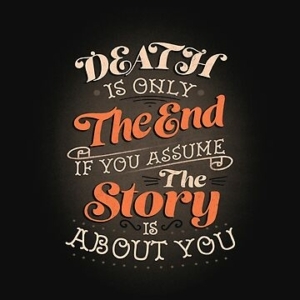
“Death is only the end if you assume the story is about you.”
– Jeffrey Cranor or Jay Michaelson
The internet isn’t sure who said it first.
Either way, I hate this idea. it’s nonsense. A dumb idea. Cold comfort for anyone who worries about (or relentlessly obsesses over) the prospect of death.
Who doesn’t view themselves as the protagonist of their own story?
Do people really wake up and think, “Fear not! I’m really just a supporting character in someone else’s story.”
Or “Nothing matters! I’m just an unpaid extra, filling out the background of someone else’s more important scene.”
Or “Perhaps I’m just window dressing. Or a prop. Maybe wallpaper.”
Or “The powerful play goes on, and I may contribute a verse, and then I’ll die, which is fine. I said my peace.”
I hope not.
The story isn’t about me? Are you kidding me? The damn story is about me! When I die, the story, as far as I’m concerned, ends. Other things will happen, but I won’t see them, hear them, know them, or be a part of them.
It’s a devastating thought. Soul crushing.
It’s my story, damn it, and I don’t ever want it to end.
Did Jeffrey Cranor or Jay Michaelson really think this would make me feel any better?
The post The story is about me! appeared first on Matthew Dicks.
June 9, 2024
There is no audience
A recent social media posting that received a lot of attention on the internet:
“Years ago, when I was in my 20s, a bold and artistically daring older friend who has since passed on gave me what I often think was the best advice I have ever gotten. I was worrying what people would think of a decision I had made, and she said, “Amanda, There is no audience.”
– Amanda Fortini
I love this. A whole lot. And I agree with Amanda Fortini:
It’s probably some of the best advice a person can receive, particularly if it’s believed and adopted.
It can be life-changing.
The Spotlight Effect – the false belief that people are paying more attention to you than they ever really are – can be crippling to those who assume there is an audience and worry about what that audience might be thinking. It prevents people from being themselves, taking risks, and speaking their minds. It causes people to worry about their physical appearance and appropriate adherence to norms and traditions.
Worst of all, it steals a person’s precious time and limited bandwidth.
But Fortini’s “bold and artistically daring older friend” was right:
There is no audience. No one is paying attention. No one is thinking anything. No one is even looking.
Once people accept and believe this, they are free to be themselves.
I don’t think it happens all too often in this world. I suspect that most human beings are trapped by the thought that an audience exists and that they must always perform for it.
What a disaster.
Last week, I asked my students to write a compliment to “someone in the classroom.” I intended for them to compliment their peers, but a few unexpectedly wrote compliments to me.
A few took advantage of the opportunity to offer me a clever backhanded compliment like:
“He has a lot of energy for an ancient man.”
“He tells great stories about how stupid he’s been throughout his life.”
“He only annoys me most of the time.”
I’ve taught them well.
But one of the compliments read:
“Mr. Dicks really and truly doesn’t care what people think about him or say about him.”
It was one of the best compliments I’ve ever received.
While not entirely true, it’s not far from the truth. I’d like people to think and speak well of me – especially those who I respect or admire – but my student is also correct:
If that doesn’t happen, but I know in my heart that I’m doing well, that’s all that really matters to me.
But I also know, like Amanda Fortini’s friend, that there is no audience. Most people aren’t thinking or speaking about me at all.
Therefore, I have nothing to worry about. No need to concern myself with the judgment of others. No need to perform.
There is no audience.
I hope you know and believe this, too, because it makes life so much easier and so much better.

The post There is no audience appeared first on Matthew Dicks.
June 8, 2024
The ridiculousness of packing for camp
Packing lists for weeks-long camps are a little ridiculous. In response, parents already paying thousands of dollars for sleepaway camps are deciding that the cost to get their child’s camp trunk squared away by professionals is worth the expense.
A prepared bundle of toiletries from Camp Kits, for example, can cost $98 to $185.
Prep services can cost $125 per hour to pack the trunk, and a “camp appointment” at the children’s boutique Denny’s in New York can cost an average of $1,500 to $2,000 to prepare a fully loaded, thoroughly labeled camp wardrobe.
Upon returning home, laundry can also be outsourced. First Class Laundry Services in West Palm Beach offers a pick-up and drop-off service for $225 per trunk.
All of this seems kind of ridiculous to me. Another example of “not every thing needs to be a thing.”
Both of my children are going away to camp this summer. We are not paying anyone to pack our children’s things, though admittedly, it’s been quite the chore, primarily for Elysha, who has taken point on this project. The lists are incredibly specific and seemingly endless. Medication is a bureaucratic nightmare.
It’s become a second job. A side hustle in order to hustle your child away for a couple of weeks.
When I went to Boy Scout camp as a kid, a few things were different:
We built our own trunks from wood, nails, and paint. That trunk, now 40 years old, is sitting in my garage and still contains camping supplies. It’s heavy and cumbersome and unadorned.
It served me well.
I packed my own trunk based on a list provided by my Scoutmaster. It consisted of things like shirts, pants, tee shirts, socks, underwear, and a toothbrush. I brought a single bathing suit to camp because, throughout my entire childhood, I owned one bathing suit, which seemed right back then and still seems right today, despite my children’s multitude of bathing suits.
I tried to remember a towel and a raincoat. When I forgot one or both, I was wet for a while.
I survived.
I packed my trunk hours before departure.
I did not require any additional clothing or any other item that I didn’t already own.
When I spent more than a week at camp, which I often did, I washed and dried my laundry on Sundays at the camp’s laundry room.
When I attended my Boy Scout camp – Yawgoog Scout Reservation – in the 1980s, it cost about $100 per week. I paid for most of that myself from the work I did throughout the school year.
Today, a week at Yawgoog costs a relatively modest $500, though that cost still far outpaces inflation.
Still, it was a simpler, perhaps better time.
Actually, no. It was definitely a better time.
I can’t help but wonder if our kids would be better off packing their own supplies and managing their own materials. Maybe a small part of the learning I did while at camp—and I probably learned more at camp than anywhere else as a child—came from taking care of my preparations and planning for camp.
Experiencing the pain and frustration of forgetting something important.
Learning the value of the Scout motto: “Be prepared.”
Discovering the confidence that comes from independence and self-sufficiency.
When you’re outsourcing packing and laundry to third-party services, you’re not exactly preparing your child for the challenges of the world, and you’re certainly not affording them the opportunity to take care of themselves.

The post The ridiculousness of packing for camp appeared first on Matthew Dicks.
June 7, 2024
A whole bunch of Americans are not living in reality
A recent Harris poll indicates:
55% of Americans believe the economy is shrinking, and 56% think the US is experiencing a recession, even though the broadest measure of the economy – gross domestic product (GDP) – has been steadily growing and outpacing most other developed nations.
49% of Americans believe the S&P 500 stock market index is down for the year, though the index went up about 24% in 2023 and is up more than 12% this year.
49% of Americans believe that unemployment is at a 50-year high, though the rate has been under 4% for more than two years —near a 50-year low.
The vast majority of respondents, 72%, indicated they think inflation is increasing. In reality, the rate of inflation has fallen sharply from its post-pandemic peak of 9.1% and has been fluctuating between 3% and 4% per year.In comparison to other nations, the United States is doing exceptionally well in this post-pandemic world, recovering faster and broader than almost every other comparable country.
Despite all of these incontrovertible facts and undeniable data, about half of Americans believe the opposite is true.
Are they trapped in a media bubble that serves them constant lies?
Are they tragically incurious and willfully ignorant about the economic realities that govern our country?
Are they sad-sack pessimists who simply assume the world is falling apart?
Are they blindly assuming that their own financial struggles apply to everyone else?
Are they just plain stupid?
I don’t know. Probably some combination of the above, with other rationales I have yet to consider.
But the burning question I have is this:
If faced with this incontrovertible, undeniable economic data, would these ignorant Americans be willing to change their minds and revise their thinking about the economic state of our nation, or would they simply find a way to say, “Yeah, but…” and continue to believe in things abjectly false?
I fear the latter.

The post A whole bunch of Americans are not living in reality appeared first on Matthew Dicks.
June 6, 2024
Happy retirement, Irene
Irene Otte retired Wednesday after working for 51 years in the cafeteria of the school where I teach.
I’ve been teaching at the same school for the past 25 years, which I thought was quite a bit.
I guess not.
Irene began her career at the school in 1973 when I was just two years old.
It’s hard to believe.
We celebrated Irene yesterday as she left work for the last time by lining the school’s driveway and cheering her on as she drove away. It was a lovely tribute. It was also all she would accept to honor her service to our school and students.
Irene was exceptionally kind to me over the years. Elysha and I met at Wolcott School and were engaged and married when we were still teaching together. When Irene learned that Elysha and I were dating, she was so happy for me and urged me to “Hold onto that one if you can.”
I’m still taking Irene’s advice today.
When she learned we were engaged, she was thrilled for both of us. When Elysha was pregnant with Clara and left Wolcott School to spend a decade at home, Irene often asked about Elysha, Clara, and eventually Charlie, and she was always happy to hear that things were going so well.
But what I’ll remember most about Irene is this:
Early in my career, and at least for a decade, I would eat school lunch from time to time. Eventually, when my doctor discovered that my cholesterol was borderline, I switched to eating oatmeal almost every day, dropping my cholesterol by 40 points and bringing it back down to ideal levels. But before the switch, I went through the lunch line just like the kids would, often alongside the children.
Hot dogs – one of my favorite foods – were a particular favorite.
Once Irene learned how much I loved hot dogs, she would call my classroom in the morning to alert me whenever hot dogs were on the menu. “It’s hot dog day, Mr. Dicks,” she would say, not so the cafeteria could sell an extra hot dog (or two) but because she knew how to make me happy.
When you work in a place where your colleagues are looking out for you, simply trying to make your days a little better, you know you’ve found a special place to spend your days.
Irene helped to make that true for me for the last 25 years.


June 5, 2024
Mike Lombardi on leadership
In a recent newsletter, Mike Lombardi offers eight critical principles of leadership.
I love this list.
But I also believe that it’s not so much a list for leaders as it is for human beings. Anyone working in any organization should follow the tenets of this list, regardless of their position in the pecking order.
Knowledge, insight, and wisdom can and should come from every corner of any organization. People should feel empowered to provide it whenever necessary, regardless of their pay grade.
Leaders should seek this knowledge, insight, and wisdom whenever possible. The best leaders empower their people to assume the mantle of leadership whenever necessary.
I also think there is a tragic absence of leadership in so many organizations today – sometimes because those in charge are awful or cowardly people, but more often, I think, because leaders lack the skills, strategies, and self-awareness to be effective. They lack the training or desire to be trained to do the job well.
But despite this lack of leadership at the top, everyone should feel like they play a role in how an organization is run.
Several tents on Lombardi’s list make this clear, including:
1. Honesty without fear of confrontation.
Not only do I constantly and relentlessly provide feedback on everything I think needs improvement within the school district where I teach, but I always sign my feedback, even when it’s asked to be submitted anonymously, because, like Lombardi, I also believe in honesty without fear of confrontation, and I think everyone in an organization—designated leaders and otherwise—should, too.
Truthfully, I often wish for more confrontation. I’d love for someone to contact me about my feedback to gain clarity or even push back a little.
Also, the request for anonymous employee feedback acknowledges a lack of psychological safety in that organization, which is also a disaster.
2. Be direct, don’t pull punches, but don’t act in anger.
I strongly believe in this assertion. Don’t refrain from saying something, even if you think it will fall on deaf ears. Your professional integrity is at stake, and the Overton window only shifts when people are willing to say what others will not.
Admittedly, at least twice in the past two years, I have responded in anger, and both times, I regretted it afterward. I’m usually quite good at waiting to respond while upset, but when I’ve failed in this regard, my feedback has been counterproductive, caustic, and even offensive, so I need to do a better job at this.
Still, everyone in the organization should adhere to this tenet.
3. Set the standard, become the standard.
This can also be a goal for everyone in an organization, from the lowest rung of the ladder all the way to the top. Great role models and inspiring people can and should be found anywhere in an organization.
4. Don’t play favorites.
5. Remain confident with a sense of humility.
Arrogance sucks. Confidence is revered.
Threading that needle—regardless of your position in the organization—comes down to standing by your beliefs, fighting for what you think is right, and speaking with authority while also remaining open to criticism, open-minded to new ideas, willing to admit mistakes, and relentless in crediting others for their part in your success.
6. Blame no one.
7. Follow through on what needs to happen, don’t allow outside voices sway decisions.
Many will attempt to dissuade you from your beliefs and silence your voice when it’s inconvenient for them. That is when you must marshal your strength and be unwavering in your mission. Your inconvenient feedback is often needed most in an organization, even when others don’t want to hear it.
“It’s hard to be at the tip of the spear, but that is where you do the most damage.” – Matthew Dicks
8. Be bold. Be brave and be yourself.
Employers often specifically hire people who are bold, brave, and willing to be themselves. These qualities are perceived as positive by all but the monstrous megalomaniacs who demand deference and servitude. But even the best leaders sometimes forget the value of these qualities when faced with feedback and opposition that creates problems and discomfort.
But that is their failing and not your own. You must be bold and brave even when those around you wish you wouldn’t.

June 4, 2024
Cindy’s gift is best unopened
Four years ago, a student named Cindy gave me a birthday gift wrapped in handmade wrapping paper that was so lovely that I decided never to open the gift.
Cindy, it turned out, was fine with this. The suggestion actually brought a huge smile to her face.
This decision has upset quite a few students since that time. To think that we don’t know and will never know what is hiding under that wrapping paper makes a large percentage of my kids (and even some adults) crazy, but I love this unwrapped gift so much.
Watching my students suffer with the perpetual, unyielding suspense of the gift is also great fun.
An unintended bonus.
But even when the wrapping paper is less original and less lovely, I’ve always adored the unwrapped gift. Opening a gift is exciting and sometimes surprising, and the actual gift hiding beneath the wrapping paper is often delightful, but it also stops being a mystery once it’s opened.
All the suspense and wonder is gone.
The unopened gift represents the unknown. It’s bursting with potential and possibility—suspense incarnate—and almost vibrates with uncertainty.
After it’s opened, all that emotion, expectation, and wonder is gone. Instead, it becomes another object in your life, quickly incorporated into the landscape of your daily existence. Some of those gifts will admittedly remain joyous and wondrous and continue to make your heart leap every time you see or use them, but many will become lost amongst the many other objects and things that fill a home and a life.
But this gift—unopened and unknown—will never stop being special.
Thank you, Cindy, for allowing it to remain so.

June 3, 2024
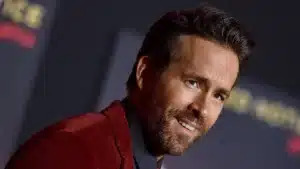
Ryan Reynolds and Matthew Dicks on storytelling
Actor and entrepreneur Ryan Renolds said, “Whether you’re talking about the unexpected nature of sports, low-cost wireless, gin, connected TV marketing, ad tech, those kinds of things, the connective tissue between each one of those things is actually, ironically, storytelling.. the same way it is with movies.”
I agree with him completely, but I say it like this:
“Storytelling is storytelling is storytelling.”
There is no “Storytelling for business” or “Storytelling for the stage” or “Storytelling for the page.”
It’s all simply storytelling.
The very same storytelling strategies I use to write novels, musicals, magazine columns, solo shows, and stories for the stage are the same strategies I use with my clients to develop marketing plans, design sales pitches, build pitch decks, write keynotes, compose sermons, write jokes, develop demos, devise branding strategies, and more.
Storytelling is storytelling is storytelling.
Different content. Same strategies and techniques.
I hope to someday sit down with Ryan Reynolds and discuss this topic in-depth, but I fear he might be a little too busy for me these days.
Actually, I’m pretty busy, too, but I would be more than willing to make time for him.
Hopefully, he feels the same.