
Kelly James Clark's Blog, page 2
July 1, 2015
Of Popes and Politicians
 The recent papal encyclical on global warming, Laudato Si, asserts that climate change is real and caused by humans. Catholic Republican politicians, who have long claimed a symbiotic relationship between their religious commitments and their political views, have moved quickly to denounce the Pope. Rick Santorum, GOP presidential candidate and devout Catholic, said that the Pope is wrong about human-made climate change. The Pope, he said, should leave “science to the scientists” and focus instead on theology and morality. Jeb Bush, Catholic convert and GOP presidential candidate, chimed in:
I hope I’m not going to get castigated for saying this by my priest back home, but I don’t get economic policy from my bishops or my cardinal or my pope. I think religion ought to be about making us better as people and less about things that end up getting in the political realm.
Santorum’s and Bush’s denunciations of the Pope reflect a remarkable lack of intellectual humility toward scientists, who merit respect by virtue of their well-earned expertise. Intellectual humility involves understanding who are the experts in a particular field and then acquiescing in their expert opinion.
Politicians are not experts in climate science. Climate scientists are. And so we should defer to them on the issue of the human contribution to global warming. In short, Santorum and Bush should in humility follow their own advice and leave “science to the scientists.”
What do the experts say? 97% or more of climate scientists hold that current warming trends are due to human activity.
Suppose Santorum and Bush are right that the Pope should restrict himself to “morality” and “making us better as people.” Isn’t it incumbent on Santorum and Bush, as Catholics, to heed the Pope’s indictment of the market economy, which, he claims, plunders the earth at the expense of the poor and of future generations? Aren’t those serious moral issues?
One suspects that Santorum and Bush have not actually read said 183-page document before assuredly denouncing it.
Intellectual humility requires submitting to the relevant experts and spiritual humility requires submitting to the relevant spiritual authorities (assuming one is spiritual in ways that ascribe authority to texts, say, or persons). Finally, moral humility requires looking into the eyes of the poor and the oppressed and responding to their needs.
Consider intellectual humility.
On my pre-college summer job as a janitor in a hospital, I often mopped and scrubbed with Leon. Although he was younger than I am now (I can’t think of myself as old yet), I thought of Leon then as a kind, old man. Since I would soon escape my plight as a janitor and head off to university, I also thought of myself, not to my credit, as superior to Leon. He had, I could see, many admirable qualities–he was a successful if not rich black man who grew up in pre-civil rights America, he worked hard at two jobs to support his wife and kids (he hauled junk when he wasn’t a janitor), and he was attractively honorable. He was a good man. I, on the other hand, was smart and headed to college (and so would be smarter).
One night Leon stopped me. He reached into his wallet, pulled out his drivers license and showed it to me. He told me that it was his first license, which surprised me as he’d been driving for years. He was clearly pleased to be legal, clearly pleased to have that license. He was so pleased that he asked me to read it to him.
You may have guessed–Leon was illiterate. Leon was asking “the college-boy” as they called me to read for him. I have never been so honored and humbled in my life.
As I read to Leon, his smile and pride grew wider. Leon had the healthy kind of pride that properly delighted in his gain in knowledge and skill. After all, he had grown as a person, father, and a citizen through the help of his wife and children and would use his newly gained legitimacy to help his family even more. The world was lighter and brighter and better. He was so rightly and unselfconsciously pleased, he was blissfully unaware that he was conceding his illiteracy to “the college boy.”
He had, with respect to knowledge and skill, a deep and natural humility, one seldom seen in the public domain.
I’ve come to think that a lack of intellectual humility, or humility of any sort, is an occupational hazard of gaining public office. When our culture’s valorization of status and power allies with our natural tendency towards competitive pride, humility is the first casualty.
Leon had a grateful sense of his dependence on others and a graceful sense of his intellectual limitations. In short, Leon was intellectually humble and Santorum and Bush are intellectually arrogant.
Our natural selfishness extends to our beliefs, making us arrogant, judgmental, close-minded, and even combative. There are deep and scary psychic connections between intellectual arrogance, on the one hand, and incivility, intolerance, and immorality, on the other. The only antidote, then, is intellectual humility.
Scientists say that humans cause global warming and the Pope, in intellectual humility, concurs (as should we all). The Pope says that ignoring the disastrous human consequences of global warming is immoral. We all should, in moral humility, concur and take immediate steps to prevent this impending disaster.


January 26, 2015
موضع جالب جیمز کلارک: من شارلی ابدو نیستم
يكشنبه, ۵ بهمن ۱۳۹۳، ۱۰:۰۴ ق.ظ
 مسعود صادقی: کلی جیمز کلارک استاد دانشگاه نوتردام است که برای مخاطبان ایرانی بیشتر با کتاب “بازگشت به عقل“ و نیز بواسطه سفر اخیرش به ایران شناخته می شود. مقاله اخیر او تحت عنوان“ آیا من باید شارلی ابدو باشم؟” در واقع آخرین یادداشت نامبرده در سایت شخصی اش می باشد که حقیر به محض مطالعه و علیرغم وارد دانستن نقدهایی بر محتویات و برخی مدعیات آن بی درنگ و شتابان آنرا ترجمه نموده و نهایتا با اجازه و ترغیب کلارک تصمیم به انتشار آن برای استفاده فارسی زبانان گرفتم. اولین پیام مهم این مقاله برای حقیر در واپسین جمله آن نهفته است: “اگرچه بر آزادی بیان صحّه می نهم اما من شارلی ابدو نیستم“.صرف نظر از اختلاف با کلارک در تعریف حدود و معنای آزادی بیان من با این موضع اخلاقی او موافقت دارم که می گوید هرچه حق right است الزاما خیر یا خوب good نیست. کلارک در بخشی از مقاله اش می نویسد:
“پنج میلیون مسلمان فرانسوی یک اقلیت قدرت زدایی شده هستند. جوانان مسلمان دوبرابر غیرمسلمانان محتمل است که بیکار شوند(در برخی از مناطق مسلمان نشین نرخ بیکاری بیش از چهل درصد است). ممنوعیت پوشش سر به شکلی نامتناسب مسلمانان را (در اظهار آزادانه دین خود) تحت تاثیر قرار می دهد. عدم پذیرش اعطای مجوز به ساخت مساجد موجب کمبود اماکن عبادی شده است. مسلمانان با تبعیض در اسکان مواجه هستند و بسیاری در فقر آشکار زندگی می کنند. قوانین، سکولاریزمی را که به نظر می رسد مستقیما مسلمانان را نشانه رفته است تقویت می نمایند. کوتاه آنکه مسلمانان فرانسوی از حیث اجتماعی، دینی و اقتصادی در حاشیه قرار گرفته اند.
مسلمانان فرانسه به واسطه آنکه از انسجام کامل با کشور جدیدشان بازداشته می شوند عمیقا به کشور مبدا خود وابسته باقی می مانند. قریب به نیمی از مسلمانان فرانسه خود را ابتدائا و در درجه اول مسلمان می بینند(البته در نتیجه قریب به نیمی از آنها نیز خود را فرانسوی می بینند).
ابتنای اهانت ها بر روی بی عدالتی ها به حاشیه رفتن مسلمانان را دائمی می کند. ابتنای اهانت ها بر روی پیش داوری ها اسلام هراسی را برمی انگیزاند. به حاشیه رفتن رو به تزاید مسلمانان و اسلام هراسی برانگیخته شده به نظر می رسد احتمالا منشا نوعی انفجار بزرگ است که فقط آدمکشان و توهین کنندگان به مقدسات می توانستند به آن امید بورزند.
استهزاء و تمسخر جایگزین اخذ زمان برای شناخت مردمانی نمی شود که خیلی از ما متفاوت هستند.
بنابراین اگرچه بر آزادی بیان صحّه می نهم اما من شارلی ابدو نیستم.”
January 24, 2015
Should I Be Charlie Hebdo?
It’s been a couple of weeks since two Islamic terrorists attacked and killed 12 people for publishing cartoons mocking the Prophet Muhammad. What lessons can we learn, when cooler heads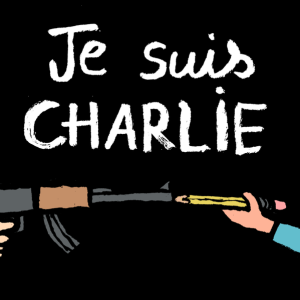 prevail, from this horrific event?
The first lesson is theological. On that tragic and horrific day, Cherif and Said Kouachi, contrary to the most basic understanding of Islam, acted as gods. The first pillar of Islam is that there is just one God (Allah). And Allah alone has the authority to make ultimate decisions concerning human life. The Kouachi brothers, in assuming god-like authority over human lives, affirmed three gods – Allah, Cherif and Said.
In my book, Abraham’s Children: Liberty and Tolerance in an Age of Religious Conflict, Kyai Haji Abdurrahman Wahid, the first democratically-elected President of Indonesia, explains blasphemy within a similar context of murder and satirical cartoons. Wahid, the former spiritual leader of Nahdlatul Ulama (one of the world’s largest Islamic organizations, with close to 40 million members), promoted liberty and tolerance from within a Muslim perspective. In his essay, “God Needs No Defense,” he writes:
As K.H. Mustofa Bisri wrote in his poem “Allahu Akbar”: “If all of the 6 billion human inhabitants of this earth, which is no greater than a speck of dust, were blasphemous … or pious … it would not have the slightest effect upon His greatness.” Omnipotent, and existing as absolute and eternal Truth, nothing could possibly threaten God. And as ar-Rahman (the Merciful) and ar-Rahim (the Compassionate), God has no enemies. Those who claim to defend God, Islam, or the Prophet are thus either deluding themselves or manipulating religion for their own mundane and political purposes, as we witnessed in the carefully manufactured outrage that swept the Muslim world several years ago, claiming hundreds of lives, in response to cartoons published in Denmark. Those who presume to fully grasp God’s will and dare to impose their own limited understanding of this upon others are essentially equating themselves with God and are engaged in blasphemy.
In short, when Cherif and Said Kouachi shot and killed twelve people, allegedly for blasphemy, they themselves were the blasphemers and their actions nothing more than murder. In defiance of Islam’s deepest principles, they acted as gods.
Aspiring to be martyrs, they met Allah as blasphemers and murderers.
Would that the story ended there: with the world, Muslims and non-Muslims alike, understanding and jointly condemning the moral and religious failure of the murderers and blasphemers.
But no.
The response to the actions of a few Muslims has been predictable: blame all Muslims. Assaults against Muslims have shockingly risen. In Villefranche-sur-Saône, a bomb blew up a kebab restaurant near a mosque. In Le Mans, blank grenades were dumped and shots fired at a mosque. Gun shots were fired at a Muslim prayer room in Port-La-Nouvelle. In Paris, a Quran was publicly desecrated at a rally.
The Kouachi brothers likely hoped their actions would incite non-Muslims to hatred and even violence. Such violent responses may incite more terrorists to join the cause. Sadly, they lived just long enough to see their hopes realized.
By giving in to hatred and prejudice, the murderers and blasphemers win.
Finally, and this is a moral lesson, not everything that one has a right to is good. The cartoonists and editors at Charlie Hebdo had the write to print cartoons mocking the Prophet (and Jews and Jesus, for that matter). But just as Nazi cartoons enflamed anti-Semitism, so, too, the Hebdo cartoons enflamed Islamophobia. Hebdo’s stereotypical cartoons portrayed Muslims as Arab towel-headed terrorists. But fewer than 15% of Muslims worldwide are Arabs, fewer men cover their heads (and seldom with towels except after a shower), and the vast majority of Muslims denounces terrorism.
If Muslims are indeed towel-headed terrorists, then we should fear them, isolate them, and disempower them. But most of them aren’t and so we shouldn’t.
I strongly defend Charlie Hebdo’s right to portray Muslims (or Jews or Jesus) in any manner they like. The right to free speech protects all political speech even speech we don’t like. But while they had the right to portray Muslims as they did, doing so, in many cases, was not good.
What made their published cartoons not good?
France’s five million Muslims are a disempowered minority. Young Muslims are twice as likely to be unemployed as non-Muslims (in some neighborhoods Muslim unemployment is as high as 40%). The ban on head coverings disproportionately affects Muslims (in the free expression of their religion). Local communities refuse to authorize the construction of mosques creating a dearth of worship spaces. Muslims face housing discrimination and many live in utter poverty. Laws reinforcing secularism seem aimed directly at Muslims. In short, French Muslims are socially, religiously and economically marginalized.
Because they are prevented from fully integrating into their new country, French Muslims remain deeply attached to their home country and religion. Nearly half of France’s Muslims consider themselves Muslim first and foremost (do the math, more than half consider themselves French first).
Piling insults onto injustices perpetuates Muslim marginalization. Piling insults onto prejudices enflames Islamophobia. Increasing Muslim marginalization and enflamed Islamophobia seem likely to produce the kind of conflagration that only murderers and blasphemers could hope for.
Mockery is no substitute for taking the time to get to know people who are very different from ourselves.
So while I endorse free speech, I am not Charlie Hebdo.
December 15, 2014
Hear the Cries of the Oppressed
Suppose the reluctance of the Ferguson grand jury to indict Officer Darren Wilson was completely justified. Suppose everything Darren Wilson said is true — Michael Brown attacked him and wrestled for his gun, Wilson fired only in self defense and out of fear for his life, etc., etc. Suppose, that is, that Wilson was not motivated one iota by racial prejudice. Even if all this were proven to everyone’s satisfaction, we would not have resolved the larger issue of racially motivated violence in police departments across the US.
A recent report from ProPublica (analyzing data from the FBI’s Supplementary Homicide Report on teenagers shot by police from 2010 to 2012) shows that black teens are 21 times more likely than white teens to be killed by police officers. From New York to LA, racially motivated violence in police departments is systemic and widespread. And kids are dying.
In the Bible we read that God heard the cries of his oppressed people in Egypt and came down to set them free (Acts 7:34). It’s time for the Christian church to hear the cries of the oppressed. While 78 percent of Americans profess to be Christians, we have not witnessed 78 percent of Americans demanding justice for blacks.
Right wing reactions to Ferguson (mostly from white Christians?) are depressingly insensitive to the cries of the oppressed. Whites, we learned, are the ones that are really under attack; blacks, on the other hand are privileged. Michael Brown and the black community are portrayed as less than human; whites, on the other hand, are upstanding citizens and human beings. Sean Hannity tells us that he has no problems when stopped by police for a speeding ticket, as if his own experience interacting with police officers is the same experience of young, black men.
Why isn’t the Christian church, black and white together, rising up in one voice and demanding justice throughout the land?
One problem is that most white Christians have not heard the cries of the oppressed. Sunday mornings are said to be the most racially segregated moments of the week. Whites worship in white churches and blacks worship in black churches. On Sunday mornings there’s little visible evidence that we are all one in Christ.
If the Church is the body of Christ, it needs to get its ears out of its white worship services and into places where it can hear the cries of the oppressed. Since God is omnipresent, hearing the cries of the oppressed is not so difficult for him. But the Church is not omnipresent. It is decidedly parochial. If white Christians are going to hear the cries of the oppressed, they need to move their bodies to the right place.
Here’s one suggestion: every white church in America asks a black church if they can visit their church and listen. Just listen. They might hear personal stories of mistreatment at the hands of the police. They might hear of the fears black parents have for their children’s treatment at the hands of the police. They might hear why black people don’t blindly trust (mostly white) authority figures. After hearing stories of oppression from members of the black church, perhaps, like God, the white church will be moved to act.
Be sure of this: if the white church ignores the cries of the oppressed, they will not act. Justice will not roll down like the waters. And if the white church ignores the cries of the oppressed, they are on the side of the oppressor.
You won’t hear the cries of the oppressed if you listen to white, male, rich and privileged radio and television celebrities. They may whine, but Rush Limbaugh, Sean Hannity and Glenn Beck are not and have never been oppressed. They are not victims of racial profiling and systemic racial bias. You cannot hear the cries of the oppressed if you listen to them. Shut them off.
The church has been a mighty force for justice in the history of the world. Christian leaders were principal movers and shakers in the abolition of slavery and the rights of women. But Christians also held slaves and justified slavery for millennia. Christians also oppressed women for millennia. It wasn’t until one or two Christians, and then a few more and then a few more, heard the cries of the oppressed and then decided to act to relieve the suffering.
Now is the time to listen to the cries of the oppressed in their own communities, and in their own voices, and then work together, black and white, for peace and justice.
July 24, 2013
Democracy: Not Just for Men Any More
Remember when “government of the people, by the people, and for the people” meant “government of the men, by the men, and for the men”? A century before Lincoln proclaimed these words, our founding fathers declared: “We hold these truths to be self-evident, that all men are created equal, that they are endowed by their Creator with certain unalienable Rights, that among these are Life, Liberty and the pursuit of Happiness.” But they did not mean “men” in any inclusive sense: they excluded both women and black men. Democracy, in the olden days, was the special province of white men. It took a civil war and Abraham Lincoln to clarify the Creator’s intentions regarding non-white people. And it wasn’t until 1920, and even then not without great struggle, that the United States granted women the right to vote. To this day, women are still only beginning to fully realize their rights to life, liberty, and the pursuit of happiness (which have been enjoyed by men since the founding of the US democracy well over two centuries ago).
And now that little burp in Egyptian democracy–the military coup. The Egyptian military’s detainment of President Morsi, on the best construal, was a response to the expressed will of the people: they no longer want to be governed by the Muslim Brotherhood; the Muslim Brotherhood broke its promise to be a government of the people, by the people, and for the people. The majority of the Egyptian people–secular and liberal, non-extreme Muslims, and Christians–want a free country, one not dominated by any particular religious group’s favored beliefs and practices. Morsi and his ruling cohorts, the people declared, had to go.
And yet startling statistics suggest that Egypt’s democratic revolution is just for men. Egyptian women nearly unanimously (99.3 percent of women aged 10 to 35) report that they have been victims of some type of sexual harassment, including verbal abuse (86.7 percent), physical touch (96.5 percent), and rape (90.9 percent). Sexual terrorism, which has been strategically deployed to scare female protestors out of the public square, is on the rise. One begins to think that Egypt’s democratic revolution, as in the days of old, applies to only half of the population.
Whether or not Islam itself encourages violence against women (and I don’t believe it does), women in Muslim-majority countries are, without question, vastly more likely than women in Western democracies to be victims of sexual violence and more unlikely to enjoy their unalienable rights to life, liberty, and the pursuit of happiness.
If there is nothing inherently Islamic about the oppression of women, if nothing in the Quran and the Hadith would preclude women from the full enjoyment of these rights, then Muslim leaders committed to democracy should work with all of their might to ensure that a Muslim democracy fully protects, includes, and empowers women. Muslim leaders should draw on the rich resources of their theological and intellectual tradition to ensure that the government of the people is the government of all of the people.
We, both in the West and in the Middle East, need to remain vigilant in our pursuit of a government of the people, by the people, and for the people. We need constant reminders of those who are systematically excluded from the democratic ideal. We need to find ways to hear the voices and not ignore the cries of those who are denied their basic rights to life, liberty, and the pursuit of happiness.
One simple step: read the stories and see the photos on the website, “The Uprising of Women in the Arab World.” They aim to “highlight the various kinds of discrimination against women in the Arab world.” Their stated goals include:
“Absolute freedom of thought, of expression, of belief or disbelief, of movement, of body, of clothing . . . The right to autonomy, to education, to work, to divorce, to inheritance, to vote, . . . and to full citizenship; . . . absolute equality with men; protection against domestic violence, sexual harassment and all forms of physical and psychological abuse and discrimination facing women today in the Arab world and beyond.
Their slogan: “Together for free, independent and fearless women in the Arab world!”
Since we all need constant reminders, Facebookers can subscribe to Uprising’s Facebook page.
One might think I’m claiming that patriarchy and misogyny are especially Muslim problems. They’re not. Patriarchy and misogyny are human problems. The United States is not immune: the oppression of women (and blacks) has plagued our country since its founding. But true democracies include all people. Democracy: it’s not just for men any more.
May 29, 2013
God’s Purveyors of Hate
Just prior to the Oklahoma City tornado disaster, NBA player Jason Collins came out of the closet. You know where this is going.
Fred Phelps Jr., the son of the Westboro Baptist Church’s pastor, blamed the tornado’s death and destruction on Oklahoma City Thunder superstar Kevin Durant who expressed his support for Collins.
Fred Phelps, Jr. @WBCFredJr
OK Thunder’s Durant flips God by praising fag Collins. God smashes OK. You do the math. #GodH8sFags #FagsDoomNations #FearGod #GodH8sU
10:47 PM – 20 May 2013
Evidently one tweet was not enough to make his hate-filled point. So, two minutes later, Phelps chimed in again:
Fred Phelps, Jr. @WBCFredJr
God’s wonderful wrath in Oklahoma reminds me: #GodCursesUForFagMarriage #GodIsYourTerrorist #GodWillRepay #GodAvengesHisPeople #GodH8sU
10:49 PM – 20 May 2013
It was not made clear why God didn’t aim his “wonderful wrath” at the Washington, DC area where Collins lives (Collins is a Wizard not a Thunder).
However, John McTernan, Christian preacher and blogger, clarified exactly why Oklahoma was selected–Oklahoma’s Christians weren’t praying fervently enough against homosexuals:
Oklahoma is supposed to be part of the Bible belt. How many churches were interceding before the Lord on Sunday about the open homosexuality in the streets of the state capital? I dare say almost none. I see this as judgment on the entire Christian church for not fearing God. How many of these massive destructive storms does God have to send before the church will see what is happening? Will it ever fear God and intercede and cry out to Him?
Got it: not enough prayers against them homos.
However, it was not made clear why God was especially angry at homosexuality and not, say, greed, arrogance, the killing of innocents in Iraq and Afghanistan, or lack of concern for the poor, the widow, and the orphan.
One might think that since Jesus uttered not a single word against homosexuals (but had a lot to say about loving your enemy, loving your neighbor as yourself, and helping the poor and dispossessed) that those who hate in the name of God aren’t Christians at all. Or, if they are, they fail to grasp what it most deeply means to be a follower of Jesus.
Even “respectable” and mainstream Christians are purveyors of hate. After the Oklahoma disaster, John Piper, popular Christian preacher and author, tweeted twice in rapid succession:
@JohnPiper: “Your sons and daughters were eating and a great wind struck the house, and it fell upon them, and they are dead.” Job 1:19
@JohnPiper: “Then Job arose and tore his robe and shaved his head and fell on the ground and worshiped.” Job 1:20
After being accused of insensitivity, Piper took down the tweets. He would later tweet:
@JohnPiper: My hope and prayer for Oklahoma is that the raw realism of Job’s losses will point us all to his God, “compassionate and merciful.” James 5:11
Before we accept Piper’s wounded clarification of his cryptic tweets, let us examine some theological dots. Piper believes that God foreordains or predestines, causes even, every single event that happens on earth. God has, he writes, “absolute sovereign control of God over all things, including evil.”
In 2009 a tornado hit the Minneapolis Convention Center and then broke the steeple of the Central Lutheran Church at precisely the time when the Evangelical Lutheran Church of America was holding its national convention in the Convention Center and was considering the issue of whether practicing homosexuality is a behavior that should disqualify a person from the pastoral ministry. Piper contends that the tornado was God’s “gentle but firm warning” to turn from the approval of sin. Piper’s post-Oklahoma tweet, which he has not clarified, likely communicated Piper’s belief in God’s firm but this time not gentle warning to turn away from sin. Genuine love, Piper insists, must hate.
I leave it to the reader to connect the dots.
From Phelps to Piper, Christians who speak hatred on behalf of God outdo Jesus who humbly professed ignorance of the reason for disasters. Jesus used the example of the Tower of Siloam which collapsed, killing eighteen people (Luke 13:1-5) to refute the claim that tragedies are divine judgment on human sin. He replied: “Do you think that these Galileans were worse sinners than all the other Galileans, because they suffered in this way?” Then he confounds those who arrogantly proclaim themselves privy to the divine mind. He instructs the questioners to look not at the sin of those who suffered but to look within, at their own heart of darkness. Were Jesus here today, he might offer the same advice to Phelps and Piper and their ilk.
March 25, 2013
Gay Marriage: WWJD
 Christian opposition to homosexuality is legendary. Christians have blamed homosexuality on everything from the fall of the Roman Empire to the attacks of 9-11. Jerry Falwell, for example, claimed that God allowed our enemies to attack us because we made God mad — he said that the gays and the lesbians who are actively trying to make homosexuality an alternative lifestyle “helped this happen.” And all the people (OK, Pat Robertson speaking on behalf of a lot of Christians) said, “Amen.”
God, Falwell and Robertson proclaimed, was mad at the pagans, and the ACLU, and the feminists, and the gays and lesbians. God was not mad at Christians who have embraced a materialistic lifestyle, who have fought against health benefits for the poor, and who attribute to the one who blessed the meek their natural right to bear arms. And God was not mad at prideful preachers who so confidently proclaim their privileged insight into the mind of God. Homosexuals have particularly drawn God’s ire.
While WTF seems the most fitting response, one might nonetheless ask, “WWJD?”
If what Jesus would do has anything to do with what Jesus did, one should simply hold one’s tongue on the topic of homosexuality because Jesus uttered not one word about homosexuality for or agin. Such followers of Jesus, though, are typically undeterred by Jesus’s complete silence on the topic of homosexuality.
Jesus did, on the other hand, explicitly condemn divorce except in the case of infidelity and he forbade remarriage if the divorce were due to something other than infidelity. Yet divorce is rampant and Christians are statistically no more likely to avoid it than are non-Christians. There is very little contemporary condemnation of divorce and remarriage among Bible-believing Christians. And there is no Christian movement to make divorce illegal in the U.S.
Liberal divorce laws and the attitudes that attend them are an unquestioned threat to marriage (vastly more, one might think, than permitting gays to marry). And Christians are complicit in both the laws and the attitudes.
Don’t get me wrong — Christians are not pro-divorce. But they have made a compromise between their commitment to the high teachings of Jesus and what’s culturally acceptable in this day and age. They are leaving the divorce laws alone rather than imposing their convictions on everyone (including themselves, in this case). Intriguingly, 9/11 was not blamed on the soaring divorce rate among Christians.
Christians continue to enjoy a substantial majority and cultural dominance in the United States and some Christians are keen to impose their moral vision, one that would preclude gay marriage by definition, on every U.S. citizen. Let me argue why they should not.
In parts of the world where a religion/ideology other than Christianity is dominant, Christians suffer. While western Christians live in societies where everyone, especially Christians, can worship and live out their faith as they please, Christians in other parts of the world, mostly in Muslim-majority nations, are not so privileged. In those parts of the world, Christianity is imperiled and Christians live in fear. Jews fare worse — in Indonesia, for example, the last major synagogue was forcibly closed in 2009; there may now be fewer than a dozen Jews in all of Indonesia. In China, Christianity is an officially permitted religion, yet the majority of Chinese Christians worship in illegal, house churches.
Christians should pay heed: in countries where a religion/ideology predominates, those in the out-group suffer. When the beliefs and practices of a religion/ideology become normative, those with differing beliefs and practices are treated as subhuman.
Christians, then, should hope for change in the countries their less-privileged brothers and sisters live in; they should hope that the norms in those countries would stop reflecting those of the dominant religion/ideology.
What they think should happen in Muslim-majority countries and China, they should apply at home: they should hope that the norms in our country would stop reflecting those of the dominant religion — Christianity.
Better for everyone — Muslim, Christian, Jew, even Communist — to live in a society which guarantees freedom of belief and practice. Better for everyone to live in a society where no religion/ideology is politically or culturally dominant.
Followers of Jesus, then, should not aspire to found a Christian empire. They should not seek to perpetuate their alignment with power, or to impose their distinctly Christian beliefs and practices on others. The kingdom of God is within.
And so, as the Supreme Court deliberates on the issue of gay marriage, they should hope for more freedom of belief and practice, not less.
January 28, 2013
Why does everyone hate the Jews?
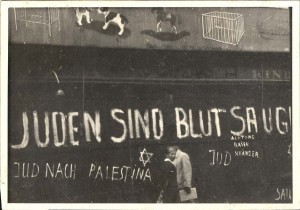
Egyptian President Mohammed Morsi may have shown his true colors. In several incriminating videos which have gone viral Morsi’s apparently anti-Semitic slurs have come to light. In one, a television interview from three years ago, he calls Zionists “these bloodsuckers who attack the Palestinians, these warmongers, the descendants of apes and pigs.” In the same year, at a rally in the Nile Delta denouncing the Israeli blockade of Gaza, he declares: “We must never forget, brothers, to nurse our children and our grandchildren on hatred for them: for Zionists, for Jews.” He’s not yet finished inciting hatred. Egyptian children, he said, “must feed on hatred; hatred must continue. The hatred must go on for God and as a form of worshiping him.” Lest we dismiss these blasts from the past as mere youthful indiscretions, just three months ago, a pious Morsi, worshipping at a Mosque, can be seen mouthing the word “Amen” as the preacher urges Allah to “destroy the Jews and their supporters.”
Morsi claims, as politicians have a habit of doing, that his remarks were taken out of context. He claims that his remarks were aimed at Israel’s policies, not Jews. There’s a fine line between Israeli policies that discriminate against Palestinians, on the one hand, and Jews, on the other. Morsi claims that he didn’t cross that line.
But while policies may be like bloodsuckers, such slurs seem more appropriately ascribed to persons. It’s Zionists, after all, not Zionist policies that he calls bloodsuckers; it’s Jews that he calls upon Egyptians to hate and to destroy.
I was recently traveling in Turkey with a Muslim friend talking about strategies for cultivating religious liberty and tolerance in Muslim-majority countries. In particular, we talked about whether or not there was sufficient theological common ground for Muslims and Christians to work together for religious liberty in Turkey. We waxed eloquently on Christian charity and Muslim compassion. I then asked what we might do for Turkey’s Jews. Once a haven for Jews, the Turkish Jewish population has dwindled dramatically (from over 500,000 during the Ottoman Empire—40% of Istanbul’s population—to about 25,000 today). His countenance fell immediately and he said, without irony, “Everyone hates the Jews.”
“Everyone hates the Jews.”
Since the blood of Abraham runs through the Prophet Mohammed and Jesus the Christ, where does that sentiment come from? How could followers of Allah, the All-Merciful and Jesus, who demands love of neighbor as oneself, hate the Jews (or anyone, for that matter)? How could it be that the one thing that unites Muslim and Christian alike in Turkey, and them together with Mohammed Morsi and his followers, is hatred for the Jews?
When I ask, “Why does everyone hate the Jews?”, then, I mean something like this—“How could children of Abraham possibly hate one of their brothers?” Or, “How is it possible that professed followers of an all merciful God could hate one of God’s creatures?”
Morsi’s unfortunate but all too familiar remarks offer a clue. Morsi trades on familiar anti-Semitic slurs: Jews as bloodsuckers, descendants of apes and pigs. The first step toward hatred of a group of humans is dehumanization. You don’t willfully hurt, discriminate against, terrorize, or kill innocent human beings. But you can squash bloodsuckers and slaughter pigs. You don’t deny human beings their right to life, liberty, property and the pursuit of happiness, but subhuman animals can have no such rights. Nazi Germany was prepared for genocide by a successful propaganda campaign in which Jews were systematically portrayed as subhumans.
Morsi’s first step towards following the All-Merciful should be to denounce the dehumanization. Jews are, according to Muslims and Christians, created in the divine image, just a notch below angels. As such, they are creatures of infinite worth, worthy of deep and abiding respect (even if one disagrees with their treatment of Palestinians). As creatures of infinite worth they deserve respect for both their selves and for their rights.
Calling them bloodsuckers, apes or pigs, then, is disobedience to Allah, a kind of blasphemy in which one believes one knows the nature of God’s creatures better than God himself.
In the Hadith, there is a story told of the Prophet who shows his deep respect for an unknown Jew.
Sahl bin Hunaif and Qais bin Sad were sitting in the city of Al-Qadisiya. A funeral procession passed in front of them and they stood up. They were told that funeral procession was of one of the inhabitants of the land i.e. of a non-believer, under the protection of Muslims. They said, “A funeral procession passed in front of the Prophet and he stood up. When he was told that it was the coffin of a Jew, he said, ‘Is it not a living being (soul)?’”
The Prophet showed his respect by standing up for a Jew (and a dead one, at that). It’s time for Morsi to stand up for Jews.
January 14, 2013
Muslims for peace
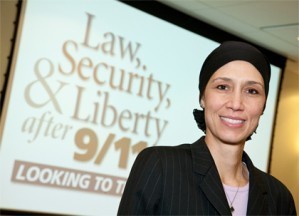
Hedieh Mirahmadi
Last week I wrote about the most persecuted religion in the world — Christianity. So dire is the persecution of Christians, Christianity is in danger of disappearing from its homeland. Christianity is most in peril, I noted, in Muslim-majority countries where either by official policy or official laxity, Christians are discriminated against, persecuted, tortured, threatened and even killed (Christians are not alone in this; atheists, Jews, Baha’is, and Muslims judged heretical are likewise persecuted.) Since this impending threat to Christianity has been largely ignored in the West I called upon the Western media to report on these atrocities and so prod Western governments to act in support of the universal human right to the free expression of religious belief. Finally, I said it was not my place to speak for Muslims but that Muslim leaders needed to make a compelling case that Islam is not inherently intolerant.
Noting the behaviors of some Muslims in Muslim-majority countries might leave the impression that most Muslims and most Muslim leaders endorse intolerance and persecution. Nothing could be further from the truth.
Most Muslims in most countries oppose violence in the name of Islam. For example, according to a 2009 Pew survey, in Pakistan, for example, 87 percent of Muslims hold that suicide bombing can neverbe justified (up from 35 percent in just 2004); 74 percent of Turkish Muslims and 78 percent of American Muslims concurred, and we have reason to believe that number to be higher today. Only 1 percent of American Muslims think suicide bombings are often justified, and only 7 percent think they are sometimes justified. I suspect, if suicide bombings were not so closely associated with Islam in most people’s minds, a similar number of non-Muslim Americans would think they were sometimes justified.
Five Muslim leaders, in my recently published Abraham’s Children: Liberty and Tolerance in an Age of Religious Conflict (Yale University Press), argue that Islam, properly understood, is a religion of peace. I described one of these authors as a “moderate Muslim,” and he objected to this description because of its redundancy — he said that Islam is, by definition, moderate, peaceful, just, and tolerant. Let me introduce you to two of the authors and their understanding of Islam.
Dr. Hedieh Mirahmadi is the president of WORDE, an organization that informs public policy about the difference between mainstream Islam and radical ideologies, and implements programs around the world that develop resilience to religious extremism. She has interviewed hundreds of Muslims around the world to understand what theologically motivates people towards the extreme, as well as to understand the economic, social, and financial incentives used to recruit followers. She writes:
“Modern-day Muslim scholars often repeat the catch-phrase, ‘Islam tolerates other religions,’ however I believe this is an inadequate representation of the faith. ‘Tolerate,’ as defined in the Merriam-Webster Dictionary, is to ‘endure, put up with, to bear.’ According to this definition, tolerance allows one to develop only superficial or shallow relationships devoid of compassion, empathy, and mutual understanding. In Islam it is not sufficient to simply tolerate others. Rather, Islam encourages Muslims to listen to and observe others so that we may truly understand them and accept them as part of God’s creation. Acceptance — more so than tolerance — breathes life into social structures; potentially shifting them from a stance of conflict to one of mutual respect.
The injunction for acceptance was established when God said in the Holy Qur’an: ‘O mankind! We created you from a single (pair) of a male and a female, and made you into nations and tribes, that ye may know each other, not that ye may despise (each other). Verily the most honored of you in the sight of God is (he who is) the most righteous of you.’ This verse is generally the strongest affirmation of Islam’s belief in the unity of mankind and the equality of each soul, applying to both men and women, as well as to every race, tribe, and ethnicity. It emphasizes that the true measure of value is not a person’s wealth or status, but rather his or her moral character or ‘righteousness.’”
Abdolkarim Soroush is an Iranian philosopher, devout Muslim, and one of the leading intellectual forces behind the Islamic republic’s pro-democracy movement. A Muslim activist during the 1979 revolution, Soroush has since braved death threats to argue for Islamic pluralism and challenge the notion that religion should not be open to different interpretations. Soroush writes:
“In the Quran Ch. 60, verses 8-9, we read:
‘Allah does not forbid you in regard to those who did not make war against you on account of religion and did not expel you from your homes that you may deal with them with kindness and justice. Indeed Allah loves the just. Allah forbids you only in regard to those who made wars against you on account of religion and expelled you from your homes and supported others in your expulsion, that you may make friends with them.”‘
This categorical and lucid statement concerns relationships between Muslims and non-Muslims. These verses were revealed to Mohammad during the second phase of his mission, when he was living in Medina as the powerful head of the first ‘Islamic state’ ever. How, then, should the now dominant Muslims treat their non-Muslim neighbor? The verses commend without reservation the showing of kindness and justice towards non-Muslims neighbors. These verses are significant because the kindness towards neighbors they enjoin is not an arbitrary and unexpected recommendation on the part of Allah but is rather a reasoned conclusion stemming from a principle of justice. This is precisely what makes it universal and categorical.
The number of Muslims hoping for peace and justice vastly outweighs the very small minority of extremists that have come to define Muslim as “Muslim terrorist.” We can seek for justice for Christians in Muslim-majority countries knowing that the majority of Muslims are on our side.
Finally, one might reasonably ask about the causes of the animus Muslims feel towards the U.S. and then we might reasonably seek to alleviate those concerns. These are hard questions to ask especially when patriotism has come to be understood as unquestioned allegiance to America and its causes (unlike America’s first patriots who were harsh critics of their government). Self-criticism is never easy and national self-criticism can be hazardous.
Let me hazard a guess, pun intended and awaiting flak, about two of those causes.
First and foremost could be the U.S.’s unflagging support of Israel’s mistreatment of Palestinians. Only the U.S., Israel, Canada, the Czech Republic, Palau, Micronesia, Nauru, Panama and the Marshall Islands voted against Palestinian statehood (I didn’t even know Palau, Nauru, and the Marshall Islands were countries). Let us note the irony: Palestinians in the West Bank and Gaza are denied human rights in some of the same ways that Christians in Muslim-majority countries are.
The second cause might be the U.S. invasion of Iraq on false pretenses. Maybe that’s not quite the best way to put it. Consider the more than 130,000 (counted very conservatively) to 1,000,000 mostly civilian deaths over the past 20 or so years caused by the U.S. invasion of Iraq. The dead are mostly Muslims, and the invasions were, President Bush claimed, endorsed by God. As General Tommy Franks proudly proclaimed, “We don’t do body counts,” but we should if we hope to understand the tragedy of the Iraqi invasion and Muslim anger at American imperialism.
We can attract more Muslims to the side of justice, peace, and liberty when our majority Christian nation genuinely seeks a world with liberty and justice for all.
January 6, 2013
The most persecuted religion in the world
 Over the past year, I have written of the intolerance that Christians have shown to Muslims in the U.S. From Missouri to Murphreesboro, Christians have demonstrated both a lack of charity and a denial of the right to religious liberty by setting fire to old mosques and opposing new ones. But Christians in the U.S. are rank amateurs compared to the Muslim persecution of Christians in the Middle East.
In early November, German Chancellor Angela Merkel declared that Christianity is “the most persecuted religion in the world.” Although met with predictable criticism, Rupert Shortt’s recent research report for Civitas UK confirms Merkel’s claim — we may not want to hear it, but Christianity is in peril, like no other religion. While this is a contest no one wants to win, Shortt shows that “Christians are targeted more than any other body of believers.” Shortt is the author of the recently published Christianophobia: A Faith Under Attack. He is concerned that “200 million Christians (10 percent of the global total) are socially disadvantaged, harassed or actively oppressed for their beliefs.”
Christianity is facing elimination in its Biblical homeland. Between a half and two-thirds of Christians in the Middle East have departed or been killed over the past century. Shortt attributes the intolerance and violence towards Christians to the rising Islamicization of Middle Eastern countries. Some of the oppression is government sanctioned and some government permitted; most is government ignored.
Shortt looks at the plight of Christians in the Middle East, country by country. When it comes to religious oppression, the devil, one might say, is in the details. In the Salafist website, ‘Guardians of the Faith’, you can read that Muslims are superior to Egypt’s Coptic Christians because “Being a Muslim girl whose role models are the wives of the Prophet, who were required to wear the hijab, is better than being a Christian girl, whose role models are whores” and “Being a Muslim who fights to defend his honor and his faith is better than being a Christian who steals, rapes, and kills children.” Little wonder, then, that radical Muslims unleashed their fury on Christians in 2010, murdering 13 worshippers as they emerged from a service and later bombing a church in Alexandria which killed 20 and injured 70. We can only hope that Morsi’s new government will see fit to stem the rapidly increasingly violence against Coptic Christians.
In 1990, there were over 1.2 million Christians in Iraq but by the end of 2003, there were fewer than 500,000; in 2013, there are fewer than 200,000 Iraqi Christians. In 2010, al Qaeda militants attacked a Baghdad cathedral, killing over 50 people and maiming many more. While Iraqi Sunnis and Shiites are deeply divided, they are united in their persecution of Christians. Bishops and priests have been kidnapped and tortured; churches are bombed, killing and injuring Christians. The message, sometimes sent in an envelope containing a bullet, has been delivered: “Christians should leave or die.”
In 2011, Shahbaz Bhatti was murdered by the Pakistani Taliban for his opposition to Pakistan’s anti-blasphemy laws. Bhatti, a Catholic, was Pakistan’s Minister for Minorities. In fact, a death sentence is meted out to any Pakistani courageous enough to speak out in defense of religious minorities. Bhatti instructed his estate to publish a video upon his untimely death; in it he said, “I am living for my community and for suffering people and I will die to defend their rights. I prefer to die for my principles and for the justice of my community rather than to compromise. I want to share that I believe in Jesus Christ, who has given his own life for us. I know… the meaning of the Cross and I follow him on the Cross.” Speaking of justice — Bhatti’s two killers have never been charged.
We can move more quickly through the countries. Consider apostasy laws in Saudi Arabia, Mauritania, Iran, Bahrain, Jordan, Kuwait, Qatar, Oman, Yemen, Sudan and Malaysia. By apostasy, read “Muslim convert to Christianity.” Of the plight of apostates, Ziya Meral, a London-based Turkish scholar, writes: “Apostates are subject to gross and wide-ranging human rights abuses including extra-judicial killings by state-related agents or mobs; honour killings by family members; detention, imprisonment, torture, physical and psychological intimidation by security forces; the denial of access to judicial services and social services; the denial of equal employment or education opportunities; social pressure resulting in loss of housing and employment; and day-to-day discrimination and ostracism in education, finance and social activities.”
We have scarcely skimmed the surface of violence and intolerance to Christians in Muslim worlds. If it should continue at its present rate, Christianity will very soon be completely eradicated in its homeland. While the cultural loss is deeply worrisome, the lack of liberty, intolerance and violence in Muslim countries is even more worrisome. Reports by the Freedom House think-tank echo this concern: religious liberties are most threatened in Muslim-majority countries.
Christianity is not, as Rowan Williams, Archbishop of Canterbury reminds us, an import to these countries. The Christian communities that are now being threatened and even wiped out are nearly as old as the New Testament itself. Christians have called these countries home for two millennia; Christianity is not a Western imposition on historically Islamic countries.
It is not my place or purpose to defend Islam but the Quran explicitly states that there is no compulsion in religion and suggests no punishments for apostates. Sadly, portions of the Hadith and sharia law do suggest murder for apostasy. And while some take “jihad” to mean “jihad of the heart” and so to preclude violence against others, other passages in the Quran state that Muslims should fight against those who lack faith in Allah. Muslim defenses of liberty and tolerance must account for these difficult passages in their Holy Book and tradition. The challenge to Muslim leaders today is to offer a cogent answer to the question: Is Islam inherently intolerant and violent?
Why has the tragedy of Christians in the Muslim world been ignored? Shortt blames this on the media’s fear that criticizing Muslims is tantamount to racism. I attribute it as well to secular media’s lack of interest in and sometimes even scorn for religious belief. Western media must overcome its fear of criticizing Muslims and its disinterest in religious belief.
Religious liberties are the most fundamental human liberties — they are indicators of a country’s political willingness to allow people to choose their own way of life. In countries were religious liberty is conspicuously absent, one is likely to find a host of other liberties threatened as well.
Finally, the U.S. government must actively defend Christian liberty in Muslim-majority countries. While no U.S. politician worth his or her salt would deny the right to a Jewish state in the Middle East, so, too, no politician worth his or her salt should ignore the plight of Christians in the Middle East. Sadly, in the Middle East both Judaism and Christianity are threatened by Muslim extremists intent on violently recreating the world in their own image.
I am not an anti-Muslim extremist. I have partnered with like-minded Muslims, Christians and Jews in the path toward peace. I have come to admire the courage, wisdom and compassion of my many Muslim friends. And yet I worry that their clarion call to peace will be drowned out by shouts of radicalism.
The U.S. government, prodded by the U.S. media, needs to add its voice to those calling for peace, liberty and justice in Muslim-majority countries.
Kelly James Clark's Blog

- Kelly James Clark's profile
- 28 followers

