Angela Slatter's Blog, page 31
February 9, 2018
Decisions, decisions
Kathleen Jennings has taken over designing the badges for the Restoration launch bags … but she goes and gives me three options! Three!


February 1, 2018
Locus 2017 Recommended Reading List
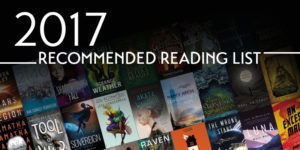 The Locus 2017 Recommended Reading List is out!
I’m thoroughly delighted to see so many friends on the list – and even more delighted to see that Corpselight made the list too!
As did Winter Children and Other Chilling Tales from PS, “The Little Mermaid, in Passing” from the Review of Australia Fiction, and “Run, Rabbit” from Mad Hatters and March Hares.
A good way to start the day.
January 25, 2018
Stephen King’s The Tommyknockers
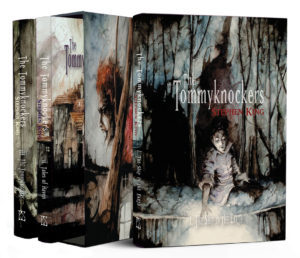 So, this is causing some excitement chez nous:
1. A limited edition slipcased hardcover of the legendary Stephen King’s equally legendary The Tommyknockers from PS Publishing (cover by the incredible Daniele Serra),
2. I’ve been asked to write an Introduction for said limited edition.
It turns out that there are more frightening words in the world than those written by Mr Stephen King (admittedly, not many), but among them are “Angela, will you write an intro for The Tommyknockers?”
Late last night and the night before,
Tommyknockers, Tommyknockers,
knocking at my door.
I want to go out, don’t know if I can,
’cause I’m so afraid
of the Tommyknocker man.
January 24, 2018
Bears
I’ve just realised that, when faced by a huge new challenge, the inspirational image that pops into my head is Nick Frost, covered in bruises & blood, taking a deep breath then fighting a bear. Nick Frost always wins, the bear buys him drinks.
#nickfrostfightingabear
#
ofcourse
Suffice to say, there’s a big new secret challenge in my life.
Onward and upward, toward the battle bear.
January 23, 2018
The Beast’s Heart: Leife Shallcross
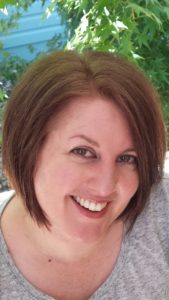 Leife Shallcross is the author of several short stories, including Pretty Jennie Greenteeth, which won the 2016 Aurealis Award for Best Young Adult Short Story, and a graduate of the ACT Writers Centre’s 2016 HARDCOPY professional development program. Her first novel, The Beast’s Heart, will be published by Hodder & Stoughton in 2018. Ever since she can remember, she has been fascinated by stories about canny fairy godmothers, heroic goose girls and handsome princes disguised as bears. She is particularly inspired by those characters that tend to fall into the cracks of the usual tales. She can be found online at leifeshallcross.com and on Twitter @leioss.
1. What do new readers need to know about Leife Shallcross?
I was recently asked to describe what I do without using any kind of job title, and came up with the following: I create portals to magical worlds where readers can get themselves completely lost. I like books where the world itself is a compelling character. So that’s the kind of story I like to write. Especially where novels are concerned. If I’m going to spend that much time and effort in a story world, it better be good.
2. What was the inspiration for The Beast’s Heart?
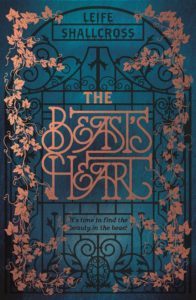
I wanted to create a novel-length fairy tale in which I could completely immerse myself, and the Beast’s enchanted castle offered such a good opportunity to create that kind of world-within-a-world. Robin McKinley’s iconic Beauty and the Beast tale, Beauty, was absolutely an early influence, and probably provided the first spark. And I’ve always loved the core concept of a hidden garden a la Frances Hodgson Burnett’s The Secret Garden. But there are so many other tidbits that have snuck in – Pride and Prejudice, Sleeping Beauty, Cupid and Psyche, The Princess Bride, lyrics from Lady Gaga songs…
3. What is your favourite fairy tale?
It changes. All. The. Time. The answer is probably whichever one I’m playing with at the moment (the Frog Prince). I have no shame in declaring my love of the really popular ones – like Beauty & the Beast, Cinderella, Red Riding Hood. They all have compelling elements that have clearly captured and held a secure spot in the collective imagination. But there’s a few less-well-explored ones that seem to sit in my peripheral vision, taunting me and daring me to do something with them. Tatterhood, is one of these. The spoon! The goat! The sassy fuck-it-let’s-go-sailing attitude. Catskin is another one. And Kate Crackernuts. *rubs hands*
 4. Which writers have been your biggest influences?
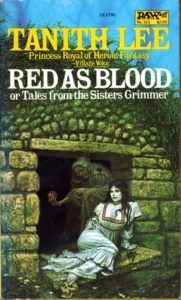
Definitely Tanith Lee. It was her collection Red as Blood, or Tales of the Sisters Grimmer, that first taught me fairy tales could be sophisticated, sticky, sensual things for grown-ups. And her Flat Earth series is a jewel-box crammed full of the lushest mythic storytelling imaginable.
M M Kaye’s The Ordinary Princess was one of the first chapter books I ever owned, and taught me how satisfying it is to turn a fantasy trope on its head. I also learned a lot about humour from that little gem of a story. I have similarly fond memories of Joan Aiken’s short stories and retold fairy tales. A couple of years ago I read the collection All But a Few to my children. I must have read it a dozen times as a kid, and it was a bit of a revelation to rediscover her.
And I probably have to round it out with Jane Austen and Georgette Heyer. I feel like I came late to both – I didn’t read Austen until university and I probably only started reading Heyer five or six years ago. And I get that one is like good wine and the other like a Shirley Temple with a bendy straw and a maraschino cherry, but they each provide such rich pickings for my imagination.
5. Can you remember the first fairy tale ever read to you?
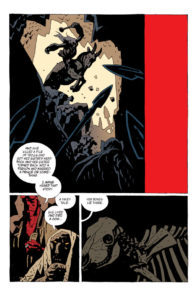
Has to be Mike Mignola’s Troll-witch.
Nope. I tried, I really did. But I have so many memories of so many books full of terrifying, wonderful, magical stories. I remember looking at the Errol Le Cain version of Thorn Rose when I was very tiny – no more than 4. I remember the cover image of the fairies parading through the forest and not liking it because it was dark and gloomy (my sentiments have undergone a material change in the intervening interlude). I have an early memory of reading a version of Beauty & the Beast where her father steals a hazel twig instead of a rose. I also remember having a Gingerbread Man version of one of those record/book combos (you know, where Tinkerbell told you when to turn the page *sparkleTINGsparkle*). Stupid biscuit. How dumb do you have to be?
When I got a bit older – probably around ten or eleven, my mother gave up on trying to break my death grip on fairy tales and started feeding me a steady diet of feminist retellings and new stories, like The Practical Princess and Tatterhood and Other Tales. There were a lot of fairy tales in my childhood.
6. When did you decide you wanted to be a writer?
I’ve always loved stories. I was a huge reader as a kid – the kind that took a book into the toilet with me and only emerged 2 hours later when my sister started banging on the door because she needed to pee. And imagining up my own stories and committing them to paper was really just an extension of that. So, for me, the “deciding to be a writer” part was more about deciding to put myself out there for publication.
For some reason, for most of my adult life I had it in my head that in order to be a real writer, I needed to be writing contemporary, literary fiction. I don’t quite know what did it, but in about 2011 I had an epiphany that actually writing fantasy and fairy tales was actually my thing, and I wasn’t going to grow out of it, and I really just needed to accept that that’s what I write and where my imagination lives. The follow up epiphany was that real writers write, but authors get their stuff published, at which point I joined the ACT Writers Centre and started doing some writing courses in order to work out how to do just that.
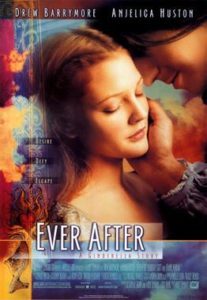 7.
What’s your favourite film adaptation of a fairy tale?
7.
What’s your favourite film adaptation of a fairy tale?
Easy. Ever After.
No – Tangled.
No – Ever After. No. Tangled.
Argh.
8. When you’re in the mood to read, who do you choose?
I’m currently trying to whittle down a massive TBR pile, which involves a very strict regime of reading unread books instead of re-reading old favourites. So, realistically, at the moment, it could be almost anyone. But in the interests of offering some genuine recommendations, I’m two books into V E Schwab’s Shades of Magic trilogy, and I can happily say I’ll pick up anything of hers in future. Other authors/series I’m currently enjoying are Angela Slatter’s Verity Fassbinder books (!!), Ben Aaronovitch’s Rivers of London, and Seanan McGuire’s Wayward Children series. And Patrick O’Brien. Everyone should read him. One day, when I have dealt with my serious TBR problem, I am going to re-read the entire Aubrey-Maturin series.
9. You can take three books to a desert island ? what do you choose? 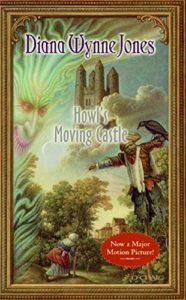
Oh hell. Just three? You evil woman.
Um. Diana Wynne Jones’ Howl’s Moving Castle, Pride and Prejudice, and um, um, um… I’m gonna go Patrick O’Brien’s Desolation Island, because, let’s face it, I’ll probably only get to re-read it if I’m imprisoned on a desert island with no access to bookshops. Besides, it might contain some useful tips for getting myself off it.
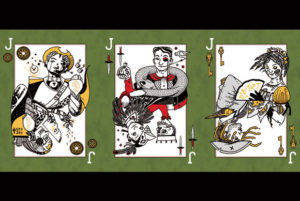
Shauna O’Meara
10. What’s next for Leife Shallcross?
Firstly I’m about to launch into editing A Hand of Knaves, along with my partner-in-this-particular-crime Chris Large. This is my first stab at editing, so it’s a bit daunting. In my spare time (hahahaha), I’ve got two novel-sized WIPs going at the moment. One is a YA riff off Cinderella, only the protagonist is a McGyver-type character who’s faked her father’s death in order to investigate her horrible stepmother’s links to a plot against the crown. The other one is the first in a series (gulp) set in 18th Century London, involving a cross-dressing runaway heiress who can summon demons, and a dissolute Viscount who communes with angels, who have to join forces to solve a grisly murder. Maybe if I’m lucky I’ll also get time for a couple more short stories.
Chinese Translations in SFW!
 Normally when I’m this excited I make a noise only dogs can hear, but I am so extra-mega-excited about this that the squeaks can be heard in Paraguay.
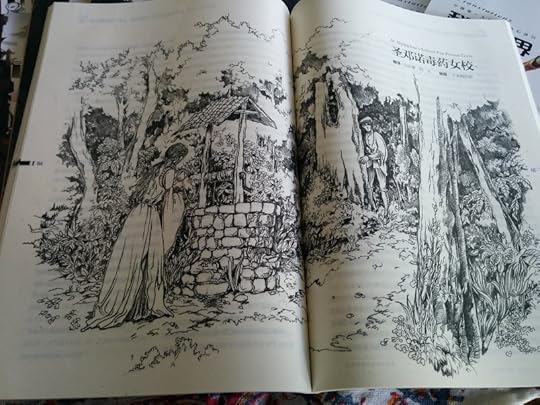
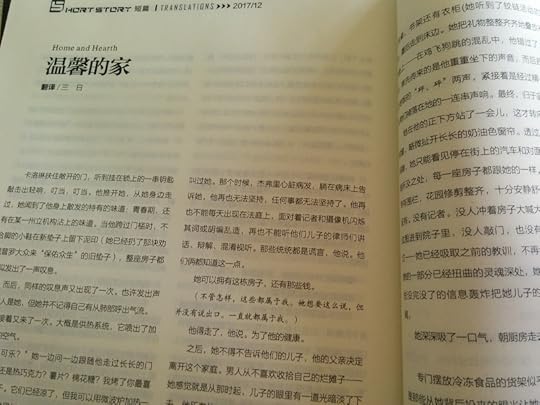
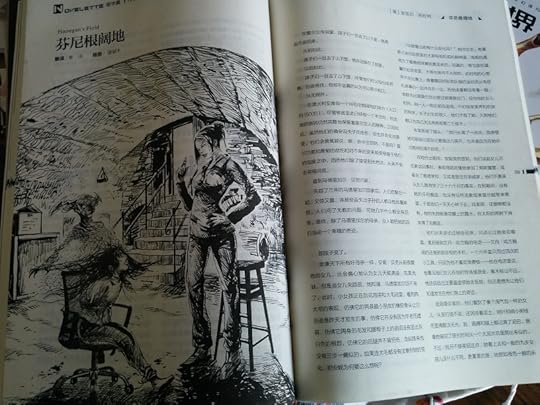
SFW magazine translated three of my tales for this issue! “Home and Hearth”, “Finnegan’s Field” and “St Dymphna’s School for Poison Girls”. Gorgeous illustrations! Lovely magazine!
Much happiness!!!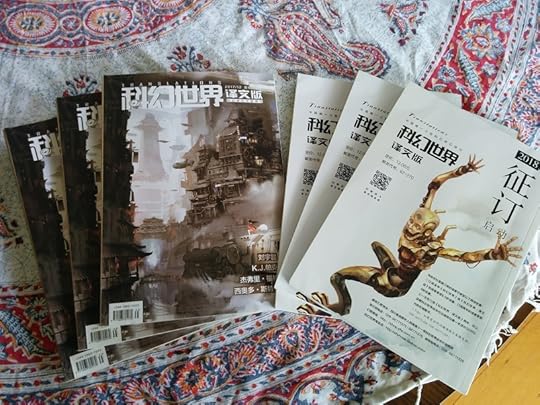
January 22, 2018
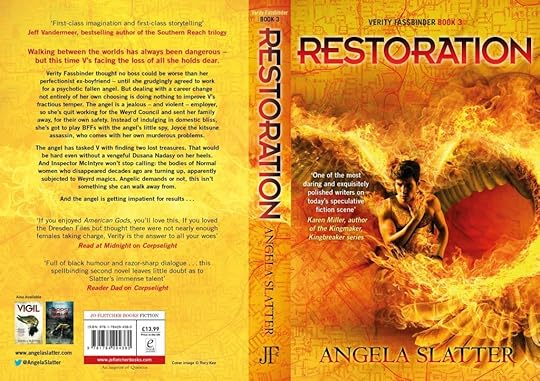
Restoration
The Gina
Homestretch!
Just plugging last edits into Restoration, powered by the kindness of the housemates who bring me cocktails (one a night so it’s not terrifying, drunken editing that makes Beloved Publisher cry).
I’m sitting in the Boatman’s low dark craft. I was in it not that long ago so I recognise it. I don’t like it any better now.
We glide through the tenebrous waves; they shine strange and oily beneath the hull, yet throw up no reflection when I lean out. These waters only take. There’s mist all around, thick and heavy and damp and cold. Last time I was in this boat, spirits tried to prise open my mouth, to get inside because I was alive and didn’t belong, yet I feel no trace of their fingers. I glance over my shoulder at the oarsman, who’s paying me no attention. He stares past me; I can see the glimmer of his obsidian eyes.
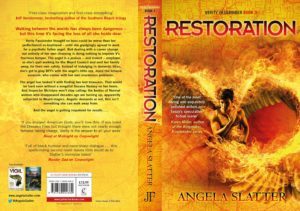
Extract from Restoration, Verity Fassbinder Book 3
January 19, 2018
It Might Not Look Like It …
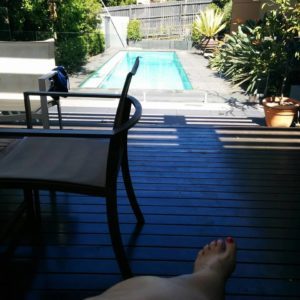 … but I am actually busy planning to launch Restoration in August this year.
Badges, candy, cupcakes, Dr Kim, the Brisbane City Square Library and its magnificent staff, my family heckling from the front row.
Oh, it’s all happening.
January 16, 2018
The Last Ghost: Marie O’Regan
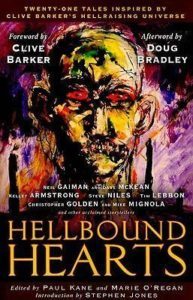
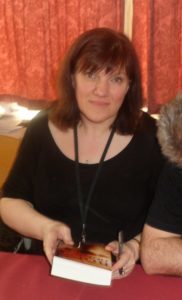 Marie O’Regan is a British Fantasy Award-nominated author and editor, based in Derbyshire. Her first collection, Mirror Mere, was published in 2006 by Rainfall Books; her second, In Times of Want, came out in September 2016 from Hersham Horror Books, and her short fiction has appeared in a number of genre magazines and anthologies in the UK, US, Canada, Italy and Germany, including Best British Horror 2014 and Great British Horror: Dark Satanic Mills (2017). Her novella, Bury Them Deep, was published by Hersham Horror Books in September 2017. She was shortlisted for the British Fantasy Society Award for Best Short Story in 2006, and Best Anthology in 2010 (Hellbound Hearts) and 2012 (Mammoth Book of Ghost Stories by Women). Her genre journalism has appeared in magazines like The Dark Side, Rue Morgue and Fortean Times, and her interview book with prominent figures from the horror genre, Voices in the Dark, was released in 2011. An essay on ‘The Changeling’ was published in PS Publishing’s Cinema Macabre, edited by Mark Morris. She is co-editor of the bestselling Hellbound Hearts, Mammoth Book of Body Horror and A Carnivàle of Horror – Dark Tales from the Fairground, plus editor of bestselling The Mammoth Book of Ghost Stories by Women and is Co-Chair of the UK Chapter of the Horror Writers’ Association. Marie is represented by Jamie Cowen of The Ampersand Agency.
1. What do new readers need to know about Marie O’Regan?
I’ve been writing for quite some time now; I started quite late, when my kids were small, and it was a while before I plucked up the courage to submit anything. My first published short story was ‘Suicide Bridge’ in 2001, and since then I’ve had two collections out (Mirror Mere and In Times of Want), a few novellas; and have had short stories in many magazines and anthologies – I was nominated for the British Fantasy Award for Best Short Story for one of them, ‘Can You See Me?’. I’ve also edited a number of anthologies with my husband, Paul Kane: Hellbound Hearts, which was an anthology of stories inspired by Clive Barker’s ‘Hellbound Heart’, Clive even did the cover art for us, the first new Cenobite in years, Vestimenti; The Mammoth Book of Body Horror, Carnivàle: Dark Tales from the Fairground, and my first solo anthology project, The Mammoth Book of Ghost Stories by Women. Hellbound Hearts and The Mammoth Book of Ghost Stories by Women were nominated for the British Fantasy Award for Best Anthology. I was a member of the British Fantasy Society Committee for eight years, during which at various times I was editor for their newsletter, Prism, and their fiction magazine, Dark Horizons. For the last four years, I was Chair (2004-2008), and together with Paul have organized a number of FantasyCons. We’ve also been part of a World Horror Convention team (2010, Brighton) and World Fantasy Convention team (2013, Brighton), both organized by Stephen Jones, Michael Marshall Smith and Amanda Foubister. Currently, together with Paul, I’m co-Chair of the UK Chapter of the Horror Writers’ Association.
2. What’s your favourite branch of horror? 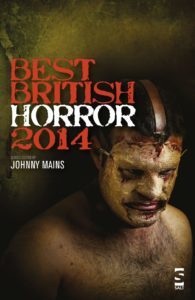
I love ghost stories, as is probably pretty apparent when you look at what I write, and what I’ve edited, such as my collections Mirror Mere and In Times of Want, or my latest novella Bury Them Deep, the last two of which are available from Hersham Horror Books. Or the anthologies I’ve edited, I prefer quiet horror, a growing unease, to splatter, and this can be seen in the anthologies I’ve edited, such as Hellbound Hearts, or A Carnivàle of Horror: Dark Tales From the Fairground.
3. What was the inspiration for The Mammoth Book of Ghost Stories by Women?
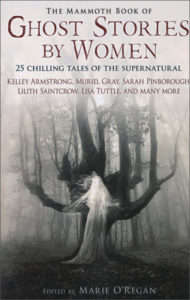
I got sick of seeing posts on Social Media saying women don’t write horror, women don’t submit their horror stories/books to publishers or editors, it’s a male dominated genre etc. Whilst it’s true there are a lot of male authors, there are a lot of women writing horror, including ghost stories. We’ve always been around, we will always be around, and I wanted to show that. I chose to include some classic ghost stories from women such as Edith Wharton’s ‘Afterward’, Mary Elizabeth Braddon’s ‘The Lost Ghost’, which is heartbreakingly sad, as well as some current female authors – not all of whom are well known, but are excellent. Hopefully I succeeded – although at a recent convention, a young girl was surprised to see the title, saying ‘women don’t normally write ghost stories, do they.’ Head desk moment, definitely.
4. Which writers have been your biggest influences?
I love Stephen King; have done since I read Carrie at the age of thirteen. I also love Clive Barker, again, since I first read The Books of Blood. Before I started reading horror at the age of nine, it was Agatha Christie. In a slightly different genre, I love the work of mystery novelist John Connolly. His Charlie Parker detective series is amazing, and he also writes wonderful supernatural short stories.
 5. You can take five films to a desert island ? what do you choose?
Only five? But there are so many to choose from… Ah, okay. Let me think. I think I would have to take The Green Mile; it’s a brilliant adaptation of the Stephen King story, and gets me every single time I watch it. Then I would have to take The Shawshank Redemption, for the same reason. I’m a big fan of Christopher Nolan’s films, and don’t really like picking a favourite – but if I have to then I guess it would be Inception; love that film and have watched it so many times. Scream is another favourite, and for my last one I think I’d choose something very different: While You Were Sleeping. Not in the same vein as the others, but sometimes you need to watch a weepie and that’s a great one, plus Sandra Bullock is in it.
6. Can you remember the first story you read that made you think “I want to be a writer”?
Not specifically, no; I read everything I could get my hands on voraciously from being a very small child – from kiddie books to Enid Blyton, to Agatha Christie at about six or seven, horror at nine, taking in pretty much every genre on my way through the local library’s stock in my teens…at some point, I realised I could make up my own. Before I started to write, though, I drew. I could always be found either reading or drawing.
7. What is your favourite horror film?
Again, there are so many, and occasionally it changes… but I’d have to say The Exorcist, even though it’s the only one that’s ever given me bad dreams. That could even be why it’s my favourite, I suppose.
8. When you’re in the mood to read, who do you choose?
Stephen King. He’s always my go to, closely followed by Joe Hill, Clive Barker, Neil Gaiman, John Connolly… I read a lot.
9. Who’s scarier: vampires or ghosts?
Vampires. A ghost is haunting a place or a person for a reason; something needs to be resolved and they’re rarely deliberately physically harmful. A vampire is just this creature of mindless hunger – its sole purpose is to drain you.
 10. What’s next for Marie O’Regan?
I have a collection, The Last Ghost and Other Stories, coming out from Luna Press in 2019 as part of their new ‘Harvester’ series. I’m editing an anthology of ghost stories for Titan UK/US called Phantoms, that will be released in October of this year – featuring stories from the likes of Joe Hill, John Connolly, Kelley Armstrong, Helen Grant, Tim Lebbon, and a great story from your goodself, to name but a few. I’m working on another anthology with Paul that I can’t really talk about yet but I’m very excited about; I have four short stories due out this year (one’s a reprint for a charity anthology) so far; I have a supernatural novel on submission via my agent, Jamie Cowen of Ampersand Agency. I’m also working on a novella, ‘Resurrection Blues’, to go with a novella written by Paul; they’ll be published in one volume by Black Shuck Books. Then there are a couple of short stories to write, a comic script, a screenplay, after which I can get on with the next novel, hopefully. There are always a few things on the go, at varying stages of completion. And we’re working on some more events for the UK Chapter of the Horror Writers Association, too. First up is our HWA Presents Highlighting Horror: Horror, Thrillers and Chillers in March, a one day event discussing crossover fiction, with authors such as David Mark, Paul Finch, A.K. Benedict, Steph Broadribb, SJI Holliday. Lots to keep me busy.
January 13, 2018
“New Fears” Book Review
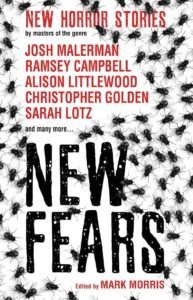 Fantastic review of New Fears, the brand new horror anthology edited by Mark Morris (Titan Books)! Thanks, Shane D. Keene of HorrorTalk.
Includes a Sourdough world tale from me, called “No Good Deed”.
Edited by Mark Morris
2017, 400 pages, Fiction
Released on September 19, 2017
Review:
Since the recent announcement of the closure of Great Jones Street, I’ve seen it bandied about on social mayhem sites that the short story as a viable form for speculative fiction is in its death throes. Well, I’m here to tell you that it just isn’t true. 2017 saw some of the best collections and anthologies of this generation produced by some of the greatest authors and editors in the business; some young, some grizzled veterans, all hugely talented and working at the top of their game, particularly in horror fiction. One such editor is Mark Morris, curator of the stories in this book I’m talking about today.
New Fears is an anthology that hearkens back to the old days, taking something that was the norm back in the ‘70s and ‘80s and making it seem almost new by comparison to the typical themed volumes that are being produced en masse today. This book, in the vein of such greats as Douglas E. Winter’s Prime Evil and Dennis Etchison’s Cutting Edge—not to mention everything Kirby McCauley ever touched—is un-themed because Morris wanted to create something that would demonstrate the varied and seemingly limitless possibilities of our chosen genre. So, he limited his contributors to just one simple and very important requirement: write a damn good story. And I can tell you that the authors within responded in fucking spades.
The rest is here.