
Maggi Andersen's Blog, page 89
November 24, 2010


November 23, 2010
New Cover for The Reluctant Marquess! Coming to Embrace Books in Feb, 2011.
 I love this cover. It's just as I envisaged Charity would look.
November 19, 2010
Life in the country
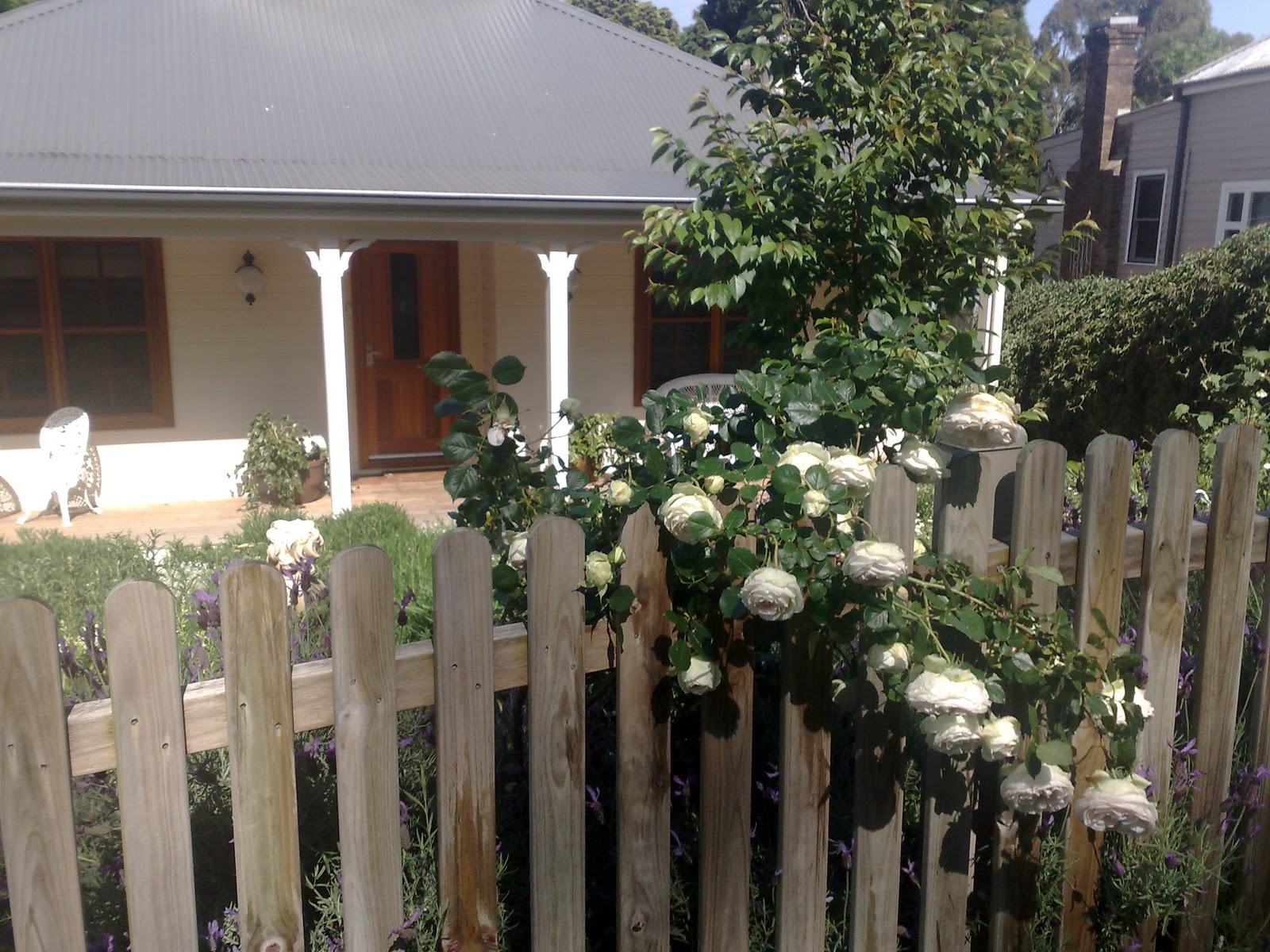 Coming from the city to live in the country has been surprising. After a view of a busy harbour, the roar of traffic noise and smoky air, we now have relative quiet. Instead of waking to ferry horns, we are startled out of bed by the cuckoo shrike calling its mate at 5.00am. Then the Kookaburras join in and have a good laugh, at our expense I feel. But it is nice to look out the window and see a rabbit hop by and the wild ducks on the stream. The neighbour's chickens stalk our lawn, providing wonderful eggs. I miss the theatres in the city though, and choosing a movie I wish to see rather than the few on offer here. The shops, the cafe's and restaurants too. One can't have everything, the air is wonderful, and oh, I have to go, there's a possum knocking at the backdoor for fruit.
November 14, 2010
A writer friend is in dire need. A message from her publisher
AN IMPORTANT ANNOUNCEMENT
 Buy Link: http://deward.com/
Hey all,
This is Daniel DeGarmo with DeWard Publishing Company.
I'm sure all of you are aware of Sandi Rog's latest battle (with cancer - Type T-cell Lymphoma) that just began last week. As you can imagine, she's devastated, especially considering the timing of all this as her first novel, The Master's Wall just released last Monday.
Well, considering we are a small publishing company and can pretty much do whatever we want, my business partner and I have agreed to donate an additional $1 per book to a Fund that I'll be setting up this week.
Just so no one thinks we are being shady about the whole deal, this is above and beyond the royalties that Sandi (and her agent) is already incurring with every book sold. The purpose of this fund is to help out Sandi's family (husband and children) while she is laid up fighting for her life.
What I need from you is simply spread the word. For every copy of "The Master's Wall" that is sold (including Kindle and Nook) we will donate $1 to this Fund. I'll also be setting it up so that it can receive regular donations if anyone is interested in just helping out financially.
I hope to have more information to share in the next day or so but at least for now I would ask that you would do whatever you can do direct people to buy Sandi's book.
Sandi has been copied on this email.....Sandi..Please forward this message on to anyone you think would help us out in getting the word out.
The same goes for you if you've received this email.
I want to close by lifting the following prayer up on Sandi's behalf:
Father, I lift my sister before you as her body has been stricken with disease.
You know, O God, that she has used her gifts to glorify You and spread your wonderful message of grace and love.
It is my humble plea that you would bring her healing and complete recovery. I know You can do this, You are the Great Physician.
Please bring Your Spirit into her home as her husband and children continue to live life without her there. They need You.
May all that is done bring You glory as our God and Father.
In Jesus' name - AMEN!
I can only add that you won't be disappointed by this book. It's a terrific read.
Maggi
 Buy Link: http://deward.com/
Hey all,
This is Daniel DeGarmo with DeWard Publishing Company.
I'm sure all of you are aware of Sandi Rog's latest battle (with cancer - Type T-cell Lymphoma) that just began last week. As you can imagine, she's devastated, especially considering the timing of all this as her first novel, The Master's Wall just released last Monday.
Well, considering we are a small publishing company and can pretty much do whatever we want, my business partner and I have agreed to donate an additional $1 per book to a Fund that I'll be setting up this week.
Just so no one thinks we are being shady about the whole deal, this is above and beyond the royalties that Sandi (and her agent) is already incurring with every book sold. The purpose of this fund is to help out Sandi's family (husband and children) while she is laid up fighting for her life.
What I need from you is simply spread the word. For every copy of "The Master's Wall" that is sold (including Kindle and Nook) we will donate $1 to this Fund. I'll also be setting it up so that it can receive regular donations if anyone is interested in just helping out financially.
I hope to have more information to share in the next day or so but at least for now I would ask that you would do whatever you can do direct people to buy Sandi's book.
Sandi has been copied on this email.....Sandi..Please forward this message on to anyone you think would help us out in getting the word out.
The same goes for you if you've received this email.
I want to close by lifting the following prayer up on Sandi's behalf:
Father, I lift my sister before you as her body has been stricken with disease.
You know, O God, that she has used her gifts to glorify You and spread your wonderful message of grace and love.
It is my humble plea that you would bring her healing and complete recovery. I know You can do this, You are the Great Physician.
Please bring Your Spirit into her home as her husband and children continue to live life without her there. They need You.
May all that is done bring You glory as our God and Father.
In Jesus' name - AMEN!
I can only add that you won't be disappointed by this book. It's a terrific read.
Maggi
November 13, 2010
From the Wall Street Journal: James Frey's Young Adult ventures
For Mr. Frey's new venture, Full Fathom Five, the author oversees lesser-known writers as they develop fictional ideas into books that he then markets to publishers and film studios. Its first offering, "I Am Number Four," is a young-adult science-fiction thriller about an alien who comes to Earth as an Ohio teenager. It was published in August and hit the best-seller list. Michael Bay brought the project to DreamWorks Studios, where partners Stacey Snider and Steven Spielberg acquired the film rights after reading the book, with Mr. Bay as producer. Starring Alex Pettyfer, Dianna Agron and Timothy Olyphant, the film will be released in February, DreamWorks' first offering since it severed ties from Paramount and became independent, with its movies distributed by Disney.
Full Fathom Five is already wrapped in real-life drama. One writer hired attorneys to represent him when dealings with Mr. Frey grew contentious (the dispute was settled late last month). Mr. Frey says that a disgruntled writer is working on a magazine story about him. The writer declined comment. "I go to work and try to do cool things. I can't control what people write about me," says Mr. Frey.
Read more of it here:
http://online.wsj.com/article/SB10001424052748703805004575606393086301082.html
Full Fathom Five is already wrapped in real-life drama. One writer hired attorneys to represent him when dealings with Mr. Frey grew contentious (the dispute was settled late last month). Mr. Frey says that a disgruntled writer is working on a magazine story about him. The writer declined comment. "I go to work and try to do cool things. I can't control what people write about me," says Mr. Frey.
Read more of it here:
http://online.wsj.com/article/SB10001424052748703805004575606393086301082.html
November 12, 2010
My Study
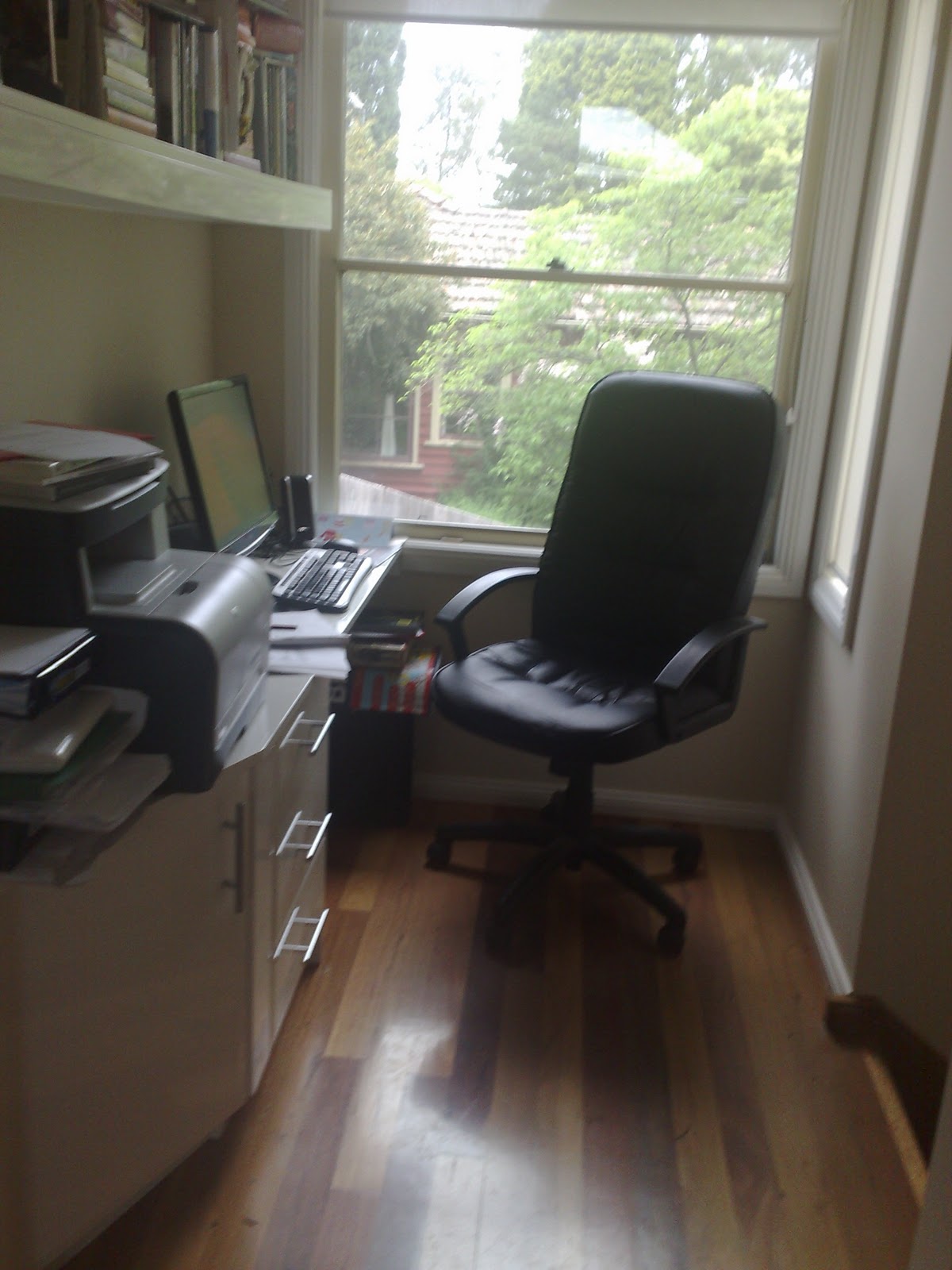 From the window I have a nice view of the lovely old garden next door and the wild ducks enjoying the stream swollen from all the recent rain. It's spring here in Australia and the gardens are in flower. The trees are decked out in their new green. My champagne persian, Affie squeezes in beside me scattering leaves caught up in her tail. A favourite place to sleep on cold days.
November 9, 2010
DOG HEAD CODE
My teen fantasy adventure novel, DOG HEAD CODE is coming to Wild Child Publishing on 14th December!
When Joe Jones inherits an old book from his Great-Uncle Jake, he believes it holds a treasure map which will lead him to untold wealth. If only he can crack the code!


When Joe Jones inherits an old book from his Great-Uncle Jake, he believes it holds a treasure map which will lead him to untold wealth. If only he can crack the code!

November 4, 2010
Great 4.25 Review of WAVING AT THE MOON from Night Owl Reviews!
 Author: Maggi Andersen
 Genre: Teen, Sci-Fi / Fantasy, Post-Apocalyptic
Reviewed by: ReaderGirl
Evie French and her cousin Marcus Peters, live together at her parents' bed-and breakfast in Australia after most of the country has been destroyed. No one knows for sure what has really happened. Joel and his dog find their way to the bed and breakfast the three of them head towards a spot of green in a sea of gray. It's a long way down the coast. They find their way to Paradise, a city made up of survivors, led by Abe. Evie, Marcus, and Joel don't agree with all of his rules, but they must abide by them for the moment. But as time goes on, the three start to feel worse about what is going on in Paradise.
I couldn't stop reading "Waving at the Moon" by Maggi Andersen until I had finished it all. I enjoyed reading about their journey, their struggles in Paradise, and their dilemma about what to do. This would easily be the first book in a great series. I will be anxiously awaiting Maggi Andersen's book. Those who enjoy post-apocalyptic fiction, and those who just enjoy a good action book will want to pick up "Waving at the Moon."
________________________________________
Book Blurb & Info for Waving at the Moon
In a post-apocalyptic world, Evie French has just turned seventeen. She and her cousin, Marcus Peters, sixteen, struggle to survive after being left alone in their parent's bed and breakfast hotel in outback Australia. An endless drought has killed Evie's father's avocado trees and all the surrounding habitation. Nothing grows in the fetid soil. Hope comes in the form of a nineteen year old boy, Joel Pitt. He arrives on his motorbike with his dog, Rasputin, bringing supplies. He climbs the tallest tree on the crest of the hill, and locates an area of green down along the coast, hundreds of miles away. The three pile onto the bike, with Marcus and Rasputin in the sidecar, and embark on a trip that will take them over mountainous terrain with a limited supply of food and water. What might they find if they reach the coast? Will other people have survived the devastation? And who bombed their country? No one seems to know.
Buy Link: http://www.eternalpress.biz/book.php?isbn=9781615721955

October 30, 2010
THE RISE OF COFFEE HOUSES IN LONDON
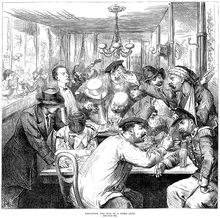 Cafes in London today have little in common with coffeehouses in the last forty years of the seventeenth Century and the first half of the eighteenth. Only the fact that they offer coffee, food and the daily newspaper remains.The first coffeehouse in England was opened in St. Michael's Alley in Cornhill. The proprietor was Pasqua Rosée, the servant of Daniel Edwards, a trader in Turkish goods. Edwards imported the coffee and assisted Rosée in setting up the establishment, serving cauphe ...a taste a little bitterish, from Turkey. It was noted early on that coffee would hinder sleep for three or four hours, an advantage if one wish to remain watchful. The Grand Cafe in Oxford is alleged to be the first Coffee House in England, opened in 1650 by a Jewish man named Jacob. It is still open today, but has since become a popular Wine Bar. Oxford's Queen's Lane Coffee House, established in 1654, is still in existence today. By 1675, there were more than 3,000 coffeehouses throughout England.
But coffee was strenuously opposed for more than a decade. Poets and pamphleteers decried the new beverage. "A Cup of Coffee, or Coffee in its Colours," published in 1663 voiced this indignation:"For men and Christians to turn Turks and think
To excuse the crime, because 'tis in their drink!
Pure English apes! ye might, for aught I know,
Would it but mode learn to eat spiders too."
But not all poets were detractors. Ben Johnson and other libation-loving poets saw it as a source of inspiration: "drank pure nectar as the Gods drink too."
Three years later a play was written called The Coffee House but was not a success and seen as insipid. A pamphlet entitled: "The Character of a Coffee House," seven years later told "how people came to purchase at the expense of their last penny, the repute of sober companions, to receive news with his coffee. Where haberdashers meet, and mutually abuse each other and the public with bottomless stories and headless nnotions; the rendezvous of idle pamphlets and persons more idly employed to read them in a room that stinks of tobacco worse than hell of brimestone." Judges, lawyers and pickpockets alike drank the brew, which in one person's opinion was like something witches tipple out of dead men's skulls.
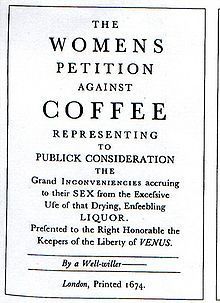 In 1674 the wives of England took up a "Women's Petition against Coffee," because they thought it made men unfruitful. It's use seemingly would produce offspring of their "mighty ancestors" to dwindle into a succession of apes and pigmies," and when a husband went out on a domestic errand he "would stop by the way to drink a couple of cups of coffee."
A proclamation for the suppression of coffee houses ensued, but was canceled almost before the ink had dried.
Not an auspicios beginning for coffee and one wonders how it became so popular!
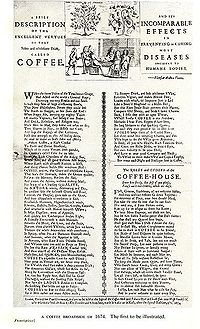
The Rainbow of Fleet Street was the second coffee-house opened in London, and many more followed around Change Alley and the Royal Exchange, where the headquarters of Lloyd's began as one of the most remarkable coffee houses of the seventeenth Century. Lloyd's Coffee House, which had a pulpit from which one might orate to the gathered throng, played a notable part in the life of a nation, developing into the shipping exchange of the world, employing 1,500 agents in all parts of the globe.
Coffee houses took their colour from the district in which they were established. Cleriks favoured The Chapter at St Pauls, business men, poets and doctors gathered in others. But Baston's was the exception where businessmen clashed with poets. What did a mere business man know of poetry? Doctors too frequented Batson's coffee house. Sir Richard Blackmore, physician to William III and then Queen Anne was a constant visitor.
Thomas Garraway founded Garraway's Coffee House, which survived until 1866, the ground floor was furnished with cosy mahogany boxes and setas, and the floor covered in sand.
Two other houses, Jonathan's and Sam's were notorious for their connection with stock-jobbing. The latter figured prominently in the gigantic South Sea Bubble fraud.
Towards the end of the 18th century, coffeehouses had almost completely disappeared from the popular social scene in England. Historians offer a wide range of reasons for their decline. Ellis argues that coffeehouse patron's folly through business endeavours, the evolution of the club and the government's colonial policy acted as the main contributors to the decline of the English coffeehouse. Coffeehouse proprietors worked to gain monopoly over news culture and to establish a coffeehouse newspaper as the sole form of print news available. Met with incessant ridicule and criticism, the proposal discredited coffee-men's social standing. Ellis explains: "Ridicule and derision killed the coffee-men's proposal but it is significant that, from that date, their influence, status and authority began to wane.
The rise of the exclusive club such as White's and Boodles were gambling had become popular, also contributed to the decline in popularity of English coffeehouses."Snobbery reared its head, particularly amongst the intelligence, who felt that their special genius entitled them to protection from the common herd. Strangers were no longer welcome." For example, some coffeehouses began charging more than the customary penny to preserve frequent attendance of the higher standing clientele they served.
Literary and political clubs rose in popularity, as "the frivolities of coffee-drinking were lost in more serious discussion. The Blue-Stocking Club owed its popularity to Elizabeth Robinson, wife of Edward Monagu. After losing her only child, her mother and her brother, she turned her pursuits to literary breakfasts and then formed a club where literary discussions took place, wearing a petticoat embroidered with the ruins of Palmyra, with visits from Garrick or French actors. Card playing was not tolerated. Several new publications were penned, stitched in blue paper.
"With a new increased demand for tea, the government also had a hand in the decline of the English coffeehouse in the 18th century. The British East India Company, at the time, had a greater interest in the tea trade than the coffee trade, as competition for coffee had heightened internationally with the expansion of coffeehouses throughout the rest of Europe.
Research source: Inns and Taverns of Old London by Henry C. Shelley.

THE INTRODUCTION OF COFFEE AND THE RISE OF COFFEE HOUSES IN LONDON
Cafes in London today have little in common with coffeehouses in the last forty years of the seventeenth Century and the first half of the eighteenth. Only the fact that they offer coffee, food and the daily newspaper remains.The first coffeehouse in England was opened in St. Michael's Alley in Cornhill. The proprietor was Pasqua Rosée, the servant of Daniel Edwards, a trader in Turkish goods. Edwards imported the coffee and assisted Rosée in setting up the establishment, serving cauphe ...a taste a little bitterish, from Turkey. It was noted early on that coffee would hinder sleep for three or four hours, an advantage if one wish to remain watchful. The Grand Cafe in Oxford is alleged to be the first Coffee House in England, opened in 1650 by a Jewish man named Jacob. It is still open today, but has since become a popular Wine Bar. Oxford's Queen's Lane Coffee House, established in 1654, is still in existence today. By 1675, there were more than 3,000 coffeehouses throughout England.But coffee was strenuously opposed for more than a decade. Poets and pamphleteers decried the new beverage. "A Cup of Coffee, or Coffee in its Colours," published in 1663 voiced this indignation:"For men and Christians to turn Turks and think
To excuse the crime, because 'tis in their drink!
Pure English apes! ye might, for aught I know,
Would it but mode learn to eat spiders too.
And so on in the same vein.
But not all poets were detractors. Ben Johnson and other libation-loving poets saw it as a source of inspiration: "drank pure nectar as the Gods drink too."
Three years later a play was written called The Coffee House but was not a success and seen as insipid. A pamphlet entitled: "The Character of a Coffee House," seven years later told "how people came to purchase at the expense of their last penny, the repute of sober companions, to receive news with his coffee. Where haberdashers of political smallwares meet, and mutually abuse each other and the public with bottomless stories and headless nnotions; the rendezvous of idle pamphlets and persons more idly employed to read them in a room that stinks of tobacco worse than hell of brimestone." Judges, lawyers and pickpockets alike drank the brew, which in one person's opinion was like something witches tipple out of dead men's skulls.
In 1674 the wives of England took up a "Women's Petition against Coffee," because they thought it made men unfruitful. It's use seemingly would produce offspring of their "mighty ancestors" to dwindle into a succession of apes and pigmies," and when a husband went out on a domestic errand he "would stop by the way to drink a couple of cups of coffee."A proclamation for the suppression of coffee houses ensued, but was canceled almost before the ink had dried.
Not an auspicios beginning for coffee and one wonders how it became so popular!
The Rainbow of Fleet Street was the second coffee-house opened in London, and many more followed around the Royal Exchange, where the headquarters of Lloyd's began as one of the most remarkable coffee houses of the seventeenth Century. Lloyd's Coffee House which had a pulpit from which one might orate to the gathered throng, played a notable part in the life of a nation, developing into the shipping exchange of the world, employing 1,500 agents in all parts of the globe.
Coffee houses took their colour from the district in which they were established. Cleriks favoured The Chapter at St Pauls, business men, poets and doctors gathered in others. But Baston's was the exception where businessmen clashed with poets. What did a mere business man know of poetry? Doctors too frequented Batson's coffee house. Sir Richard Blackmore, physician to William III and then Queen Anne was a constant visitor.
Thomas Garraway founded Garraway's Coffee House, which survived until 1866, the ground floor was furnished with cosy mahogany boxes and setas, and the floor covered in sand.
Two other houses, Jonathan's and Sam's were notorious for their connection with stock-jobbing. The latter figured prominently in the gigantic South Sea Bubble fraud.
Towards the end of the 18th century, coffeehouses had almost completely disappeared from the popular social scene in England. Historians offer a wide range of reasons for their decline. Ellis argues that coffeehouse patron's folly through business endeavours, the evolution of the club and the government's colonial policy acted as the main contributors to the decline of the English coffeehouse. Coffeehouse proprietors worked to gain monopoly over news culture and to establish a coffeehouse newspaper as the sole form of print news available. Met with incessant ridicule and criticism, the proposal discredited coffee-men's social standing. Ellis explains: "Ridicule and derision killed the coffee-men's proposal but it is significant that, from that date, their influence, status and authority began to wane.
The rise of the exclusive club also contributed to the decline in popularity of English coffeehouses."Snobbery reared its head, particularly amongst the intelligence, who felt that their special genius entitled them to protection from the common herd. Strangers were no longer welcome." For example, some coffeehouses began charging more than the customary penny to preserve frequent attendance of the higher standing clientele they served.
Literary and political clubs rose in popularity, as "the frivolities of coffee-drinking were lost in more serious discussion. The Blue-Stocking Club owed its popularity to Elizabeth Robinson, wife of Edward Monagu. After losing her only child, then her mother and her brother, she turned her pursuits to literary breakfasts and then formed a club where literary discussions wearing a petticoat embroidered with the ruins of Palmyra. Visits from Garrick or French actors took place. Card playing was not tolerated. Several new publications were penned, stitched in blue paper.
"With a new increased demand for tea, the government also had a hand in the decline of the English coffeehouse in the 18th century. The British East India Company, at the time, had a greater interest in the tea trade than the coffee trade, as competition for coffee had heightened internationally with the expansion of coffeehouses throughout the rest of Europe.


