
Maggi Andersen's Blog, page 82
July 10, 2011
I'm visiting Kim's SOS Aloha blog today.
 I'm talking about my writing life and Surrender To Destiny at Kim's SOS Aloha //sosaloha.blogspot.com/2011/07/aloha-to-maggi-andersen-from-down-under.html


July 9, 2011
REVIEW: WHAT HE TAUGHT HER a Contemporary Romance by Anne Whitfield
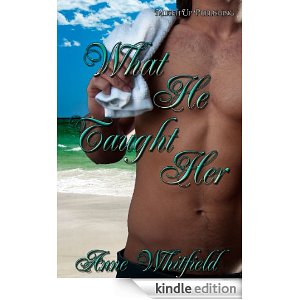 Rob Healy has everything he wants, or will have once he's built his new resort on a small island in the Pacific. A woman in his life isn't planned at the moment, but when he sees Cassandra Kearns in the foyer looking stiff and out of place amongst the holiday makers his interest is spiked. What is a beautiful woman doing wearing a business suit and holding a laptop doing on an island resort, especially when there are no conferences booked that week?
Cassandra Kearns is fleeing New York and all that makes her comfortable for two idyllic weeks in the tropics. She's stressed, overtired and close to breaking point. Her divorce is finalized, her daughter is grown and she's realizing that she's on her own and dare she say it - lonely.
She needs to take some time and recharge her batteries. But how is she to do that? She's worked 24/7 for years. Does she know how to have fun?
When Cassandra meets Rob she rejects the spark of attraction she feels. A man in her life, after the betrayal of Oliver? She'd rather eat broken glass!
Yet Rob is persistent, he's funny and he's gorgeous, but what exactly does he want?
Reading WHAT HE TAUGHT HER filled in a delightful couple of hours with two charismatic people inhabiting a beautiful part of the world. Anne Whitfield's descriptions of a tropical island resort are vivid, and her love scenes are sexy and tender. Rob is a typical hunky Aussie bloke who knows what he wants and Cassandra's vulnerability is believable and touching. A superb escape from the wintery weather I'm experiencing.

July 3, 2011
FREE ONLINE READ: A WICKED LADY
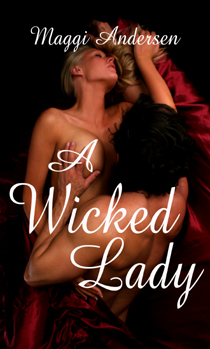
When death claimed the man she loved, Emma felt as if her own life had ended … until Lord Julian Amesbury taught her passion ….
http://newconceptspublishing.com/index.php?p=product&id=596&parent=48&is_print_version=true
NEW CONCEPTS PUBLISHING

June 30, 2011
Interview and Review of Young Adult novel WAVING AT THE MOON
http://3bookbees.blogspot.com
Today we have the pleasure of interviewing Maggi Andersen! Her latest novels, Waving at the Moon & Dog Head Code
 , are both awesome reads. Welcome, Maggi!
Can you tell us about your new books and how you came up with the ideas?
It's strange really. I wrote Waving at the Moon at the same time as Cormack McCarthy wrote The Road and other post-apocalyptic novels popped up. I sometimes think novelists pick up some subliminal vibes that are around at the time. It's a challenge to create a new world, as it would be to write science fiction I suppose. I enjoyed creating Paradise. I read a book years ago titled Z for Zachariah by Robert O'Brien
 . It left an impression on me, although I take the story off on an entirely different tangent.
Here are what my books are about:
 Waving at the Moon
In a post-apocalyptic world, Evie French has just turned seventeen. She and her cousin, Marcus Peters, sixteen, struggle to survive after being left alone in their parent's bed and breakfast hotel in outback Australia. An endless drought has killed Evie's father's avocado trees and all the surrounding habitation. Nothing grows in the fetid soil. Hope comes in the form of a nineteen year old boy, Joel Pitt. He arrives on his motorbike with his dog, Rasputin, bringing supplies. He climbs the tallest tree on the crest of the hill, and locates an area of green down along the coast, hundreds of miles away. The three pile onto the bike, with Marcus and Rasputin in the sidecar, and embark on a trip that will take them over mountainous terrain with a limited supply of food and water. What might they find if they reach the coast? Will other people have survived the devastation? And who bombed their country? No one seems to know.
 Dog Head Code
After inheriting an old book containing a map from his Great Uncle Jake, Joe Jones travels to Dog Head Island, keen to find buried treasure. But in this isolated, inhospitable place, nothing is as it seems. Nothing, but the snakes that inhabited it. And Jake has a strong aversion to snakes!
What's one scene from either of these stories you loved writing and why?
Hard to pick one because I enjoyed writing them both. The relationship between the three in Waving at the Moon. I loved having Evie, Marcus and Joel dealing with danger and coming to terms with their situation, in scenes like negotiating the path around the rockfall, and crossing the river as the tidal surge hits them, with Rasputin having to swim for his life.
Did you listen to music while you wrote these books? If so, who did you listen to?
Classical jazz, guitar and piano mainly. I find songs distracting.
What advice would you give to a new author?
Persist is the main one. If you don't give up you'll make it. And take the time to learn your craft. There's some great how-to books available. And free advice to be had websotes and some great blogs. Most importantly, read authors who write in the genre in which you want to write. You can learn a lot from a good writer.
Are you working on any new books right now?
Not young adult, although some are waiting for a sequel to Waving At The Moon.
Ok, enough of the hard stuff. How about some fun questions? Vanilla or chocolate?
Vanilla. I'm not a big fan of chocolate.
What's your favorite kind of gum?
Spearmint
Are you a cat or dog person?
I love both. I admire how self-contained cats are and how loyal dogs are, and enjoy the difference.
Who would win a fight between an astronaut and a caveman?
A caveman would be more resourceful in his own environment and better on his feet. An astronaut is hindered by the gear he has to wear.
What is the last book you read?
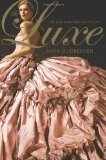
 I'm reading The Luxe by Anna Godbersen
What is your favorite movie?
Moonstruck
Waving At The Moon by Maggi Andersen Reviewed by Elyssa
Evie and her cousin Marcus are the only ones left, as far as they know, although Marcus still holds out the hope of his parents returning. They are staying at Evie's parents' Bed and Breakfast hotel and food is running low.
When nineteen year-old Joel comes into the picture he convinces them to move on. Evie can feel herself falling for him, but does he feel the same way, or just think of her as a little sister?
When they arrive at a town called Paradise their hopes are restored, being around the survivors is great. However, the town isn't all it seems in the beginning, and it's impossible to get out.
Waving at the Moon, is a wonderful book, it has a very good storyline and is amazingly unpredictable. The cover draws you in and the girls green eyes really stand out. Overall I give this book an A+ for its uniqueness and apocalyptic theme!
Elyssa
Book Bees Buzz/
Today we have the pleasure of interviewing Maggi Andersen! Her latest novels, Waving at the Moon
& Dog Head Code, are both awesome reads. Welcome, Maggi!Can you tell us about your new books and how you came up with the ideas?
It's strange really. I wrote Waving at the Moon
at the same time as Cormack McCarthy wrote The Road and other post-apocalyptic novels popped up. I sometimes think novelists pick up some subliminal vibes that are around at the time. It's a challenge to create a new world, as it would be to write science fiction I suppose. I enjoyed creating Paradise. I read a book years ago titled Z for Zachariah by Robert O'Brien. It left an impression on me, although I take the story off on an entirely different tangent. Here are what my books are about:
Waving at the MoonIn a post-apocalyptic world, Evie French has just turned seventeen. She and her cousin, Marcus Peters, sixteen, struggle to survive after being left alone in their parent's bed and breakfast hotel in outback Australia. An endless drought has killed Evie's father's avocado trees and all the surrounding habitation. Nothing grows in the fetid soil. Hope comes in the form of a nineteen year old boy, Joel Pitt. He arrives on his motorbike with his dog, Rasputin, bringing supplies. He climbs the tallest tree on the crest of the hill, and locates an area of green down along the coast, hundreds of miles away. The three pile onto the bike, with Marcus and Rasputin in the sidecar, and embark on a trip that will take them over mountainous terrain with a limited supply of food and water. What might they find if they reach the coast? Will other people have survived the devastation? And who bombed their country? No one seems to know.
Dog Head CodeAfter inheriting an old book containing a map from his Great Uncle Jake, Joe Jones travels to Dog Head Island, keen to find buried treasure. But in this isolated, inhospitable place, nothing is as it seems. Nothing, but the snakes that inhabited it. And Jake has a strong aversion to snakes!
What's one scene from either of these stories you loved writing and why?
Hard to pick one because I enjoyed writing them both. The relationship between the three in Waving at the Moon. I loved having Evie, Marcus and Joel dealing with danger and coming to terms with their situation, in scenes like negotiating the path around the rockfall, and crossing the river as the tidal surge hits them, with Rasputin having to swim for his life.
Did you listen to music while you wrote these books? If so, who did you listen to?
Classical jazz, guitar and piano mainly. I find songs distracting.
What advice would you give to a new author?
Persist is the main one. If you don't give up you'll make it. And take the time to learn your craft. There's some great how-to books available. And free advice to be had websotes and some great blogs. Most importantly, read authors who write in the genre in which you want to write. You can learn a lot from a good writer.
Are you working on any new books right now?
Not young adult, although some are waiting for a sequel to Waving At The Moon.
Ok, enough of the hard stuff. How about some fun questions? Vanilla or chocolate?
Vanilla. I'm not a big fan of chocolate.
What's your favorite kind of gum?
Spearmint
Are you a cat or dog person?
I love both. I admire how self-contained cats are and how loyal dogs are, and enjoy the difference.
Who would win a fight between an astronaut and a caveman?
A caveman would be more resourceful in his own environment and better on his feet. An astronaut is hindered by the gear he has to wear.
What is the last book you read?
I'm reading The Luxe by Anna GodbersenWhat is your favorite movie?
Moonstruck
Waving At The Moon by Maggi Andersen Reviewed by Elyssa
Evie and her cousin Marcus are the only ones left, as far as they know, although Marcus still holds out the hope of his parents returning. They are staying at Evie's parents' Bed and Breakfast hotel and food is running low.
When nineteen year-old Joel comes into the picture he convinces them to move on. Evie can feel herself falling for him, but does he feel the same way, or just think of her as a little sister?
When they arrive at a town called Paradise their hopes are restored, being around the survivors is great. However, the town isn't all it seems in the beginning, and it's impossible to get out.
Waving at the Moon, is a wonderful book, it has a very good storyline and is amazingly unpredictable. The cover draws you in and the girls green eyes really stand out. Overall I give this book an A+ for its uniqueness and apocalyptic theme!
Elyssa
Book Bees Buzz/
June 28, 2011
For Writers: The importance of a good hook and a great first line.
 One of the first things we learn when we begin to research our craft is to have a great hook. But how do we go about hooking the reader to make them want to read on?
 These days when we all are short of time and patience, the importance of a hook lies in the first line, and here are how some writers have done it:
"Nathan Rubin died because he got brave." Lee Child Die Trying. "I must begin with a coincidence which I would not dare to recount if this were a work of fiction." Mary Stewart Stormy Petrel. "What I felt as I got off the train this afternoon wasn't what I'd expected to feel." Robert Goddard Play to the End. "The teenage boy was dying alone." Frederick Forsyth The Cobra."He gripped the steering wheel loosely as the car, its lights out, drifted to a stop." David Baldacci Absolute Power."To say that I met Nicholas Brisbane over my husband's dead body is not entirely accurate." Deanna Raybourn The Lady Julia Grey series, Silent in the Grave."By the age of twelve, Harry Valentine possessed two bits of knowledge that made him rather unlike other boys of his class in England of the early nineteenth century." Julia Quinn It Happens in London.
These all work because the author has asked at least one question we wish to find the answer to. While expanding on the first line, the first paragraph should raise more questions. The characters motivations. (What?) The story's time and place (When) and the reason behind it. (Why?)
The more questions you can pose in that first line, and the first paragraph, the better.
A great first paragraph by Lee Child Killing Floor:
I was arrested in Eno's diner. At twelve o'clock. I was eating eggs and drinking coffee. A late breakfast, not lunch, I was wet and tired after a long walk in heavy rain. All the way from the highway to the edge of town.
He continues on in this vein for some time, and we read it to find out why he was arrested. By the time we find the answer, we have invested something in the character and his problem. We are solidly hooked.
Nicci French. Catch Me When I Fall.
"I died twice. The first time, I wanted to die, I thought of death as a the place where the pain would stop, where the fear would finally cease."
In my romantic suspense, Casey's Luck I've used the weather to highlight the fact that not all is as it should be. I continue to ask questions. Some aren't answered until the end of the first chapter, some not until the end of the book.
"Why did the house feel so cold? Casey leaned on her elbows back into the narrow bed as the memory of the past few weeks ran through her mind, tightening her stomach. She'd hoped to escape the trauma of a broken relationship by returning to England, but the break-up seemed to have taken a piece of her she wasn't sure she'd get back."

For Writers: The imporance of a good hook and a great first line.
One of the first things we learn when we begin to research our craft is to have a great hook. But how do we go about hooking the reader to make them want to read on? These days when we all are short of time and patience, the importance of a hook lies in the first line, and here are how some writers have done it:
"Nathan Rubin died because he got brave." Lee Child Die Trying. "I must begin with a coincidence which I would not dare to recount if this were a work of fiction." Mary Stewart Stormy Petrel. "What I felt as I got off the train this afternoon wasn't what I'd expected to feel." Robert Goddard Play to the End. "The teenage boy was dying alone." Frederick Forsyth The Cobra."He gripped the steering wheel loosely as the car, its lights out, drifted to a stop." David Baldacci Absolute Power."To say that I met Nicholas Brisbane over my husband's dead body is not entirely accurate." Deanna Raybourn The Lady Julia Grey series, Silent in the Grave."By the age of twelve, Harry Valentine possessed two bits of knowledge that made him rather unlike other boys of his class in England of the early nineteenth century." Julia Quinn It Happens in London.
These all work because the author has asked at least one question we wish to find the answer to. While expanding on the first line, the first paragraph should raise more questions. The characters motivations. (What?) The story's time and place (When) and the reason behind it. (Why?)
The more questions you can pose in that first line, and the first paragraph, the better.
A great first paragraph by Lee Child Killing Floor:
I was arrested in Eno's diner. At twelve o'clock. I was eating eggs and drinking coffee. A late breakfast, not lunch, I was wet and tired after a long walk in heavy rain. All the way from the highway to the edge of town.
He continues on in this vein for some time, and we read it to find out why he was arrested. By the time we find the answer, we have invested something in the character and his problem. We are solidly hooked.
Nicci French. Catch Me When I Fall.
"I died twice. The first time, I wanted to die, I thought of death as a the place where the pain would stop, where the fear would finally cease."
In my romantic suspense, Casey's Luck I've used the weather to highlight the fact that not all is as it should be. I continue to ask questions. Some aren't answered until the end of the first chapter, some not until the end of the book.
"Why did the house feel so cold? Casey leaned on her elbows back into the narrow bed as the memory of the past few weeks ran through her mind, tightening her stomach. She'd hoped to escape the trauma of a broken relationship by returning to England, but the break-up seemed to have taken a piece of her she wasn't sure she'd get back."
June 23, 2011
REVIEW *****TRENCARROW SECRET
[image error]
BUY LINK: http://www.amazon.com/gp/product/B0054RJQJA
Isabel Hart is afraid of two things, the maze at Trencarrow where she got lost as a young child, and the lake where her brother David saved her from drowning in a boating accident.
With her twenty-first birthday and the announcement of her engagement imminent, Isabel decides it is time for her to face her demons and ventures into the maze. There she sees something which will alter her perceptions of herself and her family forever.
Isabel's widowed aunt joins the house party, where her cousin confides she is in love with an enigmatic young man who surely cannot be what he pretends, for he is too dashing for homely Laura.
When Henry, Viscount Strachan and his mother arrive, ostensibly to use her ball as an arena for finding a wife, Isabel is determined not to like him.
As more secrets are revealed, Isabel begins to doubt she has chosen the right man, although her future fiancé has more vested in this marriage than Isabel realizes and has no intention of letting her go easily.
Will Isabel be able to put her preconceptions of marriage behind her and take charge of her own life, or is she destined to be controlled by others forever?
In Trencarrow Secret, Anita Davison brings Victorian high society to life vividly with beautiful imagery. The characters inhabiting this book drew me into their lives and held me there. The heroine, Isabel Hart suffers from the affects of a near drowning accident which happened some years before. Isabel seems held captive by fate, severely hampered by the strictures of Victorian society and something more - her past, which prevents her from taking control of her life. After suffering heartache and loss, she discovers what is worth fighting for and what should be let go. When revealed, the mystery that lies at the heart of the story left me stunned.

BUY LINK: http://www.amazon.com/gp/product/B0054RJQJA
Isabel Hart is afraid of two things, the maze at Trencarrow where she got lost as a young child, and the lake where her brother David saved her from drowning in a boating accident.
With her twenty-first birthday and the announcement of her engagement imminent, Isabel decides it is time for her to face her demons and ventures into the maze. There she sees something which will alter her perceptions of herself and her family forever.
Isabel's widowed aunt joins the house party, where her cousin confides she is in love with an enigmatic young man who surely cannot be what he pretends, for he is too dashing for homely Laura.
When Henry, Viscount Strachan and his mother arrive, ostensibly to use her ball as an arena for finding a wife, Isabel is determined not to like him.
As more secrets are revealed, Isabel begins to doubt she has chosen the right man, although her future fiancé has more vested in this marriage than Isabel realizes and has no intention of letting her go easily.
Will Isabel be able to put her preconceptions of marriage behind her and take charge of her own life, or is she destined to be controlled by others forever?
In Trencarrow Secret, Anita Davison brings Victorian high society to life vividly with beautiful imagery. The characters inhabiting this book drew me into their lives and held me there. The heroine, Isabel Hart suffers from the affects of a near drowning accident which happened some years before. Isabel seems held captive by fate, severely hampered by the strictures of Victorian society and something more - her past, which prevents her from taking control of her life. After suffering heartache and loss, she discovers what is worth fighting for and what should be let go. When revealed, the mystery that lies at the heart of the story left me stunned.
June 21, 2011
THE RELUCTANT MARQUESS Best Seller!
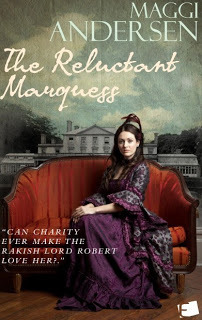 EMBRACE BOOKSTHE RELUCTANT MARQUESS is my publisher's bestseller!
 http://www.amazon.com/The-Reluctant-Marquess-ebook/dp/B004NBY2EW/ref=sr_1_1?s=books&ie=UTF8&qid=1308698881&sr=1-1

June 18, 2011
Prostitution during the Victorian era. ~ New Release SURR...
Prostitution during the Victorian era. ~ New Release SURRENDER TO DESTINY The Great Social Evil, as prostitution became known in the mid-19th Century, was brought about by the shift from a moral/religious cause to a socio-economic one. The 1851 consensus revealed the population was approximately 18 million, which amounted to 750,000 women who would remain unmarried because there were too few men. These women were labelled 'redundant and superfluous' and many ended up in prostitution.
While the Magdalene Asylums had been "reforming" prostitutes since the mid-18th century, the years between 1848 and 1870 saw a veritable explosion in the number of institutions working to "reclaim" these "fallen women" from the streets and retrain them for entry into respectable society — usually for work as domestic servants. Many girls were orphans and many came from the country, often tricked into "the life" and unable to return home. Some were as young as eight years old!
Prostitutes were often presented as victims in literature such as Thomas Hood's poem The Bridge of Sighs, Elizabeth Gaskell's novel Mary Barton, and Dicken's novel Oliver Twist. The emphasis on the purity of women found in such works as Coventry Patmore's The Angel in the House led to the portrayal of the prostitute and fallen woman as soiled, corrupted, and in need of cleansing.
This emphasis on female purity was allied to the stress on the homemaking role of women.
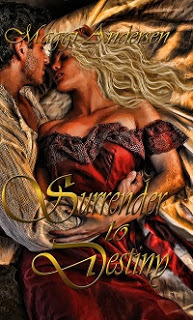 While making a movie about Giovanna Russo's life in Victorian London, Astrid Leclair and Dylan Shaw steam up the screen with their passionate scenes.
Two men desire the beautiful artist's model, Giovanna Russo. One intends to make her his mistress and the other wants her dead.
Buy Link: http://www.newconceptspublishing.com/books/SurrenderToDestiny.html
http://www.maggiandersenauthor.com
Wikipedia
A Dictionary of Victorian London Lee Jackson
While the Magdalene Asylums had been "reforming" prostitutes since the mid-18th century, the years between 1848 and 1870 saw a veritable explosion in the number of institutions working to "reclaim" these "fallen women" from the streets and retrain them for entry into respectable society — usually for work as domestic servants. Many girls were orphans and many came from the country, often tricked into "the life" and unable to return home. Some were as young as eight years old!
Prostitutes were often presented as victims in literature such as Thomas Hood's poem The Bridge of Sighs, Elizabeth Gaskell's novel Mary Barton, and Dicken's novel Oliver Twist. The emphasis on the purity of women found in such works as Coventry Patmore's The Angel in the House led to the portrayal of the prostitute and fallen woman as soiled, corrupted, and in need of cleansing.
This emphasis on female purity was allied to the stress on the homemaking role of women.
 While making a movie about Giovanna Russo's life in Victorian London, Astrid Leclair and Dylan Shaw steam up the screen with their passionate scenes.
 Two men desire the beautiful artist's model, Giovanna Russo. One intends to make her his mistress and the other wants her dead.
Buy Link: http://www.newconceptspublishing.com/books/SurrenderToDestiny.html
http://www.maggiandersenauthor.com
Wikipedia
A Dictionary of Victorian London Lee Jackson
June 17, 2011
New Release today! SURRENDER TO DESTINY
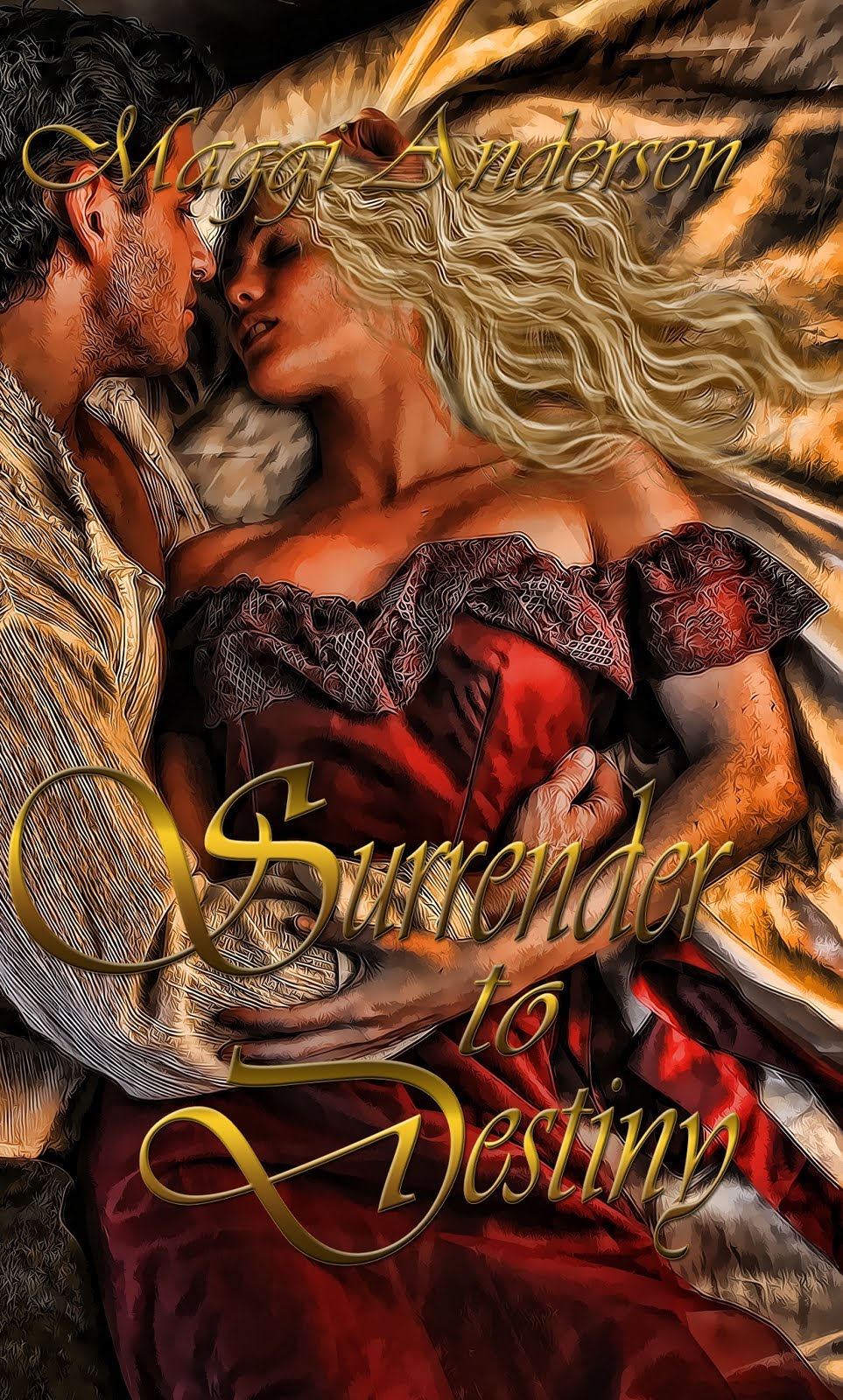 While making a movie about Giovanna Russo's life in Victorian London, Astrid Leclair and Dylan Shaw steam up the screen with their passionate scenes.
 Two men desire the beautiful artist's model, Giovanna Russo. One intends to make her his mistress and the other wants her dead.
Buy Link: http://www.newconceptspublishing.com/books/SurrenderToDestiny.html
Excerpt: 1
LONDON 1890
"I say, there's Lord Ogilvie, Earl of Douglass," Horace Atherton said, raising his voice above the clinking of glasses and the murmur of table talk.
Blair Dunleavy searched through the pall of cigar smoke at the checker-board of black tailcoats and trousers, white waistcoats and bow ties. He located the earl, sitting amongst the industrialists, merchants and bankers, all here to view the risqué art.
Blair smothered a yawn. He was here under sufferance to keep Horace company. Two months spent in London was proving to be too long. He had to admit he'd stayed longer than usual just to pique his mother. He had sent a letter off this morning to advise her of his imminent return.
Despite his annoyance at his mother's demands, Blair was eager to return home to Ireland. The estate didn't run itself, despite what his friends might suggest. After he had solved the problems his bailiff would have for him, the woods waited, full of red deer and grouse, the river stocked with salmon and brown trout.
He turned his attention back to the room as conversation fell away. The auctioneer had taken his place at the podium.
The first painting appeared. Once placed on the stand, complete silence came over the room bar the odd, sharp intake of breath. It was an explicit portrait of a woman's body from the waist down, in perfect, biological detail. Each black pubic hair carefully wrought, the rounded thighs parted.
"What do you think of that, eh?" Horace whispered. "Rather well done. Like to buy it?"
"I prefer the real thing in my bed," Blair answered dryly.
The auction took off with an offer of fifty pounds from Charles Ogilvie, Earl of Douglass, a ginger-haired, hollow-cheeked Scot, known for his questionable tastes. Blair found the man as cold as the climate of northern Scotland where he resided in an ancient castle. Soon others joined in, quickly raising the stakes to eighty pounds.
After the gavel came down and the painting went to Ogilvie, another, entitled Death of a Christian, by Harold Schiller appeared. In this painting, a young woman was bound to a post, the bonds seeming to cut into the soft flesh of her arms. Blair thought it lacked beauty, but the emotive work drew a lively response, going to a fellow, Blair didn't know, for one hundred pounds.
The next painting to emerge from behind the curtain was Aphrodite, by Milo Russo, a Pre-Raphaelite work. There was no denying its sensual beauty, but there was something more personal, a tenderness from the artist's brush, a sort of reverence for his subject. In an Ancient Grecian setting, a young woman reclined on a couch.
Blair found himself holding his breath as if waiting for her to raise her hairbrush to her waist-length, red-gold hair. Her robe had slipped off one smooth, creamy-skinned shoulder, its folds outlining the perfect curve of her waist and hip. On the table beside her sat a glowing, red apple, just like the one Eve had bidden Adam eat. Did she await a lover? The languidness of her pose suggested he had just left the room.
Blair leaned forward in his chair. The painted, silky gown gave a tantalizing glimpse of the girl's full, rounded breasts. Her slightly raised knee left to the imagination of the observer what had been so carefully detailed in the previous painting. To Blair, it only made her more desirable. This girl was no milk and water English miss. The nostrils of her strong nose flared slightly, and her luscious, full-lipped mouth parted in a half-smile. Her magnificent eyes, somewhere between green and brown, seemed to both invite and disdain the onlooker's gaze.
"My God," Blair said softly.
"Reminiscent of Manet's Olympia," someone behind him muttered. "Another superb painting of a courtesan."
"Eighty pounds," called Lord Ogilvie.
Blair raised his hand. "One hundred."
Heads turned to look at Blair with knowing faces.
"One fifty," countered Ogilvie in a challenging voice.
"Two hundred," Blair countered.
"Two fifty." Ogilvie's eyes narrowed and he turned to glare at Blair.
"Four hundred pounds," Blair said coolly.
There came a collective gasp from the fascinated onlookers.
Ogilvie stood so quickly his chair fell to the floor. Ignoring it, he threw down his catalogue and stalked from the room.
"Going, going …."
When no one else bid further, the auctioneer's gavel dropped. "Gone! To Mr. Dunleavy for four hundred pounds."
"Aah," Horace said, clapping Blair on the back. "Not totally immune to good art, eh?"
"Not at all, my friend," Blair replied, leaping to his feet. "I intend to find that model."
Knowing laughter followed him from the room. Behind the curtain, Blair arranged payment and had the painting wrapped. It would be perfect for the boudoir of his London townhouse where he could enjoy it-until he found the real thing. He couldn't delay his return to Ireland for even another few days. Damn, he wished he hadn't sent off that letter.
Returning to the foyer to collect his silk top hat, cane and overcoat, he found Horace retrieving his cloak. Horace favored a certain poetic style of dress that required an ill-tied cravat and a waistcoat held together by one button, his curly hair, wild and unbrushed. He had a good stock of quotations from the poets and even dashed off some poetry of his own, which unfortunately, was rather bad. He had the grace to admit it, and it did make him popular with the ladies.
"Not so wise to humiliate Ogilvie a second time, d'you think?" he asked Blair.
"That wasn't my intention."
"Nevertheless, he took it that way. Damned peculiar fellow. You accusing him of cheating at that card game has brought him unstuck, y'know."
"It's no secret he's been cheating for years."
"Trouble is, young Blackeny was there."
"So?"
"Ogilvie was courting his sister, Lavinia. That's not going to come about now."
Blair shrugged. "Luckily for Lavinia."
"Ogilvie needed the infusion of funds that marriage to Lavinia would bring him. He's seriously strapped for cash. That castle of his in Caithness is crumbling into the sea."
"Can't say I'll shed any tears over it," Blair said. "Have you seen the way he treats his cattle? Saw him whipping his poor horse in the park, the man's a monster."
Horace shook his head. "Wouldn't care to have him against me." He ran his fingers through his curls and put on his hat. "A few of us are going to the theatre. We feel the need of a little feminine company. I trust you are coming?"
"No." Blair tucked his cane under his arm and pulled on his gloves. "I think I'll pick up a cab at Hyde Park Corner and go home."
Horace looked askance at his handsome, dark-haired friend. "Home? It's only ten o'clock. You aren't sickening for something, are you?"
Blair laughed. "Not in so many words, Horace."
"It's that painting." Horace stared at the wrapped parcel. "That's not like you. I declare, I believe you to be bewitched. Remember, it is the spectator and not life that art really mirrors."
"Are those your words, my friend?"
Horace chuckled. "I am sadly not known for such erudition." He gestured to the painting. "The artist may well have taken poetic license with his subject. It's doubtful the real flesh and blood woman will measure up to his concept of her."
Blair raised an eyebrow. "If we must lapse into literary quotations, here is one that is surely apt: Life imitates art far more than art imitates life."
Horace waved his silver cane. "Touché! Shall we have a bet that my premise is correct, should you find that model?"
Blair smiled. "Why not indeed."
"A hundred pounds."
"Done." Blair shook Horace's hand.
"And should I be proved right, don't despair. There are many beauties in London," Horace added.
"I'm well aware of that. Have I not accompanied you on your sojourns these two months past?"
Horace laughed. "I'm not sure what it is about that painting that has captivated you. Women of the demimonde are ruthlessly self-seeking. They will tear a fellow's heart to pieces should you become too fond of them. Treat 'em lightly or you'll pay a high price with your heart and with your pocket."
"You are indeed a good friend, Horace." Blair patted him on the back. "I wish you a good night."
"Then sadly, I must relinquish your company," Horace said, "And hope to see you restored to sanity at the Athenaeum tomorrow. I'd like to spend some time with you before you disappear back to that big, rambling house of yours in Killarney."
Excerpt 2
LONDON 2008
A knock came on Astrid's dressing room door. "Enter." She continued to remove her makeup at her mirror her hair held back by a white band.
Dylan came in, ducking his dark head slightly. A gesture she recognized, one of a tall man used to living in old houses.
She met his gaze in the mirror, the brilliant blue of his irises had caused women the world over to fall in love with him.
"I'm sorry we didn't have a chance to chat before rehearsal," he said. His voice had an attractive, Irish lilt. "I did hope to, but the flight was delayed."
Astrid swung round to face him. "Only two takes. I thought it helped in the end, kept it fresh. Did you feel it went well?"
"Good for me. The more takes I do, the worse I get." He grinned. "Frank Sinatra refused to do more than one take. I think he had something there."
She expected him to be arrogant, not unassuming, or was this part of his charm offensive? If so it was disarming. Aware her face shone with cold cream she turned back to the mirror. Grabbing a tissue, she quickly wiped it off.
"You look great without makeup."
"Oh please!"
"No. You do, honestly. Like a kid."
"I'm supposed to like that?" She pulled the Alice band from her long hair. "French women are not afraid to grow old."
He laughed. "You hardly need to worry about that. Are you over here in England on your own?"
She dropped the tissue into the waste basket. Her hairdresser had been right. She would have to be careful. "I am. Why?"
Dylan leaned against the wall, his arms folded. A smile pulled at the corners of his well-shaped mouth. "I read somewhere that you and Philippe had broken up. I was going to offer my condolences."
"That article in The Truth? Pure fabrication. Philippe considered suing them, but in the end we couldn't be bothered." She picked up her hairbrush. "We are still together, and very happy, thank you."
"Then I pity all the young men," he said, his hand on the doorknob.
Did he disapprove of Philippe? Some men did resent older men dating young women, she knew. "You are an actor who likes to mix work with pleasure, yes?" she said mildly. The inference that he slept with all his leading ladies hung in the air.
He frowned as he opened the door. "Not usually."
The door closed behind him. She'd been rude, and she wasn't sure why. She usually made an effort to get on with co-stars. It could get quite difficult if you didn't. She shook her head. After all, he'd only been flattering her, and that might have been his way of breaking the ice.
And why had she lied about Philippe? Was it because she wasn't ready to let him go? Or was it apprehension at the effect this man had on her. She trembled when he came near her with the same sexual thrill she felt driving through the Bois de Boulogne.


