
Jennifer Chase's Blog, page 77
May 6, 2011
DNA Links Murders from Thirty Years Ago to Serial Killer

The men and women who work in the field of forensic science are always discovering new ways to use available evidence and piece together clues that will bring criminals to justice. What we are able to learn using DNA samples was unheard of a generation ago, and is allowing us to revisit some cases that have gone unsolved for decades. This is certainly true with developments that were just revealed concerning a 1981 case out of Santa Barbara County, California.

Cheri Domingo and Gregory Sanchez were killed in Goleta, California thirty years ago and their killer has never been found. However, a string of other crimes that fit the same pattern were assumed to be done by the same person, dubbed first the East Area Rapist and then the Original Night Stalker when he started killing his victims, over the course of several years. DNA samples recently taken from evidence collected from the Domingo and Sanchez crime scene, which could not have been tested during the 1980s because the technology was not available yet, have now been linked to four other cases. Members of law enforcement believe, though, that he may be linked to as many as fifty victims.
The last attack fitting the chosen method of the Original Night Stalker was done in 1986, so it is unclear whether or not this person is still alive. I do hope that if he is still walking this earth, that our wonderful new advancements in the pursuits of criminals will bring him to justice.
Even if he remains elusive, this guy has already helped solve many other cold cases as his crimes led to the California legislature passing a law that established the state's DNA database, which is now considered to be one of the most extensive and valuable in the country.



May 5, 2011
Police Ride-Alongs Jump Started My Research for Writing Crime Fiction

One of the most exciting and rewarding experiences that I've had as a crime fiction writer was the opportunity to participate in a police ride-along. I have observed patrol, K9, and detective investigative duties for various police agencies throughout the state of California.
For those of you that aren't familiar with a police ride-along, it's a program through city and county law enforcement agencies that allow adult citizens to accompany and observe police officers out on patrol.
The main purpose of a Ride-Along Program is to improve police and public relations by familiarizing citizens with the complex and unpredictable nature of police work. It can also be a great introduction to daily life on the police force and it will enlighten most participants on local crime activity. Most people who participate in the program are generally interested in becoming a law enforcement officer, concerned local citizens, students, and of course writers. It you have viewed the popular television show "Cops", it's quite similar to that in regard to the type of calls police handle on a daily basis.
I feel that this program is important to help bridge the gap between citizens and the police. It helps to dispel the typical stereotypes that are sometimes taken as fact. I can honestly say it was a great experience for me. I felt very honored to be able talk and ride with some of our finest. My appreciation goes out to these men and women of law enforcement. They do a great job.
I just have a few important points that I want to convey if you do decide to go on a police ride-along. It will ensure the best possible experience for you.
1. Be professional and reserved.
2. Wear appropriate clothing.
3. Be respectful of your host police officer and your surrounding situations.
4. Take plenty of notes.
5. Bring a bottle of water and some type of energy bar just in case.
6. Be observant, relax, and have a great time!
The police ride-along has been an invaluable tool for me in my writing experience. It has helped me to give realism to my novels by being able to observe police procedures, listen to actual radio codes, and experience all types calls for service. Check out Compulsion, Dead Game, and Silent Partner to see how I've incorporated my experiences into the story.
If you're interested in participating in a Ride-Along Program contact your local police agency and find out the details. Every police department varies slightly on the requirements, procedures, days available, and length of ride.
Jennifer Chase
Award Winning Author & Criminologist
Blog: http://www.authorjenniferchase.com/
Website: http://www.jenniferchase.vpweb.com/
Book & Crime Talk: http://www.blogtalkradio.com/jennifer-chase
Books: Compulsion = Dead Game = Silent Partner = Screenwriting


May 4, 2011
Amazon Kindle Madness – Compulsion & Dead Game Only 99 Cents!

I've joined many other authors who have dropped their Kindle prices to 99 cents. I will be releasing a new book in a couple of months in the Emily Stone Series. What better way to get caught up on Emily Stone first?
2009 Evvy Award Nominee
Compulsion
(Emily Stone #1)
When Serial Killers Terrorize a California Beach Community,
One Woman Stands in Their Way
Emily Stone doesn't have a badge. But that hasn't stopped her from tracking down some of the West's most dangerous child-killers. Armed with a digital SLR camera, laptop computer and her trusty Beretta, Stone uses her innate gift for detective work to identify the perps—and then anonymously e-mail the evidence to the cops.
Now, the hunt for two brazen serial killers on the loose right in her own coastal California town threatens to expose Stone's identity—unraveling her carefully constructed cover and jeopardizing her life's work. But when she gets too close to the action, this razor-sharp hunter becomes the hunted. Cooperating with the handsome local police detective could be the only hope for stopping the rampage directed at unsuspecting young women—and saving herself. Can they piece together the clues in time?
Compulsion mixes CSI-style investigation with a ripped-from-the-headlines plot and a dose of romance for a keeps-you-guessing, fast-paced and savvy thriller, right up until the shocking finale.
2010 Bronze Award Winner for Fiction/Thriller
ReadersFavorite
Dead Game
(Emily Stone #2)
In this Video Game, 'Game Over' Means You're Dead
In her independent efforts to catch child killers, Emily Stone discovers the evidence that the cops can't—or won't—uncover. Now, this covert investigator is back on the hunt for the world's most sick and twisted murderers. But even with help from ex-police detective Rick Lopez, this time she's facing her most dangerous opponent yet.
The headlines in the San Jose Mercury News blare updates on a serial killer who seems able to slaughter with impunity. Men, women—it doesn't matter; the victims serve only to satisfy a perverted need to kill. The killer watches the moment of death on multiple computer screens, over and over again. The only connection is that they're all devotees of the latest video-game craze—a sophisticated brain-puzzler called EagleEye.
When the killer goes after Lopez's law-enforcement mentor, Lopez and Stone decide to give the cops a little extra, unsolicited help. What follows takes them deep inside a shocking high-tech world, a kind of social-networking community for serial killers. But when they start getting too close to the truth, all hell's going to break loose.
Now, Stone and Lopez become the killer's next target as Stone must make a difficult decision to leave the ones she loves in an all-or-nothing effort for survival. Can they stay alive long enough to blow the whistle on this unlikely perpetrator?



May 3, 2011
Mandatory DNA Samples Taken by the Police at the Time of Arrest

According to the Gaston Gazette in North Carolina, a new state law went into effect at the beginning of the month making it legal for arresting officers to collect DNA from the inside of an arrestees mouth.
DNA can only be taken from individuals accused of specific crimes:
First and Second Degree Murder
Manslaughter
Rape & Other Sexual Offenses
Felony Assault with a Deadly Weapon
Kidnapping or Abduction
First and Second Degree Burglary
Arson
Armed Robbery
Stalking & Cyber Stalking
Any offense that would require a person to register as a sex offender
The North Carolina statute stated that DNA collection can be made at the time of arrest or when the person is fingerprinted. A DNA sample is taken by a cheek swab, unless a court order authorizes a DNA blood sample.
"I think it's appropriate and hopefully it will lead to more investigative solving of new and old crimes." Stated Gaston County Sheriff Alan Cloninger.
"I think it's too early to say whether it will be a successful program or not. Obviously there are positives. You are collecting DNA that is very valuable when comparing people to crime scenes." Stated Gaston County Police Capt. J.D. Ramey.
The new statute further stated that it would remove a person's DNA if two conditions were met: First, if charges are dismissed, acquitted, or convicted of a lesser charge. Second, if the person is not required to have their DNA in the database based on another provision of law.
This is a big undertaking for the police departments in North Carolina, but it has important values. It will quickly exonerate the innocent or implicate the guilty. The big, lingering question is that what kind of backlog is this going to generate for the DNA labs?
What do you think about police taking DNA samples at the point of arrest?



Law Enforcement Needs More Training on Threats in Cyberspace

As the world reacts to the death of Osama bin Laden in what is being rightly characterized as both a military and intelligence victory, we are just beginning to learn about the special operations, undercover work, and interrogations that took place in order to make this moment possible. We know that many man hours have been spent tracking this individual who was responsible for so many deaths not just on the tragic day of 9/11 but through other terrorist acts as well, and I am sure that some of the information gathered was done through research in cyberspace. However, an article released last week shared that up to one-third of our FBI agents don't have the necessary training and expertise to stop possible attacks that occur using this virtual world as a launching point.
The FBI has developed a dozen core courses to teach its agents about the threats to national security that are posed by cyber-attacks but that agents are able to skip them if there is other training available more relevant to their current post. Also, the report shared the warning that we have heard before— there is not enough intelligence sharing when it comes to what is occurring on the internet and that can leave members of law enforcement in the dark about potential attacks until it is too late.
In the time in which we live, when computers and online communication are only going to become more integral parts of how we operate every day, it seems important that the men and women who are there to protect us from threats are ready to do so in the infinite environment that is the world of cyberspace.
In my second novel, Dead Game, I examine a killer who uses the Internet to lure his victims to their death. While not posing a national security risk, this fictional character represents all of the dangers that we confront when using technology that also offers us so much good.



May 2, 2011
Forensic Science – Past & Present
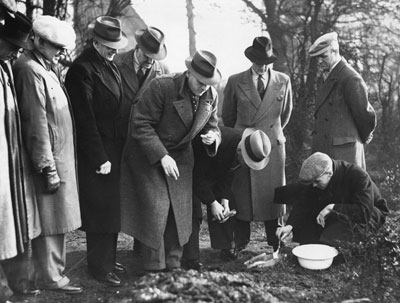
It is often thought that police forensics has been a relatively new contribution to interpreting, reconstructing, and solving crimes in our society. Quite the contrary, police forensics, or more accurately described as forensic science, has been a part of history for more than a hundred years.
What is forensic science? The word "forensic" comes from the Latin word "forensis", which simply means forum. Today, the area of police forensics is split into two major working categories: criminalistics and forensic science.
Criminalistics is designed to develop and interpret physical evidence; namely, to identify the actual substance, object, or instrument used in the surrounding events of a crime scene. Fingerprints, impression evidence, and trace evidence all fall into this category of expertise. While forensic science, also referred to as forensic medicine or medical jurisprudence, encompasses some of the specialized areas such as serology; the study of blood, pathology; the study of the cause of death, and toxicology; the study of poisons.
The need for forensic science professionals has evolved from the key elements of a crime scene, ideally, linking the victim to the perpetrator and exonerating the innocent. The need for experts to identify and individualize the items of interest from the crime scene is the foundation for solving the crime. An interesting approach to a crime scene re-enactment is to remember a simple key fact from Nickell and Fisher's book titled Crime Science, Methods of Forensic Detection, "all objects in the universe are unique".
Who were our founding fathers of forensic science? And how have they shaped the job responsibilities of our modern forensic science crime busters?
Frenchman Eugene Francois Vidocq was a criminal that turned police detective in the early 1800s. He helped to organize the Surete', the detective bureau of the French police. Criminal investigation was literally born with his innovative techniques of record keeping, namely a card index system, into a newborn area of criminalistics. Today, Vidocq is celebrated for his pioneering contribution to crime solving by The Vidocq Society, an organization made up of the top forensic professionals who donate their time to solve "cold case" crimes.
An Austrian well ahead of his time, Hans Gross, who has been referred to as the father of forensic investigation, wrote Handbuch fur Untersuchungsricter in 1893 when translated became Criminal Investigation. The term criminalistics was first used by Hans Gross, and then later only used in print as a title of a book in 1948, An Introduction to Criminalistics. Today, no doubt, the core of our criminal investigation process has advanced due to the groundwork of Hans Gross' script of criminal investigation.
The first established police laboratory designed for the examination of crime scene physical evidence was launched by Edmond Locard in 1910 in Lyon, France. In the United States, it was not until 1924 that the installation of the first crime lab was established by August Vollmer in Los Angeles, California. Vollmer then gave life to the first School of Criminology at University of California at Berkeley. Today, most law enforcement agencies have a crime lab or access to a facility through a larger or surrounding agency.
In the United States, Calvin Goddard helps to develop along with others, the comparison microscope. The comparison microscope has had an impact to the evaluation of such items as firearms examination and bullets, and then later tool marks, fingerprints, and various trace evidence.
Fingerprints became an important identification of criminals in a criminal investigation when a book written by Sir Francis Galton from England titled Fingerprints was published in 1892.
It has been recognized that the actual forensic science of crime scene investigation has been well established before the obvious technological advancements of the past ten to twenty years. It has been the basic building blocks into the investigation of a crime scene and continues to aid criminal investigators in reconstructing the event and answering the questions of who, what, how, when, where, and why.
Jennifer Chase
Award Winning Author & Criminologist
Blog: http://www.authorjenniferchase.com/
Website: http://www.jenniferchase.vpweb.com/
Book & Crime Talk: http://www.blogtalkradio.com/jennifer-chase
Books: Compulsion = Dead Game = Silent Partner = Screenwriting



May 1, 2011
Photography Sunday — Cala Lily

I love photography and I take any opportunity to snap photos throughout my days. Every Sunday I will post some of my images.
This photo was taken in my yard in a dense grove of cala lilies. I couldn't resist the wonderful lighting of the morning. I actually stood on a chair to capture this image looking down at the lily from a different perspective.
Hope you're having a wonderful weekend!
Enjoy!


What Secret Lies Just Beyond this Road for Hero Jack Davis?

The quiet country road remained silent and empty.
A slight breeze lifted a few pieces of litter, scuttling across the gravel road.
A family farm sat just up ahead.
Sirens shock the peace of the country and approached fast…
Lives would never be the same.
What dark secrets lurk at the family farmhouse?
In my newest thriller novel, Silent Partner, K9 Deputy Jack Davis faces the difficult task of being a cop and protecting his girlfriend. He's in pursuit of a serial killer terrorizing a coastal community. Each crime scene is more hideous than the last, taunting police and shocking the community.
Who is Jack Davis? What has shaped his life and instilled a sense of integrity?
Excerpt from Silent Partner's Prologue:
1983
Jack Davis pumped his skinny eight-year-old legs faster as his bike zoomed down a dirt road just before the O'Connell's farm. Summer radiated brightly and nothing could stand in his way to be outside, free from chores, and at his favorite fishing hole. In his opinion, it represented the greatest time of the year. School hid in the past and not even a slight thought for the near future. His best friend Pete was meeting him at their secret fishing spot with some new glowworms that he'd stolen from his older brother.
Two police cars, followed by a tan four-door sedan, sped past Jack with their lights flashing. No sirens.
Jack pulled his bike over to the side of the road, next to a broken barbwire fence and watched as the emergency vehicles turned down the O'Connell's long, dirt driveway.
Dust plumed up into the air with a massive beige cloud making it difficult to see the farmhouse. Less than a minute later, a white van approached at a much slower speed. It too disappeared down the driveway.
Something terrible had happened. Jack heard stories at school about the monster that lived at the O'Connell farm. At least that's what they called him, but in reality Mr. O'Connell was a bad man.
Jack kept his eyes on the road and listened for more cars. When he felt confident that no more vehicles headed his way, he squeezed through the broken fence, pushed his bike, and then eased down toward the commotion.
He jumped back on the bicycle and coasted down the hill. The bumpy backroad jarred his bones, but his curiosity, as well as concern, got the better of him.
Jack watched as two sheriff deputies roughly escorted Mr. O'Connell from the house. Arms pinned behind his back, wrists secured in handcuffs. His head hung forward as he stared aimlessly at the ground. The monster's lips moved slowly, but no one paid any attention to his inaudible babble. Barely dressed in a grubby white t-shirt and dark, stained blue jeans, he seemed to have forgotten a pair of shoes. It looked like he hadn't shaved or bathed in a week as his greasy, dark brown hair matted against the back of his skull.
Grim expressions clouded the deputies' faces as they put the man in the backseat of the patrol car and slammed the door shut. They had witnessed the pure evil of what one person could do to another…

Check out a copy of Silent Partner to see what happens to K9 Deputy Jack Davis, available in paperback, Amazon Kindle, and other ebook formats.



April 30, 2011
Can Brain Scans Really Show Specific Abnormalities in Psychopaths?

It has been stated in the medical and psychological arenas that psychopaths are typically considered as untreatable. The immense challenges of treating these types of individuals are next to impossible based on their ability to manipulate and con their way through therapy.
From psychiatrists to the members of a jury, all seem to agree that these types of individuals are dangerous, manipulative, and untreatable. That was what the typical thought and outcome in recent years. It has been surprising that little is know about how to treat or even rehabilitate a psychopath.
For the past fifteen years, psychiatrists have relied on the Hare psychopathy checklist to diagnose this condition. This checklist consists of a formal interview and analysis of the individual's behavior, which is then scored for specific personality indicators. Unfortunately, this type of scoring system leaves an opening for subjective scoring due to clever, manipulative individuals who can learn how to pass them.
It has been discovered that brain scans of children with psychopathy-like conditions, such as conduct disorder, suggests objective ways to actually diagnose psychopathy, possible ways of therapy, and new techniques for answering the question of whether or not psychopaths can be successfully treated. The callous and unemotional traits are considered symptoms of psychopathy in children, and some though not all, go on to be diagnosed with psychopathy in adulthood. These children have already engaged in similar lifestyles as adults, but their brains have had less time to pick up signatures associated with this type of brain damage. For scientists, pinpointing the brain behavior (abnormal connections between regions of the brain) relating directly to psychopathy may be easier with adolescents.
"Identifying psychopaths through brain scans is certainly no easy task", states Marcus Raische from Washington University in St. Luis, Missouri. He suggests that it's even more difficult because these types of individuals are likely to show signs of drug and alcohol abuses and violence-related head injuries.
Certainly this procedure and study is still in the beginning stages, but perhaps in the near future scientists and psychologist will be better prepared to predict psychopathic or criminal behavior. I've written about in previous articles that we need to take a more direct look at our youth especially with the more and more violent crimes they are committing. I feel the answer of psychopathy lies within our youth.
Jennifer Chase
Award Winning Author & CriminologistBlog: http://www.authorjenniferchase.com/
Website: http://www.jenniferchase.vpweb.com/
Book & Crime Talk: http://www.blogtalkradio.com/jennifer-chase
Books: Compulsion = Dead Game = Silent Partner = Screenwriting


April 29, 2011
Abductors of Jaycee Dugard Plead Guilty

Today, in a courtroom in California, Phillip and Nancy Garrido plead guilty to the abduction of Jaycee Dugard and other related charges and finally brought some closure to a nightmare situation that began twenty years ago. The couple will now spend the rest of their lives in prison, a sentence they will officially receive from the court in June, and Jaycee and her daughters will be spared the emotional trauma of having to sit in front of a jury, a judge, and their abductors to testify about the years of abuse they endured.
I am sure all of you are familiar with this case, and I have written several posts about this amazing story on the blog previously. Everyone was stunned when Jaycee Dugard was found alive in 2009 after being kidnapped from her own neighborhood back in 1991, and then felt even more shock as details of her time imprisoned at the will of the Garridos came to light, including the two children fathered by Phillip Garrido (now both teenagers and older than their mom when she was abducted).
Since reuniting with her family almost two years ago, Jaycee has successfully stayed out of the public eye despite international interest in how she is doing and what her emotional and mental state must be in light of her years spent as a captive. Even today, she just released a brief statement expressing her happiness at the decision by the Garridos to admit to the crimes they had committed. I am glad that she has been able to move through what is certain to be a lifelong healing process with some sense of privacy.
I am thankful that the Garridos decided to enter guilty pleas, as it previously seemed that at least Phillip Garrido would not admit to the charges against him, and that this chapter of Jaycee Dugard's life story can be closed.



