Alyssa Katz's Blog, page 2
October 22, 2015
San Francisco, Nov. 12
Bay Area! American Sustainable Business Council co-founders David Brodwin and Richard Eidlin are generously hosting a conversation with me about business, politics and the power of organizing and advocacy for a better environment.
“The Influence Machine” and the story of U.S. Chamber of Commerce will serve as our case study of sorts — showing the tactics and power of businesses banding together for political success, whatever the end goals.
Thursday, November 12, 5:30-7:30 at New Resource Bank, 255 California Street, #600, San Francisco.


October 18, 2015
Seattle, Nov. 11
The American Sustainable Business Council will be hosting me and Seventh Generation founder Jeffrey Hollender for a dialogue about business, politics and the power of organizing and advocacy to drive (or smother) government action on the environment.
Wednesday, November 11, 5:30-7:30 at the Impact Hub, 220 Second Avenue South., Seattle.
Free and open to all.
See you there, Seattle.
Thom Hartmann has some questions for me
Here for your edification, an interview with me by sharpie Thom Hartmann about how the U.S. Chamber of Commerce fronts for poisonous industries.
October 3, 2015
Wednesday @NYPL
The New York Public Library’s Mid-Manhattan Library, across the street from those bodacious stone lions, kindly invited me in to give an “Influence Machine” talk.
Wednesday, October 7, 6:30 p.m., 455 Fifth Avenue, 6th floor.
Free. Fun. Informative. See you there.
September 23, 2015
Questions for the Chamber
A number of readers have asked me to fill in the blanks on this passage in the preface to The Influence Machine:
The U.S. Chamber of Commerce declined to make staff members available for interview. It invited me to send them questions by e-mail instead; they refused to answer my inquiries. In response to factual questions about their activities, I received only a scolding response,
informing me that I had an unacceptable agenda:
“The nature and tone of these questions reveal an obvious slant — one that seeks to paint the Chamber in a solely negative way. Based on these questions, it seems that you have already reached your conclusion about the Chamber, so we see no reason to respond.”
What were those questions so wildly biased, so without merit that the U.S. Chamber of Commerce concluded it had no choice but to refuse to address them? Here, for your edification and reactions, is my first and only round of submitted inquiries, met with a wall of silence:
• What is the unique value to industry of the Chamber when so many trade groups exist in Washington advocating for industry sectors. Why is it important to have one group to represent all business?
• What is the reason the U.S. Chamber is able to obtain traction in Congress on many priority issues? How does the power to influence elections play a role? How is a message different coming from the Chamber than from a single industry group?
• My book discusses a number of instances in which companies known to have made significant contributions to the U.S. Chamber of Commerce are also beneficiaries of lobbying and political campaigns. Examples discussed include Philip Morris, Union Pacific and Aetna. Can you speak to the extent to which such donations do or do not influence the selection of issues and measures on which the Chamber advocates legislatively?
• Could you please describe, in as much detail as possible, the internal review procedure for deciding on specific advocacy positions? Does the Policymaking Process booklet posted on the U.S. Chamber’s website at http://www.uschamber.com/sites/default/files/about/09uscc_policy_booklet.pdf remain in effect?
• An often-repeated observation about the U.S. Chamber of Commerce is that it it takes the heat on controversial issues where member companies may not want to be public about their positions or activities. Is there merit to this view, and if not, why not?
• What is the role of U.S. Chamber fellows, including R. James Nicholson and Brandon Sweitzer? Are their responsibilities limited to fundraising, or if they are more numerous, what do these efforts consist of?
• The Coalition organized by Bruce Josten in the 1996 and 1998 congressional campaign seasons became the subject of a Federal Election Commission investigation and case, which ultimately resulted in no action. Does Mr. Josten have any comments to share about why the FEC launched the case in the first place or what the failure of the probe demonstrates?
• The book examines examples of litigation by the U.S. Chamber over federal rulemaking. Among these are efforts to keep Hours of Service rules for trucking at their prior levels. Advocates for expanding the reach of Hours of Service rules say that the present rule has deadly consequences, and the book includes the example of the Slattery family of Maryland, whose surviving parent Ed has become a spokesperson for the safety advocacy group CRASH and for expanded rules. Does the Chamber have a response to contentions that hours of service in place prior to 2012 led to fatal highway accidents?
• The book also discusses Chamber President and CEO Tom Donohue’s past professional life, beginning with his employment at the U.S. Postal Service. Mr. Donohue has described Ted Klassen, the Postmaster General for whom he worked, as a mentor. Mr. Klassen was also previously an executive at the American Can Company, where Mr. Donohue’s father worked as a supervisor. Did Tom Donohue Jr. initially come into contact with Mr. Klassen via the American Can Company? In any event, what prompted Mr. Donohue Jr. to decide to work with Mr. Klassen and leave the New York region for Washington, D.C.?
• Also in Mr. Donohue’s biography, the book discusses his past work as an executive with Fairfield University, and his role as a trustee in the legal fund for the defense in the Tilton lawsuit challenging government funds for religiously affiliated higher education institutions. Did this experience of collaborating with other institutions inform Mr. Donohue’s later work, and if so how?
• At the formation of the U.S. Chamber Institute for Legal Reform, the U.S. Chamber let it be known that the Institute would neither solicit nor accept tobacco industry money (see “A Lesson Learned,” ABA Journal, May 1998). Yet the Chamber itself was highly active on federal tobacco-related lobbying in 1998, documents from the tobacco industry indicate, and received $180,000 that year from Philip Morris. According to Bloomberg News (6/23/98), Mr. Donohue appropriated $330,000 for a television ad airing in Washington, D.C., and attacking proposed federal anti-tobacco legislation. Was Philip Morris funding involved in this ad’s production or TV buy? What other sources of funding were used on the campaign?
• Tobacco industry documents released in the industry settlement discuss the development and funding of a 1999 Roper poll surveying public attitudes on litigation targeting the tobacco industry, in which Bruce Josten was the point of contact for the U.S. Chamber of Commerce and correspondence indicates discussions of funds to be transferred Philip Morris to the U.S. Chamber. How much funding in total did Philip Morris provide in connection with the 1999 poll and any lobbying or advertising in connection with the issue in 1999? And given the tobacco company’s role in developing and sponsoring the survey, why was the company’s involvement not disclosed by the U.S. Chamber or U.S. Chamber Institute for Legal Reform in public communications about the survey or federal tobacco litigation?
• In regard to the U.S. Chamber’s opposition to cap-and-trade legislation in Congress, PG&E CEO Peter Darbee wrote to inform Mr. Donohue on September 18, 2009, that his company would not renew its membership in the U.S. Chamber for the following year, and explained the reasons behind that decision. Can Mr. Donohue or anyone else from the U.S. Chamber comment on Mr. Darbee’s contention that the U.S. Chamber failed in formulating its own public positions on climate change to adequately consider the views of U.S. Chamber member companies that have sought to take meaningful action to address climate change?
• In 2013, the construction firm Skanska publicly resigned U.S. Chamber membership, objecting to the Chamber’s participation in the American High-Performance Building Coalition and the coalition’s efforts to block certain enhancements to LEED standards. In a statement, Skanska said the initiative “threatens to halt years of progress in energy-efficient and environmentally responsible construction.” Does the U.S. Chamber concur with that view, and if not, why not?
• Why did the U.S. Chamber elect to sue Jacques Servin and Igor Vamos (Andy Bichlbaum and Mike Bonanno) of the satire duo the Yes Men for trademark infringement, only to drop the case?
• Sources have alleged that advertising by the group Law Enforcement Association of America in judicial races in Pennsylvania in 2001 and Mississippi in 2002 and an attorney general election in Texas in 2002 were in part paid for by the U.S. Chamber of Commerce or affiliates. Is this indeed the case, and if so what was the dollar amount of the support in each instance?
• A labor-backed group has filed an Internal Revenue Service complaint alleging that the U.S. Chamber owes unpaid taxes on funds contributed to the National Chamber Foundation, following transfers of funds from the Foundation to the U.S. Chamber. New York State Attorney General Eric Schneiderman has subsequently subpoenaed documents from the Foundation. Is there any merit to the allegation that the funds were improperly handled, and if not, why not?
• The group Public Citizen filed a 2006 complaint with the IRS alleging that the U.S. Chamber and U.S. Chamber Institute for Legal Reform failed to report taxable political expenditures between 2000 and 2004. Does the U.S. Chamber concur with this allegation, and if not, why not?
• The IRS filing for the U.S. Chamber showing 2004 activities shows less than $4 million spent on “direct or indirect political expenditures” while the Institute for Legal Reform reported expending $14 million. Mr. Donohue informed the U.S. Chamber Board of Directors following the election that the organizations had spent “up to $30 million.” How do you account for the discrepancy?
• Mr. Donohue served on the Sunrise Senior Living board, and its audit and compensation committees, at a time when the company restated income by about $173 million, according to one calculation. Settlements with the SEC and in a private lawsuit admitted no wrongdoing. Is this account accurate, and does Mr. Donohue have anything further to add?
• In 2011, the Chamber paid Cyber Security Research Associates $85,000 for lobbying on the appropriations bill for financial services. On what specific matters did the firm lobby? Did these matters include funding for the Consumer Financial Protection Bureau or the Commodity Futures Trading Commission?
• The U.S. Chamber provided financial and legal support to an effort in Arizona to fight the Legal Arizona Workers Act, which would require e-Verify screening of workers. However, the U.S. and Arizona chambers elected not to participate in subsequent efforts to derail a farther-reaching law that permits law enforcement officers to stop and question individuals suspected of being undocumented immigrants. Todd Landfried of the group Arizona Employers for Immigration Reform alleges that the business community, including the Arizona Chamber, was “bought” by a legislative leader who cut a deal to remove a provision objectionable to business in exchange for their tacit support for the immigration crackdown bill, SB 1070. Is this an accurate account? Why did the U.S. Chamber stay out of the SB 1070 fight after heavy involvement in resisting the e-Verify law?
• Has the Chamber discontinued the Access America diversity and inclusion program, and if so when was it ended? What did the Access America program accomplish?
• Recently a Bloomberg View editorial (http://www.bloomberg.com/news/2013-05-08/sec-should-make-companies-disclose-political-spending.html) offered strong words directed explicitly at the U.S. Chamber, as well as other IRS 501c4–certified organizations that are involved in the electoral arena. The editorial board asserted: “If corporations want to play in the political arena, they should have the fortitude to do so openly and be held accountable for it.” Can you respond?
Poisoned politics
Over at The Jewish Channel, Steven I. Weiss invited me in for an excellent chat on the Chamber’s campaigning on behalf of businesses, like the tobacco industry, too poisoned to win politically under their own brand names. Here’s an excerpt.
Over at The Jewish Channel, Steven I. Weiss invited me in for an...
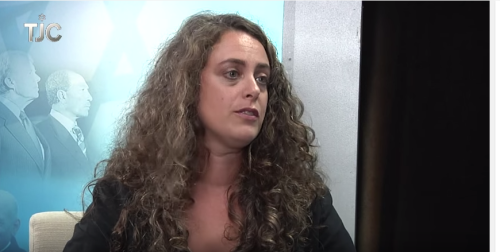
Over at The Jewish Channel, Steven I. Weiss invited me in for an excellent chat on the Chamber’s campaigning on behalf of businesses, like the tobacco industry, too poisoned to win politically under their own brand names. Here’s an excerpt.
August 31, 2015
'A carcinogenic organization’
My phone rang not long ago and a vaguely familiar voice greeted me with a question I’ve never been asked before: “Is this the mighty Alyssa Katz?”
The caller was Ralph Nader, a steady presence in the background of The Influence Machine. We chatted for a bit, first on the phone (about, among other things, his soon-to-open American Museum of Tort Law and his view of the Chamber of Commerce as what he called “a carcinogenic organization”), and then a few weeks later on the air on his Ralph Nader Radio Hour. Listen in.
‘The Influence Machine’: The long arm of the U.S. Chamber of Commerce
Says the Seattle Times: “Compelling for shedding light on the messy and disturbing ways that business and politics intersect”