
Massimo Pigliucci's Blog, page 24
November 6, 2023
From ancient to new Stoicism: III—Stoic ethics
 Ethics, image from clipart-library.com.
Let us continue our exploration of what a possible Stoicism for the 21st century and beyond might look like by finishing first to survey its ancient forerunner. So far we’ve looked at Stoic physics and logic, it is now time to turn to the crucial topic of ethics, which is supposed to be the fruit of studying the other two fields of inquiry. What we want is to arrive at an understanding of how we can live a life worth living (ethics), and in order to do so, ...


November 3, 2023
The problem with presentism
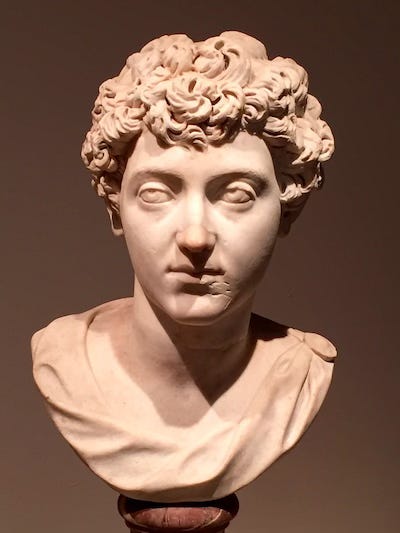 Young Marcus: was he destined to become a wise ruler or a brutal colonialist? Altes Museum, Berlin, photo by the Author.
Consider Marcus Aurelius: was he a wise ruler whose actions were informed by Stoic philosophy, or a brutal colonialist enforcing imperial rule? I have had this discussion recently on Substack’s Notes as a follow up to an article I wrote in which, among other things, I suggested that modern Stoics should stop regarding James Stockdale a role model.
Stockdale was an American pilot...
November 1, 2023
E-book: 24 Stoic Spiritual Exercises

Dear Reader,
Here is the fourth installment of my new series of free e-books based on essays that have appeared either here at Figs in Winter or at one of my previous blogs.
This new collection presents 24 spiritual exercises for regular Stoic practice, eleven taken from the writings of Epictetus (well, really, of Arrian, Epictetus’s student) and the remaining nice from Marcus Aurelius’s Meditations.
The idea is to provide both beginning and advanced proficientes (Seneca’s word for Stoic practition...
October 30, 2023
From ancient to new Stoicism: II—Stoic logic
 The quintessential logician: Mr. Spock from Star Trek.
We are in need of updating Stoicism for the 21st century and beyond. But in order to do that, we want a clear sense of what ancient Stoicism was about. In the first entry in this series we have looked at Stoic physics, one of the three areas of study in classical Stoic philosophy. This time we examine (briefly!) The second area: Stoic logic.
Don’t worry, this isn’t going to be a boring, heavily technical treatment. Then again, logic is fundame...
October 27, 2023
Should we be moral skeptics?
 I’m thinking…
We are awash with moral statements. Just check the news headlines and you’ll see that moral judgment and outrage are everywhere, especially on social media. But what if it turned out that there are no good basis for moral judgments in the first place? Welcome to moral skepticism, the denial that anyone actually possesses moral knowledge.
According to a fascinating essay by Richard Joyce, published in the collection Skepticism: From Antiquity to the Present (edited by Diego Machuca an...
October 25, 2023
Video chat: Tony Long on Epictetus
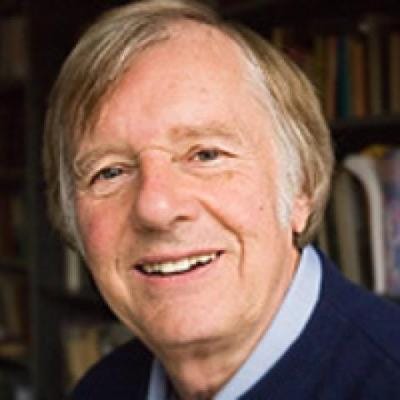 Tony Long
Here is the second of an occasional series of video chats with authors and translators who have written about the philosophy, culture, and history of the Greco-Roman tradition.
In this episode of “Meet the Greco-Romans” I talk to Anthony Long, arguably the top living scholar on the Stoic philosopher Epictetus.
Tony is a British-American classical scholar, currently the Chancellor's Professor Emeritus of Classics, Irving Stone Professor of Literature Emeritus, and Affiliated Professor of P...
October 23, 2023
From ancient to new Stoicism: I—Stoic physics
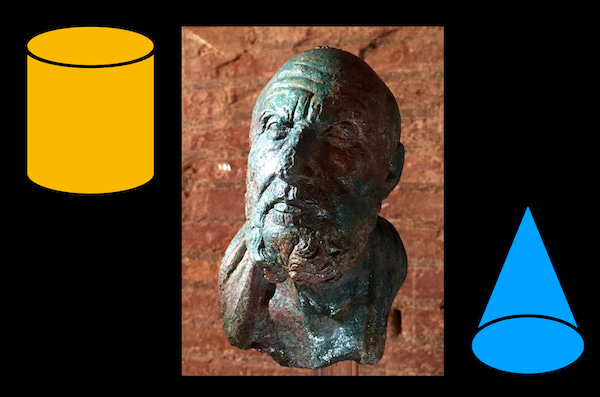 Chrysippus of Soli (center), surrounded by his famous cylinder and cone (see text). Trajan’s Market Museum, Rome. Photo by the Author.
Time to update Stoicism for the 21st century and beyond, don’t you think? I mean, the philosophy has been around since the 4th century BCE, but a few things have changed since then. Indeed, the initiative I recently announced, the School for a New Stoicism, has as its main objective to help bring this venerable and eminently practical philosophy squarely into mode...
October 20, 2023
Oh no! Am I a reductionist??
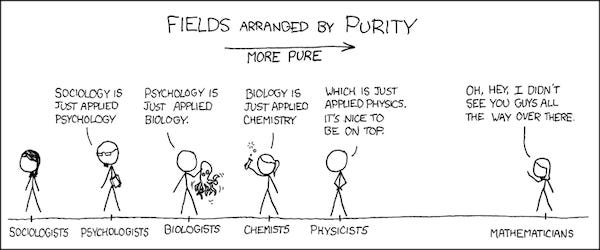 Fields of study arranged by purity, according to the excellent xkcd.com.
Sometimes I think my career suffers from a kind of split personality disorder. For instance, as a scientist I tend to point out to my colleagues in philosophy that to say “that’s an empirical question” is a good thing, not a conversation stopper. Then again, I also find myself reminding my science colleagues that no matter how hard they try to ignore it, everything they do has philosophical underpinnings, including in terms ...
October 18, 2023
Suggested Readings
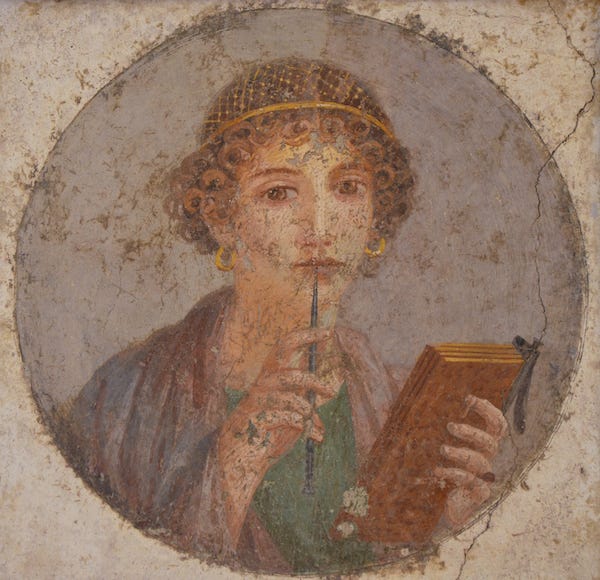 Woman with wax tablets and stylus (so-called "Sappho"), Naples Archeological Museum
Uneasy neighbors, part 1. Last month, I went to Washington, Illinois to conduct research and give a talk about a creative project I’m finally getting my hands around. The surprisingly lush, rolling prairie landscape of Tazewell County, the town of Washington’s old central square with its bandstand and gorgeous old buildings, and Dutch Lane just north of town will always maintain quasi-mythical status in my mind. M...
October 15, 2023
Profiles in skepticism: Cicero
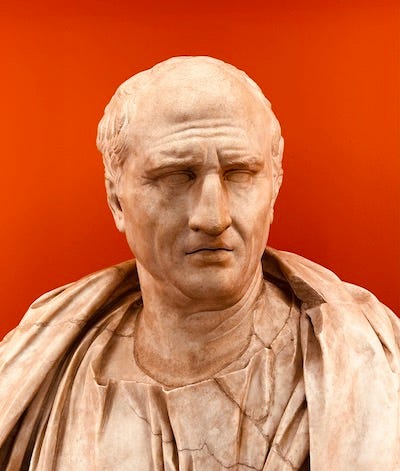 Marcus Tullius Cicero, Capitoline Museums, Rome. Photo by the Author.
Regular readers of Figs in Winter know that I’m partial to Marcus Tullius Cicero, the Roman advocate, statesman, and philosopher who contributed so much to the understanding and popularization of philosophy in the ancient world. So he couldn’t possibly be missing from this short series on ancient skepticism.
There is one aspect in particular of Cicero’s philosophy, however, that is not widely appreciated even though it is arguab...


