
Massimo Pigliucci's Blog, page 13
July 19, 2024
Epicurus’s five fundamental teachings
“The blessed and indestructible being of the divine has no concerns of its own, nor does it make trouble for others. It is not affected by feelings of anger or benevolence, because these are found where there is lack of strength.
Death means nothing to us, because that which has been broken down into atoms has no sensation and that which has no sensation is no concern of ours.
The quantitative limit of pleasure is the elimination of all feelings of pain. Wherever the pleasurable state exists, ther...


July 17, 2024
The universality of virtue ethics—III—Daoism
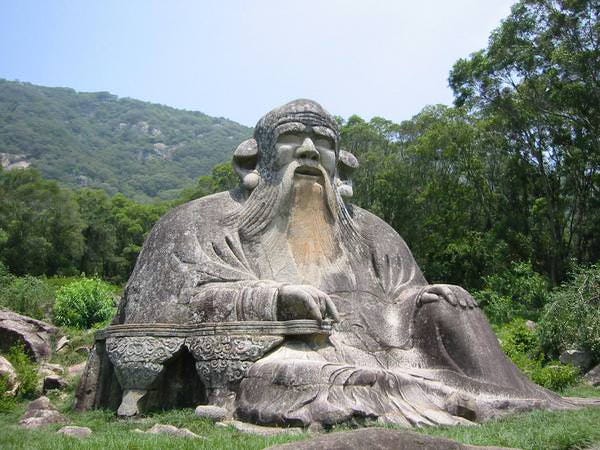 Lao-Tzu, the founder of Daoism. Image from worldhistory.org, CC license.
Is virtue ethics an approach limited to the Greco-Roman-Christian tradition, or has it been explored also by other philosophies, for instance those that developed around the same time in India and China, and later on in Japan? This is the question we have been exploring in the first two essays of this series, on Buddhism and Confucianism respectively. We conclude with a look at Daoism, on the basis of a provocative paper pub...
July 15, 2024
Practice like a Stoic: 18, Keep your peace of mind in mind
 The Roman baths at Bath, England. Image from vidiguides.com, CC license.
[This series of posts is based on A Handbook for New Stoics—How to Thrive in a World out of Your Control, co-authored by yours truly and Greg Lopez. It is a collection of 52 exercises, which we propose reader try out one per week during a whole year, to actually live like a Stoic. In Europe/UK the book is published by Rider under the title Live Like A Stoic. Below is this week’s prompt and a brief explanation of the pertinen...
July 12, 2024
Cicero on dying before one’s time
“Away, then, with those follies, such as that it is miserable to die before our time. What time do you mean? That of nature? But she has only lent you life, as she might lend you money, without fixing any certain time for its repayment. Have you any grounds of complaint, then, that she recalls it at her pleasure? For you received it on these terms. …
Because there is nothing beyond old age, we call that long: all these things are said to be long or short, according to the proportion of time they ...
July 10, 2024
The universality of virtue ethics—II—Confucianism
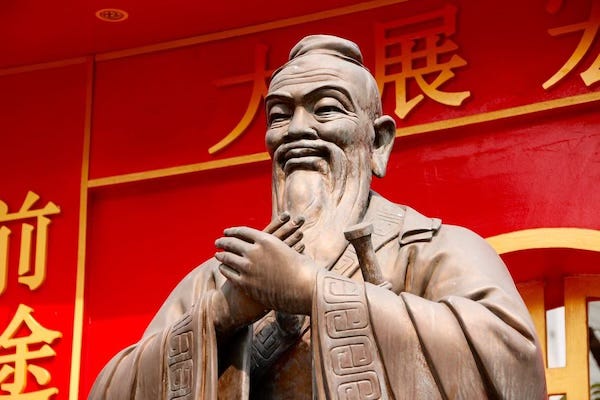 Confucius, image from picryl.com, CC license.
We have recently seen that a case can be made for Buddhism to be understood as a type of non-western virtue ethics, with significant similarities to both Stoicism and Aristotelianism. This is interesting because it may suggest that not only the concept of virtue, but the notion of an ethics of virtue, are not limited to the Greco-Roman-Christian tradition.
Usually, though, it is not Buddhism, but Confucianism that is taken to be a good example of non-w...
July 8, 2024
The universality of virtue ethics—I—Buddhism
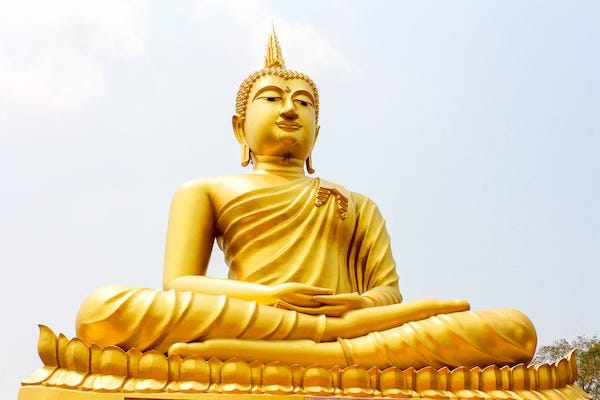 Buddha statue in Thai style, pxhere.com, CC license.
Virtue ethics is one of the three major approaches to ethics developed within Western philosophy, the other two being Kantian-style deontology and Bentham and Miller-style utilitarianism. I think the latter two are good examples of wrong turns in philosophical inquiry, as they are both decidedly less useful (in my opinion) than virtue ethics.
Both deontology and utilitarianism seek to establish a universal, agent-independent criterion for the mo...
July 7, 2024
Book: Byzantine and Renaissance Philosophy

Byzantine and Renaissance Philosophy, by Peter Adamson, vol. 6 of A History of Philosophy Without Any Gaps.
Summary:
Peter Adamson presents an engaging and wide-ranging introduction to the thinkers and movements of two great intellectual Byzantium and the Italian Renaissance. First he traces the development of philosophy in the Eastern Christian world, from such early figures as John of Damascus in the eighth century to the late Byzantine scholars of the fifteenth century.
He introduces major figu...
July 5, 2024
Aristotle on the roles of virtue and fortune
“Those fortunes that turn out in the contrary way restrict and even ruin one’s blessedness, for they both inflict pains and impede many activities.
Nevertheless, even in the midst of these, nobility shines through, whenever someone bears up calmly under many great misfortunes, not because of any insensitivity to pain but because he is wellborn and great souled. …
For we suppose that someone who is truly good and sensible bears up under all fortunes in a becoming way and always does what is noblest...
July 3, 2024
Free will and the problem of evil
 A cylinder, the geometric solid chosen by Chrysippus of Soli to explain his theory of free will. Image from Wikimedia, CC license.
One of the standard “spiritual” exercises that constitute my personal philosophical practice is what the ancient Greeks called anagnosis, that is the reading and studying of ancient texts, to remind ourselves about the roots of our wisdom, such as it is.
In that context, for the last few weeks I’ve been reading a delightful gem known as Attic Nights, by the second cent...
July 1, 2024
Practice like a Stoic: 17, Meditate on others’ virtues
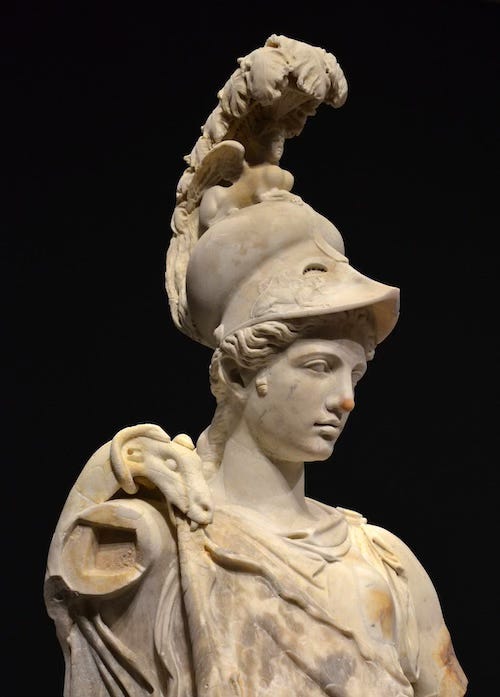 Athena, goddess of wisdom. Image from worldhistory.org, CC license.
[This series of posts is based on A Handbook for New Stoics—How to Thrive in a World out of Your Control, co-authored by yours truly and Greg Lopez. It is a collection of 52 exercises, which we propose reader try out one per week during a whole year, to actually live like a Stoic. In Europe/UK the book is published by Rider under the title Live Like A Stoic. Below is this week’s prompt and a brief explanation of the pertinent phi...


