Mayra Calvani's Blog - Posts Tagged "christian"
5 Questions with Dr. Jay D Roberts, MD, author of BREAK THE CHAINS
 Jay D Roberts MD is a board-certified physiatrist, specializing in the treatment of physical disabilities with a focus of adding quality to life. He is currently in private practice in California. He is a member and lecturer at national and international conferences related to his specialty, a contributing author to Current Trends in Physiatry, and author of various scientific papers. In addition to his career, Dr. Roberts volunteers as part of a Christian ministry in maximum security prisons. He and his wife, parents of two grown sons, live in Indian Wells, California. Break the Chains is Dr. Roberts’ first book. Following in the long tradition of doctors who combine their passion for saving lives with their passion for writing, Dr. Roberts is currently at work on a novel, concerning children forced to work in mines. Visit http://jdrobertsmd.com/
BUY BREAK THE CHAINS ON AMAZON / B&N / TATE PUBLISHING
Q: Tell us about the title of your book and what it means?
A: It is called Break the Chains, Transforming Shame into Forgiveness. Break the Chains has two means: 1. Stopping the cycle of abuse from father to son. 2. Breaking the chains that bind your heart with unforgiveness.
Q: Tell us why readers should read your book.
A: Many need to forgive themselves, God, or others who have harmed them. They may also need to ask forgiveness from someone they have hurt or done wrong. I hope that my book will help them with forgiveness, break their chains, and set them free.
Q: What was the hardest part of writing this memoir?
A: Telling the family secret and truly worried that my mother would die reading it.
Q: What has been the reaction so far from your friends, family and colleagues?
A: Absolutely amazing. People have thanked me and blessed me for telling my story. They feel my book will help them or their loved ones. The biggest overwhelming reaction was from my mother- after finishing my book she called me and asked me to forgive her for not protecting me as a child!
 Q: In what way has this book been cathartic for you?
A: Immensely. I never had any form of therapy as a child. First, during my time you never revealed to anyone what went on inside your home. Second, only crazy people or those rich movie stars went to therapy. The process was painful, as I broke down the walls around my heart that had protected me for years and years. In fact, I stopped writing it for two years because of the pain.
Q: What last words would you like to say to my readers?
A: I pray that my book will help them or someone they love. Then, all the pain it took to write it and the fear of my mother’s death, will be all worth it.


5 Questions with Author John Herrick

A graduate of the University of Missouri—Columbia, John Herrick explores themes of spiritual journey and the human heart in his works. Herrick’s debut novel, From the Dead,which was hailed as “a solid debut novel” by the Akron Beacon Journal, achieved Amazon best-seller status. Herrick’s second novel, The Landing, was named a semifinalist in the inaugural Amazon Breakthrough Novel Award contest. Herrick’s nonfiction eBook, 8 Reasons Your Life Matters, received over 100,000 downloads and landed at #1 on Amazon’s Motivational Self-Help and Christian Inspiration best-seller lists. John Herrick is a native of St. Louis.
Connect with the author on the web:
http://johnherrick.net/
http://johnherrick.net/interact.htm
https://www.facebook.com/johnherrickbooks
https://twitter.com/johnherrick
Q: What’s inside the mind of a mainstream fiction author who incorporates faith into his books?
A: “This is going to be uncomfortable.” That’s the thought that runs through my mind as I prepare my books! I gravitate toward characters who struggle, and many of those struggles are the type we don’t like to discuss. Taken one step farther, I believe in the power of the heart, in removing boundaries and making myself vulnerable as a writer. If my work is effective, the characters become so genuine that some readers say, “There’s no way he could write that without having lived it firsthand.” I’m aware that, every time I write a novel, it might ignite a series of questions about my personal life among people who know me or don’t know me. That said, I’ve grown less fearful to explore whatever characters or topics burn in my heart. If a character arises within me and won’t let go, I consider it a prompt from God that someone needs a book written for them, someone who will relate to that character. And ultimately, that’s what resides in my mind as a writer: “Will this novel make a difference in someone’s life?”
Q: Tell us why readers should buy Between These Walls.
A: We tend to see a gay man’s experience from the external. In the news, we hear people argue for and against gay marriage, gay rights, or gay adoption. We see people in parades and picket lines; we hear derogatory comments based on personal perceptions. But we seldom hear about the emotional, spiritual or social aspects that roil within a gay individual. Between These Walls offers readers a rare glimpse into the internal, psychological struggle of Hunter Carlisle, a gay main character, from his youth to adulthood. Between These Walls takes readers “between the walls” of Hunter’s heart and mind, and then places his journey in the context of his faith and church, which exposes another layer of insecurity in his life. Regardless of what we see on the surface, a story or heartache might bubble underneath.
Q: What makes a good faith fiction novel?
A: I believe realistic characters and scenarios are a key component. On one hand, it means your books won’t appear in a Christian bookstore, so you lose some exposure. Some readers will disagree with your approach—some won’t like the faith element, others won’t like particular words in a novel of faith. I understand and respect those opinions. But if your goal is to do your characters justice and shape them in a manner to which your readers can relate, then it’s necessary to allow your characters to be themselves. That means highlighting their admirable qualities, but also giving them the freedom to speak and act without unnecessary filters, quoting them verbatim. As a reader, I crave believable characters. If someone were to quote me or write the story of my life, I wouldn’t want them to polish me until I’m pristine, so I try to offer my readers and characters that same degree of respect. For many readers, the books hit that sweet spot of balance, and those are the readers for whom the novel was created.
Q: What is a regular writing day like for you?
A: I’d like to say my sales are so huge, I dedicate each day to my books! However, like many writers, my book work operates alongside another career. So each morning, I start writing around 5:30 or 6 a.m. and plug away until 8 a.m., when my desk job begins. Sometimes I’ll wrap up details or tackle some additional book work in the evenings too, but my early rise time doesn’t leave me with much time in the evenings. By nature, I’m a night owl and used to write at night, as I mentioned in my nonfiction book, 8 Reasons Your Life Matters. Eventually, I found myself more and more exhausted at night, forcing myself to write rather than savoring the miracle of characters coming to life. So I rearranged my schedule. Now I give the books my first and best in the morning, which has made such a difference. Plus, I get to watch the sun rise as I write—a rare occasion for me in the past! One day, I hope to shift my attention to my creative projects full-time, with several projects in different phases at once—and regain my leisure time!
Q: What do you find most rewarding about being an author?
A: The impact your words can make upon the souls of your readers! I love to write, and the finished product is its own reward. But the privilege of hearing from a reader who says your book has encouraged him or given her a reason to hang on one more day—the rewards don’t get better than that. That counts in life. You can’t buy it, yet it’s worth more than gold.
A Chat with Sophia Bar-Lev, Author of ‘The Silver Locket’

 A native of Massachusetts, Sophia Bar-Lev divides her time between the Fort Worth, Texas area and Israel. A former school teacher and adult education lecturer, Bar-Lev now devotes the majority of her time to writing. Sophia Bar-Lev is also the author of Pasta, Poppy Fields, and Pearls and Pizza and Promises. The Silver Locket is her latest novel.
Connect with the author on the web:
http://www.sophiabarlev.com/
http://www.sophiabarlev.com/#!blog/cnf7
https://www.facebook.com/SophiaBarLevAuthor
Q: Congratulations on the release of your latest book, THE SILVER LOCKET. To begin with, can you gives us a brief summary of what the story is about and what compelled you to write it?
A: This novel is celebrates the triumph of the human spirit over tragedy and heartache. It chronicles the lives of two women whose lives are linked by a child that belongs to both of them but in different ways. Their common devotion to motherhood and family ultimately leads to a powerful and fulfilling reunion. The power of a sensitive and difficult decision years earlier is realized as two families join their hearts and lives because of one special daughter they share. My inspiration came from the true story of a friend who wanted her story told and was delighted that I would write it for her.
Q: What do you think makes a good contemporary novel? Could you narrow it down to the three most important elements? Is it even possible to narrow it down?
A: A novel doesn’t deny reality; it interprets reality. The novels I appreciate and enjoy reading relates to the contemporary reader in a way that adds value to his/her life. This what I endeavor to do in my writing. The importance of character development cannot be overstated. Imagination must blend seamlessly with realism to produce for the reader a sense of connection or identification with the personalities in the book.
Q: How did you go about plotting your story? Or did you discover it as you worked on the book?
A: In the case of THE SILVER LOCKET, I knew the basic story ahead of time so my primary task was to follow the real life plot as told to me by my friend. However, in my other novels, I start with an idea which morphs into an overview but as I write, very often the characters pull me into directions I didn’t anticipate when I started the project. Personally, I’ve never outlined a book ahead of time. I tend to write more spontaneously and, as they say, ‘go with the flow’.
 Q: Tell us something interesting about your protagonist and how you developed him or her. Did you do any character interviews or sketches prior to the actual writing?
A: For this novel I invested considerable time in learning everything I could about the two women who are the primary characters throughout the novel. My friend’s descriptions and insights into her birth mother and adopted mother were very helpful and gave me a solid basis for building the narrative. Yes, I did write up two character interviews while I was writing the book and later revised them after the book was finished. I found the practice very helpful not only for this novel but for my other novels as well.
Q: In the same light, how did you create your antagonist or villain? What steps did you take to make him or her realistic?
A: This took a bit more imagination than the development of the protagonists. Actual information about this person was sketchy so I did some research into the general traits of the kind of person he needed to be in the story and received some advice from a local police officer as well, not only regarding the criminal but also about the types of laws applicable at the time.
Q: How did you keep your narrative exciting throughout the novel? Could you offer some practical, specific tips?
A: To keep a reader turning the pages requires enough mystery or suspense to create continual curiosity. As a writer moves through the chapters, unexpected twists to the story act like bait to ‘hook’ the reader to keep going. In this novel, I inserted events and conversations at strategic intervals to create or increase the suspense and add depth to the story.
Q: Setting is also quite important and in many cases it becomes like a character itself. What tools of the trade did you use in your writing to bring the setting to life?
A: Descriptions must be written in such a way that the reader can paint a picture in his/her mind of the various settings in the course of the novel. Carefully chosen words, similies, analogies and references will all contribute to dynamic settings so that – in a manner of speaking – the book becomes a movie in the mind of the reader.
Q: Did you know the theme(s) of your novel from the start or is this something you discovered after completing the first draft? Is this theme(s) recurrent in your other work?
A: In this case, yes I knew the theme from the beginning. In my other novels, I had a general idea but the themes developed as I wrote so that by the time I completed each novel, the theme was clear and distinct.
Q: Where does craft end and art begin? Do you think editing can destroy the initial creative thrust of an author?
A: Craft and art – art and craft: which comes first? Hard to say. I think the most successful novel is the result of free-flowing ‘art’ or creativity, which is later reviewed, revised and edited so that the level of the craft enhances the art contained within the novel itself.
Q: What three things, in your opinion, make a successful novelist?
A: Persistence, diligence and a passion for excellence are imperative for any writer to become a successful novelist. Actually, I think these three qualities are essential for success in any area of life but as we’re discussing authors, I would add that every author has to be willing to throw away as much or more than they actually publish. Writing is a ‘practice’ as well as an art. I write every day and much of it ends up in the dust bin but it’s not wasted time; it’s practice and practice makes perfect.
Q: A famous writer once wrote that being an author is like having to do homework for the rest of your life. What do you think about that?
A: I love writing so if this is homework for the rest of my life, bring it on! I’m a firm believer in the maxim that if you love what you do, you won’t ‘work’ for the rest of your life. Your ‘work’ becomes your joy.
Q: Are there any resources, books, workshops or sites about craft that you’ve found helpful during your writing career?
A: Yes I regularly read postings from Writers’ Digest and subscribe to their magazine as well. I attend writers’ workshops as often as I can and read books about writing. I found Stephen King’s book, ON WRITING and BIRD BY BIRD by Anne Lamott helpful and inspiring. I’m also a great fan of the series of books for writers by Julia Cameron. Her works continue to be a resource I go back to frequently.
Q: Is there anything else you’d like to share with my readers about the craft of writing?
A: I have a small book on my desk which a friend recently sent me. It’s entitled, YOU’RE A WRITER SO ACT LIKE IT. I haven’t read the book yet but I love the title. Anyone who aspires to be a writer needs to put in the time to develop the skills that a creative imagination requires in order to marry ideas to effective expression. I daresay there are many potential writers who are not lacking in ideas but in the will and persistence to do the work required to turn their imaginations into printed material. Great ideas are not enough; the mechanical skills for producing a winning manuscript are essential. And that, my friends, takes work.
////////////////////////////////////////////////
Title: THE SILVER LOCKET
Genre: Women’s Fiction
Author: Sophia Bar-Lev
Website: www.sophiabarlev.com
Purchase on Amazon
About the Book:
When The Silver Locket opens, it’s July 1941 in Boston, Massachusetts. War is raging in Europe and the Pacific. But for two young women in a small town in New England waging their own personal battles, the struggle is way too close to home.
When extraordinary circumstances bring these two women together, one decision will alter the course of their lives. And with that one decision, their lives will be forever changed…and forever intertwined.
Were these two women thrust together by happenstance—or fate? A tragedy. A decision. A pact. Lives irretrievably changed. A baby girl will grow up in the shadow of a secret that must be kept at all costs. But will this secret ever see the light of day? And what happens when—or if—a promise made must be broken?
Adopting a child is not for the feint of heart—but neither is being adopted…
A sweeping and suspenseful story that unfolds in a different time and a different place, The Silver Locket explores universal themes that ring true even today. Secrets. Unbreakable bonds. The healing power of love. Deception. Anguish. Redemption.
In this touching and tender tale, novelist Sophia Bar-Lev weaves a confident, quietly moving story about adoption, finding hope in the face of hopelessness, and how true love can overcome any obstacle. With its brilliant juxtaposition of the wars fought both on the battlefield and internally, The Silver Locket is a poignant novel, resplendent with drama. Featuring an exceedingly real and relatable plot, and characters that will stay with readers long after the final page is turned, The Silver Locket is a sterling new read.
Interview with Historical Novelist Donald Joiner
 Georgia native Donald Joiner is a veteran who served during the Korean War era. A retired school superintendent and a lifelong student of history, Joiner has been married for fifty-two years and is a proud father and grandfather. He has taught Sunday school in his church for forty years. Joiner has also authored two previous books about antebellum churches in Georgia. Connect with the author on Facebook.
Q: Congratulations on the release of your latest book, The Antioch Testament. To begin with, can you gives us a brief summary of what the story is about and what compelled you to write it?
A: When the novel begins, it’s 2004 during the height of the insurgency in Iraq. An American army patrol manages to rescue a frightened group of Iraqi Christians fleeing Islamic militants. The refugees’ severely wounded leader, a priest, carries with him a mysterious bundle the group brought with them from an ancient Christian monastery in northern Iraq. Barely clinging to life, the priest insists on handing over the carefully guarded bundle to an American chaplain stationed at the army base.
When the bundle is unwrapped, the chaplain finds a large, scuffed, leather-bound ancient manuscript written in an unknown language. Fearing for the manuscript’s safety in war-torn Iraq, the chaplain arranges to have the manuscript sent back to the states. Eventually, the manuscript winds up in an Eastern Orthodox monastery where internationally-recognized linguists begin the arduous task of translating it.
What the linguists discover is absolutely astonishing; the manuscript is a first century AD testimonial in ancient Aramaic, the language Jesus spoke, describing what happened to Jesus’ apostles after his Resurrection. But time is running out. What the linguists do not know is that a fanatical Iraqi insurgent cell is bound and determined to retrieve or destroy the manuscript before its secrets can be revealed.
I’ve always been intrigued by the remarkable transformation that occurred among Jesus’ apostles after his Resurrection. The bible tells us that before that event they had a motley collection of fishermen, laborers, and revolutionaries seeking to drive out the hated Roman occupiers and the restoration of David’s earthly Jewish kingdom. The New Testament tells us quite a lot about them before the Resurrection, but very little afterward.
What happened to them? Where did they go? What did they accomplish? How did they die? From the fragmentary evidence left to us in early Christian traditions, I decided to tell the rest of the story. The Antioch Testament is a work of historical fiction, but it is based on early church traditions.
Q: What do you think makes a good work of historical fiction? Could you narrow it down to the three most important elements? Is it even possible to narrow it down?
A: 1. The historical setting is very important. Events that take place in your story must be based on actual events of that particular historical era. If you get these events, dates or characters out of historical sequence, rest assured some of your readers will point this out and discredit you.
Characters in historical fiction should reflect knowledge available to individuals at that time. You don’t want characters of the first century AD, for example, carrying firearms centuries before firearms were invented or writing on paper centuries before paper was available.
The plot in historical fiction should be based on actual events that took place in that era or surrounded by known historical situations particular to the era.
Q: How did you go about plotting your story? Or did you discover it as you worked on the book?
A: I tried to develop the individual characters of the apostles based on evidence about them available to us through their depiction in the New Testament as well as what ancient church traditions had to say about them.
Ignatius of Antioch. the character responsible for telling the story of the apostles, is believed by Syriac Christians to have been appointed bishop of that city by St. Peter himself and Antioch was in fact a central by way for early Christian disciples on their various missionary journeys in the East. Tradition tells us Ignatius was a companion of several apostles and because most of them traveled through Antioch I decided that Ignatius would be the ideal character to tell the story.
Early traditions guided the plot of the story. If tradition said an apostle carried out missionary activities in Persia, I placed him there in the midst of events going on in that era in that location. Once I placed an apostle in a specific location, actual historical events guided the plotting of the story.
As an example, since tradition said St. Peter was martyred in Rome, I had to get him there and have him arrested while preaching in the catacombs, and taken to prison, then to trial by a magistrate, then to a place said by tradition to be the location of his execution.
Q: Tell us something interesting about your protagonist and how you developed him or her. Did you do any character interviews or sketches prior to the actual writing?
A: The army chaplain, the one responsible for sending the ancient manuscript to America, is a composite of several ministers I have known. Though very severely wounded in Iraq, he convinces his unbelieving brother to accompany him on his quest to have the manuscript translated. The character of the brother is based on someone I knew personally.
Q: In the same light, how did you create your antagonist or villain? What steps did you take to make him or her realistic?
A: The antagonist character was easy to create. Osama bin Laden hated the West in general and the US in particular; despised Christians and plotted the events of 9 - 11. I modeled Zaid Al Rifia, the leader of the fanatical Iraqi cell, on what we know of bin Laden.
Q: How did you keep your narrative exciting throughout the novel? Could you offer some practical, specific tips?
A: Throughout the book I placed telephone conversations between Zaid and his agent in America telling about the efforts of the insurgent group to track down and get their hands on the manuscript. Something outside the regular storyline can add tension and excitement to the main theme of the story.
Q: Setting is also quite important and in many cases it becomes like a character itself. What tools of the trade did you use in your writing to bring the setting to life?
A: I utilized a map of the Roman Empire with place names of the first century AD. I also inserted large chunks of historical events such as the Jewish revolt against Roman rule in Judea, the struggle of Queen Boadicea against the Roman legions in Britain, and the war between the Romans and Persians in the East. I also inserted Emperor Nero, Roman General Vespasian, and other historical characters to lend credence to the story.
Q: Did you know the theme(s) of your novel from the start or is this something you discovered after completing the first draft? Is this theme(s) recurrent in your other work?
A: My theme all along was to demonstrate the incredible sacrifices made by Jesus’ apostles in order to be obedient to his last command that they carry the Good News to the far corners of the world.
Q: A famous writer once wrote that being an author is like having to do homework for the rest of your life. What do you think about that?
A: I think writing is hard work. Writing historical fiction can be especially difficult. You better get the historical events in the story right. There are many history buffs out there who pride themselves on knowing intricate details about various historical eras. The author may be writing historical fiction, but he can count on his readers knowledge about the historical events surrounding the characters in the novel. If he gets dates wrong or mishandles historical characters or events, the reader will be sure to share his errors with others and cross him off the ‘must read’ list.
////////////////////////////////////////////
Title: THE ANTIOCH TESTAMENT
Genre: Christian Fiction/Historical Fiction/Suspense
Author: Donald Joiner
Publisher: Seraphina Press
Purchase on Amazon
About the Book:
Donald Joiner, a veteran who served during the Korean War era, is a lifelong student of history. Joiner’s passion for history shines through in his debut novel, The Antioch Testament, a sweeping, suspenseful novel resplendent with rich historical detail.
When The Antioch Testament opens, it’s 2004 during the insurgency in Iraq. An American army patrol manages to rescue a frightened group of Iraqi Christians fleeing Islamic militants. The refugees’ severely wounded leader, a priest, carries with him a mysterious bundle the group has brought with them from a northern Iraqi Christian monastery. As he clings to life, the priest insists on handing over the carefully-guarded package to the American army chaplain. When the bundle is unwrapped, Army chaplain Charles Monroe finds a large, scuffed, leather-bound ancient manuscript written in an unknown language. Fearing for the manuscript’s safety in war-torn Iraq, the chaplain arranges to have the manuscript sent to Augusta, Georgia, his hometown. Eventually, the manuscript winds up in an Eastern Orthodox monastery where internationally- recognized linguists begin the arduous task of interpreting it. What the linguists discover is absolutely astonishing: the manuscript is a first century AD testimonial in Aramaic, the language Jesus spoke, describing what happened to Jesus’ apostles after his Resurrection. But time is running out. Unbeknownst to the interpreters, a fanatical Iraqi insurgent organization is bound and determined to retrieve or destroy the ancient manuscript before its secrets can be revealed. Some secrets may be worth dying for—but these secrets might even be worth killing for.
Imaginative, inventive, and intriguing, The Antioch Testament explores the lives of the apostles after the resurrection. A thoughtful and thought-provoking page-turner, The Antioch Testament is a carefully-crafted page-turner with a pulse-pounding plot, and engrossing storyline.
Interview with Robert V Baynes, author of ‘The Day the Dollar Died’
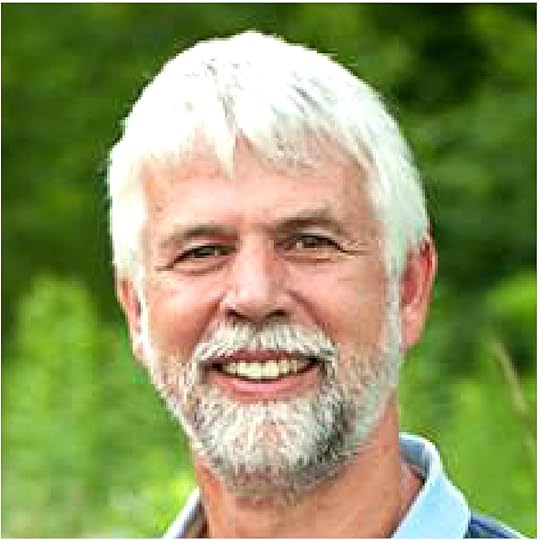 Robert V Baynes is concerned about the direction this country is headed. He wrote this first novel as a message to warn people of what could happen here if things continue as they are. In his spare time, he loves to spend time with his family. He also likes to vacation in new places, fish, read, garden and cook.
Twitter / Facebook / Website / Amazon
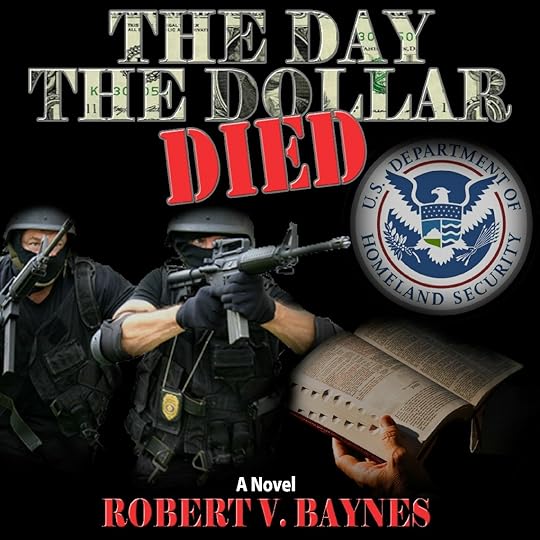
Q: Congratulations on the release of your latest book, The Day the Dollar Died. To begin with, can you give us a brief summary of what the story is about and what compelled you to write it.
A: My book is the story of an ordinary farmer and how his life has been very good in this country. Then things begin to change as the financial foundations of this country start to crumble. The main character, John, struggles with what to do and eventually loses everything he has worked so hard to build. He ends up having to make some very difficult choices to try to save his family.
I chose to write this book because I wanted to warn people of some of the dangers I see coming to this country if we do not change the direction we are headed.
Q: What do you think makes a good political novel? Could you narrow it down to the three most important elements? Is it even possible to narrow it down?
A: I think one of the most important aspects of a political novel is that it gets a message across. I think the authors’ point of view should be fairly obvious. I also think it is important for the novel to speak to current events. If it is not about current problems, people do not feel compelled to read it. Third, I think a political novel should be fairly easy to understand.
There could be other aspects, but I think these are the three I would narrow it down to.
 Q: How did you go about plotting your story? Or did you discover it as you worked on the book?
A: I knew the basic story line I wanted to go with when I started the book. However, much of the story came about as I wrote. I felt like I just saw the story unfold and I wrote it as I saw it.
Q: Tell us something interesting about your protagonist and how you developed him or her. Did you do any character interviews or sketches prior to the actual writing?
A: My protagonist came about as a mix between my personality, what I would like to be and just an ordinary farmer. I didn’t do a character sketch prior to writing, but I just wrote what I saw in my head.
Q: In the same light, how did you create your antagonist or villain? What steps did you take to make him or her realistic?
A: For the antagonist, I chose a character that has an almost opposite point of view as myself and then tried to picture why they would think that way. This was an interesting exercise to do.
Q: How did you keep your narrative exciting throughout the novel? Could you offer some practical, specific tips?
A:I tried to keep the narrative exciting by trying to make everything as realistic as possible. I always tried to think about how a person would realistically react in each situation. I also threw in a few twists.
For tips, I think some of the best writing is as realistic as possible and is descriptive enough that you could picture yourself there.
Q: Setting is also quite important and in many cases it becomes like a character itself. What tools of the trade did you use in your writing to bring the setting to life?
A: I tried to throw in cues about what the breeze was like or what the character might have heard. I tried to throw in subtle cues about the setting as the book went along.
Q: Did you know the theme(s) of your novel from the start or is this something you discovered after completing the first draft? Is this theme(s) recurrent in your other work?
A: I knew the basic theme of the novel from the beginning. I discovered many of the details as I wrote. I am currently working on my second novel and the theme is similar but changed.
Q: Where does craft end and art begin? Do you think editing can destroy the initial creative thrust of an author?
A:I think you need both art and craft to be a good book. They have to work together. A good job of editing would enhance rather than destroy the creative work of an author. A good edit, makes a book easier to read and understand.
Q: What three things, in your opinion, make a successful novelist?
A: First of all, they have to be someone who can tell a good story. They also have to be able to stick with one project for years or months until they can get a project finished and to market. Third, I think they have to be able to figure out how to publicize and market their work after that.
Q: A famous writer once wrote that being an author is like having to do homework for the rest of your life. What do you think about that?
A: That point of view certainly has a lot of merit. An author is also someone who gets to tell stories for a living. However, being an author does take a lot of work that is not always fuin.
Q: Are there any resources, books, workshops or sites about craft that you’ve found helpful during your writing career?
A:I can’t think of any resources I used to learn to write. I have been an avid reader all of my life, so I think that has helped me to be able to write.
Q: Is there anything else you’d like to share with my readers about the craft of writing?
A: Writing is like doing anything else. It take some work when you don’t feel like it and the more you do it and get good feedback, the better you can get at it.

Talking Craft with Ray Sutherland, Author of ‘Secret Agent Angel’
 Ray Sutherland is a Kentucky native who grew up on a farm outside of Bowling Green. He served in the Army, spent two years in Germany, received his B.A. in religion from Western Kentucky University, and his PhD in the Bible from Vanderbilt University. Ray has served of Professor of Biblical Studies at the University of North Carolina-Pembroke for over thirty years, pastored a small church for nine years, and is retired from the Army Reserve. He and his wife Regina live in North Carolina and have two sons and four grandchildren.
INTERVIEW:
Q: Congratulations on the release of your latest book, Secret Agent Angel. To begin with, can you gives us a brief summary of what the story is about and what compelled you to write it?
A: Billy Graham said that angels are God’s secret agents and I decided to write the fictional adventures of one of those secret agent angels. I wrote it in the first person from the angel’s perspective somewhat along the lines of the secret agent and detective novels of the 50’s and 60’s by Raymond Chandler, Dashiell Hammett, Mickey Spillane, and Donald Hamilton, which were often told in first person. Samuel the angel comes to earth in human form to help persuade some people to make right decisions in crises. He visits an accountant who is tempted to steal. He goes along with two truckers who befriend an abused boy. He helps a war veteran find forgiveness of his former enemies. He helps some porters on their trip down the Ho Chi Minh trail. All of these things come together in a snowbound truck stop where a fire demon comes to destroy one man’s faith. Or his life. Forty years of angelic work all come together for that one confrontation.
Q: What do you think makes a good inspirational suspense? Could you narrow it down to the three most important elements? Is it even possible to narrow it down?
 A: Suspense and inspiration, both of which are provided in “Secret Agent Angel.” Most importantly, it is a well-told story and highly entertaining. The suspense comes from the tense situations in which Samuel the angel and his companions find themselves. The inspiration comes from the people in the story learning about their spiritual talents and their ability to do what is right. Even the angel learns some things.
Q: How did you go about plotting your story? Or did you discover it as you worked on the book?
A: I don’t work from a written outline but I certainly have a mental one. I planned out the opening, the major turning point and the ending, including the climax. Then I wrote the whole book with those plans in mind. I keep a detailed plan in mind for the next couple of episodes.
Q: Tell us something interesting about your protagonist and how you developed him or her. Did you do any character interviews or sketches prior to the actual writing?
A:There are no real angels around for me to watch so I had to improvise what I thought about how an angel would act. There are a few short accounts in the Bible about angel’s appearing, but they are very short of details. Much more helpful was the apocryphal/deutero-canonical book of Tobit which features an angel appearing as a human, so I relied on that account fairly heavily. But I had to use a lot of imagination.
Q: In the same light, how did you create your antagonist or villain? What steps did you take to make him or her realistic?
A: I have known some people very much like the angel’s opponents in the story. So the villains are composites of people I have known.
Q: How did you keep your narrative exciting throughout the novel? Could you offer some practical, specific tips?
A: I mostly used my own reaction as a guide. If an episode excited and entertained me, I kept at it. If it didn’t, I didn’t write it and found another way which I found to be exciting and entertaining.
Q: Setting is also quite important and in many cases it becomes like a character itself. What tools of the trade did you use in your writing to bring the setting to life?
A: A standard writers’ adage is to write what you know and in Secret Agent Angel, I followed that advice. I haven’t yet met any real angels, but most of the situations in which Samuel the secret agent angel finds himself are very similar to things I have done in my own life. I was assigned to tanks in the army. My first job was loading and unloading trucks. The owner of the truck company also owned a truck stop, so I spent some time in it and other truck stops as well. I have visited many hospitals in the course of my pastoral duties. All of those settings appeared in the novel. One part which does not come from my own experience is the chapter about porters on the Ho Chi Minh trail just before the Tet offensive. I had to do a lot of research for that, but I enjoyed that challenge.
Q: Did you know the theme(s) of your novel from the start or is this something you discovered after completing the first draft? Is this theme(s) recurrent in your other work?
A:The theme that the spirit world is at work in our world is that is one thing that I have seen in my own life and experience. I had that theme firmly in mind when I started the book. That God is at work around us is as much an underlying assumption of the book as it is a theme. It is very much present in my next book, a historical novel about King David, the biblical king of Israel.
Q: Where does craft end and art begin? Do you think editing can destroy the initial creative thrust of an author?
A:Editing is an absolute necessity, both self-editing and outside editing. Editing can be done in such a way as to be a problem with creativity, but I did not have that problem. My editor at Black Opal, Faith, did an excellent job and was very helpful.
Q: What three things, in your opinion, make a successful novelist?
A:Reading widely and learning from great writers is mandatory. Being persistent. Keep at the writing and finish the project. Write the book, then prepare the manuscript for submission. Be persistent in submitting it. Every writer gets rejection. Get over it and send it out again. And again. And again. Constant improvement is a necessity. Learn as you go. Figure out what works. Learn to self-edit. Like any job, writing requires certain skills and attributes. Learn them, use them, and keep getting better.
Q: A famous writer once wrote that being an author is like having to do homework for the rest of your life. Thoughts?
A:Homework was forced drudgery and basically useless, so I seldom did it, especially over Christmas vacation. Writing is work but it is enjoyable work. It is only forced on me by myself.
Q: Are there any resources, books, workshops or sites about craft that you’ve found helpful during your writing career?
A:Read great books, classics and current. Learn how the masters wrote, then find your own style. Dictionaries, use a good thesaurus, and follow Heinlein’s rules which are in the next question and answer.
Q: Is there anything else you’d like to share with my readers about the craft of writing?
A: Robert A. Heinlein said it best. His Five Rules for Writers:
You must write.
You must finish what you write.
You must refrain from rewriting, except to editorial order.
You must put the work on the market.
You must keep the work on the market until it is sold.
He is right and I can give no better advice.