
Karl Shuker's Blog, page 55
April 16, 2013
IN MEMORIAM – MY EULOGY TO MY DEAR MOTHER, MARY DOREEN SHUKER, 29 JANUARY 1921 – 1 APRIL 2013
 Mom and I at the Royal Palaces, Bangkok, Thailand, 2005 – our Far East holiday was her all-time favourite, visiting all of the wonderfully exotic lands of the Orient that she had wanted so much to see all her life but had never thought that she would (Dr Karl Shuker)
"Say not in grief 'she is no more' but live in thankfulness that she was."
"You can shed tears that she is gone, or you can smile that she has lived."
(Variations upon a traditional Hebrew proverb)
Today was the funeral of my beloved mother, Mary Doreen Shuker, who passed away on Easter Monday, 1 April, 2013 following a mercifully brief period of debilitation caused by the combined effects of various old-age-related conditions. She was 92 years old, and until then had been in exceptionally good health throughout her life – a life that I was truly privileged to share throughout my own. Whatever good may be in me came from my little Mom (as I always affectionately called her); she was a profound influence in all of my own interests, including cryptozoology (click here to discover why I owe my abiding passion for cryptozoology to her); and when she passed away, I truly felt (and still feel) that part of me, the best part, died with her.
Due to the existence and public awareness of my writings and researches, googling my name will call up many entries on the internet relating to me, but when I googled my Mom's name recently I was extremely sad, and angry, to discover that there were only two entries – and both of those were references to her in ShukerNature blog posts of mine. In other words, as far as the world as measured by internet presence was concerned, her entire life had barely registered. On more than one occasion, Mom had stated that whereas my contributions to this world were my writings, and for which I would always be remembered, her sole contribution, the only thing that she felt she would ever be remembered for, would be having given birth to me, but that this was more than enough, and made her feel very proud. However, as far as I am concerned, it is certainly not enough – because my mother was a truly remarkable, wonderful person, who made me the person I am today, and to whom I owe everything.
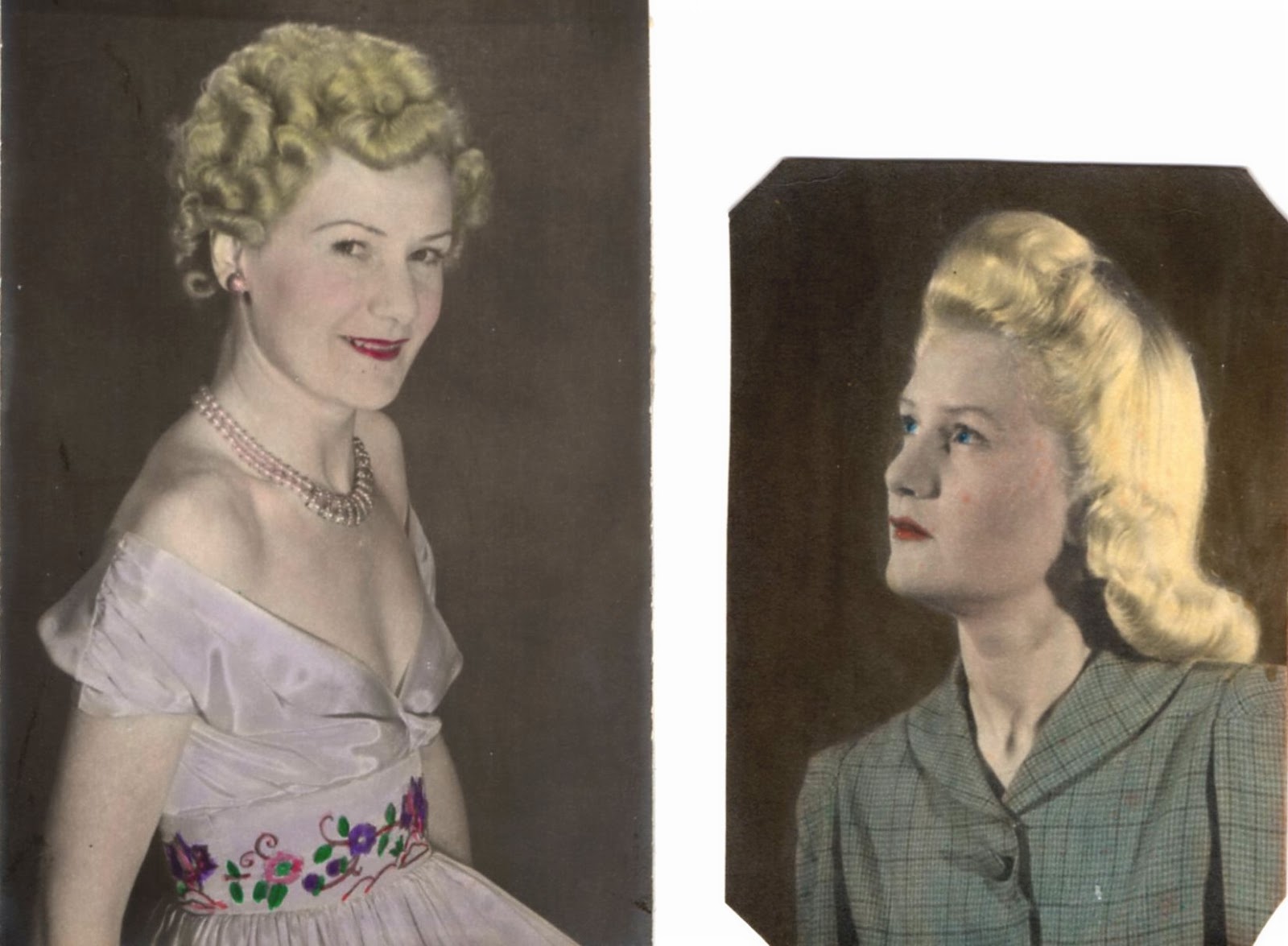 Two hand-tinted photographs of my mother when she was in her mid-20s – beautiful on the outside as well as on the inside (© Mary D. Shuker/Dr Karl Shuker)
Consequently, in order to document all of this in the fullest, most appropriate way that I possibly can, for the entire world to know just how very special my mother was – and always will be - I now present the eulogy that I wrote and read aloud to her at her funeral today (and I am interspersing it with some of my favourite photographs of her and of the two of us together). I only pray that it did justice to the best person I shall ever know.
Hello little Mom - you'll always be my dear sweet innocent little Mom.
Well, here we are, just the two of us together today, just like you wanted – you always said that the only person you wanted here today was me, and I'm here for you, Mom, as always. We're side by side, united as one, just like we've always been. As long as we're together, that's all that matters, that's all that's ever mattered.
 Mom and I visiting the Great Sphinx at Giza, Egypt, January 2006 (Dr Karl Shuker)
It would take me many lifetimes to tell you just how much I love you, little Mom, and how thankful I am to you in countless different ways, but in the time that I have here with you now, I need so much to tell you the important things that mean the very most.
Please, though, don't think badly of me, Mom, for having written all of this down rather than just saying what comes into my mind. I just couldn't take the risk of being so distressed that my mind froze, or I stuttered and stumbled, or forgot to say something essential. This is for you, so I want it to be perfect in every way, because that's what you are.
 Mom and a very little moai on Easter Island, 2008 (Dr Karl Shuker)
First of all, I love you Mom with all of my heart, and I know that you love me the same too, because love never dies. You've always been the perfect Mom, no-one could have ever been blessed with a kinder, better mother – you were born to be a mother, and I am truly truly blessed that you are mine and that I have been embraced throughout my life by your unfaltering, eternal love.
It's thanks to your precious love, your ever-present loyalty and support, your constant encouragement, your lifelong inspiration, and your practical wisdom that I have always sought and have always received whenever I've needed advice, help, or even just a sympathetic ear to listen to all of my problems, that I am who I am today, Mom. We were always much more than son and mother - we were also best friends, kindred spirits, who shared the same interests, liked the same things, and understood each other like no one else ever could or ever will. And that is how we will always remain. You will no longer be present beside me in the physical sense, Mom, though I shall always wish that you were and I shall miss seeing you, talking to you, and just being with you more than I can ever say; but you will be forever in my thoughts, in my memories (all of which are good ones), and in my heart, all the days of my life.
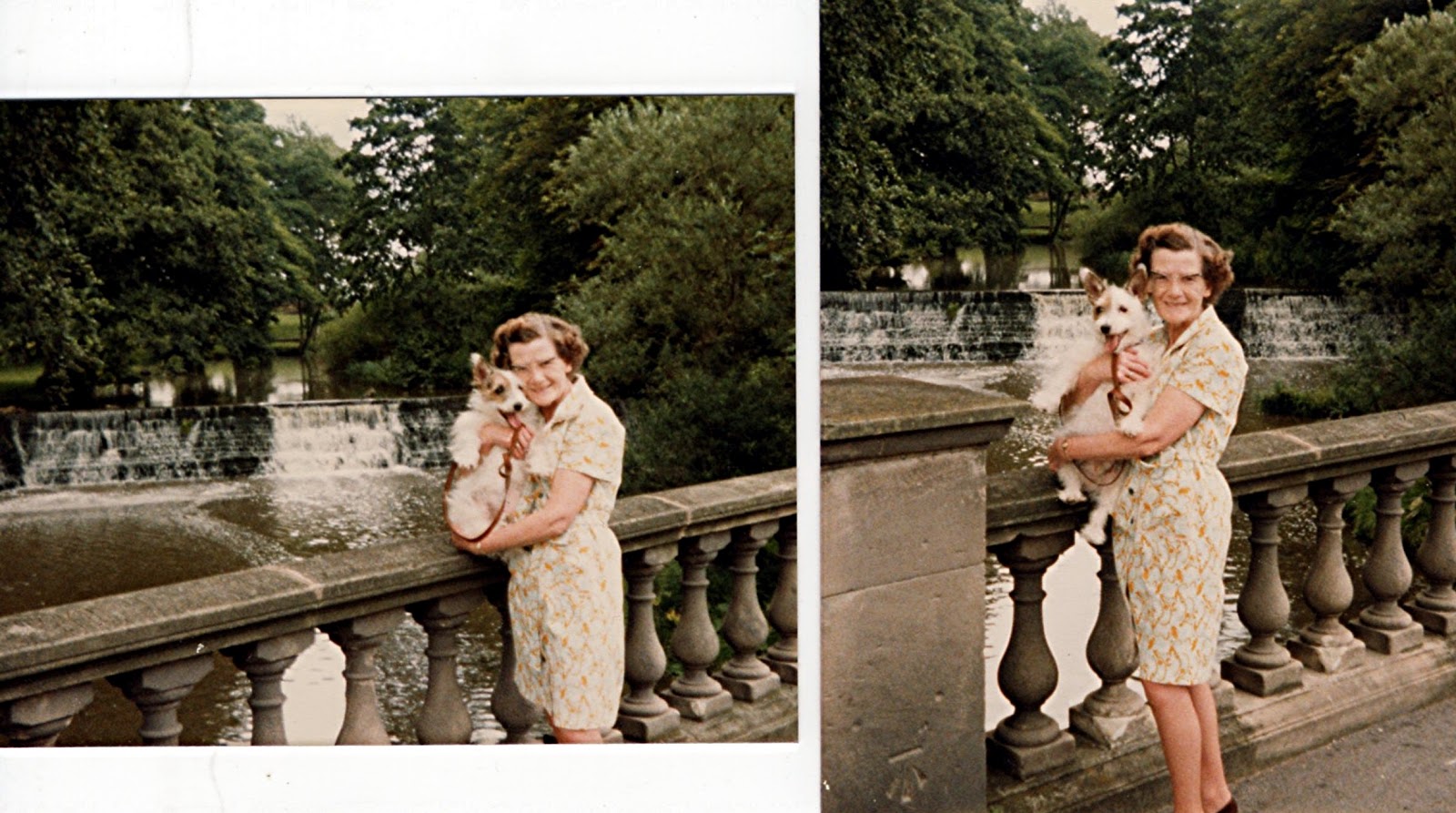 Mom and my little Jack Russell terrier Patch, mid-/late 1970s (Dr Karl Shuker)
Whatever good may be in me, whatever creativity I have displayed, whatever positivity I possess, they all come directly from you, Mom. Your own love of nature and animals and also of books and literature nurtured mine too, ultimately leading me to become a zoologist and a full-time, professional, published author on cryptozoology and other wildlife subjects. And your own skills as a secretary and perfect command of the English language were willingly made available to me by you when we were checking the proofs of my books together back in the pre-computerised days of publishing. Remember how we used to sit together for hours, meticulously going through them?
 Mom and I at sunset on top of Corcovado Mountain, Rio de Janeiro, Brazil, 2007 (Dr Karl Shuker)
And your fond wish to be able to travel the world one day and for me to see many of its wonders and marvels led you some years after retiring to go back to work, taking on a part-time secretarial post, in order to earn enough money to fund us on our travels while I was still just a teenager to many fantastic destinations in Europe, as well as North Africa and even a holiday in the USA. And these sights inspired me when I became a man to continue journeying to even more exotic, fascinating locations, and I always took you with me, Mom, to show you all the places that you'd dreamed of seeing but never expected to – remember Easter Island and Rio de Janeiro, Singapore and Hong Kong, Thailand, Las Vegas, Egypt, Niagara Falls, New Zealand, and Cape Town in South Africa? We visited all of these and many more, didn't we, Mom? And our adventures in those fabulous faraway places will remain some of my most treasured memories of all time.
 Mom and I at the Grand Canyon, Arizona, USA, 2004 (Dr Karl Shuker)
However, we've both had tough things happen in our lives too, but together we've always seen them through – you and me against the world - somehow we've always managed to come through relatively unscathed together, until this last, final confrontation came along. And although we battled it together as we've always done, it was simply one too many for you, Mom, at 92, to take on and win, even with me at your side and fighting it with you and for you every step of the way as ever. On the holy day of Easter Monday, God looked down upon us and in His infinite kindness He granted you the gifts of peace and release from this mortal world of pain and grief. In so doing, He brought me more grief and sorrow than I have ever thought it possible for the world to hold, but I completely understand and accept that His decision was as ever the correct one. Neither He nor I would have wanted you to suffer, and He also blessed us with the ultimate gift that He could bestow upon us – He allowed me to be with you at the very end, little Mom, so that you were not alone, and to hold your hand, to stroke your brow, to tell you everything that I wanted and needed to tell you, and to kiss you goodbye, for now. And for all of this, I shall be eternally grateful to God, for His kindness and for the greatest blessing that He could ever have given to us. Thank you, dear Lord.
 Mom and I on our Emirates flight out from England to Dubai and the Far East, 2005 (Dr Karl Shuker)
I'm wearing your wedding ring from now on, Mom, on my little finger, where it fits perfectly. So now, you'll be with me again; whenever I look at it or touch it, you'll be there, to give me strength, courage, and your support, just like you've always done. And do you remember that lovely belt buckle and belt you bought me years and years ago from Great Bridge? I always loved it so much, but I wore it so much, year in year out, that the buckle eventually fell apart, and I was really upset when that happened. I thought it was beyond repair, but a friend mended it for me a few days ago, so I'm wearing it today and will be wearing it all the time from now on too.
 Mom and I and a marsupial scene-stealer in Melbourne, Australia, 2006; I'm wearing that lovely belt and buckle that Mom bought me all those years earlier (Dr Karl Shuker)
And that beautiful silver-and-turquoise Nubian scarab bracelet that I bought for you on your birthday in Luxor, Egypt, and which you've always worn on your arm ever since, it's now on display on top of your beautiful lacquered television cabinet in the lounge, where I can always see it. And don't worry about the rings that you were wearing on Easter Monday, Mom, I have them all at home, safe and sound, and your big blue sheepskin jacket I bought you that you were wearing too, together with your alpaca jumper from Chile and your other clothes from that day. Everything's back home and fine, Mom, I made sure of all of that for you.
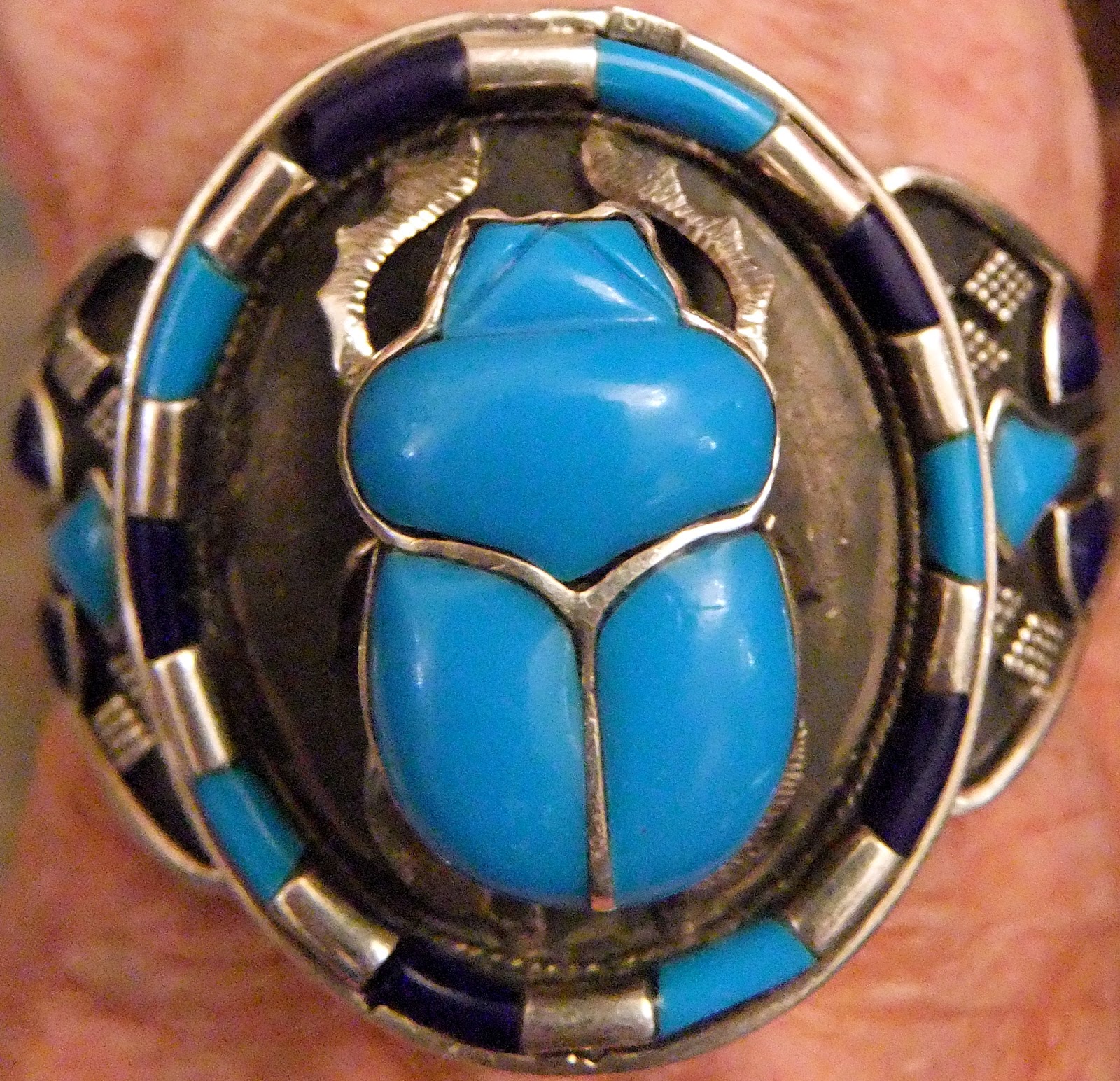 The Nubian scarab bracelet that I bought for Mom on her 85th birthday in Luxor, Egypt; the scarab symbolises resurrection and eternal life (Dr Karl Shuker)
Back in 1989, I dedicated my first book, Mystery Cats of the World, to my family, past and present, for love and unwavering support. Two years later, I dedicated my second book, Extraordinary Animals Worldwide, specifically to you, Mom, with the following words: "To my mother, Mary D. Shuker, whose lifelong interest in wildlife has guided and encouraged my own since my earliest days", followed by a short quote from Life Thoughts by Henry Ward Beecher: "The mother's heart is the child's schoolroom". No words were ever a better description of how you inspired me than those.
 Mom, me, Nan, and Dad at Bourton-on-the-Water, Gloucestershire, late 1960s (Dr Karl Shuker)
I am also dedicating to you, Mom, my latest book, Mirabilis, the American one that I've told you about. Here is my dedication, straight from the manuscript, and which I feel sums up everything that I could ever hope to express to you:
In memory of my dear mother, Mary Doreen Shuker (January 29 1921-April 1 2013)
Whatever good there may be in me came from you.Thank you for blessing my life by being in it as my mother.You were, are, and always will be quite simply the best person I shall ever know,and I love you with all of my heart.God bless you, little Mom,please wait for me,watch over me in this lonely existence of mine now,and come for me when my time here is over.Au revoir, Mom, until we meet again.
And I do mean au revoir, not goodbye, so I am not saying goodbye here, Mom, only, until we meet again, as we will surely do with God's grace.
I love you, little Mom, always.
 The lid of the memory box that I have bought for Mom – its quotation describes her so well that it could have been written specifically for her (Dr Karl Shuker)
God bless you, Mom – thank you for everything that has ever been good in my life. How I wish that you were still here with me, fit and well, ready to set off with me on our next adventure together.
I love you, little Mom, always.
 Mom and I at Niagara Falls, Canada, 2000 (Dr Karl Shuker)
And now, as a pictorial tribute to my mother, here are some more of my favourite photos of her and of us together (click on them to enlarge them), sharing that great adventure called life, with love.
 Mom and the Burj al-Arab Hotel, Dubai, UAE, 2005 (Dr Karl Shuker)
 Mom in our back garden alongside our weeping cherry blossom tree and the water dragon, 2009 (Dr Karl Shuker)
 Mom and I at Pompeii, Italy, 2001 (Dr Karl Shuker)
 Mom and I at our front door at our previous home, early 1980s (Dr Karl Shuker)
 Mom at Raffles Hotel, where we stayed when visiting Singapore in 2006, thereby transforming into reality for her another of her lifelong dreams (Dr Karl Shuker)
 Mom in the garden of my Nan (Mom's mother), early 1980s (Dr Karl Shuker)
 Mom and I at the Sydney Opera House, Australia, 2006 (Dr Karl Shuker)
 Mom at the Trevi Fountain, Rome, Italy, 2001 – she never did tell me what she wished for when she tossed her coin into the fountain, but I hope that whatever it was, the fountain granted it for her (Dr Karl Shuker)
 Mom at the Waldorf-Astoria Hotel where we stayed when visiting New York in 2004 – one wish of hers that I was able to fulfil for her (Dr Karl Shuker)
 Mom and I with the Little Mermaid statue in Copenhagen, Denmark, 1979 (Dr Karl Shuker)
 Mom and a moa statue on a rainy day in Auckland, New Zealand, 2006 (Dr Karl Shuker)
 Mom at Victoria Peak, Hong Kong, 2005 (Dr Karl Shuker)
 Mom and I with Jonathan Downes, Adam Davies, Keith, and Dave Archer at Weird Weekend 2008 (Dr Karl Shuker)
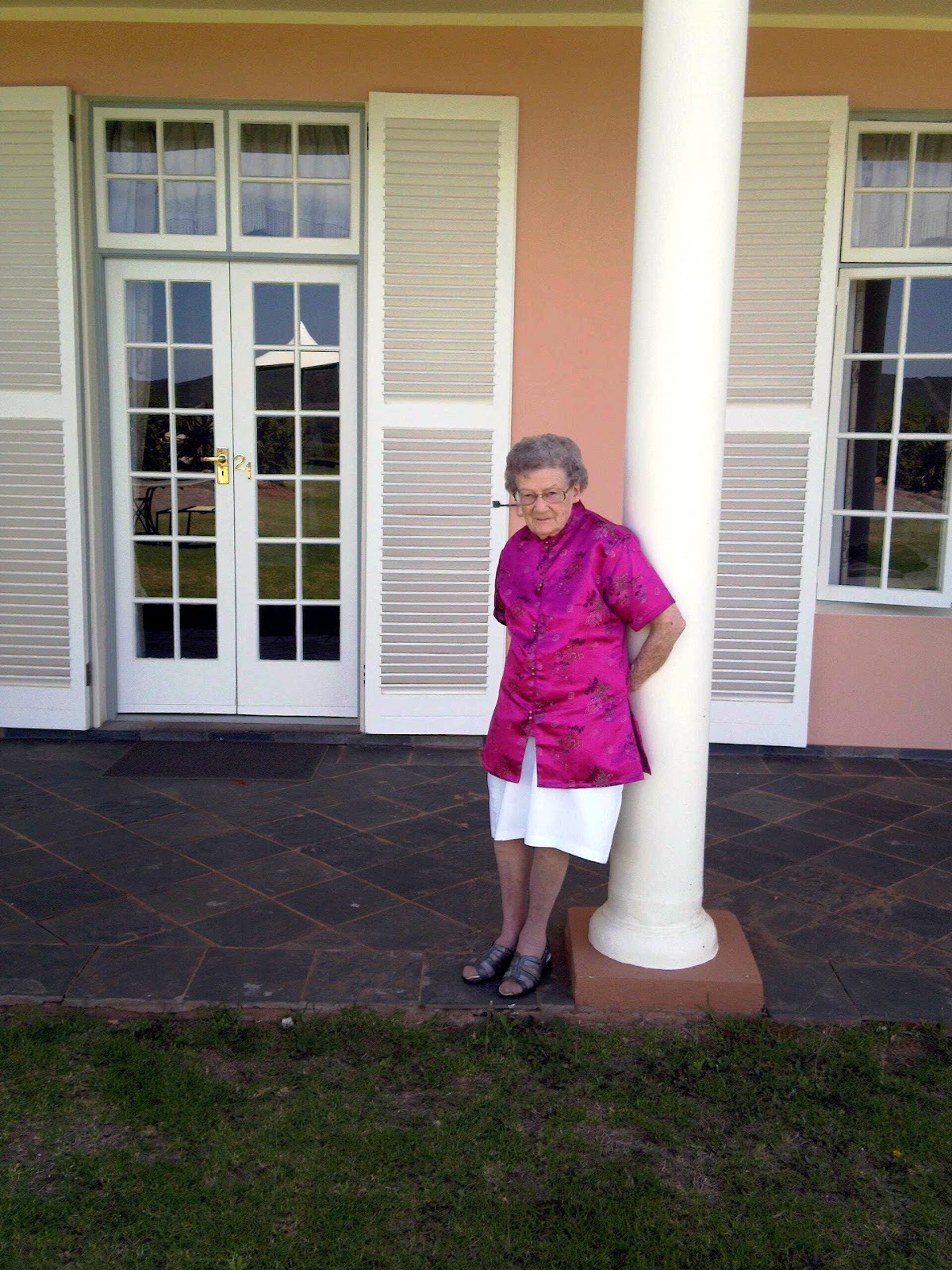 Mom at Long Lee Manor, Shamwari Private Game Reserve, South Africa, 2008 (Dr Karl Shuker)
 Mom on the Copacabana pavewalk, Rio de Janeiro, Brazil, 2007 (Dr Karl Shuker)
 Mom and I at the Cat Street Gallery, Hong Kong, 2005 (Dr Karl Shuker)
 Mom and a dire wolf at Wookey Hole's Dinosaur Valley, Somerset, 2010 (Dr Karl Shuker)
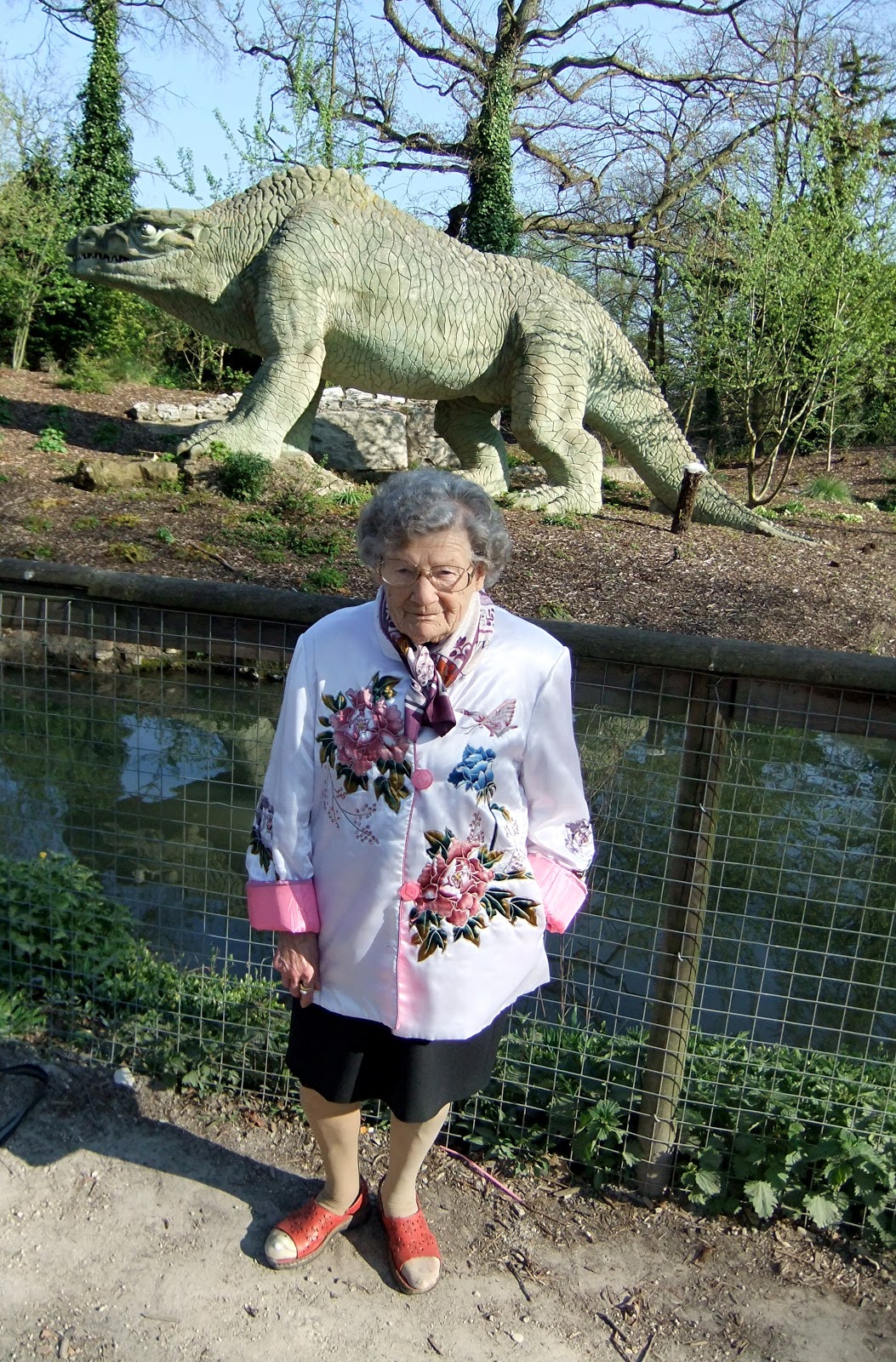 Mom and a Megalosaurus statue at Crystal Palace, London, 2010 (Dr Karl Shuker)
 In step with each other, as always – Mom and I at Pompeii, Italy, 2001 (Dr Karl Shuker)
 Mom in her Miami hotel room, Florida, USA, 1981 (Dr Karl Shuker)
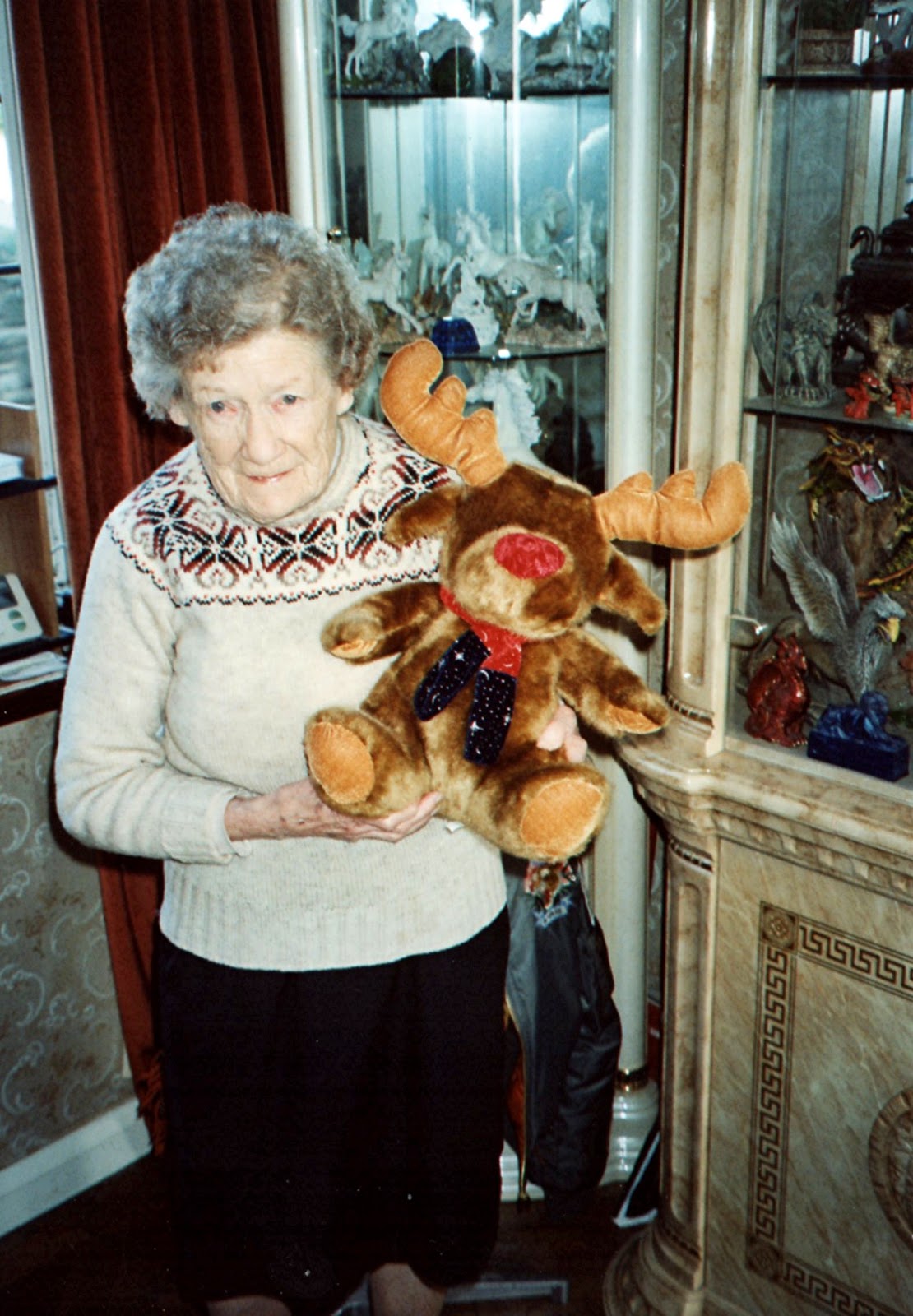 Mom and Rudolf, whom we duly rescued after finding him looking very forlorn hidden away on a shelf at a warehouse sale about 10 years ago (Dr Karl Shuker)
 Mom and I in front of a fallen moai on Easter Island, 2008 (Dr Karl Shuker)
 Mom at the Kennedy Space Center, Florida, USA, 1981 (Dr Karl Shuker)
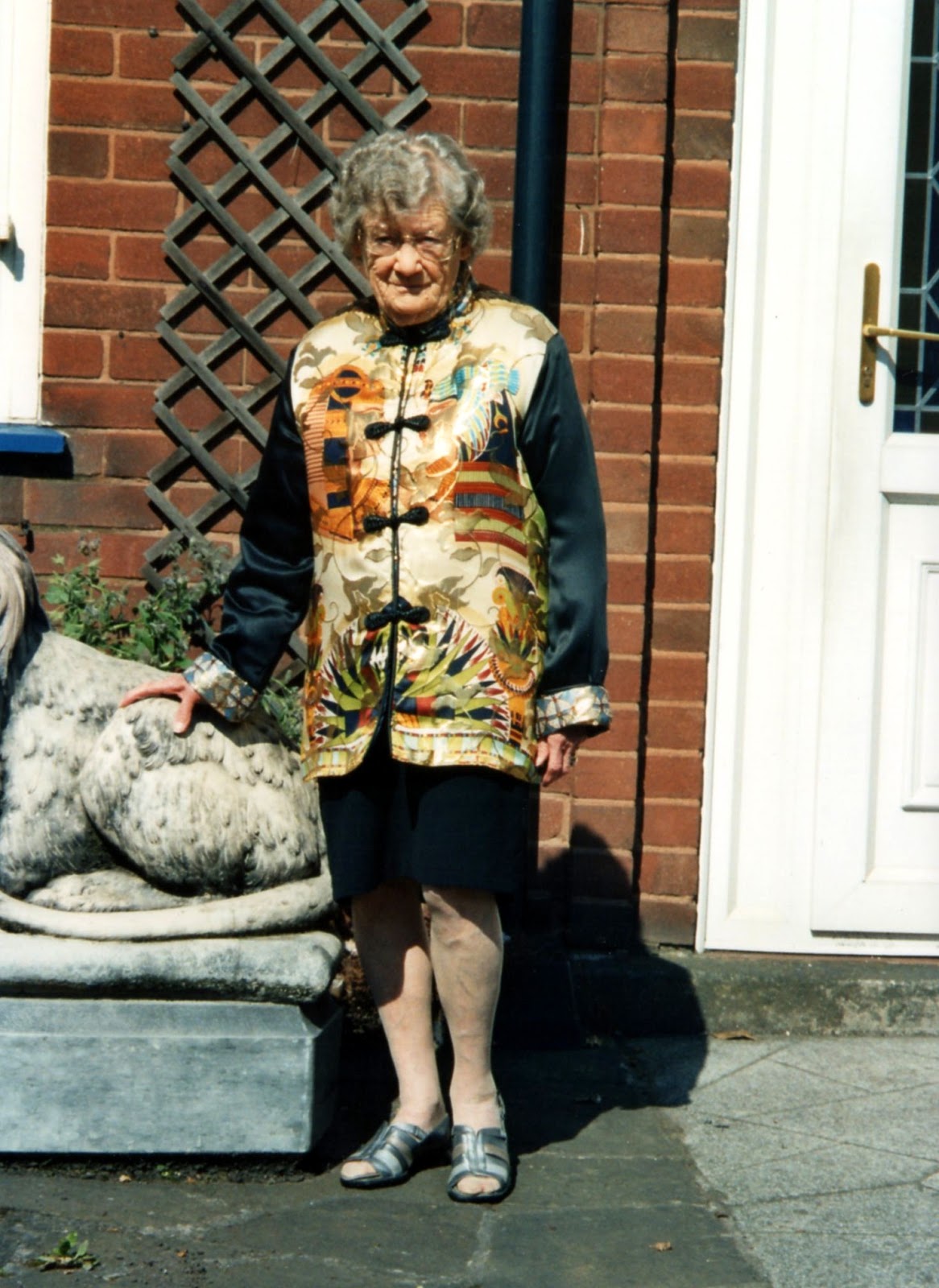 Mom wearing her much-loved Egyptian-themed jacket from Las Vegas (Dr Karl Shuker)
 Mom and I at Raffles Hotel, Singapore, 2005 (Dr Karl Shuker)
 Mom wearing her exquisite protea-decorated jacket from Cape Town, South Africa (Dr Karl Shuker)
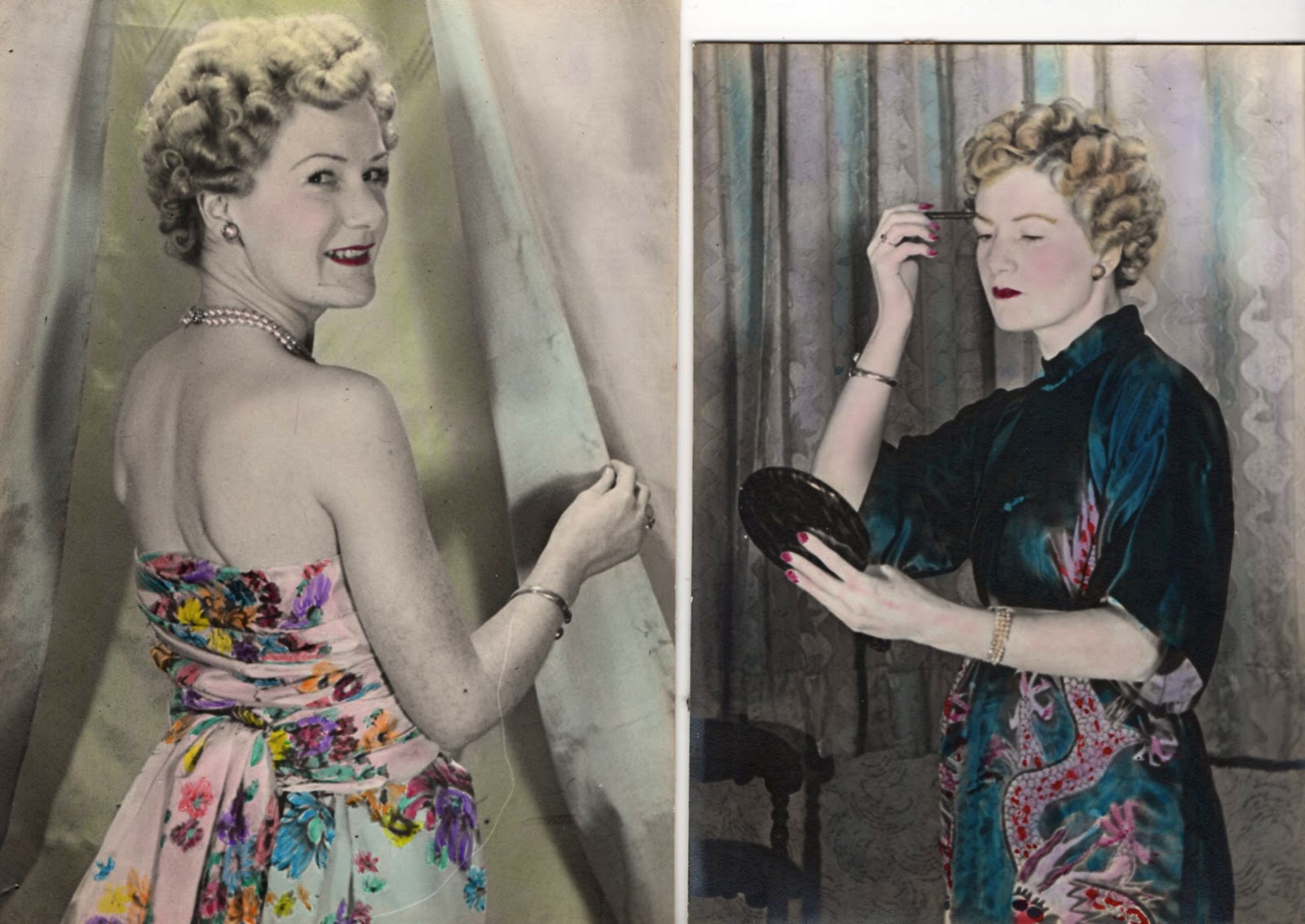 My kind, beautiful, inspirational, and totally amazing mother, Mary Doreen Shuker, aged mid-20s – thank you, Little Mom, for 53 wonderful years of shared happiness, adventures, loyalty, and love (© Mary D. Shuker/Dr Karl Shuker)
God bless you, Mom. With all my love, always.


March 29, 2013
CALIFORNIA'S SNAKE-HEADED DOG - A MODERN-DAY QUESTING BEAST?
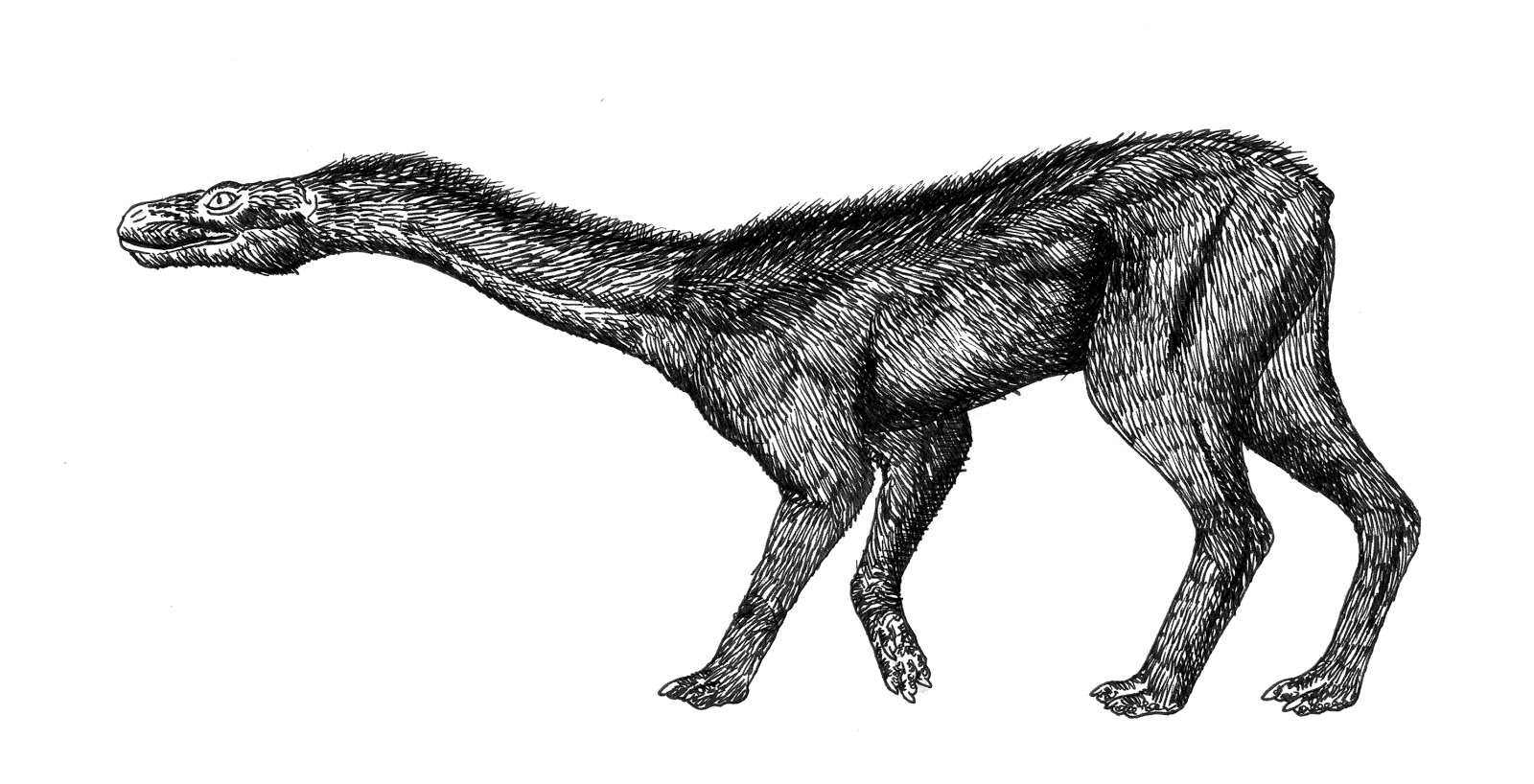 Reconstruction of the mystery beast sighted by Sheila Charles in May 1996 (Tim Morris)
Time to re-open the file on another overtly bemusing mystery beast, methinks.
Some of the most intriguing cryptids are those that feature in just a single report and are never heard of again...or are they?
On 24 May 1996, a bizarre dog-like beast 4-5 ft in total length, but with a sleek serpentine head, red reptilian eyes, a slender 24-30-in neck, shaggy black fur, long hind limbs, shorter forelimbs, and no tail at all, ran out in front of the car driven by Sheila Charles as she was taking her son Shane to school in Magalia, California. She swerved to avoid hitting the creature, and veered out of control into a canyon. Fortunately, no-one was badly injured, and the mysterious beast's reality was later confirmed by the driver of the car following her, who had also seen it.
The only published account of this dual-eyewitness encounter dating from that time period that I have seen appeared in UFO News World Report, 1996. But could there be other sightings of it on record, and does anyone have any thoughts as to what this extraordinary beast may have been? If the answer is yes to either of these questions, I'd love to hear from you, so please post your data here!
Incidentally, I am greatly indebted to Australian colleague and FB friend Ian Thomas for reminding me that there is one creature on record that shares a degree of similarity with this extraordinary creature. None other than Glatisant, the snake-headed, hound-baying Questing Beast of Arthurian legend!
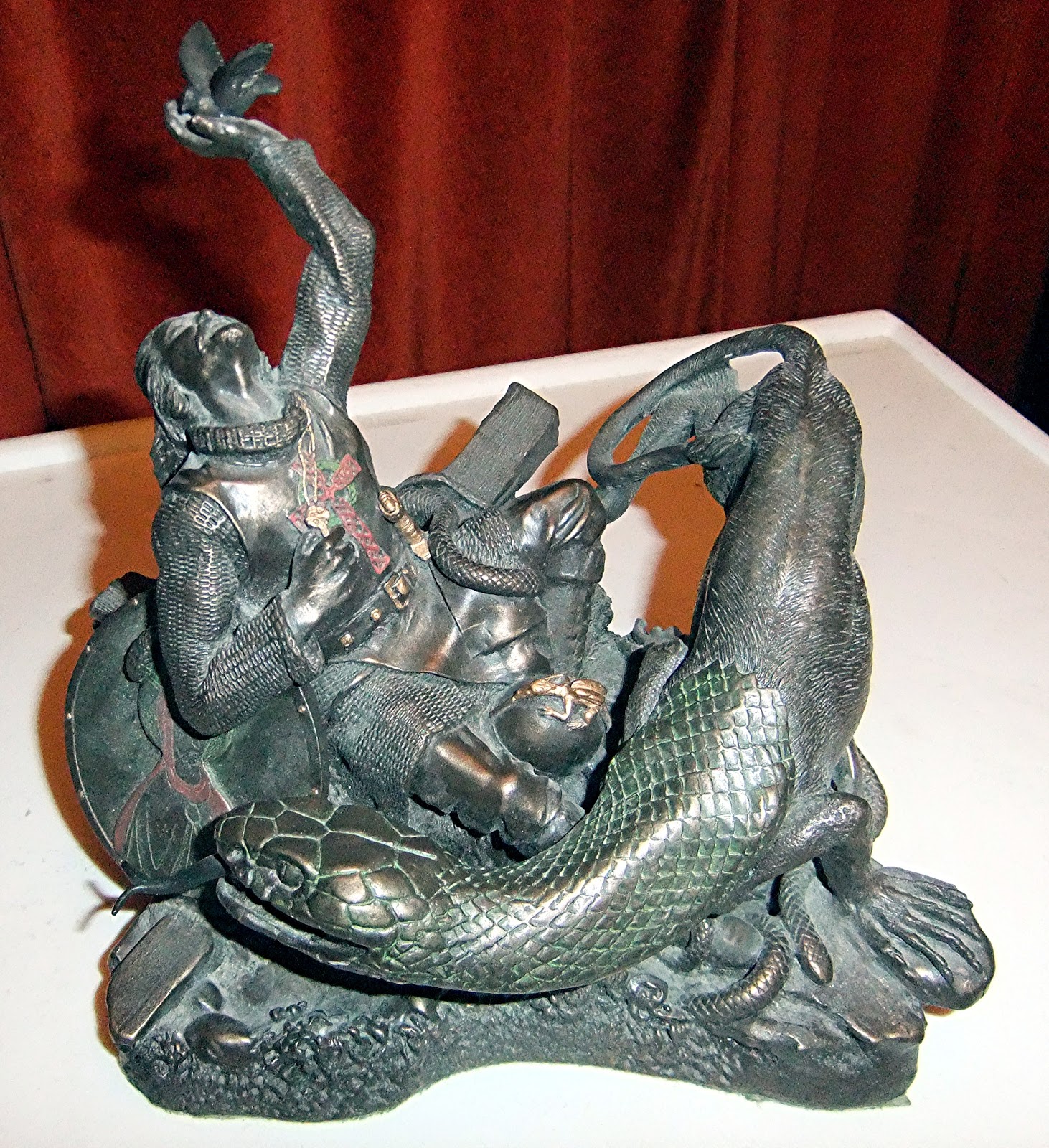 A Heredities bronzed sculpture of Glatisant the Questing Beast in my personal collection (Dr Karl Shuker)
This ShukerNature blog is excerpted from my book Karl Shuker's Alien Zoo: From the Pages of Fortean Times (CFZ Press: Bideford, 2010)

ONLY IN CALIFORNIA - A SNAKE-HEADED DOG ??
Reconstruction of the mystery beast sighted by Sheila Charles in May 1996 (Tim Morris)Time to re-open the file on another overtly bemusing mystery beast, methinks.
Some of the most intriguing cryptids are those that feature in just a single report and are never heard of again...or are they?
On 24 May 1996, a bizarre dog-like beast 4-5 ft in total length, but with a sleek serpentine head, red reptilian eyes, a slender 24-30-in neck, shaggy black fur, long hind limbs, shorter forelimbs, and no tail at all, ran out in front of the car driven by Sheila Charles as she was taking her son Shane to school in Magalia, California. She swerved to avoid hitting the creature, and veered out of control into a canyon. Fortunately, no-one was badly injured, and the mysterious beast's reality was later confirmed by the driver of the car following her, who had also seen it.
The only published account of this dual-eyewitness encounter dating from that time period that I have seen appeared in UFO News World Report, 1996. But could there be other sightings of it on record, and does anyone have any thoughts as to what this extraordinary beast may have been? If the answer is yes to either of these questions, I'd love to hear from you, so please post your data here!
This ShukerNature blog is excerpted from my book Karl Shuker's Alien Zoo: From the Pages of Fortean Times (CFZ Press: Bideford, 2010)
March 19, 2013
TARZAN'S SON AND THE NANDI BEAR
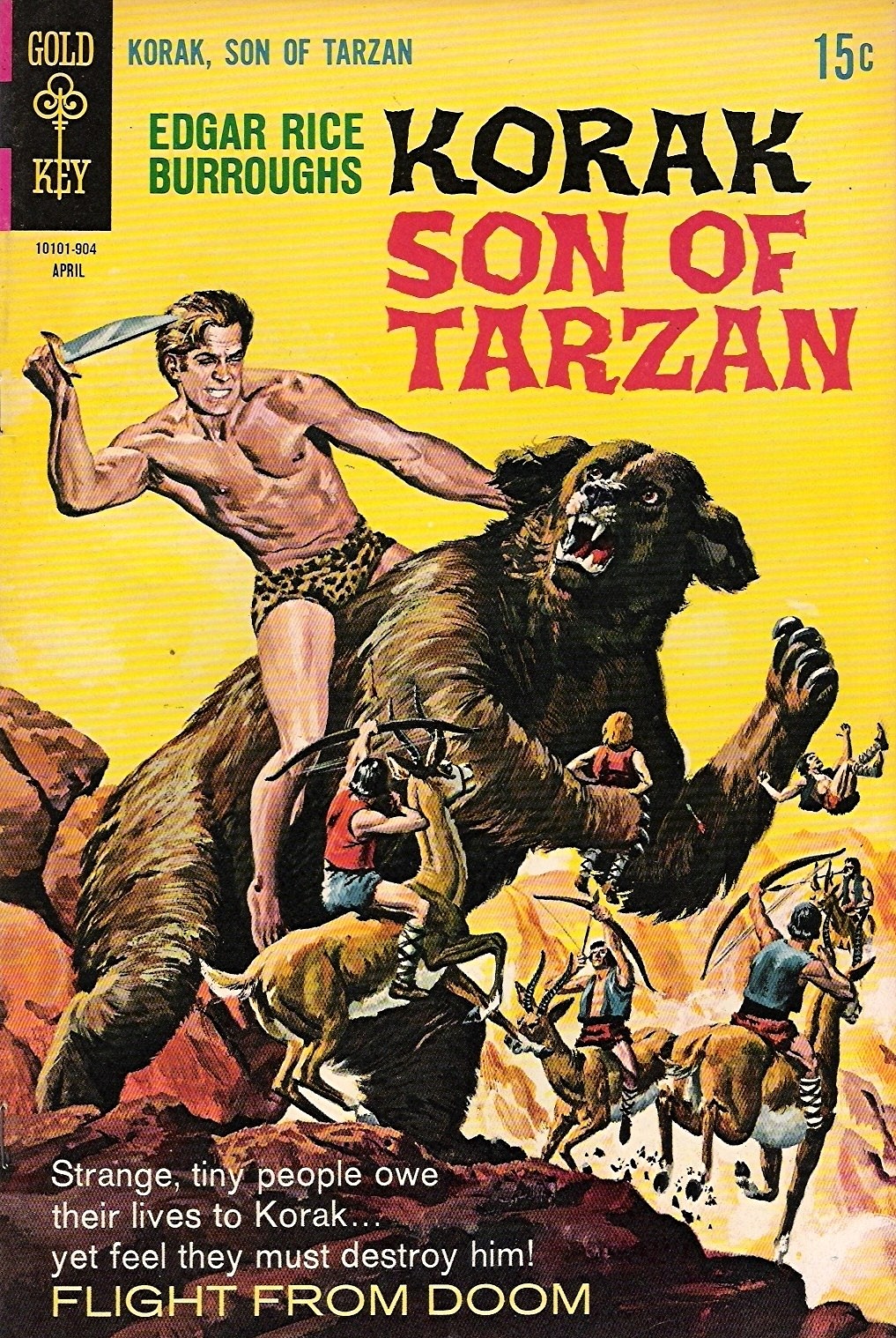 The issue of Gold Key's 'Korak Son of Tarzan' comic featuring his confrontation with the Nandi bear (Gold Key)
In a previous ShukerNature post (click here ), I stated that as far as I was aware, the only comic ever to feature Africa's most ferocious mystery beast, the dreaded chemosit or Nandi bear, in a starring role was the March 1963 issue of Gold Key's 'Tarzan' - in which Edgar Rice Burroughs's most famous creation confronts and conquers the rapacious cryptid originating from Kenya's dense Nandi forest. This comic had been brought to my attention by Swedish Facebook friend and folklorist Håkan Lindh.
Now, Håkan has revealed an equally exciting sequel-style discovery - a second comic starring the Nandi bear. Moreover, keeping the history of cryptozoological confrontation in the family, as it were, the comic in question is none other than the April 1969 issue (#28) of Gold Key's 'Korak Son of Tarzan'!
As illustrated on its front cover (the picture that opens this present ShukerNature blog), the story is entitled 'Flight From Doom', and this time the Nandi bear is terrorising a race of mini-people, but is thwarted by Tarzan's son, Korak - only for the mini-people to turn on him! There's gratitude for you! Thanks for informing me of this second Nandi bear-featuring comic, Håkan!
 The issue of Gold Key's 'Tarzan' comic featuring his confrontation with the Nandi bear (Gold Key)
March 18, 2013
THE SPINY-BACKED CHIMPANZEE – A CONGOLESE CHUPACABRA CHIMP!
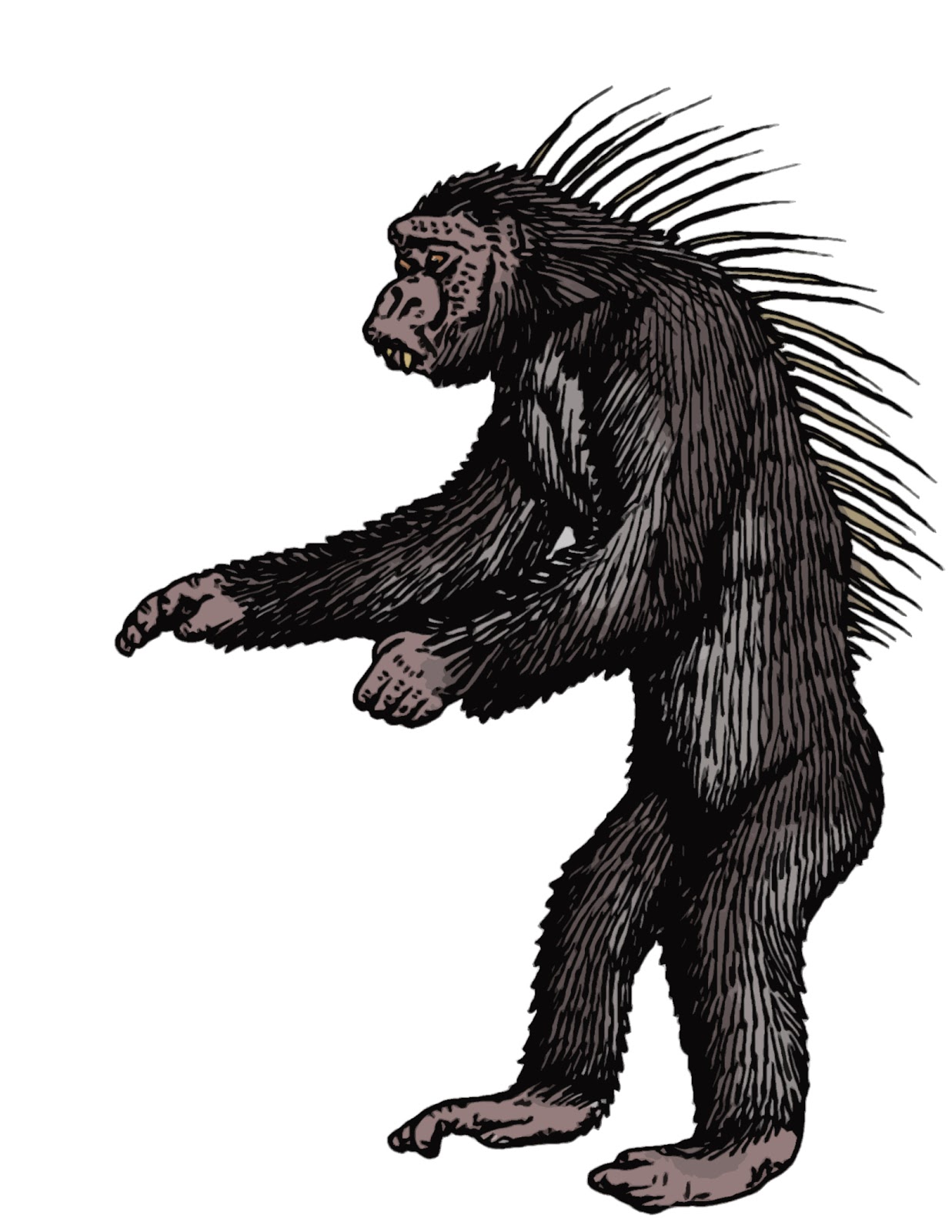 Reconstruction of the spiny-backed chimpanzee (Tim Morris)
In an ongoing occasional series, previous ShukerNature posts have documented a number of once- and still-controversial forms of chimpanzee – the pygmy chimpanzee or bonobo (click here ), the koolookamba ( here ), Ufiti ( here ), ape-man Oliver ( here ), and the Bili ape ( here ). None, however, is as bizarre as this series' latest example – the little-known yet truly extraordinary spiny-backed chimpanzee reported from the Democratic Republic of Congo.
The only information concerning this anomalous anthropoid currently known to me is a short account that appeared in Philippe Coudray's self-illustrated book Guide des Animaux Cachés (2009).
According to Coudray, a member of a unit from the United States Navy who wishes to remain anonymous has claimed that during a mission to the Democratic Congo sometime between 1997 and 2002, the unit's team encountered 13 bipedal chimpanzees that were attempting to kill another animal. Standing 4.5-5 ft high, they were uniformly grey in colour, but by far their most distinctive feature was the series of spines running down each chimp's back, which stood up like porcupine quills whenever the chimps became agitated.
Coudray also stated that the team actually shot a three-minute video film of these extraordinary apes, but that it remains a military secret. The precise location of this sighting is unknown, but as the team was from the US Navy and the Democratic Congo is virtually landlocked, it may have been somewhere close to Lake Tanganyika.
The possession of genuine spines by these apes seems highly improbable, but perhaps they sported distinctive manes or even erectile tufts of hair that superficially resembled spines. Moreover, manes have also been reported from certain other bipedal crypto-primates, including the batutut of Borneo (closely resembling the Sumatran orang pendek), the brown-furred Congolese kakundakari, and the Central American dwendi. Indeed, were it not for the chimps' grey fur, they might even have been one and the same as the kakundakari, although kakundakari eyewitnesses generally claim that this latter entity is humanoid rather than anthropoid in form, and smaller than the spiny-backed chimps.
 The potto (ltshears/Wikipedia)
Among known primates, the only species that can in any way be described as spiny is a small loris-related African prosimian known as the potto Perodicticus potto. Its neck bears a series of small tubercles covering its elongated cervical vertebrae, which have sharp points and almost pierce its skin, and are utilised as defensive weapons. Needless to say, however, these do not even begin to compare with the quills described for the spiny-backed chimps discussed here.
The bipedal nature of these chimps is very noteworthy too, as chimpanzees do not normally exhibit such behaviour as a habitual activity.
With so little information and no hard evidence to examine, and not even any eyewitness names to pursue, however, there seems little else that can be said in relation to the Congolese spiny-backed chimpanzee. Could it simply be a hoax, or a figment of poorly-viewed or imperfectly-reported observations? Or might there really be a singularly astonishing strain of spiny chimp out there, still awaiting formal scientific disclosure - a veritable chupacabra chimpanzee, in fact?!!
 Philippe Coudray's own illustration of the spiny-backed chimpanzee
THE SPINY-BACKED CHIMPANZEE – A VERY ANOMALOUS ANTHROPOID?
Reconstruction of the spiny-backed chimpanzee (Tim Morris)In an ongoing occasional series, previous ShukerNature posts have documented a number of once- and still-controversial forms of chimpanzee – the pygmy chimpanzee or bonobo (click here ), the koolookamba ( here ), Ufiti ( here ), ape-man Oliver ( here ), and the Bili ape ( here ). None, however, is as bizarre as this series' latest example – the little-known yet truly extraordinary spiny-backed chimpanzee reported from the Democratic Republic of Congo.
The only information concerning this anomalous anthropoid currently known to me is a short account that appeared in Philippe Coudray's self-illustrated book Guide des Animaux Cachés (2009).
According to Coudray, a member of a unit from the United States Navy who wishes to remain anonymous has claimed that during a mission to the Democratic Congo sometime between 1997 and 2002, the unit's team encountered 13 bipedal chimpanzees that were attempting to kill another animal. Standing 4.5-5 ft high, they were uniformly grey in colour, but by far their most distinctive feature was the series of spines running down each chimp's back, which stood up like porcupine quills whenever the chimps became agitated.
Coudray also stated that the team actually shot a three-minute video film of these extraordinary apes, but that it remains a military secret. The precise location of this sighting is unknown, but as the team was from the US Navy and the Democratic Congo is virtually landlocked, it may have been somewhere close to Lake Tanganyika.
The possession of genuine spines by these apes seems highly improbable, but perhaps they sported distinctive manes or even erectile tufts of hair that superficially resembled spines. Moreover, manes have also been reported from certain other bipedal crypto-primates, including the batutut of Borneo (closely resembling the Sumatran orang pendek), the brown-furred Congolese kakundakari, and the Central American dwendi. Indeed, were it not for the chimps' grey fur, they might even have been one and the same as the kakundakari, although kakundakari eyewitnesses generally claim that this latter entity is humanoid rather than anthropoid in form, and smaller than the spiny-backed chimps.
The potto (ltshears/Wikipedia)Among known primates, the only species that can in any way be described as spiny is a small loris-related African prosimian known as the potto Perodicticus potto. Its neck bears a series of small tubercles covering its elongated cervical vertebrae, which have sharp points and almost pierce its skin, and are utilised as defensive weapons. Needless to say, however, these do not even begin to compare with the quills described for the spiny-backed chimps discussed here.
The bipedal nature of these chimps is very noteworthy too, as chimpanzees do not normally exhibit such behaviour as a habitual activity.
With so little information and no hard evidence to examine, and not even any eyewitness names to pursue, however, there seems little else that can be said in relation to the Congolese spiny-backed chimpanzee. Could it simply be a hoax, or a figment of poorly-viewed or imperfectly-reported observations? Or might there really be a singularly astonishing strain of spiny chimp out there, still awaiting formal scientific disclosure - a veritable chupacabra chimpanzee, in fact?!!
Philippe Coudray's own illustration of the spiny-backed chimpanzeeMarch 17, 2013
THE LOST PHOENIX OF LITTLE TOBAGO
 A pair of greater birds of paradise, painted by John Gould
One of the most showy and flamboyant species of bird of paradise is the greater bird of paradise Paradisaea apoda. It also features in a very sad yet little-known episode in the history of attempted avian naturalisation programmes.
Native to southern New Guinea and the offshore Aru Islands, its numbers were depredated so severely for their cascading, flame-like sprays of gold, white, and maroon-hued flank feathers during the fashion craze for these latter-day phoenixes’ plumes, however, that this spectacular species seemed surely destined for extinction. Someone who resolved to avert this disaster, however, was newspaper magnate Sir William Ingram. Deciding that its best hope lay in repatriation far beyond the threat of the plume industry, Sir William (not a person given to small measures) bought an entire (albeit tiny) Caribbean islet - uninhabited Little Tobago in the West Indies, whose tropical climate would provide a home-from-home environment - and established a warden-monitored colony of P. apoda there, consisting of just under 50 immature birds captured alive during an expedition to the Aru Islands in 1909.
 A male greater bird of paradise, by Travies, from Dictionnaire D'Histoire Naturelle, 1849
Many introductions of exotic species from one part of the world to another have failed dismally, but happily the birds of paradise seemed to thrive in their new if unexpected home; and even though (thankfully) the introduction’s original purpose had been rendered obsolete - the plume industry collapsed before this species could become extinct in its native lands - the West Indian contingent was permitted to remain on Little Tobago after Sir William’s death.
Over the years, the population remained relatively constant, rarely exceeding or falling much below the 20-30 individuals mark. But then came Hurricane Flora, a meteorological monster that mercilessly lashed Little Tobago one devastating day in 1963, and remorselessly swept most of the hapless birds of paradise out into the rampaging waves, to their inevitable death. Only a handful remained alive, and most of those were males. The plucky little population was doomed — no specimen has been recorded from the islet for many years. The unexpected phoenix of Little Tobago had been extinguished not by flame but by wind and water, and just as surely as if it had been exterminated by the plume-hunters back home in New Guinea.
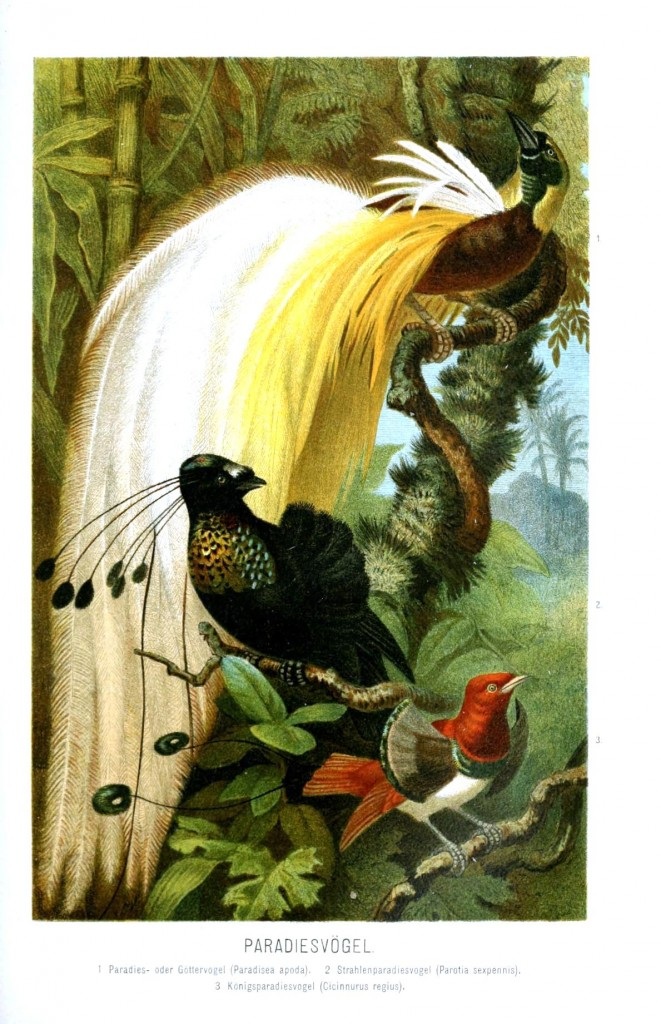 19th-Century colour engraving portraying a selection of bird of paradise species
This ShukerNature post is an excerpt from my book Extraordinary Animals Revisited (CFZ Press: Bideford, 2007).
February 23, 2013
THE TAILED SLOW LORISES OF ASSAM'S LUSHAI HILLS - AN ENDURING PRIMATOLOGICAL MYSTERY
 Only known photograph of tailed lorises from Assam's Lushai Hills (PZSL/public domain)
Whereas some cryptids attract and retain widespread interest and attention, others are forgotten almost as soon as they are documented, even though their mystery remains unsolved. Sadly, the tailed slow lorises of the Lushai Hills fall into the latter category of cryptozoology.
Two of these white-coated, woolly-furred prosimians were captured and photographed by a Mr T.D. La Touche of the Geological Survey of India during December 1889 (though not documented until 1908), in the jungle near Fort Lungleh in Assam's Lushai Hills, during the Lushai Expedition of 1889-90. However, they escaped shortly afterwards, and were not recaptured. Overall, they seemed akin to the familiar slow lorises of the genus Nycticebus, as they possessed short but stout limbs, a large rounded head, flat face and small muzzle, short roundish ears, large eyes each encircled by a dark triangular patch, and a narrow black stripe running from the skull's occipital region along the entire length of the back.
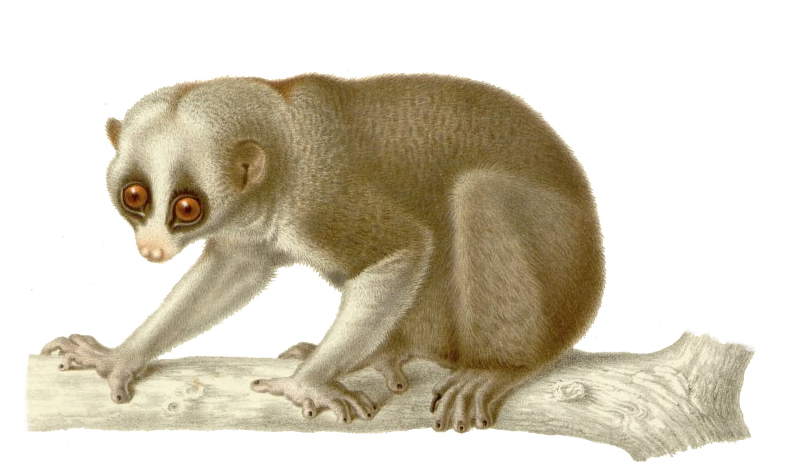 The Indian slow loris Nycticebus bengalensis, which only possesses a vestigial tail, depicted in a painting from 1867
However, as clearly revealed in the photograph opening this present ShukerNature blog post, and which originally appeared in a short article by Dr N. Annandale, Superintendent of the Indian Museum, documenting them in the Proceedings of the Zoological Society of London for 17 November 1908, the remarkable loris form represented by these two briefly captive specimens differed dramatically from all other lorises in one very conspicuous way - it had a thick bushy tail! In stark contrast, the tail of all known species of slow loris is vestigial.
Moreover, confirming that the tail was not simply an optical illusion within the photograph, Mr La Touche assured Dr Annandale that it was indeed present in both of the captive animals. And in a postscript of 5 January 1909 to his PZSL article, Annandale announced that he had learnt from a Colonel E.W. Loch that the tailed slow loris of the Lushai Hills was well known to him too.
 Close-up of one of the captive tailed slow lorises of Lushai Hills, clearly revealing its long thick tail (PZSL/public domain)
Consequently, unless it is a teratological, freak variety of the Indian slow loris N. bengalensis, the tailed slow loris of Lushai Hills constitutes a radically new species of slow loris still awaiting official recognition - for which, in my book, The Lost Ark: New and Rediscovered Animals of the 20th Century (1993), I proposed Nycticebus caudatus ('tailed slow loris') as a suitable name.
Perhaps the greatest riddle of all, however, is why such a visually distinct form of loris has apparently never been reported since the 1908 PZSL account's 1909 postscript, not even by local Indian naturalists who would surely have been fascinated by such a creature. Judging from Col. Loch's statement that it was well known to him, the two captured specimens were not the only ones that existed back in the early 20th Century, so what has happened since then - has this unique form died out? Clearly, the mystery of the tailed slow lorises of the Lushai Hills endures, even if, tragically, the lorises themselves no longer do.
This ShukerNature blog post is an expanded excerpt from my book The Encyclopaedia of New and Rediscovered Animals (Coachwhip: Landisville, 2012).

February 20, 2013
TRAILING THE MITLA – A DOG-LIKE CAT, OR A CAT-LIKE DOG?
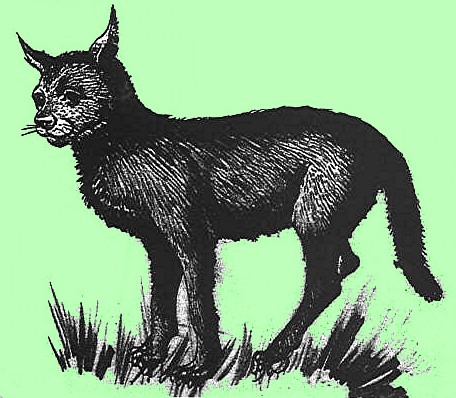 Flash card illustration of the mitla prepared by Jeremy Mallinson for showing locals during his search for this mysterious mammal in Bolivia (© Jeremy Mallinson)
Certain of South America's alleged mystery cats may in reality be of canine rather than feline identity. One of these ambiguous animals is the mitla, which was first brought to western attention by the famous lost explorer Colonel Percy Fawcett. In Exploration Fawcett (1953), while referring to the Madidi region of Bolivia, he noted:
"In the forests were various beasts still unfamiliar to zoologists, such as the mitla, which I have seen twice, a black doglike cat about the size of a foxhound."
American zoologist and cryptozoologist Ivan T. Sanderson claimed that during an animal collecting trip to South America, he had unsuccessfully attempted on several occasions to shoot one of these creatures, but had obtained a legless native skin of one, which he likened to that of a huge black serval with pricked ears and tiny lynx-like tail. Regrettably, however, he did not mention what happened to this cryptozoologically priceless skin afterwards.
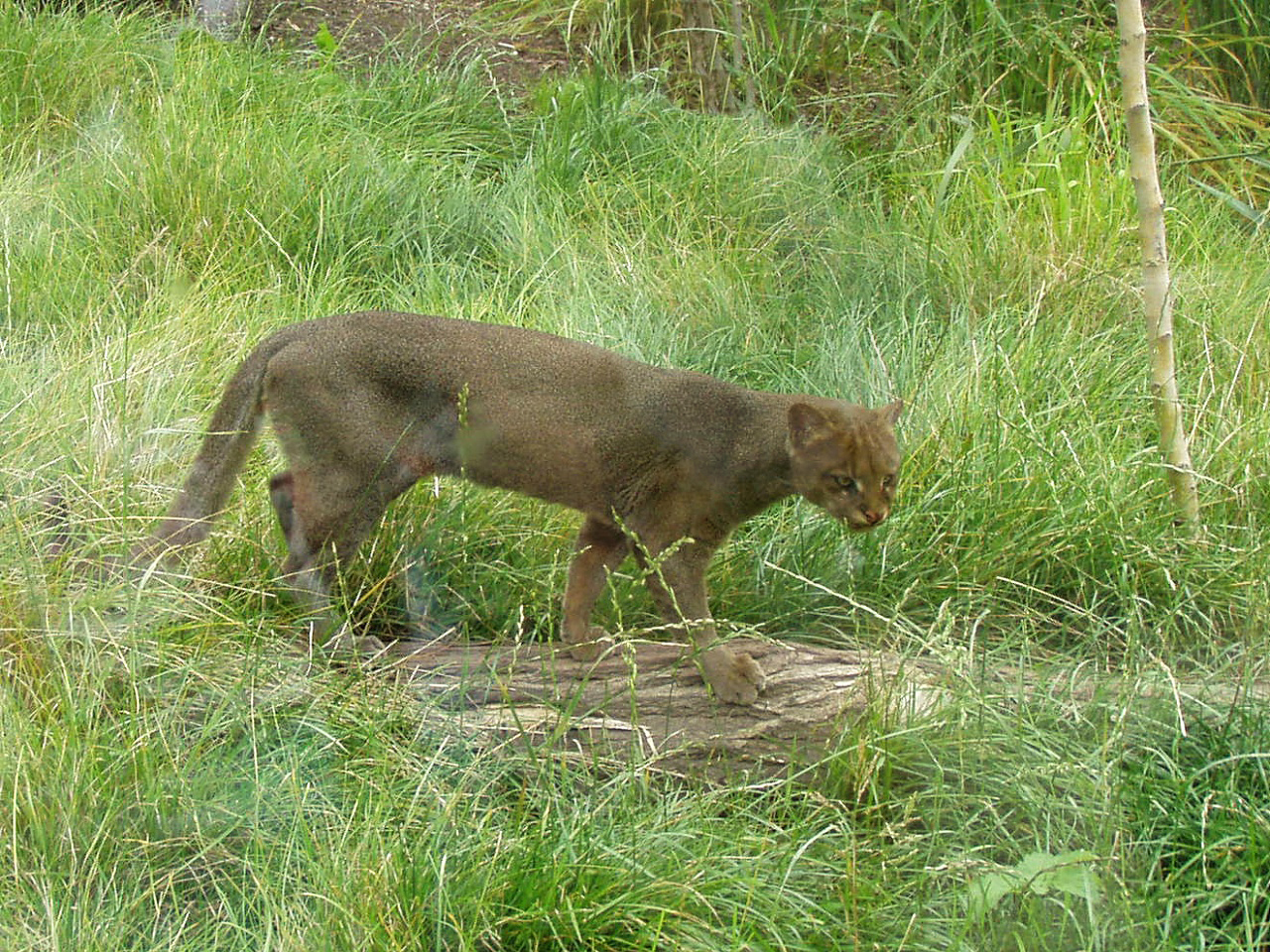 The dark/black phase of the jaguarundi – one suggested identity for the mitla (Bodina/Wikipedia)
In September 1965, Jersey Zoo director Jeremy Mallinson set off on a one-man, two-month-long expedition to Bolivia in search of the mystifying mitla, but did not uncover the secret of its identity:
"By the time we paddled our way across the confluence of the Abuna with the Madeira...I recognised that I had not thrown any further light on the question of whether Colonel Fawcett’s legendary animal had ever existed or not. Perhaps the mitla had been nothing more than a melanistic form of one of the several species of South American tiger cats or, as has been suggested, the black form of the jaguarundi which can grow to about the size of a foxhound and could, to a non-zoologist, appear to be half-dog, half-cat. Both Señor Carlos and Professor Gaston Bejarano had confirmed that the black form of the jaguarundi occasionally occurred in the north-eastern regions of Bolivia. However, I had learnt one important fact from my travels in this great integrated region of rivers and forests: that while these remoter areas of the Amazon basin still remain in existence, the forests could well harbour such animals as the mitla that are still strange to science, but it would only be by chance if their presence ever came to light."
Jeremy Mallinson – Travels in Search of Endangered Species (1989)
Some reports may indeed involve dark individuals of the jaguarundi Puma yagouaroundi, or even a strange sometimes-black relative of weasels called the tayra Eira barbara.
 The tayra, a large South American mustelid (copyright owner's name inset in photo)
However, retired Chicago University biologist and spare-time cryptozoologist Dr Roy P. Mackal favours the South American bush dog Speothos venaticus as a likely identity – thus proposing that the mitla may not be a dog-like cat, but rather a cat-like dog. This species is a savage, pack-hunting canid, native to Guyana, Brazil, Paraguay, Bolivia, Peru, Colombia, and Panama. Having said that, however, the bush dog is reddish-brown in colour, not black, as described for the mitla (though juvenile bush dogs are indeed uniformly black). Moreover, it is relatively short-legged, not recalling the foxhound comparison given by Fawcett for the mitla.
 South American bush dogs
In any case, if the mitla is truly a feline canid rather than a canine felid, in my view there is an even better candidate for it, as I first proposed in my book Mystery Cats of the World (1989). Namely, the small-eared dog Atelocynus microtis, also called the zorro. This little-known, dark-furred species has occasionally been exhibited in captivity, and is characterised by its remarkably gracile, feline gait - far-removed indeed from the more boisterous, less agile movements of most dogs.
 A small-eared dog or zorro recently photographed in the wild by a concealed camera in Ecuador (© Tiputini Biodiversity Station)
Until recently, the zorro had not been reported from Bolivia itself, but was known to occur in various of Bolivia's neighbouring countries. And as it has never been well-studied in the wild, it would not be too surprising if the zorro were formally discovered in Bolivia too at some stage in the future - a prediction supported by this species' compelling correspondence to descriptions of the mitla.
And sure enough, a reliable observation of the zorro in northern Bolivia at 14°25'47.9994"S, 63°13' 47.9994"W by biologist R. Wallace has lately been recorded. This constitutes its species' most southerly record, in fact, and is in close proximity, moreover, to the Madidi where Fawcett reported the mitla – thereby enhancing the prospect that zorro and mitla are one and the same creature.
 Early photograph of a captive zorro, exhibited at London Zoo in 1913
This ShukerNature blog post is an expanded, adapted excerpt from my latest book, Cats of Magic, Mythology, and Mystery (CFZ Press: Bideford, 2012).

February 19, 2013
FAWCETT'S DOUBLE-NOSED ANDEAN TIGER HOUND - A CANINE ANOMALY NOT TO BE SNIFFED AT!
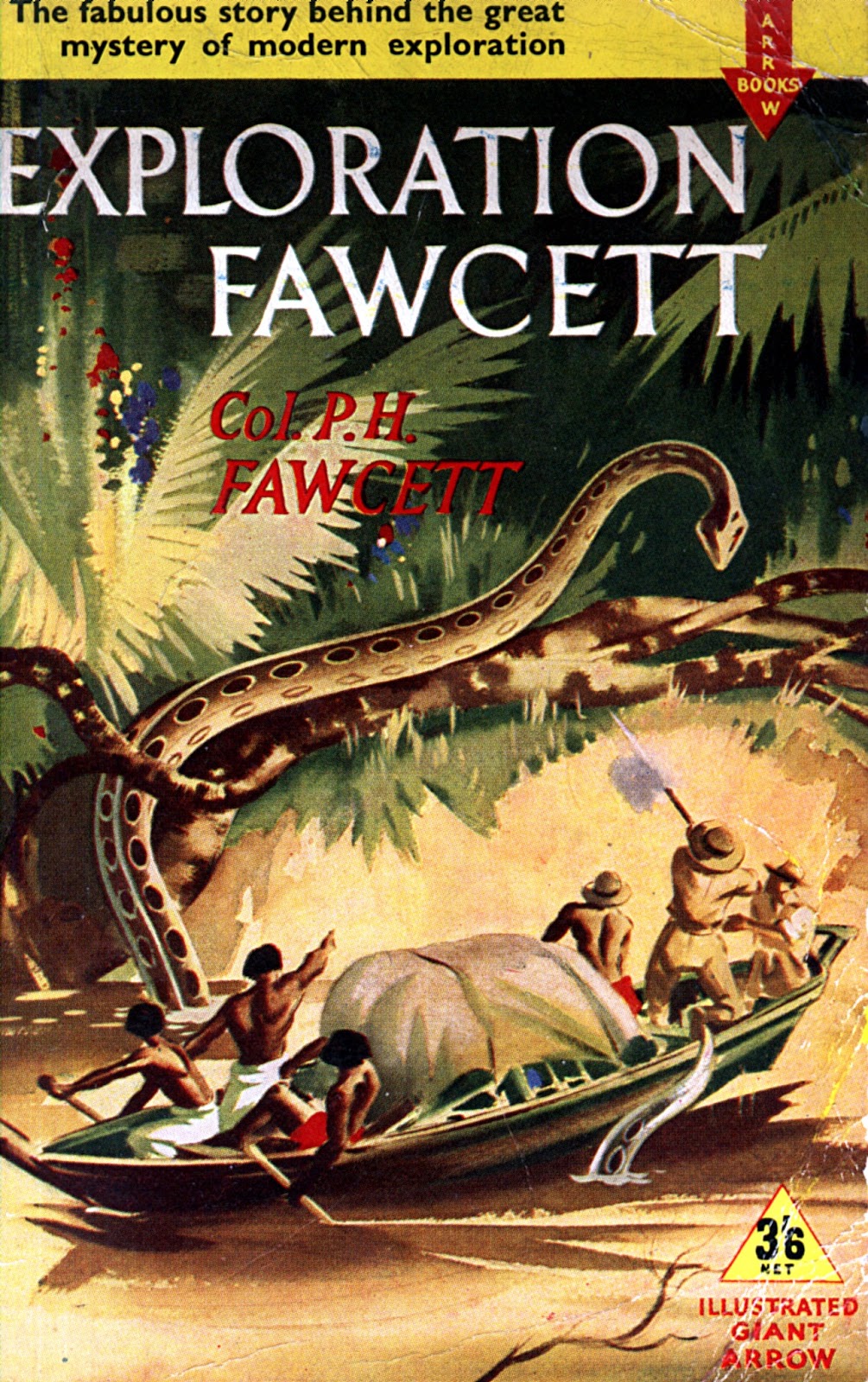
Exploration Fawcett (1953), compiled from the field notes of the famous lost South American explorer Lieutenant-Colonel Percy Fawcett by his son Brian, includes tantalising snippets concerning a variety of seemingly undescribed species, such as a Bolivian dog-like cat (or cat-like dog?) called the mitla, and a giant toothless river shark (possibly a huge catfish? - click here for more details), plus vague mentions of swamp-dwelling relics of the dinosaurian age (click here ).
 Lieut.-Col. Percy Fawcett
One additional mystery beast documented within his book but attracting only scant cryptozoological attention, conversely, is a startling oddity encountered by Fawcett in 1913 while visiting Santa Ana, a post on the Marmoré River passing through East Bolivia:
Here we saw for the first and only time a breed of dog known as the Double-Nosed Andean Tiger Hound. The two noses are as cleanly divided as though cut with a knife. About the size of a pointer, it is highly valued for its acute sense of smell and ingenuity in hunting jaguars. It is found only on these plains.
A somewhat droll cartoon of a double-muzzled dog appears on the inside cover of Fawcett's book:
 Fawcett's cartoon sketch of the double-nosed Andean tiger hound from Exploration Fawcett
Otherwise, this twin-snouted canine curiosity was duly forgotten - until almost a century later, when, as reported in London’s Daily Mail newspaper (10 September 2005), modern-day explorer Colonel John Blashford-Snell spied a remarkably similar beast while recently leading an expedition through the very same area.
While staying at a remote village there, he saw a dog whose nostrils were set totally apart from one another, like the barrels of a double-barrelled shotgun. Making enquiries, he learnt that this dog, called Bella, was not a deformed specimen but one of a distinct, highly-prized, but nowadays rare breed in this area, which was referred to by the same name that Fawcett had recorded - the double-nosed Andean tiger hound ('tiger', incidentally, is a term that in Latin America refers to jaguars).
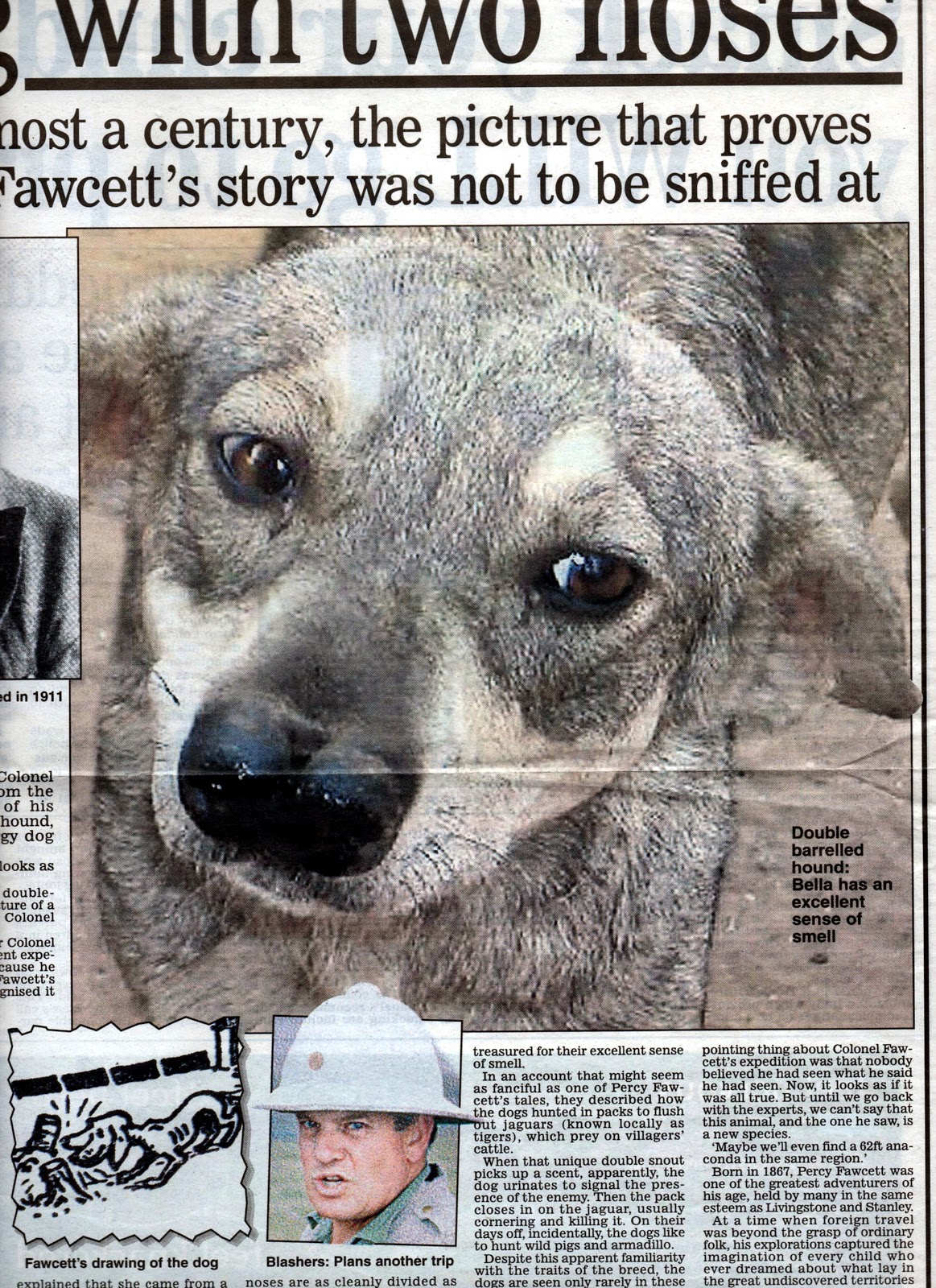 Section of the Daily Mail article of 10 September 2005 featuring Bella and Colonel John Blashford-Snell's expedition - click picture to enlarge it (© Daily Mail, London)
Photos of Bella brought back by Blashers attracted such interest from Dr Tito Ibson Castro, president of the Bolivian Veterinary Association, that a sequel expedition was duly planned, to obtain genetic material and thus determine the origin and relationships to other dog breeds of this dual-nosed wonder. And so it was that during summer 2006 Blashers returned to Bella's village.
As reported in a Daily Mail article of 25 September 2006, however, he was greatly saddened to learn that Bella had died after having given birth to a litter of four pups (all split-nosed), sired by a normal unsplit-nosed dog. Moreover, three of these pups had also died, but he was delighted to discover that the fourth, a male, had survived and was now a healthy 10-month-old, whom Blashers dubbed Xingu after the lost city that Fawcett had vainly sought. For a photo of Xingu, click here.
Worthy of note is that Xingu in turn sired a litter of four pups, whose mother had a normal, unsplit nose. Two of the four pups were split-nosed, and both of these died after three days; the other two were normal, and both of those survived.
Interestingly, a few days after newspaper accounts of Bella had appeared in Britain, the Daily Mail (17 September 2005) published a follow-up feature containing photos of other, putative Bellas sent in by readers.
 Section of the Daily Mail article of 17 September 2005 featuring Henry the Pachon-Navarro and other split-nosed dogs - click picture to enlarge it (© Daily Mail, London)
The most noteworthy of these was a photo of Henry, a Pachon-Navarro. This rare Iberian breed, related to pointers, is characterised by a very unusual skull, formed into two separate channels with a ridge wide enough for human fingers to be placed inside. Intriguingly, split-nosed Spanish pointers were taken to Latin America by the conquistadors during the 16th Century. So perhaps Henry and Bella have a common ancestor, not just an uncommon nose.
Finally: here, just for a little light relief, is a very different tiger hound (plus my sincere apologies to William Blake for my own variation upon his 'Tyger Tyger' poem!):

Tiger hound-dog, hear him barkIn the forests of the dark.What immortal hand he licksThat pats his head and throws him sticks?
This ShukerNature post is an expanded, updated excerpt from my book Extraordinary Animals Revisited (CFZ Press: Bideford, 2007).
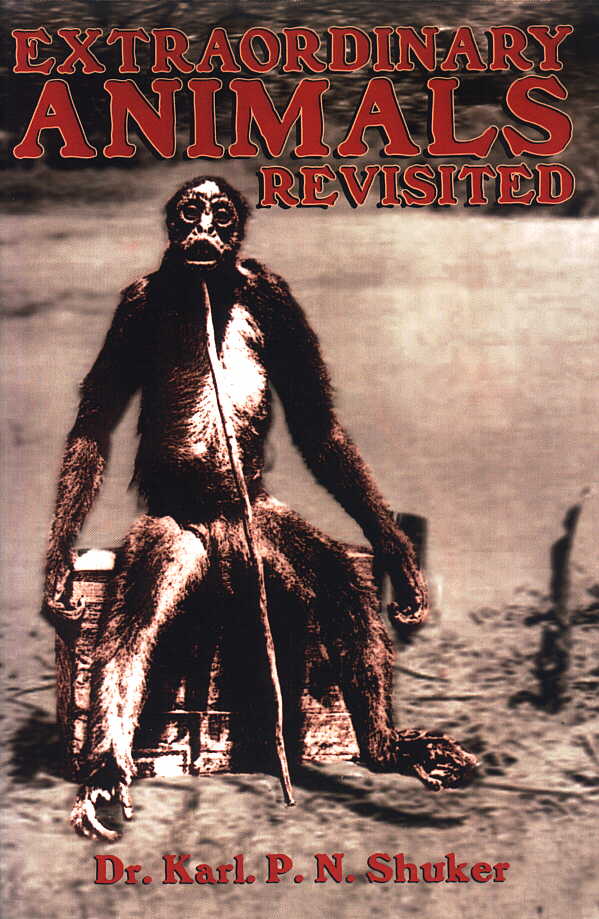
Karl Shuker's Blog

- Karl Shuker's profile
- 45 followers
Karl Shuker isn't a Goodreads Author
(yet),
but they
do have a blog,
so here are some recent posts imported from
their feed.

