
Lawrence R. Spencer's Blog, page 551
July 28, 2013
DREAMS OF FOOLS
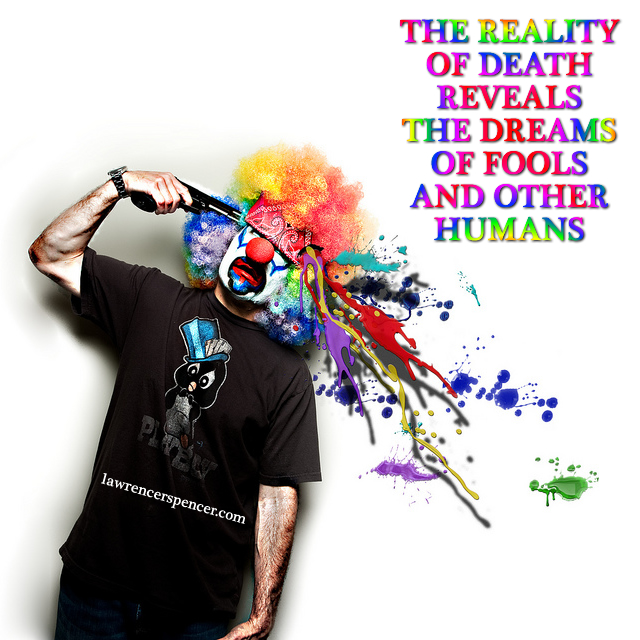
THE REALITY OF DEATH REVEALS THE DREAMS OF FOOLS AND OTHER HUMANS
lawrence r. spencer. 2013.



July 27, 2013
PINK LIGHT OF VALIS
 Philip K. Dick (December 16, 1928 – March 2, 1982) was an American novelist, short story writer and essayist whose published work is almost entirely in the science fiction genre. Dick explored sociological, political and metaphysical themes in novels dominated by monopolistic corporations, authoritarian governments, and altered states. In his later works Dick's thematic focus strongly reflected his personal interest in metaphysics and theology. He often drew upon his own life experiences in addressing the nature of drug abuse, paranoia, schizophrenia, and transcendental experiences in novels such as A Scanner Darkly and VALIS.
Every day there are people who report experiences of "divine communication". They hear "voices" in their heads. Prophecies, epiphanies and revelations of every description have been reported for thousands of years by people all around the world. Yet, there is not empirical "proof" that any of these experiences are "true". They must be "believed to be perceived", or accepted as an act of "faith" by people who did not experience the communication personally. The common denominator of the experiences is that they are personal and subjective.
Philip K. Dick is the enigmatic science fiction author of numerous best-selling books, some of which were adapted into popular films (Blade Runner, Total Recall, A Scanner Darkly, Minority Report and others). In February and March 1974. Dick experienced a series of visions and auditions including an information-rich "pink light" beam that transmitted directly into his consciousness. A year after the events, in March 1975, Dick summarized the 2-3-74 experiences that would pervade his writing for the final eight years of his life:
It, from inside me, looked out and saw the world did not compute, that I - and it - had been lied to. It denied the reality, and power, and authenticity of the world, saying, 'This cannot exist; it cannot exist.'
It seized me entirely, lifting me from the limitations of the space-time matrix; it mastered me as, at the same time, I knew that the world around me was cardboard, a fake. Through its power of perception I saw what really existed, and through its power of no-thought decision, I acted to free myself.
Following this event, Dick experienced a remarkable series of visions, hallucinations, and dreams, many of which centered around the first of a trilogy of books titled "VALIS", a "Vast Active Living Intelligence System". Sometimes it struck him as a pink beam of esoteric data, or as a compassionate feminine "AI [Artificial Intelligence] voice" speaking to him from outer space.
Valis is the first book in Philip K. Dick's incomparable final trio of novels (the others being The Divine Invasion and The Transmigration of Timothy Archer). This disorienting and bleakly funny work is about a schizophrenic hero named Horselover Fat, the hidden mysteries of Gnostic Christianity, and reality as revealed through a pink laser. Valis is a theological detective story, in which God is both a missing person and the perpetrator of the ultimate crime.
I am especially intrigued by the idea of a compassionate feminine voice delivering mind-altering communication through a beam of pink light! I have never experienced any "divine communication" like this personally. But, I believe other people who say they have. However, I remain skeptical as to whether or not the really understand the SOURCE of the communication. Regardless of whether or not these "visions" or "divine interventions" can be "proved" or not, they provide endless hours of inspiration, speculation and discussion. If you are a science fiction fan, like I am, you may enjoy exploring the uniquely esoteric exploration of the subjective universes of Philip K. Dick.
(Read more about Philip K. Dick on Wikipedia.org) and the TOP 10 BOOKS by Philip K. Dick on Amazon.com
July 26, 2013
A PURPOSE FOR LIFE
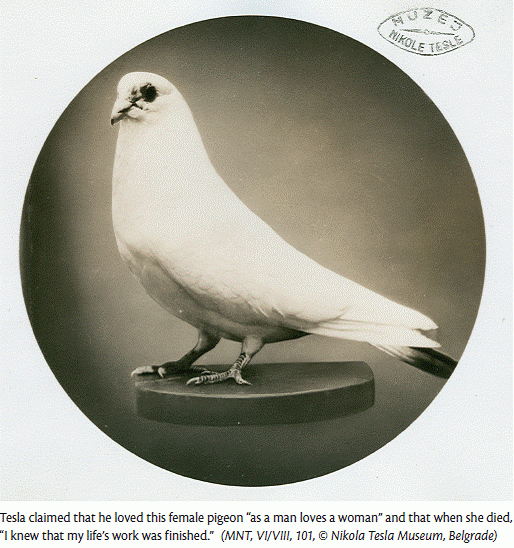
"I have been feeding pigeons, thousands of them, for years; thousands of them, for who can tell --
"But there was one pigeon, a beautiful bird, pure white with light gray tips on its wings; that one was different. It was a female. I would know that pigeon anywhere."
"No matter where I was that pigeon would find me; when I wanted her I had only to wish and call her and she would come flying to me. She understood me and I understood her.
"Yes," he replied to an unasked question. "Yes, I loved that pigeon, I loved her as a man loves a woman, and she loved me. When she was ill I knew, and understood; she came to my room and I stayed beside her for days. I nursed her back to health. That pigeon was the joy of my life. If she needed me, nothing else mattered. As long as I had her, there was a purpose in my life."
"Then one night as I was lying in my bed in the dark, solving problems, as usual, she flew in through the open window and stood on my desk. I knew she wanted me; she wanted to tell me something important so I got up and went to her.
"As I looked at her I knew she wanted to tell me -- she was dying. And then, as I got her message, there came a light from her eyes -- powerful beams of light.
"Yes," he continued, again answering an unasked question, "it was a real light, a powerful, dazzling, blinding light, a light more intense than I had ever produced by the most powerful lamps in my laboratory.
"When that pigeon died, something went out of my life. Up to that time I knew with a certainty that I would complete my work, no matter how ambitious my program, but when that something went out of my life I knew my life's work was finished."
___________________________
-- From PRODIGAL GENIUS: The Life of Nikola Tesla by John J. O'Neill:
ANAMNESIS
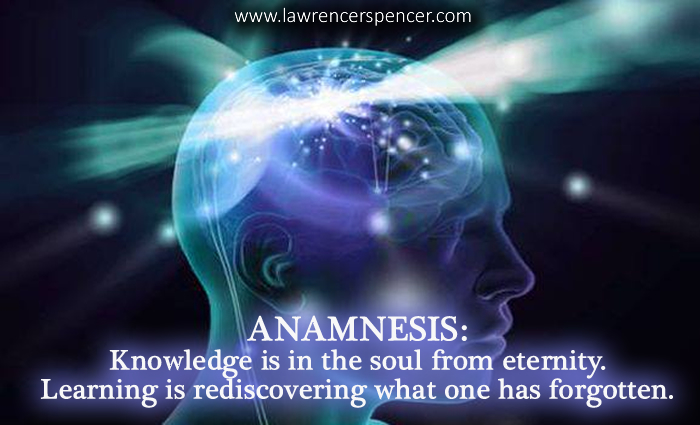
Anamnesis (/ˌænæmˈniːsɪs/) is a concept in Plato's epistemological and psychological theory that he develops in his dialogues Meno and Phaedo, and alludes to in his Phaedrus.
It is the idea that humans possess knowledge from past incarnations and that learning consists of rediscovering that knowledge within us.
Socrates suggests that the soul is immortal, and repeatedly incarnated; knowledge is actually in the soul from eternity, but each time the soul is incarnated its knowledge is forgotten in the shock of birth. What one perceives to be learning, then, is actually the recovery of what one has forgotten. (Once it has been brought back it is true belief, to be turned into genuine knowledge by understanding.) And thus Socrates (and Plato) sees himself, not as a teacher, but as a midwife, aiding with the birth of knowledge that was already there in the student.
Plato develops his Theory of Anamnesis, in part by combining it with his theory of Forms. First, he elaborates how anamnesis can be achieved: whereas in Meno nothing more than Socrates' method of questioning is offered, in Phaedo Plato presents a way of living that would enable one to overcome the misleading nature of the body through katharsis (Greek: κάθαρσις; “cleansing” (from guilt or defilement), “purification”). The body and its senses are the source of error; knowledge can only be regained through the use of our reason, contemplating things with the soul (noesis). Secondly, he makes clear that genuine knowledge, as opposed to mere true belief (doxa), is distinguished by its content. One can only know eternal truths, for they are the only truths that can have been in the soul from eternity.
For the later interpreters of Plato, anamnesis was less an epistemic assertion than an ontological one. Plotinus himself did not posit recollection in the strict sense of the term, because all knowledge of universally important ideas (logos) came from a source outside of time (Dyad or the divine nous), and was accessible, by means of contemplation, to the soul as part of noesis. They were more objects of experience, of inner knowledge or insight, than of recollection.
_______________________
Socrates -- (c. 469 BC – 399 BC) was a classical Greek Athenian philosopher. Credited as one of the founders of Western philosophy, he is an enigmatic figure known chiefly through the accounts of later classical writers, especially the writings of his students Plato and Xenophon and the plays of his contemporary Aristophanes.
Plato -- (428/427 BC– 348/347 BC) was a philosopher in Classical Greece. He was also a mathematician, student of Socrates, writer of philosophical dialogues, and founder of the Academy in Athens, the first institution of higher learning in the Western world. Along with his mentor, Socrates, and his student, Aristotle, Plato helped to lay the foundations of Western philosophy and science.
-- Reference Source: Wikipedia.org
July 24, 2013
THE MIRROR IS BROKEN

The slowly decaying
life-form I see reflected in
The Mirror of Reality is not Me.
It is a puppet I inhabit and animate in the Game of Life.
Every day, decade after decade, lifetime after lifetime, The Mirror speaks to me:
"I am weak. I am worthless. I am insignificant. I do not exist!"
This mirror does not reflect the Eternal Nothingness that is Me.
The image it reveals makes me forget Who I Am.
I am not deceived by this false illusion...
THE MIRROR IS BROKEN!
____________________
Lawrence R. Spencer. 2013.
July 23, 2013
BEING
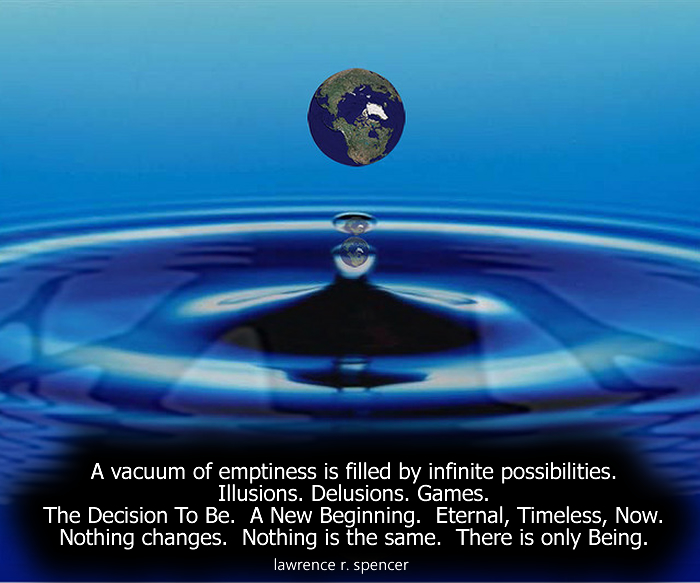
A vacuum of emptiness is filled by infinite possibilities.
Illusions. Delusions. Games.
The Decision To Be. A New Beginning. Eternal, Timeless, Now.
Nothing changes. Nothing is the same. There is only Being.
_______________________
lawrence r. spencer
2013
July 22, 2013
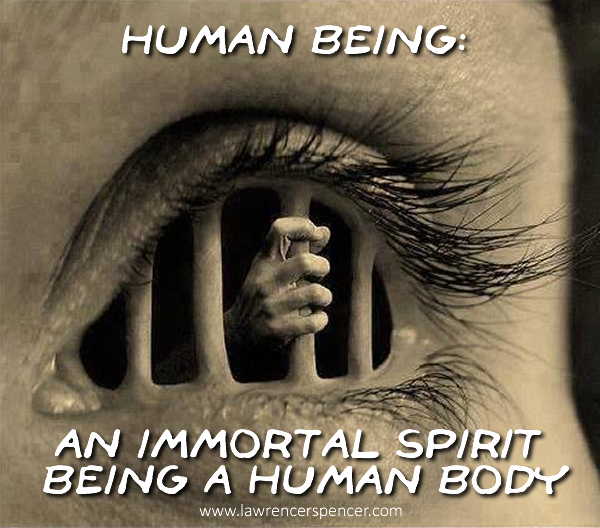
July 21, 2013
BEAUTIFUL SADNESS
"IN DREAMS"
A candy-colored clown they call the sandman tiptoes to my room every night just to sprinkle stardust and to whisper, "Go to sleep. Everything is alright."
I close my eyes, Then I drift away...into the magic night.
I softly say a silent prayer, like dreamers do.
Then I fall asleep to dream... my dreams of you.
In dreams I walk with you.
In dreams I talk to you.
In dreams you're mine.
All of the time we're together... In dreams... In dreams.
But just before the dawn, I awake and find you gone.
I can't help it... I can't help it if I cry.
I remember that you said "goodbye".
It's too bad that all these things can only happen in my dreams...
Only in dreams... in beautiful dreams."
___________________________________
Lyrics written by Roy Orbison. In Dreams lyrics © Barbara Orbison Music Company, Orbi-Lee Music, R-Key Darkus, Sony/ATV Music Publishing LLC
July 20, 2013
SIMPLICITY

EVIL BEINGS CAUSE CHAOS.
GOOD BEINGS CREATE
ORDER AND BEAUTY
FROM THE CONFUSION
THEY CAUSE.
__________
Lawrence R. Spencer /2013
July 19, 2013
SHERLOCK HOLMES ON THOMAS PAINE

"I read the most excellent treatise and critique of that superstitious body of mythology written by the American revolutionary, Thomas Paine. Although Mr. Paine is not a popular fellow in Britain, having fathered the uprising against King George which resulted in the loss of the greatest possession ever claimed by the throne of England, he is nonetheless a man of preeminent intellect and prodigious reasoning ability.
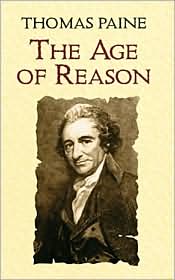
His book, The Age of Reason; Being an Investigation of True and *Fabulous Theology, to my own system of logical assessment and evaluation represents the most thorough, factual and incontrovertible dissection of the Bible, which unfortunately serves our civilization as a guideline for survival. After having read his preeminent work of logical vivisection upon the content of the Bible, and by abstraction, a commentary upon the paradigm of Western Civilization, it is no longer a mystery to me that humanity has endured so great an extent of war, misery, chaos, greed, destruction and mayhem inflicted by Western imperialism upon the Earth at the behest of, and with regal and religious blessings.
As for my personal observation and conviction concerning the matter of religion, I concur with the statement most ably stated by Thomas Paine himself:
“I hope for happiness beyond this life. I believe in the equality of man; and I believe that religious duties consist in doing justice, loving mercy, and endeavouring to make our fellow-creatures happy. I do not believe in the creed professed by the Jewish Church, by the Roman Church, by the Greek Church, by the Turkish Church, by the Protestant Church, nor by any church that I know of. My own mind is my own church.
All nati onal institutions of churches, whether Jewish, Christian, or Turkish, appear to me no other than human inventions, set up to terrify and enslave mankind, and monopolize power and profit. I do not mean by this declaration to condemn those who believe otherwise; they have the same right to their belief as I have to mine. But it is necessary to the happiness of man that he be mentally faithful to himself. Infidelity does not consist in believing, or in disbelieving; it consists in professing to believe what he does not believe.”
-- An excerpt from SHERLOCK HOLMES: MY LIFE, by Lawrence R. Spencer

___________________________________________
(Definition of the word "fabulous" -- adjective: based on or told of in traditional stories; lacking factual basis or historical validity)


