
Marc Tyler Nobleman's Blog, page 15
February 17, 2021
Interview: Pamela McMyler (co-star of Steven Spielberg’s first theatrical film “Amblin’”)
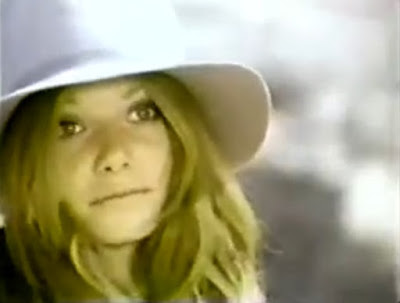
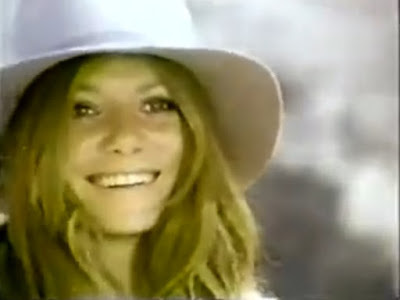
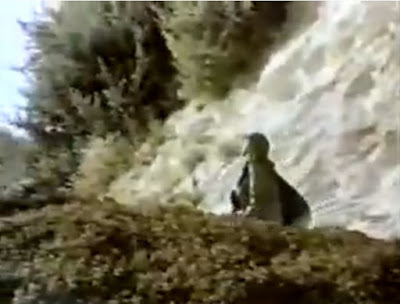
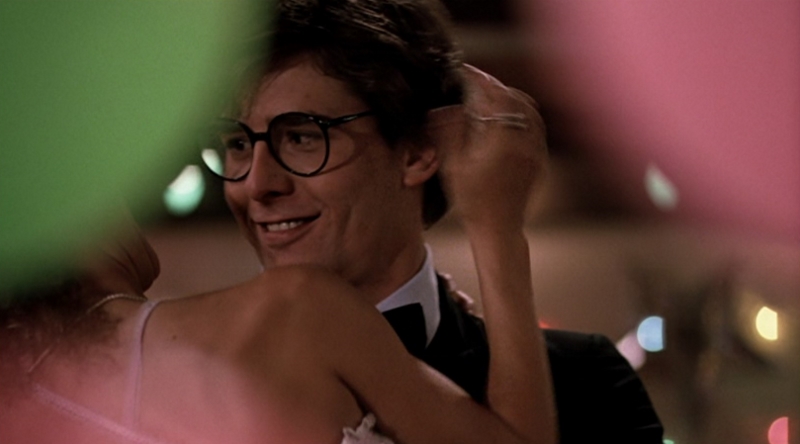
Legendary director Steven Spielberg’s first theatrical release was a 26-minute-long film about young hitchhikers in the desert…and maybe in love. It was called Amblin’ (which later became the name of his production company).
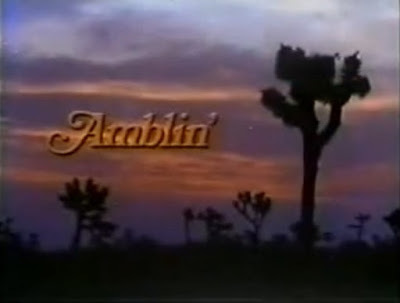
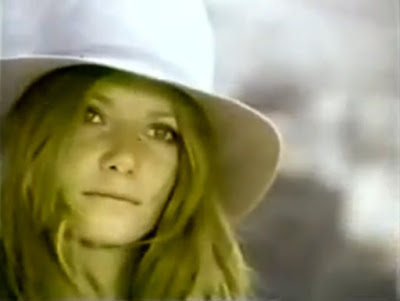
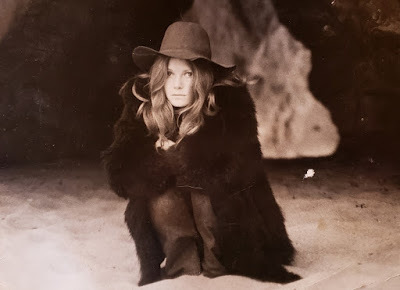
Shot in 1968 when Spielberg was 21 years old and released the same year, it starred only two people, neither of whom speak during the film. One of those people, Pamela McMyler, had not given an interview about it…until now.
What were you doing professionally prior to Amblin’?
My first acting job was The Man from U.N.C.L.E. I also might have done The Donna Reed Show before. The U.N.C.L.E. [producers] had to write a letter to the Screen Actors Guild to say “No one else in the world could say this [one] line like she can.” I got my SAG card and Eddie Foy (a casting director) really liked me.
Friends of mine had a little restaurant/bar a couple of blocks from my house. It was like an “actor bar” and they kept asking me to work there because it would be good for business. I was young and perky. I agreed to do it. One night a guy named Mark, very nice man, young man, good looking, said my cousin is making a short film and he has the financing and I think you’d be right for the girl, and so I met with Steven Spielberg. He wanted to do a screen test—I believe [the other person up for the role] was his girlfriend at the time. I got the part and I freaked out because I wasn’t yet a member of SAG.
What do you remember about the meeting with Steven?
How can I describe him? He was a young, friendly, nice Jewish boy. He talked about his mom a lot. Very nice, down-to-earth man.
How old were you when you got the role?
I was 23. I was a couple of years older than Steven. He was just out of film school.
Did he cast you on the spot?
After the screen test. A couple of days later.
What did you think of the story?
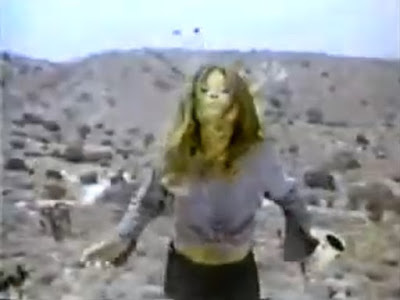
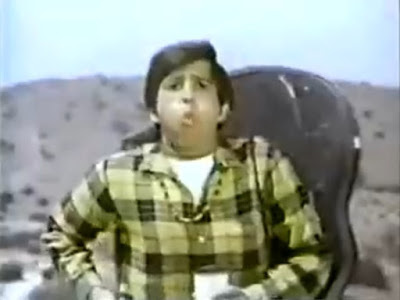
The way I describe it, it was a romp. [The male lead] was [a surrogate for Steven]—a nerdy Jewish kid. He said basically we’re going to go out and ad lib. He’d say “Now I want you spit olive pits.” More than a script, it was kind of descriptions.
Was there a written script?
There was but how do you write ad lib scenes? It was a description of what would go on because there was no dialogue. He know exactly what he wanted for every shot. God bless the cinematographer Allen Daviau [who died from COVID-19 in April 2020]. Allen was a big sweetheart, like a big old bear. At one point he hung by his heels out of the trunk of a car to get a shot that Steven wanted.
Do you still have the script?
No. I don’t know that I ever did!
Any funny anecdotes about your Amblin’ experience?
I’m sure there are many I’ll remember when we get off the phone. (laughs) At one point there was a description about how the girl chases the guy with a snake. I wasn’t crazy about snakes. They took us out to Palmdale in the heat of the desert. They had a snake in a little aquarium on the bus. I had to take it out and talk to it and get to know it. [We ended up not filming that scene], but I made a friend.
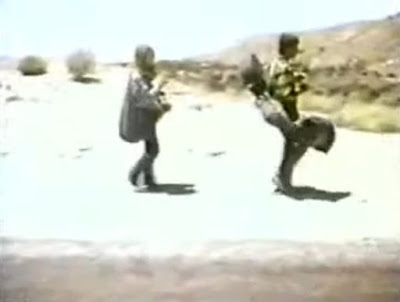
I think we drank beer in the desert and it dried up immediately.
We did [the shoot] in very few days. Steven was serious. Friendly and casual but we were there to make a film in only a couple of days with X amount of money.
Is there one story about your Amblin’ experience you tell more than any other?
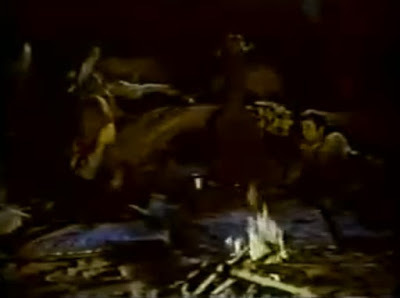
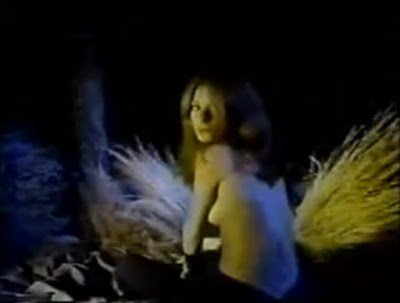
I was a little nervous to do the scene when I took off my top. That whole campfire scene was shot on a soundstage. It looks like it’s outside, to me. There were a couple of lighting guys and a sound guy. They set it up and left so it was just Steven, [co-star] Richard, and Allen when I showed my little boobies.
What challenges did you face shooting this film?
Really only the heat. I’m sure it was summer. Pearblossom Highway in Palmdale. It’s outside of Los Angeles some sixty miles. It’s pure desert. At one point [after the initial shoot], Steven said “Pammy, we have to go back out to the desert. I didn’t get a good close-up of you when you two first see each other across the road.” I said “Nooo!” (laughs) We went back out there and I’m glad we did. It was a great close-up of me.
We spent a good day out there to get the close-up and other pick-up shots.
The original shoot had been, I believe, maybe four days. We stayed out there in a motel. We shot the ending in Malibu.
What is your interpretation of the film’s ending? Debate rages on the Internet.
Oh really? Nobody’s ever asked me that question before. To me it was always Steven’s vision of himself as being a straight-laced, very serious Jewish boy who…what am I trying to say? The character was based on Steven. So it had to be his vision of wanting to be this cool guy with his guitar, which he didn’t have or play [in real life].
Why do you think the girl walked away after she saw what the boy had in his bag?
Maybe she was shallow. Not shallow, but she felt deceived in a way. She thought he was somebody he was not. She had come to care for him. He probably also would not have ended up with her, by his choice.
Did Steven articulate this or rather let the characters’ actions speak for themselves?
He pretty much let actions speak for themselves. He would tell us the technical things and let us go. That’s part of the genius of Steven.
While working on it, did Spielberg seem like just another filmmaker or did you sense something special?
At first I thought “just another filmmaker.” But his enthusiasm kind of changed my mind. Then when we had the screening, when I saw it for the first time, I saw what his vision was. I was proud that I accomplished what he wanted. The reception—I was taken aback by how well-received it was. Someone told me [actor] Clu Gulager was in love with me. [So of course] when I walked onto the Universal lot, in front of the commissary, the first person I saw was Clu.
Did you talk to him?
No, I was too embarrassed.
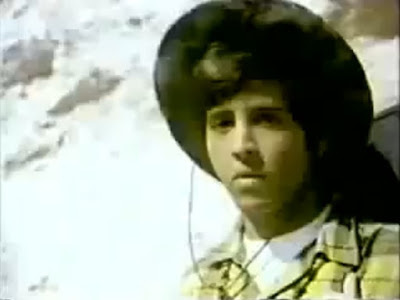
What do you remember about your co-star, Richard Levin?
He was a sweet guy. A very gentle soul. Quiet.
Did you stay in touch with him?
For a little while. We lost track—I hate when that happens.
Were you paid to be in the film?
No. I often thought in the back of my Irish mind I could go to Steven and say “I could use a couple bucks these days.” (laughs) Of course I wouldn’t do that.
What are you doing these days?
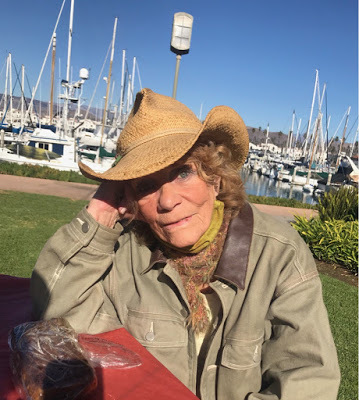
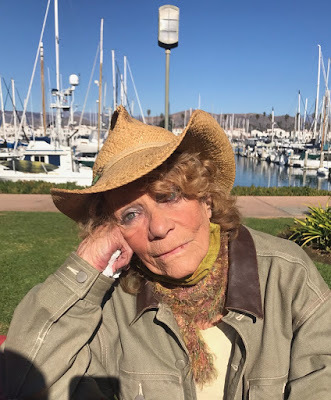
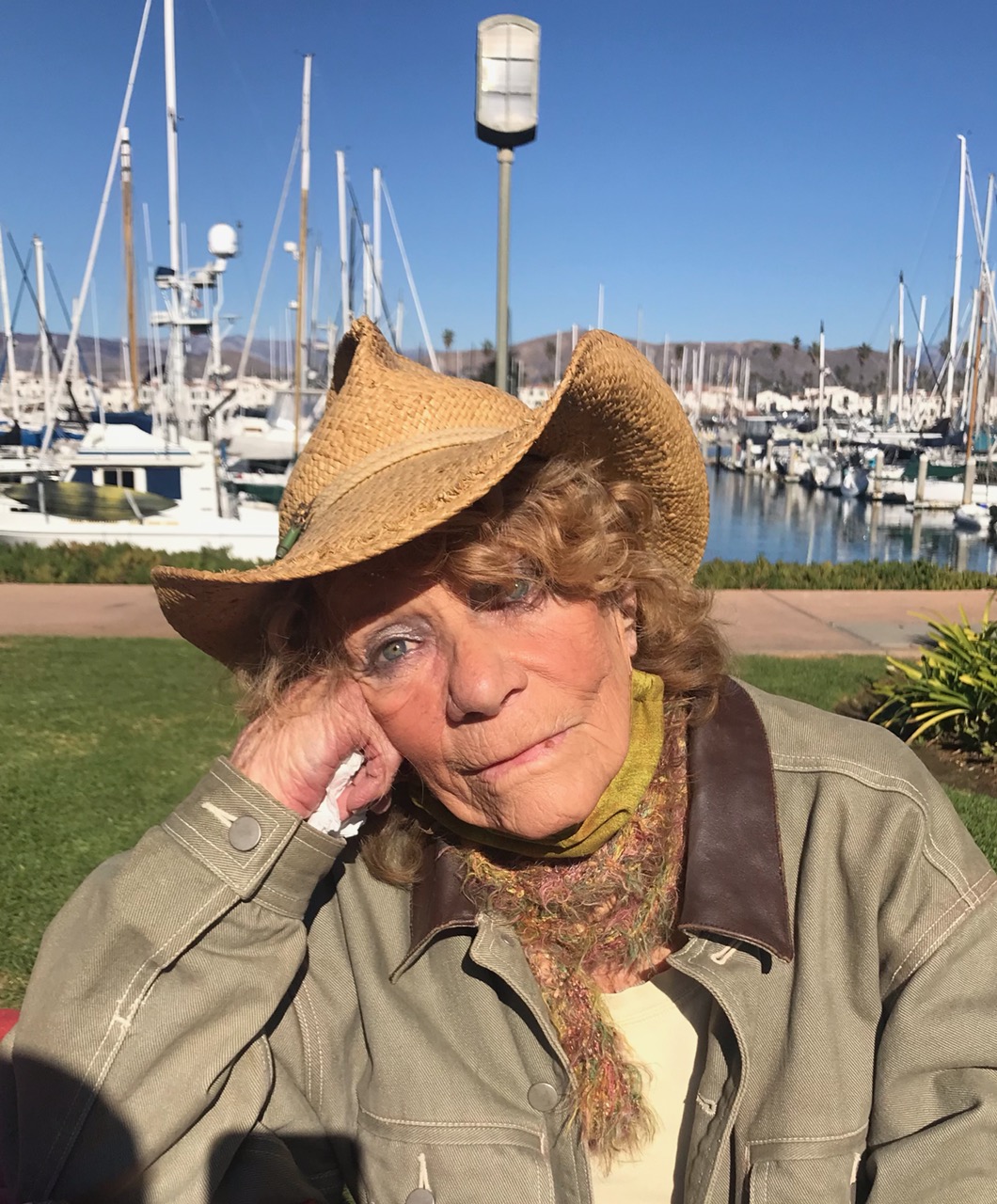
I’m retired. I work around my house, plant my cactus garden, raise my dogs and my pig.
I was doing antiques and collectibles and painted furniture. I did very well at it. At one store I worked in, I had all the windows and front of store for three days a week. They’re like antique malls and people have sections. I went into that about 1997. I did it for a long time. Ten years. But a lot of the shops closed.
And before that?
Not long after Amblin’ I got married. I was married for eight years.
In the 1980s I worked in film or TV only a couple times. You get to be a certain age and they don’t know what to do with you. I did a lot of small theater in LA. I enjoyed that a lot.
I had a beautiful house in the hills in Sherman Oaks. Sometime in the ‘80s, at midnight, I sat bolt upright and said to myself “I’m out of here.” My parents weren’t getting any younger. I wanted to be closer to them. They lived in Santa Barbara. Good luck affording anything in Santa Barbara so a friend recommended Ventura. In 1992, I moved from Sherman Oaks to where I am [still am today] in Ventura, a few blocks from the ocean. [For the first] five years here, I did nothing but go to the beach five hours a day.
I assume your dogs are in your house and your pig is not?
My pig did live in the house for a year and then she started rearranging the furniture—she’s an exterior and interior decorator. [So she then had to move outside.]
How did you come to have a pig?
My neighbor had a baby pig, white with big black spots. I’d always wanted a baby pig. I would babysit the pig all day when she was little and eventually adopted the pig from the neighbor. I adopted her when she was little. Now she’s enormous.
Can you housetrain a pig?
She housetrained herself. We left the front door open and she’d go in the corner on the porch. Always in the same place. Occasionally she’d pee in the living room.
A friend built a ramp outside my bedroom door. I don’t know how he knew a pig needed a ramp, but it did.
What’s your pig’s name?
Blossom.
Your dogs?
Bobby and Mickey. Both boys.
Do the dogs and the pig get along?
They do. Once in a while she will chase them around the yard. But they run in.
If she caught them, what would she do?
She pushes them with her snout and sniffs them. Pigs can be gnarly once in a while. I brush her every day and tell her she’s a pretty girl. She eats only her pellets and fruits and vegetables.
I don’t eat ham or bacon anymore. Matter of fact, since I got her, I don’t eat meat anymore.
Any interest in acting again?
If someone just gave me a part and I liked it, sure, I would do it. But a craving? No.
Do you have children?
No.
Have you ever appeared at a pop culture convention? If not, would you be open to meeting fans and signing autographs?
No. Universal used to send us to places, but not conventions. Veterans hospital—kids paralyzed from the waist down. We—all these young starlets, pardon the expression—went there supposedly to cheer them up.
In the late 1960s, they sent a bunch of actors on a bus to Orange County—Republican country—to sit at various tables and hand out awards at a real estate headliners of the year event. We ate these pineapple starters. Then a lady said “Sorry, wrong table” and put us at another table. Ate the pineapple starters again. They moved us a third time. Then someone came out and said [to the attendees] “Welcome to Orange County, the land of Richard Milhous Nixon!”
People told me I should do conventions because of Chisum, [a 1970 movie she starred in with John Wayne]. I might be interested in that.
What was it like to work with John Wayne?
Working with John Wayne was a hoot and a holler. He’d already [screen] tested six girls. My agent was a small agent who sat on the director’s doorstep until he would see me. He told me later that he liked me immediately. He showed John Wayne Amblin’. John walked out and said “Can the little girl talk?” Amblin’ certainly did its job for me for a while.
Have you seen Steven Spielberg or Richard Levin since shooting Amblin’?
I worked with Steven a couple of times after Amblin’. He said I was his good luck charm. Then I guess he didn’t need a good luck charm anymore. (laughs)
The first thing he directed when signed at Universal was an episode of Night Gallery with Joan Crawford. Here’s this young kid directing Joan Crawford, of all people. Bless her heart, she drank vodka all day but covered it with a tissue so no dust would get in it. She was a germaphobe.
Steven called me one night and said “Pammy, I have to put you in a brown wig because Joan doesn’t want any redheads on the set.” She thought her hair was red, but it was dyed some pinkish color. (They ended up having to cut my main scene from that show.)
Another time Steven called to tell me something he said I wouldn’t believe. Joan had called Steven into her dressing room. She had this whole entourage around her. She was naked with her butt up in the air and she was getting a shot for something.
I used to run into Steven at a restaurant—late ‘70s. Once we went with another couple. Steven came over to our table to say hi and one of my friends said “What have you been doing since Amblin’?” Steven laughed. He’d already done Jaws.
That was probably the last time I saw him. Once in the ‘80s I called him at his office and he told [his assistant] to hold other calls. He said “I can’t believe my Pammy is in her forties!” He said he thinks of me because his company is called Amblin’. We talked for a long time.
Would you call Steven Spielberg’s office again now?
I don’t know.
He seems like the type to be receptive.
He’s pretty guarded.
What about Richard Levin?
I heard a rumor many years ago that he had passed away. [But then] I have a friend who lives in Arizona—she and I have been friends since we were 17; her husband knows Richard and said he’s fine, but that was a while ago. I’m going to find out about Richard. [MTN: She was unable to.]
Did you meet Rod Serling when you worked on Night Gallery?
No.
When was the last time you watched Amblin’?
Couple of years ago. I have it on tape. I’ve also watched it on the internet.
Do you have any mementos from the experience such as set photos, a script, or anything from the set?
I may have a couple of photos. No candids. Snapshots that maybe Allen took. I don’t even think Steven had a camera.
Have you been interviewed before about this specifically?
No. There was some guy a few years back who tried to interview me about me but I cut it short. It didn’t work. Another guy doing a book on Universal Studios has interviewed me. He’s great. He asked me about my credits. I said I was in a TV series called Crosstown and he could never find it. [MTN: Me neither.]
What did you think when you first heard from me?
My first thought was “How did he get my cell phone number? And why is he doing something on Amblin’ 50 years later? Who is this nerd? I better talk to him.”
(laughs) Nerd...you got that right. If the Amblin’ experience changed your life in any way, how?
I was only working here and there and it got me a contract at Universal. John Wayne didn’t want a contract player in Chisum. But after he saw Amblin’, he wanted me for the part. And he wanted to put me under contract at his company, Batjac.
How do you look back on your Amblin’ experience overall?
It was a great, fun thing to do. I loved acting but was even more thrilled when I saw the reaction to the film.


Shot in 1968 when Spielberg was 21 years old and released the same year, it starred only two people, neither of whom speak during the film. One of those people, Pamela McMyler, had not given an interview about it…until now.


What were you doing professionally prior to Amblin’?
My first acting job was The Man from U.N.C.L.E. I also might have done The Donna Reed Show before. The U.N.C.L.E. [producers] had to write a letter to the Screen Actors Guild to say “No one else in the world could say this [one] line like she can.” I got my SAG card and Eddie Foy (a casting director) really liked me.
Friends of mine had a little restaurant/bar a couple of blocks from my house. It was like an “actor bar” and they kept asking me to work there because it would be good for business. I was young and perky. I agreed to do it. One night a guy named Mark, very nice man, young man, good looking, said my cousin is making a short film and he has the financing and I think you’d be right for the girl, and so I met with Steven Spielberg. He wanted to do a screen test—I believe [the other person up for the role] was his girlfriend at the time. I got the part and I freaked out because I wasn’t yet a member of SAG.
What do you remember about the meeting with Steven?
How can I describe him? He was a young, friendly, nice Jewish boy. He talked about his mom a lot. Very nice, down-to-earth man.
How old were you when you got the role?
I was 23. I was a couple of years older than Steven. He was just out of film school.


Did he cast you on the spot?
After the screen test. A couple of days later.
What did you think of the story?
The way I describe it, it was a romp. [The male lead] was [a surrogate for Steven]—a nerdy Jewish kid. He said basically we’re going to go out and ad lib. He’d say “Now I want you spit olive pits.” More than a script, it was kind of descriptions.


Was there a written script?
There was but how do you write ad lib scenes? It was a description of what would go on because there was no dialogue. He know exactly what he wanted for every shot. God bless the cinematographer Allen Daviau [who died from COVID-19 in April 2020]. Allen was a big sweetheart, like a big old bear. At one point he hung by his heels out of the trunk of a car to get a shot that Steven wanted.
Do you still have the script?
No. I don’t know that I ever did!
Any funny anecdotes about your Amblin’ experience?
I’m sure there are many I’ll remember when we get off the phone. (laughs) At one point there was a description about how the girl chases the guy with a snake. I wasn’t crazy about snakes. They took us out to Palmdale in the heat of the desert. They had a snake in a little aquarium on the bus. I had to take it out and talk to it and get to know it. [We ended up not filming that scene], but I made a friend.

I think we drank beer in the desert and it dried up immediately.
We did [the shoot] in very few days. Steven was serious. Friendly and casual but we were there to make a film in only a couple of days with X amount of money.
Is there one story about your Amblin’ experience you tell more than any other?
I was a little nervous to do the scene when I took off my top. That whole campfire scene was shot on a soundstage. It looks like it’s outside, to me. There were a couple of lighting guys and a sound guy. They set it up and left so it was just Steven, [co-star] Richard, and Allen when I showed my little boobies.


What challenges did you face shooting this film?
Really only the heat. I’m sure it was summer. Pearblossom Highway in Palmdale. It’s outside of Los Angeles some sixty miles. It’s pure desert. At one point [after the initial shoot], Steven said “Pammy, we have to go back out to the desert. I didn’t get a good close-up of you when you two first see each other across the road.” I said “Nooo!” (laughs) We went back out there and I’m glad we did. It was a great close-up of me.
We spent a good day out there to get the close-up and other pick-up shots.
The original shoot had been, I believe, maybe four days. We stayed out there in a motel. We shot the ending in Malibu.
What is your interpretation of the film’s ending? Debate rages on the Internet.
Oh really? Nobody’s ever asked me that question before. To me it was always Steven’s vision of himself as being a straight-laced, very serious Jewish boy who…what am I trying to say? The character was based on Steven. So it had to be his vision of wanting to be this cool guy with his guitar, which he didn’t have or play [in real life].
Why do you think the girl walked away after she saw what the boy had in his bag?
Maybe she was shallow. Not shallow, but she felt deceived in a way. She thought he was somebody he was not. She had come to care for him. He probably also would not have ended up with her, by his choice.


Did Steven articulate this or rather let the characters’ actions speak for themselves?
He pretty much let actions speak for themselves. He would tell us the technical things and let us go. That’s part of the genius of Steven.
While working on it, did Spielberg seem like just another filmmaker or did you sense something special?
At first I thought “just another filmmaker.” But his enthusiasm kind of changed my mind. Then when we had the screening, when I saw it for the first time, I saw what his vision was. I was proud that I accomplished what he wanted. The reception—I was taken aback by how well-received it was. Someone told me [actor] Clu Gulager was in love with me. [So of course] when I walked onto the Universal lot, in front of the commissary, the first person I saw was Clu.
Did you talk to him?
No, I was too embarrassed.
What do you remember about your co-star, Richard Levin?
He was a sweet guy. A very gentle soul. Quiet.

Did you stay in touch with him?
For a little while. We lost track—I hate when that happens.
Were you paid to be in the film?
No. I often thought in the back of my Irish mind I could go to Steven and say “I could use a couple bucks these days.” (laughs) Of course I wouldn’t do that.
What are you doing these days?
I’m retired. I work around my house, plant my cactus garden, raise my dogs and my pig.
I was doing antiques and collectibles and painted furniture. I did very well at it. At one store I worked in, I had all the windows and front of store for three days a week. They’re like antique malls and people have sections. I went into that about 1997. I did it for a long time. Ten years. But a lot of the shops closed.

And before that?
Not long after Amblin’ I got married. I was married for eight years.
In the 1980s I worked in film or TV only a couple times. You get to be a certain age and they don’t know what to do with you. I did a lot of small theater in LA. I enjoyed that a lot.
I had a beautiful house in the hills in Sherman Oaks. Sometime in the ‘80s, at midnight, I sat bolt upright and said to myself “I’m out of here.” My parents weren’t getting any younger. I wanted to be closer to them. They lived in Santa Barbara. Good luck affording anything in Santa Barbara so a friend recommended Ventura. In 1992, I moved from Sherman Oaks to where I am [still am today] in Ventura, a few blocks from the ocean. [For the first] five years here, I did nothing but go to the beach five hours a day.
I assume your dogs are in your house and your pig is not?
My pig did live in the house for a year and then she started rearranging the furniture—she’s an exterior and interior decorator. [So she then had to move outside.]
How did you come to have a pig?
My neighbor had a baby pig, white with big black spots. I’d always wanted a baby pig. I would babysit the pig all day when she was little and eventually adopted the pig from the neighbor. I adopted her when she was little. Now she’s enormous.
Can you housetrain a pig?
She housetrained herself. We left the front door open and she’d go in the corner on the porch. Always in the same place. Occasionally she’d pee in the living room.
A friend built a ramp outside my bedroom door. I don’t know how he knew a pig needed a ramp, but it did.
What’s your pig’s name?
Blossom.
Your dogs?
Bobby and Mickey. Both boys.
Do the dogs and the pig get along?
They do. Once in a while she will chase them around the yard. But they run in.
If she caught them, what would she do?
She pushes them with her snout and sniffs them. Pigs can be gnarly once in a while. I brush her every day and tell her she’s a pretty girl. She eats only her pellets and fruits and vegetables.
I don’t eat ham or bacon anymore. Matter of fact, since I got her, I don’t eat meat anymore.
Any interest in acting again?
If someone just gave me a part and I liked it, sure, I would do it. But a craving? No.
Do you have children?
No.
Have you ever appeared at a pop culture convention? If not, would you be open to meeting fans and signing autographs?
No. Universal used to send us to places, but not conventions. Veterans hospital—kids paralyzed from the waist down. We—all these young starlets, pardon the expression—went there supposedly to cheer them up.
In the late 1960s, they sent a bunch of actors on a bus to Orange County—Republican country—to sit at various tables and hand out awards at a real estate headliners of the year event. We ate these pineapple starters. Then a lady said “Sorry, wrong table” and put us at another table. Ate the pineapple starters again. They moved us a third time. Then someone came out and said [to the attendees] “Welcome to Orange County, the land of Richard Milhous Nixon!”
People told me I should do conventions because of Chisum, [a 1970 movie she starred in with John Wayne]. I might be interested in that.
What was it like to work with John Wayne?
Working with John Wayne was a hoot and a holler. He’d already [screen] tested six girls. My agent was a small agent who sat on the director’s doorstep until he would see me. He told me later that he liked me immediately. He showed John Wayne Amblin’. John walked out and said “Can the little girl talk?” Amblin’ certainly did its job for me for a while.
Have you seen Steven Spielberg or Richard Levin since shooting Amblin’?
I worked with Steven a couple of times after Amblin’. He said I was his good luck charm. Then I guess he didn’t need a good luck charm anymore. (laughs)
The first thing he directed when signed at Universal was an episode of Night Gallery with Joan Crawford. Here’s this young kid directing Joan Crawford, of all people. Bless her heart, she drank vodka all day but covered it with a tissue so no dust would get in it. She was a germaphobe.
Steven called me one night and said “Pammy, I have to put you in a brown wig because Joan doesn’t want any redheads on the set.” She thought her hair was red, but it was dyed some pinkish color. (They ended up having to cut my main scene from that show.)
Another time Steven called to tell me something he said I wouldn’t believe. Joan had called Steven into her dressing room. She had this whole entourage around her. She was naked with her butt up in the air and she was getting a shot for something.
I used to run into Steven at a restaurant—late ‘70s. Once we went with another couple. Steven came over to our table to say hi and one of my friends said “What have you been doing since Amblin’?” Steven laughed. He’d already done Jaws.
That was probably the last time I saw him. Once in the ‘80s I called him at his office and he told [his assistant] to hold other calls. He said “I can’t believe my Pammy is in her forties!” He said he thinks of me because his company is called Amblin’. We talked for a long time.
Would you call Steven Spielberg’s office again now?
I don’t know.
He seems like the type to be receptive.
He’s pretty guarded.
What about Richard Levin?
I heard a rumor many years ago that he had passed away. [But then] I have a friend who lives in Arizona—she and I have been friends since we were 17; her husband knows Richard and said he’s fine, but that was a while ago. I’m going to find out about Richard. [MTN: She was unable to.]
Did you meet Rod Serling when you worked on Night Gallery?
No.
When was the last time you watched Amblin’?
Couple of years ago. I have it on tape. I’ve also watched it on the internet.
Do you have any mementos from the experience such as set photos, a script, or anything from the set?
I may have a couple of photos. No candids. Snapshots that maybe Allen took. I don’t even think Steven had a camera.
Have you been interviewed before about this specifically?
No. There was some guy a few years back who tried to interview me about me but I cut it short. It didn’t work. Another guy doing a book on Universal Studios has interviewed me. He’s great. He asked me about my credits. I said I was in a TV series called Crosstown and he could never find it. [MTN: Me neither.]
What did you think when you first heard from me?
My first thought was “How did he get my cell phone number? And why is he doing something on Amblin’ 50 years later? Who is this nerd? I better talk to him.”
(laughs) Nerd...you got that right. If the Amblin’ experience changed your life in any way, how?
I was only working here and there and it got me a contract at Universal. John Wayne didn’t want a contract player in Chisum. But after he saw Amblin’, he wanted me for the part. And he wanted to put me under contract at his company, Batjac.
How do you look back on your Amblin’ experience overall?
It was a great, fun thing to do. I loved acting but was even more thrilled when I saw the reaction to the film.


February 16, 2021
Zoomathon week
Zoom was another name for the Reverse-Flash, an enemy of the superhero the Flash; he debuted in 1963.
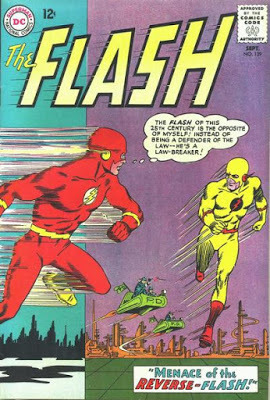
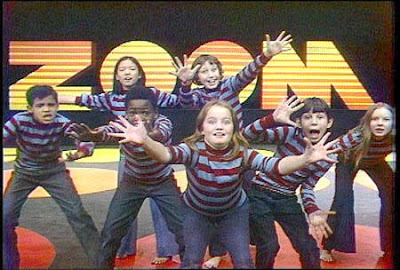
In the 1970s, Zoom was widely known as a children’s TV show.
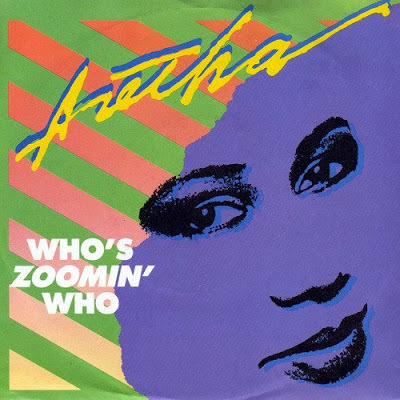
In 1985, Aretha Franklin verbed it in a song (“Who’s Zoomin’ Who?”).
Circa 2000, Mazda sloganized it (“Zoom-Zoom.”)

Since 2020, Zoom has been part of the weekly, daily, or multi-daily routine for so many of us.

In the early days of February, I bottlezoomed. Ran a Zoomathon. Had lots of Zooms in a short period. The rundown:
talk for members of a synagoguemeeting with a film producerunrelated meeting with another film producercreative writing session with a young writermeeting with a site I may be working with meeting with creative partners on projects we’re pitching a performing arts institutionmeeting with those partners and that institutiontalk to kids on behalf of Wonders Learning (I did one last month as well) talk for kids at a London school call with a lawyer (wait, a call, not a Zoom!)
Not counting the creative writing sessions I run for kids, this may be a personal record.
All of the meetings are early stages, so nothing to announce yet. But if something does develop from any of it, I can look back and say it started during the Week That Was Zoom.

In the 1970s, Zoom was widely known as a children’s TV show.

In 1985, Aretha Franklin verbed it in a song (“Who’s Zoomin’ Who?”).

Circa 2000, Mazda sloganized it (“Zoom-Zoom.”)

Since 2020, Zoom has been part of the weekly, daily, or multi-daily routine for so many of us.

In the early days of February, I bottlezoomed. Ran a Zoomathon. Had lots of Zooms in a short period. The rundown:
talk for members of a synagoguemeeting with a film producerunrelated meeting with another film producercreative writing session with a young writermeeting with a site I may be working with meeting with creative partners on projects we’re pitching a performing arts institutionmeeting with those partners and that institutiontalk to kids on behalf of Wonders Learning (I did one last month as well) talk for kids at a London school call with a lawyer (wait, a call, not a Zoom!)
Not counting the creative writing sessions I run for kids, this may be a personal record.
All of the meetings are early stages, so nothing to announce yet. But if something does develop from any of it, I can look back and say it started during the Week That Was Zoom.
February 14, 2021
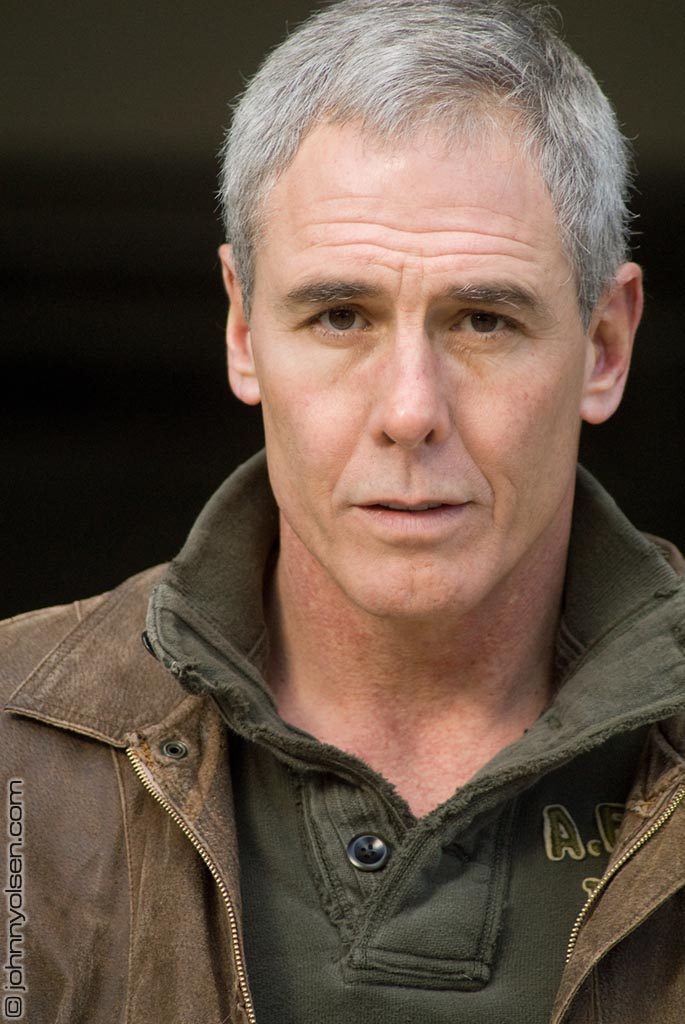
Interview: John Laughlin (Ren’s friend Woody in “Footloose”)
In Footloose (1984), John Laughlin played Woody, friend to Kevin Bacon’s character Ren McCormack.
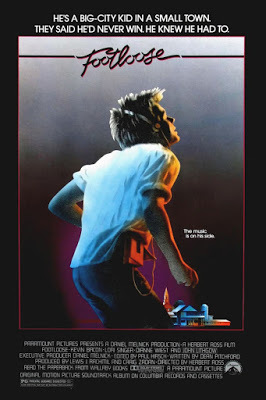
John’s behind-the-scenes recollections of the experience:
What were you doing professionally prior to Footloose?
Before my acting career took off, I worked every part-time job professionally you could imagine, and was also fired from each one as well. I was fortunate enough to work on the series White Shadow which then led to me being in the movie An Officer and a Gentleman, and then, of course, Footloose.
What’s an example of a part-time job you had in the early days?
I’m pretty sure I hit every part-time job at the time: bank teller, bartender, waiter, construction, etc., and I pretty much hated all of them. (laughs)
Why were you fired so much?
I think it was because I was so easy to get along with.
How did you get the role in Footloose?
I auditioned for the director Herbert Ross.
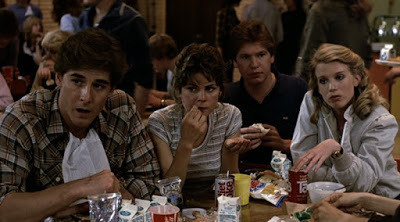
Any funny anecdotes about your Footloose experience?
The first time Chris Penn and I met, he was barbequing steaks in his hotel room. The whole room and hallway were smoked out. We got a memo on that one.
Does that mean you and Chris specifically? Were you an accomplice to the indoor BBQ?
Yes, the memo was just for us two. I was addressed as an accomplice. But man those steaks were terrific.
Is there one story about your Footloose time you tell more than any other?
Not really. All of it was just an extraordinary experience and equally memorable.
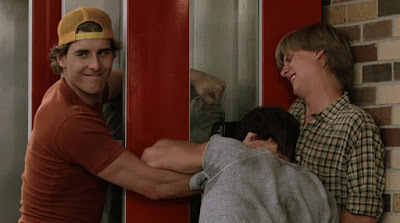
While working on it, did it seem like just another script to you, or did it feel like something special?
It’s funny that you ask this question because out of all of the films I’ve had the privilege of working on, this one in particular [did] feel quite special. During filming we even had some of the music already, which was wonderful. Also when you have the likes of Dan Melnick, Lewis Rachmil, Craig Zaden, and Herbert Ross producing and directing…hard to go wrong with that powerhouse.
What do you remember about your impression of Kevin Bacon?
This was a really big film for him and he was a nice guy who worked hard and really dedicated himself to the role.
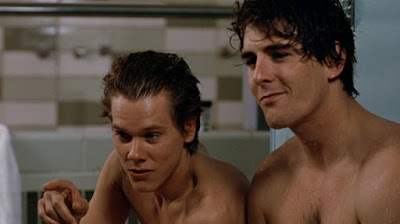
Chris? Lori Singer? Sarah Jessica Parker?
All were a lot of fun to be around and play off of, both on screen and off.
How so off-screen?
Dinners, parties, rehearsals, off-camera prep.
John Lithgow? Dianne Wiest?
Incredibly nice people. They were such amazing actors then and continue to be.
Did you attend the premiere, and if so, what was that like?
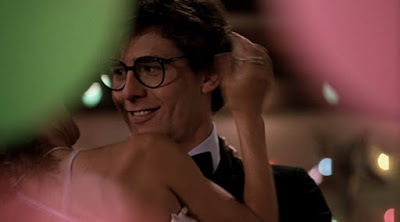
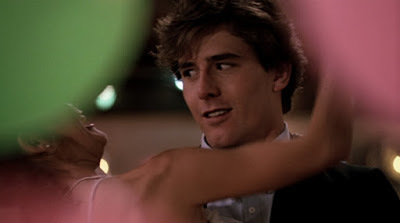
The premiere was fantastic. Both old and young Hollywood attended. I was able to sit next to Cary Grant and Dyan Cannon.
How often were you recognized on the street? Any funny stories about that?
Footloose definitely boosted the spotlight for me.
Do you remember what you earned for the movie, and do you still earn residuals?
Yes and yes.
What did you earn for Footloose (before residuals)?
Let’s just say it was a very healthy paycheck.
What are you doing these days?
By the grace, the same thing.
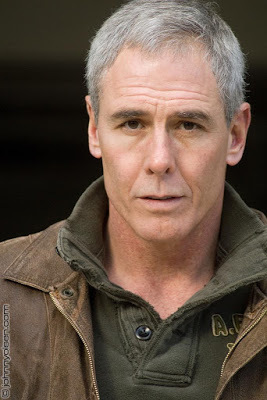
What has been your favorite role?
I’ve been asked this a lot in my career, and for me it has been all of them. It is a huge honor and privilege to have had such a blessed career.
Where do you live?
California.
Children?
One son, best gig I’ve ever had. He’s 28.
If he has seen Footloose, what does he think about it?
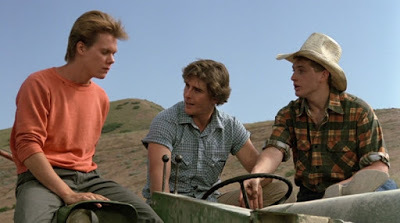
It’s one of his favorite movies and he loves to cheer during the tractor scene.
Have you ever participated in a Footloose-related event (reunion, convention, documentary, etc.)?
No.
Would you be open to meeting fans and signing autographs [at such an event]?
I’ve always been open to my fans and signing autographs. It is a privilege.
When was the last time you saw a member of the cast, and was it on purpose or by chance?
It was Kevin and by chance.
Where? Did you catch up?
It was at ArcLight movie theaters. We ran into each other catching different films. It was a quick hello as we were both in a hurry.
When was the last time you watched Footloose? How did you think it held up?
Last year, and it has definitely sustained itself through the years.
Do you have any mementos from the experience such as set photos, a script, or anything from the set?
All of the above.
What did you save from the set (besides the script)?
My director’s chair and the script were really it.
Have you been interviewed before about this specifically, and if so, do you have those clippings (particularly from back then)?
Yes, many times, and yes.
What did you think when you first heard my request?
Gratitude.
How do you look back on your Footloose experience?
Incredible memory and experience.
If the experience changed your life in any way, how?
It really helped open up my career.

John’s behind-the-scenes recollections of the experience:
What were you doing professionally prior to Footloose?
Before my acting career took off, I worked every part-time job professionally you could imagine, and was also fired from each one as well. I was fortunate enough to work on the series White Shadow which then led to me being in the movie An Officer and a Gentleman, and then, of course, Footloose.
What’s an example of a part-time job you had in the early days?
I’m pretty sure I hit every part-time job at the time: bank teller, bartender, waiter, construction, etc., and I pretty much hated all of them. (laughs)
Why were you fired so much?
I think it was because I was so easy to get along with.
How did you get the role in Footloose?
I auditioned for the director Herbert Ross.

Any funny anecdotes about your Footloose experience?
The first time Chris Penn and I met, he was barbequing steaks in his hotel room. The whole room and hallway were smoked out. We got a memo on that one.
Does that mean you and Chris specifically? Were you an accomplice to the indoor BBQ?
Yes, the memo was just for us two. I was addressed as an accomplice. But man those steaks were terrific.
Is there one story about your Footloose time you tell more than any other?
Not really. All of it was just an extraordinary experience and equally memorable.

While working on it, did it seem like just another script to you, or did it feel like something special?
It’s funny that you ask this question because out of all of the films I’ve had the privilege of working on, this one in particular [did] feel quite special. During filming we even had some of the music already, which was wonderful. Also when you have the likes of Dan Melnick, Lewis Rachmil, Craig Zaden, and Herbert Ross producing and directing…hard to go wrong with that powerhouse.
What do you remember about your impression of Kevin Bacon?
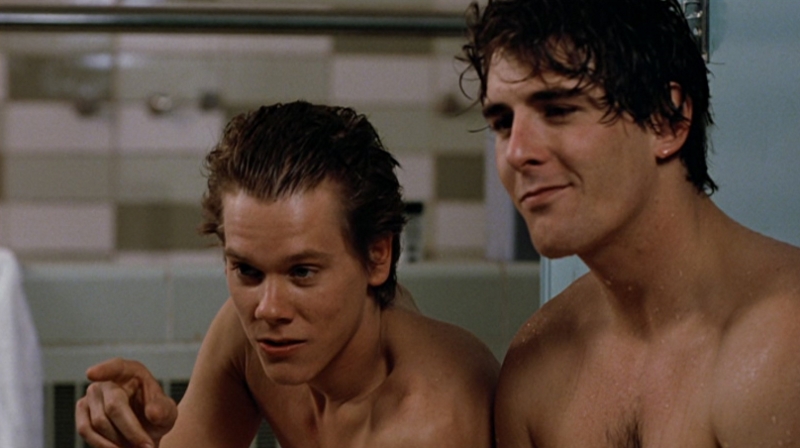
This was a really big film for him and he was a nice guy who worked hard and really dedicated himself to the role.
Chris? Lori Singer? Sarah Jessica Parker?
All were a lot of fun to be around and play off of, both on screen and off.
How so off-screen?
Dinners, parties, rehearsals, off-camera prep.
John Lithgow? Dianne Wiest?
Incredibly nice people. They were such amazing actors then and continue to be.
Did you attend the premiere, and if so, what was that like?
The premiere was fantastic. Both old and young Hollywood attended. I was able to sit next to Cary Grant and Dyan Cannon.
How often were you recognized on the street? Any funny stories about that?
Footloose definitely boosted the spotlight for me.
Do you remember what you earned for the movie, and do you still earn residuals?
Yes and yes.
What did you earn for Footloose (before residuals)?
Let’s just say it was a very healthy paycheck.
What are you doing these days?
By the grace, the same thing.
What has been your favorite role?
I’ve been asked this a lot in my career, and for me it has been all of them. It is a huge honor and privilege to have had such a blessed career.
Where do you live?
California.
Children?
One son, best gig I’ve ever had. He’s 28.
If he has seen Footloose, what does he think about it?
It’s one of his favorite movies and he loves to cheer during the tractor scene.

Have you ever participated in a Footloose-related event (reunion, convention, documentary, etc.)?
No.
Would you be open to meeting fans and signing autographs [at such an event]?
I’ve always been open to my fans and signing autographs. It is a privilege.
When was the last time you saw a member of the cast, and was it on purpose or by chance?
It was Kevin and by chance.
Where? Did you catch up?
It was at ArcLight movie theaters. We ran into each other catching different films. It was a quick hello as we were both in a hurry.
When was the last time you watched Footloose? How did you think it held up?
Last year, and it has definitely sustained itself through the years.
Do you have any mementos from the experience such as set photos, a script, or anything from the set?
All of the above.
What did you save from the set (besides the script)?
My director’s chair and the script were really it.
Have you been interviewed before about this specifically, and if so, do you have those clippings (particularly from back then)?
Yes, many times, and yes.
What did you think when you first heard my request?
Gratitude.
How do you look back on your Footloose experience?
Incredible memory and experience.
If the experience changed your life in any way, how?
It really helped open up my career.

February 12, 2021
London Zooming
No, I don’t mean London calling. It’s still the season of author visits in the time of pandemic.
The latest time I’ve started a talk is 10 pm. (The audience members, no surprise, were teenagers.)
As of today, the earliest is 6:25 am (11:25 am UK time).
I had the privilege of beaming in to be one of the author speakers for the Book Fest at the American School in London.

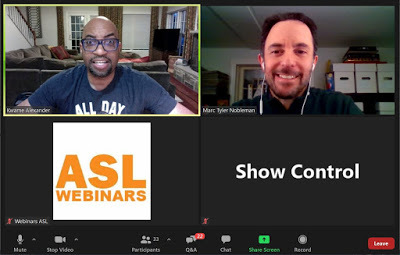
Thanks again to Kwame Alexander (currently the ASL’s Awesome in Residence) for inviting me to be a part of this special event.
And no, “Show Control” was not a command to the students...they were a great audience. I’m assuming this because at no point did I see or hear kids. As with other virtual presentations, I talked to a little white light at the top of my laptop screen.
It’s amazing what we humans can get used to…
The latest time I’ve started a talk is 10 pm. (The audience members, no surprise, were teenagers.)
As of today, the earliest is 6:25 am (11:25 am UK time).
I had the privilege of beaming in to be one of the author speakers for the Book Fest at the American School in London.


Thanks again to Kwame Alexander (currently the ASL’s Awesome in Residence) for inviting me to be a part of this special event.
And no, “Show Control” was not a command to the students...they were a great audience. I’m assuming this because at no point did I see or hear kids. As with other virtual presentations, I talked to a little white light at the top of my laptop screen.
It’s amazing what we humans can get used to…
January 26, 2021
“The Chupacabra Ate the Candelabra” eating activity for toddlers
On Instagram, a book-loving mom and dad posted a clever activity they created for their toddler based on The Chupacabra Ate the Candelabra.
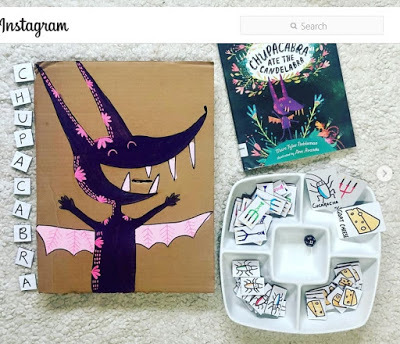
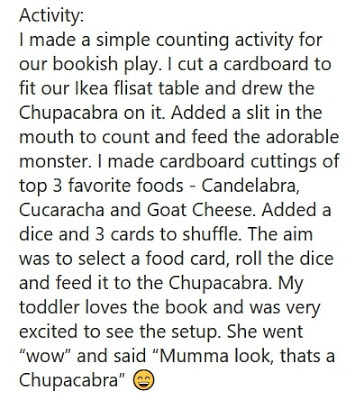
It’s so cute, I want to eat it up. Thank you, craffiti_cookbook!

It’s so cute, I want to eat it up. Thank you, craffiti_cookbook!
January 10, 2021
Goodbye to my “Batman & Bill” desk
I pay attention to desks. Sometimes too much.
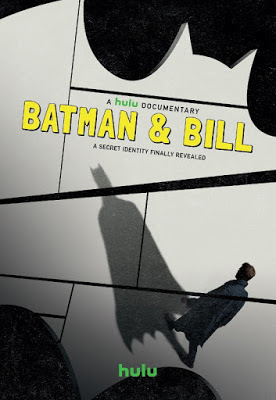
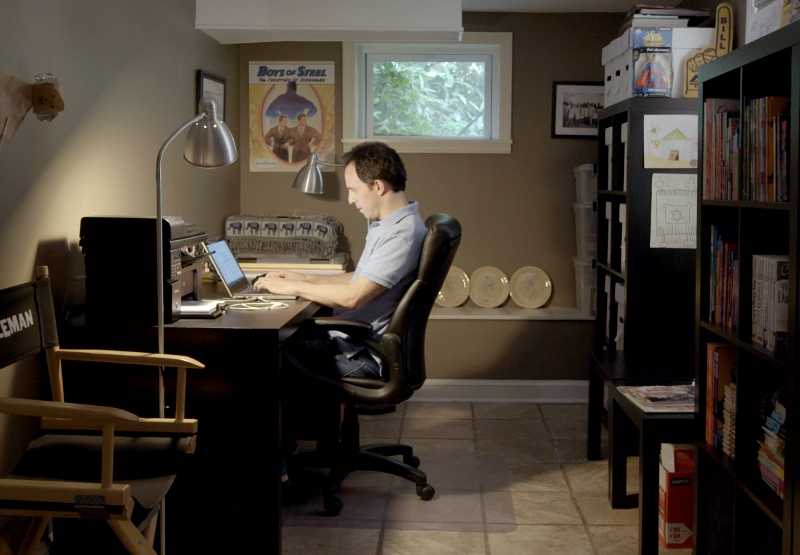
So it will not be out of character for me to announce the death of a former desk of mine: the one seen in Batman & Bill.
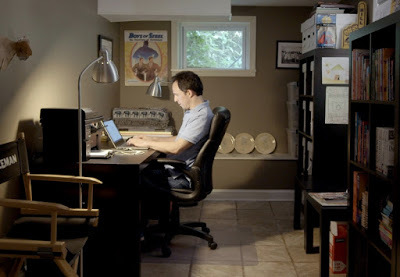
It is not listed in the credits but it plays a critical role in the film: it is where I kept my computer, which is where I wrote the book that inspired the film. Very meta.
Full disclosure: it is not the desk on which I wrote the book (nor is it the computer), but even as a stand-in, it is special (at least to me).
But in between filming the documentary in the spring and summer of 2016 and the release of the doc in May 2017, I got a new desk—a standing desk. So my stalwart black wooden IKEA desk was relocated to my then-9-year-old son’s room until this week when he, too, got a standing desk. (They can make a positive difference in your daily health routine, especially when going to school from home.)
I am sentimental, but that comes with a size limit.
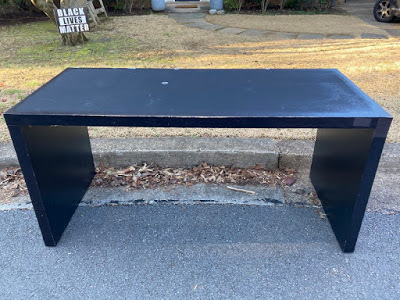 Outside for pickup.
So it will not be out of character for me to announce the death of a former desk of mine: the one seen in Batman & Bill.
It is not listed in the credits but it plays a critical role in the film: it is where I kept my computer, which is where I wrote the book that inspired the film. Very meta.

Full disclosure: it is not the desk on which I wrote the book (nor is it the computer), but even as a stand-in, it is special (at least to me).
But in between filming the documentary in the spring and summer of 2016 and the release of the doc in May 2017, I got a new desk—a standing desk. So my stalwart black wooden IKEA desk was relocated to my then-9-year-old son’s room until this week when he, too, got a standing desk. (They can make a positive difference in your daily health routine, especially when going to school from home.)
I am sentimental, but that comes with a size limit.
 Outside for pickup.
January 6, 2021
A conversation with Jenni Holm about her book “The Lion of Mars”
In 2008, I spoke at a conference in Reno where I met the Holm siblings of Babymouse fame, writer Jenni and illustrator Matt. I liked them instantly because it’s biologically impossible not to. They did a joint presentation that was like a SNL sketch you never saw. Funny, polished, chemistrical. (What’s the adjective corresponding to “chemisty”?)
Matt and I haven’t been in the same place at the same time much since then, but I’ve seen Jenni a lot over the years—San Diego Comic-Con, the National Book Festival, random conferences nationwide, and even my house. She’s one of my dearest friends in the business.
It was, therefore, both a privilege and a pleasure when she asked me to interview her for a bookstore launch event for her latest novel, The Lion of Mars, out now. I have little astronaut experience but tons of experience talking about good books.
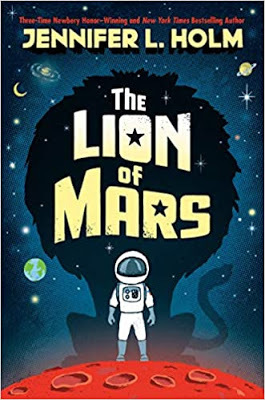
The Lion of Mars is a mystery set in 2091 and set on (spoiler alert) Mars. It explores the dynamic of the varied personalities in the small American settlement and keeps readers in suspense waiting to learn why they do not interact with other countries’ settlements. Ultimately it reveals what the kids do to change that.
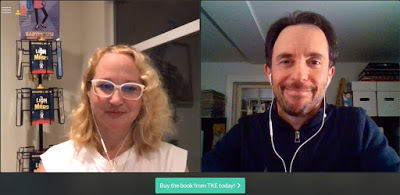
This being 2020—wait, sorry, 2021—the event was virtual. We Zoomed in from all over the galaxy: it was hosted by the King’s English Bookshop in Utah. Jenni was in California. I was in Maryland. The story is (as you may recall) on Mars.
I’ve been interviewed countless times and I’ve been on many panels with fellow authors, but this was, I believe, the first time I’ve interviewed another author—certainly the first time one-on-one in front of an audience. It was so fun stepping into this new role. Jenni, of course, had delightful answers to both my questions and the questions from the audience. I hope the unseen attendees (and Jenni) enjoyed it as much as I did.
Though COVID-19 has, of course, put most in-person literary events on hold, I haven’t had a lonely year, authorwise: I did a range of video projects with/for Kwame Alexander, Alan Katz, Jerry Pallotta, and Julia DeVillers. One was even in person—so 2019!
And my public chat with longtime friend Jenni Holm about her engaging Red Planet story was a sweet red cherry on top.
Matt and I haven’t been in the same place at the same time much since then, but I’ve seen Jenni a lot over the years—San Diego Comic-Con, the National Book Festival, random conferences nationwide, and even my house. She’s one of my dearest friends in the business.
It was, therefore, both a privilege and a pleasure when she asked me to interview her for a bookstore launch event for her latest novel, The Lion of Mars, out now. I have little astronaut experience but tons of experience talking about good books.

The Lion of Mars is a mystery set in 2091 and set on (spoiler alert) Mars. It explores the dynamic of the varied personalities in the small American settlement and keeps readers in suspense waiting to learn why they do not interact with other countries’ settlements. Ultimately it reveals what the kids do to change that.
This being 2020—wait, sorry, 2021—the event was virtual. We Zoomed in from all over the galaxy: it was hosted by the King’s English Bookshop in Utah. Jenni was in California. I was in Maryland. The story is (as you may recall) on Mars.
I’ve been interviewed countless times and I’ve been on many panels with fellow authors, but this was, I believe, the first time I’ve interviewed another author—certainly the first time one-on-one in front of an audience. It was so fun stepping into this new role. Jenni, of course, had delightful answers to both my questions and the questions from the audience. I hope the unseen attendees (and Jenni) enjoyed it as much as I did.

Though COVID-19 has, of course, put most in-person literary events on hold, I haven’t had a lonely year, authorwise: I did a range of video projects with/for Kwame Alexander, Alan Katz, Jerry Pallotta, and Julia DeVillers. One was even in person—so 2019!
And my public chat with longtime friend Jenni Holm about her engaging Red Planet story was a sweet red cherry on top.
December 28, 2020
“Super Friends” comic guest stars: good, bad, and original
Super Friends was a Saturday morning fixture for more than a decade, with new seasons every fall from 1973 to 1985 except 1974-76 and 1982; new episodes were produced in 1983 but didn’t air till later.
I had a front-row seat almost the entire time.
A comic book based on the series was published from 1976 to 1981, 47 issues in all. I began collecting with #19 in 1979, then tracked down many of the 18 back issues, and ultimately got a subscription—the first and only time I subscribed to a comic book.
The comic was interesting to me for a number of reasons:
it sometimes included guest heroes who never appeared on the animated series—and were not even popular characters in mainstream DC comicsit sometimes included villains who never appeared on the animated seriesit sometimes featured villains created for the comic who never appeared on the animated series or in other DC comics, though at least one did later cross over into “regular” continuityit introduced the Global Guardians, who also joined continuity
Statistics (covers only)
heroes who also appeared on show:
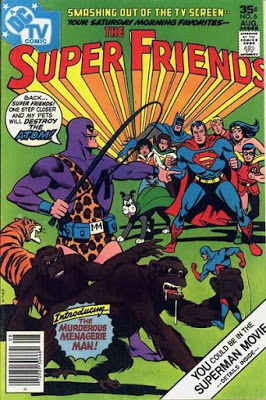 The Atom
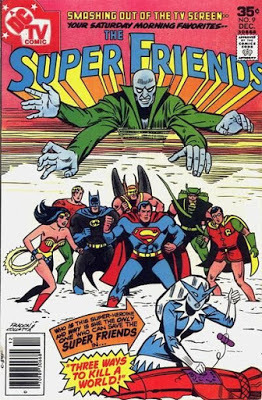 Green Arrow (one appearance, 1973 season)Hawkman
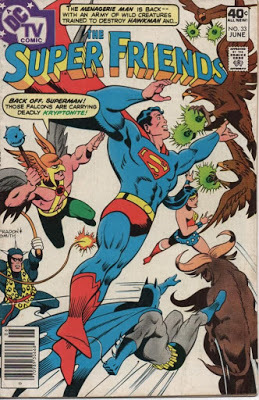 Hawkman
heroes who did not appear on show (not counting Global Guardians except Green Fury, who later became Fire):
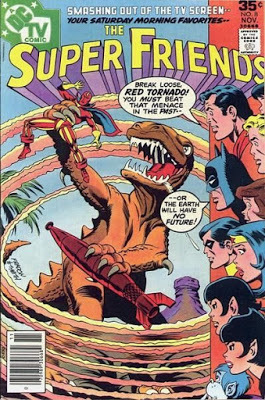 Red Tornado
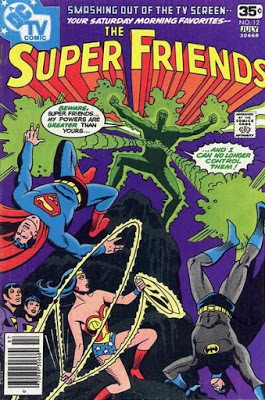 TNT and Dyna-Mite(tied with Black Orchid for the most obscure guest star)
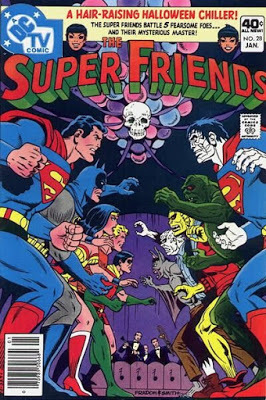 Swamp ThingThe DemonMan-Bat (though a villain at the time)
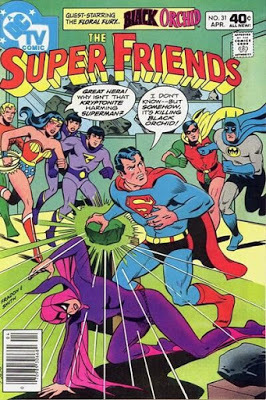 Black Orchid (tied with TNT and Dyna-Mite for the most obscure guest star)
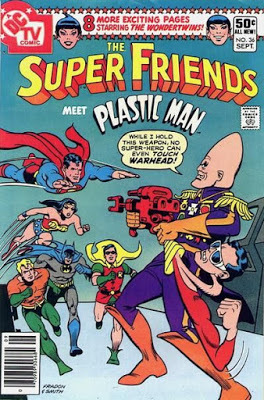 Plastic Man
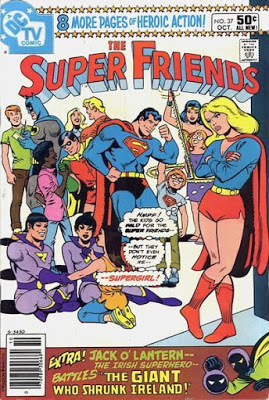 Supergirl(inside: Weather Wizard, enemy of the Flash)
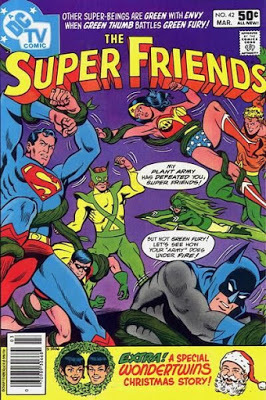 Green Fury
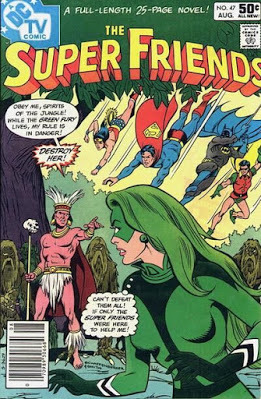 Green Fury
original villains:
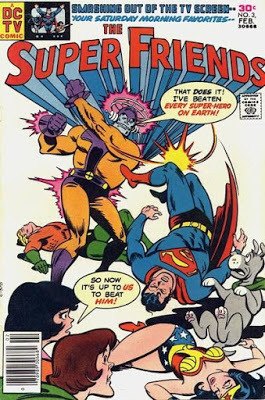 World Beater (also appeared in #45 and #46; see below)
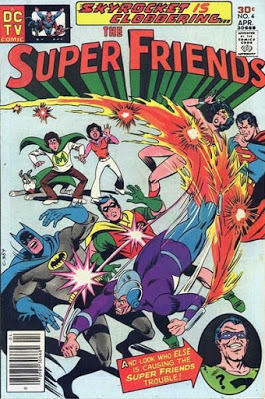 Skyrocket
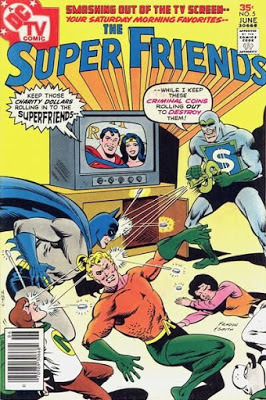 Greenback
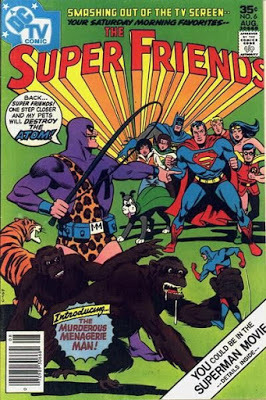 Menagerie Man (also appeared in #33; see above)
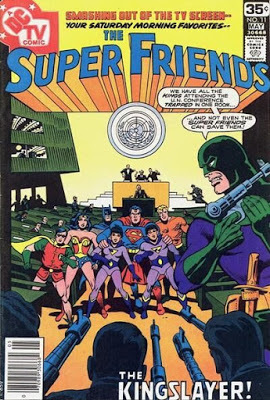 Kingslayer
(introduced in mainstream continuity in 2016)
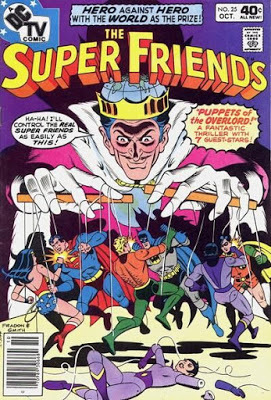 Overlord
(also appeared in #39 and #43)(inside: Green Lantern, Mera, Aqualad, Nubia, Green Fury)
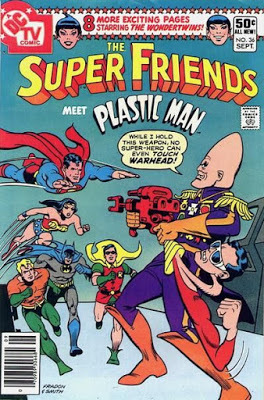 Warhead
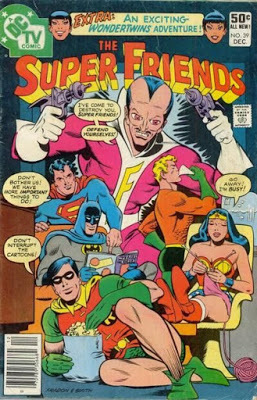 Futurio (Overlord)
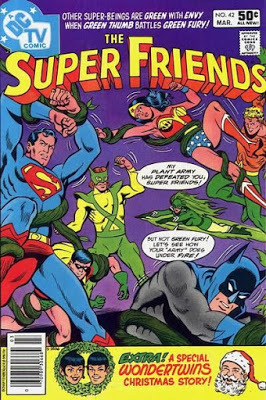 Green Thumb
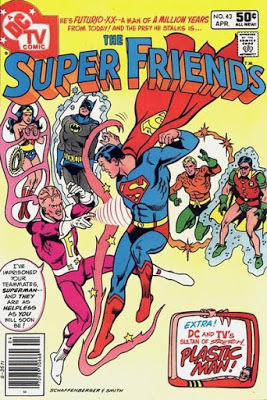 Futurio-XX (Overlord)
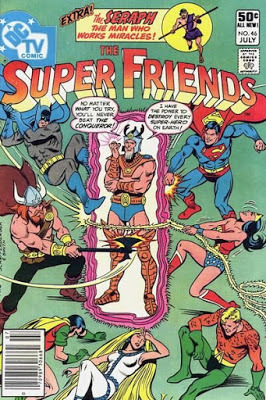 The Conquerer
pre-existing villains who also appeared on show:
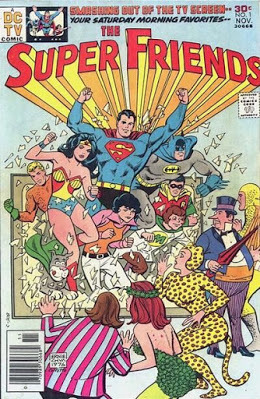 Toyman (enemy of Superman)Cheetah (enemy of Wonder Woman)The Penguin (enemy of Batman)
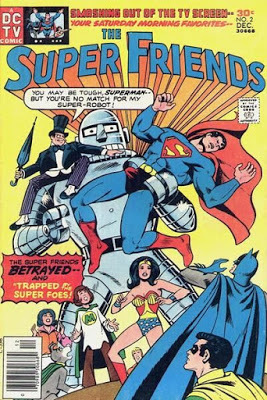 The Penguin
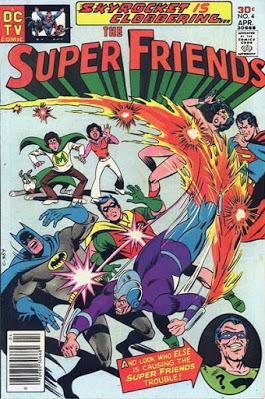 The Riddler (enemy of Batman)
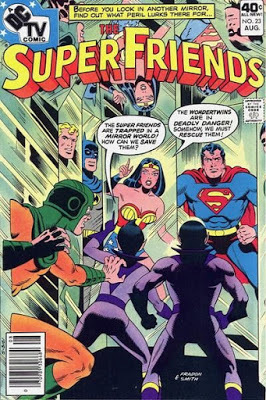 Mirror Master (enemy of the Flash)
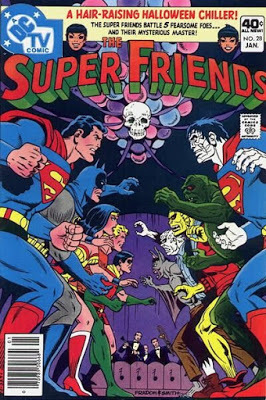 Bizarro (enemy of Superman)Solomon Grundy (enemy of multiple heroes)
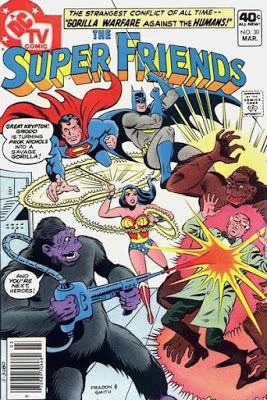 Grodd (enemy of the Flash)
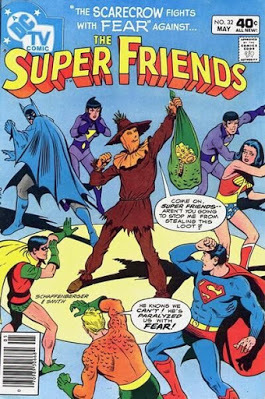 Scarecrow (enemy of Batman)
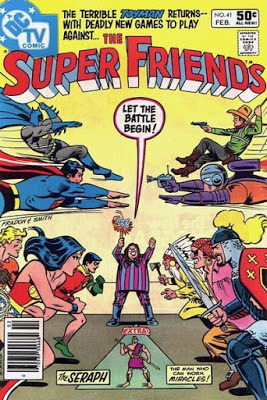 Toyman
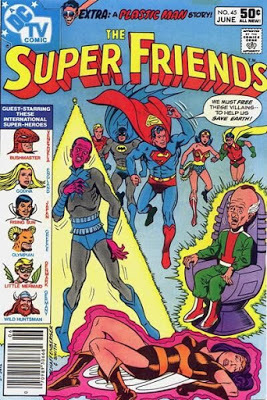 Sinestro (enemy of Green Lantern)
pre-existing villains who did not appear on show:
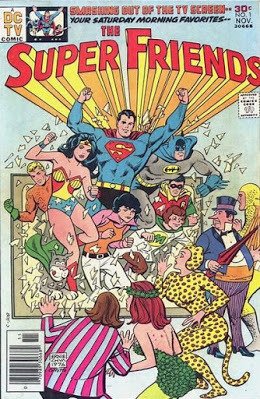 Poison Ivy (enemy of Batman)Human Flying Fish (enemy of Aquaman)
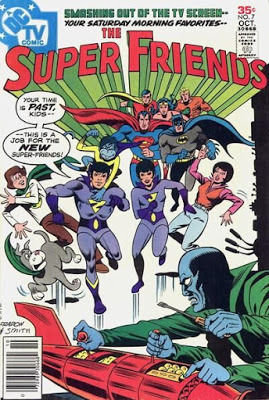 Grax (enemy of Superman)
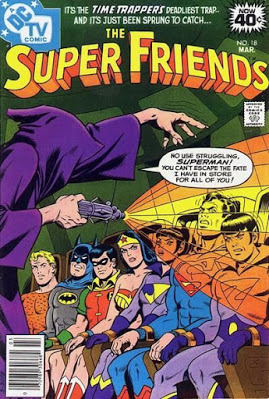 Time Trapper (enemy of the Legion of Super-Heroes)
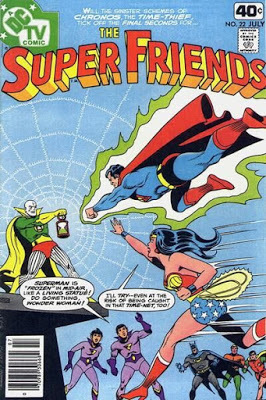 Chronos (enemy of the Atom)
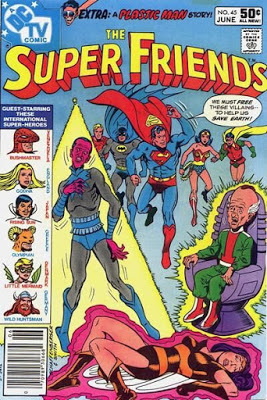 Queen Bee (enemy of the Justice League)Hector Hammond (enemy of Green Lantern)(inside: Kanjar Ro, enemy of the Justice League)
This leaves 17 covers that fell into none of these categories.
Quick lists
heroes who also appeared on show:
The AtomGreen ArrowHawkman
heroes who did not appear on show:
Red TornadoTNT and Dyna-MiteSwamp ThingThe DemonMan-BatBlack Orchid Plastic ManSupergirlGreen Fury
original villains:
World Beater SkyrocketGreenbackMenagerie Man Kingslayer Overlord WarheadFuturio (Overlord)Green ThumbFuturio-XX (Overlord)The Conquerer
pre-existing villains who also appeared on show:
Toyman *Cheetah *The PenguinThe Riddler *Mirror Master Bizarro *Solomon Grundy *Grodd *Scarecrow *Sinestro *
* members of Legion of Doom
pre-existing villains who did not appear on show:
Poison Ivy Human Flying FishGrax Time Trapper Chronos Queen BeeHector Hammond
I had a front-row seat almost the entire time.
A comic book based on the series was published from 1976 to 1981, 47 issues in all. I began collecting with #19 in 1979, then tracked down many of the 18 back issues, and ultimately got a subscription—the first and only time I subscribed to a comic book.
The comic was interesting to me for a number of reasons:
it sometimes included guest heroes who never appeared on the animated series—and were not even popular characters in mainstream DC comicsit sometimes included villains who never appeared on the animated seriesit sometimes featured villains created for the comic who never appeared on the animated series or in other DC comics, though at least one did later cross over into “regular” continuityit introduced the Global Guardians, who also joined continuity
Statistics (covers only)
heroes who also appeared on show:
 The Atom
 Green Arrow (one appearance, 1973 season)Hawkman
 Hawkman
heroes who did not appear on show (not counting Global Guardians except Green Fury, who later became Fire):
 Red Tornado
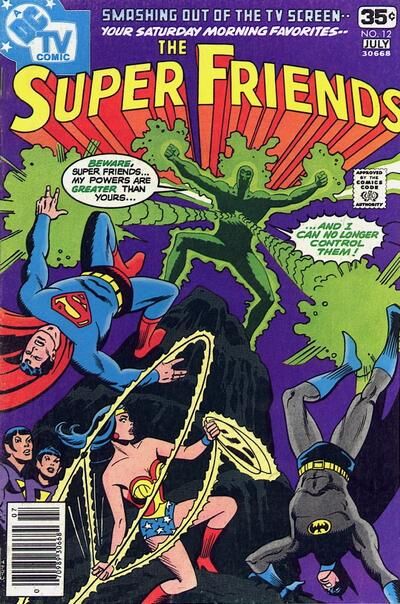 TNT and Dyna-Mite(tied with Black Orchid for the most obscure guest star)
 Swamp ThingThe DemonMan-Bat (though a villain at the time)
 Black Orchid (tied with TNT and Dyna-Mite for the most obscure guest star)
 Plastic Man
 Supergirl(inside: Weather Wizard, enemy of the Flash)
 Green Fury
 Green Fury
original villains:
 World Beater (also appeared in #45 and #46; see below)
 Skyrocket
 Greenback
 Menagerie Man (also appeared in #33; see above)
 Kingslayer
 (introduced in mainstream continuity in 2016)
 Overlord
 (also appeared in #39 and #43)(inside: Green Lantern, Mera, Aqualad, Nubia, Green Fury)
 Warhead
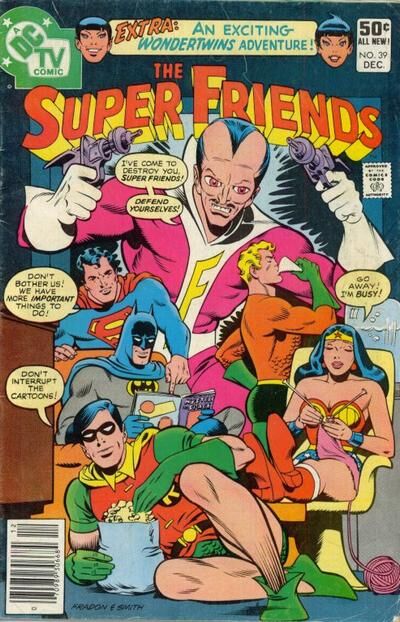 Futurio (Overlord)
 Green Thumb
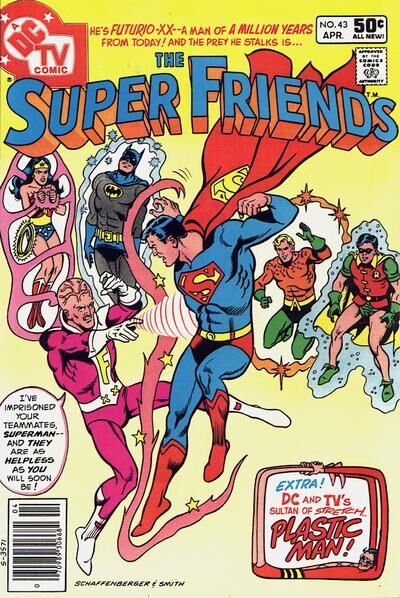 Futurio-XX (Overlord)
 The Conquerer
pre-existing villains who also appeared on show:
 Toyman (enemy of Superman)Cheetah (enemy of Wonder Woman)The Penguin (enemy of Batman)
 The Penguin
 The Riddler (enemy of Batman)
 Mirror Master (enemy of the Flash)
 Bizarro (enemy of Superman)Solomon Grundy (enemy of multiple heroes)
 Grodd (enemy of the Flash)
 Scarecrow (enemy of Batman)
 Toyman
 Sinestro (enemy of Green Lantern)
pre-existing villains who did not appear on show:
 Poison Ivy (enemy of Batman)Human Flying Fish (enemy of Aquaman)
 Grax (enemy of Superman)
 Time Trapper (enemy of the Legion of Super-Heroes)
 Chronos (enemy of the Atom)
 Queen Bee (enemy of the Justice League)Hector Hammond (enemy of Green Lantern)(inside: Kanjar Ro, enemy of the Justice League)
This leaves 17 covers that fell into none of these categories.
Quick lists
heroes who also appeared on show:
The AtomGreen ArrowHawkman
heroes who did not appear on show:
Red TornadoTNT and Dyna-MiteSwamp ThingThe DemonMan-BatBlack Orchid Plastic ManSupergirlGreen Fury
original villains:
World Beater SkyrocketGreenbackMenagerie Man Kingslayer Overlord WarheadFuturio (Overlord)Green ThumbFuturio-XX (Overlord)The Conquerer
pre-existing villains who also appeared on show:
Toyman *Cheetah *The PenguinThe Riddler *Mirror Master Bizarro *Solomon Grundy *Grodd *Scarecrow *Sinestro *
* members of Legion of Doom
pre-existing villains who did not appear on show:
Poison Ivy Human Flying FishGrax Time Trapper Chronos Queen BeeHector Hammond
December 26, 2020
Justice League superhero pairs in DC logo box, 1990-92
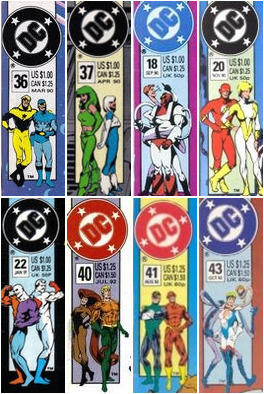
Over two series and three years, on certain covers, DC Comics placed a playful pair of superheroes at top left (below the logo). In all, thirteen heroes were featured; three of them (Flash, Elongated Man, Power Girl) made repeat appearances, but with a different partner.
The first two pairs appeared on covers of Justice League America, the rest Justice League Europe.
Here is a collage gallery:
Sources:
Justice League America
Blue Beetle, Booster Gold - #36, 3/90Fire, Ice - #37, 4/90
Justice League Europe
Elongated Man, Rocket Red - #18, 9/90Flash, Power Girl - #20, 11/90Metamorpho, Captain Atom - #22, 1/91Aquaman, Crimson Fox - #40, 7/92Flash, Green Lantern - #41, 8/92Elongated Man, Power Girl - #43, 10/92
The first two pairs appeared on covers of Justice League America, the rest Justice League Europe.
Here is a collage gallery:

Sources:
Justice League America
Blue Beetle, Booster Gold - #36, 3/90Fire, Ice - #37, 4/90
Justice League Europe
Elongated Man, Rocket Red - #18, 9/90Flash, Power Girl - #20, 11/90Metamorpho, Captain Atom - #22, 1/91Aquaman, Crimson Fox - #40, 7/92Flash, Green Lantern - #41, 8/92Elongated Man, Power Girl - #43, 10/92
December 21, 2020
Syfy interview with "Batman & Bill" directors
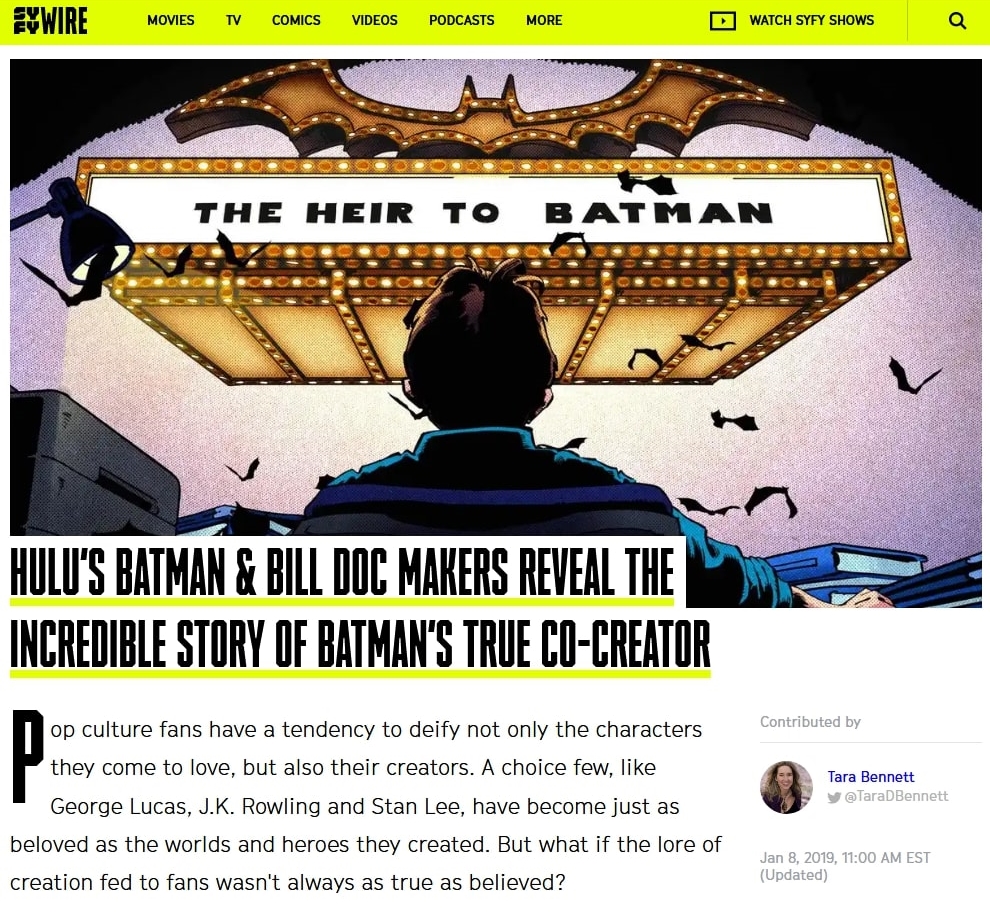
I only recently came across a snappy 2019 interview with Batman & Bill directors Don Argott and Sheena M. Joyce on Syfy (the brand formerly known as the Sci-Fi Channel) about the documentary.
Commentary:
Imagine that! A children’s book that requires hard work and aims big! (But I get where this perspective is coming from. All authors of books for young readers do.)
They respectfully left out how Don discreetly alerted me that my fly was down. I was practically a parody of making a totally avoidable bad first impression.
This is not quite accurate. From the first time Athena and I talked, I encouraged her to pursue justice for her grandfather’s legacy, but was not specifically advocating for a lawsuit, which can, of course, take years and cost lots (both financially and emotionally). If she ultimately chose to take legal action, I would have supported it. But I preferred a less contentious approach—namely negotiation—if possible, and am confident I was not alone in this feeling.
As I’ve noted before, Athena and I first met in person on March 18, 2007, in Florida, a year before any talk of a documentary and three years before I had a book contract. I next saw her two years to the month later, in New York. Six months after that, I met Don and Sheena, also in New York. The scene in the film of me going to Athena’s house was in 2011, which was, I believe, the first time I’d seen her since 2009.
Once a nonfiction writer who meticulously doublechecks and documents sources, always a nonfiction writer who meticulously doublechecks and documents sources!
Commentary:
Like a justice-seeking hero from the comics he adores, Nobleman chased the real story like it was a 60 Minutes exposé in hopes of restoring Finger’s legacy, in of all things a children’s book…
Imagine that! A children’s book that requires hard work and aims big! (But I get where this perspective is coming from. All authors of books for young readers do.)
Syfy: When did you guys first meet Marc Tyler Nobleman, and determine his Bill Finger quest would make a great doc?Sheena M. Joyce: We met after a screening at the New York Film Festival, and we hit it off.
They respectfully left out how Don discreetly alerted me that my fly was down. I was practically a parody of making a totally avoidable bad first impression.
Sheena: …Marc was trying to get Athena [Bill's granddaughter] to mount this lawsuit [against DC Entertainment]
This is not quite accurate. From the first time Athena and I talked, I encouraged her to pursue justice for her grandfather’s legacy, but was not specifically advocating for a lawsuit, which can, of course, take years and cost lots (both financially and emotionally). If she ultimately chose to take legal action, I would have supported it. But I preferred a less contentious approach—namely negotiation—if possible, and am confident I was not alone in this feeling.
Sheena: We were there when Marc first met Athena…
As I’ve noted before, Athena and I first met in person on March 18, 2007, in Florida, a year before any talk of a documentary and three years before I had a book contract. I next saw her two years to the month later, in New York. Six months after that, I met Don and Sheena, also in New York. The scene in the film of me going to Athena’s house was in 2011, which was, I believe, the first time I’d seen her since 2009.
Once a nonfiction writer who meticulously doublechecks and documents sources, always a nonfiction writer who meticulously doublechecks and documents sources!


