
Brandon S. Graham's Blog: FictionDoldrums, page 4
October 24, 2014
The Uncanny Valley
The term the Uncanny Valley was coined by robotics professor Masahiro Mori in 1970 and is a popular idea in the field of human aesthetics. His original hypothesis states that: as the appearance of a robot is made more human, some human observers' emotional response to the robot will become increasingly positive and empathic, until a point is reached beyond which the response quickly becomes that of strong revulsion. The "valley" refers to the dip in a graph of the comfort level of humans as subjects move toward a healthy, natural human likeness described in a function of a subject's aesthetic acceptability.
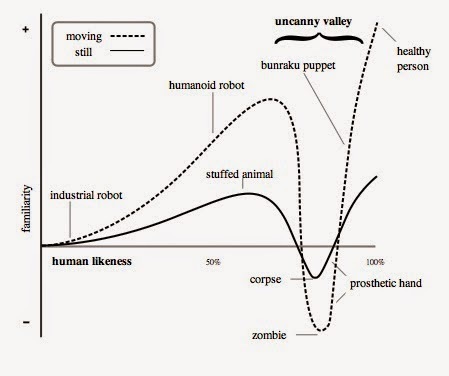
The graph above charts the valley of human repulsion. Popularly sited examples are regularly found in the fields of robotics and 3D animation. Here's one that illustrates the point pretty well.
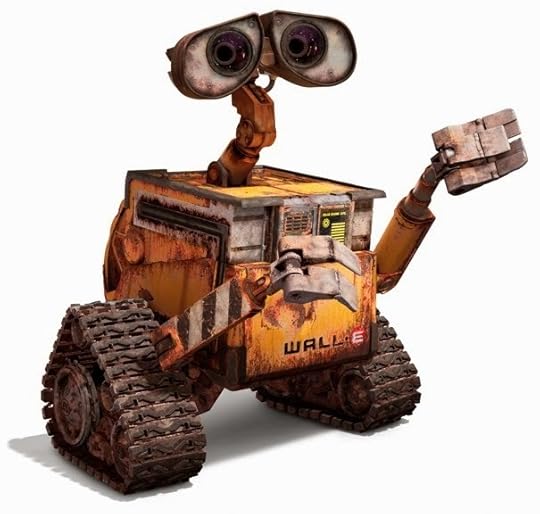
In the (mostly) computer animated Pixar movie WALL-E the little robot, the title character, is widely adored. In the narrative the little guy has been alone for hundreds of years, the last remaining robot cleaning up the ecological mess the humans left behind when they abandoned the planet. Over time he has developed a "glitch": sentience and a personality. He is kind, sentimental, a romantic. His kindness and goodness are hugely attractive. Aesthetically speaking, his squat body and ocular headlights - which rise and fall to change his expression - are cute, attractive, likeable. WALL-E's friendly demeanor has an effect on the other robots and humans he meets and he is eventually the impetus that reboots the entire human race to start over on planet Earth. On the graph above WALL-E might be located somewhere along the arc that describes industrial robots and humanoid robots. Likely near the apex.
In contrast, the motion capture animation of Tom Hank's mystical conductor from The Polar Express
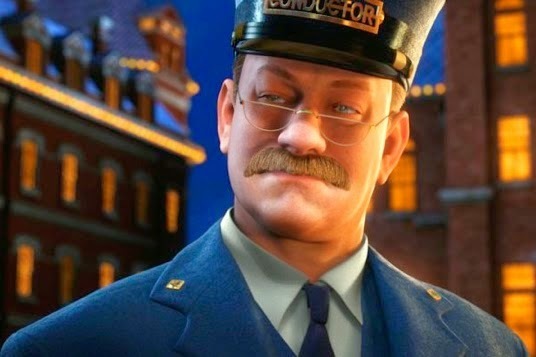 was off-putting to many people. In the context of the narrative, and in all fairness, Hank's character was a bit gruff and because of that it took some time to warm up to him. But not even the charming, charismatic everyman acting skills of the five-time Oscar nominee (and two-time winner) could charm movie goers into embracing the awkward, too-human or not human enough digital doppelganger. In other words, the Polar Express plummeted right over the edge of the Uncanny Valley and crashed at the bottom. On the above chart, this depiction stirred a response similar to a corpse inexplicably brought back to life, seemingly unaware of it's own demise. In short, it was kind of creepy and unnerving.
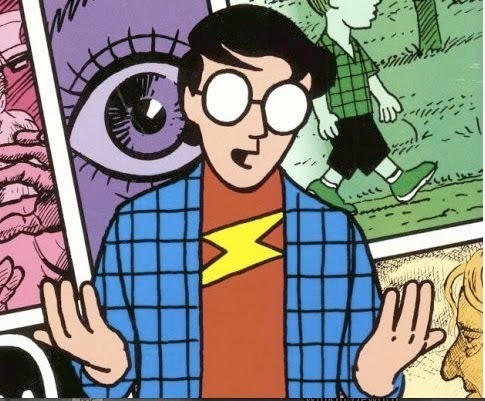
In Scott McCloud's very smart 1993 book, Understanding Comics, He makes an argument that I hope fits into this conversation. I'll try to paraphrase it. As the rendered likeness of a character becomes more photo-realistic, it becomes harder for the reader to imagine herself or himself in the skin of the character. In otherwords, generalized human features represent all humans, but overly detailed representations only represent one specific person.
So if the question is, why do we, collectively speaking, react with increasing warmth toward characters that demonstrate more and more human qualities, up to a point, and then quickly and strongly become repulsed; then the answer may have to do with our own hardwired compulsion to reflexively judge and react to other humans.
We love to anthropomorphize our pets, treating them more and more like toddlers than animals. We name our cars, ships, planes, guns, body parts and guitars. We like to filter our understanding of the external world through our highly refined, split second and instinctive capacity to judge other people as safe, good, healthy, a part of the in-group or bad, sick, dangerous, and not a part of the tribe.
The summer before I taught my first college level class, I spent two weeks in a "How To Teach" workshop. One statistic I recall is that a group of students make a strong and lasting judgment about how they feel about an instructor within the first 4 seconds of the first day of class.
My real interest here is that I suspect this same instinct to judge others visually and to viscerally react at a subconscious level also applies to the characters that populate composed narratives. Readers form an image of characters. It happens more slowly than if a person was standing before them. Perhaps rather than 4 seconds it takes 4 pages, or 4 minutes or a chapter. But through tone of writing and descriptive details a character's image is put through the same filter as a visual representation. Knowing this unavoidable human instinct, writers can either meet or subvert the expectations of the reader in order to make an artistic point, or a social commentary. This may be the reason why one cogent, defining detail about a protagonist combined with a strong voice may allows the reader to build an image of a person they might like to spend time with, filling in the gaps with what they choose. While long, exact descriptions of every detail of a hero's physicality and personality may actually lead a reader to judge a character harshly, to take longer to embrace the character, take longer to feel committed to the narrative, and by extension doubt the veracity of the authorial voice. To state it another way, a smart, accurate, but loose depiction leaves room for a reader to bridge the gaps in a way they are most likely to empathize with. But over-defining pushes the reader closer and closer to tipping over the apex where empathy turns to suspicion and where the reader is lost down a narrative pit.
In fresh book news: there is no fresh book news. My UK publisher met with US publishers that my agents have been in discussions with about the rights to Good For Nothing. I haven't heard how the meetings went, or what if anything is in development. I have been working to finish the last of the editing on my second manuscript, and have been brushing-up some short fiction with the intention of curating a collection. I also finished some short fiction for a forthcoming artist's book. I haven't heard much from my agents lately. That is all. More news to come. Or not.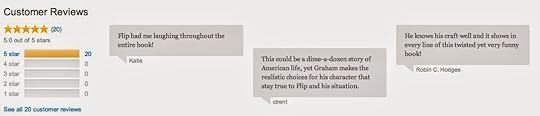
The graph above charts the valley of human repulsion. Popularly sited examples are regularly found in the fields of robotics and 3D animation. Here's one that illustrates the point pretty well.
In the (mostly) computer animated Pixar movie WALL-E the little robot, the title character, is widely adored. In the narrative the little guy has been alone for hundreds of years, the last remaining robot cleaning up the ecological mess the humans left behind when they abandoned the planet. Over time he has developed a "glitch": sentience and a personality. He is kind, sentimental, a romantic. His kindness and goodness are hugely attractive. Aesthetically speaking, his squat body and ocular headlights - which rise and fall to change his expression - are cute, attractive, likeable. WALL-E's friendly demeanor has an effect on the other robots and humans he meets and he is eventually the impetus that reboots the entire human race to start over on planet Earth. On the graph above WALL-E might be located somewhere along the arc that describes industrial robots and humanoid robots. Likely near the apex.
In contrast, the motion capture animation of Tom Hank's mystical conductor from The Polar Express
was off-putting to many people. In the context of the narrative, and in all fairness, Hank's character was a bit gruff and because of that it took some time to warm up to him. But not even the charming, charismatic everyman acting skills of the five-time Oscar nominee (and two-time winner) could charm movie goers into embracing the awkward, too-human or not human enough digital doppelganger. In other words, the Polar Express plummeted right over the edge of the Uncanny Valley and crashed at the bottom. On the above chart, this depiction stirred a response similar to a corpse inexplicably brought back to life, seemingly unaware of it's own demise. In short, it was kind of creepy and unnerving.In Scott McCloud's very smart 1993 book, Understanding Comics, He makes an argument that I hope fits into this conversation. I'll try to paraphrase it. As the rendered likeness of a character becomes more photo-realistic, it becomes harder for the reader to imagine herself or himself in the skin of the character. In otherwords, generalized human features represent all humans, but overly detailed representations only represent one specific person.
So if the question is, why do we, collectively speaking, react with increasing warmth toward characters that demonstrate more and more human qualities, up to a point, and then quickly and strongly become repulsed; then the answer may have to do with our own hardwired compulsion to reflexively judge and react to other humans.
We love to anthropomorphize our pets, treating them more and more like toddlers than animals. We name our cars, ships, planes, guns, body parts and guitars. We like to filter our understanding of the external world through our highly refined, split second and instinctive capacity to judge other people as safe, good, healthy, a part of the in-group or bad, sick, dangerous, and not a part of the tribe.
The summer before I taught my first college level class, I spent two weeks in a "How To Teach" workshop. One statistic I recall is that a group of students make a strong and lasting judgment about how they feel about an instructor within the first 4 seconds of the first day of class.
My real interest here is that I suspect this same instinct to judge others visually and to viscerally react at a subconscious level also applies to the characters that populate composed narratives. Readers form an image of characters. It happens more slowly than if a person was standing before them. Perhaps rather than 4 seconds it takes 4 pages, or 4 minutes or a chapter. But through tone of writing and descriptive details a character's image is put through the same filter as a visual representation. Knowing this unavoidable human instinct, writers can either meet or subvert the expectations of the reader in order to make an artistic point, or a social commentary. This may be the reason why one cogent, defining detail about a protagonist combined with a strong voice may allows the reader to build an image of a person they might like to spend time with, filling in the gaps with what they choose. While long, exact descriptions of every detail of a hero's physicality and personality may actually lead a reader to judge a character harshly, to take longer to embrace the character, take longer to feel committed to the narrative, and by extension doubt the veracity of the authorial voice. To state it another way, a smart, accurate, but loose depiction leaves room for a reader to bridge the gaps in a way they are most likely to empathize with. But over-defining pushes the reader closer and closer to tipping over the apex where empathy turns to suspicion and where the reader is lost down a narrative pit.
In fresh book news: there is no fresh book news. My UK publisher met with US publishers that my agents have been in discussions with about the rights to Good For Nothing. I haven't heard how the meetings went, or what if anything is in development. I have been working to finish the last of the editing on my second manuscript, and have been brushing-up some short fiction with the intention of curating a collection. I also finished some short fiction for a forthcoming artist's book. I haven't heard much from my agents lately. That is all. More news to come. Or not.


September 19, 2014
The End of Life as We Know It (and other good news).
 Recently I listened to an interview with Lev Grossman, book critic and author of The Magicians. He was asked if, in light of the success of the Lord of the Rings movie trilogy and HBO's Game of Thrones, he felt fortunate to be a part of a return to popularity of the fantasy genre. He said yes, acknowledged a renewed interest, and went on to explain he thought fantasy offered the kinds of solutions people/readers/viewers are hungry for these days. His comments made me ask what is the current, most popular narrative trend, and why? This is what I came up with:
  Narratives that borrow troupes from dystopian and post-apocalyptic fiction have become national and international obsessions. The zombie-themed comic and graphic novel The Walking Dead, and the novels and television show that have risen from it are hugely popular. I know many people that are obsessed with it. I personally am anxiously awaiting the release of the next graphic novel. Creator Robert Kirkman has said his interest in Zombie fiction isn't in gore and brain-hungry hordes. Instead it is in the ways that people interact in extreme circumstances.
 NBC's Revolution describes a world in which the electrical grid suddenly and (seemingly) permanently stops working. It follows a band of survivors trying to navigate the challenges of the new world. There is a slight steam punk quality, in the ways that antiquated technologies become important again. Steam engines are used to transport goods; Horses are a primary form of transportation, bows and arrows, tents, hunting for food become highly valued skills. The potter is suddenly more relavent than the politician.
Falling Skies, similarly, is about a band of Americans trying to rebel against alien overlords while fighting amongst themselves about how best to live in the new reality and potentially rebuild a new country and government on the wreckage of the last. The central arc follows one family, a father and his three sons.
There are numerous other examples: World War Z, The Hunger Games, and a final example of the genre is the BBC's Survivors. In this brave new world, a virus has killed the vast majority of the world's population; society breaks down, anarchy rules. Except where small tribes of like-minded individuals can come together to form communal groups. Of course, when multiple groups are in competition, as resources become more limited, conflicts arise.

As Kirkman rightly indicated, the specifics of these extreme situations are not important. They are all shades of the same story. What interests me is the WHY of it. Of course, these stories have action, danger, violence, love, sex and periodic levity; all the good stuff of narrative. But the central driver of this phenomenon is that humans have come to feel, in our core, that it is time for radical change. Our organizations, our societies and governments have made poor choices for our planet. The divide between the haves and have-nots continues to increase. Our institutions have not been good stewards for the world's citizens, but have instead had the interests of those who wield the greatest influence in mind. There is an idealistic impulse in our attraction to the premise of something beyond our control flipping the table over and forcing us to start from scratch. It is appealing to think about circumstances making our lives less complex, more people-centered, less about technology and token economics. All of these shows are essentially existential in concept. They ask who are we, what is important to us, how can we encourage our best qualities while fighting our darkest impulses. What do we do to make the most of the limited time we have? Today, the results of Scotland's vote for independence was tallied and announced. Scotland will remain a part of the UK. I read an article that argued the well-to-do and long established conservative and upper-class government in London believes it knows best what Scotland needs, and doesn't want to hear from the Scots on the issue. The article framed the political situation as an example of the way technology has made power more diffused. It predicts that individuals will form large groups that will try to wrestle power away from the centralized governments of the world, unless those governments begin to willingly share power and become better at caring for the manyrather than the few. Our interest in fantasy, post-apocalyptical, dystopian, and lord-of-the-flies simplified microcosms may not be so much about escapism and fancy. It may be an expression of our deep desire to live more simply, to start over, to try again. In short, we feel it could all slide sideways and crash to the floor. And we wonder if we could build something better for ourselves if given a chance.
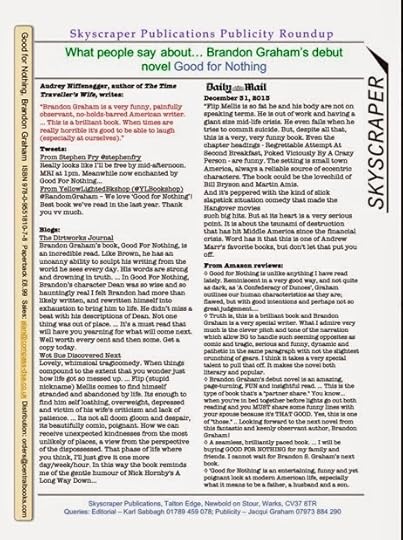
Moving on to writing news: My UK publisher put together this one-sheet for marketing purposes. It was humbling and overwhelming to see all the best comments about my novel consolidated onto one page. Book sales of Good For Nothing have been respectable. It continues to sell and have good reader response. I'm especially encouraged that my publisher continues to support it and spread the word.
My agency has a new agent on board who will be handling a lot of the english language manuscripts for Pontas. I am looking forward to meeting her and discussion both GFN and Missing People. I am wrapping-up last edits on Missing People now.
I have also been asked to participate in a very interesting artist's book project. That makes me very happy. I'll try to share more specific news on the book front soon. Cheers.
August 13, 2014
Pathetic Rationale for Delinquency
 Image by Jason E Hodges
I have been remiss in my responsibilities to this blog, and to those who read it. Here are some reasons: 1) Life. 2) I felt I had nothing worthwhile to say. (Though that hasn’t stopped me in the past). 3) The things weighing on my mind about publishing are sorted and messy. 4) Honesty is one of the most important drivers for the things I share here. I felt it unwise to honestly vent the confusing things I've been concerned with. Which may be an example of dishonesty by omission, but I hope you won’t judge me too harshly. 5) The best, most positive and exciting reason I haven’t been blogging is wanted to bend all my focus toward completing my second manuscript. Which I am happy to report I finished several weeks ago. I have sent Missing People to a few readers. Edits and feedback have started rolling in. My intention is for it to be ready to share with my agents, with potential publishers, and others by early September. I am on track to make that happen.
Before I move on to other things, I want to take a second to acknowledge what a monumentally important and vital job my readers do for me. After spending many many months staring at, and re-reading my manuscript, I become basically incapable if seeing my own work well enough to make edits. I read the words as they were intended, rather than how they sit on the page. Without the extra eyes and insight of my readers, I would have trouble moving on to a completed manuscript. It's true, eventually professional editors will likely comb-through and nitpick the manuscript. But the cleaner it is when they receive it, the more nuanced and thoughtful they are afforded to be with their suggestions. To be a good reader takes a large time commitment. It is a lot of work. And I couldn't be more grateful. If you are trying to write, an important step is to find readers you trust and respect. On that score, I am very fortunate.
 France
 Italy
Italy
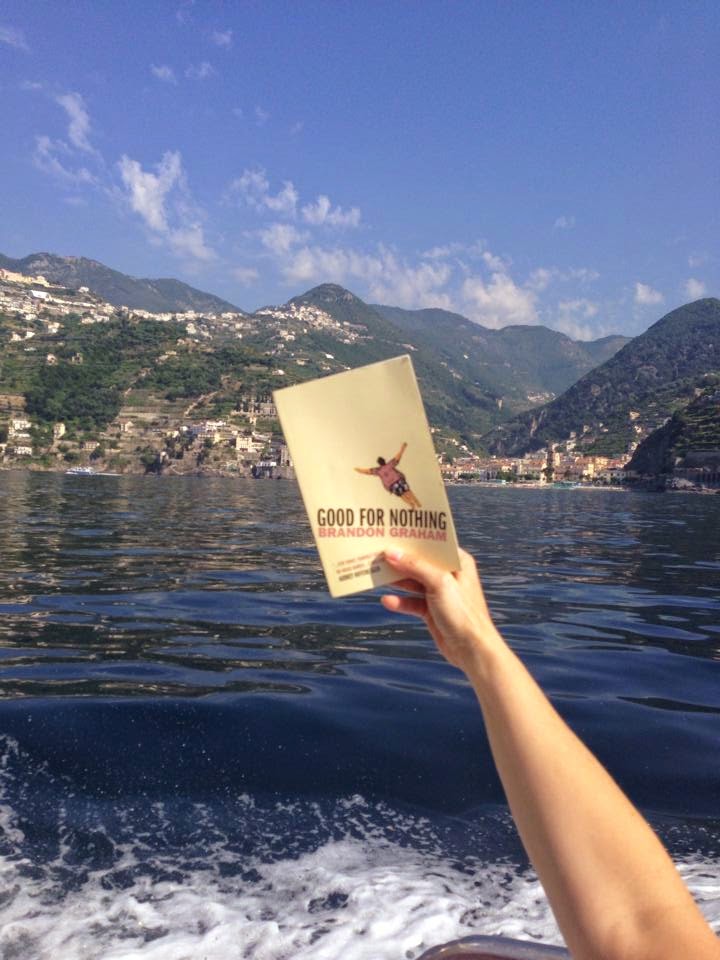
Just because I haven’t been sharing, it doesn’t mean that nothing has been happening. It’s been six months now since Good For Nothing was released in the UK. It continues to sell. Readers have generously sent me images of the book all over the globe. This collection I call, Summer Reading in Europe 2014.

 Bathroom read

Good For Nothing was reviewed in the The Dirt Worker's Journal. It was a generous review by a good writer, so it holds a special place in my heart. Here is a snippet:
"Brandon Graham’s book, Good For Nothing, is an incredible read. Like Brown, he has an uncanny ability to sculpt his writing from the world he sees every day. His words are strong and drowning in truth."
Numerous kind readers continue to give me feedback and reviews. Here is the most recent:
 Keenly observant - funny, sensitive and charming at the same time!!, August 8, 2014Verified Purchase(What's this?)This review is from: Good for Nothing (Paperback)Brandon Graham's debut novel is an amazing, page-turning, FUN and insightful read. With a very keen eye for the lunacies of the human spirit, Graham casts a lovable, klutzy yet charming protagonist in the lead character of Flip Mellis. The perennial underdog, we root for Flip throughout the novel because he's relatable and sincere while finding himself in several madcap adventures that have us chuckling either at him or alongside him. This is the type of book that's a "partner share." You know... when you're in bed together before lights go out both reading and you MUST share some funny lines with your spouse because it's THAT GOOD. Yes, this is one of "those." But don't think it's all humor. There are some painfully poignant moments about American families that many readers will be nodding their heads to. Flip is sharp, witty, sensitive and a multi-dimensional character that keeps us wanting more. Looking forward to the next novel from this fantastic and keenly observant author, Brandon Graham!
I will attempt to be more attentive to the blog as I get started on my next narrative. Cheers.
 Cruise ship read
April 28, 2014
Collateral fortuitous happenstance
It is daunting, intimidating, even frightening to make something or write something and put it out in the world. One becomes vulnerable to the avalanche of opinions and advice that can follow. Input from people can range from the unintentionally thoughtless to the gleefully cruel. With the anonymity of our digital age there is opportunity for people to take non-constructive potshots at anything anyone chooses to share.
Fortunately for me, my entire adult life has been spent in the arts where I am used to critique and criticism. In fact, I often don’t feel a project is complete until it has found an audience and I have received the feedback that will help me to shape my next project.
Of course there is always the possibility of an even more powerful upside. And my experience since Good For Nothing was published has been almost entirely positive. Not only positive, but even remarkably ranging, random, and nearly surreal. Here’s an example:
User Actions Following
 Stephen FryVerified account
A couple of weeks ago I woke to discover this tweet about my book. Not even a whole tweet, more like 1/3 of a tweet. But it was from the well-known and much loved British actor/writer/producer Stephen Fry.
It was a happy surprise that he chose to mention my book and post a link. It was beyond lucky that the tweet went out to his 6.76 million followers the day before the London Book Fair was set to begin. And yes, UK sales spiked for five days or so, Fry’s note was re-tweeted many times and other good things related to book business followed (I will fill you in a bit in a moment). But strangest of all is that a dear friend, and my old Shakespeare professor, happens to follow Stephen Fry and read the tweet. He clicked the link and saw my name. He found me on Twitter and sent me a very kind note. This matters. It matters a lot. I was so fond of this man that I asked him to preside over my wedding years ago. I married and made babies and moved and moved and he retired and my computer crashed and I lost all his contact information. I couldn’t find him. Life moved on. And now, because I put my book out in the world in an effort to make a connection with people, I have re-connected with someone very important to me. It is a turn of events that I could never have predicted and that I value beyond most things.
A few other nice things: 1) My book is officially a good beach island read. This copy and shapely legs were spotted in an ideal locale called El Conquistador in Fajardo Puerto Rico.

2) As I mentioned in my last post, my book dealers, Vamp and Tramp, promoted one of my zines as part of their March catalog, which lead to some new placements in new collections.

3) My copy of a limited edition collaborative artists’ book produced by Mike Koppa of Heavy Duty Press arrived recently. It looks sharp and I am happy to have played a small part in it.

4) A friend (and well-known writer and artist) was in London around the time of the London Book Fair and spotted GFN displayed prominently at the London Book Review Bookshop.

Lastly, 5) just today The Dirt Worker's Journal (a writer’s blog), for which I was interviewed, was posted. I was one of seven writers Jason E Hodges asked to participate and feel lucky for the opportunity to be mentioned among many talented writers.

So the bit about positive book developments I promised you: It’s hard to draw a definitive causal relationship between the Stephen Fry tweet and the increased interest in GFN at the London Book Fair. But, my book had, apparently, that ill-defined quality referred to in publishing circles as buzz. The result of that buzz to this point is that publishers from Germany, Spain, Italy, and France are all considering the translation rights. Since declining my first US offer, my agents at Pontas Lit and Film continue to have conversations with North American publishers. Only time will tell. All I can say for certain is that a willingness to put the book in the world has made many unexpected things happen already. I am reluctant to guess at what the next development might be.
April 3, 2014
Some Getting Used To...
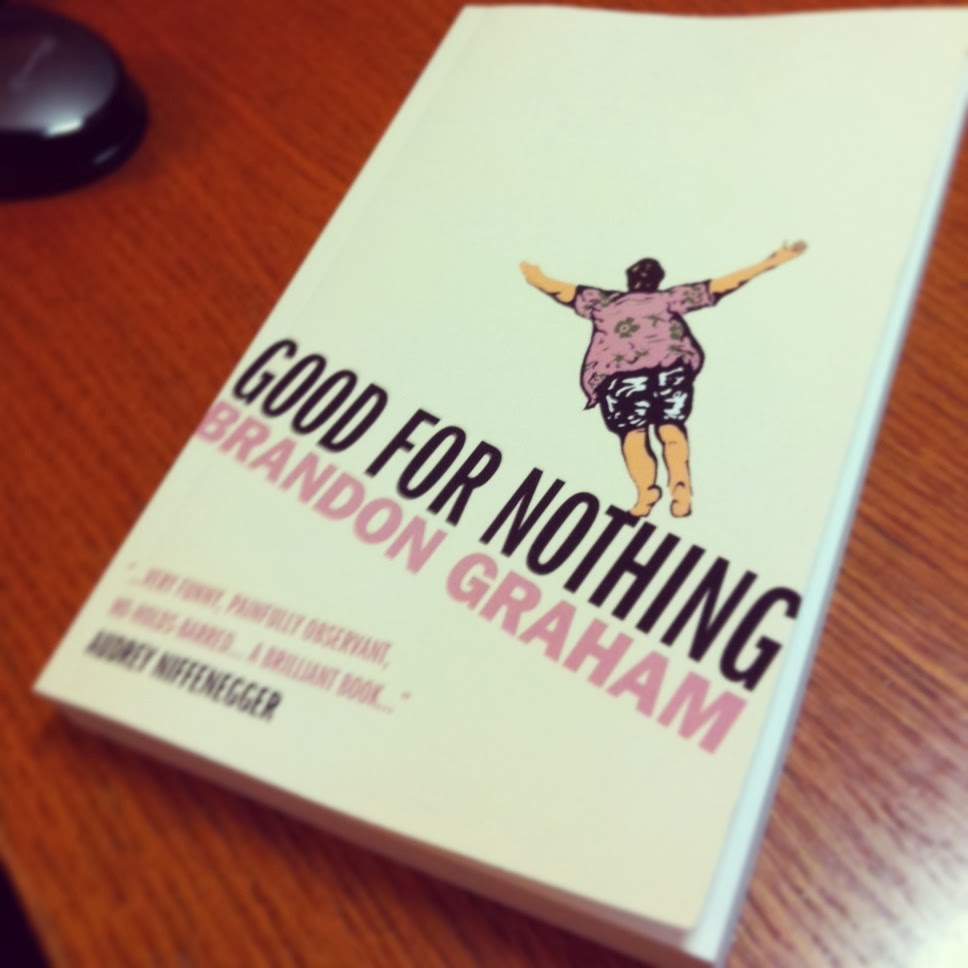 It's nearly two months now since Good For Nothing was unleashed in the UK market. A lot has happened since then. Of course, books have been selling in stores all across the UK, and to determined readers and friends in the US market (despite a clerical snafu with Amazon that presented some extra challenges). But other things as well.
For instance, I was made a legitimate offer by a US publisher, which I feel some affection for. (Yay!) And, with the help of my agents, I decided to pass on the offer. (Gulp.) A long, complicated string of reasons came to bare on the decision. But the end result is that the quest continues.
In the meantime, I have been learning to get used to the notion that people I don't know (and will likely never meet) are reading my book, and enjoying it enough to take the time to write a review in praise of my work. The generosity of strangers is an odd concept to get my head around. For instance, the Amazon US site, at the time I am writing this, has 10 5-star reviews of GFN. A few of them are from people I personally know, a couple from people I know of, and the other half are from strangers. IT BLOWS MY MIND.
Besides Amazon US, another review showed up on Amazon UK:
5.0 out of 5 stars
A brilliantly-achieved comedy, 10 Mar 2014Mr J H Dudley - Truth is, this is a brilliant book and Brandon Graham is a very special writer. What I admire very much is the clever pitch and tone of the narration which allow BG to handle such seeming opposites as comic and tragic, serious and funny, dynamic and pathetic in the same paragraph with not the slightest crunching of gears. I think it takes a very special talent to pull that off. It makes the novel both literary and popular. And in Flip I believe he's created one of the great Everyman characters for our age. I cared about him so desperately in spite of, or perhaps because of himself; so much wanted him to be successful. . . . . . and really loved the triple-dip irony of him 1) knowing he's messed up so 2) messing up a whole lot more then 3) moving inexorably towards the doom-laden finale he has promised himself only to hear, when he's at the bottom of the triple-dip, that success has come his way after all. PG Wodehouse, my favourite plotter, could not have crafted it better. And what an ending ! Just superb writing. As part of my contract with my publisher, I was to receive 20 copies of my book to distribute or give as gifts. Those finally arrived. Having stacks of this artifact around my home is becoming familiar. But having people ask for me to sign their book still feels like an awkward ritual; complimentary, yet awkward.

My delightful book dealers have placed a few pieces, including a copy of an older artist's book, God's Country. This book was a collaborative effort with Joseph Lappie, the artist who generated the cover image for GFN. The artist's book was sold to Shomburg Center for Research in Black Culture, a part of the New York Public Library system. Besides this, my book quoteUNquote is included in Vamp and Tramp's catalog 50 Books Around $50.
Lastly, on March 25th, Sue Wilkinson from across the pond decided to write a short post in her blog, Wot Sue Discovered Next about my book. In part she wrote, "Its not all doom gloom and despair, its beautifully comic, poignant. How we can receive unexpected kindnesses from the most unlikely of places, a view from the perspective of the dispossessed. That phase of life where you think, I'll just give it one more day/week/hour. In this way the book reminds me of the gentle humour of Nick Hornby's A Long Way Down, about a group of disparate people who have reached the end of their tether but collectively agree to give it a little longer and reconvene to see if they still feel the same way. Brandon Graham does this well, with slightly more guts to the text."
It's funny to realize some of the issues my characters wrestle with in my fictional narrative, have come home to roost as part of my real life publishing experience. Cheers.
February 9, 2014
Moving forward with increasing speed...
 First, as discussed in the previous post, and as my agent expected, I received an offer for US rights from Red Hen Press! It is a momentous moment and I have mostly emotionally brushed past it because the timing came just as Good For Nothing's UK release was about to occur. Also because numerous other things have all started happening at the same time. Red Hen is a good press and I'd be honored and excited to work with them. I had a few questions which I passed to my agent, who then forwarded them on to Red Hen, which is, I suppose, how these things are done.
 What follows is a number of very cool developments, each of which deserves attention, but they have been stacking up so quickly, I'm having trouble remembering them.

First, a friend living in England placed an order for my book a month ago. His local Waterstone's contacted him and he sent me this photo. A record of the first UK sale (that I know of). Taken at a mall in Reading.
 More recently, another friend attending a conference in London took some time away from his responsibilities to attend a play in the West End and then popped into the bookseller at Paddington Station and bought my book and a Daily Telegraph. I was honored to be the cultural nightcap for an evening that started with The Book Of Mormon.
On the shelf among the New and Best Sellers, Paddington Station.
 YellowLightedBkshop (@YLBookshop)1/18/14, 4:28 PM@RandomGraham We love 'Good for Nothing'! Best book we've read in the last year. Thank you vv much!
Two of my favorite things. 1) Above is a tweet from Yellow Lighted Bookshop, an independent bookseller with two locations. This touched me so much because I used to work at an independent bookstore, because I love independent bookstores and think they are some of the best places on Earth, and because I believe the people who own them love books, read professionally, and care for their clientele. Independent bookstore owners are angels sent among us to do God's work.
And 2) Below is a review written and posted to Goodreads. It is from a local writer who participates in a local writing workshops and asked to have an advance copy with the idea he might invite me to speak at a literary gathering:
In Good For Nothing, we meet Flip Mellis, a middle-aged, overweight under-achiever. He has good intentions or none at all and has come to a decision: one more week and he will end his nightmare.
Faced with unemployment, a failing family life, and a court-appointed psychologist appearing more smug than accredited, Flip promises to “turn it around” in seven days. His real plan is to plead his macabre case so convincingly that he'll gain tacit approval for ending his own miserable existence.
Brandon Graham's debut novel is a bitterly funny story. Initially Flip Mellis's acceptance of his imminent failure seems a bit too casual. He's estranged from his wife and children, disgusted by his own body, and holds no hope for a better life. But through Graham's insightful approach, he skillfully builds a complex and nuanced narrative that slowly moves deeply-flawed-Flip from an oddly familiar stock character to one the audience can empathize with, even in the face of self-sabotage. Set in an intentionally generic middle-America, Good For Nothing addresses a too-familiar turmoil. Financial crisis has led to an unhidden misery in the day to day lives of much of work-a-day (or out-of-work) America. Alongside this harsh reality Graham's supreme wit and turn of phrase had me laughing through tears. From one festive neighbor at the Lakeside Motor Court to an extremely odd run-in with a Rubenesque store clerk, every character gains the spotlight, if only for one scene.
This darkly uplifting, and fact-paced turn of events is hard to put down. The first pages prove Graham to have an uncanny knack for humorously reminding the reader it could be worse. And just as we begin to sympathize with a hapless Flip, the foolishness of his actions remind us brilliantly, it's not what happens to us, it's how we react.
Will Flip's reactions to life's challenges serve simply as a continuum of the initial tantrum that set this narrative in motion or will it lead toward a satisfying resolution? Good For Nothing is a great read, pick one up before you let yourself down. You won't be disappointed.
It is gratifying for the book to make it into reader's hands and get a discussion going.
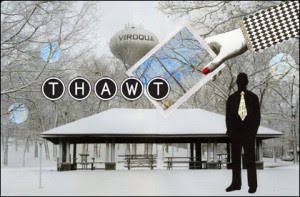
Additionally, I am one of eleven book artists asked to participate and collaborate in a new book from The Heavy Duty Press. To see a prospectus and some pages from Thawt, just follow this link.
Lastly, my book dealers, placed another of my books with UCSC (University of Southern California, Santa Cruz).
There is more news, feedback from other individual readers, upcoming potential art events I've been asked to participate in, even some interest from a movie producer. I feel like a very lucky boy.
January 16, 2014
The long way around to a (possible) US publisher
dol·drums

dōldrəmz,ˈdäl-,ˈdôl-/noun1. a state or period of inactivity, stagnation, or depression.
Happy New Year!
If there were ever a part of this process that truly deserved the description "Doldrums," it would be this long, slow wait. I haven't posted for a while because there simply hasn't been a lot to share. And, with all the holiday travel and festivities, time has been short. Finally though, now that we are a few weeks away from the release (Feb. 6th. The same day the Winter Olympics begins) of the UK edition of Good For Nothing, other things are starting to happen. Most significantly, I took a call yesterday evening with a US publisher who wants to make an offer for US rights. I will come back around to that in more detail in a moment. What follows is a slightly more detailed explanation of how my Barcelona-based agency traveled to Mexico and handed my book to a California imprint.
Just before the holidays, in anticipation of seeing friends and relatives who would want to know how to order my book, I worked with designer Karol Shewmaker (of FLAT publications and previously mentioned in the ROOM project post), utilized the image designed by Joseph Lappie (of Peptic Robot Press) and produced this little reminder card to hand out, complete with QR code. Through the Amazon Author Central tool, I've been able to see Good For Nothing's ranking ebb and flow as the cards were passed out. Many thanks to everyone who made advanced orders.
Here are the strange, circuitous, trans-continental activities that led to my manuscript ending up in the hands of a west coast publisher: Over half a year ago, my agents at Pontas sold the UK rights to Skyscraper Publications. Since then, I've worked with the Skyscraper team to edit, make design and typesetting decisions, and generally turn the manuscript into a clean book object ready for the hands and eyes of the reading public. Pontas continued talking to US publishers about North American rights.
 Around Thanksgiving, Marina Penalva, one of the Barcelona-based Pontas crew that has been enthusiastically championing GFN, attended the first annual Guadalajara International Book Fair. There, they met a publisher who took a digital copy of the UK edition to the editor of Red Hen Press. She read it, loved it, and thought it had a place within the the spectrum of 20 books they chose to print each year.
 Last Monday, in an end-of-the-year wrap-up correspondence with my primary agent Patricia Sanchez she asked if I had any impression of Red Hen Press. I said that I knew of them as a well-respected poetry press. Last Wednesday, I was invited to a reading hosted by the Guild Literary Complex (celebrating it's 25th year) at Women and Children First (one of my favorite independent book stores) in Andersonville, Chicago. There I perused the shelves and looked for Red Hen titles. I found five books of poetry, and one Memoir. They were interesting and diverse titles, printed and designed with a lot of love and respect. I asked one of the the bookstore owners what they knew of Red Hen. She said, "Very good poetry press. But they print other very good work too. Both fiction and non-fiction. They are distributed through the University of Chicago press." I later learned through conversation with the the Managing editor of Red Hen, they are a non-profit specializing in poetry, literary fiction and nonfiction. Founded 20 years ago in 1994, they now publish about equal numbers of titles in Poetry and Fiction. My impression of their publishing model is that of a hybrid of a not-for-profit arts organization combined with a boutique literary agency. Which I find pretty compelling.
To be clear, there is no offer on the table. Just mutual interest at this point.
In other news. GFN was reviewed in the Daily Mail, London:
December 31, 2013
Flip Mellis is so fat he and his body are not on speaking terms. He is out of work and having a giant size mid-life crisis. He even fails when he tries to commit suicide. But, despite all that, this is a very, very funny book. Even the chapter headings - Regrettable Attempt At Second Breakfast, Poked
Viciously By A Crazy Person - are funny. The setting is small town America, always a reliable
source of eccentric characters. The book could be the lovechild of Bill Bryson and Martin Amis.
And it's peppered with the kind of slick slapstick situation comedy that made the Hangover movies
such big hits. But at its heart is a very serious point. It is about the tsunami of destruction that has hit Middle America since the financial crisis.
Word has it that this is one of Andrew Marr's favorite books, but don't let that put you off.
So much has happened in the past week or so, no telling what could happen between now and the launch of the UK edition. There are a few minor rumblings from potential other US publishers, and odds are good for another review or two in the coming weeks. Wish me luck, spread the word, and send me pictures of you holding your copy of the book. It makes this whole, insular process feel more real to see people with the book. Also, find me on Goodreads and share your thoughts.
Until next time...
November 18, 2013
A fine line between rejection and acceptance
 a few final proof copies
Publishers are promiscuous and fickle. They sometimes say things like, "We only publish literary fiction. No genre fiction for us." These kinds of declarations can be found in the form of Statements of Purpose on their websites. They are clear, well defined and easy to understand. But inevitablly, a hot looking piece of detective fiction or steampunk catches thier eye, and they are willing to make exceptions. It seems to happen most often if the fresh fiction bares some resemblence to a book that is out there, making a lot of money, winning awards, setting sales records.
It happens all the time: a monogamous, loyal, one-genre-kind-of-publisher stray with an unfamiliar narrative. In these cases they describe their curatorial decisions in terms of the complex emotional relationships they form with the unpublished work. "I fell in love with this manuscript," they say. Or "It spoke to me."
They also use the same tactic when explaining a It's-not-you-it's-me rationale for rejecting a manuscript that fits within thier oeuvre. They say, "I really liked the writting so much, but I just didn't love it." It is very human. Perhaps too human and subjective, sometimes overly personal and not professional enough. But, it is also very understandable. Honestly, how else would one decide what book to publish and what book to pass up? Publishing comes down to a form of literary speed dating with a skoosh of high school pecking order peppered in.
Have I tortured the metaphor enough?
Below are some quotes about my book. Some of them are likely to appear on the dust jacket of the UK version of my novel. Others will not. Read a few and then I'll explain more.
“Graham has a knack for physical description and for developing absurd, humorous mishaps in a scene. Bumbling Flip is as repulsive as he is pathetic, a refreshingly unsympathetic protagonist with recognizable, human flaws.”
“Flip is a big, wasted, Oblomov of a man who makes for fine company as he lurches, lazily, from one wonderfully calibrated moment of self- inflicted peril to the next. When he punches Kev, I mentally cheered – Flip really does earn, painfully, tragically, amusingly, his under-dog- hero credentials and he really does have a spike of Ignatius J. Reilly to his soul.”
"Graham is a talented writer."
“Graham takes so many risks here and I greatly admire his brave and unflinching look at Flip’s demons.”
"Brandon Graham is a very funny, painfully observant, no-holds-barred American writer. In Good for Nothing he shows us America now: out of work, out of shape, slightly suicidal but retaining a sharp sense of the absurd. This is a brilliant book. When times are really horrible it's good to be able to laugh (especially at ourselves)."
Only the last of these, from the novelist Audrey Niffenegger, is an actual quote intended to be used as a printed endorsement. The others are each from different publishers who rejected my manuscript. I particularly love the second one. But they are all good in their way.
Compass Points is a blog distributed to five hundred booksellers in the UK. This is what they had to say last week:
Here’s a little heads-up for a terrific debut novel, containing humour with a bite, published in January from Skyscraper publications. Good for Nothing by Brandon Graham is about a week when Flip Mellis tries to rid himself of excess weight and solve the problems of his life. This is a novel in which peaks of humour and troughs of tragedy intermingle as the hero tries to get his life together, after a suicide attempt – like much else in his life – fails to achieve its goal. Overweight, weak-willed, and quick to criticise others, Flip has a self-fulfilling fatalism, which leads him to stumble through each day, hoping against hope that he can get a job, mend his marriage and rebuild his life. Perceptively observed characters from American small-town life populate the book in hilarious cameos and get in the way of Flip’s well-meaning attempts to reform himself. One of our hawk-eared team heard none other than Andrew Marr mention that he was thoroughly enjoying it a couple of weeks ago! He happened to say (during a publication dinner for his own book!) that the book he was really loving at the moment was Good for Nothing and thought it was brilliant and a marvelously sustained comic voice! This could be the beginning of another Compass word of mouth success story!
As far as the book progress goes, the typesetting is complete and I expect the hardbound edition to be available in January 2014. I'll keep you posted.
November 4, 2013
Driven to Madness
 It's funny how time can change one's perspective. I first read Anne Lamott's
Bird by Bird: Some Instructions on Writing and Life
just after it was published in 1994. Today the book is widely lauded as both a practical guide to the writer’s life and a profound wisdom-trove on life; with pithy insights offered on everything from overcoming self-doubt to navigating the balance of intuition and rationality in one's individual psyche. It is much loved. And my first reading was preceded by a very enthusiastic endorsement from a poetry professor who suggested that it was the most valuable book on writing, EVER. Here's a little taste:
It's funny how time can change one's perspective. I first read Anne Lamott's
Bird by Bird: Some Instructions on Writing and Life
just after it was published in 1994. Today the book is widely lauded as both a practical guide to the writer’s life and a profound wisdom-trove on life; with pithy insights offered on everything from overcoming self-doubt to navigating the balance of intuition and rationality in one's individual psyche. It is much loved. And my first reading was preceded by a very enthusiastic endorsement from a poetry professor who suggested that it was the most valuable book on writing, EVER. Here's a little taste:Writing and reading decrease our sense of isolation. They deepen and widen and expand our sense of life: they feed the soul. When writers make us shake our heads with the exactness of their prose and their truths, and even make us laugh about ourselves or life, our buoyancy is restored. We are given a shot at dancing with, or at least clapping along with, the absurdity of life, instead of being squashed by it over and over again. It’s like singing on a boat during a terrible storm at sea. You can’t stop the raging storm, but singing can change the hearts and spirits of the people who are together on that ship.”
Being who I am, I choose to take an independent view of Lamott's book. Namely, almost 20 years ago, I felt that it painted a portrait of all writers as pathetic, neurotic, needy, spineless weaklings who seek permission from one of their many therapists before putting pen to paper. That all writers are haunted by childhood trauma, are riddled with addictions, afflicted with dandruff and are wrapped in moth-eaten cartigans. In short, I felt it was a well written and entertaining crock of shit.
I had occasion to re-read the Bird by Bird more recently. And because I have found that the process of writing and publishing turns perfectly well adjusted people into pathetic, neurotic, needy, spineless weaklings who desperately seek the correct balance of anti-depressants and box wine to allow them to knock out another few paragraphs, before carpal tunnel and asthma require them to take yet another break-then I had a much more sympathetic response to this book upon a second reading. It was like getting a hug and chuck on the shoulder. It made me feel like I wasn't alone, like I had friends. Sad, introverted friends who desperately need to moisturize and have an alergy to cat dander. But friends.
If you haven't read it, perhaps you will like it. If you find you don't like it, wait ten years and read it again.
I wrote this, just for my blog readers:
On knee-jerk impulseborn out of a perceivedlack of parental acceptanceand general immaturityI listed among my skillson my Linked In profileRiotous Sexual Innovation
I laughed at thatand waitedfor three monthsfor someone,anyone,to endorse me.
Eventuallya strange manby the clearly made-up nameof Elmore Clucksonacknowledged my sexual giftsand sent me a note saying,"I think of you often, in the early morning, when I can't sleep."
After a couple daysof living with itI deleted the skill from my profile,then deleted the account.Still, it was the kindest thinganyone had saidfor months.
In Good For Nothing news: My UK publisher, Skyscraper, is applying special publishing industry calculus to a series of facts and statistics in order to divine the best moment for the hardbound edition of my book to be released into the book shops of England. Although the link above indicates a November release, I think that is wishful thinking/place holder rather than actual fact. There was some more good news, another advance order of books was placed by the distributor who sells to books shops in public transit locations such as train stations and airports. So, if you have a layover at Gatwick, you can pop in and find my novel for sale soon.
In US publisher news: There is no definitive US publisher news. Though, there is some activity. Waiting. The waiting is what turns the sane into the less sane.
October 8, 2013
A Series of Fortunate Events
 Advance/Proof copy editsI had a notion that once I signed a publishing contract, a swarm of print fairies would descend upon my manuscript, buzz and wave wands, and presto: Distributed Novel! In fact it is a slightly more involved, drudge-laden, costly, and time-intensive process. There are many decisions, and numerous uneventful spans of time to be endured with as much calm and maturity as I'm capable of mustering. (Hint: not capable of mustering calm and maturity)
As an introvert I prefer a bit of quiet routine. Therefore each step forward has felt foreign, even uncomfortable. It just keeps coming, so I've been forced by happenstance to stop internalizing these steps as 'weird' and instead label them, 'new and fortunate.'
Here are a series of events that have transpired quickly and nearly simultaneously:
1) I completed the final edits to the proof copy of GFN. Now, it really is mostly in the hands of talented publishing fairies.
 Brandum P.I.2) Skyscraper has been very open to my input throughout the design process. It's been more perfect than I could have imagined. I helped with selection of the cover illustration, had input choosing a typographer and in the typographic choices, and had a tiny say in the cover design.
 This mustachioed god you see before you is not Magnum P.I. It is instead part of a failed pitch I made to my publisher. It made me laugh so I shared it.
Printing an extra item to insert into proof copies going to bookstore managers can grab their attention. I was inspired by a scene in which the protagonist, Flip, gets a shave and haircut, I suggested an excerpt along with a series of facial hair stickers. The bookstore employees could then deface my image in the About the Author section. Who doesn't like to put mustaches on people? It was rejected due to printing costs.

3) Happily and to my surprise, when I cracked open JAB34 I discovered a small, pamphlet fold zine (quoteUNquote) I produced earlier this year had been noted and reviewed. That was followed by news from my book dealers that they'd sold a good number of this zine, as well as numerous issues of the collaborative book ROOM.
 unexpected review
 Agents away!
 4) This week is the Frankfurt Book Fair; it's the largest international publishing event of the year. My intrepid agents (bless them) have two tables, many meetings, are in a panel discussion, and selling book rights. GFN made the "Hot List." Simply put, they've prepared extra materials, have proof copy at the ready, and are promoting GFN heavily.
5) The specific publication date of the hardbound, UK edition of GFN is still slightly soft. Most likely it will go to press at the end of October and will be available for purchase in November. As it is largely out of my hands now, I am trying to move ahead with the next manuscript, which would make me a happier introvert, indeed.
6) Numerous people, inside and outside the publishing industry, have read the proof/advance copy of GFN have started sending me feedback. It is gratifying, overwhelming, and truly humbling to try and process all the kind words and support.
7) Lastly, I was digging through my dresser and found this authentic image of me in a performance, with costumes designed by members of the Bauhaus. There I am in the back. I was so young then.
 My early work
FictionDoldrums

Brandon S Graham's firsthand account of his efforts to write and find a home for his first novel.
...more
- Brandon S. Graham's profile
- 101 followers
Brandon S. Graham isn't a Goodreads Author
(yet),
but they
do have a blog,
so here are some recent posts imported from
their feed.

