
Christine Valters Paintner's Blog, page 27
August 9, 2023
Update on In-Person Pilgrimages
Dearest monks and pilgrims,
It seemed time for an update on our in-person pilgrimages as it has been a while since we posted about this on our website and we continue to get inquiries.
We have not scheduled any in-person programs since the pandemic and we won’t be doing so for the foreseeable future.
The reasons for this are many including the intensive time investment and financial risk of planning programs in uncertain times. Primarily though, it is because of my own health challenges over the last couple of years. Due to being immune compromised and ongoing fatigue and pain, I am not currently able to host international groups over several days. This may change in the future, but for now, it is the best way forward to care for my body.
We know many of you are looking for meaningful travel opportunities and this is disappointing news.
We are unable to help you plan your own trips to Ireland. Each year we get dozens of these requests and it is not feasible for us to reply to them all. What we do offer is a list of Ireland travel suggestions we used to send out to our pilgrims. There are some wonderful guides you can hire to help you with your journey too.
While I’d love to meet every single dancing monk who passes through Galway on holiday or pilgrimage for tea and a hug, that also is not feasible given the number of requests and my own needs for large amounts of quiet for rest, healing, prayer, and writing.
We ask you to please understand these demands on our time means we have to set a firm boundary. Any requests for travel advice or getting together will receive a link to the details shared above.
With a deep bow of gratitude for each of you, truly I give thanks every day for this community of such beautiful seeking souls. May your heart take you on a journey into deeper intimacy with the sacred.
Sending you the warmest blessings from Ireland,
ChristineChristine Valters Paintner, PhD
The post Update on In-Person Pilgrimages appeared first on Abbey of the Arts.


August 8, 2023
Monk in the World Guest Post: Justin Coutts
I am delighted to share another beautiful submission to our Monk in the World guest series from the community. Read on for Justin Coutts’ reflection “The Mystical Path of Poetry.”
There is an ancient teaching in the Christian tradition about the soul’s journey into God. The spiritual journey is understood as a threefold path which begins by healing our spiritual wounds, passes through the beauty of creation, and culminates in ineffable union with Christ. You can read an introduction to the triple way which I wrote a little while back HERE. In this article, I will give you a brief glimpse into the way chanting sacred poetry fits into each of the three stages.
Purification
In the ancient church, there was a beautiful understanding of the way in which psalmody (the chanting of the psalms) heals the soul. Both the words and the melodies are spiritual medicines which can heal the wounds we all carry within us. The Book of Psalms contains a wide spectrum of human emotion and experience. It gives voice to things we all feel. There are psalms of lament and psalms of praise. Some speak of betrayal and violence, some speak of the beauty of nature. As we chant the psalms, all of these rich images stir up our emotions and bring them to the surface.
The work of the music is to bring harmony to the emotions which the psalms bring up in us. Music is harmony and so it has the potential to restore harmony to a soul which has fallen into chaos. Our minds, bodies, and spirits come into a peaceful unity with one another when we chant or sing for long periods of time. Our thoughts and emotions come into harmony like the strings of a harp and we are restored to our natural condition of inner peace.
Illumination
In medieval Celtic Christianity, poetry was understood as a vehicle of divine blessing. There was a long tradition of passing on the sacred poetry of great saints from one generation to the next. These traditional poems were believed to be inspired by the angels and to have emerged from the deep mysteries of Heaven. The Welsh bards spoke about a mysterious force they called Awen. The word itself translates directly as “inspiration” but they had a much deeper understanding of what poetic inspiration is and where it comes from.
Awen is a spiritual water which flows through rivers in the hidden recesses of nature. It is a mighty wind which affects the world without ever being seen. When a poet learns how to participate in this divine mystery, they are able to create the sorts of poems which impact the world around them. The bard who sings (as well as those who listen) lifts the veil and glimpses the spiritual world.
Union
There is very little which can be said about the third stage of the triple way. It is empty silence, divine darkness, wordless contemplation. Chanting is a tool which can help us set aside our thoughts, allowing us to encounter that which is beyond all thought. There are times when chanting poetry shifts from a practice filled with words to one which is devoid of them. The words still remain, and we ourselves are singing them, but our mind sees past them into something deeper.
If you desire to approach the gate of Heaven, then chanting poetry is an excellent way to do it. Allow the words to wash over you like a mighty river. This torrent of imagery and insights will carry with it all of your own thoughts. Learn to let go of both. Receive and let go, receive and let go. This is the entire practice.
————————
I explore these concepts in greater detail in my recent book Psalter of the Birds, including an original poem written specifically for each stage. It is a collection of 150 Celtic poems from across the centuries which have been translated and arranged in such a way that they can be chanted or used for reading and meditation.
In the introduction I explore the ancient Celtic idea that birds are angels in disguise and that their melodies are themselves a form of psalmody – for those with ears to hear. The birds of the forest sing sacred songs of worship in participation with the music of the spheres. In the spiritual realm, these angelic birds live in the Tree of Life, the branches of which are the nine orders of angels, and whose roots reach into the depths of God herself.
Psalter of the Birds includes instructions for how to chant that work for musicians and non-musicians alike. It also includes music for use in Simplified Anglican Chant based on the traditional Celtic Harpers three types of tunes: weeping, dancing, and sleeping. By chanting these ancient sacred songs, we join the angels and the birds in praise of the God of all life and are lifted up into Heaven.
You can get a copy of my book for yourself by clicking HERE and you can watch an interview about it between myself and Carmen Acevedo Butcher by clicking HERE.
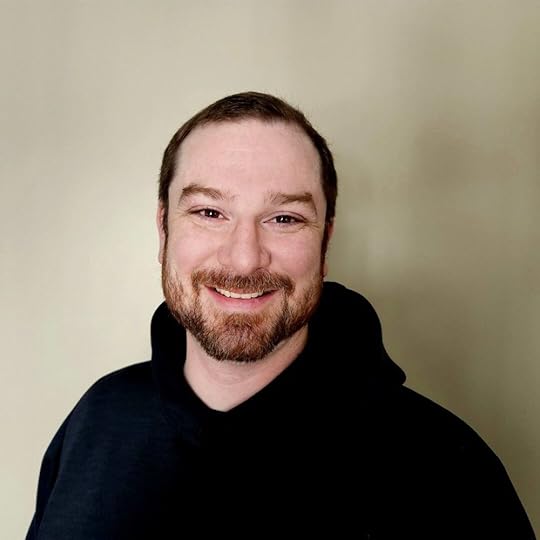
Justin Coutts lives on Manitoulin island in northern Ontario with his family. He has had a diverse religious life including growing up Quaker, spending many years involved in indigenous ceremonies, and a period of time in seminary with the United Church of Canada. He is the founder of New Eden Ministry, a primarily online community which seeks to revive the Christian contemplative tradition by creating a virtual space for people who feel called to contemplative practice but who do not have a local community in which to do so. His new book is available
The post Monk in the World Guest Post: Justin Coutts appeared first on Abbey of the Arts.
August 5, 2023
Transfiguration and Program Updates
A Blessing for Transfiguration
Radiant God, open our eyes to all the waysthe sacred shimmers before us,how gold pours forth from the robin’s throat,how sunlight returns each morning,how the moon glitters across still water,how laughter around the table kindles joy,how kindness can change lives. Free us from our need to seize these moments, to make of them stone monumentsrather than tabernacles of lightwe carry with us in our hearts. This vision is not a call to stay on the mountainbut to gather our treasuresinto an open embrace, to make the slow pilgrimage into the world,to share them freely after our descent,in a world so hungry for beauty. Help us to rememberto keep our seeing clear, attuned, present to your unfolding before us. Let us see your glowerupting in all the hidden corners,in all the places youhave been forgotten.(from a forthcoming book of blessings by Christine)Dearest monks, artists, and pilgrims,
Today is the Feast of the Transfiguration, that powerful story of Jesus going up the mountain and being transformed in front of the disciples. I love the interpretation of this story, that it is the disciples whose eyes were opened to see more clearly, rather than Jesus’ nature being changed. They were able to see the divinity in him radiating out into the world. This is ultimately what our contemplative journey is about, cultivating a deeper way of seeing the world, so that everything shimmers with the sacred.
We hope you have had a restful summer. We always cherish this time of quiet reflection and dreaming into the new academic year of programs. I have savored having some time to simply be and deepen into the sacred rhythms of life.
Out of this wellspring of rest, flows forth our calendar for the coming months which you can find here. Most of the year’s programs have been posted there with special thanks to our program coordinator Melinda for her wonderful work putting that together. We have discerned a few small changes at Abbey of the Arts to honor slower and gentler rhythms including a reduction in the number of regular monthly events and our mini-retreats will now mostly be on Fridays for two hours.
As most of you know, I released my third poetry collection last spring, Love Holds You: Poems and Devotions for Times of Uncertainty. I am delighted that Mercy by the Sea retreat center is hosting me for an online program inspired by this book on August 18th. We will be diving into poetry to help us explore all the ways we experience the Source of Love holding us through challenging times.
This is the year of love here at the Abbey, as my next book will be published on August 18th titled The Love of Thousands: How Angels, Saints, and Ancestors Walk with Us Toward Holiness. It is available now for pre-order at a variety of online booksellers. This work is the culmination of over twenty years of my own journey with all those wise and well ones beyond the veil between worlds. There will be a variety of programs coming in the fall, winter, and spring to support you in deepening your own connections to the love of thousands including our companion album of songs and our newest prayer cycle audio podcast (released in October and November).
We are thrilled to be welcoming the delightful Carmen Acevedo Butcher, a scholar and translator of mystical texts, and now dear friend of the Abbey, who will be leading a retreat for us on the classic contemplative work, The Cloud of Unknowing on August 26th. Carmen is also the newest member of our Wisdom Council.
We also return to our Lift Every Voice Book Club with Dr. Yolanda Pierce’s beautiful book, In My Grandmother’s House. She shares the wisdom of her grandmother and describes prayer as a contradiction, as a petition, as an intercession (“the act of standing in the cosmic gap for others), as a celebration, and as a primary form of speech. She quotes James Baldwin: “If the concept of God has any validity or any use, it can only be to make us larger, freer, and more loving,” which is the heart of our contemplative journeys.
The richest part of this work for me is conversation and collaboration. While much of our contemplative journey unfolds in the solitude of the caves of our hearts, just as essential are the dialogues we have with one another. Listening and letting ourselves be changed, shaped, transformed by the images another person carries in their inner sanctuary is the gift of community. True contemplation always leads us into deeper intimacy with others, it always sparks a growing love for the world. I am blessed by the wisdom of our many guest teachers and by all of you who show up and participate in our programs in various ways, offering your insights and care to one another.
With great and growing love,
ChristineChristine Valters Paintner, PhD, REACE
P.S. August 1st was the Celtic feast of Lughnasa which marks the harvest and a shift that hints to the coming of autumn in the Northern Hemisphere. I wrote a Lughnasa Blessing which you can read here.
The post Transfiguration and Program Updates appeared first on Abbey of the Arts.
August 2, 2023
Abbey of the Arts Welcomes New Wisdom Council Members!
Abbey of the Arts is extraordinarily delighted to welcome four new members to our Wisdom Council!
Carmen Acevedo Butcher, PhD is an amazing scholar and translator of mystical texts (including most recently Practice of the Presence from Brother Lawrence and she will be leading a program for us on The Cloud of Unknowing in August). We were introduced by our mutual editor and discovered we were both fangirls of one another’s work. She has a beautiful warmth and is rooted deeply in the wellspring of Love.
We also invited three young adult members recently to expand perspectives on our council and welcome in their wisdom. We are thrilled to have people in their 20s, 30s, 40s, 50s, 60s, and 70s helping support this work in this way! We are only enriched by diversity.
Jo-ed Cabezudo Tome lives in the Philippines and recently launched his wonderful page Millennial Tito Monk (Tito is a term of endearment meaning uncle). Jo-ed is trained in spiritual direction and has almost completed his Masters degree in transpersonal psychology.
Te Martin (they/them) is a gifted singer and songwriter. We first encountered Te at our virtual Celtic pilgrimage at Imbolc last year. They graced us with song and we were smitten with their beautiful voice and joyful presence. Te has a degree in theology and leads community singing, and is featured on our upcoming compilation album this fall.
Cassidhe Hart is a talented writer and liturgist who creates beautiful prayers and liturgies at the intersection of faith, ecology, community, and ritual. She wrote some of the prayers for our Soul of a Pilgrim prayer cycle and will be sharing more of her gifts with us in the months to come.
What is a Wisdom Council?
The Wisdom Council formed to create some more formal structures of support for the work we do. Each member has a strong kinship with the monk and artist path. We call on them for wisdom when creating new programs, considering new ideas, or navigating challenges. They offer their time and guidance to us and so are also in loving service to the wider community. Many of the members also help facilitate or teach portions of our programs, both live and online. We are so grateful to have this vibrant gathering of both spiritual and practical support for the contemplative and creative programs we offer.
The post Abbey of the Arts Welcomes New Wisdom Council Members! appeared first on Abbey of the Arts.
August 1, 2023
Lift Every Voice: Contemplative Writers of Color – August Video Discussion and Book Group Materials Now Available
Join Abbey of the Arts for a monthly conversation on how increasing our diversity of perspectives on contemplative practice can enrich our understanding and experience of the Christian mystical tradition.
Christine Valters Paintner is joined by author Claudia Love Mair for a series of video conversations. Each month they take up a new book by or about a voice of color. The community is invited to purchase and read the books in advance and participate actively in this journey of deepening, discovery, and transformation.
This month’s selection is In My Grandmother’s House: Black Women, Faith, and the Stories We Inherit by Yolanda Pierce.
Click here to view or listen to the full conversation with the author .
What if the most steadfast faith you’ll ever encounter comes from a Black grandmother?
The church mothers who raised Yolanda Pierce, dean of Howard University School of Divinity, were busily focused on her survival. In a world hostile to Black women’s bodies and spirits, they had to be. Born on a former cotton plantation and having fled the terrors of the South, Pierce’s grandmother raised her in the faith inherited from those who were enslaved. Now, in the pages of In My Grandmother’s House, Pierce reckons with that tradition, building an everyday womanist theology rooted in liberating scriptures, experiences in the Black church, and truths from Black women’s lives. Pierce tells stories that center the experiences of those living on the underside of history, teasing out the tensions of race, spirituality, trauma, freedom, resistance, and memory.
A grandmother’s theology carries wisdom strong enough for future generations. The Divine has been showing up at the kitchen tables of Black women for a long time. It’s time to get to know that God.
Join our Lift Every Voice Facebook Group for more engagement and discussion.
The post Lift Every Voice: Contemplative Writers of Color – August Video Discussion and Book Group Materials Now Available appeared first on Abbey of the Arts.
Lughnasa Blessing
I know some of you are enduring terrible heat right now, but here in Ireland the turning toward Lughnasa brings a shift in light and air that hints at autumn’s coming which I love. July is the hardest month for me because of both too much light and heat – although this year it was the rainiest month and cooler than usual thankfully – so I celebrate this feast as it brings my favorite seasons ahead when I feel more creativity and aliveness.
Wherever you are in the northern hemisphere, you might honor this threshold of turning toward harvest. And if you are in the southern hemisphere, blessings on your Imbolc and the quickening of early spring!
*Lughnasa Blessing*Spirit of the Harvest Time,help us gather in the goodnessof all we have sown these last few months. From the seeds of food planted to the dreams we have cultivated, bless all that has come to fullness that it be in service of life.Fill our baskets with sweet fruits and plentiful grain to nourish usfor the months ahead. Let blackberries stain our fingersand staffs of wheat be transformed into bread to share with others. Spark gratitude in our hearts for this moment of fullnessso we know ourselves as vessels of your abundance.As the sun’s arc across the sky begins to lower,and the air hints at autumn’s crispness,so too, usher us into a new season of life,one filled with kindness and care for everyone who struggles. Let this harvest be a gathering in of love.With great and growing love,
ChristineThe post Lughnasa Blessing appeared first on Abbey of the Arts.
June 24, 2023
Day 7 Mary Prayer Cycle + Summer Sabbatical ~ A Love Note from Your Online Abbess
Dearest monks, artists, and pilgrims,
This week we are pleased release the final video podcast for the Birthing the Holy Prayer Cycle. Day 7 Morning and Evening Prayer honor Madonna Protectress and Mirror of Justice.
Here is an excerpt from Day 7 Evening: Opening Prayer
Mirror of Justice, you lift up all those on the margins; reflect the justice of Christ who redistributes power structures and gives amplification to the most vulnerable. You call us to solidarity with those who are in need and to remember that our own liberation is intimately entwined with the liberation of the whole human community and the whole natural world. With cries of lament for this hurting world we ask you, Mary, that in the midst of our holy birthing we too can be midwives of a new vision and a new way of being that allows all beings to be nourished and to thrive.
Every summer we try to step back from this wonderful work and take a bit of time off for planning, dreaming, and resting. Sabbath is one of the profound gifts of a generous and abundant divine presence who says that work is good and rest is necessary. It is an essential part of contributing to a more just and beautiful world.
We are so grateful for all the ways this community supports our work in the world and we are eager to listen more deeply in the coming weeks to what new things want to be birthed through the Abbey in the coming year.
We will be taking a break from our weekly love notes and daily quotes and questions starting tomorrow and will return on Sunday, August 6th with more Abbey goodness. You are still welcome to email us (or register for programs) we might just be a bit slower to respond than usual.
Theologian Walter Brueggemann has a brilliant little book titled Sabbath as Resistance. He describes the origins of the practice of Sabbath in the story of the Exodus in which the Israelites are freed from endless productivity and relentless labor into a way of being where rest is essential, and we reject our slavery to perpetual doing.
The God who is revealed in this story is completely unlike any they have known before, a God committed to relationship and rest. It is worth imagining for a moment the revolutionary power of this revelation and how strange the Israelites seemed to other cultures in their radical commitment to a day of rest each week as an act of resistance to the endless systems of anxiety. Everyone rested, no matter what gender or social class, because God saw that as very good.
It is worth further imagining the ways that each of us is enslaved in our own way by the current culture and system of perpetual overwork and exhaustion, of busyness and relentless doing. We may have our freedom on some levels, but how many of us choose to exercise that in favor of our own nourishment and replenishment?
Here is a blessing for your own Sabbath moments:
Blessing for SabbathSanctifier of holy rest,on the seventh day you paused,laying down the work of creationand entered into sacred stillness.Let us remember we were freed from slaveryin Egypt and you continue to call us to be people of liberation.Kindle in us the strength to say noto a world of perpetual busyness.Inspire us to set aside our plansand goals to receive the lavish giftof rest for ourselves,to rediscover the Paradise within.Let the Sabbath be a time of profound renewal,a gushing forth of the holy well,a time of intimate connection with You,and a rekindling of our sacred desires to be of service.Sustain in us the desire to simply beand not succumb to the demandsof productivity and an endless string of achievements.Let our lives be a loving witness to a worldof restoration and refreshment,of the profound goodness of joy and delight,taking pleasure in the generous gift of pausing.I love that after their escape from slavery, Miriam and the other women dance in celebration because a new story has emerged. In the scripture text one of my favorite details is that they carried their tambourines with them in their flight from Egypt. In the mad rush to flee death and destruction, one of the essentials they carried with them were their musical instruments, what allows them to revel and dance.
If you would like ongoing support this summer, consider our rich catalogue of self-study programs which are now on sale through tomorrow. (Use code SUMMERSALE25 to take 25% off.) With lifetime access to the materials you can take your time and allow your journey to be slow.
Wishing you a season of resting and dancing dearest monks.
With great and growing love,
ChristineChristine Valters Paintner, PhD, REACE
The post Day 7 Mary Prayer Cycle + Summer Sabbatical ~ A Love Note from Your Online Abbess appeared first on Abbey of the Arts.
June 20, 2023
Monk in the World Guest Post: Kiran Young Wimberly
I am delighted to share another beautiful submission to the Monk in the World guest post series. Kiran Young Wimberly is a minister, spiritual director, and musician living in Ireland. Our next prayer cycle honoring angels, saints, and ancestors (coming this fall) will be integrating Kiran’s Celtic version of the psalms. Read on for her reflection and watch her version of Psalm 22.
Before I ever knew I’d spend the majority of my adult life in Ireland, I was drawn to traditional Irish music. When I was young, someone asked what my favorite hymn might be, and after scanning the hymnal and being unable to recognize most them, I spotted Be Thou My Vision and thought, “This one. This one is beautiful.” When I was in my early 20s, singing in a folk duo with a friend of mine, it was the traditional Irish airs that struck a chord with me and felt at home with my voice. When we moved to Belfast from America in my late 20s, I was excited by the opportunity to learn more Irish music and hoped I would hear more hymns like Be Thou My Vision. What I didn’t realize was that in Northern Ireland, traditional Irish music is associated with the Catholic community, and with the history of conflict here, not only was it rare to have that style of music in Protestant churches, but it was very unusual for a Presbyterian minister like myself to be singing it. However, my love for traditional music remained, and in sessions at pubs, and my traditional singing classes, I continued to fall in love with the beauty of the old melodies. I found myself moved to tears or joy, connecting with a deep longing, and brought into a contemplative state even as the music pulsed around me. To me, it was clear that something sacred was happening when people gathered to sing and play this music.
For me, this emotional depth connected naturally with spirituality. One night, I was listening to the heartrending harp piece “Eleanor Plunkett,” a beautiful air that evokes a sense of sorrow and yearning. I had just preached on Psalm 63 that morning, about longing for God’s presence like thirsting for water in a dry land. The 400 year-old melody and the ancient words of the Psalm spoke to each other. I put them together, and that became the first “Celtic Psalm.” As time went on, another tune would speak to me, or words of a particular Psalm would cry out for a voice. Over the past ten years, I have set 44 Psalms to Irish and Scottish melodies.
Like the Celtic melodies, the Psalms also drew me from a young age. When I was growing up, I would open the Bible randomly to see where it would lead me, and it often fell open to the middle – to the Psalms. And there, I found an expression of many of the tumultuous emotions of childhood, the growing pains of the teenage years, the frustrations, fears, anger, anxiety, sadness; and on the other hand, I also found expression of gratefulness and joy and the beauty of creation. The Psalms seemed to speak into so many life situations, and they connected me with the prayers and experiences of so many people throughout the thousands of years since they were written. Without realizing it, the Psalms gave me perspective on any struggles I faced – because I knew that other people had struggled too, long before me, and their prayers guided me. The Psalms reminded me that God was listening to my prayers, and to all of our prayers, no matter what time or place or culture we live in.
So the combination of the expressive traditional style of music with the poignant words of the Psalms have filled my life for the past decade and more. I’ve had the pleasure of singing with the incredibly talented musical family, The McGraths, and we’ve worked alongside stellar traditional musicians to create the sound of Celtic Psalms. Singing these Psalms in Ireland links us with the Celtic Christian communities who once sang and recited Psalms multiple times a day, carrying with them on their journeys Psalm books inscribed on velum with intricate artwork and ornate covers, singing them in sweet melodies that have been long lost. And as we look back at the Christianity that thrived on these islands before the Reformation divisions, we see the Psalms as something we can share, across the barriers that separate people today. Through bringing our music into Catholic, Protestant, and mixed audiences, we’ve found that the Psalms are much older than our divisions, they remind us of our common humanity, and they bring us into the presence of a God who listens to us all, and loves us all, and welcomes us all.
The Celtic Psalms project has become far more than beautiful music that can lull us into a peaceful state. This music is about building bridges between people, being honest about our longings, and our pain, and our struggles, and also our gratefulness and our joy, before a loving God, and in turn, listening to and loving each other with graciousness and generosity of spirit. If we open ourselves to the possibility of sharing space with each other courageously, acknowledging the beauty and depth of the human spirit, we can begin to see glimpses of healing, and together we can be a part of forging a hopeful future – in Northern Ireland and wherever we are in the world.
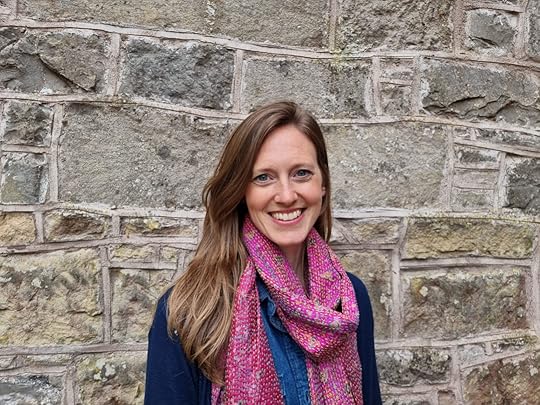
Kiran Young Wimberly is a PC(USA) minister, spiritual director and musician living and working freelance on the north coast of Ireland, and a member of the Corrymeela community for peace and reconciliation. She has recorded four albums of Celtic Psalms CelticPsalms.com with the McGraths, and together they have formed the nonprofit Celtic Pilgrims CelticPilgrims.com, dedicated to connecting communities through music. She hosts a podcast called Psalms for the Spirit PsalmsfortheSpirit.substack.com and writes a newsletter called Bless My Feet at KiranYoungWimberly.substack.com. Kiran’s website is KiranYoungWimberly.com.
The post Monk in the World Guest Post: Kiran Young Wimberly appeared first on Abbey of the Arts.
June 17, 2023
Entering a Relationship with Radiance + Day 6 Mary Prayer Cycle
Dearest monks, artists, and pilgrims,
We have three treats for you this week!
The next installment of our Mary Prayer Cycle video podcasts is now available. Last Spring we created a prayer cycle and audio podcast series to accompany my book Birthing the Holy: Wisdom from Mary to Nurture Creativity and Renewal. Today we continue our release of the companion video podcasts for the Birthing the Holy Prayer Cycle with Day 6Morning and Evening Prayer. The full prayer cycle is available here.
Day 6 morning and evening prayer takes as its theme Theotokos and Mystical Rose. Theotokos means God-Bearer and invites us to consider all the ways we are called to birthing in our own lives. As Mystical Rose Mary beckons us to see the boundaries of our limited vision and enter into sacred imagination and expanded perception.
The podcast for Mystical Rose includes a new dance for the Litany of Guadalupe choreographed and produced by Betsey Beckman, and featuring a group of Filipino dancers. There are similar threads in Mexican and Filipino cultures who were colonized by Spain simultaneously in the 1500s. Both cultures now have integrated a blend of indigenous dance and festivals with the overlay of Christian faith, and in particular, both cultures have a robust devotion to Mary. Click here to watch the dance and read the rest of Betsey’s reflection on its creation.
Connected to these themes of birthing and unfolding our sacred purpose, I was interviewed for the summer journal of the Leadership Conference of Women Religious. The theme was “Entering a Relationship with Radiance.”
This is an excerpt:
You have stated that you believe in “the revolutionary power of stillness and spaciousness, and of practicing presence to life’s unfolding” and that a commitment to this practice can change the world. Would you say more about how the world can change in this way? What has it meant for you to live with this commitment?
This question reminds me of a quote from a David Whyte poem: “what you can plan is too small for you to live.” I am definitely a “recovering planner”! I read that line years ago after I finished my graduate studies and was discerning my next step. That’s when I discovered this idea of unfolding and ripening. I started to notice how the seasons helped me pay attention to that.
When I commit to sitting in silence, when I commit to a life that is slower, when I commit to a way that has less striving and reaching and trying to prove myself – or where I simply exhaust myself – then the more life reveals itself to me and the more God reveals the next invitation in my life. What’s the next invitation which when I think of responding to it, I feel a sense of joyfulness? Where do I feel that sense of shimmering that confirms this is where I am being invited next? What is going to create more capacity within me to hold grief?
Committing to this way of being has a lot to do with intuition and letting our intuition guide us. We live in a very rational culture that emphasizes linear thinking. But using our intuitive senses can create a lot of spaciousness and openness within us to receive the gifts offered to us by the Holy.
I work with creativity and the arts and see how much that energy – which is an invitation to co-create with the Divine – needs slowness, spaciousness, stillness, and the freedom of non-grasping in order to unfold in its own time and manner. We cannot see what our path is – probably even more than a day out, if even that. We are never guaranteed anything other than that moment-by-moment learning to trust in what’s unfolding and learning to tend to those little signs that come to us through dreams, nature, conversations, or other prayer.
All of this contributes to changing the world. Those small acts make a difference – even though we will probably never know how. We have to act as if the small actions have an impact – because the other alternative is to go into a kind of nihilism and give up.
You can read the entire interview at this link.
Join Therese on Wednesday for Centering Prayer and Melinda on Thursday for her contemplative yoga practice. These are the final programs before our summer break, so join us to be in community together, to slow down and bring yourself present to the radiance of this moment.
With great and growing love,
ChristineChristine Valters Paintner, PhD, REACE
PS – To read reflections on the Summer Solstice from our archives please click here. If you are in the southern hemisphere you can find the Winter Solstice here.
Mary Icon Block Print by Kreg Yingst
The post Entering a Relationship with Radiance + Day 6 Mary Prayer Cycle appeared first on Abbey of the Arts.
June 13, 2023
Monk in the World Guest Post: Jo-ed Tome
I am delighted to share another beautiful submission to the Monk in the World guest post series. Jo-ed Tome is new member of our Wisdom Council. Read on for his reflection A space where contemplative living can flourish.
I had to sit quietly for several minutes after my conversation with Alex (not her real name). She brought up difficult questions about life and living. She had a lot of worries and fears. She was afraid her life could possibly be meaningless. She could not bear the thought that she might only be making up her purpose in life and that it is possible there is no “grand design”. She feared that perhaps the anonymous commenter in some online forum could be right: there is no heaven. In the middle of the conversation, Alex let out a question that seemed to be at the core of her concerns: “What if there is no God?”
Alex is a 20 year-old Filipino, a member of a young, high-spirited, and dynamic generation in a predominantly Catholic Christian country where spirituality is used almost synonymously with religiosity. Through the years of accompanying young people I am convinced that one of the major contributors to the “spiritual crisis”, as Alex described it, is the belief that one’s spirituality should be limited to what religious traditions teach. Anything outside of it must be curtailed.
Many Filipino youth are searching for something deeper, a more personal connection with the Divine that goes beyond the walls of the church. They desire to explore their spirituality and find meaning in their lives. However, many of them face great challenges in this path. One of which is the fear of being perceived negatively by their family and their church community. Many Filipinos are raised in religious households where questioning one’s faith or beliefs is seen as a sign of disrespect or rebellion. They feel they cannot freely express their doubts or share their evolving beliefs and image of God without facing discouraging reactions from those closest to them. As a result, they tend to repress their “sinful” thoughts and feelings which can lead to deep loneliness and confusion.
Young people like Alex were among my primary inspirations when I started my social media platform, Millennial Tito Monk, a few months ago. As a spiritual director, transpersonal psychology researcher, and self-professed monk in the world, I am moved to try to create a space where people, especially the youth, can learn about and practice a contemplative way of being and doing that is aligned with their unique contexts.
Over the years, I have come to describe contemplative living as being deeply present in the world, inextricably connected with the Sacred, and freely engaged in the flow of Life. This has become my anchor as I create online content and engage with every person that comes my way whether physically or virtually. This has been helpful as I accompany people like Alex who senses a call to connect in a deeply personal way to Something or Someone beyond the self.
Being deeply present in the world means being attuned to the here and now, to what is happening in and around us. Some people tend to be skeptical about practicing presence because they see it as a form of escape. However, in my experience, practicing deep presence encourages me to be more in touch with my realities. Deep presence restores my alignment with my inner self and the world around me. By using my senses, paying attention to my breathing, and opening up to what is arising in me, I make space for my joys and fears and allow the affirmations and questions to enter my consciousness. Practicing deep presence enables spiritual seekers like Alex to offer curiosity a seat at the table instead of driving it away like an unwelcomed stranger. This practice can come in the form of writing down every question, thought, or feeling and allowing them to unfold without directing the course or making any judgments. This may also be done by facing the current realities of one’s family or church community. Practicing presence may lead people like Alex to realize that we tend to behave out of a certain conditioning. Contemplative living creates inner spaciousness that extends to others and to the world.
Being inextricably connected with the Sacred highlights our innate and unbreakable bond to a Higher Power known as God, Spirit, Energy, Reality, Life, Love, and many more. To me, this aspect of contemplative living shifts the attention from the label to the relationship, from the destination to the journey. Regardless of the name we have for It, the strong and intimate connection with the Sacred is what matters most. By becoming aware of this, we can free ourselves from the boxes we try so hard to fit in. We start meeting and welcoming the Sacred in the mountain, in our backyards, at the dining table, in the hospital bed, and even in the darkest and loneliest recesses of our hearts. The likes of Alex can rest in the thought that God is not only found in the church during Sunday mass or worship. Whenever she hears that having questions or beliefs outside her faith tradition is “dangerous”, she can reach deep and find consolation in her sacred connection that transcends membership to any groups or institutions. Contemplative living celebrates deep and intimate connections.
Being freely engaged in the flow of Life speaks of our willingness to take part in how Life is moving in and around us. The presence and connection now invite us to engage—a movement toward conscious actions that ultimately flow through and toward Love. When we freely engage in the flow of Life, we tend to travel lightly through life, holding things with palms wide open. By realizing we are in the same grand flow, the walls that separate “us” from “them” dissolve. Compassion naturally sprouts and enlivens us. This aspect of contemplative living does not guarantee a problem-free life. Instead, being freely engaged in the flow of Life allows us to welcome setbacks and heartaches as inevitable parts of the journey. They break the flow only to open up a new course, a fresh start that continues the flow in another direction. Seekers like Alex can gain a new perspective that by willingly partaking in the flow, she is allowing Life to unfold before her very eyes. The questions judged as “inappropriate” or the thoughts labeled as “sacrilege” are rocks and crevices that shape the course of the river. Contemplative living cultivates openness and willingness to flow with Life.
Alex’s questions and fears still linger in me. As a companion, it is not my place to “fix” anything. What I carry in my heart is this spark of hope that young people like Alex embody the undeniable and ineffable presence of the Sacred in the world. It is my deep joy to witness that and continue to create a space where contemplative living can flourish.

Jo-ed Tome is a Filipino spiritual director, transpersonal psychology researcher, and self-proclaimed monk in the world. He practices and promotes contemplative living through his social media platform, Millennial Tito* Monk. Jo-ed encourages others, especially the youth, to a mindful and compassionate exploration of various spiritual practices that respond to their unique contexts. He strongly believes that the Sacred is within each person as much as It is everywhere and in everything.
Among other practices, Jo-ed leads contemplative climb in mountains, soulful reading of books and other reading materials, and soulful conversations. He also gives retreats and recollections to various groups to help them grapple with questions about life, become witnesses to the dynamic presence of the Sacred in their lives, and connect deeply with their inner selves.
Jo-ed is finishing his MSc in Consciousness, Spirituality and Transpersonal Psychology given by Alef Trust in partnership with Liverpool John Moores University. He has a bachelor’s degree in Psychology from Ateneo de Naga University. He is a member of the Spiritual Directors International and the Psychological Association of the Philippines.
The post Monk in the World Guest Post: Jo-ed Tome appeared first on Abbey of the Arts.


