
Christine Valters Paintner's Blog, page 158
November 23, 2013
Invitation to Dance: The Call to Our True Selves
 We continue our theme this month of "The Call to Our True Selves" which arose from our Community Lectio Divina practice with the quote from Merton's poem and continued with this month's Photo Party and Poetry Party.
Last month we explored the possibility that dance could help to soften the armoring of our bodies and yield to the impulse of life moving through us moment by moment. In learning this kind of surrender, we deepen into the life that is truly ours, not the one we construct for ourselves. We learn to release the expectations of others and playing roles to please those around us. We grow into the selves we were called to be.
I invite you into a movement practice. Allow yourself just 5-10 minutes this day to pause and listen and savor what arises.
Begin with a full minute of slow and deep breathing. Let your breath bring your awareness down into your body. When thoughts come up, just let them go and return to your breath. Hold this image of "The Call to Our True Selves" as the gentlest of intentions, planting a seed as you prepare to step into the dance. You don't need to think this through or figure it out, just notice what arises.
Play the piece of music below ("Nuvole Bianche" by Ludovico Einaudi) and let your body move in response, without needing to guide the movements. Listen to how your body wants to move through space in response to your breath. Remember that this is a prayer, an act of deep listening. Pause at any time and rest in stillness again.
After the music has finished, sit for another minute in silence, connecting again to your breath. Just notice your energy and any images rising up.
Is there a word or image that could express what you encountered in this time? (You can share about your experience, or even just a single word in the comments section below or join our Holy Disorder of Dancing Monks Facebook group and post there.)
If you have time, spend another five minutes journaling in a free-writing form, just to give some space for what you are discovering.
To extend this practice, sit longer in the silence before and after and feel free to play the song through a second time. Often repetition brings a new depth.
You can see the fall calendar of invitations here>>
*Note: If this is your first time posting, or includes a link, your comment will need to be moderated before it appears. This is to prevent spam and should be approved within 24 hours.


November 19, 2013
Finding Home Within (a love note from your online Abbess)
To receive this love note straight to your in-box, subscribe here (and also receive a free gift!)
Wild Rosebush
How it stands there against the dark
of this late rainy hour, young and clean,
swaying its generous branches
yet absorbed in its essence as rose;
with wide-open flowers already appearing,
each unsought and each uncared-for….
So, endlessly exceeding itself
and ineffably from itself come forth,
it calls the wanderer, who in evening contemplation
passes on the road:
Oh see me standing here, see how unafraid I am
and unprotected. I have all I need.
—Rainer Maria Rilke
Dearest monks and artists,
It feels like the threads of my life are weaving themselves again and beckoning to me to follow. I shared in my newsletter last week about herbalism and the particular gifts of rose as a part of medicine. Then the Rilke poem above was shared with me by a dancing monk and I was grateful to find it again, or to be found by the poem, as would be more accurate. I see myself so clearly in that wanderer, receiving the wisdom of rose by the side of the road. To be reminded of the courage needed.
Rose is also my birth flower (born in the month of June) and of course, the rose is a symbol both for Mary and for Jesus (as in one of my favorite hymns for the coming season). Lately I have been feeling like Mary is inviting me into a deeper intimacy with her. Last fall she showed herself again and again inviting me into a deep trust in the fundamental generosity of life.
This past week I contacted Ronna Detrick, whose work I so deeply respect, she has such a creative and enlivening way with the stories of women from scripture. She makes them matter for our lives. Ronna has created a process she calls Sacred Readings, where you ask a question and she draws a card with one of these women and listens for how she responds. My question to Ronna had to do with home and our longing to put down deep roots here in Galway. Out of the 52 possible women she could have chosen, Mary was the one who stepped forward.
In the reading she appeared as the wanderer, the one who has known exile, and the one who carries home in her heart. Of course these things resonate deeply with me. The message, as all of the wisdom that has come to me in the past year and a half on this life pilgrimage, has been an invitation to a deep and abiding trust and knowing there is an abundant Source at the heart of everything. This is the trust which allowed me to step away from my lovely and comfortable life in Seattle, sell everything I owned, and move out into foreign landscapes seeking something I couldn't quite name. I continue to listen.
Ronna wrote to me: Mary "creates a 'home' for others through her story, her status, her heart. And all of this is possible because of her ability to trust the unseen, the miraculous, the amazing." There was much solace offered in this encounter. Funny, how we humans need confirmation again and again. I am grateful it continues to be offered to me.
I love that Mary is especially revered in the world of monks: from the Black Madonnas in Benedictine monasteries like Einsiedeln in Switzerland and Montserrat in Spain to Bernard of Clairvaux, that great Cistercian reformer of the Middle Ages and Hildegard of Bingen, the Benedictine Abbess, who both held Mary in special regard, her yes as participating in a unique way the holiness birthed through God.
I have been traveling a great deal this fall and as you read this I will have left on another trip – this time to Norway to lead a retreat. John and I are also making time to visit Tromso, up in the Arctic Circle, where we hope to see the Northern Lights we have always longed to see. But even if that doesn't happen, we will be embraced by the long dark nights and skies filled with a thousand stars. It will be a gift to breathe into a small window of time when holy mystery descends in such a tangible way. Vienna also beckons for some time at the Christmas markets, this is the most magical time of year there with glittering lights everywhere and the chance to warm yourself with mulled wine, classical music streaming from church doors, long walks in the Vienna woods.
Following these travels, I enter into a season at home, three lovely months in Ireland and the invitation right now is to continue the inner pilgrimage with Mary as my guide. I delight in my times of travel and in connecting with dancing monks in person, and I am also dancing in the anticipation of time to turn inward and root and rest, to continue to find ways to claim this land as home and listen for Mary's ongoing wisdom in the midst of so much ongoing transition.
This is what I love about seasonal wisdom. Autumn has been a season or travel and exploration and the coming winter beckons with quieter rhythms and the call to focus energy on building my connections here in Ireland, to deepen into a sense of community. This too is the essence of the monk's path: to listen for what this season right now invites you to consider, knowing it is different than the season that came before. We are invited to yield and be flexible, to surrender into a greater wisdom than our own.
What is the invitation of the season ahead in your own life? What threads are you following? How might you honor the shifts happening deep within?
This all feels like very ripe possibility for entering into Advent, the time of waiting, of tending to the coming birth. If you would like to make an intentional journey from home, please join us as we embrace the wisdom of Celtic spirituality this year to guide our pilgrimage online. We would love to have you.
We also have a new Poetry Party and monk in the world guest post from Mary Sharratt, author of a wonderful novel about Hildegard of Bingen, and you have a chance to win a free copy of her book.
With great and growing love,
Christine
November 17, 2013
Monk in the World guest post: Mary Sharratt
I first encountered author Mary Sharratt's work about a year ago when my interest in Hildegard of Bingen drew me to her new novel Illuminations: A Novel of Hildegard von Bingen. We don't know much about Hildegard's years spent at Disibodenberg, but Mary does a masterful job of weaving together the historical sources we do have with historical imagination to create a compelling story about a remarkable woman. She is a beautiful writer and I loved the book. I am delighted that Mary was willing to share her own wisdom here about being a monk in the world.
Mary is also offering a free copy of her book to one lucky winner. To enter the random drawing please leave a comment on this post below about your own interest in Hildegard. You can earn extra entries by sharing this post on Facebook, be sure to tag me so that I can see that you have shared it.
Read on for Mary's insights:
Visions of the Green Saint
How has Hildegard von Bingen, the 12th century visionary abbess, polymath, and powerfrau, taught me to be a monk in the world? Her visions were so magnificent, so all-embracing, that she transcended cloistered walls and embraced the entire cosmos.
Born in the lush green Rhineland in present day Germany, Hildegard (1098–1179) was offered as a child oblate to Disibodenberg Monastery and walled into an anchorage at the age of eight or fourteen, according to which version of her biography you read. This sensitive child was expected to lead a life of utter silence and submission. Yet, after decades in her “mausoleum,” as Guibert of Gembloux’s account of her life calls the anchorage, she broke free to become the greatest voice of her age.
Hildegard founded two monastic houses for women and went on four preaching tours. She developed her own system of holistic medicine still practiced in modern day Germany and composed an entire corpus of highly original sacred music. She wrote nine books addressing both scientific and religious subjects, an unprecedented accomplishment for a 12th-century woman. Her prophecies earned her the title Sybil of the Rhine. An outspoken critic of political and ecclesiastical corruption, she was a reformer who courted controversy.
Hildegard calls me, as a spiritual woman, to resist all forms of physical and mental confinement. Instead she urges me to embrace life as passionately as she did. I believe she calls on all of us to discover our inner polymath and allow our God-given gifts and talents to unfold to their greatest fruition.
Following her example, I balance my daily meditation and prayer and my hours of writerly solitude with forays into the Divine splendour of nature. Hildegardian spirituality counters acedia, or spiritual dryness, with the ecstasies of Viriditas, her revelation of the animating life force manifest in the burgeoning green world, that sacred power infusing all creation with moisture and vitality. To her, the Divine was manifest in every leaf and blade of grass. Creation unveiled the face of the invisible Creator.
I, the fiery life of divine essence, am aflame beyond the beauty of the meadows, I gleam in the waters, and I burn in the sun, moon and stars . . . . I awaken everything to life.
—Hildegard von Bingen, Liber Divinorum (Book of Divine Works)
Living in a semi-rural area in Northern England, my daily covenant is to go outdoors every day, regardless of the weather, and take care of my spirited Welsh mare who lives at a stableyard on a hilltop with views over the Pennine moors. Here the blasting winds and constantly changing weather patterns, the spring bluebells and shimmering trees, the owls and kestrels, the sun, moon, and circling stars, all place me in a state of mindful wonder. This is my daily revelation of the Divine whom Hildegard called Mother.
Hildegard revered the Feminine Divine in the form of Sapientia, Divine Wisdom, also called Sophia. After devouring Dr. Barbara Newman’s classic work Sister of Wisdom: Saint Hildegard’s Theology of the Feminine, I learned that Hildegard’s Sapientia is drawn directly from the scriptures—from the Book of Wisdom in the Old Testament of the Catholic Bible. There’s nothing “new agey” about the Feminine Divine within Christianity.
Sapientia creates the cosmos by existing within it.
O power of Wisdom!
You encompassed the cosmos,
Encircling and embracing all in one living orbit
With your three wings:
One soars on high,
One distills the earth’s essence,
And the third hovers everywhere.
—Hildegard von Bingen, O virtus sapientia
Hildegard’s theology of the feminine is deeply inspiring to me. While writing Illuminations: A Novel of Hildegard von Bingen, I kept coming up against the injustice of how women, no matter how devout they might be, are condemned to stand at the margins of established religion, even in the 21st century. Women priests and bishops are still the subject of controversy in the worldwide Anglican Communion while Pope John Paul II called a moratorium even on the discussion of women priests in the Catholic Church.
Modern women have the choice to wash their hands of organized religion. But Hildegard didn’t even get to choose whether to enter monastic life. The Church of her day could not have been more patriarchal and repressive to women. Yet her visions moved her to create a faith that was immanent and life-affirming, that can inspire people of all faith backgrounds today. Hildegard’s re-visioning of religion celebrated women and nature. Her vision of the universe was an egg inside the womb of God.
Too often religion has been interpreted by and for men. But when women speak their heartfelt spiritual truths, a whole other landscape emerges—one that we haven’t seen enough of.
Hildegard shows how visionary women might transform the most male-dominated faith traditions from within. Under Saint Hildegard’s mantle, we may all become sisters and brothers of Wisdom, our voices moving, as Hildegard’s did, like a feather on the breath of God.
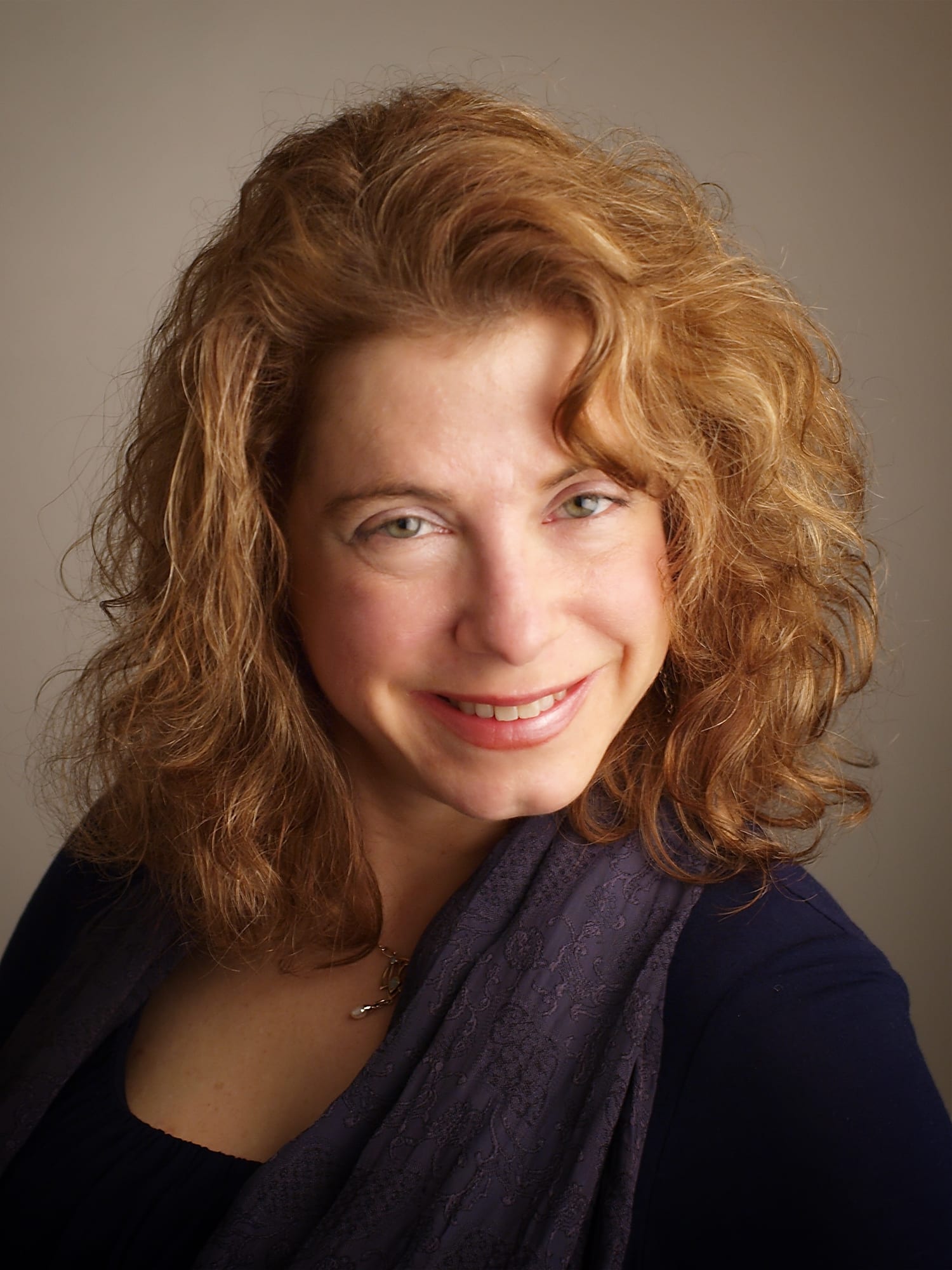
Mary Sharratt’s novel Illuminations: A Novel of Hildegard von Bingen (Houghton Mifflin Harcourt 2012, Mariner 2013) won the Nautilus Gold Award and was a Kirkus Book of the Year 2012. Visit Mary’s website: http://www.marysharratt.com/
November 16, 2013
Invitation to Poetry: The Call to Our True Selves

Welcome to Poetry Party #72!
 I select an image (*photo above by Quaker minister Brent Bill) and suggest a theme/title and invite you to respond with your own poem. Scroll down and add it in the comments section below or join our Holy Disorder of Dancing Monks Facebook group and post there.
Feel free to take your poem in any direction and then post the image and invitation on your blog (if you have one), Facebook, or Twitter, and encourage others to come join the party! (If you repost the photo, please make sure to include the credit link below it and link back to this post inviting others to join us).
We began this month with a Community Lectio Divina practice from Thomas Merton and followed up with our Photo Party on the theme of "The Call to Our True Selves." (You are most welcome to still participate). We continue this theme in our Poetry Party this month.
Thomas Merton's words invite us to consider the sainthood of creation, living into the fullness of their purpose and call. We can refuse this call for ourselves, and often do, but we can also choose to respond to the witness of nature to deepen into who we are. Write a poem which explores this journey.
You can post your poem either in the comment section below*or you can join our Holy Disorder of Dancing Monks Facebook group (with almost 900 members!) and post there.
*Note: If this is your first time posting, or includes a link, your comment will need to be moderated before it appears. This is to prevent spam and should be approved within 24 hours.
You can see the fall calendar of invitations here>>
*Photo by Brent Bill
November 13, 2013
Monk Medicine (a love note from your online Abbess)
To receive this love note straight to your in-box, subscribe here (and also receive a free gift!)
 The Roses
One day in summer
when everything
has already been more than enough
the wild beds start
exploding open along the berm
of the sea; day after day
you sit near them; day after day
the honey keeps on coming
in the red cups and the bees
like amber drops roll
in the petals: there is no end,
believe me! to the inventions of summer,
to the happiness your body
is willing to bear.
—Mary Oliver
Dearest monks and artists,
The poem above has been shimmering for me, and at first I hesitated to share it here because we are entering the depths of winter in the northern hemisphere. But then I remembered my brother and sister monks in the southern hemisphere, who are experiencing this embrace of light and warmth. I love that we have a global community and at any moment there is full spectrum of experience.
This poem in praise of rose's gifts shimmered because I have also been praying with Thomas Merton's words for our Community Lectio Divina practice this month where he considers the lake, the hills, the trees, the mountains, and the sea to all be saints, because they each live out their divine call so perfectly.
In my personal practice I have been deepening into the path of herbalism, so grateful for my dear friend and herb mentor Tonja Reichley (for those of you in Denver she has an amazing shop called Moon Dance Botanicals). Merton's quote has invited me to ponder the wisdom of St. Rose and St. Elderberry, St. Clover and St. Dandelion, among many others.
For those of us with northern European roots, we might often find ourselves looking to eastern medicine or native American indigenous paths of healing, when we have our own rich tradition of healing practices which sustained and fortified our ancestors. Even more exciting for me is the way herbalism has a distinctly monastic lineage. For hundreds of years, monasteries were places of both physical and spiritual healing. The monks cultivated herbs and crafted medicines to offer to those who were suffering. They were the repositories of this sacred knowledge.
St. Hildegard of Bingen, the patron saint of our contemplative and creative work here at Abbey of the Arts, was also a great healing practitioner. She wrote a manual of herbs and their healing qualities and her principle of viriditas, or greening power of God, was applied both to the spiritual dimension of life as well as to the body. She would look at a person with illness and ask where this life force has been blocked. Victoria Sweet describes her own re-imagining of this process in her wonderful book God's Hotel, where she brings Hildegard's practice of medicine to her modern context as a doctor. This leads her to name "slow medicine" as one of the gifts herbalism has for us.
Slow medicine means not seeking the pill that offers the quick fix, but embracing illness as a journey of healing where nourishment of the body and all its systems play a central role. It means I have to ask myself how the rush and pace of my life, and ways I have neglected my own nourishment, play a part in discernment of what will bring vitality again. In Hildegard's own life, many of her illnesses were the result of her actively resisting the call of God in her life. And while I do not believe we are to blame for our physical ailments, there is still an invitation to deepen into our own healing. Illness can be its own kind of pilgrimage.
In my exploration of herbalism as a path of healing for both body and soul, I find a kinship to those ancient monks who preserved the wisdom. I find myself contemplating the gifts of "Monk Medicine" on many layers of our lives. I ask myself, How do the practices of these wise monks offer us a path back to alignment with both body and soul?
For Hildegard, she considered the rose to have special virtues, and recommended adding her to all medicines: "Rose is also good to add to potions, unguents, and all medications. If even a little rose is added, they are so much better, because of the good virtues of the rose". I think Hildegard and Mary Oliver would have been kindred spirits, finding the generous blooming of rose as a sign of the joy freely offered to us.
In these darkening days I have been making elderberry syrups, nettle and oat straw infusions, thyme and oregano tinctures, crafting my own herbal tea blends and oils for anointing, and other explorations. In the process I have grown more intimate with these green saints who offer me the gift of nourishment, of moving always toward myself again. I am finding empowerment and intimacy by becoming familiar with these gifts offered to us.
Even herbalism can be practiced from a modern medicine mindset, where we seek the quick fix in a pill, we look for standardized extracts rather than taking in the gifts of the whole plant. We do this in our spiritual practice as well, seeking the one way of praying that will alleviate our unease and anxiety, rather than embracing a whole system and way of being that brings a lifetime of deepening. In monastic spirituality lectio divina is intimately connected to centering prayer and sitting in silence and solitude, which are also deepened by praying the Hours and gathering in community. Our bodies and our souls hunger for this kind of slow integration.
What if, when your body presents its ache and pain, instead of seizing upon the quick relief, you slowed down, softened into this place of vulnerability, listened for the wisdom beneath the rush of life and fear of growing older. What might that conversation sound like?
Herbalism and modern medicine are not mutually exclusive, as someone with a serious autoimmune disorder, I am grateful for the drugs which have given me quality of life. And yet those great saints of the green world invite me into another way of being as well. As I listen I hear the call to wholeness, to honor the sacredness of all things, to celebrate the abundance of healing poured forth by the world. Becoming a monk in the world means embracing the many-layered gifts of healing, to know that body and soul are one, to let the greening life force of viriditas flow freely once again.
With great and growing love,
Christine
November 10, 2013
Monk in the World guest post: Wil Hernandez
I first met Wil Hernandez through one of the Spiritual Directors International conferences. He has an irresistible passion for this work of spiritual formation, direction, and supporting people in listening to the voice of the Spirit at work in the world. He has just launched an exciting new project: CenterQuest School of Spiritual Direction, is a fellow Benedictine oblate, and is the author of a trilogy of excellent books on Henri Nouwen, the third in the series released last year, Henri Nouwen and Spiritual Polarities: A Life of Tension, is especially powerful reading.
Read on for Wil's reflections on being a monk in the world:
I’m a proud Oblate of Saint Andrew’s Abbey in Valyermo, California! After five faithful years of attending a monthly Oblates group in the San Fernando Valley area, I finally professed my vow during the Feast of Saint Benedict last March of 2012. I’ve always wanted to be an Oblate and have dreamt about the occasion of my final oblation as one of the sacred moments of my own spiritual journey. There I stood on that special day, in front of a few close friends, vowing to live by the Rule of Saint Benedict as a layperson in the world. It was a highly emotional moment for me, even as I confidently took on the name of St. John of the Cross (Juan de la Cruz in Filipino and Spanish) as my Oblate’s name.
Little did I expect that in less than three months after that glorious event, I would plunge into my own version of my dark night experience that would haunt me for the remainder of that year. I could not, for the life of me, make sense of such seemingly ironic twist of fate. Admittedly, it even made me seriously question why in the first place I chose John of the Cross as my saint of preference. Why did I become an Oblate to begin with?
It all started in early 2004! Through the encouragement of my former spiritual director—a long time Benedictine monk at Valyermo—I was privileged to be admitted to the Abbey for a period of six months (in and out) while I worked on my dissertation writing on the spirituality of Henri Nouwen. I was given a special room up on the hill, separated from all the rest, to concentrate on my work. I remembered how, each time the bell rung for the observance of the liturgy of the hours, I’d hesitate to come down to join the monks at the chapel for fear that it would break my momentum for writing. Grudgingly, I’d make my way down with a tinge of guilt, thinking it was the least I could do for the incredible hospitality extended to me by the monks. Slowly, but surely, I found myself being drawn in over time by the beauty of the liturgy. My day would seem incomplete if I missed one of the prayer offices. Without me realizing it, I gradually fell in love with the rhythm of it all and even begun to experience in more ways than one the transforming power of the liturgy in my own life. It’s not an exaggeration to mention that my regular participation in the liturgy was what inspired and sustained my otherwise unexciting writing process. I was so impacted by the whole routine that I found myself eagerly appropriating the practice on my own even after I was done with my stay at the Abbey. To this day, I rarely miss praying the Lauds first thing in the morning and ending my evening with the Compline.
Now back to my own dark night episode: It’s actually been a while now since that unwanted experience occurred. Looking back, I do have a clue as to how it all happened. Soon after my oblation, I found myself deeply immersed in the busyness of my work, which only led to my sense of coming unglued as a person—experiencing fragmentation more than integration. Before I knew it, when I was confronted with all sorts of challenges connected with my job, I was far from being in a stable state of groundedness. Put it simply, I was caught off guard by the turn of events because I was not as centered as I should be. I became susceptible to everything that was opposite of anything identified with harmony, balance, stability; I was completely decentered and I did not even know it.
In retrospect, the one valuable interior lesson I learned through my painful “dark night” has to do with the vital role of presence and its direct relationship with a life of centeredness. Suffice it to say, I lost my footing because I lost my own center. For me, being a monk in the world is staying fully centered in God, experiencing a profound sense of at-homeness and interior stillness despite the outside chaos that may surround us at any time. I keep reminding myself, as simple as it may sound, that the rhythm of the prayer liturgy, is foremost, my lifeline for sustained experience of centeredness. And each time I find myself again on the edge of succumbing to the tyranny of busyness, of entering into my cluttered and occupied space, that I need to leave room for God to have the rightful place in the Center of it all. When I fail (and I bet I will continue to do so), I just need to reclaim the Benedictine saying: “Always we begin again!”

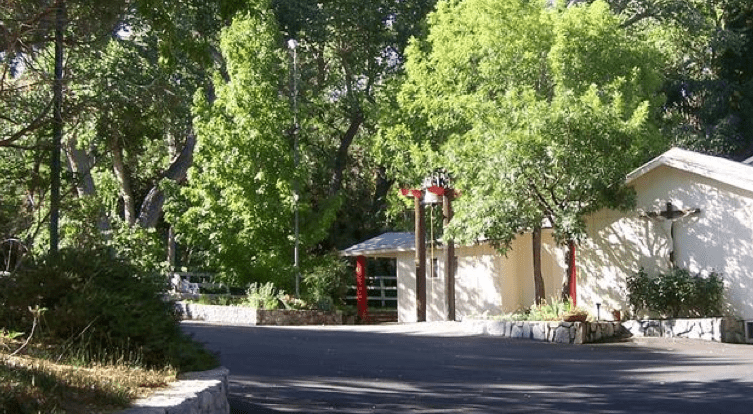
 Wil is the author of a trilogy on Henri Nouwen: Henri Nouwen: A Spirituality of Imperfection, Henri Nouwen and Soul Care: A Ministry of Integration, and the most recent Henri Nouwen and Spiritual Polarities: A Life of Tension. He is also the founder and president of CenterQuest (CQ) – an ecumenical hub for the study and practice of Christian spirituality (www.CQCenterQuest.org).
CQ is launching the inaugural cohort for its School of Spiritual Direction (SSD) in the fall of 2014. Early applications are now being accepted. Check out: http://www.cqcenterquest.org/school-of-spiritual-direction/
Invitation to Photography: The Call to Our True Selves
Welcome to this month's Abbey Photo Party!
 I select a theme and invite you to respond with images.
We began this month with a Community Lectio Divina practice (stop by to read the beautiful responses). As I prayed with the reading from Thomas Merton, this image of what it means to become a saint kept shimmering for me, and the image of creation as witness to this call to be myself.
What if we could receive the trees and rivers and creatures as wise guides about what it means to truly embrace ourselves? What can they teach us about not refusing our divine call? How might their witness reveal new dimensions of my own sense of self?
With our overall theme of the year at the Abbey as discernment, I love the possibility of exploring how creation can remind us of what is most essential, can call us back to our true selves.
I invite you for this month's Photo Party to play with this idea as you go out in the world to receive images in response. As you walk hold this inspiration of the true self and be ready to see what is revealed to you.
You can share images you already have which illuminate the theme, but I encourage you also to go for a walk with the theme in mind and see what you discover.
You are also welcome to post photos of any other art you create inspired by the theme. See what stirs your imagination!
How to participate:
You can post your photo either in the comment section below* (there is now an option to upload a file with your comment) or you can join our Holy Disorder of Dancing Monks Facebook group and post there. Feel free to share a few words about the process of receiving this image and how it speaks of the "The Call to Our True Selves" for you.
*Note: If this is your first time posting, or includes a link, your comment will need to be moderated before it appears. This is to prevent spam and should be approved within 24 hours.
November 9, 2013
Winner of free book drawing
On Monday I shared Ken Peterson's monk in the world guest post and there was a drawing included for a free copy of his new book Prayer as Night Falls: Experiencing Compline. The lucky winner is Pacia Dixon! Pacia, send me your snail mail and we will arrange for your copy to be sent out.
November 5, 2013
The Call to be a Saint (a love note from your online Abbess)
To receive this love note straight to your in-box, subscribe here (and also receive a free gift!)
 Dearest monks and artists,
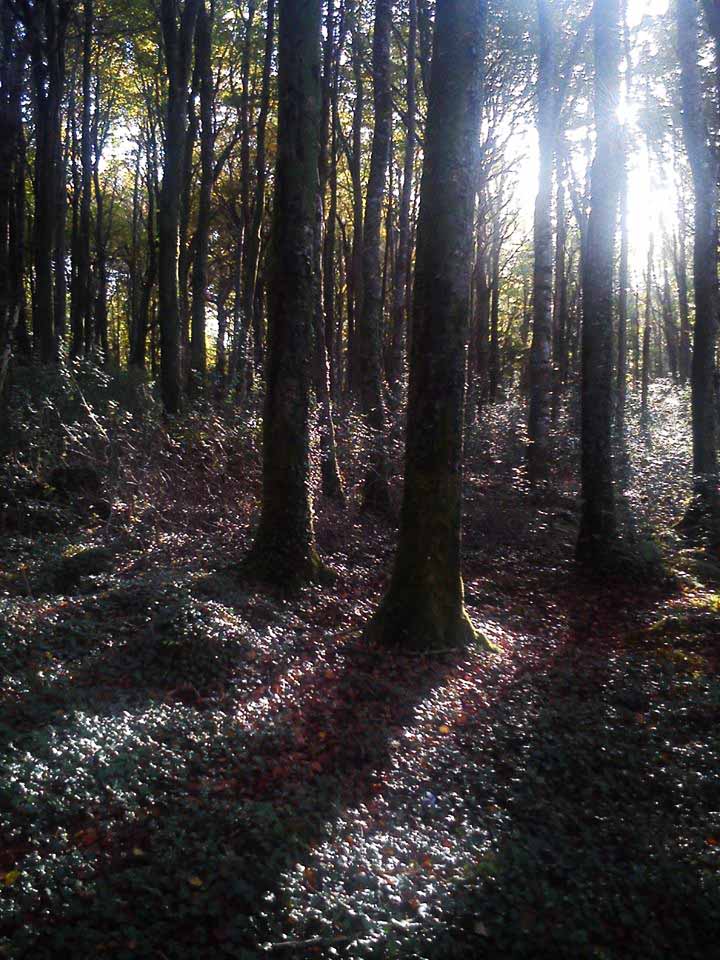
November is the month of remembrance of all the many saints of our lives. It is a thin time in the Celtic imagination, when heaven and earth draw closer together. I spent the feasts of All Saints and All Souls at a small gathering at the monastery of Clonmacnoise, once a great spiritual community and center of learning. During the Dark Ages, it was the Irish monks who brought inspiration and hope back to the continent of Europe. The question our gathering was exploring was whether this tradition of Celtic monasticism might today also offer light in our current Dark Ages and time when institutions are crumbling. From church systems to banking systems, the world is hungering for a new way of being.
It seemed so appropriate to spend these feast days remembering some of the great monastics in whose lineage I follow and I met some wondrous fellow monks in the world. I felt inspired and renewed in my commitment.
Last year, when John and I embarked on our great life pilgrimage, it was much in the tradition of the great Irish monks who would set out on journeys steered only by wind and current and the Spirit, to bring them to the places of their resurrection. We have not known the full vision we are moving toward, just glimmers, but as we contemplated in this gathering the way that Ireland really served as a spiritual center during these difficult times, I found myself seeing our own call to live here as part of the same movement, a return to the spiritual center.
We have been called to immerse ourselves here in the landscape and the elements, to be steeped in the ancient monastic wisdom which took its inspiration directly from my beloved desert mothers and fathers, and into an encounter with the God who is revealing something new right now. And now I feel myself even more aligned with so many others who also share a similar vision, who are carrying this seed and spark forward in their own ways.
In the month of October, our theme at the Abbey was softening and yielding. How are we called to release our own agendas and expectations and make room for the great unfolding? This practice of making space is an essential step toward receiving the gifts that are ours.
This month's theme is drawing inspiration from the words of Thomas Merton. For the passage, see the invitation into a practice of Community Lectio Divina. Merton describes the animals, trees, rivers, and mountains as all saints of creation. They are saints because they are who they were created to be.
We, however, as poet David Whyte describes, are "the terrible part of creation privileged to refuse our own flowering." Merton says that to be a saint means to be myself. This sounds so simple, and yet we know how challenging it is, how many obstacles we set before ourselves, how many layers of fear and resistance have built up over the years, how much my ego is attached to being viewed in a certain way, and what I am grasping onto.
As you sit with the Merton passage in prayer, I invite you to listen for this call to be fully yourself and how best to get out of your own way. Let the softening of this past month create a supple heart, ready to receive a new insight, a new vision. Listen for the wisdom that arises in the stillness and then share it with our community.
One possible way to pray during this month of remembrance is to call upon the Saints to support you, as well as the souls of your ancestors. Consider beginning each day with a few moments of silence inviting the presence of a favorite Saint or wise ancestor to simply be with you in the day ahead and to help reveal the places where you move away from your own sainthood.
Or you could practice an Ignatian Examen-inspired prayer of ending the day in reflection on the places where you embraced your truest, deepest self and the places where you put on masks.
To become a Saint doesn't mean to be some contrived image of holiness, practicing your faith in ways that imitate others, but to find your own unique expression in the world. You are a revelation of the sacred, and there is only one revelation just like you.
With great and growing love,
Christine
November 3, 2013
Monk in the World guest post: Ken Peterson
I am delighted to bring you fellow monk in the world Ken Peterson this week. Ken and I first met as part of the Benedictine oblates of St. Placid Priory in Lacey, WA, when I lived in Seattle. He and his wife were recently traveling in Ireland, so it was fun to meet up in one of our favorite Galway pubs for lunch. Ken has been working for the last couple of years on his new book, which is officially released November 1st: Prayer as Night Falls: Experiencing Compline. It seems especially appropriate that it be published during this season of growing darkness, as Compline is the great night prayer the monks sing to enter into the mystery of silence. He has been part of the Compline Choir in Seattle for almost 50 years (if you go to this link you can click on podcasts and here past prayers). You can even get a quick taste of this sublime prayer at this YouTube link.
Free Book Giveaway:
Ken is giving away a free copy of his book. To be entered in the drawing leave a comment in the post below by November 8th. You can share the link to this post on Facebook to receive a second entry, just be sure to first like and then tag this page so Ken can see the posting.
Read on for Ken's reflections:
A recent drive from my native Seattle east to Wenatchee set me to thinking about what I would say about being a “monk in the world.”
The geography of the Pacific Northwest is fascinating, because the Cascade Mountains divide the area into two distinct climates, which are (generally speaking) rain forest and desert. Driving over the mountains, I experience a feeling of expansion in leaving the big city and the cloud cover, and I rejoice in the sunlight and spaciousness of Eastern Washington, with its stark brown hills and sagebrush.
Probably from before recorded history, people sought out some deserted place to pray and meditate, and we, too, seek a place apart from (as Carl McColman put it so well in his guest blog), “our dysfunctional culture.” There are various degrees of physical separation from the world, which run the gamut from living in a physical cloister to just having moments of interior sacred space. I’m somewhere in the middle, having become a Benedictine oblate three years ago. Although I would never call myself a monk, I am related by my vows to a particular sacred place, the Benedictine Priory of St. Placid, in Lacey, Washington – in a way that is monk-like.
Being a monk in the world is about living a contemplative life in the midst of the world of work and relationships outside a physical cloister. I recently re-read the story of Mary and Martha (Luke 10:38-42). As you remember, Martha was complaining about having to do all the kitchen work while Mary sat listening to Jesus:
But the Lord answered her, “Martha, Martha, you are worried and distracted by many things; there is need of only one thing. Mary has chosen the better part, which will not be taken away from her.” (NRSV).
Reflecting on this reading, I found a meaning that was new for me: that the early Christian monks had conceived the idea of continuous prayer as a way of combining worldly work and contemplation. In order to pray continuously, the early Christian monks trained themselves to recite a prayer, usually the Jesus Prayer, during all waking hours, until the prayer itself wove itself into the fabric of their every moment. The Jesus prayer is: Lord Jesus Christ, Son of God, have mercy on me, a sinner.
Just as there are degrees of being physically cloistered, we also have varying degrees of intensity in our daily contemplation (I’m thinking just of an ordinary day, not special times for retreat or silence). There are times where we have to focus completely on some task, but many times during the day when we can stop all tasks to just be in stillness. It helps enormously if there are set times during the day that we stop to be still and to pray. And we have the opportunity in our daily interactions with others to practice other monk-like virtues, such as compassion and humility.
My own path into monkishness started almost fifty years ago, when I joined a group that sang the monastic office of Compline every Sunday evening at the Episcopal cathedral in Seattle. Long before I became interested in who monks were, I was singing chant – doing what monks do. And I was involving myself in the beauty of sacred music, which I know now is a way of being in the Divine Presence. The constant weekly divine office and the encounter with hundreds of works of great beauty has sort of shaped and formed me, as if I were a rock in one of the Cascade Mountain streams.
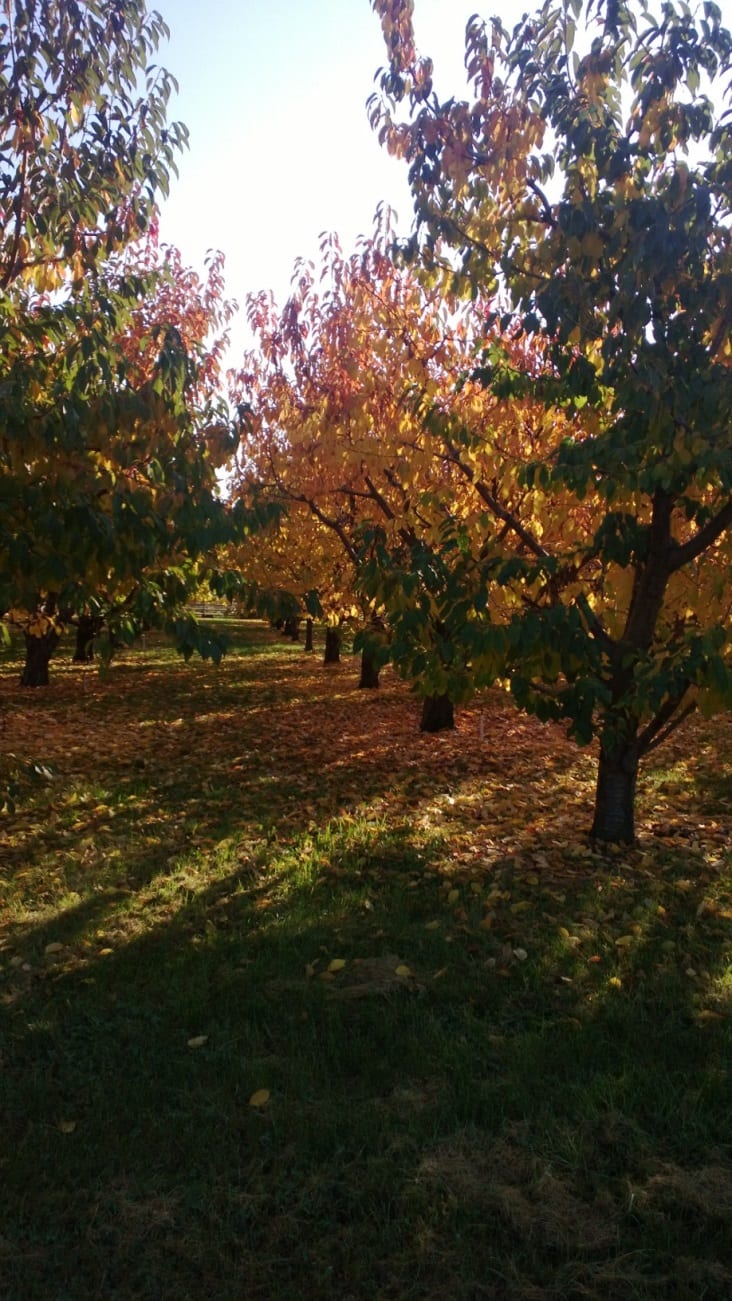
The photograph included with this blog was taken in Wenatchee, which is in Eastern Washington on the Columbia River. I drove my wife and three other attorneys over the mountains to give free legal services to immigrants who were permanent residents seeking citizenship. I was free to wander around the surrounding area, which is known for its apples. I saw this orchard, with the morning sunlight coming through, and had to stop to marvel at it. The picture probably doesn’t do justice to the depth and color of the leaves, or convey my feeling of peace and wonder. Here were ordered rows of trees, having brought forth a marvelous harvest, and now entering into the season of rest and transformation. Being a monk in the world is to pause frequently to marvel and to rest.
My book Prayer as Night Falls: Experiencing Compline has just been published as you are reading this post. One of the musical examples in the book illustrates the concept of the world versus the cloister. It’s about having a part of our mind where peace and joy exist apart from the dark side of fear, worry, and despair. This is to have a monastery or cloister of the heart.
All the examples from the book are on a public website, and my concept is that the texts can be used as lectio divina, assisted by music. I would love to hear your comments on how this works for you. You can listen to “If we could shut the gate” here. I recommend headphones, especially if you are listening at work.

Thank you, Christine, for inviting me to write here. I pray that we may all find a cloister within, every day that we are given to live.

Kenneth Peterson has sung with the Compline Choir in Seattle since 1964. He taught music before entering into a career in software engineering, and has had a long interest in chant and early music, performing in and also directing ensembles. In 2010 he became a Benedictine oblate at St. Placid Priory in Lacey, Washington. His book Prayer as Night Falls: Experiencing Compline, will be published in November by Paraclete Press. In it he tells the story of the history and themes of the office, woven together with reflections from his own spiritual journey and links to musical examples that accompany the text. For more information, go to www.prayerasnightfalls.com.


