Zilla Novikov's Blog, page 9
October 8, 2024
Behind the Screens: Tuesday Author Interview
Every Tuesday, get to know a bit about the stories behind the books you love, and discover your next favourite novel.
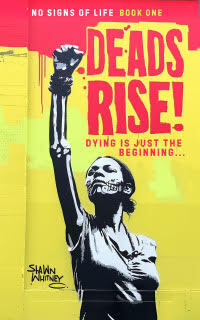
Rachel: We love to get politics all over our pulp fiction, so here’s screenwriter and novelist Shawn Whitney to tell us about his latest book, Deads Rise! Shawn, tell us about the book!
Shawn: It’s the first in a series called No Signs of Life. When half the world’s population suddenly drops dead, humanity braces for the zombie apocalypse. But as the “Deads” reawaken hours later, it becomes clear this is something far more complex.
Tanitia Mortero never asked to die, let alone rise again. Now, she finds herself caught in a war between the living and the Deads – a war fueled by fear, misunderstanding, and a refusal to accept that death was just the beginning of a startling evolutionary leap.
Rachel: That sounds rad, and hints at something more complicated than your typical action-horror.
Shawn: My own work focuses on typically unrepresented folks. However, when I’m writing to pay the bills, I have to write what my publisher tells me. That means male-led and even restricts the kinds of men that can appear because apparently the audience for male-led sci-fi is so fragile that they can’t even handle a flawed hero or they will explode into a thousand tiny pieces of testosterone. Nonetheless, I try to squeeze in some thoughtful elements that relate to social change, changing consciousness and personal transformation.
Rachel: Testosterone explosions sound like the least fun type of apocalypse. What inspired Deads Rise?
Shawn: It might have been seeing the film adaptation of The Girl With All The Gifts, to be honest. I saw it and thought “what if the zombies were the heroes in the zombie apocalypse story?” Originally it was conceived as a kind of YA TV series but getting anything past first base is easier at a Mormon summer camp than in the film/tv industry. So, it sat for a couple of years till I decided to make it a novel.
Rachel: Do you have a playlist for your book? Can you tell us why you picked a couple of the songs?
Shawn: Lots of Rage Against the Machine. Always. Maybe some Wet Leg and Gil Scott Heron —both the Revolution Will Not Be Televised and Whiteys On The Moon. Largely for the particular energy of the music for different plot points. Heron for a pivotal scene near the end of the book.
Rachel: Speaking of good taste, what book do you tell all your friends to read? Besides yours, of course!
Shawn: At the moment it’s Children of Time. I was blown away by how the writer handled an alien species’ consciousness, culture and history. And how they created a continuous character through multiple generations.
Rachel: And it’s another great example of making the “monster” the hero of the story. Do you have any suggestions to help people in our community become better writers?
Shawn: The most important thing to do is to write a lot and write to the end. Practice makes perfect. The more you work a muscle, the stronger it gets.
Then start writing another novel because you don’t want to be one of those writers who never finishes their books. Once you get past your first, it’s important to learn not to be precious about it. I’m not saying you need to crank out ten a year—and maybe your pace of writing and the spaces in your life only allow one every couple years. But don’t let perfection be the enemy of the good.
There’s no right way. I started reading John Truby’s Into the Story and I got so annoyed with him constantly emphasizing how brilliant he was and how all other methods were wrong that I stopped reading it. There are some rules to writing—rising action, conflict, etc. But there’s many ways to skin a novel.
I remember people used to say “writers are readers. You should read obsessively.” Yeah, well, I don’t. I have a job, two kids, a house to maintain. And I also want to read about what’s going on in the world and understand the source of conflicts or scientific advances or whatever. Sometimes I want to watch TV. There’s only so many hours in a day. Don’t beat yourself up if you don’t read a book a week.
Rachel: What’s your next writing project?
Shawn: For my publisher, I’m ghostwriting a trashy, male harem fantasy story set in Hell. Gotta pay the bills! For myself, I’m torn to be honest. I just finished the second book in the No Signs of Life series. I’d like to take a break from that world and I’m tossing around a few different possibilities, all sci-fi. You know how it is; ideas are never wasted; they just come back as new story ideas down the road.
Rachel: We’re so looking forward to reading Deads Rise! Where can our community find you and your work?
Shawn: You can find me at my website, shawnwriteshere.com, or my Amazon author page. I can also be reached via email at shawn@shawnwriteshere.com. on Twitter I’m @shawnwriteshere. On FB I have a page called Shawn Whitney – author guy that absolutely nobody goes to.


October 1, 2024
Behind the Screens: Tuesday Author Interview
Every Tuesday, get to know a bit about the stories behind the books you love, and discover your next favourite novel.
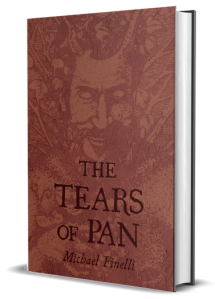
S Sabitha: Poetry has the ability to reflect emotion in a pure form, and emotion is what Michael Finelli brings in the collection Tears of Pan . Michael, can you tell us a bit about your book?
Michael: My debut book of poetry is called The Tears of Pan, delving into the individualistic warring of the mind between caustic repugnance and rejuvenating love. Greek myth is intermixed with dreary contemplation on life, death, suicide, and love. These emotions are emblematic of the oscillation between dissonance and confidence, regret and hopefulness for the future. We all of us can find relatability in these sentiments. Miscellaneous poetry juxtaposes the overwhelming
atmosphere of dread.
Sabitha : What inspired you to write this book?
Michael: I started writing poetry back in 2010, at a different stage in my life. At that time, depression, self-loathing, doubt, and hopelessness assailed my heart, and my creative response was to transmute those intense and profound emotions into cathartic poetry. Mythology has always fascinated me—especially Greek—so I made the artistic decision to merge the two subjects into poems that allowed for a unique writing experience; mythical, introspective reflections, representative of the complexities of the human condition.
In October of 2023, I had a third-life existential crisis. I felt like a large portion of my life had slipped away from me, that I had been remiss with my writing passion. The flame of creativity was suddenly relit, with a torrent of miscellaneous and love poetry being written at nearly break-neck speed. The time felt right in October to publish.
Sabitha : Do you have a playlist for your book?
Michael: I absolutely do! Music plays an integral part in my life, more so during bursts of inspiration. The Tears of Pan was written within a framework of depressing music; the soul of the artist truly presents itself in a bare and raw form, devoid of the clandestineness of falsehoods. Flowing Tears’ Lovesong for a Dead Child and Radio Heroine, alongside The Sisters of Mercy’s Nine While Nine and Some Kind of Stranger encapsulate the feelings representative of my book.
Sabitha : Do you have any suggestions to help people in our community become better writers?
Michael: Always be true to yourself, and the words will flow. Authenticity is the foundation of true art, so never diverge from the genuineness and the veracity found in reality and experience.
Sabitha : What’s your next writing project?
Michael: Another two books of poetry are already being written! There’s two Wonderland-esque children’s books in the work, a collection of fantasy short stories, and a fiction novel. So, quite a bit to juggle. Stay tuned!
Sabitha: Thanks for sharing your story and your process. We’re looking forward to reading! Where can the Night Beats community find you and your book?
Michael: Readers can purchase a copy of The Tears of Pan on my website (michaelfinelliauthor.ca). If interested, please connect with me on Facebook (Michael Finelli – Author) or Instagram (@michaelfinelliauthor)!
September 27, 2024
A Birb Gets a Library Card!!!!
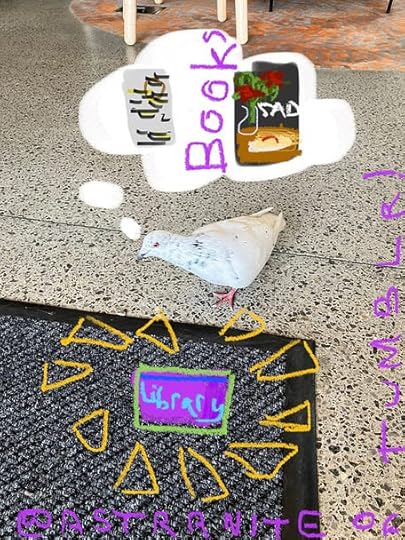
Tumblr mutual and all-around rad person Astranite saw this pigeon. As you can see, the pigeon had just got their first library card and was excited to take out The Sad Bastard Cookbook!
You can get your own free copy here. If you want a print copy, you could ask your local library to order one!
September 24, 2024
Behind the Screens: Tuesday Author Interview
Every Tuesday, get to know a bit about the stories behind the books you love, and discover your next favourite novel.
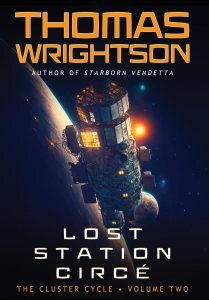
Sabitha: We’ve got Thomas Wrightson here, and he’s got a military space opera to blow your socks off. Thomas, can you introduce us to your books?
Thomas: My debut work is The Cluster Cycle, a science fiction space opera published by Roan & Weatherford. It’s set in the distant future, reimagining old stories with new problems. The current title is Lost Station Circe.
Lost Station Circe follows the junk cargo ship Benbow and its seven person crew, each with ambitions and problems. One day, chance grants them a datacube holding the secret to a fortune. A covert expedition is formed to find an ancient space habitat near intergalactic space. Waiting beyond known space are treachery, revelations, and a horrific secret that threatens to destroy them all.
Sabitha : Spooky! What inspired you to write this book?
Thomas: Since my last book. Starborn Vendetta, drew from Dumas’s Monte Cristo, I decided to use two of my other favourite old works, Robert Stevenson’s Treasure Island and Homer’s Odyssey. It’s not one-to-one, but there’s definitely references. Both share a theme of toil, growth, and bonds.
Sabitha : How much research did you need to do for your book?
Thomas: I not only had to read through the books I was inspired by, but look up some facts behind the science featured. The theory of warp drive, the concept of engrams, mutation—the usual science fiction fare.
Sabitha : Do you have a playlist for your book? Can you tell us why you picked a couple of the songs?
Thomas: Sonus Lab’s album Planetary Suite and some of Gaming Ambience’s extended tracks helped set a good writing tone. And for certain later parts of Lost Station Circe, Jerry Goldsmith’s original non-theatrical Alien soundtrack was essential listening, particularly tracks 4 to 10.
Sabitha : What book do you tell all your friends to read?
Thomas: Ursula le Guin’s Earthsea series—with Juliet E. McKenna’s Green Man’s Quarry,
Jonathan Stroud’s Bartimaeus trilogy and Arthur Clarke’s A Fall of Moondust as
close seconds.
Sabitha : Do you have any suggestions to help people in our community become better writers?
Thomas: It’s easy to say “write what you know.” But I’d say “write what speaks to you.” I can’t do Lovecraftian, non-speculative or straight male/white leads to save my life. I may not be straight, but I am male and white.
Sabitha : What’s your next writing project?
Thomas: One is editing the next book in the Cluster Cycle, which is a tribute to Golden Age detective stories. My two current WIPs are a new science fiction concept, and a fantasy set between Heian and Reiwa-era Japan.
Sabitha: Thanks for sharing your story and your process. We’re looking forward to reading! Where can the Night Beats community find you and your book?
Thomas: You can order my book here. Night Beats denizens can visit my website and blog where I post reviews, opinions and short stories. I also have a podcast, Author Talks, on Spotify and YouTube which includes different opinions and short story readings. I can be found on Bluesky, Facebook, Instagram, Threads, X, and LinkedIn.
September 18, 2024
Rohan and Rachel on Writers Not Writing
Writers Not Writing is a weekly show by Not A Pipe Publishing, where writers talk to host Benjamin Gorman about what they get up to when they’re procrastinating. Night Beats authors Rohan and Rachel have been featured on the show recently, which you can watch on YouTube or listen to on your favourite podcasting app.
Here’s Rohan, talking about Shogun, archery, and First Chapter Reads.
September 17, 2024
Behind the Screens: Tuesday Author Interview
Every Tuesday, get to know a bit about the stories behind the books you love, and discover your next favourite novel.
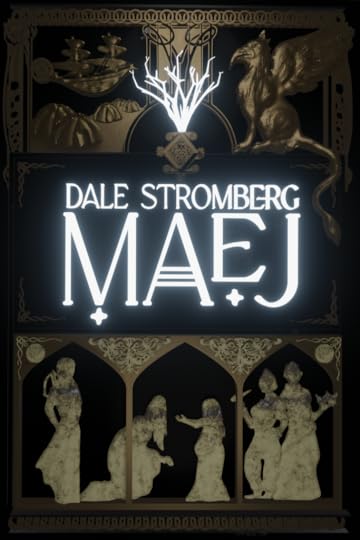
Rachel: I have been quietly freaking out about this book since I read it in manuscript form, and now it’s finally time for you to tell our readers about it. Do so!
Dale: Mæj is a high fantasy novel that one early reviewer has called “a work of very unapologetic genre fiction that’s equally unapologetic in its intelligence and dedication to doing strange, creative things with language.”
Madenhere sells mæjwerk; Taræntlere sells sex. Both young women have grown up seeing people starved and children kidnapped in their tentslum. When Madenhere learns of an imprisoned hundred-day child, her heart burns to act—but the consequences of freeing the girl will be dire.
Meanwhile, Taræntlere’s molten fury leads her to join a secret insurrection whose implications neither woman is ready to face. Tying everything together is a power older than history which threatens to revolutionize an economy and spark a war—the power of mæj.
Rachel: Many authors depict the idea of matriarchy as something inherently softer and gentler than a patriarchy. You went a very different route. Why?
Dale: First of all, I find it perfectly believable that a given matriarchy could be softer and gentler than a given patriarchy. But I want to emphasise “given”: specific, particular. One problem we face when we imagine alternate worlds is that we, or our readers, can fall into the trap of essentialism: “Because women are all this way, a woman-led society would always work out like this.”
We wouldn’t say the same thing about patriarchy. For example, in the twentieth century, which was dominated politically by men, we saw the coexistence of liberal democracy, fascism, totalitarianism, democratic socialism, Islamic republicanism… as well as kibbutzes, hippie communes, you name it… There were all sorts of ways people were organising human affairs politically. Men were the bosses of the big systems, but those systems didn’t all function the same, and some were arguably softer and gentler than others. There’s no reason to suppose women-led systems would not also differ in this way.
This is the source of my resistance to the notion that, you know, “if we just put women in charge, there’d be no more wars,” et cetera. That sort of thinking is insultingly reductive. But it would be equally simplistic merely to swap the pronouns and portray matriarchy as a perfect mirror of patriarchy. So I wanted to think, not about how “female nature” would dictate political systems, but about how this particular matriarchy would have evolved to operate. Because the world in Mæj is not a world without exploitation.
What matriarchy and patriarchy have in common is the –archy, the rule of some over others. The particular matriarchy I wrote about preserves such hierarchy, such power differentials—and human beings are rarely at our best when given arbitrary power over others. If one group is up, another group will be down, and those with power will display a range of attitudes towards those beneath them, from sympathy and solicitude at one end to supercilious callousness at the other. Sadly, the crueler sort of people tend to be more adroit at manipulating and benefiting from power.
Rachel: Maej features extreme acts of linguistic acrobatics, with language denoting class and caste in a skillful way. How did you design your various dialects?
Dale: Oh, we could get nerdy with this one… I’ll try to rein myself in.
Before I wrote this novel, for years I nursed the notion of “my fantasy novel”, a book I would someday write. I love the language of Shakespeare and decided beforehand that, when I wrote my fantasy novel, I was going to throw in everything I liked, so “thee” and “thou” had to go in.
The Hwoamish language is a mashup of Tudor English with various other dialects, including traces of characteristics of Japanese (which I happen to speak) such as sentence-ending interjectory particles and rhyming four-word aphorisms which are meant as homages to four-character idiomatic compounds found in Chinese and Japanese. Also, I live in Malaysia and hear so-called “Manglish” on a daily basis, so bits and pieces of that went in as well.
As for using language to denote characters’ classes and backgrounds, I think life in Malaysia has greatly influenced me. In addition to English, people here speak Malay, Canto, Tamil, Hokkien, Hakka, Mandarin… all to varying degrees, and I don’t think there’s a single language common to everybody in the nation. Characteristics from one language will ooze into another, but there is still a mélange of linguistic difference which links people to a multiplicity of backgrounds.
I think of things like this, and I also think of an Irish guy I once knew, from Belfast; every time he met another person from Belfast, he’d listen to them speak for a moment, then declare (generally with great accuracy) which neighbourhood they had grown up in. This fascinated me as a U.S.-born person because I speak a dialect of English that spans time zones, lacking such geographical specificity. So I am intensely interested in focusing in on such things. If we maintain an awareness of what our voices and words say about our biographies, we can craft dialogue for individual characters which hints at such histories and differences.
Other made-up languages in Mæj are mostly translated into contemporary English, but when I wanted to show a few lines of untranslated Ennish, for example, I’d take an English sentence, reorder the words to Japanese grammatical order, then have fun with spelling and diacritics.
Yes, “fun with spelling and diacritics”. Freak flag: flying.
Rachel: As the cover designer, I was of course struck by the visuals—the art, architecture, and fashion of your invented world. Did you have a strong sense of the aesthetics when you started writing, or did that come later?
Dale: It came gradually as I drafted the manuscript. Before starting a new scene, I would do “pre-production” work, including lots of image searches for clothing, buildings, artwork, and so forth. I’d also sketch things out on paper, such as the exterior of West Hospitium or the floor plan of Nighpetal Manse. I stink at drawing, but having a visual helped me discover how I wanted to paint things in words.
I’m also an inveterate word collector, and for Mæj I compiled a list of more than 2,500 words and phrases I just had to use. Many of these were wonderfully evocative of a visual, which helped me fill out my imagery.
Rachel: Maej is highly literary. Is it a challenge to balance the expectations of epic fantasy as a genre with your own proclivities towards literary fiction?
Dale: To be honest, I am rather naïve about genre expectations. When I began working on Mæj, I had no idea how publishing worked. I figured, “You write the kind of book you’d love to read, and then somehow (vague waving of hands) it gets published.” I remained blithely uncognisant of the idea that publishers and ultimately readers would measure the book against genre expectations.
So any such “balance” of expectations and proclivities happened by accident; I wanted magic spells and talking gryphons, and I also wanted Shakespearean dialogue and jawbreaker vocabulary words… and everything else I personally like also got tossed in. Maybe “mishmash” is a better word than “balance” here.
Rachel: This brick of a novel is such a tremendous feat. What are you working on next?
Dale: Shorter works! After wrapping up the bulk of Mæj, which occupied me for (I cringe to say it) about ten years, I sat down and wrote a literary novella titled Gyre in just a couple of months. Now I’m working on a science fiction novella (with bathyscaphes, sea monsters, mind control tech, etc.) which, again, above all else, I hope to keep brief.
Spending a long time slow-cooking a massive novel was, in its way, highly rewarding, but now I’m enjoying the change to a quicker pace of writing. Gyre is about a woman who is born a second time with some knowledge intact from her prior lifetime, and it is currently seeking a publisher. If the Fates smile, in the fulness of time it may see the light of day.
Rachel: Where can readers find you, Maej, and your other work?
Dale: Mæj will be published on 21 October 2024 by tRaum Books. You can preorder the book on Amazon (ebook and paperback) or Bookshop.
The publisher and I are also keen to find people who are willing to receive a free advance review copy (ARC) in exchange for posting an honest review; anybody interested can sign up for that here. I send an infrequent newsletter called The Seldom which you can sign up for on my website. My favourite social media platform is called “email” but I also lurk on Bluesky and Goodreads.
September 12, 2024
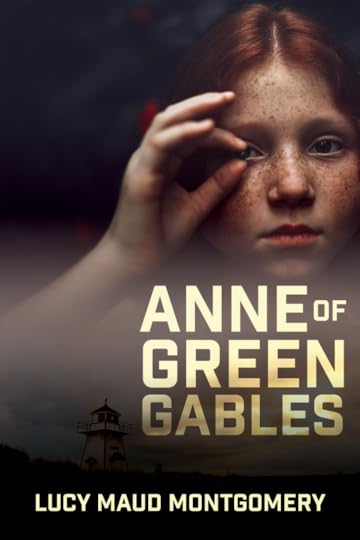
Wrong Genre Covers
September 10, 2024
Behind the Screens: Tuesday Author Interview
Every Tuesday, get to know a bit about the stories behind the books you love, and discover your next favourite novel.
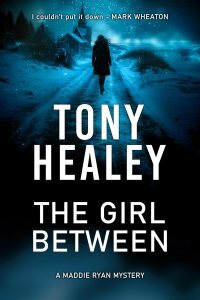
Sabitha: Looking for thrills and suspense? Tony Healey has you covered with his latest book, The Girl Between. Tony, can you introduce us to your mystery novel?
Tony: Five years ago Maddie Ryan found herself the target of a vicious serial killer and barely escaped the encounter with her life. She lost everything in the process and had no choice but to leave Seattle and start afresh. Now a resident of Sanctuary Bay, a small seaside town, Maddie owns a popular local diner and has done everything in her power to leave the past behind her.
But when local girl Ruth Preston goes missing over Thanksgiving, Maddie finds herself drawn into assisting police chief Ben Taylor to help find her—and realizes that her long-dormant ability to see the dead has been reawakened.
With winter holding Sanctuary Bay in its icy grip, and the truth of Ruth Preston’s disappearance proving all the more elusive, Maddie must reconcile the specter of her past with the new life she has made…
The Girl Between is a gripping small-town mystery with a paranormal twist that will appeal to fans of The Family Plot by Megan Collins, Later by Stephen King, and the Virgin River series by Robyn Carr.
Sabitha : What inspired you to write this book?
Tony: I wrote two mystery novels for Thomas and Mercer, then four westerns for Berkley, and so when it came to writing my latest I really wanted to return to some of what I’d done with T&M, a mystery with a paranormal edge. But whereas Ida Lane in my Harper and Lane series can see things about people by touching them, I wanted a main character who could literally see the dead. That, combined with a desire to write a small-town romance at some point, gave me the bones of what would become The Girl Between. The novel is a complete story in and of itself, but there will be a direct sequel, The Wolf Circles, next year at some point that will complete the story of the main character, Maddie Ryan. It’s envisioned primarily as a two-book series (but that could change if readers enjoy the books and demand more, of course!)
Sabitha : Do you have a playlist for your book?
Tony: I listened to a LOT of Bob Dylan during the writing of The Girl Between. I also listened to a lot of jazz, but I’d say Dylan was definitely my jam this time around–I made a playlist called Seven Eras: The Best of Bob Dylan that the Night Beats community might enjoy.
Sabitha : What book do you tell all your friends to read?
Tony: I will always point readers to An Unsettled Grave by Bernard Shaffer, which is my favourite of his Santero and Rein series. I also like to pontificate about a book that inspired me during the writing of The Girl Between, and that is Who Haunts You? by Mark Wheaton. It’s a ghost story told through the lens of neurodiversity, and I couldn’t put it down.
Sabitha: Thanks for sharing your story and your process. We’re looking forward to reading! Where can the Night Beats community find you and your book?
Tony: The Night Beats community can find me over at www.tonyhealey.com and on Threads. The Girl Between is out and if anyone would like a free review copy in PDF format, just give me a shout.
September 6, 2024
Book Report Corner
by Rachel A. Rosen
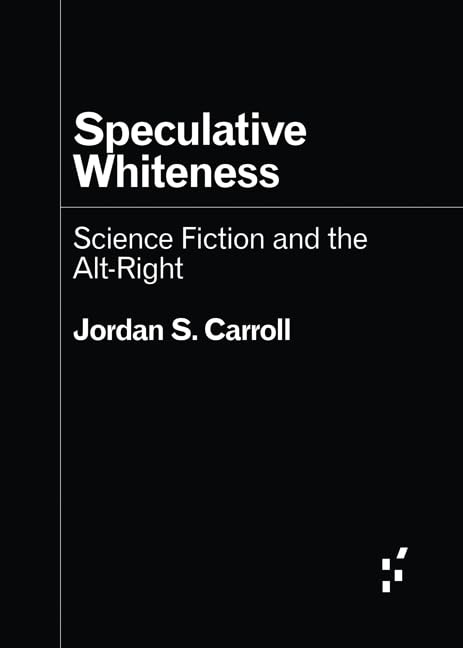
Speculative Whiteness: Science Fiction and the Alt-Right by Jordan S. Carroll is a chilling examination of the far-right’s claim to science fiction.
If you lived through the Sad Puppies/Rabid Puppies debacle or were baffled by the reactionary temper tantrums over Star Trek getting “woke,” this won’t be unfamiliar to you, but the author goes much farther in untangling the assumptions about time, technology, and colonialism that underpin sci-fi from its very roots.
Every antifascist should read this to better understand fascist psychology, and every sci-fi geek should read this to combat entryism by the far-right.
If this subject is of interest to you, stay tuned for a very cool upcoming episode of Wizards & Spaceships!
September 3, 2024
Behind the Screens: Tuesday Author Interview
Every Tuesday, get to know a bit about the stories behind the books you love, and discover your next favourite novel.
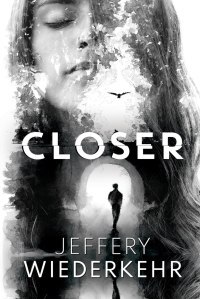
Zilla: My favourite books defy classification. Noir? Love story? Fairy tale? All of the above? Something entirely novel? Jeff Wiederkehr gives us this phantasm of a novel, Closer, and frankly I don’t know what to make of it, besides that I like it. Jeff, your turn. You try and describe this thing.
Jeff: I really don’t know what it is, but I do know what inspired me and by knowing that, it might be possible to get near a description that works. The works of Henry Miller and Anaïs Nin hit me at a certain point in my life. I found their works to be both beautiful and tragic and both for the same reason ~ they gave me the dirty yellow underbelly of very hyper-specific situations. Despite the worthy inspiration, with Closer, I was originally attempting to shoehorn the narrative into a more classic Romance template (Miller rolls over in his grave), that is, whatever happens, in the end there is a happy ending.
Closer is a lot of things, but it certainly isn’t a Romance novel. It’s got the spice, but not the required ending.
Maybe it is this … a dirty, yellow, mockumentary, one with a twisted happy ending, one that both Miller and Nin would be happy to read.
Zilla : Do you have a playlist for your book?
Jeff: I do. It is on Spotify. It’s called “Closer ~ a soundtrack to a novel.”
Zilla : Fair enough. Next question. If you could meet your characters, what would you say to them?
Jeff: “You are an idiot.”
Zilla : Relatable. I would phrase it more delicately, but I’d probably say the same to my characters. So what would they say back to you?
Jeff: “Fuck you.”
Zilla : Also relatable. Next question. What book do you tell all your friends to read?
Jeff: The Sorrows of Young Werther by Goethe.
Zilla : You seem a pretty tragic guy. Did you ever kill a fan favourite character?
Jeff: With Closer I mainly killed every character’s dignity and self-respect.
Zilla : Honestly, even better. How much research did you do for this book?
Jeff: The great thing about fiction is I made it all up. Though my writing was informed by my love of the south western desert and my collection of broken hearts dating from 1st grade.
Zilla : Do you have any suggestions to help people in our community become better writers?
Jeff: Oh man, I need all of the suggestions. Please collect these answers and send them my way.
Zilla : Who did you imagine reading your book as you wrote it?
Jeff: For fans of Henry Miller and Anaïs Nin. I am not sure if those people exist any longer. The people that ended up taking a chance on the book and loved it were people who needed to hear a story like this. A story where they imagined themselves as the nameless narrator looking to be seen and heard and loved in a draught of a relationship. So, people who are stuck and hurt and unsure if there is anyone else out there in the world that wants more than the status quo ~ those that need to vent the guilt associated with wanting more out of life.
Zilla : What’s your next writing project?
Jeff: Cherry-Rose: Blood & Wishes ~ it is a reimagined fairy tale. Super dark and creepy and lovely.
Zilla : Thanks for sharing your story and your process. Where can the Night Beats community find you and your book?
Jeff: I can be found being silly, going to dive bars, playing records, drinking whisky on instagram @likeshattereddiamonds and sometimes promoting my book Closer @closer_not_further_away You can find the book on Goodreads and you can but it here.