Zilla Novikov's Blog, page 31
January 24, 2023
Book Report Corner
by Sabitha F.
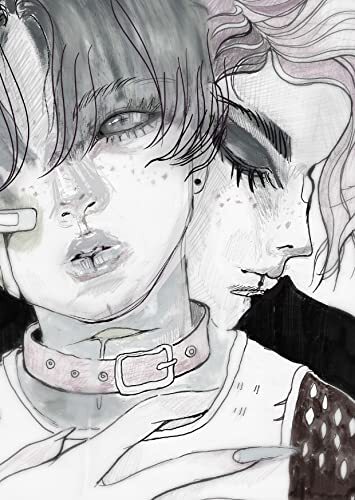
A + E by Ryszard Merey. This one gets a trigger warning from me, although it’s less the scenes of sexual violence (of which there are a few) and more that the author—who wrote this book well before he met me—somehow knows about my teenage life in startling ways.
Allow me to digress on one of the reasons why I tend to dislike YA—the characters are blank slates, meant for the reader to relate to. I know a lot of teenagers. Very few of them are blank slates. Very few of them fit neatly into “jock” “artsy” “popular,” etc. categories. They are, in fact, people. And the choice of nearly an entire marketing category to eschew specificity for broad appeal is, I believe, doing a disservice to young people.
Anyway this book isn’t YA, it’s just about teenagers. It’s a book I would have wanted when I was that age (I was deeply uninterested in books for my age range because they weren’t like this.) Two gender non-conforming kids—the effeminate, artsy Ash and the loud, brash goth Eu—meet and become friends with the kind of passionate intensity that happens when you’re smart and mentally ill and young. They fall in love, kind of, and they fuck up, and they hurt each other in devastating ways. I felt Seen. It’s also just gorgeously written.
A note for people attempting to read this (and you really should read it): There are two versions, a graphic novel and a novella. I’m talking about the novella, which you can find here. I haven’t read the graphic novel (yet).


January 21, 2023
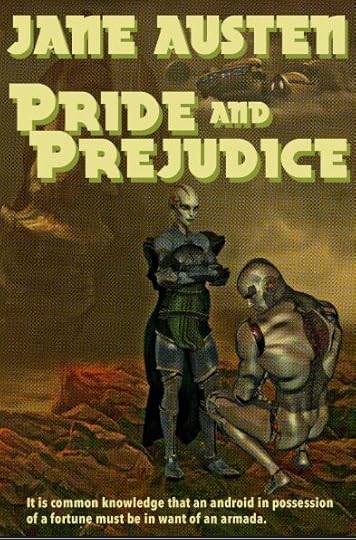
Wrong Genre Covers
January 18, 2023
Behind the Screens: Tuesday Author Interview
Every Tuesday, get to know a bit about the stories behind the books you love, and discover your next favourite novel.
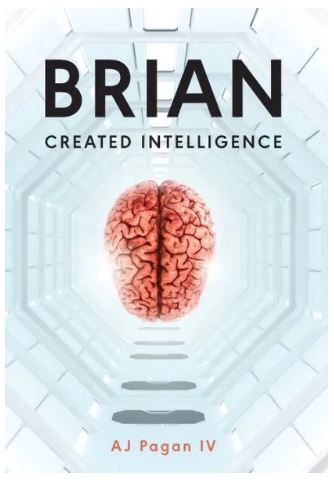
Sabitha : AJ Pagan IV joins us to talk about his thought-provoking science fiction novel, Brian, Created Intelligence . AJ, can you start by telling us a bit about the book?
AJ: This story revolves around the world’s first bodiless human brain, created to study and produce real artificial intelligence. Brian the brain does not know he’s a human—he’s been told and believes himself to be an artificially intelligent system.
Sabitha : What inspired you to write this book?
AJ: As I earned my Master’s in organic chemistry and wrote my thesis, I was searching the job market and came across the still burgeoning technology of 3D organ printing. Well my brain had a thought, what if someone created a brain?
Sabitha : It’s always fun when a scientist writes science fiction. What’s your writing process?
AJ: My writing process: brain brew for months or years and research the hell out of what I want to write so I’m not ignorant of what’s real. Once it feels right, wake up at 4AM and write ~2k words a day or more every day until the story is out of me. There are minor exceptions.
Sabitha : What book do you tell all your friends to read? Besides yours of course!
AJ: Hyperion (and The Fall of Hyperion) is the best book in existence.
Sabitha : What do you most want your readers to take away from reading your book?
AJ: I want people to realize this sort of horrible technology is getting close and we need to ensure it never comes about. I don’t want to be a slave nor create one nor have ANY in existence. Everyone deserves all human rights. Body or not.
Sabitha: Thanks for sharing your story and your process. We’re looking forward to reading! Where can the Night Beats community find you and your book?
AJ: You can find my book on Barnes and Noble, all independent book stores can order it, and Apple/Google/Kobo ebook as well. You can find me on Twitter, on my website, and in Southern California most days.
January 17, 2023
Book Report Corner
by KaptenSiri
I received an Advance Reader Copy in return for an honest review.
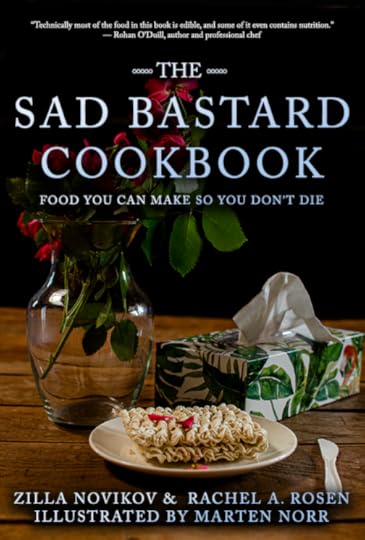
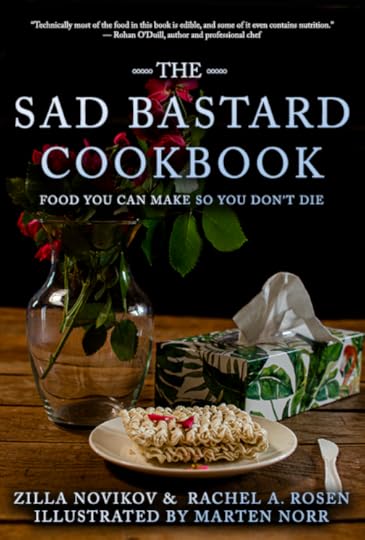
Some days, there’s not enough time. Some days, you just don’t have the energy. Some days, you feel like a sad bastard and literally don’t know what to do. That’s when you pick up The Sad Bastard Cookbook and just read. It will make you laugh. It will keep you company. It will help you find something to cook, on your level for the day. Make the core recipe, add something if you feel for it, or—on a good day—go all in.
The Sad Bastard Cookbook has already saved my ass several times when it comes to solve the “what’s for dinner” question. The recipes are simple and you’ve probably made most of them before. But here’s the thing; it’s up to you where you set the bar. You don’t have to follow the recipe strictly, but, if you need it, there are a lot of suggestions how to pimp your food. And, it will taste good!
Get your free e-book PDF here.
January 15, 2023
Into The Unknown Giveaway
Escape Blue Monday with space adventures!
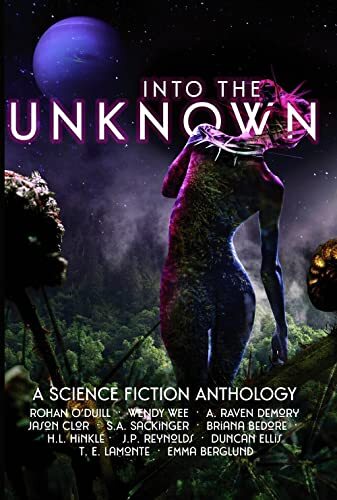
January can be a bit of a bummer with those dreary days and cold weather. So for the weekend of Blue Monday, (14th-16th January) we are making our Sci-Fi anthology Into the Unknown completely free on Amazon. We can’t guarantee it will cheer you up, but you can lose yourself in eleven adventures into the unknown.
January 12, 2023
Book Report Corner
Depression can feel like being the body during an out-of-body experience. Or like being a rickety boat sailing a beam sea. You can find it an ordeal to do even the simplest things—like eating. This cookbook understands that you might be broke or even poor, beaten down by fatigue, unable to cope with basic physical tasks, and/or lacking the wherewithal to open a jar of jam. The book prods you, with a gentle humour that is sympathetic to your depressive paralysis, to get something down your gullet.
Some of the recipes here satisfy the minimum requirements of what might be called actual recipes—but then there are “Peanut Butter on a Spoon” or “Eat a Dill Pickle Out of the Jar While Standing in Front of the Fridge”. How do these qualify as recipes? Well, I myself have experienced spirits low enough that basic life tasks went undone simply because there was nobody standing there telling me, “Now do this. Next do that.” The Sad Bastard Cookbook recognises that, some days, you’re probably going to max out simply by taking one thing (hopefully not mouldy or expired) from your cupboard and choking it down raw.
But remember, you could take not one but two things, or at the God-Tier level three things, combine them, zap them in the microwave, and satisfy basic caloric intake requirements in a slightly less sorry-ass way, even as you continue to stagger under the crushing burden of your depression. Which is a way, maybe, to be slightly less sad.
Get your free e-book PDF here.
January 11, 2023
Behind the Screens: Tuesday Author Interview
Every Tuesday, get to know a bit about the stories behind the books you love, and discover your next favourite novel.
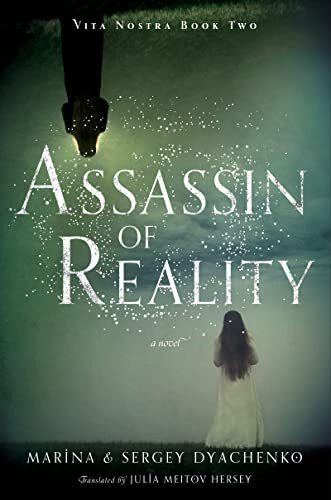
Sabitha : Vita Nostra is a book that the three of us list as one of our all-time favourites —a story about magic, language, the darkness of academia and the hope of growing into yourself. We’ve been desperate to read the sequel, but unfortunately none of us read Russian. Luckily, Julia Meitov Hersey (winner of the 2021 Science Fiction and Fantasy Rosetta Awards) translated Assassin of Reality , and it’s coming out in March (in e-book and hardcover ). Rachel A. Rosen got a review copy and can’t wait to tell you about it in an upcoming issue. While Zilla and I wait for it to be released, Julia’s agreed to do an interview telling us about fantasy, culture, and the process of translation.
Marina and Sergey Dyachenko’s books defy easy characterization. Julia, how would you summarize Assassin of Reality ?
Julia: As the sequel to the critically acclaimed Vita Nostra, Assassin of Reality follows the next stage of Sasha Samokhina’s journey.
Sabitha : The wording in Vita Nostra felt incredibly deliberate, as if every word was carefully selected to convey not only a meaning but a sense of the story, the world, and the characters. It worked especially well for a book where the use of language was a part of the story. When you’re translating a book like Vita Nostra or Assassin of Reality , how do you balance direct, literal translation with translating the vibe of the story?
Julia: I think the secret is to look at the sentence, better yet the paragraph, rather than individual words. You must see the picture in your mind and retell it in the target language. The danger there is to insert too much of yourself and walk too far from the original. At the end of the day, it’s a question of tasteful balance, especially in the case of a meta-novel such as Vita Nostra, where words matter more than anything.
Rachel : Vita Nostra is grounded in an Eastern European tradition of fantasy, which has significant differences from the Anglosphere’s tradition of fantasy. Did these different cultures of literature pose any difficulty when translating?
Julia: Those marvelous differences are the main reason we read translated literature, isn’t it? It’s not just about an unexpected plotline or unfamiliar characters; it is also about a fresh perspective, a novel view, a deeper insight into a different mentality. These cultural differences are what makes the translation process so challenging and so rewarding.
It never ceases to amaze me how easily Eastern European fantasy authors operate with open epilogues and unhappy endings. They absolutely refuse to coddle their audience, so there is nearly always an element of surprise. If you’re craving a Hollywood ending, you should probably walk away from Eastern European fantasy. I love anticipating that gasp of surprise that is sure to accompany that last page. It’s a lot of fun to translate with that gasp in mind.
It’s worth mentioning that, since I translate from my native language into my second language, the challenge lies less in researching and understanding the culture of the source material and more in localizing and adapting it for the Anglosphere (without losing its flavor and style). I tend to make a lot of unpopular choices, such as standardizing the first names (because the emotional impact of name variations — Sasha vs Sashka vs Sashenka — is pretty much lost on the English-language readers) or loosely translating traditional Eastern European academic terms (finals vs sessions, etc.). Not everyone agrees with that, but I stick with what feels right to me. I am not alone in this effort —the editorial team at Harper Voyager are beyond wonderful, and I am forever grateful for their impeccable taste and eternal patience.
Zilla : When I’m an author, I pour my identity into the story. When I’m an editor, I try to step back and let the story tell itself, but I can’t avoid editing with my point of view. How personal is the translation process?
Julia: Traduttore, Tradittore. Translating a book is akin to fostering a child. The child’s not yours; there is no DNA of yours on those pages. And yet, you take care of the manuscript, you teach it to speak, you make sure it can walk… It’s very hard not to give it some of your identity, and I believe most of us translators fail at that in the most spectacular fashion.
Rachel : We all loved Vita Nostra and hoped to one day read the sequel. We had two problems. First, we only read English, so thank you for translating it! Second, we couldn’t imagine how a sequel could exist, given that Vita Nostra felt like a seamless, complete story. Can you tell us where the sequel fits in, or would that be giving away spoilers?
Julia: Trust me, I was afraid of reading the sequel, even though I was one of the people who tried their best to influence the Dyachenkos to write it. While the open ending allowed for the continuation of the story, I just couldn’t imagine where it would go. I was certainly surprised and decidedly not disappointed. Conceptually, Vita Nostra is a book about youth — radical, cruel, selfish, idealistic youth. In Assassin of Reality, rather than entering the next stage, most logically the world Sasha had created, we return to the familiar world. The difference is that Sasha is now an adult, and the challenges she faces are different — they are less about pushing herself beyond the limits and more about considering the needs of others. The Russian original novel is called Correcting Errors. Think of this telling title and of the fact that Assassin of Reality is heavily influenced by the authors’ immigration experience — and pick up this novel thinking of second chances, the ungrateful task of proving oneself again and again, of the mythical nature of a perfect world — and of the terrible beauty of adulthood.
Sabitha : We’re so glad that we can finally read this book—and to have someone who really gets the heart of the story translating it. How can our community connect with you and how can they buy the book?
Julia: They can pre-order the book in e-book or hardcover form. My Russian-to-English translation services are available at my website. I can be found on Facebook, Twitter, or Instagram.
January 10, 2023
Gay Disaster Wizard Promos & Giveaways
The Sleep of Reason is about gay disaster wizards trying to save the world. And start a revolution. And not break the future any more than it’s already broken.
So Human As I Am: There are infinite possibilities, and not a single one where they don’t destroy each other.
Sometimes saving the world looks like smashing the system. At an anti-pipeline protest in Northern Alberta, the foul-mouthed, soon-to-be-famous wizard Ian Mallory meets the man who will be his friend, comrade, and obsession for the rest of his life. Which would be great if he couldn’t predict the future and if didn’t know exactly how this story would end. Unfortunately, Ian can, and he does. The prequel story to The Sleep of Reason trilogy, setting up twenty years of slow-burn pining and guilty repression.
The print edition of this story is a limited edition release, but we’re giving away the e-book for free to newsletter subscribers, so sign up and enjoy! Content notes are here.
P.S. It’s the same top-secret link as we always use, so if you already signed up, just follow the link in the newsletter!
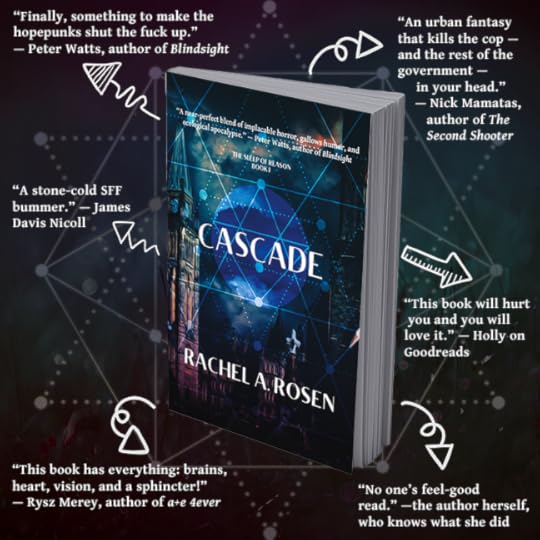
Cascade: It was an orderly, very Canadian kind of apocalypse.
Sometimes saving the world looks like a painful compromise with the system, meetings and endless paperwork. Unfortunately, no one sent the fascists the memo that you’re supposed to stop the world from ending. The future’s looking as grim as it ever has, but maybe Sujay, the underpaid, emoji-spell wielding intern, can magic up something better.
Book 1 of the Sleep of Reason trilogy is available at all the usual online places, or direct from the publisher. There’s a free deleted chapter for newsletter subscribers. Content notes are here.
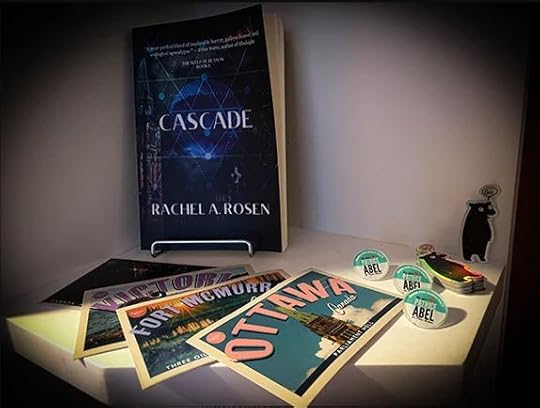
Plus we have a special giveaway running through Jan 2022! Newsletter subscribers will be entered into a draw to win a free e-book copy of Cascade, plus postcards from your favourite destinations in magic-ruined, post-apocalyptic Canada, a “Re-elect Patrice Abel” election pin, and your very own Jonah-transformed-into-an-uncanny-valley-bear sticker! We’ll ship these anywhere. All you need to do is be a confirmed newsletter subscriber on Feb 1, when we select the winner. If you’re already on our mailing list, you’re already in the running. If not, don’t miss your shot!
January 6, 2023
A Sad Bastards Cheat Sheet
In addition to genre classics like Watchmen and Welcome to Night Vale, The Sad Bastard Cookbook is chock-full of references to books that we wrote and that our friends wrote. Why? Because sharing art and sharing food are vital acts of community. That’s what Night Beats is about—a community of people who support each other. And stories are as important to life as eating.
If you’ve signed up to the mailing just to get the cookbook, that’s cool! But consider sticking around for a bit and checking out the rest of the Night Beats community. If you liked the cookbook, you might like them too.
Without further ado, here are the books we reference in Sad Bastards, rated on a scale of how Sad the Bastards are in it and how much they need our cookbook.
Out Now
Cascade by Rachel A. Rosen. Rachel’s overworked wizard-bureaucrats barely eat between trying to prevent a climate apocalypse and avoiding the maybe-dead maybe-not elder god stirring in the depths of the ocean. And that’s without even getting into the queer disaster that is their personal lives. Do any of them know how to cook? It is doubtful. 5/5 peanut butter spoons. Get Cascade from Bumblepuppy Press, Amazon, or your favourite online ebook provider.
So Human As I Am by Rachel A. Rosen, illustrated by Marten Norr. The prequel to Cascade, this chapbook is about Ian, Jonah, and Blythe in their activist days. When you’re a broke twenty-something anarchist trying to figure out life, sexuality, and your curse of prophecy, cooking elaborate dinners isn’t a priority, or even a possibility. Someone put food in these sad bastards’ faces. 5/5 peanut butter spoons. Get the limited edition chapbook from Bumblepuppy Press.
“Alinda” in Into the Unknown by Rohan O’Duill. Space rations get pretty dull when you’re exploring a mysterious artifact. Since Rohan is such a great cook, though, we suspect his characters have some skill in the kitchen, at least when they’re planetside. 1/5 peanut butter spoons. All proceeds from the sale of this anthology go to the World Literacy Foundation, so pick up your copy!
“Birds of Fortune” in Into the Unknown by Emma Berglund. Treasure maps, flirting, and being chased by your enemies all require a lot of easily transportable sustenance. 5/5 peanut butter spoons. This is two stories for the price of one—Emma and Rohan both contributed to and edited the Into the Unknown anthology, so you get both stories in the same book.
A+E by Rysz Merey. Gender-nonconforming artistic sad sacks cannot survive on orange Tic Tacs alone. 5/5 peanut butter spoons for Ash, but Eu eats all of them. Get it from tRaum Books.
Most Famous Short Film of All Time by Tucker Lieberman. Lev and his friends actually eat pretty well during their campfire talks, but the Diversity Committee could always use a new recipe or two. 3/5 peanut butter spoons and a hug. Get it from tRaum Books.
Melancholic Parables by Dale Stromberg. Bellatrix runs a bakery in at least one of her incarnations, so she’s at least got it together food-wise. Even if she’s sometimes a mouse, sometimes radioactive, and sometimes a supervillain in these weird, brief moments of magical realism. No peanut butter spoons. Get this new release of microfiction here.
Coming Soon
Reprise by Zilla Novikov: 15/10 peanut butter spoons for Eddy (we had to invent a new scale). Zilla wrote a science-fiction love story about depression and murder. Coming soon from Bumblepuppy Press.
The Things We Couldn’t Save by Nicole Bea. There’s nothing worse than being a teenager in 2006 with limited text messages, a crush, and a faltering best-friendship. But Clarke still lives at home, and her parents are good cooks. 2/5 peanut butter spoons. Pre-order your copy (and check out the pre-order incentives!) here.
Sushi and Sea Lions by Rachel Corsini. Dany is a former prima ballerina, student teacher, and unlucky in love. She’s also a terrible cook. 4/5 peanut butter spoons, because then she wouldn’t give her date food poisoning. Sign up for an advance copy to read it first.
The Devil You Know by Nicole Northwood. If you’re the Demon of Lust and you escaped Hell to run the Hedonism Hotel in New York City, you’ve got problems on your hands. Like being chased by demon hunters, or accidentally falling in love with your night manager, Giselle. But you’re not short on extravagant food. 0/5 peanut butter spoons. Check out Nicole’s website for more info.
Query by Zilla Novikov. Many things in life are terrible, including but not limited to: the climate apocalypse, workplace spats, and trad publishing. Zilla can’t get her novel signed to an agent, and she can’t protect the Greenbelt from a bypass being built through it. But she might make some friends along the way. 3/5 peanut butter spoons for Meatless Monday. When real-life Zilla manages what her fictional counterpart cannot and signs this book, she’ll announce it in this very newsletter. It’s all very meta.
January 4, 2023
Behind the Screens: Tuesday Author Interview
Every Tuesday, get to know a bit about the stories behind the books you love, and discover your next favourite novel.
Zilla: We have a special interview today. The Skylark Bell is a book in podcast form, with original music and story by Melissa Oliveri. Melissa, tell us about this delightfully spooky gothic story.
Melissa: The Skylark Bell is a fiction podcast in serial format. It is based on a book trilogy (not yet published) that is shared at a rate of one chapter per week, one book per season. The story begins with main character, Magpie, moving to the outskirts of a small town called Pocket. Afflicted with psychic visions, Magpie is entranced by a nearby house, apparently cursed with an inexplicable silence. Things aren’t what they seem in the quaint town of Pocket, and she finds herself tangled in its history as she strives to save its future. The Skylark Bell podcast also features bonus episodes that range from real-life paranormal experiences to spooky short stories and behind the scenes interviews.
Zilla: I’m not sure if the genre “cozy Gothic” exists, but that’s the sense I get when I listen to your story. Magpie is loved by her mother and her friend, and she’s in a beautiful rural landscape. She also lives in a remote farmhouse and has visions which point to secrets of a dark mystery. How do you strike the balance between warmth and eerie, between comfort and creepy?
Melissa: Cozy Gothic is a great term and should absolutely be a genre if it isn’t already! I think I’ve subconsciously intertwined comfort and creepy because, even in childhood, I would gravitate toward the spooky and supernatural, both fiction and non-fiction, and find comfort in the unknown aspect of it. I love exploring duality, maybe because I’m a product of it myself, growing up in a half-French and half-English Canadian household. Now I’m a dual Canadian/American citizen. Contrast is important, it’s what makes summer so delicious after months of snow and cold. I also think being all roses and pretty landscapes and happily traipsing through fields with rubber boots would make for a bit of a boring book, but a constant barrage of ghosts, visions, and existential threats would be exhausting. It’s finding that balance, that sweet spot, between the two that makes it work, and I mostly do that by ensuring there is both love and fear in each chapter.
Zilla: Your podcast has a single narrator but includes music and sound effects—like a richer version of an audiobook instead of a radio play. What drew you to that format for telling this story?
Melissa: Before The Skylark Bell, I primarily considered myself a musician who enjoyed making up and writing stories. One day a friend suggested I turn an unpublished book I had written into a podcast. I was mildly intrigued by the idea but didn’t get all that excited about it until it occurred to me that I could compose music for the project, and then I realised I could work in some sound effects. Creating an audio atmosphere to support this story I had written suddenly became very appealing, and it allowed me to marry my two creative passions, music and writing.
Zilla: The idea of marrying those two is fascinating to me. How does that creative process happen??
Melissa: Music and songwriting is a very visual experience for me. I see images, like a film, when I am listening to, or composing, music. The reverse is also true; when I see or imagine scenes, I hear coordinating music in my mind. For The Skylark Bell, I would read the chapter, story, or scene, and compose whatever would come to mind. There were instances where I composed spontaneously, plugging my keyboard into my laptop and just rolling with it, and sometimes things went in an entirely different direction than I thought they would, but somehow it worked. The subconscious is a powerful thing, and we should all give in to it more often.
Zilla: Thanks for sharing your story and your process. I’ve finished season one, and I’m hoping to catch up to the end of season two before season three comes out! For everyone who doesn’t know your work yet, where can they find you and the podcast?
Melissa: They can find all the information on The Skylark Bell on its website, Instagram, or Facebook, or via the Podcast Platform Links. I also have a website and a Patreon, as well as a Mastodon account. And they can find my music at the Cannelle website, on Instagram, via all major streaming platforms and on Bandcamp.