Zilla Novikov's Blog, page 26
May 3, 2023
Rachel A. Rosen Talks Publishing, Science Fiction, and the Communist Vision at Two Panels!
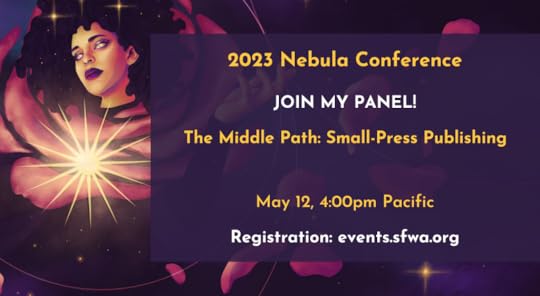
Rachel A. Rosen will be speaking at two events this month!
On Friday, May 12, 4 pm PST, she will be joining a virtual panel on The Middle Path: Small Press Publishing at the Nebulas. In between traditional publishing and self-publishing lies the land of small press. Authors who’ve been published by small publishers and editors or directors of small publishing companies discuss the joys and stresses of taking part in this alternative path to publication. Register at events.sfwa.org.
On Saturday, May 20th, she’ll be at The Great Transition: Struggling in Times of Global Crisis conference in Tiohtià:ke/Montréal, at the the Science Campus of the Université du Québec à Montréal, in the SH Pavilion (200 Sherbrooke Street West, Montreal). Rachel will be joining M.E. O’Brien and Eman Abdelhadi in conversation with Megan Kinch on Science Fiction and the Communist Vision. For more information or to register, visit The Great Transition.


May 2, 2023
Behind the Screens: Tuesday Author Interview
Every Tuesday, get to know a bit about the stories behind the books you love, and discover your next favourite novel.
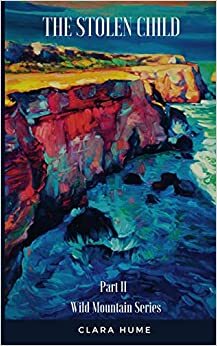
Sabitha : We are delighted to have author and environmentalist Clara Hume here, to tell us about her eco-fiction novel, The Stolen Child . Clara, take us away!
Clara: The final part of the Wild Mountain duology, The Stolen Child, picks up two decades after the events in the first book, Back to the Garden, and focuses on the continued lives of the characters, and their new children, including Fae—Fran and Leo’s youngest child. A bright but reserved girl, who would rather be riding her horse in the mountains or reading a spectacular novel than socializing with the rest of the ranch family, Fae begins to shed innocence as she learns of the changing world outside her bubble. A mysterious cult is making appearances, as if extreme climate events weren’t bad enough. Rumor has it that children are missing. As Fae begins to sense she is being watched, the family is forced to move off their Idaho mountain after a wildfire ruins their homes. They make a decision to head north to an old grizzly bear sanctuary in the British Columbia rainforest. Just as Fae is getting settled in, a religious cult kidnaps her and takes her to Ireland.
Sabitha : There’s so much happening there—the intersection of climate change with extremism but also with daily life. What inspired you to write this book?
Clara: I wrote Back to the Garden (Part I) because I was wondering why climate change had not found its way into many novels. Writing about climate change, which is known as a hyperobject, is difficult to do. You have to break it down into something manageable for the reader. Back to the Garden was meant to be a stand-alone novel, but a few years later I found myself writing the sequel, The Stolen Child. I had also started the website Dragonfly.eco, which is all about eco-fiction—fiction that has strong ecological themes—so I began to find patterns and related topics, such as diaspora, that found its way quite naturally into eco-fiction. The sequel included some of these themes.
Sabitha : Was there any music that inspired you while you were writing?
Clara: My mother was born in a log cabin in the Appalachian mountains of eastern Kentucky. Her ancestors came from Ireland and Scotland, so I often heard relatives playing bluegrass. Gaelic music, along with the African banjo and Appalachian revival music, inspired a lot of my writing. We also visited cèilidhs in our own province as I wrote the novel. I based the main characters off my mother’s descriptions of how she grew up as well as my own memory of that poverty-stricken area of eastern Kentucky. The simple but resilient ways of mountain people inspired a lot of scenes in the Wild Mountain series. Many of the characters are loosely based on my memories of eastern Kentucky and our trip with Mom to Ireland later.
Sabitha : I love how you’ve woven your own story into this book. How did you choose the title?
Clara: “The Stolen Child” is a WB Yeats poem. Both its figurative and literal meanings are referenced in the novel. Yeats often wrote about cultural trappings vs. the wonderment of nature and a simpler life, which inspired the characters in the Wild Mountain series. I wrote The Stolen Child about eight years after Back to the Garden. During that gap, we visited Ireland, and I just knew I wanted to include some place-writing about Ireland. We made it a point to do some trail-running to places mentioned in Yeats’ poetry.
Sabitha : I can see that location was really important to you when you were writing this book. Can you tell me a bit about the setting in BC?
Clara: Part of the story takes place in the Great Bear Rainforest of British Columbia. I used to live near there,and we’ve traveled to many of its isolated rainforests. Of all the places I’ve lived or visited, British Columbia is the most beautiful. The rainforests there are considered the lungs of the Earth, and they offer such an amazing place to run, raft, hike, and do some amateur photography. I was fascinated by the iconic spirit bear of the area, which is a black bear with a recessive gene that makes its coat cream-colored. It’s rare, and I’ve never seen one. In the story, Fae has the same fascination and wants to see one some day.
Sabitha : Thanks for sharing your story and your process. We’re looking forward to reading! Where can the Night Beats community find you and your book?
Clara: You can find me on Mastodon. The Stolen Child can be ordered directly from the publisher, from Malaprops Bookstore, or from Barnes & Noble or Amazon.
April 30, 2023
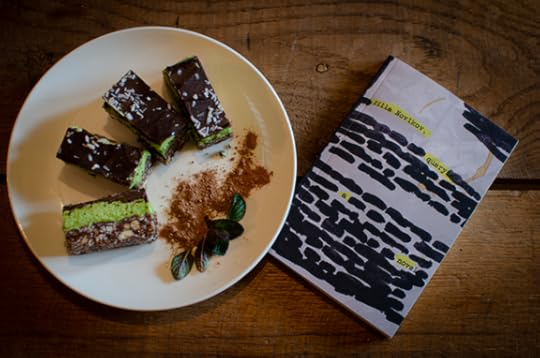
Vegan Nanaimo bars paired with Query
Fiction To Sink Your Teeth Into, a feature from author and professional chef Rohan O’Duill! This month, hijacked by Rachel A. Rosen.
Nanaimo bars are a classic Canadian dessert, full of chocolate, coconut, and mint. In Zilla Novikov’s Query, they’re the perfect thing to bring along when you spring your love interest from jail after she’s been arrested at a protest. Typically, they’re made with eggs and dairy, but we’re all about saving the earth so I managed to find a great vegan recipe, which I adapted from Oh She Glows.
Ingredients:
Bottom Layer
• ½ cup vegan butter (I like Earth Balance)
• ¼ cup sugar
• 5 tbsp unsweetened cocoa powder, sifted
• 1 flax egg (1 tbsp ground flax + 3 tbsp warm water, mixed)
• 1 and ¼ cup graham cracker crumbs. If you object to honey and can’t find vegan graham crackers, you can also just use any type of biscuit. If you use something like Oreos (I’ve done it, don’t judge, reduce or omit the cocoa powder).
• ¼ cup almonds, processed fine
• 1 cup unsweetened coconut
Middle layer
• ½ cup vegan butter
• 2 tbsp full-fat coconut milk
• 1.5 tsp pure peppermint extract
• 2 tbsp vanilla custard powder
• 2 cups icing/confectioner’s sugar, sifted
• Green food colouring (optional, but it looks cool)
Top layer
• 4 oz non-dairy dark chocolate or semi-sweet plus 2 tbsp vegan butter
• Mint sprig (optional), or save a little coconut for sprinkling on top
Directions:
Line an 8 inch square pan with parchment paper and grease with butter on all sides. Leave a few inches of parchment hanging on the two ends so you can easily lift it up out of the pan when firm.Middle layer: Start with this one so it’s ready when your bottom layer is pressed into the pan. In a small bowl, mix together the food colouring and coconut milk, 1.5 tsp of peppermint extract, and the 2 tbsp custard powder. Stir until smooth. With an electric mixer, beat the butter until smooth and creamy. Now add in the custard, coconut mixture, and peppermint extract mixture and beat for a few minutes. Gradually, add in the icing sugar and beat for about 3-5 minutes until light and fluffy. Set aside.Bottom layer: In a small bowl mix the flax egg together (1 tbsp ground flax + 3 tbsp warm water). Set aside for a few minutes to allow it to thicken up. In a saucepan, whisk together the butter, sugar, and sifted cocoa powder. Heat on medium to low and stir frequently until smooth. Now add in the gelled up flax egg and stir well. It will have a strange gel-like consistency now, but have no fear! Stir for a minute or so. Now remove from heat and stir in the coconut, processed almonds, and graham wafer crumbs. Stir well and then mix with your hands. Press this mixture into your prepared pan, ensuring that you press it down very firmly and as evenly as possibly. You can use a pastry roller or the back of a spoon if you care about this kind of thing.Take your middle layer frosting and spread over top of the bottom layer. Smooth it out as evenly as possible. Place in the freezer until firm, about 45 mins.Top Layer: Melt your chocolate and butter in a double boiler or carefully in the microwave. Stir well until smooth and all clumps are gone. Remove the pan from freezer and spread the chocolate quickly over the top. Smooth out as much as possible and sprinkle on some more coconut. Place back in the freezer for about 1 hour until set. Once set you can transfer it to the fridge to keep until ready or you can place it on the counter for about 10 minutes before cutting it into squares.Keep in the fridge until you’re ready to go to your next Stop the Greenbelt Development rally!
April 25, 2023
Behind the Screens: Tuesday Author Interview
Every Tuesday, get to know a bit about the stories behind the books you love, and discover your next favourite novel.
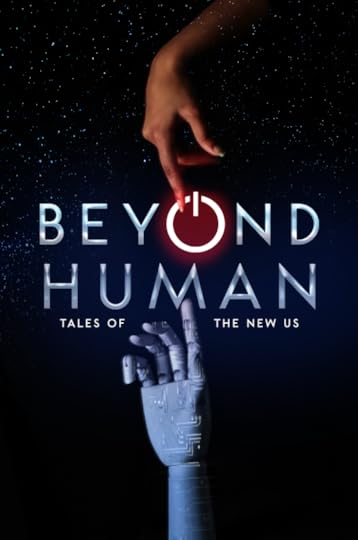
Emma: Anna Otto is contributing with a short story in Lower Decks Press forthcoming anthology Beyond Human: Tales of the new us. Anna, how did you come up with the idea to your story? What inspired you?
Anna: In my non-writing life, I’m a psychiatrist. Seeing the proliferation of online and computerized treatment options for mental health has been interesting and puzzling – I had always felt that humans preferred a connection with another human and believed this to be the necessary part of healing. And yet, as a past programmer, I could also envision the possibility of creating an advanced program capable of assessing human facial expressions, breaking down emotions to 0s and 1s, and responding accordingly. After all, one highly effective treatment for anxiety and depression is cognitive behavioral therapy, which at the core is a series of algorithms and “if-then” statements. As a writer, I dreamed big and created Gabriel, the AI therapist anyone would like to have. Read my anthology story, “A Work in Progress”, to see if you agree.
Emma: As you mentioned, the main character in your story, Arthur, regularly sees an AI therapist. Is it something you see will happen in the foreseeable future or is it a utopia? Is it even desirable?
Anna: While I don’t see this happening in the immediate future, I believe that humans can create AI that is smarter and has far greater capacity for understanding human emotions than what we have right now (the recent publicized stories of “creepy behavior” by AI concern me as much as anyone else). Is it desirable? The psychiatrist in me wants to say no, as I’d like to think myself indispensable to my patients, current and potential. I still believe in the human connection and mutual regard as the necessary ingredients for healing, however messy and unpredictable humans are (and therapists are human and imperfect). However, I can also see the advantages to the computerized model of treatment. AI is not subject to the negative human emotions or uncomfortable countertransference that may impact the treatment efficacy. Further, with the current shortages of mental health professionals, I see many people being forced to turn to alternatives such as AI when this becomes a possibility. My preference would be for training more psychiatrists though.
Emma: Can we look forward to something more about Arthur in the near future? What writing projects are you working on at the moment?
Anna: If I were to write more about Arthur, I fear I’d write a neat resolution – and I don’t favor those in my stories. I love him, the hopeless human that he is, and I have the best hopes for him – but I will let the readers imagine what his ultimate ending is.
I’m forever working on my series of a post-apocalyptic North America, the first novel of which is titled The Face of the Snake. The setting is but a background to messy human relationships. I’ve written two sequels – all before editing and publishing the first book. This is where all my effort is going now. I’m looking forward to sharing it with the world.
Emma: I loved your story about Arthur, and I’m looking forward to reading The Face of the Snake! Where can Night Beats readers find “A Work in Progress”?
Anna: The Face of the Snake isn’t published yet so you’ll have to wait. But you can find the anthology for pre-sale at the Lower Decks Press website!
 Art for “A Work in Progress” by Marten Norr
April 21, 2023
Cooking with The Sad Bastard Cookbook
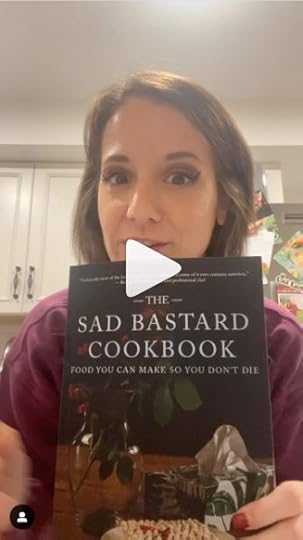
Rachel Corsini, author of the amazing rom-com Sushi and Sea Lions, cooks Vinny’s Financial Loss Pasta from The Sad Bastard Cookbook. Watch the magic happen on her Instagram!
Get your free e-book PDF of The Sad Bastard Cookbook here. Plus, you can get the book the original Vinny appears in, Sushi and Sea Lions, here!
April 20, 2023
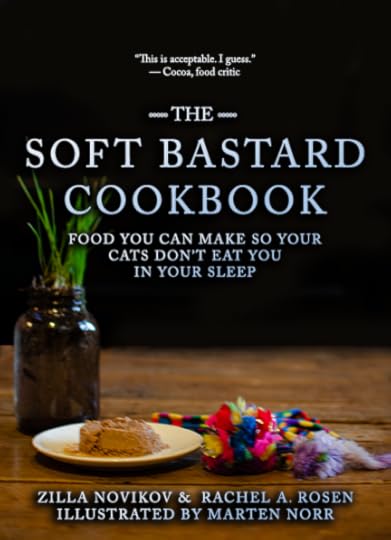
Wrong Genre Covers
April 18, 2023
Behind the Screens: Tuesday Author Interview
Every Tuesday, get to know a bit about the stories behind the books you love, and discover your next favourite novel.
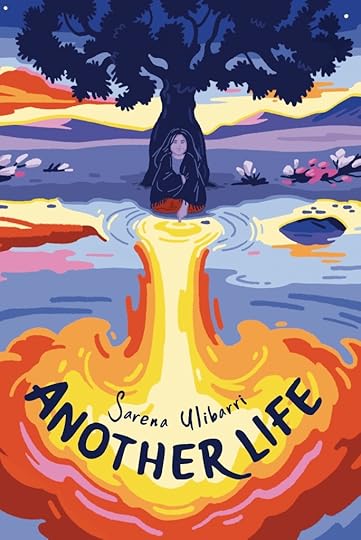
Sabitha : Sarena Ulibarri joins us to talk about her solarpunk novella, Another Life . Sarena, tell us about this warmhearted eco-fiction!
Sarena: Another Life is a science fiction novella set in a peaceful ecovillage called Otra Vida. When a scientific method of uncovering past lives emerges, the founder of Otra Vida learns she’s the reincarnation of the previous generation’s greatest villain. This shakes the foundations of Galacia’s identity and her position within the community, threatening to undermine the good she’s done in this lifetime.
Sabitha : What inspired you to write this book?
Sarena: What if there were a “23andMe” type test, but for reincarnation instead of ancestry? And how would a “good” person react to finding out their previous incarnation did some really bad things?
Sabitha : Tough questions! Was there any music that inspired you while you were writing?
Sarena: The playlist for this book starts with “Policy of Truth” by Depeche Mode, which captures the conflict Galacia feels about whether or not to reveal her past life to her community.
Because they share the same soul, Thomas Ramsey’s song is also by Depeche Mode, “Walking in My Shoes.” Ramsey is who Galacia was in her previous life: he was a manipulator and con-man who knew he’d made a villain of himself, but he had his reasons.
Sabitha : We have a lot of writers in our community. What’s your writing process?
Sarena: My process seems to be to write the wrong book first, and then yank out the spine and write a new book around that foundation. I’ve done this several times, though it’s not a method I recommend. Early drafts of Another Life had whole superfluous storylines and tangents. After letting the book sit for a couple of years, I went after it with a (metaphorical) cleaver, killing darlings with no remorse until I found the core of what I was really trying to say.
Sabitha : What book do you tell all your friends to read? Besides yours of course!
Sarena: A Half-Built Garden by Ruthanna Emrys. It’s such a fresh take on alien first contact and the best example of solarpunk I’ve read yet.
Sabitha : Does the location the story takes place mean something to you or to the work?
Sarena: Because the story is about reincarnation, it seemed appropriate to set it in Death Valley. It’s a harsh and extreme place, but it’s also beautiful and full of life. That contrast fits the themes of Another Life quite well.
Sabitha: Thanks for sharing your story and your process. We’re looking forward to reading! Where can the Night Beats community find you and your book?
Sarena: My website, Twitter, or Mastodon are the best places to find me! Preorder of Another Life is available from Amazon, B&N, Kobo, or direct from Stelliform Press.
April 14, 2023
Book Report Corner
by Rachel R.
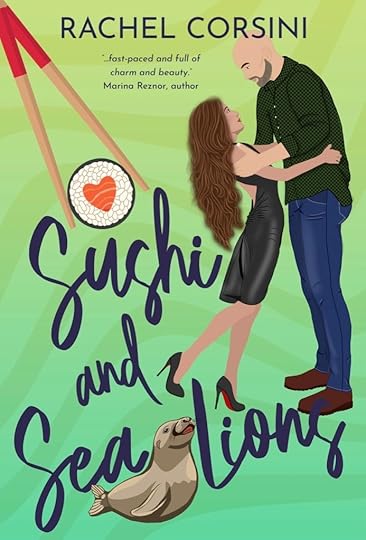
This is such a life-affirming read. Dany is a ballerina whose career is cut short after a devastating on-stage injury, and whose relationship is cut short because her not-quite-boyfriend is a Grade A fuckboy. Forced to leave the glamour of Manhattan for her old neighbourhood in Queens, she must reevaluate her life, her career, and the possibility of a new relationship with an old friend, Vinny.
I love a story about second chances and finding whatever joys you can from the wreckage of your old life. Written with warmth and heart and grounded in a neighbourhood of big Italian families and sports bars, this tale of two hot messes picking up the pieces and falling in love is spellbinding and an absolute delight.
Find it on Amazon, Barnes and Noble, and Apple Books.
April 12, 2023
Cooking with The Sad Bastard Cookbook
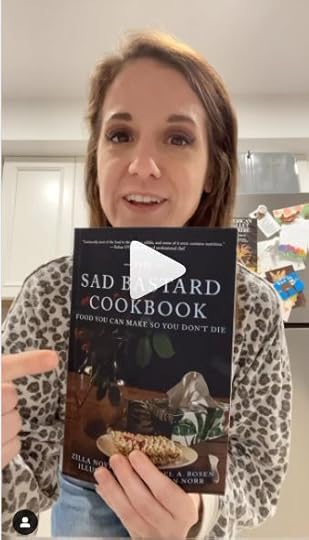
Rachel Corsini, author of the amazing rom-com Sushi and Sea Lions, cooks Kind Like Pad Thai from The Sad Bastard Cookbook. Watch the magic happen on her Instagram!
Get your free e-book PDF of The Sad Bastard Cookbook here.
April 11, 2023
Behind the Screens: Tuesday Author Interview
Every Tuesday, get to know a bit about the stories behind the books you love, and discover your next favourite novel.
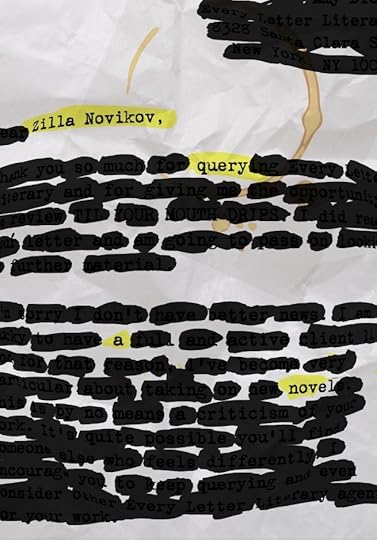
Sabitha : Today, we torment one of our own with questions. Zilla Novikov is the co-author of the Sad Bastard Cookbook and the author of Query, which I could not read without tears of laughter streaming down my face. Fortunately this interview is conducted via text so both of us can pretend to be professional about it.
Zilla: Um. Hi. Yes. A professional interview. I got this. I am a PROFESSIONAL.
Query is a fictional account of my attempts to break into traditional publishing. It’s told in the form of query letters that my fictional-self is writing to literary agents asking them to represent my book. In both fiction and real life, my odds of finding a winning lottery ticket on the sidewalk are higher than my odds of getting represented by an agent. During the self-induced bloodletting that was querying, I sent a lot of very polite letters, and I drafted a lot of letters which were much more honest and much less polite and I did not send them. This novella is my fictional self sending those letters.
It’s also about political activism, because my response to living in a neoliberal hellscape is to be mad about it. Or tired, but mad makes for a more active story.
Sabitha : Readers of Rachel A. Rosen’s Cascade will recognize several familiar names from that book. How are they similar or different from their counterparts?
Zilla: The characters in Cascade got in my head and in my heart, like roommates you don’t want to kick out even when they’re late on rent. I adore fanfic, so when I finished reading Cascade and found myself missing Ian, Blythe, Jonah, and Sujay, it was natural for me to ask Rachel if I could borrow them for the novella I was working on. It’s a philosophical question whether a person is the same if you transport them to an alternative universe—if Ian would have escaped small-town Newfoundland without magic, if Jonah and Ian would have fucked sooner in another verse. Sabitha, you’ve read both books, what do you think? Jonah/Ian = yes?
Sabitha : I ship it, as the kids say. And it’s nice to see Blythe hooking up with someone who appreciates her. I want to know more about the excerpts—to what degree do the stories exist fully formed in your head vs. made up for this purpose?
Zilla: All writers know that the only thing better than writing is not-writing. That’s the spirit I took into Query.
I originally set out to write the novel that Zilla is querying in Query. I planned out all the fun scenes in my head, and I drafted a few chapters. (If y’all are very nice to me, I might give one of them away as a newsletter bonus for subscribers.) But a novel can’t just be the most fun scenes to imagine, and the story that held them together didn’t capture my attention enough to finish writing the novel. When I realized that Query needed to include excerpts from fictional-Zilla’s novel, I found a purpose for these wayward scenes.
Sabitha : We’re increasingly seeing a wealth of fiction that glorifies activism and anti-capitalist resistance. I’m thinking of works like Andor or The Boys that actively challenge late-stage capitalist hegemony, but are produced by massive corporations. It’s been suggested that activist-oriented fiction exists, in part, as a cultural safety valve to make the consumer feel like they’ve done a thing by consuming said media. How do you navigate that space as an activist and a writer?
Zilla: I’m a late-bloomer at activism. On my way to my first protest, I imagined myself meeting vast numbers of articulate, morally superior, and extremely good-looking people, and I was incredibly intimidated to actually go through with it and attend. One of my goals in writing Query was to give a roadmap to people like my past-self. I can’t promise you’ll fall in love with a redhead marine biologist if you start organizing on the left, but you will attend extraordinarily dull meetings, you will drink awful coffee, and you discover how much better life is when your friends share your values. I don’t know if Query is going to make any more of a difference than your average green-washing and rainbow-washing corporate bullshit fiction, but I tried to write a non-didactic call to action. I hope I succeeded at least a little.
Sabitha: So I’m guessing that you didn’t literally slap your book up on telephone poles with wheat paste. If readers want to find you, or even give you money in exchange for a truly entertaining read, how do they go about doing that?
Zilla: All the book-purchasing links are available at the tRaum website. We’re doing a limited run of special edition palm-sized print books in a swag-filled book box, and then print books and e-books will be available forever.
I hate social media, but in the bad old days when I was querying, it was considered a fact that you couldn’t get signed without it, so I signed up for a few. Tumblr’s alright, but the rest of the socials are mostly full of fascists, so far as I can tell. I write for the Night Beats blog and newsletter, and I promise there are absolutely zero fash on the editorial board of either.