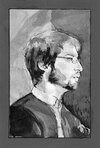
Michael Anthony Adams Jr.'s Blog, page 5
November 17, 2022
3 AM (January, the Second)
I can’t relate to what
the troubadours have to say:
Stories of loves lost,
unrequited; dreams
of memories past.
They sing their songs
to harmonica, guitar.
Tunes that bring peace
to the mind, quiet to
the soul. I wish…
(At church last Sunday, you
prayed to Mary Magdalene,
asked forgiveness for Mother
Mary, cursed the Sun and
made love to His Father.)
You tried playing their thoughts
for me; their lives tried on me
as I rubbed your back (so sweet,
so painful) in your satin kimono:
red like the blood of my soul.
My brain is a sponge
filled of psychology,
philosophy, mythology,
science, math: art. It hurts
even when I caress your flesh.
(Two weird sisters sat on
the right hand of God:
vixens, jewels for the crown
surveying its domain,
a dowry: flesh for fantasy.)
I’m a drunk. I’m insane.
I’m an addict addicted…
Your body; your mind;
this concoction –
chemicals, fermentation.
I can’t write my life,
embarrassed at what you’ll find,
embarrassed at what I’ve
already discovered, what’s
never been understood.
(Madness leads to madness,
insanity to insanity, another
course, another vein, another
drink, another thing to explain
to the therapist – understand?)
Beautiful, I still smell
Asian currents on European
skin, but your scent can’t
be touched; can’t touch me.
I need to feel – Pangaea.
I want nothing, to die
tonight in my sleep.
My brain is my pain.
My mind is my loneliness.
My soul does not exist.
(None of this is real…
there are no words after
their formation, but even
in such an embryonic state,
I still can’t get to the truth.)
2 AM, my hotel light
burned on… 3 AM,
my nightstand overflows
with cigarette butts, trash,
books, notepads… alarm!
I can’t relate to what
the troubadours have to say:
My love never came to be,
requited by nobody since
I cut down the tree of life.
By Michael Anthony Adams, Jr.
From his collection Recipe for a Future Theogony.


3 AM (January the Second)
I can’t relate to what
the troubadours have to say:
Stories of loves lost,
unrequited; dreams
of memories past.
They sing their songs
to harmonica, guitar.
Tunes that bring peace
to the mind, quiet to
the soul. I wish…
(At church last Sunday, you
prayed to Mary Magdalene,
asked forgiveness for Mother
Mary, cursed the Sun and
made love to His Father.)
You tried playing their thoughts
for me; their lives tried on me
as I rubbed your back (so sweet,
so painful) in your satin kimono:
red like the blood of my soul.
My brain is a sponge
filled of psychology,
philosophy, mythology,
science, math: art. It hurts
even when I caress your flesh.
(Two weird sisters sat on
the right hand of God:
vixens, jewels for the crown
surveying its domain,
a dowry: flesh for fantasy.)
I’m a drunk. I’m insane.
I’m an addict addicted…
Your body; your mind;
this concoction –
chemicals, fermentation.
I can’t write my life,
embarrassed at what you’ll find,
embarrassed at what I’ve
already discovered, what’s
never been understood.
(Madness leads to madness,
insanity to insanity, another
course, another vein, another
drink, another thing to explain
to the therapist – understand?)
Beautiful, I still smell
Asian currents on European
skin, but your scent can’t
be touched; can’t touch me.
I need to feel – Pangaea.
I want nothing, to die
tonight in my sleep.
My brain is my pain.
My mind is my loneliness.
My soul does not exist.
(None of this is real…
there are no words after
their formation, but even
in such an embryonic state,
I still can’t get to the truth.)
2 AM, my hotel light
burned on… 3 AM,
my nightstand overflows
with cigarette butts, trash,
books, notepads… alarm!
I can’t relate to what
the troubadours have to say:
My love never came to be,
requited by nobody since
I cut down the tree of life.
By Michael Anthony Adams, Jr.
From his collection Recipe for a Future Theogony.
November 16, 2022
12th Annual Takoma Park Book Fair
So thrilled to be included in the 12th annual Takoma Park Book Fair on Saturday, Dec. 17!
I hope to see you all there:
12th ANNUAL TAKOMA PARK BOOK FAIR
Saturday, December 17
1–4 p.m.
Takoma Park Busboys & Poets
235 Carroll St NW
Washington, DC
A fun and unusual stop on your shopping rounds!
Read Local: 30-plus local authors will be on site selling—and signing—books. Think holiday gifts!
Eat & Drink Local: The event coincides with the annual Takoma Park COCOA CRAWL! Warm up with a cup of hot chocolate or a special “Booktini” cocktail and enjoy a meal at Busboys.
November 15, 2022
The Cars Behind, Beside Us
Jeffrey was about eight years old or so when he bought Raising Hell by Run-DMC. His parents had only been divorced for about a year. He was so proud of his new purchase. His father had dominated him musically.
His father was an old rock n roller, Jethro Tull style Too Old to Rock n Roll: Too Young to Die. We can go ahead and name his father “Jethro” through the rest of this story.
Jethro and Jeffrey used to drive to Dallas every weekend. That was where Jethro lived. Jeffrey lived in Houston. Every Friday, Jethro got off work, got on the highway, drove for two hours, honked his horn outside his son’s home (his old home), watched his son hop in the passenger seat, and drove straight back to Dallas with Jeffrey beside him. He did the same thing on Sunday, except that everything happened in reverse. Jeffrey was next to him on the way to Houston, and he only honked his horn to get cars out of his way.
Jethro had never wanted to leave Houston in the first place. But in his mind, he didn’t have much of a choice. Why didn’t he have a choice? Jeffrey wasn’t sure. It was his choice.
So Jethro and Jeffrey drove to Dallas every weekend. Jeffrey was so young. He would sit in the passenger seat, staring out the windows, looking in the mirrors at the cars speeding along behind them, beside them. Jethro would play music. He would play everything he had grown up with: Gene Vincent, Chuck Berry, the Beatles, Van Morrison. They had just graduated to Bob Dylan when Jeffrey showed up with Run-DMC.
Jeffrey couldn’t wait to show Jethro Run-DMC. He wanted to show his dad his new discovery.
Bob Dylan had just made a keen observation when Jeffrey told Jethro that he had something Jethro needed to hear. Jethro glanced at him proudly out of the corner of his eye.
Jeffrey nearly leaped over the seat to grab his blue duffel bag out of the back. He was so excited. Finally, finally, finally, he had it. He had something to show his dad!
Ol’ Jethro had never heard of rap music, but he remembered hearing Walk This Way by Aerosmith. It was a party, and Jethro was real high. Somebody put on an album by a band that wrote its name in a real crazy way.
“That’s where ‘Walk This Way’ comes from, son. From that album I heard at a party a year or two before you were born.”
Jeffrey slid the tape into the old car stereo. The tape deck swallowed it like it was gulping down the final sip through a soda straw.
It wasn’t too far, right around when the beats really started, that Jethro’s hand flew off the steering wheel. Ol’ Jethro wasn’t having none of that. He hit “eject” on the tape player before poor Jeffrey could even move his lips enough to say, “What’s wrong?”
The tape deck spit up the tape like so much flavor it didn’t want to taste.
Jethro grabbed the tape between his thick fingers. In one fluid motion, he pulled it from the deck, flexed his arm, bent his elbow, and launched the tape in front of his face, out the window.
Jeffrey was ready to cry. He didn’t understand what Jethro was doing. He couldn’t figure out what he had done wrong. He was too young to realize that, to some people, there was a very real difference between rap and rock n roll.
The tape flipped through the car, into the highway, to land with a plastic crash on the pavement, to be run over, over and over again by the cars speeding along behind them, beside them.
If Jeffrey had been older, he would have shouted, “What are you doing? What the hell are you doing?”
But back then, he simply watched in disbelief. In disbelief, while his tape was run over, again and again, by the cars behind them, beside them.
Those cars kept coming and coming. Their wheels crunched the tape’s plastic shell again and again and again. Their winds lifted the magnetic strip into a billowing string left over from a kite that crashed not too long ago.
Jeffrey watched it all out of the back window. His jaw was in the seat, resting between his scooted around feet. His face clenched up. One choke, and he started to cry.
Jethro looked over at him. This really weird look spread across his face. That was all it took. One look was all it took.
“I didn’t mean to do that, Jeffrey. I really didn’t.” That’s what he said, but it didn’t matter. Jeffrey’s tape was gone forever.
It was like the fireman’s helmet he’d had when he was an even littler kid. His parents had been driving him to his grandmother’s. He’d been playing in the backseat, pretending there was a fire they were rushing to put out. He’d pulled the hat off his head, flung his arms wide, smiled and shouted, “It’s okay. The firemen are here!” But his arms went too wide. His hand was out the window. The wind built up inside where his head should have been. It ripped the plastic helmet out of his fingers. The fireman’s hat was gone so quickly that Jeffrey didn’t even see where it landed. He burst into tears. Jethro pulled the car over and ran out into the freeway, dodging the speeding traffic, searching frantically for his son’s lost helmet. But the helmet had disappeared. It was lost in the mass of cars behind them, beside them. Jeffrey was so sad. He couldn’t be a fireman without the right hat. Who was going to save the people from the fire now?
“Look, Jeffrey, first exit we see, I’ll get off the road, and we’ll stop at a K-Mart somewhere near there. And I’ll buy you a new tape.”
“There won’t be a K-Mart there,” Jeffrey told his dad. Jeffrey was certain of that. Even in the midst of his tears, he knew that.
It’s like coming up from the bottom of the ocean when you finally stop crying. Jeffrey sniffled and glanced at his dad.
Jethro was chain smoking. The ashtray was overflowing. He was glancing at his son out of the corner of his eye as he scanned the highway for some exit with a semblance of life.
Finally, he saw it. He saw the exit he wanted to take.
Their car veered through three lanes of traffic. One of the lanes honked at them, but Ol’ Jethro didn’t stop.
He pulled all the way across the highway so he could get to the lane that would exit, the lane whose overpass passed over a plethora of shops, a McDonald’s and a Pay-Less. He must have thought there was a K-Mart buried down there somewhere.
They drove down the off-ramp. America’s cross-country wasteland of windowed, boxy stores planted on either side of the blacktopped, stop-light marked streets greeted them. Jethro was grunting as he tugged at the steering wheel. It was like he was wrestling with the car, forcing it to go to a K-Mart it didn’t believe was there.
Jeffrey choked on a wad of tear-produced snot. “There’s no K-Mart here, dad,” he said.
Jethro huffed and puffed again. One of his hands shot up to the dashboard to grab his cigarettes. He put one between his lips, scuttled his fingers across the dashboard again, found the lighter, and lit his smoke. He glanced at Jeffrey from behind an exhaled puff. His eye was huge and bloodshot. Jeffrey thought he looked like a Cyclops from one of his picture storybooks about ancient, Greek people.
That eye was enough to scoot Jeffrey back against his window. Jeffrey sniffled and wiped his own eyes. He turned to look out the front windshield. There was nothing to see in the cars behind them, beside them.
If Jethro believed the K-Mart was somewhere up there, then Jeffrey had to believe him.
They drove down the street frantically, Jethro searching every side road, hoping they ran into a K-Mart before they ran out of road. They turned around, went back underneath the overpass.
And then…
Rising up out of the desolation of its dark, dark parking lot, the huge one-story building with its white frontboard above glass, that huge, red “K” gleaming and glistening in the sun before the much smaller, but still red “mart”, was a paradise of earthly wonder, hope in the face of nothingness, restitution for Jeffrey’s old tape smashed up way back there on the highway. Jethro was right.
Jeffrey leaped up straight in his seat. He stared out the window. He glanced over at Jethro. Never before had he ever believed so completely in his dad. He smiled. Jethro smiled back, hesitantly, at him. With his grin and his shrug, he should have been sweating, maybe peed his pants from the strain.
Even as young as Jeffrey was, even after the first, Cyclops look his dad shot at him, he realized Jethro hadn’t believed. Jethro had led him on that search for a K-Mart without ever believing there was one there himself.
But it didn’t matter. They were in the parking lot.
Oh boy, they were in the parking lot. Jethro would replace Jeffrey’s tape. Jethro was going to replace Jeffrey’s Run-DMC tape.
Jeffrey bounced along beside his dad as they bounded in the sliding glass doors. They went straight past all the clothes and trinkets, didn’t turn to go to the sporting goods, didn’t stop to look at the toys, to the back of the store, past the one rack and barrel of posters, where, next to all the electronics, the tapes were.
K-Mart wasn’t as finely subdivided as Sam Goody. There was only one section for Jeffrey to check for Run-DMC: pop music. Jeffrey got a little turned around by the alphabetizing. His face was still streaked by tears, but he was smiling. He had left his dad’s side to find the replacement for his tape.
Jeffrey went through the “N”s, the “O”s, the “P”s. There weren’t too many “Q”s, and he finally got to the “R”s. Scanning the plastic labels atop the rows and rows of tapes, he finally got to “Ru”, the place where Run-DMC would be. He drew his finger down the row. There was another album by them, and there was Raising Hell. He pulled it out. The skeletal extra-body that tapes used to come in in those days was attached to it.
Jeffrey brought the tape to Jethro. He was smiling. Honest to God, Jeffrey was smiling. Even after watching his first tape fly out the window and crash on the highway to be smashed by the cars behind them, beside them, he was still able to smile because Jethro was going to put his tape on the same credit card that he always put Jack Daniel’s on.
Jeffrey held his little hands out. He was holding the tape by the very end of its white, skeletal case.
Jethro took one look at the tape. He took only one look. That was all it took. One look was all it took.
“Son, why don’t I buy you something a little different.”
One tape, out on the highway, smashed to smithereens. Another tape, safe inside its skeletal case, safe between Jeffrey’s fingers, beautifully wrapped in shrink wrap, and Jethro wasn’t going to buy it. He wasn’t going to buy Jeffrey his tape.
Jeffrey choked again. Tears welled in his eyes. He mumbled, “But you promised, Dad. You promised you’d buy me a new Run-DMC tape.”
“I said I’d buy you a tape, not Run-DMC. Why don’t you put that one back, and we’ll find you something better.”
Jeffrey’s bottom lip shook. A sheen of tears spread across his eyes. Snot dripped just a little bit in his nose. There was a lump in his throat that made it hard to swallow. His dad had lied to him.
Jeffrey was too young to say that. He was too intimidated by the fluorescent lights to say anything. He stepped back. He knew his father had lied to him. He trembled, keeping all those things inside himself, bottled up by how tight his shaking lips were, held back by how much he blinked to keep his tears a fresh sheen rather than a dripping fountain, stopped up by how much he sniffled to hold the snot in place. He kept swallowing to keep that lump from slipping to where it might actually hurt.
He wandered back to the tapes where he had found Run-DMC. He slid the plastic skeleton back into its proper place. Jethro had gone in the other direction.
Jeffrey wandered aimlessly through the rows of tapes. He had no idea what he was looking for. He didn’t know what Jethro knew. He didn’t know what Jethro would be willing to buy.
The K-Mart was so big. There were so many tapes that looked so cool. Jeffrey would pull them out, one by one, stare at their covers, wish that that was the tape Jethro would buy him, and put the tape back. Every tape shined in the light. The plastic always reflected the fluorescents, and the cover always looked so smooth and new. They should have made Jeffrey smile.
He still wasn’t crying. He still looked like he should have been, but he still wasn’t. All previous experience told him that he should have been, but he wasn’t.
Jethro was back at the beginning of the alphabet. At the end of the alphabet, behind the very last row of tapes, was a little box of a table. Inside the box were all these tapes that had lost those little skeletons they came in. It was the bargain bin.
Jeffrey dug through the tapes in the bargain bin. It was all this stuff from the early, early eighties, all these bands he’d never heard of before, with bright covers and weird names. Jeffrey frowned and threw them aside. He didn’t care about any of them. None of them were Run-DMC. The tapes crashed and rained down around his arms digging deeper into the pile. He glanced back over his shoulder at Jethro. Jethro was looking very carefully for something at the beginning of the alphabet.
Jeffrey glanced back down to see what the tape was that he held in his hands. There were four guys standing and squatting around a railroad track. The railroad tracks stretched through a long, green field with some shacks in the background. One of the guys was covering one eye. Two of them weren’t looking at the camera. And the fourth, he sure looked real nice. They were dirty, greasy looking, the way Jeffrey always pictured the guys who had probably listened to all the fifties bands Jethro played for him. They were wearing jeans and tee shirts. One of them was wearing a leather jacket. Jeffrey looked at the title: The Clash – Combat Rock.
“Jeffrey,” Jethro shouted. “I found it. I’m gonna get you Paranoid by Black Sabbath. I took your mom to see them on one of our first dates. They’re great. You’ll love ‘em.”
Jeffrey didn’t feel like talking to Jethro, but he had to know. “Dad, did you ever hear of a band called The Clash?”
Jethro grimaced a bit. “Yeah. They were part of that whole punk thing. Those bands were all crap. Bunch of freaks with blue hair and safety pins. Your uncle and I wound up in this punk rocker bar in New Orleans one time shortly after you were born. Uncle Jim cleared the floor of those candy asses. They all thought they were so tough in their leather and their spikes.” Jethro laughed. “Bumping into each other and hitting each other. Guess they weren’t ready for a real fight.”
Jeffrey wasn’t listening. He didn’t care about his dad’s story. He didn’t care if The Clash were “part of that whole punk thing,” whatever “that whole punk thing” was anyways. They didn’t look like candy asses. They looked real cool. They looked like the kind of band Jeffrey thought he would like if Jethro ever let him pick out his own tapes. Even if they could never replace Run-DMC, they looked like the band that might be able to make him feel a little better about what his dad had done to Run-DMC. They looked like their dads might have thrown a Run-DMC tape out the car window on the way to Dallas too. And if their Jethro did that, then he definitely didn’t buy them a new Run-DMC tape either. Maybe, they had had to learn how to get their Run-DMC tape back out from underneath all the cars behind them, beside them. And maybe if they had learned how to do that, maybe then they could teach Jeffrey how to do that too.
Jeffrey looked around. Nobody was near him. Jethro was still up at the front of the alphabet. Jeffrey slid the Clash tape into his pocket. It felt so perfect nestled next to his leg in his jeans. He wasn’t going to let Jethro know he had that one. He wasn’t going to lose that tape in the cars behind them, beside them. The rest, as they say, is history.
By Michael Anthony Adams, Jr.
From his short story collection The Cars Behind, Beside Us.
November 14, 2022
Jessica
By the time I got to Oklahoma,
I started thinking of you.
Not a poem in my head for days,
and now, I don’t know what to do.
I pulled over at the side of the road,
grabbed my notepad off the floor,
ran my fingers through my hair…
and set ink to line once more –
Smoking Newports cross the country,
listening to the Rolling Stones. There’s
a rock forming in my soul. It blocks
the snowy waters, turns them into rapids
that wash away my external vision.
I’m left with only our shared memory.
Somewhere in Texas, I smelled your
bedroom scent. Cars sped by me on
the highway, but I was lost in my own
world completely, caught between
your locked doors, absorbed in Ganesh’s
incense and Kama Sutra Lords. Talking
in your bed. Singing songs in our
heads. Dirty dishes in the sink,
a movie on the computer screen,
I shared all my conspiracy theories
with you while you just laughed,
and I played the piano on your back.
37 miles to Nashville; my heart
felt like it was going to explode, but
I’m taking you all the way to
the ocean with me. We’ll drown in
seaweed, get eaten raw by the Japanese
to understand the sorrow in a full moon’s glow.
I lost my mind to this lunacy. I don’t
know if I’ll find it in the myth-
ical land of the East. I gave it
to you, my love, I gave you all
my feelings, peppered them inside your
soul as Led Zeppelin ruptured the stereo.
I wanted to take you somewhere
you’d never seen, somewhere like
back home with me, to the heaven
where I slept on the streets and
the concrete shattered all my dreams.
But you’re an angel of Holy Faith.
I’m a satanic hurricane of desire.
Striking a match to my cancered cigarette –
one last flame to spark my funeral pyre.
I don’t know if I can stop
this trip. I sit still and meditate.
It’s 2 AM, my hotel light burns on.
If I don’t make it, like all, that’s fate.
By Michael Anthony Adams, Jr.
From his collection Indigo Glow.
November 13, 2022
Welcome to the Modern World, Charlie
Charlie swung his door closed. A rattling crash reverberated through the house. Having made his point, he dragged his feet across his stained carpet to plop onto his bed. Lying there, rigidly still, he tightened his already taut features a little bit more. He almost screamed, but instead, biting his lip, he slammed his fist into the mattress.
The room was still for a moment. Charlie closed his eyes. A breezeless warmth burned through the open window above his bed. The sticky, Southern air pasted itself onto everything in the room. The disheveled dresser was sweating against the wall opposite him. Littering the floor, crisp socks and shorts and tee shirts grew moist again. Even around Charlie, the damp air thickened. A busy fly buzzed past his ear. Charlie opened his eyes to gaze up at the crack in the ceiling above him.
For a moment, he thought that if he looked hard enough, the one crack might splinter into a thousand cracks that would expand into a million cracks. Then, letting him gaze at both a topaz sky that he could escape into and a golden sun that he could fly to, the entire ceiling would disappear. But when reality reduced the limitless heavens back to a single, dark imperfection in the white paint, Charlie sat up.
Dangling his spindly legs over the side of the bed, he hung his head. Tiny mounds of dirty clothes rose up from the landscape as if they had sprouted from the frayed carpet itself and had remained intertwined with those dismal strands. Charlie followed the fly’s path over a precarious road of stained socks to the largest mountain of worn clothing.
The fly settled onto a flat, white, square corner of something peeking out from beneath a pair of grass-stained shorts at the bottom of the pile. Like a miner proud of the gold he has discovered, the insect paced back and forth, rubbing its forelimbs together in anticipation of the unearthed jewel.
Wiping away uncried tears, Charlie stood up. He walked over to see what was hidden beneath his clothing. Dropping to his knees and brushing away the fly, he removed the flat square that was as big as his chest.
On the back of the white album sleeve was a black and white cross of four faces. Recognizing them, Charlie smiled. He turned the album over in his hands. The band’s name swirled above a splotchy sparse collage of bright colors and other worldly things (a disembodied smile, a butterfly, a dragonfly, a hummingbird…). Beneath the letters’ puffy outline was the solid shape of the Roman numeral three. Charlie hugged the album to his chest.
When his dad had still lived with them, this album had been his. Charlie could barely picture being in a nicer house, and he kind of remembered an old, wooden turntable in the den, and he could almost see his dad sliding the black vinyl out of the sleeve, and he thought of the hiss and the crackle of the needle, and he saw himself setting up his action figures on a table, and he remembered his dad sitting in an over-stuffed armchair, and he pictured the music crying at him from the speakers.
And when both his dad and everything his dad owned had disappeared, somehow the record had been left behind. Charlie had taken it into his room. He had spent his days and nights playing with his black lab, Theo, and listening to the sounds hidden inside the record’s grooves. It was during one of those nights, long after his mom had gone to sleep, that he decided his dad must have died. If he hadn’t, he would have come back for the music he had loved so much.
When the man, Frank, started spending time at the house, the record stayed on Charlie’s plastic turntable while he hid in his room. Theo hid from the man as well. One night, with the dog barking and the music playing, Frank came in to ask Charlie if he could keep things a little quieter because he was doing work.
Charlie got angry. With a scratch of the needle, he took the record off. He put it back in its sleeve, and he dropped the sleeve on the floor. In the aftermath of summer, as Charlie and Theo spent their days outside in the grass and the heat and the mosquitoes, he forgot about the record his dad had left behind.
So today, in the midst of the late afternoon heat, when the crack in the ceiling would remain only a crack, Charlie wiped his eyes again. He got off his knees, and he walked over to the little, single component stereo with a turntable on top. Holding the record with one hand, he pressed the power button. A soft “pop” sounded through his messy room. In the speakers beside his dresser, a static noise buzzed.
He slipped the vinyl out of the sleeve, and he twirled it between his fingers. The record caught the light in its grooves, and it shined. Charlie put the record on the turntable, but just when he was ready to press play, his door creaked open.
Charlie spun around.
His mom was in the doorway. She was young and thin with long, blonde hair stringing around her face and dangling across her tee shirt. She quietly clicked the door closed. She walked across the carpet to settle onto the bed. Exhaling, she glanced around the cramped dirty room that she had given Charlie and that Charlie wouldn’t have to live in much longer. “I know why you’re angry,” she said while studying the crack in his ceiling. Then, she turned back to him. “But you’re not being fair.”
Turning off his stereo, Charlie sat down, Indian style, on his floor. His mom wiped a strand of hair off her face. “We already talked about it,” she said. Charlie shrugged. “You know Theo can’t come with us,” her voice trickled away. “We talked about that…”
Charlie gave another melancholy shrug.
“What do you want us to do?”
“Not move to New Haven.”
His mom looked back at the ceiling. “Frank’s job is there,” she said.
“But why do I have to go? My last name isn’t Hammond.”
His mom was stunned. She whispered, so that if Frank was walking down the hall he couldn’t hear, “It doesn’t matter whether or not your last name is Hammond. You’re coming too.”
“Why?”
“Because you’re my son, and I’m not going anywhere without you.”
“But why do we have to go anywhere?”
“Because we can’t stay here.”
“Why can’t we stay here?”
His mom laughed sadly. “Look around you, Charlie. Look at this house and this street, and you tell me why we can’t stay here.”
Charlie didn’t answer. Even at his age, he wasn’t blind to the dilapidation of the chipped paint both inside and outside their home. Even he understood the degradation of the faded façade of their Southern neighborhood. He picked at the worn carpet. His lower lip began trembling. Trying so hard not to cry, he raised his chin. His mom slid off the bed to join him, cross-legged on the floor.
For a moment, she was on the verge of crying as well. She creased her forehead, and she explained, “Frank really cares about us, Charlie, and he has a better opportunity there than here. We’re just lucky that he asked us to come too. This sort of stuff doesn’t just happen…”
“But how do you know New Haven will be any better than Athens, Mom?”
“We have to believe it will be.”
“Without Theo, it can’t.”
“Charlie,” his mom pleaded, “I wish Theo could come too. Frank wishes Theo could come…”
“Then why’d he give him away?”
“Because we’ll be in an apartment, and it’s not going to be big enough for a dog the size of Theo. You can’t expect him to stay cooped up all day without a yard and without a neighborhood to roam around in.”
Charlie didn’t answer.
“Maybe, once we get settled there, and we get a house, we can get another dog.”
“I don’t want another dog.”
“Charlie, we don’t have a choice…”
But Charlie wasn’t listening. Not caring whether or not Frank was close enough to hear, he cried to his mom, “But why’d he get to give him away. Theo was my dog. I should have taken him out there. Not him.”
“But you said you didn’t want to be there…”
“That’s because I didn’t think you’d do it.” He choked on a wad of tears. “I didn’t think you’d do that to me.”
His mom whispered something. She crawled across the floor to give Charlie a hug and let him cry into her shoulder. She spoke quiet, kind words. She smoothed his hair, and she told him that, soon, everything would be okay.
Charlie sniffled a few times. He whispered, “If Dad was still alive, he never would have gotten rid of Theo.”
His mom froze. “What did you say?”
“I said that if Dad was still alive…”
His mom pulled away from him. She said, “Charlie, your dad’s not dead.”
A slight spasm dried Charlie’s eyes. He’d been on his knees when his mom had hugged him, but now he retreated into a more guarded pose. He had never told her about his dad. He figured that she already knew and that, for some reason, she was hiding the truth from him.
“Who told you your dad was dead?”
Charlie tightened his jaw. He squeezed out the name, “Nobody.”
“Then why’d you…” His mom brought her fingers up to her mouth. “Charlie,” she began, nervously fidgeting with her lips over every carefully chosen word, “Your dad left. He didn’t die.”
“Then why hasn’t he come back?”
“I don’t know. I don’t even know why he left.” His mom knew that was the wrong answer, but she didn’t know what else to say right then. She shook her head, and she stood up. “I’ll come check on you later,” she whispered, and she left Charlie alone in his room.
Charlie sat still in the silence. The humidity had sucked the air from his room to leave him drowning in its moisture. A tear dripped down his cheek, but he didn’t sob. He didn’t even wipe the single tear away. He just sat there, wishing he could hear Theo bark.
He wished that if he closed his eyes, when he opened them, the black lab would be shining like the record had in the sunlight. Theo would open his dark, droopy jowls for one deep, friendly sound, and Charlie could crawl on his knees to be smothered from hair to chin in the wet laps of the dog’s droopy tongue.
But Theo was gone now, too. Frank had given him away that morning. The man had put Theo in the backseat of a car, and he had driven the dog, who, the whole way, had whined and scratched at the window, to a farm. Frank said that Theo would be able to play there when the rest of the family left Athens next week. Charlie had stayed in his room until Frank had come back. When Theo hadn’t come back with him, he’d yelled. With a rattling crash, he’d slammed his bedroom door.
But when that had happened, he’d thought his dad was dead. He’d thought that it had to be that his mom was crying and that there was some man named Frank to care for them. But his dad wasn’t dead. That meant none of this made any sense.
Another fly, or maybe the same fly, buzzed past Charlie. The slight noise startled him back into his bedroom’s filthy heat. Taking a moment to wipe the sticky tears from his cheeks and chin, he watched the fly zoom lazy circles around his room. Once again reminding him of what he had forgotten, it landed on the stereo.
Charlie walked over to the turntable. He pressed power again. With another quiet “pop”, the speakers buzzed into life. The fly rubbed its hands. The little arm swung its half arc to land on the record’s grooves. Being written by the needle’s bobs, the album hiss climbed to a song. Charlie walked back to his bed.
The music struck the jarring, violent melody that his dad had loved so much. Charlie landed on his mattress. Looking at the single, thin crack above him, his eyes filled with tears. Now, even more than before, he needed that crack to engulf the entire ceiling. He needed the walls to cave down without a ceiling to support them, but when a voice’s high-pitched cry wailed above the music, everything beyond the moment of sound disappeared. The fly flew silently. Thoughts of Theo disappeared into the rhythm. Trapped inside the record, the voice wailed in another dimension. It cried to Charlie from that otherworld where the inhabitants were his overlords, and Charlie thought that, maybe, he might have been there, once, a long time ago.
By Michael Anthony Adams, Jr.
From his short story collection Welcome to the Modern World, Charlie.
November 12, 2022
Asleep
He’s sick of lies.
He’s sick of fables.
He’s sick of stories
that help children go to sleep at night.
He wants what’s real.
He wants what’s true.
He wants the nothing
that is everything
that he sees in you.
One night,
the child had a dream.
He closed his eyes,
and everything disappeared.
He screamed
for his mommy to save him,
but she had gone to sleep.
She couldn’t hear.
The child
tried waking up.
His eyelids fluttered,
but he was stuck.
He slept.
The nightmare
went on forever.
He woke up.
Everybody else had gone to sleep.
By Michael Anthony Adams, Jr.
(from the poetry collection The Tree Outside My Window)
Click here to hear the poem as performed by Ursprung Collective.
November 11, 2022
September 12, 2022
Oberon
Oberon
By Michael Anthony Adams, Jr.
The moss is deep.
“That means fairies live here,”
is what my wife always says
to our child discovering the world.
It’s like a bed
for your soles to sink into,
a soft sleep for your toes
always used to harsh concrete.
I laid down on it
last night and closed my eyes.
Drifting through a dream,
Oberon came to me…
He said, “Follow us
to the realm of mystery.
Forget what you think
you know, and believe.”
Image: A.W. Crawford, Public domain, via Wikimedia Commons
March 23, 2022
Body. Electric.
For the past few years, I’ve been working on a script for a sci-fi series, Body. Electric. Today, my screenwriting partner and I are ready to share the ‘Show Bible’ with all of you. Check it out here: https://www.bodyelectricseries.com/reviews