
Urmilla Deshpande's Blog, page 5
February 11, 2011
2/11/2011 ~ Gauri Deshpande
Today is our mother's birthday. She would have been sixty-eight. Happy birthday Aai, from Saheli, Mithoo, umi. We wish she were here.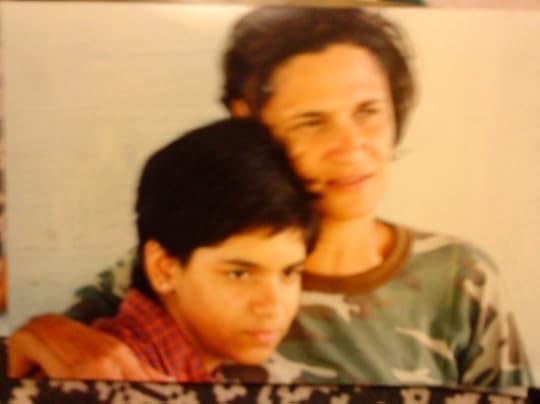


January 26, 2011
01/26/2011 ~ New Madhouse Review – 2
http://johncheeran.blogspot.com/2011/01/madhouse-true-stories-of-inmates-of.html
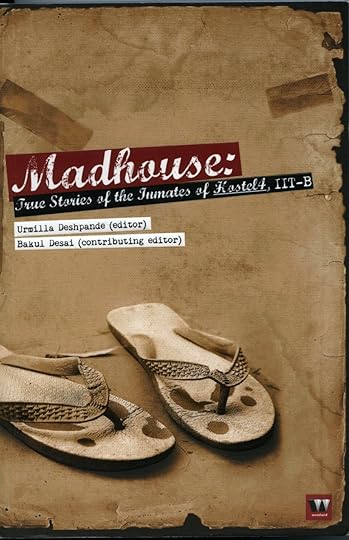 By John Cheeran
Here is an awesome book.
Madhouse: True stories of the inmates of Hostel 4, IIT-Bombay is going to be a trendsetter. It puts together utterly common and uncommon moments from the lives of a group of students, achievers of some sort, for they cracked the JEE to get in to the IIT.
Though all the recollections in Madhouse are specific to one of the hostels in IIT Bombay – there are 9 others, including a ladies hostel (hostel 10) but you don't have to be an IITian to enjoy these true stories on hostel food, ragging, pondies, phone, entertainment programmes (EPs), copying, girlfriends and other assorted adventures.
These stories cover a timeline of less than 10 years (roughly a period ranging from 1972-1985) out of IIT Bombay's more than 50-year history.
It's an unputdownable book, especially if you remain young at heart. Any reader should be able to recall more than one occasion from his student/hostel life similar to that Madhouse speaks about. These colourful tales do make you nostalgic of a time of infinite freedom and immense pressure to live up to parental expectations.
Madhouse shatters a few myths regarding how above average and brilliant the guys and girls who make the cut to the IIT are. May be, after reading these true accounts, you would feel that what a bunch of quirky, degenerate and spoilt characters are these people, with no qualms about flouting rules of all kinds.
Some of these tales are absolutely wacky. Bakul Desai (contributing editor and a successful businessman based in Hyderabad) wanted to bring an elephant to the campus for the H4's EP (entertainment programme). An enterprising Bakul, in his desperation, went to Antop Hill and had a negotiation with underworld don Varadaraja Mudaliar for renting out an elephant without knowing who the guy was. Later Bakul tells how they invented ways to use the public coin phone in the hostel without inserting coins. I burst out laughing when he described the day when a telephone department official came with a big bag to collect all the coins from the phone box but only to be shocked when he opened the box by the sight of matchsticks, broken strings, crumpled computer cards, rubber bands, clips, pins and an assortment of wires made of steel, copper, plastic, a wad of chewing gum and a 50 paise coin in the middle of it.
Who thought IIT students could be so enterprising?
Most of the heroes and heroines of Madhouse have done well in life. Many here recount that they learnt more by bunking classes than from classrooms.
Sudheendra Kulkarni, who was a commie then at IIT Bombay has traveled quite distance to become BJP ideologue and now an advisor to Trinamool Congress leader Mamata Banerjee. Manohar (Manu) Parrikar is another H4 inmate who became BJP chief minister of Goa and now the opposition leader in the assembly.
Urmilla Deshpande (editor) and Bakul Desai (contributing editor) deserve a toast for putting together this book. It was Bakul who took the lead to get the project on track. Urmilla played her role as a sensitive editor to perfection by letting these stories speak by themselves without the writer in her taking over to shape them. She realized that in these stories style and content were inseparable. She should know having married an H4 inmate Hashish Koj La (Ashish Khosla).
Posted by johncheeran at 12:17 AM
01/26/2011 ~ New Madhouse Review -1
http://thebookloversreview.blogspot.com/2011/01/review-madhouse-true-stories-of-inmates.html
As soon as someone mentions IIT, it conjures respect and awe but also at the same time we imagine a non-interesting, studious and serious life. What many don't know is the whackiest, weirdest fun is had in the hostels of IIT. The life at IIT Hostel always intrigued me, since I am married to an IITan. Anyone who is married or has dated an IITan would agree that it is almost like a secret brotherhood, the stories and the fun or things that they have done in those years remain strictly between them. It is almost sacred and not for public sharing. One knows a wild time was had, weird nick names shared, whacky things done but it is never discussed with families.
Madhouse: True Stories of the Inmates of Hostel 4, IIT Bombay is a book that will give the reader an insight of what goes around these hostels. It is a compilation of all the ex-students of IIT Bombay who lived in Hostel 4. Starting from their ragging days to their graduation ex students have recalled memorable incidents of their life in hostel. The compilation is specifically of IIT Powai, Hostel 4 passouts but the episodes will give the reader a fair insight into the life at IIT. Happy stories, funny stories, laugh out loud stories the book has it all. Most of the stories though are from the students of 80s.
[image error]Reading the book made me realize why these men bond just so much, how friendships are made forever, why such elaborate efforts for a reunion are made whenever even a single friend comes visiting from abroad. The shared experiences, the shared jokes, the shared past every time they meet come alive. Even as an outsider you can't help but notice the bond of friendship, trust they share.
The book, as one reads it, one can figure out the tremendous effort that would have gone into getting stories from all the ex-students, considering most of them lead busy lives in different corners of the world.
Excellent initiative but honestly a book that would be enjoyed strictly by people who have lived in that hostel.
January 22, 2011
01/22/2011 ~ Jazz and Poetry Symposium II video
In April 2010, my dear friend Joseph Hellweg read from A Pack of Lies to the music of the immensely awesome students of the Jazz department at FSU's music school.
January 3, 2011
03/01/2011 ~ new review of "A Pack of Lies"
 Happy new year! A Pack of Lies, which was published October 2009, is still being read and reviewed, I'm very pleased! A friend sent me this link today. Nice new year present, an inspiration that might help me to finish the book of short stories I have promised to deliver to my editor by the end of January…
Sheila Kumar, the reviewer, has alluded a few times to "autobio masquerading as fiction" as several have done before, but she has stopped short of making any further assumptions, and has actually given me the benefit of reading the book as fiction. More on this later, it's time I wrote about it. A book to finish first – a challenge from my dear editor.
http://www.thehindu.com/arts/books/article1020913.ece
The text of the review:
Mommie dearest
SHEILA KUMAR
Sometimes, telling a tale of childhood can also be an exorcism of sorts.
A Pack of Lies, Urmilla Deshpande, Tranquebar, Rs. 295.
The pulling down of the covering veil is not a gentle gesture here; it is a brutal act of ripping. Yet, when the reader reaches the end of this coming-of-age novel, autobio masquerading as fiction, the utter imperative behind it does not fail to impress. Deshpande has a story to tell and she tells it, consequences be damned.
It is the improbably named Virginia who comes of age in the early 1980s here. The girl was never the shy, retiring sort to begin with; add a strange, preoccupied mother who swings between languid condemnation and an equally languid neglect all through, throw in generous pinches of dope, drink, men, women, modelling contracts, unsavoury relationships and the occasional bout of introspection, and you get a very readable account of a young life lived to the hilt.
Of course, it is anything but a pack of lies. The novel deals with truths, mostly unpalatable. Virginia a.k.a Ginny, named after the doomed Woolf is ironically enough, not much of a Woolf fan. She tires early of trying to live up to her moody mother's unpronounced expectations and decides to go her own way. That particular road involves the jettisoning of any remnants of inhibitions, taking up with a glamorous woman mentor, an unsavoury boss who quickly become Ginny's live-in partner, and sundry other quick gropings and one-night sessions with attractive men who come her way. There is a career of sorts in photography that is slowly coming together, there is the occasional reunion with her separately re-married father and mother and their new families. There is the immediate bonding with her sister who lives with her father and his awful new wife, as well as the small stepsister born to her mother late in life. Tumult but not all bad, either.
Real lives
It's the old cliché come alive: Ginny isn't really short of money, she even has her own apartment in Mumbai. What she lacks desperately and seeks hungrily, is unconditional love and acceptance, mainly from her parents. Ginny's mother, the distant writer with longings both the girl and the reader can only guess at, as well as a predilection later on for drink, tends to steal several scenes from the young girl throughout the narrative and is someone who leaves quite an impact.
What shines through is the truth (again, masquerading as distinct possibility) that Ginny's story is a true one. Love, lust and life, the three strands inform the narrative in a clear-eyed manner. The story is written in a no-frills, direct style, and the reader warms to the heroine despite the best efforts of the writer to create a no-sympathy-needed character. That ultimately is the book's winning formula.
© Copyright 2000 – 2009 The Hindu
December 21, 2010
12/21/2010 ~ Madhouse Musings – Deccan Chronicle review
http://www.deccanchronicle.com/tabloids/madhouse-musings-823
[image error]
Madhouse
Edited by Urmilla Deshpande
Westland Limited
Rs 295, pp. 335
Is it a flying saucer, is it a time-traveller, is it a Martian…? No. It's an IITian. Much has been written about IIT and the exotic species that goes by the name of the IITian, most of it by GenNow authors who have been graduates of an institution that counts inarguably, as one of the most prestigious in the country. Weaving fiction around existing facts, this band of youthful writers have covered almost every aspect of contemporary campus happenings ranging from ragging woes, angst, insecurities, food, culture shock to budding and doomed romances — the entire gamut of emotions in short. Giving a unique and unconventional angle to the much written IIT story now arrives, Madhouse: True Stories of the Inmates of Hostel 4, IIT-B, a book that, unlike its predecessors, unabashedly goes into rewind mode. Composed entirely of snippets and reminiscences put together by past students of IIT-B and covering a timeline of 10 years, Madhouse is an uninterrupted trip in sheer goofiness.
In the heartwarmingly sincere introduction, editor Urmilla Deshpande (closely associated with many IITians in real life) ruefully confesses that all initial attempts at polishing (and censoring!) the text interfered with the spirit of the book to such an extent that she was forced to set free the stories, allowing them to blossom in their own way. The result is a rip-roaring account of the madcap capers that distinguished the inmates of Hostel 4 between the early 70s and 80s and it is difficult to believe that this bunch of goofballs now head the nation's vital spheres.
Thus, guided by the pens of contributing editor Bakul Desai, his hostel mates Fish, Dabba, Ghoda, Piggy and others, we learn about the boy who rode to organic chemistry class on a horse (even tethered it in the company of bicycles in the parking shed), the student who got aroused by cats, the Parsi bawa who took a bus ride dressed merely in skimpy bathing trunks (of a blinding red colour!) and the great escape from hospital with the inebriated patient being carried piggy-back.
The Mumbai reader, in particular, will find this book a delightful read as he stumbles over familiar landmarks like the Powai and Vihar lakes, the Devi Padmavati and Hanuman temples just outside IIT and Navrang studios… a long way off from an age when Powai came to be defined by the snazzy Hiranandani colony. The characters of Madhouse are straight out of the pages of a Wodehouse classic and the crazy escapades of the inmates related in quick succession by various ex-students makes for a deliciously entertaining read.
The actual story, however, lies hidden between the lines. For Madhouse is not merely about the boy who kept travelling for hours only to arrive at Chinchpokli repeatedly or the inmate who killed, roasted and fed five pigeons to his hostel mates (one pigeon having had the audacity to crap on his head). It is about a bygone era, the loss of innocence, the passing of an age where human bonding was spontaneous and came above gizmos and gadgets and where life flowed unhindered by digital clutter. An age of black and white television with just Doordarshan supplying entertainment and information, a sole phone on the hostel premises to connect one with the outside world, an age of camaraderie, practical jokes and clean fun.
For the young reader, Madhouse might involve a spot of time travel into the past, for those who grew up in the 70s and 80s, it's a nostalgic trip down memory lane.
Kankana Basu is the author of Vinegar Sunday and Cappuccino Dusk
12/21/2010 ~ A

My younger son, age 14, is and has been an atheist as long as I can remember. Makes me wonder what this has to do with his upbringing. Both my children were brought up with choice. I was clear that I was an atheist. I never stopped them, and when an opportunity came up, encouraged them to participate, or explore, religious practices. The older one, who lived in India during early childhood, like me, went to Catholic schools. He had Catholic, Hindu and Muslim friends, went to church, temple and mosque with them, celebrated all the religious holidays with them. He seems to me agnostic, and more comfortable with Buddhist ideology – more behavior oriented than theistic. I remember with some amusement his despairing comment during what must have been an endless day at the Prado in Madrid, "I don't want to see these dead and poked and tortured people anymore!" – I had spent a lot of time looking at various depictions of Saint George and the Dragon, the stations of the cross, and the crucification, and of course hell and purgatory.
The younger one enjoyed Christmas mass and Bar Mitzvah rituals, but with an air of puzzlement. He seemed to think this was some kind of game, similar to his Pokemon cards or Harry Potter, or now the vampire obsession. He is beginning to refine his arguments as he gets older. We live in a Christian part of the world, most, if not all his friends are brought up in an unquestioning faith. I hear him talking to his friends often, and there isn't contempt or anger in his tone, but there is immense impatience. "Yes, yes, so the world didn't just pop up, so god must have made it. How come god just popped up then? someone must have made him too?" He is regarded with mostly affectionate tolerance. But he's getting slowly more aggressive.
The other day, on a long drive, we had a conversation. He told me, "god exists." I was stunned into silence. I waited. "In Physics, " he said, "some particles, phenomena, incidences – can't be measured or seen. They are explained only by their effect on their surroundings. So… if you look at the evidence on earth – and it's only on earth – churches, temples, holidays, violence, intolerance, power struggles, crusades, there's your god. Or gods. They exist only in the human world. God didn't make us, we made him- them. So of course he exists. People made him. Hobbits exist too, and Santa Claus – there is evidence all around for all those things."
And this morning he re-wrote Bob Dylan's lines. "People are stupid and times are dumb." It's this holiday season season. It drives him a little over the edge. Especially if he has to explain to a churchgoing friend where Jesus was born, and where on the map that is.
December 15, 2010
12/14/2010 ~ leak-age 2
Will WikiLeaks Change Diplomacy?
Like music, movies, and diplomatic cables, all our secrets will soon be available online.
I know a friend, a very close friend, born with a long-term and life-threatening disease, who has been dropped by her current insurance carrier, and has been refused coverage by any other health insurance company, because she has a "pre-existing condition". My friend is fourteen years old. If insurance companies were not, by law, allowed to operate this way, it would be fantastic. And fair. But since that is not the case, wouldn't it be great if our health and conditions and all our health records were our secrets to keep? Even if there was no health insurance dragon to contend with, there are some things that I would rather keep secret. All the contents of my body and mind are not for the consumption, or even passing knowledge of anyone and everyone.
I find it strange that people who are so ferocious about their privacy rights are sometimes the very same ones who want to relinquish the privacy of nations, governments, diplomats – others. They are not "others" really. Yes, these entities are not always up to good, and sometimes, as Paul says, are actually up to nogood. But we elected them, they are us. So I don't think I would want to take Assange's advice on how to hold them accountable or how to make them operate more transparently, or when that transparency is appropriate and when it isn't.
It's not always good to keep secrets – but total transparency is not the only other way. And not on the say-so of this, as I said before, alarmingly creepy guy. (And no, I'm not able to separate these things. A man who may have treated women that way is not someone I would support. Withholding judgement till Swedish jury returns.)
More later, definitely.
December 14, 2010
December 8, 2010
12/08/2010 ~ leak-age
 What does Louisa Lim have in common with Biggis Dikkis? This question came to me as I listened to NPR while trying to finish an unfinished story. I am certain I will be pilloried for my meanness, but it broke me out of my appall.
I don't watch the cable news channels, but I do listen to the radio. Normally only when I am in my car, maybe about twice a day – NPR or BBC, depending on the time of day and my desire for silence. It was hard to miss the wikileaks story, though, and I was curious enough to turn on the radio as I worked. I didn't understand my sense of discomfort when I began to hear little details from the diplomatic cables, and the tone of the discussions that ensued. After a bit of thought, not a lot, because I simply don't have the breadth or depth of knowledge to have more than a bit of thought on the matter, and I recognized even that bit to be emotionally driven rather than a real informed rational process, I gave up. But I did come away with the feeling that I was not happy (it was emotionally driven, I already admitted that) about an almost single-celled organism without an agenda I understood, and certainly without responsibility or accountability, being in the position of deciding what he would and would not leak. (Which brings me to more nastiness – his own wiki-leaks are getting him in trouble with the law in Sweden. Nasty, nasty, nasty.)
I have no doubt that we must have more transparency in government, any government. And relationships. And company workings, and bank workings, and just about everything including the emperor's clothes. But there are other ways this can be achieved. And people are working on it. In rational and democratic ways. Check this out -
http://www.fas.org/blog/secrecy/about
My brother in law, Paul Mitchell, when I asked him about the authenticity of leaked documents, sent me this:
"It is difficult, though by no means impossible, for a journalist to obtain access to original documents. But these are often a snare and a delusion. Just because a document is a document, it has a glamour which tempts the reader to give it more weight than it deserves. This document from the United States Embassy in Amman, for example. Is it a first draft, a second draft or the finished memorandum? Was it written by an official of standing, or by some dogsbody with a bright idea? Was it written with serious intent or just to enhance the writer's reputation? Even if it is unmistakably a direct instruction to the United States Ambassador from the Secretary of State dated last Tuesday, is it still valid today? In short, documentary intelligence, to be really valuable, must come as a steady stream, embellished with an awful lot of explanatory annotation. An hour's serious discussion with a trustworthy informant is often more valuable than any number of original documents."
It's from another era - Kim Philby, My Silent War, 1968, p. 255. Or is it?
Oh and the answer to my little quiz question at the beginning of this post – neither of them have a problem saying "Wikileaks".
Urmilla Deshpande's Blog

- Urmilla Deshpande's profile
- 12 followers

