
Stephen K. Ray's Blog, page 43
October 2, 2023
Fascinating 10-minute Black & White 1929 Movie of the Holy Land
This black & white movie of the Holy Land from 1929. What a different world than we know today. Interesting scenes of pilgrims arriving at about the 7:30 second mark; Nazareth around 7:50 with girl like Mary carrying a water jug on her head.
They show the Garden Tomb as the place of the crucifixion and burial so it was obviously a British Protestant doing the filming. Enjoy a step back in time!
The post Fascinating 10-minute Black & White 1929 Movie of the Holy Land appeared first on Defenders of the Catholic Faith.


Museum, Jordan River, Jericho, Qumran, Dead Sea & Camels
This is also called the fun day! Some people stay back in Jerusalem to do other things. We all have breakfast and mass together at the Notre Dame Center. Then but those who choose to take the Optional Day boarded the bus and headed to the Israel Museum before descend to the lowest place on the face of the Earth — the Jordan Valley. After the Jordan River we have lunch in Jericho.
We drive by Qumran and view it from the road to discuss the city and its inhabitants the Essenes. Then down to the Dead Sea where everybody floats, and then camel rides as everyone laughs and screams and has good fun before heading back up to a Jerusalem for dinner and a good night sleep.
The post Museum, Jordan River, Jericho, Qumran, Dead Sea & Camels appeared first on Defenders of the Catholic Faith.
October 1, 2023
A Short & Pleasant Diversion – Nothing Like Kids Hysterically Laughing
If this doesn’t make you laugh, check your pulse 
The post A Short & Pleasant Diversion – Nothing Like Kids Hysterically Laughing appeared first on Defenders of the Catholic Faith.
Wild and wonderful day! Via Dolorosa, Calvary, Mass at Tomb, Western Wall. During Sukkoth!
Today Jerusalem is full of Jews celebrating the Feast of Booths or Tabernacles. It is called Sukkot. It made for an amazingly cultural and religious experience.
But, we started our day at 4:30 AM with the Via Dolorosa (everyone thanked us later), and had everyone touch the top of Calvary and Mass at the Tomb. Then we walked through the old city of Jerusalem to the Western Wall. You have to see the video to believe our experience.
After anYou have to see the video to believe our experience.
After a marvelous private lunch at Tantur Hotel, everyone went back to the Holy Sepulchre and entered the tomb and had free time in Jerusalem. We finished with a marvelous dinner at our Dan Panorama Hotel.
The post Wild and wonderful day! Via Dolorosa, Calvary, Mass at Tomb, Western Wall. During Sukkoth! appeared first on Defenders of the Catholic Faith.
September 30, 2023
Bethlehem all day, Part 1 & 2
Today is one of the favorites of Pilgrims. Enjoy the Olivewood shopping, the Mass in a cave at Shepherds Field, lunch of Shawarma sandwiches, a visit to the Church of Nativity and our dinner and dancing.
So much goes on today that it takes two videos.
PART ONE
PART TWO
The post Bethlehem all day, Part 1 & 2 appeared first on Defenders of the Catholic Faith.
Bethlehem all day, Part 1
Today is one of the favorites of Pilgrims. Enjoy the Olivewood shopping, the Mass in a cave at Shepherds Field, lunch of Shawarma sandwiches, a visit to the Church of Nativity and our dinner and dancing.
So much goes on today that it takes two videos.
PART ONE
The post Bethlehem all day, Part 1 appeared first on Defenders of the Catholic Faith.
September 29, 2023
Nine Truths about Purgatory: What Catholics Need to Know about Heaven’s Ante-room
Nine Truths about Purgatory: What Catholics need to know about the ‘anteroom of heaven’
By Emily Stimpson – OSV Newsweekly, 9/29/2013
(Steve Ray’s article on Purgatory HERE)
Some fear it. Others hope for it. Some see it as proof of God’s mercy; others as testimony to God’s wrath. Many don’t know anything about it, while many more have forgotten what they once knew.
The “it” is purgatory, and when it comes to Catholic beliefs about the afterlife, the Church’s teachings on purgatory have long been among its most contested and misunderstood.
Yet, despite all the confusion, the teachings themselves aren’t that complicated. At their most basic, they can be boiled down to nine essential truths — truths that not only illuminate the Church’s doctrine, but also reveal the eternal significance of those teachings for us and those we’ve lost.
So, what are those essentials?
1. Purgatory exists.
That may seem like stating the obvious, but for some Catholics, purgatory has become what pastor, author and blogger Father Dwight Longenecker called “the forgotten doctrine.”
“Many modern Catholics don’t know what purgatory is anymore,” said Father Longenecker, who blogs at Standing On My Head. “They’ve bought into the idea that sin has no consequences, that everyone goes to heaven because God is too nice to send anyone anywhere else.”
The Church’s doctrine on purgatory, however, proclaims the opposite. It reminds us that sin does have consequences — eternal ones — and that while God is Love, he still honors the free choices made by men and women.
“That’s the terrifying compliment God pays the creature,” said Dr. Regis Martin, professor of theology at Franciscan University and author of “Still Point: Loss, Longing, and Love of God” (Ave Maria, $11.95). “He takes seriously the freedom we exercise, even if it carries us straight into hell.”
That being said, he continued, “While hopefully few of us are so wicked that we would choose to be wretched forever without God, not many of us are so pure that we can be catapulted straight into the arms of God. Most of us are somewhere in between.”
Hence the need for purgatory — the final purification of those who die in friendship with God but who haven’t fully broken their attachment to sin or atoned for wrongs done in this life.
“When we stand before Christ the Judge, all the compromises we’ve made, all the gray areas into which our choices led us, have to be accounted for,” said Martin. “We’ve got to square accounts with the Judge.”
2. Purgatory isn’t merely a punishment.
It’s a merciful gift and a testimony to God’s love.
“Sometimes, people hear about the sufferings of the souls in purgatory and they think suffering is the desire of a vindictive God, a God who wants his pound of flesh,” said Robert Corzine, vice president for Programs and Development at the St. Paul Center for Biblical Theology.
“But that’s not the case at all,” he continued. “God forgives us immediately when we ask. The role of suffering is to undo the damage we’ve done. It’s God the Healer applying the remedy to make us perfect images of Christ.”
And perfect images of Christ is exactly what God calls each of us to become.
According to the Catholic doctrine of salvation, God doesn’t simply desire to save us from hell — from a state of eternal separation from him. More fundamentally, he desires to save us from sin, from being anything less than the men and women he created us to be.
“God is like a great heart surgeon, trying to give us the new hearts we need,” Corzine said. “But we keep flopping around on the table, moving away from the knife. Death then is like the anesthetic. In purgatory, we’re no longer able to resist the healing we need, and he can finish the task he began during our lifetime.”
3. The suffering endured by souls in purgatory isn’t physical pain.
Through the centuries, artists striving to convey the sufferings of purgatory have depicted men and women tormented by a burning fire. But those illustrations aren’t a literal representation of the goings-on in the purgative state. They can’t be. In purgatory, the soul remains separated from its body, so it can only suffer spiritually, not physically.
That’s not to say, however, that the flames of purgatory aren’t real. They are.
“The fire by which we’re purified is an interior burning for the love of God,” explained Susan Tassone, author of seven books on purgatory, including “Prayers, Promises, and Devotions for Holy Souls in Purgatory” (OSV, $9.95). “Immediately after their death, the souls in purgatory saw God in all his glory. They saw his love, his goodness, and the plans he had for us. And they yearn for that. They burn for it, with a yearning that surpasses the heat of any earthly fire.”
In other words, the primary pain endured by those in purgatory is the loss of the sight of God. They suffer from what Tassone called, “a spiritual fever.”
As that fever rages, it separates the soul from sin, a process almost equally painful.
“To the extent we’re attached to our sin, becoming detached from it hurts,” said Corzine. “Seeing it in all its horror — how it wounded us and wounded others, how it led us away from God’s perfect plan — no physical flames could be as painful as that.”
4. The souls in purgatory experience joy, as well as pain.
In the “Divine Comedy,” as Dante makes his way through purgatory, the souls he encounters suffer, but unlike the souls he met in hell, they suffer willingly and gladly, with no self-pity and always eager to return to their sufferings when Dante’s questions cease.
Visit a loved one’s grave and say a brief prayer for them. Thinkstock
In their eagerness, those fictional souls testify to the enduring Catholic teaching that purgatory isn’t the outermost room of hell, but rather the anteroom of heaven. Every soul in purgatory is bound for glory. Their fate has been sealed, and ultimately it’s a blessed fate. Therefore, the time they spend in purgatory, whether short or long, is a time marked not only by suffering, but also by joy.
“Anything worthwhile requires pain to make progress, but it’s pain with a reward at the end,” said Father Longenecker. “Sometimes, it helps to think of purgatory like the process of getting physically fit. There’s pain, but it’s a sign of progress. It means you’re on the road to where you eventually want to be. That makes it a joyful pain.”
5. Our prayers for the dead matter eternally.
The souls in purgatory may be bound for glory, but the process of purgation still can be long and painful. Save for humbly submitting to the purifying fire of Christ’s love, there’s nothing those souls can do to speed up the process or mitigate the pain.
That’s where we come in.
“We need to be greedy for graces for the souls in purgatory,” said Tassone. “When the soul leaves the body, the time for merit is up. The soul is helpless. That’s why they need our prayers — the Rosary, adoration, the Way of the Cross and, most of all, the Mass. The Masses we have offered for the souls in purgatory are the best thing we can do for our beloved dead. That’s because the Mass is the highest form of worship, the highest form of prayer.”
“It really is one of the most consoling doctrines of the Church,” added Martin. “None of us stands alone. We stand on the shoulders of giants, the foremost giant being Christ. Our sufferings and sacrifices can be parlayed into actual assistance for the holy souls because of his suffering and sacrifice.”
In many ways, he continued, our relationship to those in purgatory is simply an extension of “the logic of love,” where “You extend yourself so that another might have an easier time of it. And that principle isn’t bound by death.”
It’s also not bound by time. The Church teaches that purgatory operates outside of space and time as we on earth experience it. Which means we should never stop praying for those we’ve lost.
“No prayer is ever wasted,” Tassone said. “The prayers we pray for our loved ones throughout the entirety of our lives play a part in helping them enter into heaven.”
6. The holy souls intercede for us.
The souls in purgatory can’t do anything for themselves, but the Church has long believed that they can do something for us: They can pray for us, helping obtain for us the graces we need to follow Christ more perfectly.
“We have such great intercessors in the holy souls,” said Tassone. “They’re interested in our salvation. They want to help ensure that we understand the malice of sin and the importance of conforming our lives to God’s will, so that we can go straight to heaven when we die.”
The same is doubly true, she continued, of the souls now in heaven, whom our prayers helped.
“Those souls become like our second guardian angels, taking us under their wing,” she explained. “That’s because the gift we helped give them was the Beatific Vision, which is the greatest gift of all.”
7. The Church’s teachings on purgatory are rooted in Scripture.
If you’re looking for scriptural evidence for purgatory, start in the Second Book of Maccabees (12:45), where Judas Maccabee orders prayers and sacrifices for fallen soldiers who committed idolatry shortly before their death.
“Their beseeching implies there is hope even beyond the grave for those who defiled themselves,” Martin said.
In the New Testament, St. Paul likewise hints at the cleansing fires of purgatory when he writes, “If any man’s work is burned up he will suffer loss though he himself will be saved” (1 Cor 3:12-15). He also seemingly prays for the soul of Onesiphorus in 2 Timothy 1:18.
Moreover, according to Corzine, the existence of purgatory is the only way to make sense of scriptural assertions such as, “No unclean thing will enter [heaven]” (Rv 21:27), as well as commands like “Be perfect just as your heavenly Father is perfect” (Mt 5:48).
“Logic demands purgatory,” Corzine said. “Without some process of purification after death, the population of heaven would be infinitesimally small, comprised of only the few who allow God to perfect them in this life.”
8. Purgatory wasn’t an invention of the medieval Church.
Have 30 days of Gregorian Masses celebrated for loved ones through the Pious Union of St. Joseph (piousunionofstjoseph.org) or other missionary orders that offer this ministry. Thinkstock
Although the Church didn’t begin to officially define the doctrine of purgatory until the high Middle Ages (starting at the Second Council of Lyons in 1274), the belief in a purgative state after death is as old as the Church itself.
“The uninterrupted witness of Church history tells us that Christians have always prayed for their dead,” said Corzine. “Even before people used the word ‘purgatory,’ they recognized the need to offer up prayers and have Masses said for those who’ve left this life.”
That uninterrupted witness includes the writings of Church Fathers and Doctors from the first century onward. It also includes records of Catholics commemorating the anniversaries of departed loved ones with Masses and prayers, the inclusion of burying the dead among the spiritual works of mercy, and centuries of Christians who left money in their wills for Masses to be said for their souls.
Said Corzine, “Since the damned cannot benefit by our prayers and the blessed in heaven have no need for our prayers, that enduring witness implies another place or state where souls exist who can benefit from them.”
9. Purgatory is like spiritual summer school.
How’s that?
To start with, just as sitting in a classroom during January is easier than sitting in a classroom during July, doing the suffering and sacrificing it takes to grow in holiness is easier on earth than it is in purgatory.
In part, that’s because “on earth we still have our physical bodies,” Father Longenecker said.
“Our task is to become conformed to Christ,” Father Longenecker told OSV. “That’s a task we’re supposed to do here, and it’s a task for which we’re supposed to use our bodies. It has a physical dimension to it.”
Which is to say, with our bodies we can do good works that break us of attachments to sin and self. We can take a meal to the new mom across the street, buy a coffee for the homeless guy downtown, fast from chocolate for all of Lent, and go on pilgrimages to holy places. Without a body, all those corporal works of mercy — all those ways of loving and serving others, as well as atoning for sin — are impossible.
Even more fundamentally, purgatory is like summer school because, just like summer school, no one has to go there.
“Purgatory is not supposed to be the norm,” concluded Corzine. “God gives each and every one of us all the graces we need in this life to become saints. We can do all the work necessary to become holy here. We just need to make use of the graces he gives us now.”
Emily Stimpson is an OSV contributor. If you like this article, you can sign up for future articles.
The post Nine Truths about Purgatory: What Catholics Need to Know about Heaven’s Ante-room appeared first on Defenders of the Catholic Faith.
Boat Ride, Capernaum, Fish, Visitation to Jerusalem
The big transition today from Galilee south to Jerusalem. Three nights in Galilee, and is five nights at the Dan Panorama Hotel in Jerusalem. Both are lovely and hospitable hotels.
We started the day with the boat ride on the Sea of Galilee before Mass at Capernaum and my talk “Defending the Eucharist.“ Then to eat Saint Peter’s Fish, and give everybody a taste of the food eaten by Jesus and the Apostles.
I gave my Conversion Story on both buses on the way to Jerusalem where we stopped first at the Church of Visitation. I reminded people that Mary has been walking 100 miles to visit her relative Elizabeth. I gave my talk on Mary there before we arrived at the Dan Panorama for dinner and a good nights sleep.
The post Boat Ride, Capernaum, Fish, Visitation to Jerusalem appeared first on Defenders of the Catholic Faith.
September 28, 2023
Upper Galilee, Golan Heights, Caesarea Philippi, Tabgha, Primacy…
Everyone got a nice full night of sleep last night. Then we took off for Mass at the Mount of Beatitudes before driving north for an hour to Caesarea Philippi, which today is called Banias. We have to drive along the Lebanese border to get to the site.
Then we stop at the Druze restaurant for my favorite lunch of the trip with Druze bread sandwiches and falafel‘s. Then we stop at the border with Syria and talk about the current situation in the Middle East.
Another 45 minute drive south to the Sea of Galilee where we visit the site of the Primacy of Peter (John 21) and then to the multiplication of loaves and fish at Tabgha. Then to Nazareth for the most fantastic dinner of the whole trip overlooking the Church of the Annunciation in the city of Nazareth.
The post Upper Galilee, Golan Heights, Caesarea Philippi, Tabgha, Primacy… appeared first on Defenders of the Catholic Faith.
September 27, 2023
A Friend Meets Mormon Missionaries
Fr. Tom Smith, from a long line of Mormons back to Joseph Smith, tells why he converted to the Catholic Church. Read it HERE
A friend wrote about Mormons below:
I was doing a little shopping that day. Since I was in the neighborhood of a friend, I thought, I will stop by for a little visit. When I rang the doorbell, she came to the door and appeared unusually welcoming.
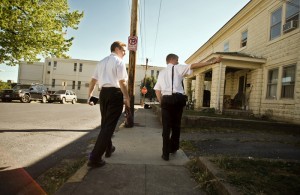
I walked in and off to my left I saw a couple of suits sitting in the living room and I’m thinking, oh boy, the Mormons are here. I was hungry and I wasn’t in a Mormon talking mood! And so I mentioned that I couldn’t stay long I was just stopping by and I was on my way to get something to eat. I didn’t know anything about Mormons; I was just trying to get out of there.
It is kind of like the Jonah and the whale thing, God was calling me one way and I was trying to go another. No, I was not swallowed by a whale! How could I, she wouldn’t let me out of the house. She said; “I have some nice warm rolls for you!”
So anyway, now I am sitting in her living room. One Mormon was sitting on the couch and the other was sitting on the floor. I asked them who was they’re founder? They said, Joseph Smith. I asked them, when was their church founded and they told me 1830. I then asked them what happened to the church between the death of last Apostle and 1830 when your church was founded. They said that the church had apostatized and there was no true Church in all of those centuries.
This came as a surprise to me because I had never heard anyone say there was no true church lasting for centuries, up to the point of the foundation of their particular Church. I mentioned to them that it was Jesus who said, the gates of hell would not prevail against the Church. “And so I say to you, you are Peter, and upon this rock I will build my Church and THE GATES OF THE NETHER WORLD WILL NOT PREVAIL AGAINST IT. I will give you the keys to the Kingdom of Heaven. Whatever you bind on earth shall be bound in Heaven, and whatever you loose on earth shall be loosed in Heaven” (Mt. 16:18-19).
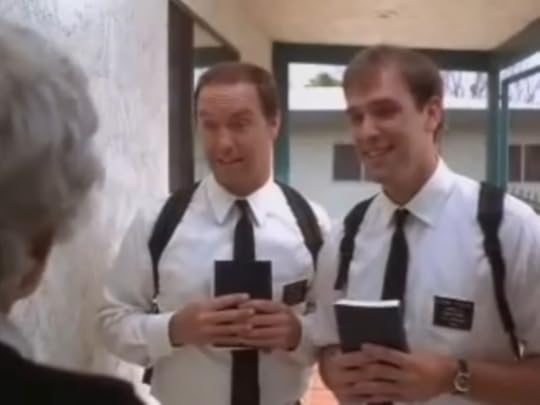 If the Church had apostatized and there was no one true Church for all those centuries then the Bible was wrong. This would mean that the gates of hell did prevail against the Church and Jesus is either a liar or sadly mistaken and that I could not accept either of these scenarios. So then I asked them, what they had to say about this. The Mormon sitting on the floor looked up at the other and said; “You can answer this one!” Of course they didn’t have an answer. Afterward my friend admitted she had said a prayer that I would show up.
The point is this; there has to be ONE true Church established by Jesus Christ in every century or the gates of Hell did prevail against it, in those centuries and the Bible and Jesus are wrong.
In the Apostles Creed it says; “I believe in ONE holy catholic and Apostolic Church.” This is the same creed that is said in Catholic, Lutheran and some other Protestant Churches. But, was the Church really ONE as we say in the Apostles Creed? Or was the Church an abstract invisible reality that embraces a multitude of contradictory theologies? What does the Bible say?
Jesus said; “May they all be ONE, just as, Father, you are in me and I am in you, so that they also may be in us, so that the world may believe it was you who sent me. I have given them the glory you gave to me, that they may be ONE as we are ONE. With me in them and you in me, may they be so perfected in UNITY that the world will recognize that it was you who sent me and that you have loved them as you have loved me” (Jn 17:21:23).
The Apostle Paul said; “Take every care to preserve the UNITY of the Spirit by the peace that binds you together. There is ONE Body, ONE Spirit, just as ONE hope is the goal of your calling by God. There is ONE Lord, ONE faith, ONE baptism, and ONE God and Father of all, over all, through all and within all” (Eph 4:3-6).
I can believe Jesus and Paul who say the Church must be ONE or I can believe those who say the Church is a multitude of contradictory theologies. The Church was and is ONE; and it has been ONE in every generation up to the present.
The post A Friend Meets Mormon Missionaries appeared first on Defenders of the Catholic Faith.
Stephen K. Ray's Blog

- Stephen K. Ray's profile
- 27 followers

