
Stephen K. Ray's Blog, page 17
January 6, 2025
What is historically wrong with this picture of Mary and her mother Ann?
This is a lovely devotional picture of Anne and Mary and their qualities. But, just for fun, can you spot historical inaccuracies in the picture?
I will post my thoughts on this picture in a day or two. But take a whack at it yourself. If you have ideas, you can post them on X at https://x.com/JerusalemJones/status/1876270576198926619
Others have been giving answers there all day 
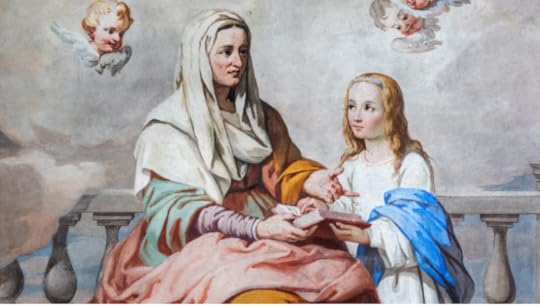
The post What is historically wrong with this picture of Mary and her mother Ann? appeared first on Defenders of the Catholic Faith.


January 1, 2025
Jesus was a Jew! His Parents too! What does that mean to you?
My article “Jesus was a Jew” was published in Catholic Answers magazine this week.
I think you’ll find it helpful and interesting, especially if you want to understand Jesus himself and our Catholic faith. Enjoy!
Read Here or listen below!
https://catholicconvert.com/wp-content/uploads/2025/01/amazon_polly_144302.mp3****************************
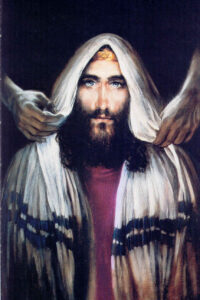 “Jesus was a Jew. This fact slips past most casual readers of the New Testament, but it is crucial to understanding Jesus and the book written about him—the Bible. Unfortunately, we are far removed from the ancient world of Roman-occupied Judea and the life of Israel in which Jesus lived.
”Let me ask you a few questions. Were you born and raised in Israel? Did you study the Torah with the rabbis from an early age? Have you traversed the rocky hills and dusty paths to celebrate the mandatory feasts in Jerusalem?
“Do you speak Hebrew, Greek, and Aramaic? I have not found many in my Catholic circle of friends who have. Without this background, we are at a disadvantage when studying the word of God as contained in the Bible.
When we open the pages of our English Bible, we find a Jewish book! The setting revolves around the country of Israel and the worship of Yahweh. With one exception, the more than forty biblical writers were all Jews, and the one exception was most likely a Jewish proselyte. (Do you know who the only non-Jewish author in the Bible is? I’ll give you a few hints: he was a physician, one of St. Paul’s co-workers, and he wrote the first history of the Church.)“But the point is, how can we understand the Bible and the teachings surrounding Jesus without understanding his people, his culture, and his Jewish identity?”To read the rest of the article, click click here
The post Jesus was a Jew! His Parents too! What does that mean to you? appeared first on Defenders of the Catholic Faith.
December 30, 2024
Was Jesus a Palestinian, Illegal Alien and Born to a Homeless, Unmarried Mother?
 Every Christmas we get swamped with all kinds of crazy ideas — attempts to debunk Jesus, Mary, Israel and the Catholic Church.
This year we have heard repeatedly that Jesus was a Palestinian. Even scholarly works seem to assert the same.
Was Jesus a Palestinian?
The answer is, NO! The word “Palestinian” originates from the word Philistine, and it was applied by Rome in teh 2nd century to the land of Israel — Galilee, Samaria, and Judea. Jesus, living in the first century was a Judean Jew, not a Palestinian. He would’ve never heard the Roman imposed word in his lifetime. Anyone who uses that word in realtion to Jesus is being anachronistic and should be corrected.
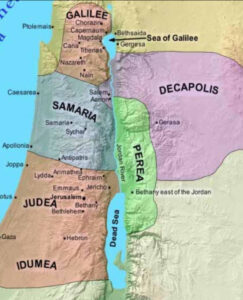 The land surrounding Jerusalem, the land known to Jesus was called Judea. We find the word “Palestinian” zero times in the Bible, but we find the word Judea 45 times. If one wants to be historically and biblically accurate, they would never say Jesus was a Palestinian Jew. They would say he was a Jew from Judea. In fact, the word Jew itself originates from the word Judea.
Was Jesus born to an unwed mother?
Yes and no. Anyone who says that Jesus was born to an unmarried woman should be more careful and precise. Even today in the Middle East betrothal means legally married, though the spouses have not yet moved in together. Marriage is a two-step process. To be betrothed is to be legally contractually married. However, about a year later the groom comes for the bride and takes her into his home (Matt 25:10). Today there is a ceremony that that seals the deal. This is hardly unwed. Mary was not an “unwed mother”.
Were they illegal immigrants?
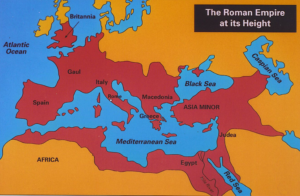 Also no. They had family, in Nazareth, and Bethlehem and in Egypt. There was a large Jewish community in Egypt — modern day Cairo. All of these areas were in one Empire, under the Roman Empire and therefore you could travel along the Roman roads between them “without a passport”. They were hardly illegal immigrants. And when King Herod died, they left their Jewish community in Egypt and went back to their Jewish community in Nazareth.
Be very careful what you listen to. The secular, modern media has every reason to promote their secular propaganda. Too often Christians sadly join them. They have every reason to deceive us in the promotion of their anti-Catholic agenda. They try to deceive for political purposes. They are also ignorant of the facts.
The post Was Jesus a Palestinian, Illegal Alien and Born to a Homeless, Unmarried Mother? appeared first on Defenders of the Catholic Faith.
December 26, 2024
My Namesake’s Feast Day Today – St. Stephen the 1st Martyr
My good parents of fond memory converted from pagan to Christian in 1953. As excited new Baptist parents, they were soon pregnant after 12 years of miscarriage. It was ME.
They had pledged to give Bible names to any upcoming children. And so, my name is Stephen. I wear it proudly — not only to honor this great saint, but it rings with the love of my parents both for me and Jesus Christ.
This image was sent to me from Rome by my good friends Paul and Ellen Badde (author of “The Face of God“). It is from Subiaco Italy. It is my favorite to date.
When I first saw the Chapel of St. Stephen in the Church of St. Paul Outside the Walls, I thought, “Why is St. Stephen’s Chapel so near the bones of St. Paul?Then I remember St. Augustine wrote, “Without the prayers of St. Stephen, the Church would not have had St. Paul.”
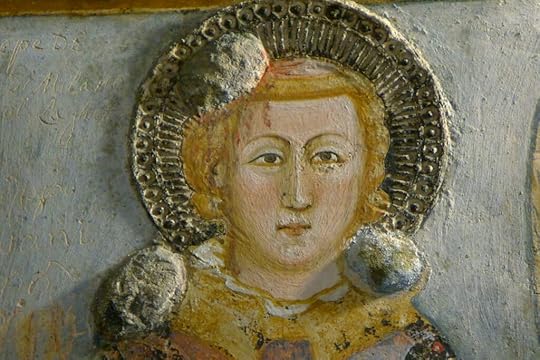
Acts 7:58-60: Then they cast Stephen out of the city and stoned him. And the witnesses laid down their garments at the feet of a young man named Saul.
And as they were stoning Stephen, he called out, “Lord Jesus, receive my spirit.” And falling to his knees he cried out with a loud voice, “Lord, do not hold this sin against them.” And when he had said this, he fell asleep.”
The post appeared first on Defenders of the Catholic Faith.
December 20, 2024
People and Things at the Nativity in Bethlehem – fun podcast
This week I sat down with Bryan Topham to discuss all the people and things swirling around the nativity in Bethlehem.
Not just Mary and Joseph, but also a donkey, a star, Magi, the Devil, angels, a manger and more. I shared details on 20 different players in the drama of Christ’s birth.
You can watch the show here along with show notes and links.
The post People and Things at the Nativity in Bethlehem – fun podcast appeared first on Defenders of the Catholic Faith.
Grandson Joshua Ray’s Wedding – Wow! Time Flies!
Wedding of our grandson Joshua Ray. Time flies! Pictures from the wedding. Son Jesse’s 6 boys, Josh & Katy, Our family of 32, Janet and I with our four children.
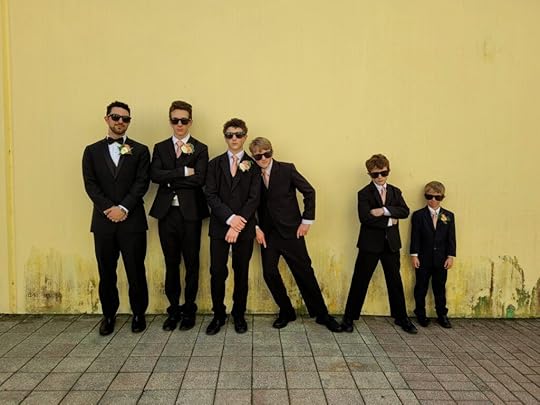
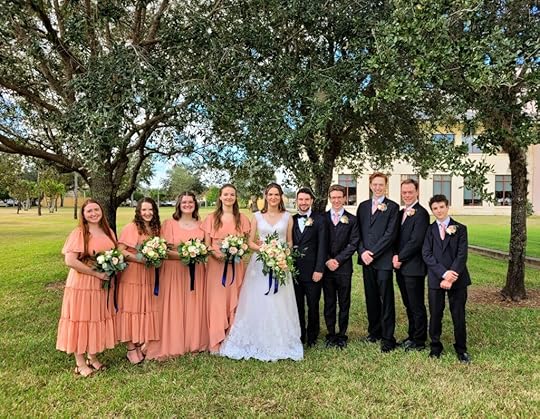
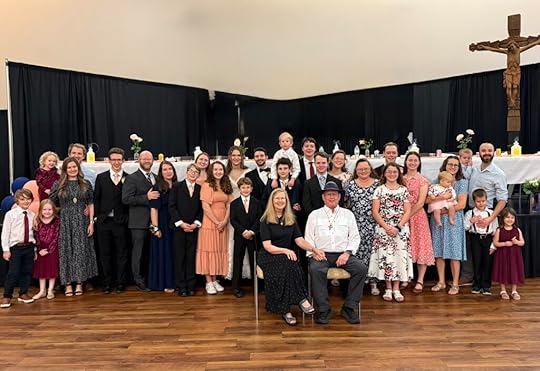
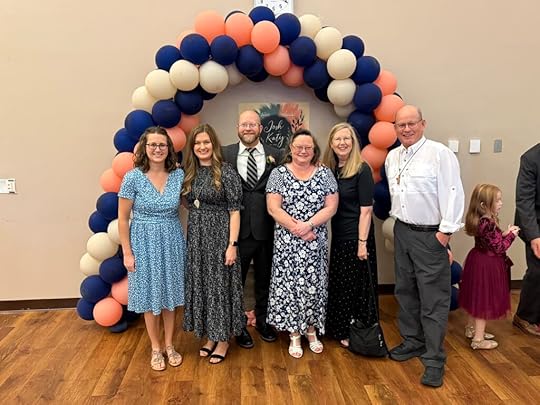
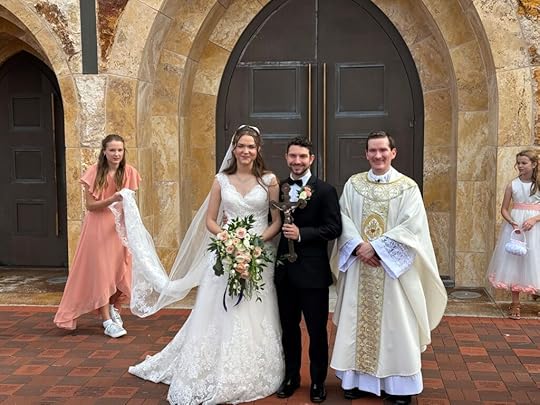
The post Grandson Joshua Ray’s Wedding – Wow! Time Flies! appeared first on Defenders of the Catholic Faith.
December 19, 2024
Kneeling and Genuflecting a No-No? We were verbally reprimanded at Communion
With Cardinal Cupich’s recent letter forbidding the faithful from kneeling at Communion, I thought I would reshare our experience and the letter I wrote in response.
Several years ago my wife and visited a new parish (new for us). I genuflected before receiving the Blessed Sacrament. Believe it or not, I was verbally reprimanded by the Extraordinary Minister while he handed me the host. After Mass, I spoke with the priest about it and he also reprimanded me. He said we could not kneel or genuflect in “his church”. I explicitly told him it was not “his church” and that they were both wrong. I wrote the letter below to explain.
***************************************************
Dear Father:
My wife and I had the pleasure of attending Mass at your parish for the first time on Saturday evening, May 15. I found the Mass very reverent and your homily delightful and instructive. I appreciated the explanations about the Council of Jerusalem and the authority of Peter and the need for flexibility within the bounds of the Catholic Church’s teaching. I told you afterwards that I enjoyed your homily very much.
Having said that, I would like to comment on one other matter—namely, being confronted in a rather brusque way about genuflecting while approaching to receive the Eucharist on our first visit to your parish. In addition, I was inappropriately “corrected” by an Extraordinary Minister while receiving communion. The GIRM 160 indicates that even priests should not argue with communicants about posture when they are receiving Communion, saying that they should provide ‘proper catechesis’ (no doubt when the communicant is not in the Communion line). Consequently, it is certainly inappropriate for an extraordinary minister to do so.[i]
First, I am not ignorant of the GIRM’s latest instruction about bowing in reverence before receiving as the norm. The GIRM establishes the norm but in doing so does not forbid other appropriate signs of reverence, including genuflecting or receiving while kneeling. If the GIRM specifically mentions that kneeling is allowed, as it does, it must certainly not forbid the lesser action of genuflecting, especially if it is done in the line prior to actually stepping up to receive. In fact, the GIRM gives specific instructions that even if one kneels they are not to be denied the Eucharist.
Colin B. Donovan, STL (degree received from Angelicum in Rome ) commented on the matter by saying:
“The bishops have set the bow as the norm. They have not forbidden kneeling or genuflecting. They cannot, as the Roman interpretations of the norms have made clear. Genuflection is a one knee kneel. It is contained within the statements permitting kneeling, since it is a lesser reverence than kneeling, though stronger than bowing. Standing and bowing replaces kneeling, as the original legislation authorizing bishops’ conferences to choose standing over kneeling makes clear. . . . Indeed, the real issue is not whether genuflecting is allowed but whether the USCCB having chosen standing and bowing as the norm criminalizes or makes disobedient those who desire to do something else. To that question Rome has answered an emphatic no, with respect to kneeling and implicitly genuflecting, and warned the clergy about making it seem so.”
It does not necessarily follow that since bowing is the norm that genuflecting is therefore criminalized.[ii] Though this can potentially be confusing for Catholics, I would suggest that the recent Redemptionis Sacramentum[iii] was promulgated to clarify matters. In no. 90 it says: “The faithful should receive Communion kneeling or standing, as the Conference of Bishops will have determined”, with its acts having received the recognitio of the Apostolic See. ‘However, if they receive Communion standing, it is recommended that they give due reverence before the reception of the Sacrament, as set forth in the same norms’” (176). Also, “Therefore, it is not licit to deny Holy Communion to any of Christ’s faithful solely on the grounds, for example, that the person wishes to receive the Eucharist kneeling or standing” (no. 92).
As I understand it, even though the American norms specify that the sign of respect before receiving is a bow of the head, when the Sacred Congregation for Worship and the Discipline of the Sacraments was queried about whether continuing to genuflect was forbidden, they responded in the negative. Consequently, if genuflecting is not specifically forbidden by Rome, the burden of proof to the contrary certainly falls on the one trying to enforce such a non-existent prohibition.
“The way Americans read law; the norms would be interpreted strictly. But that interpretation is misleading. The law has to be understood in the sense in which it is intended by Rome (which approved the law and whose interpretation of the law is definitive), and Romans do not read law the same way Americans do. Americans tend to take a much stricter interpretation of law that admits of no exceptions unless they are stated in the text itself. Vatican officials, however, often understand laws in a more permissive way that allows for unwritten exceptions” (Jimmy Akin). There are a number of examples I could cite that refer specifically to posture during Mass (e.g., See attachment #2).
Again, genuflecting is a lesser act than kneeling and kneeling is specifically mentioned as an allowed and acceptable posture for receiving Holy Communion. I know I was not denied the Eucharist on Saturday, but even being reprimanded during reception and after Mass for something not disallowed—but even approved of—could prove to be a problem. But the real matter is that if the Holy See has allowed reception by standing or kneeling, genuflecting ahead of time is certainly not a violation of Church law.
I am a ten-year convert to the Catholic Church and have always genuflected out of my great reverence and love for the Eucharist and the Church.[iv] I have always been encouraged to do so. For me it is a personal way of demonstrating my love and utter reverence for the Eucharist, the liturgy, and the Church. I have genuflected while receiving before our own presiding bishop many times (as lately as last week), twice with the Pope in a private Mass; with Cardinal Ratzinger, Cardinal Schonborn, Cardinal Wamala, Cardinal Vidal, Archbishop Foley and Bertoni in Rome, the Patriarch of Jerusalem, the Auxiliary bishop of Jerusalem, the archbishop of Smyrna (St. John’s successor), two Papal Nuncios, and many other knowledgeable and holy priests, bishops and archbishops, including bishops in the United States. Never before have I been reprimanded for expressing my reverence to Our Lord in the Eucharist.
Sometimes I think the reprimand should be for those who refuse to show any reverence toward the Eucharist, but then again that is just my humble opinion.
I understand that you are trying to instruct your community on the norms for worship and I appreciate your efforts and commend you for it. I would suggest though, that tact is a virtue when instructing the faithful and that the postural leniency allowed and protected by Rome should be also allowed and protected in the parishes.
Other than that, as I commented before, I found you very impressive and knowledgeable, celebrating a very reverent liturgy. I plan on visiting your parish again since it is so close to our new home. I look forward to more excellent homilies.
Thanks for being a priest and serving Our Lord and the Church in such a marvelous capacity. I hope this is letter is not taken in an offensive or challenging way. It is simply an honest communication and with the hope we can be friends in the future. I pray for all of God’s blessings on you and your ministry.
Respectfully yours in Christ and in His Church,
Steve Ray
*********************************************************************************
To read a recent response to Cardinal Cupich, Amy Welborn has written an excellent piece “Up … Off Your Knees!“
Attachments:
Congregation de Cultu Divino et Disciplina Sacramentorum
Prot. n. 1322/02/L
Rome, 1 July 2002
“The Congregation in fact is concerned at the number of similar complaints that it has received in recent months from various places, and considers any refusal of Holy Communion to a member of the faithful on the basis of his or her kneeling posture to be a grave violation of one of the most basic rights of the Christian faithful, namely that of being assisted by their Pastors by means of the Sacraments (Codex Iuris Canonici, canon 213). In view of the law that “sacred ministers may not deny the sacraments to those who opportunely ask for them, are properly disposed and are not prohibited by law from receiving them” (canon 843 ¶ 1), there should be no such refusal to any Catholic who presents himself for Holy Communion at Mass, except in cases presenting a danger of grave scandal to other believers arising out of the person’s unrepented public sin or obstinate heresy or schism, publicly professed or declared. Even where the Congregation has approved of legislation denoting standing as the posture for Holy Communion, in accordance with the adaptations permitted to the Conferences of Bishops by the Institutio Generalis Missalis Romani n. 160, paragraph 2, it has done so with the stipulation that communicants who choose to kneel are not to be denied Holy Communion on these grounds.”
Jorge A. Cardinal Medina Estévez
Prefect
+Francesco Pio Tamburrino
Archbishop Secretary
********************************************************
“[That] the Roman Curia, and in Europe in general, they take a much more relaxed view of posture than we do . . . This is something that people with a sound formation in liturgical law have known for a long time, however it recently became possible to document it. In a response issued June 5, 2003, the CDW issued a response which stated:
Dubium: In many places, the faithful are accustomed to kneeling or sitting in personal prayer upon returning to their places after having individually received Holy Communion during Mass. Is it the intention of the Missale Romanum, editio typica tertia, to forbid this practice?
Responsum: Negative, et ad mensum [and for this reason]. The mens [reasoning] is that the prescription of the Institutio Generalis Missalis Romani, no. 43, is intended, on the one hand, to ensure within broad limits a certain uniformity of posture within the congregation for the various parts of the celebration of Holy Mass, and on the other, to not regulate posture rigidly in such a way that those who wish to kneel or sit would no longer be free.
This response deals specifically with the question of kneeling after receiving Communion, but it also states Rome’s general interpretation of the posture provisions of the GIRM for the laity, which is that the provisions are “to ensure within broad limits a certain uniformity of posture within the congregation for the various parts of the celebration of Holy Mass, and on the other, to not regulate posture rigidly” (Jimmy Akin).
Endnotes:
[i] If we are to hold strictly and legalistically to the instructions about distribution of the Eucharist, the Extraordinary Minister of Holy Communion should not have spoken words to me other than those prescribed. Note the USCCB’s Committee on the Liturgy instruction in its Extraordinary Ministers of Holy Communion at Mass where it is specifically forbidden to add any words other than “The Body of Christ” and “The Blood of Christ”.
[ii] Also, on a practical matter, I genuflect prior to stepping up to receive – while the person in front of me is still receiving. This way I do not hold up the line. By the time the person in front of me has moved aside, I am standing and stepping up to bow and receive. In this way I full follow even the norm if strictly interpreted.
[iii] This Instruction, prepared by the Congregation for Divine Worship and the Discipline of the Sacraments by mandate of the Supreme Pontiff John Paul II in collaboration with the Congregation for the Doctrine of the Faith, was approved by the same Pontiff on the Solemnity of St. Joseph, 19 March 2004, and he ordered it to be published and to be observed immediately by all concerned. From the offices of the Congregation for Divine Worship and the Discipline of the Sacraments, Rome, on the Solemnity of the Annunciation of the Lord, 25 March 2004. Francis Card. Arinze, Prefect. Domenico Sorrentino, Archbishop Secretary .
[iv] Early on I read St. Augustine’s words which follow. They touched me deeply and based on encouragement from very good priests, we have always genuflected prior to stepping up to receive. St. Augustine wrote, “He took flesh from the flesh of Mary. He walked here in the same flesh, and gave us the same flesh to be eaten unto salvation. But no one eats that flesh unless first he adores it . . . we do sin by not adoring.”
The post Kneeling and Genuflecting a No-No? We were verbally reprimanded at Communion appeared first on Defenders of the Catholic Faith.
December 18, 2024
Disciplining Children in the Bible – my talking points and show link for Son Rise Morning Show
Every Tuesday morning at 7:35 AM I do a live show on Sacred Heart radio entitled “Things in the Bible”. We’ve been doing the show for almost 3 years now.
Today we did the topic of “Children and Discipline in the Bible” and it went very well so I thought I would share my Talking Notes and a link to the archived show.
Here is a link to my Talking Notes and a link to the 10-minute interview is below.
The post Disciplining Children in the Bible – my talking points and show link for Son Rise Morning Show appeared first on Defenders of the Catholic Faith.
December 13, 2024
Heading to our grandson’s wedding
My firstborn son’s first born son is getting married on Monday.
Today Janet and I are flying to Ave Maria Florida for the wedding of our grandson Joshua Ray. Time flies. More and pictures later. Then and now…
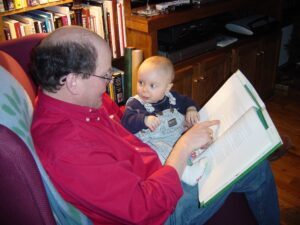
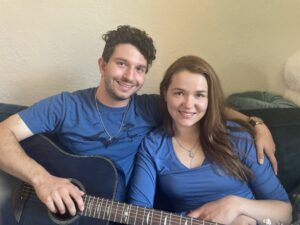
The post Heading to our grandson’s wedding appeared first on Defenders of the Catholic Faith.
Stephen K. Ray's Blog

- Stephen K. Ray's profile
- 27 followers

