Paula Stone Williams's Blog, page 5
July 25, 2024
It Still Isn’t Easy

I believe Joe Biden’s presidency will be seen as one of the greatest in the history of our nation. His accomplishments are many, and his willingness to place nation over self is extraordinary – almost unheard of in today’s world. I am cautiously hopeful about Kamala Harris. Why cautious? Let me explain.
I was speaking on the phone with a technical expert the other day and he mistook my voice for that of a man. On the phone, It happens sometimes. In this case, I decided to take advantage of it. I knew if my voice was clearly that of a woman, I would likely be dismissed if I spoke as someone with knowledge about computers. I knew as a man I would be less likely to be challenged, so I went with Paul’s voice. To no surprise, the expert listened intently and quickly offered a solution that respected my knowledge. It has been a long time since that happened.
Much to my chagrin, women are still not taken seriously. As I have often said in my speeches, “Apparently I became stupid when I became a woman.” I cannot have multiple gifts, only one. I cannot have broad knowledge about a lot of subjects. If I am allowed to be an expert at all, it is about a single subject.
For a lot of folks, including many conservative women, Kamala Harris is too strong, too self-assured, too ambitious, and too aggressive. It’s 2024, yet I can still type those words, and not ironically. I deal with it all the time, and when I contrast my experience over the last ten years with my experience in the decades before, it astounds me.
People think we choose to transition genders because we think there is some cultural benefit. Uh, think again. Why would anyone give up so much power unless they felt called to do so? I will never again have the privilege and authority I had as a man.
Occasionally someone will speak positively about me as a “girl boss” type, strong and confident. They speak it as a compliment. And while that serves me positively in a few environments, it works against me in most. Too many men are threatened by a strong woman. More than a few women are threatened too.
Kamala Harris will probably choose Pennsylvania governor Josh Shapiro as her vice-presidential nominee, should his background check come back clear. Gretchen Whitmer would also be an excellent choice, but from where I sit, I cannot see that happening. Two strong women on one political ticket?
I live in Boulder County, Colorado, one of the most liberal counties in the nation. All three of our county commissioners are women. Since I’ve lived here, every Lyons, Colorado mayor has been a woman. I love living in Lyons and Boulder County. I currently serve as a member of the Lyons Board of Trustees and Mayor Pro Tem. The fact that I am a woman (and a transgender woman at that) has not been used against me, but I am not living under any illusions. If my name was still Paul, I do not doubt that I would be taken more seriously. I’ve lived in both genders. Almost nothing is easier as a woman.
I am encouraged by the enthusiasm I see for the Harris campaign. I have no doubt she is more qualified for office in every way than her opponent. Still, I worry. Unlike Germany, Finland, Norway, Iceland, Taiwan, and New Zealand, all of which had women as heads of state during the Covid crisis, all of whom did remarkably well, America is still pretty misogynistic. Equality might be in the Declaration of Independence, but in reality we remain a patriarchal nation. Hopefully, November 6 changes that.
And so it goes.


July 19, 2024
Too Old?

Most of the time I do not hide the fact that I am 73 years old. Most people think I am a good bit younger, a compliment I greatly appreciate, but the fact is that I am 73. At this age I’m not sure I need to be running anything other than a road race.
It is true that I run 7 days a week and have barely slowed down my travel schedule, even in today’s awful airport experience. I rarely take elevators unless the building has more than six floors, and I hold down five part-time jobs. Still, I don’t think I should be running anything. The closest I come is in my job on the town board.
It is not because I am not able. It’s that I’m a Baby Boomer and in great numbers we Boomers are refusing to get out of the way. Joe Biden is from the Builder Generation. Except for Rupert Murdoch and a handful of others, most of the Builder Generation folks got out of the way a long time ago.
It is time for younger generations to take over. Gen X, the Millennials, Gen Z, – they are all chomping at the bit to lead, except that we won’t let them. You saw the same debate I saw. That was an old man who was lost on that stage. I think he is the finest president in a generation, but at 81, it is time for him to step aside.
In the church world I inhabited, CEOs and lead pastors usually left somewhere between 60 and 65 years of age. I stepped down as CEO at 60 and left the company at 62. Thirty-five years was enough. I intended to stick around as non-executive chair for about 8 more years but my transition abruptly terminated that plan.
I am terribly concerned about the future of democracy in our nation. This election is one of the most important in our 248 year history. If Trump is elected again, I am terribly afraid of the kind of nation my granddaughters will inhabit. My own wellbeing is at stake as well.
I have an acquaintance who is vacationing in the Middle East this summer. I mentioned to her this week that I could not visit that nation. I could be arrested and imprisoned. While I still think it is unlikely, with the current makeup of our Supreme Court, I am afraid if Trump is elected there could be parts of the United States where I could not travel. I’m already terribly uncomfortable in Texas, a state I must pass through frequently. It is telling that I felt much safer in Scotland this spring than I do in the southern United States. Our children and grandchildren deserve a better nation than the one we are leaving them.
I would prefer to see an open Democratic convention, with a limited number of presidential candidates suggested by Barack Obama, Bill Clinton, Nancy Pelosi, Chuck Schumer, and Hakeem Jeffries. I figure the chances of that are pretty slim.
I don’t write about politics much, because outside of my work as Mayor Pro Tem, I am hardly all that knowledgeable. But I have written to my congressman, both of my senators, and the president himself to ask that Biden withdraw from the race. It feels like a civic duty to have done so.
And so it goes.
July 6, 2024
Colonel Paula Stone Williams

I was watching the television show Godless with a friend. In the second episode a character is introduced as a colonel and the de facto mayor of the town says, “Colonel of what?” I turned to my friend and said, “I’m a colonel.” She laughed. I said, “Seriously, I am a colonel. I am an official Kentucky Colonel, you know, like Colonel Sanders of Kentucky Fried Chicken fame. I also met Colonel Sanders once. I wrote about it in my first book.”
When you’ve been alive a certain number of years you have a lot of stories to tell. Some escape being retold, something for which your children are grateful. I’ve not talked about my life as a Kentucky Colonel in a very long time
I’ve always loved fried chicken. My grandmother’s chicken was the best, my mother’s a close second, followed by Aunt Ruth and Aunt Lela. Way, way, way down the line was the chicken from Colonel Sanders.
We went to a restaurant after church almost every Sunday when I was growing up in Akron, Ohio. One Sunday a brand new sit-down restaurant had opened in a shopping center in Fairlawn. There were tables and waiters and whatnot. As we sat eating chicken, a white Cadillac pulled up and Colonel Sanders stepped out and came into the restaurant. He went from table to table asking people how they liked the chicken. He asked my mother and she lied and said, “It’s delicious.” I knew it was a lie because I knew it was not delicious. It was just okay. In fact, in my book of stories, Laughter, Tears, and In-Between – Soulful Stories for the Journey, I titled that particular story, “Just Okay Chicken.”
We didn’t know anything about Colonel Sanders at the time, other than that his picture was on the sign in front of the restaurant. We didn’t know he was from Indiana, not Kentucky, that he had a history of numerous business failures before hitting it big with KFC. We didn’t know he was made a Kentucky Colonel in the year more colonels were named than any other in history. We just knew he got out of a white Cadillac and wore a white suit with a black western bow tie. He didn’t speak to me, nor I to him, children being expected to be silent and all.
As for my own declaration as an Honorable Kentucky Colonel, it happened sometime around the early to mid-90s. I had a friend who was the Assistant Secretary of State of Kentucky and he nominated me. The official declaration arrived shortly thereafter, signed by the governor and the secretary of state. I have it in a box somewhere in the basement. It’d be kinda fun to get it out and put it on the wall in my office. You know, as a conversation starter.
“Just Okay Chicken” was a lot of reader’s favorite story in my first book. I have a few copies of the book left. I’m saving them for my granddaughters. You can find the book on Amazon. I know because I just looked it up. Since it was published 23 years ago it’s out of print, but you can buy a used copy for eight bucks if you find yourself oddly driven to read 48 short stories from my previous life.
Do I eat Kentucky Fried Chicken anymore? Nope. I’d prefer my arteries not stand on end, hardened like Kentucky limestone. Occasionally I do dream about my grandmother’s fried chicken. She’d pick out a chicken from the pen by the barn; my grandfather would cut its head off on a tree stump and the chicken would take off running around the yard, headless. I remember one chicken that went clear around the side of the house, across the driveway, and into Grandma’s garden before she finally gave up the ghost. My brother always hid when the chicken’s heads were cut off. I watched with delight, much as I enjoyed the poems of Edgar Allen Poe later in my childhood. I guess there was a sadistic streak that has since gone underground.
Grandma never let me watch the de-feathering and whatnot. I didn’t see the chicken again until it was frying up in a larded pan. If allowed, I ate four pieces, a leg, both wings, and a thigh. Come to think of it, when I was around she probably had to fry more than one chicken. The chicken dinner would be followed by blackberry cobbler or maybe a butterscotch pie. Grandma Stone seemed to believe her calling was to satisfy the gustatory cravings of a four-year-old.
Later in life I read that Colonel Sanders was really into astrology. The sale of the company to John Y. Brown, who later became the governor of Kentucky, was helped along by Brown’s knowledge of Colonel Sander’s fixation with the stars, his offer being made when the stars were aligned just so. That was clever.
When introduced to speak at religious gatherings, I’m usually referred to as Reverend Doctor Paula Stone Williams. I never request that introduction, but it comes with the territory. What if I asked to be introduced as Reverend Doctor Colonel Paula Stone Williams? Too ostentatious? Yeah, there’d probably be somebody in the back who would say, “Colonel of what?”
And so it goes.
June 24, 2024
About This Calling

Fairy Pools, Isle of Skye, Scotland
I speak frequently about the call onto the Hero’s Journey, common to every age, language, ethnicity, and people group. An ordinary citizen is called onto an extraordinary journey onto the road of trials. Initially they reject the call because, hey, it’s the road of trials. But now you are miserable because you know you’ve been called and you’ve rejected the call. A spiritual guide comes into your life and gives you the courage to answer the call onto the Hero’s Journey, and sure enough, you’re on the road of trials. Then things get worse and you find yourself completely lost in a deep, dark cave.
This is when you can be quite sure it is in fact your call, because as David Whyte says in Consolations, “A true vocation calls us out beyond ourselves; breaks our heart in the process and then humbles, simplifies and enlightens us about the hidden core nature of the work in the first place.”
It was a given from an early age that I would go into ministry, the family business. I would attend the college at which my uncle was the president and my father was on the board of directors. Then I would serve a church of my denomination, as my father had done. I had other ideas. I was a radio announcer and had dreams of being a television anchor, but those dreams did not stir deeply enough within to change my course heading. The compass heading was hard-wired, generational. My father’s mother, gone before I was born, was a severe woman with a superego of stone, capable of setting a compass, even from the grave.
I did rebel in my own way, I suppose. Though I proved to be a pretty capable preacher, I refused to preach and sang instead, forming my own bands that made five albums before throwing in the towel to the demands of fatherhood and financial stability. Still, I never pastored a local church until 2018. I directed a large religious non-profit, chaired the board of a television network, served as the editor-at-large of a religious magazine, served on the preaching team of a couple of megachurches, but I resisted being a local church pastor.
Nevertheless, I did discover rather quickly that ministry, broadly defined, was in my genes. By my junior year of college I was asking the kinds of theological questions that annoyed the conservative professors and invited private meetings with the younger ones. Encouraging my inquisitive spiritually-curious mind, they pointed me in the direction of a mentor who taught philosophy at an eastern university. My family doctor introduced me to my other mentor, a retired Roman Catholic seminary rector with a couple of PhDs and the bright eyes of wisdom.
Over a quarter of a century they both guided my journey, passing on just a couple of years apart, leaving me the mentor who brought inquisitive young minds into my office to recommend books not suggested at evangelical seminaries.
Even as a child I questioned the traditional notion of heaven. In my twenties I read Evidence that Demands a Verdict and found it did not demand a verdict. I read Hans Küng’s, Does God Exist? and found that on the final page the question mark remained. I found insight in Francis Schaeffer’s, He Is There and He Is Not Silent, but the older I became, the more I suspected he is awfully silent.
Ministry, broadly defined, broke my heart. Once I became a local pastor I found that ministry narrowly defined also broke my heart. The local church is a messy affair, sure to bring you to your knees and make you wish you had decided to deliver the US mail instead of become a pastor. And yet there was Stonehenge, the Pyramids, the carved bodies of Rapa Nui, and all the other evidence that shows we have always preferred working out the meaning of life in community, and is it really such a bad thing to dedicate one’s working life to such an endeavor?
Today I am still pulled to my calling and the complex, mysterious, and ever expanding nature of its hold on me, not unlike the Big Bang, growing larger, closer and paradoxically more distant and miraculous with the passing of time.
Do I still consider myself a Christian? Yes, I do. I continue to be endlessly fascinated with the teachings of Jesus, though the notion of his bodily resurrection is of little fascination to me.
As Whyte writes, I have come to find that I did have what I needed from the beginning, an intelligent curiosity, an openness to mystery, and a confident conviction of the divine nature of Love, which does win, you know.
With that knowledge, my calling continues, wiser, softer, more encompassing, whether staring at the Fairy Pools of Skye or the Old Man of Storr, I see the water and rocks cry out at the wonder of it all and I know this calling was mine all along. I came to it kicking and screaming as a young person. Nowadays I rest in it, humble and curious as ever.
And so it goes.
June 17, 2024
Truth and Honesty
It is alarming to observe the rapid decline of the notion of truth. What started with Foucault has become a perverse tragedy in the era of Donald Trump. The emerging perspective is that truth is always a construct, never reliable, never objective. While I agree there is no such thing as objective truth (Quantum Theory’s Observer Effect) it does not mean we cannot, through rigorous intersubjective discipline, get somewhere close to objective truth.
Unfortunately, we are way beyond that. Donald Trump has taught us if you repeat a lie often enough, people believe it. We could lose our nation over that awful reality. But here’s another question I have been mulling over. What is the relationship between honesty and truth?
My mentor, the late philosophy professor Byron Lambert, said, “It is hard to tell the truth and it is hard to tell the truth.” In other words, it is difficult to discern the truth, and difficult to speak it. That is where honesty comes in.
David Whyte, in his book Consolations – The Solace, Nourishment, and Underlying Meaning of Everyday Words writes beautifully and unsettlingly about honesty:
Honesty is reached through the doorway of grief and loss. Where we cannot go in our mind, our memory, or our body is where we cannot be straight with another, with the world, or with our self.
The fear of loss, in one form or another, is the motivator behind all conscious and unconscious dishonesties: all of us are afraid of loss, in all its forms, all of us, at times, are haunted or overwhelmed by the possibility of a disappearance, and all of us therefore, are one short step away from dishonesty.
Every human being dwells intimately close to a door of revelation they are afraid to pass through. Honesty lies in understanding our close and necessary relationship with not wanting to hear the truth. Honesty is not found in revealing the truth, but in understanding how deeply afraid of it we are.
The ability to speak the truth is as much the ability to describe what it is like to stand in trepidation at this door, as it is to actually go through it and become that beautifully honest spiritual warrior, equal to all circumstances, we would like to become.
Honesty allows us to live with not knowing. We do not know the full story, we do not know where we are in the story; we do not know who is at fault or who will carry the blame in the end.
Honesty is not the revealing of some foundational truth that gives us power over life or another or even the self, but a robust incarnation into the unknown unfolding vulnerability of existence, where we acknowledge how powerless we feel, how little we actually know, how afraid we are of not knowing and how astonished we are by the generous measure of loss that is conferred upon even the most average life.
Whyte’s words remind me of Ernest Becker’s book, The Denial of Death, in which he referenced the psychoanalyst Otto Rank. Becker said our greatest fear is that we lose ourselves before we ever really find ourselves. The great human task therefore becomes fashioning some kind of heroism in the face of that greatest of losses. (I finished Becker’s book while I was watching the 1986 World Series in which my beloved New York Mets fashioned their own heroism in the face of what appeared to be certain death. A pleasant memory.)
I heard an NPR report recently in which researchers said if two people observed the same event, for the remainder of that day their descriptions match in most ways. By the next day, however, their descriptions differ significantly. Encoding, storage, and retrieval differ from person to person. Add to that our own fears and wants, and no wonder truth is so elusive and honesty so slippery.
I know of no way through this dilemma but to humbly accept how self-deceptive we all can be. That is the first step. The next is to find the courage and heroism to lean into stringent self-examination and be open to challenge from the outside, while holding onto your human dignity. No small task.
We spend much of our lives avoiding the truth. Therapists say one of the problems with people experiencing depression is that they are too aware of the true nature of things and therefore unable to build the defense mechanisms most folks use to avoid painful truth. Ironic, yes?
I have been puzzling over truth and honesty for a long time. Fraternal twins, they are both too often banished to the bell tower of the cathedral, too painful to look at for more than a few seconds at a time. Which is a shame, because truth will set you free, and honesty will set you right. But first you have to bring them down from the bell tower and invite them into the rectory, where their influence can find its way into the warp and woof of your being.
June 3, 2024
A Reflection on Left Hand Church
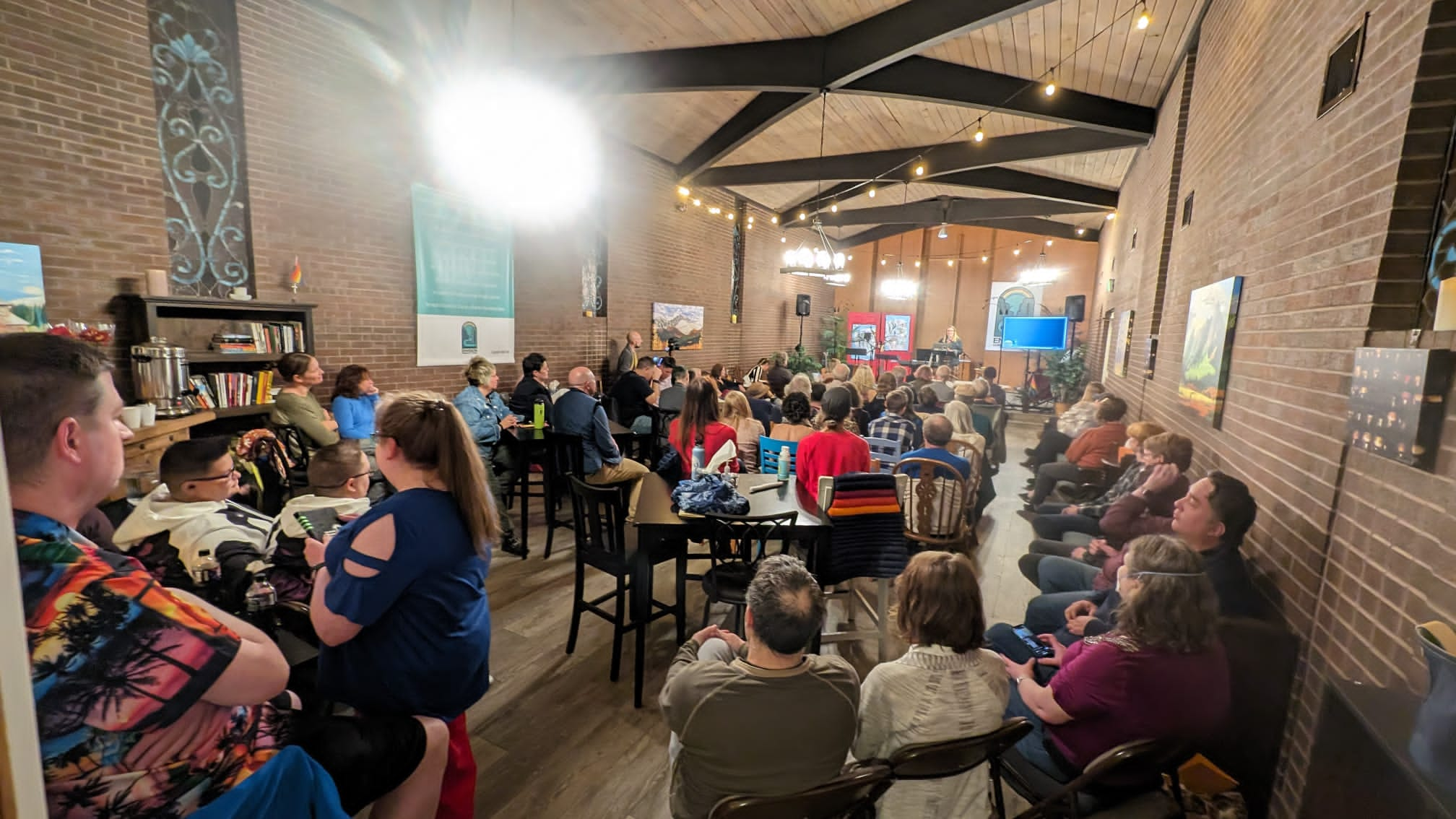
It’s been six months since Left Hand Church (later Envision Community Church) closed. The congregation existed for six years. I was the only one of the founding pastors remaining when the church closed. I was not ready to write about the church’s ending until now.
We did much right. For six years we provided a safe post-evangelical environment in which our community could work together to love God, neighbor, and self. I have no idea how many times I spoke these exact words:
“We exist to love the God who burst on the scene 14 billion years ago in all of God’s complexity, mystery, and ever-expansiveness, rooted in relationship and grounded in love. We want to love our neighbors, especially those who do not look like us. And we want to love ourselves. You cannot do the first two if you cannot do the third.”
With the first sentence I defined the Big Bang and so much more, including the reality that the ultimate building blocks of the universe are not made of matter, but of a pattern of relationships between nonmaterial entities. And if the ultimate building blocks of the universe are relationships, is it much of a stretch to say the greatest force in the universe is love?
In different seasons of the church Jen Jepsen, John Gaddis, Kristie Vernon, John Gaddis, and Nicole Vickey joined me in preaching. Heatherlyn provided our music for all six years. Her husband Jason was our very capable technical director. I thought our worship experience had the kind of quality rarely seen in churches our size.
We enjoyed our relationship with Longmont United Church of Christ, where we were gifted with full-time use of their chapel, including the freedom to completely redesign and remodel it to our liking. Through Kristie Vernon’s design and construction prowess and the help of our members, it became a wonderful worship space for a congregation of our size.
Modestly funded by Highlands Community Church, Denver Community Church, and Forefront Church of Brooklyn, the congregation began from scratch, building a nucleus of members through pre-launch dinners at Jen Jepsen’s home. Aaron Bailey joined Jen and me as the founding co-pastors. At the end of the first two years John Gaddis and Kristie Vernon joined the staff and Aaron and Jen left. Nicole Vickey came on staff the following summer. Kristie and I were the remaining co-pastors when the church ended.
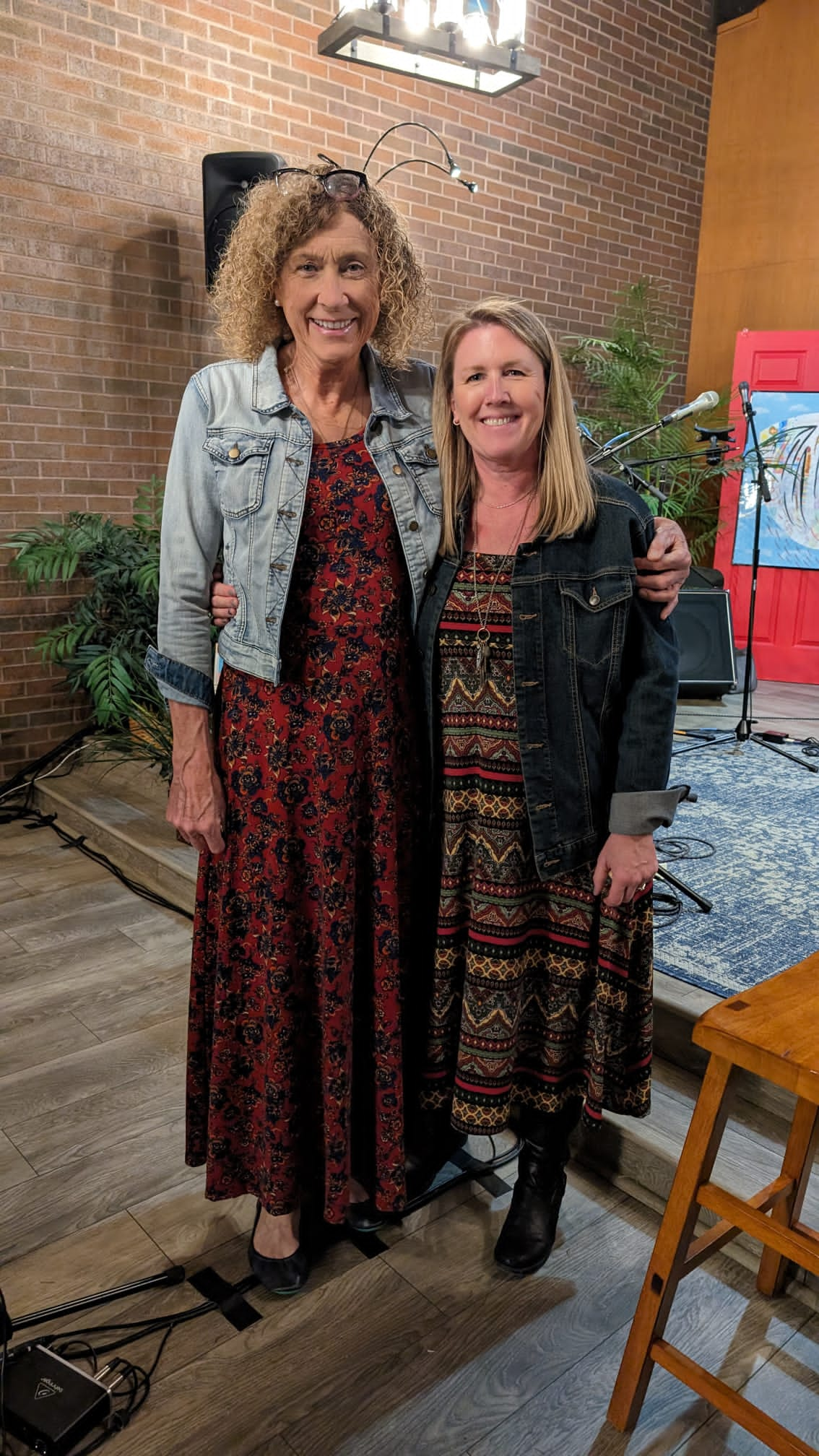
The church had between 100 and 150 people at any given time who called it their church home.
I spent over three decades in church planting before starting Left Hand Church, including a quarter-century as the CEO of a large church planting agency. Since I was in a new gender, I was open to new ways of planting churches, and therefore willing to leave behind convictions from my previous work. As it turns out, there was no good reason to leave those convictions behind. I will never again start a church without incorporating the hard-learned lessons gained over 35 years of church planting.
In all of my days at the Orchard Group, I resisted any attempts to start a church with more than one lead pastor. When people wanted to start a new church with co-pastors I routinely said, “I know you think you are the exception, but it never works.” I was right. It never works.
We began LHC with the same trinitarian leadership structure of Highlands Community Church, one of our founding partners. By the time we ended, two of us remained. While the two of us worked pretty seamlessly, the trinitarian model was too unwieldy. There is always someone who is “more equal” than the others. I believe it is better to name that from the beginning. A vertical leadership structure is not inherently bad, not if the CEO is a good leader with excellent ego strength and low ego need. If I were to start another church, there would be one lead pastor.
We also adopted a board leadership structure similar to Highlands Church. From the beginning, it was a working board, involved in both the ends and means of the church. When I was with the Orchard Group, from 1989 onward we only started churches with a Carver Policy Governance board. The board determined the ends of the church, while the staff determined the means by which those ends were accomplished. The board hired the lead pastor, and the lead pastor hired his or her own staff.
Initial elders were chosen by the initial management team that formed and governed the church for the first three years. Subsequent elders were chosen by existing elders, with staff, since they held in-depth knowledge about the church, having input and veto power over those selected. All elders were expected to give financially to the church and have a demonstrated commitment to the core values of the church. I would never again plant a church in which a Policy Governance board was not a part of the leadership structure from the very beginning. Its absence was a major obstacle at LHC.
While LHC began with a budget one-tenth the size of churches started by the Orchard Group, for the most part our people did give sacrificially. Our members also attended more regularly than the average American churchgoer. However, because we were not able to fund a marketing program from the beginning, and were hampered by the arrival of Covid just two years after we started, we never did gain the critical mass necessary to build a sustainable church. That did not enable us to have the kind of robust children’s, teen, singles, and couples programming possible when a church begins with 200 or more people.
There were other mistakes made at LHC, including not developing adequate HR procedures from the beginning, and not committing to hiring a full-time staff focused on rapid, sustainable growth. On the whole however, LHC was a vibrant and healthy congregation. Kristie and I made the decision to close the church when we knew it was no longer sustainable. It was a painful decision, but we realized the trajectory was unmistakable and under the circumstances, irreversible.
I miss the people of LHC. I miss preaching weekly and caring for people’s pastoral needs. I miss helping people navigate their departure from evangelicalism and the toxic faith that harmed them so. I miss talking with those who had no religious background, and whose spirituality came alive at our church.
I do not miss the drama, both from without and within. I do not miss the attacks from other churches, or the attacks from within. I do not miss the pain that arose from the mistakes I made. Though instructive, it is never pleasant to realize you have missed the mark. The church has always been messy and always will be. In my experience, small churches are messier than big ones. At the Orchard Group, I learned more from our successes than failures. We did not have many failures, which gives one a false sense of confidence, I suppose.
The thing I will miss the most are the “Aha” moments when members grasped a new understanding of a scripture passage that had confused them for years. I miss the ordinances of baptism and the Lord’s Supper, and I miss working with Kristie, John, and Nicole.
For six vibrant years Left Hand Church (later Envision Community Church) touched lives and brought life to a community of people. We had both successes and failures. Mostly, we lived together in community, messy, vibrant, and hopeful. I will always be grateful for my time at LHC.
And so it goes.
May 24, 2024
And I Should Be

It came to me mid-afternoon, after I had run, showered, and returned to my desk. It was an awareness, sudden and certain, that the world had changed in ways that were not personally helpful. I had just lost three speaking engagements at a major university, a Fortune 500 company, and a national women’s conference. For all three, someone at the c-suite level pulled the plug. “No transgender speakers here. Too controversial.”
It began around the time Dylan Mulvaney, a trans woman, was celebrated by the Anheuser-Busch company, not generally known for its embrace of liberal causes. They paid a huge price, stock plummeting after the far right attacked, as they have been doing for years now.
The sociobiologist E. O. Wilson said we are the only one of nine tribal species that believes an enemy is necessary for the tribe to survive, and where no natural enemy exists, we create one. Wilson said if we do not get ahold of that, we lose the species and the planet as we know it.
I transitioned genders in 2014, and in the early years after my transition, America became more and more accepting of trans people. Laws were passed allowing me to change the gender on my driver’s license and passport. Unless I was in evangelical territory, I was almost universally warmly received. The election of 2016 began to change that. After marriage equality had become the law of the land, the far right began looking for a new bogeyman as they became more and more bold in wanting to legislate their view of morality.
As our species has been doing for millennia, they chose a tiny and powerless segment of the population, transgender people, as the focus of their ire. About one in 200 people is transgender. The scripture of not one major religion says a single thing about the subject. (If you’re going to quote Deuteronomy 22:5, unless you are an Orthodox Jew, give me a break.) Nevertheless, the spotlight turned to us.
At first, most of corporate and liberal America rallied to our defense. When HB2 was enacted in 2016 in North Carolina, requiring trans people to use the bathroom on their birth certificate, companies canceled plans to expand in the state, sports teams moved tournaments elsewhere, and there was a general outcry against the law. Billions were lost and North Carolina rescinded HB2.
Last year there were 592 anti-trans laws introduced in state legislatures, 90 of which were signed into law in 22 states. From those same corporations not a peep was heard. The protective curtain that had included the “T” in the LGB community had parted. Transgender people were on our own.
For me, white male entitlement has known no bounds. I always assume good will and opportunity will be in abundance, as they always have. For about the first seven years after I transitioned, thanks to my TED Talks, opportunity did abound. I was speaking all over the world, commanding high fees, companies competing for my limited availability.
Last year the good times began to wane. I am still blessedly receiving great speaking fees. What has changed is the number of engagements booked. Inquiries remain high, but time after time, those at the top do not want to provoke the anger of their customers and constituents on the right.
My first cognizance of this shift was subconscious. When in public, I found myself no longer revealing the fact I am transgender unless it was necessary to do so. Now, a year or two later, I am always nervous when circumstances require revealing my gender identity.
Since Donald Trump’s election, the far right has been emboldened to be smug, boorish, and transphobic. For the first time since I transitioned I fear for my life. When I was in Scotland last month I realized how much has changed. The atmosphere there was about what it was in most parts of the US eight or nine years ago – complete acceptance. But as soon as I was back in the US, I tensed up. Hardly a week goes by without another anti-transgender bill being signed into law. It is not a safe time to be transgender in America.
It is not just us. As hate and bigotry multiply, it is happening again to a group that has been suffering oppression for centuries. I am speaking of the Jewish people. I am no fan of Benjamin Netanyahu and the military atrocities he has wrought, but I am frightened for my Jewish friends who have been caught in the maelstrom and vilified without justification. I see young people swarming on college campuses who have little awareness of the millions of lives lost in the Holocaust, or the circumstances surrounding the modern-day formation of Israel. Misinformation abounds, just as it does with gender dysphoria. People in echo chambers scream ever more loudly without the counterbalance of information based in discernible truth.
It is not a good time to be Jewish in America, or an immigrant, or refugee, or person of color, or transgender. I am frightened, and I should be.
“Give me your tired, your poor, your huddled masses yearning to breathe free.” I will run in the shadow of Lady Liberty when I am in New York this week. As I take step after step through the mosaic of Brooklyn, I will feel comfortable, secure, and safe, just as I am at home running up Stone Canyon Road, nestled in the foothills of the Rockies. But in the vast space between the two I am ill at ease. And again, I should be.
May 15, 2024
And It Was Good

About a year ago my co-pastor and her wife traveled to Scotland at the same time I was in Hawaii. I love Hawaii and all, but their pictures of Scotland spoke to me in ways I could not explain. Right then and there, looking across the coast of Maui, I began planning a trip to Scotland. Jonathan and I would fly into Inverness, drive to the Isle of Skye, then return to hike the Highlands around Loch Ness (and no, we did not see her.)
I just got home from one of the best trips I have ever taken. Jonathan and I were at the TED Summit in Edinburgh in the summer of 2019, a truly epic time of great stimulation. This trip was equally wonderful. Skye was magical. I am one-quarter Scottish (and 99 percent British Isles) and between 1715 and 1760 the harbor at Portree was the last place many last stood on Scottish soil before coming to the American Colonies. That first mass wave of immigrants was about the time many of my ancestors arrived. To be back on that land, carrying the DNA of those determined souls, was a reminder of just how attached we are to those who came before, and those who will come long after we have departed.
I felt like I was home again. I cannot explain the feeling, other than to acknowledge what is already known, that ancient DNA lives within each of us, waiting to be awakened by the sights and smells of home.
Maybe it was being there with my son – our first hiking trip in a couple of decades. We hiked six of the seven days we were in Scotland. We took time off to visit three castles and two distilleries, as well as wander the streets of Inverness.
I always wanted to take an epic trip with each of my three children, but after I transitioned, I questioned if it ever would happen. When Kristie and Mara graced social media with their pictures from Scotland, I knew it was time for the trip with my son that I had always envisioned. Years ago, when he was visiting a friend in Northern Ireland, Jonathan traveled to the Isle of Skye and called me from the top of a mountain. This was before cell phones could take pictures, and he described the most beautiful view he was taking in. Right then I knew that someday he would return, and I would be with him.
Life today is lived from one busy, complicated moment to the next, virtually nonstop. This trip was a chance to put life in the context of an ancient culture that represents most of my DNA, and take in the truth that in our brief time on this planet, we change it irrevocably.
The was a wonderful trip, everything I hoped it would be. Life is good, and if we are patient and persistent, it is also redemptive.
And so it goes.
April 23, 2024
Religious and the Hemispheres of the Brain

This week we move to part four, the final post on maintaining balance. I’ve written about the differences between left and right brain functioning, including differences between the sexes. Today we look at how this has played out in the Christian religion.
For 1500 years Christianity was fairly balanced between right brain and left, though you could make an argument there was a heavier emphasis on the right hemisphere. That makes sense, since our species from its inception has been more right brain than left. The focus was on the numinous, the experience of God more than knowledge about God.
In the modern age, the age of science, that changed. The church could not wait to adopt the ways of Descartes, Newton, Bacon and other thought leaders to become scientifically respectable. Christianity moved from being focused on a holistic experience of life, to a religion that broke everything into its tiniest parts for analysis and interpretation. The Bible went from a narrative to a supposedly scientifically accurate book of facts, rules and regulations. Up to this time, the notion that the Bible might be without error in its original manuscripts (inerrancy) was not a subject of concern.
In the modern age Christianity became a system of beliefs instead of a story to be experienced. In evangelicalism, the charismatic movement of the 70s and 80s tried to counter the tide, but it had its own problems. Movements born of swinging pendulums rarely succeed. They just swing to the other extreme.
This paradigm shift took Christianity from an embodied religion to one that favored mind over body. An incarnational religion became a disembodied religion. A medium that specializes in disembodied images (computer, television, and smartphone screens) became preferable to a room full of embodied people. Does anybody else see this as a problem for what is, at its core, an incarnational religion?
When Christianity sold its soul to the modern age, it not only abandoned its roots, it rejected its role as an essential part of the nature of humans – our need for that which is numinous, ineffable, mysterious, awe inspiring, and wonder producing.
Should we be surprised that after a century in which 70 percent of Americans identified with a local religious body (emphasis on body), in just 22 short years – 1999 to 2021, that dropped to 47 percent? I mean seriously, why bother?
The right brain has always been more interested in the meaning of life, not the particulars of life. Whether Stonehenge, the carved bodies of Rapa Nui, or the burial mounds of indigenous Americans, the role of religion has always been to join people together to make meaning of life and experience life in community.
Quantum physics brought an end to the modern age. When it is understood that the ultimate building blocks of the universe are not made of matter, but of a pattern of relationships between nonmaterial entities, the modern age and its notion of scientific certainty was no longer able to maintain its stranglehold on the Western world. You know, Heisenberg’s Uncertainty Principle, Chaos Theory, and the like. When the only ultimate reality is relationships, is it much of a stretch to say the greatest power in the universe is love? Yeah, that doesn’t sound all that compatible with the modern age and its notions of scientific certainty.
I have hope that postmodernism will be more compatible with religion than the modern age was, that it will be more right-brain oriented than the modern age.
This difference between right and left brain functioning also has its impact on how we express and value the six core human emotions. That is where we next turn our attention.
The Six Core Emotions in the Modern Age
American psychologist Paul Ekman identified six core human emotions. We call them core emotions because they bring about a physiological response that can be measured. Those responses include a dry mouth, hair standing up on the back of the neck, goosebumps, rapid pulse, and sweaty palms, among others. The core emotions that elicit these responses are happiness, sadness, anger, fear, surprise, and disgust.
These six core emotions exist in the ether and come to us whether we want them to or not. They arrive with their bags and demand entry, and we have little we can do except allow them through the door and show them the guest room. We can let them know when they have overstayed their welcome, but whether or not we grant them entry is not an option. They arrive courtesy of the midbrain, the amygdala and hippocampus.
We also have feelings that develop in response to the six core emotions. Those feelings, numbering in the scores, are highly personal and arrive courtesy of our own personal experience.
The core emotions arrive via the right hemisphere of the brain, the hemisphere that focuses on experience. From there they are transferred to the left hemisphere, which tries to make rational sense of these core emotions. Normally, they are then passed back to the right brain where they can be placed in context. The right brain has the capacity to hold complex and competing concepts at the same time without rushing to premature conclusions.
During the 500 years of the modern age, the left brain was more respected than the right, though the right has always been the primary hemisphere of our species and the left its emissary. That means these core emotions end up not being placed in holistic context.
Let’s consider just two of the core emotions, anger and fear. If both remain in the left brain and are not placed in context, would it be possible for these emotions to be attached to purely external stimuli subject to the rational machinations of the left brain? Suppose you are a part of a society that says the greatest threat to our well-being is the transgender population, might you be inclined to attach your fear and anger to those external stimuli, as opposed to integrating them into your own narrative?
Eighty-seven percent of evangelicals believe gender is immutably determined at birth, and 67 percent believe we already give too many civil rights to transgender people. Interestingly, only 31percent actually know someone who is out as a transgender person. That means their knowledge about trans people is likely left brain and rational, based on their trusted sources of information.
That is one of the reasons I do my best to get in front of evangelicals whenever possible. If they actually see and listen to a transgender person, they have little choice but to allow their right brain to enter the equation and place that “rational” information in the context of an actual human. When that happens, I find fear and anger dissipate quickly. Proximity and narrative can cause the brain to move information from the rational information-based left hemisphere to the experiential holistic right hemisphere.
This is one of the reasons debates do little to change the narrative. Debates keep us in the left hemisphere of the brain. Human interaction and narrative bring us to the more context-oriented right brain.
In The Righteous Mind, Jonathan Haidt says people do change their minds, but not unless information comes to them in a non-threatening way. It took America 150 years to begin to deal with slavery. On the other hand, in little more than fifty years we moved from being a homophobic society to marriage equality becoming the law of the land. How did that happen so quickly?
I would suggest it happened because information came to individuals via the right brain in a very non-threatening way, through stories told via television comedies people watched in their homes. It began with Norman Lear’s All in the Family, which introduced the subject. From there we went to the scripted Ellen show, in which the protagonist was a woman who came out as a lesbian. Next was Will and Grace, a comedy in which the showrunners wanted to focus on will and grace, hence the names they gave the main characters. After that, we moved to Modern Family, in which one of the three main story lines was about a gay family.
And today? Today there are plenty of characters on television comedies who are gay people, but they are incidentally gay. The narrative has shifted. Outside of the evangelical world, most people are supportive of gay rights. Over half of Millennial and GenZ evangelicals are supportive of marriage equality. The tide has shifted, in part because information arrived in a non-threatening way, through narrative comedy that appealed to both hemispheres of the brain.
Every time we have a 500-year paradigm shift, movement happens in fits and starts, with those opposed to change fighting mightily to keep the status quo. Postmodernism is here. Evangelical Christians cannot stop it, but that does not mean they will give up the fight in the near future. They do seem to be softening on gay issues, while taking more strident positions on transgender issues. Eventually they will also give up that battle, though I will be surprised if it happens soon.
In the meantime, I will continue to say what I’ve said since my first TED Talk in 2017, “The call toward authenticity is sacred, and holy, and for the greater good.”
And so it goes.
April 15, 2024
Rational Consistency or Mystery?
This is the third of a four part series on how the modern age changed the way we receive and process information. Today, we look at differences between how the right and left hemispheres of the brain affect our perspectives, and whether or not any part of that process is related to gender.
During the modern age, left brain functioning was more respected and rewarded than right brain functioning. René Descartes, one of the most influential voices in the development of the modern age, saw the rational mind as the apex of human development. Francis Bacon thought the rational mind could set us free from the need for God. Isaac Newton saw a rational God who created the world as a machine that could be taken apart and put back together again. Scottish philosopher John Locke, a leading voice of the Enlightenment, guided the thinking of many a 19th century theologian as they turned the Bible from a historical narrative into a rational collection of rules and regulations.
Even today, as the modern age fades and postmodernism gains influence, we still see the triumph of the left brain throughout society, including elevating the scions of Silicon Valley, like Elon Musk and Bill Gates, over the theologians, philosophers, and artists who would have been held on a pedestal in a previous age.
One of the most obvious ways in which the modern age and its left brain focus still triumphs is in the amount of attention public education places on math and science at the expense of art, music, and social studies. Public education continues to be a left-brain dominated field.
Unless your folks raised you in a left-leaning commune on the coast of California, you were most likely raised in a world that valued the left brain over the right, which caused you to see information in parts rather than wholes. It caused you to prefer literal meaning over metaphor, objective truth over inter-subjective exploration, fact over feeling, analysis of isolated parts over integration into holistic contexts, scientific explanations over awe, certainty over mystery. What you know is far more important than what you experience. I could go on. Okay, I will…
Your education focused on the subjugation of nature over the otherness of nature; the rational consistency of God over the mystery of God; the logical judgment of God over the irrational love of God; didactic teaching over narrative (which is the opposite of the teaching style of Jesus.) Your world focused on the emissary left hemisphere over the primary right hemisphere; the later developing left hemisphere over the early developing right hemisphere; Freud over Jung. Okay, I’ve probably lost everyone except the psychodynamic therapists with that last one.
While there are unquestionably differences between how the two hemispheres of the brain function, what about differences in the way male and female brains function? We know there are physiological differences between male and female brains, but what about brain functioning?
In Nature Reviews Neuroscience an article titled, Why Sex Matters for Neuroscience, an article was published on May 10, 2006 showing significant differences between male and female functioning brains. Larry Cahill noted that the unstated assumption has been that male and female brains are identical except for fluctuating sex hormone influences and a larger hippocampus in women than in men. He noted those differences are far more significant than previously thought, including showing that the left amygdala was more involved in memory of emotional material for women, particularly visual images, while the right amygdala was more active in memory for men.
An article by Alga Khazan in The Atlantic on December 20, 2013, Male and Female Brains Really Are Built Differently, referred to a study by Ragini Verma and others at the University of Pennsylvania involving 949 people ages 8 to 22. The male brains had more connections within each hemisphere while female brains had more interconnections between hemispheres. The brain’s fiber pathways, bundles of axons that act as highways routing information from one part of the brain to the other, ran back and forth within hemispheres for men, while in women they tended to zig-zag between left and right.
The article also quoted a study in November of 2013 at the University of Glasgow which found women have an edge when it comes to switching between tasks rapidly based on functioning between hemispheres. Another showed the hemispheres of women’s brains are more functionally interconnected when at rest than men’s.
A study published in April of 2012 by Dardo Tomasi and Nora D Volkow in Human Brain Mapping showed significant differences in the functional organization of the brain in 336 women and 225 men.
While all of these studies indicated differences between the sexes in brain functioning, a study reaching a widely different conclusion was published by Rosalind Franklin University of Medicine and Science on March 29, 2021. It showed only about a one percent difference between the sexes in how brains function within and between hemispheres.
Regarding differences between the sexes in brain functioning, it is wise to heed the words of Anke Ehrhardt, a psychiatry professor at Columbia, who said in the 2013 Atlantic article, “Acknowledging brain effects by gender does not mean these are immutable, permanent determinants of behavior, but rather they may play a part within a multitude of factors and certainly can be shaped by social and environmental influences.”
Next week we end this four-part series by looking at how religion has been shaped by left brain/right brain thinking.