Bella Dean Joyner's Blog, page 2
August 31, 2020
Book Review: The House on Blackstone Hill by Antonio Ricardo Scozze
I think that I've finally hit my stride when it comes to these book reviews. After juggling some things around in my writing schedule, I've been able to fit in reading a new novel over the weekend for a posted review by Monday. With the fall semester starting, plus my 10 week professional copy-editing certification courses beginning this week and my 71 module self-publishing marketing program underway, I won't lie...I was struggling! I figured Monday would be the perfect target day for my book review posts. After all, we all need a break on Mondays!
This novel though...it should have had a warning label. There are topics discussed within that are not for the faint of heart, such in-depth descriptions of content that even some of the most hardcore horror readers may shy away from.
The House on Blackstone Hill was published on August 26, 2020 at just a little over 200 pages, and is on Amazon Kindle Unlimited, as an ebook for $3.99, and as a paperback for $9.99.
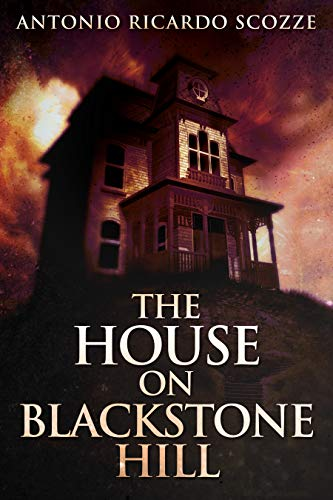
I attempted to look up information about the author, but there were no dedicated author pages on Amazon and this was the first published work. I was able to find a blog and a Facebook page solely containing information on the production of this particular work. One recurring theme presented itself across the blog and the back book matter of The House on Blackstone Hill that I found intriguing:
Extraordinarily little is known about Antonio Ricardo Scozze, the mysterious writer who appears to have knowledge of an esoteric world of horrors that is intertwined with our own. All that is known about him for certain is that he lives and writes in a small community called San Michele Vittoroso, and that all his writing is an attempt to pull back the veil on these hidden eldritch terrors.
There is, however, a "you might also like the works of" at the end of the book that mentions a Mark L'estrange who has written quite a number of horror novels. Looks like I might be venturing through one of his works next to see if the writing styles are similar. Though I must say, I do appreciate the mystery that the author is trying to create; it contributes quite an ominous tone to the novel itself.
The novel.
Where do I start?
I'm almost scared to start this.
After finishing the novel last night around 11pm, I had to take a step back and walk away from my Kindle, turn on some lights and decompress. The material within these pages is heavy. It isn't scary in the sense that I felt like something was going to crawl up from under the bed and grab my foot if it stuck out of the blanket. The novel itself weighed on me because I am a mother. If you have children, I advise you to make the decision to read this book with absolute caution. The pit in your stomach will sit with you long after you finish.
Child rape. Sodomy, to be precise. Incest. Not for the faint of the heart.
The book, however, doesn't start out that way. Beginning with an easy conversational tone, the narrator is presented as formal, eloquent, and antiquated in speech. Set up much like someone telling a story to a class, the novel hints at evils we as the reader are unable to comprehend and then broaches a few very current controversial political topics such a President Trump, Jeffrey Epstein, and child trafficking. These issues subsequently bleed into the life of our main character, Adam, and ultimately lead to the obsession that takes him and his family to the house on Blackstone Hill. Once the novel begins to actually tell the story of Adam and his wife Ava, the narrator's voice is much more from the third person perspective and loses the flair with which he spoke in the prologue.
As characters, Adam and Ava are unique. I was under the impression that they are an interracial couple, though much isn't said by way of Adam's description until the end when he's covered in blood. Though they have two small children, ages 3 and 7, and one more on the way, they are 48 and 51 years of age themselves, well into their careers in journalism and school administration. It is Adam's profession as a newspaper editor that finds him caught up in a scandal to protect Epstein's cohorts who might be embarrassed if their involvement in a child sex trafficking ring was exposed, which we ultimately find mirrored in the narrative at the end of the novel. The Biblical references of demonic elements and satanic offerings leading to the possible corruption of a gentleman named Adam was not lost on me. In fact, Ava is fairly similar to Eve, though in the novel we see their roles reversed over what is depicted within the chapters of Genesis.
While I thought that the book itself was exquisitely written, I was slightly thrown off by the narrator who inserts himself quite often throughout the novel. Coupling graphic details with the random interjections of "Dear reader...this will be discussed later" distracted from the story itself, though not by much. The phrase "we will talk more about this later" appeared multiple times throughout the novel, but there is also no mention of this being a series. This may play into the author's persona that he's opening the readers' eyes to different atrocities and horrors within humanity and that each book written under this pen name will address a different issue. It also may be an oversight. Only time will tell.
I also felt like there were specific elements of this story that were taken from multiple other horror novels and films that have come before this one. I don't mean simple ones like the mirror of the kiddo quartet we saw in Scott Dyson's work. I mean quite elaborate similarities that make up the actual foundation of the story. For instance in The House on Blackstone Hill, the house itself lies on the outskirts of an abandoned town which sits on top of burning coal deposits. The entire community had to be evacuated after an explosion caused exposed coal veins to catch fire and burn deep within the earth for decades, leaving the area open to worshipers of demons and the communing of spiritual evils. Sound familiar? I'll give you two hints:
Silent.
Hill.

Despite this lapse in originality, there were some very beautiful descriptions throughout the novel. Scozzo, whoever he is, is definitely a master of his craft. This was perhaps my favorite line:
"...the somber tones of the winter denuded woods and the brilliant gold fields of dried corn against the blue sky still made the drive westward gorgeous."
Another line that really read quite beautifully to me, despite it being a demon speaking to a man, really emphasized the Biblical references, the battle between good and evil with man used as a pawn:
"Do not fail me again, Man," Andromelech whispered to Adam...
If you can work past the cringe-worthy subject matter that Scozzo addresses in the novel and the obvious piggy-backing of other works, I do believe that this novel is stunning. Each detail is fleshed out magnificently and he leaves the novel open, not only for immersive contemplation when the dust has settled, but also for a sequel.
I would highly recommend this novel and feel like I might be courageous enough to read the next book he publishes.


August 27, 2020
Book Review: Scott Dyson works Reciprocal Evil and The Cave
True to my word, this week I let someone else choose the books I reviewed. I had the pleasure of being approached by Mr. Scott Dyson recently, author of about 10 novellas and short story collections, after seeing my stream of less than stellar book reviews that completely dashed my horror hopes and nightmares. He asked if he could forward me a couple of his works in hopes that he might alleviate my run of poor luck. I acquiesced...after all, this was someone I personally communicated with throughout a couple of author forums we're both part of. What if I didn't like either of them?
I dove into the shorter of the two works that he sent me, The Cave. Written in May 2015, only 84 pages long, you can purchase it on Amazon as an ebook for .99 cents or on Kindle Unlimited.
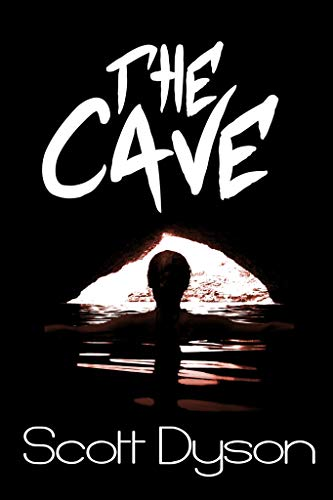
The first thing that came to mind when I saw the title and cover is the 2005 film, The Descent. I'm not a huge fan of that sort of horror and expected this to be along the same lines. However, the prologue reeled me in.
The story doesn't start out with your normal every day cave exploration, which I appreciated. Dyson immediately drops you into the lap of a monster that you cannot see or otherwise identify. Out of every book or story I have read in my entire life, this creature is quite honestly in a class of its own. It's unique and masterfully hidden. Dyson gives you a foundation to build your fear upon, such a beautiful melding of artistry and reader imagination that follows you throughout the entire novel, but at no point gives you the satisfaction of naming your demon. Whatever you have created with him will haunt you.
I was slightly taken aback by the overall tone of the novella. It felt very juvenile and I found a slight redundancy in the characters. A few of the other reviews mentioned very strong correlations to Stephen King's It and Stand by Me, which can either work for or against Dyson. I did not mind it, but I could see where others might. I could also see how a more unique quartet of friends to explore the cave might have helped make the novella stronger.
There were a couple of things that threw me off a little bit. This particular novella is written in first person from our narrator, Steve's, point of view. However, there are a couple of excerpts where Dyson switches to third person for more of a focus on the "Henry Bowers" of his story. I honestly felt like these sections of the story did not add to the plot and could have been omitted for a seamless personal account. I was also taken aback at the aging of our narrator at the end of the novel. Steve starts out as a thirteen year old boy, however towards the end he's a grown, educated man. Either the adolescent underpinnings of the novel should be removed and given a more sophisticated tone to match the age and experience of the narrator at the time of the story, or the story should not have included the more adult version of Steve.
While they gave me pause, these things did not detract from my overall enjoyment of the story. I found it to be easy to read and highly entertaining. The monster, as I stated before, is unlike anything I had encountered with any other story in this genre. I feel that Dyson took a very real fear and amplified it. If I ever had the inclination to go spelunking prior to reading this novel, Dyson obliterated that in one fell swoop. I'll keep my feet above ground, thank you very much!
After finishing The Cave, I'll admit...I was very excited and couldn't wait to dive into the second novel he sent me. Reciprocal Evil is available on Amazon as an ebook for $2.99 or also on Kindle Unlimited. Published in 2018, 160 pages long, it seems to be Dyson's newest work available on Amazon.
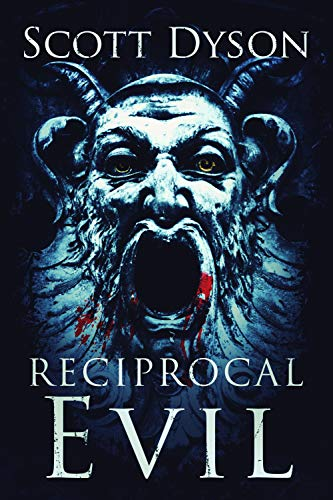
I'm so excited to tell you about this one! You may remember my review of Amy Cross' Don't Let the Devil Know Your Name a couple of weeks ago, a superb story with so many typos, missing words, and run on sentences that I couldn't see straight after reading. I was so discouraged that such a fantastic story was such an insanely huge let down. But Dyson...this book...he goes above and beyond in all the right ways! Not only is this story intriguing, suspenseful, and interesting, but it is beautifully written. There were a couple of areas where I felt like the supporting characters believed in something phantasmal a bit too easily, but I'll easily chock it up to artistic license.
The prologue starts out much the same way that The Cave does. We're immediately thrown into a situation that isn't fully explained, leaves us guessing, and definitely draws the reader into the rest of the novel. The story itself is a delicious mix between the psychological and supernatural. Written in the third person, thankfully, you immediately become invested in the quirky main character, Chris. He's the book nerd that gets the popular girl, a young man finding his way in the world and questioning his faith, if he has any at all. Dark family secrets allude to Chris' involvement in recent co-ed deaths in the area that have a local detective, and Chris' himself, contemplating his possible role.
There were still a couple of hiccups in the novel, a couple of instances where there was a missing word or a reference to "he" when it should have been "they", very simple edits. I felt that some phrases were repeated quite often within such a short novel, such as "somehow, for some reason" which felt overly redundant. There were also a couple of descriptions that fell flat for me, such as:
"...he realized that she had been an extraordinarily attractive woman."
I wanted Dyson to make me feel this more, help me as the reader see it. Fleshing these bits out would have made for a stronger story.
However, these pieces in no way detracted from the story or overshadowed the lines that were pure genius such as:
"The magic doesn't care that you don't believe in it."
Overall, I found this novel, very aptly named, to be such an enjoying read and would highly recommend it as a first foray into Dyson's world if you have not read any of his works.
If you are interested in reading more from Dyson, please feel free to visit his author page on Amazon at Scott Dyson's Author Page or his website Scott Dyson.
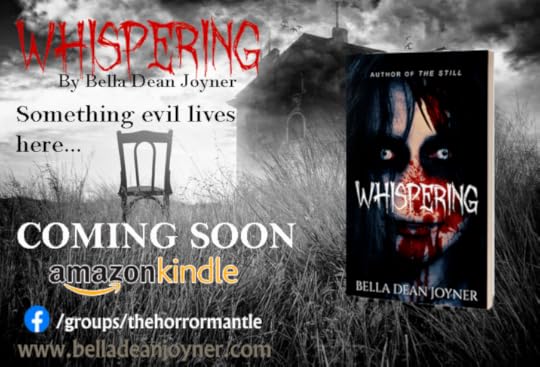
If you have any book recommendations for me, I am all ears. I'm gathering more "Questions for the Author" for my upcoming newsletter if you would like to be featured as well! Just shoot me a quick email at bdjoyner@belladeanjoyner.com . Also, be on the lookout for my new novel, Whispering, scheduled to release in September!
August 18, 2020
Book Review: It That Has No Name by P.S. Kessell
After my previous review, I was genuinely hoping for a great read that would really impress me like The Haunted Forest Tour and Horrorfrost did. I saw It That Has No Name when I was doing research on another novel, and thought it might be the one. The 5-star reviews on Amazon are encouraging and the author has a Masters in Educational Administration. With reviews like "well written...", "very well written and descriptive...", and "great first horror book...", I thought that I absolutely couldn't go wrong with this one.
Right?
Well. I'm wrong quite often.
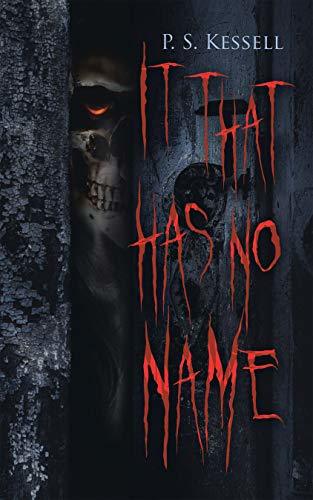
It That Has No Name is not on Kindle Unlimited, so you'll need to purchase it as an ebook for $3.99 or a paperback for $13.99.
The story begins spookily enough in Salem. An entire household is slaughtered, leaving a sole survivor, an eight year old girl. Before anyone can speak to her to find out what happened at the house on Highway 89, the little girl passes away. Decades later, the house is up for sale and Katie Carrollton's mom, a real estate agent, buys it to flip for profit. When their original plans fall through, Katie and her friends decide to hold the first senior year party at the house where they are hunted by an entity they can neither see or understand.
As a main character, Katie is young and boy-crazy. The entire first few chapters of the novel revolve around her obsession with Robbie, the captain of the football team, and her new potential love interest, Chase, who is new to Salem. The supporting cast of Melanie, Sandy, Jeb, Robbie, Gloria, Chase, and Jay are superfluous and mundane. If you have seen one horror movie from the 1980s, you've met them all already. You've met the captain of the football team who is already dating the captain of the cheerleading squad while a sweet classmate pines after him in silence. You've met the jock who fell for someone outside of his social circle. And yes, you have met the male best friend who has feelings for the counterpart to his broken heart necklace and experiences tinges of jealousy and protectiveness when the object of his affection shows interest in another. They are the cliche of teenage horror characters that you know and love.
The storyline had promise though...a potentially haunted house chosen as the site for a drunken teenage bash. I love a classic plot. But I feel like Kessell missed so many opportunities to interweave details throughout the novel to make it stronger. Too many of the twists came completely out of left field. Our protagonist spends the entire novel daydreaming about lusty interludes with the young men in her life only to be devout in her faith at the end of the novel. This addition felt rushed, hurried, and ingenuine.
As far as the novel itself, from the beginning the sentences read like the author subscribed to the "delete all adverbs and adjectives" writing style. The opening paragraph read:
"The old house suddenly became cold and still. Evie's breath was shallow and quick. She was still in shock over what had happened in the last few hours."
The choppy sentences are championed by repetitive phrases, wrong tenses, and awkward descriptions. Take for instance this gem:
"Katie dreamed of her first real date. She desired it to be something a little more formal than homecoming."
Now, it has been a while since I have been in high school, I must admit. However, aren't homecoming dances formal attire situations? Would a teenage girl really describe her first date like this?
Then there is this one:
"She kept one leg on the bottom of the pool for a bit as she struggled with her fear of the water and her trust of Jeb. Both feelings were very strong and powerful."
Or this one:
"The woman in the picture was in a fancy dress. He could tell that she was a financially secure woman."
My favorite, however, were the paragraphs where almost every sentence began with the same word.
"There was a chill in the air. She could see her breath in front of her. As she turned to look at the door, ice formed along the doors keyhole and handle. Then it seemed to spread across the door. It sent chills up and down her spine. It felt as if someone was tickling her spine with soft fingertips. She could feel the touch against her bare skin even though her shirt was covering that area. It was the creepiest thing she had ever felt."
Or this one:
"He decided to go to the basement door near the kitchen. He felt a cold chill as he stood outside that door. He opened it and yelled into the basement. No one responded. He told them that the game was over. No one responded. He heard more laughter, reached for the light, and turned it on. He decided that he had to go into the basement if he wanted to find Chase and Melanie and tell them what was going on."
Simple revisions on paragraphs like this from a good copy-editor would not only make the sentences less abrupt but also less repetitive.
I even found a discrepancy with the entity mentioned throughout the novel as "It". My mind was drawn to Stephen King's killer clown more times at the mention of this name than I was drawn into the suspense Kessell was trying to create. Plus, when coupled with the sudden revelation out of no where that Katie is a devout Christian, the usage of the capitalization for the evil entity felt almost sacrilegious, adding to the overall disingenuous of the novel and the perceived underlying message that faith conquers all.
While I had high hopes for this novel, I was not just merely let down; I was taken to the highest peak and plummeted to the depths of discouragement, disdain, and annoyance. This witchy tale had the potential, as all of them do, to be mesmerizing, shocking, and suspenseful. Yet the overall story read like a monotone blatant disregard for the art.
I would not recommend this novel and hereby encourage all of you to pick my next novel, because I am obviously inept at good choices.
Book Review: Don't Let the Devil Know Your Name by Amy Cross
I want to preface this review by saying that I genuinely hate writing bad reviews of other authors' works. It not only breaks my heart but also makes me feel like a fraud for being pretentious enough to think that I have any right to judge them.
On the same token, because I am an author, I am a voracious reader. I can easily blow through four to five novels a week. A common occurrence in my house is my husband walking by and asking me if I'm still reading that book to which I reply, "no, this is my third." It is, of course, followed by him feigning surprise, but after almost ten years of marriage he isn't really shocked anymore. It's such an intrinsic part of who I am.
So the author in me doesn't feel right doing this, but the reader in me does. These same reviews that I write are what I read to compile my must-read list. The same stars I leave on Goodreads are the same ones I look for when searching my next favorite author.
And the author in me hopes, just a little bit, that an author some day may read my review and make a change in their work that might just make it stellar.
So, on to the review!
I've heard a lot about Amy Cross prior to publishing my own novel. She's a powerhouse in the industry, having written over 180 works. I have read one or two, but mostly just seen her name on the best-selling charts. I didn't quite remember my impression of her before, so I decided to do some research and pick up her new release for a review.
A couple of the comments on Amazon caught my attention. Specifically these two:
"Get an editor, the mistakes in grammar are irritating and pull you out of the book."
"Have one small comment about the proofreader. Try a little harder to get things right."
Not very promising, especially since I'm starting my copy-editing certification classes in September. These sorts of issues within a novel are my wolf's bane, my nails on a chalkboard, my kryptonite. I literally foam at the mouth if there are multiple errors in any work I read. All you have to do is look at how many edits have been released for my current novel to know that I don't take these things lightly.
But...I ventured on anyway. The book is currently on Kindle Unlimited, or you can purchase the ebook for .99 cents and the paperback for $16.99.
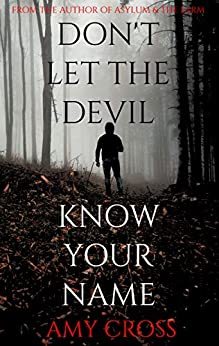
The story line begins with a retired detective receiving an award, being proclaimed a hero, but his internal thoughts and hallucinations hint that all is not what it seems for Merrick Richards. As the story progresses and you are taken back to the first killing in Bridgeford, his obsession comes into full sway, endangering the lives of those around him, threatening his sanity.
Merrick, as a main character, is stunning. In the novel, he has just celebrated his seventieth birthday, not your usual protagonist. I felt that he was unique, sharp, and relentless. His dialogue with his coworker, John Sharp, was witty and fluid.
Cross builds her story artfully. Building suspense and making the reader question his or her own instincts is truly her craft, and she owns it. I found that I was losing myself in the story many times, which made overlooking the errors a little easier.
However, these errors that were also alluded to in the other reviews completely eclipsed all that was good in this novel. It was not just a misspelled word here or there...a "that" that was made a "than". Entire paragraphs composed of comma splices and run on sentences happened page after page. Misspelled words, misused words, and missing words littered the chapters like leaves on a fall forest floor. To put this into perspective, I only highlighted or made of a note of the most egregious errors, and Goodreads tracked that I had 24 notes and 25 highlights across what my Kindle says is a 246 page novel, front and back matter included.
As an example, let's take for instance something that will not give any important parts of the story away. Cross my heart. In Chapter Three, we find out that Merrick Richards is celebrating his seventieth birthday. In Chapter Four, we find out that his wife, Diane, is five years younger than him. Fast forward to the Epilogue which is set sometime in the future after the happenings of the novel, and the gravestones read that Merrick was born in 1929 and his wife was born in 1930. I was never the best at math, but I'm fairly certain that is not close to a five year age difference. Also take into account Merrick's death which occurs relatively soon after the story, completely understandable since he is elderly. However, his gravestone says that he died in 2019, over 90 years to the day of his birth. Impossible.
The lack of attention to detail makes this novel so much less than what it could have been. Repeated phrasing and overall lack of proofreading and consistent details just emphasized the rush job that this novel was, coming a mere seventeen days after Cross' previous work. I get it! As authors, especially in the horror genre, we are told that we have to rapid release and keep producing content to keep our readers engaged, so that they remember us and want to pick up our next novel, that too much time between works causes them to lose interest in us. But quite honestly, I would rather lose a reader than release something this subpar.
Unfortunately, I would not recommend this novel.
August 11, 2020
Book Review: The Haunted Forest Tour by Jeff Strand and James A. Moore
Let me first apologize for inundating you with multiple blog posts and a newsletter all in the same week. However, after reading this novel, I absolutely had to share it with all of you!
The Haunted Forest Tour is not a new release. In fact, it has been out for almost four years. I ran across it when I was looking for another title actually. The cover and the title caught my eye, so I figured "why not?".
So incredibly glad that I did!
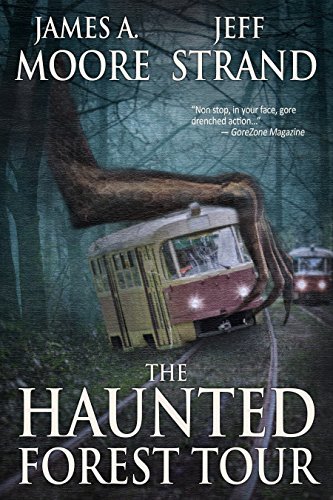
This novel was genuine FUN!
That can't often be said about horror. It was packed with tension, suspense, cringe, gasps, surprise, and yes...laughs. The authors use such a casual conversational tone throughout the novel that completely puts the reader at ease and off guard so that when the twists do happen, they are that much more impactful.
The novel starts out with the formation of the forest, huge fifty foot trees that sprout from the earth without any perceived cause, warning, or intention. It isn't an ecologist's wet dream though; these trees impale, upend, and destroy. An entire town is obliterated, its residents massacred or forced to fee. The Haunted Forest is born.
Christopher, a worker bee in a large corporation, goes home for the weekend, fearful for his job, worked to the bone. He almost doesn't take his mother up on the surprise Halloween edition trip to the Haunted Forest Tour. But he does...
Instead of a weekend in the safety of an armored fortified tram in The Haunted Forest, something goes horribly wrong. Now Christopher and a group of less than merry survivors must battle the elements and the throngs of nightmarish creatures that converge on the disabled tram.
This novel was riveting. The action begins early, almost to the point that I wondered if I had downloaded a series of short stories instead of a full length novel. The dire circumstances that the tram riders found themselves in seemed almost impossible. There was absolutely no way that the author could have written an entire novel after this? Right?
Wrong. So so wrong.
The twists and turns throughout the novel are exquisite. Just when you think there's absolutely no hope, it comes blazing through the darkened tree tops and saves our group of heroes at just the right moment...sometimes. You'll find yourself releasing breath after breath of sweet relief. And the creatures are nothing short of genuine genius. The variety and level of detail for each unique creature is fascinating, and each one gets progressively "worse" throughout the novel.
I will only say, be wary of the mold. That part was my favorite!
The humor weaved through the chaos was beautifully done, not at all cheesy or detracting from the story or the suspense. I found it to be an incredible read and really wanted to share in case any of you had not had the pleasure of experiencing The Haunted Forest Tour.
As always, I leave you with a couple of my favorite excerpts:
"Nobody said anything about giant severed heads!" Christopher shouted. "The commercials promised weird, scary stuff, but there was nothing about giant severed heads lying in the middle of the tracks! This is bullshit!"
"Dover's Point did not die without a fight, but it most definitely died."
August 9, 2020
Book Review: Horrorfrost by Edward Newton
I can't quite remember why I picked up this novel. I'm sure it was suggested to me on Amazon when I was doing research and accumulating a list of books to review. The cover is reminiscent of the 90s R.L. Stine Fear Street series, invoked a certain amount of cringe. The title may have been this book's saving grace.
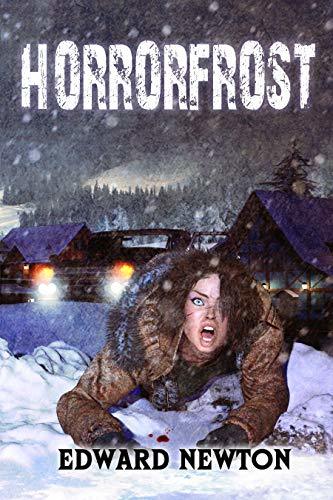
The ebook sells on Amazon for $3.99, on paperback for $14.95, and is available on Kindle Unlimited.
I'll go over the things I liked about the novel first, which was surprisingly quite a bit once I got past the cover. The title is actually a play on the word hoarfrost, not something I was familiar with, but the author does describe it at the beginning of the novel so you aren't lost throughout its recurrences. The chapters, listed as degrees below zero, increase as the temperature within the book decreases. This was such a simple artistic addition that could have been done any number of times through post-apocalyptic fiction such as Flint Maxwell's Whiteout Series, yet never was. This author did it. I can respect that attention to detail.
As the novel progresses, each chapter is told from the perspective of a different character. The author does not make the mistake of making us read the same event from different eyes, but progresses the story through them with very minimal overlap. It helps maintain the pace while protecting the integrity of the plot. Newton achieves this beautifully.
If you were to read the blurb of this book, it mentions only one man, Roman, who is a very stoic and unapologetic figure in the novel, yet there are so many other rich character developments that you become invested in each one. I believe my favorite was Rhonda, a lively mature woman pushing the big 5 0. She's gone to this mountain resort for a weekend getaway with a gentleman she met online, only to find out that he had told her he was about ninety pounds lighter and she had told him she was about 11 years younger. Rhonda is the type of woman who drives out of the community and city she lives in to a hairdresser where no one she knows could possibly run into her just to maintain the secret that she dyes her hair, not realizing that everyone already knows. No one in Rhonda's life but her is under the delusion that she's anywhere close to 39 years of age. She has no significant other, no children. At the cusp of 50, she's realizing that what she had wanted most in life, it might be too late to have. Yet what happens in Horrorfrost changes her, throws her into situations that test her mindset, her priorities, the depths of her human compassion and loyalty. Things are chaotic and survival is not certain, but she truly shines in the face of adversity.
Now for some of the things I may not have liked so much. This is one of those novels where there are a lot of unanswered questions. There are only hints to the how and the what. This can go either way for readers. Some are okay not being satisfied with direct answers, explanations, and descriptions, while others feel cheated. I personally am fine not knowing, but you may not be. I don't see any indication that the writer intends to make this the first in a series, so keep it in mind that those answers may never come.
At times, I felt as if the author's word choices and descriptions were redundant. This area has gone to chaos and the sky has opened up in a torrential blizzard. I understand that. Most readers have never been in a snowstorm quite like that. Setting the atmosphere is important. Immersing the reader in the white is imperative. Yet there are also only so many ways you can describe white before it starts to feel like word vomit and I wanted less.
There were also times that I felt as if the descriptions were a bit off. For instance, in the first chapter Roman, who was for all intensive purposes a "mountain man", was described as someone who had walked away from his life and corner office in the city twenty years ago to live off of the land on his mountain. It spoke of how he had built his cabin himself and wore clothes made from the tanned hides of animals he had killed on his own. It even said that he had not been in the town since the first initial purchases twenty years ago when he had arrived, some basic tools and a compound bow. Yet the opening scene has him drinking coffee...I guess he had stocked up on a LOT of coffee some twenty years ago. Later in the novel, we have Esther, a spritely elderly lady suffering in the grasp of Alzheimer's Disease. She can barely remember the names of those around her, unable to recognize faces that should be familiar, even losing the names of objects that are involved in everyone's day to day. She sees a group of teenagers huddled in a comic book store over their cell phones and cannot remember what the devices are called. Yet in chapters devoted to her perspective, she refers to an LED screen. Just small inconsistencies that I caught, yet neither detracted from the story in any way.
Overall, I think Newton really delivered the tension of apocalyptic fiction. I was engaged from the first chapter, and never lost interest. Would highly recommend this read!
I wanted to leave you guys with my three favorite excerpts from the novel:
"Rhonda Phelps stares into the mirror. Was that another wrinkle? Another line? Shitshitshit. They popped up lately like weeds in a garden. Every morning. Festering like an infection."
"Far enough away that Aspen feels that your time to die is no longer imminent. Just eventual."
"He cannot fully fathom the true scope of the monster's size, but certainly, if it wants to reach over a twenty-foot wall and pluck him like a flower, then Roman is a rose."
July 28, 2020
The Storm - a short story by Bella Dean Joyner
Weste loosened his blue plaid tie as he raced down the tree-lined country road, trying to outrun the storm clouds billowing in his rear-view. He ran a hand over the day’s auburn stubble on his chin and fiddled with the radio knobs. Nothing but static came through. He gave up and switched it off. “Man, this storm looks nasty.” He glanced back at the silver lines extending from the angry sky like heavy metal sheets as a large plop sounded on his windshield.
Then another.
The trees gave way to golden fields of long grass that bowed sharply in the driving wind that jerked his Silverado from side to side like a toy ball. By the time he eased off the asphalt and onto a gravel drive about a mile up the road, the cascading rain obscured his vision, rendering the windshield wipers useless. The thundering droplets barraged the truck like mortars, deafening his thoughts.
The farmhouse loomed before him and he coasted to a stop just short of the front porch steps. Casting a quick glance around the truck to make sure he had everything, he steeled himself for a moment, his hand on the truck’s door. He rushed out into the rain, holding his briefcase over his head to block the torrents but was still soaked by the time he pushed the key into the lock.
Only silence greeted him inside.
“Samantha?”
Weste set his worn leather briefcase on the floor beside the entryway table and dropped his keys into the delicate turquoise bowl his wife had handmade for their eighth wedding anniversary. Eight years and still no children. Just him and Samantha and the dog.
Where is the dog?
Forget the dog, where is Samantha?
The foyer was dark with a mounting pressure in the air like the rooms beyond the shadows were holding their collective breath. Weste noticed that the grandfather clock in the hallway heading back to the kitchen was stalled at 5:25pm. Fifteen minutes ago. He walked over and tapped on the glass of the clock face. Nothing.
“Samantha?”
A subtle movement in his peripheral vision drew his attention to the living room. The sheer white curtains that shielded the floor to ceiling windows raged gracefully in the gusts from the open windows, too light to be weighed down by the rain that collected in puddles on the hardwood floors. He reached out and flicked the light switch on and off.
Nothing.
“Samantha? Why are all of these windows open? It’s pouring outside.”
A soft shuffling echoed from the hallway.
“Samantha?”
Weste glanced at the foyer behind him, his thoughts resting on the little flashlight key fob his wife had insisted he carry. She had been adamant that it would come in handy if the truck ever broke down on the long drive home on the roads that had no streetlights. Now, with the weakened beam barely cutting through the unnatural darkness of the hallway, it served only minimal comfort.
“Samantha, you home?”
Weste stopped, ears straining to hear the sound again. He slowly moved the beam from side to side in the hallway.
Nothing.
He cast one more look down the hallway before he sighed and turned to shut the windows behind him. Fear was mounting like bile in his throat. Just as he was about to take a step forward, a bloodied hand darted out from the shadows of the hallway and gripped his arm. Weste shrieked and jerked both himself and the figure back into the dim light of the living room.
“Samantha! What happened?”
“You can’t let them in, Weste. You can’t let them in!”
“Baby, what are you talking about?” Weste took in her disheveled blonde hair, the feverish wildness of her eyes, and the handful of nails she gripped so tightly that blood oozed from between her fingers and fell down the front of her pale-yellow sundress. “Oh my God, Samantha, what are you doing?”
“I have to stop them from getting in.” She hurried to the sofa and picked up a hammer Weste had not noticed before and then went to the nearest open window. She began hammering nails randomly into the bottom ledge as the rain pelted her face.
“Samantha, I don’t understand.”
“The iron in the nails keeps them out, Weste.”
“Keeps who out?”
“Didn’t you see them outside?” Samantha rushed to the next open window.
“I didn’t see anything outside except the rain.” He looked at the other windows in the room. Nails stuck out of the windowpanes like pin cushions. “Samantha, please stop and talk to me. Did something happen today?”
“Weste, get another hammer and help me.”
“There’s nothing out there, Samantha. I promise.” Weste struggled with the closest billowing curtain and pulled it aside. “See? There’s nothing out there.”
Samantha stopped and looked at him thoughtfully.
Thump.
“What was that?” Weste looked to the ceiling.
“It’s too late. They’re in the attic now.” Suddenly shivering, Samantha dropped the hammer and nails to the floor. She backed up slowly until the whitewashed shiplap caressed her back and slumped in the corner. “You can’t help me now.”
“What’s in the attic, Samantha? Tell me!” Weste knelt before her and gripped her arms until she yelped in pain.
Hurried footfalls.
“Samantha, what the fuck is in the attic?”
Tears mixed with the rain drops on her face and mucus choked the words in her throat as she heaved. Weste watched the last threads of her sanity break away like delicate spider web strings.
Heavy dragging on the hardwood floor.
Weste stood up, grabbing the closest thing to him for protection. He climbed the steps to the second story with the fireplace poker extended in front of him. It was probably just a loose shutter, but his heart quickened with each ascending step he took. The windows on the second floor all seemed to be closed. He paused to look outside at the slanted rain. Nothing lurked in the grass below.
Thump.
Behind him, across the landing, the attic door stood slightly ajar. Weste cautiously tip-toed towards it, cringing when the old floorboards creaked in protest. As he put his hand on the doorknob, he heard the sound of hurried footsteps coming down the steps from the attic. Breathless, he pushed the door shut just as he felt movement from the doorknob in his hand like something had grabbed it from the other side.
“Oh God,” he whimpered to himself.
“God doesn’t live here,” came a whisper as something large threw its weight against the heavy oak.
Weste propped himself against the attic door, tears stinging his eyes. He dropped the fire poker to the floor so he could use both hands to brace himself against the stairway railing. Whatever was on the other side of the door jerked hard on the doorknob, the rattling echoing in the otherwise silent house, and he felt the thick boards bowing underneath the thing’s weight from the other side. Frantic, Weste looked around for something to stack against the door, but the landing was empty of furniture.
A soft ray of sunshine broke through the clouds, spreading warmth on his face from the westward window, as a scream sounded from below. Weste startled at the sound and took a tentative step toward the stairs.
“Samantha?”
The creak of the attic door slowly opening behind him caused his back to stiffen. He held his breath, expecting to feel claws on his throat, but nothing happened. He slowly opened the door wider but found nothing on the other side.
Footsteps ascended from the first floor.
He tensed and turned toward the sound, finding his wife paused on the top stair, her hair in a neat little bun and the gingham of her dress clinched at the waist under the weight of the full laundry basket.
She inhaled sharply in surprise. “When did you get home?”
Weste stared at her in disbelief. The rain stopped as the chime from the grandfather clock resonated downstairs. From somewhere outside, a dog began to bark.
July 9, 2020
Book Review: The Thirteen by Joseph M. Monks
I hope that all of my readers in America had a wonderful 4th of July! Happy birthday to this great nation! Surprisingly enough, we found out shortly before the 4th that we will be returning to America in March of next year! Only 8 more months of being stationed in South Korea! Now we are in a hurry to make sure we take in everything this beautiful country has to offer before we leave. Be on the lookout for pictures!
First, a couple of updates! I recently received the first 15 minute audio to approve from the narrator of the audiobook for The Still. The level of theatrical performance and attention to detail that Dillehay is putting into the production of the audio is amazing! I am so excited and can't wait for you guys to hear it. We are a little behind our original projected release date because of COVID messing up some scheduling, but we should have the audiobook released by the end of this month!
Next, I want to give my fellow writers a tip about an organizational tool I discovered. I'm not sure how many of you have ever utilized what they call an author's planner. It helps you keep track of daily word count, plot consistency, ideas. I've used a couple of them before and have been disappointed. I either struggled with the layout or the lack of different sections and spaces to keep my work organized. The planners I received felt out-dated. I felt the need to have multiple planners for the same project.
However, as my writing career ramps up and I have multiple projects going at once, I decided that I needed to look into an author's planner again. I was pleasantly surprised to find that at least one creator has updated their layout to fit the current self-publishing market, and I am excited!
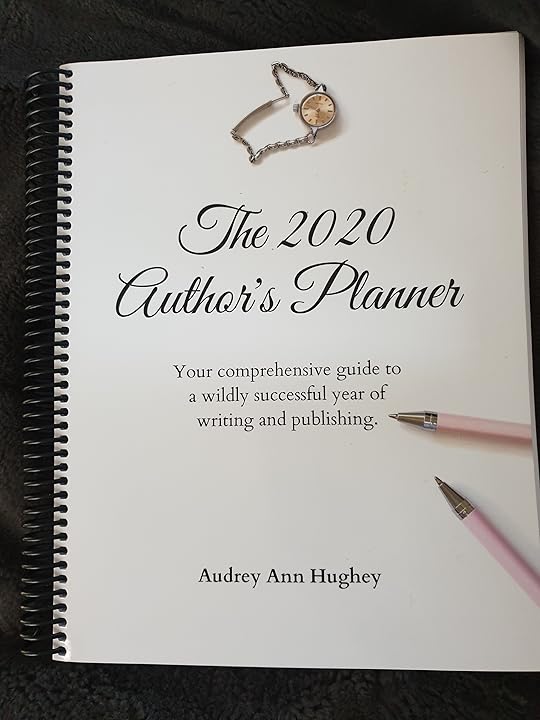
The planner that I purchased is The 2020 Author's Planner by Audrey Ann Hughey. You can either purchase this planner on Amazon in paperback form for about $15 or, if you are like me and prefer spiral bound for these sorts of things, you can order it from Lulu for about $30.
This planner has approximately 400 pages with different sections to help your productivity and inspirational quotes to keep you motivated. Hughey has included areas for you to put your vision on paper, to speak your goals into the universe, and to check back in on those goals every quarter to make sure the moves you are making align with those goals you set for yourself. The planner has enough space for multiple manuscripts if you plan to produce more than one work per year, like myself, and an area for additional story ideas that may pop into your head throughout the day. However, what excited me the most was the pages set aside for expense budgeting and marketing tracking. As a self-published author, a huge portion of my time is spent marketing myself. It's almost as important as the actual writing. To be able to create a social media plan, maintain and track a marketing plan, and see what has given me a positive rate of return is great. Throughout each month, you can track your daily writing goals, word counts, and monthly newsletter statistics. Overall, I think this planner really fills a gap in the market for authors. I'd suggest it for the seasoned author or the one just starting out.
Now on to the reviews!
The first book I finished was actually The Haunting of Winslow Manor by Ambrose Ibsen. It is the third book in a series by Ibsen that revolves around a librarian named Sadie whose mother is an unworldly being linked to the death and destruction of the prior two books.
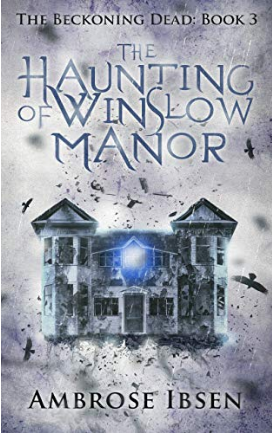
Though I felt like the first book was a difficult read, I made it through to this one and am very glad that I did. It did not have the writing inconsistencies of the first book and had less of the unbelievable moments from the second, but had more of the creep factor that I have enjoyed in other Ibsen works. I was not a fan of how the book ended, but that was simply because of my own personal attachments and preference. I think that Ibsen orchestrated it well. Definitely recommend.
The other work I read that I want to focus on is The Thirteen by Joseph M. Monks. This short story was posted by Monks in one of the writers' forums I'm a part of and is available on Amazon for 99 cents or on Kindle Unlimited.
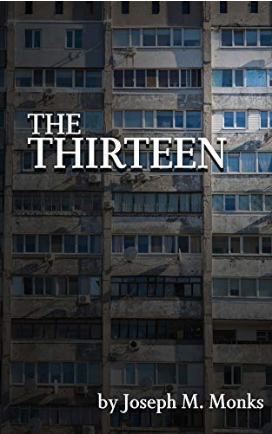
Monks categorizes this work as "creepy pasta". Like the author admits in his preface, I had to look up this term. Evidently creepy pasta refers to short stories that are meant to circulate the internet and scare the readers with gore and supernatural occurrences. The novella was definitely short at 20 pages, but I don't know that it fits the description of creepy pasta. According to everything I read online, creepy pasta is supposed to be copy and pasted across the internet, not put up for sale on Amazon. When you think of creepy pasta, think of the viral story of the man who lives in an apartment and is haunted by the little boy with the deformed head, Dear David. This short story just doesn't measure up to that.
The story centers around an unnamed young lady who is trying to find a cheap apartment away from her parents in New York City. The area she is looking at is derelict and had been suggested to her by a friend at college who also lived in the area. There are hints about bruises around her wrist which we are made to assume has something to do with the reason she wants out of her parents house. She finds the apartment building which she describes as looking out of place and out-dated, almost like it never quite belonged where it stood. As she goes to view the apartment for the first time, she sees a thirteenth floor and it is the superstitions surrounding this thirteenth floor that dominates the rest of the story. It is here, literally on the fifth page of the story, that the author lost me.
In the story, Monks describes the thirteenth floor legend being based in the roots of returning soldiers who are haunted by superstitions extending past what they had seen in battle. In my own research on the legend, I found no such references. The thirteenth floor has been historically omitted from buildings merely for the presumed unluckiness of the number. Builders anticipated tenants being unwilling to rent spaces on the thirteenth floor so built elevators and stairwells without the thirteenth floor options. While this theory of war preceding the legend does fit in with other aspects of the story, it still was inaccurate and out of place.
I also found there to be a distracting disconnect between details the author included and the rest of the story. For instance, when the young lady is first viewing her apartment on the 15th floor, she sees a glimpse of a bloodied female in the reflection of the bathroom mirror. The author made no mention of the young lady recognizing this face as her own or as anyone she knows and never circles around to explain it. The young lady states at one time that she never sees another tenant in the building on one page, yet talks about a lady that accidentally missed the elevator she had gotten into on the next.
At one point, the young lady does go onto the thirteenth floor and immediately assumes that it's otherworldly, not from this time, interjected into this time and space by forces outside of her understanding. I found this part of the story to be unrealistic. She jumped from being logical to being convinced and wholly accepting of the supernatural without a moment of confusion, panic, or fear. The author then immediately delved into the macabre and the war references mentioned earlier which seemed sorely out of place. I felt no tension build up, only my own confusion. I found the ending to be convoluted. Nothing about the entities on the thirteenth floor encountered by the young lady seemed understandably connected in any way.
We then have the matter of the friend who suggested the apartment building to the young lady in the first place. She makes an appearance towards the end of the story and speaks about something that the young lady had done to her parents. Again, this detail, while disturbing, was not worked into the story in a cohesive way. At the beginning of the story, the author put a large emphasis on the young lady wanting to find an apartment in the city that was far enough away from her parents that they would not be able to find her until the time that they were able to pay one of her friends enough to divulge her address. Yet throughout the story, not only is the assumption clear that this young lady does not have any friends, but that she used the one friend she supposedly did have to do something that would ultimately result in the death of both of her parents. If she did something that would result in their deaths, why would she be concerned about finding an apartment they would not be able to locate?
When Monks wraps up the story and reveals the truth about the building itself, I was not surprised. It wasn't that I had anticipated this twist or that the author had cleverly worked in clues along the way. It was simply that the author had already compiled a hodgepodge of details that had no correlation...throwing in one more didn't really phase me.
Overall, I think Monks had the opportunity and the foundation to create a wonderful story here, but completely missed the mark. Had he fleshed out the details a bit more and provided more of an explanation and cohesiveness to the text, I feel like this would have read a lot better. I think he also should have invested in an editor to help make sure that his character details remained consistent throughout the story. I probably would not recommend this story to horror readers.
June 10, 2020
Book Review: Drowning Demons: A Raven James Novel by Ben Wydeven
Let me begin this review by saying that any criticisms I have about the books I review are not what I consider negatives. All writers have purpose. Any issues with formatting, style, or grammar can be resolved with an editor's help. I 100% advocate supporting each other as writers and am always up for writer's groups to help other indie authors hone their craft. With that being said, though entirely fixable for future editions, the current state of the books I read will be honestly conveyed in my reviews so that you as a reader can make the decision for yourself whether this novel is a journey you'd like to take.
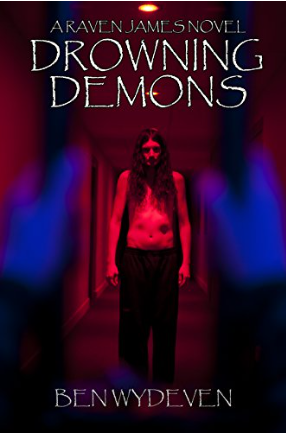
Drowning Demons: A Raven James Novel by Ben Wydeven turned out to not be what I originally expected, in a good way! I saw a promotion for the novel posted in a writer's Facebook forum I am a member of and did not read the book's blurb ahead of time. Going off of the title alone, I thought I was about to read a story about what else, demons. However, Wydeven incorporates a clever word play to describe using alcohol consumption for mental escape as "drowning demons".
The story follows Raven James and his friend Benny on a quest to rid The Fillmor, a local nightclub slash former movie theater and speak easy, of its angry ghostly inhabitants. Different characters are introduced along the way: Stefan, a boyish budding historian who accompanies them to The Fillmor despite his adamant refusal to admit that ghosts are real, Mr. Geideman, the owner of The Fillmor who hires Raven and Benny to rid his establishment of any lingering spirits, and then the ghosts, their histories, and past acquaintances of the main characters.
I'm going to first speak towards some of the novels weaknesses and will end this book review on Wydeven's strengths. The novel did have some formatting errors. Paragraphs were indented double, sometimes triple, and entire passages of the novel were unaligned. I also struggled with being able to tell where breaks in the texts took place. For instance, flashbacks or changes in the time frame within the novel were not set apart from the rest of the text. I definitely felt like this slowed the pace of the novel for me as a reader because I needed to reread to make sure I understood the shifts.
I also found multiple instances throughout the work where descriptions were repeated, both a few sparse words and entire pages. For instance, in Chapter 29 - Awakening, Anna, Benny's girlfriend, is described in one paragraph as:
"The way her hair glowed in the sunlight pulsed through the window..."
Precisely four lines down, Anna is again described as:
"The whole moment, beautiful Anna glowing in the sunlight..."
In Chapter 32 - Silence Screams, Wydeven focuses on Stefan's time in the basement of The Fillmor. The setting is dark and Stefan has a small penlight. Wydeven describes this as:
"...he found his penlight and panned the weak light around the room."
In the next paragraph, he then says:
"...as he panned the room with his puny flashlight."
Again on that same page, he said:
"...he swung his tiny pen light in every direction."
The Fillmor's blue neon lights along the top shelf of the bar were also mentioned throughout multiple chapters, but I found no way that this repeated description furthered the plot in any way.
Wydeven seemed to struggle with word choice in the novel, more so towards the beginning. I found that a few times throughout the first few chapters, words were used that seemed misplaced. Though the author's intention was clear, the content read awkwardly. For instance, in the prologue, Wydeven said that "his son's eyes glanced impulsively around...like a hawk quietly stalking its evening meal." Impulsively doesn't match the following descriptor. A hawk quietly stalking its evening meal is not impulsive. Other examples of this are "deviant memories" and "house was airtight".
Despite these examples that, again, an editor could resolve, I felt like Wydeven has a strong second novel in Drowning Demons. I felt like he had very strong character development. Raven was a very likable alcoholic. You almost wanted to dislike him, but found him endearing through Wydeven's interjection of childhood memories and trauma throughout the novel. He was a believable character with a healthy balance of everyday and unlikely struggles that gave him and the plot depth and interest. I found Benny to be built much the same way, although laced with a bit more desperation. He was a great accompaniment to Raven and I hope to see more of him in future novels. The only character I struggled with in the novel is Stefan. Wydeven portrays Stefan as weak, nerdy, incapable. There are also hints of ill intent before the story line picks up with the Valentino brothers. I don't know if this was intentional or if Wydeven's description of Stefan's reasons for being in The Fillmor were slightly off the mark. Either way, he was an easily unlikable character and did not change for me throughout the course of the novel.
I found the plots and subplots to be detailed and entertaining. I was worried that Stefan's conflict would not be resolved, but Wydeven worked it in within the books last pages. I did have some concerns that it may have been an afterthought because of additional information that comes out once the main action of the story is over. It seemed as if that information was added merely as a way to help wrap up that plot. It would have flowed better, I believe, and not stood out so much if Wydeven had worked in hints or suggestions throughout the story line.
Would I suggest the book? Yes, after the needed editorial changes were made. I think that this series can be engaging. Wydeven's word use is phenomenal. Some of his descriptions are genius:
"The sun was incredibly bright and Raven, incredibly hung over, pinched his eyes shut,
giving his brain a moment away from the intensity."
"...scar of cheap whiskey..."
"...trembling like a scared animal and breathing as if he couldn't..."
I'll be looking forward to what Mr. Wydeven creates in the next book!
You can see Ben Wydeven's complete works, including Drowning Demons, on his Amazon author page
Authors Group and Editors, Where Do I Start?
This past week has opened up new avenues for me as a reader and a writer, how I wanted the two of those to intermingle into a career that would leave me fulfilled and help others in the industry.
Let me first say that finding an editor through Reedsy does not pan out well if you are an author just starting to build your novel inventory and don't have a set time frame that it takes you to complete a manuscript. My first novel took me approximately 5 years start to finish. My second novel is only taking me about a month and a half. However, even with giving the editors almost two months advance notice, none of the three that I chose were able to give me a quote because they would have been unable to complete my deadline.
The amount of pre-planning in this process is paramount. As a writer, you have to contact an editor for a book you haven't finished yet and get a quote on an assumption of a word count. It seems ridiculous, but it's the nature of the beast. Luckily for me, I was able to find an editor who was willing to read The Still for me and give me some pointers on anything that might need to be polished. I also was able to find a copy-editor who will go over my second novel with a 5-7 day turn around time. If you are confident in your writing abilities and an editor that charges $1500+ is out of your price range, I highly suggest looking for a copy-editor. They give your novel a bit more coverage than a proofreader will for a fraction of the price that a content editor will.

But this search for an editor has inspired me and altered my life in other ways that I also wanted to share with all of you.
As many of you know, I am currently a double major in forensic psychology and creative writing. I had all the plans in the world to make psychology my focus as I built my writing career. With absolutely no idea how I was going to strike a balance, I felt fully capable having time for both worlds, styles, parts of me. However, a question came to mind when I was looking for an editor. Why can't I just take some classes and learn how to edit myself? Seemed a simple enough question. But then as I paired that question with current book reviews I'm doing for other indie authors, the things I'm noticing throughout their novels, I asked myself why I wasn't looking at editing as a career to partner with my own novel writing. It makes more sense, right?
The requirements for editing are simple. Be able to read and write. The author preferences for an editor are a little more complicated - degrees, certifications, and experience. I'm already currently working on the creative writing degree. Check. The book reviews I'm doing now and my own writing will amount to some experience, but it won't be hard for me to find a few indie authors who cannot afford an editor who will be willing to provide me testimonials if I copy edit their works for free. Check. I've started to look for certification courses and found a 10 week course plus a certification test that starts in August that I will need to attend on top of my current college course load. Thankfully it starts after my second novel is set to be launched so that I have room to adjust my publishing schedule accordingly. After I have obtained that certification, I intend on taking another class on how to market within the editing community. Before the new year, I'll be a certified copy-editor.
If all goes well and I enjoy it, I'll be pursuing my masters in creative writing instead of forensic psychology and then my doctorate in creative writing or English. My ultimate goal would be to have an established career as an editor/copy editor and teach creative writing at the college level, all while pursuing my own writing career.
I can't believe I didn't think of this sooner! I'm still going to maintain my forensic psychology double major right now. What horror/thriller writer wouldn't benefit from multiple classes on serial killers? But also, what if I absolutely hate copy-editing others' work? I need to make sure I have the ability to fall back into psychology if I want to or need to.
What are your dreams? Even if you aren't a writer, what inspires you? What are your aspirations?
I'd love to know!
As always, thank you for taking this journey with me!