Sneha Jaiswal's Blog, page 69
November 14, 2024
The Blouse – Graphic Novel Review

Sneha Jaiswal (Twitter | Instagram | GoodReads)
Séverine, a young university student leads a banal, unnoticed life, largely ignored—even by her boyfriend—until she borrows a white silk blouse, which changes the way men perceive her. Another way to synopsize ‘The Blouse’ by French creator Bastien Vives – woman wears a boring shirt, nobody notices, but once she puts on an expensive, form fitting, cleavage revealing blouse, and boom! – every man wants her. Of course.
Séverine becomes obsessed with ‘The Blouse’, wearing it everywhere, especially where the attention would matter – like college presentations, or parties. If the reader must take-away some meaning from this graphic novel, then perhaps it’s about how like power corrupts the kindest individuals, beauty corrupts people too. We don’t know if the blouse is magical or not, but it sure makes Séverine feel a lot more confident, beautiful, sexy, and immediately transforms her into a more reckless, sex-starved, degenerate. For instance, before the blouse, Séverine could not stand being in the same room as someone smoking, but later, she turns to smoking herself and starts cheating on her boyfriend. Interestingly, the boyfriend continues to behave the same way with her, not noticing any difference, so the blouse’s effect could just be placebo.
Maybe Bastien Vives’ message is simpler – those who are aware of the hold their good looks have on the beholder, tend to be jerks. Either way, this graphic novel was made engaging only due to Bastien’s artwork. Séverine and the other characters who have limited space in the book, never make a strong impression, their personalities feel hollow. You should read the graphic novel “Beauty” by Hubert and artist duo Kerascoët, for a more fun, and absolutely fantastic exploration of how someone’s superficial allure can be life-changing.
In the second half of The Blouse, a sudden act of violence feels like an unnecessary, racially charged jab at a minority community. The scene could have been altered in countless ways to convey the same predictable message— that even as things spiral, all Séverine can focus on is the blouse.
Rating: 2 on 5 stars.
Read Next: The House Graphic Novel Review
Also Read: Nobody Wants This – Netflix Series Review (Short Audio Version below)


November 13, 2024
The Buckingham Murders Review: Kareena Leads Sharp Cast in Blunt-Edged Thriller
Sneha Jaiswal (Twitter | Instagram)
It’s become some sort of trend in murder mysteries to dwell into the personal baggage of the detective leading a case, instead of the good old razor-sharp focus on finding out who the killer is. And acclaimed Bollywood director Hansal Mehta has hopped onto that train with the 2024 thriller The Buckingham Murders starring Kareena Kapoor as grieving cop Jaspreet Bhamra, who transfers to new city and takes up the case of a missing child.
Now, this ‘detective with personal baggage’ trope works in some mysteries, like Rautu Ka Raaz or even Do Patti, but feels excessive and unnecessary in others, like Fool Me Once, Killer Heat, where my review title (Killer Heat: Sun, Suspense, and a PI With Baggage) literally took a dig at it. In Buckingham Murders, the emphasis on Jaspreet, aka Jass, and her trauma over losing a son to murder is handled with just the right balance. Unfortunately, it’s the murder-mystery that’s slow, predictable, and relies on some twists that tend to feel slightly outdated.
The case: School student Ishpreet Kohli (Sartaaj Kakkar) goes missing, and Saquib (Kapil Redekar), a teenager with a drug problem, becomes the primary suspect due to some damning evidence. However, Jaspreet Bhamra also has her eyes on other suspects—Naved (Rahul Sidhu), Saquib’s friend who suspiciously abandons him and was at the scene of the crime; Tejinder “Syringe” (Haider Javed), a drug peddler who had slapped and humiliated Ishpreet just days before his disappearance; and even Daljeet Kohli (Raveer Brar), Ishpreet’s father, who struggles with anger issues, financial troubles, and an unhappy marriage with his wife, Preeti (Prabhleen Sandhu). Plus, Ishpreet was adopted (the trailer reveals this, so it’s not a spoiler).

Jaspreet’s biggest challenge in solving the Ishpreet case is her new boss Hardik Patel (Ash Tandon), who undermines her from day one and seems to have some personal beef with the people involved in the case. Kareena Kapoor, whose last thriller title was Jaane Jaan, delivers a gritty, and poised performance as Jaspreet, a senior cop grappling with the murder of her own young son. She in-fact declines to work on the Ishpreet case the second it comes her way, but her senior Suptd. Miller (Keith Allen) asks her to buck up and be professional about it – “Duty comes first”. Keith Allen lends the right amount of ‘no nonsense’ attitude in his little cameo as Jaspreet’s clear-sighted and astute boss.
None of Kareena Kapoor’s usual bubbly screen presence is on display here, though a hint of Geet from Jab We Met seeps through in a scene where Jaspreet lets out a scream to release pent-up frustration. However, instead of carrying the serious, cathartic weight it needs, the moment feels more reminiscent of Geet’s loud, comical rant to her ex over the phone.
Despite sharp performances, engagingly understated cinematography, “The Buckingham Murders” doesn’t generate enough intrigue and mystery over its primary murder case. In-fact, even the ‘big’ twist about Saquib, the primary suspect, is quite predictable. There are only a handful of suspects, which makes it easy to guess who might’ve had a stronger motive to bump off the boy. So, in the end, neither the murderer, nor the motive comes as a surprise.
Hansal Mehta’s crime drama Scoop was so good that my expectations for this mystery were pretty high. Oh well, from a pure murder-mystery standpoint, The Buckingham Murders isn’t all that gripping. However, as a Bollywood drama set abroad, it’s a compelling one-time watch, focusing on a grieving mother/cop who’s determined to solve a child’s murder and make sure the real perpetrator is brought to justice.
Rating: 6 on 10. You can stream The Buckingham Murders on Netflix.
Read Next: Meiyazhagan Review: An Introvert and Extrovert Walk into a Wedding…
Also Read: Nobody Wants This Review – The RomCom We Need (Short Audio Version below)
We Called Them Giants: Book Review
Sneha Jaiswal (Twitter | Instagram)
Orphaned as a child, Lori knows that “nothing lasts forever,” so when she wakes up one day to find her foster parents gone and her neighborhood completely deserted, she isn’t too shocked. What does surprise her is that the only other survivor in the area is her cheery, optimistic classmate Annette, who theorizes that perhaps “the rapture” has taken place—a world-ending event where God takes away all the “good” humans and leaves only a few behind.
Written by Kieron Gillen, with artwork by Stephanie Hans, We Called Them Giants follows the adventures of the cynical Lori and the bright Annette as they navigate the apocalypse while avoiding a violent group of survivors known as “the dogs.” Their world shifts further when two colossal creatures suddenly appear, seemingly descending from the sky like shooting stars. Are they gods, angels, or aliens? Lori and Annette simply call them the Giants.
The alien creatures are illustrated as a blend between Groot from Guardians of the Galaxy and C-3PO from Star Wars. While I enjoyed the artwork, the story itself wasn’t as engaging, mainly due to the lack of character development. Lori and Annette fit the typical “introvert versus extrovert” BFF dynamic, though their friendship has some endearing moments, it feels too surface level. The girls influence each other—Lori becomes slightly more hopeful, while Annette adopts some of Lori’s fiercer traits. How their lives intersect with the giants forms the crux of the tale.
One scene stands out where one of the giants leaves a bowl of edible liquid for Lori and her friends when they are struggling to scavenge for food. From Lori’s perspective, it seems like a trap, perhaps a ploy to capture or harm them. To me, it looked more like an attempt to lure a pet, like how a child might want to befriend a bunny or a stray dog. What is it really? Lori discovers the giant’s true intentions the hard way. It’s kind of funny how the Giants mimick humans by saying ‘blahblahblahblah’. C’mon, even some random gibberish would’ve been preferable over ‘blahblahblahblah’! Kieron Gillen just didn’t want to put too much effort into that, or maybe, he meant it to be funny little element, which I guess wasn’t such a bad call.
In the end, We Called Them Giants is a rather simplistic and abrupt story about the bonds people forge in desperate circumstances. The giants become metaphors for gods—creatures that are huge, powerful, intelligent, and capable of creation, and see humans as either annoying ants or pliable pets, depending on their whims. And, as we know, ants often get crushed, while pets are coddled. Anyway, the story is interesting in the beginning, but it never really takes off, and the whole ‘end of the world’ scenario feels pretty phony throughout.
The climax is wistfully tragic, delivering a sentimental lesson on how love can be unconditional, and how we don’t always need to fully understand one another to nurture a lifelong bond. Given its artwork and intriguing premise centered on a mysterious apocalyptic event, We Called Them Giants had the potential to be a far more ambitious tale. However, it’s too short and doesn’t give its characters the space they need to truly resonate with readers. It’s worth a one-time read for graphic novel enthusiasts though.
Rating: 3 on 5.
Read Next: The House Graphic Novel Review
Also Read: Nobody Wants This – Netflix Series Review (Short Audio Version below)
November 12, 2024
Ron Kamonohashi’s Forbidden Deductions Episode 19 Review
Follow us on Twitter | Instagram
Black sugar syrup and soy milk frappe—that’s what our genius detective Ron Kamonohashi is sipping on as Episode 19 of Ron Kamonohashi’s Forbidden Deductions kicks off, just as Toto rushes in with thrilling news about possibly scoring two tickets to an exciting concert by a super popular artist.
But here’s hoping you didn’t forget to watch the post-credit scene in Episode 18, because it introduces “Hummingbird – the talent kidnapper,” an odd criminal who targets high-profile talents. Because sure enough, he strikes again in this episode.
What usually serves as the biggest twist in mysteries is already out—we know what Hummingbird looks like, as his face was revealed in the post-credit scene! Of course, some viewers might not remember and may want to revisit it, but there’s no need, as he’s easy to recognize once he reappears. In fact, Ron brings up the Hummingbird kidnapper case to Toto as they arrive at the concert, and, as luck would have it, the criminal decides to strike at the very same show they’re attending.

Toto is so thrilled to attend a concert with Ron that it definitely feels like a date, especially since there’s no clumsy Dr. Mofu third-wheeling with them, unlike the beach murder edition. But as always, a new case falls into their lap, and the two are once again surrounded by a swarm of cops, facing a fresh and eccentric criminal. The artist, a genius composer named Nyonyon, receives a threatening letter from Hummingbird.
Even though Ron quickly figures out who the culprit is in this episode, there’s more intrigue surrounding the suspect’s modus operandi than his identity. But we’ll only get to know about it in the next edition!
Stream the series (Kamonohashi Ron no Kindan Suiri) on Netflix or CrunchyRoll
Read Next: Uzumaki Series Review: Not As Hair-Raising as Ito’s Manga
Also Read: Nobody Wants This Review – The RomCom We Need (Short Audio Version below)
Yakuza Fiancé: Raise wa Tanin ga Ii Episode 6 Review
Follow us on Twitter | Instagram
“It’s easier for me if he just keeps behaving like a psycho… I think..”
It’s hilarious how Yoshino Somei thinks it’s easier to deal with Kirishima Miyama when he is being his usual crazy self than to take him seriously as her potential future fiance or even husband. Kirishima’s personality might of-course be perplexing to many viewers – he claims to love Yoshino, but is constantly sleeping with others. But the dude is a nutter, prone to violence, he is definitely not the ‘good guy’, and besides, the two aren’t even dating yet. Will things change if they seriously start a relationship? Who knows! (Okay, the manga readers do know, lol)
For Plot Overview Read: Yakuza Fiancé: Raise wa Tanin ga Ii Episode 1 Review
Titled “If You’re Indifferent, Then I’d Rather Be Hated,” Episode 6 of the anime series Yakuza Fiancé: Raise wa Tanin ga Ii begins with an amusing conversation between Yoshino and her cousin Tsubaki, where the latter advises her to keep track of Kirishima’s movements. Tsubaki was introduced in Episode 5, where it’s also revealed that Tsubaki was the one who helped Yoshino with the kidney surgery. And, of course, one of the craziest mysteries of the series was solved in the previous episode—Yoshino didn’t actually sell her kidney, even though she believes she did!
Yoshino and Kirishima take a short trip to Osaka, where Yoshino finds herself juggling her attention between Kirishima and the green-eyed Shoma. Meanwhile, Kirishima reconnects with an ex—a model—and sparks a new affair. Given the sheer number of past lovers Kirishima has, it’s odd that he’s still in high school. Perhaps a time jump would’ve made more sense, or maybe the story should have started with the characters already in their first or second year of university.
The most hilarious scene in this chapter of Yakuza Fiancé: Raise wa Tanin ga Ii was when Yoshino realizes Kirishima has no male friends. In my review of the last episode, I wondered why he had no friends, so it was funny when Kirishima called Yoshino his “first friend” at school, making her feel like she’s been friend-zoned by him. She is now convinced Kirishima knows nothing about love. So are we. L-O-L.
You can watch the series on Crunchyroll.
Also Read: Nobody Wants This Review – The RomCom We Need (Short Audio Version below)
November 11, 2024
‘Citadel: Honey Bunny’ Review: Bunny Scuttles Honey’s Show
Sneha Jaiswal (Twitter | Instagram)
Let’s be real—Priyanka Chopra’s spy thriller Citadel wasn’t exactly begging for an entire global universe of spin-offs. But hey, at least it had style, some jaw-dropping backdrops for its action scenes, and a villain with serious flair. ‘Citadel: Honey Bunny’, the Bollywood spin-off by Krishna D.K. and Raj Nidimoru, starring Varun Dhawan, Samantha Ruth Prabhu, and Kay Kay Menon? It’s got none of that—no style, no lavish settings, and definitely no gritty violence. If there’s something the two spy series share, it’s some annoyingly shaky fight sequences. If there’s one thing the two spy series share, it’s some annoyingly shaky fight sequences.
Set in the 1990s, the plot is as old as time—the good guys and bad guys are after world-changing tech, and they fight over it. Kay Kay Menon’s Guru leads one faction, while Simran’s Zooni leads the other. Gal Gadot’s Heart of Stone, Halle Berry’s The Union, and a bunch of other spy films have similar storylines. But since Citadel: Honey Bunny is in Bollywood, we get more emotional baggage. Varun Dhawan plays an undercover agent named Bunny, Guru’s loyal foot-soldier, who trains small-time actor Honey (Samantha Ruth Prabhu) to become an agent, and they both go on a mission to steal crucial tech from a scientist. After the mission goes bust, Honey goes into hiding and raises a daughter, while everyone, including boyfriend Bunny, assumes she is dead. Cut to 2000: bad guys are after Honey again, and Bunny attempts to reunite with her and their daughter Nadia (Kashvi Majmundar)—which, by the way, was also the name of Priyanka Chopra’s character, though it’s never explicitly revealed if they’re the same person. The six-episode series is divided into two timelines—flashbacks to 1992 and the current events in 2000.
I thoroughly enjoyed Raj and DK’s series Guns & Gulaabs, a 90s action-comedy, and had similar expectations for Citadel: Honey Bunny. But the only thing truly retro about the show is Varun Dhawan’s stale acting style, which was reminiscent of Uday Chopra’s character from the 2004 hit film Dhoom. Essentially, Varun’s Bunny gave off more streetside Romeo energy than top-spy charm. Almost all the other supporting characters appeared more serious and professional than Bunny—be it Saqib Saleem’s angsty antagonist KD or even Sikandar Kher as the minor agent character Shaan. Varun was simply miscast, while Samantha Ruth Prabhu kicks butt as the badass single mom Honey, who can take down grown men and makes this series worth a one-time watch—if only for the refreshing girl power! This series just didn’t need a Bunny to watch out for Honey, who unlike her name, isn’t the sweet girl-next-door, but a rebellious runway who makes her own rules.
Kashvi Majmundar delivers a standout performance as Honey’s sharp and precocious daughter. The mother-daughter duo shares their own secret world of protocols, and it’s refreshing to see Honey treat her daughter as a sensible human rather than a spoiled child needing constant coddling. Kay Kay Menon, as the manipulative and morally grey Guru, is effortlessly commanding. However, he falters slightly in one of the later episodes during a crucial, emotionally charged exchange with Bunny. It feels as though Menon struggles to bring his usual intensity, likely because Varun’s lackluster energy doesn’t give him much to work with. It’s one of those moments where you realize just how much actors rely on each other’s energy to elevate a scene.
Well, for a spy-themed show, at least Citadel: Honey Bunny is more entertaining than Argylle. The sixth episode closes with an open-ended scene, which honestly, should’ve just been more decisive in closing the Honey-Bunny chapter. If you’re a Samantha Ruth Prabhu fan, definitely check this out.
Rating: 5.5 on 10. Citadel: Honey Bunny in on Prime Video.
Read Next: Do Patti Review: Kajol Unravels Kriti’s Seeta-Geeta Act (Short Audio Version Below)
Smells Like Green Spirit: Araki Towa Illuminates Rural YA Drama
Sneha Jaiswal (Twitter | Instagram)
Mishima Futoshi is a gorgeous high-school student, constantly cornered and bullied by four classmates who mock him for appearing ‘gay’ due to his long hair. The thing is, it’s the 1990s—Futoshi is, in fact, attracted to men, secretly cross-dresses, and has no friends. To avoid drawing extra attention, he quietly endures the bullying. Futoshi makes his first real friend when he accidentally catches Kirino Makoto (Sono Shunta), one of his chief tormentors, trying on a lipstick that belongs to him. While finally having an ally feels great, it’s still hard to be a closeted teen in a stifling rural village.
Directed by Sawada Ikuko, the Japanese mini-series “Smells Like Green Spirit” is based on the manga of the same name (Japanese title: スメルズライクグリーンスピリット) by Nagai Saburo. Araki Towa plays the primary protagonist, Mishima, and if not for the very noticeable wig, Araki portrays the complex teen character to perfection. Despite being constantly bullied, Mishima doesn’t let it break his spirit. He doesn’t wallow in self-pity or insecurities; instead, he takes pride in his good looks without being arrogant or vain and dreams of a better life where he can fully embrace his true self.
Spanning eight episodes, “Smells Like Green Spirit” primarily focuses on teen Futoshi’s turbulent school life, his close relationship with his widowed mother Mishima Kayo (Sakai Wakana), and his newfound friendship with Makoto. The platonic friendship between Futoshi and Makoto is fresh and it’s fun to watch them bond over men, make-up, gossip, and their shared experience of struggling with their burgeoning sexuality. They’re both extremely attached to their mother’s, but while Futoshi’s mom is laidback, cheery, modern, and hip, certainly the kinds who would choose her son’s happiness over societal norms, Makoto’s mother is conservative, serious, domineering, and her social standing means everything to her. This contrast in their domestic dynamics serves as a crucial plot device in the series to demonstrate how parental relationships can drastically affect the graph of someone’s life.
Two other major subplots in Smells Like Green Spirit include Futoshi’s evolving relationship with his classmate Yumeno Taro (Fujimoto Kodai), who, along with Makoto, used to bully him but now seems to have confusing romantic feelings for him. The other subplot follows Abe Alan as Yanagida, a new teacher from Tokyo who takes an unhealthy interest in Futoshi. I last saw Abe Alan as the lead protagonist in the Japanese romantic comedy BL Drama no Shuen ni Narimashita, where he was charmingly hilarious as a big star with a crazy crush on a fellow actor. However, as Yanagida in Smells Like Green Spirit, he is deviously creepy and unhinged as a predatory teacher, showcasing an impressive range as an actor.
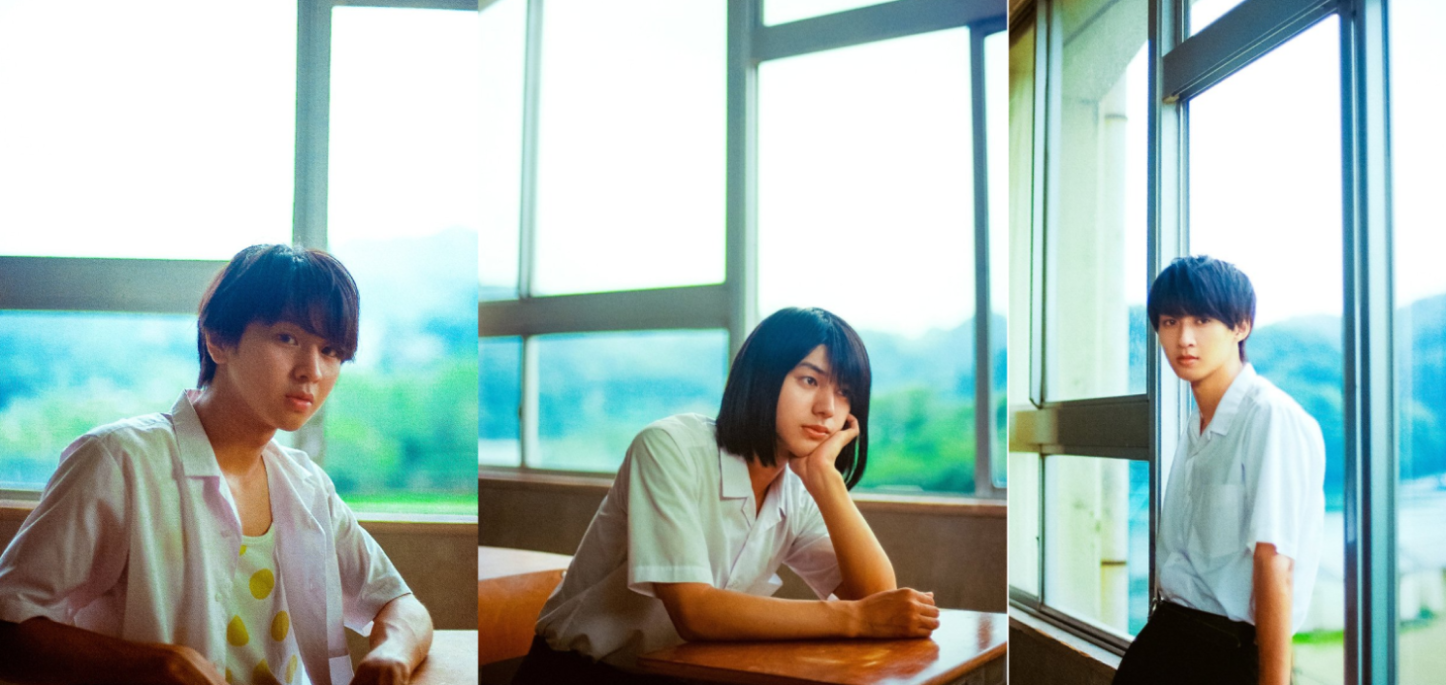 The Teen Characters of ‘Smells Like Green Spirit’
The cinematography is simple and warm-toned, capturing both the charm and chaos of rural towns. The house Futoshi shares with his mother is filled with 1990s clutter, giving it a lived-in feel, unlike the sleek, hotel-like apartments often seen in newer teen dramas. It also mirrors the slightly unpredictable and laid-back personalities of Futoshi and his mother. In contrast, Makoto, who comes from a wealthier family, lives in a more orderly, pristine home, reflecting the strict atmosphere and lack of creative freedom within his household.
The background score is understated, but in some moments, its groovy, low-key vibe subtly enhances the scenes it accompanies. The opening theme, “I’ll Be There for You,” with lyrics that might draw inspiration from the iconic Rembrandts song for the American sitcom Friends, is a nostalgic pop tune that echoes the show’s central theme of friendship.
Araki Towa, as the lead Futoshi, is undoubtedly the star of this 90s-themed coming-of-age tale, which credibly depicts the challenges of being closeted, especially in a small rural village dominated by gossiping aunties who run the local rumor mill. Towa’s Futoshi is kind, mild-mannered, with his head always in the air. And even though he isn’t vocal about his sexuality, he doesn’t make any extra effort to hide it either, making him an amusing capricious bundle of reticence.
In the second half of Smells Like Green Spirit, Futoshi is seen locked in a hug with both Makoto and Yumeno Taro on different occasions, each time as a gesture of support—an attempt to comfort a shaken Makoto, who is reeling from a traumatic event. However, the aunties twist these innocent hugs into lewd gossip, painting Makoto as “the good-looking mantrap who’s caught two different men in his net.” The way each family reacts to the gossip varies from mildly amusing to deeply unsettling, serving as food for thought for viewers.
Overall, Smells Like Green Spirit is an entertaining teen drama with an intriguing blend of comedic and serious elements. Given that some of the previous Japanese titles I’ve seen (‘Look Back’/‘Happy of the End’/‘Drawing Closer’) leaned more on the depressing side, I was quite anxious that Futoshi’s story might end in needless tragedy. However, he’s the kind of character you can’t help but root for to have a happy ending. Thankfully, Smells Like Green Spirit concludes on a bittersweet note, and even though the climactic episode feels a bit haphazard and rushed, it still delivers a fairly satisfying ending.
Rating: 8 on 10.
Read Next: Sugar Dog Life Review: Filling Plates, Romance on a Diet
Also Read: Nobody Wants This Review – The RomCom We Need (Short Audio Version below)
November 10, 2024
Look Back Movie Review: Where Art’s a Lifeline
Sneha Jaiswal (Twitter | Instagram)
Pro tip – Read the manga by Tatsuki Fujimoto first, and you’ll be able to appreciate the anime adaptation better.
Directed by Kiyotaka Oshiyama, Look Back—much like the original manga—follows the story of the exuberant, extroverted schoolgirl Fujino and her unlikely friendship with the reclusive Kyomoto, who never attends school. Fujino is the star of her class, thanks to her hilarious weekly comics in the school newspaper. However, the 4th grader is brought down a notch when Kyomoto’s artwork is published alongside hers one day, making Fujino’s work seem amateur by comparison. Initially, a fierce rivalry brews in Fujino’s mind, but once the two polar opposites finally meet, they quickly become best friends, bonded by their shared passion for drawing manga.
The film version of “Look Back” is faithful to its source material, but the animators make maximum use of the medium to enhance the storytelling. For instance, the manga opens with a funny 4-panel manga titled ‘First Kiss’ made by Fujino. In the anime version, the 4-panel strip is first shown as a static picture, and then it’s converted into a mini-animated joke, which immediately makes it funnier. To be honest – I didn’t even get the joke while reading the manga. And unlike the black-and-white manga, the animation is a colorful fever dream about the joy, madness, obsession, and loneliness that comes with making constant art.
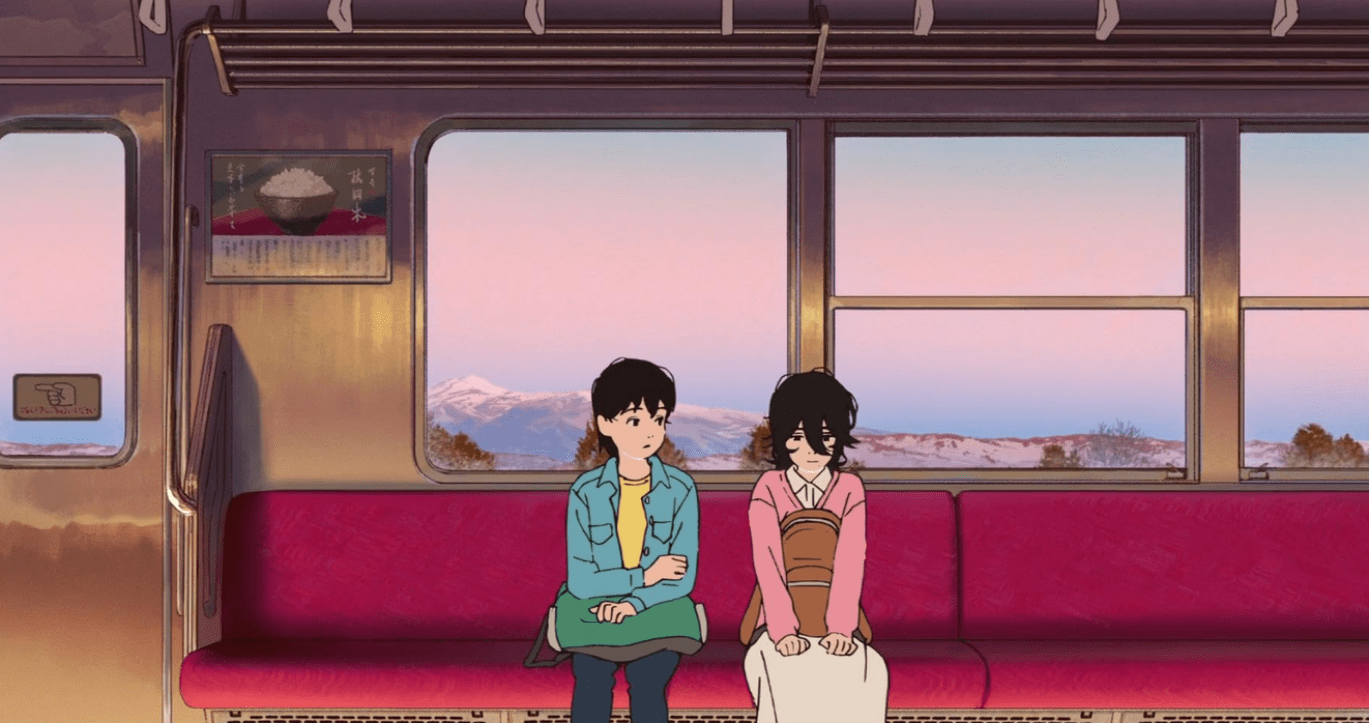
The clashing personalities of Fujino and Kyomoto is better captured in motion, with Fujino constantly fidgeting while drawing, while Kyomoto is more calm, and collected, despite being the more nervous of the two. Fujino is the story-teller, the one who is able to churn stories every week, while Kyomoto is the meticulous artist, who draws still life and backgrounds, so even though her drawings are more detailed, her art has no emotional ethos. Combining their talents together, the two small town girls start making full-fledged one-shot manga together, finishing their first one while they are both just 13.
With a crisp 58-minute runtime, the first half of “Look Back” is a celebration of art, friendship, and the unintentional ways people inspire each other to grow. Both Fujino and Kyomoto initially create art just to kill time, but as Fujino’s comic strips gain popularity at school, she thrives on the adulation. However, seeing Kyomoto’s more polished artwork motivates her to take her craft more seriously, while Kyomoto, in turn, is inspired by Fujino’s unwavering dedication to her weekly comics. Unfortunately, towards the end, the two young women part ways on a sour note, with Fujino becoming a popular Mangaka, while Kyomoto goes to art school.
Like the manga, Look Back takes a tragic turn towards the end, forever altering the lives of the two young women, with Fujino almost giving up art for the second time. I still feel it didn’t need to be quite so sad, but in the anime, it felt less jarring—perhaps because I already knew the story. If you watch the anime first and read the manga later, you might end up appreciating the manga more, as it offers a more layered perspective on the story. There’s a slightly confusing “what if” scenario towards the end, and depending on which you experience first (manga or anime), the story tends to make more sense the second time around.
In the end, Fujino ‘looks back’ on her friendship with Kyomoto and realizes that, even if she hadn’t become friends with her or brought her out of her shell, Kyomoto would have still pursued her passion and gone to art school. Fujino’s hubris blinds her to the fact that it’s Kyomoto who truly pushes her to greatness, and ultimately, she continues creating art as a tribute to her friend. If you’re looking for a bittersweet ‘slice of life’ tale on friendships and find tragic endings cathartic, this is absolutely worth a watch.
Rating: 8.5 on 10. Stream “Look Back” on Prime Video.
Read Next: Uzumaki Series Review: Not As Hair-Raising as Ito’s Manga
Also Read: Nobody Wants This Review – The RomCom We Need (Short Audio Version below)
A Good Day Will Come: Short Film Review
Sneha Jaiswal (Twitter | Instagram)
“Don’t get caught up in all this bullshit. Stick to what you know.”
Arash, a professional wrestler, is warned by his mentor to steer clear of politics and civilian protests in Iran. But if people always stuck to what they know, we’d still be living as hunter-gatherers, with minimal law, order, or progress.
Written and directed by Amir Zargara, the short film A Good Day Will Come is inspired by real events and stars Sia Alipour as the protagonist, Arash, who can use his sports career as a platform to stand with citizens against a corrupt regime—but he must weigh whether the consequences are worth it.
The short film opens with a somber scene of Arash working as a construction laborer by day, lining up to collect his daily wage. The rest of his time is spent training rigorously as a wrestler, striving to win medals for his country. His life in the spotlight as an athlete starkly contrasts with the harsh reality behind the scenes, the screenplay silently condemning the lack of jobs and dignified pay for athletes.
At about 26 minutes long, A Good Day Will Come is a poignant film with minimal dialogue but packs a powerful punch in terms of themes. A sequence in the second half, where Arash joins citizen protests in the streets, is one of the most intense moments in the film. The electric antagonism between the protesters and the riot police sent to control them is palpable. For those few minutes, I found myself clutching my head, anxious about the potential violence simmering beneath the surface.
The cinematography carries a grim tone, reflecting the anger, dissatisfaction, desperation, and helplessness of civilians under an oppressive regime. Sia Alipour delivers a subtle performance as Arash, a wrestler initially portrayed as just another bystander in the grand scheme of things. However, he ultimately chooses to step out of the shadows and take a bolder stand alongside his fellow citizens. And the price of standing up to someone powerful, is almost always too high.
While A Good Day Will Come ultimately ends in tragedy, its climactic scene is an unlikely mix of hope and despair—hope that a new generation will continue to fight for their dreams, freedoms, and rights, even when the current tide seems entirely against them.
Read Next: Do Patti Review: Cop Kajol Unravels Kriti Sanon’s Seeta-Geeta Act
Also Read: Nobody Wants This Review – The RomCom We Need (Short Audio Version below)
November 9, 2024
Plain Jane and the Mermaid: Graphic Novel Review
Sneha Jaiswal (Twitter | Instagram)
If I had to purely rate this for Vera Brosgol’s beautiful, colorful, expressive, joyous artwork, I would rate ‘Plain Jane and the Mermaid’ a 5 stars on 5! But unfortunately, the story doesn’t complement the creator’s stunning panels at the same level.
What’s the plot? Jane is a young woman on the verge of being thrown out onto the streets, despite being the daughter of a very wealthy couple—because they’re dead, and the story takes place in an era when women weren’t allowed to inherit property. Enter a distant, wicked cousin who arrives to claim Jane’s mansion, giving her just a week to vacate. With nowhere to go and no one to turn to, Jane’s only way to avoid destitution is to marry someone, allowing her to claim the generous dowry owed to her. But the only man who might marry Jane (to get away from his own family), is kidnapped by a mermaid, so Jane must save him and secure her freedom!
The first half of “Plain Jane and the Mermaid” wasn’t too fun to read, especially because everybody around Jane mocks her being ‘fat’ and ‘ugly’, and if that wasn’t bad enough, she seems to have no personality. I know this is fantasy fiction, but I couldn’t help feeling a bit irked by the lack of clarity on when the story is set. If it’s meant to take place a couple of centuries ago, people back then weren’t exactly obsessed with women being thin. Anyway, for a book whose ultimate message is about embracing oneself and rejecting societal beauty standards, Jane herself is very shallow – she is in ‘love’ with the prettiest boy in town, for no other reason except his good looks. “You could spend all day fixing your hair if you wanted,” Jane tells Peter, when he asks her what he would be doing if they get married. So she just likes the boy because he is beautiful and vain.
“Plain Jane and the Mermaid” becomes exciting only in the second-half, with a few new twists and legendary sea creatures being introduced. Vera uses familiar sea legends, like depicting mermaids as seductive sea sirens who lure men for their own needs. Although, the mermaids in this graphic novel aren’t as black-and-white, some are wicked to the bone, others are surprisingly kind.
Jane’s underwater adventures to save Peter from the mermaid is kinda fun and the only character I really liked in this graphic novel was a seal she befriends and calls ‘Mr Whiskers’. In the end, Jane finally decides to take destiny in her hands and learns there might be more ways to save her future than marry the prettiest boy in town. But it’s also more luck, than her own wit or hardwork that saves Jane from being reduced to rags. Overall, thanks to Vera Brogsol’s artwork, this graphic novel might be worth a read.
Rating: 3 on 5.
Read Next: The House Graphic Novel Review
Also Read: Nobody Wants This – Netflix Series Review (Short Audio Version below)