Andrew Barrett's Blog, page 5
June 4, 2016
To Hell With It…
I’ve seen it often, where writers become disillusioned with ‘writing’. But they’re not disillusioned with writing they’re disillusioned because of the marketing that attaches itself to their favourite typing finger like a… well, I’ll leave it to your imagination.
We all read about people who’ve made it big as a writer, and we read about marketing courses that’ll help us get there, at great expense. It’s tempting, isn’t it? I mean, how to pay your way out of the doldrums and into the limelight. Got to be tempted, right?
Well, no, not really.
I’m not a great writer, probably never will be. But guess what, I enjoy it. And I’m fairly sure that most of my readers enjoy what I write. And that’s a meal that’s as good as a feast, right? No, not really. I want to be applauded, I want to be admired, emulated, and I want people to rave about my books and have ‘Friends of Andrew Barrett’ groups on Facebook. It’ll never happen, and I’d be lying if I said it doesn’t bother me. But I have to face reality.
And this is my reality: I will never give up writing just because some publishing house doesn’t want me. I will write for my own enjoyment (remember doing that, huh? How great it was – no pressure, just pleasure), and hopefully for the enjoyment of others. I’ve spent so long following the masses down the dead end to success that I forgot why I slave away on the keyboard for hours as I grew older and no wiser.

I think the key to success is quite simple really. Write the best story you possibly can and launch it. Word of mouth is the most powerful marketing tool there is. And keep the money you would have spent on expensive marketing courses to have that well-earned night out with the spouse.
Just this last week, I’ve seen two authors – good authors – almost ‘resign’ as writers because of the despair inflicted upon them by poor sales and by the pressure of money-making men promising things they can’t deliver. Time to be honest with yourself: write for the love of it, to hell with everything else.
Username
E-mail
A password will be e-mailed to you.


May 27, 2016
New Covers
And so today finally sees an end to the revamp of the Barrett book covers. I’ve enjoyed learning a little bit about image manipulation, though it must be pretty obvious to those cover designers and graphic artists out there that these are just the doodlings of an amateur.
I didn’t go to a book cover designer for a number of reasons. Firstly, I couldn’t afford one – always an important consideration! Secondly, I wanted to learn a new skill – and although I’m many years away from even being competent, I feel a little better about the whole process. And lastly, I like the idea of being in control – of everything: from the story, to the editing, to the covers, and marketing.
This last statement ranks me in the ‘Jack of all trades’ territory. I accept that. But I can look at my books with a certain amount of satisfaction and say every bit of them is me.
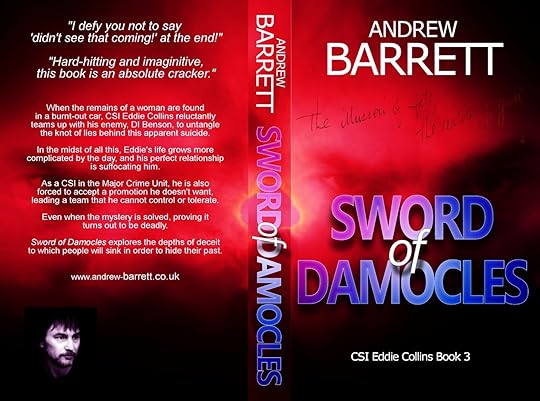
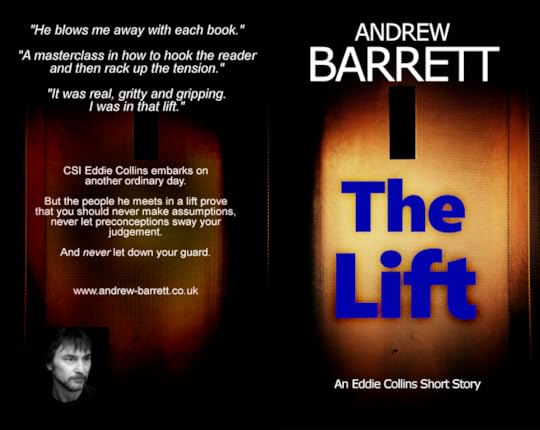
Enough of the sentimental clap-trap, here are the final versions of Sword of Damocles and The Lift. Hope you like them.
Username
E-mail
A password will be e-mailed to you.
May 21, 2016
Coughs and Covers
I left work in mid-April for a well-deserved break. During this ‘break’, I redecorated the lounge, did the garden (my weeds are coming on a treat!), and developed a rather grating chest infection.
As time for my return to work neared, the infection worsened. I did go in, you’ll be pleased to hear, but was sent back home again at lunch time. Several courses of anti-biotics didn’t help, and finally the doc said I had pneumonia. Now there’s a turn up for the books!
I’ve known other people stricken with pneumonia, and they were really ill, on a drip, stuck in bed, debilitated. This didn’t happen to me though. Apart from the obvious symptoms, I was able to remain perfectly mobile, and felt well except for an intense cough that saw me pass out once or twice. I had the dizzy spells, and constantly felt weak, drained of energy (still do).
While I couldn’t go into work, I’ve managed to keep myself occupied doing little bits on the computer every now and then.
Those little bits include writing another Eddie Collins short story entitled The Note, and re-vamping the book covers. I’ve had a blast with Corel Paintshop – it’s a good game seeing how many times you can get it to crash over a ten minute period, usually the ten most productive minutes. Anyway, most of them are done, although I reserve the right to tweak them again in future. Just need to fettle Sword of Damocles.
And then there’s the book, Ledston Luck. I’m sorry to say I haven’t made much progress with that in so far as word count is concerned. I have however, made progress with it inside my head: I now know how the story pans out. And let me tell you, providing I can morph those scenes in my head into the written word, the book will be great.
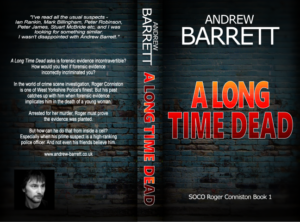
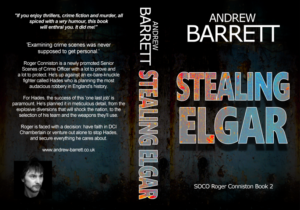
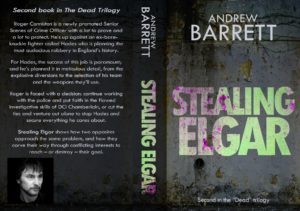
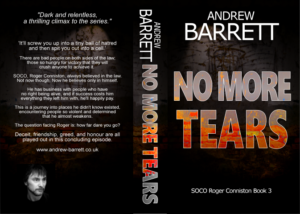
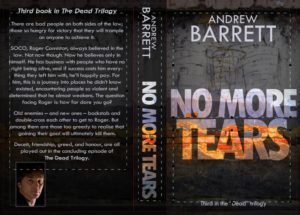
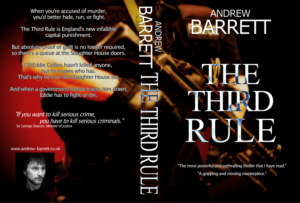
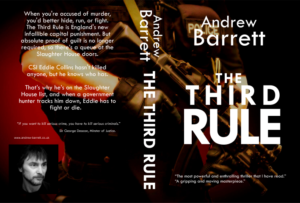
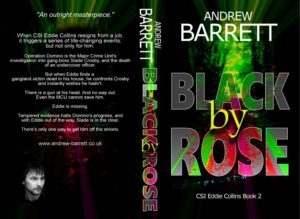
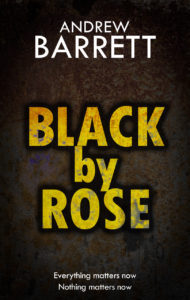
Want to see the new covers? Okay, here they are, in comparison to the old. Some have changed completely, others not so much. But either way, I’d love to hear what you think of them. Don’t be shy.
Username
E-mail
A password will be e-mailed to you.
February 23, 2016
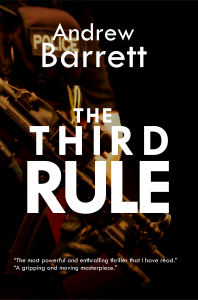
The Third Rule – Selling my Soul
Just into its third day, so I thought it appropriate to share how it’s doing out there in the big wide world. In two words: very well. In three: very well indeed.
When the Beatles ‘cracked’ America, it seemed the world had lost its marbles. There were scenes of youths passing out after being starstruck, of crowds running to catch a glimpse of their new heroes, of queues a mile long anywhere Beatles merchandise was for sale, or anywhere they were playing.
This has not happened to The Third Rule or to its author.
But in my own small way, I have cracked America. For two consecutive days, The Third Rule has sat on the top step in the Police Procedurals category and briefly peeked inside the elite world of the top 100 overall. So far nearly three thousand people have clicked ‘Buy it now’, and to each one of those three thousand, I say thank you – this little author is indebted.

In the UK, The Third Rule has been inside that sub-100 club for several days, and let me tell you, the company here is terrific.
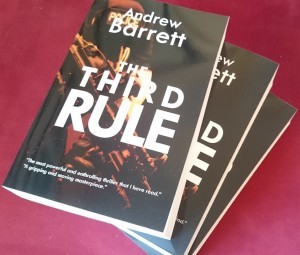
So far the paperback sales have left a little to be desired. I have ordered more than the worldwide public. And I only ordered three! But that’s fine; to know it’s there if anyone should choose is just dandy. It’s a large book (6” x 9”), and it weighs only slightly less than a house. But let me tell you, it looks great on the shelf.
But am I selling my soul? I hear often that people have ‘To Be Read’ books on their ereader that number in the thousands. They see a freebie and dive on it – owt for nowt, eh? I personally hate having a large TBR file because I then feel pressurised by the OCD part of me to clean the damned thing up. But I understand this mentality: there are some wonderful books out there, and the authors are giving them away!

Well, as everyone else who sells their soul, I only hope that some of those books are read, and some of them go on to buy the rest of the books in the series. This has happened, and I pat myself on the back (not easy) for employing such a cunning strategy. And really, with so many authors using this technique, it’s become impossible to break away from it. It’s often the only technique available.
So yes, I am selling my soul, but I hope to spread the word, and I hope that people eventually get around to reading The Third Rule because, like every other author who plies their wares, I put my heart and soul into those words and would love the chance to do more of it.
Username
E-mail
A password will be e-mailed to you.
February 18, 2016
My Way – Part Four
Writing rules.
By now you know what I’m like for following rules. Not too keen – unless they’re necessary. Too many of today’s rules in all aspects of life are there just to confound us, or to delay us, or impede us. Most rules are created by buffoons in their plush offices, so far removed from everyday life that they might actually come from another planet. But some rules are good, right?

When I write, there are some rules I actually try to follow. The Anti-Repetition Rule of 1968 is quite a good one to be aware of. How often, when reading through a first draft, have you seen the same thing twice on a page, sometimes twice in the same paragraph? In a first draft, it’s acceptable – you’re in ‘stream-of-thought’ mode, and everything is acceptable. What’s not acceptable is seeing it in a finished work. The same point made more than once is an indication that the author felt he didn’t quite make the point with sufficient force the first time around so he gives it another shot. If you notice this, then the author did make his point the first time around!
Another reason for this kind of repetition is that he thought of a better/more clever way of putting it across – this tells me that the author couldn’t choose which one to use! Come on guys, sharpen up your act, or you’ll find your book in the ‘Shit’ file on someone’s Kindle.
You want more repetition stuff? Clause 2 in the above Rule states that authors must keep the use of name tags to a minimum. How often have you seen a character’s name appear after every sentence they speak? Does it get on your pip? Yeah, me too. Name tags like this should be used sparingly; in fact, you should be able to write a complete page of dialogue and get away with just two tags – one for each of the two characters involved in the exchange. Okay, you could throw in an extra couple just to make sure the reader stays on track, but your characters and their situation should provide sufficient information for the reader to instinctively know who is talking at any one time.
Even now in my own writing I can see repetition, not usually on the same page, but certainly across several chapters where one character is feeling the pain I gave him and simply won’t shut up about it. To those who’ve read it and noticed it, I apologise, and I constantly strive to do better.
The Passive Sentence Act of 1976 states that using passive sentences can seriously weaken one’s prose and should be avoided if at all possible.
Check this out: Most rules are created by buffoons in their plush offices… This would read much better if the author had said: Buffoons in their plush offices create most rules… It’s better isn’t it? Well, I think so. That’s not to say I don’t still use them; sometimes they’re necessary, or they actually read better, or make the meaning you’re trying to get across clearer. All I’m saying is be aware of them.

Fragments are great.
I like them because they break up swathes of text, and they have the power to shock if used right; they certainly have the power to amplify a point. So when the wiggly line beneath your fragment warns you of a rule infringement, don’t ask yourself if that frag is absolutely necessary, ask yourself if the writing would suffer without it!
Cliché is always the bearer of bad news. I’ve never known a cliché add something positive to a piece of exposition – except one about the weakness of using clichés perhaps. The only time I will knowingly use a cliché is when it falls from a character’s mouth – and even then it’s there to demonstrate that he’s intellectually challenged and can’t think of anything better all by himself. If I spot a cliché in a sentence, I kill it dead. If I can’t think of a better way to illustrate the point other than use a cliché, I elect not to illustrate the point.
The same goes for originality. Okay, it’s on a much larger scale, but if I can’t find a way to tell a story without using a way that’s already been used, I’ll move along to the next story idea. In the past I’ve come up with a wonderful idea only to learn afterwards that some bastard already wrote it. Nothing I can do about that – no one can ever accuse me of plagiarism.

Simile and metaphor. How I adore these two things. They are nearly the same thing – just that metaphor is the big brother of simile. Both can only enhance a story (if used sparingly – come on, not every sentence has to be illustrated with a simile, and not every theme or object has to be broadened or compared by using a metaphor) and draw a reader deeper in to where you lie in wait with your fragment! Seriously, use a metaphor to expand the theme of your scene and it comes alive; it makes showing rather than telling become your natural way of writing. Use a simile to inject a bit of colour in what might otherwise be a dull but necessary sentence too. When searching for them, be very careful not to fall through the trap door into Clichéland.
Username
E-mail
A password will be e-mailed to you.
February 12, 2016
I Blame Eddie Collins
I blame Eddie Collins.
You know when you get to Sainsbury’s for the fish fingers for tonight’s tea, and you curse because the carrier bags you’d set neatly aside on the hallway table are still there? These are the carrier bags you’d bought on the last shopping trip because the ones you’d bought the time before are also on the hall table.
My point is that these little annoyances throw a spanner in your day, and I try so hard to eradicate them.
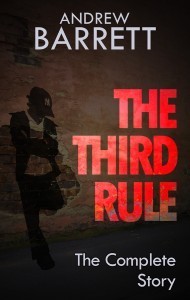 The old cover
One such annoyance, other than perpetually forgetting the carrier bags, is my constant inability to put my life in order. Take my e-books for example. All are available from Amazon, and also from other platforms, but the paperbacks (and I believe you should offer paperbacks – some people, myself included, often prefer the feel of woodchip over microchip) are scattered between two publishers.
So I’ve begun hauling them all across to Amazon’s CreateSpace.
That was the plan. But I thought about The Third Rule for some considerable time. I thought it an unwieldy tome, and how it would read better if I worked on it. When it began life in 2004, it wasn’t part of a series; it was just a good old stand-alone crime epic to get your gnashers into. Born out of The Third Rule was the lead character, Eddie Collins. And I liked him. He was a bastard most of the time – to his colleagues and even to the public – but he had redeeming features which became obvious throughout the course of the book. Anyway, I didn’t want to ditch him and begin another book using someone else. I wanted Eddie.
So I used him in the following books, Black by Rose and Sword of Damocles. And I’ll use him again in future books. I like him that much, yes.
That made The Third Rule part of a series and not a stand-alone crime epic. And its size made it the odd one out. As you know from a previous post, I managed to whittle it down by 70k words – I modernised it! And this new edition needed a new coat and a new blurb. So here they are.
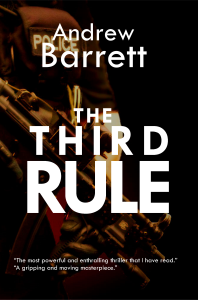 The new cover!
And here’s the blurb too…
Capital Punishment is back!
When you’re accused of murder, you’d better hide, run, or fight.
The Third Rule is England’s new infallible capital punishment. But absolute proof of guilt is no longer required, so there’s a queue at the Slaughter House doors.
CSI Eddie Collins hasn’t killed anyone, but he knows who has. That’s why he’s on the Slaughter House list, and when a government hunter tracks him down, Eddie has to fight or die.
“If you want to kill serious crime, you have to kill serious criminals.”
Sir George Deacon, Minster of Justice.
Username
E-mail
A password will be e-mailed to you.
January 26, 2016
My Way – Part Three
Writer’s block.
I suppose since so much has been written about writer’s block, it must exist. I’ve been stuck several times. Most notably in my recent past, I was stuck on how to end The Third Rule. I wrote no less than six endings for that book until I chose the one that felt right. I followed the little rule above (My Way – Part Two), where I selected what was emotionally right for the character as well as the story and eventually it fell out of the keyboard by itself, quite satisfactorily.
You have to know about the scene you’re trying to write, you have to know where you want it to end – by that I mean that each related scene must logically follow on to the next in a chronologically and emotionally accurate manner – not necessarily how it appears in the book, there might be another half dozen scenes featuring different characters in between them – but you have to know what job the scene you’re stuck on is there to perform and work towards it. If you don’t know what its job is, then how can you write it? This is where the flow chart might come in handy for you: it’ll help determine where in the story this particular scene fits, give it a purpose, and give you the tools to crack on and write it.
You only have writer’s block when you don’t know what you’re trying to achieve.

Sadly, I too suffer from this; but my own version of writer’s block is determining what story to write. Now, for instance, I’ve finished Sword of Damocles, and have a few hours to myself. I could slap myself for not using this time more wisely to get on with writing the next Eddie Collins story. Instead, I’m sitting here writing a blog post on how I write. Der!
Editing.
I have several failings as an editor. Firstly, I don’t let the book cool down enough after I’ve finished it. I consider the length of time it took to write the damned thing enough of a time gap in order to go back to the beginning and start editing. I am so very wrong. In almost every case where I’ve read a piece of my ‘edited’ work months after I published it, I have been able to make it better or spot the errors I was blind to back then.
I do not like this. But I justify it to myself thus: Improving a manuscript over time is easy because you are an improved reader and so an improved writer. If I were to live by this philosophy, I would never publish anything. I accept that there will always be areas in which a story can be improved, but you have to stop somewhere, don’t you?
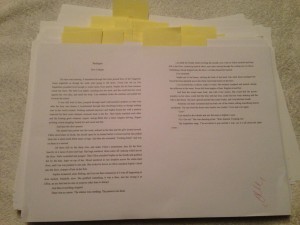
I find it easiest to spot the typos and inconsistencies from a printed version rather than on screen. I’ve pondered this anomaly and cannot think of why it should be so. But it is, I recognise it as a fact, and I always do it this way.
Also, I’m not actually very good at reading. I mean I read like most people do, in that I see what I want to see, so am rubbish at spotting omissions and general errors. I’m extremely lucky in that I have some good friends who not only love reading but who have the eyes of a shithouse rat and excellent mindsight. I am in awe of them.
And there’s another reason why I’m not especially gifted when it comes to editing: when I’ve finished with something, I like to move right along to the next project. This is a failing of mine since a work in progress is not actually finished until it’s actually finished. You get the idea; I’ll resist the urge to waffle on this one further.
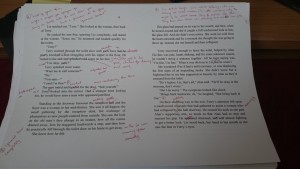
But before I leave the Editing section, I let you into a secret foible of mine. I can only edit with a red Bic pen. It also has to have a fine tip, not medium. And if I make notes about the story as I’m reading through it, (and I also do this during the story’s construction) I use a 0.5mm mechanical Staedtler pencil fitted with HB lead, writing on an A5 spiral bound pad. I hate using pen because it looks messy, and I love how the pencil feels in my hand and I adore how it writes, so free and easy. I know, I know, crazy bird!
Username
E-mail
A password will be e-mailed to you.
January 12, 2016
The Third Rule Reincarnated
The new series of books, the ones featuring Eddie Collins, have always done pretty well. They sold steadily and people seemed to love them. The Marmite book in this series has always been The Third Rule, and for one reason: its length.
Most books are 80k to 100k words long. They are an easy read and you can get through one in a weekend or over a few evenings. The Third Rule, however, is a bit more of an epic at 260k words. A lot of people, I’ve been told, shy away from the bigger book because they feel progress through it isn’t as quick as they’d like it to be.
So I’ve done something quite radical. I’ve condensed it.
Since October 2015, I’ve dedicated all my spare time to whittling the book down to something more manageable. It’ll be easier to sell, easier to promote, and quicker to read. I’ve killed a massive 70k words in the process, which means it’s a lot sharper, has less repetition too. It’s almost a whole book shorter!
To get the word count down, I was tempted to remove one or two characters and their entire storyline, but doing that would have removed essential illustrative parts of the book. Instead I’ve chopped one or two less essential scenes, blended together some others, and restructured parts of the novel.
You might recall from an earlier post that I began The Third Rule in 2004. I like to think I’ve matured a bit as a writer since then, and was able to hack away more unnecessary bits and pieces thanks to tricks I’ve learned since then.
Keep your eyes peeled for the re-launch, where The Third Rule, second edition, will feature a new cover, and where for the first time, it’ll be available as a paperback from CreateSpace.
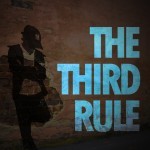 Atrocities
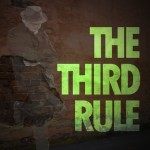 Running Scared
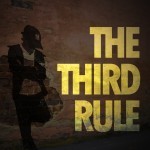 Sacrifices
One last thing. I considered running this new abridged edition alongside the ‘old’ epic, because I’m aware that some people still enjoy a long book. But I need to tidy up my wares and bring them all into line. Similarly, I’m pulling the individual parts of the books – Part One: Atrocities, Part Two: Running Scared, and Part Thee: Sacrifices. I originally split the book into parts simply to appease those who wanted shorter, more easily digestible, pieces. The abridged version negates that, and pulling them also fits in nicely with bringing the whole catalogue into line.
Username
E-mail
A password will be e-mailed to you.
August 29, 2015
My Way – Part Two
Here we continue the short series of blog posts that endeavour to share how I write. It’s not meant to be a classroom affair, nor is it ultra analytical; it’s meant to be a little informative and perhaps a bit of fun. Each heading is a ‘fuzzy’ heading because the essence of writing is not easily broken down into true segments; each merges into the other.
Writing
At the beginning of my career (I’m allowed to call it that, right?), I panicked a lot. After reading a book, I wrote like the author had. For example, when I finished The Stand, my authorial voice grew an easy American twang that I simply couldn’t break free from. Same with Bernard Cornwell’s books – I developed a rich English slant that really wasn’t ‘me’ at all. On occasion though, especially with the American twang, it had the effect of catapulting my writing forward at great speed, and I soon realised why.  I was trying too hard to sound authorly, and using someone else’s voice allowed me to break away from my own inhibitions and just write – and just enjoy writing. It was faster, flowed better, read easier, and made more sense.
This realisation hit me half way through the second book of the first trilogy: Stealing Elgar. You won’t know it because it’s been edited a thousand times since, but A Long Time Dead was stifled, it read like a series of bullet points; it had no flow. In Elgar, I made the conscious connection between my mind and my writing voice – it was almost something physical, something I could feel happening.
So the greatest thing to happen to me was being able to let go of those silly self-doubts and  artificial constraints that I’d chained myself up with. The style you read in today’s Eddie Collins books is my style. It isn’t copied from anyone. It’s mine. And it comes to me as easily as breathing; I wrote Black by Rose in about five months. Its only edit was correction of typos, and a quick polish or two – aside from making sure there were no chronological or continuity errors of course. What you read there is almost precisely how it came out the first time round.
And here’s a little tip that might actually help! I believe there are four levels of thinking (I hope to write a blog about this a little later), and when you’re immersed in Level 3 thought as you construct your story, have a go at listening to music that best reflects the mood of the scene you’re writing. I promise, if you’re struggling to achieve the authenticity that the scene deserves, this really does work. If I want Eddie to be downright nasty, rude, or even if I just want him in a strop, I listen to a bit of Ozzy Osbourne, or AC/DC, or Halestorm.
 My latest phonograph for the best tunes
If on the other hand, I’m writing a thoughtful, emotional scene, maybe one where – if this was a film you were watching – you’d shed a tear or two, play something mellow, something ‘deep’ (we’re in Level 3 thinking mode here – ‘deep’ is a pre-requisite!), which for me includes Enya (laugh and I’ll poke you in the eye!), some old Queen (no, not some old queen, read it again), a little Taylor Swift (just discovered her, some good stuff in there)… you get the idea.
Of course if I’m not struggling, then I prefer silence every time.
I once tried listening to some classical music for the triumphant and uplifting feeling it can generate, but I failed to get hooked on it. That’s perhaps because I spent most of the evening listening to five-second samples of it, searching for the one that would carry me away. They all sound the same in five-second sound bites so I gave up.
So that’s the theory of my writing. What about the logistics? What happens when I get stuck?
I only need ask myself one question: what would the character do in this situation? Okay, scratch that – I ask myself this one too: what would be the most realistic way that this crisis would end? Occam’s razor: “Entities must not be multiplied beyond necessity.” In other words, choose the simplest path.
In this instance, I outline the problem, and from it draw a series of lines radiating from its centre. At the end of each line, I summarise what could happen. From this summary I extend the line to include whatever knock-on effect that particular action would initiate.
 A flow chart from Black by Rose
Eventually, I arrive at two possible paths in which to proceed (I suppose this section harks back to the Planning section), and I’d choose the one that I felt most attracted to emotionally, rather than the one that appealed to me through practicality. Emotion is the driving force of you and me, of your character and ultimately of your story. This then becomes what would happen, which in the final draft, becomes what did happen.
Okay, the logistics of my writing. I use a Logitech solar keyboard. I’ve been through a dozen or so keyboards since I began this writing lark, and this one is by far the best. It has a very short keystroke, a pleasing ‘tink’ when the key bottoms out, and is very attractive to the eye. I’m not one of those writers who trained to use a keyboard. I can type while not looking at the keys, but there’s a lot of red on the screen when I do, which doesn’t really bother me.
 The very latest technology
Instead, I look at the keyboard while I’m smashing away at the keys, glancing to the screen only occasionally when in full flow (but obviously reading what I’ve written when I come to a natural pause). As I’m typing this now, I realise that I don’t actually look at the keys at all; I look through them. I’m staring right now at the ‘t’ and ‘y’ keys and my fingers are just a raggedy blur to each side. This is me sinking into my story, looking at my character’s face, hearing his thoughts, and shrieking at what comes out of his foul mouth.
I find that if I watch the words appearing on the screen, then that’s what I’m doing: watching the screen. I should be observing my main man, and disappearing through the keyboard and absorbing the crisis he’s engaged with, which helps me a lot. It especially helps me with the character’s mood. I try to gauge the mood he’s in as a result of whatever crisis he’s lumbered with, and if I keep myself away from physical things by staring through the keyboard, I can maintain that mood or move it along to the next natural mood he’d encounter in a much smoother fashion.
As I mentioned above, when I do sit back and study what I’ve written, I can see the flow of words, and I can hear them. Do they sound right? Is that sentence clumsy? Is it really what I was thinking when I wrote it? I also see other things too, like a word I’ve used too often (okay, I’m a guilty of this – I’m not perfect!), or the very real fact that I’ve skirted around what I meant to say and have not made the point at all.
 My desk, my home, aaaaah.
 Note secondary desk lamp for ultra moodiness
I try to keep myself away from the physical world around me while I type. I have two screens – one has the story I’m writing on it (always on the right hand screen), the other has the Chapter Profile. I have a keyboard that I feel comfortable with (if you wear your favourite slippers, they eventually disappear from your conscious mind, and that’s where I am with this keyboard), and I have a sheet of red velvet across the desk (thanks Kath!) that stops my arms sticking to the wood when it’s hot in summer, and stops them feeling the coldness of it in winter.
I have a lamp nailed to the wall above me. Its light shines at the ceiling and is diffused enough to cast an even pool of light over my desk. All around me doesn’t exist. My desk faces a wall where I have a few choice pictures pinned – but I rarely look at them. The blind over the window to my left is never open; I like the consistency of my artificial pool of light, and get quite cross when the sun comes through it, especially on a windy and cloudy day when the sunlight is weak then strong then weak… I have a footstool under my desk for those moments of contemplation where I sit back in my chair and read the screen or immerse myself in deep thought – I want no pinprick of discomfort to pull me out of the story, I want no distractions.
When the neighbours are being noisy, cutting grass or whatever, they’re pulling me away from the story. I counter this not with music (or automatic gunfire from my roof-mounted sniper’s nest), but with a rainfall soundtrack turned up high enough to obliterate them. Sharp intermittent noises play havoc with my thoughts, but a constant drone, a washing machine for example, or my rainfall track, soothes me, and allows me a swift exit from those around me.
On my desk I have a 1966 sixpence (my birth year) which is the first coin I ever remember holding. I have a few spent 9mm shell casings, some heavily distorted lead from a shotgun slug, and a few rifle rounds alongside some gifts from special people – oddments to carry me away somewhere new.
As an aside, I hate new pages. I used to write my books longhand in an A4 pad.
 First Draft of Charlotte’s Lodge 1991
And I would cram words onto each page simply because I hated turning over and starting on a new blank page. I could fit something like 800 words onto one single page. And it’s the same now that I use a computer. I’ll often continue on the same page when I begin a new chapter, just so I don’t have to see a blank page with the words Chapter Six (or whatever) waiting patiently for me to crack my knuckles and begin punching the keys. Maybe a psychologist could shed light on that one.
Username
E-mail
A password will be e-mailed to you.
August 11, 2015
My Way – Part One
So how do I do it?
We’re talking here about writing, so all you smutty heads will be disappointed.
First of all, let’s start by injecting a little sobering and thought-provoking pep talk.
This is a short series of blog posts on how I go about my business of writing. I made up everything that follows! I have no more qualifications in creative writing than I do in Quantum Mechanics. This is all my opinion; it’s how I work, and the methods in this piece are those I’ve learned or have tried for myself. If you follow my advice and end up a penniless bum with nothing to your name other than a dream to write, then don’t try to sue me, for I too am a penniless bum with nothing more than a dream to write. If however, my advice leads you to great wealth and fame, please pop by for tea and biscuits. You’ll need to bring some tea. Oh, and some biscuits.
And for all you penniless bums out there clutching at your pencil and your writing pad – welcome brother; let us dream together.
Ideas.
Usually a scene will occur to me first and then I’ll grow a story onto it. It’s very organic, but a little scary as the end result can be monstrous. I think people call this technique and this style of writer a ‘pantster’. I’m one of the few authors I know of who generally struggle to come up with ideas though. I suspect that’s because I like to have an idea plop into my head that’s fully formed – a whole story, in other words. And I’ll often dismiss ideas that do show themselves simply because they’ve been written about before, even if I know I could give the tale an original slant.
A lot of authors seem to have ideas occur to them all the time, even bits of ideas. That doesn’t often happen to me. If nothing plops into my mind, I begin prodding and poking at the box inside my head labelled Novel Ideas, but that never works out right. I can see the box closing tighter and tighter the more I growl at it. Only when I chuck away my prodding stick and walk off does it seem to relax and maybe open of its own accord.
But for me, coming up with a plausible idea is very difficult and often tedious. And I cry a lot in frustration. Sometimes I have moments of exceptional clarity where a very appealing idea will arrive, smartly dressed, and with a smile on its face. And each time this happens, something distracts me, and I turn away for a second or two and when I look again, it’s gone, a small cloud of dust where it once stood. Infuriating doesn’t cover it.
Planning.
I am the worst planner in the world. I don’t plan. For Black by Rose, I formed the story around a robbery scene I had in mind, and then promptly got stuck. So I made a flowchart on a sheet of A3 I had kicking about. It had all kinds of ideas branching off in all kinds of directions. There was a whole spectrum of ideas coming from that thing that ranged from impossible to improbable, and I basically drew a route through the whole page. That got me going again, but mostly I was winging it.

In The Third Rule I did do some planning, but only the background. I researched it in minute detail so I knew exactly what I was talking about. All the laws and policies I’d created regarding The Rules were fixed in place in my head and I could just get along and write the story (I learned a lot about British law, the judiciary, and politicians along the way). I kept an A4 bound book of all my notes too so I could refer back to it when I needed to, and it helped me eke the story forward too, letting me know what scene should come next. But there was still no forward planning.
In Stealing Elgar, I also kept a note book. It all happened a long time ago, but I do recall simply going down a list of the scenes I needed to write and ticking them off. I look back on that book with envy, wishing I could do that these days. This made for some really quick writing, and it’s a technique I’d like to employ again.
But in every modern book that I’ve written on my computer, I create a file which I call the Chapter Profile.
 Chapter Profile
It’s headed with a chapter number, page count, word count, one-sentence heading, and day/time the scene takes place. Below this heading I write a brief summary of what occurred in this scene, who was present, and what the important aspects of it were so I could refer to it any time. Keeping this up to date is vital. In Sword of Damocles, I used this extensively to help me rearrange all the chapters and all the scenes within the chapters to make sure it was chronologically correct. It helped me find inconsistencies and continuity errors – well, some of them. And then, it also helped me equalise the chapter lengths and so avoid some 50-page chapter.
Alongside the active document, I like to use the navigation tool on Word. It’s invaluable and I cannot write without it being there. It’s another chapter marker. The text box though is very short but I like to get as much information into it as I can. Then swapping chapters or scenes around is a doddle: drag and drop.
 Navigation Pane
All of these aids are great to refer to when making up the story, propelling it forward, or correcting it afterward, but they’re all retrospective aids. I still don’t know how to actually plan out a story.
Username
E-mail
A password will be e-mailed to you.