Andrew Barrett's Blog, page 2
March 28, 2020
The Surprise of Plot Bunnies
Andrew Barrett.


February 29, 2020
Squeezing the First One Out
Just as we hit the third month of the year, I squeeze out my first blog of 2020. Doesn\u2019t sound very glamorous that, does it. Hmmm.\n
[image error]Andrew Barrett.
December 30, 2019
Goodbye 2019
December 20, 2019
The Person Behind the Author
You should write a new blog, someone told me. How about what the person behind the author is really like?
Okay, I said. I’ll give it a shot. Here it is.
I’m 53. I’m too old to give a damn, and I’m too young to know any different. I write books because I have to. If you’ve never written a book then you’ll have no idea what I’m talking about; if you’ve never attempted to write a book, or perhaps have never read a book (oooh!) then you’re probably looking for the little X in the top right corner. It’s up there – yeah, top right. Go ahead and click it. Bye.
If you have written a book – even if you’ve never had it published, and even if you don’t want it published – then I bow to you. No, lower than that. Down a bit – there you go. No, not that low!
If you’ve attempted to write a book and failed, you have my sympathy. They are devilishly difficult at times. And impossible for us mere mortals to master.
I’ve written a dozen or so (who’s counting), and they are difficult things to wrangle, let me tell you. Let’s put aside all of those writer-aids you hear about, the Plot Master, the Timeline King, the Character Ninja (stop Googling, I made them up), and talk about the logistics of writing.
Writing involves an awful lot of thinking about writing. Most frequent are the ‘what if’ questions that pop up all the time, and the continuity puzzles, ‘If this happens, then this must happen too’.
These are some of the things I regularly think about:
My lead character. I want you to like him, but I’ll be darned if you think I’m going to make him/her a lovey-dovey person who hands out sweets to kids and rescues stuck cats. If you want that kind of character you won’t find him/her in books. I want you to like my lead character on a subliminal level because that holds more power than your conscious level. I want you to overtly dislike him, and yet find him interesting or even attractive (even though you don’t know what he looks like because I’ve never described him). I want you to find him interesting enough to follow his story – even unwillingly. And I want that because I like the idea of you being drawn to him, inexplicably rooting for him, yet safe in the knowledge that you’re in good hands.
My story. It’s an evolutionary thing; it grows and it develops, and the longer I dwell on it, the deeper it gets. I keep adding details – the rust on the knife blade (why did they not use stainless steel!), thoughts and feelings, and if I can eke out a theme or a parallel, you bet I will exploit that thing as much as I can. I employ several sub-stories at once, because no matter how hard I try, I cannot ever get my life to have just one plot. There are always lots going on, most of them not connected to each other. And that’s what I try to recreate in the books – sometimes I can’t resist joining these threads up, sometimes they remain disparate. And I enjoy constructing them in scenes. Sometimes, though rarely, I can get a scene to last a chapter, but more often than not, life is made up of brief interesting snippets – and it’s these snippets that constitute a scene, and this is the way I write.
Looking back up there to the top of the page, I see I might have steered off course slightly. But at least it illustrates one thing about me – the man behind the writer – I’m obsessed. Indeed, I’m sitting here writing this now wishing I was writing my story. I’m at an exciting part where Eddie is about to examine a body in a murder scene, and… oh, wait. You’ll need to see it for yourself. Sorry.
The thing I obsess about most of all though, is time. I’m vividly aware that it runs faster the older I get. Life begins on a gentle slope, barely noticeable from the horizontal. Now, at my age, it’s about forty-five degrees, and no matter how hard I try, I cannot dig my nails in deep enough to prevent the increase in speed. With that in mind I’m desperate to… write; I’m literally running out of time. Yes, I know, you were expecting me to say that I’m desperate to travel, or take up knitting, or learn to fly, or play the guitar. But I don’t have the time to pursue those things; if I get any spare time, I write.
[image error]
I worked 70 hours last week, spread over seven days. It makes available time very precious. But I still hammered out 10k words. I never got around to learning how to play the guitar though. Further proof that I am obsessed with writing, I suppose.
But I’m an indie author. So that means there are a million other things to attend to. Book-keeping (I don’t earn a lot so it doesn’t take up too much time). I run a newsletter with several thousand people on it, and I try to write to them each month, sometimes twice a month. Takes me four hours to crank out one of those babies.
I email and text and Facebook my way through the day, hopping and skipping from one to the next, as I try to keep an eye on how much money my adverts are losing, and praying for the day they actually turn a profit. I am hopeless at selling books.
Right here, right now, you’re looking at a man in full panic mode.
Let me explain. I’m 54 (see how time really does fly!), and I have another 13 years of being a CSI ahead of me (if they don’t sack me first and if I don’t just die). I can’t see me working 70 hours over seven days when I’m 67 years old. Can you? And because of some pretty serious errors I made when the angle was a mere thirty degrees, I’m way behind in where I wanted to be as a man in his fifties. I have to write myself out of this hole I’m in, and I’m running out of time – literally.
So being an obsessive writer is probably a good thing.
[image error]
But I’m also a dad and a husband. Nights by the fire watching flicks are a thing of the past. I sometimes get to read a story or two with my daughter (she’s a youngster), but by the time I’m half way through that second book I’m ready to poke myself in the eye – I have to get up here to this desk, and slowly erase the letters on this here keyboard. I can’t see the ‘a’ or the ‘s’ anymore. Lucky I know where they are!
So. That’s me. Oh wait a minute – hobbies? Writing.
You see, it turned into a post about books again. Tut. Obsessive.
(Images courtesy of Pixabay. Except the keyboard, the keyboard is all mine!)
The post The Person Behind the Author appeared first on Andrew Barrett.
November 17, 2019
Story Ideas and Gifting Time
How do I come up with a story idea? Is it something I see at work or on the street, or does it just pop into my head?
[image error]
I have to be honest, story ideas are awful to come by – for me, anyway. I know a lot of authors who have so many ideas that they trip over the bastards and have to box them up and store them in the attic. Is it because I’m picky? No, it’s because I’m useless at thinking them up.
I admit that The Death of Jessica Ripley was sparked by a real life event – but that event fuelled only the first chapter. Usually I’ll spot something that’s of interest to me: I mistakenly saw a woman’s head under the canal water in Woodlesford that gave me one of the scenes in Ledston Luck, and for some strange reason I pictured a naked female rocking in an old wooden chair in a farmhouse kitchen, a shotgun by her side. That was another for Ledston Luck.
I remember working a robbery scene in a tea-shop in Leeds. It had a cash machine in it, and someone had come back at night with an angle grinder and all sorts of juicy equipment to try and get inside it. That scene ended up inside Black by Rose.
It’s very rare that I use real life scene as inspiration in my books – very rare. Obviously I have to be careful not to tread on toes and not to break the law, so I usually keep away from all work stuff, and only use ideas like those about if they can be found in the press.
[image error]
So, I’m very very bad at coming up with stories, right? Well, for the last few months – it might even be years – I’ve been imagining an old guy sitting alone in an old folks’ home, feeling bitter about a wasted life. In fact, hold on, I think I started writing it – let me check when that was. Found it! I created a document called Grunt in December 2017, and I hope this will be the basis for my next stand-alone novel.
This thing had been circling inside my head for eighteen months and only last week something almost miraculous happened: the entire story fell out of the sky and into my head as I was listening to an old Elton John track while I loaded the dishwasher. I couldn’t get my tablet fired up quick enough! I have an appalling short-term memory and was desperate to scribble this thing down before it took flight again. I did, and now I’m playing with it inside my head again till I can find the time to begin typing it.
I have a kind of wish list, a chronological way in which I want to do things. And in front of Grunt, shouldering him quite aggressively out of the way is a new Eddie Collins short story. I have no idea what the hell it’s about yet, but I’m conscious I need to write it. All I need to do is wait for the damned thing to fall out of the sky. Sigh… I’ll go and load the dishwasher again!
Hold on, hold on!
[image error]I wrote this blog post a while ago, and I was getting ready to upload it, when I realised it’s not altogether true anymore. I began the Eddie Collins short story and then had a pang of guilt concerning a new Eddie Collins novel. So I now have two stories on the back burner while I make inroads into the new novel (I wish there were another couple of me so I could get my writing projects up to date!).
[image error]
In a recent newsletter, I asked my readers if anyone could spare any time. One kind gentleman offered two weeks, and I snatched his hand off. Of course, it only took me a few days to use up those two weeks, and now I’m back to square one, begging for more time.
The new Eddie novel – we’ll call it Juniper Hill for the time being – is rolling along quite nicely just now. I’m about to crest 20,000 words and I feel it might be a very intense thriller. Already there are a couple of deaths in it that made me shudder, and they also made me wonder if I might be a tiny bit sick in the head too. I’ll let you decide. I’ll post up more details of Juniper Hill when I have something more substantial to share.
[image error]
The post Story Ideas and Gifting Time appeared first on Andrew Barrett.
May 19, 2019
Me and my Critic
I remember saying it took many years for me to open up to my colleagues and tell them I was a writer. That was partly because I’m still shy of mentioning that little fact, but mostly it was because I thought my writing was shit. God help me if anyone I knew actually got hold of a copy!
When I began writing in the 80s, I wrote for me. Of course I submitted my stories but they earned so many rejection slips that I could’ve decorated my bedroom in them. When you get knocked back so often, it’s only natural that you begin thinking you’re no good at this. I never thought I would get sucked up by a big publishing house and find myself on a bestseller list somewhere, but I did expect to get picked up (oh, you naïve prick, you!). Well, at least I hoped I would.
And when I didn’t, it began to hurt. It hurt so much that I shrank inside myself and wrote my stories just for me – which was fine; I loved creating worlds and people. My ‘shrinking’ though led to my inner critic growing.
[image error]
Charlotte’s Lodge
When I finished my very first serious book (the third book I ever wrote), I crafted a note that I pinned to my wall in front of my typewriter. It said something like: If you think you can’t write, read Charlotte’s Lodge. It was my own little motivational poster before motivational posters were invented!
But it didn’t work. I was crippled by the first clause: ‘if you think you can’t write’. That’s exactly what I did think, and seeing as I got very little support from those around me back then, it was hard to knock that bastard critic off his perch. He’d cross his legs, stick his nose in the air, close his eyes and fold his arms. And then he’d shake his head at me.
I hated that smug little bastard!
But I kept on reading and I kept on writing. If you’ve never tried writing a story, you should because it feels AMAZING. And it was that feeling that kept me going.
I published Charlotte’s Lodge on Amazon in 2011 or 12. I pulled it pretty quickly because it was obviously shit, and the few reviews it gained told me so. Imagine my nerves then at publishing A Long Time Dead. My arse was twitching like a rabbit’s nose. 150k copies later (or thereabouts – I never bothered keeping score), it seems that Dead wasn’t so bad after all.
But how did I know this?
[image error]
SOCO Roger Conniston trilogy
A lady called Kath Middleton read and enjoyed A Long Time Dead, and then Stealing Elgar and then No More Tears. Get that – she enjoyed them! The smug little git on my shoulder opened his eyes, unfolded his arms. Ha, started to take notice, huh?
But then the pressure was on. I had half of the next book – The Third Rule, in the bag before a friend pulled me away to write scripts for a few years. Eventually, when the arse fell out of my life around 2012, I crawled back to The Third Rule and typed with shaking fingers. Could I produce something good, or had I lost my touch? I finished it, but I had no idea if it was any good. I know how that sounds, how can you not know if something’s good or bad? I don’t know, except telling yourself one thing or another is you just playing tricks on yourself; but when you hear it from someone else it starts to mean something. When you hear it from hundreds of people, you dare to wonder if it’s possible.
I can write. I can actually write!
I see the smug git has fallen from his perch at last.
But… do you believe in fate? The gods? Well, I’m a little superstitious at times. If I admit to myself that I’m any good, someone up there will bloody well see to it that I’m not. So, it’s safer to say that I’m mediocre, and that I’m still learning. And anyway, if I were to admit that, would it make me more complacent? I don’t think there’s any harm in trying to get better – and so that’s what I do with each new book. Honestly, I’m learning all the time, and I actually think there’s room enough on my shoulder for that inner critic to get comfy and read my stuff because without him, I’d be still churning out Charlotte’s Lodge. So I don’t ignore him – we work together.
But that’s not all.
[image error]
Stealing Elgar
I’ve said it dozens of times. Voice. I got mine half way through writing Stealing Elgar. Of course it sounds crazy, I’m not stupid. But until then, I was writing in the voice of the last person I’d read. Seriously, I had to stop myself reading King because I didn’t want an American influence to creep into my writing. It still doesn’t take me long to think in an American voice if I’ve just watched a movie. I would write in a style not unlike that last author I read and I couldn’t get out of it. I would also worry that King wouldn’t write that character like this, or Herbert wouldn’t write this scene like this… I was paranoid!
I think I put myself under a great deal of pressure, because one day I felt something somewhere inside me click – yes, physically (honestly!). From that moment onward, I didn’t give a shit about anyone else’s style. I wrote like me. I hit upon my own way of telling stories and I’ve been writing like that ever since. And once you have your own ‘voice’, it feels wonderful, like a comfy pair of shoes, or like sleeping in your own bed again after being away for a week.
And now, when I’m punching the keys, immersed in constructing a scene, or trying to figure out how this character would react, it actuStealing sally feels like rediscovering something beautiful that I thought I’d never see again – a favourite country lane, or a place on the sofa beside my old man – security, I suppose. I think people call it ‘the zone’.
[image error]
Writing Eddie Collins
The post Me and my Critic appeared first on Andrew Barrett.
April 26, 2019
Developing Plot
[image error]
Ideas
Ideas don’t come to me easily. I usually get a small part of a scene only – I think my muse just likes to see me sweat. From it I have to grow an entire book. It usually happens on the fly too because I’m not good with planning things out. Far too often I’ll put a character into a situation only for something completely different to happen.
Do you remember the scene in Ledston Luck where Eddie stays behind after a briefing to give Cooper a piece of his mind? All of a sudden, out of Eddie’s mouth (not mine) came the words, “You look like shit.” I stopped in my tracks. I hadn’t considered this idea before, but I considered it now. Why would Cooper look bad? Sleep-deprived? Guilt-ridden? Those four words provided a major turning point in that book. Cooper was keeping a secret and it turned out that secret was the foundation of the book.
[image error]
Just write it!
All I had to do was write it.
When they finally come, ideas are great. But execution is key. I think writing a story is necessarily all about filming a conflict. Even if it’s just a game of tiddly-winks, it’s conflict. Who’s going to win – that’s your basic conflict. How does the winner feel? Smug, guilty? Does he lord it over the loser? How does the loser feel? Betrayed, worthless, defeated and beaten, or does he feel angry? And what happens later when they’re standing side by side ready to cross that busy road? How easy would it be for the loser to give the smug winner a quick shove as the van approaches? Voila, you have your story.
Conflict
In my Eddie Collins books, I try to layer conflict throughout the entire book. In his work setting, Eddie is in conflict with those he works with; sometimes it’s a minor conflict, sometimes major. In his home life, Eddie is always in conflict with his father, Charles.
[image error]
Conflict
The moment they start getting along and seeing things the same way, that’s the moment their partnership becomes stale to read about. Eddie also ‘suffers’ from internal conflict too – as we all do; it’s called making decisions. And that’s just conflict from Eddie’s perspective; there has to be conflict for the bad guy too.
Keeping an eye on each of these conflicts is the key to good (I think) execution. As a writer, I must balance all these layers of conflict, with their various degrees of intensity or comedy happening at the same time throughout the entire book. And each conflict must be a complete arc too otherwise the reader will notice something isn’t right. They might not be able to put their finger on what the problem is, but it’ll catch their subconscious. And I can ‘see’ these arcs, and I notice if there are unnatural steps or misalignments in them – just a mood change in the character that shouldn’t be there for this layer of conflict to sound unreal.
[image error]
The Next Step
Once you’ve written out each layer of conflict, you’ve inadvertently written a whole book!
Of course there must also be plot points. Born of conflict, the bad guy wants something. How’s he going to get it? He must go through a series of events to reach his goal, and each event must not be coincidental or contrived, but should be natural – even artificially so (coincidence exists in real life, but not in fiction (usually)), and this is where being a pantser comes in to its own. A pantser is a writer who writes his stories by the seat of his pants with little or no planning beforehand. I am a pantser, and my stories grow from an idea and follow plot lines that I believe would happen naturally. Being a pantser allows the story to sprout tangents that might not be foreseeable if I were a plotter – see the “You look like shit” line above. I could never have envisaged that, and the story would have plodded along its predetermined (sort of predetermined – not planned) course – to its detriment, I believe.
My current story is being a pain right now. I know roughly where I want the story to end, but I’m a long way from it. I need to set plot points to get from here to there, I need to envisage scenes, but they have to seem natural. If they’re not, I need to go back and engineer circumstances or situations in order to make sure those later plot points are natural, that this is the only way things could have turned out.
[image error]
The Note
Character Arcs
I think character development is a by-product of story-telling. If a writer gets his story and character arcs right, then a character’s development is automatic. I give no additional thought to how my characters have changed throughout a story – just how they feel scene by scene. I concentrate on how Eddie is feeling at the beginning of the scene in The Note where he arrives home. If you can feel his genuine fear of what happens after he opens the door to his house, and write it, sculpting each emotion as required, then you have inadvertently again written your character arc and you’ve developed him too.
[image error]
Just do it!
You don’t notice subtle changes in your reflection each day in the bathroom mirror. But pull out a photograph of when you were six years old and compare it to how you look today, and you’ll see a massive difference (unless you’re still six years old!). We see a massive difference in Eddie at the beginning of The Note compared with how he is at the end, while still retaining his core features. And it happened naturally, without my consciously thinking about it.


Products from Amazon.co.uk
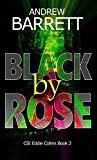
Black by Rose (CSI Eddie Collins Book 2)
Price: Check on Amazon
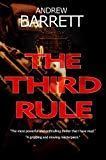
The Third Rule (CSI Eddie Collins Book 1)
Price: Check on Amazon
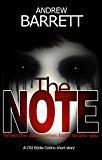
The Note: A CSI Eddie Collins novella
Price: Check on Amazon
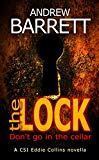
The Lock: A CSI Eddie Collins Novella
Price: Check on Amazon
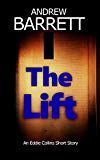
The Lift (CSI Eddie Collins)
Price: Check on Amazon
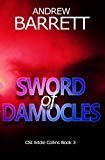
Sword of Damocles (CSI Eddie Collins Book 3)
Price: Check on Amazon

Ledston Luck: Sometimes the past is explosive (CSI Eddie Collins Book 4)
Price: Check on Amazon
‹
›
b;} function i(){return s.slice(z).slice(0,w)}function j(a){var c;a=y-w+1&&(c=a-x-b.scroll,q.css(o,-(c*t)+"px"),z=c+b.scroll)}function k(a){0>a?z=0:a>y-w&&(z=y-w)}function l(){a(b.btnPrev+","+b.btnNext).removeClass("disabled"),a(z-lt(b.scroll,0)&&b.btnPrev||z+gt(b.scroll, y)-w&&b.btnNext||[]).addClass("disabled")}function m(c){n=!0,q.animate("left"==o?{left:-(z*t)}:{top:-(z*t)},a.extend({duration:b.speed,easing:b.easing},c))}var n,o,p,q,r,s,t,u,v,w,x,y,z,A,B=a(this);d(),e(),f(),g()})},a.fn.jCarouselLite.options={btnPrev:null,btnNext:null,btnGo:null,mouseWheel:!1,auto:null,speed:200,easing:null,vertical:!1,circular:!0,visible:3,start:0,scroll:1,beforeStart:null,afterEnd:null}}(jQuery);
The post Developing Plot appeared first on Andrew Barrett.
April 11, 2019
The Death of Jessica Ripley – part 1
I’ve split this blog post into two halves because I wanted to tell you about the new book but without spoilers until you’d had a chance to read it first. Come to think of it, I’ll put the rest of this post on the website under the tab The Story of… > The Death of Jessica Ripley (Spoilers). But I’ll only do that after publication. Ner.
The Death of Jessica Ripley was born in March 2017 in a caravan in Skipsea on the North East coast of England. God, it was ugly.
[image error]
The Writers
I and my best mate and writing buddy, Graeme, were desperate to get some words down insulated from everyday life, and what better place than an old caravan on a windy, rain-lashed coastline that was rapidly disappearing into the North Sea? We spent many years writing television scripts together (that’s a whole different story) and have always been able to bounce ideas off each other. Graeme was working on his first novel, and I wanted to kick off my latest one.
[image error]
Disappearing Skipsea
This was Utopia.
Except it wasn’t, quite. I sat down with the laptop open before me and the cursor blinking on a blank page. And it stayed like that for a couple of days, as I remember. I went to Skipsea hoping inspiration would smack me round the face, but instead I sat there drinking beer and watching Graeme type. Sigh.
Eventually, I settled upon a story that he, Graeme, had witnessed first-hand. Yes, The Death of Jessica Ripley is loosely based on a true story. And here is where I have to be careful of giving things away (I just checked the blurb, and I’m okay). The main character, Jessica Ripley, is accused of killing her husband. In the real life version, a woman’s ex-husband forced his way into her flat, and threatened to stab himself to death if she didn’t take him back. She didn’t, and so he did. She was arrested. Later released.
Jessy is arrested too, but that’s where the story parts company from reality. Jessy does twelve years and when she’s released, she’s not at all happy with those she thinks are responsible for putting her away. That’s as much as I’m saying about the specifics of the story for now.
[image error]
crammed laptop
I left Skipsea like a thief with 17-thousand words crammed into the laptop, and it stayed like it for the better part of eighteen months. I signed up with Bloodhound not long afterwards, and wrote The End of Lies. We published it, and we also published another four CSI Eddie Collins novels. A year later we parted company, and I had the unenviable task of re-uploading everything to Amazon, and reacquainting myself with indie publishing again (this is something not to be undertaken lightly – there’s a high chance of insanity leaking in around the edges).
Finally, I had the chance to peer into that dusty old file and Ripley stared back at me. She had a crick in her neck. And like someone learning how to ride a bike again after a few years away from it, I got back on and started pedalling. I won’t mince my words here – it was a twat to write, and I fell off the bike more than once. It reached 25k words and I just wanted to scream all the time; I had no idea where the main story was heading. I knew where I wanted it to go but it was like steering a supertanker through a slalom course. On top of that, I had three subplots all dancing to their own tunes and all misbehaving like a bunch of drunken teenagers. It was chaos.
[image error]
supertanker
I agonised over the title for some time too. Kindly, my newsletter readers voted for The Death of Jessica Ripley. It could easily have been called The Laughing Axeman; the voting was close.
I finished the first draft on Monday 15th October 2018 at 8.50pm. 110,335 words long.
I looked at the story as a whole and realised I had a warm feeling about it (that’ll be the madness then!). I liked it. Since its second edit (it’s on its fifth now), I have grown to love it. I loved the characters too: of course Eddie is the star, and Benson is alongside him (no, I didn’t kill him off in Ledston Luck), and Eddie’s father, Charles. Kenny, Sid, and Jeffery are still there, but we have another set of characters entering stage left. Among them are a couple of new CSIs: Troy Ainsley and a certain Nicki Murphy (take a bow Nicki from the Exclusive Readers Group on Facebook). And there are the others, Jessica Ripley and those who are involved in her story. In all, there are thirty-six characters in this story, but only eight who are central to the tale.
I find my fingers have a minor tremor running through them, and my palms are tacky. I’m nervous – as I always am pre-launch – because I want you to like this story as much as I do.
Did I mention that The Death of Jessica Ripley is due out June 21st 2019? Thought not.
The post The Death of Jessica Ripley – part 1 appeared first on Andrew Barrett.
February 7, 2019
As You Were…
[image error]The last time my back catalogue looked like this was summertime 2017, before I went with Bloodhound Books and took all of my CSI Eddie Collins books down from Amazon and the other platforms.
[image error]
So now I’m back doing this stuff all by myself again. And I look around and see all of the old books back just as they were, with the old titles back and the old covers back too. There’s one or two differences, though. I took the opportunity to update the website address on all of the covers. I didn’t update the author photo though – I’ve decided I’m not going to age just yet. Another few years and I might upload a more current one. Maybe.
[image error]
There is one notable difference to the original line-up: the addition of The End of Lies. Bloodhound kindly gave me the rights to Lies too, and so she’s up on the shelf as well. I might have some good news concerning The End of Lies over the next few months so keep your ears open. Check out the foot of this post for the new cover for The End of Lies. Hope you like it.
[image error]
So here are the books in order and with the correct titles:
SOCO Roger Conniston series:
A Long Time Dead
Stealing Elgar
No More Tears
CSI Eddie Collins series:
The Third Rule
Black by Rose (was No Time to Die when published by Bloodhound)
Sword of Damocles (was The Hammer Falls when published by Bloodhound)
Ledston Luck (was The Long Revenge when published by Bloodhound)
The Death of Jessica Ripley (due out summer 2019)
CSI Eddie Collins short stories/novellas
The Lift
The Note
The Lock
Stand Alone novels
The End of Lies
For The End of Lies, I liked this cover, but it’s difficult to read as a thumbnail. Because of that, I changed the colour of the title to white…
[image error]
And I think it’s much easier to see.[image error]
But I could go back to the original coloured title lettering for the paperback, and so that’s what I’ve done. Not too sure how many other books out there have different covers for each format. Maybe I’m a trendsetter! Maybe not…
I hope to have some more good news about The End of Lies soon, and I can’t wait to share it with you.
[image error]
If you’d like to add The End of Lies to your own collection, hop over to one of these stores and help yourself.
The End of Lies on Amazon
The End of Lies on Kobo – coming soon
The End of Lies on Apple
The End of Lies of Barnes & Noble
The post As You Were… appeared first on Andrew Barrett.
December 22, 2018
Greener Grass
I was going to begin this blog post by saying, “I can’t believe this is the first blog post since May of this year!” But I won’t say that because I can believe it.
[image error]2018 has been one of the most intensively busy years I’ve ever lived through. It’s also been one of the strangest. It’s been strange because I achieved my dream of becoming an author published by a bona fide publishing company. And then I realised that the grass isn’t always greener.
Getting a publishing contract with Bloodhound Books still ranks as one of the highlights of my writing career, and that’s saying something when you consider I’ve been writing for twenty-odd years. Even though our partnership didn’t last very long, I have no regrets; they are a great bunch of people, and I’m sure we’ll remain close friends.
[image error]
Our relationship didn’t last long because we both wanted different things, that’s all. Both parties burned the midnight oil for several months getting the Eddie Collins books out of my head and onto Bloodhound’s shelves, and when we got them there and opened them up for the world to see… it didn’t feel right to me.
[image error]
I felt very uncomfortable seeing my books on Amazon and having absolutely no control over them. I confess too that the new Bloodhound titles didn’t sit well with me either. Black by Rose is a specific title that reflects a specific event in that book, and so substituting it for a generic name meant it lost a little bit of its individuality, lost a bit of its shine. Same goes for the other books too. I know Bloodhound had their reasons, and from a mainstream publisher’s point of view, their reasons were indeed valid.
[image error]
So yes, this year has been very strange. My books are (for the time being) on Amazon with Bloodhound Books listed as the publisher; it’s always been my dream, and now I realise the dream is for someone else to enjoy. So now my books will be published by me, under my publishing name of The Ink Foundry. It’s like coming back home.
[image error]
For me, for now at least, my dream is to get cracking on the next book, and get The Lock and Jessica Ripley selling well. But my ultimate dream is, as you know, to be a full-time writer. And I can do it, I know I can. I will do it.
Each time I finish a story, I always think I could have done it better. Well, 2019 is the year that I write the story that I cannot improve upon. Wish me luck…
The post Greener Grass appeared first on Andrew Barrett.