
Andy Littleton's Blog: Shorts by Andy Littleton, page 4
November 29, 2022
If Jesus Was Born in Tucson
Excerpt from “Exalted & Filled” at Mission Church — 12/19/21
 This is a modified portion of a sermon I remember well and look back upon fondly. I was encouraged to capture and share this portion by a member of our church. I hope you enjoy this imagined scenario. To listen to the whole sermon CLICK HERE.
—
When considering the Christmas story it is important to ask; who receives Jesus? The answer, according to Mary the Mother of Jesus is; the humble. We see this in verses 52–53 of this first Christmas Song found in Luke 1.
He has…”exalted those of humble estate; he has filled the hungry with good things, and the rich he has sent away empty.”
Clearly this isn’t just spiritual metaphor. “Humble” doesn’t merely stand for an inward sense of neediness. When it says “the rich he has sent away empty” it means people who are also externally wealthy. God really does have a strong disposition toward those with real need. Mary is an example of such a humble recipient but another comes to mind in the Christmas story, and that is the shepherds on the hills outside of Bethlehem.
This may not strike us the same today and in our context. Today we feel like farming and being a “maker” is more honorable. Therefore, most likely, shepherding would be more honorable in our modern minds. It’s an excellent way to build a YouTube following. It honestly requires a lot of privilege to be able to run a farm. It requires business know-how, connections, and resources. But in their day the shepherd was fairly low class.
Their job was saturated in potential uncleanliness. Not just externally, but spiritually. They were always around dung, and animal carcasses. The Bible connects external uncleanliness to internal spiritual need for cleansing. These shepherds may have been in a near-constant state of being unable to enter places of worship.
Today, perhaps, their situation would have been more like being a fast food worker. I’ve been there. I grew up in a trailer park. I worked at McDonald’s and Taco Bell. You may say, “Oh, I like you, once worked fast food and I appreciate all ‘essential workers.’” But I’m going admit something right now. Even though, as I have told you, I have worked in fast food, I have looked down on our brothers and sisters in the fast food industry.
When I worked at Taco Bell I got a talk about not working hard from a superior, and, to my absolute shame, I said something like, ”Why would I take advice from you?” Why? Because she was kind of a life-long employee. She hadn’t been in fast food as a stepping stone type of job. This was her career. I saw myself as being there temporarily, and I wasn’t looking to her for advice. I didn’t want to be like her.
You may cringe, as I do now, hearing what I said to her. But, be honest, there’s some people out there…you wouldn’t say it…but you WOULD NOT respect their advice. That was shepherds. See, it wasn’t just because of their job. It was how that was looked upon in society. Dirty, sure, but more importantly…less respectable. Here’s how you know respect somebody; It’s if you would take their advice.
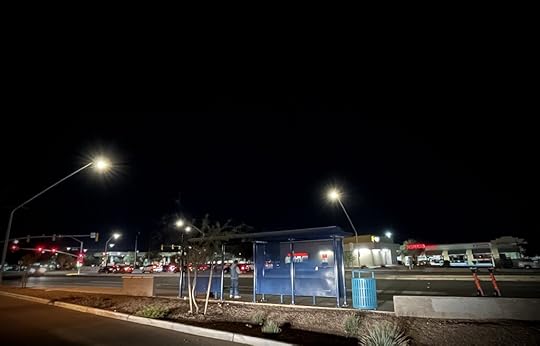
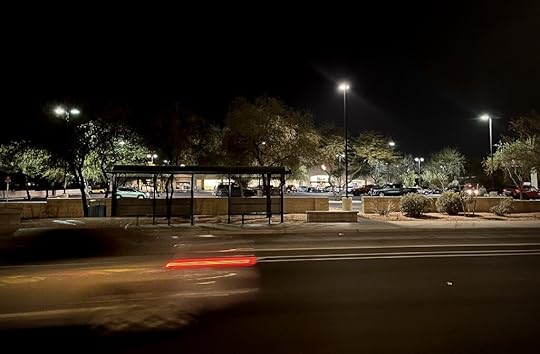
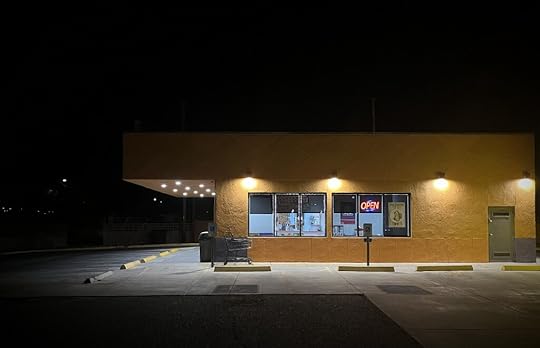
With that in mind, imagine late Christmas Eve around 11pm. Many, if not most of us, Tucsonans are cozy in our homes. We might be wrapping some last minute gifts, sipping hot cocoa, catching some last minute YouTube videos, or reading a book. Around then a group of workers get out from…not Chick-Fil-A or In-N-Out Burger…but down the street here at Carl’s Jr and El Beto. I’m talking about Campbell and Broadway. They bump into the deli workers and incoming late night shelf stockers over at Safeway (who are just showing up to work!) at the bus stop.
One of them lights up the cigarette they really can’t afford…and cracks open some late night leftover potato wedges (because there always some of those left at the end of shift), and they pass them around them and sit down together to wait for the bus. Suddenly, an angel of the Lord appears and bright light surrounds them. Because, you know, these folks are simple-minded enough to believe something like this. They are those working class evangelicals. And they start freaking our and scrambling for their phones.
And the angel says; “Hey…relax. Today over in the Spanish Trail Suites, you know, down there by 1–10 and 4th Ave, a Savior has been born, who is Christ the Lord. You’ll know you’ve found him because he’ll be wrapped in an old fitted sheet and sleeping in a bathtub.”
And as they sit there completely confused, suddenly, it’s as if the sky is parted like a stage curtain. A multitude of glorious heavenly beings are singing as beautifully as the choir performing downtown at the music hall.
“Glory to God in the highest, and earth, peace among those with whom he is pleased!”
And they look at each other, taking in the fact that they must mean them. And the angelic hosts slowly depart. One of them says; “So…you want to go check that out?” And they all just nod at one another and start walking over to the bus stop on the other side of the road, to head south.
As it turns out, they are first people to be invited to see Jesus, and they find exactly what they were told they would. Immediately after they took it all in they left and started texting all their friends. Their friends were really unsure what to think of the whole thing and assumed they’d just been hallucinating.
— —
That’s probably more of the feeling Theophilus would have had, reading Luke’s account of the birth of Christ, and hearing that God showed the shepherds first! It’s sweet. But it VERY unexpected. The lowest, the un-respected, were EXALTED. The humble were filled. The rich and privileged were not looped in at all that night.
“He has exalted those of humble estate; he has filled the hungry with good things, and the rich he has sent away empty.”
Who does Jesus come to? The humble.
 Andy Littleton co-pastors Mission Church in Tucson, AZ. He also co-owns a retail store and serves as a mission leader for the Christian Reformed Church. He has also written The Little Man, a travel memoir chronicling his journey to discover the power of “little” people like his quiet father while driving an Old Ford truck through small town America.[image error]


October 19, 2022
Well-Equipped Christians are Checking Out, Right when Churches Need Them Most
 Photo by Rana Sawalha on Unsplash
I’ve been almost begging older, knowledgeable, and discipleship minded Christians to come to our church lately, and it’s been a surprisingly difficult sell. Why am I doing this? Well, I am a pastor of a small church that intentionally seeks to be an outpost of Christianity. We have committed to historic and orthodox Christian faith, but we have also committed to placing ourselves on the “edge” of the Church, where skeptics might dip their toes in and ask questions, and where struggling believers might stop to ask their hard questions before they make a decision to leave the faith. To our surprise, especially this calendar year (2022), these folks have been not only engaging with us relationally, but coming to church. We have had somewhere in the neighborhood of fifty formerly religious folks or unbelievers (Sigmund Freud’s term for them, not mine) show up to worship, and most of them have reported liking it. That may not seem like a lot, but as I mentioned, we are a pretty small church. Almost every single week I’m looking out and thinking, “Who’s that?” We’ve been attempting to be this kind of church for about nine years, and this has never happened to this degree before now.
Not only are these folks showing up, but they are having incredible spiritual encounters and some are deciding to follow Jesus. Within the last few months I have heard their stories about deeply sensing a need to pray, seeing compelling visions, having profoundly meaningful spiritual experiences, and feeling a strong impulse to read the Bible. This is obviously a work of God, as some of them had these experiences without the influence of a Christian speaking to them. Others are being prompted by very imperfect Christians in their lives. Recently we baptized a young man at our church. He asked if he should be baptized after explaining to me that he’d been on medication, gone through therapy, and participated in support groups, but had never felt the deep sense of inner peace that he’d experienced since coming to church. Another young single father was there for the first time that week, and the baptism brought him to tears. His friend told me that he decided to try following Jesus himself that evening. In all of the cases I have encountered, the assumption of these potential new believers is that they will be able to go to church and find the rest of us there. They believe that they will find God’s people gathering together on Sundays, and that those people will be ready to walk with them in their freshly forming faith.
At the same time that all of this, very encouraging, stuff has been going on I’ve been hearing and observing another story. That story is of Christians, often ones who I know love to serve and disciple others, deciding that church is something they want to take a break from for now and the foreseeable future. A number of believers who I met while a young believer, in church, aren’t going anymore. I have talked to a number of them, or to their children (as I am a former youth director), specifically about this. I just turned forty, and a number of my peers who still profess to loving Jesus, have been opting out of church going. I work within some broader church contexts and I’m getting the sense that many of my co-leaders in these spaces aren’t going to church either.
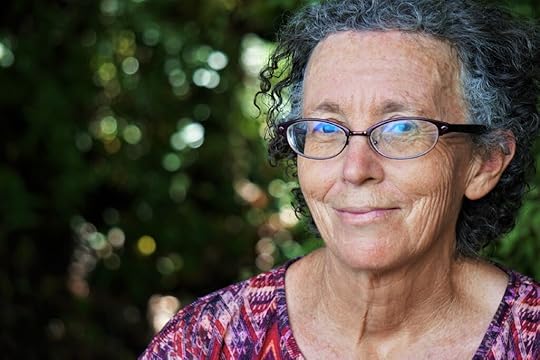 Photo by Anthony Metcalfe on Unsplash
I am hearing a number of reasons for this phenomenon. The most common by far, is that they feel “kind of done” because they have gone for so many years and became tired of it or aren’t sensing that it’s really making a difference for them. A number of them are reporting being really busy at work or with their kids, or that they are really enjoying traveling right now. The more rare cases have to do with going through a very difficult or painful event at church or being a part of what I would call a potential church. By that I mean something of a small group that does some things churches do, but in a less formal way. Typically when I have asked a few questions about these small groups, I’ve sadly learned that they rarely (if ever) worship, partake in sacraments together, or offer structured discipline or discipleship. They seem to spend a lot of their time talking to one another about life and eating food, undoubtedly good, but not really unique to God’s people.
Interestingly, the young and new believers I am speaking with are actually looking for anchored and organized groups of Christians that engage in shared and specific Christian worship and are connected to their tradition and history. We are hearing that these visitors most enjoy the communal experience of the sacraments and the preaching when they join us. Several of them are trying out attending multiple churches each Sunday. The other churches I am hearing a similar experience from, are actually pretty traditional and connected to denominations and ancient traditions, though with passionate leaders who apply the faith to modern life. Think about it, if you grew up with postmodern grandparents and parents, you’ve never really had anchored community that teaches timeless truth and practices structured accountability to temper injustice and pride in a community.
I don’t think this is our little isolated experience here in Tucson. Barna group classified Tucson as being high on the “post-Christian” city list a few years back, so maybe that’s part of it. Perhaps the more distance people have from being steeped in American christendom, the more interested they are. Keeping that in consideration, it’s also something I’m seeing in secular media sources. I remember hearing an NPR contributor saying something to the effect that we had to be able to anchor ourselves in truth an institutions early in Trump’s presidency. That stuck out to me, as it’s what purveyors of the Christian worldview had always been saying and wishing others would acknowledge. Recently we added a sermon to a series about foundational Christian beliefs, we felt like we needed to be honest about church structure, eldership, and church discipline. We had a visitor that week, who had grown up in church and left a long time ago. She told one of our leaders that the sermon spoke directly to her, and opened her to reconsidering faith. She always thought churches were ego driven and disorganized, which hurt her and her family. To hear that the Bible taught people to be orderly, wise, and willing to face abuses through the churches structures was deeply encouraging.
The past several years have also supplied us with a shocking amount of explicit Christianity among celebrities in the media. Most notable, and debatable of course, is Kanye West putting out gospel albums, hosting church services with a young pastor from John MacArthur’s circles, and declaring his allegiance to Jesus. Long time Christians like Candice Cameron Bure were speaking clearly about their faith on television. Netflix embraced Christian camp culture on A Week Away and then pumped out Father Stu, with it’s powerful message of Jesus, who did the “heavy lifting.” Then came Justin Bieber’s worship album with Chandler Moore of Maverick City Music and Pastor Judah Smith. In the world of sports, beyond the fact that NBA superstar Steph Curry produced an explicitly Christian film, The Ringer recently allowed their beloved cancer-stricken and dying commentator Jonathan Tjarks to write about his faith on their platforms and paid tribute to him and his faith after he died. Those posts are reportedly some of their most read and engaged. Within recent months, as if that weren’t enough, Shia Lebeouf publicly shared his conversion to not only faith, but to Catholicism through the Latin Mass, and Eminem released one of his most explicit sets of bars ever…except this time they were explicitly Christian. Jordan Peterson released a video specifically lecturing people on why they should go to church, and another chiding churches who aren’t receptive to them (especially young men) being involved. Young and curious people are paying attention to these things, and it’s no surprise, that some of them are deciding its time to give Christianity a chance.
I really don’t want to be critical of the long time Christians who aren’t feeling church right now. I totally understand. In 2020 and 2021 I was entirely discouraged as well, and there were many days I didn’t want to show up either. The work is hard; often not personally “life-giving”, and people are messy. In the midst of difficult times, we all wished that people in church would have been better and more unified, but they often weren’t. I guess that its true, that all of us are Christians only because of grace, not because we deserve it. Ministering to others, being patient, forgiving one another, and living in harmony are some of the most difficult callings in life, and they often don’t feel very fulfilling. I am absolutely for taking care of one’s self, leaving abusive situations, and practicing patterns of rest. Without such things, we will not be able to minister effectively. But it also seems evident that we are products of our time. I have heard the same reasons for not engaging with church from people who lean in both political directions and they sound surprisingly similar. They honestly sound like the reasons people leave their marriages. They sound like people formed more by expressive individualism than by the gospel of Jesus Christ, a suffering servant king.
In light of all my own feelings I’ve contemplated the Apostle Paul. People in church were clearly a mess in his day, many of his longtime religious comrades turned against him, and the work must have been utterly exhausting. Aren’t we glad he stuck with it with God’s help? Imagine if he’d decided one year (because his ministry spanned many!) that he was going to step away from church because it wasn’t really feeling necessary for him anymore, and he was enjoying traveling more for personal pleasure. Imagine if he got out of the habit, and never really re-engaged. No, we look back and honor him for his perseverance as we look back on parents who stuck out tough relationships, veterans who stayed true to their country and commitments, and civil servants who stayed consistent in trying times. I know, none of us are the Apostle Paul, but consistent and present people are the glue we need as God’s people. It’s good we aren’t all as big a deal as him, because that means we can be present in little local assemblies, and ready when that person with questions, fears, and budding faith walks in the door. It’s good we live now, because a lot of the celebrity voices are mixed bags to say the least. People who hear their messages, will need to find grounded and mature people in their communities to disciple them.
You may be thinking, Andy, that’s why you and other pastors are there. Here’s the thing; over forty percent of pastors are quitting or considering it right now. That’s a story even the New York Times is telling, and I have also observed on the ground with pastors in my network. They’ve been through a lot of stress, and received a lot of criticism, and they are reporting feeling very, very alone. Pastors were never meant to do the ministry by themselves. The Bible clearly articulates that the leaders of the church are there to equip you to do the ministry (Ephesians 4:11–13). Pastors should shepherd a group of mature Christians, help to equip them, and then see them present and active in worship, sharing their faith, and discipling others. If so many well-equipped Christians weren’t checking out, I would assume that the pastors would be far less discouraged. I KNOW that would be true for me.
Finally though, I think we need to consider what’s going on in spiritual places. If you know me, you know I am cautious when it comes to assigning spiritual causes. I have seen that line of thinking abused. For instance, I don’t think Hurricane Ian needs to be viewed as a judgement on Fort Meyers, Florida. I exercise great caution when it comes to these things, and yet I sense that God is at work in the hearts and minds of many people. I don’t think these spiritual experiences we’re hearing about, these proclamations of faith in public, or the general hunger we are sensing are coincidence. God is at work! Conversely, it seems clear that the enemy of our souls is at work. If you were running a disruptive military campaign, you would try to take out and distract the opposition’s most effective soldiers. We have a spiritual enemy who wants to disrupt and distract us even more.
Please consider, that perhaps your discouragement, apathy, or sense of being “done” or too busy may not be neutral, but may be the work of Satan in your life. We don’t need to be afraid of that as Christians. Satan is a doomed foe, who is on a tight leash until Jesus returns victorious. No, we need not be afraid, but we do need to be aware of his schemes. Peter tells us that Satan roams like a lion, seeking those who he can devour (1 Peter 5:8–9). If you’ve ever watched a nature documentary you know how lions destroy a strong animal. They tire them out, they isolate them, and then they devour them slowly. That is a tragedy for the one devoured and their family, but also for the entire community. Every strong and well-equipped believer we lose (on any given week!) leaves us weaker as a community. Please, for your sake and for the sake of the faith, re-engage! We need you!
Andy Littleton co-pastors Mission Church in Tucson, AZ. He also co-owns a retail store and serves as a mission leader for the Christian Reformed Church. He has also written on bivocational ministry in the book Part-Time Pastoring with Dr. Sean Benesh.[image error]October 6, 2022
Why Tucson Has So Many Bums
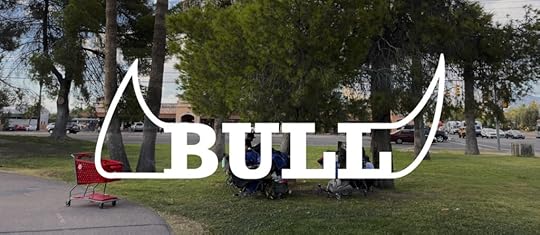 A new phenomena, campers on the corner of Reid Park.
Oh how things have changed for Tucsonans over the years. Of course, we’ve always had our share of homelessness here in the Old Pueblo, but these days it seems entirely overwhelming. On the corners and in the medians, where those with less opportunity used to sell us the Tucson Citizen for a dollar or so, stand Tucson’s new homeless community, younger than ever and now with nothing to sell. Not only that, but there are clearly other factors at play.
Recently I caught an uber after a ballgame in Tampa. My driver chipped in that he’d heard about the great relocation of folks to Arizona and other states from big cities. He had himself relocated from New York to Florida. It seems clear that the new impoverished of our community aren’t all from around here either. We absolutely have folks who can no longer afford their rent from our city, but many of these young folks camping along major streets, are new to town. On top of this, many, if not most, deal with addiction. The opioids in our city are flowing all too freely. These addictions have led many to the streets, and will likely keep them there. And of course, we can’t look past the clear signs of mental health. Some of these folks simply cannot think any differently, their bodies fail them, and we seem to have no idea what to do about it. These factors are front and center, and we must address them, but there is one more play to consider. I say we’ve gotten ourselves into this pickle, by failing to bring baseball back to Tucson.
I know, I know…these seem like unrelated topics, but let’s start with jobs. Ahh, the days of the Tucson Toros, and Spring Training alongside our beloved college team. Remember the parking lot attendants, the concession vendors (Super Dave!!), the grounds crews, and late night janitorial staff? Many you may not. But guess what? They had jobs! Only part of the year you say? Sure, but a friend of mine who lives in his truck gets through much of the year by saving the little he makes directing traffic at the county fair. Imagine adding a baseball season. Nothing to scoff at! That’s legitimate work. For those who were a bit more creative (perhaps I engaged in this), there were always the free Toros tickets at your local convenient store. You could grab handfuls of those bad boys and resell them at near-face-value. People would scorn you, but you could remind them that they could always run to Circle K themselves, or pay full price, OR go ahead and slide you a five-spot and get in the game right now. These creative (non-tech) money making opportunities, not unlike selling the newspaper, are in seriously short supply these days. Without them, you just move straight to panhandling, I guess.
And what’s with all the young people on the streets? Well, with no minor league baseball players showing you that you can work for a meager salary while also receiving the cheers of thousands of adoring fans, life does seem a little more hopeless. We can’t all become graphic designers with ergonomic chairs and headsets in our macrame adorned one bedroom apartments. We can’t, and we don’t want to! My favorite dude on the streets in Tucson pops and locks all day long. That dude wants to hear the cheers of a crowd! Remember the young Archie Graham in Field of Dreams…hitch-hiking his way to the dream of barnstorming with a team for pocket change. This in the light of Shoeless Joe’s confession, “Id’a played for meal money…Id’a played for nothin’.” When we lost baseball, we lost motivation for the next generation of barnstorming types. How shocked have we all been to see Reid Park littered with tents! Oh for the days when it was littered with souvenir cups with the images of young ball players…Kenny Loften, Billy Wagner, Brian Hunter. People you could aspire to be like, whether they “made it” or not (Frank Kellner?!).
Now, I realize that some of you winced at the very title of this article. Bums, what a derogatory term! But even our perception of that term has been forced upon us by the loss of good baseball. Read any history of the sport, and what do you find? “Dem Bums!” Those most beloved Brooklyn Dodgers. The team that brought us integration, passionate inhabitants of the still lamented Ebbets Field. The story of the Dodgers reminds us that bigger and newer isn’t always better. The presence of the Dodgers, even when they couldn’t buy a win, lifted up the similarly downcast. It’s not so bad to be a “bum”, when PeeWee Reece is one too. But they got shipped off to Los Angeles, and Brooklyn lost part of its soul. See, we’d all be lifted up around here if we still had our rag-tag little triple-A Toros, with all the not-quite-talented enough players surrounding those future super stars. On top of that, we’d have more compassion. Being a bum wouldn’t be so bad. Not “making it” wouldn’t bring such derision. We’d remember that all of us are worth cheering for, even if our bodies fail us and talent isn’t very marketable.
Things would be different if Tucson still had professional baseball my friends, and that ain’t no bull.
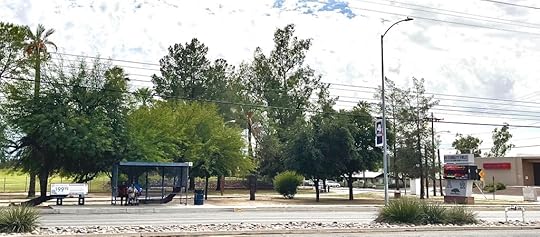 A couple avoids the sun under the bus stop near Hi Corbett Field, now the home of UArizona baseball.[image error]
Why Tucson Has So Many Bums was originally published in BULL — A Tucson Blame Game on Medium, where people are continuing the conversation by highlighting and responding to this story.
July 6, 2022
Why The Sunshine Mile Isn’t Done Yet.
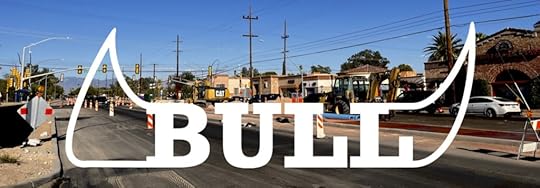
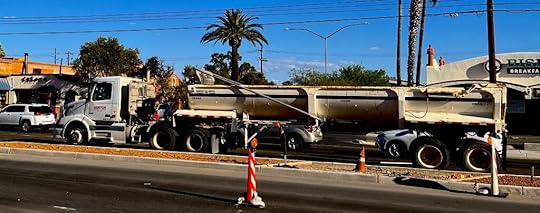
The Sunshine Mile project, slated to be complete by fall of 2021, remains unfinished and area businesses and residents are feeling the pain. Many blame the City of Tucson for mis-projecting the timeline while others blame Ashton Construction for mismanagement of the project. A spokesman for the construction company blames the summer storms and the discovery of un-marked utilities in the area. Others say that there is no one to blame because “it is what it is” when it comes to large scale projects such as this.
Amidst all of the blame, excuses, and apathy lays, like a slain bull offering, a more obvious cause. None of this would have happened if the Tucson Toros were still here. Beyond that, we would be free of these concerns if Spring Training were still here. Think about it. The Toros played at Hi Corbett Field, just east of the Sunshine Mile. They would midseason by now, having taken the field after the Colorado Rockies and Chicago White Sox boarded planes to head back east from Tucson International Airport. Their throngs of loyal fans would be brushing off their baseball caps and oiling their gloves each warm summer evening. Children would be scouring the schedule, looking for games they could attend with their friends. If pro baseball were still in Tucson, the Sunshine Mile problems would not exist.
First of all, this project would have been completed a decade ago, because the stretch of Broadway leading to the ballpark would have been far more important to everyone. Through the years of transition and the decline of downtown to the west, and El Con Mall to the north and east, baseball would have kept the traffic flowing and the out of town guests passing through. The City would have prioritized the area sooner.
Funding? Not a problem. Every spring millions of dollars would roll in for Spring Training and, all the while, the Toros would have continued to churn out Pacific Coast League Championships. Tucson would have seen the era of the Astros as World Series champions. We Tucsonans could have felt morally superior when the Astros cheated to win the World Series, because the boys never did stuff that over here in Arizona. The roadside would be complete and replete with championship banners, we’d all be rich, and we’d feel far better about ourselves.
On top of this, the construction workers would have worked faster and solved their problems more efficiently. Not only are construction workers very likely to be baseball fans by nature, but Ashton workers are highly likely to be Toros fans. What colors do you see on the Ashton vehicles? White and red of course. I wouldn’t be a bit surprised if all the Ashton executives were influenced to brand their business to align with the branding of the Tucson Toros, but even if they weren’t, the very colors would have inspired Toro-centric thinking in the workforce. The allure of the coming baseball season would have drawn the crews to work harder, faster, and with the skill of a middle infielder.
Far fetched you say? Perhaps it is. Perhaps we can’t ever hope that politicians and big businesses would value and get such things done. But consider this my friends; if the Toros were still here, the people would have completed the road project themselves. In near Biblical fashion they would have taken up the one thing every true Toros fan held in their possession…a cowbell…and they would have beat them in tiny shovels and trowels. They would have moved the earth and repaved it smooth to make sure they could easily access their beloved ballpark and team. Would it have been tuff? You bet. But they had Tuffy the Toro to cheer them on and cheer them up when they’re work was complete.
Oh, things would be different if the Toros were still here. And that ain’t no bull.
 [image error]
Why The Sunshine Mile Isn’t Done Yet. was originally published in BULL — A Tucson Blame Game on Medium, where people are continuing the conversation by highlighting and responding to this story.
April 17, 2022
What We Do With Jesus #5
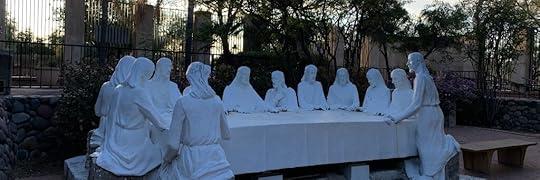 The Garden of Gethsemane in Tucson, AZ — photo by Andy Littleton
This is the fifth and final story in a series based on the history of Tucson’s Garden of Gethsemane that is meant to help us examine what we do with Jesus today.
We Can’t Live Without HimWhy is it that our culture, as much as it’s claimed to move on from Jesus, continues to return to him in spaces like the Garden of Gethsemane? Our church always hosts an exploratory and creative Good Friday service and we like to find unique spaces to host it in our city, especially Christ-haunted places. To my continual surprise, they aren’t hard to find. Felix Lucero’s garden is one of many.
Last year we met at Ted DeGrazia’s beautiful handmade gallery. It was hosting a display of images of Christ on his way to the cross. And DeGrazia, our most famous artist, even build a charming little open-roofed chapel on the grounds. Our university gallery’s permanent collection includes an impressive array of 14th to 19th century Christian art, mostly biblical narratives and images of Christ. We will try to have a service there in the future. An old quarry near downtown is home to several shrines and a convincing replica of the empty tomb, used for years as part of a local Easter procession. Statisticians recently ranked Tucson as one of the most post-Christian cities in America, yet we aren’t anywhere near exhausting our list of potential meeting spaces filled with images that point to Jesus.
We have saved Felix Lucero’s sculptures from the vandals and the slow and grinding wheels of modernity many times already, and plans are in the works to do it again. For some reason, we fight to keep these depictions of Jesus saving the world in our lives. Despite steady criticism since the days that Jesus walked the earth, the kingdom that he inaugurated and secured by sacrificial death has never been overthrown either. The great Romans that were in power when Jesus was among us are long gone. The world leaders at war when Felix Lucero was wounded have died, and their governments no longer bow to them or to their principles.
Most of us can think of the great world leaders of our childhood, the revolutionaries and dictators. Few of them are still standing, and those left won’t stand for long. But there are no signs that Jesus is going anywhere. Christians hold to the persistent hope that he’s coming back. The Garden of Gethsemane seems to come back to life over and over again. Even when the next wave of “progress,” a great flood, a more devastating vandal, or the sheer impact of a changing climate wipe it out someday…all signs point to the one on the cross remaining right where he is, at the center of countless hearts and lives and therefore, in view of the rest of humanity.
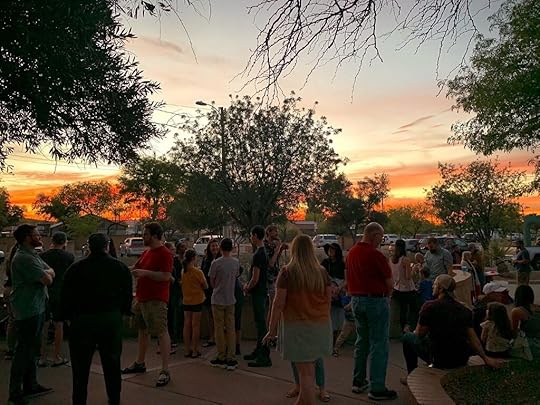 2022 Good Friday gathering outside of the Garden of Gethsemane in Tucson, AZ — photo by Andy Littleton
As we gathered with friends from our church community in front of Lucero’s garden on Good Friday, we had to make space for other visitors to pass through quietly to take in the scenes and pray. Our church is a lively little group of mostly 20–30 somethings filled with doubts, fears and questions, but also…faith. They listened attentively to stories about Felix Lucero and his sculptures. Many of them expressed a sense of connection to the man who died decades before they were born. They stood next to the life-sized statues of the disciples and one woman shared a sense of feeling more connected to the biblical scene than ever, by being there.
The roar of traffic on Interstate 10 and a helicopter passing overhead impressed upon us our location in the midst of the busy modern world. We were still though, connected to something more transcendent. The man the disciples gathered to, around that table in ancient Israel, was the same man Felix Lucero offered his battlefield prayer to, and whose imagined image he sculpted and contemplated over and over. We gathered in Lucero’s garden and around the base of an old rugged cross made of refuse from the Santa Cruz River (Santa Cruz meaning Holy Cross), and turned our spiritual eyes toward that very same man who we gather to worship every Sunday, Jesus Christ.
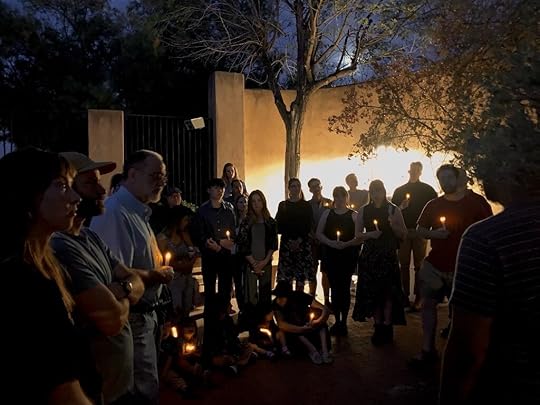 Attendees listen to Pastor John Simon reflecting on one of Lucero’s sculptures — Photo by Andy Littleton
Why can we not live without him? You, reader, may say, “I do live without him.” You very well may at this moment, but masses of humanity have ascribed to his teachings, worshipped in his Church, and most importantly, have been transformed by his grace for now, well over, two thousand years. Honestly, Jesus impact on history may have been more of a positive influence on your life than you are able identify. While the kingdoms, the philosophies, the viewpoints, the authors, the rock stars, and even the social media influencers of this world come and go and we forget them, Jesus and his cross have continued to stand over history. His pattern of sacrificial love has critiqued and inspired those who have gathered to him for centuries. He has transformed his own vandals, by dying in their place. Even his critics can’t stop talking about him. Why is this so? Maybe it’s worth considering. Perhaps you will one day say, as a Roman soldier who crucified him once discovered, “Surely this man was the Son of God.”
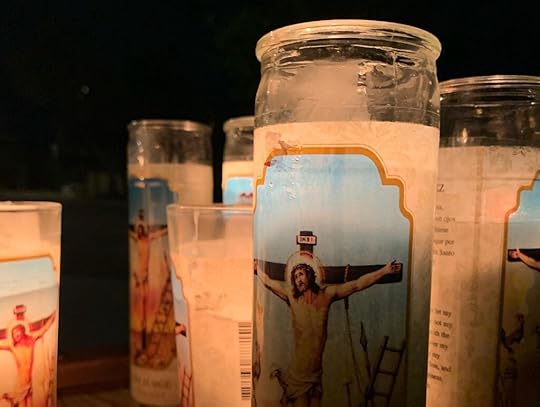 Christ candles blaze as attendees left the service, a reminder that the death of Christ was only the prelude to his resurrection two days later. — Photo by Andy LittletonThis is the last in a series of short write ups that examine what we do with Jesus today through reflecting on the story of Tucson’s Garden of Gethsemane. Some of these ideas were also used in the 2022 Good Friday service at Mission Church in Tucson, Arizona.Andy Littleton is a pastor at Mission Church in Tucson and owns and co-operates a small retail store about a block west of downtown Tucson. He is also the author of The Little Man — A father’s legacy of smallness, a travel memoir about fatherhood, ordinary people, old Ford trucks, and small towns.What We Do With Jesus — #1Andy Littleton - Pastor, Writer, Small Buisness Owner, PodcasterCatholicism for the Modern World[image error]
What We Do With Jesus #5 was originally published in Catholicism for the Modern World on Medium, where people are continuing the conversation by highlighting and responding to this story.
April 14, 2022
What We Do With Jesus - #4
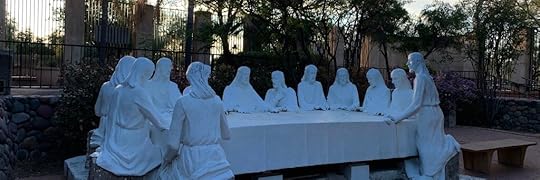 Tucson’s Garden of Gethsemane — Photo by Andy LittletonWe Deface Him
Felix Lucero could only look after his sculptures for so long because of the simple fact of his mortality. God had spared his life on that battlefield in France, but like Lazarus before him, he would still have to taste the sting of death. After his many years of hard work, toil and heartache, Felix Lucero met his maker in the year 1951. His descendants, his sculptures and his memory remain with us. We have had a difficult time taking care of the sculptures. In fact, we have often been flat out destructive to them.
There have been times, places, and cultures in which we have revered religious art and religious thought. In the days of the New Testament’s writing, a piece of even a pagan manuscript would be saved from potential destruction, just because of the value of the creative word captured upon priceless parchment. In other times, due to shifting convictions or the lack of a sense of respect for religion or the people who practice it, we have been known to destroy religious art as we also devalue and dispose of religious thought. We rarely look back at these times with pride.
For years Lucero’s sculptures stood unprotected by the foot of the Congress Street bridge. It is likely that many passers-by stopped to pray among them or at least, to marvel at their craftsmanship. At some point though, they began to be defaced, and the onslaught has never ceased. Having been to the garden recently, I was surprised to find newly missing fingers from the hand of one of the disciples just the other day. Now that disciple appears to be signaling his love for rock n’ roll while a houseless man bowed before the crucifix to sign the cross and pray.
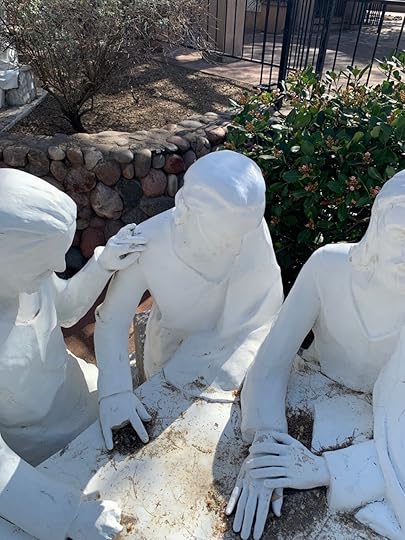 Rock n’ Roll inspired vandalism at Tucson’s Garden of Gethsemane — Photo by Andy Littleton
I hear there are new plans taking shape to repair the sculptures and the park. We have done this before. The sculptures sit in an enclosed and often locked parklet with tall walls these days. Built in 1982, this enclosure’s purpose is to keep the vandalism at bay. It doesn’t seem to work. In 2012 it was so bad that the Knights of Columbus decided to raise $51,000 to hire artist Chris Schoon to repair the sculptures and for the park to be rehabilitated. Heads and hands were missing, and the artist consulted photos and hand models from the area to attempt to re-create the pieces accurately. Just a few years ago a vandal wrote “hail Satan” and drew a pentagram across Jesus’ forehead, beheaded Judas, and placed the head with an inverted cross drawn on it in Jesus’ hands.
One can only hope that heaven doesn’t have windows down to earth at times like this. Poor Lucero would most definitely be grieved to see his life’s work being so unloved and mistreated. But speculation aside, if Jesus was God incarnate…the Word made flesh, then he needs no windows. If Jesus is present in this world, he is not distant. If Jesus sees and cares about our work, then he is most definitely grieved at all defacing and destruction. He is grieved by the destruction of all works that display beauty and goodness. He is grieved when we deface sculptures, our fellow human beings, and even ourselves.
The Garden of Gethsemane displays to us the depths of human depravity in all of the persistent vandalism now, but it truly always has, for in the Garden there is a cross. When Jesus walked among us we devalued him. When we pressed the crown of thorns into his temples we defaced him. When we sin in thought, word, or deed we strike blows against his very heart. We have never stopped. All of our renovation efforts, the renovating of the self, the renovating of society, the renovating of technology, have failed to ward off the incessant vandalism.
This is a terrible critique of humanity, and it isn’t getting any better. But yet the cross of Jesus Christ stands, and not just in Lucero’s garden, but over the entirety of history. It stands and proclaims that Jesus is ever aware of our depravity and even our disrespect and devaluing of his sacred heart. He isn’t just aware of it. It is why he entered in. Jesus is the great renovator in the garden of creation. And he doesn’t just patch up the people he created. He dies for them.
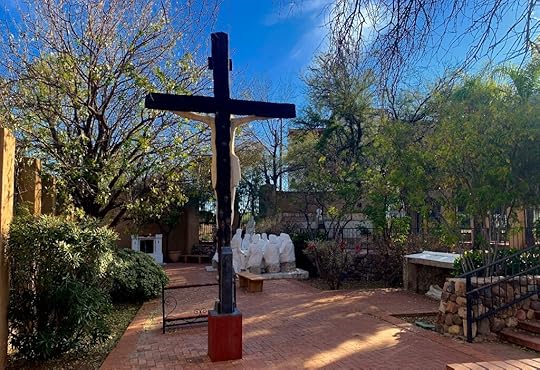 The cross that stands over Tucson’s Garden of Gethsemane — Photo by Andy LittletonThis is the fourth in a series of short write ups that examine what we do with Jesus today through reflecting on the story of Tucson’s Garden of Gethsemane. Some of these ideas were also used in the 2022 Good Friday service at Mission Church in Tucson, Arizona.Andy Littleton is a pastor at Mission Church in Tucson and owns and co-operates a small retail store about a block west of downtown Tucson. He is also the author of The Little Man — A father’s legacy of smallness, a travel memoir about fatherhood, ordinary people, old Ford trucks, and small towns.[image error]
What We Do With Jesus - #4 was originally published in Catholicism for the Modern World on Medium, where people are continuing the conversation by highlighting and responding to this story.
April 3, 2022
A Pastor’s Night at a Bad Religion Concert
 Bad Religion launched their 2022 world tour at the Rialto Theater in Tucson, AZ — Andy Littleton
I was on the guest list for the inaugural show of Bad Religion’s 2022 world tour. My wife and I chose the front row balcony seats at Tucson’s Rialto Theater because…we’re 39. We could have fought our way to the front row on the floor, but that looked painful. There was a mosh-pit. I believe I saw someone pushing 60 years old in there. Brave soul! That’s no longer me. Been there, done that. We took our friend and business co-owner, our teenage girl, and her teenage girl. It was their first cussing concert. My daughter had been to the Rialto for Switchfoot. Cool, but not the same vibe.
For me it was tons of nostalgia. I’ve been to more shows than I can remember. I was not a punk rock kid, but I knew a lot of them and was always down for live music. Between my friend groups we went to major venues, house shows, and a ton of small venues to see everything from the Aqua Bats to K-Ci and JoJo. We saw Listener’s first live performance with Deep Space 5, when he was a rapper. We went to the local water park for a giant show with a band that talked almost exclusively about smoking weed. Everyone was screened at the door to make sure the kids didn’t actually bring in any. Some made it through. So when someone lit up at the Bad Religion show it felt like the scent of a candle in a church, it finished out the experience. My daughter rolled her eyes and said something about how they were going to get into trouble. I knew they wouldn’t.
I didn’t grow up on Bad Religion, but I knew they were a big deal. I’d seen the shirts and the tattoos for years. Being put on the guest list sent me down the rabbit hole. I started digging into their backgrounds and music catalog. I discovered that they weren’t as anti-Christian as they appeared. Greg Graffin was interviewed about atheism and the writer hardly referenced him at all. He apparently isn’t devoted enough and seems to not really even apply the term to himself. Other band members are theists I hear. They named their band when they were young, and it really had more to do with being anti-establishment and dumb rules than being anti-Christian. They thought their “cross-buster” logo was awesome just because it would piss people off.
As I dug into their music for the day, I began to think they might have more faith in God than some people I know from church. They were angry at how Jesus had been co-opted by people with nationalistic motives. Why would that matter to someone who didn’t at least entertain that Jesus may actually be someone who lived and stood for something else? They also were very aware of the concept Christians call sin, and almost to a further degree than some Christians. In Infected they sing of a disease that infects us all, that causes us to affect one another. They don’t try to soften that truth, they just confess it openly.
 The Rialto Theater crowd responds to the song Sorrow by Bad Religion — Andy Littleton
The song that stood out to me the most was Sorrow. I first experienced it in the music video. Graffin looks up to heaven as he begins to sing to “Father” and express his complaints about the long suffering present in the world. The chorus moves you through a process of thinking about the brokenness (war, crooked authority) and what it would be like for it to cease, declaring there will be sorrow twice, and then concluding the thought in a way you don’t expect the first time you hear it…”there will be sorrow, NO MORE!” It moved me at first hearing, but more so in person. The whole vibe of the concert changed for this song. The moshing turned to elated communal singing, with arms and firsts held high. The two older fans next to me were visibly moved. One pounded his fists on the balcony ledge as he screamed out the chorus. The other had his eyes closed and gripped his chest as he rocked back and forth crying out the hope that, one day, there would be sorrow no more.
I had a full Sunday the next morning, including a twice a year community event our church volunteers for, and I was preaching that night. It was hard to not worry about how tired I was going to be as we hung out with the tour manager after the show. My sermon that week was on sin and I’d already concluded that I wanted to point people to two facts. First, the Bible says sin is something that’s passed down to all people in the world from the first man. Second, this is a hopeful thing to believe in, because if sin can enter into the world through one man, then one man can save the world. Every once in a while, as a pastor, God just gives you your sermon. This was one of those weeks. Seeing a room filled with people who are squeamish about religion sing with all their hearts about the infection they all have, and scream out with all of their energy in the arising hope that one day there will be “sorrow no more” gave me all the inspiration I needed.
[image error]April 1, 2022
Bivocational Pastor at a Bad Religion Concert (+ ministry thoughts @ end)
Bad Religion launched their 2022 World Tour at the Rialto Theater in Tucson, AZ — Andy LittletonI was on the guest list for the inaugural show of Bad Religion’s 2022 world tour. My wife and I chose the front row balcony seats at Tucson’s Rialto Theater because…we’re 39. We could have fought our way to the front row on the floor, but that looked painful. There was a mosh-pit. I believe I saw someone pushing 60 years old in there. Brave soul! That’s no longer me. Been there, done that. We took our friend and business co-owner, our teenage girl, and her teenage girl. It was their first cussing concert. My daughter had been to the Rialto for Switchfoot. Cool, but not the same vibe.
For me it was tons of nostalgia. I’ve been to more shows than I can remember. I was not a punk rock kid, but I knew a lot of them and was always down for live music. Between my friend groups we went to major venues, house shows, and a ton of small venues to see everything from the Aqua Bats to K-Ci and JoJo. We saw Listener’s first live performance with Deep Space 5, when he was a rapper. We went to the local water park for a giant show with a band that talked almost exclusively about smoking weed. Everyone was screened at the door to make sure the kids didn’t actually bring in any. Some made it through. So when someone lit up at the Bad Religion show it felt like the scent of a candle in a church, it finished out the experience. My daughter rolled her eyes and said something about how they were going to get into trouble. I knew they wouldn’t.
I didn’t grow up on Bad Religion, but I knew they were a big deal. I’d seen the shirts and the tattoos for years. Being put on the guest list sent me down the rabbit hole. I started digging into their backgrounds and music catalog. I discovered that they weren’t as anti-Christian as they appeared. Greg Graffin was interviewed about atheism and the writer hardly referenced him at all. He apparently isn’t devoted enough and seems to not really even apply the term to himself. Other band members are theists I hear. They named their band when they were young, and it really had more to do with being anti-establishment and dumb rules than being anti-Christian. They thought their “cross-buster” logo was awesome just because it would piss people off.
As I dug into their music for the day, I began to think they might have more faith in God than some people I know from church. They were angry at how Jesus had been co-opted by people with nationalistic motives. Why would that matter to someone who didn’t at least entertain that Jesus may actually be someone who lived and stood for something else? They also were very aware of the concept Christians call sin, and almost to a further degree than some Christians. In Infected they sing of a disease that infects us all, that causes us to affect one another. They don’t try to soften that truth, they just confess it openly.
The crowd at the Rialto Theater responds to Sorrow by Bad Religion — Andy LittletonThe song that stood out to me the most was Sorrow. I first experienced it in the music video. Graffin looks up to heaven as he begins to sing to “Father” and express his complaints about the long suffering present in the world. The chorus moves you through a process of thinking about the brokenness (war, crooked authority) and what it would be like for it to cease, declaring there will be sorrow twice, and then concluding the thought in a way you don’t expect the first time you hear it…”there will be sorrow, NO MORE!” It moved me at first hearing, but more so in person. The whole vibe of the concert changed for this song. The moshing turned to elated communal singing, with arms and firsts held high. The two older fans next to me were visibly moved. One pounded his fists on the balcony ledge as he screamed out the chorus. The other had his eyes closed and gripped his chest as he rocked back and forth crying out the hope that, one day, there would be sorrow no more.
I had a full Sunday the next morning, including a twice a year community event our church volunteers for, and I was preaching that night. It was hard to not worry about how tired I was going to be as we hung out with the tour manager after the show. My sermon that week was on sin and I’d already concluded that I wanted to point people to two facts. First, the Bible says sin is something that’s passed down to all people in the world from the first man. Second, this is a hopeful thing to believe in, because if sin can enter into the world through one man, then one man can save the world. Every once in a while, as a pastor, God just gives you your sermon. This was one of those weeks. Seeing a room filled with people who are squeamish about religion sing with all their hearts about the infection they all have, and scream out with all of their energy in the arising hope that one day there will be “sorrow no more” gave me all the inspiration I needed.
So, how did I get on the guest list you ask? Well, I sell Desert Dust. I own a retail store in a beloved shipping container shopping village in Tucson and one day a customer told me that he made a delicious and versatile new spice he’d invented during the pandemic. He sent me a sample home, and I loved it. We have re-stocked twice and can’t keep it on the shelf. It turns out, that customer also is the tour manager for Bad Religion. When they came to town he brought them by our store to check out the first place in Arizona that carries his product and drop off a box of it.
I know what you’re thinking now. “So, you met the band!?!” Nope. I actually was supposed to be at the store, but passed on my weekly shift because of my busy weekend. Our employee met them and told me about it and then I got invited to the show later in the day. At the show it didn’t seem like any of them were free to hang out as they had to get packed and off to their next destination. Truthfully, I also needed to go home and collapse in bed.
This moment though, is similar to many others I have experienced over the years. Owning a business as been one of my best strategies as a pastor. I used to work in “full-time” ministry that kept me tied to a church office for the majority of the day. I slowly began to feel more and more disconnected from the lives of the people who came to the church. I would find myself annoyed that they seemed distracted from what we were all about and disinvested in knowing good theology. These days I feel far more connected the people of my church and am often invited in deeper to the experience of believers and unbelievers in my city.
This tour manager would never have looked up a pastor to meet when he went to town. We are getting to know each other because I like his product and want my store to help him sell it. I offer a service that he appreciates and we have a connection over that. On the flip side, my sermon that week would have had about a quarter of the inspiration that it ended up having due to his generous gift of placing us on the guest list. Being invited into his life and the life of Bad Religion fans for a night profoundly shaped me and made me a better minister. It taught me that sin isn’t a concept to shy away from, but reinforced and invigorated me to cast a vision for hope that people deeply long for. It showed me that our theology can still connect to the experiences of our neighbors. The trick is, keeping your life connected to theirs.
[image error]Bivocational Pastor at a Bad Religion Concert
Bad Religion launched their 2022 World Tour at the Rialto Theater in Tucson, AZ — Andy LittletonI was on the guest list for the inaugural show of Bad Religion’s 2022 world tour. My wife and I chose the front row balcony seats at Tucson’s Rialto Theater because…we’re 39. We could have fought our way to the front row on the floor, but that looked painful. There was a mosh-pit. I believe I saw someone pushing 60 years old in there. Brave soul! That’s no longer me. Been there, done that. We took our friend and business co-owner, our teenage girl, and her teenage girl. It was their first cussing concert. My daughter had been to the Rialto for Switchfoot. Cool, but not the same vibe.
For me it was tons of nostalgia. I’ve been to more shows than I can remember. I was not a punk rock kid, but I knew a lot of them and was always down for live music. Between my friend groups we went to major venues, house shows, and a ton of small venues to see everything from the Aqua Bats to K-Ci and JoJo. We saw Listener’s first live performance with Deep Space 5, when he was a rapper. We went to the local water park for a giant show with a band that talked almost exclusively about smoking weed. Everyone was screened at the door to make sure the kids didn’t actually bring in any. Some made it through. So when someone lit up at the Bad Religion show it felt like the scent of a candle in a church, it finished out the experience. My daughter rolled her eyes and said something about how they were going to get into trouble. I knew they wouldn’t.
I didn’t grow up on Bad Religion, but I knew they were a big deal. I’d seen the shirts and the tattoos for years. Being put on the guest list sent me down the rabbit hole. I started digging into their backgrounds and music catalog. I discovered that they weren’t as anti-Christian as they appeared. Greg Graffin was interviewed about atheism and the writer hardly referenced him at all. He apparently isn’t devoted enough and seems to not really even apply the term to himself. Other band members are theists I hear. They named their band when they were young, and it really had more to do with being anti-establishment and dumb rules than being anti-Christian. They thought their “cross-buster” logo was awesome just because it would piss people off.
As I dug into their music for the day, I began to think they might have more faith in God than some people I know from church. They were angry at how Jesus had been co-opted by people with nationalistic motives. Why would that matter to someone who didn’t at least entertain that Jesus may actually be someone who lived and stood for something else? They also were very aware of the concept Christians call sin, and almost to a further degree than some Christians. In Infected they sing of a disease that infects us all, that causes us to affect one another. They don’t try to soften that truth, they just confess it openly.
The crowd at the Rialto Theater responds to Sorrow by Bad Religion — Andy LittletonThe song that stood out to me the most was Sorrow. I first experienced it in the music video. Graffin looks up to heaven as he begins to sing to “Father” and express his complaints about the long suffering present in the world. The chorus moves you through a process of thinking about the brokenness (war, crooked authority) and what it would be like for it to cease, declaring there will be sorrow twice, and then concluding the thought in a way you don’t expect the first time you hear it…”there will be sorrow, NO MORE!” It moved me at first hearing, but more so in person. The whole vibe of the concert changed for this song. The moshing turned to elated communal singing, with arms and firsts held high. The two older fans next to me were visibly moved. One pounded his fists on the balcony ledge as he screamed out the chorus. The other had his eyes closed and gripped his chest as he rocked back and forth crying out the hope that, one day, there would be sorrow no more.
I had a full Sunday the next morning, including a twice a year community event our church volunteers for, and I was preaching that night. It was hard to not worry about how tired I was going to be as we hung out with the tour manager after the show. My sermon that week was on sin and I’d already concluded that I wanted to point people to two facts. First, the Bible says sin is something that’s passed down to all people in the world from the first man. Second, this is a hopeful thing to believe in, because if sin can enter into the world through one man, then one man can save the world. Every once in a while, as a pastor, God just gives you your sermon. This was one of those weeks. Seeing a room filled with people who are squeamish about religion sing with all their hearts about the infection they all have, and scream out with all of their energy in the arising hope that one day there will be “sorrow no more” gave me all the inspiration I needed.
So, how did I get on the guest list you ask? Well, I sell Desert Dust. I own a retail store in a beloved shipping container shopping village in Tucson and one day a customer told me that he made a delicious and versatile new spice he’d invented during the pandemic. He sent me a sample home, and I loved it. We have re-stocked twice and can’t keep it on the shelf. It turns out, that customer also is the tour manager for Bad Religion. When they came to town he brought them by our store to check out the first place in Arizona that carries his product and drop off a box of it.
I know what you’re thinking now. “So, you met the band!?!” Nope. I actually was supposed to be at the store, but passed on my weekly shift because of my busy weekend. Our employee met them and told me about it and then I got invited to the show later in the day. At the show it didn’t seem like any of them were free to hang out as they had to get packed and off to their next destination. Truthfully, I also needed to go home and collapse in bed.
This moment though, is similar to many others I have experienced over the years. Owning a business as been one of my best strategies as a pastor. I used to work in “full-time” ministry that kept me tied to a church office for the majority of the day. I slowly began to feel more and more disconnected from the lives of the people who came to the church. I would find myself annoyed that they seemed distracted from what we were all about and disinvested in knowing good theology. These days I feel far more connected the people of my church and am often invited in deeper to the experience of believers and unbelievers in my city.
This tour manager would never have looked up a pastor to meet when he went to town. We are getting to know each other because I like his product and want my store to help him sell it. I offer a service that he appreciates and we have a connection over that. On the flip side, my sermon that week would have had about a quarter of the inspiration that it ended up having due to his generous gift of placing us on the guest list. Being invited into his life and the life of Bad Religion fans for a night profoundly shaped me and made me a better minister. It taught me that sin isn’t a concept to shy away from, but reinforced and invigorated me to cast a vision for hope that people deeply long for. It showed me that our theology can still connect to the experiences of our neighbors. The trick is, keeping your life connected to theirs.
[image error]March 31, 2022
What We Do With Jesus — #3
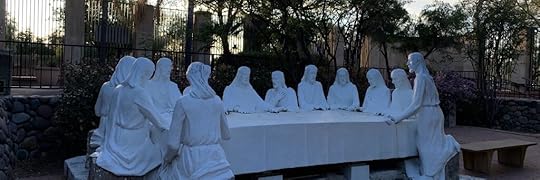 The Last Supper at Tucson’s Garden of Gethsemane — Photo by Andy Littleton
This is the third in a series based on the story of Tucson’s Garden of Gethsemane, but meant to help us examine what we do with Jesus today.
#3 — We Find Him in Unexpected PlacesWhen you can’t afford the basics of life, yet you aspire to create beautiful and meaningful things, you have a choice. You can wait until your situation turns around. You can grow embittered because life, truly, is unfair. Or, you can do what Felix Lucero did, and start looking around for something outside of yourself.
Let me be clear. We don’t know nearly enough about Lucero to assume that he never had some dark moments of doubt and anger with God as he sat in his makeshift tent under a bridge while other people constructed theaters and rode over the bridge in their new automobiles. War had wounded him and life wasn’t fair. By nature of the color of his skin he had less of a chance to tap into resources. He was aware undoubtedly that his story included the loss of his people’s land in the desert southwest at some point. He believed in God, but God hadn’t given him nearly as much as those on the topside of the bridge.
Faith is never the absence of dark or negative feelings. The Bible sure doesn’t cast it that way. Faith is life lived in relationship with God. Real relationships have their ups and downs. That’s how you know they’re real. I’m quite sure this man living in the tent by the river had his moments of despair and disappointment, but the legacy he left us speaks of another approach he also employed. As a sculptor you need material in bulk. His original sculpture in Yarnell was chiseled from a substantial concrete block. Massive stones are great too. But when you’re poor, it’s all easier said than done. Lucero had to be more creative. He had to keep his eyes open.
I live in Tucson as Lucero did, and I know a decent amount about the rivers he lived next to. We call them washes, because rivers run and washes get a “wash” every once in a while. The Santa Cruz actually did run when Lucero was there, unlike today. But it really runs during the summer storms. Monsoons. And when the rivers fill up to overflowing the waters tend to pick up a lot of material that people thought was safe above the floodline. As a poor kid, this is how I got my basketball hoop…backboard, pole and all. My dad and I went down to where the Rillito River was pulsing with temporary energy, flowing under the highway bridge. A day when Lucero would have had to have moved his camp. Down the river careened some other kid’s hoop that his parents probably placed too close to the river bank. My dad fished it out with a stick and I pretended to be Damon Stoudamire (dirt court edition) on it for the rest of my childhood.
 A wash in Tucson breaching it’s banks — Quality disposable camera shot by Andy Littleton
Felix Lucero did the same thing. In the waters of the Santa Cruz he found that God was providing him with the resources he needed to do the work he’d promsised to do. Sticks, stones, metal objects. He began to collect them and assemble them together in raw scarecrow like figures. A man with his arms stretched out. Not a scarecrow, but a similar figure. Jesus on a cross. Men seated in varied positions who he planned to position around a large table. The Last Supper. Then he took concrete and filled out the figures into life size proportions. Perhaps he saved for cement in small batches. Perhaps he made it all. Perhaps he scrounged excess from constructions sites and put it to use every night before it dried. Then he would carefully shape, smooth, and sand it. Finally, he added a coat of smooth plaster finish.
One day he saw something like a life-raft cruising atop the churning brown desert waters. It was an old mattress box spring swept away from a home too close to the river. I imagine him grabbing a long mesquite wood branch he’d been saving to hook and fish it out. As he stood victorious beside his catch perhaps he looked up toward the heavens and thanked God. The Last Supper would be complete. He’d found the table. All he had to do was sculpt something akin to the burial cloth in Yarnell over it as a table cloth. Today we still marvel at the scope of this scene he made, perhaps the size of his entire personal dwelling place.
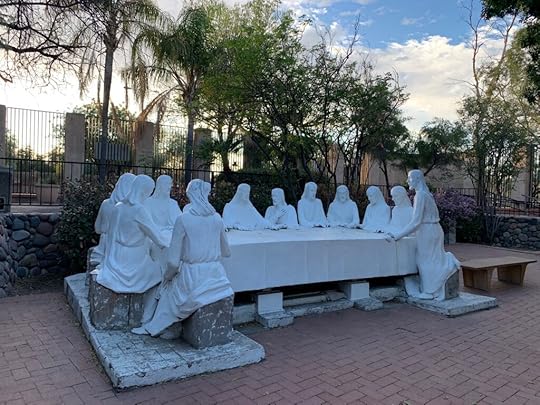 The Last Supper at Tucson’s Garden of Gethsemane — Photo by Andy Littleton
Of course, Lucero’s favorite image to sculpt was that of the Lord Jesus. At the table, with kind eyes engaging the traitorous Judas with his moneybag ready. Jesus on the cross bearing the sting of sin and shame. Like a scarecrow hung to repel people who would dare to hope in something greater than the powers that be. Then Jesus in the grave, bearing the sting of death itself but in holy serenity. And in Yarnell, the space left empty when Jesus rose from the dead victorious. I wonder what it was like for him as he formed these images with his hands, aware, that he had not made everything within them himself.
Lucero had promised to use his talent to honor Jesus if his life was saved, as it was. But he didn’t have enough capital to make it happen. And, as on those ancient hills of Palestine when multiplied the loaves and fish his disciples brought to him, Jesus provided Lucero with everything he needed to keep his promise. As Lucero went out to work for Jesus, he ended up finding Jesus floating down the river, in the coat hanger, the bare and twisted branch, and the rusted tin saucepan. This is one of the most beautiful facts about Lucero’s statues in retrospect. Lucero didn’t re-make Jesus. He found Jesus. He found him in the most unexpected places.
We want to do things that make us good and worthy. Even if we don’t have Jesus on our mind, this is the way we often live. Sometimes we despair of our inability to measure up to our own standards, let alone the standards of others and become paralyzed. We too, lack the capital to be the type of people we want to be, especially when we consider what it would take to pay God back for the life we’ve been given. That’s ok. It’s ok to feel those things and pass through those waters. But what if you looked around, in the unexpected places? It turns out, God is far more proficient at providing what we need to please him than we are. That’s the meaning of the cross afterall. And as the cross stands in an unexpected place, on the refuse heap of society now as it was then, we may find that it is the very provision that we need the most. Felix Lucero found Jesus in the unexpected places, and so will we today. Keep an eye out.
This is the third in a series of short write ups that examine what we do with Jesus today through reflecting on the story of Tucson’s Garden of Gethsemane. Some of these ideas were also used in the 2022 Good Friday service at Mission Church in Tucson, Arizona.Andy Littleton is a pastor at Mission Church in Tucson and owns and co-operates a small retail store about a block west of downtown Tucson. He is also the author of The Little Man — A father’s legacy of smallness, a travel memoir about fatherhood, ordinary people, old Ford trucks, and small towns.[image error]Shorts by Andy Littleton

- Andy Littleton's profile
- 13 followers

