Jane Bow's Blog, page 3
January 2, 2013
Coming About!
Some of English’s most colorful expressions originated in the mouths of British Royal Navy sailors. I learned about some of the power behind them near Oak Island, off the coast of Canada’s Nova Scotia, while doing atmospheric research for my novel The Oak Island Affair.
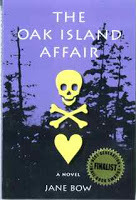 Click on image to read
Oak Island was closed to the public, but Vanessa, the novel’s main character, and her friend Brigit sailed there. I hired a shoestring-budget sailor to take me on the same trip.
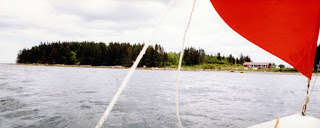
We landed at Joudrey’s Cove (straight ahead in the picture.) No one was around so I walked the beach, smelled the air, listened to the wind in the rigging, watched the cormorants. It was early June and chilly, but we were dressed in waterproof pants and jackets. All was well. Until we pushed off again.
The wind had picked up so much that my skipper decided to sail on only the small jib sail.
“Prepare to come about!” The skipper calls this to warn all hands of a change in tack. When the boat’s bow comes up into the wind and then through it, the sails will catch the wind on the other side. I uncleated the jib sheet.
“Coming about!”
I crossed the cockpit as the boat turned. Mahone Bay's spring winds are capricious however, and our twenty-foot boat was too little. No sooner had we come about than a gust blew in from a different direction, catching the sail at the wrong moment, heeling us over too far. The sail caught the water, and the next thing I knew I was in the Very Cold Atlantic. Ropes swirled around my head. My running shoes and waterproof rain gear pulled me under.
Fortunately I am a strong swimmer. I have also been a writer since the age of thirteen. What I thought, with excitement, as I kicked towards the surface was:
“I can use this!” And I did. (See more Oak Island pictures on My Books & Plays page. Sample The Oak Island Affair at Amazon.)
Here are some other expressions the Royal Navy has given us:
Let the cat out of the bag: when a seaman broke the rules he was tied to the mast and flogged with a knotted rope called a cat of nine tails, which was kept in a bag.
Loose cannon: the most dangerous thing on a wooden warship rolling and pitching at sea was a loose cannon.
Learning the ropes: the network of sheets and lines on a British navy sailing ship was complicated. In a strong wind, your life could depend on knowing what to pull, what to loosen, how to make the right knot.
Touch and go: when ships met at sea, sometimes they came close together to exchange people or goods. Their hulls would touch and then move apart, a delicate and precarious moment. (CBC Sunday Morning)
May all your verbal hands be on deck, your English expressions rich and varied -- even if it sometimes means sailing too close to the wind!
Happy New Year,
Jane
Click on image to read Oak Island was closed to the public, but Vanessa, the novel’s main character, and her friend Brigit sailed there. I hired a shoestring-budget sailor to take me on the same trip.

We landed at Joudrey’s Cove (straight ahead in the picture.) No one was around so I walked the beach, smelled the air, listened to the wind in the rigging, watched the cormorants. It was early June and chilly, but we were dressed in waterproof pants and jackets. All was well. Until we pushed off again.
The wind had picked up so much that my skipper decided to sail on only the small jib sail.
“Prepare to come about!” The skipper calls this to warn all hands of a change in tack. When the boat’s bow comes up into the wind and then through it, the sails will catch the wind on the other side. I uncleated the jib sheet.
“Coming about!”
I crossed the cockpit as the boat turned. Mahone Bay's spring winds are capricious however, and our twenty-foot boat was too little. No sooner had we come about than a gust blew in from a different direction, catching the sail at the wrong moment, heeling us over too far. The sail caught the water, and the next thing I knew I was in the Very Cold Atlantic. Ropes swirled around my head. My running shoes and waterproof rain gear pulled me under.
Fortunately I am a strong swimmer. I have also been a writer since the age of thirteen. What I thought, with excitement, as I kicked towards the surface was:
“I can use this!” And I did. (See more Oak Island pictures on My Books & Plays page. Sample The Oak Island Affair at Amazon.)
Here are some other expressions the Royal Navy has given us:
Let the cat out of the bag: when a seaman broke the rules he was tied to the mast and flogged with a knotted rope called a cat of nine tails, which was kept in a bag.
Loose cannon: the most dangerous thing on a wooden warship rolling and pitching at sea was a loose cannon.
Learning the ropes: the network of sheets and lines on a British navy sailing ship was complicated. In a strong wind, your life could depend on knowing what to pull, what to loosen, how to make the right knot.
Touch and go: when ships met at sea, sometimes they came close together to exchange people or goods. Their hulls would touch and then move apart, a delicate and precarious moment. (CBC Sunday Morning)
May all your verbal hands be on deck, your English expressions rich and varied -- even if it sometimes means sailing too close to the wind!
Happy New Year,
Jane


December 20, 2012
“Social media” is a misnomer
The word ‘social’ has its origin in the Latin ‘socius,’ meaning friend. In real human relationships fundamental messages travel back and forth behind the words. We listen for tone, nuance, watch body and facial expressions even as we choose our words. Feeling, touching, smelling each other emotionally -- being our full selves -- we explore, expand, dissect, disagree, creating whatever comes next.
Facebook, Twitter and the rest are “about bits and bites,” a young adviser told me recently. It’s like going to a cocktail party, according to a New York social media expert at Toronto’s Book Summit last June. She’s both right and wrong.
We can share a laugh or a rant, say ‘look what I did,’ solicit sympathy from “Friends.” Instant gratification is ours when someone “Likes” what we’ve shared, or a friend sends us a little “Comment” boost. We like this very, very much. We do it everywhere, all the time. A couple sits in a restaurant, both of them staring at their cell phones. A father walks down the street, one hand holding that of his toddler, the other a cell phone raised to eye level. And we want “Followers.” So much so now that some people buy them.
Cruising the “social media” equals spending hours in a single-focused, out-of-touch-with-anyone-present space in which we are blind, deaf and oblivious to the subtle messages coming from those around us. Clues that emotionally crippled people put out can easily go unnoticed. Is it a coincidence that the number of unfathomably violent shootings across the globe parallels the growth of what might more aptly be called the “asocial media?” Or the “mirror media?”
What do you think? Has too much online Soduko bent my mind, or is this something we need to address?
Thanks for visiting,
Jane
Facebook, Twitter and the rest are “about bits and bites,” a young adviser told me recently. It’s like going to a cocktail party, according to a New York social media expert at Toronto’s Book Summit last June. She’s both right and wrong.
We can share a laugh or a rant, say ‘look what I did,’ solicit sympathy from “Friends.” Instant gratification is ours when someone “Likes” what we’ve shared, or a friend sends us a little “Comment” boost. We like this very, very much. We do it everywhere, all the time. A couple sits in a restaurant, both of them staring at their cell phones. A father walks down the street, one hand holding that of his toddler, the other a cell phone raised to eye level. And we want “Followers.” So much so now that some people buy them.
Cruising the “social media” equals spending hours in a single-focused, out-of-touch-with-anyone-present space in which we are blind, deaf and oblivious to the subtle messages coming from those around us. Clues that emotionally crippled people put out can easily go unnoticed. Is it a coincidence that the number of unfathomably violent shootings across the globe parallels the growth of what might more aptly be called the “asocial media?” Or the “mirror media?”
What do you think? Has too much online Soduko bent my mind, or is this something we need to address?
Thanks for visiting,
Jane