Allen White's Blog, page 21
August 28, 2018
2018 National Coaching Survey
Coaching small group leaders is one of the most important roles in a healthy small group ministry, yet it proves to be the most difficult to accomplish. A recent survey of small group pastors and directors from across the U.S. demonstrates the growing need for help in establishing their coaching structures and supporting their leaders. These pastors and directors were allowed to choose “All that Apply” for the first set of responses.
57% reported their biggest struggle is in Identifying and Recruiting Coaches.
39% found their next biggest complication was in Training Coaches.
30% were frustrated by a Lack of Communication between Coaches and Group Leaders.
26% were unclear about Creating a Good Job Description.
Another 26% admitted they were Unclear About the Coach’s Role.
These pastors also shared some of their frustrations and limitations by volunteering these responses:
Not enough time to build a coaching structure.
Groups are growing, so more coaches are needed.
Some group leaders don’t really see the need for a coach.
Group leaders are not engaging with their coaches.
In analyzing the survey results, there is a progression of issues. First, if the coach’s role is unclear, then it’s difficult to spell out expectations in a job description. If these things are murky, then it’s also challenging to know who to recruit and what to train them to do.
When the respondents were asked what they were currently doing in the area of coaching, the responses ranged from nothing to recruiting through a trial run at coaching to the church elders coaching small groups leaders. Some of the frustrations centered on lack of connection between the coach and the group leaders, inconsistencies in coaching, or just starting out.
Most of the respondents (74%) felt that the ideal span of care was one coach for every five leaders. Other churches used ratios of 1:7, 1:10, and even 1:25. The bottom line is that the amount of care really depends on the number of new leaders a coach is responsible for and the number of struggling leaders they are helping.
The respondents were asked about what they believed was the primary purpose of coaching. The highest percentage of pastors (44%) hold that Building Relationships is the primary purpose. The next 39% of respondents gave a wide range of purposes for coaching including encouraging, equipping, growing groups, connecting, supporting, shepherding, and a number of other things. This confirmed the findings in the first data set, which indicated there was no unified, clear direction for coaching.
Building a coaching structure is the hardest work in small group ministry. It’s also the most important work. If pastors would spend the time they invest in placing people into groups and recruiting group leaders and focused on building their coaching structure instead, their ministries would flourish and grow in unprecedented ways.
Pastors battle the tyranny of the urgent. Often pastors are serving in multiple roles and are wearing many hats. The key is recruiting a team of trusted leaders to help you lead the small group ministry. As you delegate both responsibility and authority to them, you multiply your leadership and better serve your leaders.
For more information on coaching:
The 10 Biggest Coaching Mistakes Webinar is Wednesday, August 29, 2018 at 1pm Eastern. Click Here to Register.
The Coaching Exponential Groups Online Course is available only through Friday, August 31, 2018 at Midnight. For more information: http://www.coachingexponentialgroups.com/enroll
The post 2018 National Coaching Survey appeared first on Allen White's Blog.


August 21, 2018
Why Small Group Coaching Fails
By Allen White 
Almost every small group pastor or director will agree coaching small group leaders is important. Yet, many of those pastors would also admit they don’t know how to adequately coach their small group leaders. Having tried and failed at various coaching structures many times myself, I have found three key issues in unsuccessful (and eventually successful) coaching.
Unclear Expectations
Many coaching structures fail simply because no one knows what a coach is supposed to do. Is the coach an administrator or record keeper? Is the coach a trainer? Is the coach a figurehead so we can say we have a coaching structure? What do we expect our coaches to do?
If we need coaches to train leaders, then why are small group pastors still running centralized training meetings? Do we really need coaches to collect rosters and reports? Don’t we live in the 21st century? After all, churchteams.com will solve all of these administrative issues. (In an effort for full disclosure, I believe ChurchTeams is the best small groups’ database on the planet. Boyd Pelley did not pay me to say that. He did buy me an ice cream once.)
What do we need coaches to do? We need coaches to do the things we can’t do ourselves. If we had, say, five small groups, then what would we do with those leaders? We’d call them on a regular basis. We’d get together for a cup of coffee. We would personally encourage them, answer their questions, and pray for them. We would invest in the relationship. What if our coaches started there? Coaching is based on relationship. If there’s no relationship, not much coaching will take place.
Unreasonable Requirements
A friend of mind called me a while back. He was frustrated because many of his coaches were quitting. I asked him what he was asking them to do. He wanted his volunteer coaches to hold a monthly training meeting with their leaders on the church campus. Then, I asked him if he’d ever driven in his city?
This was a major metropolitan area. So, think of requiring volunteer small group coaches to hold monthly training meetings in the middle of one of the 10 largest cities in the U.S. It wasn’t working, and his coaches were quitting.
Face to face meetings are great. If you can pull them off with all of your leaders together, that’s really great. But, most people can’t. Fortunately, there are some alternatives.
Why not meet “together” with small group leaders on freeconference.com or Skype? Every day I coach small group pastors across the country over the phone or by teleconference. I’ve met few of them in person, but we connect on a weekly basis. We have a relationship, and they have seen success in growing their groups. This works with leaders locally too.
Facetime is necessary (the real, in-person version). Again, coaching is built on a relationship. But, maybe the face to face meetings are with one or two group leaders and not all of them. We can use other means to connect at other times. Don’t get me wrong. I am not advocating a simple “Like” on Facebook or a bulk email to all of the leaders at once. The connection must be personal to grow the relationship.
Lack of Accountability
None of us likes to make people uncomfortable. Some of us avoid this discomfort to the point of not asking our coaches if they’re coaching. Then, we discover not much coaching is taking place. We shouldn’t be surprised.
Only what we supervise gets done. Now, we don’t have to come down on our coaches like a ton of bricks, but we do need to ask. Rather than asking, “Have you contacted your leaders?” we should assume the good, qualified people we recruited to coach are actually coaching. The question could go like this, “What are you learning from your leaders?” They won’t get defensive.
They might respond, “Well, I haven’t contacted any of them lately.” That’s okay. Give them a deadline, “I understand you’re busy, but connect with your leaders in the next two weeks, then I’ll check-in with you again.” Presuming the best about our coaches both honors and motivates them. Giving them accountability helps them keep their commitment to coaching and eliminates the guilt of not fulfilling their commitment.
Effective Coaching
Effective, motivated coaches need direction that is clear, reasonable, and accountable. How do I know? A good coach taught me that…as he was resigning. Do your coaches know your expectations? Do you know your expectations? Are your requirements reasonable? And, if it’s truly important, are you holding them accountable? These three simple words will transform your coaching structure.
The post Why Small Group Coaching Fails appeared first on Allen White's Blog.
August 14, 2018
What is a Healthy Small Group?
Excerpt from Leading Healthy Groups By Allen White Copyright (c) 2018.
I suppose if you’re going to lead a healthy small group, it would be a good idea to know what a healthy one looks like. Plenty of examples come to mind of unhealthy groups — groups where one member dominates the discussion; groups that have great Bible studies, but don’t live out what they’ve learned; groups that become unto themselves and never attempt to reach others; and groups that just hang out, but really don’t ever move in any direction. But, our focus is on health, not the opposite.
Healthy groups fully accept every member.
Every person matters to God and should matter to your group. Some group members might be a little rough around the edges or challenging to meet with, but none are less important or more important than anyone else. God has a reason for putting them in your group. Groups have to accept people where they are, because they can’t accept them anywhere else, can they? Acceptance is communicated through listening and giving equal time. Acceptance is expressed through intentionally getting to know those who are different from you instead of instantly gravitating toward those you are fonder of. Jesus directed groups this way, when he said, “Love one another” (John 13:34) and “By this everyone will know that you are my disciples, if you love one another” (John 13:35). Jesus modeled this in who he associated with: tax collectors like Matthew; sinners like adulterers and bad hand washers; Samaritans who were racially different; and many others who the religious establishment looked down upon. Acceptance is one of the most precious gifts any person can give another. Healthy groups accept others.
Healthy groups center themselves on God’s Word, the Bible.
One of the key purposes of a healthy group is to become more like Christ. Every group has three powerful resources at their disposal to grow in Christlikeness: the Bible, the Spirit, and the group. Paul writes, “Do not conform to the pattern of this world, but be transformed by the renewing of your mind” (Romans 12:2). This transformation takes place through each person’s willingness to surrender, the direction of Scripture, the power of the Spirit, and the support of the group. These ideas will be more thoroughly explained in Chapter 5. Regardless of the type of group you lead, these elements are essential for healthy groups to make disciples.
Healthy groups are serious about helping their members grow.
(and group members are open to receiving help). This could involve encouragement and support to start a good habit or break a bad one. This can also involve confronting sin in the lives of their members. For most people, encouragement is much more appealing that confrontation. While the group should accept people as they are, the group should also love them enough not to leave them there. As the group grows in their relationship with others and their relationship with God, the group cannot shy away from hard things. Healthy groups are serious about help.
Healthy groups live like Jesus was serious about what he said.
When Jesus told his disciples that out of 633 laws in Scripture only two rose above the rest: love God and love others (Matthew 22:37-39), he intended for his followers to love God and love others above all else. Jesus wants his followers today to treat “the least of these – the hungry, the naked, the prisoner, and others who lack basic needs” as if they were serving Jesus himself (Matthew 25:31-46). While taking all of Scripture into account, Jesus wants his disciples to surrender themselves to God and live life in a selfless way. He wants his followers to “go and make disciples,” baptize them, and teach them to obey all Jesus commanded (Matthew 28:19-20). What if these weren’t just suggestions for better living? What if these weren’t merely nice platitudes where you could hit a mental “like” button? What if Jesus was serious about what he said? What if he expects his followers to actually do it? Obeying Jesus is a sign of group health.
Healthy groups are on mission.
The group is not just about itself. Groups members should constantly seek out people they and the group can serve. Who is the next person to invite? What neighbor needs help? Where can the group serve together locally or globally? Sometimes the greatest coping strategy for dealing with life’s woes is to focus on someone other than you. When groups align their mission with Jesus’ mission, they benefit from walking in obedience to Jesus’ commands. They benefit those who they serve. But, most of all, they benefit themselves with not only the blessing of obedience, but with a new depth of understanding God’s teaching through their experiences.
Healthy groups multiply.
This is not a popular topic among small groups in North American culture where groups want to stay together forever. I both understand and respect that desire. It’s natural to form a bond and “keep the family together.” But, it’s supernatural to think of others and the groups they will need. I don’t mean to sound spooky, but our connection to God is supernatural. His guidance through prayer and the Bible is supernatural. This makes identifying and developing new leaders possible. This causes hearts to change in favor of every disciple making disciples. To reach the world, and especially the next generation, this sort of selflessness is required. Every group should seek God about its direction and its future.
Your group may find other values in addition to these that you desire to integrate into your group life. You can certainly add these to your Group Agreement. But, don’t replace any of the priorities mentioned here.
That’s a lot to think about. These are things to focus on and strive toward. The accomplishment of all of these things will take a lifetime. But, on the other hand, nothing will ever be accomplished if you don’t start today. Today is both the culmination of what your life has become and the first step toward what you life will be. Your group is a big part of that.
Pre-order at 30% off and free shipping before 8/15/18 here.
Order the paperback or Kindle edition on Amazon starting on 8/15/18.
The post What is a Healthy Small Group? appeared first on Allen White's Blog.
August 7, 2018
Coaches Help Launch More Groups
By Allen White 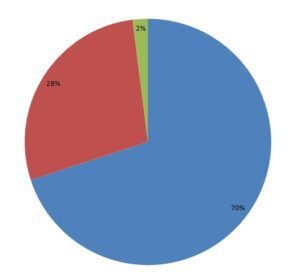
I learned the hard way that coaches help launch more groups.
One church I served had a weekly average adult attendance of 800. During our third launch in Fall 2004, we start 103 small groups. Those were pretty amazing numbers. In the middle of that series, I sent out a survey to determine how many of those groups would continue. I was hoping for at least 80 percent moving forward.
The results came back: 70 percent would continue with 30 percent ending. These were not the results I wanted or expected, so I sent a survey to the 30 leaders who were ending their groups. The response was startling. Out of the 30 leaders, only two leaders had actually led a group for the six week series. The other 28 groups had never started. This lead me to a very important principle:
Groups that don’t start tend to not continue.
It’s almost a proverb, isn’t it? It might deserve a needlepoint cushion.
Why didn’t the groups start? The new leaders got cold feet. Some of them were rejected by the people they invited. Some had good intentions starting out, then life just got in the way.
They didn’t miss the boat. I missed the boat. So, we did something new, immediately.
On the next campaign, we added 32 new groups to the 73 groups that continued from the Fall for a total of 105 groups. Every new leader met an experienced leader who would coach them at our New Leader Briefing. Their “coach” called them every week starting after the briefing through the end of the series. When they had a setback, the coach encouraged them. When they had a question, the coach gave them an answer. All of these groups started and most of them continued.
How many new groups are you starting? Divide that number by two. That’s how many coaches you need. One experienced leader for every two new groups. The experienced leaders are still leading their own group, so you don’t want to overwhelm them. Then recruit experienced leaders to help the new leaders get started. And, they will start.
Where do you find these experienced leaders to coach? Make a list of your best leaders. Pray over the list. Then, invite them like this: “We are going to be completely inundated with new leaders. Our coaching structure is completely overwhelmed. I NEED YOUR HELP.” That is a very compelling invitation that will get a “Yes.”
At the risk of overstating my point, it is Mission Critical to have someone calling your new leaders weekly from when they say “Yes” to starting a group until the study starts. More groups will end in that window than at any other time.
Start making your list right now.
The post Coaches Help Launch More Groups appeared first on Allen White's Blog.
July 31, 2018
Make Every Group a Healthy Group
Every small group pastor wants healthy leaders and healthy groups. Sometimes that feels like an unattainable goal.
How do you connect with every leader and every group on a regular basis when you always seem to be putting out fires? Let’s face it – you spend a good deal of time addressing the latest crisis which robs time away from your strategic planning. It’s hard to work in it and on it at the same time.
While you do your best to keep up with your leaders, the reality is there is only so much of you. There are only so many hours in the day. You have a limited amount of time, energy and attention. If you’re like me, small groups are not your only responsibility. You tend to resort to email blasts and training meetings that are half full to invest in your leaders, but you’re always left wondering how you could help your leaders more?
A small group leadership team with coaches to care for every leader would be ideal. But, it’s difficult to build a coaching team when the demand rests in finding a group for the person who signed up last Sunday. When there’s not a group to plug them into, the prospective member has to wait until you can recruit a new leader and start a group. When do you get to think about a coaching structure?
But, let’s say you get a reprieve from the tyranny of the urgent to form a coaching structure. How would you build it? Who would you recruit to coach? What would they do? Those three questions delay most small group pastors from even starting.
Like you, I was very frustrated with coaching group leaders. I have made about every mistake that can be made with coaching, but in the process I’ve figured out some things that have helped many churches like yours.
Let me guide you through a proven way to build your coaching structure that is customizable to your church. I understand that your church is different from other churches. There is a way to have both what works in coaching leaders and what will work for you.
You don’t have to go through the heartbreaks of watching excited new leaders become discouraged to the point of not even starting their new group. You can avoid the aftermath of poorly supervised leaders taking their group away from the vision of your church. The lack of a coaching structure means the problems and issues of your small group ministry is solely your burden to bear.
But, if you took the same energy it takes to recruit leaders and place people into groups and invested yourself in building a coaching structure, your groups would get further faster than you could imagine. More of your new leaders would actually start groups because someone was walking alongside them and offering encouragement. All of your group leaders would be healthier, which in turn will create healthier groups. And, your burden would be lightened. You could actually have the margin you need to plan for the future of your ministry.
In the Coaching Exponential Groups Online Course, I will guide you around the pitfalls of small groups ministry and help you build a coaching structure, define the coaching role, recruit the right people, equip coaches to serve leaders, and disciple your people through groups. In about an hour a week for six weeks, you can follow a step by step process to get the help you need to effectively lead your groups.
Give the course a try. If it doesn’t work for you, then I will give you a full refund in the first 30 days. I will assume all of the risk, because I believe these strategies will help you significantly.
But, don’t just take my word for it, hear what others have to say about the course.
Let me help you make every group a healthy group.
Allen
The post Make Every Group a Healthy Group appeared first on Allen White's Blog.
July 24, 2018
The Role of a Coach
By Allen White
By now most small group pastors and directors understand coaches are essential to sustain and support small group leaders. While everyone will  agree to the necessity of coaches, most don’t know what to do with coaches, and unfortunately, most coaches don’t know what to do period. Beautiful org charts in a lot of churches actually net zero results. Here are some tips to moving your coaches in the right direction:
1. Coaches Aren’t Accountants.
The problem with most accountability in Christian circles is that it becomes too much like accounting. Unlike Santa Claus, coaches do not relish keeping a naughty or nice list. What’s more, group leaders don’t appreciate being supervised by a supervisor. This doesn’t mean we throw caution to the wind, but we also don’t put a cruel task master over small group leaders. After all, “love keeps no record of wrongs,” right? (1 Corinthians 13:5). Read more on accountability that works here.
2. Coaches Aren’t Middle Managers, Bureaucrats or Spies.
Years ago, Carol, one of my coaches, complained to me, “I feel like I’m your spy.” At that point, I was still recruiting and training all of the group leaders myself. Carol and the other coaches were sent out to visit the groups and report back what they saw. No wonder she felt that way.
In recruiting coaches, we work hard to select mature, capable people to serve with us. Then, often because we don’t have the coaching role figured out ourselves, we tend to micromanage them as if they are neither mature nor capable. I didn’t keep many coaches that way.
The key is to elevate the role of coaching. When I chose coaches the next time around, I invited capable, mature people to join me in a journey. We met every week for dinner and to talk about the direction of our small groups. I committed to never make a decision about our small groups outside of that meeting. We led together.
These folks aren’t underachievers who need our constant motivation. These aren’t people who are prone to wander and need a steady reminder of direction. If they are, then they shouldn’t be coaching groups. If they’re not, then they deserve more respect than a place in our little bureaucracy.
3. The Role of the Coach is to Refocus the Player.
My friend and mentor, Carl George has drilled this phrase into my psyche. When you think about a coach in sports, he stands at the sidelines and guides his players. If the last play went terribly wrong, his job is to refocus the players on the next play. They can’t replay the last play on the field. But, if a bad play keeps replaying in the players’ minds, then the next play will also suffer.
Small group leaders have busy lives and are pulled in many different directions. On a particularly hectic day or difficult season, it’s easy for leaders to become discouraged and wonder why they ever got into this business in the first place. The relationship with the coach is key to maintaining momentum in groups. The coach is not making sure the job gets done. The coach is making sure the player is okay.
4. Give Your Leaders the Space to See What God is Doing
The most valuable function of a coach is giving a small group leader an opportunity to reflect on what God is doing in his or her group. Most would admit to the difficulty of working “in” something and “on” something at the same time. It’s nearly impossible. Often group leaders are working so hard in the group, they don’t see the big picture of what God is doing.
By setting aside an hour or so once every quarter, a coach can give group leaders the space they need to see what God is doing and to identify what is next. This is as simple as the coach asking the leaders to list the names of their group members, then asking them to talk about what God is doing in each person’s life. As the leaders discuss their members, the logical next steps will begin to surface for the leader.
Bob – Hasn’t been around for a while. I need to give him a call.
Joe – Struggling at his job. I need to pray for him and give him some encouragement outside of the group.
Steve – Lost his job. I need to check-in with him and see if there’s any way the group can help.
Tony – Making poor choices. I need to pray for him and for the right timing to have a tough conversation.
Brett – Shows strong leadership potential. I need to give him more responsibilities in the group and eventually invite him to co-lead with me.
You get the idea. The coach must approach this conversation as a learner, not as an instructor. It would be easy to quickly diagnose each member and offer next steps, but the next steps determined by the group leader will be the next steps that are actually executed.
To make this work, start with a few assumptions. Assumption #1: Group leaders have made themselves available to God, and God is using them in their group. If a group leader is going through a hard time, he may be wondering if God is doing anything at all. He needs encouragement. But, some group leaders so naturally use their gifts, they might not even realize how gifted they are. They also need a coach’s insight.
Assumption #2: Who you are as a coach is more significant than what you could every say to a group leader. Your relationship with your group leaders is the greatest gift you can offer them. When relationship comes first, tasks get accomplished. Without relationship, leaders easily burn out.
5. Small Group Pastors: Get Out of Your Coach’s Way
How many Team Owners or General Managers have made their coaches’ lives miserable? Small Group Pastors and Directors, like their coaches, should approach their roles as learners, not drill sergeants. God wants to use your coaches. Unfortunately, the biggest obstacle to effective coaching is often a well-meaning Small Groups Pastor.
While you cannot give away the responsibility for the ministry, empowered coaches are effective coaches. Disempowered coaches become burned out middle managers. Your expectation of your coaches should be clear, reasonable and accountable. But, again, don’t approach accountability as an accountant. Give your coaches the benefit of the doubt: “How are your groups doing?” not “Have you followed up on your groups lately?” If your coaching system is in disarray, then you’re probably in the way.
The post The Role of a Coach appeared first on Allen White's Blog.
July 17, 2018
Why Small Group Coaching Matters
By Allen White 
In conversations with small group pastors from some of the largest small group ministries in the country, I’ve learned that many have completely given up on coaching group leaders. Others are on the other extreme and hire coaches. Whether your approach is the “phone-a-friend” method or the metachurch model, here are some reasons coaching is significant.
More Group Leaders Will Quit BEFORE a Study Begins that After.
From the moment someone offers to be a Leader/Host/Friend and start a group, they need a coach. I have seen more potential group leaders stall between the invitation to lead and the start of the study than at any point in the process. Most groups who actually do the first study or first semester will continue on, but groups that fail to start tend to not continue.
It is mission critical for a leader to have a coach from when they say “Yes,” until the end of the study. You may ask, “But, what about the rest of our group leaders?” Here’s the deal, if your other groups have survived without a coach, put that on the back burner and start coaching your new leaders now.
People Hate Meetings.
You’re probably frustrated that your group leaders don’t show up for your training. The short of it is people simply hate meetings, especially when the topics don’t affect them. How do you train your leaders if they won’t come to meetings? Coach them.
Rather than coaches being your spies or your report-takers, have the coaches train the group leaders on what the leaders actually need training on. It’s not cookie cutter. It’s customized to what the leader is currently facing. If you are answering the questions your leaders are asking, then they will become very interested in training. But, what is training?
What if training, especially on-going training, is not a note sheet and a PowerPoint presentation? Training could be a short video emailed out to your leaders. Training could be a short conversation. Training could be solving a current problem. Training should come from the coach.
But, if the coaches do the training, what do small group pastors/ directors do? Train the coaches and build a small group team. By working at a higher level in your small group structure, you can have a greater impact and get much further faster.
You Can’t Successfully Coach More than 8 Leaders Yourself.
Why eight? That’s my number. I tried to coach 30 leaders once. There’s wasn’t much coaching going on. What I discovered is eight is great. In a church under 1,000 adults, your eight might be your coaches or small group team. In a church over 1,000 adults, your eight is definitely a small group team. Just follow the pattern Jethro gave Moses in Exodus 18.
Let’s face it – most small group pastors/ directors wear more hats than just small group ministry. If that’s the case with you, then you certainly can’t coach all of your leaders by yourself. Consider your best and brightest leaders. Could they coach? Let them give it a try.
But, there’s a much bigger reason to invest in coaching – you won’t always have as many groups as you currently have. You’re going to have more! How are you going to serve your group leaders when you have twice as many as you have now? It happened to me in one day! Plan for where you want your groups to grow. Recruit coaches even before you recruit leaders!
Coaching will make all of the difference in both starting and supporting group leaders. No doubt building a coaching structure is the hardest work of small group ministry.
The only thing harder is not having one.
The post Why Small Group Coaching Matters appeared first on Allen White's Blog.
July 10, 2018
Writing Effective Group Curriculum
By Allen White

Photo Courtesy of Luke Tevebaugh.
Whether you are writing curriculum for a video-based study or a weekly sermon discussion guide, effective curriculum requires some dedicated steps and some finesse that comes from experience. Based on studies I’ve written for both churches I’ve served on staff as well as other churches and ministries, I want to share some of the things I’ve picked up over the years.
Every Lesson has Four Parts.
Bible studies consist of these four things: Ice Breaker, Observation Questions, Interpretation Questions, and Application Questions. Or, to put it another way: How are You? What does the Text Say? What does It Mean? What are You Going to Do About It? While some studies may appear to have more parts and pieces, it all boils down to these four.
The purpose of an Ice Breaker is to get the conversation started. You want to ask a simple question that anyone can answer to get the conversation going. You don’t want an ice breaker just for the sake of an ice breaker. You want a question that will lead into the discussion to follow. A great resource for ice breakers is Cheryl Shireman’s What’s Your Story?
Observation Questions are questions anyone can answer from the Scripture passage. (I am old school and believe that a Bible study should involve the Bible.) Questions can come from quotes or actions in the text. Even a question like “What jumps out at you from this passage?”can be a great start. These are the Who, What, and Where questions. The answers are the facts from the text. Try not to oversimplify these questions or else the group will avoid them. These questions are to help the group members dip their toe into the water.
Interpretation Questions ask the How and Why questions. How do you feel about Jesus’ words? Why did the person in the passage react this way? The caution here is to ask questions that can be answered without knowledge of other passages of Scripture. If your questions assume the same vast Bible knowledge that you have, then you’re going to leave some people behind. If a cross-reference will shed light on the meaning of the passage, then add the cross-reference to the question. Don’t assume the groups know as much as you.
Application Questions are the meat of any Bible study. In our mission to “teach them to obey” as Jesus commanded us (Matthew 28:20), practically applying what the group members are learning to their own lives is the most important part of the study. How does this passage challenge their attitudes? What action should they take? Encourage group members to take on an assignment or set a goal for them to live out the following week. Then, in the next lesson, after the ice breaker, check in on their progress.
Create a template with these four parts. You can name them whatever you want to name them. If you write from a template, you never start with a blank piece of paper. For a sample template, contact me at allen@allenwhite.org.
Writing for the Entire Congregation is Tricky.
Every congregation is made up of a broad spectrum of believers. You have everyone from new believers to seasoned saints. You have people who perceive themselves as not having much to offer spiritually and people who pride themselves on their spiritual maturity. (But, how mature are they really?) You have members who have a strong command of Scripture, and you have people who are just discovering their Bibles have both Old and New Testaments. How do you write curriculum that will connect with every member in your church?
Unfortunately, most curriculum is written toward the least common denominator. You don’t want to go over anyone’s head, so you write easier questions for newer, less knowledgeable believers. The problem is you leave out those who are well beyond the new believer stage. I have found that creating a section of the curriculum simply titled “For Deeper Study” meets the needs for those who regard themselves as “deep.” This could include questions based on cross-references to the text or questions assuming greater Bible knowledge.
Deep is a slippery word. I don’t believe you need to parse Greek verbs to meet this need. You want to avoid writing lessons to what I call Bible connoisseurs who are searching for some nuance of the text they have never learned before. Read more here. To me deep speaks to deep application. How does the word penetrate my Christian façade and speak to my true self? What if Jesus was serious about what he commanded us to do? How should my life change starting today?
You don’t want to leave anyone behind whether they have vast knowledge of Scripture or no knowledge. Creating different levels of questions in the curriculum will help you to bridge this gap. Explain to your group leaders that say the first 10 or so questions are for newer believers, but then the Going Deeper section is for more mature believers, then let them decide which questions are the most appropriate for their groups.
Integrating the Video in Your Curriculum Writing.
If you are creating video-based curriculum, then you need to provide links connecting the teaching on the video with the study guide. I’ve found that transcribing the videos with a service like Rev.com is very helpful in writing curriculum. Take exact quotes from the video teaching and put them into the study guide followed by a question. “In the video, our pastor said __________________. How does that statement impact what you think about _____________?” If you don’t refer to the video in the study guide, then sometimes the video can seem unrelated to the group study.
I prefer to write the study guide after the video shoot. This way the video doesn’t change. It’s done. Then, using your template from #1, write your questions using the same passage(s) of Scripture, the teacher used and add some quotes from the video. If something wasn’t thoroughly covered in the video, then you can add material in a lesson introduction which should be read in the group meeting.
Video-based curriculum is a great way to start discussion on a topic. The group leader does not need to be a Bible expert, because the pastor on the video is the expert. Video curriculum also makes the link between the pastor and small groups stronger. The pastor’s effort is meaningful to the group. For more on video curriculum, click here.
Training Your Group Leaders with the Curriculum.
Whatever you want your group leaders to do in a meeting should be stated in the curriculum. I prefer to put these instructions in every book rather than creating a leader guide and a student guide. I want group members to see how easy it is to lead a group and maybe they’ll lead a group on their own eventually.
Leader instructions that are taught in a meeting or hidden in the introduction to the study guide will never make it into a group meeting. If you want the group to pray together at the end of the discussion, then add a question or statement about prayer at the end of the application section. If you want group members to take responsibilities in the group like bringing refreshments, hosting the group in their home, or leading the discussion, then add these instructions into the application section during the first two weeks of the study. If you want group members to invite more people to the group, then put that in the study. If you want group members to avoid spending time on prayer requests like “Please pray for my Aunt Gertrude’s big toe,” then add those instructions into the study. You get the picture.
Leaders will be reminded if the instructions are in each lesson. If the leader skips something, then a group member will be quick to bring it up. And, in the process, group members will discover that they could lead a group themselves.
Concluding Thoughts.
There is an art and a science to curriculum writing. Curriculum requires a basic structure to get the group to where you want it to go. Remember the four parts? Curriculum writing also requires the finesse to write for an entire congregation without leaving anyone out. Integrating quotes from video teaching will make your curriculum more cohesive. Training leaders and their whole group is another great way to cast vision for future groups and get the Word of God deeper into your members’ lives.
Oh, and if all of this seems too much for you, then recruit a volunteer team of writers to help you. Don’t make any promises on what you will or won’t use, but ask them to help. Other paid services like Lifeway’s smallgroup.com can also help you create your own curriculum.
There is nothing wrong with purchasing your curriculum. But, writing your own curriculum gives you the chance to encode each lesson with your church’s DNA and address specific things to your congregation.
The post Writing Effective Group Curriculum appeared first on Allen White's Blog.
July 3, 2018

June 26, 2018
It’s Not Too Late to Create Curriculum for Fall
Allen White and Jeremy Gant of One Ten Pictures share (in detail) about creating your own video-based curriculum.
Trouble Viewing? Click here: https://youtu.be/OEpsKE2WF4w
For more information about All In Small Groups: allinsmallgroups.com
The post It’s Not Too Late to Create Curriculum for Fall appeared first on Allen White's Blog.