Gary Mesick's Blog, page 2
November 28, 2022
Another Poem Selected for Publication--So Some Admin to Do!
 Today, I got a letter from editor Paul Hoover saying he wants to publish one of my poems in the 2023 issue of New American Writing. I have been fortunate and honored to have had Paul select a couple of my other poems as well ("Homeland Security" and "Great Books of the Western World"), and I feel just as fortunate today.
As I've mentioned in other posts, it's always a special occasion when a poem is selected for publication. The odds are about 1 in 100, all things being equal. But, of course, they never are equal. Journals have different audiences, different criteria. Poets have different writing strengths and different submission strategies. Still, that's the rule of thumb.
New American Writing limits the quantity of poetry submissions by staying old school and insisting on postal submissions with an enclosed Self-Addressed, Stamped Envelope (a SASE in the biz). It's a barrier to entry for many, so it cuts down on "carpet bombing" them with poetry. You really have to want to be published there to go to the trouble.
As you know if you've been following along, I recommend sending packets out to multiple journals at once. I did that here. So now I have the task of going back to those journals and withdrawing this one poem (and letting them know the others are still available for their consideration). And I need to update all my records, showing the acceptance (and the rejection of the other four poems in the packet) and the withdrawals from other journals.
Also, I need to "retire" that packet. I can't send it anywhere else. I need to take those four poems and construct a new packet (adding another poem to that packet, or perhaps shuffling the poems into different packets). It's a good time of year to do that so I am ready to send packets out next year.
If you want to be published (by someone other than yourself), there is a lot of administration to go with the inspiration. Write the poems, sure. But get them out there! And keep track of them once you do. It will keep you sane (and out of the editorial dog house) as you increase your odds of success.


November 17, 2022
Just in Time for the Holidays--the Annual Schedule Juggle Inspires a Poem

I was inspired to write "On Why She Just Won't Do" after the usual holiday schedule juggling act between children, parents, in-laws, pets, etc.
Often, you will (and should!) buy the journal to read my most recent poems. Here is a chance to sample what I've been writing for the cost of nothing but the flick of a wrist. Cafe Review has reprinted the poem on their site. Click here to read it.
November 7, 2022
Embracing Rejection, Part 3: Playing the Odds
I’ve written in the past about the need to get a thick skin when sending your writing out into the world. But to truly embrace rejection, you need to actually learn to play the poor odds and turn them in your favor. Here is one way.
Consider this: for your typical poetry journal, there are in the neighborhood of one hundred poems vying for each slot in the magazine. If you are a typically competent poet (as technically good as any other, except that an editor hasn’t warmed to your particular poems), you can expect an acceptance rate of 1%.
Now, poetry journals are not all created equal. For some of the most widely-read, most-competitive places (the New Yorker, the New York Times, Atlantic, etc), you might recalibrate your odds as nil. And if you are just starting out, even the newest, most wide-open journal with no reputation to speak of might be beyond your reach. But for the sake of argument, let’s just accept that 1% is as good a figure as any other.
The good news is that the odds aren’t as bad as they may first seem. Most journals ask for multiple submissions, usually five poems. So the odds of any one poem in your packet being selected for publication is now 5%. Still slim, but not hopeless. Your odds are now one in twenty.
I feel comfortable sending the same packet of poems to five journals at a time. When one of those five rejects all the poems in a packet, I turn it around and send it out to the next journal, with the goal of keeping it under consideration by five journals at a time.
I feel comfortable sending the same packet of poems to five journals at a time.
That seems like the sweet spot to me—not so many places at once that I can’t keep track of them or that I am forever withdrawing accepted poems, but enough places so that I get a poem accepted often enough that I’m encouraged to keep going.
You may decide five is too many—or too few. But if you’re going to do this, my advice is not to go under three places at a time and not more than ten. Too few, and you just drag out the process. Too many and you create unnecessary work and confusion.
So to get anything accepted, you are going to have to send your poems out to far, far more places than you might first imagine. You can’t expect one journal to accept anything. And, keeping the odds at 1% for a given poem, even if you send the same five poems to five journals at the same time, your odds are still a mere one in four that any poem will be selected for publication.
“But what if my poem gets selected by two different journals? I’ll be black-listed for life!!” A few journals will even still insist that they do not accept (or, more vaguely, do not encourage) simultaneous submissions. So what to do about this? First, you should be so lucky. The same poem accepted twice??? But with good administrative skills (letting people know right away if a poem has been selected elsewhere), you’ll survive. With bad administrative skills, you might be black-listed. But take heart. There are a couple thousand other journals out there.
I say “Take heart,” and I mean it. This is a tough way to get published, and your life will be filled with disappointment. You will be tempted quit the game altogether and put your poems in your blog and call it good. But if you are still determined to have your work measured against some standard, and you want the affirmation that comes from that, you might want to get busy. Very busy!
In future posts, I’ll share how I choose journals and what tools I use to manage my poems. But this is enough for now.
September 26, 2022
John Prine's "Lake Marie"--Six Minute Heartache
John Prine's "Lake Marie"--Six Minute Heartache
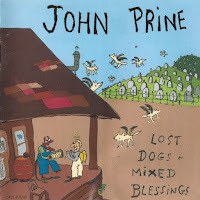 Listen to the Song Here John Prine: "Lake Marie"
While I was enduring the pandemic lockdown in the spring of 2020, John Prine died of COVID. For many, it seemed to be an event that made the pandemic both personal and universal—since for Prine’s fans, his music was a treasure. And like many others in that moment, I turned to his music to mourn him and to once again find some grounding in the humanity of his songs. His songs are often funny (often at Prine’s own expense), though they also are at least as likely to be songs of loss—lost countries (“The Great Compromise”), lost lives (“Sam Stone”), lost loves (“Speed of the Sound of Loneliness”), lost places (“Paradise”), lost keys (“Automobile”). In all those ways, they remind me—and many others—of what we share—and lose—as a country.
Then over two years later, I finally caught COVID myself. And while in a week-long quarantine, I returned to Prine’s music, listening to a dozen of his albums in succession, watching his interview/performance with Poet Laureate Ted Kooser from 2005, and watching several other performances as well. And while the songs from his debut album continued to move and amaze me, and other songs continued to be touchstones for me, I kept returning to a song from 1995’s Lost Dogs and Mixed Blessings called “Lake Marie.” It’s a song of devastating heartbreak and loss, and the more I listened, the more I came to understand that it manages to resonate so deeply because—like so much of Prine’s songwriting—the heartbreak works its way in deep by touching on the mythology of America itself.
I'll have more to say about it, but please listen to the song first.
February 12, 2022
How to Earn Six Figures or More While Writing Poetry
You, too, can earn $70,000 a year--even $100,000 a year or more--while writing poetry. And I'm going to tell you how.
Step one: Earn $100,000.
Step two: Write poems.
Simple, right?
You didn't actually think I was going to tell you how to get someone to pay you tens of thousands of dollars for your poems, did you? Oh, sure. It's been done. And it will be done again. But not by you. Or me.
And that's nobody's fault. Your parents know it's true. They've told you many times. Even you know it's true. You just don't like it.
Here's an exercise for you. Watch Werner Herzog's movie, "Aguirre: The Wrath of God." Spoiler alert: Aguirre is committed to his vision (in his case, finding untold riches in the New World). He believes in himself. He is willing to sacrifice all he has for his vision. And he ends up destroyed and alone, babbling to monkeys.
Seriously. You're not doing this for the money. This is one of those things that you just have to do. But it doesn't follow that you have to starve for your art.
Find a way to make a living. Make sure it's one that leaves you with enough energy (physical and mental) to create your art. Then create! And be grateful.
August 23, 2021
A Poem From Another War That Ended Badly For Us...
I wrote this poem after eating lunch at a Vietnamese restaurant, and thinking about what it all meant. The lunch. The war. America. Substitute Kabul for Saigon and change a few ingredients, and you have a poem in the making (hold onto it for a decade or so, then send it out for publication).
Lunch Hour at Pho Saigon
A pair of chromed figures, winged and bearded,
The size of mastiffs--but rather small for dragons--
Crouch beside the doors to this converted
Filling station, extending their exotic,
And misapprehended brand of luck
And protection to the mid-day diners at Pho Saigon.
Saigon! As if the name itself is gesture enough
To will the customers into blissful defiance of the past.
Lunch is politics by other means.
To the man on a tight schedule, propped against the counter
While taking phone calls between the mouthfuls
Of the translucent noodles, his noon meal has no agenda
Beyond efficiency: it’s cheap and it’s quick.
He breathes in this air, rich with the scent of lemon,
Ginger, anise, and cardamom, cinnamon,
Mint, coriander and nuoc mam. And so the wisdom
Of generations is devoured without a care.
It seems so easy--until the pepper sauce,
Or the collapse of a paper-tiger regime,
Or the hand-lettered sign above the doorway
Causes one to rediscover the eternal verity:
You must always pay as you leave.
And the dragons’ ambiguous gaze
Is an unsettling reminder that one man’s angel
Is another’s demon.
From my book, "General Discharge" (Fomite Press)

November 25, 2020
Some Poems Worth Your Time: "For What Binds Us." Jane Hir...
Some Poems Worth Your Time: "For What Binds Us." Jane Hirschfield
I've read--and taught--Jane Hirschfield's poetry--including the volume from which this poem is taken. I also had a chance to show her around West Point when she visited to address the cadets while I was teaching there. I'm glad to see that it is appreciated. Garrison Keillor's "Good Poems" book is a great source of accessible, worthwhile poems. This poem by Jane Hirschfield is that kind of poem.
https://www.garrisonkeillor.com/radio/twa-the-writers-almanac-for-november-25-2020/

October 30, 2020
For Your Election Week Viewing...Voter Fraud, Russian Interference, and Corrupt Politicians--in a 1940 Farce: The Great McGinty
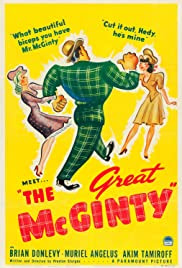 I'm a big fan of Preston Sturges. His 1940s satires seem to take on taboos of the age in a way that continues to seem fresh, even 80 years later (if you can get past black & white film--which has never been an obstacle for me, but seems to be for many).
The premise of this film--that politics is filled with voter fraud, Russian interference, and corrupt politicians--is a breath of fresh air, because in this era, we seem to think we INVENTED those things. And as this 80-year-old film reminds us, they have been with us forever. So relax. We'll survive. We have before.
In addition to the fresh look at an age-old problem, the movie offers us a glimpse into the origins of one of the great all-time bad guys of cartoon villainy: Boris Badenov. The character played by Akim Tamiroff (the aforementioned Russian interference) was the basis for William Conrad's accent and the cartoon likeness in the Rocky and Bullwinkle series. You would likely recognize it even without my telling you about it, but where's the fun in that?
After you watch this one, keep watching other Preston Sturges movies, like "Miracle at Morgan's Creek" (about a virgin birth--or not), "Sullivan's Travels" (where the film idea-within-a-film gave the Coen brothers the inspiration for "O Brother, Where Art Thou?"), and "Hail the Conquering Hero" (about a war hero who isn't).

June 3, 2020
A Poem of Belonging
 STAND-TO
Beauty rests as much in the pause as in the phrase.
I woke not to the cock’s crow, but to the in-between silence.
The quiet seemed complete, as if all the world
Had come to an end, except for him and me.
He would crow, pause, and then crow again and again.
Each time, I imagined him gathering
For another outburst of pride, as if every exhale
Lay claim to the world around him:
“Mine! Mine! Mine!”
But then I heard what seemed to be an echo,
Yet not an echo. Rather, an answer. And then,
More faintly still, I heard another. And I understood
The cock had rested not just to inhale, but also to listen
To other claims to other hillsides, and I knew him
Not as soloist but as part of the choir,
Whose entrances were metered to the acoustics of the hillsides.
And their pauses were intricately linked
To give each his voice in this vast chorus as
“Mine” became “Ours.”
--"Stand-To" from General Discharge.
Stand-to is a military term, describing a moment of maximum readiness for a dawn attack. You are on the defensive--ready to defend your turf.
I wrote this poem after waking in a foreign country. And in that initial moment of hearing his crowing, I'll admit I thought the rooster was pathetic, even laughable. He was so sure of himself. He was, you might say, cocky. But really, what claim did he have to anything?
And in a strange place, a place where I didn't speak the language, I found it easier to imagine that I, that all of us there, had much in common with that rooster. I didn't belong there, but there I was, staking my claim to a spot on the ground. But because I didn't speak the language, it was much easier in those early dawn hours to just listen. So I did. And I was surprised to discover that there wasn't one rooster, but many. I suppose I could have written a different poem, stayed with the idea that they were all calling out "mine." It was an artistic choice for me to decide that they were one voice, and that they were united, not divided.
This is not a new poem. But it seems a poem worth offering again in this moment. We all have choices to make, and many of them come down to this: do we hear the voices as saying "Mine!" or "Ours!"? What do we belong to? What belongs to us?
And, of course, the poem is an invitation to stop crowing and just...listen.

January 28, 2020
My Pen
I wrote the first draft of this entry in pen--specifically, a Cross Townsend Medalist Chrome with a .7mm gel rolling ball tip. I've been using this pen as my every-day writing tool for more than ten years. I write with it in my journal all day long. I also write my drafts of poems and other writing with this pen.
It fits my hand. That is to say, I enjoy using it. I like the heft, and I like the way the ink flows--particularly with fine-tipped gel ink, which glides smoothly across the page and doesn't blot the letters together. My only complaint is that one ink cartridge doesn't last very long, so I always make sure I have multiple spares. [image error] Even though every poem eventually ends up there, I don't often begin writing with a computer. Poetry isn't a race. I need time to think. I need space to write in the margins of my initial thinking and to line through things, all of which lets me see through the current version into what I've been thinking along the way.
Early on, I decided I didn't like writing on bright white paper. And I discovered an engineering notebook that had legal-pad-yellow pages with grids instead of lines, as if for designing a widget, to scale. When those were harder to find, I turned to a gridded Moleskine (the 5 x 8 1/2 hard-cover version). I think the grid encourages me to think of my writing as construction, something built rather than strung together.
And if I'm going to go to all that trouble, I want to have tools that will allow me to more fully enjoy the process. This pen does that.
Over the years, I've dented the cap, and I've bent the clip so that it's useless. But I have no intention of replacing it. I've owned two Mont Blancs, but I've lost them both (I suspect they were an attractive nuisance, and others are enjoying them now). And even though it's a presidential souvenir pen (the kind he hands out after signing bills), the Cross is not nearly as expensive as a Mont Blanc. Yet it is still distinctive and expensive enough that I'm motivated to keep track of it.
But if I should lose it or damage it beyond use, I know where to find another one just like it.