Phoebe Farag Mikhail's Blog, page 3
May 8, 2022
The beginning of the Gospel of Jesus Christ, the Son of God
By Phoebe Farag Mikhail
“The beginning of the gospel of Jesus Christ, the Son of God.” Mark 1:1
Every time I read this verse I get chills up my spine. I imagine and wonder what St. Mark must have felt writing these words down for the first time. I wonder if he wrote quickly, as fast as he could, trying to get it all down, all the good news. To share with the world that Jesus Christ is the Son of God, and to tell them how He lived, how He died, how He rose, how He conquered death, how He saved us.
Did he see the Archangel Michael, portrayed in this icon, reminding him of the words of life? Did the memories flood his mind: what he saw in the Upper Room, where he might have been near, perhaps serving Christ and His disciples, perhaps listening in for tradition tells us the Upper Room was his mother’s house?
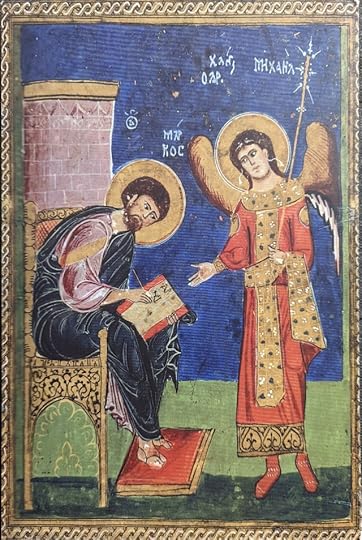 An early Coptic icon of St. Mark writing the Gospel with Michael the Archangel.
Did the sounds of the nails pounding into the Cross reverberate in his ears as he remembered those moments he witnessed? Did he relive the disbelief, the excitement, the joy, at discovering the news of His Resurrection, and perhaps even seeing Him among the Apostles at the Ascension?
Did the fire of the Holy Spirit that rested on his head at Pentecost course through his veins and into his fingers?
Considering the number of times he wrote “immediately” (36 times in 16 chapters, NKJV) St. Mark must have been writing quickly, urgently. Perhaps he had in mind some newly forming churches; some pagans, urging them to recognize this God in this man Jesus; some Christians, perhaps imprisoned for their faith and longing to hear the words of Christ.
Where was he sitting when he wrote these words? Was he in Egypt, where he was preaching the Gospel? Had he already preached or was he on his way?
Did his heart beat faster? Did he continue to write when his fingers got numb? Did he get frustrated when he ran out of ink? Or papyrus? Did the angels bring him supplies?
Did St. Mark have any idea how these words would change the world? Did he have any idea how many people who would come to know and love this Jesus Christ, the Son of God, through his words?
As a writer, my ponder this a lot. I imagine him, I imagine myself in his place, trembling with the joy, with perhaps some of the excitement I feel when I get inspired by an idea and I have to rush to write it down. I recognize the rush of excitement at finding the words to express something bigger than those words. And I wonder if that little excitement that I feel, if that was multiplied a millionfold when St. Mark wrote those words of life?
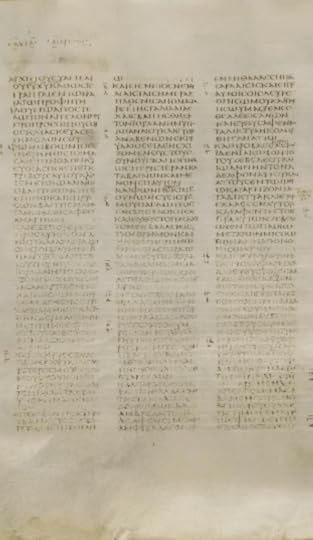 A page from the Gospel of Mark in the Codex Sinaiticus.
“The beginning of the Gospel of Jesus Christ, the Son of God.”
The beginning
I wonder if St. Mark had intended to write more if he had not been martyred in the streets of Alexandria? If he planned also to write about his journeys with the disciples, with St. Paul, with St. Barnabas? Did he plan to write of his days in Egypt, North Africa and Persia preaching the Gospel, and all the people who would follow Jesus Christ, the Sonon of God, because of him?
of the gospel of Jesus Christ
The Gospel is the good news, the good news of salvation, the salvation many of us didn’t even know we needed. The good news that Jesus, the one they crucified, was alive, had conquered death, had done what no one else could do because He was not just the Son of Man, He is the son of God. The one who healed the sick, made the blind to see, cast out demons, made the lame walk, raised the dead, raised Himself from the dead, the one who seemed weak was powerful.
the Son of God
St. Mark this repeats this phrase four times in the Gospel. His Gospel is the earliest written Gospel, written perhaps as early as 30 years after Christ’s death and resurrection. Those who claim that Christians made Jesus God only after Christianity became the official religion of Rome need only read this Gospel to know that this is not true. St. Mark shows that from the beginning the Christians knew that Jesus was the Son of God. They were so sure of this they died for it. Or rather, they died for Him, for Him who loved them, Him who loves us. Him who loves us so much that He who is the Son of God would leave His glory and become incarnate.
As a writer, I know my words will never have the same world changing power as the words St. Mark wrote down 2000 years ago. And I don’t deign to believe that the Holy Spirit has inspired every thing I have written the way it did St. Mark.
But it does make me consider how words and stories that point to the Truth do have power, often power beyond our wildest imaginations. They have power to heal, to share love, to give life, whenever we sit down to put pen to paper, finger to typewriter, mouse to post.
For those of us who endeavor to write such words, words that often don’t make bestseller lists, don’t necessarily make us famous, but words that share goodness, beauty, love, life, we could do to imagine St. Mark seated with his pen to paper, writing down the words that changed everything: the beginning of the Gospel of Jesus Christ, the son of God.
Today is the Commemoration of St. Mark the Evangelist in the Coptic Orthodox Church of Alexandria. Here are a few resources to learn more about him:
The Beholder of God, Mark, the Evangelist, Saint and Martyr by Pope Shenouda III (free download): https://ml.coptic-treasures.com/book/st-mark-the-evangelist-pope-shenouda-iii/
The African Memory of Mark by Thomas Oden (affiliate link): https://amzn.to/3kQe9zD
A brilliant theatrical recitation of the Gospel According to Mark:
Subscribe to the Being in Community email newsletter.


April 13, 2022
On the Struggle of Holy Week in a World that Won���t Stop For It
by Phoebe Farag Mikhail
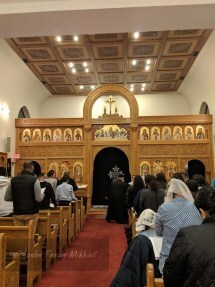 Holy Week at my church, main sanctuary, 2019 (c) Phoebe Farag Mikhail 2019
My family and I have rearranged our lives in such a way to make it possible for us to participate in every Holy Week service. We did so in part because we knew how exhausting it was to try to participate in everything while also managing our lives in a world that doesn’t stop for the season. In fact, the long readings and prayers were created at a time when the whole community would and could stop for Holy Week and spend their days in church reading the prophesies, the Gospels, and singing the long, melasmic hymns.
Our church has held on to these traditions even as the community around it changed, becoming less and less interested in stopping for the season and even hostile to focusing on Christ’s journey to the Cross and the Resurrection.
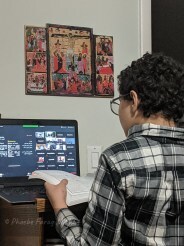 My son singing a hymn during remote Holy Week 2020
 (c) Phoebe Farag Mikhail 2021
Still, these traditions are so precious to us that during the COVID lockdown, we maintained them, reading the Holy Pascha readings together on Zoom, singing the hymns at home, and celebrating the Feast remotely. But now that we are thankfully back to in person worship, back to school, back to work, we face another Holy Week struggling to participate fully while balancing it all. Some of us have the blessing of getting time off, but many of us don’t.
One year, my employer planned a major event on Orthodox Easter weekend that required me to work on, scheduling it without consulting me and oblivious to different calendars. When my superiors learned that the event fell on my religious holiday, they were kind enough to allow me to do all the preparation without actually attending the event so I could celebrate Easter with my family. But by doing so, I could not attend any of the other Holy Week services. I even missed Good Friday. The only services I made were Bright Saturday and the Resurrection. That was hard. The work I was doing was indeed important, but I resented it.
Another Holy Week, I struggled so much to manage the balance between work, my kids’ school, and supporting my clergy husband during the most exhausting week of the year for him. This led to a short fuse on my part with the kids, not a great spirit for commemorating our story of salvation, though a good demonstration of why we need that salvation. Many churches try to help people balance the week with work by starting the morning hours at 5 am so people can attend them before work, then come back to church at 7 for the evening hours. Even when I was single, this was rough. I could never handle a schedule like that with young children.
And so I just want to acknowledge that this coming week for Orthodox Christians, especially Coptic Orthodox Christians, is going to be difficult and exhausting. The tradition was set up to be rigorous, with lots of fasting and prostrations, but it was not set up to work in a world that barely recognizes it. This is an extra layer of struggle for us, an often frustrating one. So, I’m here empathize with everyone balancing school, jobs, caregiving responsibilities, young children, and other life situations. This is going to be a difficult week. No less difficult than it was for Christ, of course, but still difficult.
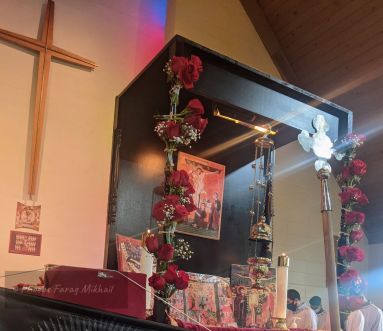 Holy Week 2021 at my church’s chapel (we had to run simultaneous services due to COVID-19 capacity restrictions). (c) Phoebe Farag Mikhail 2021
 Let us do the best we can, not out of obligation, but out of love. When it’s impossible, let’s mark the time in some way – if at work, read one reading, even just a Psalm from the hour, and sing ���Thine is the Power��� in your heart. Make the sign of the Cross and pray Lord have mercy 12 times. If at home with a sick loved one, sleeping young children, or your own illness, read the readings at home, listen to the hymns, stream a live service if you can. But try not to be frustrated. This is, after all, the season when we commemorate God’s immense gift of grace, one we didn’t earn and can never repay.
But if you have the ability, do your best and go to every service you can, praying for those who wish dearly to be in your place, and soaking in all that you can for the day that you can’t participate, for whatever reason.
May the Lord keep the doors of the church open to all the believers, and may the blessings of this Holy Week of Pascha and the glorious Feast of the Resurrection be with us all.
Other Holy Week posts on Being in Community
Suffering is Part of the Calling
On the prospect of a remote Holy Week
COVID Chronicles of Hope in New York
The Futility of Killing People Who Believe in the Resurrection of the Dead
Book lists for Spiritual Reading during Lent and Holy Week
What I���m Reading this Lent (2022 edition)
What I���m Reading this Lent (2021 edition)
What I���m Reading this Lent (2020 edition)
What I���m Reading this Lent (2019 edition)
What I���m Reading this Lent (2018 edition)
What I���m Reading this Lent (2017 edition)
Children���s Great Lent Picture Book Guide
Various resources for children and families during Holy Week
Bridges to Orthodoxy: Free Holy Week Resources
We the Copts: Six Ways To Survive 10 Hour Good Friday Service With Your Little Kids
Mireille Mishriky: Holy Week Activities for Families with Young Children
Coptic Dad and Mom: The Ultimate Guide to Holy Week
Kids and Teen Resources for Holy Week
Holy Week Printable Activities from Christian Kids Prints
Holy Week Printable Activities from Joy in Play Life
On the Struggle of Holy Week in a World that Won’t Stop For It
by Phoebe Farag Mikhail
Holy Week at my church, main sanctuary, 2019 (c) Phoebe Farag Mikhail 2019My family and I have rearranged our lives in such a way to make it possible for us to participate in every Holy Week service. We did so in part because we knew how exhausting it was to try to participate in everything while also managing our lives in a world that doesn’t stop for the season. In fact, the long readings and prayers were created at a time when the whole community would and could stop for Holy Week and spend their days in church reading the prophesies, the Gospels, and singing the long, melasmic hymns.
Our church has held on to these traditions even as the community around it changed, becoming less and less interested in stopping for the season and even hostile to focusing on Christ’s journey to the Cross and the Resurrection.
My son singing a hymn during remote Holy Week 2020 (c) Phoebe Farag Mikhail 2021
Still, these traditions are so precious to us that during the COVID lockdown, we maintained them, reading the Holy Pascha readings together on Zoom, singing the hymns at home, and celebrating the Feast remotely. But now that we are thankfully back to in person worship, back to school, back to work, we face another Holy Week struggling to participate fully while balancing it all. Some of us have the blessing of getting time off, but many of us don’t.
One year, my employer planned a major event on Orthodox Easter weekend that required me to work on, scheduling it without consulting me and oblivious to different calendars. When my superiors learned that the event fell on my religious holiday, they were kind enough to allow me to do all the preparation without actually attending the event so I could celebrate Easter with my family. But by doing so, I could not attend any of the other Holy Week services. I even missed Good Friday. The only services I made were Bright Saturday and the Resurrection. That was hard. The work I was doing was indeed important, but I resented it.
Another Holy Week, I struggled so much to manage the balance between work, my kids’ school, and supporting my clergy husband during the most exhausting week of the year for him. This led to a short fuse on my part with the kids, not a great spirit for commemorating our story of salvation, though a good demonstration of why we need that salvation. Many churches try to help people balance the week with work by starting the morning hours at 5 am so people can attend them before work, then come back to church at 7 for the evening hours. Even when I was single, this was rough. I could never handle a schedule like that with young children.
And so I just want to acknowledge that this coming week for Orthodox Christians, especially Coptic Orthodox Christians, is going to be difficult and exhausting. The tradition was set up to be rigorous, with lots of fasting and prostrations, but it was not set up to work in a world that barely recognizes it. This is an extra layer of struggle for us, an often frustrating one. So, I’m here empathize with everyone balancing school, jobs, caregiving responsibilities, young children, and other life situations. This is going to be a difficult week. No less difficult than it was for Christ, of course, but still difficult.
Holy Week 2021 at my church’s chapel (we had to run simultaneous services due to COVID-19 capacity restrictions). (c) Phoebe Farag Mikhail 2021 Let us do the best we can, not out of obligation, but out of love. When it’s impossible, let’s mark the time in some way – if at work, read one reading, even just a Psalm from the hour, and sing “Thine is the Power” in your heart. Make the sign of the Cross and pray Lord have mercy 12 times. If at home with a sick loved one, sleeping young children, or your own illness, read the readings at home, listen to the hymns, stream a live service if you can. But try not to be frustrated. This is, after all, the season when we commemorate God’s immense gift of grace, one we didn’t earn and can never repay.
But if you have the ability, do your best and go to every service you can, praying for those who wish dearly to be in your place, and soaking in all that you can for the day that you can’t participate, for whatever reason.
May the Lord keep the doors of the church open to all the believers, and may the blessings of this Holy Week of Pascha and the glorious Feast of the Resurrection be with us all.
Other Holy Week posts on Being in Community
Suffering is Part of the Calling
On the prospect of a remote Holy Week
COVID Chronicles of Hope in New York
The Futility of Killing People Who Believe in the Resurrection of the Dead
Book lists for Spiritual Reading during Lent and Holy Week
What I’m Reading this Lent (2022 edition)
What I’m Reading this Lent (2021 edition)
What I’m Reading this Lent (2020 edition)
What I’m Reading this Lent (2019 edition)
What I’m Reading this Lent (2018 edition)
What I’m Reading this Lent (2017 edition)
Children’s Great Lent Picture Book Guide
Various resources for children and families during Holy Week
Bridges to Orthodoxy: Free Holy Week Resources
We the Copts: Six Ways To Survive 10 Hour Good Friday Service With Your Little Kids
Mireille Mishriky: Holy Week Activities for Families with Young Children
Coptic Dad and Mom: The Ultimate Guide to Holy Week
March 2, 2022
Am I Worthy to Fast?
by Phoebe Farag Mikhail
In the Coptic Orthodox Church, we don’t have an Ash Wednesday to kick off the Lent the way the Catholics and some Protestant churches do, or a Forgiveness Sunday rite the way the Eastern Orthodox Churches do. We get a warning two weeks ahead in the form of Jonah’s Fast, but other than that, we just start the fast.
I’ve heard of a local practice in some villages in Egypt that I would love to reinvigorate. Every year on the day before the fast begins, the villagers stand in line and ask the priest at the door of the church, “Am I worthy to fast?” The priest answers yes to each person.
The only time a person is not “worthy” to fast? If that person has a quarrel with someone else. Then the priest tells them to reconcile. This works in small villages where everyone knows everyone and so the community quarrels are known. Of course, it is a big deal if the priest says “no,” so everyone makes sure to reconcile their differences before the fast begins.
I love this question: “Am I worthy to fast?” I confess to facing the fast with grumbling as I eye our lentil and fava bean stores and say goodbye to chicken and cheese. But what a question to turn this whole season up on its head. “Am I worthy to fast?” I’m complaining, when I might not even be worthy?
My husband, whose sister is a nun at St. Mercurius Monastery for Nuns in Egypt, told me that once, their confession priest told them that the nuns should prepare two types of food every day during the Great Lent: vegan food for the fast, and meat. Any nun that would not forgive her sister would be required to eat meat, an object lesson reminiscent of the famous quote by St. Basil of the Great:
But don’t limit the goodness of fasting by abstaining only from foods. For true fasting is the enemy of evil. “Loose the chains of injustice!” Forgive your neighbor’s offense, and forgive his debts. Don’t “fast unto judgment and strife.” You don’t eat meat, but you eat your brother.
About Fasting, Sermon 1, St. Basil the Great, https://www.omhksea.org/archives/2073
Forgive me, my brothers and sisters, for any way I have sinned against you. May I be worthy to fast with you, and God willing in a few weeks to feast with you, too.
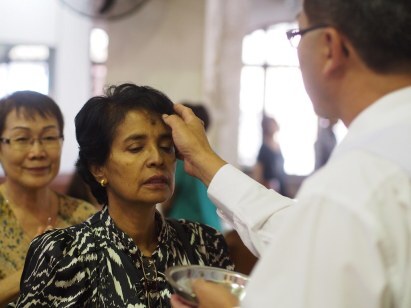 “Ash Wednesday | Lent Season 2015” by Johnragai-Moment Catcher is marked with CC BY 2.0.
Need some inspiration for Lent reading? Check out my 2022 Lent reading list.
Want children’s books to read with your children this Lent? Check out my updated Great Lent Picture Book Guide.
Want to learn about spiritual practices you can start this Lent to help you live a life of joy? Read more about my book, Putting Joy into Practice: Seven Ways to Lift Your Spirit from the Early Church here.
February 26, 2022
What I���m Reading this Lent (2022 Edition)
By Phoebe Farag Mikhail
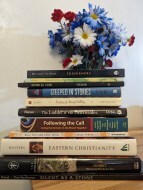
The Great Lent is almost here, and with it the opportunity to spend more time on growing our spiritual lives. Lent is for making room for more prayer, more Scripture reading, and more spiritual reading. Whatever our fast looks like, it���s a time meant for nourishment our under-nourished souls. This year���s extra-tall Lent book stack reflects how under-nourished I feel. It also reflects an expansion, as I think about what I read with my children this Lent as well.
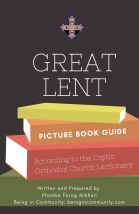
Speaking of children, email newsletter subscribers to Being in Community have access to my newly updated Great Lent Children���s Picture Book Guide. This year I have added eight new children���s books, providing more books to choose from for each week���s Lenten theme. If you are a subscriber, check your email for the link ��� and if you are not yet, sign up here and you will get access to all my email subscriber resources.
My list, like every year, includes non-fiction and fiction. There is one specifically Lenten devotional, two books focused on the inner life, two on the Beatitudes, two collections, one book about stories, two novels and two picture books.
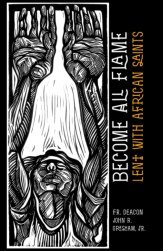
I have already read Become All Flame: Lent with African Saints by Fr. Deacon John Gresham (with illustrations by Steve Prince and Andrew Kinard) from Park End Books through once, but plan to read again, slowly, every day this Lent. It contains 49 saints from the African continent, almost all recognized by both Oriental and Eastern Orthodox families of Orthodoxy, and likely also by Catholicism. Not surprisingly, many of them come from Egypt. It is clear from this book that Fr. Deacon John has spent much time with each of these saints, as he has given us a beautiful collection of saint stories, each short enough to read in a few minutes but long enough to capture the essence of each saint. May we learn what each of these African saints have to teach us. I found many of my favorites in there, and learned about a few new ones. Each story is accompanied by meditations and Scripture readings to read alongside each story. Park End Books provided me with a copy of this book to review, and I plan on giving multiple copies of this book as gifts.
Become All Flame: Lent with African Saints Park End Books | Amazon
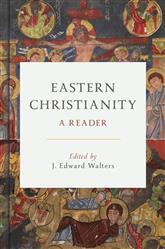
Two significant African saints that don���t make Fr. Deacon John���s exhaustive book (Lent is only so long, after all) are St. Shenoute the Archimandrite and St. Yared of Ethiopia. St. Shenoute was the abbot of a powerful federation of monasteries in Upper Egypt that housed an extraordinary library rivaling those of Europe. He is the most prolific of Coptic language writers, and his monastery also provided shelter to Nubian refugees from the south who were fleeing a tribal attack, leading to the conversion of many Nubians to Christianity. One of his sermons, ���I Have been Reading the Holy Gospels,��� can be found translated from Coptic to English by my sister, Dr. Mary K. Farag, in the new collection, Eastern Christianity: A Reader, edited by J. Edward Walters, from Eerdmans. This book includes translations of theological writings in Eastern Christian languages, including Syriac, Armenian, Coptic, Georgian, Arabic, and Ethiopic. I won���t be reading the whole thing, but dipping in and out. In addition to the Coptic texts, from the Syriac I plan to read Narsai ���On the Canaanite Woman,��� and the Syriac Life of Mary of Egypt. In Armenian I plan to read, ���On this Transitory World��� by Anania of Narek, in Georgian I���ll read the Martyrdom of St. Shushanik, in Arabic I���ll read the Syrian Orthodox Commentary on the Pentateuch. And in Ethiopic, I will read the Synaxarion of Yared, a major Ethiopian Orthodox saint that composed many hymns and can be considered the first author of Sub-Saharan Africa.
Eastern Christianity: A Reader | Bookshop | Amazon | Christian Book
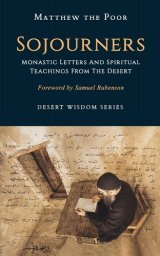
Sojourners: Monastic Letters and Spiritual Teachings from the Desert by the late Fr. Matthew the Poor (Fr. Matta Al-Maskeen) from St. Macarius Press works very well as a Lenten devotional, with 38 selections from his letters, each about 2-3 pages. Considering how many of the African saints lived in the Egyptian desert, this book by a modern desert abbot makes an excellent companion to Fr. Deacon John Gresham���s saint devotional. A reader can also dip in and out of Sojourners by scanning the table of contents and choosing a topic of interest. In the letter on ���The True Meaning of Time��� he writes, appropriately for Lent:
When we manage to subdue time to prayer, delving into spiritual knowledge through reading, writing, or spiritual instruction for ourselves or others, we wring out of time its power, value and meaning. However, if we fritter away time, be it an hour, a day, a year or several years, without saving anything of it in God���s account, time becomes dead, deprived of its power as well as its value and meaning; today���s sun may as well have not shown upon him.
Another excellent Lenten read by the same author is Guidelines for Prayer.
Sojourners: Monastic Letters and Spiritual Teachings from the Desert | Bookshop | Amazon
Guidelines for Prayer | Bookshop | Amazon
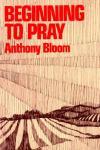
Beginning to Pray by Metropolitan Anthony Bloom from Paulist Press is a spiritual classic I plan to re-read this Great Lent. The title might indicate that it is for those who have never prayed before and are just beginning, it is really for all of us, for which of us has ���mastered��� the ability to communicate with God through prayer? In it he re-frames what fasting is: ���I don���t mean the fasting and abstinence that affects only the stomach but that attitude of sobriety which allows you, or compels you, never to get enslaved by anything.��� This ���attitude of sobriety��� allows us to be ���rich and yet totally free from richness.���
Beginning to Pray | Bookshop | Amazon
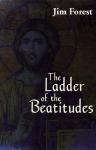
Just two months ago, on January 13, 2022, Orthodox lay theologian, author, peacemaker and activist Jim Forest departed in the Lord. I sadly did not know much about him until his departure, when I read several beautiful tributes about him, like this one by Volkert Volkersz and this one by Nicholas Sooy. This led me to purchase a few books by him, including The Ladder of the Beatitudes, which I plan to read this Lent. In it he calls the Beatitudes ���the whole Gospel in a grain of salt.��� With war looming ahead of us this Lent, more of us should be reading anything by Jim Forest.
The Ladder of the Beatitudes | Bookshop | Amazon
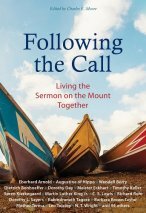
Speaking of the Beatitudes, Plough recently published a beautiful anthology called Following the Call: Living the Sermon on the Mount Together. This is another book I will be dipping into. It includes selections on each section of the Sermon on the Mount by a broad array of Christian writers, including St. John Chrysostom, St. Iraneaus, St. Jerome, St. Augustine, St. Gregory of Nyssa, St. Cyprian of Carthage, Dostoyevsky, Tolstoy, Madeleine L���Engle, Thomas Merton, Peter Kreeft, Martin Luther King Jr., Deitrich Bonhoeffer, Dorothy Day, Frederica Mathews-Green, Howard Thurman, William Barclay, Philip Yancey, Mother Theresa, and many more. Each selection is also quite short, allowing for meditation and reflection on each passage in this important part of Scripture.
On the verse ���Blessed are the meek, for they shall inherit the earth,��� the selection from St. John Chrysostom exhorts us to be meek so that the devil will not ���be able so much as to look you in the face.��� He refers to Christ being tempted after fasting for us:
Reflecting then on these things, become like Him, to the utmost of your power. No longer then will the devil be able so much as to look you in the face, when you have become such a one as this. For indeed he recognizes the image of the King, he knows the weapons of Christ, whereby he was worsted. And what are these? Gentleness and meekness. For when on the mountain Christ overthrew and laid low the devil who was assaulting him, it was not by making it known that he was Christ, but he entrapped him by these sayings, he took him by gentleness, he turned him to flight by meekness.
Subscribers to Plough Quarterly can download this book for free as an ebook.
Following the Call: Living the Sermon on the Mount Together. Plough | Bookshop | Amazon
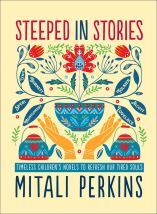
I���ve had Mitali Perkins��� new book from Broadleaf, Steeped in Stories: Timeless Children���s Novels to Refresh our Tired Souls on my TBR (to be read pile) since it first came out, and it moved up to Lenten reading when I saw that Sarah Mackenzie had also chosen it for the Read Aloud Revival Mama Book Club. In the spirit of books like On Reading Well: Finding the Good Life Through Great Books by Karen Swallow Prior and Jane Austen���s Genius Guide to Life: On Love, Friendship, and Becoming the Person God Created You to Be by Haley Stewart, Steeped in Stories is a book about books, only this one specifically about classic children���s books, like my lifelong favorite Anne of Green Gables by Lucy Maud Montgomery, A Little Princess by Frances Hodgson Burnett, which I recently reread and re-appreciated with my children, The Hobbit by J.R.R. Tolkien, and more. My favorite aspect of these kinds of books is how they prompt me to read books I had not read or appreciated before, sometimes introducing me to an author new to me, or to works I had read but forgotten. That is why one of my fiction reads for this Lent will be Emily of Deep Valley by Maud Hart Lovelace, a new to me author that I can���t wait to get to know thanks to Perkins��� book, and the other, which I will re-read with my children, is The Hobbit.
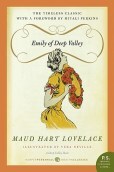
My second favorite aspect is how they draw out important themes and perspectives that nourish me spiritually. I come at Perkin���s book excited to go back to these children���s books and consider them anew in light of my faith. Perkins��� begins her book describing her youth as a child of Bengali immigrants, finding safe haven in books on her fire escape in Flushing, Queens ��� probably not far from where I also curled up with Anne of Green Gables as a child of Egyptian immigrants in our apartment in Ridgewood, Queens, though I was not allowed to read on the fire escape, I read in my tiny hallway converted to a bedroom instead.
Steeped in Stories: Timeless Children���s Novels to Refresh our Tired Souls | Bookshop | Amazon
Emily of Deep Valley | Bookshop | Amazon
The Hobbit | Bookshop | Amazon
In addition to The Hobbit, which I will be re-reading with my children, among the many picture books I���ll read to them are one by Jim Forest, and a new one by Mitali Perkins that I have added to my Great Lent Picture Book Guide. Both of these descriptions contain spoilers, so scan them for the titles if you don���t want to know what happens!
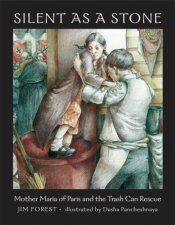
Silent as a Stone: Mother Maria of Paris and the Trash Can Rescue, written by Jim Forest and illustrated by Dasha Pancheshnaya from St. Vladimir���s Seminary Press is a longer picture book about Mother Maria of Paris, a modern Eastern Orthodox saint that is well known for sheltering Jewish children during the Nazi occupation of Paris, until she herself was arrested and eventually also died in a concentration camp. This picture book tells of how Mother Maria managed to rescue many children from being taken to Auschwitz by making an agreement with the French garbage collectors to hide them in trash cans, then secretly carting them off in a baker���s truck to the south of France beyond Nazi control. Despite its heaviness, it���s a story I can���t wait to share with my children. We have read several historical fiction accounts about World War II and the Holocaust, some of them very difficult and heavy to read, and our discussions have always centered around two things: that people can be capable of doing terrible things, and people can be capable of doing extraordinarily good things, and that we want to be the people that do good things.
Silent as a Stone: Mother Maria of Paris and the Trash Can Rescue | SVS Press | Amazon
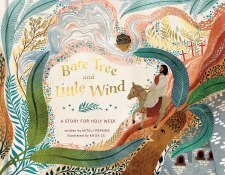
Finally, during Holy Week we���ll be reading Bare Tree and Little Wind: A Story for Holy Week written by Mitali Perkins and illustrated by Khoa Le. I have included this book in my Great Lent Picture Book Guide, and it describes a little wind that is friends with a leafless tree in Jerusalem. It begins with the other trees, full of leaves, glorifying the Lord Jesus as He enters Jerusalem. By the end of the week, Little Wind sees Him being crucified and sadly tells Bare Tree of it. Bare Tree assures Little Wind that Christ said he would come back, and sure enough, Little Wind hears of people seeing Christ three days later! This isn���t the end of the story, however. This book is unusual in that it goes a little bit further in history than Christ���s death and resurrection. Little Wind witnesses the destruction of Jerusalem by the Romans that happens in 70 A.D. Fearful of what might have happened to Bare Tree, Little Wind goes back into Jerusalem to find him, and discovers that Bare Tree has borne seeds and fruits. Little Wind hopes that this means Bare Tree will now be surrounded by his seeds, but Bare Tree asks Little Wind to scatter those seeds everywhere and watch them take root and grow ��� just as the disciples scattered the Good News to all the corners of the earth. Purchase
Bare Tree and Little Wind: A Story for Holy Week | Bookshop | Amazon
What are you reading this Lent? What will you be reading with your kids? Will you choose something from this list? Please share in the comments, and don���t forget to subscribe to the Being in Community email list to get access to the Great Lent Picture Book Guide, a Guide to Helping Children Love Reading, AND a spiritual reading reflection guide! May God accept our fast this Lent as we look forward to the Holy Resurrection.
Click here to subscribe and receive the Great Lent Picture Book Guide, a Guide to Helping Children Love Reading, and the Spiritual Reading Reflection Guide Looking for other Lenten spiritual reading ideas? Check out my book lists for 2021, 2020, 2019, 2018, and 2017. Need ideas to find time for reading, to start a reading habit, or get back into one? Check out my posts: Building a reading habit and finding time to read and How I read 230 books in 2019.Some of the links above are affiliate links to Bookshop and Amazon to purchase the books suggested here. Using these links gives me a small commission, and this helps support my blog expenses. Purchasing books on Bookshop also helps local independent bookstores. Some of these books can be found at an even lower price used. If you use my Thriftbooks referral link, you and I will get a promotional code for a free book if you spend $30 or more.
What I’m Reading this Lent (2022 Edition)
By Phoebe Farag Mikhail
The Great Lent is almost here, and with it the opportunity to spend more time on growing our spiritual lives. Lent is for making room for more prayer, more Scripture reading, and more spiritual reading. Whatever our fast looks like, it’s a time meant for nourishment our under-nourished souls. This year’s extra-tall Lent book stack reflects how under-nourished I feel. It also reflects an expansion, as I think about what I read with my children this Lent as well.
Speaking of children, email newsletter subscribers to Being in Community have access to my newly updated Great Lent Children’s Picture Book Guide. This year I have added eight new children’s books, providing more books to choose from for each week’s Lenten theme. If you are a subscriber, check your email for the link – and if you are not yet, sign up here and you will get access to all my email subscriber resources.
My list, like every year, includes non-fiction and fiction. There is one specifically Lenten devotional, two books focused on the inner life, two on the Beatitudes, two collections, one book about stories, two novels and two picture books.
I have already read Become All Flame: Lent with African Saints by Fr. Deacon John Gresham (with illustrations by Steve Prince and Andrew Kinard) from Park End Books through once, but plan to read again, slowly, every day this Lent. It contains 49 saints from the African continent, almost all recognized by both Oriental and Eastern Orthodox families of Orthodoxy, and likely also by Catholicism. Not surprisingly, many of them come from Egypt. It is clear from this book that Fr. Deacon John has spent much time with each of these saints, as he has given us a beautiful collection of saint stories, each short enough to read in a few minutes but long enough to capture the essence of each saint. May we learn what each of these African saints have to teach us. I found many of my favorites in there, and learned about a few new ones. Each story is accompanied by meditations and Scripture readings to read alongside each story. Park End Books provided me with a copy of this book to review, and I plan on giving multiple copies of this book as gifts.
Become All Flame: Lent with African Saints Park End Books | Amazon
Two significant African saints that don’t make Fr. Deacon John’s exhaustive book (Lent is only so long, after all) are St. Shenoute the Archimandrite and St. Yared of Ethiopia. St. Shenoute was the abbot of a powerful federation of monasteries in Upper Egypt that housed an extraordinary library rivaling those of Europe. He is the most prolific of Coptic language writers, and his monastery also provided shelter to Nubian refugees from the south who were fleeing a tribal attack, leading to the conversion of many Nubians to Christianity. One of his sermons, “I Have been Reading the Holy Gospels,” can be found translated from Coptic to English by my sister, Dr. Mary K. Farag, in the new collection, Eastern Christianity: A Reader, edited by J. Edward Walters, from Eerdmans. This book includes translations of theological writings in Eastern Christian languages, including Syriac, Armenian, Coptic, Georgian, Arabic, and Ethiopic. I won’t be reading the whole thing, but dipping in and out. In addition to the Coptic texts, from the Syriac I plan to read Narsai “On the Canaanite Woman,” and the Syriac Life of Mary of Egypt. In Armenian I plan to read, “On this Transitory World” by Anania of Narek, in Georgian I’ll read the Martyrdom of St. Shushanik, in Arabic I’ll read the Syrian Orthodox Commentary on the Pentateuch. And in Ethiopic, I will read the Synaxarion of Yared, a major Ethiopian Orthodox saint that composed many hymns and can be considered the first author of Sub-Saharan Africa.
Eastern Christianity: A Reader | Bookshop | Amazon | Christian Book
Sojourners: Monastic Letters and Spiritual Teachings from the Desert by the late Fr. Matthew the Poor (Fr. Matta Al-Maskeen) from St. Macarius Press works very well as a Lenten devotional, with 38 selections from his letters, each about 2-3 pages. Considering how many of the African saints lived in the Egyptian desert, this book by a modern desert abbot makes an excellent companion to Fr. Deacon John Gresham’s saint devotional. A reader can also dip in and out of Sojourners by scanning the table of contents and choosing a topic of interest. In the letter on “The True Meaning of Time” he writes, appropriately for Lent:
When we manage to subdue time to prayer, delving into spiritual knowledge through reading, writing, or spiritual instruction for ourselves or others, we wring out of time its power, value and meaning. However, if we fritter away time, be it an hour, a day, a year or several years, without saving anything of it in God’s account, time becomes dead, deprived of its power as well as its value and meaning; today’s sun may as well have not shown upon him.
Another excellent Lenten read by the same author is Guidelines for Prayer.
Sojourners: Monastic Letters and Spiritual Teachings from the Desert | Bookshop | Amazon
Guidelines for Prayer | Bookshop | Amazon
Beginning to Pray by Metropolitan Anthony Bloom from Paulist Press is a spiritual classic I plan to re-read this Great Lent. The title might indicate that it is for those who have never prayed before and are just beginning, it is really for all of us, for which of us has “mastered” the ability to communicate with God through prayer? In it he re-frames what fasting is: “I don’t mean the fasting and abstinence that affects only the stomach but that attitude of sobriety which allows you, or compels you, never to get enslaved by anything.” This “attitude of sobriety” allows us to be “rich and yet totally free from richness.”
Beginning to Pray | Bookshop | Amazon
Just two months ago, on January 13, 2022, Orthodox lay theologian, author, peacemaker and activist Jim Forest departed in the Lord. I sadly did not know much about him until his departure, when I read several beautiful tributes about him, like this one by Volkert Volkersz and this one by Nicholas Sooy. This led me to purchase a few books by him, including The Ladder of the Beatitudes, which I plan to read this Lent. In it he calls the Beatitudes “the whole Gospel in a grain of salt.” With war looming ahead of us this Lent, more of us should be reading anything by Jim Forest.
The Ladder of the Beatitudes | Bookshop | Amazon
Speaking of the Beatitudes, Plough recently published a beautiful anthology called Following the Call: Living the Sermon on the Mount Together. This is another book I will be dipping into. It includes selections on each section of the Sermon on the Mount by a broad array of Christian writers, including St. John Chrysostom, St. Iraneaus, St. Jerome, St. Augustine, St. Gregory of Nyssa, St. Cyprian of Carthage, Dostoyevsky, Tolstoy, Madeleine L’Engle, Thomas Merton, Peter Kreeft, Martin Luther King Jr., Deitrich Bonhoeffer, Dorothy Day, Frederica Mathews-Green, Howard Thurman, William Barclay, Philip Yancey, Mother Theresa, and many more. Each selection is also quite short, allowing for meditation and reflection on each passage in this important part of Scripture.
On the verse “Blessed are the meek, for they shall inherit the earth,” the selection from St. John Chrysostom exhorts us to be meek so that the devil will not “be able so much as to look you in the face.” He refers to Christ being tempted after fasting for us:
Reflecting then on these things, become like Him, to the utmost of your power. No longer then will the devil be able so much as to look you in the face, when you have become such a one as this. For indeed he recognizes the image of the King, he knows the weapons of Christ, whereby he was worsted. And what are these? Gentleness and meekness. For when on the mountain Christ overthrew and laid low the devil who was assaulting him, it was not by making it known that he was Christ, but he entrapped him by these sayings, he took him by gentleness, he turned him to flight by meekness.
Subscribers to Plough Quarterly can download this book for free as an ebook.
Following the Call: Living the Sermon on the Mount Together. Plough | Bookshop | Amazon
I’ve had Mitali Perkins’ new book from Broadleaf, Steeped in Stories: Timeless Children’s Novels to Refresh our Tired Souls on my TBR (to be read pile) since it first came out, and it moved up to Lenten reading when I saw that Sarah Mackenzie had also chosen it for the Read Aloud Revival Mama Book Club. In the spirit of books like On Reading Well: Finding the Good Life Through Great Books by Karen Swallow Prior and Jane Austen’s Genius Guide to Life: On Love, Friendship, and Becoming the Person God Created You to Be by Haley Stewart, Steeped in Stories is a book about books, only this one specifically about classic children’s books, like my lifelong favorite Anne of Green Gables by Lucy Maud Montgomery, A Little Princess by Frances Hodgson Burnett, which I recently reread and re-appreciated with my children, The Hobbit by J.R.R. Tolkien, and more. My favorite aspect of these kinds of books is how they prompt me to read books I had not read or appreciated before, sometimes introducing me to an author new to me, or to works I had read but forgotten. That is why one of my fiction reads for this Lent will be Emily of Deep Valley by Maud Hart Lovelace, a new to me author that I can’t wait to get to know thanks to Perkins’ book, and the other, which I will re-read with my children, is The Hobbit.
My second favorite aspect is how they draw out important themes and perspectives that nourish me spiritually. I come at Perkin’s book excited to go back to these children’s books and consider them anew in light of my faith. Perkins’ begins her book describing her youth as a child of Bengali immigrants, finding safe haven in books on her fire escape in Flushing, Queens – probably not far from where I also curled up with Anne of Green Gables as a child of Egyptian immigrants in our apartment in Ridgewood, Queens, though I was not allowed to read on the fire escape, I read in my tiny hallway converted to a bedroom instead.
Steeped in Stories: Timeless Children’s Novels to Refresh our Tired Souls | Bookshop | Amazon
Emily of Deep Valley | Bookshop | Amazon
The Hobbit | Bookshop | Amazon
In addition to The Hobbit, which I will be re-reading with my children, among the many picture books I’ll read to them are one by Jim Forest, and a new one by Mitali Perkins that I have added to my Great Lent Picture Book Guide. Both of these descriptions contain spoilers, so scan them for the titles if you don’t want to know what happens!
Silent as a Stone: Mother Maria of Paris and the Trash Can Rescue, written by Jim Forest and illustrated by Dasha Pancheshnaya from St. Vladimir’s Seminary Press is a longer picture book about Mother Maria of Paris, a modern Eastern Orthodox saint that is well known for sheltering Jewish children during the Nazi occupation of Paris, until she herself was arrested and eventually also died in a concentration camp. This picture book tells of how Mother Maria managed to rescue many children from being taken to Auschwitz by making an agreement with the French garbage collectors to hide them in trash cans, then secretly carting them off in a baker’s truck to the south of France beyond Nazi control. Despite its heaviness, it’s a story I can’t wait to share with my children. We have read several historical fiction accounts about World War II and the Holocaust, some of them very difficult and heavy to read, and our discussions have always centered around two things: that people can be capable of doing terrible things, and people can be capable of doing extraordinarily good things, and that we want to be the people that do good things.
Silent as a Stone: Mother Maria of Paris and the Trash Can Rescue | SVS Press | Amazon
Finally, during Holy Week we’ll be reading Bare Tree and Little Wind: A Story for Holy Week written by Mitali Perkins and illustrated by Khoa Le. I have included this book in my Great Lent Picture Book Guide, and it describes a little wind that is friends with a leafless tree in Jerusalem. It begins with the other trees, full of leaves, glorifying the Lord Jesus as He enters Jerusalem. By the end of the week, Little Wind sees Him being crucified and sadly tells Bare Tree of it. Bare Tree assures Little Wind that Christ said he would come back, and sure enough, Little Wind hears of people seeing Christ three days later! This isn’t the end of the story, however. This book is unusual in that it goes a little bit further in history than Christ’s death and resurrection. Little Wind witnesses the destruction of Jerusalem by the Romans that happens in 70 A.D. Fearful of what might have happened to Bare Tree, Little Wind goes back into Jerusalem to find him, and discovers that Bare Tree has borne seeds and fruits. Little Wind hopes that this means Bare Tree will now be surrounded by his seeds, but Bare Tree asks Little Wind to scatter those seeds everywhere and watch them take root and grow – just as the disciples scattered the Good News to all the corners of the earth. Purchase
Bare Tree and Little Wind: A Story for Holy Week | Bookshop | Amazon
What are you reading this Lent? What will you be reading with your kids? Will you choose something from this list? Please share in the comments, and don’t forget to subscribe to the Being in Community email list to get access to the Great Lent Picture Book Guide, a Guide to Helping Children Love Reading, AND a spiritual reading reflection guide! May God accept our fast this Lent as we look forward to the Holy Resurrection.
Looking for other Lenten spiritual reading ideas? Check out my book lists for 2021, 2020, 2019, 2018, and 2017. Need ideas to find time for reading, to start a reading habit, or get back into one? Check out my posts: Building a reading habit and finding time to read and How I read 230 books in 2019.Some of the links above are affiliate links to Bookshop and Amazon to purchase the books suggested here. Using these links gives me a small commission, and this helps support my blog expenses. Purchasing books on Bookshop also helps local independent bookstores. Some of these books can be found at an even lower price used. If you use my Thriftbooks referral link, you and I will get a promotional code for a free book if you spend $30 or more.
November 17, 2021
Autumn, Reconsidered
by Phoebe Farag Mikhail
Anne Shirley might be glad for a world with Octobers, and as much as I do love Anne, I do not share her love for the fall season. I don’t begrudge my friends their reveling in pumpkin spiced lattes, sweater weather, and boots, but these don’t excite me. I’m a black coffee drinker and find PSLs too sweet*. I do not enjoy pulling on bulky sweaters and boots. My favorite outfit, my Spring/Summer/Early Fall uniform, is a slip-on cotton dress with slip on shoes or sandals. I don’t even like putting on socks, let alone struggle with boots and an additional layer of clothing.
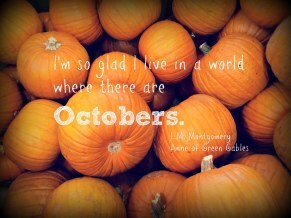 I’m sorry to disagree, Anne.
“A world where there are Octobers” by odonata98 (Kimberly Reinhart) is licensed under CC BY-ND 2.0
My bigger reason for disliking the season go deeper than lattes and layers, however. Autumn means winter is coming, and winter reminds me of a trauma: the time I badly broke my ankle in my own driveway while cleaning some snow off my car.
It started as a happy morning. Classes were cancelled at the university I teach at, which meant I could catch up on laundry, grading, and other things in the house that day. I peeked out and told my husband I would just move my car out closer to the edge of the driveway, to reduce shoveling just in case we needed to get out for any reason. I put my bare feet in a pair of old shoes, threw on my coat, and started moving the car. The windshield was still covered in snow, so I got out to clear off that snow, for safety. As I circled the car, my right foot got stuck in a snow drift and I lost my balance.
I heard the crack when I fell. I don’t remember the pain, thank God, but I do remember screaming to get my husband’s attention from inside the house. He called the ambulance and then came out to put a blanket over me so I would not get hypothermia. I ended up spending the night at the hospital and having emergency surgery. I had broken both my tibia and fibula.
It was a long, hard winter. I had to use crutches to get anywhere, and because it never stopped snowing that winter, I didn’t go anywhere. My husband had to do the daily shoveling every morning, with a little bit of help from my four year old son and encouragement from my two year old daughter. The only benefit to all that snow was that many events were cancelled, keeping my husband home to take care of all of us. I withdrew from teaching that semester and sat in bed with my laptop and worked on a consulting contract from home.
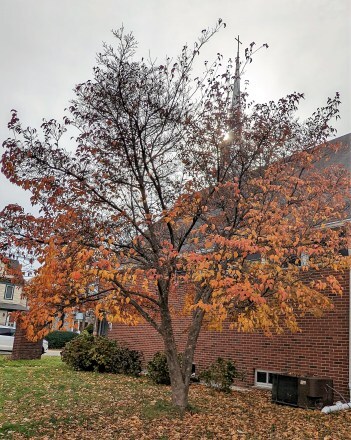 An orange/pink tree by one of my church buildings.
 (c) Phoebe Farag Mikhail, 2021
As far as traumas go, a broken ankle seems mundane. Still, I would like winter better if we could just all agree to stay home, drink hot drinks, and read books all day. But the world still turns and we in the Northern Hemisphere are still expected to go outside and do things in the cold and potentially dangerous weather, like go to work, run errands, and take our children to outdoor tree lighting ceremonies, to outdoor holiday festivals, and go ice skating (also outdoors). The advent of autumn reminds me that the frigid days are coming, and I don’t take too kindly to this reminder.
Still, living in the Northeast, one cannot help but witness fall’s indiscriminate beauty. Autumn here is admittedly spectacular, no matter where you go. As long as there are trees, there is beauty unhad at any other time of the year. Even major highways, not otherwise known for scenic views, are rimmed with the autumn rainbow, a visual feast that makes errands a delight and road trips a pleasure.
On Sunday’s drive to church, my six year old (who was not around on that fateful ankle-breaking day eight years ago) and I noted all the colors—burgundy reds, bright oranges, golden yellows, and even leaves with yellow/pink combinations. We joked about the overachieving trees that had already shed their leaves, and the still-green trees, now somewhat faded beside their brilliant counterparts, still holding on to summer.
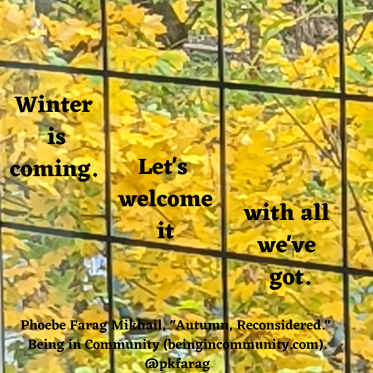 Like it or not. The view from my church’s window to the golden leaves outside. (c) Phoebe Farag Mikhail, 2021.
Those green trees remind me of my ambivalence towards autumn. I wanted, like them, to hold on to summer as long as I could. But their more colorful neighbors seem to be saying, “hey, winter is coming, let’s enjoy this while it lasts. Our leaves will fall anyway. Let’s make it worthwhile.”
Maybe my sweater loving friends have it right after all. Like it or not, winter is coming. Let’s welcome it with all we’ve got.
*Ok, I admit I do enjoy pumpkin cream cold brews, though.
A great book for learning how Northern cultures enjoy the cold weather is Nic Hartmann’s new book, Northern Lights of Christ, from Park End Books. You can read my Goodreads review here. And my friend Allison Backous Troy at Leaf and Heart Designs crocheted these amazing autumn pumpkins with cinnamon stick stems, and they are helping me enjoy the season, too.
September 14, 2021
Dates, Persecution, and Faith
This past Saturday, the Coptic Orthodox Church celebrated the Feast of the Nayrouz—Coptic New Year. The Coptic calendar is based on one of the oldest calendars in civilization. My dear friend Maria Andrawis, who has worked with refugees and IDPs fleeing persecution, shares this beautiful piece reflecting on how different communities address persecution, and how this shapes who they are.
By Maria Andrawis
Here’s the thing about red dates, the quintessential symbol of Nayrouz – you can almost never find them outside of Egypt. So in order to celebrate Nayrouz today, in a country with virtually no other Copts, I decided to make something of the brown/yellow dates I had in the house. As I stood in my warm kitchen, clumsily sifting through and pitting dates that looked like the ones I’d learned about in my upbringing in the Coptic Orthodox Church, but were still quite different, they reminded me of the churches and communities such symbols represent, and the uniqueness of the Church I called home.
The story of Nayrouz and the Coptic Orthodox Church is a story of persecution. Having lived the past few years among persecuted communities, both Christian and non-Christian, that are not my own Coptic community, has taught me the (perhaps obvious) truth that not every persecution story is the same. Each community’s tale of hardship and resistance is different, and that has formed her children in different ways.
Some communities met persecution with violent resistance, taking up arms to stand up to their oppressors and seek out a better world for themselves in the land they inhabit. They may have succeeded in carving out their own homeland, but often at the cost of much death, destruction, and compromise that has perhaps clouded the initial cause. For others, their response was migration and displacement, moving every few generations to a new place and to another community where they would feel safe, and where they could live with their own as a majority in peace. In this instance, while the faith has remained, a people’s history and connection to its saints and heroes is often lost. Still more have held onto their sense of identity through the defiant carrying on of the language they speak, the clothes they wear, the foods they eat that distinguish them from those around them that would try to harm them.
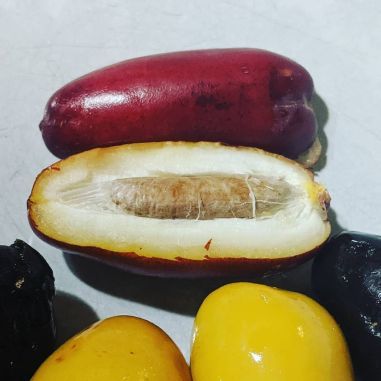 Coptic Orthodox Christians liken red dates to the martyrs: the red skin to the blood they shed for Christ, the white flesh to their purity of heart, and the tough seed to the strength of their faith.
 Photograph (c) Phoebe Farag Mikhail 2018.
As we celebrate the Coptic New Year today, I consider the path our ancestors have chosen. Our stories of violent resistance are scant, if any; migration and displacement are a relatively new phenomenon of the late 20th century. We don’t have traditional ‘Coptic clothing’ or foods or language that distinguish us ethnically from those around us. Even the name, ‘Nayrouz’ is a cognate of an old Egyptian word and the Persian word for ‘new day,’ “Nawrouz.” It seems to me that, rather than fighting or fleeing, in response to persecution, we chose to stay where we were, giving up everything else – language, land, customs – except our faith, even if that meant death. Stranger still, we chose to not just commemorate those deaths, but celebrate them as something more – as the testimony to the eternal life we have in Christ, and the love we have for His Church that would make such a sacrifice worth the cost. We have looked at our persecution not as a tragedy, but as a source of joy for the eternal hope, and the identity we have here on earth.
In fact, our only inheritance as Copts is our faith, our Church and the saints who carried it with their blood throughout the millennia. We no longer speak our own language regularly, we don’t have a homeland where we are the majority anywhere. Very few of us know our history or culture that is not tied to our Church. It is those things that tie us to our Church that we have chosen to keep and pass on through the years, from one generation to the next, from one place to the next. I believe this has had a profound impact on who we are as believers.
As Copts, we have a strange love for our Church that is personal in a way I haven’t really seen in other communities, that makes us very protective of it and protected by it. There’s a familial bond that ties to us to our Church and faith that is stronger than any family or tribe to whom we may belong. And it is a tie that calls us to holiness and life with God above all else, even at the cost of our lives.
I do wonder as our Church has moved into this new phase of migration, and we have new generations who have never known persecution or discrimination, what will Nayrouz mean to them? What will such stories hold for them? I think that very much depends on those of us who have witnessed both worlds – who are familiar with, and perhaps even experienced, the cost that was paid to keep the faith and pass it on. How we use our inheritance will affect what inheritance there is for the next generation.
Now when we are no longer in a context of persecution, where such sacrifice is thrust upon us, I believe the best way we can keep our inheritance is to choose the sacrifice ourselves. Much like the monks and nuns who chose martyrdom in a different way after the time of persecution in Egypt by fleeing to the desert to die to the world, what would our lives looked like if we centered them around seeking sacrifice rather than lives of comfort and advancement?
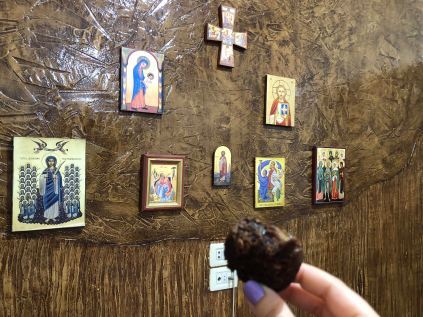 Maria’s date brownies (c) Maria Andrawis 2021
I’m sure this sacrifice will look different for each person in person, and I’m not suggesting what it should be. But perhaps a way to discern it is whether it transforms us into those dates that we sing about and eat on this feast day: with an inner strength of faith that is steadfast in changing times, with a purity of heart and mind that is like our Father in Heaven, and fearlessness to give up something that is public, costly, and painful, as the martyrs did, recognizing it is this sacrifice that is our crown of glory.
So as I eat my date-flavored brownies on this Nayrouz, I thank God for all that He is, my Church that has brought me into a love with my Bridegroom, and the saints and generations before who have left us the inheritance of knowing where our true treasure lies.
Happy Nayrouz.
A native of the Washington DC metro area, Maria works in international relief with a focus on supporting minority populations, including Syriac, Assyrian, and Armenian, Kurds, Yazidis, and other communities in locations such as Greece, Iraq, and elsewhere. She currently serves as Field Director for a Christian relief organization in the Middle East, and spends her free time painting, cooking and (occasionally) writing. She can be found on Facebook or Instagram.
[image error]March 18, 2021
What I’m Reading this Lent (2021 Edition)
by Phoebe Farag Mikhail
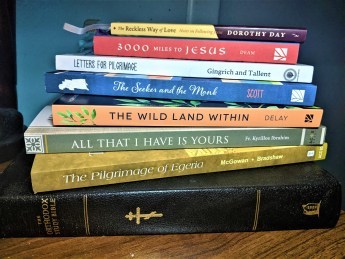
At this point, Lent has begun for every Christian tradition, and spiritual reading is underway! Last week I shared my children’s picture book guide to the Great Lent; this week I’m excited to share my reading stack, which is full of books new and old that I cannot wait to dive into. Perhaps you’ll find something on this list to add to your Lenten reading this year.
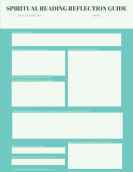
Subscribe to the Being in Community email list and you will get access to my spiritual reading reflection guide, a one page worksheet that you can print out and use alongside your reading to get the most out of it.
And now for the list! The first three books are by saintly people and or in conversation with them. I love how the saints seem to drop into our lives at the times we need them.
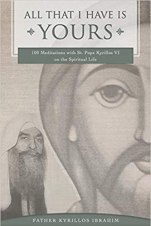
All That I Have is Yours: 100 Meditations with St. Pope Kyrillos VI by Fr. Kyrillos Ibrahim is a new book from ACTS Press. It follows the structure of the Agpeya, the Coptic prayer book of the Hours, with a story about St. Pope Kyrillos VI and a meditation by Fr. Kyrillos. Each meditation is about two pages, taking no longer than a few minutes a day to read, but full of depth and inspiration. I love this selection on Psalm 25 (26), “I have placed my trust in the Lord…Your mercy is before my eyes.” Fr. Kyrillos starts with a story describing a miracle that exhibited St. Pope Kyrillos’ divinely inspired discernment, and then follows with a meditation on the gifts of wisdom and understanding:
“The gift of Wisdom reveals to us how the goodness of God underlies everything. It grants us the ability to see the whole, and how everything fits together. It is likened to the perspective of an architect who sees a complete picture, as opposed to a subcontractor who only sees a part … We begin to look at the world as God sees it, with His perspective, and how everything fits together.”
All That I Have is Yours: 100 Meditations with St. Pope Kyrillos VI by Fr. Kyrillos Ibrahim: ACTS Press | Bookshop | Amazon
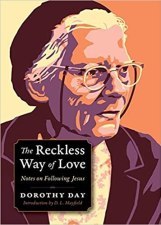
I’ve had Dorothy Day’s The Reckless Way of Love: Notes on Following Jesus from Plough Books on my bookshelf for some time. When the Fountains of Carrots podcast decided to do a book club reading this book with its Patreon members, I used that as a good opportunity to take this off my bookshelf and start it, although I’m woefully behind on book club! Dorothy Day was the founder of the Catholic Worker Movement. She converted to Catholicism after a checkered life, and devoted herself thereafter to social justice and serving the poor. I’m drawn to understanding how she nurtured her inner life during her tireless work for the poor. Here is what she writes about faith and doubt in the first chapter:
“Life would be utterly unbearable if we thought we were going nowhere, that we had nothing to look forward to. The greatest gift life can offer would be a faith in God and the hereafter. Why don’t we have it? Perhaps like all gifts it must be struggled for.”
The Reckless Way of Love: Notes on Following Jesus by Dorothy Day. Plough | Bookshop | Amazon
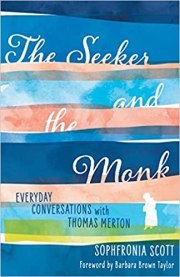
Sophfronia Scott’s new book, The Seeker and the Monk: Everyday Conversations with Thomas Merton from Broadleaf Books just released this week. Broadleaf sent me a copy of the book as part of Sophfronia’s launch team, and having read Sophfronia’s other spiritual writing, I was eager to read this one. Intrigued by the idea of a conversation across time and space between a Black Episcopalian woman with a Baptist background and a white Catholic contemplative monk, the book drew me in right away. The topics Sophfronia converses with Merton about include covetousness, ambition, faith, prayer, love – and each one is not just an overview about what Merton says about these things, but an interaction, and, in many cases, direction along the spiritual path. Here is a selection from the first chapter that is so appropriate for the Great Lent:
“The one thing becomes like an idol. When that idol replaces God, that’s where the real trouble lies. One bit of comfort is that we aren’t totally at fault in this. We don’t realize our desire is ongoing because we are reacting to stimuli that continually bombard us with messages and images of all the beautiful things we can buy and the beautiful lives we can have as a result. Merton saw this manipulation, much to his ire. He recognized the problem of advertising, of having images and the promise of products constantly dangled before us.”
The Seeker and the Monk: Everyday Conversations with Thomas Merton by Sophfornia Scott Bookshop | Amazon
The next four books I’m reading are about the spiritual journey—the pilgrimage. It seems this Lent I’ve been drawn to this theme.
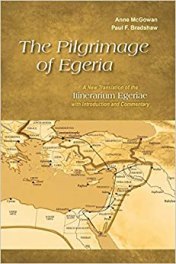
To start, I’m reading The Pilgrimage of Egeria: A New Translation of the Itinerarium Egeriae with Introduction and Commentary by Anne McGowan and Paul Bradshaw from Liturgical Press Academic. This is a newer translation of the Egeria’s travel journals of her fourth century journey from Mount Sinai to Constantinople, with many stops in between. Egeria seemed to have been a nun of Spanish origin, and the manuscript of her extensive travels provides a witness to the worship and practices of the Christian churches in the fourth century. Along with Perpetua of Carthage, Egeria is among the earliest female Christian writers whose words we still read today. In Jerusalem, Egeria witnesses the celebration of Holy Week that reminds me of the Holy Week services we pray in the Coptic Orthodox Church:
“So from the sixth hour to the ninth hour readings are read and hymns recited continually, to show all the people that whatever the prophets foretold concerning the Lord’s passion is shown to have been done both from the gospels and also from the writings of the Apostles. And so during those three hours all the people are taught that nothing had been done that ha d not been foretold, and nothing had been told that had not been completely fulfilled. Prayers that are appropriate to the day are always interspersed.”
The Pilgrimage of Egeria: A New Translation of the Itinerarium Egeriae with Introduction and Commentary by Anne McGowan and Paul Bradshaw Liturgical Press Academic | Bookshop | Amazon
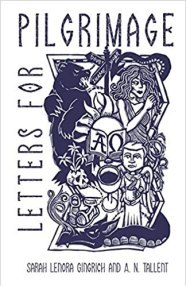
Letters for Pilgrimage: Lenten Meditations for Teenage Girls by Sarah Lenora Gingrich and A.N. Tallentfrom Park End Books picks up with Egeria and travels through Lent in its own pilgrimage, using the Eastern Orthodox Lenten calendar. Each letter can be read as a daily devotion, beginning with a passage from the Psalms and then a letter addressed to the reader. “Dear One,” it begins, “There is danger in pilgrimage, that in our planning and our striving we forget why we’re making the journey, and to Whom.” The letters touch on many struggles girls experience at this age, from self-image to eating disorders to despair, sexual temptation, and passive sins. The letters draw on the wisdom of the Church fathers and mothers, as well as other contemporary Christian writers like Mother Alexandra. I will be glad to have this book on my shelf when my own daughter becomes a teenager. This is a beautiful passage:
“God sends each of us the helpers unique to our lives and needs; for you it may not be an eagle in Alaska, but it may be the way your dog puts his head on your lap when you’re sad. It may not be glowing plankton, but it could be a wildflower thriving defiantly in a sidewalk crack. Look about you while you journey, and let the beauty and wonder of His good creation draw you to the One who made it.”
Letters for Pilgrimage: Lenten Meditations for Teenage Girls by Sarah Lenora Gingrich and A.N. Tallent Park End Books | Bookshop | Amazon
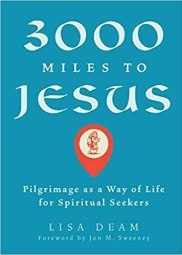
Lisa Deam recently published a book on pilgrimage with Broadleaf: 3000 Miles to Jesus: Pilgrimage as a Way of Life for Spiritual Seekers. In it she describes the pilgrims and pilgrimages of the Middle Ages and applies their paths and their insights to our modern spiritual journeys. Specifically, we learn about Magergy Kempe, a 1413 Englishwoman; Felix Fabri, a 1480 Dominican friar, and Pietro Casola, a 1494 Italian canon who did his pilgrimage at age sixty-seven. Through their stories we learn not just of their physical journeys but their spiritual ones. And we also learn what they did to reach their destinations. In a culture that seems to focus solely on the road and never the destination, the Medieval travelers were quite clear: their feet walked towards Jerusalem, as ours should be pointing towards the New Jerusalem.
“Lessons do, of course, happen along our slow journey home. Our pilgrimage path is where life is lived; it is where we love, grow, make mistakes, and learn. Sometimes the lesson and mistakes knock us down rather more than we’d like. But for the one who pilgrims to Jerusalem for the love of God, there is good news: we know where the path leads. So much in life remains uncertain, but our destination does not. All our steps, and even our missteps, lead to our forever home with Jesus.”
3000 Miles to Jesus: Pilgrimage as a Way of Life for Spiritual Seekers by Lisa Deam. Bookshop | Amazon
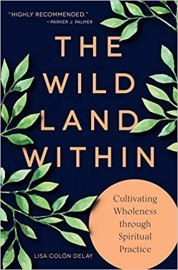
The Wild Land Within: Cultivating Wholeness through Spiritual Practice by Lisa Colon Delay from Broadleaf has not yet been released, but I got to read a sneak peak because I’m also on her book launch team. I first got to know Lisa when I appeared on her podcast, Spark my Muse. Her new book is another pilgrimage, but one that travels within the human soul, using as its guide the spiritual practices. Lisa draws on spiritual guides that I’m familiar with – the Desert Fathers St. Anthony and St. Evagrius Pontus – as well as writers and theologians I am unfamiliar with and would love to learn more about. Uniquely, this book addresses one of the difficulties many of us face when we embark on the spiritual practices that are meant to bring us closer to God: they also reveal wounds, some that we’ve been unaware of. The “three core wounds” Lisa describes relate to safety and security, esteem and affection, and power and control”:
“The interior world of each person has three ravines—core wounds—with which to contend … The chasms form in our lives and remain within us. We reside in those dim and hidden areas and lose sight of the wider terrain … we never know too much about those darkened places until the Divine and healing light shines into each gulf, crevice and cranny. Wisdom of the ages has crafted winding paths that help us trek through these ravines and find our way out again.”
The Wild Land Within: Cultivating Wholeness through Spiritual Practice by Lisa Colon Delay Bookshop | Amazon
Which one of these books has piqued your interest? Tell me what you’re reading this Lent in the comments below!
Don’t forget to subscribe to the Being in Community email newsletter and get the guide to spiritual reading as well as my free ebook, the Great Lent Picture Book Guide.
I am a part of the Amazon Associates program and the Bookshop Affiliates program. Some of the links above are affiliate links. If you choose to make a purchase via those links, I will receive a small commission for referring you at no extra cost to you. You are under no obligation to purchase the items through my links, but if you do, you will be helping support the cost of running this blog and providing you with the writing and reviews you enjoy. Your support is much appreciated!
March 11, 2021
Great Lent Children’s Picture Book Guide
by Phoebe Farag Mikhail
The Great Lent is the “springtime of spirituality,” but for those with younger children, figuring out how to engage them in the season can be a challenge, especially when they are too young to fast from food. This challenge can be a blessing in disguise, because it helps us to re-focus ourselves on the true purpose of Lent: to spend more time connecting with God, to love our neighbors, to pray more, and to practice self-control. So how do we explain these things to our children?
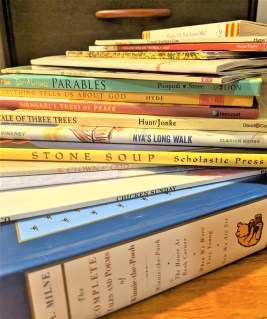 A sample of the books in the picture book guide (c) Phoebe Farag Mikhail 2021
Enter the Great Lent Picture Book Guide! Last year, I came across a Lent picture book guide created for a church with a different Lenten lectionary than mine. I liked the idea so much, I knew I had to create a guide focused specifically on the Coptic Orthodox Church’s Great Lent Lectionary for the Sunday Gospels. And so I spent the year reading and collecting children’s picture books that connected with the themes of the Sunday Gospels. I found children’s books that illustrated beautifully, through words and pictures, acts of mercy done in secret, or how terrible water scarcity can feel.
Each week’s section contains a summary and reference for the Sunday Gospel, and then a list of at least three books that can be read aloud with children alongside that Gospel reading for further connection and discussion. I’ve provided a summary of each book and how it connects to the theme (warning, there are spoilers, so read the books in advance if you don’t want spoilers!). I’ve also provided some suggested discussion questions to spark conversation.
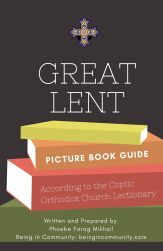
If you are already a Being in Community email subscriber, the link to download your ebook is already in your inbox. If you can’t find it, check your spam folder and add Being in Community to your safe senders list. If you are not yet a subscriber, click here to subscribe, and when you confirm your subscription, you will get an email with a link to all the free resources I’ve created for email subscribers.
Soon, I’ll be sharing my own Lent reading list with you, but I wanted to make sure this resource became available as soon as possible. I look forward to your feedback, and if you are participating, I hope you are enjoying a blessed Lenten season.
Click here to subscribe to the newsletter and get your free Great Lent Picture Book Guide ebook