Lance Tyson's Blog - Posts Tagged "objections"
5 Winning Tips To Close More Sales

When we conduct our sales training, a fast rule we follow is that there are no special skills in closing. In a different article, the Myth of the Perfect Closing Script, I relayed as much. Those closing scripts and closing techniques are a part of a different era, a different environment, and different customer culture.
Today, the reason we say there is no special skill in closing is because we believe that closing has more to do with the sales reps confidence, not his or her ability to follow a script.
In all the assessments that we have done prior to conducting our training sessions, I’ve seen that the ability to close is related to how an individual deals with scarcity and abundance. For instance, if the salesperson is operating out of a scarcity mentality, and they don’t have much in their sales pipeline, they’ll be more likely to accept a “maybe” from the prospect. They may be opposed to challenging the prospect, vetting out objections, clarifying objections, and using any language that may put the relationship at risk. They can’t afford to lose any opportunities.
On the other hand, when we find sales reps with a more abundant mentality, their pipeline is might be three or five times their goal, and they are more apt to give a prospect a push, try some new techniques, and challenge their objections. They don’t lose sight of their people skills, but they are a little more assertive when dealing with buyers.
SALES AS A SERIES OF YESES
In looking for sales closing tips, we realize that closing in today’s complex selling environment is not something that is tacked on at the end of the sales process as an afterthought. It happens throughout the sales process. Selling is a series of yeses:
“Yes. I’ll meet with you.”
“Yes, you can ask me questions.”
“Yes, you can present something to me or prescribe something to me.”
“Yes, you addressed and resolved my objections.”
“Yes, I’ll buy from you.”
You’ve got about 5 necessary yeses when shepherding your prospect through your sales process.
When you look at the sales process this way, we see there are 5 critical junctions where you must overcome some type of resistance, or “objections”. Understanding where you are in the sales process and understanding the type of resistance, or objections, you are facing will help you close better.
CLOSING TIP 1: KNOW WHAT A BUYING SIGNAL IS
Our first sales closing tip is being able to identify a buying signal. Looking back at the collected sales wisdom of the past, we have ample descriptions of buying signals from the experts. Your prospect is sitting across from you: they are leaning forward, they look attentive, maybe they are rubbing their chin, perhaps they are asking clarifying questions…all are buying signals.
However, an alternate narrative might be they are confused, and they are trying to understand what you are saying. Perhaps they have an itchy chin, or they need a shave.
The truth is you don’t know which explanation adequately explains what you are seeing.
So, what’s a buying signal? A buying signal is anything a buyer says or does that indicates some level of interest.
CLOSING TIP 2: KNOW WHAT A WARNING SIGNAL IS
Now, let’s flip the coin over and look at the other side. What’s a warning signal?
Again, going back to all those sales books and psychology books that made attempts at codifying body language, we can look at past descriptions. Your prospect is sitting across from you with their arms crossed. They aren’t paying attention. Perhaps even looking at their phone. Alternately, they could be cold and trying to keep warm. Maybe they’ve got another meeting scheduled and your session is bumping into that time. Or maybe they just got a call from home.
Again, we don’t know which description explains your observations. And again, we are left with trying to define a warning signal.
A warning signal is anything the buyer says or does that indicates disinterest at some level.
The question becomes, for both buying and warning signals: if you can see what they buyer does and you can hear what the buyer says, how do you know if they are interested or disinterested? The answer is: you test them by asking a trial close question. It might be something like, “how does this sound so far?”
This is like sticking a toothpick in a cupcake to determine if it’s done. If the toothpick comes out clean, then you are ready to move to the next phase. But if the toothpick comes out with stuff attached, then you have some more cooking to do.
CLOSING TIP 3: IDENTIFYING AN OBJECTION
A third closing tip is to recognize an objection.
We have different categories of objections. In my best-selling book, Selling is an Away Game, we talk more about your financial marketplace-driven objections. There are objections that are wrapped in cost, value, price, or budget.
An objection, one that we typically think of as a sales objection, comes after you’ve proposed or prescribed your solution to your prospect. And objections, by their nature, reflect a certain level of interest in your solution.
An objection is anything the buyer says or does that indicates hesitation to move the sale forward.
CLOSING TIP 4: DISTINGUISH YOUR INHERENT OBJECTIONS
In a previous article, I mentioned an inherent objection. These are objections that occur because you didn’t do something well in the sales process.
I was recently with a group, the Baltimore Ravens, and we were discussing objections. Someone in the session said, “What if your prospect just doesn’t want to meet with you? Is that an objection?”
Well, this is what we call a put-off because the “objection” is more about you and your process and not about any solution you’ve offered.
Inherent objections mostly occur early in the sales process and often relate to your prospect being preoccupied, busy, distracted, or not wanting to meet with you. You find a level of disinterest or disengagement with your prospect. These all occur without you offering any type of solution to their problem.
You need to be able to distinguish these inherent objections (the ones in which you have not yet gained the prospect’s trust) from your standard sales objections (the ones in which your prospect is interested in your offering and might move forward if you can resolve the issue at hand).
CLOSING TIP 5: ASKING FOR THE BUSINESS
The fifth sales closing tip is to close once you’ve pitched a real solution. Following the sales process will get you most of the way to the close. However, you still must ask for the business.
As we’ve stated before, the close is not something that is forced at the end. When you walk your prospect through your sales process, the close flows naturally. But it won’t happen on its own. You still must ask the question. And so many sales reps miss this. They either try to force the close or they become shy as the end approaches, as if they’re afraid that they’ll scare off the prospect by asking for the business.
Most of the time, the simplest close is the best. I’ve seen sales reps try to overcomplicate the close by cloaking it in some “mystical language” that only sales people can understand. Don’t get fancy. Just ask if they are ready to proceed.
I can’t emphasize this enough. If you have followed your process and addressed their concerns, then the close is merely the doorway to the next phase in the customer lifecycle. Simply ask them if they are ready to move forward. If the buyer says yes, then move forward. And if the buyer says no, then treat the response as an objection and find a way to overcome it. Either way, you’re moving forward. So stop hedging and start moving!
WANT MORE IDEAS ON ASSESSING YOUR SALES REPS AND TO MOTIVATE YOUR TEAM?
To learn more about how away-game selling can give you a competitive edge, contact Tyson Group here.
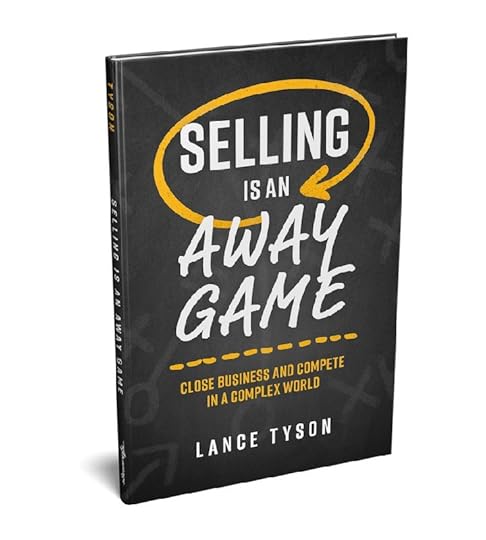
Also, be sure to check out my book, Selling Is An Away Game, available on Amazon, for additional methods and sales strategy. Get your copy today!


From Lemons to Lemonade: Turn Sales Objections Into Opportunities

We’ve all had experiences when we felt a sale was going pretty well, and we felt the momentum gaining. Then, out of the blue, brake lights. Everything comes to a screeching halt. A prospect will suddenly tell you that your price is too high, or that they don’t have the budget, or that they aren’t sure your product or solution really has value.
The job of the sales professional is to take those sales objections and turn them into opportunities. Sometimes, the best outcomes stem from situations where you have to overcome the greatest obstacles.
THE VALUE OF PROACTIVE DIALOGUE
The other day I was driving down the highway when, all of a sudden, another car swerved in front of me and cut me off. My initial reaction was fear, because I had narrowly avoided a serious accident. Then, on the heels of a rush of adrenaline, I became angry at the other driver’s carelessness.
There were three levels to my reaction, with varying degrees of control:
React. I immediately hit the brakes and honked. This reaction was pure reflex, and I had very little control over it.
Respond. I considered whether I should find a safe place to pull over and regroup, or catch up to the other driver and flip him off. Ultimately, I chose not to do either, but considering these options required me to evaluate the situation and make some sort of decision, which offered me a bit more control.
Anticipate. I realized I had just experienced a near miss, and recognized I was still upset. Instead of responding to the other driver directly, I turned my thoughts toward figuring out how to avoid having this kind of experience again. I then took some proactive, corrective action by lowering my speed and leaving over 30 feet between me and the vehicle in front of me. This option enabled me to exercise some influence over my experience, and afforded the greatest amount of control.
Salespeople are faced with the same levels of reaction and control every day. They can either choose to react reflexively when an objection comes up, or they can choose to take proactive control of the situation by having a dialogue that addresses the objection before the prospect raises it.
If, for example, the objection is about price, salespeople can either get blindsided and lose the sale, or they can start talking about value well before it turns into a problem.
HOW TO RESOLVE SALES OBJECTIONS
Salespeople often get caught in a trap of reactivity around objections. When this happens, they start throwing better deals at the buyer without truly understanding what the objection is about. This puts the salesperson into a reactionary stance, and turns the negotiating process into a game of Whack-a-Mole.
Cost. Value. Budget. Price. Those words mean very different things to different people. In every single sale, be it complex or simple, there comes a time when you’re going to have to get the prospect to define, explain, and defend how they are defining these terms.
Rather than being reactive, it’s better to have a candid, proactive dialogue about objections. This enables us to get a clear understanding of what the buyer is actually saying, rather than making incorrect assumptions.
To establish a dialogue, follow these four steps:
Extract the sales objections. Rather than hiding from potential obstacles, good salespeople lean directly into them. Ask the prospect, “What is your biggest concern about this deal?” or, “Is there anything that could derail this?” It’s important to have this dialogue early in the process so you can identify potential problems before they arise.
Clarify concerns/issues. Make sure you understand what the prospect is really saying. Don’t assume you know – instead, have the courage to ask the tough questions.
Find points of agreement. Identify common ground, and keep the end objective of the deal at top of mind.
Resolve the sales objections. You won’t be able to negotiate unless the objections get resolved, so find ways to either remove the obstacles or navigate around them, in order to move forward.
For additional insights and wisdom about the sales process, pick up a copy of Selling is an Away Game, available online at Amazon.
TRAIN YOUR SALES TEAM TO RESOLVE OBJECTIONS WITH PRECISION
To learn more about how away-game selling can give you a competitive edge, contact Tyson Group here.