
Seven Jane's Blog, page 8
October 2, 2018
Accidental List of Favorite Horror Films
 It's finally October! That means it's time to sit down and let your darker thoughts run away with you, enjoying the thrill of being scared and the relief in being alive. Pull out your favorite spooky classic--maybe Stephen King's The Shining or Bram Stoker's Dracula, something by Ray Bradbury--or perhaps sit down with your favorite horror movie.
I'm a hesitant horror film fan. For the most part, I tend not to like big budget Hollywood horror movies. I don't enjoy gore, and I'm not a fan of jump scares. Instead, in movies I prefer, as I do in books, slow-burning terror that creeps up on you and grabs you from behind...then stays with you for days afterward, picking away at your inner thoughts like a vulture pecking through its dinner.
This year I'd like to share some of my favorite horror films with you. Many of these are available on streaming services and I promise, they'll all give you a good scare!
A note before the films. When I started cataloging these favorites, I simply brainstormed my top picks and listed them out, thinking they were just good movies but assuming there was no rhyme or reason behind why I chose them. Upon having written this blog, I see that I was very wrong. There is a theme that ties these films together, and it boils down to what I personally find most haunting in my own life--my fears and insecurities as a woman in this society, as a wife, and as a mother. To me, those things are more terrifying than any bogeyman ever could be. The Babadook
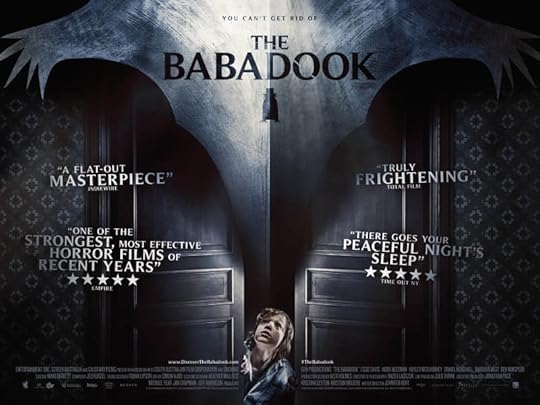 Jennifer Kent’s phenomenally scary Australian chiller The Babadook has quickly become one of my favorite new horror films. Without giving too much away, let me tell you why.
Because it's not a horror story about a monster. It's a story about a mother.
The film centers on a widowed mother, her fragile and somewhat disturbed seven-year-old son, and a twisted bedtime story—a black-and-white figure that arrives in the thumping presence of a black-and-white pop-up book, Mister Babadook (which itself is a word puzzle, Babadook being a jumble of A Bad Book). The monster itself isn't all too scary. In fact, he's rather generic. He's more or less a thing of shadows dressed in a black undertaker’s coat and a top hat, with a pasty face and elongated fingers. But, once the Babadook comes, you can't get rid of him. In fact, denying him only makes him stronger. Like an impulse or a craving you just can't quit.
The Babadook isn't a monster, though, at least not in the traditional sense. He's a manifestation of grief. Specifically, a mother's grief. Amelia is dealing with the sudden, tragic death of her husband and a son who she, at least subconsciously, blames for his death (the incident that took her husband's life happened en route to the hospital to give birth). The Babadook, then, is Amelia's psyche in crisis, her son's fragile state a result of her careless mothering, and the more she tries to deny her pain, the stronger and more violent it becomes. Her world is getting smaller and more isolated every day, and her unwilling role as mother is eating her alive. It bangs around in her chest, and the drumming of her heart is the ba-ba-dook.
This film is not splashy. It'a actually rather rough around the edges and somewhat droll. But it's real. The best horror movies aren't demons from hell or monsters that lurk in the dark, it's our very own inner darkness, and what we'll do when they come for us. Hush
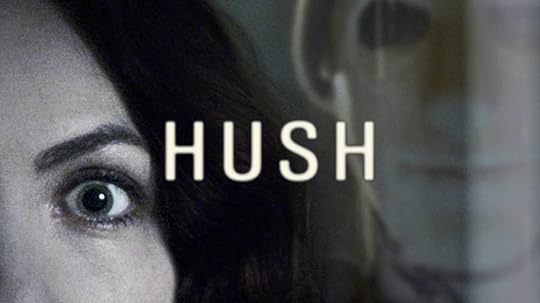 Hush is a simple, intimate film--a silent thriller you might say, and you'd be totally accurate.
The film is not ambitious, and there are zero frills, but the concept is novel and chilling. It centers on a woman home alone in her writing retreat of a wooded cabin, and a masked home invader. The gimmick is that she's deaf and mute--she can't hear her assailer, nor can she call out for help. His motives and identity are secretive, but unimportant. At first, it's the more or less the banal type of cat-and-mouse scenario you'd expect. There's some spooky glimpses of a masked man out of a window, and the appropriate amount of vulnerability and silly mistakes one might make in a moment of panic.
Until it isn't. What makes this film compelling is that Maggie, the deaf-mute victim, doesn't run away hiding and hoping she can escape, at least not for long. She fights back. She fights like hell. She turns the tables, until she's no longer the hunted, but the hunter. Ultimately it's the villain that's leaves the audience wanting here, and we're rooting for the victim in a totally new way, because, well, she may be weak and pitted against a much stronger foe, but she is no victim.
A thrilling movie, yes. But more than that Hush is mirror for every woman in society. It provides a lens to see our perceived weaknesses, and shows us exactly what might happen if we give in to fear and doubt--and that's scary as hell. But, like a mirror, it's an opportunity for clarity, and a chance to see beyond our superficial reflection and into what's waiting inside of us. Honeymoon
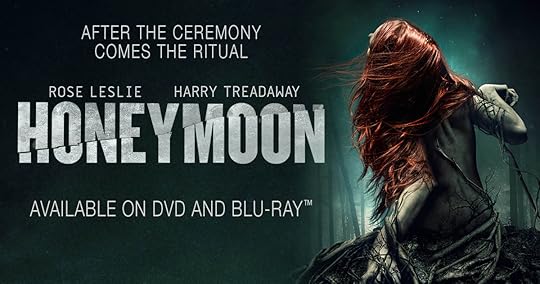 A movie about the deterioration of marital bliss, Honeymoon is a shoestring budget horror film that's less horrifying and more shivery, but still effectively chilling.
The film centers on lusty newlywed couple Paul and Bea who honeymoon at Bea's family cabin that edges against an idyllic lake. Early on Paul and Bea exhibit the classic, if not very compelling, young couple bliss. It's not deep because it doesn't need to be--just two people in love doing what young kids in love do. Before long, something shifts in their relationship and things begin to deteriorate, although it's somewhat impossible to say what changed, why, or what's changing. It carries the feeling that you might get when your SO is upset with you....and you're not sure what you did, and they're not telling. Ugh.
Classic relationship problems arise--the kind that happen after the figurative honeymoon period wears off. Jealousy. Loss of sexual appetite. In a vein similar to storylines a la Invasion of the Body Snatchers, Bea undergoes a series of bizarre and unexplainable changes--naked sleepwalking, memory loss, and other unoriginal but nonetheless creepy changes. What is tropey in classic sci-fi horror films becomes tangible in this gritty, home-camera plot line. It never becomes clear why Bea has been targeted, or what exactly has taken over her, but is has Paul knocking on every closed door to try to sort it out, yielding zero answers and some silly albeit expected events along the way.
Critics fuss the flaws in the film, namely that Paul takes too long to flee the isolated area, that he gives Bea the opportunity to hide his keys, and so on and so forth. Frankly, our male victim gets criticized for doing all the things that women victims always do in horror films, flail about in totally unbelievable ways that if they didn't do there would be no scary story. Ultimately, the swamp or alien or Bea or whatever she now is wins...though things get a little fishy in the end (pun intended!).
It's hard to put my finger on exactly what I liked so much about this film. I think it lies in my interpretation of the events, and perspective that may be a little deeper than anyone intended. I see Bea not as a hapless honeymoon honey, but as an undeniable element of the natural world reclaimed by nature. The allegory between women in nature is solid, and Bea's return to the wild, so to speak, could explain her bizarre behavior and departure from what is "expected" of her as a bride, as a woman, as a civilized person. Meanwhile, Paul makes for a suitable tables-turned trope so he can bumble about for a while, still displaying his manly chivalry as he tries to save his bride, rather than let her be reclaimed. He's society, masculinity, civilized order all in one.
It's also really nice to see women as powerful creatures win once in a while. Sorry, Paul.
Gerald's Game
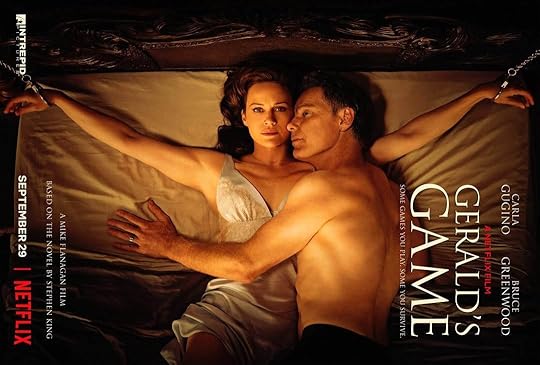 I will admit a shameful secret here: I often don't like film adaptions of Stephen King stories. There are several exceptions, and there are several examples. But I really enjoyed Netflix's version of Gerald's Game. (I'm also a huge Carla Gugino fan, but I promise I didn't let that bias me.)
On the surface, Gerald's Game is a sex-gone-wrong scenario between a woman with a bit of a troubled past and a husband who...is an unfortunate prototype of the rationale that victims gravitate to spouses similar to their abusers. Desperate to rekindle the dying flame of their sexless marriage, Jessie, and her husband, Gerald, vacation to a remote lakeside house for essentially what equates to a sex-capade. His (pitiful) attempt at a rape fantasy--wherein Maggie is tied to the bed, because "rape fantasy"--quickly sours. An argument ensues and Gerald drops dead, leaving Maggie bound and trapped....and with zero on help on the horizon.
Basically left for dead, Jessie has to find a way to free herself, or end up joining Gerald. Along the way, her trauma and dehydration manifest as madness, and Jessie relives a childhood not-so-fantasy involving her father, which intertwines interestingly (and disturbingly) with what is happening to adult-Jessie in the bedroom. At one point she even sees a man lurking in the room, but we're left to assume he's a figment of Jessie's insanity, and not a real person. He is made of moonlight, after all.
If Jessie is to survive her situation, and overcome her madness, she'll have to both literally free herself of the handcuffs--something which terminates in a powerful albeit bloody moment--and shed the binds of her past in the process. It's an incredible moment of empowerment and resolve both figuratively and literally. A psychological thriller, this is really a survival story in every sense of the word.
There is, as in all King stories, a moment when this one becomes all too real. I didn't initially like this twist, as it seemed to water down what Jessie accomplished. But, upon reflection I came to realize the twist may have been the most empowering part of this creepy tale. That figment moonlight man? Not a figment. A criminal and a necrophiliac, we later discover that this disfigured man-creature was really in Jessie's bedroom. She may have been his next victim, but because she speaks to him and gives him her wedding ring (a symbolic shedding of her not-so literal handcuffs), he leaves. Later, Jessie is able to exert her newfound freedom and power--from her husband, her past, and herself--and use it to protect others from this new aggressor. Before I Wake
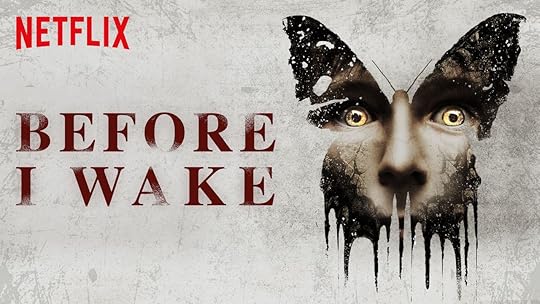 I have been wanting to watch Before I Wake for a while, but we had been saving it until October, when my husband and I glut ourselves on scary movies.
It was worth waiting for. I'm still not over it. Not because it scared me, but because it horrified me.
Another in Netflix's horror canon, Before I Wake provides a perfect bookend for the movies in this list as it also centers around a grieving mother and her child, or children you might say. This film encapsulates the worst fears of both parents and children, following simultaneously both a pair of foster parents trying to move on after the tragic loss of their own son and a young orphan seeking a home and struggling to let go the loss of his own mother to illness. There's an interesting pivot here hidden in the exposition as the parents prepare for the arrival of the foster child--Cody--that show what parents do to protect their children may make them seemed conspiratorial and secretive, possibly even sinister. Good intentions, right?
The gimmick in this tale is unique, even with many scary-stuff-while-you-sleep stories circling the ether. While Cody sleeps, his dreams manifest in reality, as do his nightmares. This supernatural power is dangerous in more than one way--even the "beautiful" dreams are just as deadly as the all-too-real nightmares. For example, while the grieving parents are able to see and interact with a strange, surreal version of their dead son, this only feeds the growing wedge between the pair and exploits the mother, Jessie's, unyielding grief, pitting her in an antihero role as the mother--a saving grace--and a woman on the edge of losing it, who abusively tries to harness Cody's "gift," including things like drugging him to sleep so she can stare at the hologram-like image of her lost son. It's relatable, even if we don't want to admit it. Who wouldn't go to extremes to see their lost loved ones again? I am not sure any of us could see through that temptation clearly.
Of course, there's a monster. Cody's nightmares manifest as a ghoulish creature he calls the Canker Man, and the Canker Man is very real--if he eats you, you disappear although it's unclear whether you actually die or not. Dramatic tension grows as Jessie tries to get to the bottom of this mystery, and save Cody--her new son--along with whatever is eating him inside his dreams.
There's a twist here, and one I fear I will give away if I narrate further on the plot of this story, so I'll end here on this note: sometimes it's not our dreams that are the most beautiful, but our nightmares.


September 24, 2018
A Love Letter to Fall
 Finally, fall is here! The pumpkins, the crisp breezes and changing leaves, the waning daylight, the opening of the veil.... Fall is by far my favorite time of the year, and it's not just a seasonal change: it's one of the integral parts of the natural cycle of things, too.
 Calendars throughout the world differ on the exact beginning and ending of fall, as it depends on culture as much as the physical changes generally associated with the transition from summer to winter, such as changing leaves and cooler temperatures. Before the Julian calendar was adopted in northern Europe, there were no exact dates for any of the seasons, and societies considered there to be only two - winter and summer - with transition points between them. In Scandinavia, winter was considered to have begun sometime in what is now mid-October, while the insular Celtic societies acknowledged the end of summer and the beginning of winter with the celebration of Samhain, the origin of our modern Halloween celebrations. Over time, the seasonal cycles were quadrisected into the current four seasons of equal length, and the Gregorian civil calendar in place today begins and ends the seasons on the equinoxes and solstices. But there are still are a few outliers that maintain seasonal beginnings based on custom, such as the Irish calendar that still sees fall as consisting of the months of August, September and October, with November 1 being the beginning of winter.
For most places, however, it seems that a universal calendar neglects the subtleties of place and the personalities of differing bioregions separated by climate as well as culture. Winter may indeed begin on December 21st in Louisiana, for instance, but by then it’s been snowing in North Dakota for nearly two months. Retaining a connection with place and the seasons means honoring them in the context our specific landbases and climates, as well as local culture. For spring and fall especially, this seems easy enough. Rather than these seasons being considered seasons of equal consideration with winer and summer, winter and summer should define the cold and warm halves of the year, respectively, with spring and fall being transition periods between the two. And how long that transition period is would depend on place, and be defined by the physical changes that we think of when considering the seasons. If this is the case, then fall would begin for a particular place when the temperature becomes noticeably and consistently cooler, and the leaves of deciduous trees begin to change and fall. It would end when the leaves are gone, the trees dormant, and the temperatures on the margin of wintry cold. This is inexact, of course, and thus potentially subjective, and would differ from year to year and place to place, which is where local culture comes in to define it for their region.
Another interesting fact about fall is that the season used to be referred to as harvest in west Germanic speaking languages, and is still done so today outside of English (cf. Dutch herfst, German herbst,and Scots halrst). As urbanization took over, however, harvest lost its meaning as the time of year (and because the word to describe the activity most associated with fall), and autumn replaced the moniker for the season. This took place after much of English emigration to North America, where fall replaced harvest and autumn remained in disuse.
History lesson aside, fall is important in our lives not only because of its meteorological and ecological role, but because it represents a shift from the hot days of summer and a gradual closing in of the family as days grow shorter, nights longer, and temperatures begin to drop. It’s the changes in tree color to rustic browns, vibrant golds and dry-blood red. Fall is sweatshirts and open windows. It’s crisp air and warm cider. It’s the scratchy sound of dried and curled leaves saltating along the pavement in the wind. It’s the psitherism in the forest overhead. It’s pumpkin patches, apple picking, and apple cider doughnuts. It’s withering cornfields and hay bales, dried corn stalks and cinnamon everything. It’s joy and abundance of fruit and grain from the harvest, as well as the anxiety and melancholy over harsh weather to come.
Fall is a perfect time to celebrate life. The world is dying, not to be renewed until spring. The days grow shorter and night takes over. But the world remains beautiful, and celebrating life in the face of death is a whistle in the dark that takes power away from the darker side of life, that empowers us in the face of our own mortality. Fall reminds us of the passing of time and the finity of life. It’s a time to take stock our lives, to take stock of our own harvests, what has fruited in our lives versus what needs culling. Maybe the job we have is making us unhappy, or our endeavors thus far have been fruitless. Maybe it’s time to plant new seeds and reap something fresh. Or maybe what we’ve done has been awesome, the fruits of our labors sweet, and it’s time to celebrate the harvest, the land, and nature. To embrace the cooler temperatures and crisp air, the falling acorns, the whirling leaves in downward spiral. To catch them for good luck. To stuff hands in pockets and stroll quietly along whispering walking trails, observing life as it prepares for the cold and scarcity of winter, as life has done for countless millennia.
With snuggles and hot mugs of cider, fall is an important time to celebrate our families and communities by bringing the ones you love together and celebrating your bond with good food and drink, mirth, and merriment. Family is the most important thing in life, and the season lends itself perfectly to human connection. As we settle into this wonderful time of year, grab a good book, a comfortable blanket, and snuggle up and celebrate the love of fall that waits inside us all.
September 20, 2018
PENNED CON Round Up!
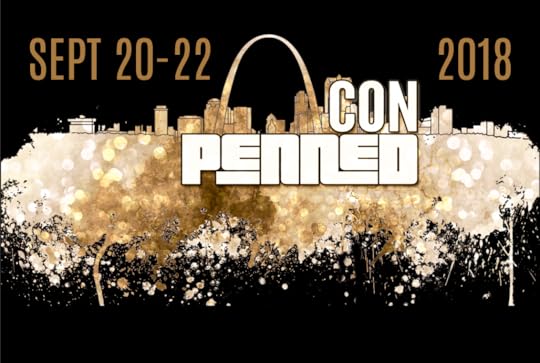 This weekend is Penned Con, an indie book event that brings writers and readers together to raise money for autism (a cause near and dear to my heart, having an autistic nephew). Penned Con is in its fifth year, and this year's author lineup features over 150 authors, a lip sync battle, and a roaring 20s themed awards party--and if there's something I love, it's getting a little Gatsby!
While, unfortunately, I am not attending Penned Con this year, a lot of incredible authors are, and if you are heading out to St. Louis, allow me to tell you about some authors you Do Not Want to Miss! (I'll go alphabetically for the sake of equality!) Five Penned Con Authors You Very Much Absolutely Must See A. L. Kessler, author of the best-selling series Here Witchy Witchy (website)Becca Vincenza, author of books that will stick in your head (website)Kristie Cook, international best-seller and publisher of the fantastic, collaborative series, Havenwood Falls (website)Stacey Rourke, a woman who has all the honor to go with her name and is simply one of the most amazing women and friends I have! (website)Tish Thawer, one of my favorite witchy ladies (website) There are lots more authors to meet and get to know, too -- the full list is here. If you can't make it, and just need some new reading recommendations, you can also browse the Penned Con 2018 reading list and see all the books by all the authors, too!
Remember, this isn't just a wonderful event for authors and readers, but it's also a great cause. The goal this year at Penned Con is to raise $15,000 for autism, so every little bit counts--and every little bit could introduce you to your next favorite author!
September 18, 2018
SIX books that changed my life
Everyone (and perhaps especially authors) have their favorite books. Books that shaped us, inspired us, acted as our muses, whether they were written by our idols or people we don't particularly like. And sometimes those choices might be a little surprising, even to us!
In today's blog, I'd like to tell you about the six books that changed my life, and gave me the inspiration (and the courage) to first set pen to paper (or fingers to keyboard, whatever). They are, in no particular order: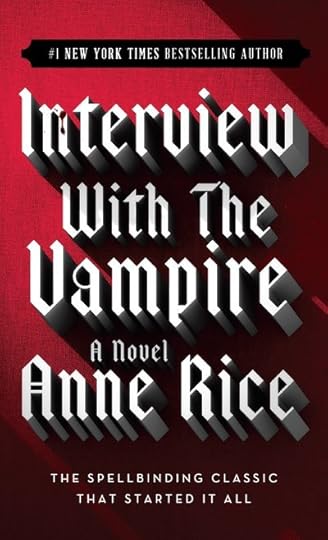
 Interview with the Vampire, Anne Rice No one will ever convince me that Anne Rice isn't the queen of gothic literature. She is. I always tell the story about how I found my first Rice book--which was actually The Vampire Lestat--on a flea market shelf. It was a tattered affair, with a ripped cover and pages that had obviously seen a puddle or two. I paid 25 cents for the copy (which I still have, snuggled right next to several signed first editions of Anne's other books.) I read it. Read it again. Devoured it. Then I went back to the beginning and read the entire rest of the series, still eagerly awaiting each new installation several decades later. I am proud to save I have been in madly love with Lestat since I was fourteen years old.
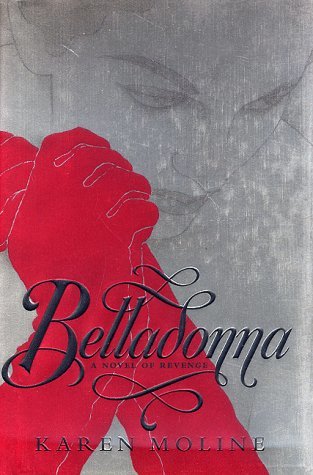
There are very few that can rival Anne Rice in her world-building, her prose, and her details. When I read one of her books, particularly those in The Vampire Chronicles, it's not as much reading a story as it experiencing it. Lestat, of course, remains my favorite of all who carry the Dark Gift, but it was Anne Rice herself who helped me to fall in love with rich descriptions, vivid detail, and emotionally complicated characters, and who gave me an appreciation for stories that tipped between fantasy, history, and horror. I am honored to say I've been so lucky as to have one online conversation with Anne, and it was the best few screens of text of my life. Belladonna, Karen Moline For better or worse, my parents never censored what I read, and I read Belladonna when I was way, way too young to be reading it--I think I was in seventh grade. The story, about a woman who is sold into sex slavery and then breaks free and seeks revenge, is dark, layered, haunting, and more than a little disturbing. That said, more than simply an appreciation for a book that makes 50 Shades of Grey look G-rated, this book taught me one very important thing: women are like bones. They might break, but they will reknit together with tenacity and become more durable than they were before. What was weak can become strong, and hell hath no fury like a woman scorned!
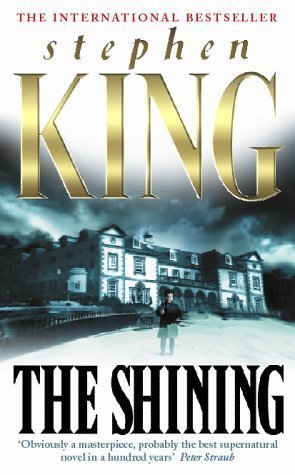
Karen Moline inspired me to write women that endure, that overcome, and that seek vengeance. I still get pink cheeks when I read the parts of this story in italics, but I will refuse to ever write a woman that is less than the Belladonna herself. The Shining, Stephen King I have an undeniable love/hate relationship with Stephen King. I love that he is prone to penning subtle, slow-burning horror. I hate that he usually manages to scare absolute hell out of me. (There is a short in Nightmares and Dreamscapes that has given me a lifelong fear of plumbing problems.)
I have an unhealthy addiction with The Shining. I read it annually, watch the film (the Nicholson/Duvall version), have stayed at both The Stanley and the Timberline Lodge, and drink every day from a coffee mug that has the word redrum on it. It is also the only horror project involving a child that I will tolerate. Literally, the only one. (Unless you count It, which I will tolerate, but I won't enjoy it.)
I find it difficult to put into words my feelings on The Shining. It scares the crap out of me, and I can't stop loving it. I love the character of Jack Torrance, I love the concept of "the shining," and I love creepy old haunted places. I guess that's enough, really.
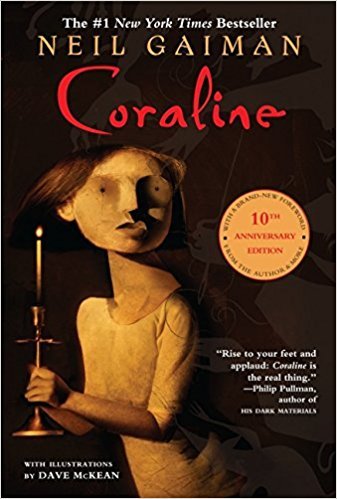
Coraline, Neil Gaiman Coraline is a favorite that I didn't even know began its life as a book. Like many, I watch/ed the animated movie, and love how fantastically creepy and bizarre it is/was. Then I read the book. Then I read other Gaiman books. And I keep reading.
Even though I am a grown woman, I often read young adult fantasy/horror (I also have a small kid so we read together). Many times I find that it's more twisted and far less gorey than adult titles in the same genre, and there's something especially delicious about an author who can twist your ears in a book written for kids. I find Coraline, as I do many of Gaiman's books, to be fairly porous, with thoughts and concepts filtering and flowing through, making the entire experience temporal. As I've gotten older, I've started to interpret Coraline a bit differently, too, reidentifying as The Other Mother in a way that manages to scare me on a whole new level. Absolutely brilliant.
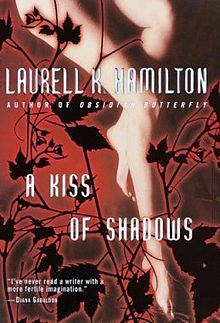
A Kiss of Shadows, Laurell K. Hamilton It would be fair to say that I owe much of my literary career to Merry Gentry. I don't even remember how I got my hands on this book, but I remember I was home, pregnant, and somehow stumbled across this one. I started reading and never stopped. Merry Gentry led me to Anita Blake, who is one of my favorite female protagonists of all time (rivaled, ironically, by Merry). I also have an indescribable amount of respect for Laurell K. Hamilton. I'll probably eventually write the woman a sonnet.
Here's why: while Karen Moline taught me that the weak can rise, Laurell K. Hamilton showed me that even badass women (with a huuuuge chip on their shoulder, Anita) can still have a heart. And these layers are what make characters.
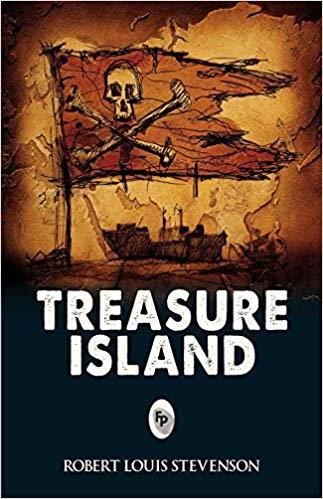
Treasure Island, Robert Louis Stevenson I would be remiss not to mention one of the classics that I so adore, Treasure Island. This book has long been one of my favorites, and arguably the thing that made me fall so hard into a love of all things pirates and nautical. I absolutely adore John Silver, and his sharp tongue and knack for staying alive through coup and mutiny alike. And event absent, one can't help but feel the presence of Captain Flint throughout the tale.
Well, that about does it for my Top 6, though of course there are hundreds of titles more I could faithfully write about. Until then, watch out for drinks and devils, and when it doubt sing a pirate shanty:
Fifteen men on the Dead Man's Chest Yo-ho-ho, and a bottle of rum!
7J
In today's blog, I'd like to tell you about the six books that changed my life, and gave me the inspiration (and the courage) to first set pen to paper (or fingers to keyboard, whatever). They are, in no particular order:


 Interview with the Vampire, Anne Rice No one will ever convince me that Anne Rice isn't the queen of gothic literature. She is. I always tell the story about how I found my first Rice book--which was actually The Vampire Lestat--on a flea market shelf. It was a tattered affair, with a ripped cover and pages that had obviously seen a puddle or two. I paid 25 cents for the copy (which I still have, snuggled right next to several signed first editions of Anne's other books.) I read it. Read it again. Devoured it. Then I went back to the beginning and read the entire rest of the series, still eagerly awaiting each new installation several decades later. I am proud to save I have been in madly love with Lestat since I was fourteen years old.
There are very few that can rival Anne Rice in her world-building, her prose, and her details. When I read one of her books, particularly those in The Vampire Chronicles, it's not as much reading a story as it experiencing it. Lestat, of course, remains my favorite of all who carry the Dark Gift, but it was Anne Rice herself who helped me to fall in love with rich descriptions, vivid detail, and emotionally complicated characters, and who gave me an appreciation for stories that tipped between fantasy, history, and horror. I am honored to say I've been so lucky as to have one online conversation with Anne, and it was the best few screens of text of my life. Belladonna, Karen Moline For better or worse, my parents never censored what I read, and I read Belladonna when I was way, way too young to be reading it--I think I was in seventh grade. The story, about a woman who is sold into sex slavery and then breaks free and seeks revenge, is dark, layered, haunting, and more than a little disturbing. That said, more than simply an appreciation for a book that makes 50 Shades of Grey look G-rated, this book taught me one very important thing: women are like bones. They might break, but they will reknit together with tenacity and become more durable than they were before. What was weak can become strong, and hell hath no fury like a woman scorned!
Karen Moline inspired me to write women that endure, that overcome, and that seek vengeance. I still get pink cheeks when I read the parts of this story in italics, but I will refuse to ever write a woman that is less than the Belladonna herself. The Shining, Stephen King I have an undeniable love/hate relationship with Stephen King. I love that he is prone to penning subtle, slow-burning horror. I hate that he usually manages to scare absolute hell out of me. (There is a short in Nightmares and Dreamscapes that has given me a lifelong fear of plumbing problems.)
I have an unhealthy addiction with The Shining. I read it annually, watch the film (the Nicholson/Duvall version), have stayed at both The Stanley and the Timberline Lodge, and drink every day from a coffee mug that has the word redrum on it. It is also the only horror project involving a child that I will tolerate. Literally, the only one. (Unless you count It, which I will tolerate, but I won't enjoy it.)
I find it difficult to put into words my feelings on The Shining. It scares the crap out of me, and I can't stop loving it. I love the character of Jack Torrance, I love the concept of "the shining," and I love creepy old haunted places. I guess that's enough, really.
Coraline, Neil Gaiman Coraline is a favorite that I didn't even know began its life as a book. Like many, I watch/ed the animated movie, and love how fantastically creepy and bizarre it is/was. Then I read the book. Then I read other Gaiman books. And I keep reading.
Even though I am a grown woman, I often read young adult fantasy/horror (I also have a small kid so we read together). Many times I find that it's more twisted and far less gorey than adult titles in the same genre, and there's something especially delicious about an author who can twist your ears in a book written for kids. I find Coraline, as I do many of Gaiman's books, to be fairly porous, with thoughts and concepts filtering and flowing through, making the entire experience temporal. As I've gotten older, I've started to interpret Coraline a bit differently, too, reidentifying as The Other Mother in a way that manages to scare me on a whole new level. Absolutely brilliant.
A Kiss of Shadows, Laurell K. Hamilton It would be fair to say that I owe much of my literary career to Merry Gentry. I don't even remember how I got my hands on this book, but I remember I was home, pregnant, and somehow stumbled across this one. I started reading and never stopped. Merry Gentry led me to Anita Blake, who is one of my favorite female protagonists of all time (rivaled, ironically, by Merry). I also have an indescribable amount of respect for Laurell K. Hamilton. I'll probably eventually write the woman a sonnet.
Here's why: while Karen Moline taught me that the weak can rise, Laurell K. Hamilton showed me that even badass women (with a huuuuge chip on their shoulder, Anita) can still have a heart. And these layers are what make characters.
Treasure Island, Robert Louis Stevenson I would be remiss not to mention one of the classics that I so adore, Treasure Island. This book has long been one of my favorites, and arguably the thing that made me fall so hard into a love of all things pirates and nautical. I absolutely adore John Silver, and his sharp tongue and knack for staying alive through coup and mutiny alike. And event absent, one can't help but feel the presence of Captain Flint throughout the tale.
“That was Flint's treasure that we had come so far to seek, and that had cost already the lives of seventeen men from the Hispaniola. How many it had cost in the amassing, what blood and sorrow, what good ships scuttled on the deep, what brave men walking the plank blindfold, what shot of cannon, what shame and lies and cruelty, perhaps no man alive could tell.” The topographical descriptions in this tale are as lush as the island itself (or, maybe a good juxtaposition), and I love the adventure and the bravery of all the parties--even the Squire. My favorite quote "dead mean don't bite" is antithetical to most of the other stories I love, too, so I tend to think this book is the confirmation bias I've formed all my other assumptions of paranormal beasties on, to cure the shivers of course.
Well, that about does it for my Top 6, though of course there are hundreds of titles more I could faithfully write about. Until then, watch out for drinks and devils, and when it doubt sing a pirate shanty:
Fifteen men on the Dead Man's Chest Yo-ho-ho, and a bottle of rum!
7J
September 14, 2018
Welcome to 'writing in the dark'
Well, here goes. This is the first real blog post I've ever actually written. Sure, people have been telling me to do it for a while, but frankly I am pretty terrible at blogging--and more than a little scared of it. So, here goes nothing.
With my debut novel, The Isle of Gold, releasing in a few short weeks (eek!), I thought the most interesting way to introduce myself to the blogosphere might be to tell you a little bit about the inspiration behind the book, and share of my favorite pieces of "pirate folklore" and the real research that was brought into the story.
First and foremost, I love all-things nautical and have always been enchanted my tales of the sea, particular things like sirens, krakens, and shipwrecks. One of the earliest creative fiction pieces I can remember writing was a story about a child aboard the Titanic who was rescued by a mermaid (I was also really into The Little Mermaid when I was a girl, both the Disney version and the original story). Since then, if it was a book, or a movie, or any other piece of media about pirates or life at sea, I've consumed it.
I am particularly obsessed with odd ocean phenomena, like flashes of green lights on the horizon at sunset (someone caught a gorgeous one here), frost flowers, and crazy things that might lurk in the deepest parts of the ocean (btw, if you've never seen the 80s class The Abyss, you should.)
A lot of research went into writing this story, and I tried to balance "real" history with fantasy. I spent time touring old wooden boats and asking way too many questions of anyone knowledgable who would answer. I went to Nassau to tour the pirate museum and sit on the beaches of the Caribbean. I drank a lot of rum. You get the picture.
In the folklore aspect, I wanted to bring in as many of the most quintessential legends I could--Davey Jones (a real sailor, a euphemism, you decide!), Charybdis, the kraken, the Caleuche, Melusine... all of these are very real, very old seafaring legends, and I wanted to be as true to their roots as possible, while integrating them in a new way. Of course, this is a story of connection--land and sea, love and loss, attraction and denial--and I wanted to weave those things throughout every aspect of the story. It is my hope that everyone who reads this book comes away with something a little bit different, and that the characters speak to them in a personal and profound way.
I'd always assumed I'd write a book, or maybe a series, about pirates at some point, but it was never something I thought I'd write first. In fact, I was working on a completely different project when the inspiration for IOG came, took hold, and usurped everything. The plot of the story was actually based on a dream I can now only barely remember, but the two things that stuck were the symbiotic and sometimes insidious love-hate relationship between the land and the sea, and the adventure of finding your own identity when the world seems to have decided it for you.
Well, that's it for the first blog of Writing in the Dark. Next time, maybe I'll tell you about some of my favorite books and the authors who have inspired me.
7J
With my debut novel, The Isle of Gold, releasing in a few short weeks (eek!), I thought the most interesting way to introduce myself to the blogosphere might be to tell you a little bit about the inspiration behind the book, and share of my favorite pieces of "pirate folklore" and the real research that was brought into the story.
First and foremost, I love all-things nautical and have always been enchanted my tales of the sea, particular things like sirens, krakens, and shipwrecks. One of the earliest creative fiction pieces I can remember writing was a story about a child aboard the Titanic who was rescued by a mermaid (I was also really into The Little Mermaid when I was a girl, both the Disney version and the original story). Since then, if it was a book, or a movie, or any other piece of media about pirates or life at sea, I've consumed it.
I am particularly obsessed with odd ocean phenomena, like flashes of green lights on the horizon at sunset (someone caught a gorgeous one here), frost flowers, and crazy things that might lurk in the deepest parts of the ocean (btw, if you've never seen the 80s class The Abyss, you should.)
A lot of research went into writing this story, and I tried to balance "real" history with fantasy. I spent time touring old wooden boats and asking way too many questions of anyone knowledgable who would answer. I went to Nassau to tour the pirate museum and sit on the beaches of the Caribbean. I drank a lot of rum. You get the picture.
In the folklore aspect, I wanted to bring in as many of the most quintessential legends I could--Davey Jones (a real sailor, a euphemism, you decide!), Charybdis, the kraken, the Caleuche, Melusine... all of these are very real, very old seafaring legends, and I wanted to be as true to their roots as possible, while integrating them in a new way. Of course, this is a story of connection--land and sea, love and loss, attraction and denial--and I wanted to weave those things throughout every aspect of the story. It is my hope that everyone who reads this book comes away with something a little bit different, and that the characters speak to them in a personal and profound way.
I'd always assumed I'd write a book, or maybe a series, about pirates at some point, but it was never something I thought I'd write first. In fact, I was working on a completely different project when the inspiration for IOG came, took hold, and usurped everything. The plot of the story was actually based on a dream I can now only barely remember, but the two things that stuck were the symbiotic and sometimes insidious love-hate relationship between the land and the sea, and the adventure of finding your own identity when the world seems to have decided it for you.
Well, that's it for the first blog of Writing in the Dark. Next time, maybe I'll tell you about some of my favorite books and the authors who have inspired me.
7J
August 16, 2018
The Riptide Bumbo
Courtesy of The Tome and Tankard Inn.  The Reasoning The Isle of Gold is a pirate fantasy based in real history, so I felt it fitting to make a cocktail based on a genuine historical recipe. Bumbo was a popular cocktail designed to improve the taste of rum rations. Originally this was made up of rum, water, sugar, cinnamon and nutmeg. Scurvy was typically a bigger problem for the Navy, who would spend many months at a time at sea and with a larger crew than a pirate ship – a pirate’s diet contained more fresh fruit and vegetables than you might expect, so citrus wasn’t necessary in Bumbo. However, for my purposes (and to make my cocktail delicious) I have adapted the recipe to include lime juice and coconut rum, keeping to the spirit of the drink but making it a little tastier. Therefore, this is the Riptide‘s own version.
The Recipe The Recipe
You will need:Cocktail ShakerCocktail StickIceWhiskey Tumbler2 oz Rum (dark, amber or spiced)2 oz Malibu1 lime (1 oz juice, 1 slice)1/8 tsp Nutmeg1/8 tsp Cinnamon1 tsp Turbinado/Raw Cane Sugar1 Pineapple Chunk for garnish (optional)
Take your cocktail shaker and fill with ice. Add rum, malibu, lime juice, nutmeg, cinnamon and sugar. Shake vigorously and strain into your tumbler. Spear your slice of lime and pineapple chunk on a cocktail stick and add as garnish.
Enjoy! And when the Charybdis makes the room spin, tell it in no uncertain terms that you will not be taken by the sea.
The Reasoning The Isle of Gold is a pirate fantasy based in real history, so I felt it fitting to make a cocktail based on a genuine historical recipe. Bumbo was a popular cocktail designed to improve the taste of rum rations. Originally this was made up of rum, water, sugar, cinnamon and nutmeg. Scurvy was typically a bigger problem for the Navy, who would spend many months at a time at sea and with a larger crew than a pirate ship – a pirate’s diet contained more fresh fruit and vegetables than you might expect, so citrus wasn’t necessary in Bumbo. However, for my purposes (and to make my cocktail delicious) I have adapted the recipe to include lime juice and coconut rum, keeping to the spirit of the drink but making it a little tastier. Therefore, this is the Riptide‘s own version.The Recipe The Recipe
You will need:Cocktail ShakerCocktail StickIceWhiskey Tumbler2 oz Rum (dark, amber or spiced)2 oz Malibu1 lime (1 oz juice, 1 slice)1/8 tsp Nutmeg1/8 tsp Cinnamon1 tsp Turbinado/Raw Cane Sugar1 Pineapple Chunk for garnish (optional)
Take your cocktail shaker and fill with ice. Add rum, malibu, lime juice, nutmeg, cinnamon and sugar. Shake vigorously and strain into your tumbler. Spear your slice of lime and pineapple chunk on a cocktail stick and add as garnish.
Enjoy! And when the Charybdis makes the room spin, tell it in no uncertain terms that you will not be taken by the sea.
July 24, 2018
Giveaway & Author Q&A
Recently I had the opportunity to sit down with Kristin of Oh!FortheloveofBooks and answer some of her burning questions about The Isle of Gold--from Merrin's sexuality to my favorite member of the Riptide's crew. Check out a sneak peek of Q&A below, and don't miss out on her exclusive giveaway to win an ARC of the book for yourself!
Is Seven Jane your author name? And if so where did you come up with it?
It is! Seven Jane was actually the name I’d picked out for my daughter, if I’d had one. I never had a daughter, so I decided to keep the name for myself.
A reader (Uhm myself) happened to notice it seemed Merrin might be BiSexual, do you consider this true?
I think Merrin would say that love transcends boundaries of gender, race, time, or realm, and I would agree with her! We still have a lot to learn about her relationship with Claudette, but I would certainly consider the two women to be deeply in love, regardless of whether that is friendship, sisterhood, or romance. I think it’s all three.
Where did you get the inspiration for The Isle Of Gold?
It was inspired by a dream, and by my deep and relentless love of the ocean and pirate folklore. Actually, the catalyst for the story was a dream in which I was trapped on a small island (not much larger than a boulder) in the middle of the ocean, and the only way for me to escape the rock was to tether myself to someone else in the dream—someone much like Winters—as we had to depend on each other to survive. I woke up feeling both unable to live without this person, and doomed to be trapped with him, which opened up my imagination to the story that eventually became Winters and Evangeline’s, Davy and the sea goddess’, and even, as we are just beginning to see, Merrin and Tom Birch’s.
If you were a character in your book, who would you be?
Probably Erik Winters. I, too, am prone to fits of terrible grouchiness, rarely brush my already-unruly hair, and am fiercely loyal to those I love.
How do you think your characters would react if they met you and knew you wrote their story?
I think their reactions would be as varied as their personalities, but I definitely think I’d stick by Tom Birch in the event they all confronted me, and count on his diplomacy, just in case.
Is book two in the works?
I can officially say that yes, it is! I am so excited! I’ll be sharing more very soon on my website, so be sure to subscribe for updates at http://www.sevenjane.com/!
What will you be doing on October 9th 2018?
Hiding from social media, and drinking rum—really.
What advice would you give to others out there writing books and hoping to be published?
No matter what you do, keep writing. Surround yourself with other writers, and readers your trust. Lift each other up, and succeed as a community of artists.
Check out more on Kristin's blog here.
Is Seven Jane your author name? And if so where did you come up with it?
It is! Seven Jane was actually the name I’d picked out for my daughter, if I’d had one. I never had a daughter, so I decided to keep the name for myself.
A reader (Uhm myself) happened to notice it seemed Merrin might be BiSexual, do you consider this true?
I think Merrin would say that love transcends boundaries of gender, race, time, or realm, and I would agree with her! We still have a lot to learn about her relationship with Claudette, but I would certainly consider the two women to be deeply in love, regardless of whether that is friendship, sisterhood, or romance. I think it’s all three.
Where did you get the inspiration for The Isle Of Gold?
It was inspired by a dream, and by my deep and relentless love of the ocean and pirate folklore. Actually, the catalyst for the story was a dream in which I was trapped on a small island (not much larger than a boulder) in the middle of the ocean, and the only way for me to escape the rock was to tether myself to someone else in the dream—someone much like Winters—as we had to depend on each other to survive. I woke up feeling both unable to live without this person, and doomed to be trapped with him, which opened up my imagination to the story that eventually became Winters and Evangeline’s, Davy and the sea goddess’, and even, as we are just beginning to see, Merrin and Tom Birch’s.
If you were a character in your book, who would you be?
Probably Erik Winters. I, too, am prone to fits of terrible grouchiness, rarely brush my already-unruly hair, and am fiercely loyal to those I love.
How do you think your characters would react if they met you and knew you wrote their story?
I think their reactions would be as varied as their personalities, but I definitely think I’d stick by Tom Birch in the event they all confronted me, and count on his diplomacy, just in case.
Is book two in the works?
I can officially say that yes, it is! I am so excited! I’ll be sharing more very soon on my website, so be sure to subscribe for updates at http://www.sevenjane.com/!
What will you be doing on October 9th 2018?
Hiding from social media, and drinking rum—really.
What advice would you give to others out there writing books and hoping to be published?
No matter what you do, keep writing. Surround yourself with other writers, and readers your trust. Lift each other up, and succeed as a community of artists.
Check out more on Kristin's blog here.
July 23, 2018
Official Booktrailer for The Isle of Gold
The day has finally come and I couldn't be more thrilled. The new booktrailer for The Isle of Gold has officially been released from Black Spot Books, and it is everything I imagined it could be--I'm not the only one with goosebumps, right?
July 18, 2018
On the Inspiration for The Isle of Gold
I’ve always been a fan of pirate stories and ocean folklore, and I wanted
THE ISLE OF GOLD
to both fit in with classic tales, like Treasure Island, and stand apart from them—and to not get lost in the sensationalism of Hollywood pirate dramas that retell mythology on their own terms. In writing a historical fantasy of the pirate era the main thing I wanted the story to do was avoid tropes of peg legs, talking parrots, and buried treasure while making use of real mythology and actual ocean phenomenon while abiding by rigorously researched historical truths on the people who sailed, the ships they sailed on, and the lives they lived at sea. In addition to these, this story served as an opportunity to touch on some of today’s most pressing societal issues of diversity and inclusion, from women’s rights, to racism, to romance and love outside of the heternormative.
In terms of the natural world, two uncommon real phenomena that were mentioned in the story were frost flowers and the green flash of light on the ocean (no, Hollywood didn’t make that up for Pirates of the Caribbean!). Frost flowers are delicate ice structures that “bloom” on the surface of the polar oceans in the dead of winter. Likewise, green flashes are most often seen at sunset, last only a second or two, and are essentially a result of light refraction and visual trickery as the sun suddenly and briefly changes colors. Here’s a cool article on the green flashes, which, because they are so unusual, have provided much fodder for paranormal speculation by sailors over the years!
Legends of the mystical island Bracile and the red-sailed ghost ship Caleuche are just as steeped in ocean folklore as the cursed goddess turned sea monster Charybdis and sirens…especially the not so beautiful kind. I wanted to bring in one iconic pirate name, and while I drew from several real pirates in building Winters and Merrin’s characters, Davy Jones came directly from legend—(both as a real man and an idiom for the bottom of this sea). Jökulsárlón, and its neighboring Diamond Beach in Iceland became the perfect setting for a real-world embodiment of Bracile.
The ships, their rigging, and their weaponry was all brought from historical research on 17th century sailing culture. As I began to research these in earnest, a few interesting facts rose to the top, particularly in the lack of diversity on these vessels. While we tend to think of pirates as ragtag crews of every nation and color, it wasn’t necessarily true. In fact, even white men pirates still practiced the normal racism and biases of the time, often trading and profiting from the slave trade themselves. It was rare to see a person of color in a position of power onboard a pirate vessel, much less one who was beloved and respected. For this role, Jomo was introduced. Likewise, with the exception of a very few and very famous female pirates (Anne Bonney, Mary Read, etc.) women were not allowed to sail. In fact, in the pirate code written by Bartholomew Roberts, women were not only forbidden to sail, but to bring one aboard was punishable by death. This alone gave Merrin an incentive to keep her identity and sex a secret from the men on the ship. Lastly, a profession as a whore was just as taboo as sexual empowerment by women of the time (or empowerment of any kind, really) and this norm was challenged by Claudette, Mrs. Emery, and even Evangeline herself. There are subtle hints throughout the story to a more romantic than platonic love between Merrin and Claudette, too, proving the currents of love run according to their own desire, regardless of race or gender—and this also affected the budding romance between Merrin and Tom Birch, was remained understated as falling in love was never Merrin’s goal when she set out to sea.
Writing The Isle of Gold was as fantastic an adventure as the story itself. Part history, part mythology, and part imagination, this story drew as much from real sea phenomenon as it did from some of the oldest sea legends on record, told by a strong protagonist who acts as a lens of crystallization for deeper diversity issues that linger just below the surface of a fantastical pirate adventure.
This blog was posted as a guest blog on Misadventures of a Reader.
In terms of the natural world, two uncommon real phenomena that were mentioned in the story were frost flowers and the green flash of light on the ocean (no, Hollywood didn’t make that up for Pirates of the Caribbean!). Frost flowers are delicate ice structures that “bloom” on the surface of the polar oceans in the dead of winter. Likewise, green flashes are most often seen at sunset, last only a second or two, and are essentially a result of light refraction and visual trickery as the sun suddenly and briefly changes colors. Here’s a cool article on the green flashes, which, because they are so unusual, have provided much fodder for paranormal speculation by sailors over the years!
Legends of the mystical island Bracile and the red-sailed ghost ship Caleuche are just as steeped in ocean folklore as the cursed goddess turned sea monster Charybdis and sirens…especially the not so beautiful kind. I wanted to bring in one iconic pirate name, and while I drew from several real pirates in building Winters and Merrin’s characters, Davy Jones came directly from legend—(both as a real man and an idiom for the bottom of this sea). Jökulsárlón, and its neighboring Diamond Beach in Iceland became the perfect setting for a real-world embodiment of Bracile.
The ships, their rigging, and their weaponry was all brought from historical research on 17th century sailing culture. As I began to research these in earnest, a few interesting facts rose to the top, particularly in the lack of diversity on these vessels. While we tend to think of pirates as ragtag crews of every nation and color, it wasn’t necessarily true. In fact, even white men pirates still practiced the normal racism and biases of the time, often trading and profiting from the slave trade themselves. It was rare to see a person of color in a position of power onboard a pirate vessel, much less one who was beloved and respected. For this role, Jomo was introduced. Likewise, with the exception of a very few and very famous female pirates (Anne Bonney, Mary Read, etc.) women were not allowed to sail. In fact, in the pirate code written by Bartholomew Roberts, women were not only forbidden to sail, but to bring one aboard was punishable by death. This alone gave Merrin an incentive to keep her identity and sex a secret from the men on the ship. Lastly, a profession as a whore was just as taboo as sexual empowerment by women of the time (or empowerment of any kind, really) and this norm was challenged by Claudette, Mrs. Emery, and even Evangeline herself. There are subtle hints throughout the story to a more romantic than platonic love between Merrin and Claudette, too, proving the currents of love run according to their own desire, regardless of race or gender—and this also affected the budding romance between Merrin and Tom Birch, was remained understated as falling in love was never Merrin’s goal when she set out to sea.
Writing The Isle of Gold was as fantastic an adventure as the story itself. Part history, part mythology, and part imagination, this story drew as much from real sea phenomenon as it did from some of the oldest sea legends on record, told by a strong protagonist who acts as a lens of crystallization for deeper diversity issues that linger just below the surface of a fantastical pirate adventure.
This blog was posted as a guest blog on Misadventures of a Reader.
Seven Jane's Blog

- Seven Jane's profile
- 91 followers
Seven Jane isn't a Goodreads Author
(yet),
but they
do have a blog,
so here are some recent posts imported from
their feed.

