
Seven Jane's Blog, page 4
August 29, 2019
Authors Gone Social
 Platform building is one of the most hotly discussed topics among writers, agents, and publishers. Publishers, and agents, consider an aspiring author’s platform when they make acquisition choices, and they look for authors who are active and authentic online, regardless of which genre you write. Social media isn’t the end all be all of author platforms, but used appropriately, it is an important tool in an author’s platform arsenal.
 Social media is daunting. There are a whole bunch of platforms, and they all come with their own rules and tricks. Being 'on social media' does not mean you have to be on all social media. My suggestion is that you strategically pick the few platforms that work best for you and do them well, rather than trying to conquer them all and cannibalizing your own efforts. Another recommendation is to focus on on building your followers on only one or two platforms, and not thinning out your crowd amongst too many social channels.
Here's a few things to keep in mind about each social channel, geared toward fiction writers: Facebook Facebook is a platform that's been around for a while. It was once the go-to platform for social media interaction, but constant change and fluctuation in Facebook privacy rules have made it a rather inhospitable place for authors. Rules have changed on what / how you can promote, and there is more noise than ever. Unless your willing to spend bucks on advertisements (and know how to wade through Facebook's algorithms to get your ROI, it might be best to be on the Book, but not put all your eggs in this basket. Instagram Visual content is all the rage right now, and for this there's not better place to be than the Gram. Instagram has very active writing and reading communities and a lot of follower engagement groups to boost your interactions and ability to go viral. It's also a great place to build your visual brand, and show off your book covers, too. #bookstram is always a trending topic.
IG is not without its challenges. You need to know how to maximize your use of hashtags, for one. Filters are commonplace on Instagram, too, which has led to body image issues and can be a mark of extreme fakery. You also can't link within IG, so that's frustrating. YouTube Speaking of visual, YouTube is the second largest search engine (behind Google) and it's a place to take visual one step further. Booktrailers are a great way to share content on YouTube, as are Q&As, live book launches, book trailers, interviews with other authors, etc. Twitter IMHO, Twitter is the workhouse of the (adult) social media. It has a huge and very supportive literary network...and it also can turn very quickly into a vacuum of vitriol when the trolls get loose. Twitter is a great place to meet people, converse, and grow, but it's perhaps the most difficult place to be genuine (IG filters aside). It's also an easy place to step outside of the "novel writer" bubble and meet other types of authors, and other types of creatives--screenwriters, visual artists, etc. There are tons of writing events, like #pitmad that happen on Twitter, too, so it's quite the opportunistic platform.
Like IG, Twitter relies on hashtags. It's also a place you can/will/might spend a lot of time interacting on and there are more stringent character count limitations in individual posts.
Pinterest Pinterest is also a (weirdly) popular place for writers. I haven't particularly figured out why, but I'm on it. Check back for details. Plus, while you're there, you can also find nifty recipes and cool DIY projects, so it is a great place to get lost online and I suppose that accounts for something.
Of course, there is some what not to do on social media, too. Primary amongst these is leaning on social media as a sales tool. Always remember that using social media as part of your platform is about interaction and engagment, not a sales pipeline. Sure, you can chat about your work and even drop a buylink or two, but your focus should be on interacting and building a community around your work, not forcing your book(s) upon them.
And, if you absolutely abhor social media, you don't have to use. There are endless other things you can do besides tweet, post, and share. For example:You can write guest posts or articles/book reviews for other websitesYou can be a guest on podcasts or vlogsYou can create your own podcast or vlog contentYou can teach online courses, or interact in private writing forums onlineYou can -- and you should -- blog (this is a great way to keep your website in search rankings and generate constant and new traffic to your site!)
If you have the funds, you can also hire an assistant or an outside firm to help manage your social media accounts. But, remember, authenticity is important in building a brand, and you'll need to keep careful watch over what's happening online. YOU are your own brand; be sure you manage it.
Be sure to maximize your social efforts, too. Link your blog to Twitter so it tweets when you have new posts. Get a scheduler (I use Zoho Social) so you can schedule your main pics and posts ahead of time. Slap that Pinterest HTML code into your website so you can easily pin. Make it easy for yourself to succeed and feel good about how you're using social media.
At the end of the day, remember that social media use is one part of your author platform...and it may not even be the most important part though it is an important component. It is critical for you to be active, to be easily found online, and to be authentic in your online interactions, wherever you're interacting. For further reading, here's an article on BookBub with 10 Tips for Authors on Using Social Media from a Literary Agent.
Of course, there's more to learning how to use social media than getting lost in the actual mechanics of doing so. You can also learn by reading the experiences of authors, agents, and publishers who do social media well, and by following them, too.


August 26, 2019
The Science of Reading (and Writing) Emotion
 It's not enough to write a great story, with great settings and plot lines and character arcs. You could get all of these right and still come away with a whole bunch of lifeless words on paper if your readers are unable to connect with your characters.
 Characters are how we--as readers--experience stories, and without that critical element no book, no matter how technically flawless it might be, will fizzle quickly to flatline status.
Emotions are what bring characters to life, and they are also what connect us to a story. This isn't just writing dogma; its a neurological fact. There are multiple research studies--like this one, which looks at the brain's reaction to the stimulation of fiction, and this one, which looks at how the brain digests stories--that delve into the parts of the brain activated by good storytelling. These, of course, include language processing areas like Broca's and Wenicke's, but also other parts of the brain that a reader (or listener) uses to experience a story. It's not a stretch to say that stories light up the brain, both in the figurative and the literal sense. This means that a well-told story bring the reader's experiences and emotions into play, which helps them feel more engaged, more empathetic, and more relatable--critical ingredients in building trust between an author and a reader. (Consequently, emotion leads to memorability, which leads to retention...and, somewhere along the way, has an impact on why readers become loyal to certain authors.)
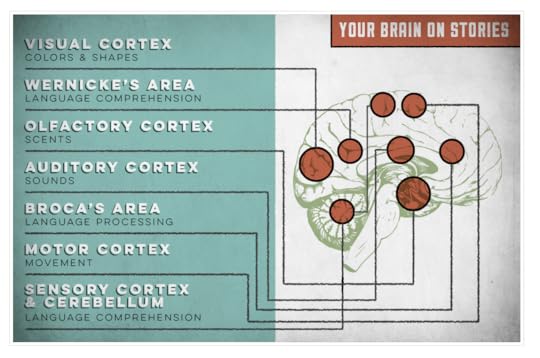 Image from "Visual Data Storytelling" by Lindy Ryan (Pearson, 2018) Stories also have a link to oxytocin, that neat little pleasure chemical in our brains. Paul Zak, a professor at Claremont College knows a lot about how stories generate oxytocin. In his book
The Moral Molecule: How Trust Works
he writes:
Image from "Visual Data Storytelling" by Lindy Ryan (Pearson, 2018) Stories also have a link to oxytocin, that neat little pleasure chemical in our brains. Paul Zak, a professor at Claremont College knows a lot about how stories generate oxytocin. In his book
The Moral Molecule: How Trust Works
he writes: If you develop tension in the story you will sustain attention.If you sustain attention then it is more likely that the people hearing the story will start to the share the emotions of the main characters in the story.If people share the emotions of the main characters then they are likely to mimic the feelings and behaviors of the characters when the story is over.Listening to a character story like this can cause oxytocin to be released.
And if oxytocin is released then it is more likely that people will trust the situation and the storyteller and more likely that they will take whatever action the storyteller asks them to take. The science, I know, is some heady stuff, but of paramount importance to understand, even if it's just the basics. Knowing how stories--and emotion--influence the brain doesn't just shape novels, but everything you write - stories, blogs, heck, even marketing content.
Stay tuned for more blogs on a more pragmatic approach to crafting character emotion.
August 19, 2019
Book Review: Death by the River by Alexandrea Weis and Lucas Astor
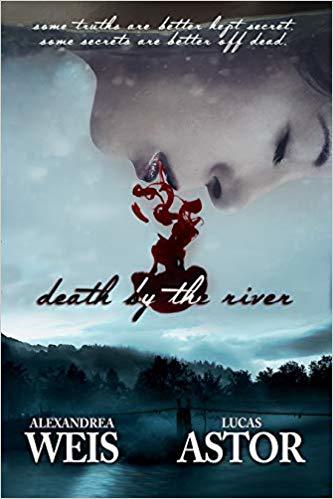 Inspired in part by true events, Death by the River by Alexandrea Weis and Lucas Astor [Vesuvian Books, October 2018] is the kind of skin-crawling, queasy-feeling-in-the-pit-of-your-stomach story that needs to be told and demands to be read.
Twin sisters Leslie and Dawn might share the same dirty blonde hair and blue eyes, but that’s where their similarities end. Leslie is sharp-tongued and quick-witted, dating a sweet boy named Derek from the other side of the tracks that her mother doesn’t approve of. Meanwhile, Dawn is living every small town, Southern girl’s dream: she’s head of the cheer squad and the girlfriend of the high school’s star quarterback—who also happens to be rich, handsome, and with a pedigree that has the whole town eating out of its palm. Unfortunately, all of Dawn’s dreams are about to come crashing down, because Beau Deveraux is not the catch of the generation. He’s a misogynistic, sadistic psychopath with some serious anger issues and a deep hatred of women—but that’s just the sort of thing his father has spent a lot of good money on keeping quiet.
Beau might be Dawn’s boyfriend, but it’s Leslie that is the object of his infatuation. When his plan to woo Leslie by keeping her sister close doesn’t go according to plan, Beau’s frustration finds temporarily—and increasingly violent—reprieve in punishing other women as stand-ins for the one girl “crazy enough” to not be interested (eye roll). Beau’s progression from manipulator, to rapist, to murderer is a journey through psychosis that begins with terrorizing his own mother and ends with more than one dead body floating in the Bogue Falaya River near the ruins of the abandoned St. Francis Seminary where high school students like to party on the weekends and where wild dogs—and a spectral lady in white—are said to only appear when death is near.
This story is, admittedly, not for the faint of heart. It's violent and comes with a trigger warning on sexual assault with scenes in the book that range from subtle verbal abuse to full-on rape. Nevertheless, Weis and Astor capture Deveraux’s deplorable misogyny and psychotic tendencies with a delicate grace that makes the story captivating while still coating you in that icky feeling that doesn’t wash off in the shower. The guy doesn’t have a single redeemable bone in his body, but that doesn’t make him an unrealistic antagonist. In fact, it might be just what makes him feel so damn familiar. Every woman has known a man like Beau Devereaux, and if you haven’t…well, it’s probably because you didn’t know you did. This reviewer certainly has, and everything from Beau’s subtle exploitations to his overt sexism ring painfully true.
Readers may not appreciate Beau’s increasingly erratic descent into madness or the fickleness of teenage fidelity—and there’s nothing about this story that makes it a heartwarming read—but that doesn’t stop Death by the River from being a book that every teenage girl should read. As Weis states in her endnote: Beau’s victims keep quiet for the same reason many young women do today—fear of reprisals, humiliation, peer pressure, and lack of trust in a system that largely ignores or blames them. While this truth doesn’t make Death By the River a pleasant read, it does make it an important one—the type of cautionary tale that keeps you alive by reminding you that sometimes the biggest horrors aren’t the monsters hiding under the bed or the ones that exist somewhere else in the world, but the ones hiding in plain sight. And the best way to beat them? Bring them out in the light and expose them.
Note: Death by the River contains extreme sexual violence and may be triggering. Read with caution.
Synopsis (Goodreads):
Some truths are better kept secret.
Some secrets are better off dead.
Along the banks of the Bogue Falaya River, sits the abandoned St. Francis Seminary. Beneath a canopy of oaks, blocked from prying eyes, the teens of St. Benedict High gather here on Fridays. The rest of the week belongs to school and family—but weekends belong to the river.
And the river belongs to Beau Devereaux.
The only child of a powerful family, Beau can do no wrong. Handsome. Charming. Intelligent. The star quarterback of the football team. The “prince” of St. Benedict is the ultimate catch.
He is also a psychopath.
A dirty family secret buried for years, Beau’s evil grows unchecked. In the shadows of the ruined St. Francis Abbey, he commits unspeakable acts on his victims and ensures their silence with threats and intimidation. Senior year, Beau sets his sights on his girlfriend’s headstrong twin sister, Leslie, who hates him. Everything he wants but cannot have, she will be his ultimate prize.
As the victim toll mounts, it becomes crystal clear that someone has to stop Beau Devereaux.
And that someone will pay with their life.
Preparing for Fall: A Writer's Guide to Life After August
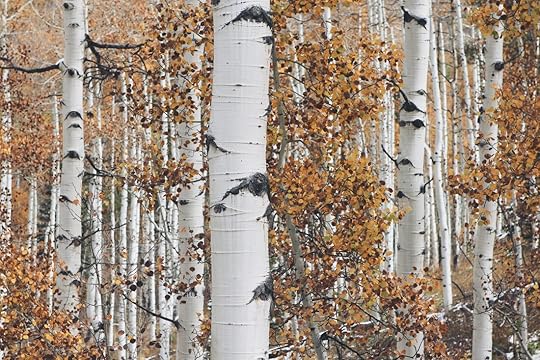 August is a notoriously "dead month" in publishing. Agents, editors, and directors are out of the office (probably with bags of unread manuscripts and galleys and other piles of paperwork); authors are tinkering around with writing schedules, catching up on reading and research, and maybe getting a few words added to their in-progress manuscripts; and normal people are doing whatever it is that normal people do...going on on vacation, living up those last days of summer before school starts back, everyone gets back in the office at work, and life-as-usual resumes.
In the writing world, this August slow period is the calm before the storm. The last four months of the year are insanity--and that's putting it mildly. Never mind the back-to-school rigamarole, the impending holidays, the changing weather that manages to surprise everyone every year, and all that other stuff that goes on in Pumpkin Spice Season. In the publishing world, fall means book awards, fall releases (often the biggest of the year), writing conferences, acquisitions pick back up, everyone starts thinking about the next year, and so on. Whatever side of the publishing world you're on, September means it's back to the grind, writing, reading, editing, promoting, submitting, etc etc etc, and trying to cram as much as possible into the end of the year.
It's busy.
Despite the fact that I dread being uber-busy with the kind of lackluster passion only the truly lazy can pull off, fall is my favorite time of the year. Fall is pumpkins and hot apple cider, changing colors and falling temperatures, darker days and softer clothes. In my house, fall decorations come out, the horror movie schedule is made, spooky new releases I've been dying to read shuffle their way to the top of the reading queue, and everything starts to smell like cinnamon and cloves. I start spending a lot of time in craft stores and clicking around on Pinterest, thinking about stuff I'll never bake and never sew. My daily usage of quotes from movies like Hocus Pocus and The Nightmare Before Christmas become even more than usual and I start stocking up on soup-making supplies. And, once the kid goes back to school and the days start to wane (which, here in Alaska, can't come quick enough after the wretched endless summer daylight hours, ugh), I settle in for the most productive writing time of the year. For me, there is nothing that sets the mood for a more productive writing day than cloudy skies and blissfully grey days. It truly is a harvest--all that idea-percolating and reading and inspiration sowing I've been tending to all summer is finally ready to be harvested, word by word.
So, with that in mind, here are a few of my tips and techniques to getting back to the writing grind after the summer lull. Know when to write, and when not to write. If you're an early morning writer, write in the morning. If you feel more inspired in the evening, write when the sun goes down. Adhering to a writing schedule and scheduling writing time are not the same thing. Make time to write every day, but set yourself up for success by choosing a time (and being flexible) when your writing will be the most productive for you. For example, I tend to write better at night, when distractions are low and the natural darkness lends itself to my stories' settings (usually between 11pm and 3am). But, I set aside time to write blogs and answer emails and other writing tasks first thing in the morning, when I'm sipping coffee and eager to get some checkmarks to start off my day (usually between 7am and noon). I'm useless during the middle of the day (that's when I do stuff like errands and chores and wander around the Internet thinking about anything other than writing), and I'm totally fine with that. Find your own schedule, and don't let anybody tell you that you're doing it wrong. Gauge writing success by story progress, not word count. We've all fallen victim to the standard of counting words instead of enjoying the process of writing them. Yeah, word count is important and there's a pretty strong correlation between approaching a word count goal and completing a draft (and, yes, we all know that Stephen King defines a good writing day as a Six Page Day), but--and we all know it's true--sometimes a mere 100 words of really great stuff is a heck of a lot better than 2000 words that basically suck. Instead of relying on word count to make you feel productive, try to gauge by story progress. If you only write a few hundred words, but spent hours researching something and are in love with what you wrote, then that trumps word vomiting out a whole bunch of yuck that you're going to have to feel bad about writing tomorrow. Or, maybe you didn't write any actual paragraphs, but you plotted out a stellar outline and got some really impressive one-liners stitched in. Cool. Quality is better than quantity, IMHO. Those big word count days will come; there will be days you get so sucked into the story your fingers just can't keep up and you blast out a number of pages that makes even Mr. King blush. But there will also be days when it's like squeezing blood from a stone. Both are okay. Just keep writing. And, finally, find what inspires you. Read. Watch movies. Play with your kid. Go to the library. Wander around outside. Chat with your friends. Lose yourself in Reddit. Whatever it is that you do that 1) relaxes you and 2) inspires you - DO IT. And do it often. Inspiration is like fuel for creativity. Without it, your creativity well runs dry, and that is true for the most novice to the most seasoned of writers. Being a "full-time writer" doesn't mean you're a veritable fount of nonstop ideas and imagination, and it doesn't mean than Name Brand Authors are some kind of creative geniuses, either. Really, it just means you've figured out how to keep your well full and set up good writing habits that help you write. This blog has 99 ways to get inspired to write...there is bound to be at least a few that work for you.
August 11, 2019
4 Actually Fun, Non-Writery Ways for a Writer to Recharge
 Even the most productive writers sometimes need to take some time away from the keyboard (or the notebook!) and refresh those creative juices. For me, the need to recharge always seems to hit at the most inopportune moments (typically when there is a deadline looming). Sometimes that low-battery warning signal flashes daily; other times you might go a whole month(!) before you feel your tank starting to rumble for fuel. BUT, no matter if you're writing your first novel or your fiftieth, or even if you're not writing a novel at all but tackling a short story or a stack of college essays, taking time to recharge your batteries can only help you, and that fantastic new world you're building, stay alive.
Whether you do it between drafts or between projects--or, maybe even between chapters because we've all been there--here are a few of the techniques I use to recharge my writing batteries when I'm feeling a little low on creative juice. (Some of them are even useful to keep up with all those other author-ly duties beyond crafting new stories--bonus!) 1. Go Read Something (and review it, too...maybe) Whether it's a book you loved as a child or another perennial favorite, nothing keeps you ensconced in the written word but free of the writer's headspace like losing yourself in a good book. There's no shortage of research that touts the merits of reading: reading has been associated with a host of benefits from a greater sense of empathy to a decreased risk of dementia. There's even new research that focuses on the benefits of reading in bed, which can reduce stress by up to 68%.
Reading is an incredibly integral part of being a good writer. In fact, you'd be hard pressed to find an author who says anything to the contrary. Being an avid reader is not only great for inspiration, but it allows you to do two very important things:It helps you keep a pulse on the market and see what kind of books are being bought and sold. It's like competitive market research, but more fun (unless you're into that sort of thing). You can register with sites like NetGalley or Edelweiss to see new and upcoming books, which gives you a glimpse into what titles (and authors) might be making their way onto a future bookshelf near you, as well as what might be catching the eye of editors at your wish-list publishing houses.Not only does it keep you informed, but allows you to have an opinion--and something not self-centered to share with your readers: reviews. Share your reviews on books you're reading through places like BookBub, Goodreads, retailer sites, and/or wherever. It's activity from you that's not about you and provides an easy pathway to engage authentically with your readers over something you mutually enjoy--a good book! It's not totally altruistic though: posting reviews and book recommendations are also a valuable way to boost your results in algorithms, according to BookBub. It also makes for great guest blogging content, too!
But, whatever you read, for the love of Coffee please don't read your own book's reviews. Here's what my friend and author Sam Hooker says about that. 2. Go on a Mini-Vision Quest At heart, a vision quest is anything that provides an important connection between the participant, something beyond the self, and--usually--nature. Go for a walk (even a quick one). Research reports that hiking can boost your creativity by up to 75%! I'm particularly fond of beaches, whether of the tropical or more northern variety, so the first place I go when I'm stuck is the water, but maybe you're more of a tree person, or a mountain person, or maybe an animal sanctuary person. Just Go Outside.
Rainy, snowing, or otherwise just don't feel like putting on pants (word.)? Find other visual sources of inspiration. Flip through a magazine or old photo album. Check out stuff online. If you're stuck on a scene or description or image you just can't seem to nail, pictures can help. Pinterest is a great place for that (it's also a great place to find totally unattainable recipes, but that's another story). Binge-watch something on Netflix. Did you know when we "watch" stories an impressive eight different areas of our brain light up? Yeah. Not only is watching stories a great way to generate new ideas, see incredible imagery, and step into worlds other than our own, it also stimulates areas of our brain that deal with language comprehension and memory development, too. Oh, and it also generates oxytocin and, literally, makes us feel good, so, yeah. You're welcome. 3. Get Out of Your Own Head Sometimes we all manage to write ourselves into some dark, weird spot deep within our heads that gets a little too stuffy, even for us. Recharging is as much about boosting up writing battery as it is giving our brains a change to breathe and reboot. And, I get that a lot of writers (maybe most, even) aren't the most social of creatures. Still, introvert or extravert or ambivert, there are a ton of ways to free yourself from your own writing shackles and get out of your own head...just for a little while, I promise.
For the introverts among us, consider indulging in a tangential hobby. Maybe writing is your primary creative gig, but there are tons of other options. I quilt, mess around in my herb garden, and occasionally bake when recharging (my neighbors refer to these random loaves as "Writer's Bread"). Try sketching, or adult coloring, or--hell--Legos if you want. Anything that doesn't involve writing. Just make sure you enjoy the process and don't worry over the results. It might be the clumsiest stitching you've ever done, or the most completely inedible cranberry walnut cake you've ever made (I'm looking at you, Pinterest), but hey, at least it's not a couple hundred wretched words you're just going to end up deleting later and feeling bad about.
For the extroverts, whoever you are, get out there and mingle! Catch up with non-writing friends, call your mom, or chat up the postman or whatever it is you chatty types do. Go out and rekindle relationships! Go to the gym! Fetch groceries at Trader Joe's during prime sampling hours! Do whatever it is that you do, but do it Away. From. The. Screen. Psychologist Susan Pinker says that face-to-face interactions drive both health and longevity, too, so there's that...which I assume is worth people-ing. 4. Do Something GOOD As painfully and grammatical cringeworthy as it is to write: doing things that make you feel good, does you good (yes, even sleeping).
Doing volunteer work is a creative goldmine. Not only are you able to contribute to causes that you feel passionately about (we meet again, oxytocin), but you're doing good for others--whether it's animals, the environment, children, or whatever--and you're lowering stress levels, strengthening communication, and giving your brain something else to prioritize in the meantime, all of which helps you write better later. Now, I'm not saying you have to go out and organize a food drive or build a Habitat for Humanity or anything as lofty as that (unless you want to, and in that case you totally should). Doing something good can be as self-focused as treating yourself to a spa day or maybe helping out your local librarians by shelving books for a few hours. Read a story to a group of people at a nursing home (it's soooo amazing--I once met a 102-years-young arthritic mountain lady who was teaching herself calligraphy--she was easily one of the Top 5 most inspirational people I've ever met). Go pet ALL THE KITTIES at the local animal shelter. Whatever it is that brings you joy and gives joy to others, do it. You can't reap what you don't sow.
Love and creativity are intrinsically intertwined--even Einstein thought so--so you definitely deserve to give yourself the opportunity do something you love and enjoy the benefits doing that thing, so that you can come back refreshed and ready to write your next greatest story!
Book Review: Preacher Sam by Cassondra Windwalker
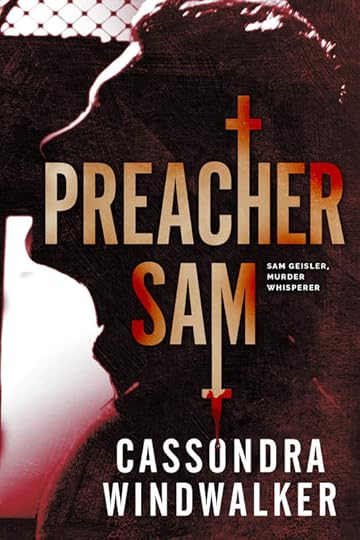 For Sam Geisler, the titular character in Cassondra Windwalker’s new murder-mystery series, Sam Geisler: Murder Whisperer, the path to redemption is one forged through darkness. Preacher Sam, the first installment of Windwalker’s latest experiment in the beautiful, sometimes redeemable depravity of the human experience arrives from Black Spot Books in September 2019, and at one-part cozy murder mystery and one-part psychological thriller, well, the Preacher is ready to hear your confessions.
Sam Geisler used to be an upstanding member of his community—the town pastor, doting husband, supportive brother and uncle, and in possession of an ear you can’t help but whisper secrets into. But despite his good deeds, Sam was crippled by a seedy addiction that ultimately cost him the things he loved most, namely all the previous. Now, he’s starting over—jobless, on the verge of divorce from his estranged wife, and living an intentionally technology-free life as penance while he eeks out the days working in his sister Dan’s café/bookshop, being a stand-in for a father for his young nephew, and toiling away his—er—tensions in late-night gym sessions. But, out of all the punishments Sam is experiencing, perhaps the worst is that which he has imposed upon himself: a hefty dosing of guilt, both about what he cannot change and that which he failed to.
While Sam’s quest for redemption effectively and voluntarily ostracizes from his community, it nonetheless also pivots him into a critical—and somewhat blissfully removed from his previous obligations with the church—role when one of his former parishioners is suddenly arrested for the murder of another. Amanda has seemingly murdered her best friend, and she’s not interested in speaking to anyone about her role in Amy's death—not even her husband, her defense, her children, or even her new pastor. She is, however, willing to speak with Sam, though she even withholds the whole story from him, seeking not absolution but instead forgiveness for a crime it is obvious to everyone she didn’t commit. The only other person she's talked to from behind prison bars is, ironically, Clay, Amy's widowed husband, something that only fuels speculation about what really happened that night in the small fabric store that the two women had owned together. Amanda’s involvement in Amy’s murder is not the most scandalous part of the crime, though, it’s in the greater evil that she was trying to prevent—a ferreting out of darkness that, hopefully, will perhaps help Sam to find his own way to salvation, both in his eyes and everyone else’s.
If you’re ready for more Sam (and Dani, too) there’s a Geisler story called “Feeding the Dog” published in the Roanoke Review as well as another mention for Sam in Cassondra Windwalker’s contribution to the upcoming winter-themed Black Spot Books Anthology, A Midnight Clear (available November 5, 2019).
Synopsis (Goodreads):
No one is more qualified to understand the blackest hearts than a disgraced, porn-addicted former preacher who is still in love with his estranged wife. Floundering for direction and beset by the needs of his well-meaning but aggravating atheist sister and her seven-year-old son, Sam Geisler is trying to put his past behind him when the murder of one of his former parishioners by another drags him back into the world he left behind.
Sam may not be Broadripple’s favorite son, but his peculiar gift for listening has earned him the moniker murderer-whisperer, and the police need his help on what should be an open-and-shut case. Fighting for his marriage, fighting with his sister, and fighting against his own demons, Sam may be the only one who hears what the real murderer is all but shouting—but will it be enough to drive back his own darkness?
July 28, 2019
Review of Hollow Kingdom by Kira Jane Buxton
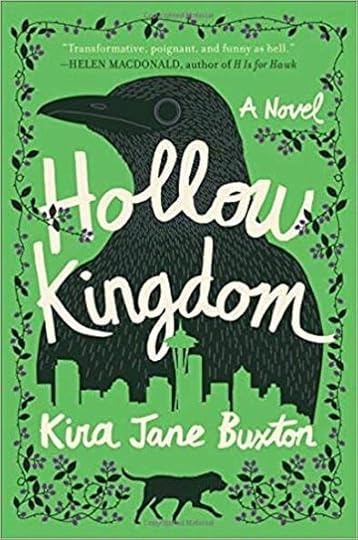 When the end of the world is here, turn to a crow.
The Hollow Kingdom tells the story of a zombie apocalypse (think The Walking Dead, or, perhaps more aptly, 28 Days Later) from the perspective of those left behind—this time not of human survivors, but of animals—wild and domesticated alike—who once again have the chance to thrive…if they can survive the wake of what humanity has left behind. Narrated primary by S.T., a domesticated crow who’s simultaneously naïve about humans and in possession of a brutal sense of humor about them, in Kira Jane Buxton’s debut novel it is animals who are left to remind us about the beauty of a world without the (often disastrous) impact of mankind.
Set in Seattle, S.T. and his canine companion—a dosey bloodhound by the name of Dennis—must venture out into the wild unknown when their owner, Big Jim, succumbs to the technology-induced plague that has wiped out humans. Along the way, S.T. must accept and come to know the part of himself that he has long ignored—the fact that he is a wild-thing himself—and shake free the “clipped wings” of his life as a pet to find his place in a very different new world. Along the way, S.T., Dennis, and a series of pawed, clawed, and tentacled companions come to rediscover a much-changed Seattle, one where the natural order of things has broken free of humanity’s shackles: zoo animals bring the wild to pets who’ve escaped alive; the trees speak with renewed voices (“Life is not the same once you’ve learned just how deeply a tree can feel.”); and we witness firsthand both the glorious and the gory of what happens when Mother Nature is free to flourish without interference. “When the spirit of a species leaves us, it doesn’t go easily.” (The story is also speckled with Seattle landmarks, pop culture references, and some really interesting animal biases. Sorry, penguins.)
Buxton's story about the collapse of mankind—a consequence of our ongoing and generally unhealthy love affair with technology—though based around the extinction of man is not your average zombie story. It's less a story about the end of the world as we know it, as it is a call to liberate ourselves from our own domestication, much like that which S.T. and his companions face. It’s a critical look at the impact the human ego has had on the environment and the cost we’ll leave to future inhabitants, human or otherwise, to pay. And, it’s told from the perspective of a life force we’ve caged as wholly as we’ve caged ourselves, making it a poignant portrayal of the beauty we fail to see around us on an everyday basis as well as a stark glimpse of the future we are already carving out for ourselves.
For all its sharp edges and gritty no-punches-pulled humor, Hollow Kingdom is a remarkably tender story that manages to make you feel just a tiny jealous of the resilient cast of characters that have survived humanities apocalypse. It’s a magnum opus on environmental degradation, an expose on the impact of technological dependency, and—above all else—a testament to the bizarre and indelicate beauty of rewilding. (And, I would be remiss without adding, it is the single most beautiful ode to the infallible and unconditional companionship of dog I might have ever read.)
Synopsis (Goodreads):
S.T., a domesticated crow, is a bird of simple pleasures: hanging out with his owner Big Jim, trading insults with Seattle's wild crows (those idiots), and enjoying the finest food humankind has to offer: Cheetos ®.
Then Big Jim's eyeball falls out of his head, and S.T. starts to feel like something isn't quite right. His most tried-and-true remedies--from beak-delivered beer to the slobbering affection of Big Jim's loyal but dim-witted dog, Dennis--fail to cure Big Jim's debilitating malady. S.T. is left with no choice but to abandon his old life and venture out into a wild and frightening new world with his trusty steed Dennis, where he discovers that the neighbors are devouring each other and the local wildlife is abuzz with rumors of dangerous new predators roaming Seattle. Humanity's extinction has seemingly arrived, and the only one determined to save it is a foul-mouthed crow whose knowledge of the world around him comes from his TV-watching education.
Hollow Kingdom is a humorous, big-hearted, and boundlessly beautiful romp through the apocalypse and the world that comes after, where even a cowardly crow can become a hero.
July 17, 2019
Review of The Night Weaver by Monique Snyman
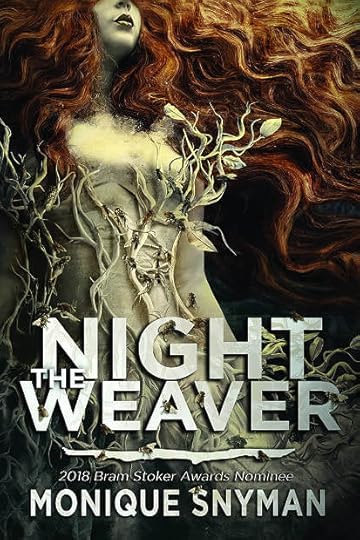 Simultaneously refreshing and deeply unsettling, The Night Weaver weaves together small-town horror with an intricate otherworldly fairytale to deliver a blend of horror and fantasy that captures the essence of young adult terror seasoned with the stuff of grown-up nightmares.
Children in Shadow Grove are going missing—spirited away into the forest by an unknown presence as if lured into the darkness by the Pied Piper himself. But that’s not the worst part. Nobody is looking for them—in fact, nobody seems to even acknowledge they’re missing at all. There’s no missing posters, no search parties, no frantic parents. This isn’t the first time something tragic has happened in Shadow Grove, either. The town's history is peppered with the strange and the horrific, from poisoned school lunches to devastating factory fires—all events that have been glossed over in the town’s history with startlingly bland recall. The only people who seem concerned about the newest calamity are the kids that have not yet been taken.
Rachel Cleary’s family, along with her neighbors the Crenchaws, harbor a clandestine, multigenerational obligation: to guard the perimeter of the forest at the edge of Shadow Grove, maintaining an uneasy peace with the magical beings who live in the forest. It’s not so much a matter about keeping things out of the forest but keeping other naughty nighttime beasties in. And for years, it’s worked—a delicate, if tenuous, balance has been more-or-less kept, even if the occasional shadow does slip through the bounds. But now it seems like something nastier than usual has made its—her— way through the cracks: “There’s something wrong with the forest. It’s waking up.”
In addition to the recent slew of missing children, the adults of Shadow Grove are acting….very Stepford…but Rachel suspects there’s a deeper link to the strange events in Shadow Grove—and this new darkness is not only far from over, but it may be deep enough to swallow the town whole. With the help of her eccentric, elderly neighbor, a Scottish hottie, a childhood friend turned handsome socialite, and a super hot fae prince, Rachel discovers that the dark presence lurking around the edges of the forest of Shadow Grove belongs to the Night Weaver. Modeled off the Black Annis, a blue-faced, iron-clawed, child-gobbling bogeyman in English folklore, the Night Weaver doesn’t only prey upon the flesh of children, but on grief, fear, and pain—making her both the monster under the bed in a scared child’s bedroom and a fitting personification of the dark shadow that lives in the back of the mind of anyone who has experienced tragedy. If Rachel wants to save the missing children and the adults of her Shadow Grove, she’ll have accept that the small town she’s grown up in is anything other than normal, and that sometimes nothing is as it seems—and that the only way to find your way out of the darkness is to move toward the light.
Though at times the story moves perhaps a little too quickly and is not entirely free of YA tropes, The Night Weaver is nonetheless a well-laid dark fantasy and a clear entrance into a new series that will invite in a new generation of horror readers.
Synopsis (Goodreads):
SHADOW GROVE IS A PERFECTLY PLEASANT TOWN...
Shadow Grove isn't a typical town. Bad things happen here. Children disappear, one after the other, and nobody is doing anything about it. Parents don't grieve, missing posters don't line the streets, and the sheriff seems unconcerned.
Seventeen-year-old Rachel Cleary lives on the outskirts of Shadow Grove, next to the creepy forest everyone pretends doesn't exist. Usually the forest is filled with an eerie calm, an unmistakable graveyard solemnity. But the trees have started whispering, forgotten creatures are stirring, and the nights feel darker than ever.
Something is stalking the residents of Shadow Grove, changing them into brain-dead caricatures of themselves. It's up to Rachel to stop the devouring of her hometown before all is destroyed and everyone she loves is forever lost.
July 10, 2019
Review of And Then There Were Dragons by Alcy Leyva
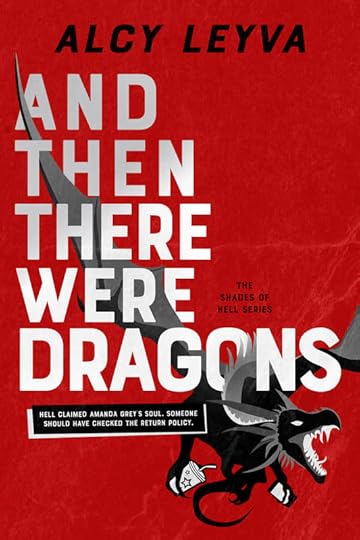 Hell hath no fury like Amanda Grey.
In the second installment of Shades of Hell by Bronx-native Alcy Leyva, Amanda Grey is back and better than ever. Well, sort of. She’s dead now, having died in the apocalypse that she accidentally started, and trapped in Hell. Much to her simmering, rage-filled disappointment disgust, Grey discovers that none of the promises made to her by the angel-ish beings Ada and Bill were honored, no one knows what happened to Donaldson, and Petty has been kidnapped by the devil (?). And, all of this Pales in Comparison to the fact that she just woke up to find none other than Gaffrey Palls—yeah, the guy who tried to kill her and roped her into this whole waking nightmare to begin with—waiting for her on the Other Side.
Oh, and she’s wearing a dress. Being dead really sucks for Amanda Grey.
Luckily, Grey isn’t the sort to let this kind of thing get her down, and waking up in Hell isn’t going to stop her from finishing what she started, either. Asserting her characteristic snark and unyielding pessimism, in And Then There Were Dragons Grey will traverse the Nine Circles of Hell to rescue her sister. Along the way, she'll be joined by unsettling newcomers and many of the characters we love…or hate…or love to hate (whatever): Cain, the sexy, sadistic former-Angel of Death; Palls; even D, the ex-roommate literal-demon boyfriend you never knew you wanted so badly. Grey will take a horrifying trip down Memory Lane, be forced to eat at the underworld version of Olive Garden, read—er—see “tweets” in the most obnoxious way possible, and be stretched far, far outside of her comfort zone, not that she ever had a particularly large one to begin with.
It’s not all fire and brimstone, though, in And Then There Were Dragons. Leyva’s twisted fairytale—and that’s exactly what it is: the most horrible version of Alice in Wonderland you’ve ever read (sorry, Mr. Carroll) with a healthy dose of Dante for good measure—digs back to its roots, providing snapping social commentary on everything from consumerism, social media addiction, and—of course—fake news. After all, a good fairytale is one that doesn’t shy too far away from being a cautionary tale, and Alcy’s version Hell (demons and devils and all other weirdness aside) doesn’t look too much different from the world we are living in today. It’s more Idiocracy meets Zombieland than Orwell’s 1984 and Atwood’s The Handmaid’s Tale, but it’s accurate and frightening AF just the same. Still, its no match for Amanda Grey—a ballsy, socially-anxious chick from Queens who would love nothing more than to be left the hell alone.
The penultimate entry in the series, Dragons is markedly shorter than its predecessor, which is probably a good thing for those readers who might need to take this mixture of gore-and-hilarity in small doses. But, if you thought Leyva outdid himself in bizarro horror and nightmarish versions of reality in And Then There Were Crows, then buckle up, Dollface, because it’s only going to get weirder here on out. After all, the only thing worse than Hell for Grey is what comes next: Heaven.
Synopsis:
For Amanda Grey, stopping the all-encompassing Apocalypse fated to plunge our entire existence into never-ending darkness ... just kind of sucked. Sure, she had managed to capture every demon set loose on New York City. And yes, she ended up thwarting an evil angel's plans to destroy humanity. But she also lost her sister, her apartment, and—oh yeah—Amanda Grey totally died and got her soul banished to hell as a result.Luckily, she's not the type to take that kind of thing lying down.AND THEN THERE WERE DRAGONS thrusts Amanda Grey into a whole new world of weird as she ventures out into the fiery wastelands, decrepit cities, and Olive Gardens of the afterlife in search of her sister and her own redemption. As the penultimate entry in the Shades of Hell Series, Amanda will be coming face-to-face with the truth behind the demon Shades, as well as a destiny she sure as hell didn't ask for.
Review of And Then There Were Crows by Alcy Leyva
Hell hath no fury like Amanda Grey.In the second installment of Shades of Hell by Bronx-native Alcy Leyva, Amanda Grey is back and better than ever. Well, sort of. She’s dead now, having died in the apocalypse that she accidentally started, and trapped in Hell. Much to her simmering, rage-filled disappointment disgust, Grey discovers that none of the promises made to her by the angel-ish beings Ada and Bill were honored, no one knows what happened to Donaldson, and Petty has been kidnapped by the devil (?). And, all of this Pales in Comparison to the fact that she just woke up to find none other than Gaffrey Palls—yeah, the guy who tried to kill her and roped her into this whole waking nightmare to begin with—waiting for her on the Other Side.
Oh, and she’s wearing a dress. Being dead really sucks for Amanda Grey.
Luckily, Grey isn’t the sort to let this kind of thing get her down, and waking up in Hell isn’t going to stop her from finishing what she started, either. Asserting her characteristic snark and unyielding pessimism, in And Then There Were Dragons Grey will traverse the Nine Circles of Hell to rescue her sister. Along the way, she'll be joined by unsettling newcomers and many of the characters we love…or hate…or love to hate (whatever): Cain, the sexy, sadistic former-Angel of Death; Palls; even D, the ex-roommate literal-demon boyfriend you never knew you wanted so badly. Grey will take a horrifying trip down Memory Lane, be forced to eat at the underworld version of Olive Garden, read—er—see “tweets” in the most obnoxious way possible, and be stretched far, far outside of her comfort zone, not that she ever had a particularly large one to begin with.
It’s not all fire and brimstone, though, in And Then There Were Dragons. Leyva’s twisted fairytale—and that’s exactly what it is: the most horrible version of Alice in Wonderland you’ve ever read (sorry, Mr. Carroll) with a healthy dose of Dante for good measure—digs back to its roots, providing snapping social commentary on everything from consumerism, social media addiction, and—of course—fake news. After all, a good fairytale is one that doesn’t shy too far away from being a cautionary tale, and Alcy’s version Hell (demons and devils and all other weirdness aside) doesn’t look too much different from the world we are living in today. It’s more Idiocracy meets Zombieland than Orwell’s 1984 and Atwood’s The Handmaid’s Tale, but it’s accurate and frightening AF just the same. Still, its no match for Amanda Grey—a ballsy, socially-anxious chick from Queens who would love nothing more than to be left the hell alone.
The penultimate entry in the series, Dragons is markedly shorter than its predecessor, which is probably a good thing for those readers who might need to take this mixture of gore-and-hilarity in small doses. But, if you thought Leyva outdid himself in bizarro horror and nightmarish versions of reality in And Then There Were Crows, then buckle up, Dollface, because it’s only going to get weirder here on out. After all, the only thing worse than Hell for Grey is what comes next: Heaven.
Synopsis:
For Amanda Grey, stopping the all-encompassing Apocalypse fated to plunge our entire existence into never-ending darkness ... just kind of sucked. Sure, she had managed to capture every demon set loose on New York City. And yes, she ended up thwarting an evil angel's plans to destroy humanity. But she also lost her sister, her apartment, and—oh yeah—Amanda Grey totally died and got her soul banished to hell as a result.Luckily, she's not the type to take that kind of thing lying down.AND THEN THERE WERE DRAGONS thrusts Amanda Grey into a whole new world of weird as she ventures out into the fiery wastelands, decrepit cities, and Olive Gardens of the afterlife in search of her sister and her own redemption. As the penultimate entry in the Shades of Hell Series, Amanda will be coming face-to-face with the truth behind the demon Shades, as well as a destiny she sure as hell didn't ask for.
Seven Jane's Blog
- Seven Jane's profile
- 91 followers
Seven Jane isn't a Goodreads Author
(yet),
but they
do have a blog,
so here are some recent posts imported from
their feed.

