
Mark Todd's Blog, page 11
October 28, 2013
Silverville Saga #3 Cover Reveal, and our article on writing a stand-alone or multi-book series
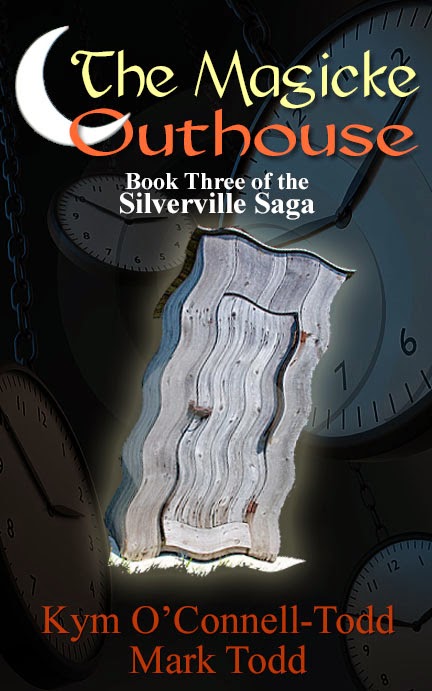 At last! Finally!
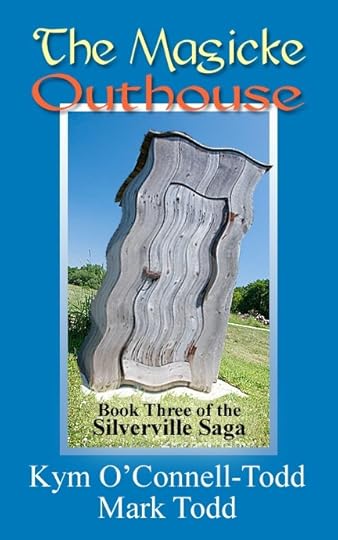
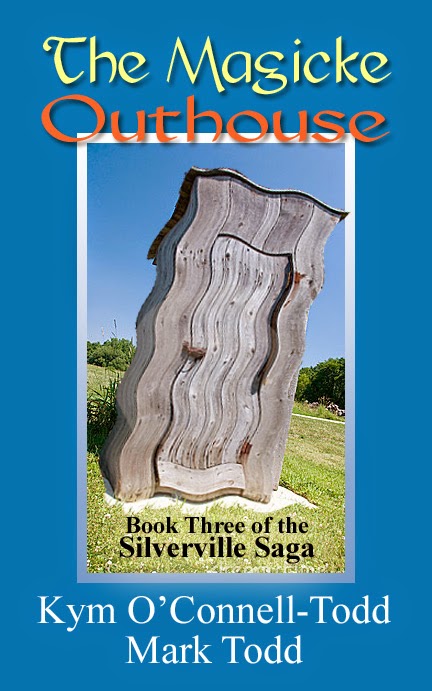
We're sharing with friends and fans the final cover for our forthcoming Silverville Saga #3, THE MAGICKE OUTHOUSE.
Kym designed the cover in her continuing role of book cover designer for our publisher, Raspberry Creek Books. (Be sure to check out their new Website.)
The book is set to release the third week of November, and during the month we'll be stopping by blogger friends' digs to share news about this latest addition to the Silverville series:
Watch for news of our visit to Ellie Garrett's site next week, Nov. 6, as she features us on her Speculative Fiction Writers Spotlight.We'll visit ever-generous blogger, writer, and friend Julie Leuk mid-month to share tidbits and backstory.And we'll make an appearance at Ninja Captain Alex Cavanaugh's blog on Nov. 22, just as the book releases.
Several of our advance readers have told us this is the best book yet -- Whew! We'd hate to think we'd already peaked. But more on their comments as the month progresses.
And stay tuned for a schedule of our reading tour (including a surprise appearance!)
* * *Kym-n-Mark are also excited to be guest contributors this month to the Rocky Mountain Fiction Writers' new blog. We're in the final installment of a three-part article with tips for writers on the subject of...
"The Blank Spaces in our Stories"
– The messages writers send readers between the words
RMFW's blog will post the third and final installment on Tuesday, Oct. 29, called
Part 3 – The Blank Spaces between Books: Why authors conclude a stand-alone novel or close one story's arc as part of a multi-book series
 at https://www.rmfw.org/blog/


October 22, 2013
Why authors break for new chapters, new scenes
 Kym-n-Mark are excited to be guest contributors this month to the Rocky Mountain Fiction Writers' new blog. We're in the middle of a three-part article with tips for writers on the subject of...
"The Blank Spaces in our Stories"
– The messages writers send readers between the words Here's the intro to the series: As writers, we all spend lots of time thinking about narrative craft – plot, character, setting, dialog – but what about the blank spaces between all those words?Readers don’t give much thought to those spaces – unless they’re missing. So it’s up to writers to fill the blanks with implied meaning. And it’s part of the unwritten “contract” we create every time we ask a reader to invest storytime with us.Over the next three posts, we’ll remind fellow writers of the messages they intuitively (and, we hope, intentionally) include in the blank spaces of any good story. It starts at the sentence and paragraph levels, but it builds as we accumulate the sections and chapters of a good tale, and it even plays a role if we decide to expand our universe into multi-book series.* * *RMFW's blog will post the second installment on Thursday, Oct. 24, calledPart 2 – Why we break to new scenes or new chapters: The blank spaces between narrative sections
Visit their fab site and our second installment at
at https://www.rmfw.org/blog/
October 14, 2013
The Blank Spaces in [y]our Stories
 Kym-n-Mark are excited to be guest contributors this month to the Rocky Mountain Fiction Writers' new blog. We'll be sharing a three-part article with tips for writers on the subject of...
"The Blank Spaces in our Stories"
– The messages writers send readers between the words Here's the intro to the series: As writers, we all spend lots of time thinking about narrative craft – plot, character, setting, dialog – but what about the blank spaces between all those words?Readers don’t give much thought to those spaces – unless they’re missing. So it’s up to writers to fill the blanks with implied meaning. And it’s part of the unwritten “contract” we create every time we ask a reader to invest storytime with us.Over the next three posts, we’ll remind fellow writers of the messages they intuitively (and, we hope, intentionally) include in the blank spaces of any good story. It starts at the sentence and paragraph levels, but it builds as we accumulate the sections and chapters of a good tale, and it even plays a role if we decide to expand our universe into multi-book series.* * *RMFW's blog will post the first installment on Tuesday, Oct. 15, called“Half-Halts and Full-Stops”: Why we add the breaks between sentences and paragraphs
Visit their fab site and our first installment at
at https://www.rmfw.org/blog/And all month, we'll be previewing info on the forthcoming release of Silverville Saga #3, The Magicke Outhouse, with the cover reveal later this month!
September 28, 2013
Character Flaws
 To visit other IWSG postings, click hereOkay, let's not bury the lead here -- we're beginning to suspect we must be shallow people. And the title for this post may be a triple-entendre. Let's just see...
* * *But first, yes, this is the Insecure Writer's Support Group blog hop, hosted by our incomparable Ninja Captain, Alex J. Cavanaugh (thanks, Cap'n!), postings shared on the first Wednesday of every month by a host of conspiratorial scribblers:
"Purpose: To share and encourage. Writers can express doubts and concerns without fear of appearing foolish or weak. Those who have been through the fire can offer assistance and guidance. It’s a safe haven for insecure writers of all kinds!"
* * *Now, back to the topic at hand -- character flaws.
We're currently reading through the comments and corrections submitted by valiant readers whom we solicited to read the beta draft of the latest in our Silverville Saga series, The Magicke Outhouse, forthcoming next month from our publisher, if all goes well.
Fortunately for us, our beta readers are telling us what we need -- rather than what we want -- to hear. They better have; that's what they're being paid to do. (Okay, not in cash but in gratitude or favors or dinner or their own masochistic self-fulfillment.)
Their comments remind us how we always seem to fall for broken people and broken characters. Ironically, we always begin by trying to tell the story of an admirable protagonist, someone with substance and worth, but we always end by becoming seduced by the ones who need the most help. We can't help it -- their character flaws are more interesting and more fun to write about.
 In the first book in the series, Little Greed Men, Billy Noble, who's anything but, emerges as our protagonist: a con man who fears commitment but becomes trapped into helping a town he doesn't care about. The second book, All Plucked Up, centers on the story of Pleasance Pantiwycke, a deliciously unscrupulous little gal who can't seem to trust the right people. And now the third book is on the verge of deadlines and, yep, we fell in love with April Schauers, an early twentysomething with wild tales and wilder ways who overcompensates because she fears no one will take her seriously otherwise.
 In each of these scenarios, our major characters enter relationships that have the potential to help them overcome their flaws and reach toward a new level of maturity and responsibility. And for every book, our beta readers have urged us to develop these characters in ways that let them grow and overcome their basic (and we think, endearing) natures.
The problem is that we like them the way they are. We don't want them to outgrow their flaws! Maybe it's our own co-writerly character flaw shining through the gauze of fiction. (Remember when we said we thought we may be shallow people?)
We're beginning to suspect we gravitate to writing comedies the way some folks try to laugh off the occasional and inevitable faux pas (or is that just us?) It's a marvelous strategy to keep a little distance even between friends.
 Yes, yes, we always take our beta readers' advice and go back and develop their relationships, redeem them, let them outgrow us -- well, just a little. And we'll no doubt do the same for quirky, odd little April & company before the next book hits the streets.
But c'mon -- is it really a character flaw to like flawed characters, or are the characters we write just flawed?
(See, we told you there might be a triple-entendre hiding in there.)
September 14, 2013
Gearing up for Silverville Saga, #3!
So, we've finished the third book in the Silverville Saga series -- at least a draft we like -- but now the real
 work begins: Getting ready for its release.
In about a month, we'll reveal the cover, and looks like we'll likely meet our publisher's schedule for an intended street date sometime before Thanksgiving. In the meantime, we're lining up reading gigs, blog stops, and promos.
And we've sent the ms out to reviewers for blurbs and also placed it in the hands of beta readers. (The residual typos and missing words have long since become invisible to us.) It's up to all these folks to find the gaps that creeped in when we revised, tightened, or expanded the flow of the story.
In the meantime, we want to share with fans and friends the names and backgrounds of those who have agreed turn turn critical eyes on our paranormal comedy.
In alphabetical order, here are our editorial heroes:
SF author Alex J. Cavanaugh (the beloved Ninja Captain in the blog-o-sphere), Amazon bestselling author of the trilogy CassaStar, CassaFire, and the newly released CassaStorm. A guitarist, Web designer, and technical editor, Alex worked for years in adult literacy. But we like him because he’s a totally cool guy – and because he shares our love of all things Preston and Child.
Charlie Craig, a long-time television writer and executive producer, who's served as showrunner on six network and cable primetime dramas, including Eureka (Syfi) and Traveler (ABC), a writer and supervising producer for Fox’s The X-Files, and a writer/producer for ABC’s Invasion and ABC Family's Pretty Little Liars. He is currently supervising a pilot for MTV and teaching television writing at the UCLA Extension Writers' Program.
Stacia Deutsch, who's made the New York Times Best Seller list for the movie novelizations of Cloudy with a Chance of Meatballs and The Smurfs. Her newest releases are Mean Ghouls from Scholastic and Batman: The Dark Knight Legend Movie Novel from Harper Collins. She’s the author of more than fifty children's books and the eight-book, award-winning chapter book series Blast to the Past. Her resume includes Nancy Drew and the Clue Crew and The Boxcar Children.
T.L. Livermore, an extraordinary copy editor and former journalist whom we've relied upon for years, and a beta reader for the first book in the Silverville Saga, Little Greed Men (we've only just recovered from his relentless and exacting comments. :) )
Julie Luek, blogger extraordinaire, a prolific freelance writer, a regular contributor to the nationally popular column, She Writes, and co-editor of the Rocky Mountain Fiction Writers' blog. Julie is also our fab friend and blog-o-sphere mentor!
Zac Thompson, a clever and talented writer and musician who did a super job as one of the beta readers for Silverville Saga #2, All Plucked Up. He's also fiction co-editor for the edgy and excellent online lit journal BloodLotus.
We're also fortunate to have a strong copyeditor in our publisher, Larry Meredith who, for years, operated a media and publicity business before going on to become head of public relations for Western State Colorado University and then a district library director. Now, he directs the graduate Certificate in Publishing program for the university and at the same time wrangles a head-strong herd of authors for his own small-press house, Rapsberry Creek Books.
We also got an offer from one of Mark's former students (one of his best, he says), Arkadea Krabacher, to give the ms a close line-edit. (Now we'll see how good Mark is at teaching those skills!)
We may write in the thick of many things ourselves, but we only get along with help from our friends, to whom we're so grateful that they'd be willing to take time away from their own busy pursuits to lend us valuable time and critical eyes!
Thank you all!
And so the next stage of the writing/publishing journey begins...
 work begins: Getting ready for its release.
In about a month, we'll reveal the cover, and looks like we'll likely meet our publisher's schedule for an intended street date sometime before Thanksgiving. In the meantime, we're lining up reading gigs, blog stops, and promos.
And we've sent the ms out to reviewers for blurbs and also placed it in the hands of beta readers. (The residual typos and missing words have long since become invisible to us.) It's up to all these folks to find the gaps that creeped in when we revised, tightened, or expanded the flow of the story.
In the meantime, we want to share with fans and friends the names and backgrounds of those who have agreed turn turn critical eyes on our paranormal comedy.
In alphabetical order, here are our editorial heroes:
SF author Alex J. Cavanaugh (the beloved Ninja Captain in the blog-o-sphere), Amazon bestselling author of the trilogy CassaStar, CassaFire, and the newly released CassaStorm. A guitarist, Web designer, and technical editor, Alex worked for years in adult literacy. But we like him because he’s a totally cool guy – and because he shares our love of all things Preston and Child.
Charlie Craig, a long-time television writer and executive producer, who's served as showrunner on six network and cable primetime dramas, including Eureka (Syfi) and Traveler (ABC), a writer and supervising producer for Fox’s The X-Files, and a writer/producer for ABC’s Invasion and ABC Family's Pretty Little Liars. He is currently supervising a pilot for MTV and teaching television writing at the UCLA Extension Writers' Program.
Stacia Deutsch, who's made the New York Times Best Seller list for the movie novelizations of Cloudy with a Chance of Meatballs and The Smurfs. Her newest releases are Mean Ghouls from Scholastic and Batman: The Dark Knight Legend Movie Novel from Harper Collins. She’s the author of more than fifty children's books and the eight-book, award-winning chapter book series Blast to the Past. Her resume includes Nancy Drew and the Clue Crew and The Boxcar Children.
T.L. Livermore, an extraordinary copy editor and former journalist whom we've relied upon for years, and a beta reader for the first book in the Silverville Saga, Little Greed Men (we've only just recovered from his relentless and exacting comments. :) )
Julie Luek, blogger extraordinaire, a prolific freelance writer, a regular contributor to the nationally popular column, She Writes, and co-editor of the Rocky Mountain Fiction Writers' blog. Julie is also our fab friend and blog-o-sphere mentor!
Zac Thompson, a clever and talented writer and musician who did a super job as one of the beta readers for Silverville Saga #2, All Plucked Up. He's also fiction co-editor for the edgy and excellent online lit journal BloodLotus.
We're also fortunate to have a strong copyeditor in our publisher, Larry Meredith who, for years, operated a media and publicity business before going on to become head of public relations for Western State Colorado University and then a district library director. Now, he directs the graduate Certificate in Publishing program for the university and at the same time wrangles a head-strong herd of authors for his own small-press house, Rapsberry Creek Books.
We also got an offer from one of Mark's former students (one of his best, he says), Arkadea Krabacher, to give the ms a close line-edit. (Now we'll see how good Mark is at teaching those skills!)
We may write in the thick of many things ourselves, but we only get along with help from our friends, to whom we're so grateful that they'd be willing to take time away from their own busy pursuits to lend us valuable time and critical eyes!
Thank you all!
And so the next stage of the writing/publishing journey begins...
September 3, 2013
The Hardest Book to Sell
To visit other IWSG postings, click hereWelcome to the Insecure Writer's Support Group blog hop, hosted by our incomparable Ninja Captain, Alex J. Cavanaugh (thanks, Cap'n!), postings shared on the first Wednesday of every month: And by the way, today is the second anniversary of this hop!"Purpose: To share and encourage. Writers can express doubts and concerns without fear of appearing foolish or weak. Those who have been through the fire can offer assistance and guidance. It’s a safe haven for insecure writers of all kinds!"
* * *
A couple of weeks ago, we finished writing the third book in our Silverville Saga series, The Magicke Outhouse. Or rather, we finished a draft we finally like.
We're giving it one more proof (although we don't know why we bother -- the remaining typos, errors, and missing words are all invisible to us by now) before we send it out to trusted beta readers, those trusted folks who'll tell us the truth about what can make this a better book.
But the pieces are falling into place: the cover design is getting close, the blurbs are coming in over the next six weeks, our publisher has a release date, we're starting to set up readings, blog tours, and, and ... we'll soon be thinking about the next project.
And that's where we're having a bit of a crisis. No, not because we don't have a next project (for starters, the Silverville Saga has at least two more tales to tell), but because we may have a chance to write a nonfiction book that might actually make some money.
It started as an off-hand comment to our publisher over dinner a few weeks back, when we mentioned a nonfiction idea we'd considered writing but had never pursued. The next day, the publisher contacted us and said he'd like to do that book. In fact, perhaps before the next Silverville installment.
Can't say we blame him -- after all, we're sure he wouldn't mind a book with wider appeal than our normal paranormal adventure-comedies. The notion shouldn't give us pause either: We both began as newspaper and magazine writers and later branched out to the more lucrative field of service journalism (read: promo and PR masquerading as legit news. Yep, sold out our souls long ago.)
Still, it's a step backwards from literary (okay, okay, quasi-literary) writing. Maybe our horses have gotten too high, and this is the chance to get closer to the ground again. Maybe it's just pre-press jitters as we prepare to set another story loose on the world.
A good friend of ours -- one who's sold to the Big Five and who's hit the NYT bestseller's list -- once told us he thought the hardest book to sell was always the next one.
We're not really complaining because there's been plenty of times when we didn't know if our writing would even find a next publisher. These days, that side of the business is coming easier (hope we didn't just jinx ourselves!) So maybe the real sales pitch isn't to the publisher.
This time, the hardest book to sell may be to ourselves.
August 17, 2013
Getting f2f as a writer
 (A solo post by Mark)
 I tell my writing students they need to think of writing as a business if they want to succeed. Sure, there's the writing part of the business -- the creative, imaginative expression of plot, character, setting, of snappy dialog and themes that capture the hearts of readers.
But that's a given. That's why writers write.
Just as important for the aspiring author, I tell my students, is taking yourself seriously as writers. That means managing your routine and resources so you save time for such things as publication research (doing your homework to make sure you're targeting the right pubs), organized and methodical submission/rejection tracking, and developing (or maintaining and growing) a platform through social media and networking.
Once you start having publishing success, the business aspect of becoming a writer increases by at least a magnitude. Regardless of the size of the press -- from Indy Pub'ing to Small-Press to the Big Five -- you're now expected to take a proactive role in publicity and promotion through readings, blog tours, pithy tweats, Goodreads Giveaways, and anything else you can do to raise your visibility.
But that's not all.
I used to tell my students they needed to apportion money for query and ms postage/returns. Nowadays, e-subs have virtually eliminated such expense. A writers' ability to project an e-presence has made it
possible to develop valuable networking relationships regardless of geographical distance.
Yet e-contacts can only take you so far. I still tell students and other aspiring writers they should also consider attending at least one -- preferably more -- professional trade conferences each year.
 Yes, they represent an extra expense, but writers' cons are an investment worth considering, considered from the perspective of your writing as a business. They're tax deductible, and they add to the credibility of your serious intent.
 I'm reminded of their value every summer because I organize and stage an annual writing conference. Ours is intended mostly for aspiring authors, but we try to bring in enough big dogs to draw attendees from the ranks of published authors as well. Although I find my own time consumed in mostly oiling the on-the-ground conference machinery, I still manage to attend several sessions and most of our keynote addresses and readings.
Just as important, anyone who attends such events will tell you many of the most important "events" occur between the formal presentations, sessions, and workshops. Not to mention the chance to sign up for a pitch or bend the ear of a publisher or agent face to face.
Despite my own ringmaster duties, I always manage to pick up important new trends, pocket a useful business card or two, and steal minutes to recharge by engaging in conversations with other writers and industry professionals. After all, everyone there shares the same passion for both the act and business of writing.
That sort of interpersonal communication is nigh impossible to duplicate in an entirely online environment.
If you're serious about your trade as a writer, think about budgeting some time and, yes, some money to attend a writing conference, even a retreat, as regularly as you can. Chances are, there's a writers con not too far from home.
Check out the pages of one of the excellent trade mags (and trade mag subscriptions should be on that list of biz expenses as well) or online resources for events in your area. Most of these pubs include listings just after the first of the year for summer programming, providing you with a chance to shop around for one that fits your particular areas of interest -- maybe even plan a vacation for you and the family in the conference environs close to the same time.
Yes, take your writing time seriously, but make sure you're looking at all the options that help you take yourself seriously as a writer as well.
August 3, 2013
A Cautionary Tale
To visit other IWSG postings, click here(A solo post by Mark of Kym-n-Mark)Welcome to the Insecure Writer's Support Group blog hop, hosted by our incomparable Ninja Captain, Alex J. Cavanaugh (thanks, Cap'n!), hop postings shared on the first Wednesday of every month:
"Purpose: To share and encourage. Writers can express doubts and concerns without fear of appearing foolish or weak. Those who have been through the fire can offer assistance and guidance. It’s a safe haven for insecure writers of all kinds!"
* * *
Many of our blog friends know I make my living as a writing teacher. Part of that job description consists of sharing with students a list of what *not* to do, and usually drawn from the annals of what I've done wrong along the way. It's a long list.
One I've yet to share with students is how I didn't get my first book published.
At the time, I already had several years under my belt as a newspaper staff writer, learning to write to deadline and to column-inch length. I'd also had some success doing spec articles for magazines. But what I really wanted was to try my hand at a longer work.
The result was a memoir about my growing up in a family mortuary business and then working for 13 years (yes, I know, an ironic number) as a reluctant mortician after my dad had a heart attack. Wait, there's more: the book was a dark comedy à la Six Feet Under -- still popular at the time but nearing the end of its first-run seasons.
I'd spent a couple years teaching students how to write an engaging query letter, and here was my chance to do instead of just teach. So I wrote this killer query and fired off my first volley of letters to ten targeted agents, all the while researching and preparing a second volley of queries.
Imagine my surprise when seven of the first ten agents requested the manuscript. Huh, guess I'd been giving
my students the right stuff after all. And I began to worry which agent I should accept.
Turned out, no worry there. One by one, they each sent their regrets over the next six months while nonetheless wishing me success. With some else.
 Okay, here comes the cautionary tale part: I had a good idea, the timing was right, and most of the agents told me they liked my writing style. But each in their own way -- sometimes with finesse, sometimes ... not so much -- told me the ms wasn't ready. It needed more shape, they told me, more arc, more of a controlling theme. It read like an unrelated series of anecdotes when there was clearly a larger story.
In a phrase, it wasn't ready to submit.
Crestfallen, I put the ms in a drawer, where it rightly sat for almost ten years. And I've tried never to make the same mistake:
Don't send out that ms unless you know it's really, really, really, REALLY ready. Getting in the door is hard enough and, if you're lucky enough to get an invitation to go inside, try to make sure you're bearing gifts that let you stay.
There might be a silver lining, as it turns out. Last year, and five published books later, I had an editor ask me if I had anything he might look at. At first, I said nothing (really, really, really) ready. Then I told him I had a project I'd set aside but wanted to revisit. When I told him about the mortuary memoir, he invited me to send it his way when I thought it was worth looking at. I pulled out the ms again, spent several months revising and shaping (those agents were right, and on every count), and then sent it on.
Don't know the outcome yet, and probably won't until the end of this year.
And if that project never makes it into print, at least it still makes a great cautionary tale to share with my students.
Think I'll wait, though, to see how the story ends.
July 20, 2013
Silverville - Where Anything Is Possible
Silverville -- it's a weird world, and that's why we love it.
The place where the whole series takes place operates under its own set of alternative rules. After all, the
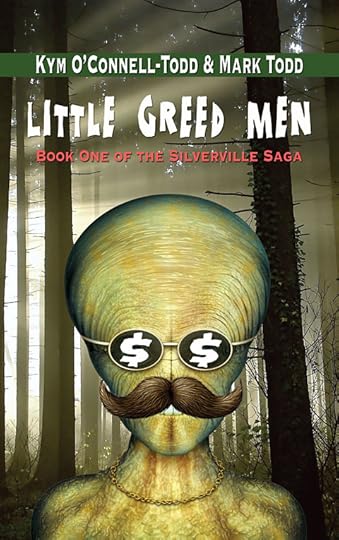 disclaimer on every book cover reminds readers, "Silverville - Where Anything Is Possible."
Whatever explanation we're willing to supply about these rules (and yes, we know what they are -- at least, we know most of them) we always try to put into the mouths of questionable or easily discredited characters. For example, in Little Greed Men, we use Brother Martin, the religious nut from the Church of the Holy Grail, to reveal that odd events in Silverville may have something to do with all the converging ley lines.
But while you wait to gather those character revelations in the various books, here's a quick guide to some of the major rules we follow:
Anything is possible.
Of course it is! But that's not our fault; it's because of those darn ley lines. So we can start with a premise like "What if Silverville drew the attention of ET?" (Book One, Little Greed Men); or "What if a triple-prong curse launched telekinetic bread, inspired singing Tourette's, and stirred chicken festishes in the local denizens?" (Book Two, All Plucked Up); or "What if locals discovered a time portal just outside the city limits?" (Book Three, The Magicke Outhouse); or "What if a rift in dimensions drew the Spirit World down on Silverville?" (Book Four: Colorado Boo(m) Town)Coincidence is Queen.
It's simpleton Howard Beacon who reveals Silverville's affinity for synchonicity -- Carl Jung's notion of "meaningful coincidence" -- and we decided to make that concept an underlying principle for all the books. It's why Earl Bob Jackson, so unwittingly instrumental in Denton Fine's childhood tragedy, ends up going to Silverville in Little Greed Men. It's how come The Three Fools search for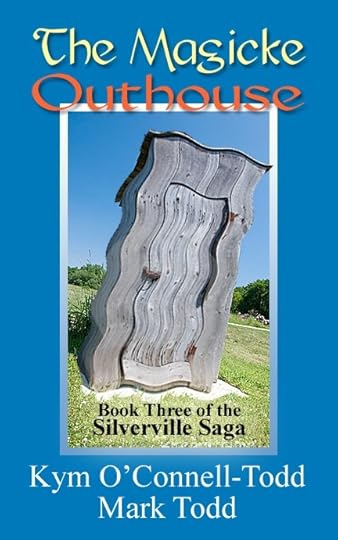 protagonist Pleasance Pantiwycke but only encounter her when they randomly call a sex-phone service in All Plucked Up. Dark humor is required.
We can't help it -- it's the way we write. When Little Greed Men's Howard receives an important message from aliens for all the world, he can't remember what it is and so he has to improvise. Our humor is the reason April Schauers inadvertently accompanies a paying time-traveler into the past in The Magicke Outhouse, only to return to the present with a zombie instead of the dignitary she started with. And it only seemed fitting that we should give ourselves cameo roles in All Plucked Up as failed authors who once wrote a story about Silverville.Expect the unexpected along the way and at the end.
We love twists and reversals in what we read, and we try to emulate that same experience in our own writings. If you've not yet read Book One, we beg you, please, please don't read the last page first! We save the best twist for the very last sentence of the novel, and it changes everything you thought you knew about a certain key rivalry that develops through the course of the story. We do something similar in Book Two, but exponentially so, since the last 20 pages or so work hard to pretzel the story through several unexpected twists that make the characters and (we hope) readers just a bit dizzy.(Hope you caught we revealed the working title and premise for Book Four in the rules above.)
We can hardly believe that we almost didn't take the detour that first led us to Silverville. Fortunately, we've learned our lesson: It's those spontaneous stops along the journey that lead to the real spice of life. It's certainly provided the seasoning we needed to settle in and savor what keeps us coming back. (Oh my, did we just mix our metaphors?)
And, of course, we hope these inexplicable rules encourage Silverville fans to plan their next reading vacation in this little ol' Colorado mountain town, where anything is possible.
The place where the whole series takes place operates under its own set of alternative rules. After all, the
 disclaimer on every book cover reminds readers, "Silverville - Where Anything Is Possible."
Whatever explanation we're willing to supply about these rules (and yes, we know what they are -- at least, we know most of them) we always try to put into the mouths of questionable or easily discredited characters. For example, in Little Greed Men, we use Brother Martin, the religious nut from the Church of the Holy Grail, to reveal that odd events in Silverville may have something to do with all the converging ley lines.
But while you wait to gather those character revelations in the various books, here's a quick guide to some of the major rules we follow:
Anything is possible.
Of course it is! But that's not our fault; it's because of those darn ley lines. So we can start with a
 premise like "What if Silverville drew the attention of ET?" (Book One, Little Greed Men); or "What if a triple-prong curse launched telekinetic bread, inspired singing Tourette's, and stirred chicken festishes in the local denizens?" (Book Two, All Plucked Up); or "What if locals discovered a time portal just outside the city limits?" (Book Three, The Magicke Outhouse); or "What if a rift in dimensions drew the Spirit World down on Silverville?" (Book Four: Colorado Boo(m) Town)Coincidence is Queen.
It's simpleton Howard Beacon who reveals Silverville's affinity for synchonicity -- Carl Jung's notion of "meaningful coincidence" -- and we decided to make that concept an underlying principle for all the books. It's why Earl Bob Jackson, so unwittingly instrumental in Denton Fine's childhood tragedy, ends up going to Silverville in Little Greed Men. It's how come The Three Fools search for
 protagonist Pleasance Pantiwycke but only encounter her when they randomly call a sex-phone service in All Plucked Up. Dark humor is required.
We can't help it -- it's the way we write. When Little Greed Men's Howard receives an important message from aliens for all the world, he can't remember what it is and so he has to improvise. Our humor is the reason April Schauers inadvertently accompanies a paying time-traveler into the past in The Magicke Outhouse, only to return to the present with a zombie instead of the dignitary she started with. And it only seemed fitting that we should give ourselves cameo roles in All Plucked Up as failed authors who once wrote a story about Silverville.Expect the unexpected along the way and at the end.
We love twists and reversals in what we read, and we try to emulate that same experience in our own writings. If you've not yet read Book One, we beg you, please, please don't read the last page first! We save the best twist for the very last sentence of the novel, and it changes everything you thought
 you knew about a certain key rivalry that develops through the course of the story. We do something similar in Book Two, but exponentially so, since the last 20 pages or so work hard to pretzel the story through several unexpected twists that make the characters and (we hope) readers just a bit dizzy.(Hope you caught we revealed the working title and premise for Book Four in the rules above.)
We can hardly believe that we almost didn't take the detour that first led us to Silverville. Fortunately, we've learned our lesson: It's those spontaneous stops along the journey that lead to the real spice of life. It's certainly provided the seasoning we needed to settle in and savor what keeps us coming back. (Oh my, did we just mix our metaphors?)
And, of course, we hope these inexplicable rules encourage Silverville fans to plan their next reading vacation in this little ol' Colorado mountain town, where anything is possible.
July 6, 2013
A Sneak-Peek from forthcoming Silverville Saga, #3
This week, we're pleased to share a scene from forthcoming Silverville Saga Book #3: The Magicke Outhouse.
 Most folks envision a time portal as something futuristic, flashy, and high tech. But most folks haven't visited Silverville, where anything is possible. Might have something to do with all the intersecting ley lines over the locale, or with the magical fungus growing inside one humble little building -- or both.
In this scene, local entrepreneur Buford Price and his perky, quirky co-workers are already trying to cash in on the time portal. Buford & Co. call themselves KA CATCHERS (Egyptian mysticism, etc., but that's more back story than you need for now), and they know the machine transports only a traveler's consciousness to any desired place and time. But there's a catch: The traveler has to settle for temporarily possessing a random body at the destination.
In this excerpt, our fave new character, April Schauers, and her co-worker, Micah Musil, are in for more than one surprise.
Please read on!
* * *
April followed Micah and the foreigner who called himself "Mr. Smith" as far as the flashy time portal façade hiding the outhouse. Along the way, the Ka Catcher team stressed the importance of focusing on the time and place once inside The Time Portal.“It’s sort of like what Dorothy did when she clicked her heels together three times,” Micah said. “’There’s no place like home. There’s no place like home.’ And that’s where she ended up.”“What?” Mr. Smith asked. “Who is this Dorothy?”“Never mind,” April said. “You just think about southern Turkey and goat herding twelve-thousand years ago.”Micah unlocked the façade door, and he and Mr. Smith entered.“Bon voyage, Mr. Smith,” April called out. “Have a good trip.”She waited outside but heard him gasp and say, “Is this some sort of joke?” Yep, Micah must be leading him into the outhouse.After a few minutes, Micah joined April.“He’s on his way,” he told her.“How long before I can go on my Day Trip?” She’d decided her destination would be Tintagel Castle in fifth-century Cornwall, England. She didn’t expect to find the Round Table or Holy Grail, but she wanted to see if there really was a King Arthur and Merlin.“Beats me. Now’s as good a time as any, I guess.”They entered through the façade, but Micah stopped at the outhouse door. “You’re on your own from here.”April took a deep breath and approached the door.“Wait!” Micah reached out, touching her arm. “Maybe you should take out your contacts first. Gonna be in there for a while.”She popped out the designer star lenses, placed them in a small carrying case, and dropped it in her pocket. Giving him a hug, she stepped inside the outhouse.
* * *April barely had time to notice Mr. Smith slumped against the inner outhouse wall, or the sign on the inside door, reading, “This Way Out,” before she found herself curled up next to a large, craggy rock on a grassy hill. The first sound she heard was the nearby bleating of goats.Still a little disoriented, she stood and turned in circles for signs of a castle. But as far as she could see there was nothing but rolling hills dotted with grazing goats. She trotted up a knoll to get a better of idea of how close she was to the coast of the Celtic Sea. No water in sight.“Shit!”She looked down at her clothing. Clearly a man’s, but instead of the fifth-century linen or woolen garb she expected, her clothing more resembled a shift dress of crude animal skins. This didn’t look like Arthur’s Cornwall, or even Dorothy’s Kansas. Her destination looked a lot more like southern Turkey twelve-thousand years ago.But if that were so, where was Mr. Smith?From her knoll, she saw a disturbance in the herd. All the animals moved away from one particular goat, which looked at her and started bleating.“Uh-oh.”The unpopular goat started up the knoll, running toward her. At the moment it rounded a craggy outcropping, a large spotted leopard leaped from one of the rocks and took down the goat with a single swipe. She watched in horror as the cat settled over the carcass to devour its prey.
* * *Micah sat in a folding chair situated just outside the outhouse. He unscrewed his thermos and took a swig of coffee to wash down the donut. He figured this part of his job would be the most boring. The waiting. At least he’d remembered to bring a book. He still worried about two people taking Day Trips at the same time. Initially, Buford had proposed they offer multiple-party trips, but he and April had talked him out of it. They certainly hadn’t worked through the consequences, and here they’d tried it on the spur of the moment anyway. He thought back to April’s argument about her own trip. What could go wrong? Chances were, nothing, but it still made him uncomfortable. He sure wouldn’t want anything bad to happen to her. Yeah, she was bossy, but easier to talk to than prim little Puritan Sarah when he'd time-traveled to 17th-Century New England. April had even stood up for him when Buford had tried to short them on pay. Sarah hadn’t defended him when her father marched him to the stocks. And April sure looked great in that Cleopatra outfit – a real improvement over a gray Puritan dress and bonnet.April was beautiful, confident, clever – and she lived in the twenty-first century. Of course, she wore lizard lenses and lied for effect. He’d never met anybody so eccentric, but that made her all the more interesting. And despite their rocky introduction, they’d become comrades-in-arms against a world created by Buford Price. Micah even found himself imagining the two of them as a couple. He laughed out loud. No girls ever liked spending time with him. Still, was it possible she might one day see more in him than just a coworker? Only one way to find out: He’d take the plunge, invite her to a movie or out to coffee. Pushing into the chair to find a more comfortable position, he leaned back and daydreamed about a future with someone as complicated as April. An hour later, the outhouse door blew open and the woman of his dreams stumbled out.“Micah!” she gasped.“That was quick.” He moved over to help steady her. “How come you’re back so soon?”Breathing hard, she rasped, “Mr. Smith …”“He back already, too?” He looked toward the outhouse.“That’s what I’m trying to tell you. Mr. Smith isn’t coming back.”
* * * Street date for The Magicke Outhouse is late this year.
 Most folks envision a time portal as something futuristic, flashy, and high tech. But most folks haven't visited Silverville, where anything is possible. Might have something to do with all the intersecting ley lines over the locale, or with the magical fungus growing inside one humble little building -- or both.
In this scene, local entrepreneur Buford Price and his perky, quirky co-workers are already trying to cash in on the time portal. Buford & Co. call themselves KA CATCHERS (Egyptian mysticism, etc., but that's more back story than you need for now), and they know the machine transports only a traveler's consciousness to any desired place and time. But there's a catch: The traveler has to settle for temporarily possessing a random body at the destination.
In this excerpt, our fave new character, April Schauers, and her co-worker, Micah Musil, are in for more than one surprise.
Please read on!
* * *
April followed Micah and the foreigner who called himself "Mr. Smith" as far as the flashy time portal façade hiding the outhouse. Along the way, the Ka Catcher team stressed the importance of focusing on the time and place once inside The Time Portal.“It’s sort of like what Dorothy did when she clicked her heels together three times,” Micah said. “’There’s no place like home. There’s no place like home.’ And that’s where she ended up.”“What?” Mr. Smith asked. “Who is this Dorothy?”“Never mind,” April said. “You just think about southern Turkey and goat herding twelve-thousand years ago.”Micah unlocked the façade door, and he and Mr. Smith entered.“Bon voyage, Mr. Smith,” April called out. “Have a good trip.”She waited outside but heard him gasp and say, “Is this some sort of joke?” Yep, Micah must be leading him into the outhouse.After a few minutes, Micah joined April.“He’s on his way,” he told her.“How long before I can go on my Day Trip?” She’d decided her destination would be Tintagel Castle in fifth-century Cornwall, England. She didn’t expect to find the Round Table or Holy Grail, but she wanted to see if there really was a King Arthur and Merlin.“Beats me. Now’s as good a time as any, I guess.”They entered through the façade, but Micah stopped at the outhouse door. “You’re on your own from here.”April took a deep breath and approached the door.“Wait!” Micah reached out, touching her arm. “Maybe you should take out your contacts first. Gonna be in there for a while.”She popped out the designer star lenses, placed them in a small carrying case, and dropped it in her pocket. Giving him a hug, she stepped inside the outhouse.
* * *April barely had time to notice Mr. Smith slumped against the inner outhouse wall, or the sign on the inside door, reading, “This Way Out,” before she found herself curled up next to a large, craggy rock on a grassy hill. The first sound she heard was the nearby bleating of goats.Still a little disoriented, she stood and turned in circles for signs of a castle. But as far as she could see there was nothing but rolling hills dotted with grazing goats. She trotted up a knoll to get a better of idea of how close she was to the coast of the Celtic Sea. No water in sight.“Shit!”She looked down at her clothing. Clearly a man’s, but instead of the fifth-century linen or woolen garb she expected, her clothing more resembled a shift dress of crude animal skins. This didn’t look like Arthur’s Cornwall, or even Dorothy’s Kansas. Her destination looked a lot more like southern Turkey twelve-thousand years ago.But if that were so, where was Mr. Smith?From her knoll, she saw a disturbance in the herd. All the animals moved away from one particular goat, which looked at her and started bleating.“Uh-oh.”The unpopular goat started up the knoll, running toward her. At the moment it rounded a craggy outcropping, a large spotted leopard leaped from one of the rocks and took down the goat with a single swipe. She watched in horror as the cat settled over the carcass to devour its prey.
* * *Micah sat in a folding chair situated just outside the outhouse. He unscrewed his thermos and took a swig of coffee to wash down the donut. He figured this part of his job would be the most boring. The waiting. At least he’d remembered to bring a book. He still worried about two people taking Day Trips at the same time. Initially, Buford had proposed they offer multiple-party trips, but he and April had talked him out of it. They certainly hadn’t worked through the consequences, and here they’d tried it on the spur of the moment anyway. He thought back to April’s argument about her own trip. What could go wrong? Chances were, nothing, but it still made him uncomfortable. He sure wouldn’t want anything bad to happen to her. Yeah, she was bossy, but easier to talk to than prim little Puritan Sarah when he'd time-traveled to 17th-Century New England. April had even stood up for him when Buford had tried to short them on pay. Sarah hadn’t defended him when her father marched him to the stocks. And April sure looked great in that Cleopatra outfit – a real improvement over a gray Puritan dress and bonnet.April was beautiful, confident, clever – and she lived in the twenty-first century. Of course, she wore lizard lenses and lied for effect. He’d never met anybody so eccentric, but that made her all the more interesting. And despite their rocky introduction, they’d become comrades-in-arms against a world created by Buford Price. Micah even found himself imagining the two of them as a couple. He laughed out loud. No girls ever liked spending time with him. Still, was it possible she might one day see more in him than just a coworker? Only one way to find out: He’d take the plunge, invite her to a movie or out to coffee. Pushing into the chair to find a more comfortable position, he leaned back and daydreamed about a future with someone as complicated as April. An hour later, the outhouse door blew open and the woman of his dreams stumbled out.“Micah!” she gasped.“That was quick.” He moved over to help steady her. “How come you’re back so soon?”Breathing hard, she rasped, “Mr. Smith …”“He back already, too?” He looked toward the outhouse.“That’s what I’m trying to tell you. Mr. Smith isn’t coming back.”
* * * Street date for The Magicke Outhouse is late this year.


