Ali Harper's Blog, page 4
January 19, 2019
Snogging Charlie’s Angels (aka The Killer Leeds Book Launch)
[image error]One of the best things about being published by Harper Collins’ Killer Reads is I’ve got to meet another of their authors, the fabulous June Taylor. Her second psychological thriller, Keep Your Friends Close was published a few weeks after The Disappeared and so we decided to have a party to celebrate with all those who have supported us on the (sometimes bumpy) road to publication.
[image error]We’re so lucky to have The Leeds Big Bookend, who organised the party and the beautiful Leeds Library who hosted it. Queen of Bradford crime, Liz Mistry, chaired the chat. We talked about what makes Leeds such a good setting, and quite a bit about the fetishisation of sexual violence against women. Men are far more at risk of being a victim of violence, yet you’d never think so from reading some crime novels. Do female crime writers have a responsibility to reframe the narrative? I want to write novels that are honest, and unafraid to tackle the dark side, but I also want to write in a way that empowers women. Sometimes it’s a difficult balance.
[image error]Liz made us play Snog, Marry, Avoid. I got Charlie’s Angels, Sherlock Holmes and Jo Nesbo (I snogged Charlie’s Angels (three snogs for the price of one and besides, who wouldn’t?) I married Sherlock Holmes (the smell of pipe smoke and the considered conversations) and avoided Jo Nesbo (because I once read The Leopard and the graphic description of the torture of some of the female characters crossed a line for me).
[image error]Nothing warms the cockles of a writer’s heart more than having people show up to events like these. Writing can sometimes mean weeks of being alone, so when I find myself in a room filled with readers and writers, asking questions and joining in the conversation about the themes I’m trying to explore, it’s the best feeling ever. Thank you to everyone who came and made it such a special occasion.
Thanks too to Jo Lee who took such brilliant photographs.



January 8, 2019
Are Retreats a Feminist Issue?
I spent the week before Christmas on a writing retreat in Whitby. I’m incredibly lucky to be friends with Anna Chilvers, writer and creative writing tutor extraordinaire. We tutor writing retreats together (held at Wentworth Castle in the summer) but we also retreat ourselves – to Whitby, where it’s just me and Anna in a two up, two down house that clings to the hillside. It has no wifi, no mobile phone signal, no TV and hardly any heating. It’s the perfect place to write. There’s nothing else to do.[image error]
I once went to a talk called Things I Hate About Writing by Michael Stewart, author of the great book King Crow. Retreats were one of his top three pet hates. He said writing should take place in life, not away from it. I agree – writing has to be part of my routine or I’d never finish a whole novel. However, taking a break from real life reminds me how many hours there are in the day and how much writing it’s possible to do when I focus.
Is this a lesson women need more than men? Years ago, I came downstairs from putting my kids to bed to find my husband playing guitar, sitting in the middle of a room that looked like it had been bombed – not an inch of carpet visible – toys, clothes, bowls of half-eaten food, dirty nappies strewn around. He appeared totally serene in a sea of chaos and I envied him his ability to detach from his environment. Often I have to leave the house to write because I can’t detach like that. The chores start calling to me.
The writing retreats I tutor always have a higher proportion of women than men, and I have taught some women-only retreats too. In an ideal world it’s good to have the balance of both genders, but of course we’re far from an ideal world. For Christmas I bought my husband his first retreat – one that’s all about rediscovering and redefining masculinity. The first one sold out so they added a second date – maybe there’s more men out there needing to retreat than previously thought?
(If you’re interested in attending a writing retreat, here are some details about our next tutored retreat, Writing Voices.)
Now I’m back home, I’m hoping my renewed focus will translate into a daily writing habit. But first, I might just make myself a snack…
Ali
December 6, 2018
The First Rule of Book Club
[image error]Last week I got invited to go along to a book club to discuss The Disappeared – an exciting and slightly nerve-wracking invitation. When I’m writing I find it best not to think about readers actually reading my words, because then I start wondering whether my mother’s next door neighbour will be appalled by that particular expletive, or whether that girl I went to primary school with will realise I’ve ‘borrowed’ bits of her experience, or whether one of the mums on the school run will think I’m too dark to be around her children. When I’m writing I focus on writing the stories I want to read and that helps fool me into thinking it’s my own private world.
But of course, writers crave readers, otherwise we wouldn’t put ourselves through the publication process. There’s probably a whole heap of psychology behind why writers crave readers, but I’m not going to go into that here. But when someone tells you they loved your book, it’s one of the best feelings ever. (And, of course, there’s a flip side to that…)
The first rule of book club, in my experience, is alcohol is part of the experience, so I had a pint of lager, purely to show my commitment. But the group was so friendly and engaging, I soon forgot to be nervous. It’s a privilege to get feedback from people who have just picked the book off the shelf. Writers can never experience their own work like that. There’s too much baggage, too many earlier drafts, too many trees to ever be able to see the wood. I see the story I think I’ve put on paper, whereas a reader gets to read the actual one.
Of course, readers also play their part in making the story. David Baboulene in The Story Book, says “All stories are delivered in subtext, because the real story is the underlying story.” I love that idea – that I’m writing a story on the surface and readers are reading something different underneath. He goes further: “The vast majority of actions must have implications beyond the presented action, and the vast majority of dialogue in your story must not mean what it says.”
Knowing what to leave out of a story is as important as what to put in. And that’s what I loved most about the evening: finding out whether readers had read the story I thought I’d written. Had I’d left too much out in places, had I over-told in others? It’s fascinating to learn how they felt about the different characters and what they were left wondering about once they’d finished reading the book (particularly interesting as I’m now editing the sequel.)
The evening lifted my spirits (as did the second pint). Thanks to Alfred Book Club for having me and please do get in touch if you part of a book club and you’d like to read The Disappeared.
Ali x
November 23, 2018
Becoming a Best-Seller
[image error]It’s hard, this writing business. There’s the loneliness, always worse in winter, and the feeling I’m out of step with the mainstream. It’s selfish – I call myself a feminist and yet I’m depending on my partner to support us. I’ve been trying to make it as a writer for over ten years now, but my royalties would barely have fed the cat, let alone our two children.
It’s hard to stay confident, to believe in myself, to know that one day I’ll pay my own way, because the truth is there are plenty of great writers who never do. And besides, writing for money is the pathway to madness. I’ve got used to wincing as my children write their Christmas lists and wondering if it’s a coincidence that many of the writers I know are childless.
I’ve always believed that if I worked full-time I wouldn’t have time to write. This belief comes from experience – when I did work full-time, back in my twenties, I never got around to any serious writing. Mind you, I also smoked a spliff for breakfast in those days. Maybe it wasn’t just the job that was stalling my creativity.
(When I did actually get around to writing my first novel, I had a one-year old and a two-year old and I’d never had less time in my whole life. I wrote a complete first draft in a month. It’s not about time.)
A couple of weeks ago, I realised that at this point in my life I need financial security more than I need to write. So I went for a walk in the freezing rain and consciously let go of my need to make it as a writer. I felt unbearably sad, because I’ve kept hold of that need for longer than I can remember. It was part of me. But afterwards, I felt lighter, like something had moved, shifted.
I went to play netball and for the first time in weeks we won. That night I slept better than I had in months. I’ve been applying for jobs ever since – each application almost as hard as writing a novel – a whole new world to create, a new character, with a slightly different backstory, depending on the genre.
[image error]I woke up the other day to an email from my publishers with the news that The Disappeared had become an Amazon number one best-seller. Number one. Gob-smacked doesn’t cover it.
Of course, one day on the best-seller list doesn’t change any of the facts of this blog. But it feels like the start of a new way of thinking. I sent off another job application that afternoon, then spent an hour editing my next novel.
October 25, 2018
When Writing Rocks…
I saw a Facebook post from one of my writer friends the other day that said they were going to quit. They said writing didn’t pay, wasn’t reliable enough and that it burned too much energy.
I read this great if rather depressing blog on how much a writer earns, by the brilliant Susan Elliot Wright. Someone once asked me how much he could expect to make from his (unwritten) first novel. I told him it’s probably easier to make money as an astronaut. My more sensible friends are looking forward to their retirements, and their pensions. At this rate I’ll be working until the day I die.
Last week these kind of thoughts drove me to despair. (See When Writing Sucks…) This week I really don’t care.
The difference? This week I got my first feedback on my next novel (The Runaway) from two of my most trusted sources – my long-time writing BFF, Anna Chilvers and my agent, Jamie Cowen. I’ve been writing this novel for the last two years.
[image error]The awesome Jamie Cowen
When I’m writing I live in a world that no one other than me knows exists. I don’t plan, so I have no idea when I set out what the limits of this world are. Writing often takes me to dark places, and there’s times when I’m scared I’m going mad. Stephen King (On Writing) calls this phase writing with the door closed.
So when someone says they’ve been to my world and they got it, they could see why and how and what I’ve been doing for the last two years – their words are like fairy dust. They’re better than money, better than pensions, better than job security and stable, reassuring routines.
I feel like I’ve been refuelled. I sat down and wrote ten thousand words of book three without stopping to think and I can’t wait to start editing The Runaway. Of course there are still no guarantees but I don’t care if I have to work until the day I die, because writing rocks…
October 11, 2018
When Writing Sucks…
I started writing seriously fourteen years ago. Before that I’d always written a journal, and I’d attended the odd creative writing class, but fourteen years ago something happened and I decided I was going to try my hardest to BE a writer.
In those fourteen years I’ve started a dozen novels, finished eight, had three published (under a different name) by a small, independent press, and had my latest, The Disappeared, published by Harper Collins. Along the way I’ve had four agents offer to represent me and a TV production company bought an option on the TV rights.
Fourteen years and I’ve had nine days where someone has said yes. (And yes, I know how lucky I am to have had those days.)
However, for the non-mathematicians out there, it also means that during the past 5 110 days I’ve had 5 101 where there hasn’t been a yes (a ratio of 1:568.) Of course it doesn’t mean that all of the other 5101 days have involved a no, or that all have them have been bad, but some days being a writer sucks.
Today was one of those days. Loneliness, rejection, insecurity, worries about the future and feelings of not being good enough – not earning enough – paralysed me to the point where I was reduced to surfing the internet looking for stories to make me feel worse. These are the times when the best piece of advice I ever heard about writing starts to float around my head. If you can, quit.
So, I did. I walked out. I quit my desk, quit my job, quit my writing.
I was in such a mood the only way I could get myself to go for a walk was to bribe myself with a packet of Pringles and I was convinced I wouldn’t feel any better.
Julia Cameron (The Artists’ Way) says it takes twenty minutes of soothing, monotonous activity to switch the brain from the left side (the organisational side) to the right side (the creative side). Apparently ironing is also good.


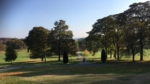



I walked to my local park. I’ve grown up in this park. In my twenties I used to look after a boy with autism and we’d spend our days paddling in the river, getting chips in the cafe and a blackcurrant Callipo from the ice cream van on the way home.
I fell in love in this park – we had our second date here. We now live just around the corner. My children learned to walk, to ride bikes in this park. Six years ago I took up running and now I run three times a week around the lake. I’m ingrained in its paths. I know every inch of this park.
I didn’t think about writing. I didn’t have any great plot ideas. No massive breakthrough on my next novel… But somewhere along the way I started to feel better and that’s when I caught myself thinking I should write a blog about this.
And that’s when I was reminded that if you can’t quit, you just have to accept that being a writer sometimes sucks…
October 3, 2018
Women and Crime
To mark the centenary of women’s suffrage and the continuing struggle for equality, Hull Noir joined with the Humber Mouth Festival to present Unbound – a literary panel exploring the ways in which female writers use crime fiction to tackle representations of power, coercion and violence.
[image error]On the panel were Sarah Hilary, Eva Dolan and Jo Jakeman. Sarah’s latest novel, Come and Find Me is her fifth featuring DI Marnie Rome and it’s beautifully written. I’m not surprised that the first in the series won the Theakston’s Old Peculiar Crime Novel of the Year Award in 2015 and was a Richard and Judy Book Club pick. Sarah’s mother and grandparents were prisoners of the Japanese – her grandfather died in camp. Sarah has written about her grandmother’s courage for the Dangerous Women Project. The themes of incarceration, confinement and strong women influence her work. (A lot of the action of Come and Find Me is set in a men’s prison.)
[image error]Eva has just taken a break from her popular police procedural series to write This Is How It Ends – a thriller with one of the best female protagonists I’ve met in ages – 60 year old career protestor, Molly, who refuses to grow old gracefully. This Is How It Ends is political (hurrah) about the last few residents in a block of flats, fighting to save their homes and it highlights the protest against gentrification in parts of London. It doesn’t sacrifice on plot though – there’s plenty of questions to keep you turning the pages.
[image error]Jo has just had her debut novel published – Sticks and Stones – a really quirky story about three women who have all loved the same man – the abusive, controlling Philip Rochester. Imogen, his last wife, accidentally locks him in the cellar when she realizes he’s going to fight for custody of their child. I loved its emphasis on female friendship and its dark, comedic tone, despite it tackling such difficult issues. It’s been a massive success – and Harvill Secker have already signed her up for two more.
We talked about how the role of women has changed from the days when most crime fiction novels featured hard-drinking, chain-smoking male detectives trying to find the twisted predators of female prey. Men are more likely to be the victim of violent crimes than women, but you’d never know that from reading some crime novels. (I remember reading The Leopard by Jo Nesbo and being so freaked out by his detailed, vivid description of the torture of the female victims that I considered removing all his children’s books off my daughter’s bookcase – in case the misogyny of it had somehow drained through.)
As crime writers, do we contribute to, or play on, women’s fears? I’ve always struggled with this idea (my next book focuses on rape culture). Is it possible to write about such dark themes in a way which empowers women? We talked about creating strong female characters, to try and counteract the woman as victim stereotype, as well as introducing male characters who provide positive, hopeful role models.
We also talked about how sexuality influences the way a character is perceived. Can you have a sexual female character without risking her being viewed as a femme fatale? I brought up my favourite topic – mothers – because a lot of the characters in these books (my own included) had very difficult (for difficult read mental) relationships with their mothers. Are women programmed to excuse bad behaviour, both male and female, by blaming it on the mother?
[image error]
I really enjoyed my first experience of chairing a panel, as it gave me time to listen to the inspiring women behind these ground-breaking books. Reassuring that, in these mixed-up times, there are writers out there reframing the narrative.
Also, nice to be be met by Philip Larkin as I stepped off the train.
Well done and big thanks to Hull Libraries, Shane at Wrecking Ball Press and Nick Quantrill and Nick Triplow, the creative force behind Hull Noir for bringing this event together.
The Humbermouth Festival, in order to mark the centenary of (some) women getting the vote, has devoted this year’s week-long programme to celebrating the achievements of female writers and have some great events lined up – more details here.