Ali Harper's Blog, page 2
March 5, 2020
The Ten Drafts of a Story Part 2 – Structure
My favourite edit is always the second redraft, after I’ve tackled theme (see The Ten Drafts of a Story Part 1 – Theme) My favourite because this is where, after the unmapped, unchartered hell of a first draft, and the brutal slash and burn of the first edit, objective truth comes into play. At last.
Much of writing is subjective – some people will like your style, others won’t. Some people will tell you to write in the present day, others prefer the 80s timeframe you originally had. Some love your heroine, others think she’s too cold/hot. But structure is a fact. Like scaffolding, something to cling to.
If I’m lucky, by the end of my second draft, my story will have a beginning, a middle and an end. In this second draft I break the manuscript into these four chunks. Four? Well yes, because a middle is twice as long as a beginning or an end. So one chunk for the beginning, two for the middle and one for the end.
[image error]I have a plotting outline and I feed my scenes into it. And then I look to see if I have the three most important plot points. Namely:
Act 1 Reversal (end of the beginning)
Midpoint (halfway through Act 2, also known as the point of no return) and the
Lowest Ebb (end of Act 2, marking the beginning of the end)
These three points are often referred to as crises. I think of them as zig zags – the action goes off in a different direction to the one we were expecting. At the midpoint we realise the character is fundamentally altered and things can never be the same. The lowest ebb is the moment where we most doubt our heroine’s ability to see the story through.
These scenes act as beats of a drum, signalling to the reader their place in the story. They’re crucial to structure – how else would the reader know when they’ve got to the end of the beginning? Or the beginning of the end? These scenes serve to reassure that they’re reading a story and not a mad ramble of unconnected anecdotes.


March 2, 2020
50 at 50 Part 3: Teach Myself to Shut Up
[image error]Ages ago, I read an interview with Geena Davis (above as Thelma) where she was talking about taking up archery and how it had brought to her attention that she had this inner voice consistently telling her she was rubbish. She said it’s easy to spot this inner voice in goal-orientated sport and she’s right. In netball, if negative thoughts get in the way as I’m taking a shot, I miss.
But if I allow my brain and my arm the freedom to work together, without doubts and self-flagellation getting in the way – What if I miss?, Bet this one won’t go in, Should I throw it to the other/better shooter? My team-mates think I’m rubbish – the shot (usually) goes in.
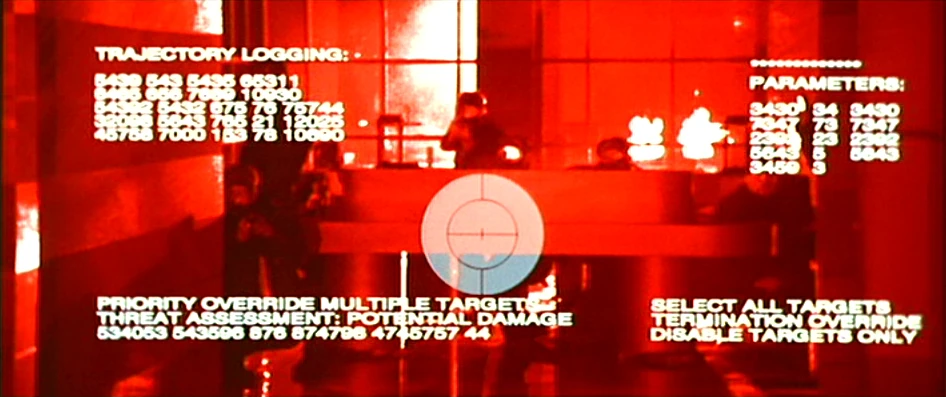 I think of Arnold Schwarzenegger in Terminator 2, where the screen shows you the picture through his eyes, with his computer brain calculating things like velocity, distance, speed. That’s where I’m trying to get to in netball – a simple, uncomplicated relationship between the eye feeding information to the brain, the brain working out the sums and the arms/knees responding to how much power is needed. And me, with all my human neuroses, staying out of the equation.
Achieving this kind of zen mastery is no mean feat.
It’s harder to spot negativity with writing because there’s no binary system of score/don’t score. But I have spent years wrestling with an inner critic that has felt it necessary to comment on every aspect of my writing, from sentence construction (I don’t know about the Oxford comma) to the bigger picture (I’m not imaginative enough to be a writer…) and a mountain of others besides.
I compare myself to other writers, always putting myself up against the A-grade star in each category. If I’m down on myself for the handling of social media, I’ll compare myself to Caitlin Moran, if I’m thinking book sales, JK Rowling. There’s always some area where I’m failing, where I’m not good enough.
Last week, after a particularly bad bout of self-flagellation, I decided to spend 10 minutes every morning, thinking of my talents, while lying on the floor, breathing. (Even just writing that sentence makes me feel nervous. Will people think I’m showing off, insane, taking myself too seriously, getting too big for my boots?)
At first the process was uncomfortable and I found it hard to think of anything. But, as with most things, with practice it gets easier. Yesterday I found myself setting the alarm (yes, I set an alarm) for 12 minutes instead of 10, because thinking about the things I can do is actually so much nicer than spending all my time thinking about the things I can’t.
Homework: If you're joining me on my year of creative living... this week's task is to reflect on your talents. Spend ten minutes a day writing a list of the things you are good at - strengths, talents, abilities, achievements. Anything can go on the list. For the first few days, all I could think of was 'I'm kind to children'. Please share if you want in the comments section below.
50 at 50 (Part 3) – Teach Myself to Shut Up
[image error]Ages ago, I read an interview with Geena Davis (above as Thelma) where she was talking about taking up archery and how it had brought to her attention that she had this inner voice consistently telling her she was rubbish. She said it’s easy to spot this inner voice in goal-orientated sport and she’s right. In netball, if negative thoughts get in the way as I’m taking a shot, I miss.
But if I allow my brain and my arm the freedom to work together, without doubts and self-flagellation getting in the way – What if I miss?, Bet this one won’t go in, Should I throw it to the other/better shooter? My team-mates think I’m rubbish – the shot (usually) goes in.
I think of Arnold Schwarzenegger in Terminator 2, where the screen shows you the picture through his eyes, with his computer brain calculating things like velocity, distance, speed. That’s where I’m trying to get to in netball – a simple, uncomplicated relationship between the eye feeding information to the brain, the brain working out the sums and the arms/knees responding to how much power is needed. And me, with all my human neuroses, staying out of the equation.
Achieving this kind of zen mastery is no mean feat.
It’s harder to spot negativity with writing because there’s no binary system of score/don’t score. But I have spent years wrestling with an inner critic that has felt it necessary to comment on every aspect of my writing, from sentence construction (I don’t know about the Oxford comma) to the bigger picture (I’m not imaginative enough to be a writer…) and a mountain of others besides.
I compare myself to other writers, always putting myself up against the A-grade star in each category. If I’m down on myself for the handling of social media, I’ll compare myself to Caitlin Moran, if I’m thinking book sales, JK Rowling. There’s always some area where I’m failing, where I’m not good enough.
Last week, after a particularly bad bout of self-flagellation, I decided to spend 10 minutes every morning, thinking of my talents, while lying on the floor, breathing. (Even just writing that sentence makes me feel nervous. Will people think I’m showing off, insane, taking myself too seriously, getting too big for my boots?)
At first the process was uncomfortable and I found it hard to think of anything. But, as with most things, with practice it gets easier. Yesterday I found myself setting the alarm (yes, I set an alarm) for 12 minutes instead of 10, because thinking about the things I can do is actually so much nicer than spending all my time thinking about the things I can’t.
Homework: If you're joining me on my year of creative living... this week's task is to reflect on your talents. Spend ten minutes a day writing a list of the things you are good at - strengths, talents, abilities, achievements. Anything can go on the list. For the first few days, all I could think of was 'I'm kind to children'. Please share if you want in the comments section below.
February 28, 2020
The Ten Drafts of a Story Part 1 – Theme
Editing is a murky business. With a first draft you have one, clearly-defined goal – get to the end of the sodding story. With editing the goal becomes nebulous – improve the story. Yeah, great, but how?
I’ve realised over the years that each edit needs a focus. I’ve also realised there are ten* of these focuses – each one worthy of a complete draft. If anyone had told me when I first set out to write a novel, that I’d have to rewrite it ten times I’d have probably never started, but, sometimes, the truth sets you free.
I recently returned to a screenplay I co-wrote in 2012. It was, until a couple of weeks ago, a complete first draft. That is, we’d screamed, sweated and ultimately limped our way to the end of the story. Our friendship didn’t survive. First drafts, like giving birth, are painful, furious, messy and best forgotten as soon as you’ve delivered.
Eventually though, once you’ve got over the pain, you’re going to want to look at your baby. What is it?
The first edit is always about theme. Standing back, and asking, what’s it about? The obvious answer to this question is to detail the plot events – this screenplay is about a mother who decides it’s time to take her young, autistic-spectrum son on an adventure. She books a trip to America, but then they miss the train and…
 But to get to theme, to get to the heart of the story, it’s important to ask another question – ‘What’s it really about?’
Often, when I’m writing, I have no idea what’s it’s really about. That’s why I need to leave the story behind for a period, so that I am detached enough to see. I realised, on that first read through, eight years after delivery, that really, it’s about motherhood and loss – loss of economic power, loss of confidence, loss of sexuality.
Once I know what it’s really about, the first redraft is easy/brutal, because it’s about getting rid of anything that doesn’t relate to the theme – the slash and burn of the editing process. Theme is what ties a story together, so if a character/location/sub-plot doesn’t relate to the theme, it doesn’t belong to that story. [To make this process easier I convince myself I will use these discarded sections in a later work. I save them all in a folder called Junked Bits – probably the biggest file on my computer.]
Of course there’s more to this edit than just cutting – often I have to replace that scene/character/subplot with something else that does relate to the theme. Sometimes I won’t write these scenes straightaway – I’ll just make a note – ‘write a gripping scene here where x does this to y’.
This thematic edit is best done by reading the entire thing cover to cover, hard copy, without a pen or pencil in hand. This is the big picture read. I read it like I want my reader to read it – an uninterrupted gorge. That’s why the time away part is important – so I can read it with the joyful naivety of the reader – who wasn’t present for the birth – who sees only the baby: glorious, bloody, a bit squished, always naked, possibly screaming but with so much potential…
*[Apologies but today I’m in the mood for blunt truth…] ten drafts is probably a conservative estimate.
February 24, 2020
50 at 50 Part 2: Back to the Future
[image error]I’ve spent years and years learning to write (and I’m not claiming to have arrived). From how to use viewpoint, evoke atmosphere, create characters that breathe to when to use an exclamation mark, why to avoid dangling gerunds and what to leave under the surface.
But ideas for stories come all the time and, while anyone can learn to write, I’m not sure you can learn how to have an idea. Ideas are more precious than writing technique because I never know when they’re going to arrive, and because they’re unique – no one else will have that idea in the same way.
So what happens to ideas that come before you’ve learned to write? Stephen King says stories are already there, in the ground, and that writers are archeologists, they unearth them. I used to think that the better writers got given the better stories, perhaps because they knew better where to look. But lately I’ve started thinking that maybe it’s more about the better writers can make even the most mundane of bones into something.
I’ve spent the last three weeks re-writing a feature-length film script and it’s been so much fun. Fun because I’m not attached to it – hadn’t even read it in the intervening years. It’s been like reuniting with an old friend, but one who’s changed so much since I saw them last.
It’s been heart-warming too, because I can see how I’ve improved. I can tsk-tsk my old, uneducated ways, but kindly, because I know I’m not that fledgling writer any more. I don’t take it personally.
I’m not saying that you should always wait eight years after writing something to start the editing process. The standard advice is five weeks. But maybe some ideas take longer to dig up than others. Sometimes you don’t see what you have at the time. Sometimes ideas are ahead of their time and they have to wait for you, or for the world, to catch up.
If you want to join in my year of living creatively... this week's homework is to revisit the past - whether it's an old project, an old photograph, an old place. Dig out something you haven't thought about for a long time and have a look at how its changed with time. Do you feel any differently about it now? Does it inspire you to add to it, make changes, send it to someone?
Let me know how you get on in the comments section.
February 21, 2020
The Cuckoo Complex
I love being a writer because I love being on my own, making up stories in my head. My earliest memory is playing with my farm set – fields and fields of animals across my bed and carpet – and my mum walking in to my room. I was horrified – that someone could crash, without warning, into my fantasy world.
But writing is only a small part of ‘being a writer’. More and more, writers are expected to get out and sell books, and it’s this side I find the biggest challenge. If I lined up every job in the world in order of preference, sales & marketing would be last on my list, right after being a dentist or working in an abattoir.
Being asked to promote my books feels like being asked to place my hand in a fire. I’d never been able to understand how for some writers, marketing seems to come easily. I’ve thought about why I hate it so much and I’ve realised it goes against everything I was brought up to be.
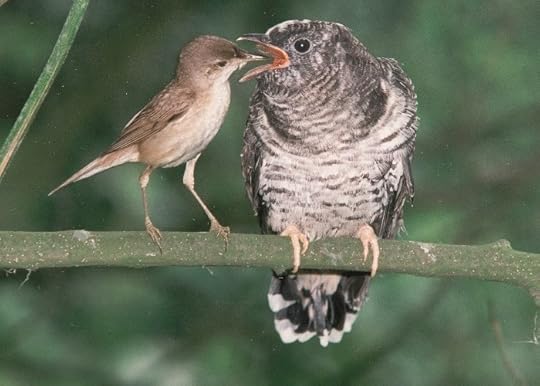 As a child, I remember my mum telling me the story of the cuckoo. I understood it was metaphor for something but didn’t know quite what. The cuckoo sneaks its egg into another bird’s nest – my biological father left home the day I was born, my mum remarried, had another child and I was left to fit into their nuclear family as best I could.
The cuckoo senses it’s an extra mouth to feed. I tried to blend into the background, not draw attention to myself, to the fact I didn’t belong. While the biological child has rights, a sense of entitlement, the cuckoo, unsure of its position, is taught to be grateful for crumbs.
FHB was another of my mother’s favourite expressions. Family Hold Back – meaning: don’t eat anything until the guests have finished as there might not be enough.
Bringing attention to myself – or my writing – challenges me so much I’ve contemplated giving up writing. But then, maybe, the process is good for me, might free me from my role. No one wants to be a cuckoo – it’s an ugly, overgrown bird.
February 17, 2020
50 at 50 Part 1: Write a regular (ish) blog
For my thirteenth birthday, I got my first diary. Not a diary with dates – a blank, A5 hard-backed notebook. I’ve still got it. It marked the start of years of writing a journal – not every day, but copiously – I’d write about my life, thoughts, feelings.
In my twenties, I burned all my teenage diaries, save for that first one, in a ceremonial bonfire, a group of friends cheering me on. Letting go of the past, a past I’d tried to understand, but didn’t.
At the end of my teens, I moved in with a boyfriend and I didn’t keep a diary for the next four years. I can still remember the first evening, after we’d split up and he’d moved out, writing in a brand-new, A4, hard-backed notebook. The joy, the promise of that blank page, after all the sadness of the end of something.
I wrote furiously for the next eight years, pages upon pages, tome after tome. Then not as much when I bought a house and lived again with a lover, and hardly at all when, four years later, my first baby was born. The need to write to try and understand myself seemed less intense. Maybe I was just more tired.
I started then to think about writing for other people, a huge switch. Keeping a diary is easier, because there’s no reader. Secret words. Diaries are from the inside out, spurting words to empty, like a whale coming to the surface.
[image error]Writing for other people is looking from the outside in. One of my biggest fears as a writer, and from experience it’s a common one, is self-exposure – what will other people think? Will I over-share, be ridiculed, be disliked? Often in life I’m a chameleon, changing my story according to who I’m speaking to. Writing means being the same person no matter what.
Although, in fiction, I can still hide. My character may hate tories/dogs/aubergines – or think vigilantism is ok in certain situations – I don’t have a view. When I first started writing novels, friends would try to recognise real-life events or people, but I’d just be vague when they asked (and I was surprised by how often they were completely off the mark). I guess psychoanalysts might be able to uncover some of you, but they can’t prove anything…
Writing a blog is somewhere between writing a diary and writing fiction. The inside out, from the outside in. A bid to become more congruent, to care less about how I’m perceived and more about what I want to say.
February 14, 2020
Can I Tell You My Secret?
I had some spare review copies of The Runaway so I asked on social media if there were any bloggers who might read and review. Twitter did its magic and several enthusiastic book-lovers contacted me.
[image error]
The next day I got this email:
Hi
I saw your tweet about snding off copies for review just after I tweeted bemoaning the fact that reviewers/bloggers never reply.
If you dont mind could you tell me your secret?
Thanks Mr X
It was great to get so many offers because reviews are the best way to spread the word when a book comes out and I am grateful to everyone who contacted me. Book lovers are a class apart. Fact.
But I’ve heard that question, ‘Could you tell me your secret?‘ before and it seems to imply some kind of advantage, like a sister who’s the CEO of Waterstones, or a mum who runs Transworld. Or that I’m in possession of insider information, have a sinister trick up my sleeve. Am I offering sexual favours/a gramme of coke, in exchange for a well-constructed review?
Here’s what I wrote back:
Dear Mr X
Here’s my secret (actually there’s more than one…) As this is secret, please don’t share with anyone else…
Read. A lot.
Attend a weekly creative writing class at a Further Education college for one year
Remember, when the teacher ‘forgets’ to read any of your first, painful, tentative attempts at writing, that he is low-paid and probably working several other jobs
Attend the Professional Writers’ Development Programme at the brilliant Yorkshire Arts Circus [sadly now defunct so you’ll have to find an alternative]
When that brilliant organisation becomes victim to the recession, scrape together enough money to join a privately-tutored writing group
Commit to reading and critiquing your fellow students’ work on a monthly basis
After two years, when you run out of money for classes, start teaching
Remember you teach that which you most need to learn
Get a job as an editor with a literary consultancy and read, edit and critique hundreds of unpublished manuscripts
Write eight complete novels, plus half a dozen unfinished ones, plus some short stories, a handful of poems and a couple of feature-length film scripts
Edit each novel at least ten times
Submit your first novel to an independent press and don’t shit your pants when they offer to publish it
Rewrite entire novel
Decide it needs to be in a different time period and rewrite it again
When novel is published, attend writing festivals, literary events and author talks, even if it means travelling miles to speak for two minutes to an audience of three.
Spend your Saturdays in bookshops around Yorkshire persuading shoppers to take a chance on you, an unheard-of writer, instead of buying The Hunger Games
Submit work, including your fourth, fifth and sixth novels, as often as you can and embrace rejection
Learn from the experience
Do an MA in Creative Writing, whilst working part-time and trying to be an almost-good-enough parent
Spend ten years attending a writing group where you read and critique others’ work on a monthly basis
Take their criticism to heart because although it hurts, it will make you improve
Write a submission package (be warned, this is harder than writing a novel)
Research literary agents
Do a PhD in a bid to understand how/if your writing contributes to the conversation
Submit your seventh novel to a half-dozen, carefully-selected agents
Sign a contract with an agent
Rewrite entire novel
Twice
Have agent submit novel to every publishing house in the country and embrace rejection
Learn from the experience
Finally, just when you’re thinking there aren’t any publishing houses left to reject you, sign a contract with mainstream publisher
Rewrite entire novel
Twice
Apply to The Arts Council, The Society of Authors and anyone else you can think of who might grant you funding because after fifteen years you still haven’t made enough money to feed the cat on a consistently regular basis
Submit eighth novel with crossed fingers
Wait three months for a reply
Create and maintain an on-line presence, which might include but is not limited to Twitter, Facebook, Instagram and a blog
When eighth novel is published, ask people, kindly, if they’re willing to review
Understand that book bloggers give up their time for free out of love for reading
Don’t moan about them, on Twitter, if they don’t want to read your book
Don’t send a badly-punctuated, un-proofed, passive-aggressive email to a peri-menopausal, time-poor, ill-tempered writer who has spent fifteen years learning how to use an apostrophe.
Good luck!
Of course, I didn’t press send. But I might drop him a line and say actually the secret is fifty quid, in used notes, sent to the following addresses…
February 12, 2020
Writing is Rewriting
God, I love editing. First drafts are haaaard – like giving birth – furious, painful, sweaty. I‘m plagued with doubt – will I die during delivery? Will I give birth to a guinea pig? [Seriously, I had that dream a lot when I was pregnant.] Nothing is guaranteed with a first draft.
But editing is like raising the child. Not without its traumas, obviously, but slower-paced, and infused with moments of pure joy. It – the story – already exists, my job is just to mould, to guide. As the brilliant poet Cherie Taylor-Battiste put it to her child – you are the picture, I am the frame. I’m here to show you in your best light.
Perhaps pottery is a better, less messy, analogy – first drafts are throwing lumps of clay onto the wheel and hoping it sticks. Editing is where you get to play – to shape, the opportunity to make something of beauty. Of course, you might not, but that doesn’t matter, because the hope is there and the process is enjoyable.
Avid readers of this blog will know that one of my goals for this year was to revisit an old project and so I’ve been back to a script for a feature film that I co-wrote eight years ago. Such a strange experience – returning to the past – like visiting a house I used to live in, but someone else resides there now and so the furniture isn’t how I remember it, but the structure, the walls are still the same.
‘The first draft of anything is shit,’ said Ernest Hemingway. I love that quote because it reminds me the only thing I have to worry about during the first draft is wrestling the words onto paper.
But watching something take shape, polishing the best bits, trimming the fat – that’s the best part of writing for me. And to do it with the benefit of eight years of hindsight is quite something, because I see it more clearly, I’m not as emotionally attached. I used to think that projects had a window of opportunity – you had to nail the story down before you ran out of time, but now I know better. Sometimes time is exactly what’s needed and nothing is ever wasted.
[image error]Just before Spring is sprung
February 11, 2020
Word Counts – how long should a novel be?
A few years ago I went with some of my creative writing students to a talk given by a literary agent. At the end someone in the audience asked her how long a novel should be.
“Ninety thousand words,” she said.
Someone else raised their hand. “Mine’s one hundred and three thousand and-”
The agent shook her head. “Ninety thousand.”
Another hand went up. “Mine’s eighty-seven thousand and-”
“-Ninety thousand.”
At the time I thought she was being a little unbending. Surely every story can’t come out at exactly 90k words? (According to the rather pessimistically entitled website, Lit Rejections, different genres have different expectations – there’s a full breakdown here ).
But what I have learned in the intervening years is that whilst the novel may get away with a +/- 10%, the structure doesn’t.
If a novel is going to be 90k words, then the first act, which is 25% of the novel has to be 22500, the second act, being the longest at 50%, 45,000 words, and the third act another 22 500.
When I’d finished writing The Runaway, and because I like a good spreadsheet, I did a word count of each act, mainly for my own amusement. I knew the first act was 488 words too long, the second act was almost bang on (60 words over), but the third act was missing about 5000. (I always find endings difficult.)
I sent it to my agent. He’s never mentioned word counts to me and I’m fairly confident he’s not going to start spreadsheeting my novels. The entire manuscript was over 85 000 words, which is +/- 10% close enough to 90k. Good enough, I thought.
[image error]
Getting someone who knows their stuff involved in my writing process is amazing, because it’s when the whole thing starts to feel real. I got his feedback and worked my way through his comments – the words changing but not really growing or shrinking in the first or second act.
But when I got to the third, he’d pointed out that there was an important scene missing – a loose end I’d not tied. I wrote the missing scene. It came in at 2 000 words. Took the whole novel to 87k, and the third act to 19 500 – 3 000 words short.
Next it went to my editor at HarperCollins, without any mention of word counts. She rang to give me her first impressions, which were – she loved it.
Hurrah.
But… she thought the ending was a bit rushed.
Guess how long the final act was by the time it went to print…