Shelley Neese's Blog, page 2
August 14, 2025
Bible Fiber: Ezekiel 45 and 46
This week we are studying Ezekiel 45–46. These two chapters outline specific regulations for land allotments, sacred offerings, festivals, and the role of the mysterious prince in the future Jerusalem.
Be sure to subscribe to Bible Fiber on Youtube or Follow Bible Fiber wherever you listen to your podcasts (like Spotify of Apple Podcasts)
Holy District
In Chapter 45, God instructs Ezekiel, “When you allot the land as an inheritance, you shall set aside for the Lord a portion of the land as a holy district” (45:1). He gives specific measurements for a consecrated allotment of land that will be dedicated to the Lord as an offering. The temple will be at the center, and a perimeter of priestly and Levitical houses will surround it. To separate the sacred from the profane, an empty strip of “open space” will be the buffer zone between the temple and the rest of the city (45:2). Beyond the open space, the Zadokite priests can build their living quarters, and beyond that, the Levites can establish their cities and build homes.
The First Temple was also built with the idea of concentric zones of varying levels of sacredness. At the very center of the First Temple lay the Holy of Holies. From there, holiness diminished as one moved outward through the Temple’s various courts and the city of Jerusalem. God’s instruction to Ezekiel extending it beyond the Temple walls. Within this vast, dedicated area, the same graded system of holiness applied: the Temple was in the most sacred inner portion, surrounded by the lands of the priests, followed by the lands of the Levites.
A distinctive feature of Ezekiel’s Jerusalem is the specific land allocation for the priests and Levites. In the future Jerusalem, the Levites will have a contiguous and concentrated land area surrounding the temple (45:5). This was a complete break from the old system where Levites had no land of their own. The Torah built a system where the tribes with land had to support the Levites with tithes and offerings (Deut. 10:9). That allowed them to stay focused on their spiritual duties rather than on cultivating land. However, it also made them vulnerable to the people’s charity. In times of obedience, the Levites were taken care of through the offerings (Num. 18:21). In other times, the Levites had to leave their temple duties to go farm and try to feed themselves (Neh. 13:10).
Prince’s Land Allotment
Ezekiel then presents a figure known as “the prince” from the previous vision. The prince was to receive a significant land allotment in the future Jerusalem (45:7-9). The prince’s role differs from the kings of Israel’s past. His allotted land straddles the holy district, extending from the western edge to the eastern edge of Israel. If we imagine spheres of sanctity around the temple, the closest rings are the holiest, and the sanctity decreases going outward. The prince’s allotment is well outside the sacred area, but in front of the tribal lands.
Weights, Measurements, and Offerings
Ezekiel outlines specific offerings that the people of Israel are required to provide as part of their worship and support for the newly reestablished temple (45:13-17). These verses describe a series of contributions that the people must give to the prince, who apparently oversees the temple operations. The offerings include a portion of wheat, barley, olive oil, and a specified number of sheep. The prince gives these contributions to the temple staff for burnt offerings, grain offerings, and drink offerings.
While these regulations share similarities with the Mosaic Law in requiring offerings to support temple functions, the specific numbers and measurements distinguish them from prior Torah instructions. In the future Jerusalem, the offerings, rituals, and festivals diverge from the Torah laws. According to Jewish tradition, a rabbi named Hananiah ben Hezekiah locked himself in an attic until he could figure out how to reconcile Ezekiel’s vision with the Torah laws.
Festivals
In addition to sacrifices, the future temple will also follow the ritual calendar of feasts and festivals, Sabbaths and new moon celebrations (45:18-25). One of the key observances is Passover.
Ezekiel’s festival regulations are mainly concerned with the role of the prince and the purification of the temple. On regular days, the people provided the offerings, but on festivals, the prince is responsible for providing all the offerings from his own resources. These include a sin offering to atone for the people, as well as burnt offerings and grain offerings. Interestingly, the prince orchestrates the purification offering for “himself and all the people of the land” (45:22).
The emphasis on the prince’s role in maintaining proper temple worship and making the appropriate sacrifices reflects the monarch’s responsibility to uphold the covenant relationship between God and the people. This represents a shift from the past, where the kings of Israel often failed to fulfill their duty to lead the people in righteous worship. In Ezekiel’s vision of the future Jerusalem, the prince will ensure the temple’s purity and the people’s spiritual well-being by properly observing the ritual calendar.
Traffic Flow
Ezekiel 46 focuses on various aspects of temple protocol. Assuming that the future temple will be bustling with worshippers bringing their sacrifices, the prophet describes the best procedures to ensure a smooth traffic flow and crowd control on holidays and sabbaths. The people are to enter and exit out of opposite gates (46:1).
The chapter is especially concerned with the prince’s coming and goings, and his points of entry (46:2,8, 10). He is allowed to enter through the portico and stand by the threshold of the inner court to witness the ritual activity. The lay people had to stay down the stairs outside the gate. While the priests prepare his offerings, the prince lays prostrate before the Lord. Although he has a privileged status in the temple and may go through the east gate, he is still banned from the inner court because he is a civil leader and not a priest.
The chapter concludes with granular instructions concerning the prince’s royal property (46:16-18). Ezekiel clarified royalty could pass down their land as an inheritance to their children, but they could only pass down what already belonged to them, and they could not take land away from another citizen. This is one more strike against the prince being a messianic figure. A messiah would not need restrictions put in place to prevent him from abusing his own power.
Identity of the Prince
Scholars have proposed several interpretations of the identity of the prince in Ezekiel’s vision. One common view is that the prince represents a messianic figure, a future king from the Davidic dynasty who will rule over the restored nation of Israel. This interpretation is based on the prince’s exalted status, exclusive rights, and patron role at the temple.
The most clarifying statement about the prince indicates that God is using him as a role model. He is a leader who prioritizes the nation’s spiritual growth over his personal gain. God says, “Enough, O princes of Israel! Put away violence and oppression, and do what is just and right. Cease your evictions of my people, says the Lord God” (45:9). The prince may not be a specific individual, but a representation of an ideal Davidic king. He is sacrificial, serving the citizens rather than himself.
Christians are tempted to identify the prince as Jesus in the second coming. However, Jesus would not need to offer a purification offering for himself. He had no sin that required atonement. Also, in the holy district’s arrangement, the prince’s real estate lay outside the priests and Levites, which meant the prince was inferior to them by holiness standards. Jesus is not inferior to priests.
In Ezekiel, the prince plays a mediatorial role between the people and God, but he operates on a practical human level. Jesus is our supernatural mediator. Jesus is not the patron of all the temple sacrifices, like the prince. Jesus is the perfect and last sacrifice who fulfills and brings an end to the sacrificial system, rather than participating in it.
Jesus, the Last Sacrifice
The idea that Jesus Christ was the last and perfect sacrifice is a central tenet of Christian theology. This understanding is grounded in the belief that Jesus, as the incarnate Son of God, offered himself as the ultimate and sufficient sacrifice for the sins of humanity.
The sacrificial system prescribed in the Mosaic Law involved the repeated offering of animal sacrifices, which were seen as mere “copies” or shadows of the true, heavenly reality. These animal sacrifices could never fully atone for human sin or provide lasting redemption. In contrast, the sacrifice of Jesus Christ, the sinless Son of God, is the “better sacrifice” that purifies and restores the relationship between God and humanity.
The author of Hebrews emphasizes that Jesus’ death is the culmination and fulfillment of the Old Testament sacrificial system. Hebrews declares, “It is by God’s will that we have been sanctified through the offering of the body of Jesus Christ once for all” (10:10). As the perfect, divine-human mediator, Jesus’ self-offering on the cross is sufficient to take away the sins of the world once and for all.
Unlike the repeated animal offerings that could not atone for all sins past and future, Hebrews says, “For by a single offering he has perfected for all time those who are sanctified” (Heb. 10:14). His death renders all other sacrifices unnecessary.
That’s it for Ezekiel 45 and 46. If we were in church, at this point the preacher would give the altar call!
Thank you for listening and please continue to take part in this Bible Reading Challenge. Next week we are reading Ezekiel 47 and 48.
For all the biblical references each week, see the show transcript on our blog or by signing up for our emails at www.thejerusalemconnection.us/
Sign up and get a free downloadable gift!
Shabbat Shalom and Am Israel Chai
The post Bible Fiber: Ezekiel 45 and 46 appeared first on Shelley Neese.


July 29, 2025
Ezekiel 44
Ezekiel 44 is a continuation of Ezekiel’s vision for the restoration of genuine worship in a future temple. Since God’s presence will fully inhabit the coming sanctuary, Ezekiel gives detailed instructions for who may and may not enter the temple. Anyone ministering in God’s presence must be morally and ritually clean. The new rules and regulations are meant to keep out any potential defilement and avoid the same mistakes of the past. Ultimately, the chapter’s big theme is the strict, sacred order of worship in this new temple, showing God’s absolute demand for holiness from everyone who comes near Him and His holy place.
East Gate
The chapter opens with an angelic guide leading Ezekiel to the East Gate, but the guide explains this gate is permanently shut. In earlier visions, Ezekiel had witnessed God’s glory leaving the temple through this very gate because of Israel’s disobedience (10:18-19, 11:23). In Ezekiel’s new vision of restoration, the closed gate represented Yahweh’s promise never to abandon Jerusalem again.
If you’ve visited Jerusalem, you’ve likely ascended the Mount of Olives. It offers the best perch for viewing the Temple Mount and its surroundings. The Kidron Valley, dotted with tombs, separates the Mount of Olives from the Old City walls. From this lookout, the East Gate, also known today as the Golden Gate, is easily visible.
The current East Gate structure does not date to the Second Temple period, despite claims made by some tour guides. The Romans destroyed the earlier gate in 70 CE. Today’s gate dates to the Byzantine period (6th or 7th century CE); it was later modified during the early Islamic period. The gate was presumably open during the Christian era. After the Ottomans conquered Jerusalem in the 16th century CE, Suleiman the Magnificent bricked up the gate. The East Gate has remained sealed shut ever since Suleiman’s decree. Even though the Jewish control the Old City of Jerusalem, Israel has never reopened the gate.
All four Gospel accounts describe Jesus’s triumphal entry into Jerusalem on a donkey coming from the direction of the Mount of Olives. At the moment, he was consciously fulfilling a messianic prophecy in Zechariah “Behold, your king is coming to you; righteous and having salvation is he, humble and mounted on a donkey, on a colt, the foal of a donkey” (Zech. 9:9). The specific gate Jesus passed through was the earlier East Gate. Now the structure lies beneath the current ground level.
The gate’s modern closure holds both practical and religious significance. Defensively, it helped fortify the city against potential invaders. Religiously, it ties directly into Jewish tradition, which anticipates the Messiah entering Jerusalem through this very gate. Some believe Suleiman sealed the gate to prevent the Messiah’s arrival. To ensure their continued control, Muslims also established a cemetery directly in front of the gate. They predicted that Jewish Messiah, being a descendant of the priestly caste, would not pass through a burial ground because it would defile him.
The prince
The next point of reference in the angel’s tour is a prince eating a sacrificial meal inside the gate’s chambers. Even the prince was limited in his access to the holy precincts (44:3). This may have been Ezekiel’s way of reinforcing the point he made in the last chapter that the royal household, Israel’s leadership, should be careful not to trespass onto the sacred precincts of the temple (43:9). In the past, they blurred the lines between temple and royal palace. The new leadership, represented by the prince, would respect the separation.
The unnamed prince is a mysterious character in the vision. Therefore, there is plenty of debate about his identity. The temptation is to see the prince as a Messiah figure. However, in the next section, the prince reappears, and he is holding a sin offering for both him and the people. Since Jesus was the sinless Son of God, he cannot be associated with the prince (45:22). However, we will discuss the prince more in Chapter 45, where he plays a bigger role.
Non-Israelites in the Temple courts
Ezekiel, guided by an angel, is led to the north gate of the temple where he witnesses the glory of the Lord filling the sanctuary. God then delivers a stern warning to Ezekiel to convey to his audience. For centuries, the Israelites had habitually violated their special covenant with God (44:7). Among the behaviors God found abhorrent was their practice of allowing non-Israelites into the temple courts.
It is not entirely clear what specific historical situation Ezekiel was referencing or which foreign nation might have made itself comfortable in the Jewish temple. The Mosaic Law did not explicitly forbid outsiders from entering the outer courtyard. Still, there were restrictions concerning who could enter other, more sacred, parts of the Temple complex. The narrative in 1 Kings suggests that the royal house might have even entrusted the temple’s guard duty to non-Israelites (2 Kings 11:18-19).
Ezekiel’s prophecy indicates that in the future temple, God would impose much stricter access regulations. By the Second Temple period, temple authorities indeed took prohibitions against non-Israelites seriously and implemented reforms. We know from both the New Testament and the writings of Josephus that non-Israelites visiting Jerusalem were limited to a designated area in the outer court (Acts 21:28). This historical reality was further confirmed in 1871 when archaeologists discovered a stone sign from the Second Temple period. This inscription, written in Greek, explicitly prohibited Gentiles from entering the inner courtyard of the Temple, warning that any foreigner who did so would be solely responsible for their own death.
Ironically, even today in modern Israel, the responsibility of guarding the Temple Mount is delegated to non-Israelites. The Druze community, a distinct religious minority in Israel, maintains a long-standing tradition of loyalty to the state and serves in various security roles. Because the Temple Mount, being one of the most contested religious sites globally, it needs a careful and neutral approach. If Israel were to deploy Jewish police officers atop the Temple Mount, it could be perceived as biased and potentially escalate the already highly charged environment. To mitigate such tensions, Israel uses Druze officers to police the Temple Mount. This assignment also provides reassurance to the rabbinate that Jewish officers will not inadvertently trespass into the Holy of Holies.
This historical progression, from the ancient Israelite temple practices to the strictures of the Second Temple period and even to the contemporary security arrangements on the Temple Mount, reveals a fascinating irony when viewed through the lens of Ezekiel’s vision. Ezekiel’s fervent call for stricter temple access was not a critique of a historical temple’s layout or a current policy. Instead, he was prophesying about a future temple, one that would embody God’s ideal of holiness and separation. His detailed vision, in essence, described a temple that had not yet existed and, in its complete form. The irony lies in the enduring struggle to define and enforce sacred boundaries—a struggle that plays out across millennia, from the pre-exilic period to modern times, all while Ezekiel’s temple remains a prophetic ideal.
Zadokites
In Ezekiel’s vision (44:15-17), a strict priestly hierarchy emerges for the future temple, reserving the most sacred roles for Zadokites. This prioritization of Aaron’s descendants over other Levites dates to the wilderness period (Numbers 3, 18), where God designated Aaron’s line for the holiest Tabernacle duties, including approaching the altar. All Levites served God, but Aaron’s lineage held a privileged priestly status. They offered sacrifices and conducting rituals in the inner court, while other Levites assisted, guarded, and maintained the Tabernacle.
Among Aaron’s descendants, the Zadokites gained prominence during David and Solomon’s reigns. Zadok, a descendant of Aaron and high priest under David, proved instrumental in supporting David during Absalom’s rebellion. His loyalty cemented his descendants as key religious leaders, displacing the line of Eli. Later, Solomon appointed Zadok as high priest for the First Temple (1 Kings 1-2).
Ezekiel asserts that the Zadokites remained faithful to God even when other Levites strayed (44:10-13). Due to this fidelity, the Zadokites would retain their special status in the future temple, like their role in Solomon’s temple (44:15-16). They were the only ones permitted inner court access. While Levites had more interaction with the populace—overseeing entry, preparing offerings, hearing disputes, and teaching laws—the Zadokites enjoyed more intimate access to God by placing sacrifices on the altar. Ezekiel was likely a Zadokite priest, and some scholars detect bias in his prophecies. He was not the first to make such distinctions. He was reinforcing a pre-existing hierarchy, with Zadokites recognized as Aaron’s true heirs.
Priestly regulations
After outlining temple duties, God presented six specific regulations for priests, stricter than those in Leviticus 21. While serving, priests were to wear white linen (44:17-19). Vestments were for temple service only; priests changed in designated chambers to prevent accidental consecration. In the temple and tabernacle, holiness could be contagious (44:19). They also could not have overly long hair or shaved heads. This was probably so they wouldn’t appear like they were mourning (44:20).
All temple personnel were strictly forbidden from alcohol on duty (44:21), a rule from Leviticus (10:8-10) to ensure clear judgment for distinguishing holy from common. This prohibition is often linked to the death of Aaron’s sons, Nadab and Abihu (Leviticus 10:1). Priests were also barred from marrying widows or divorcees (44:22).
Beyond personal conduct, priests had crucial communal responsibilities. They were to teach God’s laws, specifically differentiating holy from common and clean from unclean (44:23). This directly addressed the failures of pre-exilic priests, whom Ezekiel accused of profaning sacred things (22:26). Priests were also to administer justice based on covenant laws and wisdom (44:24). They were supposed to be community models for upholding statutes, Sabbaths, and feasts.
The chapter concludes by reminding Israel that temple personnel, lacking land, depended entirely on the people’s offerings of grains, first fruits, and sacrifice meats (44:29). Neglecting these contributions meant the priests would go hungry.
Hebrews
In Ezekiel’s vision of the future temple, he never mentions a High Priest. The omission of a High Priest might seem like a significant oversight. However, as Christians we find the explanation in the New Testament. The Book of Hebrews declares Jesus as our ultimate High Priest. This is central to the gospel. Because of Jesus, we no longer need a human intermediary to approach God. As Hebrews states:
“For we do not have a high priest who is unable to sympathize with our weaknesses, but we have one who in every respect has been tested as we are, yet without sin. Let us therefore approach the throne of grace with boldness, so that we may receive mercy and find grace to help in time of need.” (Hebrews 4:15-16)
In the Tabernacle and Temple systems, only the High Priest could enter the Holy of Holies once a year to atone for the people’s sins. But Jesus’ role as our High Priest grants us continuous, direct access to God. Through Christ’s perfect sacrifice on the cross and his eternal position as High Priest, every believer can now “approach God’s throne of grace with confidence” (Hebrews 4:16). This means that salvation is freely available. We can come directly to God in prayer, seeking mercy and grace in times of need, not based on our own merit, but because Jesus has opened this once-sealed access for us! This is the power of the gospel—direct reconciliation with a holy God.
While the Levites and Zadokites gained their positions through hereditary rules, Jesus was a priest “in the order of Melchizedek,” making him our eternal priest (Hebrews 7:3). Hebrews clarifies that Jesus’ priesthood is established “not through a legal requirement concerning physical descent but through the power of an indestructible life” (Hebrews 7:16). In Ezekiel’s day, God had to choose between priestly lines based on comparative faithfulness, yet none were perfect due to their human limitations. In contrast, Hebrews declares that Jesus, our priest, “is able for all time to save those who approach God through him, since he always lives to make intercession for them” (Hebrews 7:25).
Thank you for listening and please continue to take part in this Bible Reading Challenge. Next week we are reading Ezekiel 45 and 46.
For all the biblical references each week, see the show transcript on our blog or by signing up for our emails at www.thejerusalemconnection.us/
Sign up and get a free downloadable gift!
Shabbat Shalom and Am Israel Chai
The post Ezekiel 44 appeared first on Shelley Neese.
May 29, 2025
Shavuot for the Goyim
This week we are taking a break from Ezekiel and dipping back into our series on High Holidays for the Goyim, because this Sunday night on June 1, Jews will be celebrating the holiday of Shavuot. Just like Christians all too often overlook Pentecost, Jews often ignore Shavuot. Both, however, are critical holidays celebrating huge moments in our faith history.
Check out the episode on Youtube or Follow Bible Fiber wherever you listen to your podcasts.
When is Shavuot?
Shavuot is also known as the Feast of Weeks or the Feast of Harvest. It is a joyous one-day festival that begins on the sixth day of the third month in the Hebrew calendar, Sivan. This typically falls in late May or early June on the Gregorian calendar. It’s worth noting that Shavuot comes exactly 50 days after the second day of Passover, hence its Greek name, Pentecost, meaning “fiftieth.” This timing links the Exodus from Egypt to the giving of the Torah at Mount Sinai.
Where is Shavuot Mentioned in the Bible?
Shavuot is mentioned several times in the Hebrew Bible. The most detailed instructions for observing Shavuot are found in Leviticus 23:15-21 and Deuteronomy 16:9-12. These passages establish the dates of the festival and command the offering of first fruits.
God told Moses, “From the day after the Sabbath, the day you brought the sheaf of the wave offering, count off seven full weeks. Count fifty days up to the day after the seventh Sabbath, and then present an offering of new grain to the Lord. From wherever you live, bring two loaves made of two-tenths of an ephah of the finest flour, baked with yeast, as a wave offering of first fruits to the Lord… You are to proclaim on that same day that a sacred assembly is to be held; you are not to do any regular work. This is to be a lasting ordinance for the generations to come, wherever you live.” (Lev. 23:15-17, 21)
Deuteronomy 16:9-12 reiterates the command to celebrate Shavuot and emphasizes gratitude and inclusion: “Count off seven weeks from the time you begin to put the sickle to the standing grain. Then celebrate the Festival of Weeks to the Lord your God by giving a freewill offering in proportion to the blessings the Lord your God has given you. And rejoice before the Lord your God—you, your sons and daughters, your male and female servants, the Levites, the foreigners, the fatherless and the widows who live in your towns.”
Shavuot originally commemorated the wheat harvest, a time of thanksgiving for God’s provision. However, rabbinic tradition links Shavuot to the giving of the Torah at Mount Sinai, a pivotal moment in Jewish history when God revealed His commandments to the Israelites. This dual focus on both agricultural bounty and divine revelation makes Shavuot a unique and deeply significant holiday. It reminds Jews of both God’s physical provision and His spiritual guidance.
How is Shavuot Celebrated Today?
The primary observance of Shavuot today focuses on the giving of the Torah. Many Jewish communities observe Tikkun Leil Shavuot, an all-night study session of Torah, Mishnah, and Talmud. This tradition arose from the idea that the Israelites overslept on the morning God was to give them the Torah at Sinai, so Jews now stay awake all night to demonstrate their eagerness to receive God’s word. When I lived in Jerusalem, it was always a sight to see walking around in all white, like it was a wedding, at four in the morning and heading toward the Western Wall.
Another key tradition is the consumption of dairy foods. While the exact reason for this custom is debated, one common explanation is that the land of Israel is described as “flowing with milk and honey.” Also, the Torah is likened to milk, which nourishes and sustains life, just as milk nourishes an infant.
One other reason is that upon receiving the Torah, the Israelites learned about the laws of Kashrut and needed time to prepare kosher meat, so they ate dairy in the interim. It’s common to see a beautiful array of cheesecakes, blintzes, and other dairy delights in Jewish homes during Shavuot.
The book of Ruth
For centuries, Jewish communities have held a special place for the Book of Ruth in their Shavuot synagogue services, and for good reason. The story unfolds during the barley and wheat harvest, precisely when Shavuot occurs. But it’s more than just a seasonal tie-in. At Mount Sinai, Moses received directly from God’s own hand the covenant, the Ten Commandments and all the laws that were to govern His people. This was the moment God first declared that out of all nations, if they kept His covenant, they would be His treasured possession and a kingdom of priests (Exodus 19:5). After hearing the laws and stipulations, the people declared, “We will do everything the Lord has said; we will obey” (Exodus 24:7). For all of Israel, this is the nation’s conversion moment, the origin story of their national consecration.
By tying the Book of Ruth into the anniversary of the giving of the Torah, Jewish tradition recognizes that even those who did not descend from the tribes present at Mount Sinai can still choose to follow the one true God. Ruth was not Jewish. She was a Moabite woman who embraced the Jewish people and aligned her fate with the Israelite nation. Just as the Israelites willingly took on the obligations of the Torah, Ruth willingly embraced the Jewish people and their God. Naomi, knowing the hardships Ruth would face as a Moabite widow moving into a foreign land, urged her to return to her own family. Instead, Ruth declared her undying loyalty to Naomi. Jewish tradition has ever since hailed her as the archetype of the righteous convert.
Perhaps it’s more than anachronistic, but I like to think of Ruth as the first Christian Zionist, or at least the first Gentile Zionist. Like all Christians who love Israel, Ruth fully cast her lot with the Jewish people and declared her loyalty to their God.
Ruth’s immortal pledge to Naomi echoes through the ages. Within these powerful words, we hear the unwavering devotion of those who have cast their lot with the Jewish people. As Christian Zionists, we embrace Ruth’s pledge as our own: “Do not urge me to leave you or to turn back from following you. For where you go I will go, and where you lodge I will lodge. Your people shall be my people, and your God my God. Where you die I will die, and there will I be buried. May the Lord do so to me and more also if anything but death parts me from you” (Ruth 1:16-17).
Just as Ruth vowed to Naomi, Christian Zionists pledge to the Jewish people — both in Israel and the diaspora — a solemn promise: You are not alone, and you will never be alone again.
What Does Shavuot Mean for Christians?
The feasts and festivals of the Bible are replete with types and symbols that all perfectly point to the Messiah. The divine connections between Shavuot and Pentecost are so especially obvious that it’s thrilling.
On Shavuot, Moses acted as the intercessor between God and his covenanted people. Jesus had already intervened on behalf of the world.At Sinai, the fire descended only on the summit of the mountain. At Pentecost, the fire came “to rest on each of them” individually.On the first Shavuot, God established his covenant with the Hebrew people. On Pentecost, a new covenant was made available to all who believed.On Shavuot, the Holy Law was inscribed on stone by the finger of God. At Pentecost, the Holy Spirit wrote the Law on their hearts.At Mount Sinai, 3,000 were killed due to their disobedience. In Jerusalem, 3,000 were granted eternal salvation in response to their faith.On Shavuot, God declared the Israelites a “nation of priests.” On Pentecost, believers became priests to all nations.There you have it: distinction and then inclusion. One covenant grafted into the first. Death and now life. Law and Spirit.
The Talmud describes Shavuot as the “wedding day” between God and the Jewish people. Now, the Bride of Christ waits anxiously for the day when we will be united with our Bridegroom.
Mark your calendars for this special holiday of Shavuot. We are celebrating God’s revelation and the anniversaries of receiving that revelation at both Mount Sinai and in Jerusalem. Let us use this feast to make a public commitment, just as the people of Israel did, that “we will do and we will listen.”
Thank you for listening. Bible Fiber is taking a three-week break in June because I am heading to Israel. In addition to my role at The Jerusalem Connection, I have also been a biblical archaeology student since 2019. As part of the program, we get to spend several dig seasons at Shiloh. As you know, Shiloh was home to the tabernacle for three centuries. It is a big deal, and this dig is an honor and privilege to be a part of. So, I am looking forward to filling you in on what happened in July.
The post Shavuot for the Goyim appeared first on Shelley Neese.
May 15, 2025
Ezekiel 43
This week, we are studying Ezekiel 43. If you believe that every story needs a happy ending, this chapter will satisfy that craving. In Chapter 11, written nineteen years earlier, Ezekiel had witnessed the glory of the Lord departing the temple, the lowest point in the entire book (10:18; 11:22-23). Without the blessed guarantee of Yahweh’s protection, Jerusalem was a hollow structure that the Babylonian army easily overran. When the Babylonians looted enemy temples, they often stole the patron idol to both insult and disarm the conquered people. In Jerusalem’s case, anything the Babylonian army managed to steal from the temple were powerless objects, emptied of God’s presence.
Be sure to subscribe to Bible Fiber on Youtube or follow Bible Fiber wherever you listen to your podcasts! (Apple and Spotify links)
Ezekiel 43 reverses the tragedy of God’s departing glory. The prophet witnessed the glory of the Lord returning to the newly rebuilt temple with immense power and majesty (43:2-5). The return signified God’s presence and favor upon his people. The temple’s emptiness was not permanent; God’s glory, the very essence of his being and blessing, will once again dwell in their midst.
Return of the Glory
Ezekiel 43 begins with the angelic guide still at the prophet’s side, positioning Ezekiel at the east gate—a strategic vantage point. Ezekiel reports, “And there the glory of the God of Israel was coming from the east; the sound was like the sound of mighty waters, and the earth shone with his glory” (43:2). Ezekiel notes the striking resemblance of this vision in Jerusalem to those he had previously experienced by the River Chebar and the vision of God’s glory departing the temple. While he doesn’t specify whether he saw the winged throne chariot, the crystal expanse, or the enthroned glowing metal figure from his initial vision, Yahweh’s radiant presence so overwhelmed him that he fell prostrate.
Then, as had become a familiar occurrence, the Spirit lifted Ezekiel to his feet. The sheer power of God’s glory never lost its impact, no matter how many times Ezekiel witnessed it. The Spirit’s action was necessary for Ezekiel to stand and behold Yahweh’s return to his dwelling place. This moment serves as a powerful bookend to Ezekiel’s entire prophetic ministry in exile.
The glory of the Lord approached from the east, mirroring the reverse order of its departure. In Chapter 11, Ezekiel had watched with horror as the glory hovered over the east gate before exiting the city over the mountain (11:23). Now, the angel brought Ezekiel to the inner court, granting him an intimate view as “the glory of the Lord filled the temple” (43:5).
Yahweh’s arrival aligns with a well-established biblical pattern. Upon the completion of the tabernacle in the wilderness, the Israelites witnessed the cloud of glory enveloping the tent, a presence so powerful that even Moses could not enter (Exodus 40:34-35). Similarly, after Solomon’s temple was finished, Yahweh’s cloud filled the sanctuary (1 Kings 8:11). In both instances, Yahweh’s glorious presence in these newly constructed sacred spaces represented his approval. They were completed throne rooms awaiting the arrival of the King.
The Lord then made Ezekiel a significant promise: “Mortal, this is the place of my throne and the place for the soles of my feet, where I will reside among the people of Israel forever” (43:7). In the first temple, the Ark of the Covenant served as God’s footstool (1 Chronicles 28:2). However, Ezekiel’s vision makes no mention of the Ark. Instead, the entire temple complex assumes this role.
Ancient Israelites understood that God’s being transcended any physical structure. The tabernacle and temple were understood as earthly reflections, albeit faint ones, of Yahweh’s celestial throne room. During the First Temple’s dedication, Solomon himself humbly declared, “The heavens, even the highest heaven, cannot contain you. How much less this temple I have built!” (1 Kings 8:27). This point is further emphasized in Isaiah, where God proclaims that heaven is his throne and the earth his footstool (Isaiah 66:1).
Conditions
Once the divine glory returned to the visionary temple, Yahweh continued speaking to Ezekiel, outlining the conditions for his enduring presence among the Israelites. Although they had already faced punishment for their transgressions, and his desire was to dwell with them eternally, he still required faithful and righteous living. Specifically, he cautioned against three primary offenses: spiritual harlotry, the profaning of his holy name, and the practice of sacrificing to their deceased kings (43:7).
The reference to “harlotry” as idoloatry is a recurring theme throughout the prophetic books. The prophets frequently depicted Israel’s covenant relationship with God in terms of a marriage, highlighting the betrayal inherent in turning to other gods. This spiritual infidelity broke the exclusive bond of loyalty and devotion that Yahweh demanded.
The third warning, concerning sacrifices offered to deceased kings, presents a bigger interpretive challenge. Some scholars propose that this alludes to the deification of departed rulers, a common custom in the surrounding ancient Near Eastern cultures but strictly forbidden within Israel’s monotheistic framework. This practice would have elevated human authority to a divine level, directly challenging Yahweh’s unique sovereignty. Other interpretations suggest it might relate to specific funerary rites or forms of ancestor worship that had subtly infiltrated Israelite religious practices.
Furthermore, God expressed his displeasure with the close proximity of the royal palace to the temple. He declared, “When they placed their threshold by my threshold and their doorposts beside my doorposts, with only a wall between me and them, they were defiling my holy name by their abominations that they committed; therefore I have consumed them in my anger” (43:8). During the First Temple period, there was a problematic spatial relationship between the seat of political power and the sacred space of the temple in Jerusalem.
While during the reigns of more righteous kings like David, this arrangement might not have presented the same level of concern, the subsequent rise of a succession of wicked kings in Judah created an unacceptable situation. The center of political authority began to encroach upon the temple’s sanctity. These kings, who were meant to be subordinate to God’s ultimate authority, increasingly asserted their own power and influence over the temple and its activities. This overreach was a direct affront to God’s sovereignty.
Regardless of the precise meaning of each specific transgression, the overarching message was clear: God’s enduring presence among his people is not an unconditional guarantee. It necessitates their unwavering commitment to the exclusive worship of Yahweh and their adherence to the covenant. In the envisioned new temple, the separation between the sacred and the profane will be even more rigorously maintained. This heightened distinction serves as a safeguard to protect his absolute holiness and to prevent the recurrence of the types of syncretistic and disrespectful practices that had led to his judgment in the past.
Write it down
Following the return of divine glory to the visionary temple, Yahweh instructed Ezekiel to share every detail of this sacred structure with his fellow exiles. His desire was for them to have a comprehensive understanding, encompassing the temple’s form. God commanded, “write it down in their sight so that they may observe and follow the entire plan and all its ordinances” (43:11). This directive raises a significant question: if the exiles were privy to Ezekiel’s detailed plan, why did they not construct it upon their eventual return to Jerusalem?
One compelling explanation posits that the elaborate temple vision spanning Ezekiel 40-48 was not intended as a physical blueprint for immediate construction. Instead, it may have served as an idealized representation of the fully restored community of faith and the presence of God in their midst. The exiles, facing the immediate realities of rebuilding their lives and their land, may have interpreted Ezekiel’s grand vision as a depiction of a future, perhaps even eschatological, reality. It is crucial to note that while God instructed Ezekiel to record the plan, he never issued a direct command to physically build the structure according to these specific specifications, unlike his clear mandates to Moses for the tabernacle or to Solomon for the First Temple. In the absence of such a divine decree, the returnees may have felt authorized to construct the Second Temple based on the more pragmatic constraints and resources available to them.
Faced with limited manpower, financial constraints, and the urgent need to re-establish a functioning religious and communal life, undertaking such a monumental building project would have been deeply impractical. The immediate priority would have been to erect a serviceable temple that allowed for the resumption of essential worship practices. Indeed, the book of Ezra hints at a sense of disappointment and even disillusionment among some of the returnees regarding the Second Temple. It is plausible that they were aware of Ezekiel’s more elaborate temple plan but felt utterly incapable or perhaps even divinely unburdened from the task of replicating it in their current circumstances.
The destruction of the Second Temple by the Romans in 70 CE imbued Ezekiel’s temple vision with a profound new significance for the Jewish people in their subsequent exile. Finding themselves once again without a physical temple, Ezekiel’s chariot and temple visions, offered a vital means of approaching God through careful and meditative reading and study. These texts provided a sense of spiritual connection even in the absence of a physical sanctuary. They assured them that even if earthly temples could be destroyed—as had tragically happened twice in their history—God’s heavenly throne remained eternally secure and untouchable.
Altar
In Ezekiel’s initial tour of the envisioned temple complex, a prominent altar at its center immediately captured his attention (40:47). However, that initial walkthrough provided no specific details regarding the temple furnishings. His divine guide returned with Ezekiel to the altar, this time offering a comprehensive description of its construction and significance (43:13-17).
The guide meticulously detailed the altar’s precise dimensions, specifying the size of its base, the surrounding ledge, and the upper surface. This impressive, tiered structure measured eighteen cubits square at its largest point—approximately 31.5 feet—and stood ten feet tall. Ezekiel’s altar, while similar in scale to the altar in Solomon’s temple, surpassed the size of the altar within the portable tabernacle.
Ezekiel’s altar also incorporated functional elements crucial for sacrificial rites, including a gutter encircling its base designed to collect the blood of the sacrificial offerings. The angelic guide further highlighted the altar’s four prominent horns. Horned altars were a common feature in the religious landscape of ancient Canaan. Archaeologist have discovered them at sites such as Megiddo, Beer Sheva, and Dan providing tangible evidence. However, it is important to note that none of these unearthed altars matched the massive scale and detailed specifications of Ezekiel’s visionary structure.
The divine blueprint for Ezekiel’s altar featured eastward-facing steps, a design that would have oriented the priests conducting sacrifices toward the temple’s holy of holies. This stands in contrast to Mosaic instructions explicitly prohibited the use of steps leading to the altar. The rationale provided in Exodus was the concern that ascending steps might inadvertently expose the worshipper’s nakedness (Exodus 20:23-26). Some scholars propose that Ezekiel’s vision represented a divinely inspired adaptation or symbolic evolution of the altar design, rather than a literal construction mandate. The steps, in this interpretation, might symbolize the spiritual ascent and increasing holiness required of those approaching God in worship.
Before God would accept sacrifices offered upon this newly constructed altar, he mandated a comprehensive seven-day purification process involving daily sin offerings (43:18-27). On the very first day, God instructed Ezekiel to procure a young bull specifically for the priests to offer as a sin offering, initiating the altar’s consecration (43:18-19). The sacrificial directions given directly to Ezekiel suggest his active and perhaps even symbolic participation in this ritual process within the vision. Given that Ezekiel was exiled before the age at which he could have served in the physical temple, this visionary participation offered him a unique experience of priestly duties.
Over the subsequent six days, the priests continued the work of purification by making daily sin offerings, further cleansing the altar. The divine instructions included specific details regarding the sprinkling of the blood of rams and bulls and the proper disposal of the carcasses. This week-long dedication, God declared, would “make atonement for the altar” and consecrate it for its sacred purpose. On the eighth day and thereafter, the priests were authorized to offer regular burnt offerings and peace offerings. God proclaimed “I will accept you,” in reference to all willing worshippers (43:27). The altar’s ultimate and enduring purpose was the restoration of a relationship between a holy God and his people through the divinely ordained sacrificial system.
Revelation
Writing to persecuted Christians in the first century, John of Patmos skillfully adapted the rich imagery from Ezekiel’s visionary tour of Jerusalem to ignite hope for their future. This underlying motivation closely mirrors that of Ezekiel, who addressed the despair of the exiled Israelites. Just as the exiles had lost their temple and their king, these early Christians had endured the loss of their physical temple and, more significantly, their Messiah.
Revelation 21 and 22 stand as an intentional and transformative reinterpretation of Ezekiel 40-48. Echoing Ezekiel’s experience, John is “carried away in the Spirit to a great and high mountain,” where he beholds the magnificent “holy city, the New Jerusalem, coming down out of heaven from God” (Revelation 21:10). Similar to the perfectly square layout of Ezekiel’s temple, the New Jerusalem also possesses a symmetrical cubic form. Furthermore, John, like Ezekiel, is accompanied by an angelic guide wielding a measuring rod, who surveys the city’s square gates and towering walls (Revelation 21:16-17). Ezekiel never described the construction materials of his temple, but John described the New Jerusalem as being composed of radiant jasper, pure gold resembling clear glass, and a breathtaking array of precious stones adorning its foundations (Revelation 21:15-21). Even the streets are paved with pure gold and the magnificent gates are each fashioned from a single, lustrous pearl.
In John’s New Jerusalem, the temple is conspiciously absent. John unequivocally states, “I saw no temple in the city, for its temple is the Lord God Almighty and the Lamb” (Revelation 21:22). John reveals a profound shift: Jesus, the Lamb of God, has become the new and ultimate Temple. Through his sacrifice and resurrection, God’s glory dwells intimately with his people, unmediated by physical structures or earthly boundaries. Although the city is protected by high walls, its gates remain perpetually open to all who are willing to enter (Revelation 21:12, 25),.
In the New Jerusalem, the distinction between sacred and profane dissolves. John reiterates, “Nothing impure will ever enter it, nor will anyone who does what is shameful or deceitful, but only those whose names are written in the Lamb’s book of life” (Revelation 21:27). Through his inspired use of Ezekiel’s imagery, John reveals the deeper, Christ-centered meaning of those prophecies. Ezekiel’s temple and his assurances of eternal restoration were not nullified; rather, they are gloriously realized in Christ.
As Jesus himself declared, “I tell you that something greater than the temple is here” (Matthew 12:6). His life, atoning death, and triumphant resurrection fulfilled the ultimate purpose and spiritual reality that the earthly temple had always represented within God’s overarching plan. Jesus is the way through which humanity gains access to God. He is the perfect and final sacrifice that has permanently purified the altar of our hearts. Just as God’s glorious presence returned to Ezekiel’s visionary temple, that Holy Spirit now abides within believers, making us the living temples of God.
Thank you for listening and please continue to take part in this Bible Reading Challenge. Next week we are reading Ezekiel 44, regulations for the priests and temple worship.
For all the biblical references each week, see the show transcript on our blog or by signing up for our emails at www.thejerusalemconnection.us/
Sign up and get a free downloadable gift!
Shabbat Shalom and Am Israel Chai
The post Ezekiel 43 appeared first on Shelley Neese.
May 1, 2025
Bible Fiber: Ezekiel’s visionary temple
This week, we will delve into Ezekiel chapters 40 to 42, which present Ezekiel’s visionary depiction of a future temple complex. While our usual format for Bible Fiber is to explore one chapter each week, I have decided to dedicate this episode to an in-depth discussion of all three chapters together. As a priest, Ezekiel was likely enthralled by the measurements and architectural details of his temple vision. However, for many listeners, his verbal descriptions might be challenging to visualize. Thankfully, there are scholars who have carefully analyzed every measurement and created illustrated renditions of Ezekiel’s visionary temple. Although these illustrations are not easily adaptable to a podcast format, I will strive to convey the significance of his temple vision.
Subscribe to our Youtube Channel or Follow Bible Fiber wherever you listen to your podcasts (like Spotify or Apple).
Dating
Ezekiel timestamps his vision to the twenty-fifth year of exile, specifically April 19, 573 BCE (40:1). It has been twenty years since Ezekiel was first called to be a prophet by the River Chebar.
As you follow the evolving tone of Ezekiel’s messages, you’ll notice that he begins with warnings and calls for repentance, gradually shifting towards themes of impending judgment. After the destruction of Jerusalem, his prophecies take on a more hopeful tone. When delivering negative prophecies, he directs them specifically at Israel’s enemies (like what we saw in the Gog oracle).
In these final eight chapters, Ezekiel’s focus is entirely future-oriented, often projecting far beyond his present time. While he describes the new temple, the reinstatement of sacrifices, and the reconfiguration of Israel’s borders, he is not referencing the post-exilic community of the sixth century BCE in the days of Ezra and Nehemiah. He envisions a millennial kingdom that extends into the distant future.
The vision of the coming temple was foreshadowed earlier at the conclusion of Ezekiel 37, where Yahweh assures Ezekiel: “My dwelling place shall be over them, and I will be their God, and they shall be my people. Then the nations shall know that I, the Lord, sanctify Israel when my sanctuary is among them forever” (37:26-28).
Angelic guide
At the beginning of the temple section, Ezekiel experiences another divine transportation to Jerusalem. He describes the moment, stating, “He brought me, in visions of God, to the land of Israel and set me down upon a very high mountain on which was a structure like a city to the south” (40:2). This is not the first time a biblical figure has been taken to a mountain to receive instructions for a sanctuary; during Moses’s 40 days on Mount Sinai, God provided him with the plans for the Tabernacle. While the text does not specify the exact high point to which God brought Ezekiel, it is generally assumed to be Mount Zion.
At this elevated location, Ezekiel is guided by a figure whose “appearance shone like bronze, with a linen cord and a measuring reed in his hand” (40:3). Throughout the Bible, a figure wielding a measuring tool appears in three distinct visions. The prophet Zechariah describes a vision of a man with a stick taking measurements of Jerusalem (Zech. 2:1-2), and in Revelation, John of Patmos sees a figure with a golden measuring rod assessing the walls and gates of Jerusalem (Rev. 21:15-17). In all three instances, these surveyors are identified as angelic beings.
From his high vantage point, Ezekiel watches as the bronze figure meticulously surveys Jerusalem. The angel begins by measuring the outer wall of the temple complex, which, according to his precise calculations, stands at 10½ feet tall and 10½ feet thick (40:5). The wall’s thickness corresponds with its height, something Ezekiel explains is designed to “make a separation between the holy and the common” (42:20). As the tour progresses, the guide carefully measures each outer gateway, documenting the dimensions and features (40:5-16)
These three gates lead to an expansive outer courtyard, where the angel observes various chambers, paving, and courtyards (40:17-27). He measures every window, recess, vestibule, and the distances between gates, reporting all measurements in cubits. A cubit, an ancient unit based on the length of the forearm from the elbow to the tip of the middle finger, is typically estimated to be about 18 inches (45 centimeters).
As Ezekiel explores the inner courtyard, he sees designated areas where priests will prepare animal sacrifices (40:28-49). The portico features palm trees, echoing the design elements found in Solomon’s temple. In this section, the responsibilities of the priests and the layout of the sacrificial areas become central themes. There are eight tables specifically set aside for slaughtering and preparing sacrifices, each equipped with its own instruments (40:38-43).
Access to the inner courts is restricted to priests. While much of the text concentrates on measurements and architectural details, the angel explains the hierarchy among the priests in the new temple. He states, “The chamber that faces north is for the priests who have charge of the altar; these are the descendants of Zadok, who alone among the descendants of Levi may come near to the Lord to minister to him” (40:46). I will delve into the significance of the Zadokites in Chapter 44.
New temple
As the visionary tour continues in Chapter 41, the focus shifts to the temple itself (40:48-41:26). Each time Ezekiel and his guide approach the inner sanctuary, they ascend another set of stairs. The temple stands elevated at the highest point, and as they get closer to the Holy of Holies, the doorways narrow.
The tour begins with the vestibule, an entrance area leading into the main part of the temple (40:48-49). Beyond the vestibule lies the main hall and inner sanctuary, which follow the same three-part design as the Tabernacle and the first Temple (41:1-4). Here, the angelic guide takes measurements of aspects such as the width and height of the entrance. The Inner Sanctuary, located further in, is cubic, paralleling the dimensions of the Holy of Holies from the Tabernacle and the first Temple. While the angel does the measuring, Ezekiel respectfully waits outside. He was adhering to the prohibitions against entering the Holy of Holies. The last time he had seen inside the inner sanctuary was when he observed Yahweh’s presence preparing to depart from the temple (10:18-19).
Surrounding the temple structure are three levels of side chambers (41:5-11). These small rooms, serve various functions, such as storing sacred utensils or providing quarters for the priests. The outer walls are exceptionally thick, perhaps symbolizing the temple’s strong and unyielding foundation (41:12-15). This section of the text also describes surrounding structures, such as a separate building at the rear of the temple. The interior decor features wood-paneled walls adorned with intricate carvings of cherubim and palm trees (41:16-20).
In Chapter 42, the angelic guide directs Ezekiel to the outer court of the temple, where he observes various chambers designated for the priests as they conduct temple services (42:3). Ezekiel discovers that these chambers, arranged around the outer court, serve multiple purposes, including storage for offerings and other worship items (42:4-5). The divine guide explains how the priests utilize these spaces to receive and consume their share of the grain and meat offerings (42:13), as well as the areas designated for changing in and out of their priestly garments (42:14). The overall measurements of the entire temple complex are reported to be 500 cubits by 500 cubits (42:16-20), so it was square shape.
It is important to note that such a large complex would not physically fit on the earthly Mount Zion; Ezekiel is envisioning a temple far beyond the limitations of reality. The chapter concludes with remarks on the holiness of the temple and the significance of these areas in relation to the sanctuary. The temple facilitates worship for all of Israel while maintaining its sacredness (42:20).
In Ezekiel’s vision of the future temple, the Ark of the Covenant is conspicuously absent. The Ark—containing the tablets of the Law—represented God’s presence among His people. Its omission suggests a shift in understanding divine presence. Other key items of temple furniture, like the Table of Showbread and the Golden Lampstand are also missing. The specific altar for burning incense, another significant element of previous worship practices, is not mentioned in Ezekiel’s account. He may have excluded the furniture from his description because the Babylonians destroyed them when they ransacked the Temple. Ezekiel wanted to encourage his listeners that God did not require their presence in the future temple. This perspective aligns with that of the prophet Jeremiah, who stated that a day would come when the people would no longer remember or miss the Ark (Jer. 3:16-17).
Totally new design
Some biblical scholars have attempted to create a blueprint for the future temple based on Ezekiel’s descriptions. However, fully reconstructing his vision is impossible. The primary challenge lies in the fact that his descriptions are largely two-dimensional, detailing the lengths and widths of the structures but omitting any mention of their heights. He also does not address the roof of the temple. In contrast, the instructions given to Moses for building the Tabernacle (Ex. 25:1-9) and to David for constructing the First Temple (1 Chron. 28:11-19) included specific details about construction materials. However, Ezekiel concentrates on measurements without specifying any materials.
Moreover, we know that the temple described by Ezekiel has never been built—neither by Zerubbabel nor by King Herod. Because the temple in Ezekiel’s vision has never been realized, some theologians argue that this prophecy served a symbolic purpose or function as a spiritual blueprint rather than a literal construction plan.
Jewish and Christian traditions interpret Ezekiel’s vision of the temple in distinct yet overlapping ways, particularly regarding its prophetic significance and eschatological implications. In Jewish tradition, the temple described in Ezekiel 40-42 is a symbol of the future Messianic age—a time of restoration and redemption when the Jewish people will return to their homeland and the divine presence will once again dwell among them in a rebuilt temple. This structure is seen as a physical manifestation of God’s promise, serving as a focal point for worship and a symbol of covenant renewal for the Jewish nation.
In Christian tradition, Ezekiel’s temple is interpreted as a precursor to the millennial period described in Revelation, during which Christ will reign on Earth for a thousand years following His second coming. Many Christians believe that the specific details in Ezekiel highlight God’s ultimate plan for restoration and the fulfillment of His promises to humanity. However you interpret the Book of Revelation’s description of the future temple, it hints that there is more to Ezekiel’s temple than merely a physical edifice.
Both traditions recognize the temple as a prophetic blueprint pointing toward future fulfillment—whether in the context of the Messianic age for Judaism or the millennial kingdom for Christianity. More information on Revelation’s connection to Ezekiel’s vision will be discussed in the next episode.
The post Bible Fiber: Ezekiel’s visionary temple appeared first on Shelley Neese.
April 24, 2025
Bible Fiber: Ezekiel 39
This week, we are studying Ezekiel 39, the second half of his famous oracle against the mysterious Gog from the land of Magog. Subscribe to Bible Fiber on Youtube or follow wherever you listen to your podcasts! Also, be sure to check out the Bible Fiber book on Amazon!
Israel’s only job
Throughout most of the Gog oracle, the emphasis has been on God’s direct intervention in defeating the invading armies. Whether it was God knocking the bow and arrows from the archers’ hands (39:3) or setting fire to Magog and the coastlands (39:6), the responsibility fell entirely on God to obliterate the hordes.
In the prophecy, the Israelites emerged only once the battle was already over. Their only task was to organize a cleanup operation. They began by collecting all the weaponry left behind by their defeated enemies. Ezekiel noted that they gathered enough shields, bows, arrows, and war clubs. However, instead of storing the weapons in their armory, they repurposed them for fuel. Gog’s captured weaponry would provide them with firewood for seven years (39:9). In other words, with the defeat of Gog and its allies, Israel entered into an era of total peace.
Ezekiel gave a new twist on the prophecies of Isaiah and Micah, which stated that in the Messianic age, people would turn their swords into plowshares (Isa. 2:4, Micah 4:3). The Israelites sensed that this was the last war. Ezekiel also notes the irony: “And they will plunder those who plundered them and loot those who looted them” (39:10), as the hordes had initially invaded Israel, intending to plunder its cities and villages.
After Gog’s complete destruction, corpses covered the land of Israel. Deuteronomic law dictates that all the dead, even non-Israelites, must be buried (Deut. 21:22-23). Keeping to the law, Yahweh selected a site for the mass burial of Israel’s slain enemies and named it the Valley of Hamon-Gog (39:11).
The Israelites were rightfully concerned about the contaminating effects of so many corpses on their covenanted land. Ezekiel said all the people would take part in the burial effort, which would last seven months (39:12). Ezekiel states, “People will be continually employed in cleansing the land. They will spread out across the land and, along with others, they will bury any bodies that are lying on the ground” (39:14). After seven months, they appointed special inspectors to roam the land and mark any unburied bones, so nothing would be overlooked (39:15).
Grotesque banquet
In the next section, starting in verse 17, Yahweh issued a personal invitation to all the wild animals and scavenging birds, calling them to a grand banquet to feast on the corpses of those defeated in battle (39:17-20). The invitation is out of sequence and would make more sense coming before the mass burial and after the first mention of animals scavenging corpses (39:4). Nevertheless, Yahweh invited the creatures and birds to gather at the divine table and partake in a gruesome feast. Gluttonous animals “eat the flesh of mighty men and drink the blood of the princes of the earth” (39:18). This grisly scene brings home the chapter’s point that there is no honor in the death of God’s adversaries.
Display Yahweh’s Glory
The Gog oracle repeatedly emphasizes that the purpose of Yahweh’s victory over Gog was to reestablish Yahweh’s glory for both Israel and the nations. The oracle concludes with a broader look at God’s complete dealings with Israel, summarizing Ezekiel’s entire message thus far. Yahweh declares, “From that day forward, the people of Israel will know that I am the Lord their God” (39:22). Gog’s defeat marks the beginning of a new chapter in Israel’s relationship with Yahweh.
Through Israel’s supernatural rescue, she will reconsider her punishment and Babylonian exile, now recognizing them as consequences of her generational sin and rebellion (39:23). She will come to realize that the Lord is truly her God. The nations will understand that God did not allow Israel to be overrun by the Babylonians because of weakness. Rather, he permitted it from a position of strength. His holiness and commitment to the covenant required him to punish Israel for her unfaithfulness. That same holiness now allows him to rescue her during her restoration. Yahweh states, “When I have brought them back from the nations and have gathered them from the countries of their enemies, I will be proved holy through them in the sight of many nations” (39:27).
In this new era, God will display both compassion for his people and zeal for his name (39:25). These two aspects are not mutually exclusive. The final restoration of Israel will be permanent and complete. God will pour out his spirit on Israel, just as he had once poured out his wrath.
Identifying Gog
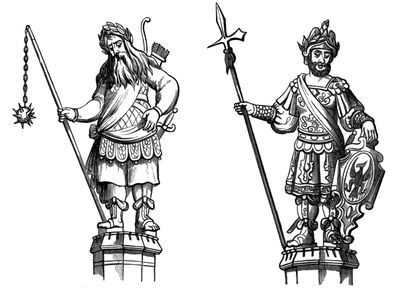 The name Gog does not appear elsewhere in the Hebrew Scriptures. Bible scholars spend their time looking for a historical figure outside the Bible that matches Ezekiel’s descriptions of Gog. Phonetically, the closest derivative to Gog in ancient Near Eastern history is King Gyges, also known as Gugu in Assyrian records. Gyges ruled the kingdom of Lydia in western Anatolia (modern-day Turkey) during the 7th century BCE. Since the Hebrew name “Gog” (גּוֹג) phonetically resembles the Assyrian “Gugu” and the Greek “Gyges,” some scholars suggest that Ezekiel may have used Gyges as a prototype for Gog. However, Gyges was a relatively minor king who lived before Ezekiel’s time. I can’t imagine that Ezekiel would give so much attention to a barely known distant king of Lydia.
Other Bible scholars have proposed that Gog is a cryptic reference to Babylon. Certainly, during Ezekiel’s day, Babylon dominated the world stage. As the force responsible for Judah’s exile and Jerusalem’s destruction, Babylon epitomized opposition to God’s people. The description of Gog coming from “the far north” (38:15) also is fitting, since Babylon was to the north of Israel. Ezekiel may have used cryptic language for Babylon as a way of shielding himself from punishment. The Babylonians were his overlords and they would have not taken kindly to a prophet in exile predicting the empire’s coming demise.
Throughout Christian history, prophecy enthusiasts have equated Gog with whatever modern godless nation came up against Israel or the Jewish people. This interpretation has varied over time and context. After the sacking of Rome in the fifth century, Augustine claimed the Goths represented Gog. During the Crusades, Peter the Hermit interpreted the rise of Islam and its military campaigns against Christian territories as a fulfillment of biblical prophecies about Gog. Martin Luther believed the Turkish Empire represented Gog because of its menacing nature and its location in Anatolia. During the Cold War, Hal Lindsay popularized the idea that Gog and her allies were an alliance of Soviet states, with Russia as the primary aggressor against Israel.
In more modern interpretations of the Gog oracle, the prophecy represents a coalition of nations following Iran’s orders. This association is less of a stretch since Persia is in Ezekiel’s list of aggressor nations. Still, Bible readers should be cautious and avoid studying the Bible with a newspaper in one hand and the prophecies in the other. Given Israel’s recent experiences after October 7, it’s tempting to read the Gog oracle with the Jewish state’s current seven-front war in mind.
I have little to say about predictions that find contemporary equivalents of Gog. Sadly, Israel has many enemies today and in the past. All I can say is that Israel has not arrived yet at a time of peace and plenty.
The primary thrust of Ezekiel’s message is not to illuminate our modern geopolitical landscape. Instead, Ezekiel promises that one day, Israel and all of humanity will recognize Yahweh. Gog is only important as the tool God uses to reveal himself through Gog’s defeat.
Revelation 19 and 20
In Jewish tradition, Ezekiel 38-39 describe events expected to be fulfilled by the Messiah. In Christian tradition, Gog is associated with the second coming of Jesus and his ultimate defeat of Satan.
The book of Revelation provides a divinely inspired commentary on Ezekiel’s Gog oracle. In typical Revelation fashion, John of Patmos reworks the Gog oracle to present a more cosmic drama. In Revelation, Gog is Satan, God’s premier enemy. If Gog is Satan, rather than an earthly power, Gog’s overthrow is akin to the collapse of all forces against God, which John calls the “beast and its armies” (Rev. 19:17-20).
Echoing Ezekiel’s animal banquet, Revelation describes the aftermath of the battle of Armageddon, where an angel calls the birds to gather for the “great supper of God” to eat the flesh of kings, commanders, and mighty men. It is Christ who has victory over the forces of evil. The connection between the Ezekiel banquet and the Revelation banquet lies in their use of a symbolic feast to illustrate divine judgment and victory. Both depict a dramatic scene of destruction for those who oppose God and the inevitable triumph of divine justice.
While Ezekiel’s prophecy focuses on the historical defeat of specific enemies of Israel, John expands this theme to encompass a universal and final confrontation between good and evil. By doing so, he transforms the oracle into a grander narrative of the end times. Gog represents the ultimate cosmic battle and final judgment, where divine justice prevails on a global scale. Although Ezekiel referred to Gog as a national leader from Magog, Revelation refers to Gog and Magog together as two entities, which is why you often hear “Gog and Magog” instead of “Gog from Magog.” Christians generally follow the Revelation version.
Ezekiel listed seven specific allies who join Gog. John describes the entire world joining Gog in an attack on Israel, “the nations at the four corners of the earth” (Rev. 20:8). Satan is the acting commander of the attacking army. Satan desires to destroy anything God loves. For Revelation, Gog is the culmination of the cosmic battle between God and Satan. It is the chance for Jesus Christ, in his Second Coming, to deliver the final blow to Satan and his partners. Jesus, through his saving works on the cross and his miraculous resurrection, overcame the powers of darkness.
The apostle Paul explained the purpose of Christ’s death in this same language: “For he has rescued us from the dominion of darkness and brought us into the kingdom of the Son he loves, in whom we have redemption, the forgiveness of sins.” John the Apostle also stated it directly: “The reason the Son of God appeared was to destroy the devil’s work” (1 John 3:8). Jesus did not die on the cross merely to appease God’s wrath; that explanation is too transactional. The purpose was so much bigger. His sacrifice was a victory over sin and the evil forces that enslaved humanity. By breaking the power of darkness, Jesus provided a way for humanity to be reconciled to God.
Thank you for listening and please continue to take part in this Bible Reading Challenge. Next week we are starting Ezekiel 40 and the prophet’s vision of a new temple!
For all the biblical references each week, see the show transcript on our blog or by signing up for our emails at www.thejerusalemconnection.us/
Sign up and get a free downloadable gift!
Shabbat Shalom and Am Israel Chai
The post Bible Fiber: Ezekiel 39 appeared first on Shelley Neese.
April 3, 2025
Bible Fiber: Ezekiel 38
Welcome to Bible Fiber, where we explore the biblical tapestry through the Twelve Minor Prophets, two reformers, and one exile. I’m Shelley Neese, president of The Jerusalem Connection, a Christian organization dedicated to sharing the story of Israel’s people, both ancient and modern. Subscribe to BIble Fiber on Youtube or Follow wherever you lisent to your podcasts. I’m also the author of the Bible Fiber book, a 52-week study of the Twelve Minor Prophets, available on Amazon. This week, we are studying Ezekiel 38, where the prophet presents his famous oracle against Gog from the land of Magog. This quasi-apocalyptic vision has captivated and perplexed scholars, theologians, and lay readers for centuries. Its cryptic nature, rich symbolism, and futuristic implications have led to many, often conflicting, interpretations. The shadowy figure of Gog, the vivid portrayal of a great battle, and the promise of divine intervention have made these chapters a focal point for those attempting to decode the mysteries of the end times. However, the complexities of the oracle are manageable, and its insights are less sensational than often believed.
In his prior oracles, Ezekiel promised a golden age for the land and people of Israel upon their return from exile, with all twelve tribes united under one divinely appointed king. However, the question of how the surrounding nations would respond to Israel’s return remained unresolved. Only by vanquishing the godless nations that despised her could Israel ensure her security. The Gog oracle portrays the ultimate battle in the end times. God would intervene powerfully to ensure that Israel would never again face existential threats.
Gog and the Seven Allies
Chapter 38 begins with God instructing Ezekiel to set his face toward Gog and prophesy against him (38:1). At first glance, this undated Gog oracle seems out of place. Why is it included in the restoration section instead of the Oracles Against the Nations? Unlike previous oracles that focus on historical judgments against known nations, the Gog oracle points to a more eschatological future. Thematically, it aligns with the messages of restoration because it emphasizes God’s ultimate victory over Israel’s enemies and his direct intervention to protect his people.
Also, the nations that were included in Ezekiel’s OAN were neighbors of Israel who interacted with the nation in her history. In contrast, Gog is not a known national entity or historical figure. The name does not appear anywhere else in the Hebrew scriptures. Scholars and prophecy enthusiasts have tried desperately to identify Gog with a historical figure or connect him with one of modern Israel’s enemies.
The name “Gog” is the only mysterious character in Ezekiel 38-39. The other peoples and places associated with him were all familiar to Ezekiel and his audience. For example, the text calls Gog the “chief prince of Meshech and Tubal” (39:1) and connects him to the land of Magog (39:6). Meshech, Tubal, and Magog appear in the Table of Nations in Genesis as descendants of Japheth (Gen. 10:2). Extra-biblical evidence places these nations in eastern Anatolia, which encompasses present-day Iran and Turkey.
Yahweh challenged Gog to battle along with his hordes, referring to them as nations from “the remotest parts of the north” (38:15). This exotic alliance includes Meshech, Tubal, Gomer, and Beth-togarmah, all located in the region of Anatolia, as well as Cush (Ethiopia) and Put (Libya) from Africa. Persia (Paras) is also mentioned. Some scholars suggested that “Paras” (Persia, modern-day Iran) may have been a later editorial addition to the prophecy, as Persia only became a significant power in the region after Ezekiel’s time, rising to prominence under Cyrus the Great in the 6th century BCE. However, the oldest manuscripts and the Masoretic text all include Persia, leading most translators and scholars to keep it in their interpretations.
Each nation contributes its unique military capabilities—both offensive and defensive—to the attack on Israel. A “great horde” rides into the land on horses and chariots (38:15). Armed with armor and shields, they carry swords, spears, bows, and arrows (38:4). Ezekiel depicts the coalition as a formidable military force, thoroughly prepared and equipped for war. Their combined manpower advances on Israel “like a cloud covering the land” (38:9). Despite their distant origins, they execute a well-coordinated military campaign.
Divine intervention
On the one hand, Ezekiel portrays God as being “against” Gog and his allies (38:3). God opposes the actions of this coalition and considers them adversaries who threaten his people (38:15). However, the prophecy also clarifies that God is the one who is orchestrating the attack. Ezekiel records God saying, “I will turn you around, put hooks into your jaws and bring you out with your whole army” (38:4). Later, he added, “I will bring you from the far north and send you against the mountains of Israel” (39:2). God is actively directing and maneuvering Gog and his forces, using them as a prop in his divine plan.
This seeming contradiction highlights the complex relationship between human agency, divine sovereignty, and God’s overarching plan of redemption. God can use even hostile, wicked powers to accomplish his purposes, while still holding them accountable for their sinful motives and actions. Gog acted out of his own arrogance and desire for plunder (38:10-12), yet God is the one who is summoning and empowering him.
Ultimately, the purpose of this divine control over Gog’s attack is to show God’s sovereignty and to bring about Israel’s deliverance. God would bring Gog up against Israel to reveal his holiness and power to the nations. The attack itself becomes the occasion for God to decisively intervene and crush Israel’s enemies.
In 586 BCE, God used Babylon as his agent of destruction to deliver punishment to a rebellious Judah. Now, however, God instigated the attack of Gog and his hordes, but he was going to obliterate them and protect Israel.
Future event
Throughout the book of Ezekiel, the prophecies and visions focus on the imminent judgment of Israel. Even the promises of restoration have a relatively near-term perspective. In contrast, the Gog oracle is unique. Ezekiel makes it clear to his audience that the Gog attack is not an immediate threat but a climactic event belonging to a prophetic future distant from the prophet’s own time. He frames this prophecy using highly eschatological language, referring to it as happening “in days to come” and “in the latter days” (38:16). He does not use these phrases anywhere else in his writings.
In the Gog oracle, Ezekiel adopts a long-range perspective. Before the Gog attack, Israel will have experienced a prolonged period of restoration, securely dwelling in the land without walls or bars. In portraying Gog’s inner thoughts, Ezekiel describes God as planning a surprise attack on unsuspecting Israelites. When he launches his scheme, the Israelites will live in a “land of unwalled villages” and among “quiet people who live in safety, all of them living without walls and having no bars or gates” (38:11). A significant amount of time must have passed since the exile and the initial return to the land, allowing the regathered Israelites to prosper and their wealth to attract the attention of traders from the east and west, all greedily eyeing Israel’s gold, silver, and livestock (38:13). Tragically, Israel remains completely unaware of the distant nations plotting this attack. They did nothing to provoke such hostility other than regain their strength after years of exile. Without walls or fortifications, they appear defenseless; however, that is precisely the point. All they need is Yahweh’s protection.
At one point, Yahweh asks Gog rhetorically whether he considers himself to be the one pointed out by the prophets. He asked, “Are you he of whom I spoke in former days by my servants the prophets of Israel, who in those days prophesied for years that I would bring you against them?” (38:17). Ezekiel situates the Gog prophecy within an ongoing, cumulative prophetic revelation, a tradition to which he had access in his day. Although no other prophet explicitly mentioned an attacker named Gog, many spoke about the coming Day of the Lord and enemies from the north. The implication is that the climactic confrontation represented by Gog has been foretold by previous prophets, who “prophesied for years” about him and the events surrounding him.
Ezekiel did not view his prophecy concerning Gog as a completely novel or isolated vision. Instead, he saw himself as building upon and fulfilling the prophetic word that had come before him through other servants of God. His prophetic ministry did not operate in isolation but was intimately connected to the broader scope of God’s revelatory work through the prophets of Israel.
God’s judgement on Gog
Although Gog pulls together an overwhelming military force to attack Israel, it is ultimately God’s natural forces that will thwart his plans (38:17-23). Ezekiel records God saying, “My hot anger will be aroused. In my zeal and fiery wrath, I declare that at that time there shall be a great earthquake in the land of Israel” (38:18-19). This initial earthquake sets the stage for God’s divine assault on Gog’s forces.
The text describes the supernatural forces that God will unleash: torrents of rain, hailstones, and burning sulfur (38:21-22). These natural disasters will decisively intervene and halt Gog’s military assault. These events are not mere coincidences, but direct manifestations of God’s “fiery wrath” and “zeal” against the invading forces. Ultimately, God declared that through these dramatic displays of divine power, “I will show my greatness and my holiness, and I will make myself known in the sight of many nations. Then they will know that I am the Lord” (38:23).
The key point here is that despite Gog’s military might and impressive alliance, it is God’s sovereign control over the forces of nature that will utterly defeat the invasion. Gog’s seemingly unstoppable advance is powerless against the Lord,.
Thank you for listening and please continue to take part in this Bible Reading Challenge. Next week we are reading Ezekiel 39, the second part of the Gog oracle and we will also look at its connection to Revelation!
For all the biblical references each week, see the show transcript on our blog or by signing up for our emails at www.thejerusalemconnection.us/
Sign up and get a free downloadable gift!
Shabbat Shalom and Am Israel Chai
The post Bible Fiber: Ezekiel 38 appeared first on Shelley Neese.
March 13, 2025
Bible Fiber: Ezekiel 37
Welcome to Bible Fiber, where are we encountering the textures and shades of the biblical tapestry. I am Shelley Neese, president of The Jerusalem Connection, a Christian organization devoted to sharing the story of the people of Israel, both ancient and modern.
Subscribe to Bible Fiber on Youtube or Follow Bible Fiber wherever you listen to your podcasts.
This week, we are studying Ezekiel 37, which contains one of the most iconic prophetic visions in the entire Bible: The Valley of Dry Bones. Apart from God’s winged throne chariot in Chapter 1, this is the most memorable symbol in Ezekiel. The vision’s enduring popularity stems from its vivid imagery and potent message of hope. As an apocalyptic vision, it easily lends itself to endless interpretation.
Opening vision
In the previous visions in Chapter 36, Ezekiel foresaw the fertile mountains of Israel and the bustling streets of Jerusalem. Then, suddenly, God takes hold of the prophet and transports him to a valley filled with scattered and sun-bleached human bones. When Ezekiel refers to the hand of God being upon him, a recurring statement, we can see that the prophetic experience was palpable, not just a subtle feeling. The text states that God put his hand on Ezekiel, an act that preceded Ezekiel’s earlier visionary experiences (1:3, 3:14, 8:1, 37:1). After Yahweh deposited Ezekiel in the valley full of bones, he gave him a tour of the horrifying scene.
Ezekiel reports the details of his vision in an autobiographical style. What stood out to him was the sheer number of bones. As a priest, the Levitical laws forbade Ezekiel from having any contact with corpses, and now he was surrounded by death without a single sign of life (Lev. 21:11). However, he allowed God to lead him through the valley and made close observations of the bones. Initially, God does not offer any explanation for who the bones belong to or why they were left unburied, but in Verse 9, he refers to them as “the slain.” Considering the historical context of the prophecy, these bones might represent the Israelite victims of the Babylonian attack. The Babylonians would certainly not have bothered to give them a proper burial.
God then asked Ezekiel, “Can these bones live?” (37:3). Of course, Ezekiel was aware of the miracles performed by the prophets Elijah and Elisha, who brought the dead back to life (1 Kings 17:17-24; 2 Kings 4:18-37). In those cases, the deceased took their last breaths moments before being resurrected. In the valley of dry bones, the corpses had been dead for so long that all flesh had decomposed. Resurrecting them was too tall a task for any prophet; only God could perform such a supernatural miracle.
Ezekiel’s answer was completely submissive and showed his understanding of Yahweh’s limitless power. He replied, “O Lord God, you know” (37:3), which is better translated as “only you know.” Like Job once said, only God determines the number of man’s days (Job 14:5).
Though Ezekiel’s response was humbly appropriate, God invites him to actively participate in the divine work of resuscitation. He commands Ezekiel to be his conduit for the miracle that will soon take place, saying, “Prophesy to these bones and say to them: O dry bones, hear the word of the Lord” (37:4).
Ezekiel obeys, calling out to the inanimate bones to hear God’s message. Many preachers have been convicted by the sequence of events: the revival of the bones was predicated on Ezekiel’s faithfulness in delivering God’s word. Ezekiel called the bones to attention, but it was God’s spirit that reanimated them (37:5).
As the bones awakened and responded to Ezekiel’s call, he heard a rattling sound. He graphically portrayed the scene: “Suddenly there was a noise, a rattling, and the bones came together, bone to its bone” (37:7). One muscle and one sinew at a time, they began to regenerate and gain flesh once again. God declares, “I will lay sinews on you and will cause flesh to come upon you and cover you with skin and put breath in you, and you shall live, and you shall know that I am the Lord” (37:6). In that moment, Ezekiel witnessed the bones forming into a vast army. (No wonder this vision has captured the imagination of Bible readers for centuries!)
In case Ezekiel was too dumbfounded by the vision to understand its meaning, God provides an interpretation. God shares with Ezekiel a prevalent saying among the exiles in the wake of Jerusalem’s fall. In their despair, they lamented, “Our bones are dried up, and our hope is lost; we are cut off completely” (37:11). Through the revitalizing of the dry bones, God wanted them to understand that not all hope was lost; his covenants are not canceled. When he describes their graves being opened, he is calling them out of exile. He will pull them from the grave and give them life. They will be reestablished as a sovereign nation within their ancestral lands, fully recommitted to their covenant with Yahweh.
Historical interpretations
The famous vision is often mistaken for a doctrinal statement on bodily resurrection, providing a rare glimpse into the mindset of the ancient Israelites regarding life after death. However, the oracle’s emphasis is on national resurrection, not individual resurrection.
Ezekiel’s immediate audience understood the dry bones vision as a prediction of their return from the Babylonian exile. However, throughout the ages, people have reinterpreted the dry bones metaphor, applying it to real-world historical events. One of the most prominent modern interpretations links the vision to the restoration of the Jewish people after the Holocaust, with the establishment of the State of Israel in 1948 seen as a fulfillment of this prophecy.
Typically, I align with biblical scholars who caution against making overly narrow applications of apocalyptic passages in the Bible. I believe it is essential to first consider the original context and intent of the prophecy. However, I once attended a lecture at Yad Vashem in Jerusalem about the theology of the Holocaust, which gave me a new appreciation for how the Valley of Dry Bones filled a theological gap for Jewish people, and Christians, in a post-canonization world.
For many Jewish theologians and religious thinkers, the vision of the Valley of Dry Bones holds profound significance in light of the devastating events of the Holocaust and the subsequent establishment of the modern state of Israel. While it is unlikely that Ezekiel himself could have foreseen the horrors of the 20th century when he experienced this prophetic vision, the imagery he described has been interpreted by later generations as a remarkable foreshadowing of the Jewish people’s darkest hour and their miraculous restoration.
In this reading, the scattered, lifeless bones strewn across the valley represent the millions of Jewish lives lost during the unspeakable genocide of the Holocaust. Recall that Ezekiel was astonished by the vast number of bones in the valley; the number six million is still hard to grasp. The idea of these bones being reanimated and reconstituted into a living, thriving nation speaks powerfully to the rebirth of the Jewish people in their ancestral homeland that occurred on the heels of the Holocaust in 1948. Just as Ezekiel’s vision promised the revivification of a decimated people, so too did the creation of Israel rise from the ashes of the Holocaust.
The Valley of Dry Bones serves as a reminder to Jewish people living today that even in their darkest moments, God’s plan for their redemption and return to the land cannot be thwarted.
Two stick sign-act
Following the vision of the Valley of Dry Bones, God commands Ezekiel to perform a sign-act that reinforces the theme of national resurrection and reunification. God describes the dry bones as belonging to all the descendants of Jacob, referring to them as “the whole house of Israel” (37:11). With this segue, God tells Ezekiel to take two sticks; one should be inscribed with the name Judah and the other with the name Joseph, which he notes is also Ephraim (37:16). He is then instructed to join the two sticks together as one stick (37:17).
After King Solomon’s death, the once united monarchy divided into two kingdoms, which are typically referred to as the Northern Kingdom and the Southern Kingdom. The Southern Kingdom, known as Judah, consisted of the tribes of Judah and Benjamin, while the Northern Kingdom, commonly called Ephraim or Israel, was made up of the remaining ten tribes. The term “Ephraim” is often used interchangeably with the Northern Kingdom, as the tribe of Ephraim was the dominant tribe, both numerically and politically. Ezekiel adds the identifier Joseph, the father of Ephraim, to emphasize the ancient roots.
The ten northern tribes of Israel were conquered by the Assyrian Empire in 722 BCE, leading to their exile from the region. The Assyrians implemented a policy of deportation, scattering these tribes across various territories within their empire to prevent rebellion. This dispersion led to the tribes being known as the “Lost Tribes of Israel,” as they eventually assimilated into other cultures and lost their distinct national identity. After the Assyrians exiled the Israelites, they imported people from various nations to settle in the land (2 Kings 17).
Ezekiel’s sign-act predicted a future for Ephraim. God intended to reunite all twelve tribes, making them one nation in his grip (37:19). He explains to Ezekiel, “I will take the people of Israel from the nations among which they have gone and will gather them from every quarter and bring them to their own land” (37:21).
After 130 years of exile and dispersion, Ezekiel’s audience would have assumed that Ephraim was lost to history forever. The idea of restoring Judah to the land seemed far-fetched enough. However, at least they had been recently exiled, and for the most part, they were all together in settlements in Babylon, Egypt, and Judah. Restoring Ephraim appeared impossible by human standards, but God declared that he would reverse both deportations.
The point of Ezekiel’s sign-act echoed other prophets, such as Isaiah and Jeremiah, in promising the eventual return and restoration of the northern tribes to their homeland. Its closest parallel can be found in the book of Zechariah, where the prophet performed his own sign-act with two shepherd staffs named Grace and Union to represent God’s relationship with Israel. That sign-act had a different message than Ezekiel’s but very similar production.
Prophetic fulfillment
As part of the two-stick sign-act, Ezekiel publicly displayed the joined sticks for all to see and proclaimed the hope they represented. When the time of their regathering occurs, they will be one nation, in their homeland, with one king—Yahweh’s servant (37:22). During the days of the divided monarchy, they had two rival kings and multiple temples. God desired their unification under one Davidic king and one place of worship. The hope of restoration applied to all the descendants of Jacob.
In Chapter 36, God assured the exiles that he would give them a new heart and empower them with his spirit. These internal transformations made reentering the covenant relationship possible. The promises in the last section of Chapter 37 expand on that assurance. God will address every aspect of Israel’s crisis: land, peoplehood, kingship, temple, and covenant. No longer would they be tempted by idolatry or fall into apostasy (37:23). God aimed to eliminate all impediments to the covenant relationship. Under their divinely appointed king, and out of gratitude for his saving acts, they would follow God’s laws and statutes and live at peace in their land (37:24).
The return from Babylonian exile in 535 BCE under Cyrus’s edict fulfilled many aspects of this prophecy. However, the scope of Ezekiel’s prophecy goes well beyond what Israel ever achieved. With the waves of returnees led by Zerubbabel, Ezra, and Nehemiah, Israel once again established residence in their homeland. They rid themselves of idol worship, rebuilt their temple, and reinstated the sacrificial system. However, they never had another Davidic king and were never quite sovereign, apart from the century of self-rule under the Hasmoneans (167-163 BCE).
No one could argue that they achieved the level of peace and abundance outlined in Ezekiel’s vision. This partial fulfillment points to a dual nature of prophetic promises—an immediate, historical fulfillment and a future, more complete realization. Ezekiel’s vision of eternal restoration is the hope that every Israelite awaits, but the prophet gives no indication of when it will be fulfilled. What he does emphasize is that when it is fulfilled, it will last forever. The Hebrew word for forever (olam) is repeated five times in four verses (37:25-28).
In Christian theology, this concept is often referred to as “already, but not yet.” Messianic prophecies frequently experienced a partial fulfillment in the short term while also having a more complete realization in either the first or second coming of Christ. The initial return from Babylon served as a foretaste of God’s ultimate intentions, while the full realization of these promises is associated with the return of Christ and the establishment of his kingdom. The anticipated fulfillment of this eschatological event is expected to bring forth the complete peace, security, and prosperity described by Ezekiel, including supernatural abundance and a perfect bond between God and all of creation.
Thank you for listening and please continue to take part in this Bible Reading Challenge. If you would like the transcript of the podcast with all the biblical references, go to our blog and sign up for our weekly newsletter. We added a free downloadable goodie on our website to anyone who signs up so go to www.thejerusalemconnection.us and check it out. Don’t forget to rate Bible Fiber wherever you listen to your podcasts. It helps people find the show.
Until next week, Am Israel Chai!
The post Bible Fiber: Ezekiel 37 appeared first on Shelley Neese.
March 6, 2025
Bible Fiber: Ezekiel 35 and 36
Welcome to Bible Fiber, where are we encountering the textures and shades of the biblical tapestry. I am Shelley Neese, president of The Jerusalem Connection, a Christian organization devoted to sharing the story of the people of Israel, both ancient and modern. Subscribe to our Youtube channel or Follow Bible Fiber wherever you listen to your podcasts.
This week we are studying Ezekiel 35 and 36. In the previous chapter, Yahweh restated his loyalty to the covenant people as a nation. In Chapters 35 and 36, he reasserts his commitment to the land of Israel.
Mount Seir
God instructs the prophet to direct his prophecy against Mount Seir (35:1-3). As the capital of Edom, Mount Seir represents the descendants of Esau, Israel’s perpetual foe. This oracle seems out of place, as God has already declared punishment for Edom in the Oracles Against the Nations (25:12-14). Why is Ezekiel reiterating God’s disapproval of Edom when this could have been tacked on to Chapter 25’s mini-oracle?
The answer lies in the literary structure of the entire book. In the judgment portion of Ezekiel’s message, God instructed him to prophesy against the mountains of Israel (6:1-3). The mountains, hills, valleys, and ravines would all experience God’s wrath for hosting idol-worshiping Israelites with their pagan shrines and altars. In Ezekiel’s salvation portion, however, he reverses the curse on Israel’s mountains by shifting the punishment to Mount Seir.
Certainly, the exiled audience heard reports of the Edomites encroaching on their abandoned properties and capitalizing on Jerusalem’s misfortune. They plundered the city, captured Judean refugees, and handed them over to the Babylonians. While Israel suffered in exile, Edom seemed to thrive. The Edomites aimed to annex the land of both Israel and Judah, which Ezekiel refers to as the “two nations” and “two countries” (35:10). The Abrahamic land promise had been denied to their patriarch, Esau, in favor of Jacob, fueling their resentment. Israel’s exile led the Edomites to believe they could finally reclaim the birthright they felt was unjustly taken from them. God condemned their lack of compassion for Israel during its most tragic moments, declaring he would destroy Edom because they “cherished an ancient enmity and gave over the people of Israel to the power of the sword” (35:5). Their actions during the Babylonian assault displayed a sense of betrayal due to their kinship with Israel.
The Edomites’ actions during Jerusalem’s conquest particularly incited divine disapproval as they celebrated the city’s downfall and sought to exploit it for their gain (Psalm 137:7). Before Israel returned to the land, God promised judgment against Edom. The Edomites believed the land of Israel would become theirs by default (35:10-13). However, God declared that this assumption disregarded his sovereignty over Israel. In his omniscience, he heard their blasphemous claims that the land was now theirs to devour (35:12). Despite Israel’s failings and the subsequent exile, God remained dedicated to protecting the land for Israel’s eventual return.
When the Edomites rejoiced over Israel’s ruin, they directly challenged Yahweh. Consequently, he would make their land desolate. The Edomites failed to understand that God is the true owner of the covenant land; he repeatedly refers to it as “my land,” even though he entrusted Israel with its care. Seizing any part of the land equates to stealing from Yahweh.
When Edom is mentioned in the Bible, it refers not only to historical Edom and a paradigm for all godless nations that oppose God’s people. Edom represents those who stand against God and his chosen representatives. Each enemy nation that antagonizes the Jewish people today follows the path of Edom. Although the “Edoms” of the world may experience moments of success, they will ultimately be defeated while Israel is preserved. (To learn more about the longstanding feud between Israel and Edom, listen to the Obadiah episode.)
Israel’s mountains
In Chapter 36, Ezekiel shifts his focus to the mountains of Israel. Edom’s cursed mountains serve as a contrast to Israel’s blessed mountains. God acknowledges that Israel has become a mockery among the nations due to its desolate land and ruined cities. Despite their enemies plundering them and the fact that they “suffered the insults of the nations” (36:6), God promises to vindicate his people. Once the time of judgment is over and the covenant relationship is restored, God vows to bless the entire land of Israel. Until then, he will personally protect it, preventing Edomite settlement in the vacated territories. When the Israelites return, the land will be even better than they remember.
God announces, “But you, O mountains of Israel, shall shoot out your branches and yield your fruit to my people Israel, for they shall soon come home” (36:8). Going beyond the Deuteronomic blessings, Ezekiel promises that the land will erupt with fruitfulness, surpassing any previous period of fertility. The years of rebellion have led to a loss of productivity in the land, but Israel will become like the Garden of Eden (36:35). This renewal will not only affect agriculture. Displaced people from both Israel and Judah will return, and the population will surge (36:12). Ezekiel paints a vivid picture of Jerusalem’s streets teeming with people and animals, reminiscent of a festive celebration (36:38).
In earlier judgment speeches, God warned that he was against the land and had turned his face from it. Now, addressing the land, he says, “See now, I am for you; I will turn to you, and you shall be tilled and sown” (36:9).
Israel’s renewal
In a personal dialogue with Ezekiel, Yahweh reminds the prophet why he cast Israel out of the land in the first place (36:16-21). The fault lies not with God but with the people themselves. God compares Israel’s idolatry to the impurity of a menstruating woman, stating that he could no longer tolerate the land’s defilement. He says, “When the house of Israel lived on their own soil, they defiled it with their ways and their deeds; their conduct in my sight was like the uncleanness of a menstrual period” (36:17).
As a priest, Ezekiel understood this language of ritual impurity. According to Levitical law, a menstruating woman was forbidden from entering the Temple or Tabernacle, and anything she touched or sat on during this time became ritually unclean (Lev. 15:19-24). After seven days, she would undergo a purification ritual to regain ritual cleanliness.
In the Hebrew scriptures, the land of Israel is not merely viewed as a geographical location; it is seen as a divine gift and an integral part of God’s covenant with his chosen people. The land’s welfare is directly tied to the spiritual and moral condition of the people. When the Israelites were faithful to God and followed his commandments, the land prospered, yielding abundant harvests and providing security. Conversely, when the people strayed from God’s ways, the land suffered through drought, famine, or invasion. This principle is highlighted in passages like Deuteronomy 11:13-17, where obedience to God is linked to rainfall and agricultural abundance, while disobedience results in the land withholding its produce.
To our modern, spiritualized understanding of an omnipresent God, the idea of divine investment in a specific piece of land may seem strange. However, in the ancient Near Eastern context, gods were often associated with territories. The uniqueness of the Israelite belief lies in the fact that their God, while connected to a specific land, is also understood to be the supreme creator of all the earth.
When the people worshipped idols and committed acts of violence, they contaminated the land. Their wickedness necessitated a divine response. There was no need for a theological crisis among the Israelites. Yes, God had promised the land of Canaan to Abraham’s descendants, and the covenants had not been permanently canceled. Instead, God executed the punishment he had warned them about since the time of Moses. Nevertheless, he would bring them back to the land, not because of their own merit, but out of his good grace.
Yahweh’s reputation
After 586 BCE, the nations looked derisively on Israel, a gaggle of stateless refugees living in exile. For the first fifteen verses, God acknowledged the impact of the exile on Israel. He then pivoted and asks Israel to consider the impact of the exile on him.
Because Israel was defeated and deported, the nations assumed Yahweh was either too weak to defend his people or that he had abandoned them. They concluded that the god of the Babylonians, Marduk, was more powerful than Yahweh. In the ancient Near Eastern mindset, the defeat of a nation signaled the defeat of its god. The exiles struggled with the theological ramifications of the destruction of their city and temple, but so did their neighbors. What kind of God would allow for such horror and humiliation? Ezekiel’s job was to reexplain the sovereignty of God in light of the exile and the return.
God declared to Ezekiel that Israel’s unrestrained disobedience and subsequent exile profaned his name, leading other nations to question his power and faithfulness (36:22-32). God could not endure the sullying of his reputation. To rectify this, God promised to gather Israel from all nations and return them to their homeland. He reminded Ezekiel that it was not because the Israelites deserved rescue. They had not been so spiritually transformed by the exile that they merited return to their homeland. He said, “It is not for your sake, O house of Israel, that I am about to act but for the sake of my holy name, which you have profaned among the nations to which you came” (36:22).
God acting on behalf of his own glory is not egocentric. God seeks his own glory, because he is glorious. Everything else on earth is unworthy of our praise. If the status of his name in the world was so important to him, it must also be our number one priority.
Through these actions, God will demonstrate his power, faithfulness, holiness, and sovereignty to the watching world. By miraculously restoring Israel in the sight of the nations, their regathering will demonstrate God’s holiness.
When they return to the land, Yahweh will take the initiative in cleansing them and helping them start anew. He did not wait for them to get their lives in order or to attain a streak of obedience. He said, “I will sprinkle clean water upon you, and you shall be clean from all your uncleanness, and from all your idols I will cleanse you” (36:25). The sin that had dirtied them would be washed away. A menstruating woman was restored to normal camp life and ritual participation once she had been cleansed. God was going to remove all the outer impurities from his people. The author of Hebrews called Christians to a full cleansing before approaching God as well. He exhorted, “Let us approach with a true heart in full assurance of faith, with our hearts sprinkled clean from an evil conscience and our bodies washed with pure water” (Heb. 10:22).
To address their inner impurity, Yahweh would remove their heart of stone and replace it with a heart of flesh (36:26). In addition, he was going to give them a new spirit, empowering them to obey his decrees faithfully (36:27). A heart and spirit transplant were the only way they could go forward. With these tools, they would not repeat the mistakes of the past. The prophet Jeremiah also anticipated the returnees getting circumcised hearts (Jer. 4:4, 31:31-34). This was the gospel according to Ezekiel and Jeremiah.
The passage concludes with the prediction that Israel will remember their past sins and feel deep remorse. With humble hearts and responsive spirits, they would be revolted by their past misdeeds. God said, “Then you shall remember your evil ways and your dealings that were not good, and you shall loathe yourselves for your iniquities and your abominable deeds” (36:31).
Even though God forgave them and cleansed them, he did not want them to forget their sins. Shame cycles that only trigger negative emotions have no purpose. However, the shame Israel felt sprang from a positive repentance and recommitment. True interior reform begins with a recognition of failure and looking sin in the face. Our past lives represent the darkness that we no longer want to enter. In this way, their recognition of past sins as a source of shame is a good sign that they understood the fullness of their pardon and brought forth gratitude. Afterall, the “meek shall inherit the earth” (Matt. 5:5).
The law and the prophets have consistently urged Israel to reach a higher level of faith and heartfelt devotion. Christians often criticize Judaism for being overly focused on the law, which they believe may diminish the significance of faith. In fact, there is less of a stark distinction between the Old and New Testaments than many believers realize.
The law and the prophets consistently called the Israelites to a deeper, more heartfelt devotion to God, not just a superficial adherence to rules and regulations. The Israelites were repeatedly urged to not just follow the letter of the law, but to internalize it and live it out of genuine faith and love for God. Many Christians overstate the contrast between the Old Testament focus on law and the New Testament emphasis on faith. The New Covenant ushered in by Jesus placed a great emphasis on grace and faith, but the Old Testament also contains profound examples of faith, trust, and devotion to God that go beyond mere legal observance. Both Testaments call God’s people to a deeper, more sincere relationship with him, expressed through a combination of faithful obedience and heartfelt devotion.
Thank you for listening and please continue to take part in this Bible Reading Challenge. If you would like the transcript of the podcast with all the biblical references, go to our blog and sign up for our weekly newsletter. We added a free downloadable goodie on our website to anyone who signs up so go to www.thejerusalemconnection.us and check it out. Don’t forget to rate Bible Fiber wherever you listen to your podcasts. It helps people find the show.
Until next week, Am Israel Chai!
The post Bible Fiber: Ezekiel 35 and 36 appeared first on Shelley Neese.
February 20, 2025
Bible Fiber: Ezekiel 34
Welcome to Bible Fiber, where we are encountering the textures and shades of the biblical tapestry through twelve Minor Prophets, two reformers, and one exile. I am Shelley Neese, president of The Jerusalem Connection, a Christian organization devoted to sharing the story of the people of Israel, both ancient and modern. Please tolerate me for a few more weeks harping on the release of the first Bible Fiber book! If you haven’t already, please go to Amazon and get your copy of Bible Fiber: The Twelve Minor Prophets. And if you would do me another favor, leave the book a review on Amazon. Back to Ezekiel.
Subscribe to Bible Fiber on Youtube or follow Bible Fiber wherever you listen to your podcasts
In Chapter 34, Ezekiel’s prophetic tone changes. Previously mute and limited to delivering messages of judgment, Ezekiel now offers words of comfort and hope to his fellow exiles. This change marks a turning point in the book of Ezekiel and in the prophet’s ministry.
By this time, the number of Jewish exiles in Babylon had grown considerably. Ezekiel could have dwelled on the past, reminding his traumatized audience of the reasons for their punishment. Instead, he chooses a more compassionate approach. The focus of his oracles shifts dramatically towards the future. While the first two-thirds of the book primarily criticized Israel for its history of rebellion, the latter third looks forward with optimism, emphasizing themes of restoration and a new covenant between God and his people.
This dual structure—judgment followed by renewal—is not unique to Ezekiel. It’s a characteristic pattern found in many prophetic books of the Hebrew Bible. Prominent prophets like Isaiah and Jeremiah first pronounced judgment before transitioning to messages of hope and salvation. Ezekiel was retracing the footsteps of his predecessors.
This pattern reflects a deeper theological understanding of history in ancient Israelite thought. History is not random or cyclical but moving purposefully towards a divinely ordained goal: redemption. The exiles’ suffering was not the end of the story, but a painful yet necessary step towards a greater future.
Corrupt Shepherds
Chapter 34 begins with a scathing indictment of the political leaders of Israel, whom Yahweh referred to as “shepherds.” People commonly likened kings and patron deities in the ancient Near East to shepherds because a shepherd’s role with his flock mirrored a king’s role to his people. Most likely, Ezekiel had Judah’s last string of historic kings in mind: Jehoahaz (609 BCE), Jehoiakim (609-598 BCE), Jehoiachin (598-597 BCE), and Zedekiah (597-586 BCE). In the century leading up to exile, these four kings failed to heed the warnings of the prophets. They dropped all of Hezekiah and Josiah’s religious reforms and allowed Judah to indulge in corruption, injustice, violence, and idolatry. Their unfaithfulness to God and poor leadership led to the nation’s downfall.
It’s important to note that Ezekiel wasn’t absolving the people of Judah from responsibility. Earlier chapters clearly show that he held every level of society accountable for their actions. However, Ezekiel recognized leaders set the tone for an entire society.
While Ezekiel had previously condemned Zedekiah’s misguided political maneuvers, Chapter 34 presents a broader criticism of the leaders’ selfishness, neglect, and abuse of the people. Yahweh challenged the shepherd-kings: “Woe, you shepherds of Israel who have been feeding yourselves! Should not shepherds feed the sheep?” (34:2). The leaders prioritized their own needs over those of their people.
Ezekiel goes beyond mere negligence, accusing the shepherds of actively exploiting their flock. He states, “You eat the fat; you clothe yourselves with the wool; you slaughter the fatted calves, but you do not feed the sheep” (34:3). The leaders were stripping the people of their limited resources—their milk, wool, and yearlings—for personal gain.
A shepherd’s primary duty was to nurture and protect the most vulnerable members of the flock. However, because of the widespread moral and spiritual decay in Judean society, the shepherds ignored the weak, sick, and injured among their people. Ezekiel contrasts this neglect with the ideal of a Good Shepherd, who treats the sheep with tenderness and care. He accuses the leaders, said, “You have not sought the lost, but with force and harshness you have ruled them” (34:4).
The consequences of this negligent leadership were severe. The people, likened to sheep, were scattered throughout the earth, left vulnerable to predators and suffering from hunger and thirst. In response to this dire situation, Yahweh made a chilling declaration: “I am against the shepherds” (34:10).
God as Shepherd
Yahweh would have to intervene on behalf of the sheep. Despite having previously entrusted the care of his people to earthly kings, he now declared his intention to remove these corrupt shepherds and reclaim direct responsibility for what he emphatically calls “my flock” (34:17, 22). This concept of Yahweh as the ultimate shepherd is not new too Ezekiel. It’s a motif that appears early on, with the elderly Jacob in Genesis referring to God as “the God who has been my shepherd all my life to this day” (Gen. 48:15). Perhaps the most beloved expression of this idea is Psalm 23, “The Lord is my Shepherd,” a passage that has brought comfort to countless generations.
The intensity of Yahweh’s commitment is underscored by his eighteen “I will” statements throughout the oracle. These declarations outline his plan to rescue the sheep from their predatory leaders and assume the responsibilities that human leaders had neglected. While this oracle pronounces judgment on Israel’s leaders, it simultaneously offers a message of salvation and hope for the common people.
Yahweh’s first action is to search for and sort out his scattered sheep, a task the negligent shepherds had ignored. He said, “I myself will search for my sheep and will sort them out” (34:11). This gathering is not just about numbers; it’s about restoration and healing. Yahweh promises to tend to the hungry, wounded, and frightened sheep, providing comprehensive care, unlike the neglect they experienced under human leadership.
The promise of restoration goes beyond mere gathering. Yahweh declared, “I will bring them out from the peoples and gather them from the countries and bring them into their own land, and I will feed them on the mountains of Israel, by the watercourses, and in all the inhabited parts of the land” (34:13). This is not a random relocation, but a purposeful return to their homeland, the place where they can truly flourish under the protective care of their divine shepherd.
Sheep and Goats
God promised to judge fairly between the sheep and the goats, separating those who truly belonged to his flock from those who did not. Under the chaotic rule of the corrupt human shepherds, the “fat sheep”—symbolizing the wealthy and powerful—had oppressed the leaner members of the flock. Ezekiel vividly describes this oppression using pastoral imagery: the fat sheep trampled the pasture and muddied the drinking waters (34:18). It’s a metaphor for how the upper class of Judah had exploited and damaged the resources meant for all, making life difficult for the poor and vulnerable. This critique of social injustice wasn’t unique to Ezekiel. The prophet Amos, for instance, compared the greedy elite of his day to “fat cows” that crushed the needy (Amos 4:1).
Ideal Shepherd
Ezekiel’s prophecy takes a new turn as he announces the coming of a future shepherd, whom he calls “my servant David” (34:23). With the end of the Davidic monarchy, the exiles surely questioned how Yahweh allowed for his covenant with David to be broken. Ezekiel’s answer was that Yahweh was going to send a new David. The messianic figure would be more than a mortal king. He would serve as God’s deputy shepherd or co-regent. Ezekiel emphasized the king’s humility, stating, “I the Lord will be their God, and my servant David shall be prince among them” (34:24), suggesting that this shepherd would be chosen from among the people. Christians see hints at the incarnation in this text.
This divinely appointed representative would usher in a new covenant of peace (34:25), marking the beginning of the Messianic age. This era would see the restoration of blessings outlined in the Mosaic covenant (Lev. 26:4-13). Notably, Ezekiel shifts from his previous focus on covenant curses to describe the abundant blessings that Yahweh would bestow.
Under this new shepherd, the people would experience safety and prosperity (34:26-29). Wild animals would be banished, allowing the flock to dwell securely even in the wilderness—a stark contrast to Ezekiel’s earlier predictions of wild animal attacks (5:17; 14:15; 33:27). The land would become extraordinarily fertile, yielding abundant fruit and harvests, countering the previous warnings of famine (5:16-17; 7:15; 12:16; 14:13,21).
Most significantly, the people would truly acknowledge Yahweh as their God. While Ezekiel often repeats the phrase “they shall know that I the Lord am their God,” in this oracle, he added that they will also recognize themselves as God’s people, his sheep (34:30).
Jesus
In John 10, Jesus was confronted by Jewish leaders who questioned his identity. They wondered whether he considered himself the Messiah. Rather than give a direct yes or no answer, Jesus responded by describing himself as the “Good Shepherd” (John 10:11). His language was a clear allusion to the prophecy in Ezekiel 34. By adopting this shepherd imagery, Jesus was making a profound Messianic claim. He was presenting himself as fulfilling Ezekiel’s prophecy, the long-awaited Messiah who would faithfully tend to God’s people.
Jesus unpacked this metaphor further, explaining that as the Good Shepherd, he knew his sheep intimately; they recognized his voice, and he was willing to lay down his life for them (John 10:14-15). These details, again, find a parallel in Ezekiel 34, where the shepherd is described as one who would seek the lost, bring back the strayed, bind up the injured, and strengthen the weak (34:16). Unlike the negligent shepherds of old, Jesus even rejoices over the return of one sheep out of ninety-nine (Luke 15:4-6). He cares for all his flock with unwavering devotion.
Significantly, Jesus also claimed a divine identity by stating “I and the Father are one” (John 10:30). This ties back to Ezekiel 34:31, where God declares “you are my sheep, the sheep of my pasture, and I am your God.” So, in presenting himself as the Good Shepherd, Jesus was also declaring his equality with the God of Ezekiel’s prophecy.
Through this multi-layered imagery, Jesus’s answer would have resonated deeply with his Jewish audience steeped in the scriptures. This self-identification with Ezekiel’s Good Shepherd was laden with theological significance. He was the long-promised Messiah, the divine Shepherd-King who would faithfully care for God’s flock.
With his coming and his sacrificial death, Jesus also ushered in the covenant of peace, just as Ezekiel 34 described. The covenant of peace is open to all those who are willing to follow the Good Shepherd’s leadership. Following the motif of Ezekiel’s shepherd, Jesus positioned himself as the long-awaited Messiah who would relieve the burdens of God’s people and give them true rest and peace. He uttered the comfortable words, the eternal invitation to become part of his flock:
Come to me, all you who are weary and are carrying heavy burdens, and I will give you rest. Take my yoke upon you, and learn from me, for I am gentle and humble in heart, and you will find rest for your souls. For my yoke is easy, and my burden is light. (Matthew 11:28).
Join me next week for Ezekiel 35.
Thank you for listening and please continue to take part in this Bible Reading Challenge.
For all the biblical references each week, see the show transcript on our blog or by signing up for our emails at www.thejerusalemconnection.us/
Sign up and get a free downloadable gift!
Shabbat Shalom and Am Israel Chai
The post Bible Fiber: Ezekiel 34 appeared first on Shelley Neese.