
Harold Davis's Blog, page 163
March 5, 2015
Book Review: “Forever Changed” by Linda Mornell
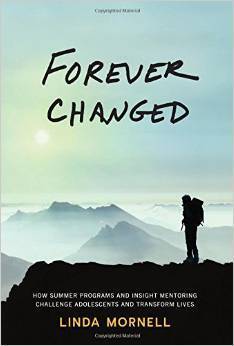 Forever Changed tells the story of psychiatric nurse Linda Mornell, who founded Summer Search. Summer Search is a national organization with a comprehensive program that gives “high school students what they need to develop the personal and practical skills to become college-educated leaders who give back to their families and communities.”
The subtitle of Forever Changed reads as follows: “How Summer Programs and Insight Mentoring Challenge Adolescents and Transform Lives.” While there’s certainly some information on this important subject in the book, neither the subtitle nor the Summer Search mission statement quoted above give an adequate idea of the rich content and compelling stories that await within.
The epigraph for the first chapter of Forever Changed quotes Salman Rusdie: “Those who do not have the power over the the story that dominates their lives, the power to retell it, to rethink it, deconstruct it…and change it as times change…cannot think new thoughts.” This begins to hint at what Mornell is really after in her book: how understanding the stories that make up our lives gives power to change.
The stories in Forever Changed are, in fact, juicy. Mornell uses her own story of starting Summer Search on a shoestring and growing it into a national organization—truly new territory for her—as the framework for telling the stories of participants in the Summer Search programs, often in their own fascinating words.
This is a book that gives hope. The lives of adolescents that Mornell worked with through Summer Search have in many cases been profoundly changed for the better. There’s also insight. What kind of person sticks with it and makes it despite incredible privations? How do you best interview adolescents from troubled backgrounds, and get them to open up and tell their stories? It turns out that even the intake interviews that Mornell and Summer Search conducted have been transformative, and Mornell explains why, her accounts leavened with a sense of humor about the process of growing up in less than privileged situations.
Read Forever Changed for the stories of the triumph of hope and persistence over adversity and an increasingly sclerotic class system. Come away with insight on a number of fronts, most of all how we can make a difference.
Forever Changed is published by Triumph Books, ISBN 978-1-62937-022-4, illustrated, $24.95. Click here for the link to Forever Changed on Amazon.
Full disclosure: I am a friend and admirer of Linda Mornell and the work she has done at Summer Search, and had several discussions with Linda about her book while it was still in manuscript.


March 3, 2015
Cotter Pin
The cotter pin, also sometimes called a split pin, is piece of metal separated into two tines. The tines are bent outwards in installation, and the cotter pin is used to hold two pieces of metal together where the design implies some movement—or even rotation between—the metal segments that are attached.

Cotter Pin © Harold Davis
While the cotter pin is attributed as an invention of Dr Rudolph Cotter in the 1834, there is little doubt that informal variations of this kind of fastener have been in use ever since the very earliest days of the industrial revolution, when the need to flexibly but strongly attach two pieces of metal became important—probably the 1750s or 1760s.
As such, the cotter pin is a great symbol and proxy for the good side of industrial humanity, namely the inventiveness and improvisational ability with which as a species we can approach the mechanical universe. It’s a simple but supple solution, strong, and easy to implement with materials at hand.
The cotter pin shown is at one end of a counting device, probably used in a 19th century industrial assembly line.
I wanted to use my wonderfully sharp Zeiss Otus 85mm lens to photograph the small cotter pin up close and personal, but I needed to get a little closer. So I used an old Nikon PN-11 52.5mm extension tube (Nikon has long since discontinued this part). I retrofitted the extension tube with a tripod collar and tripod plate, which helped to balance the Zeiss Otus 85mm f/1.4, which is a truly extraordinary lens with a weight to match the quality of the optics.
Exposure data: Nikon D810, Zeiss Otus 85mm f/1.4, Nikon PN-11 52.5mm extension tube, 5 seconds at f/16 and ISO 64, tripod mounted.
Related story: Workbench.
March 2, 2015
LAB Color Adjustments
I’m often asked what I mean by LAB color adjustments, so I thought I’d show a simple set. These adjustments are based on a likely suspect, the succulent from my front porch I shot in September. The image is shown in its original version in the linked story (check out the color version) and at the bottom here. The LAB color adjustments I used are shown in the caption of each version. Incidentally, these adjustments are pretty thoroughly explained in The Photoshop Darkroom; you can also download the Photoshop action I wrote to generate this set of adjustments.

Succulent-LAB-All Channel inversion © Harold Davis

Succulent-LAB-L-channel inversion © Harold Davis

Succulent – LAB A-channel equalization-inverted © Harold Davis

Succulent – LAB A-channel equalization © Harold Davis

Succulent-LAB-B-channel equalization © Harold Davis

Succulent-LAB A-channel inversion © Harold Davis

Succulent, original version © Harold Davis
March 1, 2015
What do mountain men, trains, and old barns have in common?
What do mountain men, trains, and old barns have in common? Come find out in a unique photography tour of California’s Gold Rush Country April 9-12, 2015 conducted by my friends Harvey Abernathy and Gail Berreman. Both Harvey and Gail have often worked with me as facilitators for my workshops, and you may already know them.
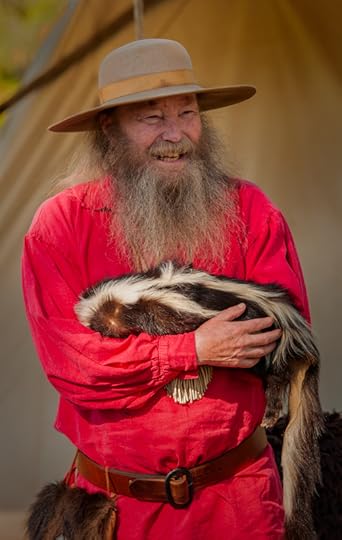
Mountain Man © Harvey Abernathy
Harvey writes, “During the mid-1800’s California saw an explosion of growth from the discovery of gold in the Sierra Mountains. Towns popped up overnight with tens of thousands of people of all cultures rushing in to claim a part of this new life, bringing with them the customs and styles of their life at the time. Come step back in time to experience and photograph the glory of the California Gold Rush from within the heart of the Gold Country in the Western Sierra Foothills. We designed this photographic tour to capture the feeling and flavor of life in the 1850’s during the height of the Gold Rush.”
Click here for detailed information and registration.
As part of the workshop, special access has been arranged to Railtown 1897 State Park in Jamestown, California. Harvey notes: “Here’s an image [shown below] that I captured on the interior of one of the rail cars that we accessed at the rail yard. A number of the cars and engines at this facility have been fully restored, with some utilized for movies. Volunteer engineers and crafts people restore and maintain the equipment, which is used to provide public excursions along a line of the tracks in the foothills of this region. Many of the parts are actually made within the facility, which still houses a working blacksmith and machine shop. There are numerous types of passenger rail cars, steam engines and other rail equipment available to access for overview and close-up photography.”
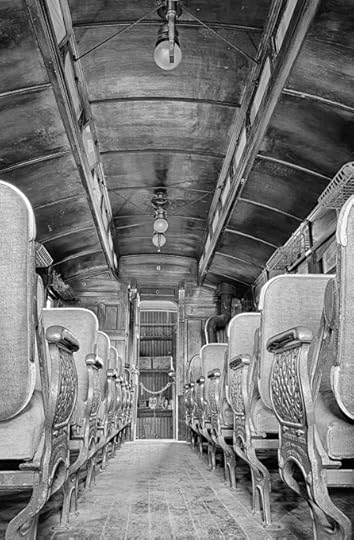
Passenger Car © Harvey Abernathy
This will be a small and intimate group of photographers with unparalleled access to a number of exciting and unique subjects. Whatever your area of photographic interests, you’ll find something to shoot on this tour. I know that Harvey and Gail will take good care of you. What are you waiting for?
Click here for detailed information and registration.
February 28, 2015
The Photoshop Doctor is in: take two webinars and call me in the morning
Stymied by the nuts-and-bolts of creative photography and post-production in Photoshop? Try my webinars for a different approach to jump start your success. Unlimited access to these recordings is $19.95 each. Here’s a comment after watching Photoshop Layers 101:
“Watching Harold work on his imagery, as he would in ‘real-life’, has helped me lock-in techniques that I had read about, but were only theoretical to me. It’s great to have multiple delivery channels for Harold’s information, and I now feel confident I can succeed.”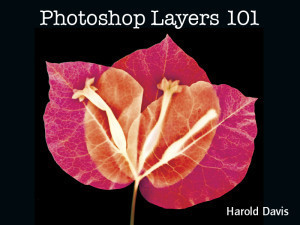
Click here to see more feedback about these webinars!
We currently have seven webinar recordings available:
Converting to Black & White with Photoshop and Nik Silver Efex
Painting in Transparency Using a High-Key Layer Stack Webinar Recording
Using Backgrounds and Textures Webinar recording
Selective Sharpening with LAB Color with Harold Davis
Photoshop Layers 101 Webinar Recording
Creative Use of LAB Color Webinar Recording
Making Memorable Travel Photos
February 27, 2015
New span of the Bay Bridge
When the new Sheriff comes riding into town, everyone needs to adjust. The same thing is true for photographers when a new public structure goes up, particularly when the change is striking and vast enough, like it or not, to totally change the landscape. When this kind of change happens we must assess the alteration to our familiar landscape, and seek out new vantage points to include the new element in our photographs.

New Span of the Bay Bridge © Harold Davis
The new span of the San Francisco Bay Bridge, from Yerba Buena Island to Emeryville and Oakland on the East Bay side, is this kind of change. Driving across the new bridge is a compelling experience, with the structured and regular lighting, and a mostly open feeling. In comparison, the old 1930s bridge was a bit closed-in, and far less expansive feeling.
Walking the new bridge is exciting, although the walk is mostly in the shadow of the old structure (the old roadway is shown in this linked story). With the last of the old bridge scheduled to come in staged demolition, the walkway will eventually no longer be dominated by the shadow of the past.
But none of this prepares one for the impact and resonance of the tower of the new Bay Bridge, which can be photographed from a variety of interesting locations around San Francisco Bay. I made the image shown in this story while leading a night photography workshop from Treasure Island, just across the small isthmus that connects Treasure Island with Yerba Buena Island.

Old and new © Harold Davis
Related stories: Out with the Old; Bay Bridge Lights. For a pattern I observed on the new Bay Bridge walkway, see Broken Arrow.
February 26, 2015
If not now, when?

Sea-Girt Villages of Italy Photography Adventure with Harold Davis is 15 Days and 14 Nights. The cost is $6,495.00 per person. With a maximum group size of 12, places are limited. So don’t delay. Click here for Prospectus and complete details, and here for Registration instructions.
Download this advertisement as a PDF printable e-card. Click here for Harold Davis 2015 Workshop schedule, and here for the Making Memorable Travel Photos Harold Davis webinar recording.
February 25, 2015
Making Memorable Travel Photos and other Webinar recordings
I’d be the first to admit that my series of webinar recordings are home-grown. These are not highly polished, and they show the actual techniques I use.
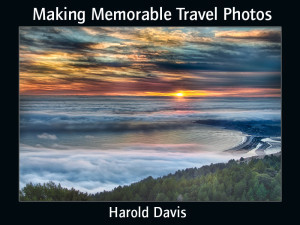
Many of us like to travel, and when we travel we bring our cameras. But there’s a strange paradox: no matter how unique and photogenic our destinations, mostly the photos we come back with are pretty dull. Your travel photos do not have to be boring!
Featured Webinar recording: Making Memorable Travel Photos (unlimited access to the recording only $19.95).
Description: In this presentation, noted photographer and digital artist Harold Davis shares his spectacular imagery from many places around the world as well as “abroad at home.” He’ll share the backstories about how many of his images were made, and what was going on at the time of the exposure. Hint: If men in military uniforms come toward you pointing automatic weapons, stop photographing whatever it is that you are photographing, and turn around slowly!
While showing his award-winning imagery, and sharing his travel photography stories, Harold will explain topics including:
The Making Memorable Travel Photos webinar covers:
How to research and prepare for any travel destination
Planning tools that Harold uses to maximize his chances of photographic success
Figuring out where the light is coming from to get the best photos
How to be “at home abroad” no matter what your destination
Making travel photos that rise above the mundane
Photographing people when you travel
How to ask a stranger permission to take their photo
Making travel photos with a personal viewpoint
How to get good shots when you are with a group
Editing and presenting your photos when you get home
The presentation will conclude with ample time for Q&A.
Want to move your photographic imagery from the mundane to the artistic? Then maybe this webinar—is for you! Learn to find the special at home and abroad in this extraordinary presentation from Harold Davis, one of the living masters of digital photography.
What some viewers of our webinars have said:
“Your webinars are very educational and inspiring!”
“Watching Harold work on his imagery, as he would in ‘real-life’, has helped me lock-in techniques that I had read about, but were only theoretical to me. It’s great to have multiple delivery channels for Harold’s information, and I now feel confident I can succeed.”
Check out our webinar recordings ($19.95 each for unlimited access):
Painting in Transparency Using a High-Key Layer Stack Webinar Recording
Using Backgrounds and Textures Webinar recording
Selective Sharpening with LAB Color with Harold Davis
Photoshop Layers 101 Webinar Recording
Creative Use of LAB Color Webinar Recording
Making Memorable Travel Photos
Click here for more info about Harold Davis webinar recordings.
February 24, 2015
Wabi-Sabi Anemones
Beauty should never be a hostage to perfection. Wabi-sabi is a Japanese aesthetic that recognizes the beauty in transience and imperfection. These anemones were beautiful in their prime. They are also beautiful, in a different and perhaps deeper way, as they age.

Wabi-Sabi Anemones © Harold Davis
Photographed on a white seamless background using sunlight with my Nikon D810 and Zeiss Otus 85mm f/1.4 at 1.6 seconds, f/16, and ISO 64.
Related story: Tulip Wabi-Sabi.
February 18, 2015
Preview my Craftsy Photographing Flowers course
Click here to watch the trailer for my Photographing Flowers course on the Craftsy platform. Use this link to sign up for Photographing Flowers with a special 50% off today.
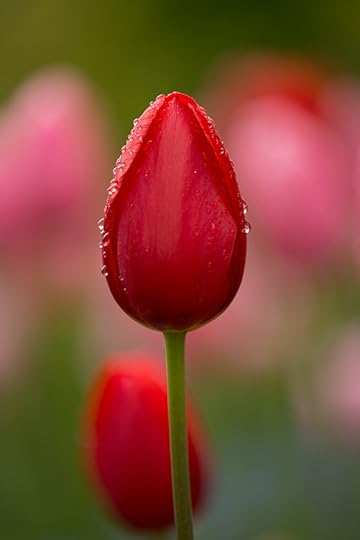
Red Tulip at Giverny © Harold Davis
If you like flower photography, you might also be interested in my books Photographing Flowers (Focal Press) and Creative Close-Ups (Wiley).
I’ll also be giving two flower photography workshops in 2015, a Masterclass in Creative Flower Photography in June at the Heidelberg, Germany Summer School of Photography (class taught in English) and a Creative Flower Photography workshop at Maine Media in Rockport, Maine in August.

Tulips on White © Harold Davis


