Marcia Meier's Blog, page 2
May 31, 2019
Beautiful Barcelona!
We spent three days in Barcelona, visiting friends from Santa Barbara who are living there for two years. We had been walking and touring museums and cathedrals and sights in Florence and Rome, and I was looking forward to some down time with our friends. But it was not to be! Janis had us moving from the moment we arrived until we left on the train for Madrid three days later.
On the day we visited Gaudi’s spectacular basilica, Sagrada Familia (Holy Family), we were lucky to be there to see a demonstration/competition unique to Catalon called Castells, or human towers. Dozens of people create a human tower by building a base and then climbing up on top of each other. It was fascinating, and also terrifying. One of the towers collapsed as the top people were descending, which was heart-stopping.
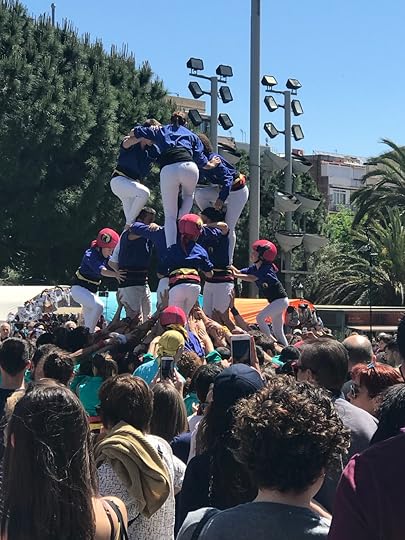
Castelleers climb on top of each other to build a human tower
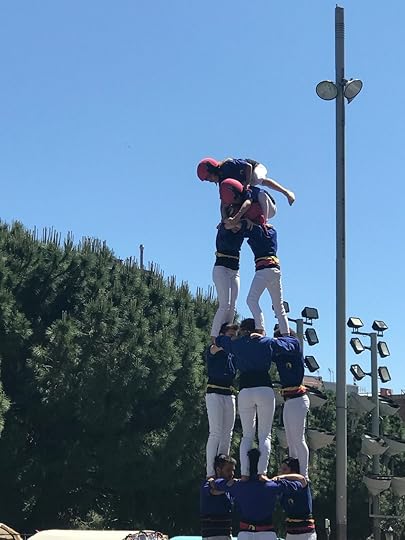
Almost there!
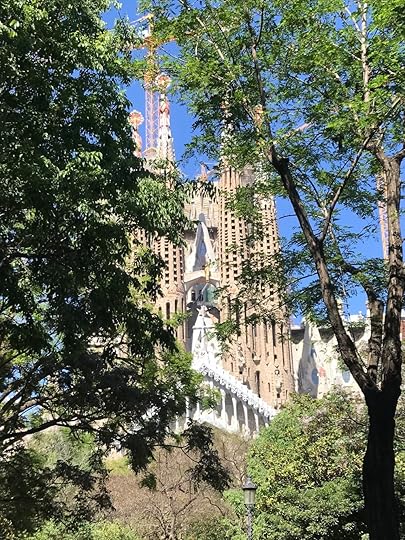
Sagrada Familia
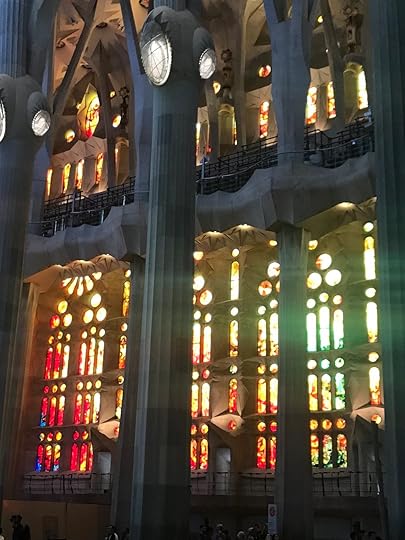
A photo of the stunning interior of Sagrada Familia, which doesn’t come close to doing it justice
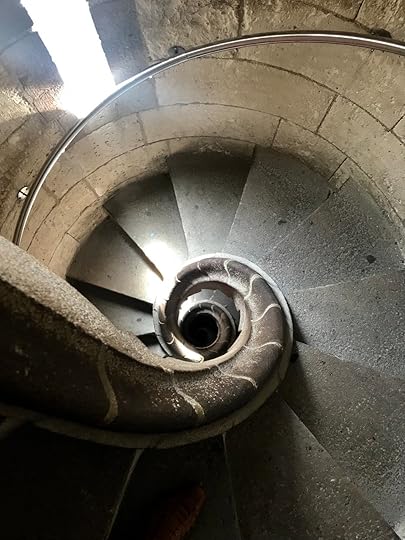
Stairs in one of the basilica towers
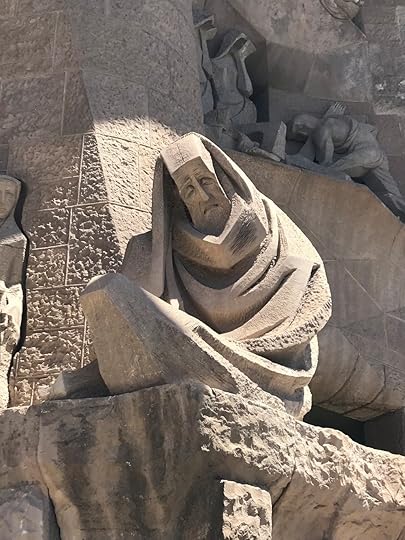
On the Passion side of the basilica
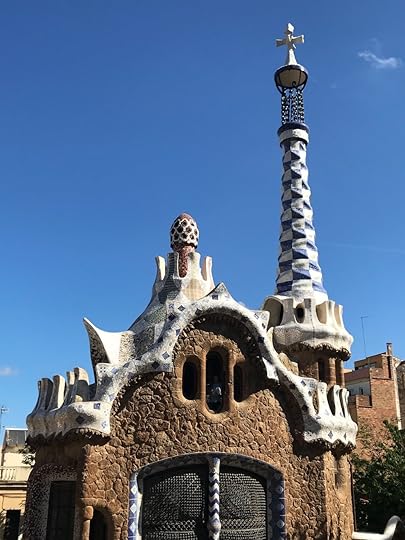
Gaudi’s Parque Guell


Easing Back into Life
I’ve been home for almost two weeks, and am just starting to feel like myself again. Jet lag after a month in Europe and days of walking seven to 10 miles each day definitely took their toll! But I absolutely loved every minute of our travels, and especially my 10 days in Tuscany with my colleague Helena Hill and the 11 women we took on our writing and painting retreat. (See my previous posts for more on our retreat and my subsequent travels through Italy. I will post more photos from our time in Spain, as well.)
One of the things I realized once I got home is I want to do it again! So I am looking into leading a writing retreat to southern Spain in 2020, and Helena and I are talking about another writing and painting retreat in Tuscany in 2021. Stay tuned for more details, but if you’re interested, take a look at this trip’s itinerary, and let me know if you are interested in a future retreat. And if you would like to get my Weeping Willow Books newsletter, sign up here.
Meanwhile, here are more images from our time at Casa Fiori in Tuscany:
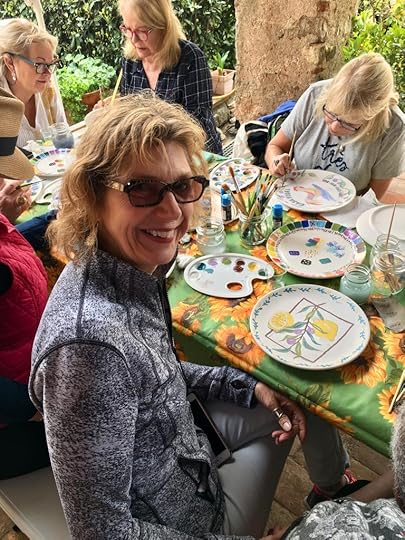
Painting our ceramic plates at the watercolor studio of Katinka Kielstra near Lucca, Italy
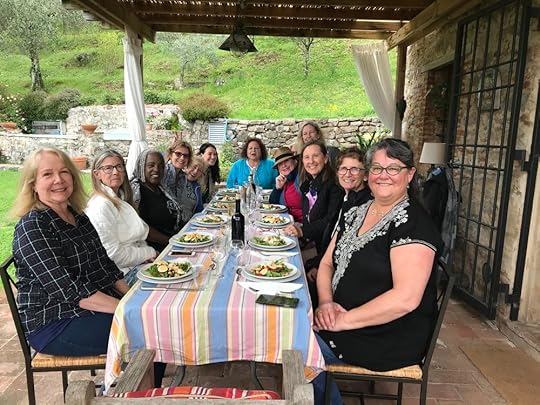
Lunch at Katinka’s
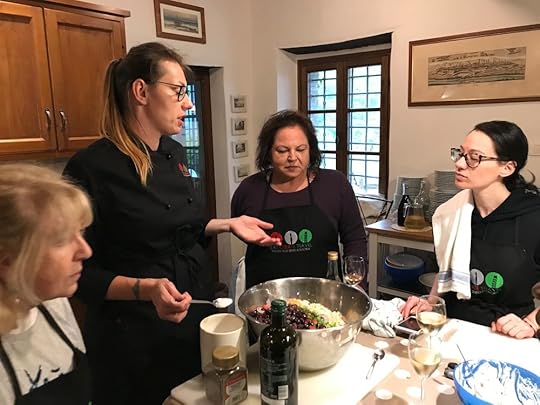
Cooking class with Karolina
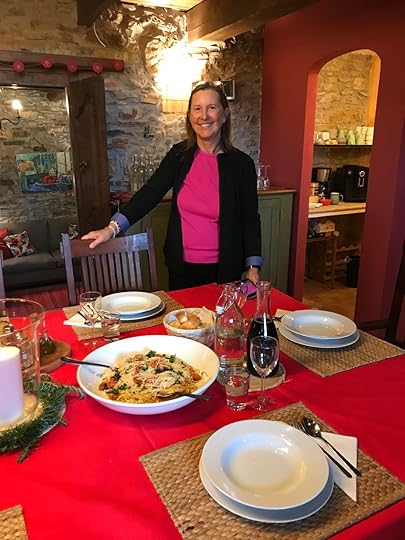
Helena with a typical lunch at Casa Fiori
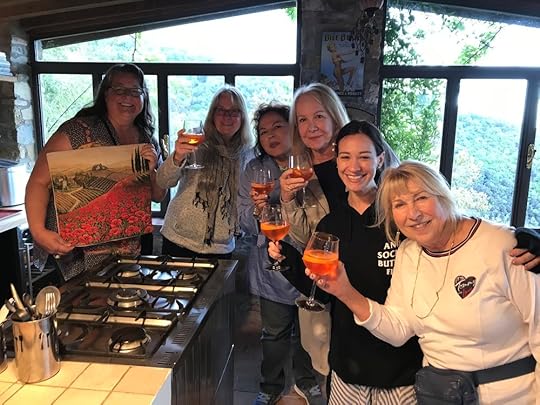
Celebrating a successful shopping expedition into Lucca
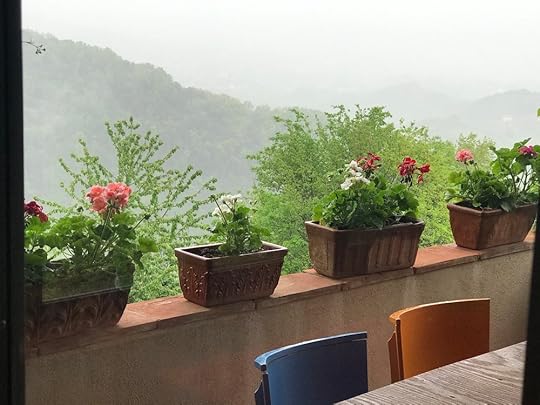
Ciao, Casa Fiori. See you again soon!
May 13, 2019
Roma!
Images from our five days in Rome, with a one-day side trip to Pompeii.
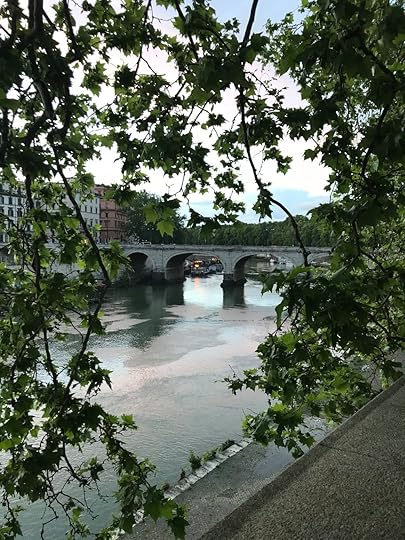
Overlooking the gorgeous River Tiber in Roma.
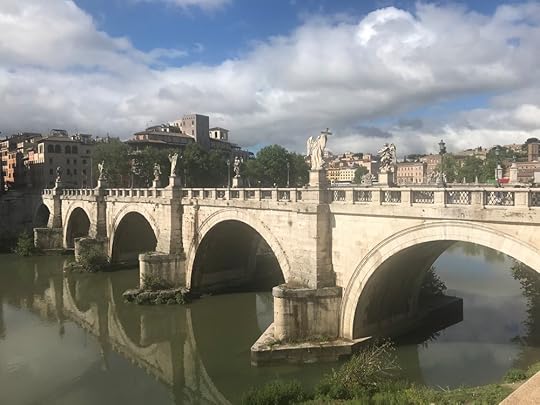
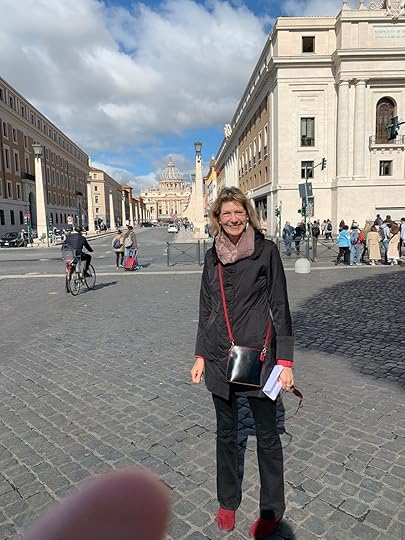
On our way to the Vatican.
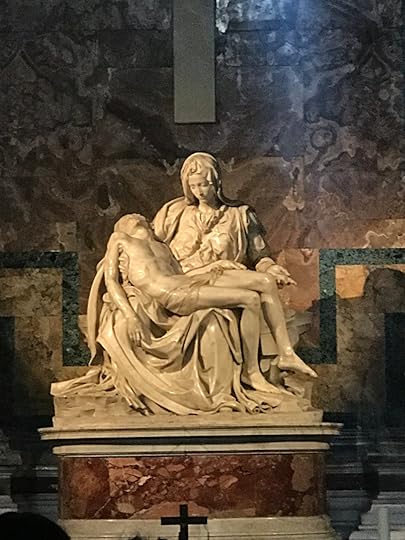
Michelangelo’s Pieta at St. Peter’s Basilica.
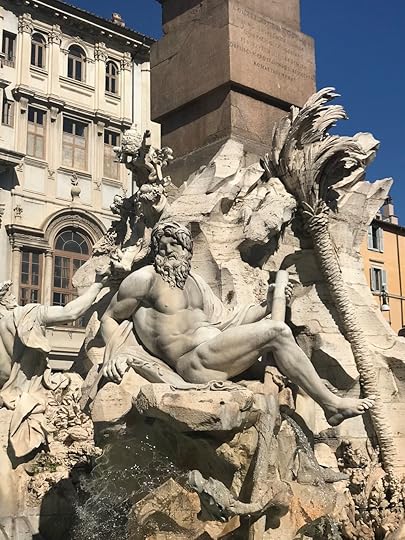
The Fontana dei Quattro Fiumi (Fountain of the Four Rivers) is in the Piazza Navona in Rome, near where we stayed. It was designed in 1651 by Gian Lorenzo Bernini for Pope Innocent X and represents the four major rivers of the four continents through which papal authority had spread, according to Wikipedia. They are the Nile, representing Africa, the Danube, representing Europe, the Ganges, representing Asia, and the Río de la Plata, representing the Americas.
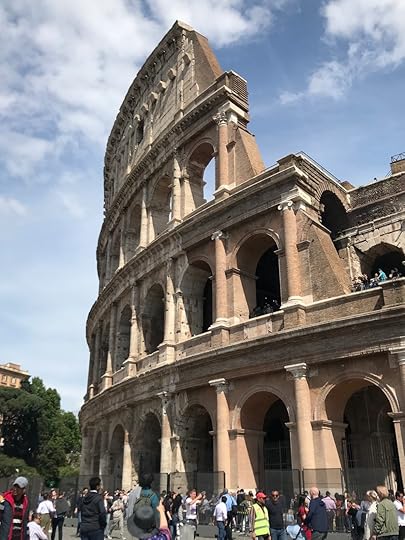
The Coliseum—wowza.
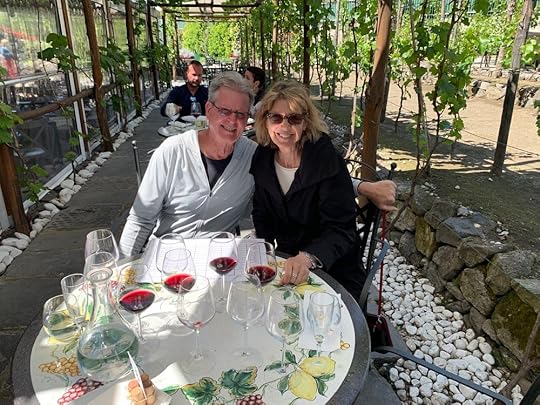
Lunch—and wine tasting—at the Bosco de Medici Winery in Pompeii.
Firenze!
Photos from our three days in the spectacular city of Florence, Italy.
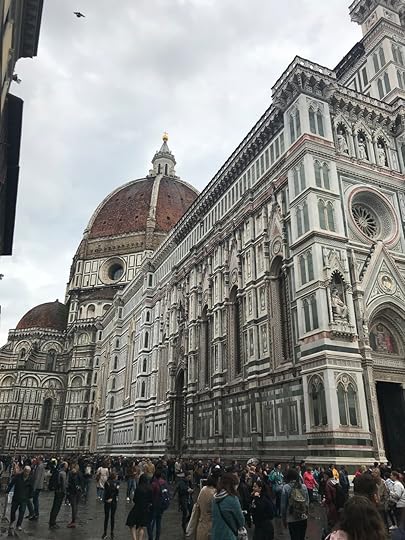
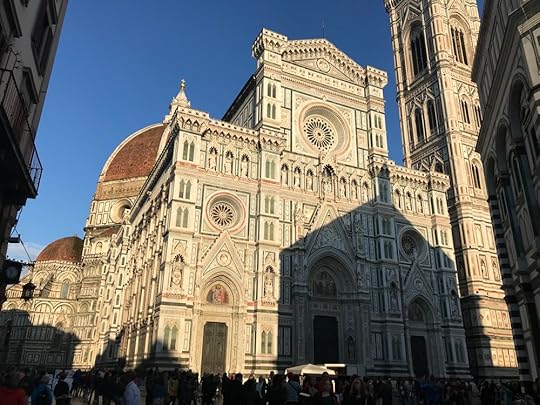
The Duomo in Firenze—formally Cattedrale di Santa Maria del Fiore, the Cathedral of Saint Mary of the Flowers.
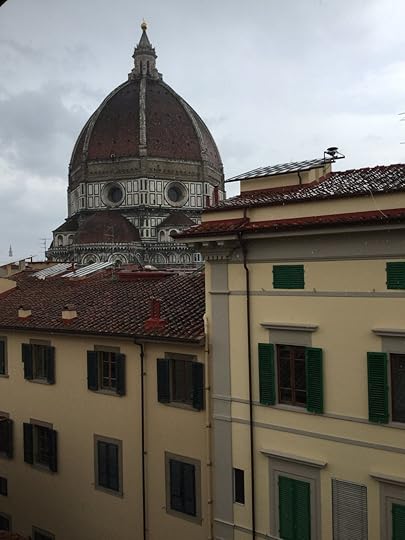
The view from our hotel.
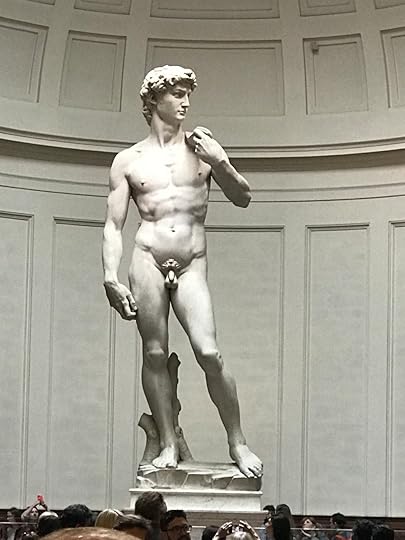
Michelangelo’s David is as impressive as it’s said to be.

The beautiful Ponte Vecchio.
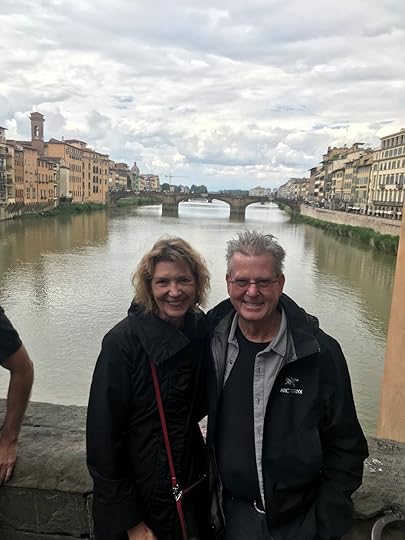
Overlooking the Arno River.
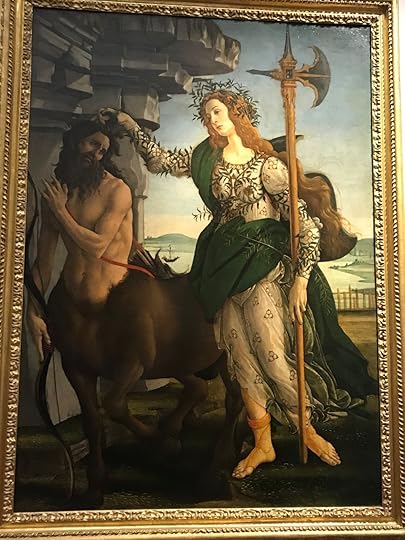
A Botticelli at the Uffizi Gallery.
Saying goodbye to Italy
On the train from Barcelona to Madrid! It has been a whirlwind ten days since I left Lucca and all the wonderful women on our retreat. We had such fun writing and painting and visiting so many wonderful places in Tuscany. We’ll forever be grateful to Karolina Lenart, her husband, Dawid, and all the people who made our ten days at Casa Fiori so magical.
I met Rob in Florence after leaving Lucca, and we have been on a fabulous journey of seeing extraordinary art and experiencing local foods and customs in Italy. After Florence we took the train to Rome, where we had five days, which hardly seemed enough, especially with a side trip to Pompei. (Photos to come.)
Then it was on to Barcelona to visit our friends Janis and Bengt, who are spending two years there. We saw every sight there was to see, it seemed, ate too well (and too much), and capped our three days together with a rousing flamenco concert.
The last few days in Tuscany also were a blur of activity, with visits to the Town of Fine Towers, San Gimignano, a biodynamically farmed vineyard and winery, and the coastal town of Portovenere. The views and monuments in Portovenere are stunning (well, everything is stunning in Tuscany). On our final evening at Casa Fiori, we celebrated by tasting our limoncello and sharing our writing and painting. I actually painted some still lifes and a landscape (see below).
More soon from Madrid!
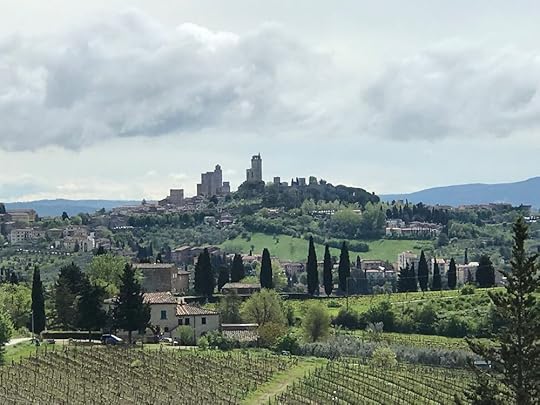
San Gimignano, the Town of Fine Towers. A UNESCO World Heritage site, it boasted 84 towers at one time. Eighteen still exist.
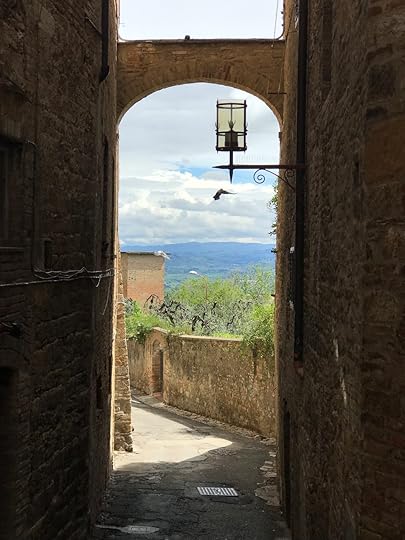
Kathleen Barry and I found a sweet little restaurant down this narrow street in San Gimignano.
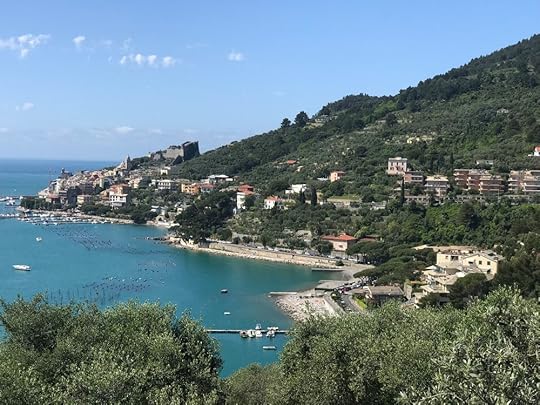
Portovenere!
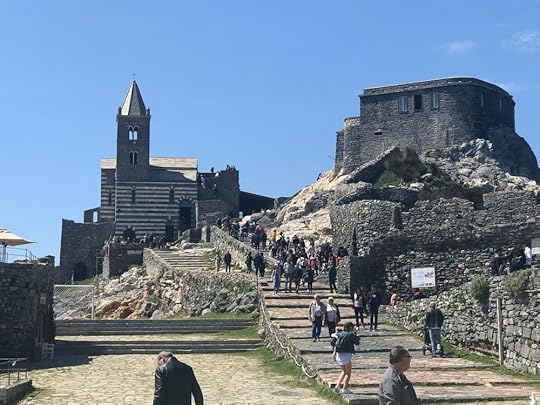
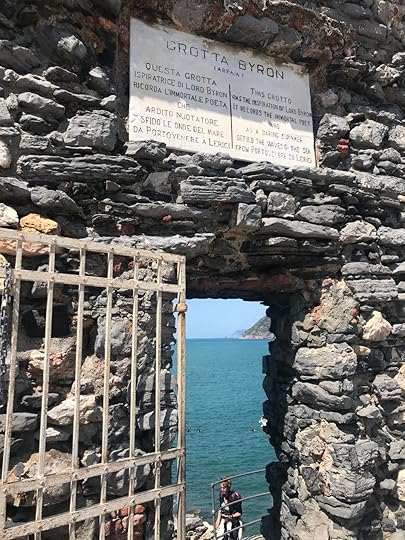
Church and grotto at Portovenere. Lord Byron is said to have swum in the ocean from the grotto.
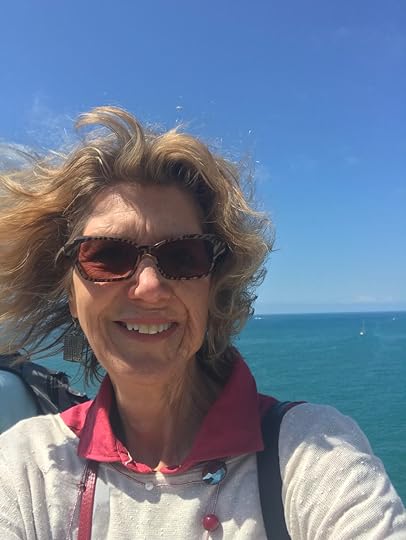
Windy! Portovenere is just south of the villages of Cinque Terra.
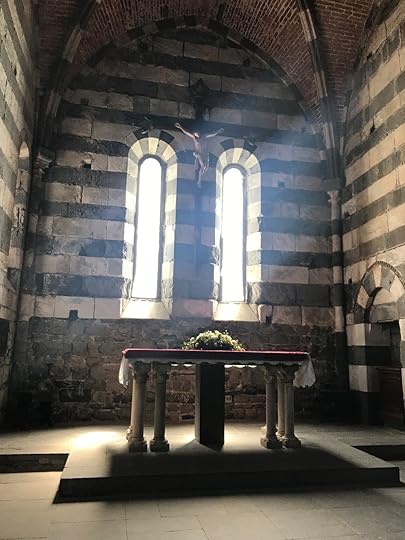
The altar inside the church at Portovenere.
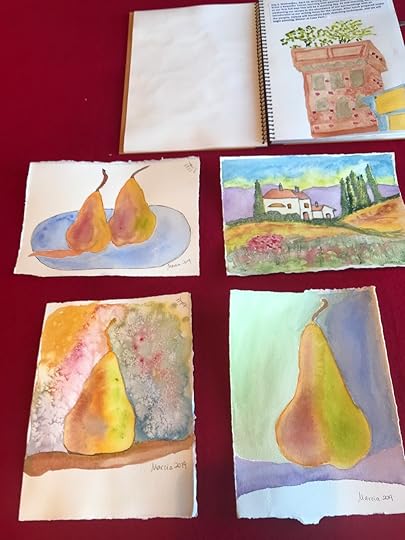
My first watercolors, with thanks to the excellent teaching of my colleague-in-crime Helena Hill. (Remember the tree tower in Lucca?).
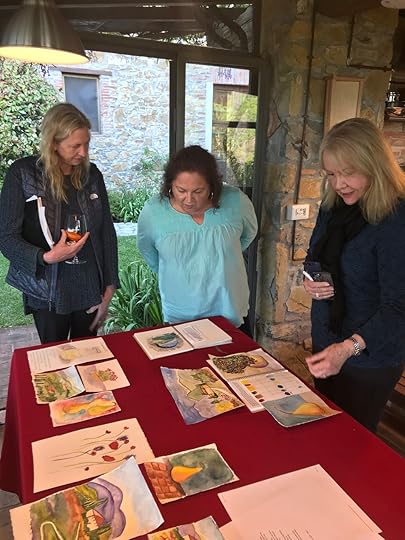
Enjoying the fruits of our labors.
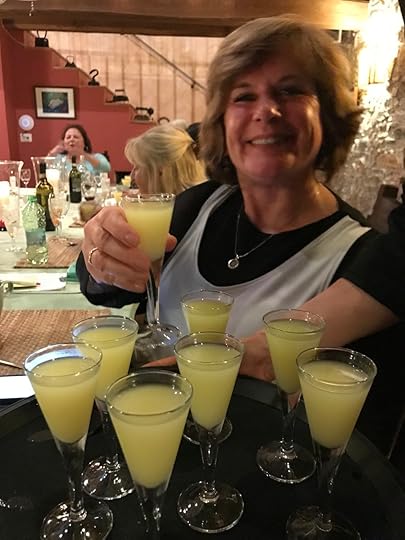
Kathleen with the limoncello we made.
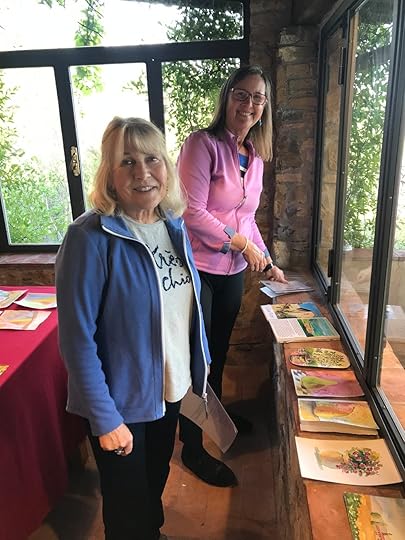
Helena, right, and Patricia assess our paintings.
April 28, 2019
Lucca–Impressions, Day 5
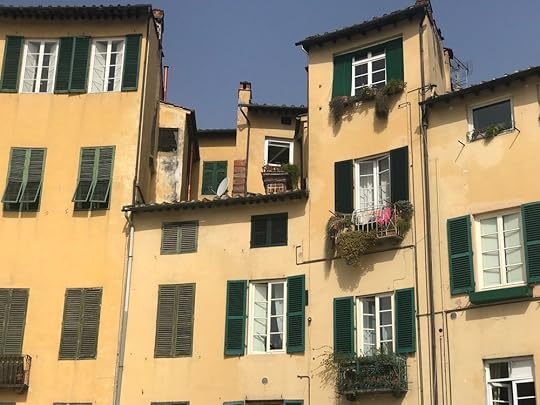
Piazza dell' Anfiteatro, the Roman coliseum in Lucca
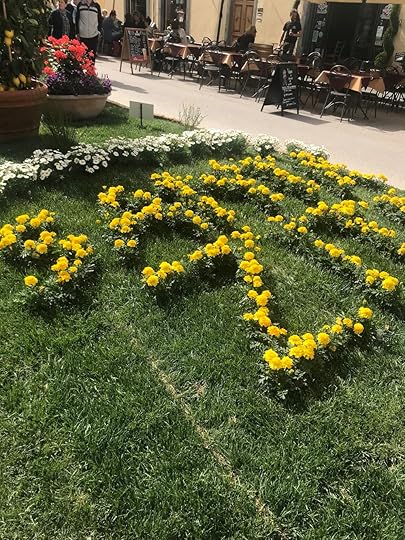
Flowers prepared for the festival of Sant Zita.
There are a surprising number of cani (dogs) here in Lucca—lots of purse dogs and small dogs carried in people’s arms. Today is the Sant Zita Flower Festival, and there are thousands of people wandering the narrow streets. As the story goes, Zita was a housemaid in a wealthy household who, despite it being against the rules, smuggled leftover bread out in her apron at night to feed the poor. One night the police stopped her and asked what she held in her apron. She said flowers. When they made her open her apron, it was indeed flowers—a miracle. Thus she was made a saint.
We had lunch at the restaurant L’isola che non c’era (the island that wasn’t there) and I opted for a salad nicoise after four days of pasta. I have never eaten so much in my life—honestly! Every meal has at least three courses, and often five or more. Tonight we attend a Puccini concert in one of the cathedrals, followed by an eight-course dinner at La Norma, our host Karolina’s favorite restaurant.
Puccini, who was born in Lucca in the mid-1800s, was a brilliant composer (“La Boheme,” “Madama Butterfly”). But he was also a braggadocio fashionista who flaunted his wealth and angered people in his hometown. After he took up with a married woman, Puccini was driven off. At least that’s the story our guide, Paola, told us during our walking tour.
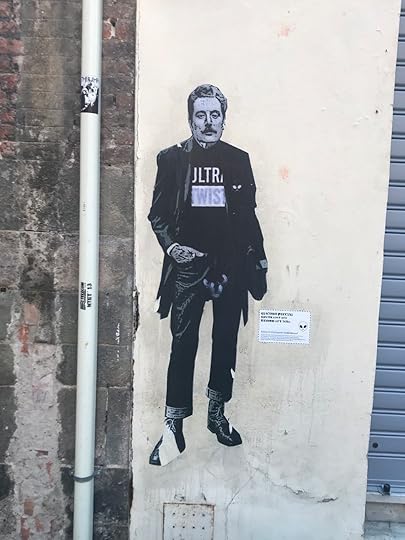
Puccini if he were alive today, as envisioned by a street artist.
Luca has a long and storied history that stretches back thousands of years. It is been continuously occupied since its founding and you can still plainly see remnants of the original Roman walls built around the early city. Today the walls reflect those built in the Medieval years, while the modern city of Lucas stretches beyond them. The city was at one time the capital of the Silk Road, and when Napoleon conquered Italy, instead of destroying Lucca, he gave it to his sister, Elisa, so she could be a princess. She did many good things for Lucca, Paola explained, including building an aqueduct to bring water into the city. But she also did bad things, Paola said, notably razing an old cathedral in front of her palace because it interfered with her view. An annual music festival is held in July on the site, which this year features Elton John and Sting, among others.
There are a number of towers in Lucca, and in the Middle Ages the higher your tower, the more money and power you had. The most famous tower—Torre Guinigi—was built by the Guinigi family, which planted trees on top (which are still there), to make their tower appear even higher than it was.
Next up: a visit to the historic five-tower town of San Gimignano.
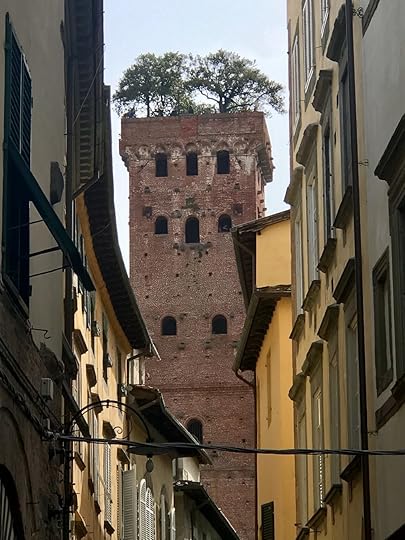
Torre Guinigi
April 26, 2019
Lucca —Day 3: Painting our Ceramic Plates
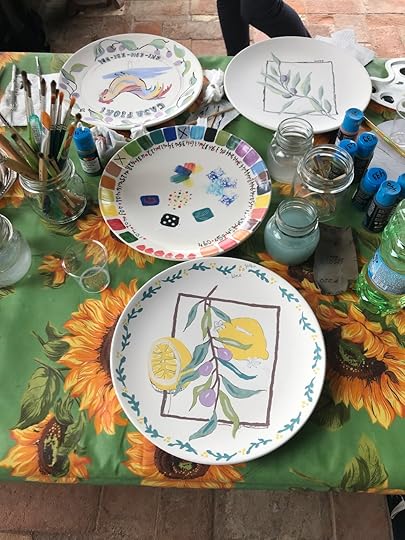
What an extraordinary day! We took our prepared plates to the studio and home of the ceramicist Katinka Kielstra, where she and her husband, Robert, greeted us with coffee and Prosecco, and Katinka helped us glaze them. I have never drawn or painted, but I have to say it was a magnificent experience. Some of the women, as you see above, were exceptional artists, but all the plates turned out to be quite beautiful.
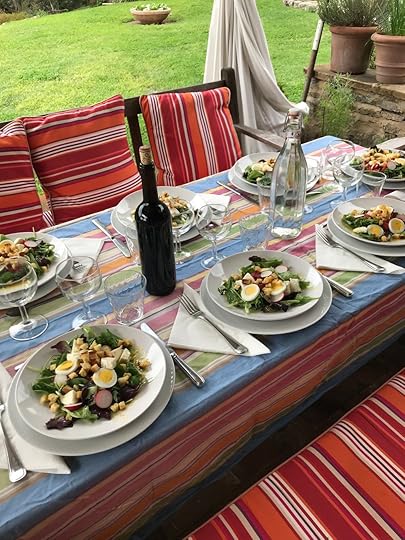
After a scrumptious lunch of homemade lasagna prepared by Katinka, we walked up the hill a short ways to the olivewood studio of Stefano Geminani, who demonstrated how he creates olive bowls and other beautiful pieces on his hundred-year-old wood-carving machines. It takes a minimum of 15 years to produce an olive wood bowl, because it takes that long for the wood to season. Sadly, his daughters have no interest in carrying on his craft, and he is forbidden from hiring or teaching anyone else the skill because his ancient machines have no safety equipment. When Stefano retires or dies, another tradesman of the old craft will be gone forever with no one to take his place.
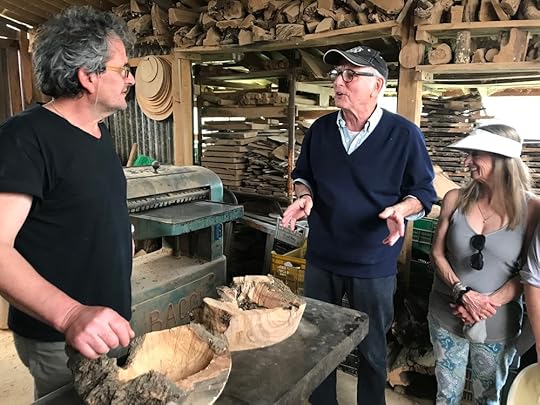
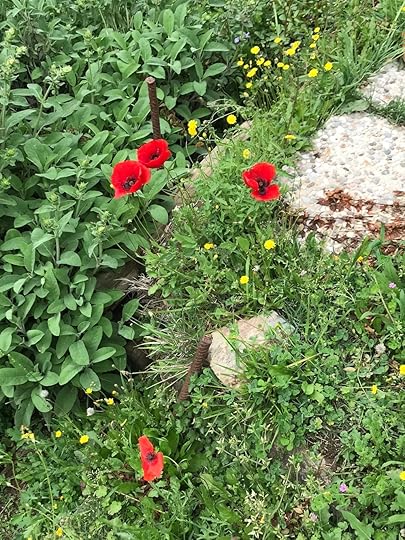
As we walked back to Katinka’s, I was struck by the vision of the hills that hold these beautiful orchards and groves. They are stunning in their variations of color and depth—punctuated by bright red poppies and other colorful flowers; the wisteria especially was extraordinary.
Back at Casa Fiori, Karolina prepared another delicious dinner with wine, and limoncello for dessert, of course. On Wednesday, Katinka will bring us our fired plates to bring home. Tomorrow, a day at the market in Lucca.
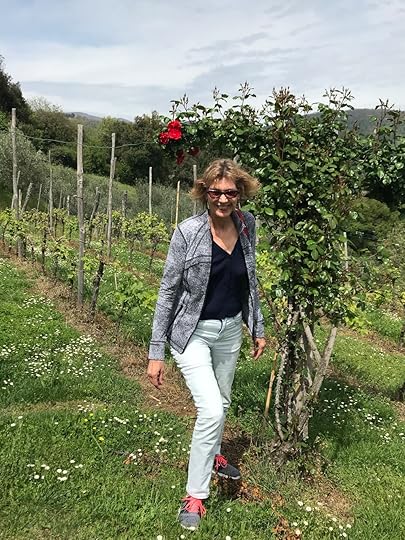
Walking through the olive orchard at Il Gallo
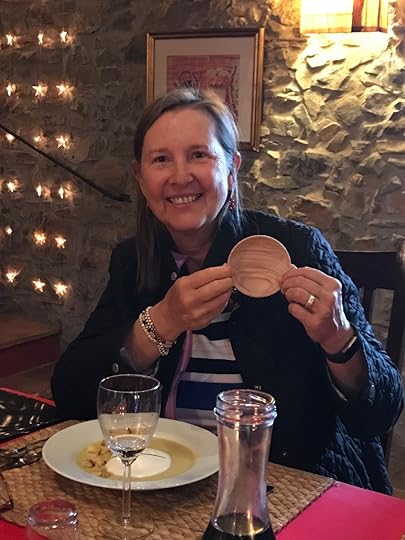
Helena with the bowl Stefano carved
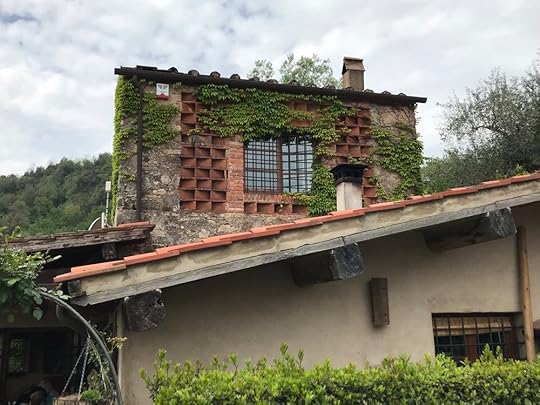
April 24, 2019
Casa Fiori, Lucca, Italia—Day 2
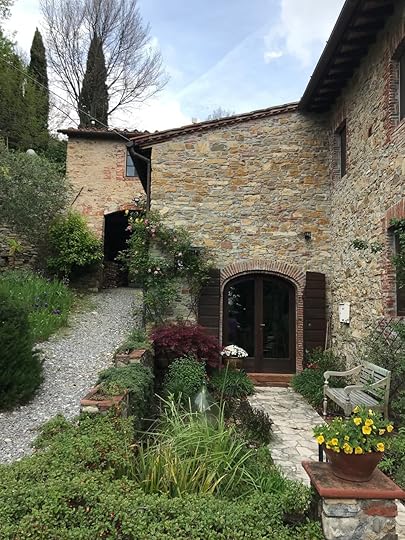
The entrance to Casa Fiori
We spent this morning writing and talking about creativity and Julia Cameron’s wonderful book, The Artist’s Way. After lunch we designed our ceramic plates, with Helena’s expert advice. Tomorrow we will visit a local ceramicist’s studio to paint them, then Katrinka will fire them so we can take them home at the end of our retreat.
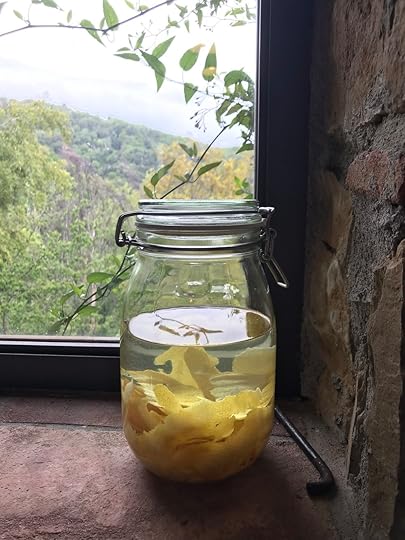
Limoncello
We also made traditional limoncello, a potent liqueur made from lemons (recipe below). It will “cook” for nine days and we will toast with it on our last evening here.
The architecture and landscapes in this part of Tuscany are stunning—everywhere you look something extraordinary draws your eye: centuries-old villas, olive groves, soaring cathedrals with columns, statues, and murals.
Casa Fiori Chef and manager Karolina Lenart’s food is exquisite Italian—simple, organic, and delicioso. My only “complaint” is there is too much of it. Every meal consists of at least four courses—appetizers, primi, secondi, and salade. If you count dessert, it’s five.
Limoncello
Zest of eight lemons (do not grate the lemon peel; use a knife to slice the rind, being careful not to cut into the white pith)
1 liter grain alcohol (or vodka)
Place in an airtight jar at room temperature for at least eight or nine days (if using vodka, at least three weeks)
Add 1 liter water and 250 to 270 grams sugar (about one cup)
Freeze
Enjoy!
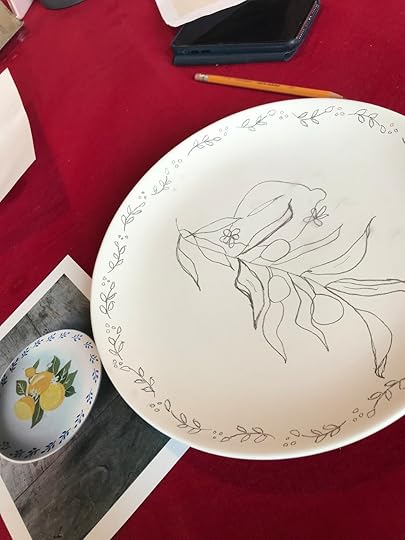
Designing our plates
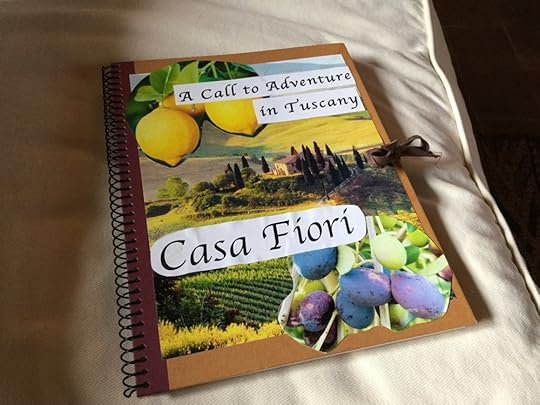
My writing and painting journal
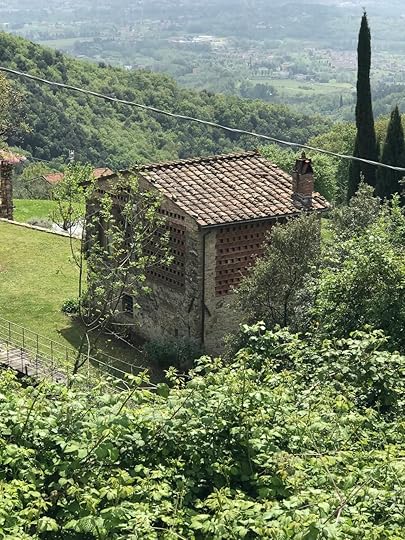
A beautiful old dovecote
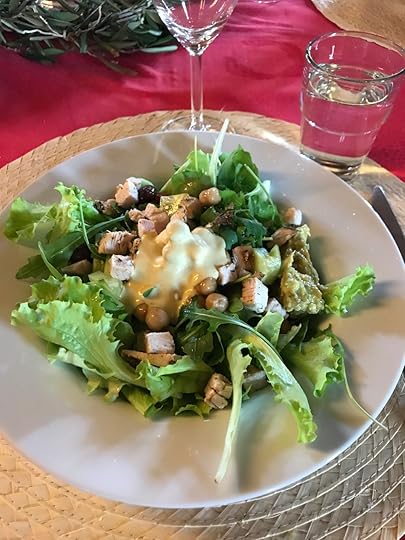
Lunch! (first course)
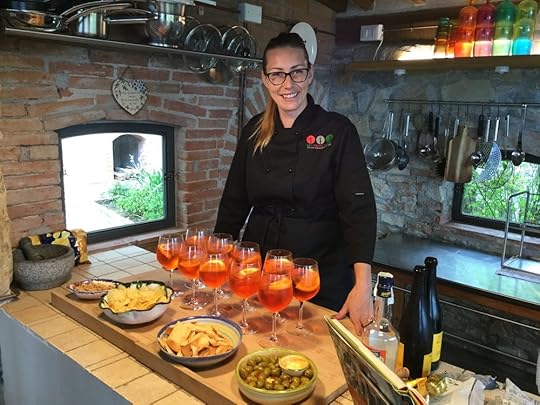
Karolina with our afternoon spritzers
April 23, 2019
Ciao from Lucca, Italia!
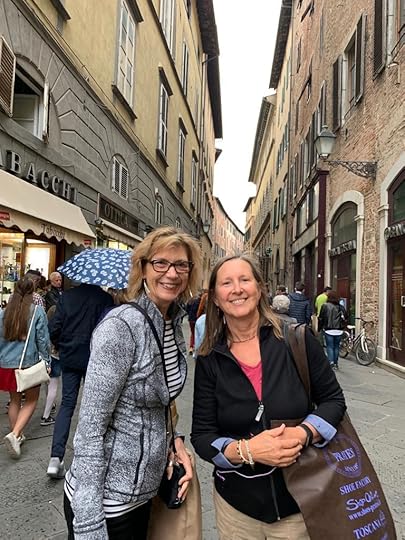
Greetings from beautiful (and, today, rainy) Tuscany. My colleague, Helena Hill, and I arrived two days ago with one of the eleven women joining us on this writing and painting adventure for the next ten days. All but one of the rest of the group are expected within the hour.
We are at a 400-year-old villa run by the inimitable Karolina Lenart, a fabulous chef, and her husband and family. We were welcomed warmly with a lovely pasta lunch and wine.
Yesterday morning I walked down from our rented flat in Lucca (we came two days before the retreat) to the cafe below to be greeted by Boris the bulldog and the friendly, and, thankfully, English-speaking staff. I gobbled a sticky and sweet rice pastry with my cappuccino as I wrote. Boris was friendly but not so much that you were assured he liked you. Coincidentally we encountered another bulldog this afternoon at the villa— Bonitato. See if you can guess which is which.
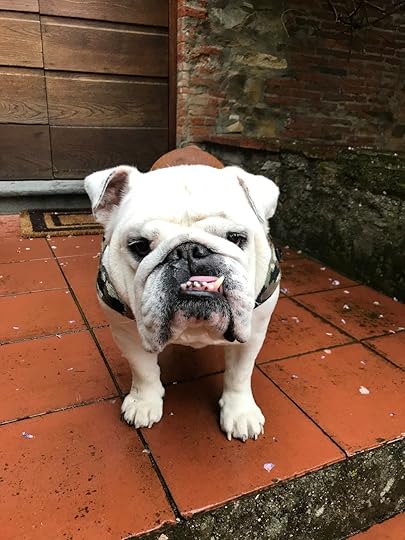
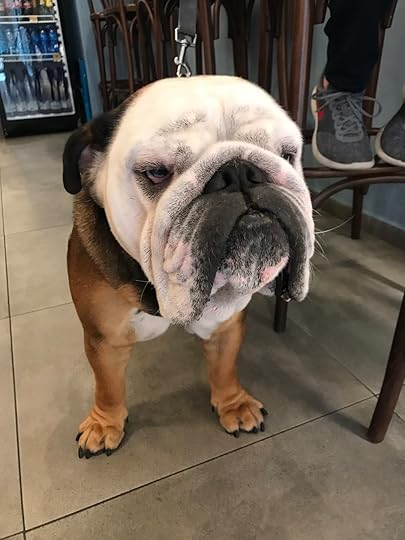
The overnight flight from LAX was uneventful and I even managed to sleep about five hours, though fitfully. I was pleasantly surprised to find I had the entire row of three seats to myself. I also watched two movies and listened to almost four hours of my audio books—Amor Towles’ A Gentleman in Moscow and Pam Houston’s new memoir, Deep Creek, Finding Hope in the High Country. I finished Pam’s book early this morning when I awoke at 2:30 a.m. and couldn’t go back to sleep.
Honestly, every human being who cares about the natural world—and perhaps more importantly those who don’t—needs to read this book. It is a lovely treatise on the value of hard work amid the reality of nature and death and grief and loss, humanity and animals and the environment, human folly and hope and despair. It’s funny how someone whose life experiences are so vastly different from your own nevertheless can feel like a deeply connected sister or best friend.
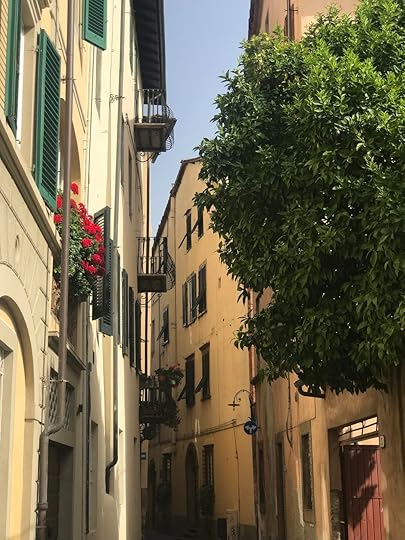
Our flat in Lucca was vast by European standards—three bedrooms and two bathrooms in the heart of Lucca town. Lucca is a medieval walled city filled with colorful buildings, fine leather shops, boutique clothing and pottery shops, restaurants and gelateria. Oh, and churches, towers and cathedrals.
Tomorrow—Casa Fiori, painting and writing, on our Call to Adventure.
January 17, 2019
Have You Heard About 'Girl Talk,' the Podcast?

I started a podcast last fall called “Girl Talk, Women, Aging and Sexuality.” It’s a 20-minute romp through all things related to women, health, aging, and sexuality, not necessarily all at the same time or in that order.
What a wonderful learning curve this has been! And thank goodness for my awesome sound engineers, who make me sound halfway decent (and know how to delete those pesky “ums”). Give a listen to my latest, featuring NYT bestselling author Gail Hudson. And while you’re there, check out earlier episodes with such luminaries as philanthropist Eva Haller, psychologist (and my co-author of Unmasked) Kathleen Barry; professor and author of Becoming Clitorate Laurie Mintz, hormone expert Dr. Erika Thost, and others. I am having a blast getting to know them and also bringing these important topics to you. Please subscribe and consider sponsoring the podcast. (Here is the interview with Gail.) And do tell me what you think!