Stella May's Blog, page 21
October 22, 2021
Shorthand
from Catherine Castle

When freelancing for the newspaper, I had to use shorthand to write fast, so I developed a method of writing without consonants. It’s amazing how fast I could go and still figure out the words. So, for today’s post, I thought I’d let you take a swing at the translation.
Here’s the shorthand version:
Whn frlncg fr th nwsppr, I hd t us shrthnd t wrt fst, s I dvlpd a mthd f wrtng wtht cnsnnts. t’s mzng hw fst I cld g nd stll fgr t th wrds. S, fr tdy’s pst, I thght I’d lt u tk a swng t th trnsltn.
Imgn hw hrd t wld b t wrt lk ths ll t tm. t’s lk lkng t dcphr t dclrtn f ndpndc wth ll ths crlc, swrlng lttrs tht r msplld. R myb t’s mr lk tdy’s kds trng t rd crsve tht thy hvn’t bn tght. Smtms evn I cldn’t fgr t wht I’d wrttn. ftn t’s a gssng gm.
Gv p yt?
‘m wndrng hw mny ppl cn fgr t wht’s mssg hr. S t a gg? Sr. S t fnny? U prbly dn’t thnk s as u’re strgglng t rd ths wrds.
Figured it out yet?
Here’s the translation:
When freelancing for the newspaper, I had to use shorthand to write fast, so I developed a method of writing without consonants. It’s amazing how fast I could go and still figure out the words. So, for today’s post, I thought I’d let you take a swing at the translation.
Imagine how hard it would be to write like this all the time. It’s like looking to decipher the declaration of Independence with all those curlicues, swirling letters that are misspelled. Or, maybe it’s more like today’s kids trying to read cursive that they haven’t been taught. Sometimes even I couldn’t figure out what I’d written. Often it’s a guessing game.
Give up yet?
I’m wondering how many people can figure out what’s missing here. Is it a gag? Sure. Is it funny? You probably don’t think so as you’re struggling to read these words.
How well did you do?
Here’s a peek at my latest sweet romance for your reading pleasure.

One date for every medical test—that’s the deal. Allison, however, gets more than she bargains for. She gets a Groom for Mama.
Beverly Walters is dying, and before she goes she has one wish—to find a groom for her daughter. To get the deed done, Mama enlists the dating service of Jack Somerset, Allison’s former boyfriend.
The last thing corporate-climbing Allison wants is a husband. Furious with Mama’s meddling, and a bit more interested in Jack than she wants to admit, Allison agrees to the scheme as long as Mama promises to search for a cure for her terminal illness.
A cross-country trip from Nevada to Ohio ensues, with a string of disastrous dates along the way, as the trio hunts for treatment and A Groom For Mama.
EXCERPT
With a sweep of his hand, Jack spread the photos out on the table in front of Allison and Beverly. “Here’s a few I just grabbed from the database. Any of them interesting?” He studied Allison’s reaction. She didn’t bat an eyelash as she scanned the men’s pictures. Then, without warning, she scooped them up and shoved them at him.
“I told Mama I wasn’t going to do this. It’s a stupid idea.”
“I’ll admit it’s not the ‘some enchanted evening, see a stranger across the room’ romantic way to find a husband, but it’s not totally unacceptable. Several of the couples my company has brought together have married.”
“And lived happily ever after?” she retorted.
“It’s a new company, Allison. I don’t have the stats yet.” He pushed the photos across the table. “Just take a peek. What harm can it do?”
Beverly grabbed the photo of a particularly handsome man. “How about this one? His coloring complements yours. You’d have beautiful children.”
Mama!” Allison snatched the photo away. “We’re not going to discuss my possible, yet unlikely, progeny in front of Jack.”
A flash of Allison kissing this guy flew through his head. He grabbed the photo from her. “He’s not your type anyway.”
“And just how do you know?” she asked.
“I dated you, remember? You ditched me for some suave, corporate hotshot. At least it’s what you said.”
“Allison!” Beverly exclaimed. “You never told me that.”
Allison shot him a fierce scowl. “I’m not comfortable discussing my love life with you, Mama. Besides, what’s done and over with should be buried . . . in the past.” She picked up another photo. “What about him? Or him and him?” She pointed to two nerdy-looking fellows. “They seem corporate.”
Mama leaned over and checked out the pictures Allison had indicated. “Too ugly,” she said. “He’s got to be handsome. Like Jack. I want to know my grandbabies will be as beautiful as you two.”
He grinned. “Thanks for the compliment, but I know I’m not your daughter’s type.” He laid a sheet of paper on the counter. “Fill this out. Then I can get a better idea of what you want in a husband.”
“I don’t want—”
“I know,” he interjected. “But, for your mom’s sake, just pretend you do.”
Amazon Buy Link
Multi-award-winning author Catherine Castle has been writing all her life. A former freelance writer, she has over 600 articles and photographs to her credit (under her real name) in the Christian and secular market. Now she writes sweet and inspirational romance. Her debut inspirational romantic suspense, The Nun and the Narc, from Soul Mate Publishing, has garnered multiple contests finals and wins.
Catherine loves writing, reading, traveling, singing, watching movies, and the theatre. In the winter she loves to quilt and has a lot of UFOs (unfinished objects) in her sewing case. In the summer her favorite place to be is in her garden. She’s passionate about gardening and even won a “Best Hillside Garden” award from the local gardening club.
Learn more about Catherine Castle on her website and blog. Stay connected on Facebook and Twitter. Be sure to check out Catherine’s Amazon author page and her Goodreads page. You can also find Catherine on Stitches Thru Time and the SMP authors blog site.


October 15, 2021
What’s In a Name?
Have you ever wondered if or how a person’s name affects his/ her personality? Does your name determine your fate? Or was Shakespeare right to shrug off labels? The older I get, the more I am convinced that the Bard was wrong—that there is something in a name, after all.
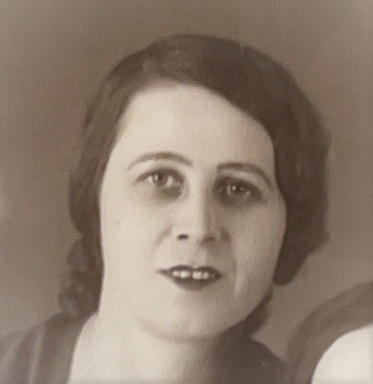
My great-grandmother was named Tatyana. There are several different meanings of that name. From ancient Greek, it translates as “founder of order” or “organizer”. According to other translations, it means “a fairy queen,” or “fairy princess.” She was both. Born to a noble Russian family, she was raised like a princess. Later in life, by fate’s capricious will, she became head of the household, where she reigned supreme, bringing order and organizing the lives of her family.
Let’s start from the beginning: Tatyana Fortushina was born in 1901 in Qusar (Kusary), located in the foothills of the Great Caucasus Mountains in Azerbaijan. One of her brothers was an orthodox priest; the other was in the army. She also had two sisters.
Unfortunately, the details about my great-grandmother’s family are sketchy at best. According to all the people I have talked to, Tatyana (or Baba Tanya, as everybody called her) wasn’t close with her parents or siblings. My guess? Probably because of her highly unusual marriage. As I said, my great-grandmother was raised and educated like a princess, graduating from an establishment (St. Nina’s) for girls of prominent Christian families, and was the apple of her parents’ eye…. until she met my great-grandfather, that is.
Here, we draw a big, fat blank. To this day, no one in the family knows how or why Meshady Abbas, the son of an Iranian manufacturer, ended up in post-revolutionary Azerbaijan.
When did my great-grandparents meet? And how on earth did a Muslim merchant get parental permission from one of the prominent members of Christian society to marry his daughter? The details are shrouded in secret. One thing we know for sure, though, is that in order to marry my great-grandmother, my great-grandfather converted to Christianity. And so, Meshadi Abbas became Artemy Kurdov and married my great-grandmother. Vera, my grandmother, was born the next year.
Their small family was happy—at least I want to believe that they were—but not for very long. When my grandmother Vera was a toddler, Artemy Kurdov, who embraced the Communist ideology wholeheartedly, was executed as an enemy of the nation. (Ironic? Not in the least.) It’s hard to understand now, but, during Stalin’s regime, just sneezing the wrong way was enough to be labeled as an enemy of the state—literally. And my daredevil of a great-grandfather had managed to become something of a Major in the small city where he lived. I assume that’s why he was ultimately executed… or perhaps he might just said something, or did something, or looked at someone in passing, and some zealot took a notice and reported it… (I don’t want to think about my great-grandfather’s days in prison or the beatings he endured. Torture was a regular practice of the NKVD—the original name of the KGB).
Thus, my great-grandmother Tatyana was left a young widow with no income to support her and her daughter, and no family to turn to for help. But instead of falling apart, this delicately built dark-haired princess squared her shoulders and spat fate in the eyes. She showed everybody what a graduate of St. Nina’s was made of! Remembering the sewing lessons she took in school, Baba Tanya soon became one of the most sought-after seamstresses—all the wives of the city’s elite were dressed by her. (Much later, her granddaughters (my mom and my aunt) were parading in the clothes that were the subject of envy to their friends.) She had finally found her footing, and life in her household became content. They had a roof over their heads, food on the table, but, most importantly, they had each other.
And then…
Her only daughter, her whole world, the reason of her being, fell in love with a man almost twice her age… and had to get married, or else. I can only wonder what Baba Tanya felt, when her nice and quiet world suddenly fell apart, as her own daughter repeated the same fate she had? As a mother, how would I react if I were in her shoes? Would I let my daughter chose her own fate, or would I try to interfere? I honestly don’t know.
In the end, my great-grandmother gave the couple her blessings and stepped aside. For the next five years, she lived alone. Was she hurt? I imagine she was. Feeling lonely? Abandoned? Oh, absolutely. But she was too proud to show her emotions. Always restrained, now she became coolly aloof.
Years later, when her beloved daughter became a widow with two small children at the age of twenty, she immediately took all of them under her wing. How could a woman, a mother, and grandmother keep harboring grudges when three people she loved more than life itself needed her? Hence, she became the head of an all-female household, one she ruled for almost three decades. The second meaning of her name – the founder of order—had come into play.
According to my family, she was a stern woman: fair and loving, but reserved. She didn’t suffer fools, didn’t forgive easily, and meted out punishment with a precision of a surgeon. Her scalpel was her tongue—sharp, cold, and merciless. But her love for her girls, although never visible, ran deep and was true.
My grandmother Vera always said that, if not for Baba Tanya and her sacrifices, they probably wouldn’t have survived the hunger of World War II. During that horrible time, to suppress her own hunger, Baba Tanya started to smoke. She went hungry for days, giving her tiny bread portions to her granddaughters. She learned to cook from bran and waste products, conjuring meals out of things unimaginable. She stood hours to end in bread lines, barely alive from hunger, all the while puffing away her disgusting handmade cigarettes. That cheap tobacco mix affected her lungs, ultimately causing her to pass away years later when I was barely three years old.
My memory of her is vague: a frail figure in a starched white kerchief, thin and pale-faced, coughing loudly. I remember I was afraid to enter the room when the ‘scary old woman’ was lying in bed. I suppose, for a small child, her frailty, her illness-ravished face, that horrible dry cough could and did look scary.
But still… to this day, I feel ashamed of myself.
Interestingly enough, while I don’t remember much of my great-grandmother’s face, one thing that stuck with me is her hands, which I can remember clearly.
Isn’t that just strange?
Or is it just the wonders of human memory?
October 8, 2021
HOW DO YOU SAY THAT?
Are Your Characters’ Names Easy to Pronounce?
from Carol Browne
Here is a bit of good advice for fiction authors I wish someone had given to me when I first started writing: make it obvious how your characters’ names are pronounced.

There’s nothing more frustrating to a reader than having to follow a character throughout a book without knowing how to pronounce their name. These days, the popularity of audio books makes this an even more contentious issue—as I recently discovered.
Yes, I’m one of those writers guilty as charged. When I chose the name ‘Elgiva’ for the protagonist of my book The Exile of Elindel, I didn’t foresee the problems I would encounter down the line. I was an inexperienced young wordsmith who thought the meaning of the name—elf gift—sufficient justification for using it. I pronounced it in my mind precisely as it was written. Such a simple name, I thought. What could go wrong?
Many years later, I realise there are more ways to pronounce ‘Elgiva’ than I could have imagined; at least six! Which syllable should be stressed? Is it a hard ‘g’? It’s an Anglo-Saxon name and so it should be a soft ‘g’, although even that is open to question by some Anglo-Saxon scholars.
The issue of pronunciation might never have been addressed had it not been for the fact that I recently had to audition voice-over actors for the audio version of the book. The actors spoke the name in a completely different way from my own version so that it rhymed with ‘Godiva’. I consulted my fan base and ended up with two more ways to say the name, neither of which resembled mine or that of the voice-over actors.
It was decision time! I was forced to settle on the pronunciation I thought was the most accurate. Although it wasn’t the one I originally intended, it was closer to the Anglo-Saxon pronunciation with a soft ‘g’ and the stress on the first syllable.
Oddly enough, this makes the name sound even more elvish. But I have to keep reminding myself how to say it, after four decades of saying it my own way. The way I remember it is that the first syllable is the only stressed one and the ‘gi’ is pronounced as it is in ‘magical’. So Elgiva is magical. And, of course, she is!
How about curling up with my epic fantasy while you contemplate the possibility of elves and all the ways to say their names?

Elgiva, a young elf banished from Elvendom, must seek shelter among the Saxons as her only hope of surviving the coming winter.
Godwin, a Briton enslaved by the Saxons, is a man ignorant of his own inheritance and the secret of power he possesses.
A mysterious enemy, who will stop at nothing to wield absolute power over Elvendom, is about to make his move.
When destiny throws Elgiva and Godwin together, they embark upon the quest for the legendary Lorestone, the only thing that can save Elvendom from the evil that threatens to destroy it.
There is help to be found along the way from a petulant pony and a timid elf boy but, as the strength of their adversary grows, can Elgiva’s friends help her to find the Lorestone before it falls into the wrong hands?
EXCERPT
The night was waning when Elgiva woke, wondering where she was. The dark ceiling of Joskin’s cave hung above her, and everything had a reddish glow, cast by the embers of the fire. She slid from under the fur coverlet, her skin tightening at the loss of its warmth, and searched for her leather sandals.
Something had woken her, something that waited outside the cave. A runnel of dread ran down her spine.
She had an inexplicable sense of impending danger, but it was too insistent to ignore. An unnamed instinct stopped her from alerting her companions. She must face this menace alone.
She left the cave as quietly as she could. Her heart pounded in her throat as she peered between the rowan trees and searched the night. Whatever had awakened her, it beckoned. She held her breath and listened, but her ears detected nothing, save for a silence as dark and empty as an abandoned crypt.
It would soon be daybreak, but the sun had yet to rise, and the dark beyond the cave swarmed with potential horrors. She stepped out from among the rowans, relying on her acute senses to make out her surroundings. An unnatural calm gripped the night and as her sandals whispered against the cold grass, they sounded abnormally loud. She feared they would betray her presence.
After a while, she came to a stop and searched the trees. Thin strands of mist curled along the ground, cold and clammy, like an exhalation of sickness.
She hugged her shoulders, knotted her fingers in the cascade of her hair, and shivered in her ragged robe. All around her, the silence seemed to be drawing into focus.
“Who is it?” Her throat was too dry for her purpose. She swallowed and licked her lips. “Who’s there? I know you’re there. I can . . . I can feel you!”
Feel you.
A flash of silver sliced through the dark, and Elgiva gasped in fear. Her arms came up to shield her face as the beam struck a rock several yards ahead. It exploded with a whoosh and sent up thousands of splinters of light, which fell to the ground and sizzled in the mist.
A shape now stood upon the rock, its form concealed in a black, hooded cloak.
Elgiva clutched the amulet to her breast. Her hands were white with terror. “In the name of Faine, who are you? What sort of trick is this?”
A soft, sly voice spoke back to her. “Why should you fear magic?”
“What do you want?” she pleaded, her voice a croak of fear.
“To see for myself.”
“To see what?”
The dark shape sniggered, but made no answer. Instead, it swept its cloak aside, and a cloud of sparks flew out and covered the ground with beads of light.
Elgiva stepped back unsteadily, resolved to flee.
“Stay!” commanded the creature.
It raised a skeletal hand, and the forefinger swung towards Elgiva and pinned her against the darkness, holding her like a rivet of bone. No elf, no wilthkin, ever owned such a hand. Her legs threatened to buckle beneath her. This had to be a nightmare; she was still asleep in the cave. But no, it was all too real.
“Who are you? What do you want?” she cried. “I have . . . I have an amulet!”
The creature laughed derisively. “I am Death, and I have come for you.”
It began to radiate a sickly green light, enveloping itself in a caul of brilliance that pulsated with force. The light grew in size until the trees behind it were bathed in its angry glare. It reached for Elgiva, like a foul stench creeping along a breeze, and she was helpless. The creature’s power throbbed in the darkness.
Within the taut coils of her fear, her instincts screamed at her to run, but her limbs had turned to stone.
Siriol, Siriol, help me . . . help . . .
With a shriek of glee, the creature increased the throb of its power. Elgiva’s mind was suddenly invaded by an inexplicable force. She became divorced from herself and watched from a great distance, waiting for the horror to unfold.
Amazon Buy Link

Stay connected with Carol on her website and blog, Facebook, and Twitter.
October 1, 2021
Prosit!
Oktoberfest is the festival to end all festivals and is celebrated around the world but started in Munich, Germany for a royal wedding in 1810. The citizens of Munich were invited to all the festivities held in fields just outside the city gates. And from there the world adopted this grand event. It runs from late September to the 1st Sunday in October. Be sure to include plenty of German music when you celebrate.
MENU
Sauerbraten – Marinated Pot Roast
Boiled Potatoes
Red Cabbage with Apples
Rye Bread
German Red Wine – Spätburgunder which is German for Pinot Noir
Sauerbraten – Marinated Pot Roast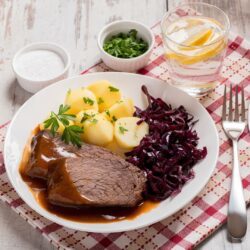 5 black peppercorns
4 whole juniper berries*
1 med. onion, sliced thin
½ cup (120ml) dry red wine
½ cup (120ml) red wine vinegar
2 cups (450ml) cold water
2 small bay leaves
4 lbs. (2kg) boneless beef roast, top or bottom round or rump
3 tbsp. (43g) lard or solid shortening
½ cup onion, chopped fine
½ cup carrots, chopped fine
½ cup celery, chopped fine
2 tbsp. (30ml) flour
½ cup (120ml) beef stock, if needed
½ cup (50g) gingersnap cookie crumbs
Use a mortar and pestle or a baggie and hammer to crush black peppercorns and juniper berries together.
In a medium-sized saucepan combine peppercorn mix, sliced onion, wine, vinegar, water, and bay leaves. Bring marinade to a boil over high heat. Remove pan from stove and let cool to room temperature.
Trim excess fat from roast. Set beef in a deep flat bowl or pot just large enough to hold it comfortably. Pour marinade over the top. Add more wine if marinade is not halfway up the sides of the meat. Turn meat to moisten all sides. Cover pan tightly with foil or cling wrap. Refrigerate for 2 – 3 days. Be sure to turn the meat over at least twice a day.
Preheat oven to 350° F (180°C).
Remove meat from marinade. Pat dry with paper towels. Strain marinade through a fine sieve set over a bowl. Discard spices and onion, but reserve marinade.
Melt lard in a Dutch oven over high heat until it sputters. Add roast and brown well on all sides. Adjust heat so as not to burn the meat. Transfer meat to a platter. Pour off and discard all but 2 tbs. (30ml) of fat. Add onions, carrots, and celery to pot. Cook over moderate heat until they are soft and light brown, 5 – 8 minutes. Sprinkle flour over veggies. Cook, stirring constantly 2 – 3 minutes or until flour begins to color.
Pour in 2 cups (450ml) of reserved marinade and ½ cup (120ml) water. Bring to a boil over high heat. Return meat to pot. Cover tightly. Cook in the oven for 2 hours or until meat shows no resistance when pierced with the tip of a sharp knife. Transfer meat to a heated platter. Cover with foil to keep warm.
Discard veggies. Pour liquid from pot into a measuring cup. Skim off fat. You need 2½ cups (570ml) liquid for the sauce. If you have more, boil briskly to reduce the amount. If you have less, add beef stock. Combine liquid and gingersnaps in a small saucepan. Cook over moderate heat, stirring often, for 10 minutes. The crumbs will dissolve and thicken the sauce. Strain sauce through a fine sieve. Keep warm on very low heat until ready to serve.
To serve, carve meat into ¼ inch (.64cm) slices. Arrange on individual dinner plates or a large platter. In either case moisten the meat with a little sauce. Pass the remaining sauce in a gravy boat.
*Rosemary is a good substitute for juniper berries. Use one fresh sprig.
Boiled Potatoes
1 red potato per person, peeled and quartered
Chicken stock
Tap water
1 lg. bay leaf
Freshly ground pepper to taste
Butter to taste
Add potatoes to a saucepan that holds them comfortably. Pour stock halfway up the potatoes. Top off with water, covering potatoes by an inch (1.25cm) or so. Add bay leaf. Set a lid on top.
You can do up to this point earlier in the day. Leave on the counter or stovetop until you are ready to cook.
Bring pan to a boil over medium heat. Adjust the lid and heat so the water continues a soft/light boil, but does not spill over. Cook 15 – 20 minutes, then test for doneness. A fork will insert easily.
Drain potatoes and discard bay leaf. Sprinkle pepper over potatoes. Add butter. Stir carefully so as not to smash potatoes.
Don’t have bay leaf? Add 1 tablespoon (20ml) or so of dried basil to the pot. When you drain the potatoes most of the leaves will be gone, but the good taste remains.
Red Cabbage with Apples
2 – 2½ lb. (1 – 1.5kg) red cabbage
⅔ cup (150ml) red wine vinegar
2 tbsp. (30ml) sugar
2 medium-sized apples, peeled and cored
2 tbsp. (25g) lard or bacon fat
½ cup (50g) onions, chopped fine
1 whole onion, pierced with 2 whole cloves
1 bay leaf
5 cups (1.2L) boiling water
3 tbsp. (45ml) dry red wine
3 tbsp. (45ml) red currant jelly, optional
Wash cabbage under cool water and then remove tough outer leaves. Cut cabbage into 4 pieces. Remove core. Shred easily by slicing each section into thin strips.
Place cabbage in a large mixing bowl. sprinkle with vinegar and sugar. Toss with a spoon to cover the shreds evenly.
Slice apple into thin wedges. Melt lard or bacon fat in a large pot. Add apples and onions. Cook, stirring frequently, for 5 minutes or until apples are lightly browned.
Add cabbage, onion with cloves, and bay leaf. Stir well while pouring in boiling water. Bring to a boil over high heat. Reduce heat so cabbage does a slow simmer. Cover and cook 1½ – 2 hours, or until cabbage is tender. Check occasionally to be sure cabbage is moist. If it seems dry, add 1 tbsp. (15ml) or so of boiling water. When cabbage is tender there should be almost no liquid in the pan.
To serve remove whole onion and bay leaf. Stir in wine and jelly. This recipe freezes nicely.
May you enjoy all the days of your life filled with good friends, laughter, and seated around a well-laden table!
Sloane
 Sloane Taylor is an Award-Winning romance author with a passion that consumes her day and night. She is an avid cook and posts new recipes on her blog every Wednesday. The recipes are user friendly, meaning easy.
Learn more about Taylor’s cookbooks, Date Night Dinners, Date Night Dinners Italian Style, Sizzling Summer, and Recipes to Create Holidays Extraordinaire on Amazon.
September 27, 2021
‘Till Time Do Us Part is Live Today
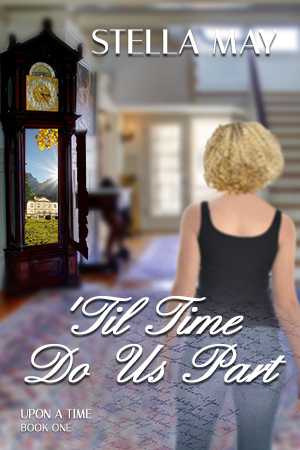
My book ‘Till Time Do Us Part, the first book in my new time travel series Upon A Time is live today!
I am happy and thrilled, yet scared as any mother of a ‘newborn’.
It was a long and somewhat arduous journey. I planned to finish this book long before now, but fate decided differently.
The seed for a time-travel story was planted into my head a little over two years ago when my husband and I first visited Amelia Island and took a boat tour to Georgia’s Golden Isles. I remember looking at Cumberland Island–wild, untamed, and beautiful– and a crazy thought popped into my mind: What if a modern woman, petite and slender, with a short hair-cut, would find herself on this Island, say, a hundred years ago, dressed in jeans and t-shirt? They would probably take her for a boy…
The rest was history. Needless to say, I fell in love with Fernandina Beach, its picturesque historic district, its unapologetic old-fashioned way, its unhurried rhythm of life. Even time seems to move slower there.
After that first visit, I’ve traveled to Amelia Island a few more times, and every time I felt like I was transported back in time to another era. I hope my love to the city of Fernandina Beach and the ocean shines through.
I am not sure how many books there will be in the UPON A TIME series–time will tell (pun intended)–but I am in a process of the second book, which will be a continuation of Nika and Eli’s story.
And here is the short blurb:
Nika Morris’s sixth sense has helped build a successful business, lovingly restoring and reselling historic homes on Florida’s Amelia Island. But there’s one forlorn, neglected relic that’s pulled at her from the moment she saw it. The century-old Coleman house.
Quite unexpectedly, the house is handed to her on a silver platter—along with a mysterious letter, postmarked 1909, yet addressed personally to Nika. Its cryptic message: Find the key. You know where it is. Hurry, for goodness sake!
The message triggers an irresistible drive to find that key. When she does, one twist in an old grandfather clock throws her back in time, straight into the arms of deliciously, devilishly handsome Elijah Coleman.
Swept up in a journey of a lifetime, Nika finds herself falling in love with Eli—and with the family and friends that inhabit a time not even her vivid imagination could have conjured. But in one desperate moment of homesickness, she makes a decision that will not only alter the course of more than one life, but break her heart.
Available on Amazon in e-book or paperback and all other major booksellers.
I hope you’ll have as much fun reading this book as I had writing it.
Happy reading!
September 24, 2021
Pacing WordPress
C.D. Hersh is here to talk about pacing and its importance to a better story. They offer six ways to keep a train from rolling through your scenes.

We’re not talking about stories about locomotives or the walking back and forth you do when waiting for someone. Pacing in writing is determined by the length of the scenes, how fast the action moves, and how quickly the reader is provided with information.
Have you seen the movie “The Descendants” starring Nick Clooney? If you like panoramic views of Hawaii and lots of close-ups of Clooney, then hunt it up on your favorite streaming service. If, however, you prefer a faster paced story, this movie is not the one for you.
When we belonged to a drama group our director was always talking about pacing. She hated pauses that were longer than it took for a ping pong ball to drop from a coffee table. In “The Descendants” you could have driven trains through some of the pauses in the scenes. Can you say sloooooow?
Try as we might, we couldn’t figure out why so many sluggish scenes were needed. Some of the unnecessary scenes included close ups of an angst-ridden Clooney staring out into space, for way too long; pedantic scenes of him buried behind piles of paper at his office desk; more than one silent, plodding hospital scene with Clooney and his family, while the camera panned the room; long camera shots of Hawaii you could have fit four commercials into; and a closing movie scene where the characters spent minutes staring wordlessly at the television. The only thing in the last scene that made a point was the quilt they all snuggled under. Come on, already. Pick up the pace. Even sad stories need to move along at a clip that keeps the viewer, or reader, engaged.
Pacing is such an important part of any story. Too slow and you lose the reader’s attention. Too fast and you leave them wondering what just happened. Here are a six tips to help you keep your story’s pacing moving along.
Use more dialogue for faster pacing. We’re not talking about dull “How’s the weather” conversation, unless the story’s about a tornado. Make every word count and tell the reader something new.Don’t repeat information. There’s no need to beat the reader over the head with information. Telling them once that Aunt Millie is dying is sufficient. They’ll remember it. They’re smart.Use action instead of tags in dialogue. You’ll not only speed up the pace, but you’ll show the reader what’s happening.Keep two or more characters on the scene. Think Tom Hanks in Castaway, versus The Transformers.Use narrative or description sparingly. Nothing stops a story like a side trip down memory lane or descriptions of setting and characters. Drop that kind of information into the story in short bites. The reader will still get it.Create tension in the scene. Donald Maas says every scene should have tension, even every page. If you don’t have tension there’s no reason for your reader to turn the page.Check your work in progress. Are your scenes tight and exciting, or can you drive a train or a semi-truck through them? Scenes don’t have to be action packed, just tension packed. Keep those ping pong balls bouncing around to stir up the pace.
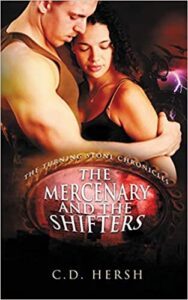 Here’s a scene from book four, The Mercenary and the Shifters of our series, The Turning Stone Chronicles, to give you an idea of fast pace.
My home is perfectly safe. It’s my business I’m concerned about.”
Fiona crossed her arms over her chest, her body language closing off to further suggestions. Mike followed her motions. As he did, he spotted a red dot on her chest. The dot wiggled.
“Get down!” Mike shouted as he dove for Fiona.
They hit the floor as the pottery on the raised fireplace hearth exploded, sending shards across the room. Mike shoved Fiona behind the nearest chair then scrambled across the rug to the blown-out window. Removing his gun from his back-of-the-waist holster, he peered over the windowsill. Seeing no one in the driveway, he swiveled around to check on Fiona. The red laser point danced around the room, searching for a target.
Mike followed the trajectory of the beam. The shot came from across the street in something high. He remembered seeing a tree house in the yard across the road from the mansion.
“Who lives across from you?” he asked.
“No one right now. The house is for sale.”
“I didn’t see a ‘For Sale’ sign.”
“We’re in an exclusive neighborhood. The HOA forbids sale signs.” Another shot rang out.
Mike whirled around in time to see Fiona’s head sticking out from behind the chair. The image of her head reflected in the fireplace mirror. “He’s using the mirror to target us. Do these curtains close?”
“Yes. The cord’s on the other side of the window.”
“I’m going to crawl under the window and close them. He’ll probably see my reflection in the mirror and start shooting, so stay hidden. As soon as the curtains close, crawl to the window as fast as you can and follow the wall to the entryway. Then get the hell out of the front of the house. Got it?”
“Got it.” Fiona’s voice quavered up the scale.
“You okay?”
“Scared, but okay.”
As Mike crawled along the floor, a volley of shots rang out. The remainder of the pottery displayed on the hearth shattered. When he reached the other side of the window, he yanked the drapery cord. The curtains billowed closed.
“Now, Fiona!” he shouted.
As she belly crawled across the floor, Mike held his breath. Bullets sprayed the room, punching through the heavy draperies, the shots veering from floor to ceiling.
Don’t ricochet! he commanded.
Fiona reached the cover of the exterior wall, and he let his breath out in a whoosh.
“Hurry!”
When she came within arm’s reach, he grabbed her hand and yanked her the rest of the way across the room and into the entry.
“Do you have a panic room?”
She nodded, her eyes filled with fear. “In the basement, behind the trophy wall.”
“Get in it, and don’t come out until I tell you to.”
“Where are you going?”
“To get the SOB who’s trying to kill you.”
Now when your heart rate slows down how about checking out our books?
C.D. Hersh–Two hearts creating everlasting love stories.

Putting words and stories on paper is second nature to co-authors C.D. Hersh. They’ve written separately since they were teenagers and discovered their unique, collaborative abilities in the mid-90s. As high school sweethearts and husband and wife, Catherine and Donald believe in true love and happily ever after.
They have a short Christmas story, Kissing Santa, in a Christmas anthology titled Sizzle in the Snow: Soul Mate Christmas Collection, with seven other authors. Plus their paranormal series titled The Turning Stone Chronicles.
They are looking forward to many years of co-authoring and book sales, and a lifetime of happily-ever-after endings on the page and in real life.
Stay connected with C.D. Hersh on social media:
September 10, 2021
That Time of Year
from Emma Lane
 It’s that time of year again. Nothing is more refreshing than a vivid blue sky accented by fiery leaves of the hard woods, yellows of the aspens and some maples, and various reds of the underbrush. Many shades of orange and yellow are accented by the dark greens of spruce and pines. Autumn is foliage showing off and we love it. It’s nature’s last hurrah before the settling of winter time and rest.
 The flower gardens are looking a bit seedy (they have cause as they are making next year’s seeds.) Have your Hibiscus, Rose of Sharon, Obedience Plant finished? Sunflowers are nodding their heavy heads with birds and rodents feasting on the bounty of oil rich seeds. For relief we turn to a plant we nicknamed, MUM, but it is so not mum as it speaks with rich fall colors on a plant that stays tidy and easily tucked into existing gardens. Chrysanthemum has been shortened to mum; the real name almost forgotten.
Are mums perennial? Do they survive the freezing temps and come back next year?
The answer is . . . maybe. Indeed, the plant is cold hardy at least to agricultural zone 4/5. So why have so many gardeners been disappointed when the mums succumb to the cold? Might be from too much love? Actually, mums are fairly tough plants that need little attention to thrive. The problem is a shallow root system. Simply put, it cannot stay in the ground during frost heaves which come and go with a changing temperature.
Give it up. You aren’t about to run out every time a warm day and a frost freeze night happens. It’s probably many more nights than you suspect. Mulch is the best remedy. A good mulch will cut down on the possibility of the shallow rooted plant being thrust out of the ground and left high and dry to die.
Two other remedies: Stick a pot or two of your favorite colors in a corner of the garage and give a sip of water occasionally. It might work; worth a try. Next is treat the low-cost mum plant like an annual and don’t worry about it. Just buy new next year.
I’ve done all of the above with various successes. I refuse to give up new and different colors so I buy every year. I, also, cover my favorite yellows with solid mulch and try to remember to trim until the 4th of July. (Otherwise they grow leggie and unattractive.) I’ve been known to pot up an unusual color I want to try and save and tuck it into a corner of the garage. It works maybe half the time. I don’t get upset with failures, as I remember mums are not expensive and I can replace them as autumn approaches. It’s a lovely plant; indulge and enjoy.
Here’s a glimpse into my new Cozy Mystery Release, MURDER AT THE LOOKOUT. It is 4TH in the Detective Kevin Fowler series.
 When is it not fun to be a blond?
What happens when a blond beauty hits town like a tornado stirring up memories and causing turmoil? Detective Kevin Fowler and his wife, the former Beverly Hampton, owner of the local newspaper, are settling into blissful married life. Although Beverly is sanguine over the demand on Kevin’s time by the good people of Hubbard, she is more than dubious when his duties include the escort of a drop-dead gorgeous female from his past.
There is some concern over the persistent vandalism of residential mailboxes, but an infamous arsonist has decided peaceful but dull Hubbard would make a great place from which to operate. He brazenly locates down the block from the detective and his wife.
What bait and tackle shop in the village has a dual purpose? Kevin ponders why two goons have invaded town shooting at and attempting to kidnap and murder three women. A state patrolman, aptly nick named Rooster, teases Fowler at the riotous scene of a traffic accident where the press, not the police, wins the day.
Another mystery and adventure with a satisfying ending unfolds in peaceful Hubbard, New York, small-town Americana, where Detective Kevin Fowler keeps an ever-vigilant watch.

Emma Lane is a gifted author who writes cozy mysteries as Janis Lane, Regency as Emma Lane, and spice as Sunny Lane.
She lives in Western New York where winter is snowy, spring arrives with rave reviews, summer days are long and velvet, and fall leaves are riotous in color. At long last she enjoys the perfect bow window for her desk where she is treated to a year-round panoramic view of nature. Her computer opens up a fourth fascinating window to the world. Her patient husband is always available to help with a plot twist and encourage Emma to never quit. Her day job is working with flowers at Herbtique and Plant Nursery, the nursery she and her son own.
Look for information about writing and plants on Emma’s new website. Leave a comment or a gardening question and put a smile on Emma’s face.
Stay connected to Emma on Facebook and Twitter. Be sure to check out the things that make Emma smile on Pinterest.
September 7, 2021
Cover Reveal
I am very excited to announce a cover reveal for my latest book ‘TIL TIME DO US PART, the first book in my new time travel series UPON A TIME.
I am happy and thrilled, yet scared as any mother of a ‘newborn’.
It was a long and somewhat arduous journey. I planned to finish this book long before now, but fate decided differently.
The seed for a time-travel story was planted into my head a little over two years ago, when my husband and I first visited Amelia Island and took a boat tour to Georgia’s Golden Isles. I remember looking at Cumberland Island–wild, untamed, and beautiful– and a crazy thought popped into my mind: What if a modern woman, petite and slender, with a short hair-cut, would find herself on this Island, say, a hundred years ago, dressed in jeans and t-shirt? They would probably take her for a boy…
The rest was history. Needless to say, I fell in love with Fernandina Beach, its picturesque historic district, its unapologetic old-fashioned way, its unhurried rhythm of life. Even time seems to move slower there.
After that first visit, I’ve traveled to Amelia Island a few more times, and every time I felt like I was transported back in time to another era. I hope my love to the city of Fernandina Beach and the ocean shines through.
I am not sure how many books there will be in the UPON A TIME series–time will tell (pun intended)–but I am in a process of the second book, which will be a continuation of Nika and Eli’s story. The tentative name for it is TIME & AGAIN.
BLURB:
Nika sixth sense helps in her home restoration business, but there’s something different about her newest project, the century-old Coleman house. It comes with a cryptic letter addressed directly to her—from 1909. It’s cryptic message: Find the key. When she twists the key in an old clock, she’s swept back in time, straight into the arms of devilishly handsome Elijah Coleman. On this journey of a lifetime, she finds love with Eli—but it could ultimately break her heart.
“TILL TIME DO US PART is going to be released on Amazon and all major vendors on September 27th.
September 3, 2021
Zucchini Spaghetti Carbonara ala Catherine
from Catherine Castle
Traditional carbonara sauce has an egg and cheese sauce added to the spaghetti just before serving. I don’t care for eggs added to things at the last minute, so I eliminated the eggs and sauce and came up with my own version of carbonara. I hope you’ll like it as much as we do.
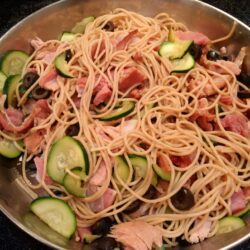 Zucchini Spaghetti Carbonara ala Catherine
6 slices thick bacon
4 oz. whole wheat spaghetti
2.5 oz. can sliced black olives, drained
1 cup diced or chunked ham
1 med. zucchini, cut lengthwise and sliced thin
½ cup grated Parmesan cheese
Divide bacon into 4 and 2 slices. Prepare 4 slices for microwaving by placing between 2 paper towels on a microwave safe plate. Microwave for 3 minutes until crisp. Remove from paper while still warm and crumble.
Dice remaining 2 slices and place in a large skillet, cooking until crisp.
While bacon is cooking, boil water for spaghetti and cook as directed on package until pasta is firm. Drain fully when cooked.
While pasta is cooking, sauté ham and zucchini with diced bacon until zucchini is tender.
Drain any excess liquid from the pan.
Add olives and cooked drained spaghetti to zucchini and bacon, tossing to mix.
Remove from heat and add parmesan cheese, tossing quickly to keep cheese from clumping.
Top with crumbled bacon and serve.
Makes 2 generous main dish servings or 4 side dishes.
Note: additional cheese may be sprinkled on top of pasta after serving, if desired.
This dish makes up quick, so you won’t have time to read a book while it’s cooking, but after the dishes are done, check out Catherine’s sweet romantic comedy with a touch of drama, A Groom for Mama, on Amazon and Barnes and Noble.
 Beverly Walters is dying, and before she goes she has one wish—to find a groom for her daughter. To get the deed done, Mama enlists the dating service of Jack Somerset, Allison’s former boyfriend.
The last thing corporate-climbing Allison wants is a husband. Furious with Mama’s meddling, and a bit more interested in Jack than she wants to admit, Allison agrees to the scheme as long as Mama promises to search for a cure for her terminal illness.
A cross-country trip from Nevada to Ohio ensues, with a string of disastrous dates along the way, as the trio hunts for treatment and A Groom For Mama.
 Multi-award winning author Catherine Castle loves writing. Before beginning her career as a romance writer she worked part-time as a freelance writer. She has over 600 articles and photographs to her credit, under her real name, in the Christian and secular market. She also lays claim to over 300 internet articles written on a variety of subjects and several hundred poems.
In addition to writing she loves reading, traveling, singing, theatre, quilting and gardening. She’s a passionate gardener whose garden won a “Best Hillside Garden” award from the local gardening club. She writes sweet and inspirational romances. You can find her award-winning Soul Mate books The Nun and the Narc and A Groom for Mama, on Amazon and Barnes and Noble.
August 27, 2021
Her Name Was Vera
So, the women of my family: my great-grandmother Tatiana, my grandmother Vera, my mother Karina, and my aunt Stella. Even the names sound lovely, old-fashioned, and classy, don’t they?
Three generations, four amazing women who shared blood, but were as different from each other as night and day, or as only mothers and daughters can be. Four women, four fascinating life stories. Today, I will tell you about my grandmother.
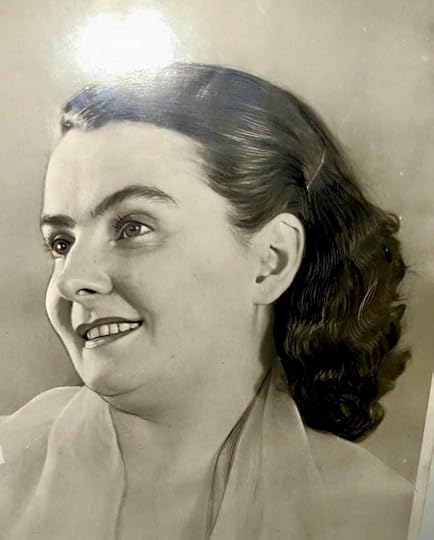
Her name was Vera, but we called her Verunya. Even her daughters, my mother and my aunt, referred to her by that endearing nickname. No one in the family knew when exactly it started or who started it. But someone did, and it stuck. For three generations.
As a matter of fact, she had two names: Vera, which means “faith” in Russian, and Gulbahar, which means “spring flower” in Azeri. Why? My grandmother was unique in more ways than one. You see, her mother was from a prominent Russian family, and her father….. Well, here’s where we draw a blank. To this day, no one in the family knows who his ancestors were. But as the family lore goes, my great-grandfather was kidnapped as a child and raised in Iran in a Kurdish family. When he met my great-grandmother Tatiana (and no one is sure when or how he ended up in post-revolutionary Azerbaijan, a republic of former USSR) he was so lovestruck that he converted to Christianity to get permission to marry her. And so, Meshady Abbas became Artemy Kurdov. My grandmother Verunya was the only child of that unusual union.
To say that she was a complex woman is truly an understatement of the century. Stunning, strong-willed, capricious, multifaceted, she looked fragile like a china doll, but was stronger than steel. She was beautiful and knew it. She drove men crazy and enjoyed it.
But she wasn’t flighty, shallow, or mean. There was not a single humble bone in her body, but she never hurt anyone on purpose. She worshipped at the altar of high fashion, but sold without hesitation her favorite dress in order to buy her two little daughters Christmas gifts.
She had a huge heart, and loved all four of us, her grandchildren, to distraction. And every time one of us would visit her, before she would open the door, she’d call out, “My dearest one has come!”
She was not your traditional grandmother. She was not traditional anything, period, and that was a huge part of her charm.
For me, she was a personification of everything female. Always dressed to kill, sporting an impeccable manicure and pedicure, she could apply mascara and her famous cherry red lipstick even half asleep. And grey hair? She refused to even acknowledge its right to exist.
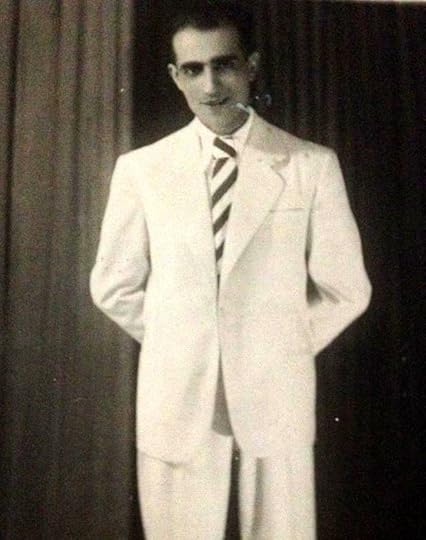
She fell in love at 16 with a man who was almost twice her age. Needless to say, no one could stop her from marrying this dashing hunk who happened to be a popular jazz singer. My aunt was born less than a year after, and my mother three years later.
Then, tragedy struck. My larger-than-life grandfather was diagnosed with cancer. He died three months later, leaving a 20 year-old widow with two toddlers on her arms, no income to support them, and no place to live in a strange city. You see, my grandfather Sergey Periev moved his family from Baku, when my Verunya lived all her life, to Yerevan, where he was offered a position as a lead singer in Armenian Jazz band. The apartment they were living in was a rental for the members of the band only, so after his death my grandmother was asked to vacate it. And the year was 1942, the second year of World War II.
But instead of falling apart, this young girl, a child herself, grabbed her two daughters and whatever meager possessions she had, and returned home. With no help from the well-to-do in-laws, who decided they didn’t need an additional burden, she struck out on her own.
I can only imagine how scared she was. She needed to support her family, but had no real profession or formal education. What she had in abundance was sheer guts and a spine of steel. And a true gift that fate bestowed upon her: her amazing voice.
So, shaking off her own fears and insecurities, my Verunya stuck her perky nose up, squared her fragile shoulders, and set to pursue a career as a singer. And the rest was history. She became a star. In my former country , USSR, the name Vera Perieva was familiar to millions.
In her early thirties, she met her second love. Mikhail Kauffman was her impresario. It was a long, happy, and content marriage. But then cancer struck again, taking away the man who became a true father to my mother and aunt, and loving grandfather to my cousins and I.
When in 1991 our family relocated to the USA, Verunya tried really hard to adjust to her new country, but that proved to be a challenge. The language barrier, failing health, advanced age—everything added to the load.
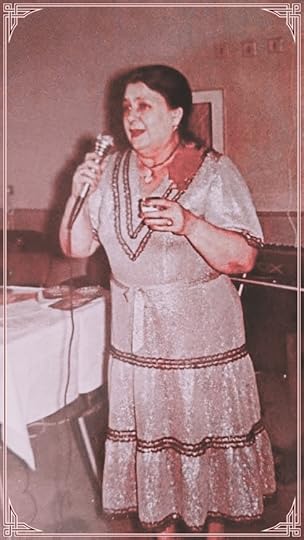
She passed away quietly in her sleep on one brutally cold October morning, wearing an impeccable manicure and pedicure, with not a single grey hair offending her trade-mark mahogany mane.
Last February would have been my grandmother’s 100th birthday. I’m sure the angels threw a huge party for our Verunya, with my mom and dad, and all our dearest departed friends and family in attendance. And then the birthday girl sang, and her deep rich soprano flew over heaven making the Almighty sigh with pleasure…..