Ashley R. Pollard's Blog, page 11
August 24, 2020
SF Furore Part 3: Standing on the Shoulders of Giants
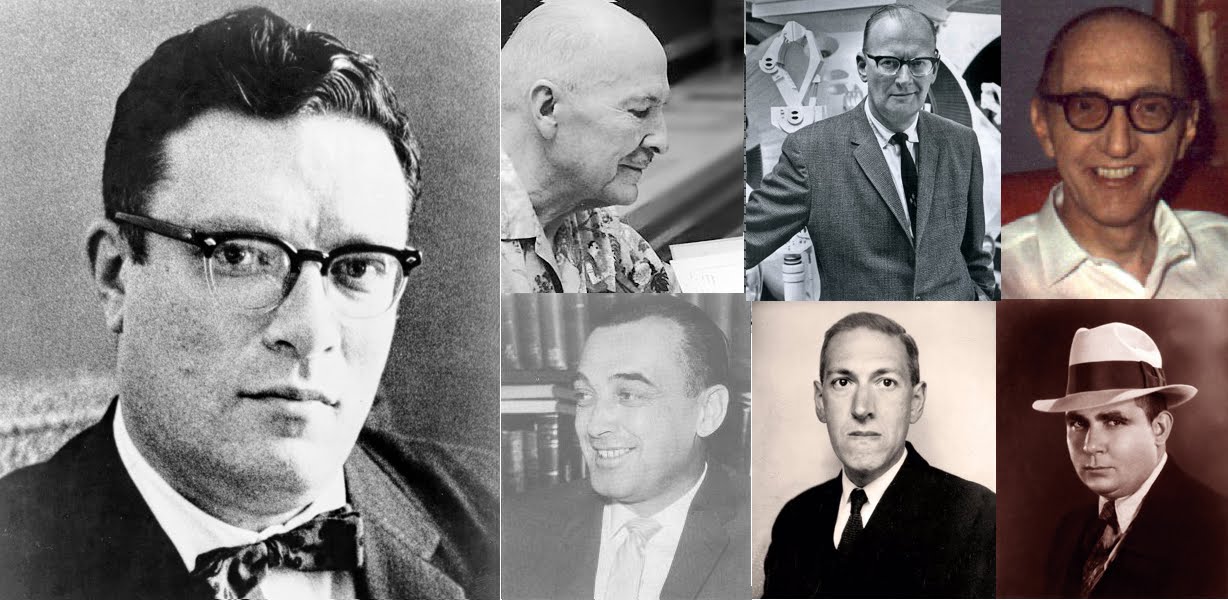
Continuing my dive into the rage that is SF fandom.
Hey, look! A buzzy, angry hornets' nest! What could possibly go wrong if I jam my face into it!(Or: why the "science fiction canon" is already dead and people should just let it fucking die, already) from John Scalzi Twitter feed, link to his blog.Yes but no, but maybe...
Okay, let me clarify.
Yes; because I agree that there's no need for readers to read the past, but without knowing the past it can be hard to understand the present.
No; because writers stand on the shoulders of those who came before. Readers read stories that are in dialogue with the past. So, no one has to read Mary Shelley's Frankenstein, though I think she wrote Gothic Horror, which is not SF. However, her work speaks to the human condition.
Maybe; because, this is all just opinion, which is fine, but it's just opinion about things that one can't actually control. Furthermore, starting arguments by creating unnecessary confrontations will lead nowhere good.
I don't require everyone to share my views.
I don't shun people who have views antithetical to mine. That doesn't mean I go out of my way to socialize with them either, only that I recognize that other people's opinions are different to mine, and are not my concern.
I see the root of these confrontations as having stemmed from our cultures economy creating technology that has outgrown our ability to cope with the stress it generates. So, I get why that can be threatening, especially if one feels disempowered, or disenfranchised, these are strong emotional triggers.
But, real diversity means tolerating ideas antithetical to your own; arguing against them not with emotional outbursts, but reason. By all means, emotions will drive the discourse, but don't let emotions overrule reason.


August 17, 2020
SF Furore Part 2: Defending the Indefensible
I'm gonna go ahead and say this for the cheap seats: What's the necessity for the Retro Hugos again...? It's not as if these titles don't already dominate discourse making it difficult for us newbies to ever achieve 'classic' status. Because I'm tired of racists and bigots. from Tade Thompson's Twitter feed.Well... my first response to seeing this Tweet was:
We're all tired of opinionated people who think that their opinions are more important than being kind to others.By-the-by Tade, if you're chasing classic status, I suggest you'd be better off writing another story. I would also add, that if any writer thinks they're work is worthy of being labeled a 'classic,' it will become so on its merits.
It's also well to remember that all great writers were once 'newbies.'
Also, it's almost impossible to discuss the topic of 'classic' works of the past, when people who are offended by them label the creators as racist and bigots. Any discussion becomes mired in controversy, because the topic is seen as defending the indefensible.
However, hold on a moment, here's my take.
I know the movement started by calling out 'recent' problematical writers, editors, and artists (and by recent anything with the last century), but I've got to ask, when are we going to stop? Also, worth asking, what makes anyone qualified to cancel artists, and or the people who like that artists work, which only leads too more questions?
But if you cancel creators who offend you, who gets canceled next?
And, when does the 'cancel movement' stop? By this I mean, both when as in how long the canceling goes on, and when as in the historical cut-off date.
What those promoting cancel culture seem to have forgotten, is that labeling past SF authors as racists and bigots, by suppressing their work, is the first step of turning people into 'things.'
I would also argue that this is made worse by those who support the labeling living people who like older works as racists and fascists too. I mean, labeling people as things is arguably what leads to bigotry.
This may sound a touch polemical, but I would argue is even worse, because the dead no longer care, whereas the living do. Think back to the Puritans as one example where their desire to cancel the culture of their time led nowhere good.
And one more thing, Tade; the Hugo's didn't come into existence until 1953, and if you think that SF didn't start before that date, then you're sorely deluded.
August 10, 2020
SF Furore Part 1: The 2020 Hugo's
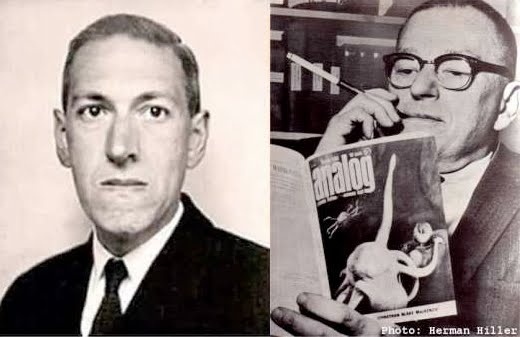 Jeanette Ng would cancel both of the men here, and anyone reading their work.
Another year has passed. Another set of Hugo's have been won. And another row has broken out in fandom. What a surprise. Not!
For those who aren't up on the history of science fiction, let's just say that the roots of SF, as a genre, began circa 1921 (give or take), as a way of justifying literature that wasn't aimed at improving the reader, but rather providing some entertainment.
Exciting stories featuring new technology.
Hugo Gernsback coined the term "scientifiction*," for scientific based fiction, which later became science fiction. Or, as Forrest J. Ackerman later called it, Sci-Fi.
The SF genre started in the pulps as mere "entertainment," that has arguably evolved over the years into a literature that examines the impact of technology on the human condition.
Arguably, because a genre is just a marketing category. Whether or not stories have to comment on the human condition versus just being entertaining is arguable; an opinion, not a fact.
A reminder, last year Jeanette Ng won The Campbell Award for best new author, which I commented here, resulting in it being renamed The Astounding Award (technically not a Hugo, but awarded at the Hugo ceremony).
This years row is over various faults like: how dare George R. R. Martin's mispronounce authors names; the time that the virtual award ceremony ran with his waffle; then the final straw, GRRM mentioning the names of people who won this years Retro Hugo awards, promoting their importance to the genre, despite having been deemed unmentionable, after Jeanette Ng canceled them.
Arguments over these issues that have been all across SF&F social media.
Comments from both SF&F fans and professionals, commentary that frankly beggars belief. It's like children calling each other names in the playground, except these people aren't children, and an an awful lot of them want to cancel writers who they find problematical.
Please don't get me wrong on this, one has to face the fact that neither were nice men, but what they brought to the world has value beyond their faults.
Both of Lovecraft's parents died while confined in a psychiatric hospital, and as a child he had chorea minor, and later what appears to have been atypical depression. He also died at age 46; health outcomes back then were poor, and today we know that both genetics and the environment can affect how people grow up to become who they are.
None of which forgives his bigotry.
But, to deny his contribution to SF&F for being a bad person is just plain wrong. He wrote within a modern tradition of existential nihilism, explored the delusions of living in an anthropomorphic universe, and addressed mankind's insignificance in the cosmic scheme of things.
Creating the Mythos alone, argues that Lovecraft's influence transcends his feet of clay. That and the fact that he is still being discussed till this day, inspiring writers to create cosmic horror, says it all.
Campbell's contribution to SF&F are twofold: he wrote (Who Goes There, which became the film The Thing); and his editorship of Astounding Magazine.
He died at the age of 61, which would now be considered young. And I couldn't help but notice that his pictures show him smoking. We now know that smoking affects the respiratory system, and blood circulation to the brain.
I mention this, because as Charlie Stross once observed, isn't it funny how men of a certain age tend to have changes of personality from health issues (high blood pressure). Again, none of this forgives his bigotry but, those times were not our times.
Things were different then. To deny that Campbell totally reshaped the genre, transforming SF from its Pulp roots into a discussion of how technology will affect the human condition, and cancel him, is again just wrong.
By all means have an opinion. But stating opinions to generate arguments, which are not facts, is pointless.
One doesn't need to subscribe to the values of creators to see that their creations add to the richness of the human condition. Not withstanding the fact that both Campbell and Lovecraft were both crazy nut jobs, men with feet of clay, doesn't mean the good they did should be thrown out with the bad.
Jeanette Ng, and those who support canceling people are doing more damage to the genre than either Lovecraft or Campbell.
NB: *1915 according to Pulp Librarian @PulpLibrarian
#OtherOpinionsAreNotMyConcern
SF Furore Part 1: The Hugo's
Jeanette Ng would cancel both of the men here, and anyone reading their work.Another year has passed. Another set of Hugo's have been won. And another row has broken out in fandom. What a surprise. Not!
For those who aren't up on the history of science fiction, let's just say that the roots of SF, as a genre, began circa 1921 (give or take), as a way of justifying literature that wasn't aimed at improving the reader, but rather providing some entertainment.
Exciting stories featuring new technology.
Hugo Gernsback coined the term "scientifiction*," for scientific based fiction, which later became science fiction. Or, as Forrest J. Ackerman later called it, Sci-Fi.
The SF genre started in the pulps as mere "entertainment," that has arguably evolved over the years into a literature that examines the impact of technology on the human condition.
Arguably, because a genre is just a marketing category. Whether or not stories have to comment on the human condition versus just being entertaining is arguable; an opinion, not a fact.
A reminder, last year Jeanette Ng won The Campbell Award for best new author, which I commented here, resulting in it being renamed The Astounding Award (technically not a Hugo, but awarded at the Hugo ceremony).
This years row is over various faults like: how dare George R. R. Martin's mispronounce authors names; the time that the virtual award ceremony ran with his waffle; then the final straw, GRRM mentioning the names of people who won this years Retro Hugo awards, promoting their importance to the genre, despite having been deemed unmentionable, after Jeanette Ng canceled them.
Arguments over these issues that have been all across SF&F social media.
Comments from both SF&F fans and professionals, commentary that frankly beggars belief. It's like children calling each other names in the playground, except these people aren't children, and an an awful lot of them want to cancel writers who they find problematical.
Please don't get me wrong on this, one has to face the fact that neither were nice men, but what they brought to the world has value beyond their faults.
Both of Lovecraft's parents died while confined in a psychiatric hospital, and as a child he had chorea minor, and later what appears to have been atypical depression. He also died at age 46; health outcomes back then were poor, and today we know that both genetics and the environment can affect how people grow up to become who they are.
None of which forgives his bigotry.
But, to deny his contribution to SF&F for being a bad person is just plain wrong. He wrote within a modern tradition of existential nihilism, explored the delusions of living in an anthropomorphic universe, and addressed mankind's insignificance in the cosmic scheme of things.
Creating the Mythos alone, argues that Lovecraft's influence transcends his feet of clay. That and the fact that he is still being discussed till this day, inspiring writers to create cosmic horror, says it all.
Campbell's contribution to SF&F are twofold: he wrote (Who Goes There, which became the film The Thing); and his editorship of Astounding Magazine.
He died at the age of 61, which would now be considered young. And I couldn't help but notice that his pictures show him smoking. We now know that smoking affects the respiratory system, and blood circulation to the brain.
I mention this, because as Charlie Stross once observed, isn't it funny how men of a certain age tend to have changes of personality from health issues (high blood pressure). Again, none of this forgives his bigotry but, those times were not our times.
Things were different then. To deny that Campbell totally reshaped the genre, transforming SF from its Pulp roots into a discussion of how technology will affect the human condition, and cancel him, is again just wrong.
By all means have an opinion. But stating opinions to generate arguments, which are not facts, is pointless.
One doesn't need to subscribe to the values of creators to see that their creations add to the richness of the human condition. Not withstanding the fact that both Campbell and Lovecraft were both crazy nut jobs, men with feet of clay, doesn't mean the good they did should be thrown out with the bad.
Jeanette Ng, and those who support canceling people are doing more damage to the genre than either Lovecraft or Campbell.
NB: *1915 according to Pulp Librarian @PulpLibrarian
#OtherOpinionsAreNotMyConcern
July 16, 2020
Second Half of the Year from Hell
 I decided that this model of Object 295 needed some decals to make it pop.
Who would have thought a year ago that 2020 would be such a shambling wreck?
The last month or so it has been getting on top of me. Dealing with people shouting in outrage at [insert description here] of whatever has pushed their emotional button.
Quite frankly, I no longer give a damn. Darwin will sort this out.
So, I've been quiet, taking the time to do things I enjoy, because that's usually the best strategy for dealing with emotions that are overwhelming one. Currently I'm painting combat armor suits. Practicing with my new wet palette different ways of making my miniatures look cool.
That's all for now. Stay safe, keep well.
June 21, 2020
Science from Pseudoscience
I came across Sabine Hossenfelder during my research into science stuff for my novels. She is sometimes controversial, her stance against a new collider to replace the Large Hadron Collider, which has ruffled a few feathers of her fellow physicists.
She's a good role model for those who want to present science in an accessible manner.
June 15, 2020
Guest on SciFi Shenanigans Podcast
In late news, due to being distracted by current world events, I can be heard on episode 155 SciFi Shenanigans Podcast, titled MilSciFi Panel 3 – British Edition, hosted by JR Handley with my fellow Mil-SF authors Tim C Taylor, and Ralph Kern.
In other news, after a long hiatus I've started writing, refreshed after a long, much needed break to dig myself out of the hole I was in.
June 4, 2020
Do Not Cause People to Panic
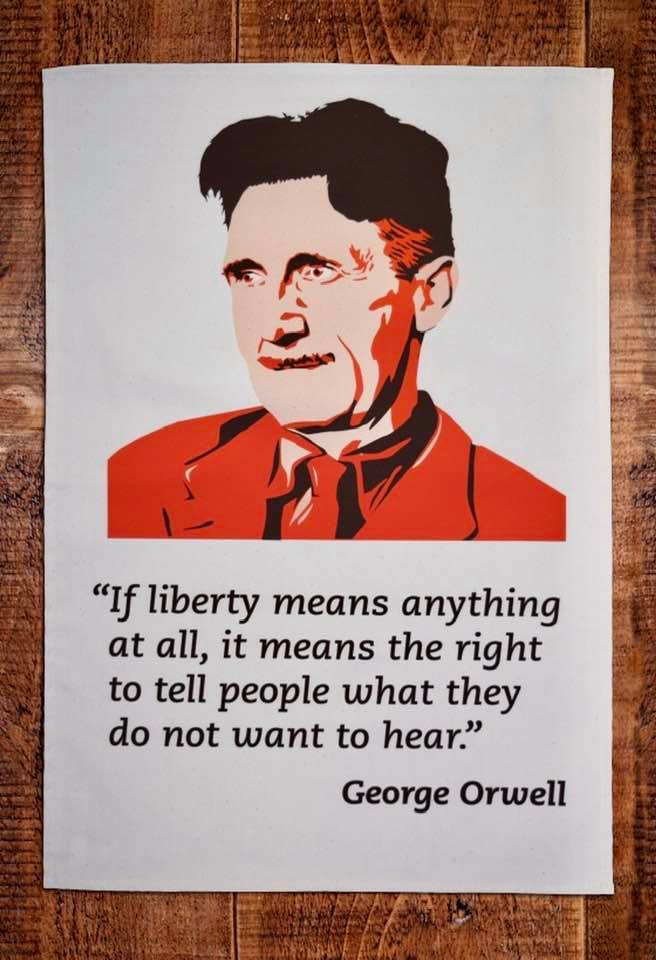
Words fail me, which is a thing I grapple with. This post is me grappling with with the current social media fire sale: where reasonable people dismiss any feedback that contradicts their beliefs and opinions.
When objections are dismissed, it makes it impossible to discuss the topic outside of the "box" it is framed in; some examples:
You're not arguing in good faith.This is all part and parcel of confrontation. However, confrontation can be positive or negative. Negative confrontations start from assuming the other person is behaving badly.
You give yourself away as having ill intent.
This is not up for discussion (it has all been discussed before, your views are unwelcome, detrimental to the cause).
Then actual labeling people as objects (you're racist, you're a fascists etc.).
I will listen to responses. I recognize that I am very assertive, so please feel free to call me out if:
I cause people to panic.So this post is me owning my understanding by processing my thoughts into words.
I treat people as objects.
I want people to talk with me about SF fandom or larger societal issues. Therefoe, I want confrontations on social media around SF fandom or the larger society to be positive.
Problem
Let's start with current problem du jour: Black Lives Matter.
Seems like a harmless enough statement, but how often have you heard, All Lives Matter?
How do you respond? Is it:
Of course all lives matter, orIf it's the first and a person has responded with the second response what happens next? My guess is a retort, often indicative of "what did I do wrong?" or very broadly panic, from being told they're at fault.
This isn't about white people, but black people dying at the hands of white cops or white Americans murdering Blacks as part of systemic institutionalized racism.
I have lost count of the number of times I've seen this happen, escalating the confrontation into an argument? Then I see people start rolling out the objections I listed at the beginning of the post.
Is it common for the confrontation to end in a positive result? Let me define the minimum level for a positive result:
Come to a common ground or agree to disagree in a polite and civil exchange.I find the answer to this question is generally "no" which has driven me to write this post.
Let me start by laying out my assumptions and process.
Assumptions & Process
I start with positive assumptions, because we all have implicit assumptions and bias, so make them positive.
I don't assume malice when thoughtlessness is always a better explanation. I assume people are well-meaning with good intentions, and at worst just ill informed. I'm open to feedback that defines the problem with my response.
I don't respond when I'm angry, because emotions should serve me, not control me.
I analyze all behaviours through my core profession: cognitive behavioural therapy. This means I look at thoughts, feelings, and actions.
What's Happening?
Black Lives Matter is a simple slogan meant to encourage rapport and empathy for those who have been killed.
So when I reply, All Lives Matter; I'm giving feedback. If my feedback is denied, by telling me I'm wrong, then what has happened is a confrontation.
My problem with it, and most slogans, is simple: it automatically excludes rather than includes, which is fine – if that's the aim – but here it seems to me to be contrary to the goal.
What has happened is a failure of the slogan to communicate what was intended.
Positive Confrontation
If you were a person who came to me for therapy, and told me that every time you used a particular phrase you got a negative response, despite your good intentions, I would say words to the effect:
"How long will you need to be convinced that this isn't working out as you planned?"I'll add a caveat here, people often do things repeatedly expecting a different result next time, and on occasion it's not what's being said but how it's said.
Then I would explore with my client a way of saying what they want to say more effectively.
So let me repeat, the sentiment behind a slogan may well have good intentions and still fail; if so, functionally, it becomes a poor slogan.
Then, assuming you want to create understanding, when confronted by answers you don't like, or cause you to become angry, instead of challenging the statement, ask them to help you understand their answer.
If your response includes any of these assumptions:
They're not arguing in good faith; They have ill intent; This is not up for discussion (it has all been discussed before, their views are wrong); or you label them with a slur such as racist, or fascist.Stop. All that has happened is that the slogans has generated negative feedback. When a slogan generates negative feedback, a reappraisal is required.
You have to ask yourself is that what you want? Keep it SMART and remember KISS:
Specific. KeepThis post is an example of me asking people to help me understand what benefit is there from making well intentioned statements that generate conflict.
Measurable It
Achievable Short and
Realistic Simple.
Time frame.
Understand that people's behaviours are in response to yours. Understanding them means taking feedback, and owning the responsibility for failure to communicate. If you wish to succeed, it starts with listening.
Remember my goal is to either to come to a common understanding or to agree to disagree in a polite and civil exchange.
I will listen to your feedback of this post because I take ownership of what I say.
Terms & Conditions Apply
You can't control what other people do. You are not responsible for other people's feelings. The best anybody can do... is be a positive influence.
Dwelling on the past injustices won't make things better. Accept what has happened and move forward.
TL;DR
When confronting a statement be polite and civil. State what your issue is, what you want, and check with the other person that they've understood you.
Note:
The title of this piece is an allusion to the fact that "free speech" doesn't mean you can shout "fire" in a crowded theatre, which should also provide context to why I labeled the current social media wars a "fire sale."
May 20, 2020
Keeping My Head Down

The best way to predict your future is to create it. – Abraham LincolnI've been taking a break from stuff, which is ironic in that we're in lock-down and taking a break from social interactions is the root cause of my need to keep my head down and do other stuff.
I signed up for a bunch of online writing courses that are keeping me busy, and the space to assess my shortfalls in my story telling. I want to be a writer whose work is accessible, and Baen's feedback about my first novel not being straightforward enough is now, five or six years after the fact is starting to make more sense.
So I'm working on that (it's a craft problem, hence the online writing course should go a long way to addressing the problem). After all, I want people to read my stories.
I think they're fun to write and I want people to find them fun to read.
Part of the reason I've needed to withdraw is the responses on my social media about the corona virus.
People don't seem to understand that the measures by China were, and are, practically and sociopolitically impossible in most of the West, but especially in America and Britain, because we share a common political ancestor.
Practically impossible because the financial and business structures of both countries have undermined the ability of their respective governments to govern competently.
Sociopolitically impossible because right wing elements are protesting against the measures to contain the virus, while ironically the left wing protests against the methods that might allow said containment. All for very good reasons on both sides of the debate.
We all should be concerned about the direction our societies are heading.
We've changed our society, connected people through the internet, turning people into things. Human beings didn't evolve to cope with what we've created. The result is that discourse has become a poisoned chalice that no politician, pundit, or mainstream news source can touch without a mob descending on all and sundry.
I have no answers, which makes me less than useful than a chocolate teapot. So I'm going off to read some good books.
At least that will be fun. Have fun, stay safe.
May 5, 2020
Engineering the Scorpion: Mark Hempsell
Sent to me to share and spread the word since the planned presentation of this project has been affected by the Corona virus lock-down.