Davis Summerlin's Blog, page 3
June 11, 2020
key words and they're important
So when you or your publisher first upload your book to all the various platforms in which it is being sold, you/they will be asked to assign keywords to your book.
What are keywords?
Keywords are words and phrases that describe the nature or theme of your book.
Let's say you get on Amazon and you're looking to purchase a new fantasy book to scratch your game of thrones itch.
Well you could type quite a few things in they search bar. Things like:
Epic Fantasy SeriesBooks similar to Game of Thrones Best fantasy series of all timeEct...
The list is potentially endless. Well if a savvy author has in fact written a series exactly like what you're looking for, and they've diligently crafted their keywords to not only match the nature of their book but also what consumers such as yourself are looking for, then their book should show up relatively high in the search results.
Everyone's happy! You get that itch scratched and the author gets a happy, and most likely returning customer
Now on the opposite end of that spectrum. Lets say the author didn't optimize their keywords.
They could have written exactly what you wanted and would have undoubtedly loved, but they never pop up in the search results...or they are impossibly far down the list for you to find them.
The way that could happen is while you may have typed in something along the lines of : Epic Fantasy series, the keywords the author/publisher could have been so off the mark they end up not being displayed. Perhaps even relegated to the wrong category. Let's say the author chooses only one keyword for his book and that keyword is
"having dinner with chickens."
Well the search engine will
That would be a shame for all parties involved.
So how do we/the author keep that from happening.
It's simple, though not necessarily easy.
Keyword Research.
Keyword research allows authors and publishers to see the actual terms and phrases real customers are using to find books they want.
To some, Keyword research may seem intimidating, and while it's simple it can also be very time consuming. Particularly so if you are attempting to run ads.
A typical Amazon Marketing Service (AMS) Ad should be upwards of 300 keywords to be effective.
Here's a link to Kindleprenneur's article
In the above article Dave Chesson has already given us
What are keywords?
Keywords are words and phrases that describe the nature or theme of your book.
Let's say you get on Amazon and you're looking to purchase a new fantasy book to scratch your game of thrones itch.
Well you could type quite a few things in they search bar. Things like:
Epic Fantasy SeriesBooks similar to Game of Thrones Best fantasy series of all timeEct...
The list is potentially endless. Well if a savvy author has in fact written a series exactly like what you're looking for, and they've diligently crafted their keywords to not only match the nature of their book but also what consumers such as yourself are looking for, then their book should show up relatively high in the search results.
Everyone's happy! You get that itch scratched and the author gets a happy, and most likely returning customer
Now on the opposite end of that spectrum. Lets say the author didn't optimize their keywords.
They could have written exactly what you wanted and would have undoubtedly loved, but they never pop up in the search results...or they are impossibly far down the list for you to find them.
The way that could happen is while you may have typed in something along the lines of : Epic Fantasy series, the keywords the author/publisher could have been so off the mark they end up not being displayed. Perhaps even relegated to the wrong category. Let's say the author chooses only one keyword for his book and that keyword is
"having dinner with chickens."
Well the search engine will
That would be a shame for all parties involved.
So how do we/the author keep that from happening.
It's simple, though not necessarily easy.
Keyword Research.
Keyword research allows authors and publishers to see the actual terms and phrases real customers are using to find books they want.
To some, Keyword research may seem intimidating, and while it's simple it can also be very time consuming. Particularly so if you are attempting to run ads.
A typical Amazon Marketing Service (AMS) Ad should be upwards of 300 keywords to be effective.
Here's a link to Kindleprenneur's article
In the above article Dave Chesson has already given us


May 17, 2020
Publishing Exclusive or Wide? Which is right for you?

A week ago an old co worker of mine began asking about publishing Exclusively with Amazon, and if that was a good idea.
Thankfully I had experience with both exclusivity and without. So naturally I told him way more than he wanted to know.
The short answer is...it depends.
I personally prefer to go wide, though I definitely made more money when I was exclusive.
But Davis, if you made more money by going exclusive, why do you prefer to go wide with your distribution?
Well I touched on this a few weeks ago see here to read ;). But it all boils down to security. Now I switched to wide distribution well before the pandemic, but that lack of security so many of us felt/ are still feeling us the same reason I went wide in the first place.
Being exclusive with Amazon has a lot of benefits, and to be honest you probably will make more money if only due to being a part of their subscription service Kindle Unlimited.
I wrote an article all about Kindle Unlimited which you can read here ;).
Kindle Unlimited and Subscription Reading
Being part of this program on top of preferred ranking status in terms of Amazon's search results is huge.
While it's not guaranteed that you'll make any more money being a part of this program, they deck is definitely stacked in your favor. Even I, a no name author with a very niche book managed to make money through sales and reads every month. Some months were good, some were worse but I never didn't make money.
It's a hard thing to give up just for a "what if" scenario. But for those of you who have read my book If Only, you know I'm all about those "what if" scenarios.
Feel free to ignore the shameless plug. In all seriousness I probably wouldn't have given up the benefits if the threat of change was unlikely or in some far off future, but it wasn't.
The very nature of this industry is rife with change. Amazon is a big, if not the biggest reason for that change. Why expect their programs to be any different.
What I noticed were changes to both their subscription service in terms of payouts, and their promotional days that they gave you in exchange for being exclusive (essentially you could protect your 70% royalty share while running a promotion by utilizing the promotion days Amazon gave you.)
While the changes weren't huge, and the one to the Kindle Unlimited didn't affect me at all, the change to their promotional days did.
I wrote an article on marketing tactics which you can check out here.
Top 5 Marketing Tips for Authors
In that article I talk about the importance of stacking your promotional efforts to maximize your ROI.
I had already lined up a promotion with Written Word Media when these Amazon changes came through.
Basically the changes limited the types of promotions you could do per quarter. You could either do a free promotion or a discount promotion, but not both.
This forced me into solely a free promotion. I have no problem with free promotions, particularly if you have a series. And as far as downloads go it was a big success. But it ensured there was 0 ROI.
It was frustrating to put it mildly.
Is that it? You stopped selling on Amazon just because you had one failed promotion?
Absolutely not. 90% of my sales still come from Amazon, but by going wide I've managed to hedge my bets (at least a little bit).
Particularly with email based promotions like with Written Word Media, you are able to link to every platform and merchant your book is available. When the lists you're promoting to is 70K+, chances are not all of them read solely on the Kindle.
By going wide I cater to those customers and Kindle users simultaneously potentially making up the difference in lost Kindle Unlimited income. It also ensures that if Amazon decides to change the rules (which they have every right to do btw) I'm not left in a bind.
So for me the extra peace of mind and long term stability is worth it.
If you're interested on increasing your distribution beyond Amazon you can go direct to many platforms which will maximize your earnings but will be a headache to do promotions or updates. Or do what I do and use an aggregator to unify all platforms under a single dashboard in exchange for a small cut of the royalties.
Here is a list of the three most popular aggregators.
Smashwords:
They were the first. They have great distribution and a history of success. Here's a link to a a comparison by Dave Chesson over at Kindleprenneur.com
Chesson's comparison
Draft 2 Digital:
This is my personal recommendation. Its who I use. Even if you don't use their services they give you free access to their Universal Book Links (something that as of writing this only they offer) and high quality interior templates for book.
Feel free to use my affiliate link https://www.draft2digital.com/Dicebookpublishing
*If you do be sure to let me know! At no cost to you I will receive a small commission from Draft 2 Digital's cut of your sales. So it's in my best interest for your book to sell well if you use my link ;).
So yes send me an email at contact@dicebookpublishing.com to let me know that you used my link and I'll do what I can to help.
Publishdrive:
This third aggregator I've heard good things about. They have recently changed some of their features to a paid model, but only after a certain number books you can add for free. With them doing this paid model it allows for you, the author to keep more royalties. So depending on your sales you may actually make more money through their model than if you were sacrificing a percentage of your royalties like the previous 2 aggregators.
Another thing that is unique to Publish drive as of writing this is their ability to do royalty sharing. So if you are co authoring, or creating box sets with multiple authors publish drive is a great option.
Or maybe toy could go exclusive and wide!
What do your mean do both?! Doesn't that defeat the purpose of "Exclusive." I doubt Amazon world be okay with that.
Well yes you're right. If you breach your exclusivity agreement by participating in the KDP Select program by distributing your ebooks on other platforms then you will forfeit any and all royalties hoth would have gained from being a part of the program in the first place.
So no that's not what i'm suggesting. But one tactic I recently encountered was releasing your book within the KDP Select program for the first 90 days of your book's life. This will give you a boost in the Amazon algorithm along with all the other benefits we talked about earlier.
After your first 90 days you can end your KDP Select enrollment ams distribute to other retailers.
No matter which route you choose I wouldn't stress over it. Both options have their strengths and weaknesses and you can always change your mind later on if your prefer one method over the other.
If you made it this far thanks for reading! If you have any questions or comments feel free to email me at
contact@dicebookpublishing.com

April 29, 2020
Publishing Traps!

Recently I was answering a few questions on Quora, when I came across two questions I felt I was able to shed some light on.
One question was about publishing with a company I have a particular problem with, a vanity press.
When it comes to publishing these days authors and publishers are given a slew of options. It's easy to become overwhelmed.
Some deal with this by not publishing at all...you cant fail if you don't try...I guess.
Others may pay disturbingly high fees to companies that promise to "take care of all the details" for you... this could be worse than never trying, except hopefully this mistake will wake those authors up enough to seek more profitable avenues.
There's traditional publishing, publishing with a small press, hybrid publishing, Vanity publishing and self publishing...probably a few more.
Traditional publishing is what we see in movies, you find an agent, they get you a deal, you get paid.
A small press is like traditional publishing but on a smaller scale...you probably don't need an agent.
Now a vanity press and hybrid publishing are similar in practice but different in terms of value and overall moral standing.
With hybrid publishing you bring as much of a finished product as you can, they will offer services at reasonable rates to fill the gaps. The cost of this will be covered by you the author.
Note how I said reasonable. These rates may still be pricey but shouldn't be overly so. In addition to this, you should have significantly higher royalties than traditional publishing, or some other form of compensation worked out between you and the publisher.
A vanity press operates the same, however the value and quality of their services is a joke.
Do your research (beyond the first page of Google as these presses pay loads of money to ensure they show up at the top of the results.
Where a vanity press will promise you distribution to all the major platforms...and yes they will in fact uphold that promise, you could be offered a fraction of what legitimate publishers and distributors would offer you.
And remember, you've already paid these presses thousands, so now after those thousands you are still expected to share up to 60% of your royalties (gross royalties mind you, not net) hoping to make back your investment operating on a meager 10% royalty rate (25%) if you're lucky or paid another few thousand for a "Proffessional Package"
Moral of the story avoid these, at all costs.
Can you make money with them?
Sure.
You could also win the lottery.
Below is a stellar resource for both finding ethical services to partner with, as well as avoiding the unethical ones.
But to name a few:
Xlibris Author Solutions Dog Ear Publishing
ALLI's Watch Dog List
My personal recommendation, whether you're self publishing or going through a small press is to use Draft 2 Digital.
They take 10% of your royalties as their cut, but in exchange they distribute your books to all the major stores (including a lot I'm sure you've never heard of.)
You can also manage any changes or updates to your book through one easy to use dashboard. These changes will be reflected in all the stores you choose to sell your book (though update times may vary by vendor.)
I'll make a post specifically to talk about Aggregators like Draft 2 Digital in a future post, but if you're interested now, feel free to use my affiliate link!
https://www.draft2digital.com/DiceBook
If you choose to do so, please feel free to let me know:
contact@dicebookpublishing.com

April 5, 2020
Automate your finances
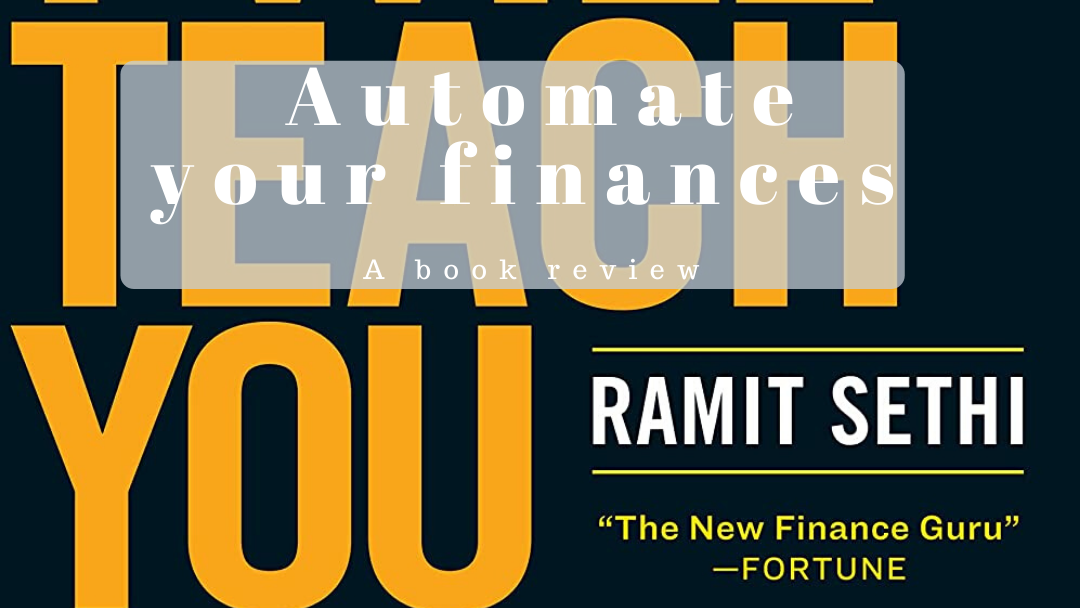
I've read a handful of investment/ finance books in the past, but this one has been my favorite to date.
This was a Christmas gift from my sister. It breaks down the process of automating your finances into a series of 6 weekly steps.
What I love about the book is that these aren't broad and obscure steps that add little to no value, rather he gets nitty-gritty with the specifics.
In the past, I've found a gem here and there in personal finance books, but in this book, each chapter gives actionable gems (read strategies) that you can put into place that week.
This is my first nonfiction review, so I'll be reviewing it in slightly different parameters than usual.
I'll be looking at the book on how it stacks up in these three categories: Voice, Formatting, and Content.
VOICE
The author sounds like a person (as opposed to a bunch of personified tables and graphs).
The author definitely has a sense of humor which, thankfully comes across as refreshing instead of trying too hard. He provides a nice break from a topic that had a high chance of information overload.
Formatting
Speaking of tables and graphs, the book had a few, though they are well placed, aptly explained and not distracting. There are however random reviews and endorsements from other readers scattered throughout the book which I could do without.
I'm all for reinforcing my decision to buy the book, but there is a place for that, primarily on the back of the book as blurbs or on the online sales page...not in the book...my only minor gripe as the reviews are often smack dab in the middle of the content.
Content
Speaking of content. It's fantastic as I'm sure you guessed from my intro. Now as I write this we are in the middle of the COVID-19 pandemic. The stock market continues to fall, and people are spending more and more time at home causing what businesses remain to lose even more money, creating further drops in the stock market which...you get the idea.
Nevertheless, this book still applies. It's not all about investing in the first place, in fact, that's only a small part of it. If you were to follow this book's plan step by step before this crisis, then you would most likely have made it through this trying time relatively unscathed.
Value Grade: Strong Buy!
What's great about the book and plan is that it's completely customizable to the needs of the reader. It fits your lifestyle...not the other way around.
I know things are scary at times. But thankfully if you adapt the plans in the book to your situation you will undoubtedly be better off because of it.
This book has been a huge resource in getting my personal and business finances in order. If you agree or disagree feel free to leave a comment or shoot an email to contact@dicebookpublishing.com
A link to the book is below! Thanks for reading!
[image error] *This is an affiliate link*[image error]

March 28, 2020
Covid-19 and your author career

I saw a video yesterday on the potential effect Covid-19 would have on the publishing community.
To paraphrase, people are scared. Not just about the serious health effects of the virus, but of failure...as if the two were related.
The fear of failure is always present global pandemic or not. However, due to that pandemic their is in fact an opportunity.
I wanted to be a full-time author since I realized that was a career. But it wasn't the writing that appealed to me (though I do enjoy writing) it was the lifestyle a successful writing career could offer.
You could work from anywhere, design your own schedule, and yes flex those creative muscles.
While in the midst of this pandemic thinking of starting a new writing career is probably the last thing on most people's minds. For those people that are out of work indefinitely, or are completely in the dark when it comes to their job security then yes, maybe it'd be a better use of your time to ensure you keep food on the table and a roof over your heads.
But for those of us lucky enough to maintain job security through all this craziness, this is an extraordinary chance to build another source of income through our writing.
As some of you know, I am not a fulltime author. That remains my goal but I still have a long way to go. During the day I'm actually a manager at a growing retail chain.
Before, I was reassured of my job security it was a huge source of stress on me and my family, and it had me wishing I'd had more streams of income to help alleviate that pressure. I kicked myself for taking so long on my second book, I kicked myself for only being on my "second" book, and I kicked myself on not continuing to consistently market my book If Only.
When I was reassured my position would be fine, I was able to relax, but it was a wakeup call to how dependent my family was on my one source of income.
I knew we were dependent, but I didn't feel vulnerable. If you're anything like me, this virus was wake up call in a lot of ways, but chief amongst them being a lack of control.
With that being said now is a great time to increase that financial security (if able).
Finish that book of yours or help service others writing their books through, editing, design, and even beta reads. People are spending a lot of time at home these days. Reading is a favorite pastime to a lot of people who finally have the time to do it.
While this isn't a financial blog, financial security and independence is important to me and most of you I'm sure.
So because of this in addition to our book reviews, writing exercises and excerpts from upcoming books, I'll also be sharing my strategy on utilizing my author/publisher career to achieve this.
I'll kick this off with a book review, but unlike the usual fictional genres that I've covered, I'll be reviewing one of my favorite financial health books.

March 15, 2020
Why I switched from Wix Blog to Blogger!
 I switched!From Wix to BloggerWait, you what?!
I know that's what most of you are thinking. Or rather, most of yall are thinking: Why Blogger? Why not Wordpress? Why not just stay with Wix? Why not Squarespace, or Weebly, or Medium, or this or that ect for eternity.
There are a lot of different platforms to choose from...so why did I choose one of the oldest ones out there? For two reasons. Simplicity, and Price.
While I was and still am a fan of Wix, the cost to do what I wanted had gotten too high. When I first signed up for Wix they had plans starting at $5.00, I spent two years upgrading and attempting to grow our publishing platform and yes...I was very happy with how the sight looked and functioned. But I wasn't happy about the cost.
Wix continually offered 50% off coupons, make it cheaper to upgrade your subscription than to renew your current on. Unless your online presence is a huge factor in your revenue, then by the time you realize you don't need all the bells and whistles that came with your upgraded subscription, you're looking down the barrel of a bill three to four times what you initially set out to spend.
Not only that but when you look to downgrade your subscription you realize the economical options of two years ago no longer even exist.
Wix is a great CMS but the constant changes and upselling is tiresome, not to mention unwanted. I wanted something cheap, functional and simple.
So then why not Wordpress?
Wordpress is the obvious next option, and while it may not necessarily be difficult it's no Wix when it comes to simplicity. And while all you technically have to pay is hosting premium templates and plugins can add up quickly.
Enter Blogger.
Hosting is free, the platform is no more complicated than a word processor, and while customization is limited for nonsavvy users, for those that do expand their knowledge of code, full site customization is available.
Through trial and error, I realized that what I really needed from my website was a blog and a presence. Not much else. So why pay more for something you're not going to use?
Instead of $2050 to $300 for a website, I pay 10.00 for my domain. The rest is free.
So while 300.00 may not sound like a lot in the grand scheme of things, it adds up. That's 30 years worth of domain name renewals vs 1 year of hosted webspace that you could have gotten for free.
So while this may change in the future, for now, I've been happy with Blogger's simple, no strings attached, and free platform!
Let me know what you think in the comments or email me at contact@dicebookpublishing.com

August 28, 2019
Top 5 Marketing tactics for Authors
 Top 5 Marketing Tactics for Authors
How to effectively get the word out about your books
Whether you're self-published, traditionally published, or somewhere in between these days you're going to have to market your book.
Here are 5 effective and easy tactics to successfully market your book.
Some are free.
Some are paid.
But I've tested each of them and loads more. These are the five that have earned the Dice Book Publishing stamp of approval!
Let's start with the free tactics (because who doesn't love free)
Tactic # 1
Writing Book Reviews
As authors, we are first and foremost readers. If you're not much of a reader...well you're probably not much of an author...so go read a book or two thousand then come back.
On the topic of reading books! Most of us love to read! Probably as much if not more than we love to write. Now this tactic allows us to turn our love of reading into one of our strongest marketing tactics.
Write Reviews!
If you read a book and you loved it...or even if you hated it...let the author know! But remember, as an author we know how crucial reviews are to the success of our own books. So if you didn't like the book make sure to give constructive feedback. That doesn't mean make a list of things they could do better...though yes that's part of it. But make sure you lead with something positive. Put yourself in their shoes and remember how much of yourself you put into your own work. How would you like it if people you didn't know told you everything they hated about your writing?
Find a balance of praise and criticism. If you can't find anything to criticize, perfect, let them know!
Is that it?
No, while writing reviews is certainly important, what we're ultimately trying to accomplish by writing reviews (aside from creating goodwill within our author community) is to find new readers.
Readers read reviews. This is a fact. So what we want to do is not only write something that provides value to these readers, but also catches their attention. The best way to do this is to position yourself as an expert, or at least make yourself stand out from the crowd.
Now readers give a lot of credit to authors. Tagging yourself as John Doe, Author of the John Doe Diaries is an effective way of making your review stand out amongst all the other plain Janes. None of them are authors, and if they are, they weren't clever enough to showcase it.
More often than not, this type of tag will catch the attention of a reader. Not only do you provide a snapshot of your writing style and voice, but if the reader likes what you've written they may be inclined to click on your review and attempt to find out more about you.
Once they do this it's up to you to make sure they're able to find your books readily available and ready to buy.
*This is by far my favorite marketing tactic that I've managed to implement in my own marketing strategy. *
It's a long term strategy that is able to generate more leads over time. While it is difficult to track the actual effectiveness of this strategy as there is no way to directly tie it to sales, I have been able to measure its success in the form of author relationships.
I've had several authors reach out to me over the years, offering me free books or colleagues books in hopes of reviews. Who doesn't like free right?!
Tactic #2
Find Reviewers
That's right, we're literally going to do what these other authors have done with me as a result of Tactic #1. We're going to browse reviews in our genres and locate powerful reviewers. We'll offer them a free copy of whatever book you want them to review (if you can think of something else to set you apart, then do that).
Now there are a few ways to do this, but I'm going to send you over to the expert, Dave Chesson.
Dave wrote an article where he goes over this exact tactic.
Click here to read it.
Dave's article is awesome. It's an aggressive tactic that allows you to take back some control (albeit just a little bit) when it comes to getting reviews. But don't get discouraged, it might still take time to get those valuable reviews.
Now, if this tactic too scary, timeconsuming (if you don't use the book review targeter method), or just isn't 'you' then what I suggest is to leverage our first tactic.
Like I said earlier if you're writing great reviews for other authors, people are going to see that. Sure they may take a chance on you and become a customer...fingers crossed...but they may very well be an author themselves putting our #2 strategy to the test!
If this is the case...let them.
Ideally, keep tabs on the author, form a professional relationship. When the time is right, call upon that relationship for help. Whether it be through a cross-promotion, guest posting, or at the very least read your book and provide you an honest review.
Again, it's another long-haul type tactic, but one that'll be extra rewarding as long as you're helping one another grow each other's author careers.
Tactic #3
Blogging
I'm sure you've heard this a thousand times. Well, it's for good reason. Blogging is one of the cheapest ways to market yourself as a writer.
What is the main thing you're showcasing in a blog?... That's right...your writing.
Not only does blogging give you another outlet for your creativity. It gives you another place for readers to find you, giving you the opportunity to find readers you might otherwise miss. Every article or post you write and put your name on is another opportunity for readers to connect with you. Isn't that kinda the point.
***
So, up to now all of the tactics I've outlined have been relatively free. The common theme amongst them is that they are all great long term strategies. But, with that being said it's not only difficult to measure conversions with these tactics, but you're also not likely to see a huge uptick in instant sales.
For that let's look at two paid methods that I am personally a big fan of.
With that being said I still have yet to 'master' these last two strategies, and there is no guarantee that you will earn a positive ROI by using these last final two tactics. But, the potential to do so is there.
Tactic #4
Amazon Ads
Now, I'm using Amazon as an example as it is what I have the most experience with. There are plenty of other retailers and ad programs. However, Amazon is cheap, easy, and powerful. Patrons of Amazon are already primed to buy. This takes a lot of the leg work out of it. All you have to do is write a compelling piece of ad copy, and let your book's sales page do the rest.
It's harder than it sounds, but it is simple. And once you've nailed all the aspects of your book (like the cover, and book description) the process will become repeatable and profitable.
*Pro Tip!*
If you're looking at making the most of your amazon ads without spending hours doing keyword research to create powerfully targetted ads, then let me point you again to Dave Chesson.
Dave Chesson is more than just the author behind Kindlepreneur.com, he's also the creator of KDP Rocket (now known as Publisher Rocket).
Publisher Rocket is a Keyword Research software designed specifically for authors and publishers.
While I'm not an affiliate of Publisher Rocket, I do use it. The normal method of doing keyword research is tedious and timeconsuming. Publisher Rocket will literally save you hours of work.
For the adds specifically, I don't recommend advertising Ebooks priced under 4.99. Or if you do make sure you keep your maximum cost per click (CPC) low. With a strong cover, great ad copy, and solid keyword research you will very likely receive plenty of clicks. However, for each click, you gain you are charged a certain amount. Finding a balance between a competitive price point and one that's too high or low is tricky. But it's important to remember that not every click is going to translate into sales...most won't. Which is why I recommend hedging your bets either by keeping your CPC's low (at least in the beginning) or your pricepoints on the higher end. Tactic #5
Renting Lists
If you've been doing any sort of online content creation, or sales you'll know how powerful email marketing can be. But building email lists takes time. Luckily for us authors that are still growing, there are companies that have spent countless hours curating lists for us.
There are several companies out there, but the one I personally use is Written Word Media. Not only do I 'rent' their lists on occasion, but I also subscribe (this enables me to accomplish tactic #1 in a cost-effective manner)ve. These rented campaigns have been some of my most profitable campaigns to date.
Written Word Media has several lists. Each list attracts different types of readers. Price may vary depending on genre and list size.
Here's a link to Written Word Media's site.
After you find a list that fits your book, make sure to plan ahead. Try to link all of your promotional efforts together to achieve maximum results. This may make measurement more difficult, but it will greatly increase your chances of generating a positive ROI for each campaign.

August 23, 2019
Publishing Journeys Part 3: Self-Publishing
In the previous two installments of this series, I outlined two methods of getting your book to market. One being a Vanity Press, the other through Traditional publishing houses.
In this article we'll talk about the once taboo world of:
Self-Publishing
Nowadays anyone can publish their book. This is both a blessing and a curse. Most authors hail this a good thing.
"Down with the gatekeepers!" They cry on a daily basis...I'm assuming. In some cases they're right. There are some truly fantastic books that would never have seen the light of day in the traditional publishing world. Maybe they didn't fit the market? Or, perhaps they were too niche for a traditional publishing house to explore...too risky.
Self-publishing allows authors and readers that are hungry for something different to be satiated.
That's a good thing. But on the other side of the argument, without gatekeepers, there's little to no quality control for self published work (aside from the customers themselves).
I'm sure if you scour the pages of Amazon, Nook, or Kobo, you'll find your fair share of poorly produced self published works. You know the ones. Those books that have a picture of a sword on the cover but turn out to be an expansive history of water beetles. They'll have ugly covers, and poor reviews (if any) due to a lack of editing.
Without gatekeepers the marketplace is unfortunately saturated with books that aren't up to snuff. Books that gave Self, or Indie publishing a bad name...at least in the past.
While you can certainly find those books, authors have begun to realize that just because you 'can' doesn't mean you should.
The 'thing' about Self-Publishing is, that although there are no gatekeepers, customers till expect a quality product.
With traditional publishing, the publishing house would ensure that was the case. They'd give the book a professional cover, professional interior formatting, and had several rounds of edits to ensure the work is at its strongest. They would have done this for you. They would have paid you while they they did this.
Customers still expect this level of quality. Self published authors need to give it to them if they want to compete.
This is going to be an investment. That investment could be in time, or money, or both. You could certainly DIY a lot of the work, especially if you have a background in it. However, this is where most authors fail. They'll try to save money by doing all the work themselves, but wont take the time to develop the skills to do it well. Thus, their book never meets its full potential. While they may have spent very little to no money in order to get their book published, a poorly produced product isn't going to sell.
On the flip side, if they instead decided to invest in a professional cover design, interior formatting, and editing they would have given their book a much greater chance of success. They could also have taken the time to gain some of these skills themselves.
While the investment of time pushes back the publication date, the development of at least some of these skills could become helpful for future projects.
"Why would anyone want to Self-Publish? It just seems like way more work?"
You're right valued reader. It is. But, aside from the previously mentioned Gatekeepers, there is also potential to make more money.
As I mentioned in my blog post devoted to traditional publishing, which you can find (here). The royalty rate for self-published works is much higher. So, while you may not get the advance you would from a traditional book deal, as long as you've produced quality work that readers are willing to buy, you will make much more money in the long run.
Another reason, is the ability to control each step of the process. With a traditional publisher, you sell various rights to your book. This takes away your ability to control how your book is presented to the market. The publisher may ask for author input and approval, but they aren't bound to it.
Being able to control the process is appealing to most authors, even traditionally published ones. Some traditionally published authors have begun seeing how successful their self-published counterparts are, and have decided to switch to self-publishing themselves.
Rachel Aaron, is a great example of a traditionally published author who made such an epiphany. You can watch an interview with Aaron here. The interview primarily focuses on her ability to write quickly, but she does go into her experiences with both traditional publishing and self-publishing throughout the video.
Stay tuned for the final installment of this four part series! There we'll explore the intermediary between Traditional-Publishing and Self-Publishing...The Small Press!

August 14, 2019
Is the Code of Rainbow series enough to fill your Harry Potter itch?
Is the 'Code of Rainbow' series enough to fill your Harry Potter itch?I'd say yes.
Now for those of you short on time, feel free to scroll down to the bottom to read my review of book one in the Code of Rainbow series. But for those of you who want a little more detail, stick with me.
So, obviously, I'm comparing this series to Harry Potter.
Is it as good as Harry Potter?Well...no
All I needed to know, thanks bye!But! It definitely fills the void that was left in the absence of Harry Potter books. The main reason I loved the Harry Potter franchise was the exploration into a new world. When the Sorcerer's stone first released, I was a student at a small private catholic school. In case you're unaware, catholic schools don't have to best track record in adopting or adapting to mainstream media fads and changes. This included Harry Potter.
Luckily...my mom bought the book.
Every night before bed my mom would read a chapter of Harry Potter to my sisters and I. This was how we consumed the first three books. After that, we began sharing the copies, all of us devouring the books at much faster rates.
What I loved most about the books was the ability to learn about a new world along with Harry. I learned about the wizarding world the moment Harry learned about it. Better yet, I saw and heard the characters through my own mind's eye, no one else's.
In fact! It wasn't until the movies began coming out that my family and I realized we'd been saying Hermione's name incorrectly the entire time.
My sisters and I wrote down every spell we could find in the books. We fashioned wands out of paper and created make-believe duels amongst each other, acting out the effects of spells as best we could.
It was an interesting escape, especially when other forms of entertainment such as video games, cartoons, and movies were always readily available. Instead, we played make-believe.
Now, Code of Rainbow might not get me excited enough to fashion a paper wand and call up my now grown siblings for a game of make-believe. But, now as a father, a husband, and business owner and all the stresses of that and common daily life, it does provide an almost nostalgic relief.
Once again I'm learning about a new world alongside the protagonists. The world is obviously massive, much bigger than the protagonist (and therefore the reader) realizes. The author, Weiqi Wang, creates a world that is seemingly composed of magical elements. These elements can be manipulated by certain rare individuals known as wizards. In this way the world is similar to Avatar the Last Airbender, as these individuals are very rare. In even rarer instances, individuals such as Sorame, the protagonist, are able to control multiple elements.
By rooting the world's magic system in elements that readers understand, such as Fire, wind, water, earth, light, and darkness, Wang not only relates to readers on deeper level of understanding, as we all have some basic knowledge of each of these, but he also creates an almost seamless connection between magic and science.
This connection makes the series appeal not only to fantasy lovers but sci-fi readers as well.
"Any sufficiently advanced technology is indistinguishable from magic."-Arthur C. Clarke
Check out his website!
codeofrainbow.com
Here, he not only offers the first book in the series for free in exchange for an email, but he proudly refers to his fans as 'Coders.' The artwork throughout his site enhances the readers' experiences, giving credence to Wang's descriptions. In some cases, he creates almost trading-card like artwork which will be interesting to see if the series evolves into the phenomenon that is Harry Potter.
I have personally just started book two of the series but I'm excited to learn more about the world Wang has created!
Soaring Flame and the Dragon-transcending Magimal by Weiqi Wang
My rating: 4 of 5 stars
I loved this book. It's reminiscent of Harry Potter and the Sorcerer's Stone, The Buried Symbol. Both of those series created a new and exciting world for you (the reader) to explore along with the protagonists. Code of Rainbow did this as well in a spectacular fashion. I'm eager to learn as much about this world as possible and watch Soarame continue to grow as a wizard.
My only complaint with the book was the shift in perspectives. The book began in the third person limited but later shifted into a third-person omniscient narration. The perspective shifts were jarring at times. I would have preferred a consistent use of third-person limited narration revolving around Soarame alone and relying on visual cues and expressions to gauge the other characters' thoughts.
If it weren't for this slight criticism, and lack of consistency I would gladly give this work 5 stars!
View all my reviews
Now for those of you short on time, feel free to scroll down to the bottom to read my review of book one in the Code of Rainbow series. But for those of you who want a little more detail, stick with me.
So, obviously, I'm comparing this series to Harry Potter.
Is it as good as Harry Potter?Well...no
All I needed to know, thanks bye!But! It definitely fills the void that was left in the absence of Harry Potter books. The main reason I loved the Harry Potter franchise was the exploration into a new world. When the Sorcerer's stone first released, I was a student at a small private catholic school. In case you're unaware, catholic schools don't have to best track record in adopting or adapting to mainstream media fads and changes. This included Harry Potter.
Luckily...my mom bought the book.
Every night before bed my mom would read a chapter of Harry Potter to my sisters and I. This was how we consumed the first three books. After that, we began sharing the copies, all of us devouring the books at much faster rates.
What I loved most about the books was the ability to learn about a new world along with Harry. I learned about the wizarding world the moment Harry learned about it. Better yet, I saw and heard the characters through my own mind's eye, no one else's.
In fact! It wasn't until the movies began coming out that my family and I realized we'd been saying Hermione's name incorrectly the entire time.
My sisters and I wrote down every spell we could find in the books. We fashioned wands out of paper and created make-believe duels amongst each other, acting out the effects of spells as best we could.
It was an interesting escape, especially when other forms of entertainment such as video games, cartoons, and movies were always readily available. Instead, we played make-believe.
Now, Code of Rainbow might not get me excited enough to fashion a paper wand and call up my now grown siblings for a game of make-believe. But, now as a father, a husband, and business owner and all the stresses of that and common daily life, it does provide an almost nostalgic relief.
Once again I'm learning about a new world alongside the protagonists. The world is obviously massive, much bigger than the protagonist (and therefore the reader) realizes. The author, Weiqi Wang, creates a world that is seemingly composed of magical elements. These elements can be manipulated by certain rare individuals known as wizards. In this way the world is similar to Avatar the Last Airbender, as these individuals are very rare. In even rarer instances, individuals such as Sorame, the protagonist, are able to control multiple elements.
By rooting the world's magic system in elements that readers understand, such as Fire, wind, water, earth, light, and darkness, Wang not only relates to readers on deeper level of understanding, as we all have some basic knowledge of each of these, but he also creates an almost seamless connection between magic and science.
This connection makes the series appeal not only to fantasy lovers but sci-fi readers as well.
"Any sufficiently advanced technology is indistinguishable from magic."-Arthur C. Clarke
Wang seems to be just as strong a world builder as Rowling, perhaps stronger in his ability to create a pseudo community around his books.
Check out his website!
codeofrainbow.com
Here, he not only offers the first book in the series for free in exchange for an email, but he proudly refers to his fans as 'Coders.' The artwork throughout his site enhances the readers' experiences, giving credence to Wang's descriptions. In some cases, he creates almost trading-card like artwork which will be interesting to see if the series evolves into the phenomenon that is Harry Potter.
I have personally just started book two of the series but I'm excited to learn more about the world Wang has created!
Soaring Flame and the Dragon-transcending Magimal by Weiqi Wang
My rating: 4 of 5 stars
I loved this book. It's reminiscent of Harry Potter and the Sorcerer's Stone, The Buried Symbol. Both of those series created a new and exciting world for you (the reader) to explore along with the protagonists. Code of Rainbow did this as well in a spectacular fashion. I'm eager to learn as much about this world as possible and watch Soarame continue to grow as a wizard.
My only complaint with the book was the shift in perspectives. The book began in the third person limited but later shifted into a third-person omniscient narration. The perspective shifts were jarring at times. I would have preferred a consistent use of third-person limited narration revolving around Soarame alone and relying on visual cues and expressions to gauge the other characters' thoughts.
If it weren't for this slight criticism, and lack of consistency I would gladly give this work 5 stars!
View all my reviews
August 3, 2019
Kindle Unlimited and Subscription based reading!
Meet Kindle Unlimited!
Kindle Unlimited is a subscription-based service available from Amazon. Have you ever been browsing for books on Amazon, seen one that interests you enough to click on it? Well more often than not, when you go to buy said book, you'll see the option 'Read for Free' and the 'kindleunlimited' label slapped atop the cover image.
Let's look at 'The Handmaid's Tale,' by Margret Atwood, as an example:
kindleunlimited [image error] [image error]
It'll look something like the above link. Now if you're interested in reading the above book, and also interested in reading it for free, then maybe Kindle Unlimited is for you! Like I said earlier Kindle Unlimited is a subscription-based service through Amazon. In exchange for 9.99 a month. You get access to Amazon's Kindle-Unlimited Library, which is arguably the largest library of digital titles in the world.
Or maybe you're interested in something a little less close to home. How about:
[image error] [image error]The Books of Caledan Trilogy: (An Epic Fantasy Collection: The Tainted Crown, The Brooding Crown, The Shattered Crown)[image error]
Like I said, Kindle Unlimited is arguably the largest library of digital books in the world. There is something for everyone!
The way it works is authors and publishers from around the world are given the option to opt into the program at the time that they upload their books to Amazon. By doing this they are essentially giving Amazon the exclusive rights to sell their digital books. In exchange, these books are not only given priority shelf space on the world's largest e-commerce store, but they are entitled to a cut of the Kindle Unlimited Fund (a giant pool of money paid out to the publishers within the program). Their 'cut' is based on how many pages of their books have been read per month.
Now as a reader you're thinking:
So what? What do the author and publisher benefits have to do with me?
Well since being the reader/mind reader that I am, I can tell you that the benefits authors receive by being in the Kindle Unlimited program can have no impact on you as well as incredible impact.
Now from a day to day perspective, it doesn't matter to readers whether or not strangers/publishers decide to go exclusive with Amazon, but the more incentive they have, the more of them that will.
Because Amazon incentivizes authors so well, it's able to attract the biggest names in the industry to sell exclusively with them, and by association...with you. In other words, you are almost guaranteed to get a lot of bang for your buck as a subscriber with the Kindle Unlimited program.
But wait, I'm an Amazon Prime member. Does that mean I automatically have a Kindle Unlimited subscription?
Short answer...no
What your prime membership allows you to do is share books you've purchased with others. The Kindle Unlimited program is a separate service.
Well, I like the idea of Netflix for books, but is Amazon the only name in the game?
I'm glad you asked!
Well, Amazon may be the most well known, they are by no means the only player on the block.
Enter Scribd!
Scribd is a subscription-based reading service nearly identical to Kindle Unlimited. The two main differences being:
1. Readers are able to read e-books on whatever e-reading device they own. Meaning, they don't need to choose between various companies like Nook, Kobo, and Amazon to read what they want to read.
2. The second thing is that they're not Amazon.
Silly as it may seem, that matters to some people who recognize that Amazon is not so subtly taking over the world. Its a way for those readers to get an awesome service like Kindle Unlimited, without feeding the beast...so to speak.
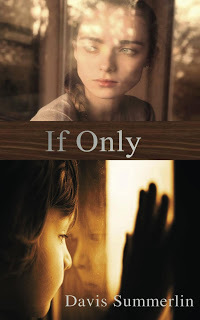 Click the link below to see my book!
My Book On Scribd!
Click the link below to see my book!
My Book On Scribd!
As an author/publisher myself, I don't 'hate' Amazon. I'm a huge fan actually. However, putting all my eggs in one basket is never smart. Scribd is a way for me to still have my books available in a subscription-based service, without sacrificing security if and when Amazon decides to change its gameplan.
Scribd also has a library comparable to Amazon's and is completely focused on digital media consumption, whereas Amazon has a hand in every pie imaginable. This isn't so much a negative for Kindle Unlimited as it is a strength for Scribd and other subscription-based services.
Such services include
Kobo Plus and Tolino Select
Kobo is perhaps Amazon's biggest competitor in the e-book marketplace. However, their subscription-based reading program, Kobo Plus is substantially smaller only sporting 212,000 titles at the time of this writing. Compare that to the 1,000,000+ titles of Kindle Unlimited, and Kobo Plus has quite a ways to go. That being said Kobo Plus began with 23,000 and in the span of one year rose to what it is now.
Tolino Select is the same, so much so that it's actually piggybacking off of the infrastructure that Kobo Plus has put into place, forming more of a partnership than a direct rivalry.
That's a wrap!
So what are you're thoughts on Kindle Unlimited and other subscription-based services? Let me know in the comments below. And if you're interested, feel free to click any of the affiliate links throughout the post. If you choose to move forward with a purchase or service, then at no charge to you I will receive a small commission.