Brian Meert's Blog, page 106
September 27, 2018
Snapchat Announces Major Pre-Holiday Updates to Partnership Program
 September 27, 2018
Anna Hubbel, writer at AdvertiseMint, Facebook advertising agency

Snap Inc. just announced major updates to its partnership program. The company shared with its business partners details about the addition of a third certification type, relevant updates to badges, new certification criteria for all three partner classifications, the release of a partner resource center, and investment in partner education. Additionally, Snap launched multiple new ad options, including Shoppable Snap Ads, the import of product catalogs for automatic ad creation, and enhanced pixel targeting capabilities.
Certification Updates
Snap says it’s publicly defining its three certification classifications for the first time within its partnership program. Partners who receive certification will be validated and given unique access to Snapchat program resources. Additionally, certification badges will be updated accordingly. The badges of current certified partners will be unchanged upon completion and adherence to the new certified partner criteria, which are specified through the company website.
Partner Education
Snap says it is now “investing heavily” in education for certified partners, which includes offering access to a partner resource center and invitations to webinars and events like educational summits, client summits, and industry events.
“Snapchat Partners are eligible for a variety of benefits based on their partnership type,” Snap shared in its email to its partners. “These benefits equip partner teams with the recognition, information, access, and support that they need to help marketers achieve success on Snapchat.”
Shoppable Ads
Snap is rolling out Shoppable Snap Ads to all advertisers through its self-serve ad platform. The format displays a collection of products in one ad so advertisers can market multiple items at once to generate interest. When a user taps a product in the collection, they can find more details about it.
Wish.com, eBay, Guess, and FabFitFun have all seen improved engagement when they used Shoppable Snap Ads, reports Marketing Land. Wish.com saw a 17 percent higher engagement rate, eBay recorded five times the engagement rate, and Guess noted 4.1 times the engagement rate. FabFitFun was able to engage with new audiences by adding Shoppable Snap Ads to its Snapchat strategy.
Product Catalogs
This new update allows advertisers to import product catalogs to generate Story Ads, Snap Ads, and Shoppable Snap Ads automatically. Doing so allows advertisers to seamlessly feature their products, which will be especially beneficial during the holiday season.
Enhanced Pixel Targeting
Marketing Land says Snap is expanding and improving its Snap Pixel targeting. With this update, advertisers will be able to track detailed actions Snapchatters make on their business website. Previously, the pixel only tracked which web page users would visit after clicking an ad. Access to this newly attainable data will prove useful to advertisers who want to refine their audience lists.
In addition to these multiple updates, which come before the holiday season, Marketing Land reports that over 30 marketing agencies are joining Snapchat’s Partnership Program. These agencies are certified to provide e-commerce assistance.
The post Snapchat Announces Major Pre-Holiday Updates to Partnership Program appeared first on AdvertiseMint.


7 Ways to Upgrade Your Amazon Ads
 September 27, 2018
Anna Hubbel, writer at AdvertiseMint, Facebook ad agency

Amazon is inching its way closer and closer to the number one spot. The company’s US digital ad revenues projected for this year will surpass Oath and Microsoft’s, trailing behind Facebook and Google’s, according to Emarketer. The platform is being recognized for its advertising potential and its benefits as an e-commerce platform.
The numbers forecast Amazon will gain a significant boost in the digital advertising sector this year. Emarketer predicts advertisers in the United States will spend $4.61 billion on Amazon, making up 4.1 percent of total digital ad spending. Emarketer describes Amazon’s organic digital advertising growth as “stronger than expected,” increasing the marketing analyst’s projected ad revenues for the company by 10 to 12 percent. Even further, the analyst predicts growth increases of more than 50 percent per year through at least 2020, at which point Amazon’s 4.1 percent of total US digital ad spending will bump up to seven percent. Looking at these predictions and estimates, the future looks bright and promising for Amazon.
Amazon, evidently, is going to be a big player in digital advertising, maybe even becoming as big as Facebook or Google. If you want to reach more potential customers, you should explore the booming potential of digital advertising with Amazon for your business.
Like digital advertising on Facebook or Google, if you want to create successful Amazon ads for your business, you must follow a few best practices. In this article, you’ll learn seven essential tips for creating successful Amazon ads. But first, you should know the types of ad formats Amazon offers.
Types of Amazon Ad Formats
There are three main types of Amazon ad formats:
Sponsored Product Ads
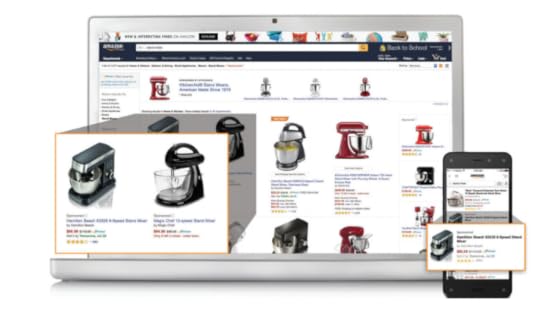
These keyword-driven ads appear either above or below search results. If someone searches for “vacuums,” and you included detailed keywords related to “vacuums” when setting up your Sponsored Product Ad, the ad for your specific product will appear above or below the generated search results. When shoppers click on your ad, they will be taken to your product page.
Headline Search Ads
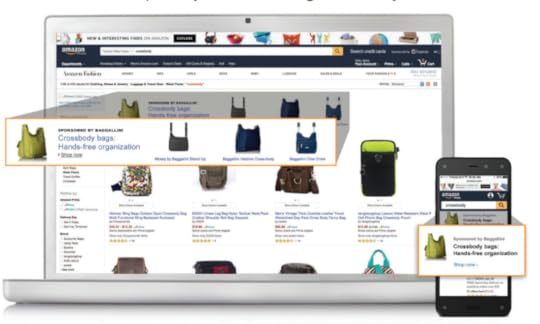
These cost-per-click, keyword-driven ads appear as a banner at the top of search results. When clicked, the ad takes the shopper to a customized landing page.
Product Display Ads
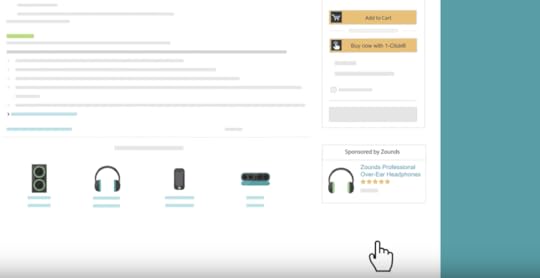
These ads target by interest or product rather than keyword. When creating this type of ad, you specify products similar to yours or interests related to your product that you want to target. For example, if your ad is promoting your brand’s running shoes, you may target interests like “running,” which will tell Amazon to show your ad to shoppers interested in running.
Now that you know the types of ads you can use on Amazon, you can employ the following tips to make them successful for your business.
Tip #1: Be Very Specific
Your ad copy should be as specific as possible when describing the product you are advertising. For example, instead of writing “Camera Case” as your headline, you’d want to write a more descriptive headline like this one: “Blummy PU Leather Instax Mini 9 Camera Case for Fujifilm Instax Mini 8/Mini 8+/Mini 9 Instant Camera with Adjustable Strap and Pocket (Brown).” Shoppers should have a clear idea of what they’re looking at before even clicking on your ad. When your ad is cost-per-click, specific and detailed copy will improve the chances that shoppers who click on your ad will buy your product.
Tip #2: Include Rival Brands in Your Keywords
To better reach interested customers, include your competitors’ names in your keyword list. For example, if you’re selling vacuums, you should include “Dyson vacuums” and “Black + Decker vacuums” in your list. When shoppers search for either one of those popular brands, your product will appear in the search results.
Tip #3: Use Negative Keywords

Offered by most search engines, negative keywords is a pay-per-click advertising match type option that delegates which searches can trigger the appearance of your ads. Negative keywords helps prevent irrelevant clicks, which can happen when, for example, you bid for the keyword “glasses” for an ad promoting your customized drinking glasses, and someone searching for eyeglasses types “glasses” into search and inadvertently clicks on your ad. In that case, you would have paid for a click that didn’t generate a sale. Negative keywords help you increase sales by showing your products only to related searches.
If you want to prevent irrelevant clicks, try WordStream, which offers a free negative keywords search tool that identifies search queries for modifiers unrelated to your product. The tool then generates a list you can refer to when creating your Amazon ad.
Tip #4: Use High-Quality Images
Images are everything in digital advertising. A low-quality image in your ad will not perform well. Comply with Amazon’s standards for ad images: use real photos, use professional lighting, and do not include inappropriate content (i.e. pornographic or offensive). Also, make sure your images accurately represent the product you’re selling.
Tip #5: Create a Sense of Urgency
 Claudio Schwarz/ Unsplash
When writing your ad copy, it can be a challenge to make it stand out above other ads in Amazon’s incredibly popular search results. In addition to using humor or unique, creative angles in your copy, it helps to create a sense of urgency. To do this, highlight a sale or promotion in your copy. Phrases such as “save now” and “buy now” will compel shoppers to get a piece of the pie before it’s all gone.
Tip #6: Show Important Product Information in Your Images
Show as much useful information as possible in the product images for your ad. Product dimensions, features, uses, and material are examples of information you can provide in your images. The information on your image will compel shoppers to click and learn more about the product.
Tip #7: Use Google to Research Relevant Keywords
If you’re struggling to identify relevant and high-performing keywords to bid on for your ad, you can Google it. Search for keywords or keyword phrases relevant to what you’re selling on Google and see what pops up at the bottom of the results under related searches. For example, if you search for “vacuum cleaners,” under “Searches related to vacuum cleaners,” you may see these keyword options:
vacuum cleaners at Walmart
vacuum cleaners on sale
best vacuum cleaners
vacuum cleaner ratings
shark vacuum cleaners
vacuum cleaners amazon
vacuum cleaner target
You can include these phrases in your list of keywords for your Amazon ad.
In or out?
 Rawpixel / Unsplash
There are many ins and outs in Amazon advertising. If you want to succeed as an Amazon advertiser, you need to become familiar with its complex platform and algorithms.
Regardless of its complexity, Amazon is moving to the top of the food chain. It still has a ways to go before it can beat out the top duopoly of Facebook and Google, but the projections are very promising. So the one “in” that matters the most in Amazon advertising is this: are you in or out?
The post 7 Ways to Upgrade Your Amazon Ads appeared first on AdvertiseMint.
September 26, 2018
How to Build Customer Loyalty This Holiday Season
 September 26, 2018
Anna Hubbel, writer at AdvertiseMint, Facebook advertising agency
Craig Whitehead / UnsplashYou’ve got a friend in loyal customers who choose you over your competitors, who think of you first when making purchase decisions, who brag about their positive experiences with your brand. Customer loyalty is the foundation of your business’s success. To maintain a business in the long run, your customers need to keep coming back because not only are they your steady source of revenue, but they are also the key to reaching new customers by marketing your business through word of mouth.
The holiday season presents an optimal opportunity for building customer loyalty. Because shoppers are already in full-throttle buying mode, it’s easier to attract them with holiday sales and offers. You need to capitalize on the momentum to convert those shoppers into long-term loyal customers. If you do it right, your spirits will be bright all year round. Here are some tips for building customer loyalty this holiday season.
Create Valuable, High-Quality Products
Emarketer reports that 55.3 percent of US internet users say high-quality products are the most important factor in becoming loyal to a brand. In contrast, for 51.3 percent of US internet users, low-quality products are the primary reason to drop a brand. But you can’t sell one high-quality product and expect customers to pledge their loyalty to you. Emarketer says for 37 percent of US internet users, it takes more than five purchases to decide whether they want to be loyal to a brand. Only 12 percent say it takes only two purchases. Thus, consistently produce exceptional products of high quality and value. When you do, customers will become confident in your business and will more likely return to you.
Provide Excellent Customer Service
For 7.1 percent of US internet users, excellent customer service contributes to brand loyalty, according to Emarketer. If customers need to return a product either because it was defective or it didn’t arrive in the mail, provide stellar customer service. Provide a full refund, offer a free exchange, or re-ship a brand new product for free with a bonus gift as an apology for the delivery error.
Mistakes happen. It happens to the best of us. What matters most is that you fix the problem and prevent it from happening again, all while providing a positive and professional customer service experience.
Offer Great Deals
Claudio Schwarz/ UnsplashFree shipping, VIP perks, and special discounts for multiple purchases are examples of offers you can provide to keep customers returning to you. Offering consistent discounts throughout the holiday season is a great way to create a sense of urgency, leading to more purchases, and ultimately, to more customer loyalty.
Provide Convenience
Convenience is the top loyalty determinant for 5.7 percent of US internet users, reports Emarketer. Mobile payments, two-day shipping, and personalized experiences are examples of ways to give your customers convenience, which is especially pertinent during the holidays, when customers are scrambling to finish their seasonal to-do lists. Make their lives easier by giving them easy shopping experiences.
Promote Customer Reviews
Rawpixel / UnsplashAn earlier survey shared by Emarketer shows that more than half of US internet users frequently refer to ratings and online reviews before making a purchase. Loyalty is primarily built on trust, and seeing what other customers think about your business helps customers determine whether they should trust your business. If you’ve garnered some positive customer reviews, highlight them in your ads this holiday season to build trust and, subsequently, to build customer loyalty.
As with all relationships, building loyalty takes time, patience, and work. If you put in the effort, you will be rewarded with customers you can count on for years to come. The jolly doesn’t have to end with the holidays.
The post How to Build Customer Loyalty This Holiday Season appeared first on AdvertiseMint.
September 25, 2018
How Does Instagram’s Algorithm Work?
 September 25, 2018
Julian DiMico, Guest

Instagram is a dominant social platform with one billion active users around the world. It is the most widely used photo-based social network. If you want to increase exposure for your Instagram posts, you must understand how the algorithm works because it decides what content to place on top of feeds. To determine which content appears on top of the feed, the algorithm considers interest, recency, and relationship.
Interest
The Instagram algorithm orders its feed according to the predicted interest in a post. Simply put, Instagram is betting that your post will be the most interesting to your followers. The algorithm makes this estimation using a number of factors. First, the algorithm looks at whether or not followers have interacted with similar posts in the past either by liking, commenting, or scrutinizing a photo. Previous engagement indicates the types of posts your followers are likely interested in.
Second, the algorithm looks at whether your followers are following similar accounts. If your followers follow a large percentage of travel accounts, posts by those accounts will appear higher in their feeds. Third, the algorithm looks at your relationship with your followers. For example, if the algorithm sees that your followers regularly search for your account, the algorithm will take that as a sign of interest in your account.
Recency
Of course, followers do not want to see the same post over and over again. They also want to see recently published posts. For that reason, the algorithm also considers recency when deciding which post to feature on top of feeds. For example, a 2 p.m. post from Buzzfeed will appear before a 4 p.m. post from The New York Times.
Relationship
No matter how many accounts users follow, they still want to see the latest post from accounts they care for the most, accounts that keep them coming back daily to the platform.
The algorithm predicts relationships in several ways. First, it considers the number and frequency of direct messages followers send to you. If followers message you often, your post will appear higher in their feeds. Second, it considers engagement on posts. If followers constantly like or comment on your posts, those posts will rise to the top. Third, it considers searches. If followers frequently search for your account, then the algorithm concludes that you and those followers have a close relationship.
Combine interest, recency, and relationship—those factors determine what content appears on top of users’ feeds.
Written by Julian DiMico, an expert in marketing, finance, and technology.
The post How Does Instagram’s Algorithm Work? appeared first on AdvertiseMint.
September 21, 2018
4 Easy Ways to Control News Feed Content
 September 21, 2018
Anna Hubbel, writer at AdvertiseMint, company for Facebook ads
 Thought Catalog / Unsplash
Why am I seeing this? You ask yourself this question when yet another status your aunt posted about her cat Mr. Kibbles appears on your Facebook News Feed. The News Feed algorithm is an enigma to many, especially after Facebook changed it to prioritize friends’ content over content by businesses and publishers. However, the algorithm doesn’t always get it right. Sometimes you don’t want to see any cat videos or depressing news on your feed. In this case, it can be very frustrating because you feel like you have no control over what appears in your feed.
You may be surprised to learn that you do have control over your feed content. Don’t be embarrassed about not knowing this. Many Facebook users don’t know that they can either. According to the Pew Research Center, 28 percent of Facebook users think they have no control over their News Feeds. Only 14 percent believe they do have control. Furthermore, 53 percent of US adult users say they do not understand why certain content appears in their feeds over other content, with 20 percent indicating that they do not understand the News Feed at all.
As you can see, you are not alone. Before learning how to control your feed, you must first have a basic understanding of how Facebook’s algorithm works.
Facebook’s Algorithm

Some users assume that Facebook posts display chronologically. That is not true. Facebook’s algorithm takes into account three specific factors when determining what to prioritize in your feed:
The person who published the post
The type of post
The post’s engagement numbers
First, the algorithm considers the person who published the post and your relationship with that person. If you interact more with posts from certain Facebook friends, the algorithm will interpret that to mean content by those friends is more meaningful to you. For example, you may frequently visit your partner’s profile page, tag your partner in posts, and like or comment on your partner’s posts. Facebook’s algorithm looks at that behavior and determines that posts by your partner are meaningful to you and should therefore be prioritized in your feed.
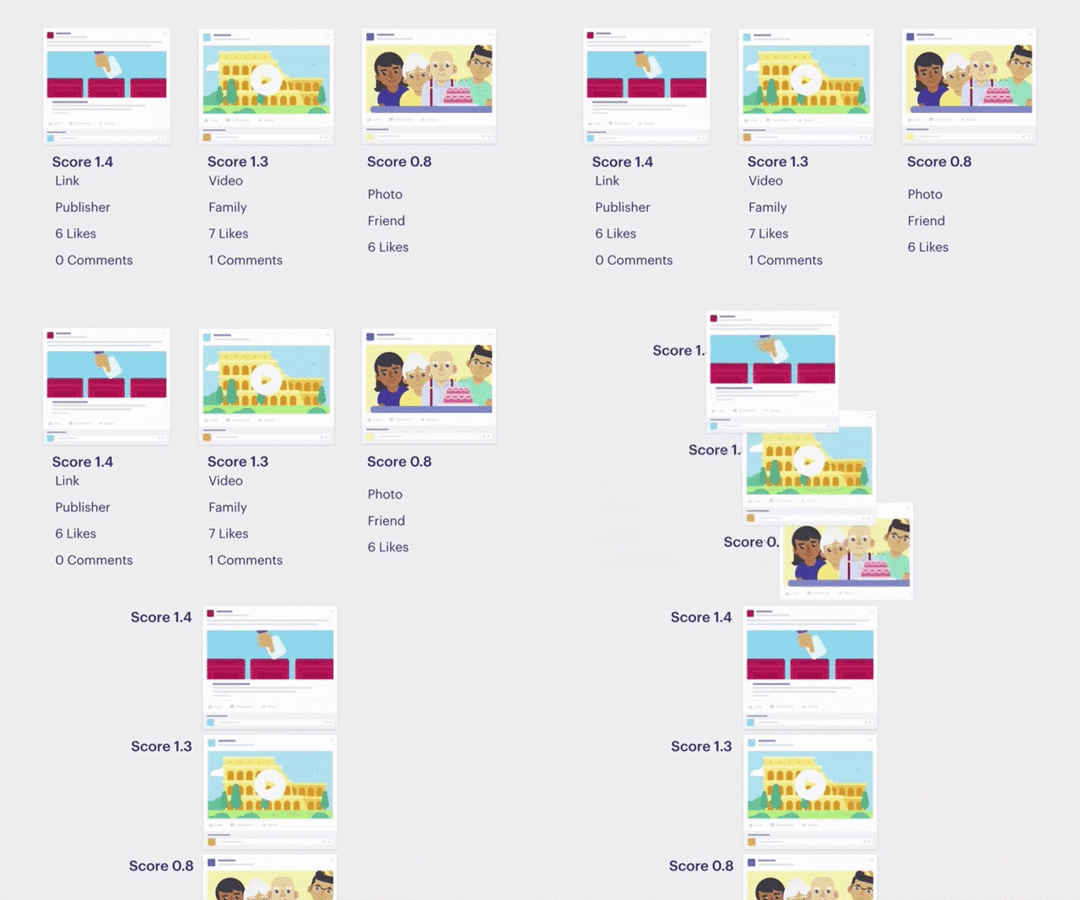
Second, the algorithm looks at the type of post. If, for example, you frequently like or share how-to craft videos, Facebook will populate your feed with this type of content. Again, it comes down to what the algorithm interprets as meaningful to you.
Last, Facebook considers the post’s engagement numbers when deciding whether to prioritize it in your News Feed. If a post consistently receives a lot of engagement, the algorithm will perceive the post as relevant and high-quality. As a result, Facebook will decide it’s worth showing to you.

Earlier this year, Facebook tweaked its algorithm to ensure the feed will only show meaningful content. The platform announced that it was reducing both business and news content in the feed. As a result, businesses and publishers now have to work harder to make their content relevant and meaningful so they can appear in feeds. If you’re wondering why you see more posts by your friend Jimmy over posts by Huffington Post, it’s because the algorithm prioritizes friends’ posts over those by groups, news pages, and businesses—but you can change that. You can learn how to control what appears on your feed. I’ll show you how to control ads and posts by pages and friends
Pages
If you don’t want to leave it up to Facebook’s algorithm to determine what posts by a certain page appear in your feed, you can control it yourself by visiting the page in question. When you go to the page, locate the “Like” and “Follow” buttons under the page’s cover photo. Assuming that you’ve already chosen to follow the page, click the dropdown for “Following.” Under the “In Your News Feed” heading, you’ll see three options:
See First – Content by this page will appear on top of News Feed
Default – Content by this page follows the algorithm
Unfollow – Posts won’t appear on your feed, but the page will still be part of your liked pages
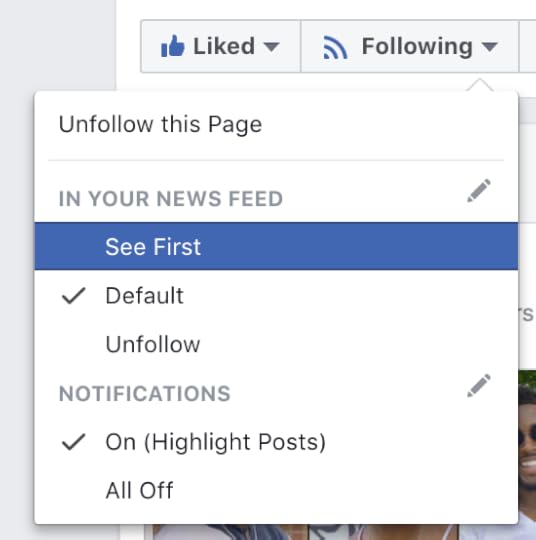
Choose the option you want and boom—you just controlled how posts by that page appear in your News Feed.
Friends
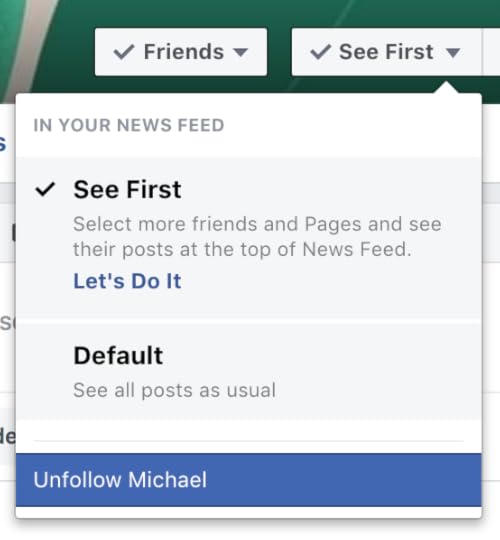
If you want to change the post frequency of a specific friend, navigate to that friend’s profile page. Under the cover photo, next to the “Friends” button, select the “Following” dropdown. Again, you will see three options:
See First – Content by this friend will appear on top of News Feed
Default – Content by this friend follows the algorithm
Unfollow – Posts won’t appear on your feed, but you will still stay Facebook friends
Posts on Feed
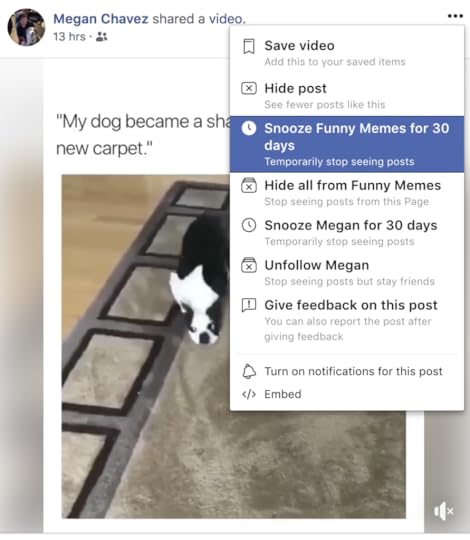
You can also control the appearance of specific posts in your feed. To do this, select the menu at the top right of the post you want to control. There are a few options in the dropdown you can choose from:
Snooze (when a friend shares a post) – Snooze content from the posts’ original source
Hide (when a friend shares a post) – Hide posts from original source
Snooze friend – Temporarily stop seeing posts from a friend for 30 days
Unfollow – Unfollow the friend but still remain Facebook friends
If you want to see fewer posts from a particular person, stop interacting with their posts. If you want to see more posts from a particular person, frequently interact with that person’s posts.
Ads
You can also control what ads appear in your News Feed. To do this, select the menu dropdown at the top-right corner of the ad you want to control. You will see a few options, including “Save link,” “Report ads,” and “Why am I seeing this?” You can also see the following:
Hide ad – See fewer ads that look similar to this ad.
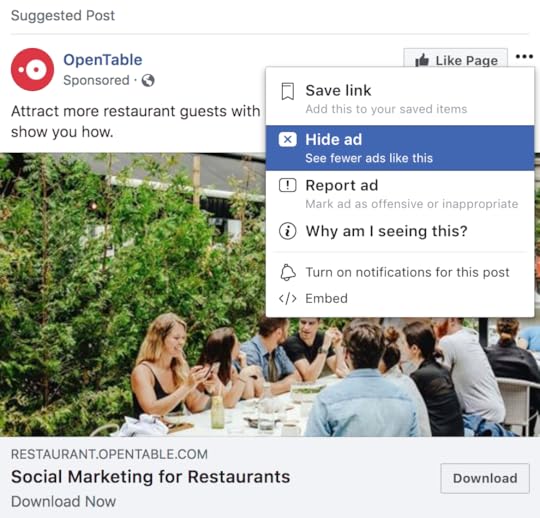
If you want to see fewer ads if a specific type, click “Hide ad.” Say, for example, you hide an ad about motorcycles. Once you do that, you will see fewer motorcycle ads on your feed.
Conclusion
The Facebook algorithm and News Feed are enigmas to most users. Most users don’t know that they can control the content that appears on their feeds. You should never feel like you have to see certain types of content when you’d rather not. Now you know how to control your News Feed content, which will hopefully improve your overall Facebook experience.
Written by Anna Hubbel, writer at AdvertiseMint, company for Facebook ads
The post 4 Easy Ways to Control News Feed Content appeared first on AdvertiseMint.
Instagram Is Testing a Feature That Hides Hashtags
 September 21, 2018
Anne Felicitas, editor at AdvertiseMint, Facebook ads company
 Hieu An Tran / Unsplash
 When it comes to Instagram posts, every element must be absolutely perfect. The image must be clear, crisp, and beautiful. The caption must be succinct, well-written, and relevant to the image. If your post isn’t perfect, it can’t compete against the thousands of accounts whose professionally photographed and photoshopped images stop users mid scroll.
And then you add hashtags.
For many Instagrammers, hashtags are both a blessing and a curse. While they help propel posts to visibility, they also ruin the aesthetics of the content. The big chunks of hashtags not only look garish, but they also inadvertently imply that the account is desperately trying too hard to be discovered.
Instagrammers have devised ways to hide their hashtags by burying them under a series of dots and spaces or adding them in the comments section instead of the caption. Recently, one Twitter user discovered a feature that solves the hashtag dilemma.
The Twitter user, Jane Manchun Wong, posted a screenshot of her unpublished Instagram post. Underneath the locations box where users can tag a location is a section for hashtags. “Instagram is testing the ability to add hashtags to posts without including it in the post caption,” Wong said in her Twitter post.
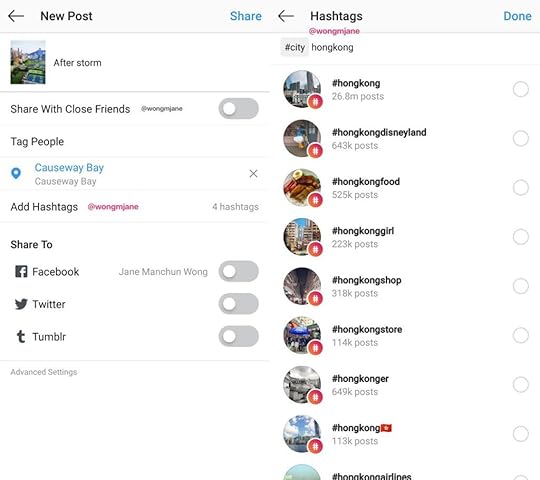 Jane Manchun Wong shares a screenshot of the new Instagram feature
No one knows for certain how the new hashtag box works. No one knows whether Instagram will penalize posts with spam hashtags once the feature rolls out and no one knows the number of hashtags users can include per post. However, Wong did say that “there doesn’t seem to be a limit to the number of hashtags per post for now.”
For many avid Instagram users, this feature is long overdue. If officially rolled out, users will no longer have to go to great lengths to hide their hashtags. Most important, they will no longer have to compromise aesthetics for visibility.
Written by Anne Felicitas, editor at AdvertiseMint, Facebook ads company
The post Instagram Is Testing a Feature That Hides Hashtags appeared first on AdvertiseMint.
September 20, 2018
New to Google: Video Showcase Shopping Ads and Shoppable Images
 September 20, 2018
Anna Hubbel, writer at AdvertiseMint, Facebook advertising agency

It’s officially fall, and Google’s ready to help you conquer the holiday season. The company is introducing two ad formats that will help you better reach shoppers when they’re deciding what to buy. The first format is a video version of Google’s Showcase Shopping ads. The second format is called Shoppable Images.
Showcase Shopping Ads in Video Form
Google is expanding the capabilities of its multi-image Shopping ad format to include video. The Showcase Shopping video ads allow you to incorporate YouTube videos into paid search ads. With this format, you will be able to make ads attached to pictures in content through specific Google publishing partners.
Google officially rolled out Showcase Shopping ads last October. They give you the ability to conjoin lifestyle and product images to make up one, unified ad. Google then shows the ad in paid search results when shoppers enter certain keywords into search. This format is especially useful for businesses reaching shoppers who don’t know what to buy but who have an idea of what they want. For example, if shoppers enter the generic search term “kitchen appliances,” Google will display your Showcase Shopping ad of your kitchen selection to help them narrow their search.
Including video to Showcase Shopping ads will only add to the success this ad type has already delivered. According to Digital Commerce 360, Showcase Shopping ads produce click-through rates (CTR) that are 3.6 times higher than the average Google ad CTR. Additionally, ads in this format achieve 20 percent more conversion credit according to a first-click attribution model. Since video creative has ultimately proven to be more engaging than static images, this update to the format will come with high expectations.
This new Showcase Shopping video format will roll out to 500 advertisers in the Unites States, United Kingdom, France, and Germany later this month.
Shoppable Images
Shoppable Images will help create a seamless shopping experience for customers. By simply hovering over an image with a shopping ad attached, shoppers will be able to click and be directed to a relevant shoppable search. For instance, if shoppers are visiting the fashion blog This Time Tomorrow and come across a Shoppable Image that displays the message “Shop This Style,” they can click on it. Once they click on it, they will be directed to a shoppable search containing items like those they saw in the image that they can then purchase. It’s a smart way to reach shoppers immediately after they think, “Hey, I like that.”
You Still Need to Know Your Audience
While these latest Google products will be undeniably useful in the advertising process, you still need to know your audience for your ads to succeed. Elements like styles, tastes, preferences, and past purchases are up to you to learn about your target customers. If, for example, you use Shoppable Images, you want to show shoppers content that is relevant not only to the content of the image but also relevant and personalized to the individual shopper. Machine learning is key to learning and delivering relevant customer information.
It’s also important to remember that most shoppers see ads and make purchases on their mobile devices. You should keep this in mind when creating video for Showcase Shopping ads and choosing images for Shoppable Images. The more you think about how your audience will see your ad, the better your chances are at driving action.
If you’re struggling to reconcile in your mind what knowing your audience”\ really means, think of it this way: you want to assist your shoppers more than throw information at them. When you think in terms of assistance, you’ll find shoppers are far more receptive to the ads you put out. Your ads will be assisting them in personalized and relevant ways, eliminating for them that extra step of having to indicate the types of things they want every single time they shop. This level of assistance is especially desirable during the holiday season. Video Showcase Shopping ads and Shoppable Images will help you cater to your audience’s needs.
So buckle up and get ready to conquer!
Anna Hubbel, writer at AdvertiseMint, Facebook advertising agency
The post New to Google: Video Showcase Shopping Ads and Shoppable Images appeared first on AdvertiseMint.
Twitter Is Giving Users More Control over Their Timeline Settings
 September 20, 2018
Anna Hubbel, writer at AdvertiseMint, Facebook advertising company
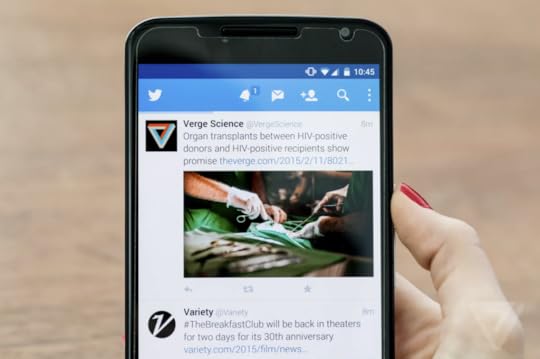 Photo courtesy of theverge.com
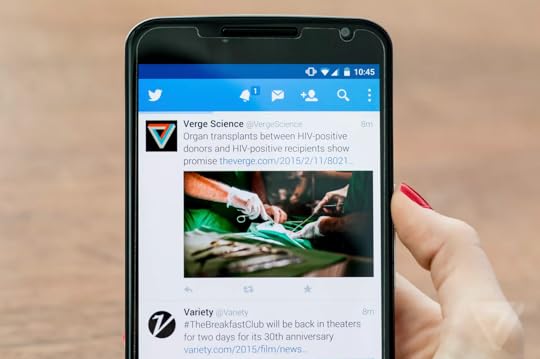
Twitter users have wanted more control over their timeline feeds for some time. Now they finally have it. According to an article by The Verge, Twitter just announced that users now have the option to turn off the setting that shows only the “best” tweets first. Turning the setting off will change the timeline to display tweets in reverse-chronological order, which was the platform’s original algorithm up until 2016.
Previously, users had the option to uncheck the box for its best-first option, but it still didn’t give users the control they wanted. Instead, when the setting was unchecked, Twitter would still show “in case you missed it” tweets, recommended tweets, and tweet interactions by followed users. It didn’t give many users what they wanted, which is tweets organized based on when they were posted.
“Twitter is now acknowledging that its users want more control over their timeline, and that the initial settings tool and how it functioned was not an adequate way to address this,” The Verge article points out.
“We’ve learned that when showing the best Tweets first, people find Twitter more relevant and useful,” Twitter said in a statement, reports The Verge. “However, we’ve heard feedback from people who at times prefer to see the most recent Tweets. Our goal with the timeline is to balance showing you the most recent Tweets with the best Tweets you’re likely to care about, but we don’t always get this balance right.”
According to The Verge, Twitter has been planning this change to its timeline settings for a while. There is more to come, however, because this update is just a temporary fix. The platform is developing a way to easily switch between the two timeline settings (relevant tweets and latest tweets) so users have even more control over what they see. Users can expect to see this capability in the next few weeks, says The Verge.
Twitter has been introducing new features and capabilities as of late. Earlier this year, the platform introduced a new Bookmarks feature for saving tweets. Back in October, Twitter increased its character limit for tweets to 280 characters, and earlier this month, the platform launched its audio-only broadcast feature.
Written by Anna Hubbel writer at AdvertiseMint, Facebook advertising company
The post Twitter Is Giving Users More Control over Their Timeline Settings appeared first on AdvertiseMint.
September 19, 2018
New in Instagram: Shopping in Stories and Explore
 September 19, 2018
Anna Hubbel, writer at AdvertiseMint, Facebook ad agency
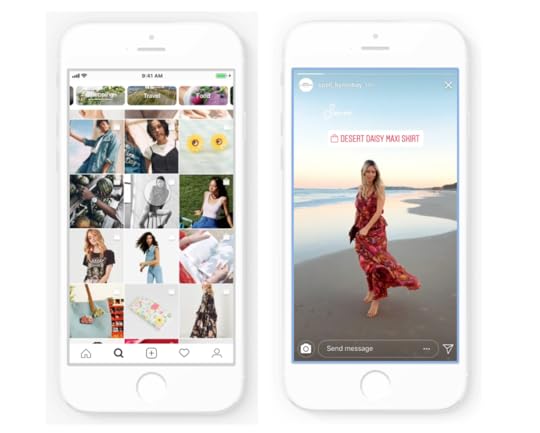
Instagram just expanded shopping with this latest announcement: brands can now include Shopping tags in Stories, a capability the digital marketing world has been waiting for. Additionally, Instagram announced that it is testing a shopping channel on Explore.
Shopping Tags in Instagram Stories
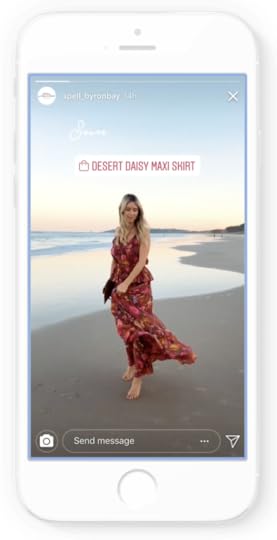 Photo courtesy of Instagram.com
According to Instagram, one-third of the most viewed Stories on its platform are by businesses. Clearly, advertisers see the potential of the Stories format. That’s why Instagram is finally allowing businesses that use Shopping on Instagram to include product stickers in Stories and product tags in regular posts. Shoppers will be able to learn more about products they’re interested in directly through the platform.
“With product stickers in Instagram Stories, people can quickly access product information and shop seamlessly,” Instagram said in its announcement.
Explore Shopping Channel
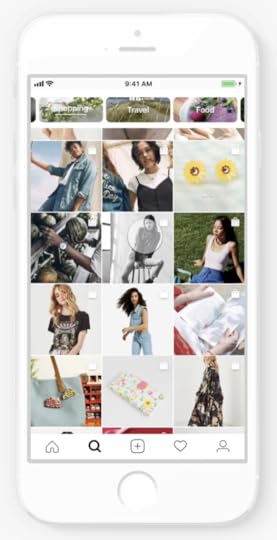 Photo courtesy of Instagram.com
Users familiar with Instagram know that the Explore tab is a great, organized way to browse various topics of interest. To benefit both users and brands, Instagram is now testing a Shopping channel for Explore. This channel will be available to users whose platform activity has indicated interest in purchases through Instagram. When users visit the Shopping channel, they’ll see personalized shopping posts based on their individual shopper style and preferences.
Instagram says the new Explore channel will help businesses appear before new shoppers. The space will allow users to find and browse new brands and posts, as well as “tap through on product tags and visit the business’ website or continue browsing that business’ other shopping posts.” It will be like walking through a shopping mall and checking out the various storefronts.
Brands have flocked to Instagram for digital marketing needs, and Instagram is clearly responding to the growth of its e-commerce potential. Earlier this month, Instagram shared that a standalone app for shopping is in the works. The more products and features the platform rolls out, the more opportunities brands and businesses will have for acquiring loyal customers.
Written by Anna Hubbel, writer at AdvertiseMint, Facebook ad agency
The post New in Instagram: Shopping in Stories and Explore appeared first on AdvertiseMint.
8 Team-Bonding Ideas Your Employees Will Love
 September 19, 2018
Anne Felicitas, editor at AdvertiseMint, Facebook advertising company
Looking around your office on a Tuesday morning, you find a depressing scene: Mary Sue shuffles from copy room to her desk, eyelids droopy, a steaming mug of coffee in hand. Meanwhile, Joe hunches over his keyboard, sulking, and John, stressed, is furiously twirling his fidget spinner. The team’s morale is low. What can you do to lift your employees’ spirits?
In addition to healthcare and 401Ks, offer team events as a company benefit. I’m not talking about a sad get together at the break room for one-dollar donuts and muddy coffee. I’m talking about fun activities that allow your employees to break from their usual work routine, step away from their cubicles, and stretch their legs, activities that allow them to de-stress, unwind, and socialize outside an office setting. Here are a few ideas to start.
Play a Competitive Sport

No substance—not even coffee—can rouse your employees better than a human-sized ball barreling in their direction. If you want a team event that jolts employees out of their sedentary work life, consider playing a competitive and unconventional sport. Companies like Air Balling LA host games such as bubble soccer, where players squeeze inside inflated balls used to ram opponents, archery tag, and Nerf war. Not only do these games give your employees a much-needed exercise, but they also cultivate team spirit and laughter.
Participate in Game Shows
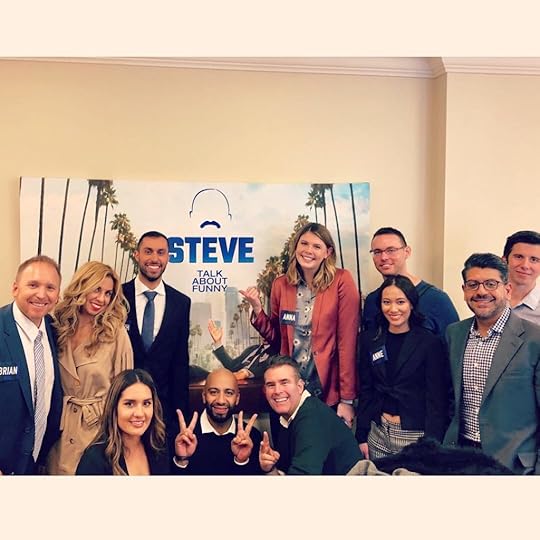
If playing a competitive sport is too intimidating for your employees, you can bond by participating in less strenuous games. While competitive sports strengthen the body, game shows strengthen the mind. You can join Jeopardy to flex your trivia knowledge, Wheel of Fortune to sharpen your guessing skills, or Let’s Make a Deal to enhance your instincts. The best part? You get to be on TV and win money.
Watch TV Tapings

There may be a select few on your team who are camera shy. If your team wants an event that doesn’t involve so much exposure, you can opt to become a part of the studio audience. Instead of being the scrutinized, be the scrutinizer. Shows like Jimmy Kimmel, X Factor, and Family Feud offer free seats to those wanting to be an audience. Other than complying to the dress code and standing in line for tickets, you must arrive to the show on time. (Look, an exercise on being punctual.)
Watch a Movie

Here’s a classic, easy-to-organize event: movie day. If your team’s idea of relaxing doesn’t involve sports, game shows, or TV tapings, you can instead opt for an activity that requires minimal effort. Let the plush theater seats lull you into relaxation, the wide screen rouse your attention, and your favorite theater snacks, buttery popcorn and sweet Twizzlers, delight your taste buds.
Watch a Game
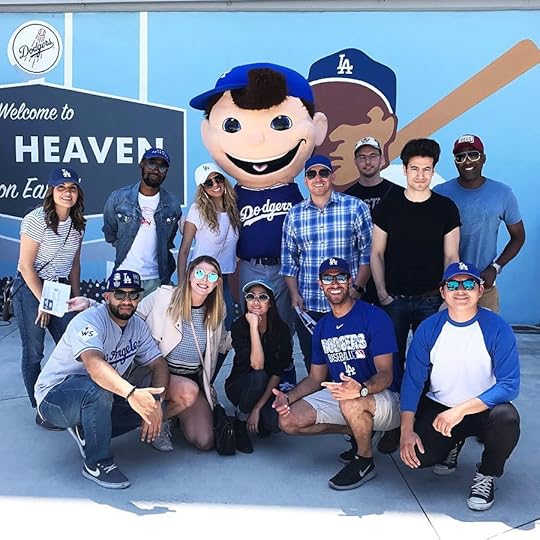
If movies bore your employees, who would much rather watch live action, then spend a few hours at a game, may it be a baseball game, a football game, or a soccer match. Put your sunglasses on, sit back, relax, and take periodic sips of your overpriced-but-totally-worth-it beer. If you’re lucky, you might be featured in the dance cam.
Solve Puzzles in an Escape Room

Escape rooms do more than trap you with your employees. These rooms cultivate critical thinking, problem-solving skills, and teamwork, all of which are needed to escape to freedom. Escape room companies provide room for every genre, including horror, adventure, and fantasy. If you’re in the Hollywood area, try the escape rooms by 60 Out. The Jumanji escape room, particularly, is the best of their selections so far.
Dine In

Food truly does bring people together. If you don’t believe me, bring pizza to the office and watch your coworkers transform from cubicle hermits to social butterflies—they’ll flock to you like moths to a flame. Because everyone loves food, an outing to a restaurant is a safe and easy event idea. Granted, it isn’t the most exciting, but, you know, free food. Enough said.
Unleash Your Inner Child

Adulthood can be stressful. You’re expected to act a certain way, behave a certain way, and have certain accomplishments by a certain age. It’s liberating to shed adult responsibilities even if only for a few hours.
You and your employees can visit Dave and Busters, the arcade for adults. Begin with delicious food from the menu then spend the remainder of your day revisiting your childhood with games that fill you with nostalgia: Pacman, Mario Kart, and Lara Croft Tomb Raider. For the younger ones in your office, they can play the contemporary favorite The Walking Dead, Fruit Ninja, and Guitar Hero.
Work Hard, Play Hard
Looking around your office on a Tuesday morning, you find a surprising scene: Mary Sue practically skips from the copy room to her desk. Joe merrily types away on his keyboard, and John is raving about scoring a goal in bubble soccer to a colleague. The team spirit is high, and it’s all thanks to the team events you started organizing.
Written by Anne Felicitas, editor at AdvertiseMint, Facebook advertising company
The post 8 Team-Bonding Ideas Your Employees Will Love appeared first on AdvertiseMint.